
NIL
Steady Droppin Dimes – NIL on National Signing Day: Is it all about the highest bidder now?


Every week, former Michigan great, NFL 1st round pick, 10-year pro, and current Wayne State head football coach Tyrone Wheatley, former Michigan point guard Daniel Horton, and I come together on Steady Droppin’ Dimes, a sports show featuring real talk, and real views, from three real dudes. College football, college basketball, NFL, and NBA topics drive much of the debate, but discussion of other sports will enter the fray some days as well. Non-sports topics aren’t off limits, and neither are celebrity guests.
On the latest episode of Steady Droppin Dimes, the crew discusses the impact of NIL on National Signing Day. They also tackle the question of which of the new college football hires has the best odds of success, and which will crash and burn. Lastly, they revisit the question of which is the best team in college basketball.
The contents and full episode notes appear below.
Contents and Episode Notes
00:00 – Opening, Holiday Catch-Up & Steady Dropping Dimes Crew
- Sam opens another edition of Steady Dropping Dimes, reintroducing the weekly show and its Golden Limo sponsorship
- He brings in the full crew, starting with Tyrone Wheatley, whom he still calls the best athlete he’s ever seen with his own eyes
- Tyrone shares he played last episode sick and reveals he actually had pneumonia but “toted the mail” anyway
- Sam jokes about producer Lance upgrading the show with color-coded scripts and name tags on screen
- Daniel Horton checks in, saying he barely made it to the show, and chat jokes about “in this NIL era, we steady dropping bags,” foreshadowing later NIL talk
05:22 – Daniel Flips: Michigan Is the Best Team in the Country
- Sam explains fans have been asking what’s up with Daniel, since Daniel wasn’t immediately crowning Michigan as the best team
- Daniel says at first everyone was just being “Michigan homers,” and he prides himself on not being a homer, even as an alum
- He now fully agrees Michigan is the best team in the country and playing the best basketball, especially on the defensive end
- Vegas convinced him: if they defend with that energy, effort, passion, and togetherness, he’ll “stand on the table” for this team
- Daniel stresses that shots won’t always fall or look pretty, but defense, effort, and love for what you’re doing translate in any game, in any sport
10:32 – Aday Mara’s Development, Consistency Questions & Dusty’s Roster Vision
- Sam shifts to the three-big frontcourt, saying Merez has surged lately and he didn’t expect Aday Mara to be this fluid at 7’3″
- He wonders how Mara will handle Big Ten physicality—opponents getting into his body, banging him, and forcing him to prove he can still rebound and score
- Sam notes Yax looks ready to bring it nightly, but he’s unsure whether Mara can sustain high-level play game-to-game after an early stretch where he looked like a lottery pick, then disappeared
- Daniel admits he was skeptical when Mara transferred after a disappointing UCLA stint, but says Mara’s progress this quickly is encouraging for his future
- He explains the hardest jump is from “not very good” to “serviceable/good,” and Mara seems to have cleared that; now it’s about experience and building consistency to become an all-conference-level player in Dusty’s system
13:34 – Transfer Fit, AJ Storr Example & Coach Responsibility
- Sam praises Dusty May’s ability to evaluate cultural fit in the transfer portal, calling it an elite skill in this era
- He contrasts Dusty’s approach with Chris Beard’s situation at Ole Miss, where Beard publicly snapped about effort at AJ Storr—who has now been at four schools in four years
- Sam says Beard was really mad at Storr for being who he has always been, pointing out Storr’s identity and track record were clear when they recruited him
- Tyrone says it’s on the coach and staff to know who they are bringing in and how each piece fits a defined role in the “11:30 p.m. staff room board” vision
- He notes great teams come from players majoring in their roles—big or small—and from coaches building rosters around those roles instead of blaming players later for being themselves
18:28 – Winning in the Margins, Toughness & Three-Big Philosophy
- Tyrone recalls his high school coach saying, “We’re going to win in the margins,” which meant two weeks of practice without a basketball focused on effort plays
- He sees Michigan’s current team doing exactly that: winning in the margins with turnovers forced, defense, pace, hype, rebounding, and extra effort that eventually turn into points
- He jokes that if his shot isn’t falling, he’ll “turn into Moses Malone,” attacking the offensive glass to keep impacting the game
- Sam contrasts John Beilein’s instinct—play Yax at the four—with Dusty’s willingness to lean into a three-big lineup, noting both views have logic but Dusty is the one staying up at midnight designing this vision
- Tyrone says different coaches prioritize different building blocks—some start with a big, some with a scorer—but Dusty’s big-heavy, physical, connected approach is working because the whole group fits the identity
21:18 – Dusty’s Transfer Strategy and Quick Chemistry in the Portal Era
- Sam circles back to Dusty’s eye for portal fits, saying he targets guys who fit Michigan’s culture first, then figures out how they fit on the court second
- Daniel points out that of the transfers, Yax was really the only one who had significant prior success; others like Elliott, Mara, and Namari came in as underused or underachieving pieces
- He credits Dusty for grabbing talented but hungry players who needed a stage and were motivated to prove they’re better than their previous roles showed
- Daniel says that in the old days, you built chemistry over 3–4 years; now, you must build it in one or two, and buy-in is easier when guys see this as a major or last chance
- He believes as long as Dusty keeps recruiting that mix of talent and hunger, Michigan can keep creating quick, genuine chemistry in modern one- and two-year windows
24:17 – Coaching Carousel Talk: Who Got It Right and Who Got It Wrong?
- Sam switches to college football, asking Daniel which recent coaching hires got it most right and most wrong
- Daniel surprisingly picks LSU for both: he sees Lane Kiffin as a home run given LSU’s resources and track record, but says the handling of the change from Brian Kelly was messy
- He also likes Jon Sumrall’s move to Florida (after tracking him at Tulane), noting his strong ties and upside as a head coach
- For “most wrong,” Daniel bluntly says it’s Penn State, because they fired their coach early yet still don’t have a replacement while other programs moved quickly
- Tyrone jokes that Crumble Cookie dropped a big NIL “dime” to help keep a coach put, illustrating how off-field money factors into these decisions too
28:02 – Lane at LSU, Complementary Football & Culture Fits
- Sam pushes back on the assumption that Kiffin will definitely win a national title at LSU, pointing out Lane has never truly “won anything big” at the highest level
- Tyrone counters that Lane’s time under Nick Saban taught him a lot, and he’ll build elite staffs and surround himself with the right people, which is how you win
- Daniel says Lane has rehabilitated his image since the Tennessee/USC days and that his confident, offensive-minded personality matches what LSU fans want more than Brian Kelly’s did
- Sam agrees LSU’s offense will be electric but questions whether Lane can sustain the kind of complementary football and elite defense required to win championships in the SEC
- They note Lane kept DC Blake Baker and has a massive NIL budget, but Tyrone warns the real challenge is using that money on the right players instead of simply stockpiling “convicts” with talent
32:58 – Michigan State, Pat Fitzgerald & Sparty’s Ceiling
- Sam pivots to a surprise take: he thinks Michigan State got it “most right” by hiring Pat Fitzgerald and jokes that MSU owes him money for saying months ago Fitz would rehabilitate them
- He paints a realistic model: at Northwestern, Fitzgerald accepted that they wouldn’t compete every year but would scrap for a few seasons and then build toward senior-heavy, competitive years every third or fourth season
- That cyclical, blue-collar approach fits Michigan State more than chasing the same recruits as Michigan and Ohio State, which Sam says “just isn’t them”
- Daniel laughs that Sam is diabolical, basically sentencing MSU to seven wins a year and one win over Michigan every five years and calling that their ceiling
- Sam leans into the bit, saying he’s giving Spartans a more honest reality than they want: they’re the “bootleg Lion-O,” not the real powerhouse, but Fitzgerald can make them respectable and occasionally dangerous
39:55 – Penn State Expectations, Fit, and the Stress of Big Jobs
- Sam and Tyrone agree LSU and Penn State both show how fanbases overestimate how “sexy” their jobs are compared to the stress and expectations
- Tyrone says some jobs are actually unattractive behind the scenes—LSU’s Bayou grind and Penn State’s national-title expectations without SEC-level resources limit the candidate pool
- He believes James Franklin got stale but also notes seven wins won’t cut it at Penn State, and coaches are now scrutinizing whether the financial and support package matches the stress level
- They argue that firing a coach isn’t a magic reset button—schools often discover the market isn’t beating down their door the way fans imagined
- Tyrone suggests Penn State might be best served hiring the interim (Terry Smith/Kenny W.), someone who already knows the realities, rather than chasing a fantasy candidate
46:17 – Savion Hiter, NIL Ambassadors & Setting Up the Signing Day Conversation
- Sam says they’d be remiss not to talk about National Signing Day and highlights No. 1 running back Savion Hiter signing with Michigan
- Listeners have asked for a weekly Hiter film breakdown from Tyrone, but Sam wants to give Tyrone time to watch tape before putting him on the spot
- He frames today’s focus as NIL’s impact on Signing Day itself, not just recruiting months beforehand
- Sam describes the day as “almost like day trading,” with schools sliding in last minute with extra $200–300K just as kids are ready to sign
- He stresses that for many families, that amount of money is life-altering, and taking time to consider it is not a character flaw—it’s a real-life decision
53:58 – NIL on Signing Day: Day-Trading Offers, Agents & Tough Choices
- Sam says some programs still take a “This is Michigan, this is the offer, take it or leave it” stance that implicitly shames families for considering better financial deals
- He has a major problem with using “character” language against kids—especially those from modest backgrounds—who weigh a significantly higher NIL number
- Sam explains another layer: agents now sit between players and schools, some being fully certified NFL agents already eyeing future pro commissions
- He lays out a hypothetical: a recruit committed to Michigan is offered $300K more by Penn State; the player wants Michigan, asks if Michigan can come up some, but his agent keeps pressuring him to take the higher Penn State offer
- Tyrone says this creates a painful squeeze: schools can be rigid and pompous on one side, agents self-interested on the other, and the kid in the middle just wants to make the right choice for school and family
59:20 – Negotiation, Family Stories & Why Money Doesn’t Equal Bad Character
- Tyrone’s wife once commented, “This is what they chose,” meaning once NIL got opened, the chaos was inevitable; you can’t un-open the box
- He argues players don’t actually need agents for most NIL agreements and wonders why someone should get 3–5% of money they didn’t earn on the field
- Tyrone calls much of the current agent behavior predatory and believes there should be a “true dead period” around signing day with total radio silence from schools
- He emphasizes that for many families, $300K represents “300,000 opportunities”—to pay off a mortgage, fix a car, avoid foreclosure, or get stability, not greed
- Tyrone shares a personal story of his grandmother turning down an illegal under-the-table offer back in the day; if the same money were legal NIL today, he’d absolutely negotiate hard to take care of her without that being a “character issue”
1:07:25 – Can NIL Be Regulated? Agents, Salary Sheets & Player Power
- Sam floats the idea that college football should proactively regulate NIL agents—perhaps through a player association or new legal framework—so families have access to vetted, accredited representatives
- Tyrone likes the idea in theory but asks who would regulate it, since the NCAA and schools both want to avoid added legal liability
- He suggests an alternative: a public “salary sheet” by position, similar to NFL structures, where schools must declare NIL ranges so players can see going rates without middlemen
- That kind of transparency would let a recruit compare three schools on signing day, open negotiations at 2:00 p.m., decide by 3:00, and skip paying an agent to shuttle numbers back and forth
- Both acknowledge agents can provide knowledge, but in the current unregulated environment too many chase quick fees and push kids toward the highest bid rather than the best overall decision for the player
1:14:09 – From Fax Machines to NIL Chaos, Brady Marchese vs. Zion & Closing
- Tyrone reminisces about the old signing-day stress being about NLIs arriving by fax and coaches camping at houses to flip kids, contrasting that with today’s last-minute NIL calls
- Sam says signing day used to be a celebration where coaches put their feet up; now it’s the most stressful day of the year, with staff sweating over possible late flips
- They joke about coaches like Fran Brown publicly threatening retaliation against those who try to flip their commits, hinting at how emotional the new market has become
- Sam closes by comparing WR Brady Marchese and Zion Robinson: Brady is a 6-1 burner and precision route runner who can return kicks and work the slot, while Zion is a longer 6-3 high-jumper type on the outside
- He says Brady’s top-end speed and versatility make him a great complement to Travis Johnson and Jamar Browder, fitting a different profile than Zion and rounding out the receiver room
- Sam wraps the episode thanking Golden Limo, the Dimes crew, and the audience, joking that he’s missing the Lions game for them and promising to be back next week with more film and NIL talk
1:18:22 – End of show
Not a VIP subscriber to The Michigan Insider? Sign up now and get access to everything TMI has to offer on all things Michigan and access to the No. 1 site covering the Wolverines for 60% an annual subscription!
Want the latest news on Michigan delivered right to your email? Subscribe to The Michigan Insider newsletter here. It is free and a great way to get daily updates on Michigan football, basketball, baseball, recruiting, and more delivered straight to your inbox.
Sign up for FREE text alerts on The Michigan Insider to get breaking news on commitments, decommitments, transfers, injuries, coaching changes, and more with our NEW text alert system available to all registered users and VIP subscribers. Click here to become a FREE registered user and Click here if you are already a VIP subscriber then follow these directions to set up your text alerts.

This piece originally appeared in our twice-weekly sports newsletter Section 415. Sign up for the newsletter here and subscribe to the Section 415 podcast wherever you listen.
It’s been a long time since there was genuine, sustained college football fever in the Bay Area, and when NIL collectives began paying student-athletes in 2021, it seemed as if Cal and Stanford’s programs might fade into obscurity.
The emergence of the transfer portal, a wild wave of conference realignment, and prolonged on-field struggles for both programs created the perfect storm for the new college football world to leave the Bay Area behind.
When the Pac-12 disintegrated, Cal and Stanford found a home in the ACC, but it seemed unrealistic to think the Bears and the Cardinal might compete for conference titles on the football field with the likes of Clemson and Miami.
So far, they haven’t.
2 days ago

5 days ago

Tuesday, Nov. 25

Cal’s seven regular-season wins in 2025 are its most since 2019. Stanford’s four wins this year are tied for its highest total since 2018.
The reality is a large percentage of graduates from both universities likely wouldn’t care if they stopped competing in football altogether. But despite the headwinds, Cal and Stanford are pressing forward, more determined than ever to compete in a sport in which the odds have historically been stacked against them.
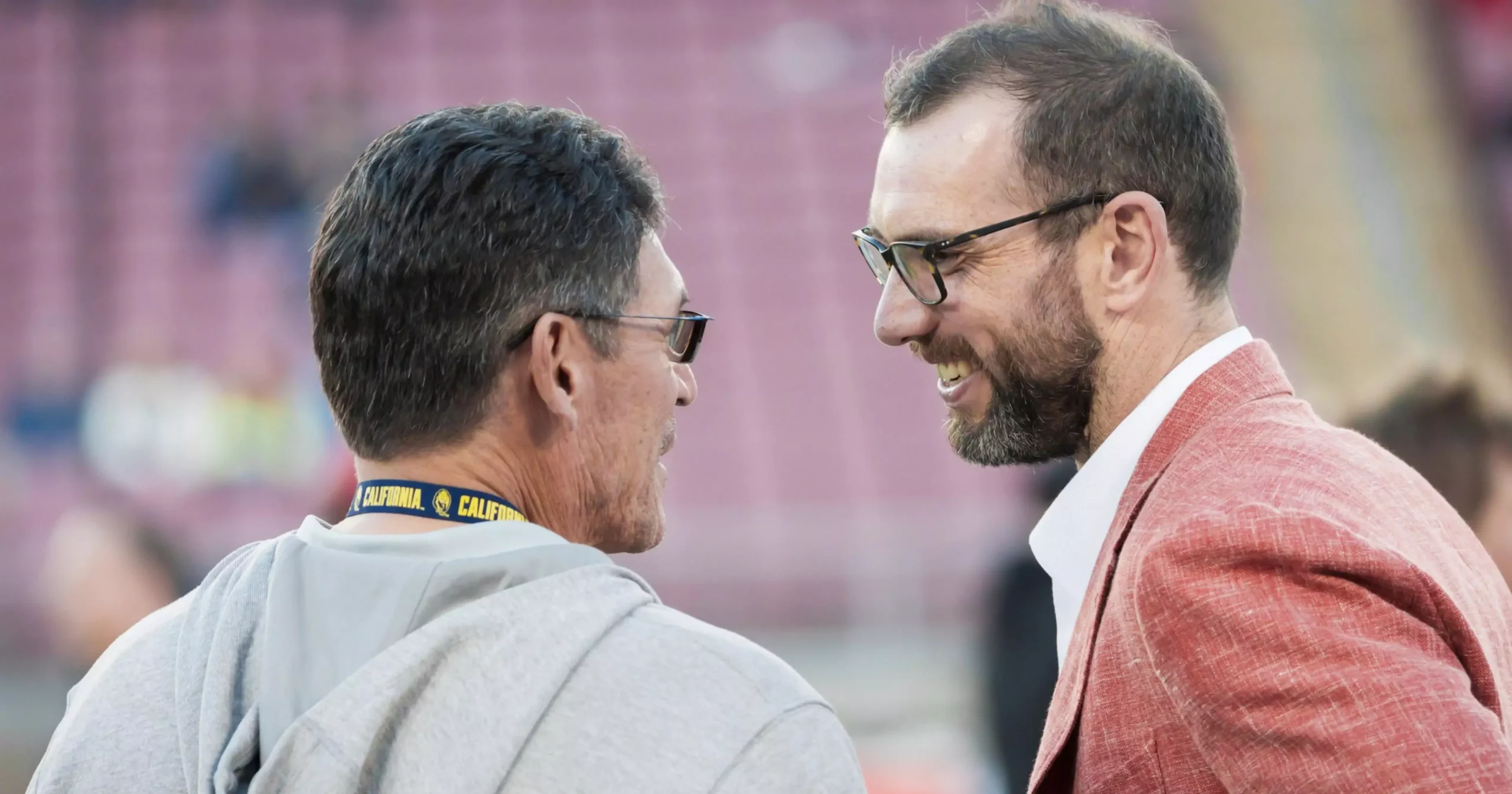
Last November, Stanford hired two-time Heisman Trophy runner-up Andrew Luck to fill a newly created GM role. In March, Cal responded by bringing in former NFL head coach Ron Rivera to fill the same, first-of-its-kind position in Berkeley.
Both Luck and Rivera spent their first year on the job securing critical financial resources that can theoretically bankroll better rosters. They also spent recent weeks completing coaching searches and identifying new leaders for the Cardinal and the Bears.
On Tuesday, Luck sat at a podium in Palo Alto alongside former teammate Tavita Pritchard, a fellow Stanford quarterback who was introduced as the program’s new coach. Three days later, Rivera sat alongside former Cal defensive lineman Tosh Lupoi, a prolific recruiter who will take over the Bears after Justin Wilcox was fired during his ninth season as head coach.
Lupoi wasted no time getting to work. He left his introductory press conference, booked a ticket to Hawaii (opens in new tab), and spent two hours convincing freshman quarterback Jaron-Keawe Sagapolutele to stay in Berkeley next season.
Neither Pritchard nor Lupoi has ever been a head coach, but both have played and worked as assistants at their respective programs. Pritchard started under Jim Harbaugh and called plays under David Shaw while Lupoi played and coached under Jeff Tedford, teaming up with Aaron Rodgers, Marshawn Lynch, and DeSean Jackson.
Pritchard and Lupoi understand the challenges Stanford and Cal face as well as anyone. They’ve each recruited players to their alma maters but have never had the type of resources that are available to them now. Each coach reports to a GM who is dedicated to raising money, acquiring talent, and developing the infrastructure that will be necessary to keep building momentum if and when their programs do succeed.
Lupoi might not be the next Tedford, and Pritchard probably isn’t going to be the next Harbaugh, but give Cal and Stanford credit. At a time when they could easily fold and give up on football, both programs are making high-profile hires, significant investments, and public commitments to building better teams.
No one knows if any of this will work, but for both Cal and Stanford, it’s far better than standing on the sidelines.
Monday morning brought the inevitable fallout from the College Football Playoff selection committee’s final bracket reveal. The inclusion of multiple teams from outside the major conferences has sparked fierce debate regarding the exclusion of arguably more talented rosters. On ESPN’s Get Up, the conversation turned heated regarding which teams truly deserved a chance to compete for a national title.
Analysts dissected the committee’s decision to favor conference champions from smaller leagues over battle-tested programs with higher talent ceilings. The argument centers on whether the playoff should feature the absolute best teams or simply adhere to a format that rewards access for all conferences.
One prominent voice on the network didn’t hold back his frustration with the current field composition. He argued that the presence of these smaller schools dilutes the quality of the postseason and robs viewers of high-stakes matchups between the sport’s biggest brands.
Dan Orlovsky Claims Committee Wasted Playoff Spots on Group of Five Teams
Former NFL quarterback Dan Orlovsky pointed directly at the Texas Longhorns and Notre Dame Fighting Irish as the teams that were unjustly left out during ESPN’s Get Up. He contended that their spots were effectively given away to the Tulane Green Wave and James Madison Dukes.
“Notre Dame and Texas should be in instead of—not being disrespectful—both James Madison and Tulane,” Orlovsky said. “We could be honest that those two spots are being wasted on those two programs that deserve a meaningful game.”

The controversy stems from a unique scenario where the committee prioritized conference champions despite significant disparities in team strength. Texas Longhorns head coach Steve Sarkisian led his team to a 9-3 record, closing the regular season by winning six of their final seven games.
This stretch included a victory over the then-No. 3 Texas A&M Aggies. Quarterback Arch Manning overcame early season struggles to throw 17 touchdowns against only two interceptions since Week 7.
Notre Dame Fighting Irish head coach Marcus Freeman saw his squad finish 10-2 after rattling off 10 consecutive victories. The Irish posted an average margin of victory of nearly 30 points during that streak and boasted a top-five scoring offense.

Orlovsky’s sentiment reflects a broader belief that the playoff should showcase teams capable of winning the national championship. Critics argue that matchups involving teams like James Madison lack the national appeal and competitive balance found in games featuring traditional powers.
The debate highlights the ongoing struggle to balance inclusivity with the desire for elite football. While Tulane and James Madison benefited from the current structure, the absence of two projected title contenders has left many questioning the system’s validity.
Read more on College Football HQ
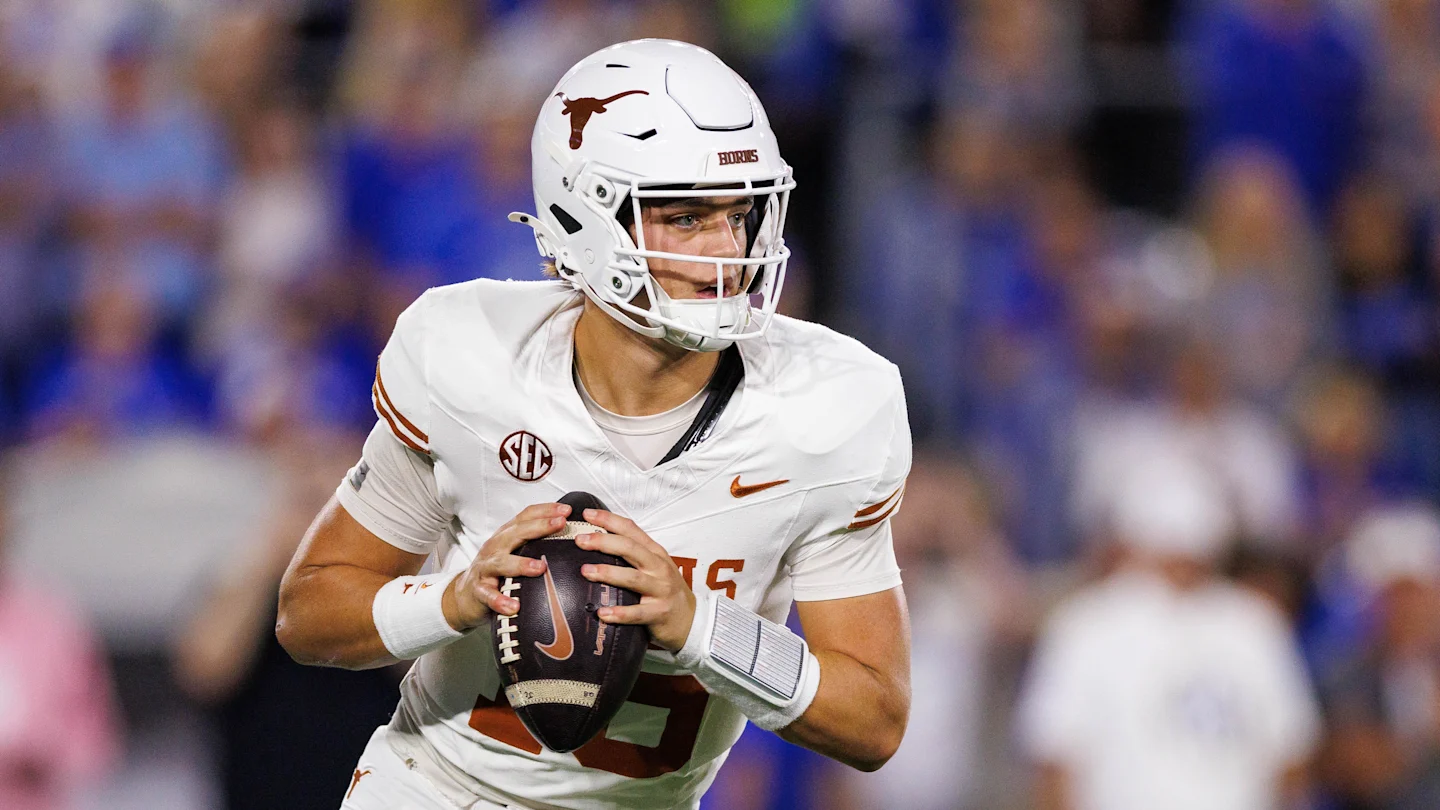
As the college football calendar winds down, Texas’ quarterback situation has become a national story.
Arch Manning finished the 2025 regular season with 2,942 passing yards, 24 touchdowns and seven interceptions, while rushing for 244 yards, eight rushing TDs and posting a 145.8 passer rating.
These numbers helped Texas reach a 9-3 regular-season mark (6-2 SEC) and a No. 13 ranking going into bowl season.
Manning’s sustained performance has positioned him as a credible 2026 NFL draft candidate, even as doubts persist about his readiness.
Monday’s PFF 2026 mock draft, in a writeup projecting the Pittsburgh Steelers at No. 19, explicitly assumed a scenario where “it’s feeling increasingly likely that Arch Manning … return[s] to school,” which pushed that mock to address other positional needs instead of quarterback.
That framing echoes multiple recent takes suggesting Manning is as likely to stay in Austin for 2026 as he is to jump to the NFL.

Manning arrived at Texas as one of the most hyped recruits in recent history: a five-star, consensus No. 1 quarterback in the 2023 class out of Isidore Newman (New Orleans) with five-star ratings across the major services.
He carried a pedigree and a polished high school resume (over 9,700 total yards and 140 total TDs) that fueled early NFL and media projections long before he even logged a college start.
2025 was Manning’s first extended turn as Texas’ starter, and while he showed growth, he also displayed some inconsistency against top defenses.
Still, he remains the highest‑paid athlete in college sports, with an NIL valuation of $5.3 million, fueling debate over whether that lessens his motivation to leave school early.
Underclassmen are generally required to apply for special eligibility for the NFL Draft by mid‑January, with the league setting Jan. 15 as the standard deadline and allowing slight adjustments for players from earlier‑finished seasons or championship teams.
That timeline gives Manning and Texas several weeks after bowl play to consult agents, advisers and the NFL’s College Advisory Committee before a final call.
Read More at College Football HQ
- SEC quarterback enters transfer portal after college football season
- Star SEC running back enters transfer portal after College Football Playoff snub
- 7,000-yard college football quarterback enters transfer portal
- Major college football program declines bowl game after College Football Playoff snub
ANN ARBOR – National signing day has always been an opportunity for college coaches to celebrate a new wave of players entering their program.
But in the current name, image and likeness-driven landscape of NCAA football, signing day also is one of the most stressful days of the year for coaches.
This signing day was no different, with dozens of prospects in the 2026 class having a late change of heart about their college choices just before putting pen to paper to make their verbal commitments official.
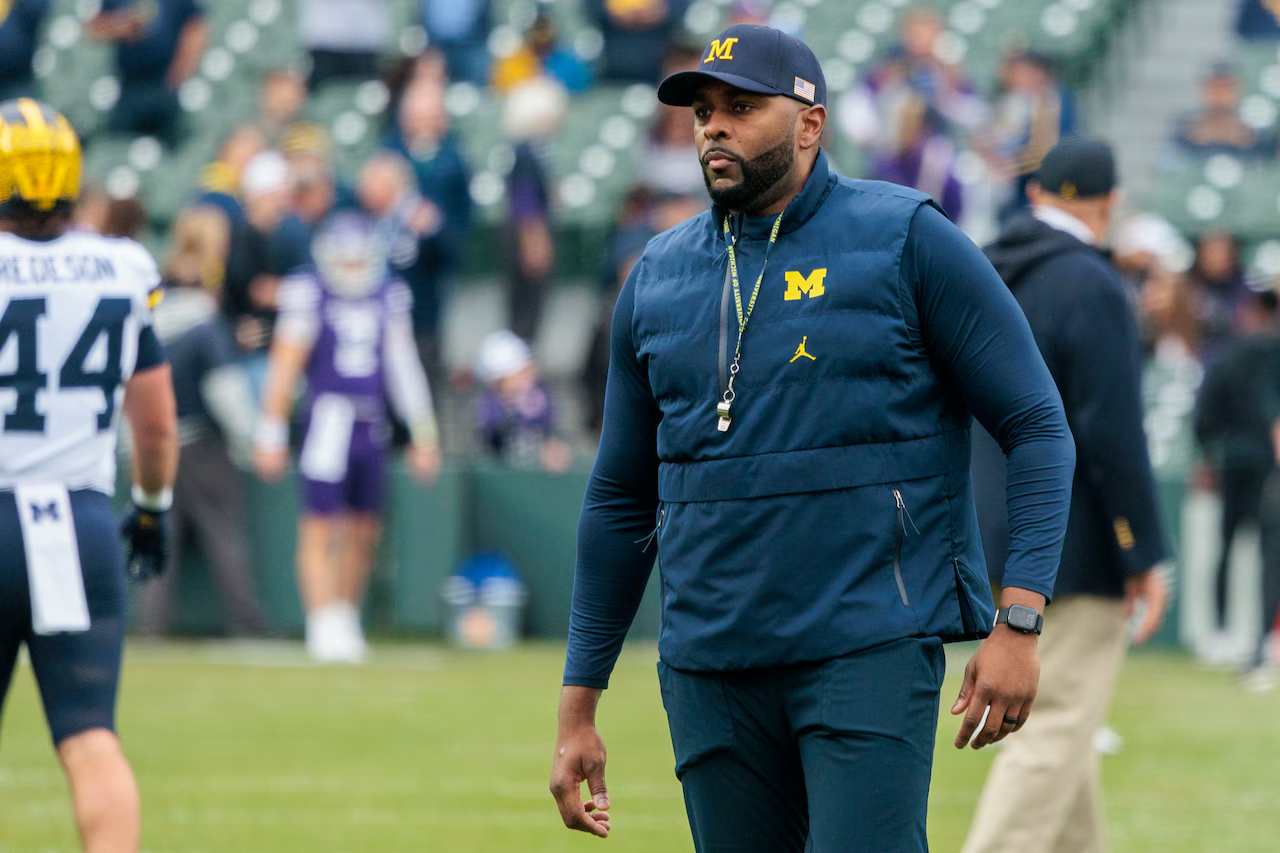
Michigan and head coach Sherrone Moore weren’t immune to this year’s signing day chaos. The Wolverines had 28 commits entering last Wednesday, the start of the early signing window, but only signed 27 recruits after some late reshuffling in the class.
The drama began Wednesday morning when Mansfield (Texas) four-star receiver pledge Zion Robinson announced he was “postponing signing until further notice.”
According to 247Sports’ Mike Roach, Stanford made an aggressive NIL play for Robinson. The school, which has had five straight losing seasons, successfully flipped the top-200 prospect on Thursday.
Meanwhile, Mineral (Va.) Louisa County five-star running back Savion Hiter, the crown jewel of Michigan’s class, didn’t sign on Wednesday. The delay sparked intense speculation on fan message boards about Hiter’s status, but Michigan was able to seal the deal Thursday morning.
According to Rivals’ Steve Wiltfong, Hiter, the top-ranked running back in the country per the 247Sports Composite, didn’t sign Wednesday because of “minor contractual details.”
The signing period fireworks didn’t end there. Michigan also lost Irmo (S.C.) Dutch Fork four-star edge Julian Walker to South Carolina on Thursday as the top-100 recruit chose to play for his hometown school where his father is on staff, but Moore’s program countered with a major move of its own.
It flipped Cartersville (Ga.) four-star receiver Brady Marchese from Georgia, adding a new top-150 wideout to its 2026 recruiting haul.
Moore was asked during a news conference Monday how much NIL has impacted late flips on signing day.
“It’s definitely out there,” Moore said. “It’s definitely a thing. It’s something you can’t ignore and you have to have a plan for it, and you have to adapt to it, because, yeah, that’s part of it. You think you got somebody signed, and then somebody shoots out something (other schools offering more in the NIL space), or does something, and you’ve got it cemented of what you’ve all agreed to, and all those other things, all those other pieces that are part of college football now, but that’s just college football now. You’ve got to adjust and you’ve got to adapt.”
More than ever before, roster construction in college football is driven by NIL funding. Not only is it prevalent in recruiting high school prospects, but also players in the transfer portal and retaining players on the current roster.
The biggest difference between high school recruiting and the portal is the timelines. Prep prospects can commit to a school at any time, but that verbal pledge doesn’t become binding until the player signs with the school. For example, Robinson and Walker were both committed to Michigan since last summer before flipping. Marchese was pledged to Georgia since March.
The portal is a more condensed timeline. The two-week window opens Jan. 2, and prospects usually try and find a new home quickly so they can enroll at their new schools in time for the start of a fresh semester.
Moore said Michigan is prepared.
“The big thing about the portal is not only getting the right fit, but the relationship,” he said. “Obviously, the right player, but people that fit the program, the people that fit the culture, the people that fit involved in the program. You’ve got to be ready. We’re on it. We’ve been on it. You’ve got to stay on it.
“You’ve got to have lists ready to go. Obviously, you can’t talk to the kids until they get in it. So, we’ve got to do everything we can to be prepared for that. From a financial basis, all that is a piece of it, right? We’ve got to make sure we’ve got a plan for all of it, and we do.”
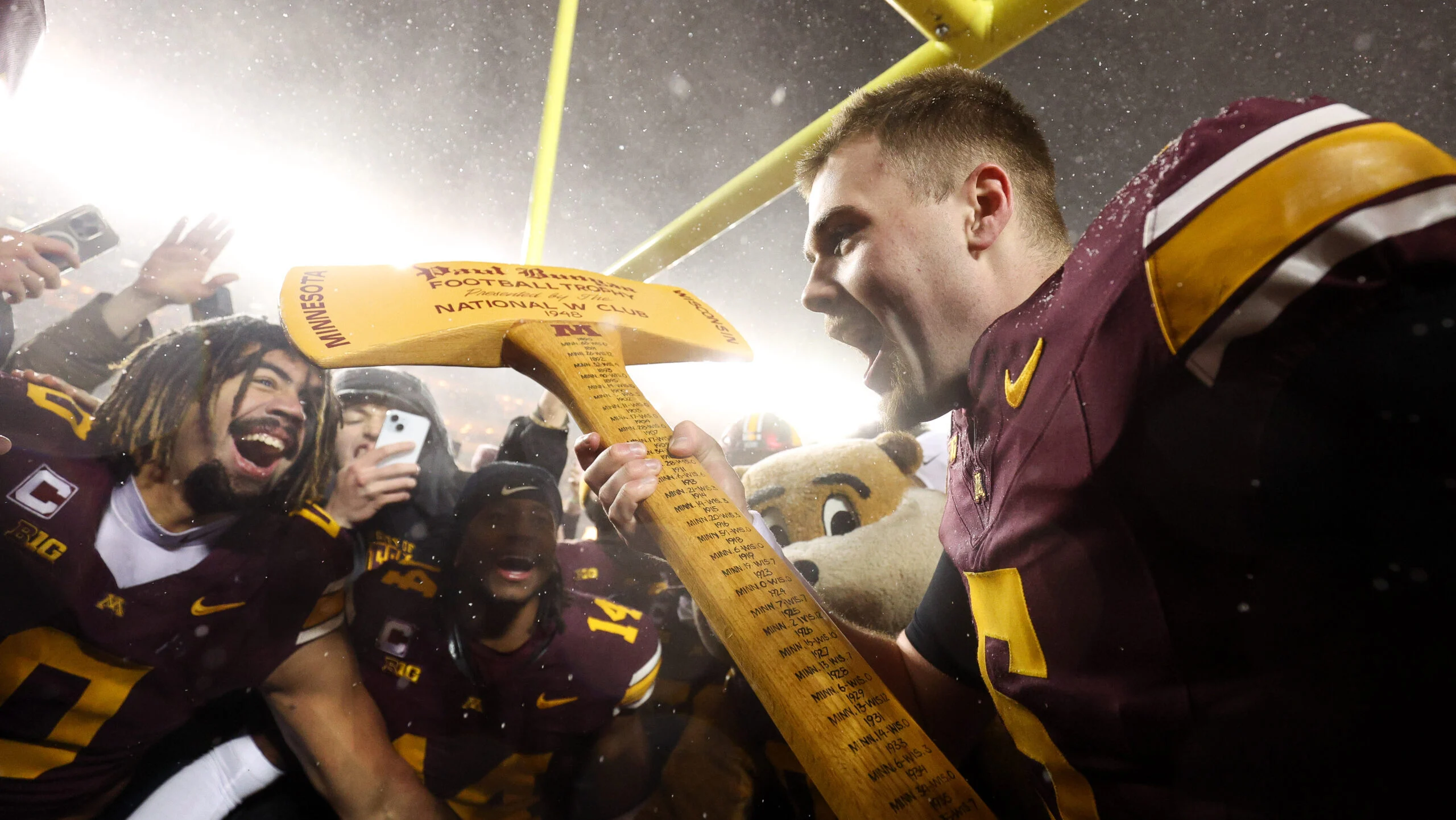
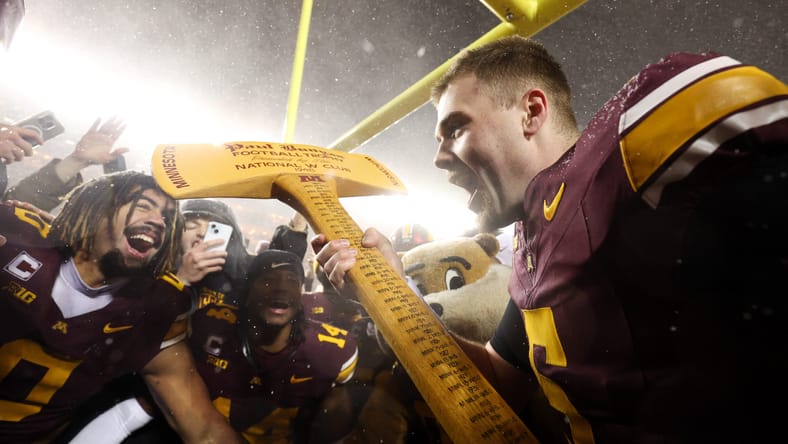
2025 was a disappoint season for the Minnesota Gophers. P.J. Fleck was starting a redshirt freshman quarterback, but heading into the season there was legitimate hope this team could win nine or ten games.
Not only did they win just seven, but Fleck got embarrassed by Iowa in his ninth season on the job, and they didn’t perform well against Northwestern, either. Minnesota is headed to the Rate Bowl against New Mexico in Phoenix, but the page needs to be flipped to 2026.
If the Gophers are going to be better next year, it will be because Drake Lindsey, Koi Perich, and Darius Taylor contribute in a big way. They aren’t going to be cheap to keep around, either, as the transfer portal will soon heat up.
MN Gophers spending big on key roster talent
The college sports landscape has changed amidst the introduction of NIL spending. Roster creating, especially in revenue generating sports, is not simply a byproduct of recruiting anymore. Dollars are attached to expectations, and Charley Walters revealed the substantial amount Minnesota will need to pay their stars.
It is expected to cost the Gophers at least $1 million to retain redshirt QB Drake Lindsey for his sophomore season next year. That would make him and 2016 junior defensive back Koi Perich at least a $2 million duo. Add Darius Taylor and the cost could exceed $3 million for trio.
Charley Walters – Pioneer Press
Drake Lindsey hardly set the world on fire this season. He completed 63.2% of his passes, with 16 touchdowns and 6 interceptions. At times, he looked every bit of a redshirt freshman. However, he also showed off his special arm talent, and there’s clearly a path for development.
Needing to pay a guy like Lindsey seven figures to retain his services is indicative of what college football has become, way too expensive… Minnesota will likely pony up for the Arkansas native who has always had a soft spot in his heart for the home state Razorbacks. It’s also probably helpful that his mentor, Vikings QB Max Brosmer is still in town.
Perich earned a hefty jump in NIL funds after leading the Big Ten in interceptions as a true freshman. The Minnesota native was nowhere near as noticeable this year, but he did record his first pick six. It seems logical he’ll be back, but the number will only increase.
Of the trio, Darius Taylor would seem to be the most expendable. An extremely talented running back, but rarely can be counted upon to remain on the field. Taylor played in just nine games for the Gophers while nursing a hamstring injury, and someone else paying for him to be injured on their sideline wouldn’t be the worst outcome.
Attendance still an issue for Minnesota Gophers
P.J. Fleck has the best recruiting class in history for the Minnesota Gophers for 2026. He held onto that talent despite the 7-5 record, but he’ll need to do much better in order to generate additional interest in the program. Walters added this about attendance for the Gophers:
Meanwhile, Gophers football attendance has decreased for a second straight season, averaging 46,519 for its seven games this year in 50,085-capacity Huntington Bank Stadium. The Gophers’ highest attendance average in history was 62,954 in 1957 at Memorial Stadium. The Metrodome years topped out at 60,985 in 1985; and the Huntington Bank Stadium high is 52,355 in 2015. During Fleck’s nine seasons at Minnesota, home attendance — excluding the abbreviated COVID 2020 season — has averaged 45,257.
Pioneer Press
When things are good at Huntington Bank Stadium, they can be really good. The problem is that Fleck has largely failed to sustain consistency. It might have seemed odd to storm the field after beating Nebraska, but it could have held more weight if the season trended in a positive direction.
At some point Fleck needs to reach a new level. He is 6-0 in bowl games at Minnesota, but has won less than nine games each of the past three seasons. An outlier 11-2 season with Tanner Morgan in 2019 is the high-water mark, and he’s shown zero semblance of returning to those heights since.
More About: Minnesota Gophers Football
Add MinnesotaSportsFan as a preferred source on Google.
The College Football Playoff selection committee delivered a stunning blow to a prominent 10-win program on Sunday by excluding the team from the 12-team field. In response to the snub, the university announced it would decline any bowl invitation and end its season immediately.
This unprecedented move by the athletic director and head coach has drawn sharp criticism from national media figures. The leadership group felt the playoff spot was stolen after weeks of being ranked safely inside the bracket, leading them to opt out rather than play in a consolation game.
Notre Dame was positioned at No. 11 in previous rankings but fell out of the bracket in favor of the Miami Hurricanes. The Fighting Irish subsequently withdrew from the postseason, a choice that has sparked a significant debate regarding the culture of the sport.
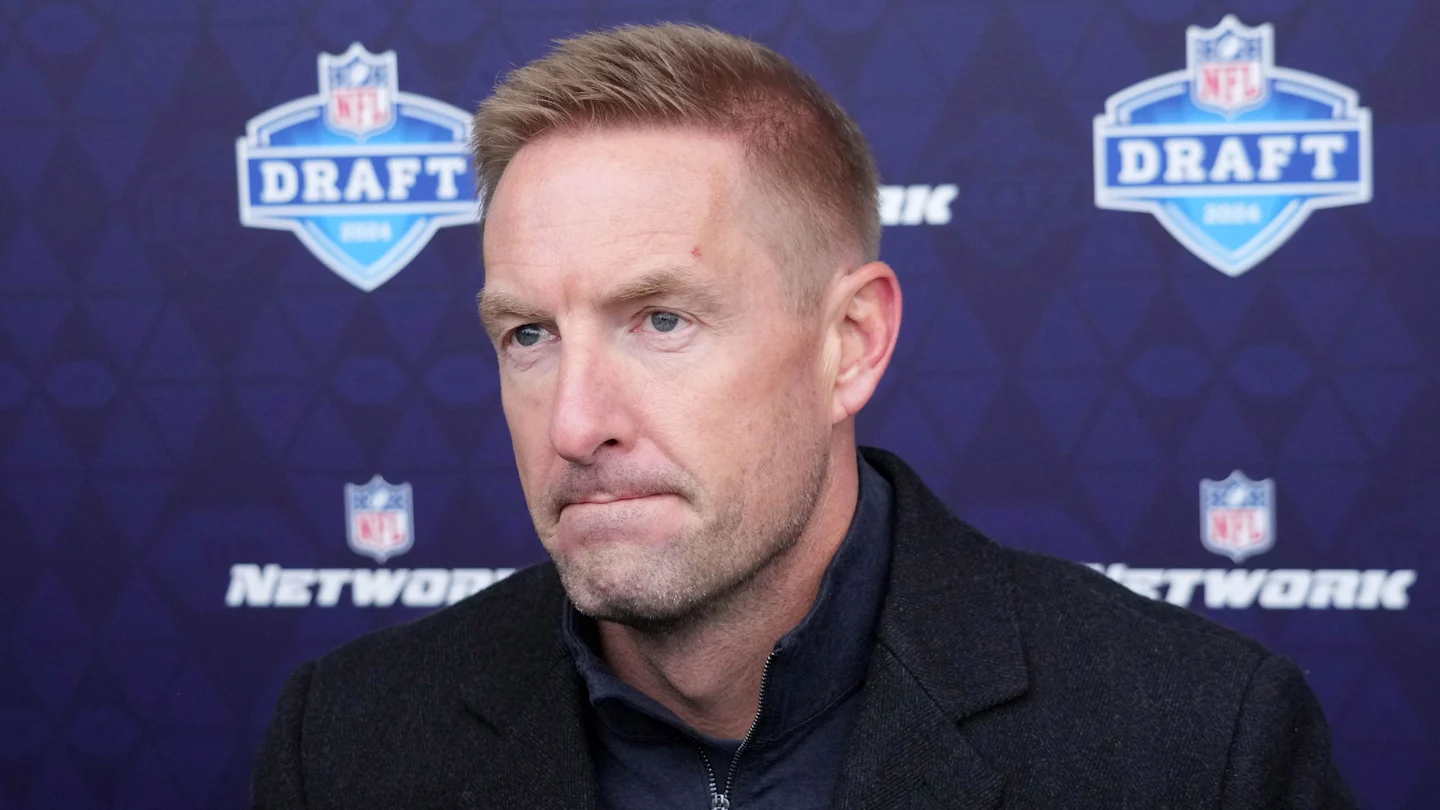
Joel Klatt Labels The Decision A Big Mistake
Fox Sports college football analyst Joel Klatt addressed the controversy on The Joel Klatt Show, labeling the decision a significant error in judgment. Klatt argued that bypassing the postseason is an emotional reaction that negatively impacts the roster’s development. While the frustration in South Bend is palpable following the committee’s decision, the analyst believes the historic program is mishandling the situation.
Klatt outlined three primary concerns regarding the choice to pack up for the year. His first point focused on competitive development. Bowl preparation typically offers teams 15 extra practices, which are crucial for younger players. Klatt questioned how forfeiting this time helps the team prepare for the 2026 campaign.
“Bowl practice is where you develop for the next season,” Klatt said. “So, I don’t understand how just saying like, ‘No, we’re done with that,’ helps you for next year.”

The analyst also suggested the move appeared rooted in bitterness toward the selection process and the network broadcasting the games. He noted that the decision feels “petty” if it is based on anger regarding the weekly rankings reveal. Klatt emphasized that a program with such high stature should rise above such feelings.
“I think that that decision was born out of an emotional reaction rather than a disciplined response,” Klatt said. “And those two things are very different.”
Finally, Klatt directed a message to the athletes who may have played their final down of football. He warned that players might look back on this choice with regret. He stressed that athletes have a finite number of opportunities to compete at the highest level and should not artificially create a finish line.

Klatt also criticized the leadership strategy behind the choice. He compared the situation to parenting, noting that adults should intervene when young people react out of hurt feelings. He argued that leaders must prioritize logic over immediate emotional responses. ESPN analyst Paul Finebaum also took aim at the Irish fan base for their reaction to being left out of the playoff.
“I wouldn’t have asked the players what they wanted to do because they feel hurt,” Klatt said. “You don’t want to respond with your emotions. You want to respond with your reason and logic.”
Read more on College Football HQ

Economist says NASCAR owes $364.7M to teams in antitrust case

NCAA Women’s Div I Volleyball Tournament Glance

In a matter of one year, Cal and Stanford went all in on football

NASCAR Driver Logan Misuraca Set to Return to Daytona for 2026 ARCA Menards Series Opener with City Garage Motorsports

Info on Purdue Volleyball’s Regional Semifinal Match vs. SMU Released

Lavar Scott secures full-time ride with Alpha Prime Racing

City in the Community Collaborates with NYU on AI Programming Course for Young Leaders

Annual Pitman parade continues with faith – Catholic Star Herald
Longtime Utah volleyball coach Beth Launiere retires – Deseret News

5 Tough Takeaways from Week One of the NASCAR Trial

Keathley Dominates as Martin County Rolls to 3-0 Start

Nevada volleyball’s team leaders in kills, assists and digs enter the transfer portal

Larson shares only hilarious texts he gets from Hendrick – Motorsport – Sports

ESPN analyst names two college football programs that should replace ‘wasted’ playoff spots

Adrian College SID, Mike Prang, Earns Distinguished CSC 30 Under 30 Recognition

First Tee Winter Registration is open

Fargo girl, 13, dies after collapsing during school basketball game – Grand Forks Herald

CPG Brands Like Allegra Are Betting on F1 for the First Time

Volleyball Recaps – November 18

F1 Las Vegas: Verstappen win, Norris and Piastri DQ tighten 2025 title fight

Two Pro Volleyball Leagues Serve Up Plans for Minnesota Teams

Sycamores unveil 2026 track and field schedule

Utah State Announces 2025-26 Indoor Track & Field Schedule

Redemption Means First Pro Stock World Championship for Dallas Glenn

Texas volleyball vs Kentucky game score: Live SEC tournament updates

Bowl Projections: ESPN predicts 12-team College Football Playoff bracket, full bowl slate after Week 14

Indiana’s rapid ascent and its impact across college football

How this startup (and a KC sports icon) turned young players into card-carrying legends overnight

Pohlman admits ‘there might be some spats’ as he pushes to get Kyle Busch winning again

Robert “Bobby” Lewis Hardin, 56

 Why a rising mid-major power with an NCAA Tournament team opted out of revenue-sharing — and advertised it
 NBA Legend Michael Jordan to Join NBC Sports as Special Contributor
 Falcons mailbag
 Portal Update – Basketball and Gymnastics Take Hits
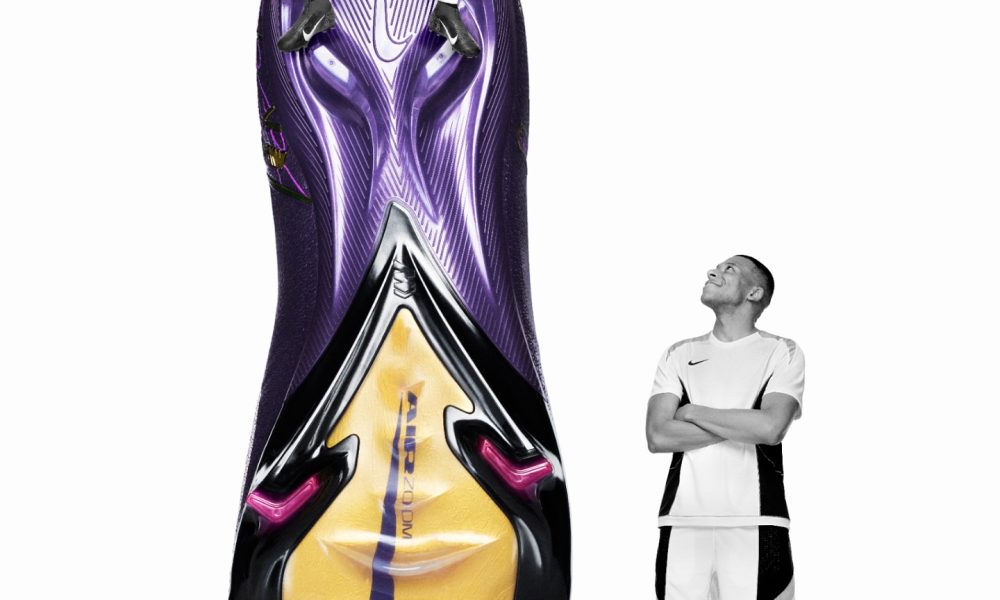 has always dreamed in Mercurial. Now his initials are on the boots.
The new Kyl…
has always dreamed in Mercurial. Now his initials are on the boots.
The new Kyl…
-
 Rec Sports2 weeks ago
First Tee Winter Registration is open
-
 Rec Sports2 weeks ago
Fargo girl, 13, dies after collapsing during school basketball game – Grand Forks Herald
-
 Motorsports2 weeks ago
CPG Brands Like Allegra Are Betting on F1 for the First Time
-
 Sports3 weeks ago
Volleyball Recaps – November 18
-
 Motorsports2 weeks ago
F1 Las Vegas: Verstappen win, Norris and Piastri DQ tighten 2025 title fight
-
 Sports2 weeks ago
Two Pro Volleyball Leagues Serve Up Plans for Minnesota Teams
-
 Sports2 weeks ago
Sycamores unveil 2026 track and field schedule
-
 Sports2 weeks ago
Utah State Announces 2025-26 Indoor Track & Field Schedule
-
 Motorsports2 weeks ago
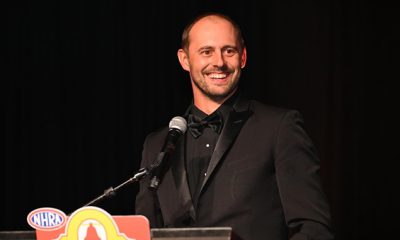
Redemption Means First Pro Stock World Championship for Dallas Glenn
-
 Sports2 weeks ago
Texas volleyball vs Kentucky game score: Live SEC tournament updates