
NIL
College Baseball 'Way Too Early' Top 25 Rankings For 2026

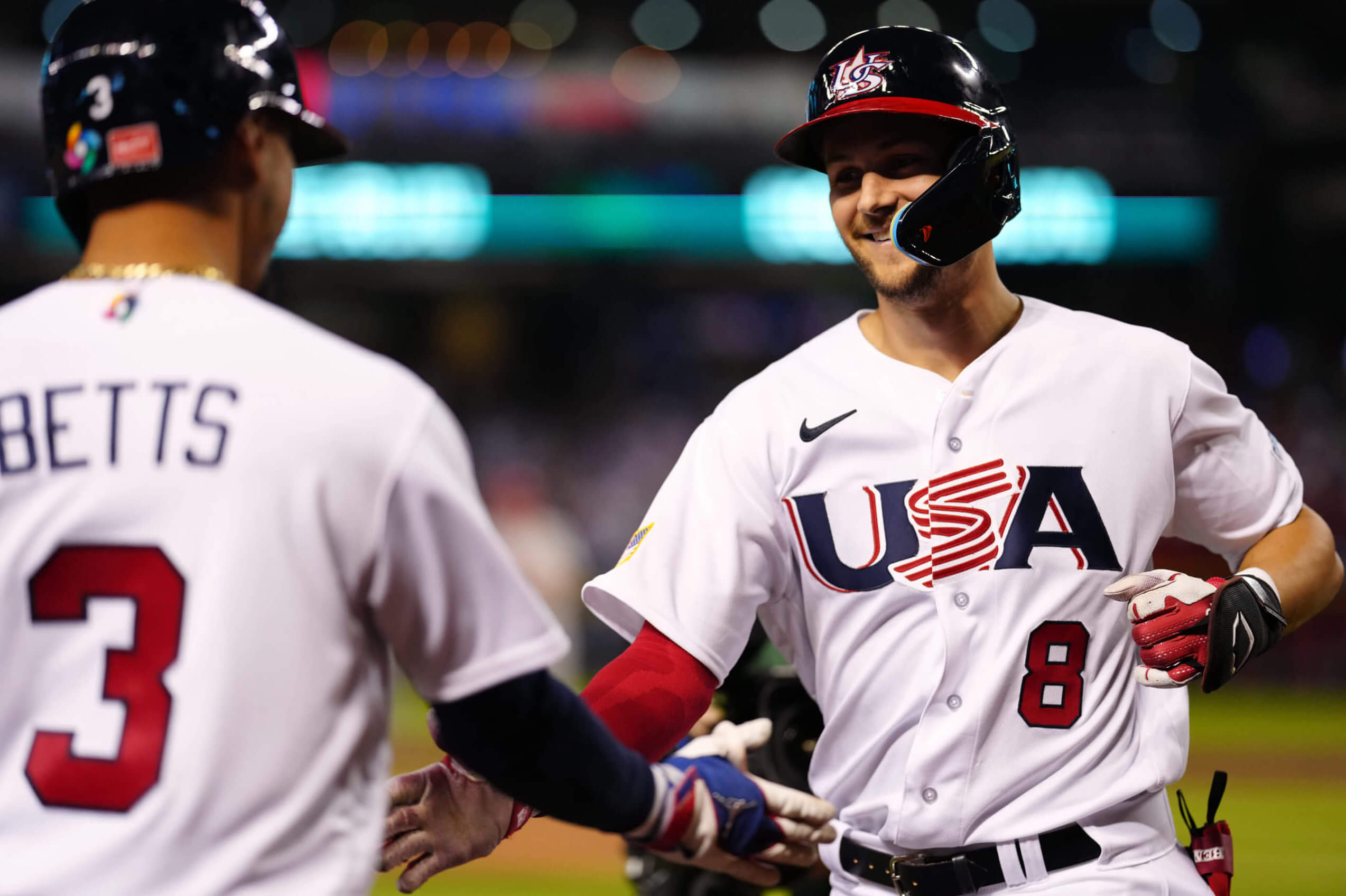


Image credit:
Roch Cholowsky (Photo by Eddie Kelly/ ProLook Photos)
While the 2026 season remains months away, much of the offseason’s most significant movement—coaching changes, the transfer portal and the MLB Draft—is now behind us. With that in mind, this ranking serves as an early look at how we believe the nation’s top programs stack up entering the fall.
We approached this exercise with a slightly higher tolerance for risk than we typically would come February, factoring in potential breakouts, coaching impact and unproven but high-upside transfers. This list will look different when our official preseason Top 25 is released, but for now, it reflects where things stand as the dust settles from a busy summer.
More College Baseball Coverage
1. UCLA (48-18, 22-8 Big Ten)
2025 result: Reached College World Series
End of season ranking: 6th
In an era when early rankings can at times hinge on splashy offseason moves, it’s UCLA’s relative inactivity that vaults it to the top of our ‘Way Too Early’ 2026 Rankings. The Bruins are coming off a resurgent season in which they shared the Big Ten regular season title with Oregon and reached the College World Series for the first time since 2013.
Much of the roster that powered coach John Savage’s team back into the national spotlight is slated to return to Westwood in 2026, including All-America selections Mulivai Levu and Roch Cholowsky, who became just the sixth non-draft eligible player to win Baseball America’s College Player of the Year Award in its 40-plus-year history. The Bruins also bring back all but one of their top offensive contributors, their weekend rotation and several key bullpen arms. Former Texas outfielder Will Gasparino, an early-round draft prospect, joins the fold via the portal.
No team in the country brings back more proven firepower than UCLA, which should garner plenty of preseason attention as a major title contender and thanks to Cholowsky’s candidacy to be selected first overall in the 2026 draft.
2. LSU (53-15, 19-11 SEC)
2025 result: Won National Championship
End of season ranking: 1st
It would have been easy—and widely accepted—if LSU topped this list after winning its second national title in three years with a roster largely put together by first-year Tigers. Coach Jay Johnson is a master team builder, and his staff is among the best in the country at extracting maximum value from their players. We expect them to keep doing so in 2026.
Much like the 2024 LSU team that failed to host a regional a year after winning it all, the Tigers’ 2026 squad has a ton of talent to replace. Gone are starting pitchers Kade Anderson and Anthony Eyanson, who arguably formed the best one-two punch in the country last year. Bullpen anchor Chase Shores is also off to pro ball. Offensively, Jared Jones, Ethan Frey, Daniel Dickinson and Luis Hernandez are set to begin their professional careers.
Grand Canyon slugger Zach Yorke, Oregon State third baseman Trent Caraway and Kansas State first baseman Seth Dardar headline a promising group of offensive transfers. On the mound, former Kansas righty Cooper Moore, former Oregon lefty Santiago Garcia and former North Dakota State lefty Danny Lachenmayer bring similarly-high upside.
It’s safe to once again expect a lot out of LSU, which has been nothing short of phenomenal under Johnson’s leadership.
3. Texas (44-1, 22-8 SEC)
2025 result: Eliminated in Austin Regional
End of season ranking: 18th
Jim Schlossnagle’s first season in Austin was a success. He guided the Longhorns to a regular-season SEC title in the school’s first year in the conference. While elimination from their own regional left a sour final note, the Longhorns wasted no time reinforcing their roster for a deeper run in 2026.
Though they lost key pieces like Will Gasparino, starter Jared Spencer, shortstop Jalin Flores, catcher Rylan Galvan and outfielder Max Belyeu, the Longhorns retained a critical core from their 2025 team and turned to the transfer portal to reload.
Pitchers Luke Harrison, Ruger Riojas and Max Grubbs all announced their returns for 2026, giving Texas valuable experience and physical maturity on the mound. Dylan Volantis, the BA College Freshman of the Year and Thomas Burns are also back, rounding out a pitching staff that looks formidable on paper. Texas made gains on the position player front as well, with Temo Becerra (Stanford) and Josh Livingston (Wichita State) going unselected in the draft. Third baseman and left fielder Adrian Rodriguez and second baseman Ethan Mendoza return.
4. Mississippi State (36-23, 15-15 SEC)
2025 result: Eliminated in Tallahassee Regional
End of season ranking: Not ranked
Mississippi State made the biggest coaching splash of the year when it hired longtime Virginia skipper Brian O’Connor to replace 2021 national title winner Chris Lemonis, who was fired partway through his seventh season. With the change comes massive expectations—ones that appear attainable for a star-studded roster.
The Bulldogs landed a loaded crop of transfers, including several who followed O’Connor from Charlottesville—Tomas Valincius, Aidan Teel and James Nunnallee—and others from across the country like Vytas Valincius, Tyler Pitzer, Jackson Logan, Maddox Webb and Drew Wyers. They also secured hard-throwing lefty Jack Bauer, a highly-regarded prospect many expected to begin his pro career this summer.
Mississippi State also held onto key pieces, most notably prized third baseman Ace Reese, who was at the center of transfer speculation after Lemonis’ departure but ultimately stayed committed to Starkville.
With its revamped roster and new leadership, Mississippi State has the talent to be a force in 2026. It was hard to justify ranking the Bulldogs much lower than No. 4.
5. Auburn (41-20, 17-13 SEC)
2025 result: Eliminated in Auburn Super Regional
End of season ranking: 10th
Auburn rapidly climbed from the SEC cellar back into the league’s elite in 2025, more than doubling its eight conference wins from the year prior. That success was fueled in part by key contributors no longer with the program—namely ace Samuel Dutton and outfielder Ike Irish—whose production will be tough to replicate. But returning talents Chris Rembert, Chase Fralick, Eric Guevara, Bub Terrell, Christian Chatterton and Andreas Alvarez provide a rock-solid foundation the Tigers have built upon through recruiting.
Auburn bolstered its pitching staff with the additions of Drew Whalen (Western Kentucky), Ethan Harden (Belmont) and Jake Marciano (Virginia Tech). Offensively, Ryan Farber (Texas State), Todd Clay (Alabama-Birmingham) and Logan Greggorio (Northern Illinois) are promising additions.
The Tigers put themselves back on a promising trajectory last year—and with a strong returning core and quality reinforcements, they appear poised to keep the momentum going.
6. Georgia (43-17, 18-12 SEC)
2025 result: Eliminated in Athens Regional
End of season ranking: 20th
Wes Johnson has won 86 games in his first two years atop the program—a new high-water mark for a coaching start in Athens. But despite a strong regular season in 2025, Georgia’s year ended in disappointment with a home regional exit, due in large part to persistent pitching struggles.
The Bulldogs responded with an aggressive and impressive transfer haul, including several players who passed up pro opportunities to head to Athens. Bryce Calloway (New Orleans), Caden Aoki (USC), Lane Pearson (West Georgia) and catcher Jack Arcamone (Richmond) all chose college over the draft. Georgia also added Stanford righties Joey Volchko and Matt Scott, two talented arms with premium stuff but inconsistent results thus far in their careers.
The Bulldogs return several key contributors as well, most notably Tre Phelps, who fielded pro interest before opting to come back.
Is this the year Georgia finally breaks through and returns to Omaha for the first time since 2008?
7. Tennessee (46-19, 16-14 SEC)
2025 result: Eliminated in Fayetteville Super Regional
End of season ranking: 12th
Tennessee looked like a potential repeat champion through the first three weeks of SEC play but steadily lost steam down the stretch, dropping six of its final seven series. The Volunteers still advanced to the super regional round, where they fell to Arkansas.
With several key contributors—Liam Doyle, Andrew Fischer, Gavin Kilen, Dean Curley and others—off to the pro ranks, it would be easy to assume a step back in 2026. But coach Tony Vitello once again reloaded with one of the nation’s strongest transfer classes, highlighted by Henry Ford, Evan Blanco, Landon Mack, Garrett Wright and Brady Frederick.
The return of Brandon Arvidson only strengthens what should be one of the SEC’s deepest pitching staffs, and Tennessee’s offense has a proven track record of producing—even when the faces change.
8. Georgia Tech (41-19, 19-11 ACC)
2025 result: Eliminated in Oxford Regional
End of season ranking: 25th
For the first time in more than three decades, Georgia Tech will have a new voice leading its program. Danny Hall, who guided the Yellow Jackets to over 1,300 wins across 31 seasons, stepped down following a resurgent 2025 campaign. In his place steps long-time assistant James Ramsey, tasked with both honoring Hall’s legacy and capitalizing on the momentum of a team that claimed its first outright ACC regular-season title since 2005.
Ramsey inherits a roster built to contend again in 2026. Georgia Tech returns a strong nucleus of position players in Kent Schmidt, Vahn Lackey, Alex Hernandez and Drew Burress, as well as key arms in Mason Patel, Tate McKee and Cooper McMullen. The Yellow Jackets also added impact through the portal, headlined by shortstop Jarren Advincula and lefthander Dylan Loy, two experienced pieces who could anchor the lineup and rotation, respectively.
With a balanced, veteran roster and continuity in the coaching staff, Georgia Tech appears well-positioned to remain an ACC power under Ramsey’s leadership.
9. Virginia (32-18, 16-11 ACC)
2025 result: Missed NCAA Tournament
End of season ranking: Not ranked
In a display of administrative commitment to baseball, Virginia moved swiftly following Brian O’Connor’s departure and landed one of the most respected names in the conference: long-time Duke coach Chris Pollard. A proven winner at a resource-challenged program, Pollard now takes the reins of an ACC blue blood with significantly more at his disposal—and wasted no time making his presence felt.
Pollard brought with him a core of Duke’s top talent, headlined by outfielder AJ Gracia, the top-ranked player in the transfer portal and a legitimate candidate to go first overall in the 2026 draft. Two-way standout Kyle Johnson and pitchers Henry Zatkowski and Max Stammel followed suit, giving Virginia an instant influx of high-end talent on both sides of the ball.
Pollard has guided teams to four super regionals in the past seven seasons—an impressive feat given Duke’s limitations relative to the ACC’s upper echelon from a resource standpoint. Now armed with top-tier resources and a transfer class that turned heads, he may have his clearest path yet to finally break through to Omaha.
10. TCU (39-20, 19-11 Big 12)
2025 result: Eliminated in Corvallis Regional
End of season ranking: Not ranked
After missing the NCAA Tournament in 2024, TCU responded with a strong season under Kirk Saarloos, reclaiming its place among the Big 12’s best. While the Horned Frogs fell short of Omaha—a destination they reached in 2023—they racked up 39 wins, including 19 in conference play, and appear well-positioned to soar even higher in 2026.
The program does have a few key holes to fill with the departures of Mason Bixby, Karson Bowen, Kole Klecker and Cohen Feser, all of whom played important roles during TCU’s 2025 resurgence. But the returning core remains among the strongest in the conference. Nolan Traeger, Sawyer Strosnider, Chase Brunson, Noah Franco and Tommy LaPour are all back in the fold. Strosnider was a Freshman of the Year contender and All-America selection, while LaPour earned All-America honors for his work on the mound.
Saarloos also reloaded effectively through the portal, landing Tanner Sagouspe (Cal Poly), Rob Liddington (Incarnate Word) and Walt Quinn (Grand Canyon), among others.
With a deep, balanced roster and no clear favorite in the Big 12, TCU looks poised to make a serious push for a conference title and a return to the College World Series.
11. Arkansas (50-15, 20-10 SEC)
2025 result: Reached College World Series
End of season ranking: 3rd
Arkansas returned to the national spotlight in 2025 with a run to the College World Series semifinals, reaffirming its status as one of the sport’s premier programs. But the challenge in 2026 will be entirely different, as the Razorbacks now face one of the most significant roster overhauls in the country.
The draft hit hard. Gage Wood, Wehiwa Aloy, Zach Root, Charles Davalan, Christian Foutch, Aiden Jimenez, Landon Beidelschies, Brent Iredale, Ben Bybee, Justin Thomas and Parker Coil are all gone. That group includes the entire weekend rotation, most of the bullpen, key bats throughout the lineup and a Golden Spikes Award-winning shortstop.
To their credit, the Razorbacks reloaded quickly. An impressive transfer class featuring Ethan McElvain, Maika Niu, Zack Stewart and Jackson Kircher joins the fold, while Kuhio Aloy leads an intriguing group of returners at the plate. On the mound, all eyes will be on Gabe Gaeckle as he enters his draft year.
It’s ill-advised to bet against coach Dave Van Horn and his staff. Arkansas will have to relearn how to win the way it did in 2025, but the blueprint remains—and so does the hunger to chase that elusive first national title.
12. Florida State (42-16, 17-10 ACC)
2025 result: Eliminated in Corvallis Super Regional
End of season ranking: 11th
The draft was as damaging for Florida State as it was for Arkansas. The Seminoles matched the Razorbacks with a nation-leading 11 players selected—Jamie Arnold, Alex Lodise, Cam Leiter, Max Williams, Drew Faurot, Peyton Prescott, Joey Volini, Evan Chrest, Gage Harrelson, Jaxson West and Maison Martinez. The group represents the majority of the Seminoles’ starting lineup, two-thirds of their weekend rotation and several key bullpen arms.
Replacing that kind of production is a monumental task. The Seminoles will lean on a solid transfer class headlined by former FAU lefthander Trey Beard, but many of their additions will be stepping up significantly in competition level—a calculated risk for a program with so much to replace.
Coach Link Jarrett has restored stability and national relevance to the program he once starred for as a player. But with the core of his Omaha team now off to pro ball, 2026 may present the toughest challenge of his young coaching tenure in Tallahassee.
13. North Carolina (46-15, 18-11 ACC)
2025 result: Eliminated in Chapel Hill Super Regional
End of season ranking: 9th
North Carolina fell one win shy of returning to the College World Series for the second-straight season, but it was still a successful season for head coach Scott Forbes who guided the Tar Heels to their third super regional appearance in the last four seasons. There’s plenty of production to replace, and Gavin Gallaher—whose 68 RBIs last spring led the team—will be the centerpiece of the offense, while the transfer quartet of Owen Hull, Erik Paulsen, Jake Schaffner and Macon Winslow are all valuable additions.
While the Heels will have to replace Jake Knapp (14-0, 2.02 ERA), their projected rotation of Jason DeCaro, Ryan Lynch and Walker McDuffie is a three-headed monster that could be one of the best in the ACC when all is said and done.
14. West Virginia (44-16, 19-9 Big 12)
2025 result: Eliminated in Baton Rouge Super Regional
End of season ranking: 13th
The Steve Sabins era is off to a roaring start in Morgantown, as the first-year head coach hit the ground running and led West Virginia to its second-straight super regional. There’s plenty of veteran production to replace on both sides of the baseball, but Sabins has a solid group of returners to build around in addition to an impressive transfer portal class. Sophomore Gavin Kelly headlines the returning core offensively, while live-armed righthander Chase Meyer figures to compete for the Friday starter role after pitching predominantly in relief in 2025.
Division II standout Dawson Montesa is in line to earn a spot in the Mountaineers’ weekend rotation, and keep an eye on lefthander Andrew Middleton, as well. Middleton is perhaps the biggest wild card in this year’s portal cycle and logged a whopping 29 strikeouts across 11.2 innings this spring. His health is a question mark, but he could be a high-impact arm if everything clicks.
15. Vanderbilt (43-18, 19-11 SEC)
2025 result: Eliminated in Nashville Regional
End of season ranking: 17th
Vanderbilt earned the No. 1 overall seed in this year’s tournament, but its season came to a screeching halt as it was eliminated by No. 4 seed Wright State on its home field. The Commodores have fit in the “reload, not rebuild” bucket for quite some time and this offseason is no different. Key pieces are departing on either side of the baseball—particularly the rotation—but Connor Fennell and Austin Nye project as a dynamic one-two punch, while Brodie Johnston and Braden Holcomb are in line to lead the offense.
The Commodores have a “quality over quantity” approach in the transfer portal, but Carter and Logan Johnstone are each high-impact additions. A name to circle is shortstop Ryker Waite. He logged just six at-bats as a freshman but was recently named a Cape Cod League all-star and is in line to fill the void left at shortstop by Jonathan Vastine.
16. Miami (35-27, 15-14 ACC)
2025 result: Eliminated in Louisville Super Regional
End of season ranking: 16th
Miami got off to a slow start and appeared dead in the water in early April, but the Hurricanes righted the ship, played their way back into the field of 64 and made their first super regional since 2016. The 2026 ‘Canes will look different than this year’s group, but there are still plenty of reasons to be excited about Miami baseball.
Coach J.D. Arteaga’s offense will again be led by first team all-American Daniel Cuvet. The physical corner infielder has some of the most prolific power of any hitter in the country, and he’ll be joined by veteran infielder Jake Ogden. Ogden had plenty of draft buzz and likely could have signed if he wanted to, but he instead opted to return to school. Transfers Vance Sheahan, Alex Sosa and Brylan West will provide thump to the middle of the order, while AJ Ciscar and Tate DeRias—following strong freshman campaigns—are in line to step into the weekend rotation full-time.
Not only does Miami have an impressive nucleus of returners, but it also boasts a standout transfer class. The Hurricanes will be on a mission to prove that 2025 wasn’t a fluke, but rather the new standard for Miami baseball.
17. Oregon State (48-16-1 Independent)
2025 result: Reached College World Series
End of season ranking: 5th
2025 was a wildly successful season in Corvallis, as the Beavers returned to Omaha for the first time since 2018. While they’ll look to carry that momentum into 2026, they’ll need to do so without a litany of key pieces. Coach Mitch Canham’s offense was decimated and a number of bats will need to rise to the occasion in their newfound elevated roles.
While there are question marks offensively, the Beavers will have one of the better one-two rotation punches of any team in the country. Righthander Dax Whitney was the best freshman arm in college baseball last spring, while southpaw Ethan Kleinschmit was outstanding in his first year at the Division I level. In addition to their rotation duo, the Beavers have a handful of quality bullpen arms who are in line to throw meaningful innings.
The 2026 Oregon State Beavers have the look of a pitching-centric team, but it’s a staff who could carry this team right back to Omaha.
18. Clemson (45-18, 18-12 ACC)
2025 result: Eliminated in Clemson Regional
End of season ranking: 24th
Clemson won 40-plus games for the third-straight season, but its season again came to an end on its home field. Star center fielder Cam Cannarella served as the heartbeat of the program for the last three seasons and, while irreplaceable, the Tigers have both a returning core and transfer class to be excited about. Jarren Purify and Tryston McCladdie return to the lineup while the transfer trio of Ty Dalley, Tyler Lichtenberger and Nate Savoie all project as middle-of-the-order bats.
On the mound, righthander Aidan Knaak will again headline the rotation, but look for talented southpaw Talan Bell to also make a big-time impact. He showed flashes as a freshman across a 22.2-inning sample, but he will likely be let off the leash a bit in 2026. It’s unclear what roles they’ll have next spring, but Joe Allen, Justin LeGuernic and Drew Titsworth will all log meaningful innings.
Clemson hasn’t made the College World Series since 2010, but it will again have Omaha upside in 2026.
19. Alabama (41-18, 16-14 SEC)
2025 result: Eliminated in Hattiesburg Regional
End of season ranking: Not ranked
For the second time in as many seasons at the helm, coach Rob Vaughn guided Alabama to a regional. As everyone’s focus begins to shift towards 2026, the Crimson Tide again look like a team to be reckoned with. Shortstop Justin Lebron blossomed into a star this spring, and the potential top 10 overall pick will spearhead the Tide’s offense. There’s certainly production to replace, but transfers Sam Christiansen, Logen Devenport, John Lemm and Justin Osterhouse bring plenty of thump to Tuscaloosa.
With Riley Quick will no longer around to anchor the rotation, southpaw Zane Adams projects to slide into the Friday starter role. Fellow lefthander Matthew Heiberger could join Adams in the weekend rotation, but there are also a handful of weekend-caliber transfer arms.
Instead of taking a step back, Vaughn and his staff will look to use 2025 as a building block towards the program’s first College World Series appearance this century.
20. Louisville (42-24, 15-15 ACC)
2025 result: Reached College World Series
End of season ranking: 4th
After not appearing in a regional in each of the last two seasons, 2025 was a big year for coach Dan McDonnell and his staff. To say they lived up to expectations would be an understatement. Not only did the Cardinals return to the tournament, but they also returned to the College World Series for the first time since 2019.
The 2026 Cardinals—at least on paper—have the look of a team with similar upside. The quartet of Alex Alicea, Tague Davis, Lucas Moore and Zion Rose is an outstanding offensive core to build around, while a plethora of key arms also return.
Louisville wasn’t overly aggressive in the portal, but that’s because it didn’t need to be. Former Ohio outfielder Ben Slanker slugged 21 home runs last spring and is in line to man a corner spot, while former Kent State righthander Jacob Bean projects to compete for a spot in the weekend rotation. It’s hard to not get excited and dream on the Cardinals’ upside, and 2026 has the chance to be a special season.
21. Florida (39-22, 15-15 SEC)
2025 result: Eliminated in Conway Regional
End of season ranking: 23rd
Like its Sunshine State counterpart, Florida’s outlook in early April was bleak, and it looked as if it would miss the tournament for the first time since 2007. However, the Gators’ sweep of Missouri served as a “get right” series and they proceeded to win each of their last six SEC series.
Coach Kevin O’Sullivan and his staff would like 2026 to be far less stressful than this spring, and they have the personnel to accomplish that and then some. Freshman Brendan Lawson has blossomed into a star and could be the No. 1 overall pick in 2027, while Blake Cyr, Hayden Yost and a healthy Kyle Jones and Cade Kurland make for a high-level group of returners. Columbia standout Sam Miller will also be a regular in O’Sullivan’s starting nine, while former Jacksonville outfielder Jaden Bastian is a plus defender in center field whose offensive skillset profiles well at the top of the order.
Liam Peterson and Aidan King are about as good of a rotation duo to build around, and there are a handful of viable options to join them. Luke McNeillie could be elevated to a starting role, Jackson Barberi could do the same after showing flashes as a freshman, or Central Florida transfer Russell Sandefer could earn the third starter spot. It’s a good problem to have as Florida looks to make its third College World Series appearance in the last four seasons.
22. Arizona State (36-24, 18-12 Big 12)
2025 result: Eliminated in Los Angeles Regional
End of season ranking: Not ranked
It wasn’t easy, but Arizona State last spring made the tournament for the first time since 2021. The Sun Devils made some noise and knocked off UC Irvine, but that was all they could muster. Losing nine players from last year’s team to the draft—the program’s most draft picks since 1981—is a sizable blow, but coach Willie Bloomquist and his staff have had a mighty productive offseason.
Before focusing on ASU’s impressive portal class, it’s important to discuss its impact returners. Landon Hairston raked his way into a starting role last spring, while Beckett Zavorek—who went 10-for-26 (.385)—is in the midst of an exceptional summer in the Northwoods League and is a prime breakout candidate. Former California shortstop P.J. Moutzouridis is a plus defender who will anchor the left side of the infield, while Dean Toigo and Dominic Longo also profile as impact bats.
On the bump, strapping lefthander Cole Carlon is in line to jump into the Friday starter role. There are a number of viable options the team could turn to fill out the rest of the rotation, and the depth of next year’s pitching staff is apparent. Not only does Arizona State have the talent to return to the tournament in back-to-back seasons since 2019 and 2021, but it very well could host a regional.
23. Coastal Carolina (56-13, 26-4 Sun Belt)
2025 result: Reached College World Series Final
End of season ranking: 2nd
2025 was a storybook season for Coastal Carolina, which reached the College World Series final for the first time since its National Championship season in 2016. While the Chanticleers fell just short of their ultimate goal, they still enjoyed the second-best season in program history. They set numerous program records and first-year head coach Kevin Schnall was named BA’s Coach of the Year.
While there are a lot of key pieces to try and replace from last year’s team, there is an impressive foundation in place for Coastal Carolina to make another deep postseason run. Its pitching staff will be led by potential first-rounder Cameron Flukey, though Dominick Carbone, Scott Doran, Hayden Johnson, Luke Jones and Ryan Lynch make for an exciting group of returners.
There are more question marks offensively, but leading hitter Dean Mihos will again set the table atop the order, and transfers Lukas Buckner, Cole Chamberlain and Jordan Taylor are all in line for prominent roles.
24. Mississippi (43-21, 16-14 SEC)
2025 result: Eliminated in Oxford Regional
End of season ranking: 19th
Mississippi was in a similar position as Louisville heading into 2025. The Rebels had failed to make a regional in both 2023 and 2024, and their fanbase was restless. Coach Mike Bianco and his players did an excellent job of blocking out the outside noise and won 43 games en route to hosting a regional. While they were eliminated by Murray State, the 2025 season was far more indicative of Ole Miss’ identity than 2023 or 2024 were.
The Rebels will be without their two leading hitters—Luke Hill and Mitchell Sanford—from last year, but they return a ton of production via Judd Utermark, Austin Fawley, Will Furniss and Hayden Federico. On top of what they return, the Rebels also netted transfer portal commitments from Illinois State outfielder Daniel Pacella (.355/.429/.714, 39 extra-base hits) and Murray State standout Dom Decker (.351/.496/.464).
For as formidable a unit as Ole Miss’ offense is shaping up to be, its pitching staff is in a similar boat. After returning to form this spring, lefthander Hunter Elliott announced he would be returning to Oxford. He’ll again be the centerpiece of the Rebels’ rotation, while Owen Kelly, Grant Richardson, Cade Townsend and others will compete to earn the final two spots.
25. Texas A&M (30-26, 11-19 SEC)
2025 result: Missed NCAA Tournament
End of season ranking: Not ranked
2025 was quite the season in College Station, but for all the wrong reasons. Texas A&M entered the year as the No. 1 team in the country and national champion favorite, but the wheels fell off in rather short order, and the Aggies failed to make the tournament for just the second time since 2006. There’s no doubt 2026 is a big year for the program, and coach Michael Earley spent the offseason reloading.
The dynamic duo of Gavin Grahovac and Caden Sorrell logged just 117 total at-bats in 2025 due to injuries. They each have a chance to be selected in the first round next July, and they collectively will serve as the straw that stirs the drink within A&M’s lineup. Dynamic outfielder Terrence Kiel II enjoyed a productive freshman campaign in which he flashed his exciting toolset, while both Bear Harrison and Sawyer Farr are key returners.
Landing star infielder Chris Hacopian was one of the biggest portal additions of this year’s cycle, and he very well could be the Aggies’ most productive hitter in 2026. Outfielders Jake Duer and Wesley Jordan will also have prominent roles, while Carson Bailey, M.J. Bollinger and Ethan Darden will be key cogs within the pitching staff.
2026 is a “prove it” year for Texas A&M, and the Aggies will look to flush the season that was and return to form.

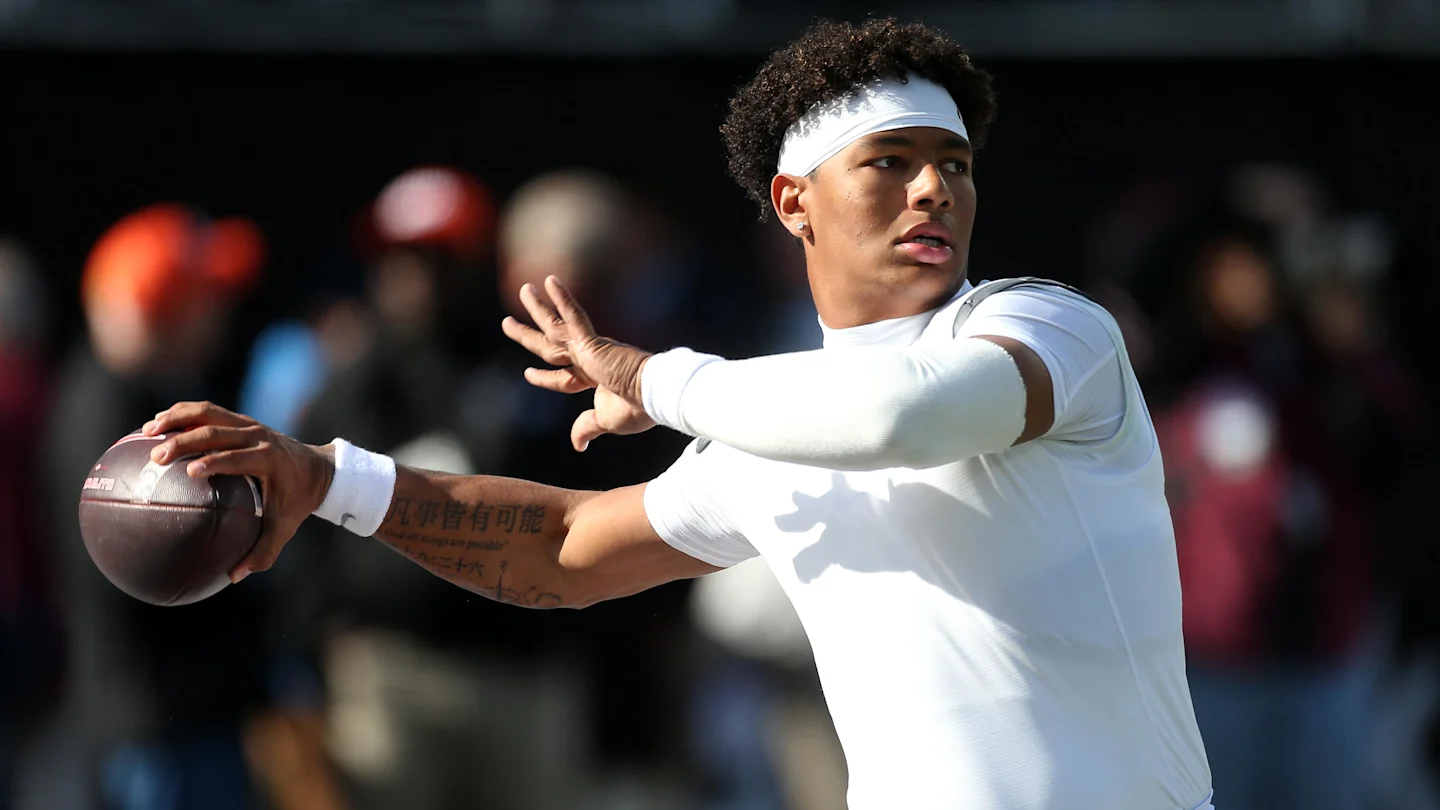
Ole Miss Rebels quarterback Trinidad Chambliss appeared in a video released Saturday that initially seemed to address his future with the program. The social media post features the senior signal-caller sitting in a living room surrounded by family and friends. The atmosphere in the room is tense as a friend holds up a phone and asks if the rumors are true. “The internet is going crazy, bro,” the friend says. “Are you really gonna transfer?”
Chambliss turns to the camera and delivers a calm response to the group. “If you wanna win, you go with the best,” he says. The room falls silent as his phone rings. He answers the call and offers a series of affirmations while the group leans in to listen. The quarterback then delivers the punchline, revealing that the video is a paid advertisement for his new NIL partner. “I’d love to transfer to AT&T,” Chambliss says.
The clever marketing campaign arrives just weeks before the college football transfer portal officially opens. No financial details on the NIL deal have been released.
The 23-year-old signal-caller previously utilized the portal to move from Ferris State to Oxford in April 2025. He took over the starting job for Ole Miss following an injury to Austin Simmons and threw for 415 yards in a win over Arkansas.
Trinidad Chambliss’ Transfer Journey From Division II Star To SEC Starter
The commercial spot highlights how quickly the quarterback has become a household name in the Southeastern Conference. Before arriving in Mississippi, Chambliss built a dominant resume at the Division II level with the Ferris State Bulldogs.
He threw for 2,925 yards and rushed for another 1,019 yards during his junior campaign. That season culminated in a national title victory over Valdosta State, where he accounted for five touchdowns.

His performance earned him recognition as the Great Lakes Intercollegiate Athletic Conference Player of the Year. He was also a finalist for the Harlon Hill Trophy which is awarded to the top player in Division II. Chambliss entered the transfer portal shortly after securing the championship. He committed to Ole Miss in April 2025 to compete at the FBS level.
The transition to the SEC initially placed him in a backup role behind Austin Simmons. Chambliss saw limited action in the season opener against Georgia State where he completed four passes for 59 yards.
His opportunity arrived later in the year when Simmons suffered an injury that sidelined him indefinitely. Head coach Lane Kiffin named Chambliss the starter ahead of a crucial matchup against the Arkansas Razorbacks.
Chambliss seized the moment in his first start. He tallied 415 total yards and three touchdowns to lead the Rebels to a 41-35 victory. His dual-threat ability added a new dimension to the offense as the team pushed for a playoff spot. The success of players moving up from lower divisions has become a major storyline in the portal era.
The transfer portal window formally opens on Jan. 2 for all FBS athletes. While Chambliss jokes about transferring to a phone carrier, his actual journey serves as a blueprint for talent evaluation in the modern era.
Chambliss and the Rebels will await their postseason destination as the College Football Playoff Selection Show airs Sunday.
Read more on College Football HQ

Vanderbilt‘s 10-win regular season may not have been enough to get the Commodores into the College Football Playoff. They won’t play for a conference championship, and are currently on the bubble to make the postseason tournament.
Commodores head coach Clark Lea voiced his displeasure with the current playoff model, sounding off on his feelings about Vanderbilt’s current position. In turn, he called for an overhaul of the committee’s current evaluation process.
“I’m just frustrated. We attempted to state our case,” Lea said, via ESPN Radio. “We were fighting for our team. This team deserves the chance to be in and that’s all we want, is just the chance. Look, it’s not like I’m asking people to vote us national champion. I just want the chance to play for it.
“If you were to have told me before the season that a 10-win SEC team doesn’t get in, I would have said there’s no way. For us to be on the wrong side of this right now, it’s upsetting.”
Lea said his statement is not to criticize the College Football Playoff committee, but rather to criticize the playoff’s current model. The Vanderbilt coach specifically mentioned his issue with how automatic bids are distributed in the current 12-team format.
He mentioned the fact that the playoffs currently allows the opportunity for a Group of Six team to make the playoffs. That leaves teams that finished the regular season 10-2, such as Vanderbilt, Miami and Utah, are on the outside looking in during conference championship week and can’t do anything further to help their case.
“No disrespect to those (Group of Six) teams, obviously,” Lea said. “I know how hard it is to win anywhere, but this is actually about getting the 12 best teams in to compete for the greatest of all prizes, the national championship trophy. And I just I don’t like where we’re at right now with the process.
“I’m frustrated by it. I can’t understand it. If I could understand it, I could accept it. I want to fight against it. I’m anxious to help improve it in the off season, but right now, I’m just fighting for my team.”
The final College Football Playoff rankings will be revealed on Sunday following the conference championship slate. Where Vanderbilt falls remains to be seen, but Lea has stated his case to the committee. For now, it appears that 10 wins for the Commodores may not have been enough to squeeze into the field.

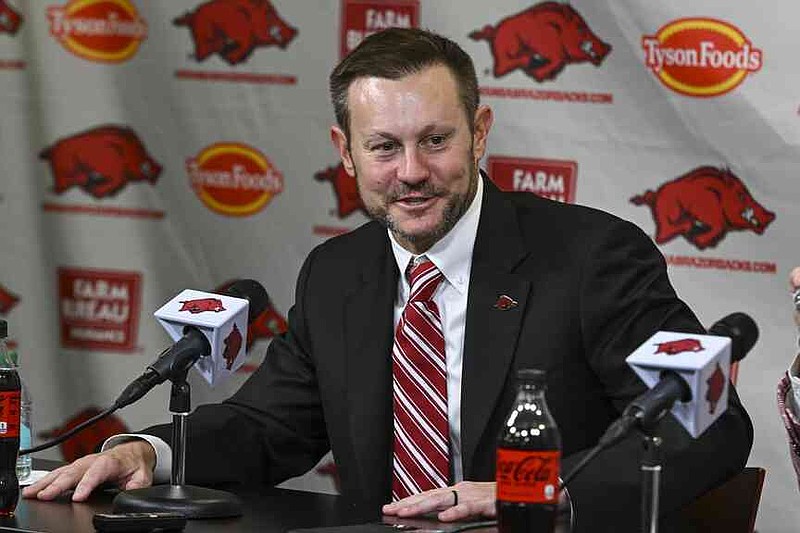
FAYETTEVILLE — Ryan Silverfield had a second stop to make Thursday after his first press conference since being hired as Arkansas football coach.
He had to face the people he needs to win over, the ones the Razorbacks need to increase their spending so they can compete with the SEC’s power programs.
Silverfield signed a five-year, $33.5 million deal to take over in Arkansas earlier in the week. He had coached Memphis since the 2020 season, plus a single game with the Tigers as interim head coach in 2019. Memphis qualified for a bowl in every season with Silverfield at the helm and peaked in 2024 with an 11-2 record. The Tigers hold an 8-4 record ahead of a likely bowl game.
Those kinds of results at Arkansas would be a boon. The Razorbacks’ season concluded Saturday with a loss to Missouri. That ended a 2-10 season with an 0-8 record in the Southeastern Conference, the third season in the last seven Arkansas finished with those marks.
“This program is built on pride, resilience and toughness, and it’s time to bring it all back,” Silverfield said at the press conference. “Being all in together, we will rebuild it, we will earn it, and we will make this state proud.”
Finances were one of the biggest points in both the press conference and the public introduction a few hours later. Arkansas athletic director Hunter Yurachek has made a point for the last year that the Razorbacks need more contributions for NIL funds in order to compete at a higher level in the SEC. The first audible announcement over the loudspeaker before Silverfield took the dais was one asking for money.
NIL war chests are tight-lipped secrets across college football. But Arkansas’ football attendance, which equates to revenue earned, ranks fifth from the bottom in the SEC. Both Silverfield and Yurachek said finances were a key topic during the interview and contract negotiations.
“I think it’s our competitive advantage not to give details of what that is, other than to tell you that it is a significant investment in all aspects of our football program that will move us to the top half of spending in all of those categories I mentioned in the Southeastern Conference,” Yurachek said. “I don’t believe we need to be at the top of spending. We need to be somewhere where we’re really competitive and Ryan and I are on the same page with where we are.”
Quarterback KJ Jackson and defensive end Quincy Rhoads Jr. both joined the press conference and announced they would return to the team in 2026. Jackson, a rising sophomore, took over as Arkansas’ starting quarterback for the final game of the season and is largely considered the future of the position. Rhoads finished in a tie for fifth in the SEC in sacks (8) and second in the league in tackles for-loss (17 1/2).
Silverfield told fans he doesn’t think a rebuild will take long.
“It’s not one of those things where we’re sitting here saying, ‘Hey, you know, Hunter, I need three years to rebuild this,'” Silverfield said. “No. We can start rebuilding the culture the moment we step down.”
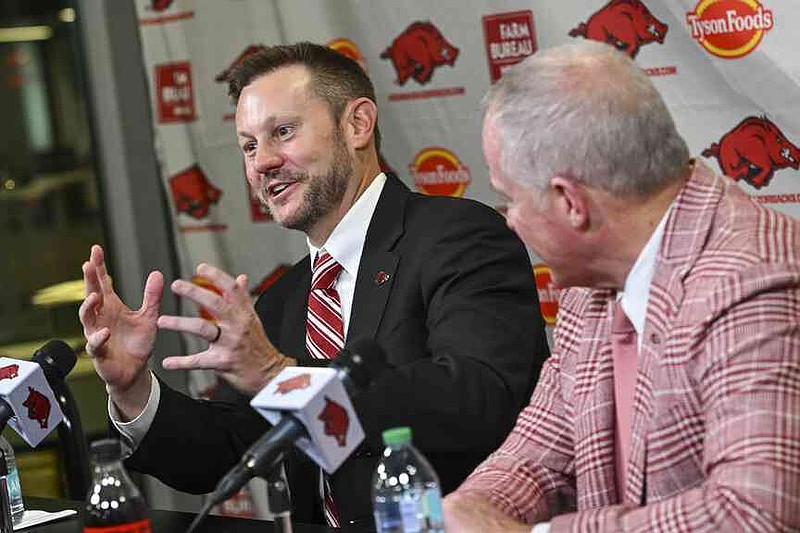
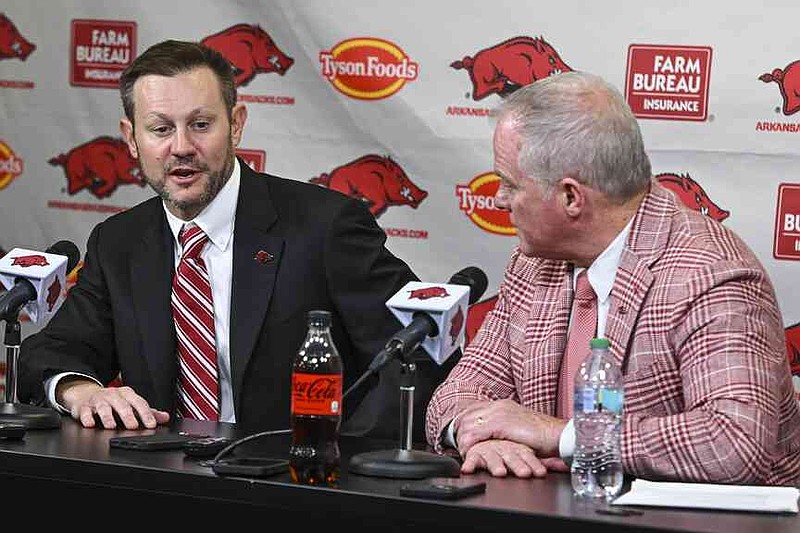
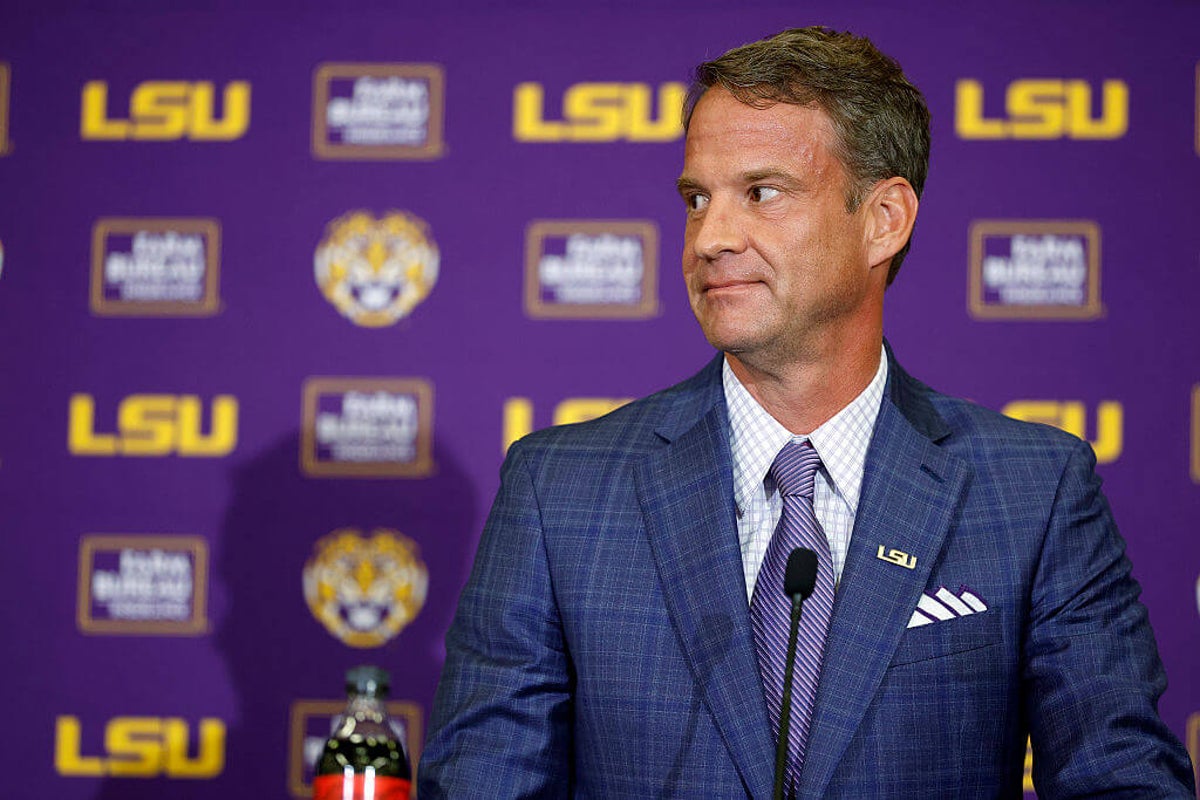
Ole Miss football is among the most well-supported programs in the country, backed by the Grove Collective, widely regarded as one of the nation’s most organized name, image and likeness groups.
It’s not LSU, though, and that, Lane Kiffin said, is one of the biggest reasons he left Oxford for Baton Rouge. LSU’s financial backing is among the best in the nation, and Kiffin said it played a major role in his decision to choose the Tigers.
“Tell me the numbers and the plan for what the money is for the players, because that’s everything in that area to me,” Kiffin said. “Not what I make — what they make, to understand how you can build this.”
LSU isn’t the only school promising its coaches the resources to build competitive rosters. Several programs — including Michigan State, Penn State, Arkansas and Auburn — have announced major financial commitments aimed at program-building.
At Michigan State, the school received a $401 million donation from Acrisure co-founder Greg Williams and his wife, Dawn, with $290 million earmarked for athletics. It is the largest gift in school history and better positions the Spartans to compete in college sports’ revenue-sharing era.
Newly hired coach Pat Fitzgerald, who dealt with limited NIL resources at Northwestern, will now have far more to work with as he tries to return Michigan State to Big Ten contention.
Matt Campbell named 17th head football coach at Penn State, pending board approval Monday. #WeAre https://t.co/BkWP7JhsJj
— Penn State Athletics (@GoPSUsports) December 6, 2025
Arkansas is also working to reshape its football budget. Athletic director Hunter Yurachek hired Ryan Silverfield as Razorbacks coach and vowed to elevate the school’s spending from near the bottom of the SEC to a more competitive level. At Silverfield’s introductory news conference, Yurachek acknowledged Arkansas’ investment had lagged behind the rest of the conference.
“The top-down alignment of a new financial commitment from our board of trustees, the university, the department of athletics and so many generous donors … was the first step to being all in on this goal,” Yurachek said. “This financial commitment will push us to the top half in key SEC items such as our assistant coaches’ pool, strength and conditioning staff, support staff pool, and our talent acquisition through revenue sharing and legitimate NIL.”
Another Big Ten program, Penn State, hired Matt Campbell from Iowa State to replace James Franklin. Since the hire, Penn State has reportedly committed around $30 million in NIL resources, according to reporter Matt Fortuna, on top of Campbell’s reported eight-year contract. That level of investment was hinted at after Penn State moved on from Franklin. Athletic director Pat Kraft made clear in October that the school intended to operate near the top of the national spending landscape.
“This is also about the modern era of college football,” Kraft said. “Our next coach needs to be able to maximize elite-level resources, attack the transfer portal and develop at the highest level.”
At Auburn, newly hired Alex Golesh said during his opening news conference that he will have “every resource known to man.” The Tigers’ administration believed former coach Hugh Freeze had strong enough support, but Auburn posted a 15-19 record during his tenure.
Even schools that aren’t changing coaches are investing more in their programs. Maryland athletic director Jim Smith reaffirmed the school’s commitment to Mike Locksley, promising to direct more resources into Locksley’s team.
“Coach Locksley, Senior Deputy Athletic Director Diana Sabau and I will review every aspect of our football program to make sure we are focused on getting the right type of resources in the right places to build a successful football program in this new era of college football,” Smith wrote in an online letter to fans.
This season, teams such as Vanderbilt, Virginia and Texas Tech have achieved success that outpaces their recent history. Revenue sharing and NIL commitments help make that more of a possibility.
The new wave of financial commitments around football programs introduces another layer to a coaching cliché. Coaches used to say, “It’s not the X’s and O’s, but the Jimmys and the Joes.” Now, more than ever, it’s about the Benjamins.
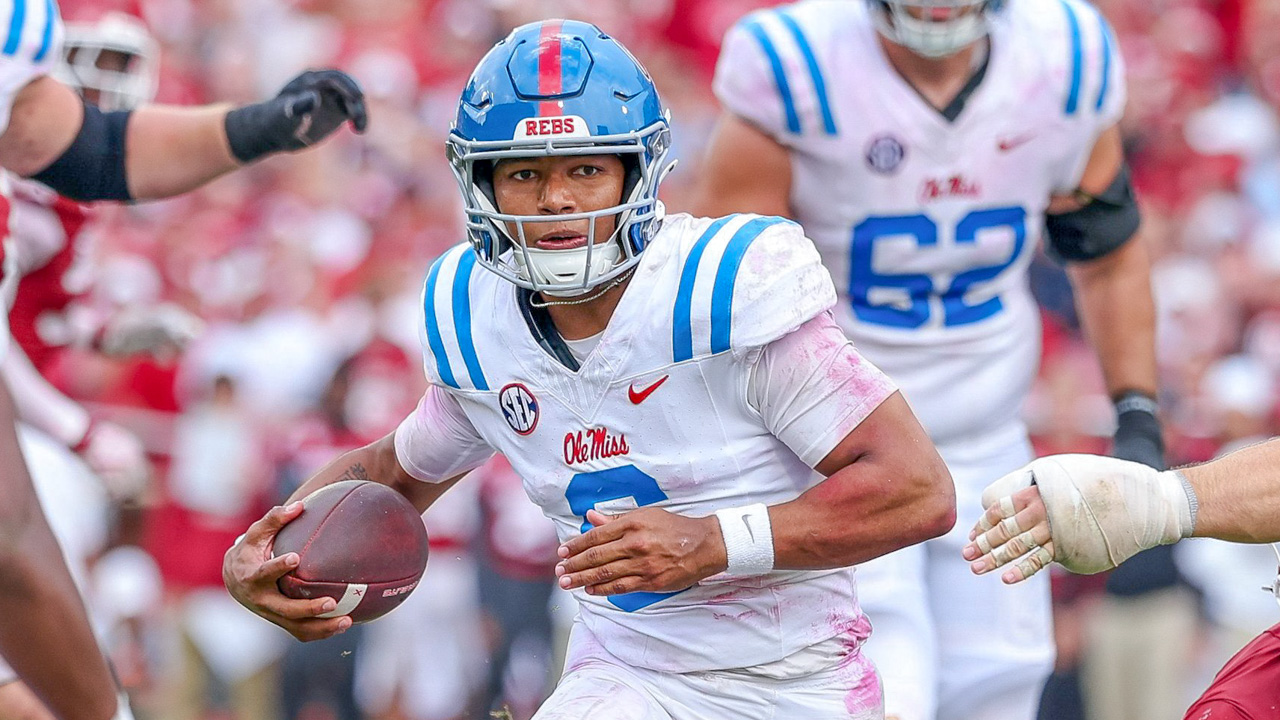
Trinidad Chambliss did not expect his season to unfold this way.
The Ole Miss quarterback arrived in Oxford as a transfer hoping to compete, learn, and settle into a steady role.
Instead, he finished the fall as a First-Team SEC selection and one of the most talked-about players in college football.
His latest news added another step to his rise, as Chambliss announced a major name, image, and likeness partnership with AT&T.
The deal was revealed through a national commercial that used humor and the language of the transfer portal.
In the ad, Chambliss sits in a living room with friends as they ask whether he plans to “transfer.”
After a pause, he answers, “If you wanna win, you go with the best.”
The twist — he is “transferring” to AT&T, not a new program. It was a simple message, delivered with ease and confidence, and it signaled how far his public profile has grown.
Chambliss admitted in the commercial that the moment still feels unusual.
He said he would have thought someone was “crazy” if they had predicted he would be in this type of spotlight. But his play changed everything, and his journey from Ferris State to Ole Miss became one of the most followed stories across the SEC.
His season took shape after starting quarterback Austin Simmons went down with an early injury. That opened the door for Chambliss to get his chance.
He quickly took hold of the job, lifted the offense, and kept the Rebels stable in a year when the margin for error was tight.
From the moment he stepped in, Chambliss brought command and mobility. His ability to run and throw gave Ole Miss a balanced attack that fit well with its personnel.
Over the final two months, he ranked among the league’s top quarterbacks and helped Ole Miss stay in the postseason race.
The Rebels believed they had solid depth entering the year, but Chambliss offered something more. He became the center of the team’s identity and one of the clearest examples of how the transfer portal can reshape a season.
Even Arkansas fans, watching as the Razorbacks navigated roster changes, saw how one player’s move could shift a program’s direction.
Heading into winter, Chambliss’ name carried weight both on and off the field, and companies noticed.
The AT&T deal became the latest sign his impact is reaching far beyond the box score.
Production places Chambliss among SEC’s best
Chambliss completed 218 of 333 passes for 3,016 yards, 18 touchdowns and three interceptions. His consistency helped Ole Miss settle into its offensive rhythm as the season progressed.
He also rushed 118 times for 470 yards and six touchdowns, finishing with 3,486 total yards.
His statistical rise showed how quickly he adapted to SEC play. For long stretches, he averaged more than 300 yards per game and kept drives alive with timely scrambles and smart reads.
Coaches praised his decision-making and his willingness to manage tough moments without forcing plays.
Chambliss often talked about the role his time at Ferris State played in shaping his mindset.
At the Division II level, he won awards and led a successful offense, but he believed taking a step to the SEC would show him a different level of competition. That belief proved correct, and he handled the transition with poise.
As Ole Miss piled up wins, attention grew. His leadership steadied the Rebels during close games, and fans responded to his calm presence. National media outlets highlighted his story, and discussions about his future expanded.
It was during that rise that NIL interest intensified.
The AT&T announcement confirmed the momentum. Though financial terms were not disclosed, the partnership showed that corporations now view college quarterbacks as voices capable of appealing to broad audiences.
It also reflected the changing nature of college football. NIL deals shape the landscape, and a player like Chambliss now balances his on-field duties with growing visibility off it.
Programs across the SEC, including the Hogs, track these developments closely. NIL structure affects recruiting, retention, and how players evaluate their opportunities.
Chambliss’ deal served as another example of how today’s game operates.
What comes next for Ole Miss quarterback
For the Rebels, the deal supports the program’s wider goals. Chambliss has become a central figure and a dependable leader for a team seeking long-term stability.
His growth reinforces what Ole Miss wants to build moving forward, both in recruiting and in performance.
Chambliss said the journey has been unpredictable but rewarding. He remains focused on his development as he balances new expectations and responsibilities. The next steps in his career will hold weight as Ole Miss prepares for its future on offense.
Key takeaways
-
Trinidad Chambliss secured a major NIL partnership with AT&T after a strong season at Ole Miss.
-
His rise from backup to First-Team SEC quarterback showed the power of the transfer portal.
-
The shifting NIL landscape, which affects programs like the Razorbacks, continues to reshape college football.
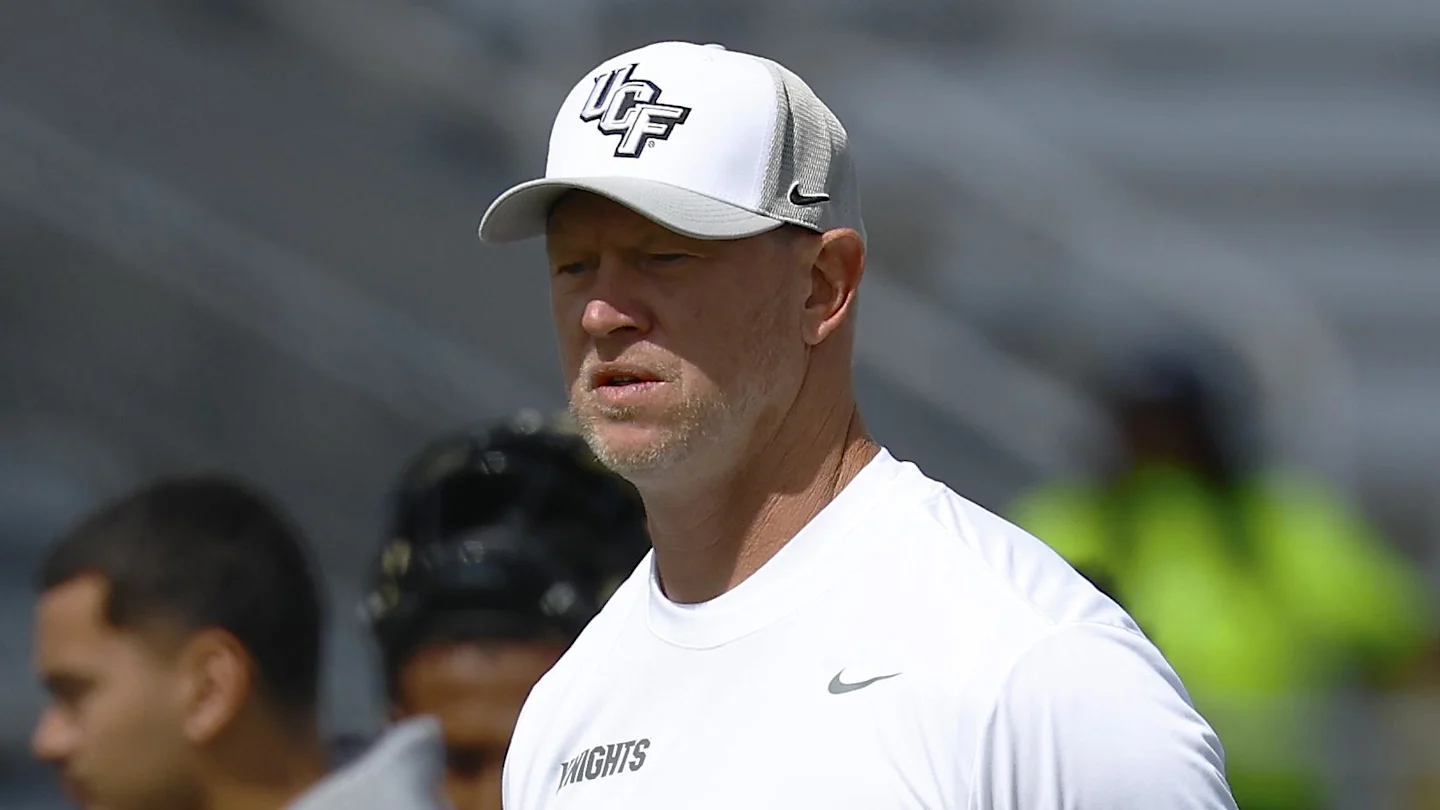
As the Nebraska football team prepares for its second straight bowl game, UCF and Scott Frost are doing a post-mortem on just why they suffered through another losing season. To the surprise of no one, when Frost talked about what went wrong and how he would fix things, he did not point the finger at himself. Instead, he lined up another fall guy. This time, the blame fell on NIL and the transfer portal.
“It’s broken,” Frost said during the Signing Day press conference. “College football’s broken. Yeah, I don’t know if you’ll get that honest answer from everyone, but everyone would agree if they were honest.”
It’s worth pointing out that the former Nebraska football coach isn’t saying anything that many failed coaches have said before him. Even if he tried to paint it as though he was departing some never-before-heard wisdom.
Scott Frost when asked at UCF at his National Signing Day Presser today how NIL has changed over the last few years he starts his answer with, “It’s broken. College football is broken.” But listen to what he went on to say! Oh my. @MyNews13 pic.twitter.com/ZBAaGIaanx
— Spectrum News Asher Wildman (@AsherWildman13) December 3, 2025
Former Nebraska coach Scott Frost blames NIL, transfer portal for UCF’s losing season
Frost then told a story that may or may not have actually happened.
“I laugh about it now, but I did my press conference last year and had a couple players and their agents waiting outside my office five minutes after I did my press conference to start telling me how much money I needed to pay them, and I didn’t even know who the kids were.”
“We’re going to know our team now. We’re going to know our strengths and weaknesses. I think we’re in a better financial position to approach this.”
This is hardly the first time that the former Nebraska coach and storied quarterback blamed forces beyond his control for his failures. It’s not even the first time he’s done it since joining UCF. He spent most of his first offseason with the Knights last year, blaming everyone but him at Nebraska for his getting fired after 4.5 seasons.
Frost has demonstrated plenty of times that he hasn’t changed much since he ran Nebraska. That’s bad news for UCF fans who are hoping for improvements in 2026 after the team went 5-7 this season and was a late rally away from going 1-8 in the Big 12 with a loss to the worst team in the conference. Who will be the fall guy next year if Scott Frost does that again.

Haugen Sets Norwegian National Record at Youree Spence Garcia Invitational

NCAA Tournament: Nebraska vs. Kansas State Volleyball Watch Thread

Ole Miss QB Trinidad Chambliss makes NIL announcement amid college football season

Indoor Track and Field’s Mia Hoskins Breaks Weight Throw Record on Opening Weekend

Nebraska advances to Sweet 16 after sweeping Kansas State

Watch Nebraska volleyball vs Kansas State: TV channel, time, streaming

Segalla Shines at Sharon Colyear-Danville Season Opener

No. 3 Texas Volleyball downs defending National Champions No. 25 Penn State, 3-0

Govs Post Nine Top 10 Finishes at Commodore Winter Challenge

Clark Lea: 10-win Vanderbilt being outside of College Football Playoff is upsetting

Breaking: UW-Oshkosh is 2025 NCAA Division III women’s volleyball national champion!

Knights Begin Season at Frigid Bee Opener; Merna and Ramsey Earn Event Wins

Los Angeles partners kick off “Grow the Game of Soccer” free clinic series aimed at empowering youth sports

Tracking undefeated women’s volleyball teams in 2025

NASCAR Antitrust Lawsuit: “Like a Gun to Your Head,” Team Owner Testifies in Court

First Tee Winter Registration is open

Fargo girl, 13, dies after collapsing during school basketball game – Grand Forks Herald

CPG Brands Like Allegra Are Betting on F1 for the First Time

Volleyball Recaps – November 18

F1 Las Vegas: Verstappen win, Norris and Piastri DQ tighten 2025 title fight

Two Pro Volleyball Leagues Serve Up Plans for Minnesota Teams

Utah State Announces 2025-26 Indoor Track & Field Schedule

Sycamores unveil 2026 track and field schedule

Redemption Means First Pro Stock World Championship for Dallas Glenn

Bowl Projections: ESPN predicts 12-team College Football Playoff bracket, full bowl slate after Week 14

Texas volleyball vs Kentucky game score: Live SEC tournament updates

Indiana’s rapid ascent and its impact across college football

Pohlman admits ‘there might be some spats’ as he pushes to get Kyle Busch winning again

How this startup (and a KC sports icon) turned young players into card-carrying legends overnight

Troy Football Need to Know; Gameday at The Vet — Georgia State Game

 Why a rising mid-major power with an NCAA Tournament team opted out of revenue-sharing — and advertised it
 NBA Legend Michael Jordan to Join NBC Sports as Special Contributor
 Falcons mailbag
 Portal Update – Basketball and Gymnastics Take Hits
 has always dreamed in Mercurial. Now his initials are on the boots.
The new Kyl…
has always dreamed in Mercurial. Now his initials are on the boots.
The new Kyl…
-
 Rec Sports2 weeks ago
First Tee Winter Registration is open
-
 Rec Sports2 weeks ago
Fargo girl, 13, dies after collapsing during school basketball game – Grand Forks Herald
-
 Motorsports2 weeks ago
CPG Brands Like Allegra Are Betting on F1 for the First Time
-
 Sports3 weeks ago
Volleyball Recaps – November 18
-
 Motorsports2 weeks ago
F1 Las Vegas: Verstappen win, Norris and Piastri DQ tighten 2025 title fight
-
 Sports2 weeks ago
Two Pro Volleyball Leagues Serve Up Plans for Minnesota Teams
-
 Sports2 weeks ago
Utah State Announces 2025-26 Indoor Track & Field Schedule
-
 Sports2 weeks ago
Sycamores unveil 2026 track and field schedule
-
 Motorsports1 week ago
Redemption Means First Pro Stock World Championship for Dallas Glenn
-
 NIL6 days ago
Bowl Projections: ESPN predicts 12-team College Football Playoff bracket, full bowl slate after Week 14