
Sports
Conferences hope College Sports Commission will limit legal battles



DESTIN, Fla. — On the one hand, what this new version of cash-infused college sports needs are rules that everybody follows.
On the other, someone needs to be able to enforce those rules without getting sued into oblivion.
Enter the College Sports Commission, a newly created operation that will be in charge of counting the money, deciding what a “fair market” deal for players looks like and, if things go well, helping everyone in the system avoid trips to court whenever a decision comes down that someone doesn’t like.
With name, image and likeness payments and revenue sharing taking over in college, this group will essentially become what the NCAA committee on infractions used to be: the college sports police, only with the promise of being faster, maybe fairer and maybe more transparent.
In a signal of what the College Sports Commission’s most serious mission might be, the schools from the four most powerful conferences in the Football Bowl Subdivision are being asked to sign a document pledging not to rely on state laws — some of which are more permissive of payments to players — to work around the rules the commission is making.
“We need to get out of this situation where something happens, and we run to our attorney general and file suit,” said Trev Alberts of Southeastern Conference member school Texas A&M, who’s one of 10 athletic directors who are part of another group, the Settlement Implementation Committee, that is helping oversee the transition. “That chaos isn’t sustainable. You’re looking for a durable system that actually has some stability and ultimate fairness.”
In this new landscape, two companies will be in charge of two kinds of number crunching.
The first, and presumably more straightforward, is data being compiled by LBi Software, which will track how much schools are spending on every athlete, up to the $20.5 million cap each is allowed to distribute in the first year of the new arrangement expected to begin July 1 if a settlement for the House v. NCAA antitrust lawsuit is approved by a federal judge.
This sounds easy but comes with the assumption that universities — which, for decades, have sought to eke out every edge they can, rulebook or no — will provide accurate data.
“Over history, boosters have looked for ways to give their schools an advantage,” said Gabe Feldman, a sports law professor at Tulane. “I think that will continue even with the settlement. It’s anyone’s guess as to how that manifests, and what the new competitive landscape looks like.”
Adding some level of transparency to the process, along with the College Sports Commission’s ability to deliver sanctions if it identifies cheaters, will be key to the new venture’s success.
“There’s legal risk that prohibits you from doing that,” Alberts said. “But we want to start as transparent as we can be, because we think it engenders trust.”
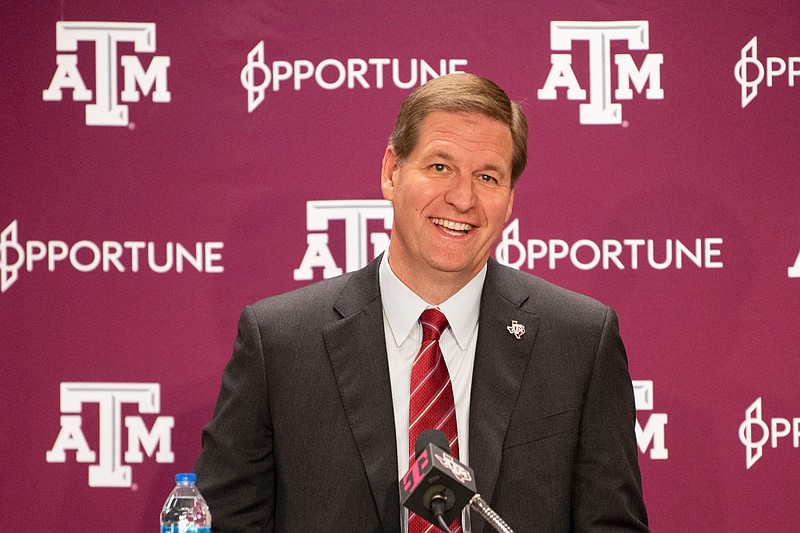
Good intentions aside, Alberts concedes: “I don’t think it’s illogical to think that, at first, it’s probably going to be a little wonky.”
Some of the wonkiest bookkeeping figures to come from the second category of number crunching, and that involves third-party NIL deals. The CSC hired Deloitte to run “NIL Go,” which is essentially a clearinghouse in charge of evaluating third-party deals worth $600 or more.
Because these deals aren’t allowed to pay athletes simply for playing — that’s still technically forbidden in college sports — but instead for some service they provide (an endorsement, a social media shout-out and so forth), every deal needs to be evaluated to show it is worth a fair price for what the player is doing.
In a sobering revelation, Deloitte shared with sports leaders earlier this month that close to 70% of third-party deals given to players since NIL became allowable in 2021 would have been denied by the new clearinghouse.
All these valuations, of course, are subject to interpretation. It’s much easier to set the price of a stock, or a bicycle, than the value of an athlete’s endorsement deal. This is where things figure to get dicey. Though the committee has an appeals process, then an arbitration process, ultimately some of these cases are destined to be challenged in court.
“You’re just waiting to see, what is a ‘valid business purpose’ (for an NIL deal), and what are the guidelines around that?” said Rob Lang, a business litigation partner at Thompson Coburn who deals with sports cases. “You can see all the lawyer fights coming out of that.”
In fact, elements of all this are ripe to be challenged in court, which might explain why the power conferences — the SEC, Atlantic Coast Conference, Big 12 and Big Ten — drafted the document pledging fealty to the new rules in the first place.
For instance, Feldman called a law recently enacted in Tennessee viewed by many as the most athlete-friendly statute in the country “the next step in the evolution” of state efforts to bar the NCAA from limiting NIL compensation for athletes with an eye on winning battles for recruits and retaining roster talent.
“What we’ve seen over the last few years is states trying to one-up each other to make their institutions more attractive places for people to go,” he said. “This is the next iteration of that. It may set up a showdown between the schools, the NCAA and the states.”
Greg Sankey, the SEC’s commissioner, said a league spanning 12 states cannot operate well if all those states have different rules about how and when it is legal to pay players.
The SEC has been drafting legislation for states to pass to unify the rules across the conference. Ultimately, Sankey and a lot of other people would love to see a national law passed by Congress that does that for all states and all conferences.
That will take months, if not years, which is why the new committee drafted the document for the schools to sign.
“We are all defendant schools and conferences, and you inherently agree to this,” Alberts said of the document. “I sat in the room with all of our football coaches (and asked), ‘Do you want to be governed?’ The answer is ‘Yes.'”


UNH’s men’s track and field team finished in third with 89 points, while URI won the meet with 96 points and Stonehill closed with 91 points.
In addition to Reaves’ win, the following Wildcats placed:
- Women’s Long Jump
- Sophomore Sarah Moore (Lisbon, Maine), first place (5.75m)
- Graduate student Autumn Agri (Stratham, N.H.), second place (5.35m)
- Junior Audrey Thornton (Freedom, N.H.), third place (5.28m)
- Men’s Long Jump
- Freshman Rio Calle (Weare, N.H.), fourth place (7.01m)
- Women’s Triple Jump
- Men’s Triple Jump
- Sophomore Ethan Palmer (Bowdoin, Maine), third place (14.60m)
- Women’s Shot Put
- Reaves, first place (14.38m)
- Freshman Payton Goulding (Cumberland, R.I.), third place (11.86m)
- Sophomore Ruby Prentiss (Falmouth, Maine), sixth place (11.13m)
- Men’s Shot Put
- Women’s Weight Throw
- Reaves, first place (17.87m)
- Goulding, third place (15.23m)
- Junior Briana Danis (Hooksett, N.H.), fifth place (15.06m)
- Prentiss, sixth place (14.31m)1.5
- Men’s Weight Throw
- Senior Liam McGovern (North Kingstown, R.I.), first place (19.79m)
- Abaka-Amuah, second place (19.53m)
- Senior Jack Washam (Nashua, N.H.), third place (17.73m)
- Women’s High Jump
- Men’s High Jump
- Junior Gunnar Sokol (Berwick, Maine), seventh (1.90m)
- Sophomore Samuel Grube (Dover, N.H.), ninth (1.90m)
- Men’s Pole Vault
- Men’s 1 Mile
- Women’s 60m Hurdles
- Women’s 600m Run
- Men’s 600m Run
- Sophomore James Gecek (High Bridge, N.J.), seventh (1:25.58)
- Women’s 60m Dash
- Nada, first (7.71)
- Moore, second (7.72)
- Thornton, third (7.88)
- Sophomore Eva Roberts (Derry, N.H.), fifth (7.92)
- Men’s 1000m Run
- Women’s 300m Dash
- Thornton, second (42.43)
- Sophomore Brooke White (Barnet, Vt.), fifth (42.90)
- Senior Liliana Chirichella (Troy, N.H.), seventh (43.66)
- Roberts, ninth (45.25)
- Women’s 3000m Run
- Senior Claire Ronan (Port Jefferson Station, N.Y.), first (10:09.32)
- Senior Carolyn Day (Wolfeboro, N.H.), third (10:37.08)
- Men’s 3000m Run
- Women’s 4x400m Relay
- New Hampshire “A” (Chirichella, Hickey, Dillon, Agri), second (4:08.42)
- Men’s 4×400 Relay
- New Hampshire “A” (Gecek, Daniel Anderson [Naugatuck, Conn.], Calle, Lesniak), fourth (3:28.38)

The ACU track and field team opens its indoor season by competing in the McFerrin 12-Degree Invitational on the campus of Texas A&M on Saturday. The meet will be a low-key meet designed to get in some competition before the Christmas break.
Joining ACU and host Texas A&M in the field will be Baylor, Sam Houston State, SMU, and UTSA.
This meet will be the first competition for several newcomers to the program. There are plans to have three 4×400 relays for the women and the men and some of the newcomers will only run on the relays this weekend.
ACU entries for the men include: 60 (Horatio Brooks); 300 (Gage Heighten); 1000 (Evan Martin); Mile (Benjamin Castro, Vincent Luffey); 3,000 (Mark Barajas, Carlos Cortez); 60 hurdles (Canaan Fairley, Miguel Hall); high jump (Canaan Fairley); long jump (Horatio Brooks); weight throw (Rhet Punt, Matthew Udemba).
There will also be a large relay pool to fill out the three 4×400 relays and this pool includes newcomers who will only be competing in the relays – Durrell Collins, Abraham Olufemi-Dada, Nickens Lemba – and two returnees also running solely on the relays this weekend – Ethan Krause and Ryan McMeen.
ACU entries for the women include: 60 (Lauren Foxworth, Darinasia Taylor, Kee’Lani Whitlock, Neriah Williams, Morgan Morris, Halle Gunter, Jaeden Thomas); 300 (Morgan Morris, Kaycian Johnson); 600 (Madelyn McFadden, Anna Vyn, Gracee Whiteaker, Jalyn Childers); 1000 (Emma Santoro); Mile (Lola Buentello); 60 hurdles (Hana Banks, Nele Huth, Natalie Poe, Skyla Riedel); high jump (Kaia Anderson, Kennadi Payne, Natalie Poe); long jump (Halle Gunter, Nele Huth, Skyla Riedel, Jaeden Thomas); shot put (Sterling Glenn, Ciara Tilley, Mariana Van Dyk); weight throw (Sterling Glenn, Mariana Van Dyk).
Because the McFerrin Invitational will not have a triple jump in the meet, two Wildcats took part in the OU Winter Field Fest. Arthur Jenkins recorded a 14.94m triple jump, while Mackenzie Flaugher went 11.70m.
The McFerrin 12-Degree Invitational will be held in the Murray Fasken Indoor Track on the Texas A&M campus. The field events will begin at 2 p.m. and the running events at 4 p.m. on Saturday.
Coach Miles Smith: I’m excited to see our kids compete. They have been working hard. We have a lot of newcomers who are getting their first taste of collegiate competition, so it will be fun to watch them compete. Our goal is to come out healthy and learn what we need to work on over the next few weeks before the bulk of our season kicks off in mid-January.

BOSTON – The Elon University women’s track and field team opened its indoor season with two members of its distance squad competing at the Sharon Colyear-Danville Opener on Saturday at the BU Track and Tennis Center.
Senior Sarah Petitjean led the Phoenix in the 3,000 meters, posting a personal-best time of 9:49.97 to place 52nd in a field of 95 runners.
In the 5,000 meters, junior Hannah Weber also set a personal record with a time of 16:29, improving her previous best by nearly three seconds.
ON DECK
Elon will be idle for the winter break before returning to competition on Jan. 17 at the Mondo College Invitational at the JDL Fast Track Complex.
— ELON —

WINSTON-SALEM, N.C. – The App State women’s track and field team opened the 2025-26 indoor season at the Visit Winston-Salem College Kick-Off on Saturday. A new meet record, set by the 4×400-meter relay quartet of junior Nicole Wells, seniors Damyja Alejandro-Ortiz and Daye Talley, and junior Jayla Adams, punctuated the day’s action.
“This was a great season opener for all event groups to knock the rust off from months ago. The athletes are really motivated to be back from break and start the season.” said director of track & field/cross country Damion McLean. “Expectations are high this season, so we have to stay motivated on an elite level to be competitive.”
Wells, Alejandro-Ortiz, Talley, and Adams stopped the clock at 3:45.76 for a new meet record in the women’s 4×400-meter relay. The previous meet record was 3:49.07, set in 2021 by Duke’s Jenna Crean, Lauren Hoffman, Megan McGinnis, and Kiara Ekeigwe. The Mountaineers were two seconds shy of the App State school record of 3:43.85, which was set at the 2023 Sun Belt Indoor Championships. Earlier in the afternoon, Adams and Talley finished third (24.39) and fifth (24.77), respectively, in the women’s seeded 200 meters. Adams remains third in the App State all-time list with her personal best of 24.22, which she set during the 2024 campaign. In the women’s unseeded 200 meters, sophomore Kaitlyn McLeod placed fifth with a time of 25.04.
In her collegiate indoor debut, freshman Alana Braxton posted a pair of first place finishes in the women’s triple jump (12.32m (40′ 5″)) and women’s long jump (5.87m (19′ 3.25″)). Fellow freshman Ashlynn Wimberly landed second with a leap of 12.14m (39′ 10″) and sophomore Jahaila Wright placed sixth with a leap of 11.60m (38′ 0.75″) in the women’s triple jump. With a leap of 5.31m (17′ 5.25″) freshman Kelly MacBride rounded out the top 10 in the women’s long jump.
Senior Ava Studney placed first in the women’s pole vault, recording a clearance of 3.95m (12′ 11.5″).
Junior Kendall Johnson placed second with a time of 7.50 in the women’s 60 meters, coming within 0.08 of her personal best and program record of 7.42, which she set at last season’s SBC Indoor Championships. Wells rounded out the top 10 in the women’s 60 meters with a time of 7.73.
With a time of 2:18.09, senior Addison Ollendick-Smith placed fourth in the women’s 800 meters. Ollendick-Smith, who stands second all-time in the program record book, was seven seconds shy of her personal best of 2:11.13, which she set last season.
With a personal best toss of 14.70m (48′ 2.75″), junior Dianna Boykin placed eighth in the women’s weight throw. Sophomore Emily Edwards placed eighth with a toss of 12.17m (39′ 11.25″) in the women’s shot put and rounded out the top 10 in the women’s weight throw with a mark of 14.03m (46′ 0.5″).
Up Next
The Mountaineers will resume the indoor track and field season with the UNC Asheville Collegiate Opener at Tryon International on Jan. 10.
Updated Dec. 5, 2025, 11:15 p.m. MT
One step closer.
No. 2 seed Arizona State volleyball is back in the Sweet 16 for the second time in three seasons.
The Sun Devils defeated Utah State in four sets (25-15, 25-18, 22-25, 25-15) in the second round of the NCAA Tournament at Desert Financial Arena on Friday, Dec. 5.
“It was really special for me,” senior outside hitter Bailey Miller said. “I was one of the only ones last year when we got upset (in the second round), so I think going into it, all the girls just wanted to recognize all the girls who didn’t get to go to the Sweet 16 last year and took it seriously. It was really special.”
ASU’s return to the Sweet 16 offers a sweeter follow-up to last season’s second-round exit after the Sun Devils earned a hosting bid for the first two rounds. As painful as it was for coach JJ Van Niel, he chose not to let last year cloud the current success.
“I don’t reflect back,” Van Niel said. “That’s negative, but it’s just moving forward. Every year is a new shot, but last year was very painful. Mostly, because I didn’t think we played our best volleyball.”

With few players remaining from last year, Van Niel wasn’t sure how ASU’s season would go and if they’d repeat as Big 12 champions and NCAA Tournament hosts. But his team has done both and added more with a Sweet 16 berth.
“I really had no idea this year what we were going to look like,” Van Niel said. “It’s 100% a new lineup and I’m really proud of these kids because they’ve fought and they’ve scrapped. They’ve all gotten better through the year and they’ve earned this Sweet 16, it’s a really special group.”
What was key for ASU was their defense against a scrappy team that rarely went down in one swing. The Sun Devils were up to the task as they benefited from USU’s 21 attack errors.
USU’s strong offense forced ASU’s middle blockers to front the middle, exploiting their right-side players. While the middle blockers didn’t get as many kills as they did in the first round, it opened the floor for Miller, Noemie Glover and Tatum Parrott.
Miller led ASU with 18 kills on .471 hitting and two errors, a stark improvement from her first-round performance. Glover didn’t commit any errors and had 17 kills on .531 hitting. Parrott added 13 kills.
ASU was serving well again as the Aggies sided out 56.3% of the time, including less than half the time in the first set. Miller’s three aces helped ASU finish with a 7-5 advantage in service aces.
“They’re a great offensive team and their middle (blockers) were very active,” Miller said. “We haven’t really seen a lot of that, so it definitely took some adjusting. But in the end, that’s our bread and butter, being able to adjust and be ready.”
The Aggies got their first lead since early in the first set when they started with an 8-5 edge over ASU in the third set. Instead of putting them away like in the first two sets, ASU had trouble against USU’s attack.
As the third set neared the end, neither side scored twice for six consecutive points until USU got a 24-22 lead over ASU. The Aggies then scored off a bad set from ASU’s Sydney Henry.
The Aggies were strong to start the fourth set, but ASU’s 6-0 run midway through the set helped the Sun Devils gain the separation needed and eliminate them.
The Sun Devils will travel to Lexington, Kentucky, and play No. 3 Creighton in the regional hosted by No. 1 seed Kentucky, either Dec. 12 or 13.
ASU capped off an impressive season at home where it went 16-0, and only dropped eight sets in those games.
Reach the reporter at jenna.ortiz@arizonarepublic.com, as well as @jennarortiz on X.
Catch the best high school sports coverage in the state. Sign up for Azcentral Preps Now. And be sure to subscribe to our daily sports newsletters so you don’t miss a thing.
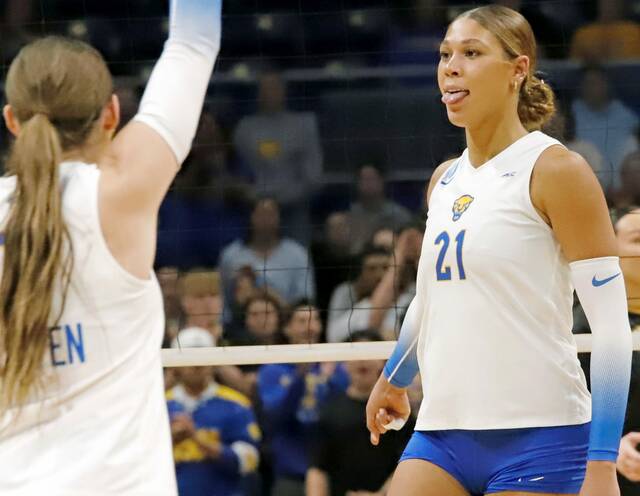
Olivia Babcock didn’t realize her performance during the first round of the NCAA women’s volleyball tournament gave her the Pitt record for most kills in a season. Babcock knew she met the previous record holder, Wendy Hatlestad, during alumni weekend.
Babcock recorded 13 kills during the Panthers’ 25-10, 25-17, 25-13 win Friday night at Petersen Events Center in front of a crowd of 4,240. Babcock now has 558 kills, going past the single-season record of 555 Hatlestad set in 2003.
“I was talking to her two weeks ago,” Babcock said. “That’s crazy I just met her. But I think it says a lot about how much my team trusts me to take those big rips, and it gives me the opportunity to score and get as many kills as I do.”
Everyone had a good night hitting for the top-seeded Panthers, who advanced to the second round of the NCAA Tournament for the 10th straight season.
The Panthers committed only four attack errors against UMBC (13-12) and finished with a hitting percentage of .551.
“It’s really good to start out and to remind ourselves to maintain high standards,” Babcock said. “Obviously, all of these teams have made it into the tournament because they’re an amazing team, and everyone’s going to bring their best volleyball. I think we just need to make sure that we’re playing our best, too, because, especially in these matches, we don’t wanna slip up and give away a set or a match.”
Pitt (27-4) hasn’t dropped a set in the first round since it beat VCU, 3-1, in 2017 at Penn State.
The Retrievers qualified for the tournament after winning the America East Conference for the fifth time in the past six seasons. Pitt setter Brooke Mosher, who finished with 34 assists, said the Panthers got themselves in system thanks to their good passing.
Blaire Bayless was second for the Panthers with nine kills, and Abby Emch contributed eight.
“That made it really easy for me to spread the ball around and get the middles involved,” Mosher said. “Then, I trusted my teammates to be able to put the ball away.”
Pitt lost the first point of the match after UMBC delivered on a kill by Jalynn Brown. The Panthers responded by scoring the next three points, capping the surge with an ace by Izzy Masten.
UMBC struggled to find holes in Pitt’s defense. The Retrievers hit .129 and were led by seven kills from Hannah Dobbs.
UMBC coach Kasey Crider was happy with how they played.
“We don’t have an Olivia Babcock slayer, so, bummer,” Crider said. “I’ve been to this tournament a few times as a head coach and assistant coach, and I’ve never walked away from the tournament thinking we were the best at the end until today. It still hurts, but there were no regrets.”
Pitt will take on Michigan in the second round Saturday. The Wolverines advanced by beating Xavier. The Panthers are 3-6 all-time against the Wolverines.
Pitt’s only meeting with Michigan in the NCAA Tournament came in 2018, when the Wolverines upset Pitt in five sets at Petersen Events Center.
Mosher, who previously played in the NCAA Tournament with Illinois, said she doesn’t feel any extra pressure playing as the No. 1 seed.
“I think just being in the tournament has its own weight in itself,” Mosher said. “Every game your season is on the line, which is the same no matter who you are.”
Josh Rizzo is a freelance writer.

Michael Jordan, Heather Gibbs headline Friday in NASCAR trial

Georgia targets $390K from Damon Wilson II in landmark NIL dispute

Emma Reaves Breaks Own School Record in Tri-Meet with URI, Stonehill

Black Mountain parade heralds season’s tidings on State Street — The Valley Echo

Saturday Eliminations Results – 2025 Snowbird Outlaw Nationals

ACU Heads to College Station for First Meet of the Indoor Season

Petitjean, Weber Set Personal Bests In Boston

Mountaineers Set New 4×400-Meter Relay Meet Record at Indoor Season Opener

Sources: Baylor finalizing hire of Doug McNamee as new AD

MSU Billings baseball team helps expand free-meal event for first responders

Nonprofit collects for toy drive | News

Voices From the Field: David McMenomey
Georgia taking Missouri DE Damon Wilson II to court in NIL contract dispute
No. 2 seed ASU volleyball advances to Sweet 16 in NCAA Tournament

Three-Way Title Showdown Set for Abu Dhabi Finale – Speedway Digest

First Tee Winter Registration is open

Fargo girl, 13, dies after collapsing during school basketball game – Grand Forks Herald

CPG Brands Like Allegra Are Betting on F1 for the First Time

Volleyball Recaps – November 18

F1 Las Vegas: Verstappen win, Norris and Piastri DQ tighten 2025 title fight

Two Pro Volleyball Leagues Serve Up Plans for Minnesota Teams

Utah State Announces 2025-26 Indoor Track & Field Schedule

Sycamores unveil 2026 track and field schedule

Redemption Means First Pro Stock World Championship for Dallas Glenn

Bowl Projections: ESPN predicts 12-team College Football Playoff bracket, full bowl slate after Week 14

Texas volleyball vs Kentucky game score: Live SEC tournament updates

Indiana’s rapid ascent and its impact across college football

Pohlman admits ‘there might be some spats’ as he pushes to get Kyle Busch winning again

How this startup (and a KC sports icon) turned young players into card-carrying legends overnight

Troy Football Need to Know; Gameday at The Vet — Georgia State Game

 Why a rising mid-major power with an NCAA Tournament team opted out of revenue-sharing — and advertised it
 NBA Legend Michael Jordan to Join NBC Sports as Special Contributor
 Falcons mailbag
 Portal Update – Basketball and Gymnastics Take Hits
 has always dreamed in Mercurial. Now his initials are on the boots.
The new Kyl…
has always dreamed in Mercurial. Now his initials are on the boots.
The new Kyl…
-
 Rec Sports2 weeks ago
First Tee Winter Registration is open
-
 Rec Sports1 week ago
Fargo girl, 13, dies after collapsing during school basketball game – Grand Forks Herald
-
 Motorsports2 weeks ago
CPG Brands Like Allegra Are Betting on F1 for the First Time
-
 Sports2 weeks ago
Volleyball Recaps – November 18
-
 Motorsports2 weeks ago
F1 Las Vegas: Verstappen win, Norris and Piastri DQ tighten 2025 title fight
-
 Sports2 weeks ago
Two Pro Volleyball Leagues Serve Up Plans for Minnesota Teams
-
 Sports2 weeks ago
Utah State Announces 2025-26 Indoor Track & Field Schedule
-
 Sports2 weeks ago
Sycamores unveil 2026 track and field schedule
-
 Motorsports1 week ago
Redemption Means First Pro Stock World Championship for Dallas Glenn
-
 NIL6 days ago
Bowl Projections: ESPN predicts 12-team College Football Playoff bracket, full bowl slate after Week 14