
Sports
Everett Forges Ahead with Downtown Stadium for Minor League Sports

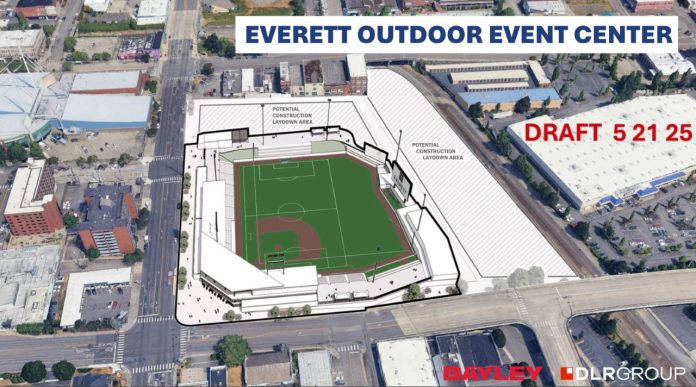
Is Everett’s plan to move the AquaSox from aging Funko Stadium to a brand new downtown stadium an economic jolt or a costly gamble?
Since 1947, Everett’s Funko Stadium has held everything from AquaSox games to grade school baseball games – but times are changing. The AquaSox are the High-A minor league affiliate of the Seattle Mariners and due to pressure from Major League Baseball to upgrade minor league facilities, AquaSox ownership says now it’s time for a stadium revamp. The league’s new amenity requirements include larger locker rooms, umpire accommodations, more parking, and enhanced seating. The 3,682-seat Funko Field does not meet these standards.
The city had three options: renovate, build a new stadium, or do nothing.
Everett chose the second option. On the eve of the new year, December 2024, the Everett City Council unanimously chose a site east of Angel of the Winds Arena — at the corner of Broadway and Pacific, right next to the Sounder rail line.
As of June 2025, the project is in full swing and hoping to break ground in early 2026. The city is planning to tap Bayley Construction to build the new stadium.
“The Outdoor Event Center is a key piece of our plan to grow Everett the right way – with more housing, better access to transit and a more vibrant, walkable downtown. It’s about bringing people together, creating new opportunities and growing our local economy to support the quality of life and robust public services our residents deserve,” Everett Mayor Cassie Franklin said.
The City plans on spending $4.8 million to advance the (OEC) Outdoor Event Center stadium project to the shovel-ready stage. The City forecasts contributing a total of about $8 million toward construction and has budgeted an additional $20 million to acquire 15 properties needed to clear room for the facility. It’s likely some business relocation assistance and possible eminent domain will be needed, the City said.
</p>
<p>” data-medium-file=”https://www.theurbanist.org/wp-content/uploads/2025/07/Everett-stadium-proposal-2025-07-1.jpg” data-large-file=”https://www.theurbanist.org/wp-content/uploads/2025/07/Everett-stadium-proposal-2025-07-1-1024×565.jpg” src=”https://www.theurbanist.org/wp-content/uploads/2025/07/Everett-stadium-proposal-2025-07-1-1024×565.jpg” alt class=”wp-image-198599″ srcset=”https://www.theurbanist.org/wp-content/uploads/2025/07/Everett-stadium-proposal-2025-07-1-1024×565.jpg 1024w, https://www.theurbanist.org/wp-content/uploads/2025/07/Everett-stadium-proposal-2025-07-1-768×424.jpg 768w, https://www.theurbanist.org/wp-content/uploads/2025/07/Everett-stadium-proposal-2025-07-1-761×420.jpg 761w, https://www.theurbanist.org/wp-content/uploads/2025/07/Everett-stadium-proposal-2025-07-1-696×385.jpg 696w, https://www.theurbanist.org/wp-content/uploads/2025/07/Everett-stadium-proposal-2025-07-1.jpg 1280w” sizes=”(max-width: 1024px) 100vw, 1024px”><figcaption class=) Everett’s transit center is already just southeast of the stadium site, and Everett Link would add a light rail station just to the south. (City of Everett)
Everett’s transit center is already just southeast of the stadium site, and Everett Link would add a light rail station just to the south. (City of Everett)Some opponents of the new stadium are using a “No Frogs Downtown” slogan, referring to the AquaSox mascot. Legend says iconic mascot Weebly is a cross between a Pacific Tree Frog and a Central American red eyed tree frog. In a port town that can be soggy and gray, the logo is a nod to Everett’s amphibious identity.
Proponents argue the city risks losing the AquaSox team to another city with a newer stadium if they do not build the new stadium. And the transit-rich location helps Mariners fans from across the region see prospects play before they reach the big leagues. Fans can also see the franchise’s more advanced minor leaguers at Triple A team Tacoma Rainiers, the last stop before the majors.
With a price tag projected at $82 million or more, will the benefits of a brand new stadium outweigh the costs and how does the public feel about the project? And is it the best use of the land chosen, among the most transit rich areas of downtown Everett?
City promises revitalization and year-round activation
The Franklin Administration is all in on the stadium.
“At its core, this is an economic development project. Losing the AquaSox would have a negative economic impact on our community. A new facility downtown that can host baseball, soccer, concerts and other events, plus include a public park, has significant positive benefits – not just economically but also for the quality of life of our residents.” said Simone Tarver, spokesperson for the City of Everett.
For the city of Everett, this is more than a passion project; it’s been their mission for the last several years. “It’s what we think about when we wake up,” said Dan Eernissee, economic development director at the City of Everett.
To its backers, the proposed ballpark would be an investment in the future, contributing to downtown revitalization. The City is also hoping to use the new stadium to attract a minor-level pro soccer team, potentially both men’s and women’s. “The United Soccer League already is intending to be a big part of the project,” Tarver said.
Everett council envisions over 100 days of annual use, including concerts, soccer matches, and festivals.
“106 outdoor events will dovetail well year-round,” Eernissee said. He added that the stadium will serve as a public park and community space, potentially including a dog park on the edge of the property. “tThe OEC will most definitely have a park element” Tarver says, “As density increases so do people with dogs.”
“Do you know how many people in Everett have dogs?” Eernissee said. “50% of people in multifamily housing developments have a dog these days!”
For businesses near the proposed site — between Hewitt and Pacific Avenues — the stadium means potential foot traffic, tourism, and a new wave of investment.
“It’s going to make Everett an all seasonal destination,” Eernissee said. “Now these businesses can provide pizza all year round, like Broadway Pizza could even start seasonal specials.”
But where is the money coming from to fund such a venture?
Questions about cost, transparency, and displacement
The stadium’s projected cost — budgeted at $82 million — has raised eyebrows. Everett’s Stadium Fiscal Advisory Committee released a report that said the downtown site would be the “most fiscally beneficial option” in the long-run, despite greater upfront costs, pegged between $102 million to $133 million.
The funding for the new Everett stadium is set to come from a mix of public and private sources and use a public-private partnership model. The plan suggests transferring project delivery to a third-party non-profit facilitator and recommends using Public Facilities Group as that facilitator.
The City’s “target budget” projects a $82 million, but they admit that a full picture of costs will not emerge until the design is finalized. The higher earlier estimate could indicate costs will rise.
- $42 million for hard construction costs.
- $20 million for soft costs (e.g., design, permits, taxes, fees, and contingency).
- $20 million for property acquisition.
The City of Everett is committing around $7 million, potentially from capital improvement and park impact fees, while state and county support may include a $7.4 million infrastructure grant from Washington State and a $5 million contribution from Snohomish County. The AquaSox have pledged $10 million to the new stadium, and the City is hoping to secure $10 million from the United Soccer League.
“Until design is closer to complete, we won’t have the final cost. The most recent approvals from Council provided funding to get design to 60% at which point we will have a more complete picture of the costs to share with the Council as well as our community,” Tarver said.
To cover the majority of construction costs, it’s likely that the City will issue revenue-backed bonds, with repayment tied to stadium-generated income such as leases and ticket surcharges.
Eernissee says that the stadium is part of a larger marketing strategy for the future, while also trying to get ahead of the real estate bubble itself.
“This is likely an area where there will be a lot of market pressure to develop,” Eernissee said. “Before the market rates get too high we’re trying to get a high enough facility that it’s appropriate for an urban center.”
Transit complement or impediment?
The City contends that the new stadium aligns with Everett’s overall strategy of increasing public transport and development within the downtown area.
“Sound Transit will work hand in hand with the project team,” Tarver said. “We anticipate this area will be close to a light rail station in the future.”
And while the Everett Link extension isn’t expected until 2037 at the earliest (or 2041 if Sound Transit cost control and realignment efforts don’t go well), the city is already taking steps to prepare for it.
</p>
<p>” data-medium-file=”https://www.theurbanist.org/wp-content/uploads/2021/11/Representative-Project.png” data-large-file=”https://www.theurbanist.org/wp-content/uploads/2021/11/Representative-Project-888×1024.png” src=”https://www.theurbanist.org/wp-content/uploads/2021/11/Representative-Project-888×1024.png” alt class=”wp-image-124788″ srcset=”https://www.theurbanist.org/wp-content/uploads/2021/11/Representative-Project-888×1024.png 888w, https://www.theurbanist.org/wp-content/uploads/2021/11/Representative-Project-768×885.png 768w, https://www.theurbanist.org/wp-content/uploads/2021/11/Representative-Project-364×420.png 364w, https://www.theurbanist.org/wp-content/uploads/2021/11/Representative-Project-696×802.png 696w, https://www.theurbanist.org/wp-content/uploads/2021/11/Representative-Project.png 1298w” sizes=”(max-width: 888px) 100vw, 888px”><figcaption class=) Overall Representative Project alignment and stations for Everett Link, including future lines. (Sound Transit)
Overall Representative Project alignment and stations for Everett Link, including future lines. (Sound Transit)“We’re still in the planning phase, so those specific decisions haven’t been made yet. Right now we are in the middle of Everett Transit’s Long Range Plan online open house to solicit input from the community on how transit services should evolve between now and 2044. Public input is such an important part of that,” Tarver said.
Downtown Everett’s future light rail station is expected to be sited near the existing Sounder station, which would put the light rail stop in close proximity to the proposed stadium. Sound Transit’s preferred option is just west of the existing transit center, but Alternative D would overlap with the stadium site. If light rail is ever extended farther north, having two stadiums bookending Broadway could prove to be an obstacle for siting a path for the extension.
</p>
<p>” data-medium-file=”https://www.theurbanist.org/wp-content/uploads/2025/07/07_Everett-Station-1-Sound-Transit-1.jpg” data-large-file=”https://www.theurbanist.org/wp-content/uploads/2025/07/07_Everett-Station-1-Sound-Transit-1.jpg” src=”https://www.theurbanist.org/wp-content/uploads/2025/07/07_Everett-Station-1-Sound-Transit-1.jpg” alt class=”wp-image-198601″ srcset=”https://www.theurbanist.org/wp-content/uploads/2025/07/07_Everett-Station-1-Sound-Transit-1.jpg 920w, https://www.theurbanist.org/wp-content/uploads/2025/07/07_Everett-Station-1-Sound-Transit-1-768×455.jpg 768w, https://www.theurbanist.org/wp-content/uploads/2025/07/07_Everett-Station-1-Sound-Transit-1-709×420.jpg 709w, https://www.theurbanist.org/wp-content/uploads/2025/07/07_Everett-Station-1-Sound-Transit-1-696×412.jpg 696w” sizes=”(max-width: 920px) 100vw, 920px”><figcaption class=) The preferred alignment for Everett Link would put the downtown station west of the existing transit center. Alternative D would overlap with the proposed stadium site. (Sound Transit)
The preferred alignment for Everett Link would put the downtown station west of the existing transit center. Alternative D would overlap with the proposed stadium site. (Sound Transit)Transit boosters have argued that high-density housing should be the top priority within a short walk of light rail, given the huge investment the region is making and the incredible transit access those areas will have.
Everett upzoned its downtown core in 2018, allowing 25-story towers in some areas — though highrises have yet to materialize and Everett’s population has grown slowly compared to its peer cities in the region. The proposed stadium site is in that 25-story highrise zone with a buildable square footage of 3 million.
While the stadium would negate the site’s housing capacity, the City seems to be banking on the project being a catalyst to spur redevelopment elsewhere in the downtown core.
Property acquisition and displacement
The land the stadium is set to build upon is currently the site of some retail businesses, but most of the site is made up of older auto repair shops and specialty businesses.
Of the local businesses still operating there, most owners are actually in support of the plan, even if it means possible displacement.
“Stadiums are always good,” said John, a cashier at Chevron. He was made aware of the city’s plans when they did a survey, and he said his coworkers are in support.
Eernissee says they plan to offer all of the businesses displaced leases elsewhere in Downtown Everett.
“There’s a process to follow here. We are doing our part in following that prescribed process,.” said Eernissee.
This process typically includes feasibility studies, environmental reviews, public meetings, and formal approvals from city and state agencies. It also involves finalizing funding agreements — such as bonds, grants, and private investments — alongside competitive bidding for design and construction.
Criticism of stadium subsidies
As a publicly funded economic development tool, stadiums have drawn criticism for often falling short of their economic promises. In 1997, two Brooking Institute researchers — Andrew Zimbalist and Roger G. Noll — wrote a book raising the alarm that publicly funded stadiums were a bad investment and failed to live up to their rosy projections, but the practice has persisted relatively unabated.
“A new sports facility has an extremely small (perhaps even negative) effect on overall economic activity and employment,” they wrote. “No recent facility appears to have earned anything approaching a reasonable return on investment. No recent facility has been self-financing in terms of its impact on net tax revenues. Regardless of whether the unit of analysis is a local neighborhood, a city, or an entire metropolitan area, the economic benefits of sports facilities are de minimus.”
Even when stadiums spur significant redevelopment, they have drawn criticism for furthering displacement and siphoning money away from social infrastructure. For example, Nationals Park in Washington, D.C., was a publicly funded MLB stadium that ultimately cost $693 million by the time it was completed in 2008. Built to anchor redevelopment in the Navy Yard, it did spur real estate investment and boost tourism, but it also drew criticism for relying heavily on public money and failing to address housing affordability or racial equity concerns.
Located in a retail and warehouse area, Everett’s stadium will not directly displace residents. “The good thing about this project is that there’s no residents affected,” Eernissee said.
The City has pledged to uplift existing communities and support local businesses, promising it could be a massive boon for the city.
As a minor league stadium, the scale of investment is smaller than big league parks, but similar risks exist.If the stadium and associated redevelopment only results in benefits for sports team and rich investors or if it becomes a long-time liability sapping City resources, it may go down in history as a boondoggle.
What community members are saying
Residents have raised a few different arguments against the new stadium build, the most prominent being relocation of small businesses.
“I’m incredibly annoyed that the stadium isn’t being entirely privately funded. Who asked for this? It’s fine where it is. Meanwhile we don’t have any park rangers in the city and our library services have been cut,” an Everett resident complained on Reddit.
But Tarver says that these are misconceptions.
“There are some major misconceptions about this project, like what funding the City would be using, the idea that this funding could bring back park rangers (it couldn’t), that this adds to the structural deficit (it doesn’t), and why Funko Field isn’t a viable option,” said Tarver.
Some Everett residents shared the fear the new stadium could ramp up displacement pressure and change the neighborhood.
“The proposed site is in the middle of a historic district.” said Louley, an Everett local, when asked in an online poll about the community’s idea of the new project. “In the past 20 years, this neighborhood has completely turned itself around. We are a tight-knit community that looks out for each other, as well as the large unhoused population that travel through on a daily basis.”
“Putting a sports stadium in the middle of our neighborhood is going to undo EVERYTHING. North Everett has really been leading the positive changes in the city, but because historically this was a ‘slum,’” Louley added. “The entire county wants to raze us to the ground.”
On the other hand, some Everett residents back the project and favor out with the old, in with the new. Sverre is one such Everett resident.
“I think long term it will be great for the city,” Sverre said. “The current facility is owned by the school district, and its priority is for student use. Players have to cross the football then up the hill to even get to the locker room or trainers offices, which are the EHS football team locker rooms. They haven’t been updated in 50 years, and are massively outdated, even for high school sports use, let alone professional athletes. It would cost way too much to upgrade Funko field to meet new MLB standards, and it still wouldn’t be owned by the team or city.”
Beyond improving the stadium experience, Sverre sees the project as furthering the revitalization of downtown: “This new stadium is going to connect downtown Everett’s core, with the east side of Broadway, which has fallen in disrepair and is mainly older manufacture type buildings and old warehouses. It will bring a large amount of new urban housing and commercial spaces that will link up with the Everett Transit Center. This is also where the downtown light rail station will be built. I know future development will follow.”
Looking forward
As Everett pushes forward with its vision for a modern, multipurpose stadium, the project stands at a crossroads between transformation and tension. For some, it represents long-overdue progress—an investment in economic development, public amenities, and city pride. For others, it raises concerns about displacement, equity, and whether the return will truly match the cost.
At the end of the day, one thing is clear: this isn’t just about baseball. It’s about identity and the kind of future Everett wants to build. With construction slated to begin in 2026 and a completion date eyed for 2027, the stadium is beginning to look like a done deal, but it will be a test of the city’s planning prowess and commitment to inclusivity, transparency, and thoughtful urban growth to ensure it’s a success.
Article Author

Nova Berger
Nova Berger is a human evolutionary biology student and curiosity enthusiast dedicated to breaking the “Seattle freeze.” Guided by Alice in Wonderland’s philosophy — “you can do six impossible things before breakfast” — Nova embraces the unique opportunities Seattle offers. With a perspective that views the world as a cabinet of curiosities, Nova is passionate about sharing stories and helping fellow Seattleites discover their own distinctive “nooks” along the way.


Results: Texas A&M | Boston | Notre Dame
COLLEGE STATION, Texas (SMU) — Two Newcomer Mustangs have added their names to SMU in their first meet representing the program. Graduate Student-Athlete Cleo Martin-Evans placed second in today’s competition at Texas A&M with a jump of 6.23, placing her at third all time for SMU. Freshman Lotta Edzards etched her name alongside her teammate’s with a personal best jump of 5.87 — seventh in SMU history.
In the 60 meter dash, Martin-Evans placed 16th with a time of 7.81. It was Mustangs in places 21st through 24th with a personal best by Freshman Lily Muzzy with 7.99 in 23rd.
The Mustangs had personal best performances across the board in all three meets in their first weekend of the 2025-26 season.
In Boston, Isabel Breaux ran a personal best time of 5:00.84 in the mile. In the 3,000, Senior Macey Hilton had a PR in her first indoor race of the season with a time of 9:21.07.
At Notre Dame, Elizabeth Smits accomplished a PR time of 9:50.39 in the 3,000.
The Mustangs will continue their season the weekend of January 16th at Texas Tech.
FULL MUSTANG RESULTS
Boston University
Mile
19 Isabel Breaux 5:00.84 (PR)
3,000
16 Macey Hilton 9:21.07 (PR)
41 Sophia Keditukei 9:42.08
5,000
162 Ellie Grammas 17:19.57
169 Ruby Little 17:30.39
Notre Dame
3,000
7 Elizabeth Smits 9:50.39 (PR)
Texas A&M
60
16 Cleo Martin-Evans 7.81
21 Ariana Sutton 7.96
22 Magnolia Crissup 7.98
23 Lily Muzzy 7.99 (PR)
24 Lotta Edzards 8.04
60mH
3 Kirin Chacchia 8.72
300
9 Kirin Chacchia 39.16
15 Magnolia Crissup 40.76
16 Ariana Sutton 40.85
Long Jump
2 Cleo Martin-Evans 6.23m
5 Lotta Edzards 5.87m (PR)
12 Hedda Kvalvag 5.48m
13 Lily Muzzy 5.32m

The Aggies end the season with a 24-8 record, tied alongside the 2023 and 2010 seasons for the most wins by the program since 1982.
Set One
The Aggies began the match with back-to-back kills courtesy of sophomore outside hitter Mara Štiglic and sophomore opposite side hitter Loryn Helgesen. The Sun Devils took their first lead with a 4-0 run and eventually forced a USU timeout after building a 14-9 lead. Utah State battled back, cutting the deficit to one with four-straight points out of the timeout including an ace by junior libero/defensive specialist Kendel Thompson and a block by Helgesen and senior middle blocker Tierney Barlow. The second-seeded Sun Devils took over, however, scoring on 11 of the final 13 rallies of the set to take a 1-0 lead for the match.
Set Two
Arizona State continued to play to the level expected of AVCA’s No. 8-ranked team, opening up the second set with three-straight points. The Aggies responded with Štiglic supplying three kills for USU’s first three points. ASU maintained pressure with a 5-1 stretch to go up 9-4 early in the frame. Utah State was able to then alternate the ensuing 12 rallies with the Sun Devils but were unable to build a run to cut into the lead before ASU again extended their advantage with another 5-1 burst, ultimately taking the second set, 25-18.
Set Three
Down to their final set, the Aggies came out with a spirited effort in the third set. After trading points with the Sun Devils, USU built a lead with a 5-1 stretch kickstarted by a Barlow ace and a block by sophomore setter Kaylie Kofe and redshirt freshman middle blocker Lauren Larkin. Štiglic then recorded back-to-back kills to give the Aggies a three-point lead. Despite Arizona State tying the set with three unanswered points, Utah State didn’t flinch and score three-straight of their own. ASU again returned serve, this time scoring four-straight to take a one-point lead. Still, USU refused to go away, battling point-by-point with the Sun Devils until using a 5-1 burst to win the set, 25-22. Barlow posted two kills while Štiglic and Helgesen each also added a kill before a bad set from ASU secured the set for Utah State and sent the match to a fourth frame.
Set Four
The fight continued in the fourth frame as Utah State trimmed an Arizona State lead to a single point following a kill by Štiglic and an ace from Kofe. The Sun Devils, however, responded with a 9-1 stretch to grab firm control of the set. The Aggies were unable to mount a comeback as ASU eventually took the set, 25-15, to end the match.
Quick Notes
- Utah State hit .227 for the match, ending the season with a mark of .274, setting a new program record and breaking the previous mark of .238 set in 2016.
- Helgesen led USU with 19 kills, hitting .429 on 35 total attempts and adding three digs and a block.
- Štiglic added 17 kills on a .343 hitting percentage, also posting four digs.
- Barlow and Kofe tied for the team lead with two blocks apiece. Barlow also added six kills, an ace and a dig while Kofe finished with 41 assists, one ace and nine digs.
- Sophomore outside hitter Andrea Simovski led the Aggies with two aces, also adding eight kills, nine digs and two assists.
- Thompson posted a team-high 12 digs, also finishing with five assists and an ace.
- Kofe finished the season with 1,330 total assists, ranking fifth-most all-time for a single season at USU and the most since 2010. Kofe already ranks eighth all-time for career assists at Utah State with 2,290.
- Barlow finished the season with a program-record-breaking .444 hitting percentage, shattering the previous mark of .375 (min. 5 attempts per set) held by Denae Mohlman and set in 1997. Barlow is also now the career record holder for hitting percentage, now sitting at .418 for her career at Utah State, topping current assistant coach/director of operations Kennedi Hansen’s career mark of .362 (min. 1,000 attacks).
- Helgesen also finished the season inside the top 10 all-time for hitting percent, ranking ninth all-time at USU with a .295 hitting percentage.
- Both Simovski and Thompson finished the season in top-10 all-time for service aces, ranking in ties for sixth and ninth all-time at USU with 42 and 41 aces on the year, respectively.
- Utah State is now 3-7 in the NCAA Tournament all-time and recorded their first win in the Tournament this year since defeating BYU in Salt Lake City in 2001. USU also defeated Missouri the year prior in Provo, Utah.
Fans can follow the Aggie volleyball program on Twitter, @USUVolleyball, on Facebook at /USUVolleyball or on Instagram, @usuvolleyball. Aggie fans can also follow the Utah State athletic program on Twitter, @USUAthletics, Facebook at /USUAthletics and on Instagram, @USUAthletics.
– USU –

In its first postseason appearance since 2021, K-State (18-9, 10-8 Big 12) secured its first tournament victory since 2016. The win also marked the Wildcats’ first 18-plus-win season since 2016.
Attack errors proved to be the difference maker, as the Wildcats defense forced 30 attack errors behind a season-best 13.0 blocks, led by seven from senior middle blocker Jordyn Williams. The victory handed San Diego its first loss since September 20, snapping an 18-match winning streak.
As a team, the Wildcats produced a .276 hitting percentage with 61 kills on 152 swings and 19 errors.
LeGrand, a native of Papillion, Nebraska, ended the night with 49 assists and 14 digs for her sixth consecutive double-double. Now with 17 on the year, she becomes just the ninth player in school history to reach the mark and first since 2016. She also notched her first career 1,000-assist season, reaching the milestone with her fifth assist of the match, and added a career-high six blocks.
Myers’ 26 kills set a rally-scoring era record for single-season 20-kill matches, earning her 12th of the year. She also became the 20th player in school history to eclipse 1,000 career kills, hitting the milestone with her third kill of the match.
Clinton picked up her ninth double-double of the year with 19 kills and 13 digs, while Symone Sims registered a team-high 17 digs and Brenna Schmidt added five blocks.
San Diego (25-5, 18-0 WCC), the No. 8 seed in the quadrant, was led Nemo Beach with 22 kills. The West Coast Conference Player of the Year added 12 digs for a double-double and delivered a match-high three service aces. Isabel Clark contributed 20 kills, while the WCC Libero of the Year Olivia Bennett led all players with 25 digs.
FROM THE CATS
JASON MANSFIELD, K-STATE HEAD COACH
Overall Statement…
“I just want to congratulate San Diego on a great season. They went 18-0 in their conference season, so we knew they were going to be a really tough team offensively, and they were. I’m really proud of our team and how we battled, especially after that first set. I think our offense really got going in the first set and we finally slowed them down. We’ve played a lot of five-set matches this season, so we were pretty confident as a group heading into that fifth set it showed with our start in the fifth set.”
On the team pushing through to five sets…
“There’s been times this year we’ve struggled to sideout. We’ve been in that situation before where we’ve been up and the other team has come back, but I think it says a lot about their composure. We’ve got a veteran group up there with a bunch of juniors and seniors that have played together for a while. I think that their poise at the end there in making a couple plays to win the match was pretty special.”
On playing in Lincoln and in the NCAA Tournament…
“We try really hard to make everything the same with how we practice and how we prepare, but there’s no preparing for how you’re going to feel in your first NCAA match of your career. I think there were some nerves, and we weren’t quite ourselves, but proud of how we bounced back and played like we wanted to play. We were flying around and playing with passion, and I think that says a lot about their resilience.”
SET-BY-SET
Set 1 – (8) San Diego 25, K-State 21
- USD utilized a 9-3 scoring run to jump out to a 12-8 lead – the first substantial lead of the set – forcing a K-State timeout.
- Down 14-10, a service error and block by LeGrand and Williams shifted momentum to the Wildcats.
- Schmidt put down her first kill of the match followed by a solo block to level the score at 16-all.
- USD scored four unanswered points to stretch their lead back out to four until a kill from Reagan Fox snapped the run and kicked off a 3-1 scoring run, bringing the score within two, 22-20.
- USD hit at a .250 clip (15 kills, 7 errors, 32 swings) in the opening frame, led by four kills from Clark and Beach. The Toreros committed four service errors in the first set
Set 2 – K-State 25, (8) San Diego 17
- The Wildcats trailed 8-5 and clawed their way to take their first signifcant lead with the help of an 8-2 scoring run.
- A block by Williams and Fox handed the Wildcats an 18-13 lead.
- Backed by three kills from Clinton and a service ace by LeGrand, K-State put the set away, 25-17 to jump back into the match.
- Clinton knocked down six kills in Set 2 followed by five from Myers.
- As a team, K-State produced a match-best .542 hitting percentage with 14 kills on 34 attempts and just one error.
- Myers and Clinton each reached double-digit kills in Set 2.
Set 3 – (8) San Diego 25, K-State 21
- Tied 10-10, the Wildcats produced a three-point spurt to take a 15-12 lead behind a 5-2 scoring run.
- USD managed to overcome the deficit and take back the lead, highlighted by four kills from Beach.
- A crucial call was overturned that awarded the Wildcats, making it a 24-22 score.
- K-State fended off set-point by the second consecutive kill from Clinton before an attack error tied the set at 24-24.
- Both squads exchanged blows, as USD fended off set-point twice before closing the set with three consecutive points with straight kills from Beach and Clark.
- Myers knocked down eight kills in Set 2, hitting at a .533 clip with no errors.
Set 4 – K-State 25, (8) San Diego 22
- USD scored six unanswered points before Clinton’s 15th kill of the match snapped the run.
- Myers turned in a pair of kills to bridge the gap to one, 11-10, until a block by Schmidt and Clinton tied the score at 15.
- Tied 18-18, the Wildcats put together a 5-0 scoring run, highlighted by kills from Myers and Fox.
- San Diego came out with a 4-0 run before Myers delivered her 22nd kill to take set-point, leading the deciding final set.
- K-State hit .262 in Set 4 with 16 kills on 42 swings with five errors, led by seven kills from Myers.
Set 5 – K-State 15, (8) San Diego 12
- A service ace from Sims and kills by Myers sparked an 8-2 lead, that was led off with 5-0 scoring run.
- The Toreros clawed back into the set with a 6-1 scoring run to make it a one-point set, before tying the score 10-10.
- K-State took the lead back before Myers delivered the final blow with back-to-back kills to secure the win.
- The Wildcats tallied four service aces in Set 5, led by two from freshman Caleigh Ponn.
INSIDE THE BOX
- K-State came back to defeat San Diego in the first round of the NCAA Tournament in five sets – 21-25, 25-17, 26-28, 25-22, 15-12.
- The Cats hit .276 (61 kills, 19 errors, 152 swings) with two players reaching double digit kills led by Myers with 26 and Clinton adding 19.
- USD produced a .276 team efficiency behind 67 kills on 168 attempts and 30 errors.
- The Cats defense out-blocked USD, 13.0-10.0, while the Toreros held a 65-61 edge in total digs.
- LeGrand handed out 49 assists with 14 digs for her 17th double-double of the season while Clinton added 13 for her ninth.
- Sims led the defense with 17 digs – her 19th match in double figures.
- Williams recorded a match-high seven blocks, leading K-State to match its season-high mark (13.0). LeGrand totaled six blocks followed by five blocks from LeGrand (1 solo, 5 assists).
- USD had two players eclipse the 20-kill mark – Beach (22), Clark (20).
- Olivia Bennett had a match-high 25 digs while Beach added 12 digs to record the lone double-double for the Toreros.
- K-State led in service aces (6-4) with two from Caleigh Ponn and LeGrand.
- Staters: Reagan Fox, Aniya Clinton, Symone Sims, Ava LeGrand, Shaylee Myers, Brenna Schmidt and Jordyn Williams.
- The two teams combined for 25 service errors, that included seven in Set 1 and 2.
- In total, the match had 34 tied scores and 13 lead changes.
BEYOND THE BOX
- In its history, K-State has made the NCAA Tournament 19 times, advancing to the Regional Semifinal three times (2000, 2003, 2011).
- K-State is 16-18 overall in the tournament, that includes a 13-6 record in the opening round while the Cats are 3-9 in the second round.
- The Wildcats advanced to the second round of the NCAA Tournament for the first time since 2016, making the program’s 12th overall appearance in the round.
- The 2025 postseason run marks K-State’s sixth time being sent to Lincoln for the first-round in school history (2011, 2012, 2014, 2015, 2021, 2025).
- LeGrand recorded her 17th double-double of the year, becoming the ninth player in program history to register the mark in a single-season.
- Myers achieved her 12th match of the season with 20-plus kills. She becomes just the second player in school history to register the 20-kill mark in 12 or more matches – first in the rally-scoring era.
- The win marked the first 18-plus-win season since 2016, where K-State went 21-10.
- Friday’s contest marked just the fourth five-set postseason match in the program’s history and third in the first round.
- San Diego leads the all-tie series 2-1, with all three matches set in at neutral sites.
- The two squads first met during the 1997 NCAA Tournament in Los Angeles, California.
- In 2025, K-State is 6-2 in five-set matches.
AROUND THE TOURNAMENT
- The Big 12 had 10 programs in the 2025 NCAA Division I Women’s Volleyball Championship, which is the most of any conference and the most in Big 12 history, surpassing the previous high of eight in 2001.
- Arizona State and Kansas have each advanced to the Reginal Semifinal round (Sweet 16).
- Of the league’s 10 selections, eight advanced to the second round.
- There have been eight five-set matches in the opening round thus far of the 2025 NCAA Tournament.
UP NEXT
Nebraska (31-0, 20-0 Big Ten), the No. 1 overall national seed, swept Long Island (15-18, 10-4 NEC) – 25-11, 25-15, 25-17 – to advance to Saturday’s second round at 7 p.m. The second round match will be streamed on ESPN+.
Saturday’s match will mark the third contest between the Wildcats and Cornhuskers in the postseason, each boasting a win. In their last postseason meeting on December 2, 2011, K-State pulled off a historic five-set upset over then-No. 3 Nebraska, defeating the Huskers 25-22, 22-25, 31-29, 22-25, 15-11 to advance to the program’s third Regional Semifinal (Sweet 16).
Updated Dec. 6, 2025, 8:41 p.m. CT
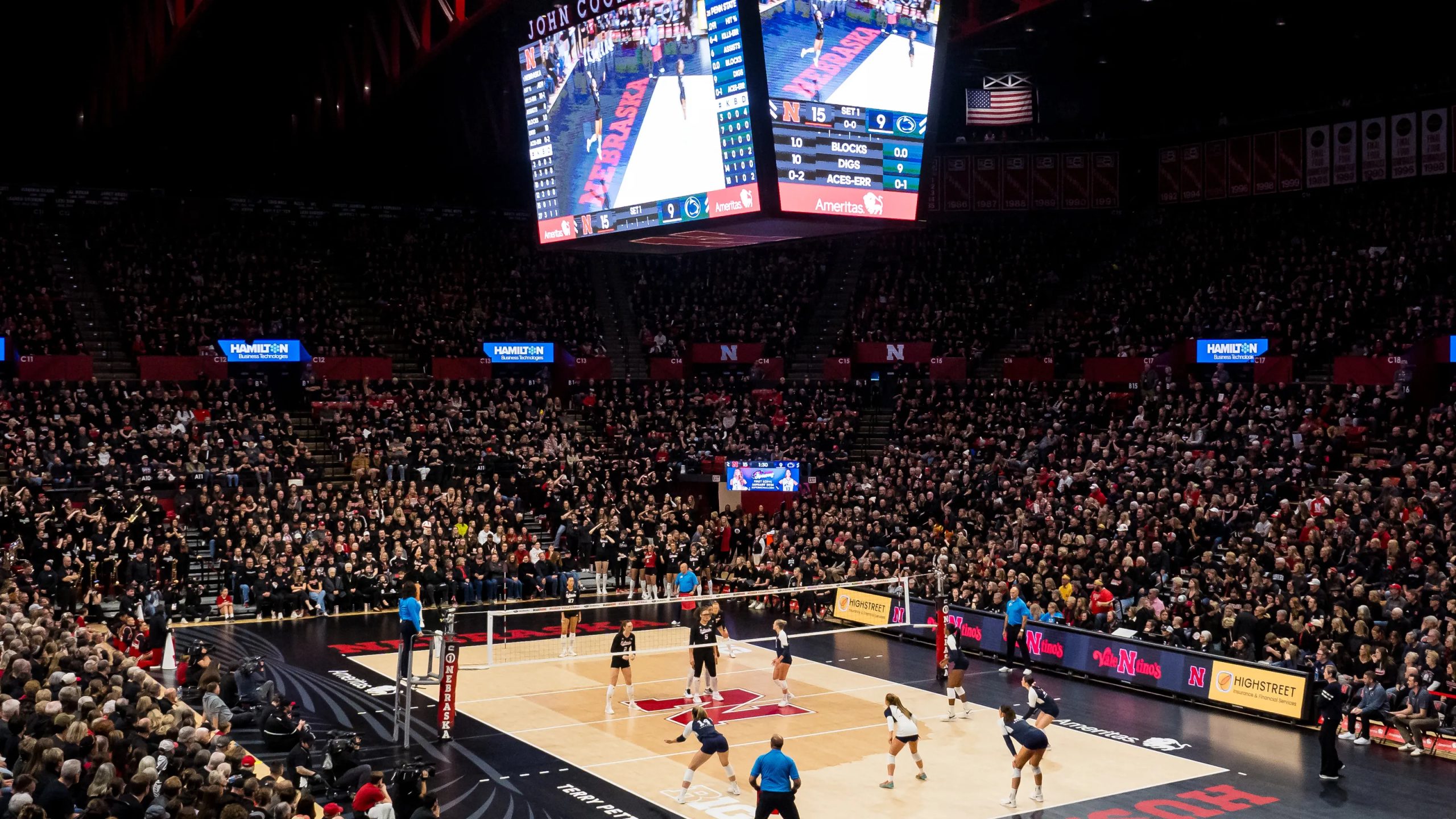
Nebraska volleyball entered the second round of the NCAA tournament after sweeping Long Island on Friday. The Huskers faced the Kansas State Wildcats, who defeated San Diego in five sets yesterday.
Nebraska swept the Wildcats (25-17, 25-21, 25-16) despite offensively struggling at times against the Kansas State defense, who posted 14 blocks and 32 digs. The Huskers finished with 43 kills off 99 attacks for a .253 hitting percentage. The Huskers also earned 48 digs and eight blocks to help hold Kansas State to .118 and 27 kills on 102 attacks.
Harper Murray and Andi Jackson co-led Nebraska in the sweep, both tallying 10 kills. Murray also earned six digs while Jackson posted a team-high three blocks. Taylor Landfair finished 8-of-18 on the night, while Virginia Adriano hit 7-of-12 with a service ace.
Rebekah Allick delivered 6 six off 13 attacks, while Allie Sczech earned 2-of-4. Bergen Reilly tallied 34 set assists and service ace. Laney Choboy and Olivia Mauch combined for 25 digs and four service aces.
Nebraska now advances to the Super Regional, where it’ll host Kansas in the Sweet Sixteen. The first serve is to be determined.
Match point
Huskers advance (Nebraska 25-16)
Nebraska punches its ticket to the Sweet Sixteen following another sweep.
Refusing to quit
Nebraska pulling away (S3/Nebraska 20-12)
Huskers dominating with the sweep in sight.
Huskers on a run (S3/Nebraska 15-10)
Nebraska is on a 7-1 run to expand its lead.
Nebraska back in front (S3/Nebraska 10-9)
Huskers get the lead following multiple Kansas State errors.
Wildcats with the lead again (S3/Kansas State 5-3)
Kansas State once again opens up the set by taking the lead.
Set point
Set two goes to Nebraska (Nebraska 25-21)
Though Kansas State brought it within one, Huskers take set two.
Huskers in the redzone (S2/Nebraska 20-16)
Nebraska gets back in the redzone with a four-point lead.
Nebraska jumps in front (S2/Nebraska 15-13)
The Huskers take the lead, but Kansas State remains close behind.
Kansas State holding on (S2/Kansas State 10-9)
Huskers and Wildcats continue trading blows.
Wildcats battling (S2/Kansas State 5-4)
Kansas State takes the early lead in set two, but Nebraska is on a 4-1 run.
Huskers take set one (Nebraska 25-17)
Nebraska gets the set win after holding Kansas State to a .088 attack percentage.
Nebraska in the redzone (S1/Nebraska 20-14)
After Kansas State responded with a 6-1 run of its own, Huskers get four straight points.
Wild rallies in Lincoln
Huskers on a run (S1/Nebraska 15-8)
Nebraska is currently on a 6-1 run to go up by seven.
Nebraska hanging on (S1/Nebraska 10-7)
Despite the Wildcats staying close behind, the Huskers remain out in front.
Huskers with the early lead (S1/Nebraska 5-2)
Nebraska takes the lead in set one off four kills and a service ace.
Starters for the night
Here’s how to watch Nebraska-Kansas State volleyball on Friday, including time, TV schedule and streaming information:
What channel is Nebraska volleyball vs. Kansas State on?
TV Channel: N/A
Livestream:ESPN+ (subscriber only)
Nebraska-Kansas State volleyball in the second round of the NCAA tournament can be seen on ESPN+. Huskers Radio Network will have audio coverage of all Nebraska matches on Huskers Radio Network affiliates, Huskers.com and the Huskers app. John Baylor and Lauren Cook West will be on the call. Streaming options for the game include ESPN+.
Nebraska volleyball vs. Kansas State time today
- Date: Saturday, Dec. 6
- Start time: 7 p.m. CT
The second-round NCAA volleyball tournament contest between Nebraska and Kansas State starts at 7 p.m. CT from the Bob Devaney Sports Center in Lincoln, Nebraska.
Nebraska volleyball 2025 schedule (30-0, 20-0)
Aug. 22 – vs. Pittsburgh – WIN 3-1 (25-22, 25-11, 20-25, 25-23)
Aug. 24 – vs. Stanford – WIN 3-0 (25-13, 25-19, 25-14)
Aug. 29 – at Lipscomb – WIN 3-0 (25-13, 25-21, 25-15)
Aug. 31 – vs Kentucky – WIN 3-2 (24-26, 20-25, 25-19, 25-23, 15-8)
Sept. 5 – vs. Wright State – WIN 3-0 (25-16, 25-16, 25-20)
Sept. 7 – vs. California – WIN 3-0 (25-15, 25-18, 25-12)
Sept. 12 – vs. Utah – WIN 3-1 (21-25, 25-8, 25-18, 25-13)
Sept. 13 – vs. Grand Canyon – WIN 3-0 (25-12, 25-23, 25-18)
Sept. 16 – at Creighton – WIN 3-2 (25-17, 21-25, 25-18, 24-26, 15-9)
Sept. 20 – vs. Arizona – WIN 3-0 (25-19, 25-23, 25-18)
Sept. 24 – vs. Michigan – WIN 3-0 (25-6, 25-15, 25-13)
Sept. 27 – vs. Maryland – WIN 3-0 (25-14, 27-25, 25-14)
Oct. 3 – at Penn State – WIN 3-0 (25-6, 25-15, 25-13)
Oct. 4 – at Rutgers – WIN 3-0 (25-17, 25-15, 25-16)
Oct. 10 – vs. Washington – WIN 3-0 (25-14, 25-18, 25-16)
Oct. 12 – at Purdue – WIN 3-0 (25-23, 25-16, 25-15)
Oct. 17 – at Michigan State – WIN 3-0 (25-15, 25-18, 25-20)
Oct. 19 – at Michigan – WIN 3-0 (25-18, 25-13, 25-18)
Oct. 24 – vs. Northwestern – WIN 3-0 (25-17, 25-13, 25-17)
Oct. 25 – vs. Michigan State – WIN 3-0 (25-15, 25-15, 25-18)
Oct. 31 – at Wisconsin – WIN 3-0 (25-22, 25-19, 25-13)
Nov. 2 – vs. Oregon – WIN 3-0 (25-21, 25-20, 25-12)
Nov. 6 – vs. Illinois – WIN 3-0 (25-11, 25-15, 25-14)
Nov. 8 – at Minnesota – WIN 3-0 (25-15, 25-21, 25-20)
Nov. 14 – at UCLA – WIN 3-1 (25-17, 25-23, 19-25, 25-15)
Nov. 16 – at USC – WIN 3-0 (25-13, 25-16, 25-20)
Nov. 20 – vs. Iowa – WIN 3-0 (25-15, 25-21, 25-18)
Nov. 22 – at Indiana – WIN 3-0 (25-19, 25-16, 25-22)
Nov. 28 – vs. Penn State – WIN 3-0 (25-14, 25-11, 25-14)
Nov. 29 – vs. Ohio State – WIN 3-0 (25-16, 25-13, 25-20)
We occasionally recommend interesting products and services. If you make a purchase by clicking one of the links, we may earn an affiliate fee. USA TODAY Network newsrooms operate independently, and this doesn’t influence our coverage.
Contact/Follow us @CornhuskersWire on X (formerly Twitter) and like our page on Facebook to follow ongoing coverage of Nebraska news, notes and opinions.
Our team of savvy editors independently handpicks all recommendations. If you purchase through our links, the USA Today Network may earn a commission. Prices were accurate at the time of publication but may change.

MINNEAPOLIS, Minn. – No. 23 Iowa State (23-7, 12-6 Big 12) continues its 18th NCAA Championships appearance as the No. 5 seed advancing to the second round to meet No. 4-seed Minnesota.
Saturday, Dec. 6, 7 p.m., vs. No. 17 Minnesota (23-9, 12-8 Big Ten)
Maturi Pavilion, Minneapolis, Minn.
Tickets | Live Stats | ESPN+ | Media Center | Notes
By the Numbers
1 – Morgan Brandt leads all active Big 12 players with 3,773 career assists. The total ranks fourth in program history.
3 – Christy Johnson-Lynch ranks No. 3 all time in Big 12 history with 219 league victories.
3 – ISU ends regular season as the Big 12 leader in three categories: kills (14.14 per set), assists (13.03 per set) and digs (15.22 per set). The kill and assist average rank top 20 nationally.
5 – Iowa State placed five on All-Big 12 teams and took home Big 12 Libero and Setter of the Year.
10 – Maya Duckworth now ranks 10th in Iowa State history with 1,072 kills. Duckworth became the 12th in ISU history to join the 1,000-kill club.
12 – Iowa State has 12 Big 12 wins for the first time since 2012.
The 2025 Cyclones
ISU advanced with a first-round win over St. Thomas. Rachel Van Gorp had 33 digs, the second-most in a tournament match by a Cyclone and most since 2012. ISU served 12 aces led by Nayeli Ti’a with five, tying the ISU tournament record. Van Gorp served four, now the third-highest tournament ace total.
Iowa State ended regular season at 22-7 and 12-6 in Big 12 play to finish tied for third after being picking ninth in preseason. ISU has the most regular season wins since 2011, while the last time ISU was ranked this late in the season was in 2017.
Rachel Van Gorp is the unanimous Big 12 Libero of the Year, and Morgan Brandt earned Big 12 Setter of the Year while both were placed on All-Big 12 First Team. Tierney Jackson was named All-Big 12 Second team, while true freshmen Alea Goolsby and Reagan Hanfelt were selected for the All-Rookie Team.
Updated Dec. 6, 2025, 9:04 p.m. ET
The NCAA Division I volleyball tournament’s second round concludes on Saturday.
No. 1 seeds Nebraska, Texas and Pitt all swept their first round matches and play again Saturday. Kentucky, the fourth No. 1 defeated No. 8 UCLA in the second round on Friday to advance to the Sweet 16.
Cal Poly defeated No. 4 seed USC in the second round of the tournament play on Friday, the biggest upset of the tournament thus far. Stanford also got an early scare from Utah Valley, losing the first set before rallying. Cardinal setter Logan Parks did not play in the match.
The 2025 NCAA volleyball Final Four will be held at the T-Mobile Center in Kansas City, Missouri. It’s the third time since 2010 that the venue, formerly known as the Sprint Center, has hosted the volleyball national championship.

What time is NCAA volleyball tournament?
- Date: Saturday, Dec. 6
- Start time: Eight matches, beginning at 6 p.m. ET Saturday. Match-by-match times below.
How to watch NCAA volleyball tournament
The 2025 NCAA volleyball tournament will air across the ESPN and ABC family of networks. All first- and second-round games can be found streaming on ESPN+, ESPN’s subscription streaming service, and Fubo, which offers a free trial to potential subscribers.
Watch the 2025 NCAA volleyball tournament live with Fubo (free trial)Follow along with USA TODAY Sports for live updates, scores and schedule for the 2025 NCAA volleyball tournament:
Live results of Saturday’s NCAA women’s volleyball tournament
Minnesota 2, Iowa State 0
The Gophers win the first two sets 25-22, 25-21.
SMU 1, Florida 0
The Mustangs win the first match 25-11.
TCU 1, Texas A&M 1
The teams are knotted at one set each.
Nebraska 1, Kansas State 0
Nebraska goes for the it’s 32nd win of the season.
Texas 3, Penn State 0
Texas eliminates defending champion Penn State, 25-16, 25-9, 25-19.
Pittsburgh 3, Michigan 0
No. 1 seed Pitt won 25-23, 25-23, 25-18 to eliminate Michigan.
Louisville 3, Marquette 2
Louisville staved off an upset 21-25, 25-11, 23-25, 25-19, 15-12.
NCAA volleyball second-round matchups, game times
The second round concludes Saturday Dec. 6.
Lexington bracket
- No. 1 Kentucky 3, No. 8 UCLA 1 (30-28, 25-16, 28-30, 25-17)
- No. 3 Creighton 3, No. 6 UNI 1 (25-18, 23-25, 25-22, 25-21)
- No. 2 Arizona State 3, Utah State 1 (25-15, 25-18, 22-25, 25-15)
- Cal Poly 3, No. 4 USC 2 (25-19, 25-20, 20-25, 14-25, 15-7)
Austin bracket
- No. 4 Indiana 3, No. 5 Colorado 0 (25-20, 25-17, 25-23)
- No. 3 Wisconsin 3, North Carolina 0 (25-14, 25-21, 27-25)
- No. 1 Texas vs. No. 8 Penn State, 7:30 p.m. ET, Saturday
- No. 2 Stanford vs. Arizona, 9 p.m. ET, Saturday
Pittsburgh bracket
- No. 3 Purdue 3, No. 6 Baylor 1 (25-16, 25-19, 23-25, 25-20)
- No. 1 Pittsburgh 3, Michigan 0 (25-23, 25-23, 25-18)
- No. 2 SMU vs. Florida, 8 p.m. ET, Saturday
- No. 4 Minnesota vs. No. 5 Iowa State, 8 p.m. ET, Saturday
Lincoln bracket
- No. 4 Kansas 3, No. 5 Miami 1 (25-17, 25-22, 22-25, 27-25)
- No. 2 Louisville 3, Marquette 2 (21-25, 25-11, 23-25, 25-19, 15-12)
- No. 1 Nebraska vs. Kansas State, 8 p.m. ET, Saturday
- No. 3 Texas A&M vs. No. 6 TCU, 8 p.m. ET, Saturday
NCAA volleyball first-round results
Lexington bracket
- No. 1 Kentucky 3, Wofford 0 (25-11, 25-19, 25-12)
- No. 8 UCLA 3, Georgia Tech 2 (24-26, 25-19, 25-23, 25-18, 15-10)
- Cal Poly 3, No. 5 BYU 2 (25-19, 17-25, 20-25, 25-20, 15-10)
- No. 4 USC 3, Princeton 0, (25-19, 25-12, 25-13)
- No. 3 Creighton 3, Northern Colorado 2 (12-25, 25-23,25-23,17-25, 8-15)
- No. 6 Northern Iowa 3, Utah 2 (15-25, 21-25, 26-24, 25-20, 15-10)
- Utah State 3, No. 7 Tennessee 2 (25-19, 25-15, 19-25, 25-18, 15-11)
- No. 2 Arizona State 3, Coppin State 0 (25-11, 25-14, 25-12)
Austin bracket
- No. 1 Texas 3, Florida A&M 0 (25-11, 25- 8, 25-14)
- No. 8 Penn State 3, South Florida 1 (25-23, 12-25, 25-21, 25-19)
- No. 5 Colorado 3, American 0 (25-16, 25-19, 25-16)
- No. 4 Indiana 3, Toledo 0 (25-18, 25-15, 25-17)
- No. 3 Wisconsin 3, Eastern Illinois 0 (25-11, 25-6, 25-19)
- North Carolina 3, No. 6 UTEP 1 (24-26, 25-11, 25-18, 25-21)
- Arizona 3, No. 7 South Dakota State 1 (25-21, 22-25, 25-15, 25-15)
- No. 2 Stanford 3, Utah Valley 1 (21-25, 25-21, 25-13, 25-14)
Pittsburgh bracket
- No. 1 Pitt 3, UMBC 0 (25-10, 25-17, 25-13)
- Michigan 3, No. 8 Xavier 0 (25-19, 25-15, 25-23)
- No. 5 Iowa State 3, St. Thomas-Minnesota 2 (21-25, 25-13, 25-16, 21-25, 15-8)
- No. 4 Minnesota 3, Fairfield 0 (25-12, 25-7, 25-13)
- No. 3 Purdue 3, Wright State 0 (25-13, 25-21, 25-19)
- No. 6 Baylor 3, Arkansas State 2 (23-25, 25-20, 30-28, 23-25, 15-10)
- Florida 3, No. 7 Rice 0 (27-25, 25-23, 25-19)
- No. 2 SMU 3, Central Arkansas 0 (25-13, 25-13, 25-13)
Lincoln bracket
- No. 1 Nebraska 3, LIU 0 (25-11, 25-15, 25-17)
- Kansas State 3, San Diego 2 (21-25, 25-17, 26-28, 25-22, 15-12)
- No. 5 Miami 3, Tulsa 1 (25-22, 13-25, 25-22, 25-20)
- No. 4 Kansas 3, High Point 0 (25-20, 25-15, 25-18)
- No. 3 Texas A&M 3, Campbell 0 (25-20, 25-10, 25-13)
- No. 6 TCU 3, Stephen F. Austin 0 (25-8, 26-24, 25-20)
- Marquette 3, Western Kentucky 0 (25-22, 25-21, 25-16)
- No. 2 Louisville 3, Loyola Chicago 0 (25-17, 25-9, 25-12)
NCAA volleyball tournament rounds
- Second round: Dec. 6
- Regionals: Dec. 11 and 13 or Dec. 12 and 14
- Semifinals: Thursday, Dec. 18
- National championship: 3:30 p.m. ET on Sunday, Dec. 21
All games on ESPN Unlimited, ESPN, ABC
NCAA volleyball games Friday
Cal Poly 3, USC 2
Cal Poly 3, No. 4 USC 2 (25-19, 25-20, 20-25, 14-25, 15-7)
Final: Stanford 3, Utah Valley 1
No. 2 Stanford 3, Utah Valley 1 (21-25, 25-21, 25-13, 25-14)
Final: Arizona State 3, Utah State 1
No. 2 Arizona State 3, Utah State 1 (25-15, 25-18, 22-25, 25-15)
Final: Nebraska 3, Long Island University 0
No. 1 Nebraska swept Long Island University 25-11, 25-15, 25-17
Final: No. 3 Wisconsin 3, North Carolina 0
No. 3 Wisconsin swept North Carolina 25-14, 25-21, 27-25
Final: No. 3 Creighton 3, No. 6 UNI 1
No. 3 Creighton defeated No. 6 UNI 25-18, 23-25, 25-22, 25-21
Final: No. 4 Minnesota 3, Fairfield 0
No. 4 Minnesota swept Fairfield 25-12, 25-7, 25-13
Final: Texas 3, Florida A&M
No. 1 Texas swept Florida A&M (25-11, 25- 8, 25-14)
Final: Arizona 3, No. 7 South Dakota State 1
Arizona defeated No. 7 South Dakota State 25-21, 22-25, 25-15, 25-15
Final: Kentucky 3, UCLA 1
No. 1 Kentucky defeated No. 8 UCLA 30-28, 25-16, 28-30, 25-17
Final: Kansas 3, Miami 1
No. 4 Kansas defeated No. 5 Miami (25-17, 25-22, 22-25, 27-25)
Final: Texas A&M 3, Campbell 0
Texas A&M swept Campbell 25-20, 25-10, 25-13
Final: SMU 3, Central Arkansas 0
No. 2 SMU swept Central Arkansas 25-13, 25-13, 25-13
Final: Purdue 3, No. 6 Baylor 1
No. 3 Purdue defeated No. 6 Baylor 1 (25-16, 25-19, 23-25, 25-20)
Final: No. 4 Indiana 3, No. 5 Colorado 0
No. 4 Indiana swept No. 5 Colorado (25-20, 25-17, 25-23)
Final: Kansas State 3, San Diego 2
Kansas State defeated No. 8 San Diego 21-25, 25-17, 26-28, 25-22, 15-12
Final: Pitt 3, UMBC 0
No. 1 Pitt swept UMBC 25-10, 25-17, 25-13
Final: Penn State 3, South Florida 1
No. 8 Penn State defeated South Florida 25-23, 12-25, 25-21, 25-19
No. 8 Penn State took the first set 25-23, while South Florida took the second set 25-12. The defending champions won the third set 25-21 and the fourth 25-19 to win, 3-1.
Final: Iowa State 3, St. Thomas-Minnesota 2
No. 5 Iowa State defeated St. Thomas-Minnesota 21-25, 25-13, 25-16, 21-25, 15-8
St. Thomas took the first set 25-21, while Iowa State took the second, 25-13, and third, 25-16. St. Thomas forced a decisive fifth set by taking the fourth 25-21, but Iowa State closed it out 15-8 in the fifth.
Final: Louisville 3, Loyola Chicago 0
No. 2 Louisville swept Loyola Chicago 25-17, 25-9, 25-12.
Final: TCU 3, Stephen F. Austin 0
No. 6 TCU swept Stephen F. Austin 25-8, 26-24, 25-20.
Final: Florida 3, Rice 0
Florida swept No. 7 Rice 27-25, 25-23, 25-19.
Final: Michigan 3, Xavier 0
Michigan swept No. 8 Xavier 25-19, 25-15, 25-23
Final: Marquette 3, Western Kentucky 0
Marquette swept No. 7 Western Kentucky 25-22, 25-21, 25-16.
NCAA volleyball games Thursday
Final: USC 3, Princeton 0
No. 3 seed USC swept Princeton 25-19, 25-12, 25-13
Final: Kentucky 3, Wofford 0
No. 1 Kentucky swept Wofford 25-11, 25-19, 25-12
Final: Arizona State 3, Coppin State 0
No. 2 Arizona State swept Coppin State 25-11, 25-14, 25-12
Final: Wisconsin 3, Eastern Illinois 0
No. 3 Wisconsin swept Eastern Illinois 25-11, 25-6, 25-19
Final: Purdue 3, Wright State 0
No. 3 Purdue swept Wright State 25-13, 25-21, 25-19
Final: Creighton 3, Northern Colorado 2
No. 3 Creighton swept Northern Colorado 12-25, 25-23,25-23,17-25, 8-15
Final: Kansas 3, High Point 0
No. 4 Kansas swept High Point 25-20, 25-15, 25-18
Final: Cal Poly 3, BYU 2
Cal Poly defeated No. 5 BYU 25-19, 17-25, 20-25, 25-20, 15-10
Final: Utah State 3, Tennessee 2
Utah State defeated No. 7 Tennessee 25-19, 25-15, 19-25, 25-18, 15-11
Final: North Carolina 3, UTEP 1
North Carolina downed No. 6 UTEP 24-26, 25-11, 25-18, 25-21
Final: Northern Iowa 3, Utah 2
No. 6 Northern Iowa defeated Utah 15-25, 21-25, 26-24, 25-20, 15-10
Final: UCLA 3, Georgia Tech 2
No. 8 UCLA defeated Georgia Tech 24-26, 25-19, 25-23, 25-18, 15-10
Final: Baylor 3, Arkansas State 2
No. 6 Baylor defeated Arkansas State 23-25, 25-20, 30-28, 23-25, 15-10
Final: Miami 3, Tulsa 1
No. 5 Miami defeated Tulsa 25-22, 13-25, 25-22, 25-20
Final: Indiana 3, Toledo 0
No. 4 Indiana swept Toledo 25-18, 25-15, 25-17
Final: Colorado 3, American University 0
Colorado eliminated American 25-16, 25-19, 25-16
NCAA volleyball tournament automatic qualifiers
Here’s a look at the 31 teams that earned automatic berths to the 2025 NCAA volleyball tournament by virtue of winning their conferences:
- ACC: Stanford
- American: Tulsa
- American East: UMBC
- Atlantic Sun: Central Arkansas
- Atlantic 10: Loyola Chicago
- Big East: Creighton
- Big Sky: Northern Colorado
- Big South: High Point
- Big Ten: Nebraska
- Big 12: Arizona State
- Big West: Cal Poly
- CAA: Campbell
- Conference USA: Western Kentucky
- Horizon: Wright State
- Ivy: Princeton
- MAAC: Fairfield
- MAC: Toledo
- MEAC: Coppin State
- Missouri Valley: Northern Iowa
- Mountain West: Utah State
- NEC: LIU
- Ohio Valley: Eastern Illinois
- Patriot: American
- SEC: Kentucky
- SoCon: Wofford
- Southland: Stephen F. Austin
- SWAC: Florida A&M
- Summit: St. Thomas
- Sun Belt: Arkansas State
- WAC: Utah Valley
- WCC: San Diego
When is the NCAA volleyball Final Four in 2025?
- Dates: Thursday, Dec. 18 and Sunday, Dec. 21
The two semifinal matches in the Final Four of the 2025 NCAA volleyball tournament will take place on Thursday, Dec. 18 and will be followed three days later by the national championship game on Sunday, Dec. 21.
NCAA volleyball tournament champions
Penn State is the reigning NCAA volleyball champion, having defeated Louisville in four sets last year in the national title game. It was the Nittany Lions’ eighth volleyball championship since 1999.
Here’s a look at the past 10 NCAA volleyball champions:
- 2024: Penn State
- 2023: Texas
- 2022: Texas
- 2021: Wisconsin
- 2020: Kentucky
- 2019: Stanford
- 2018: Stanford
- 2017: Nebraska
- 2016: Stanford
- 2015: Nebraska
For the full list of champions, click here.

Mustang Newcomers Add Names to SMU Track and Field History in Season Opener

Volleyball’s Season Ends in Second Round Loss at Arizona State

K-State Tops San Diego, Advances to the Second Round

Nebraska volleyball vs Kansas State recap, stats and highlights

Texas Tech beats BYU for Big 12 title, likely CFP 1st-round bye

PRIMER: NCAA Volleyball Championship Second Round

Former NASCAR driver Michael Annett dies at 39
2025 NCAA volleyball live updates: Bracket, schedule, highlights

Michael Annett, former NASCAR driver, dies at 39

Michael Jordan, Heather Gibbs headline Friday in NASCAR trial

Georgia targets $390K from Damon Wilson II in landmark NIL dispute

Emma Reaves Breaks Own School Record in Tri-Meet with URI, Stonehill

Black Mountain parade heralds season’s tidings on State Street — The Valley Echo

Saturday Eliminations Results – 2025 Snowbird Outlaw Nationals

ACU Heads to College Station for First Meet of the Indoor Season

First Tee Winter Registration is open

Fargo girl, 13, dies after collapsing during school basketball game – Grand Forks Herald

CPG Brands Like Allegra Are Betting on F1 for the First Time

Volleyball Recaps – November 18

F1 Las Vegas: Verstappen win, Norris and Piastri DQ tighten 2025 title fight

Two Pro Volleyball Leagues Serve Up Plans for Minnesota Teams

Utah State Announces 2025-26 Indoor Track & Field Schedule

Sycamores unveil 2026 track and field schedule

Redemption Means First Pro Stock World Championship for Dallas Glenn

Bowl Projections: ESPN predicts 12-team College Football Playoff bracket, full bowl slate after Week 14

Texas volleyball vs Kentucky game score: Live SEC tournament updates

Indiana’s rapid ascent and its impact across college football

Pohlman admits ‘there might be some spats’ as he pushes to get Kyle Busch winning again

How this startup (and a KC sports icon) turned young players into card-carrying legends overnight

Troy Football Need to Know; Gameday at The Vet — Georgia State Game

 Why a rising mid-major power with an NCAA Tournament team opted out of revenue-sharing — and advertised it
 NBA Legend Michael Jordan to Join NBC Sports as Special Contributor
 Falcons mailbag
 Portal Update – Basketball and Gymnastics Take Hits
 has always dreamed in Mercurial. Now his initials are on the boots.
The new Kyl…
has always dreamed in Mercurial. Now his initials are on the boots.
The new Kyl…
-
 Rec Sports2 weeks ago
First Tee Winter Registration is open
-
 Rec Sports1 week ago
Fargo girl, 13, dies after collapsing during school basketball game – Grand Forks Herald
-
 Motorsports2 weeks ago
CPG Brands Like Allegra Are Betting on F1 for the First Time
-
 Sports3 weeks ago
Volleyball Recaps – November 18
-
 Motorsports2 weeks ago
F1 Las Vegas: Verstappen win, Norris and Piastri DQ tighten 2025 title fight
-
 Sports2 weeks ago
Two Pro Volleyball Leagues Serve Up Plans for Minnesota Teams
-
 Sports2 weeks ago
Utah State Announces 2025-26 Indoor Track & Field Schedule
-
 Sports2 weeks ago
Sycamores unveil 2026 track and field schedule
-
 Motorsports1 week ago
Redemption Means First Pro Stock World Championship for Dallas Glenn
-
 NIL6 days ago
Bowl Projections: ESPN predicts 12-team College Football Playoff bracket, full bowl slate after Week 14