
NIL
How shoe companies and MMR firms will, or won't, drive new revenue


Good morning, and thanks for spending part of your day with Extra Points.
A few quick housekeeping notes before we get started.
First, I’d like to welcome a new addition to the Extra Points team. We’ve added KC Smurthwaite to the Extra Points family. KC is a former athletic department staffer at Utah State and Southern Utah, and currently a consultant in the college sports space. KC will occasionally write newsletters for Extra Points and NIL Wire, but will focus most of his time in helping sell Extra Points Library and sports management curriculum support materials.
Speaking of NIL-Wire, I’m excited to announce that we’ve also made our hire to run that newsletter. I believe she’ll be introducing herself to everybody on Monday, so make sure you’re subscribed. We’ll have a lot more news about NIL Wire in the very near future.
In non-hiring news, if you have a second, I’d LOVE if you could fill out this very quick survey about Extra Points. We’re working on our budgets and plans for the rest of this year (and early Q1 of next year), and we want to make an Extra Points subscription as useful as possible for you. Knowing what you actually like and don’t like…helps an awful lot! I’ll close the survey on Monday.
Finally, I’d like to share a quick message from one of today’s sponsors, Swipe Less, Live More
Nearly 9 out of every 10 student-athletes are overwhelmed

“Student-athletes have more on their plate than ever before, and when they graduate, they’ll face real issues. Implementing the SLLM challenge helped us equip them with self-awareness and resilience.”
–Garrison. Student-Athlete Development, California State University-Sacramento
Swipe Less, Live More helps athletes sleep better, stress less, and sharpen focus. The program combines micro-lessons, small daily challenges, and a custom progress tracker, creating measurable results. A done-for-you strategy your athletic department can replicate without more staffing.
One of the frustrating things about writing four Extra Points newsletter a week is that I seldom get time to really go back to a topic and provide additional context. There’s just too much dang stuff happening all the time! But often, after I publish a newsletter, folks in and outside the industry will reach out, share additional context, ask thoughtful questions…and make me wish I could go back and take another swing.
I’d like to do that a bit today.
What the Tennessee/adidas deal means, and doesn’t mean:
That Tennessee was going to flip from Nike to adidas was one of the worst kept secrets in the college sports industry. I wrote about this last month, as I think this deal will be part of a very active apparel market free agency period. There are a lot of big name programs whose contracts are set to expire around 2026.
A few of those schools are now off the board. Kentucky, for example, recently announced an extension with Nike. Industry sources have also told me that LSU is expected to remain a Nike program for the foreseeable future. But other big names, like USC, Penn State, Ohio State, South Carolina, Georgia Tech, Wisconsin, West Virginia and Iowa, have contracts that are scheduled to expire. My educated guess is from that list, at least South Carolina and Georgia Tech will change partners.
I’ve said this several times, including in my previously linked story, but it’s important to reiterate for our non-industry friends. The big number you see in the headline about an apparel contract is not cash. These contracts provide a bunch of stuff, like athletic apparel and equipment, which has a cash valuation. If schools are lucky (and if they’re a huge brand, like Tennessee), then they also get cash. But most programs don’t.
I think it’s quite clear that Tennessee is very important to adidas. The three stripes have a portfolio of many major college sports brands, like Kansas, Louisville, Washington and Nebraska, but I think it’s easy to argue that the Volunteers are now the most well-rounded and prominent across all sports. When the musical chairs stop, Tennessee may very well still be the biggest athletic department under the adidas banner. There will unquestionably be a healthy cash check coming to the UT athletic department every year.
I am a little more skeptical about the value of the cash going directly to athletes…or at least, in the competitive advantage of that cash. Adidas is going to allocate sports marketing dollars to directly compensate Tennessee athletes above the House Cap in multiple sports. But as Chris McGuire, the adidas vice president of sports marketing, North America, admits to Yahoo! Sports here, “This is the first one.”
If that works, there’s no reason adidas won’t do the same thing for Miami, Nebraska, Kansas or their other university partners. Nike, Under Armour, and hell, New Balance, will almost assuredly do the same. And shoot, if adidas thinks they need to offer a better deal to USC or Ohio State to get them to flip, they won’t hesitate to do so, no matter what they promised (or didn’t promise) to Tennessee.
I don’t have a strong opinion about what athletic apparel brands are “best”, and none of them are currently sponsoring Extra Points at the moment (you can change that, of course, by emailing [email protected]). My gut is that athletic apparel companies will try to compete on NIL deals, but will find that factors beyond pure cash will ultimately hold the most sway for most of their negotiations. I won’t be shocked to see a major program let athletes wear whatever shoes they want, brand deal be damned, in the near future.
Speaking of third parties and above-the-cap revenue generation, let’s talk MMR again
As Learfield CEO Cole Gahagan told Yahoo, driving deals for athletes is a major area of focus for the company.
“Now that salary caps have been in place, there is increased pressure to find more opportunities to create more events for athletes,” Gahagan said. “When we have dedicated resources on the ground on campus — sales people dedicated to NIL, NIL activation coordinator and NIL content producer — we see the greatest and most NIL deal-making output at our properties.”
Dedicated resources on the ground was a major theme of my conversations with company executives. Learfield has personnel on campus to help get to know the actual athletes, help produce and shoot the content, and to pair it with the best possible brand partners. That process isn’t heavily automated or done programmatically….it takes lots of people.
Solly Fulp, Learfield’s Executive Vice President, NIL Growth & Development, mentioned a campaign to me earlier this week that has stuck with me. Learfield was working with the University of Texas and the St. David’s Medical Center, a hospital in Austin. Everybody wanted to find sponsorship activations that could include athletes, but it also needed to make business sense.
The solution was a video series full of testimonials from Longhorn athletes who were born at St. David’s. Not only would that video series be particularly impactful, but the school could run those videos as in-game programming on scoreboards over the course of the season, creating additional sponsorship assets.
I don’t think it is reasonable to expect any MMR company, be that Learfield, JMI, Playfly or anybody else, to simply cut checks directly to athletes without care or thought. Not only do athlete NIL deals still (for now, I guess) have to pass muster with the CSC clearinghouse, but MMR companies aren’t booster clubs. They work with brands who want a meaningful ROI on their marketing spend, and if they don’t get one, they won’t renew.
So the question becomes how do those companies bring new types of deals or brands to the table (perhaps beyond industries that already regularly advertise in college sports, like financial services, health care, insurance and automotive), how they incorporate athlete intellectual property with university IP, and how they make enough of a buck doing it to keep the operation going.
I legitimately believe there’s untapped potential in revenue generation, both for athletic departments and athletes, on the MMR side. Fulp told me he sees potential in MMR firms getting better about the type of sponsorship assets being sold (perhaps moving more away from static images and more towards storytelling or deeper campaigns), as well as getting better in partnering with the right athletes. I’m sure the folks at the other major companies (and schools) have good ideas too. It’s a space I want to continue to monitor.
And now, a quick sponsor message about shorts:
The Shorts You Didn’t Know You Needed
It’s time you meet the Jetsetter Shorts by Jack Archer—your ultimate travel companion. Crafted from luxurious Japanese Rebound fabric, they offer exceptional stretch for unrestricted movement, resist wrinkles so you stay crisp off the plane, control odors to keep you fresh all day, and repel stains to handle spills with ease.

The biggest advantage is the fit—it’s tailored without ever feeling tight. You get extra room where you need it and a trim silhouette everywhere else, plus a diamond-shaped gusset for smooth movement and a curved waistband that always sits just right.
But don’t just take our word for it—grab yourself a pair and try them risk-free for 30 days. If you don’t love them, get a full refund, no questions asked.
A quick note on context and budgets
These are useful figures, I think, for showing trends, or relative spending among peers. But the data isn’t completely standardized, and can lack context. A few ADs and coaches reached out to me after the last story, not to critique what I had written, but to share some info about why some figures showed up the way they did.
If a sport spending number looks much higher, or lower, than you’d expect, a few things worth considering could be,
-
Does the school own the arena or facility it uses for home games, or does it need to pay rent?
-
Does this program need to pay guarantees to get home games, due to difficult geography or RPI rating?
-
Does this school need to pay higher staff salaries due to the local cost of living?
-
Did this school have to buy out a coach contract that fiscal year?
-
How much of the sport’s reported revenue came from student fees or institutional support that year?
I wish I could go over all of that in depth for every school and every sport, but this is an email newsletter, and my CMS starts screaming AWOOGA AWOOGA once my emails hit 1,750 words. For those school and industry personnel who are really interested in the nitty-gritty of this data, I’d encourage you to grab an Extra Points Library account (or pay me to run reports for you). Otherwise, I’ll share the raw numbers with as much context as I can squeeze into an email.
Thanks for reading. I’ve got some big news to share next week, and some original reporting in the hopper. Tell your pals to read Extra Points, and I’ll see you on the internet.

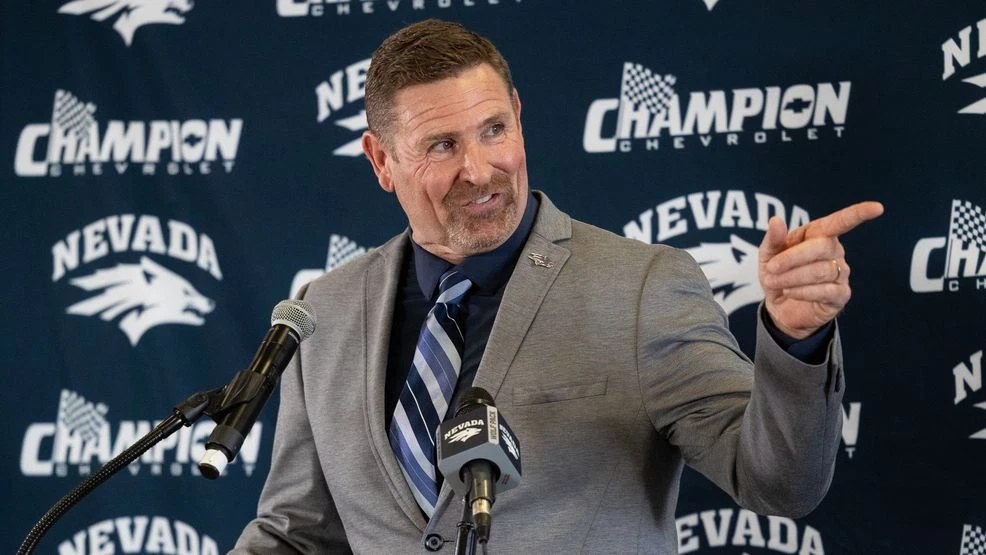
The Nevada men’s basketball team is on a three-game winning streak to improve to 7-3 as non-conference play comes to an end, but we got more questions in this week’s Monday Mailbag about a Jeff Choate press conference than Wolf Pack hoops. And I thought this was a basketball town! Let’s get to the questions. Thanks, as always, for the inquiries.
When Jeff Choate was hired by Nevada in December 2023, we were told by people who previously covered him that Choate would never lose a press conference. Two years into his tenure, that promise has been kept. Choate keeps it real. You ask him a question, and he’ll answer it honestly. That’s rare in college athletics, which can shock some people. But it’s refreshing. And that brings us to last Wednesday when I asked Choate what his sales pitch was to potential recruits. Choate gave a thoughtful answer that lasted more than two minutes, which I posted on our NSN Twitter account. As you can see below, the post went viral with more than 1.2 million views on our post in addition to ESPN, Yahoo! Sports, Sporting News and several other national publications taking the video (ESPN stole it without attribution, whereas most other organizations credited NSN).
The money part of the quote was, “You know what happens when you come to Nevada? You go get $1.4 million to go to Oregon (OT Isaiah World) if you’re developed the right way. A guy that couldn’t play consistently at the University of Texas (DB Kitan Crawford) got drafted when he came here. A guy that was a junior-college walk-on (CB Michael Coats Jr.) ended up becoming a first-team Mountain West player and went and got a bag at West Virginia. A guy that was kind of a sometimes player at Butte College (DE Dylan LaBarbera) comes here, gets developed and becomes a first-team All-Mountain West player. A journeyman safety from the Big Sky Conference (S Murvin Kenion III) comes here and becomes a second-team All-Mountain West player.”
Was that wise? Yes. When all is said and done, Choate’s quote probably got in front of 3 million-plus people, many of whom are potential recruits who had never heard of Nevada before. Now those players not only know of Nevada but know the Wolf Pack has sent players to Oregon and the NFL and turned lightly recruited prospects into all-conference honorees. That honesty got Choate’s sales pitch in front of a ton of eyes (and if we can take a little credit, it doesn’t happen without NSN since that video was only showcased because we put it out first).
Does that soundbite make college athletics feel transactional? Yes. But college athletics is transactional, so why shy away from it? It’s OK to tell recruits to come to Nevada to get playing time and get developed so you can make money elsewhere. In theory, that will help Nevada get more talented players, which should lead to winning, which should lead to more community interest, which should lead to enhanced NIL revenue, which could lead to Nevada having the ability to eventually start keeping some of these players it develops. Does Choate like this system? Hell no. I truly believes he cares more about developing humans than winning games. But it’s the system he’s working with, and he’s been upfront about it. Nothing wrong with that.
In Choate’s first talk to Nevada players in December 2022, he said, “How many of you guys have homeboys and asked them what I’m about? What do they say? I keep it 100, right? ‘This guy’s going to keep it real.'” Well, he’s keeping it real.
As mentioned above, I don’t mind it. But it’s really not about how I absorb what Jeff Choate said. What matters is how the people who help fund Nevada football absorb it. As long as boosters and season-ticket holders and the Wolf Pack’s administration are OK with it, then it’s fine. If a booster or NIL contributor says, “Well, why am I giving the program money to develop players for other schools?” that could be a problem. But I imagine they know how this thing works. It’s not like Choate only talked about developing players for other programs in that viral video. He also talked about the quality of education Nevada offers, how much his players love living in Reno and how hard-working blue-collar players fit within Northern Nevada’s ecosystem. He was very complimentary about Reno, the school and the region while also being honest about how college football works these days with the transfer portal and NIL. If Isaiah World, the left tackle from Nevada who transferred to Oregon, truly made $1.3 million this season with the Ducks, he netted more than the Wolf Pack’s entire 2025 roster (and more than Choate, too). There’s not much Nevada can do about that but find its fit in that system.
Yes. If I’m a lower-level high school recruit and Nevada shows the ability to develop me into a Power 4 player to get paid elsewhere, I’m fine with that. If I’m a transfer who didn’t get much playing time at my first school and Nevada shows it can offer me playing time and potentially a bigger check at another school after a season or two, that’s appealing. Most of these players won’t sniff NFL training camp. If they can make good money in college by using Nevada as a platform, that seems to be mutually beneficial, if not ideal for the Wolf Pack. The alternative is never developing players good enough for the Power 4, which seems like it would lead to a lot of losing.
In 2010, Tulane was in Conference USA and coming off eight straight losing seasons.
In 2010, James Madison was in the FCS playing in the Coastal Athletic Association Football Conference.
In 2010, Nevada was ranked 11th in the nation with a College Football Hall of Fame head coach.
So, I obviously would have picked Nevada to be the first of those three to make a playoff. But it was also clear Nevada was not ready to use that historic 2010 season as a launching point to sustain a regular Top 25 future. The only thing the Wolf Pack really did based off that success was hire two low-level staff positions (director of player personnel; director of operations), which, at the time, it called “critical hires.” It also decided to start the 2011 season with four straight road games, including at top-10 teams Oregon and Boise State and at the Big 12’s Texas Tech. Those games, predictably, went very poorly, and Nevada’s 2010 momentum was killed one month into the 2011 season.
But since 2010, schools like Western Michigan, Liberty, Tulane, James Madison, Boise State, Memphis, Houston and Cincinnati have all played in New Year’s Six/College Football Playoff games. It was possible for Nevada if the Wolf Pack invested at the appropriate time. It did not.
Somebody who can fix the passing game. That has been Nevada’s biggest issue the last four seasons, a period in which it has gone 2-10, 2-10, 3-10 and 3-9. You need to be able to throw the ball to win games. Nevada has had more interceptions than touchdown passes in three of the last four seasons, which is insane. Since 2022, Nevada has thrown 42 touchdown passes and 45 interceptions. The Wolf Pack threw 38 touchdowns in 2021 alone. I don’t have specific offensive coordinator names for you, but top candidates like Nick Rolovich and Bryan Harsin are unlikely to come to Nevada, although Rolovich has history here and Harsin coached with Jeff Choate at Boise State. Either would be great but seem unlikely given Nevada’s pay rate and recent history. What I think would be interesting is getting an offensive coordinator/quarterback combo from a successful FCS school. Look at Western Carolina, whose quarterback, Taron Dickens, passed for 3,508 yards with 38 touchdowns and two interceptions this season and is in the portal. Could you get him and Western Carolina offensive coordinator Rylan Wells in a package deal? That’d be ideal.
If you removed the San Jose State game, Nevada scored five first-half touchdowns in 11 games.
Among Nevada players? No. A quarterback would have to stay at Nevada for all four seasons and average 2,726 yards per season. I don’t see anybody who plays that well for Nevada sticking for four seasons as a starter unless it’s a really unique situation (like a father-son coach-player situation). Nevada couldn’t retain Brendon Lewis after a season in which he passed for 2,290 yards. David Neill’s record is probably safe.
That’s already started to happen. Myles Walker has passed Tyler Rolison for Nevada’s backup point guard job. It was surprising to see Rolison on the floor late in the UC San Diego game, and that almost backfired. Walker has played more minutes (37) than Rolison (29) the last three games and outproduced him thus far with Walker shooting 50 percent from the field and Rolison shooting 26.2 percent. We saw Rolison’s minutes heavily cut last year before he became a key piece late in the season, and that could happen again. It’s a long season. But Walker has outplayed Rolison to date and deserves to back up Tayshawn Comer at this point.
Tyler Rolison’s production hasn’t been strong enough for large minutes, but he’s also one of the team’s leaders, so it looks like Nevada is trying to keep him in the rotation as much as possible to keep the chemistry good. As noted above, it’s a long season and things can change. But Myles Walker has added a spark off the bench at backup point guard and deserves to keep getting some of Rolison’s minutes for now.
Steve Alford said Corey Camper Jr.’s back spasms flared up the practice before Sunday’s Washington State game and he’s optimistic Camper will be available Saturday against Duquesne. If he skipped that game, Camper would have two weeks of rest before Nevada’s Mountain West opener against Boise State, which might not be a bad idea. He was moving very gingerly on the bench against Washington State. It’s hard to tell with back injuries, which are the worst. But Alford didn’t seem overly concerned. We’ll see. K.J. Hymes’ back injury a couple of years ago turned into a season-ending deal and required surgery, which derailed his career. The hope is Camper will be find in a couple of days.
It’s always nice when you have a guy fresh off their playing career on your staff, as Jarod Lucas is. He’s able to relate a little more deeply with the players and knows Steve Alford’s system having played in that scheme for two years. That’s super helpful. When he played for Nevada, Lucas was the Wolf Pack’s most vocal leader, and his dad is a successful high school coach. Add that all up and Lucas was a nice addition to Nevada’s staff. Lucas joined Layup Line with John Ramey and Nick Fazekas this week to discuss re-joining the Wolf Pack (he thought he had a spot with the Lakers until the last minute). You can watch that interview below.
Most Power 4 teams schedule soft in non-league. The Big Ten’s Indiana is the No. 1 seed in the College Football Playoff and played Old Dominion, Kennesaw State and Indiana State out of conference. Not exactly murderer’s row. So, this isn’t unique to the SEC. The bigger issue is why is the SEC champion (Alabama) didn’t get dinged for being blown out in its conference title game when the Big 12 loser (BYU) fell one spot in the CFP rankings, the ACC loser (Virginia) fell two spots, the Big Ten loser (Ohio State) fell one spot and the American Conference loser (North Texas) fell one spot? Alabama didn’t drop a spot after its 28-7 loss to Georgia. This after the Crimson Tide lost by 14 points to a non-bowl Florida State, lost to an Oklahoma team that can’t score and was blown out by Georgia in the conference championship while rushing for negative yards in that game. BYU has a stronger résumé than Alabama but wasn’t even considered for a playoff spot.
Cool story to see Indiana, a basketball school, winning the Big Ten title and getting the top seed in the College Football Playoff. I’m also fine with giving Hoosiers quarterback Fernando Mendoza the Heisman Trophy. But I don’t see the Hoosiers winning the national championship. My (theoretical) money is on Georgia.
It’s terrible. Sacramento State coach Brennan Marion clearly had a deal done to be Colorado’s offensive coordinator but kept that secret until the day after national signing day, at which point the players who signed with the Hornets were bound to the school. That’s why some players wait until the late signing period in February to put pen to paper. But players going to Sac State are unlikely to have that level of leverage and recruiting interest. This is why I don’t put too much energy into players transferring regularly to put themselves in more advantageous positions. They’re just modeling the behavior of the adults running college athletics. Three of the 12 head coaches in the College Football Playoff have already accepted jobs at other schools. That’s how much those coaches care about their universities. It’s all a shell game to advance your career and get more money from somebody else. It’s long been that way with coaches and administrators. Now, players get to participate in that game.
Those numbers are not public, so it’s a guessing game. I wish we had transparency here, but we don’t. Between Nevada football and men’s basketball, you’re probably looking at a cumulative pot of around $2 million to $3 million with hoops getting more than football, which is the reverse of most schools.
Again, unknown, although I get a question like this basically every week. I can get coaching salaries and athletic department budgets through public-record requests. I cannot get NIL and revenue-sharing figures that are trustworthy enough to report. In the new Mountain West (there are eight full members that play football), Nevada will probably be in middle of the pack, but I doubt Wolf Pack football or men’s basketball will rank in the top four in NIL in either sport even in this watered-down MW.
There’s the fact the stadium is named after the Mackay family, which donated the land where the stadium is built to the school, although I do think there is room for a naming-rights sponsor if an interested party stepped forward with the money. To this point, that’s not happened. I’d expect GSR Arena to get a naming-rights sponsor, but truth is, there aren’t a lot of businesses headquartered in Northern Nevada with the kind of cash to make that happen.
UNLV just signed a sponsored jersey patch deal for $11 million over five years. That’s something Nevada should explore.
One of the biggest selling points in promoting Jordan Getzelman from assistant to head coach after Jake McKinley took a job with the Seattle Mariners was player retention. McKinley said the 2026 team was the one he had ben eying since he got Nevada’s job before the 2023 season, and it does seem set up for success. Had Nevada opted for an outside coach, it probably would have had departures. But, as far as I can tell, every player on the Wolf Pack roster was at Getzelman’s introductory press conference and will remain with Nevada for the 2026 season.
“I’ve been invested in this place for years,” Getzelman said at his press conference. “I’m excited and humbled to lead the next chapter. This is a unique moment stepping into this role into the middle of the year. But one of the advantages that we have here is that I’ve been here, I know the players, I know this culture and I know the standards that have been put in place. My priority is to provide confidence and stability. We have a group of players who have worked extremely hard, and they’re deserving of continuity. My job is to keep us moving forward, keep us connected and keep us competing at a very high level.”
Nevada athletic director Stephanie Rempe said you usually take the long-term view when hiring a head coach, but she believed this group of players deserved a short-term perspective, and that played a role in elevating Getzelman, who said his job will be to keep Nevada baseball’s 2026 trajectory on the right course while coming off last year’s Mountain West regular-season title.
“We’re family here, and we’re going to grow closer through this,” Getzelman said. “They know who I am, they know what I expect and I’m excited to continue working with them in this new capacity. My message to them was simple. The ship is on the right track, the coordinates are set, let’s all move over one spot and take this thing where it needs to go, together.”
Nevada athletic director Stephanie Rempe has been getting a little more heat with these Mailbag questions in recent months. Her contract runs through June 30, 2027, and I’d guess she gets extended before that contract is up. From a competitive standpoint, Nevada is still struggling, especially in the fall sports, which have historically struggled. The last fall sport to win a conference title was football in 2010, and those struggles significantly predate. Rempe hired Nevada’s two coaches who won Mountain West championships last year in baseball (Jake McKinley) and softball (Victoria Hayward) with men’s and women’s tennis also doing well during her tenure. Men’s basketball has been solid with two NCAA Tournament berths during her tenure, although she didn’t hire coach Steve Alford. Facility development has improved during her tenure, although a good chunk of that progress has come thanks to university president Brian Sandoval. Rempe did play key roles in the FieldHouse and GSR projects, and deserves some credit there.
Nevada has 14 head coaches (the Wolf Pack no longer counts cross country as having a head coach), and Rempe has hired just six of them (baseball, softball, volleyball, soccer, football and skiing). Baseball and softball have won MW titles; skiing finished 15th in the nation last season; and volleyball, soccer and football have struggled. Obviously football needs to be fixed, although Rempe inherited a new coach (Ken Wilson) on a five-year deal in that sport, so there were limitations on what could be done there immediately. Rempe hired Jeff Choate, which, to date, has not paid dividends. Typically, athletic directors get two shots at football coaches. I honestly don’t think Rempe’s seat is very hot. I imagine she’ll get an extension before her contract is up in June 2027, but getting football to a more respectable place is preeminent. And Nevada should be one of the better departments in the new MW. At least, that should be the expectation.
No reason has been provided, but the women’s soccer head-coaching job at Nevada is the most difficult on campus. There’s almost zero history of success with that team, which has just two winning seasons since the program was started in 2000, and those came in 2005 and 2006. The Wolf Pack plays on FieldTurf in a football stadium, making it the only Mountain West women’s soccer team that doesn’t play on grass. And the job doesn’t even pay six figures. I know there was some friction there behind the scenes, but it’s a low ceiling, lower floor kind of job.
I’m not a fan of the “take my ball and go home” attitude schools like Notre Dame made by not playing in bowl games, but if means there are fewer bowl games in the future, I’d be cool with that. I’ve never liked the fact 6-6 teams (and sometimes 5-7 teams) qualify for bowls. Finishing .500 in not a major accomplishment. Make the requirement seven wins, including at least six against FBS teams, and cutting the number of bowl to 30 would be great. Then you can backfill with 6-6 teams if 7-5 or better teams opt out. Should conferences fine teams that don’t go to bowls? Since leagues have bowl alliances they’re required to fulfill, I don’t have a problem with fines if that leaves the conference financially vulnerable for not fulfilling its bowl obligations.
As soon as the Group of 6 did created its own playoff, the Power 4 would take it as an invitation to remove the G6’s automatic entry into the College Football Playoff. Heck, the Power 4 might do that this offseason anyway since two G6’s (Tulane and James Madison) made this year’s playoff in place of teams like Notre Dame, Texas and BYU. If that were to happen — the removal of the G6’s auto spot — you could see the G6 shift to its own playoff system. Until then, it’s not happening. I would love to see a G6 playoff, perhaps in the place of these lower-level bowls the Power 4 schools are now snubbing.
The only thing that is clear is that no matter how many teams you add to the College Football Playoff, the first team left out of the field will bitch about it. Honestly, we should go back to a smaller field. Eight teams are fine. If Notre Dame wanted to be in the College Football Playoff, maybe it should have beaten a good team. Notre Dame played 10 Power 4 teams, going 8-2 in those games. Of the eight wins, only three were over teams with winning records. Those wins were against USC (9-3), Pitt (8-4) and NC State (7-5). That’s not enough for a playoff berth. What the Power 4s will do, however, is punish the Group of 6 by taking away their spot in the field. They can’t have Tulane and James Madison in the field over bigger brands. The SEC’s five playoff teams are simply not enough. Also, the Power 4s should go back to divisions if they’re going to keep conference title games because their tiebreakers were the biggest issue and led to Duke winning the ACC, which screwed up everything. It’s not the Group of 6’s fault that the Sun Belt and American Conference winners were better than the ACC’s winner. This is all a result of Power 4 conferences having too many schools. They should have left the Pac-12 alone.
I have a long-standing rule that I don’t care about uniforms.
The Tulane Greenwave was wearing blue and the North Texas Mean Green were wearing white. So, two teams with “green” in their name, and neither team was wearing green. Amazing.
See y’all next week!
Sports columnist Chris Murray provides insight on Northern Nevada sports. He writes a weekly Monday Mailbag despite it giving him a headache and it taking several hours to write. But people seem to like it, so he does it anyway. Contact him at crmurray@sbgtv.com or follow him on Twitter @ByChrisMurray.
This piece originally appeared in our twice-weekly sports newsletter Section 415. Sign up for the newsletter here and subscribe to the Section 415 podcast wherever you listen.
It’s been a long time since there was genuine, sustained college football fever in the Bay Area, and when NIL collectives began paying student-athletes in 2021, it seemed as if Cal and Stanford’s programs might fade into obscurity.
The emergence of the transfer portal, a wild wave of conference realignment, and prolonged on-field struggles for both programs created the perfect storm for the new college football world to leave the Bay Area behind.
When the Pac-12 disintegrated, Cal and Stanford found a home in the ACC, but it seemed unrealistic to think the Bears and the Cardinal might compete for conference titles on the football field with the likes of Clemson and Miami.
So far, they haven’t.
2 days ago

5 days ago

Tuesday, Nov. 25

Cal’s seven regular-season wins in 2025 are its most since 2019. Stanford’s four wins this year are tied for its highest total since 2018.
The reality is a large percentage of graduates from both universities likely wouldn’t care if they stopped competing in football altogether. But despite the headwinds, Cal and Stanford are pressing forward, more determined than ever to compete in a sport in which the odds have historically been stacked against them.
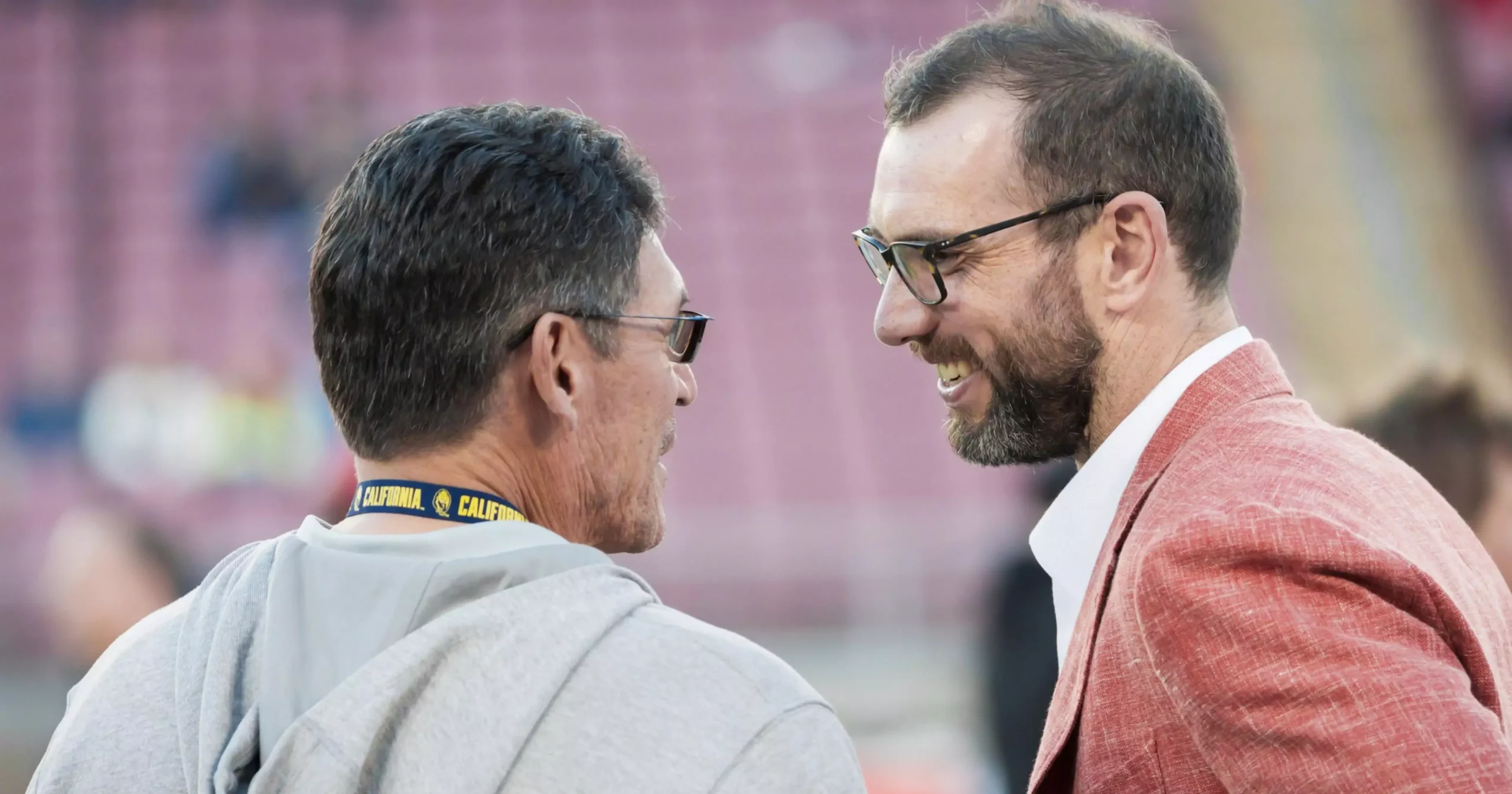
Last November, Stanford hired two-time Heisman Trophy runner-up Andrew Luck to fill a newly created GM role. In March, Cal responded by bringing in former NFL head coach Ron Rivera to fill the same, first-of-its-kind position in Berkeley.
Both Luck and Rivera spent their first year on the job securing critical financial resources that can theoretically bankroll better rosters. They also spent recent weeks completing coaching searches and identifying new leaders for the Cardinal and the Bears.
On Tuesday, Luck sat at a podium in Palo Alto alongside former teammate Tavita Pritchard, a fellow Stanford quarterback who was introduced as the program’s new coach. Three days later, Rivera sat alongside former Cal defensive lineman Tosh Lupoi, a prolific recruiter who will take over the Bears after Justin Wilcox was fired during his ninth season as head coach.
Lupoi wasted no time getting to work. He left his introductory press conference, booked a ticket to Hawaii (opens in new tab), and spent two hours convincing freshman quarterback Jaron-Keawe Sagapolutele to stay in Berkeley next season.
Neither Pritchard nor Lupoi has ever been a head coach, but both have played and worked as assistants at their respective programs. Pritchard started under Jim Harbaugh and called plays under David Shaw while Lupoi played and coached under Jeff Tedford, teaming up with Aaron Rodgers, Marshawn Lynch, and DeSean Jackson.
Pritchard and Lupoi understand the challenges Stanford and Cal face as well as anyone. They’ve each recruited players to their alma maters but have never had the type of resources that are available to them now. Each coach reports to a GM who is dedicated to raising money, acquiring talent, and developing the infrastructure that will be necessary to keep building momentum if and when their programs do succeed.
Lupoi might not be the next Tedford, and Pritchard probably isn’t going to be the next Harbaugh, but give Cal and Stanford credit. At a time when they could easily fold and give up on football, both programs are making high-profile hires, significant investments, and public commitments to building better teams.
No one knows if any of this will work, but for both Cal and Stanford, it’s far better than standing on the sidelines.
Monday morning brought the inevitable fallout from the College Football Playoff selection committee’s final bracket reveal. The inclusion of multiple teams from outside the major conferences has sparked fierce debate regarding the exclusion of arguably more talented rosters. On ESPN’s Get Up, the conversation turned heated regarding which teams truly deserved a chance to compete for a national title.
Analysts dissected the committee’s decision to favor conference champions from smaller leagues over battle-tested programs with higher talent ceilings. The argument centers on whether the playoff should feature the absolute best teams or simply adhere to a format that rewards access for all conferences.
One prominent voice on the network didn’t hold back his frustration with the current field composition. He argued that the presence of these smaller schools dilutes the quality of the postseason and robs viewers of high-stakes matchups between the sport’s biggest brands.
Dan Orlovsky Claims Committee Wasted Playoff Spots on Group of Five Teams
Former NFL quarterback Dan Orlovsky pointed directly at the Texas Longhorns and Notre Dame Fighting Irish as the teams that were unjustly left out during ESPN’s Get Up. He contended that their spots were effectively given away to the Tulane Green Wave and James Madison Dukes.
“Notre Dame and Texas should be in instead of—not being disrespectful—both James Madison and Tulane,” Orlovsky said. “We could be honest that those two spots are being wasted on those two programs that deserve a meaningful game.”

The controversy stems from a unique scenario where the committee prioritized conference champions despite significant disparities in team strength. Texas Longhorns head coach Steve Sarkisian led his team to a 9-3 record, closing the regular season by winning six of their final seven games.
This stretch included a victory over the then-No. 3 Texas A&M Aggies. Quarterback Arch Manning overcame early season struggles to throw 17 touchdowns against only two interceptions since Week 7.
Notre Dame Fighting Irish head coach Marcus Freeman saw his squad finish 10-2 after rattling off 10 consecutive victories. The Irish posted an average margin of victory of nearly 30 points during that streak and boasted a top-five scoring offense.

Orlovsky’s sentiment reflects a broader belief that the playoff should showcase teams capable of winning the national championship. Critics argue that matchups involving teams like James Madison lack the national appeal and competitive balance found in games featuring traditional powers.
The debate highlights the ongoing struggle to balance inclusivity with the desire for elite football. While Tulane and James Madison benefited from the current structure, the absence of two projected title contenders has left many questioning the system’s validity.
Read more on College Football HQ
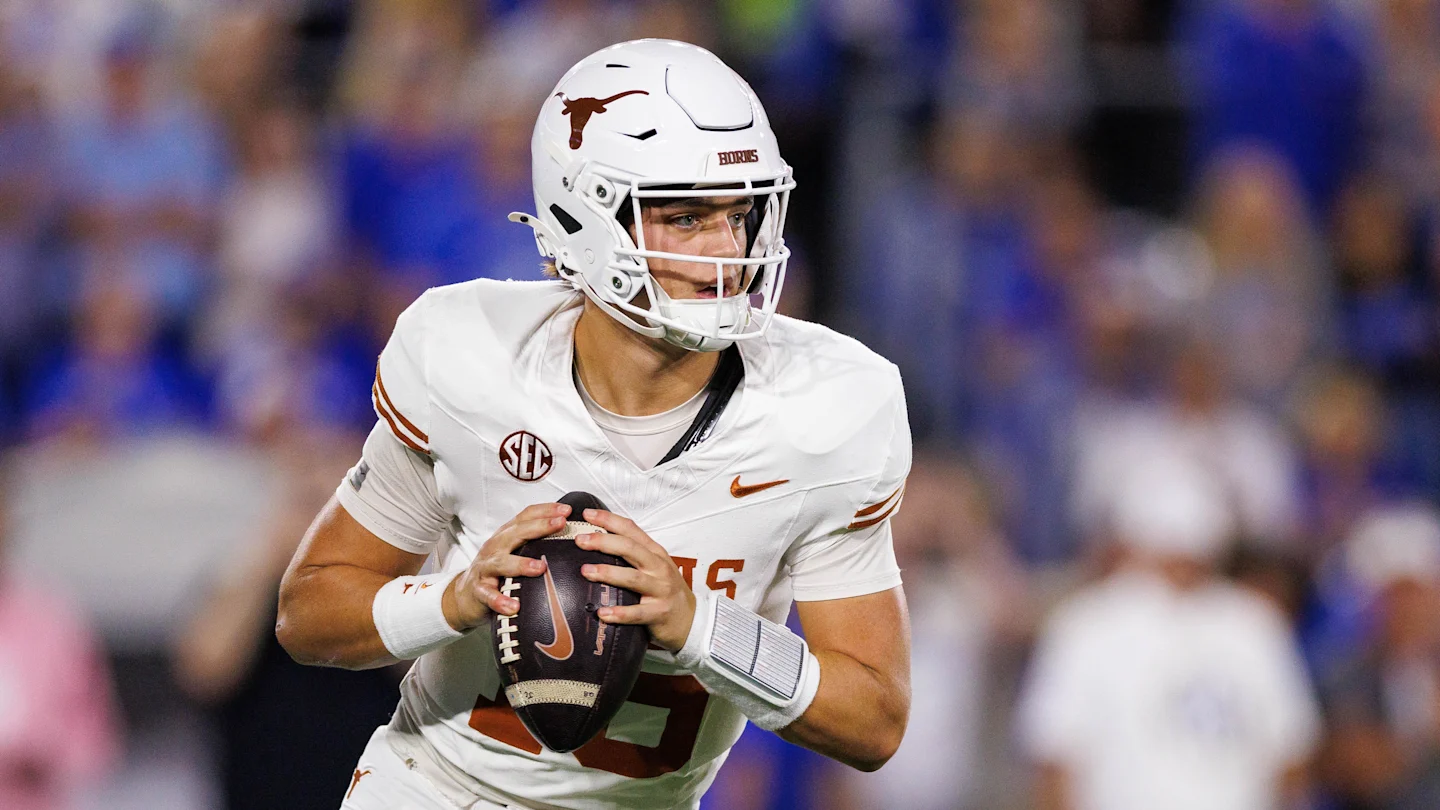
As the college football calendar winds down, Texas’ quarterback situation has become a national story.
Arch Manning finished the 2025 regular season with 2,942 passing yards, 24 touchdowns and seven interceptions, while rushing for 244 yards, eight rushing TDs and posting a 145.8 passer rating.
These numbers helped Texas reach a 9-3 regular-season mark (6-2 SEC) and a No. 13 ranking going into bowl season.
Manning’s sustained performance has positioned him as a credible 2026 NFL draft candidate, even as doubts persist about his readiness.
Monday’s PFF 2026 mock draft, in a writeup projecting the Pittsburgh Steelers at No. 19, explicitly assumed a scenario where “it’s feeling increasingly likely that Arch Manning … return[s] to school,” which pushed that mock to address other positional needs instead of quarterback.
That framing echoes multiple recent takes suggesting Manning is as likely to stay in Austin for 2026 as he is to jump to the NFL.

Manning arrived at Texas as one of the most hyped recruits in recent history: a five-star, consensus No. 1 quarterback in the 2023 class out of Isidore Newman (New Orleans) with five-star ratings across the major services.
He carried a pedigree and a polished high school resume (over 9,700 total yards and 140 total TDs) that fueled early NFL and media projections long before he even logged a college start.
2025 was Manning’s first extended turn as Texas’ starter, and while he showed growth, he also displayed some inconsistency against top defenses.
Still, he remains the highest‑paid athlete in college sports, with an NIL valuation of $5.3 million, fueling debate over whether that lessens his motivation to leave school early.
Underclassmen are generally required to apply for special eligibility for the NFL Draft by mid‑January, with the league setting Jan. 15 as the standard deadline and allowing slight adjustments for players from earlier‑finished seasons or championship teams.
That timeline gives Manning and Texas several weeks after bowl play to consult agents, advisers and the NFL’s College Advisory Committee before a final call.
Read More at College Football HQ
- SEC quarterback enters transfer portal after college football season
- Star SEC running back enters transfer portal after College Football Playoff snub
- 7,000-yard college football quarterback enters transfer portal
- Major college football program declines bowl game after College Football Playoff snub
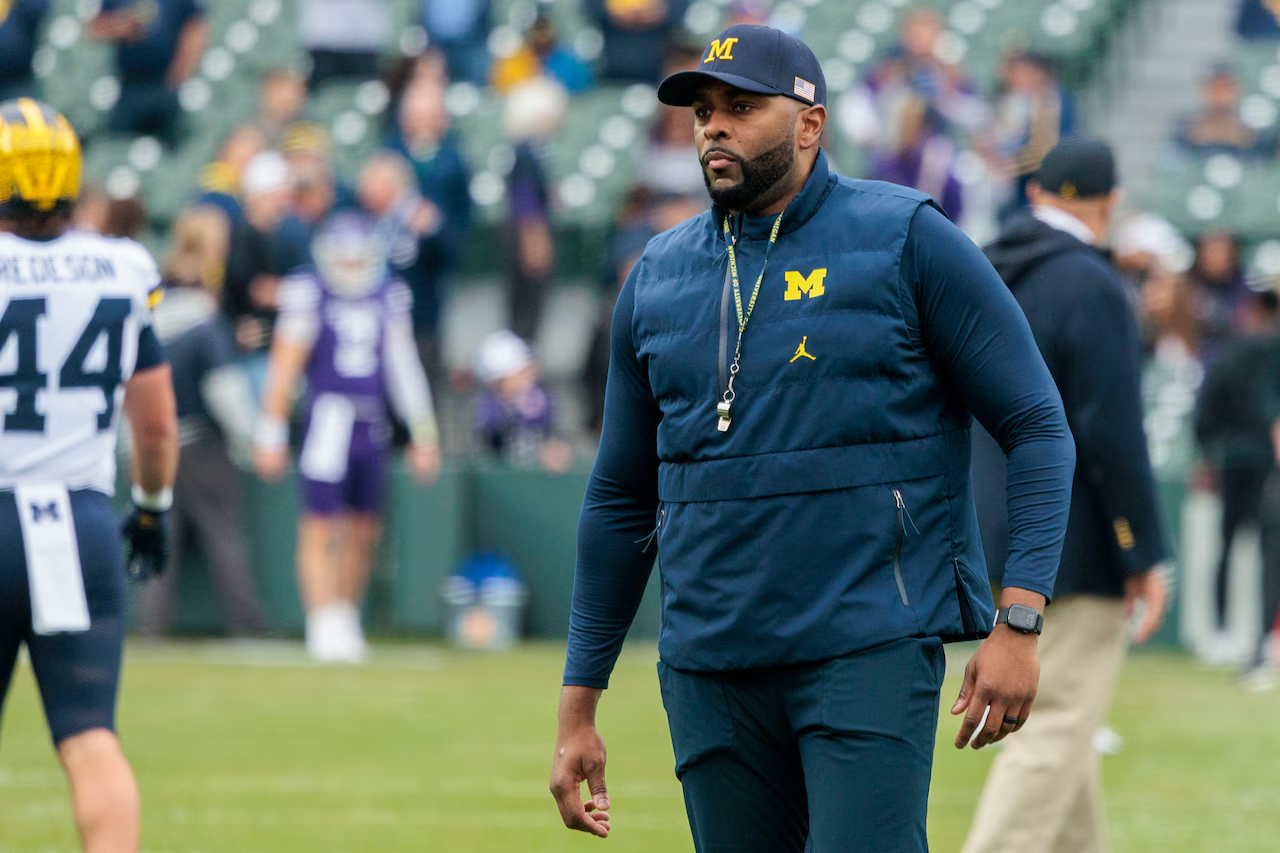
ANN ARBOR – National signing day has always been an opportunity for college coaches to celebrate a new wave of players entering their program.
But in the current name, image and likeness-driven landscape of NCAA football, signing day also is one of the most stressful days of the year for coaches.
This signing day was no different, with dozens of prospects in the 2026 class having a late change of heart about their college choices just before putting pen to paper to make their verbal commitments official.
Michigan and head coach Sherrone Moore weren’t immune to this year’s signing day chaos. The Wolverines had 28 commits entering last Wednesday, the start of the early signing window, but only signed 27 recruits after some late reshuffling in the class.
The drama began Wednesday morning when Mansfield (Texas) four-star receiver pledge Zion Robinson announced he was “postponing signing until further notice.”
According to 247Sports’ Mike Roach, Stanford made an aggressive NIL play for Robinson. The school, which has had five straight losing seasons, successfully flipped the top-200 prospect on Thursday.
Meanwhile, Mineral (Va.) Louisa County five-star running back Savion Hiter, the crown jewel of Michigan’s class, didn’t sign on Wednesday. The delay sparked intense speculation on fan message boards about Hiter’s status, but Michigan was able to seal the deal Thursday morning.
According to Rivals’ Steve Wiltfong, Hiter, the top-ranked running back in the country per the 247Sports Composite, didn’t sign Wednesday because of “minor contractual details.”
The signing period fireworks didn’t end there. Michigan also lost Irmo (S.C.) Dutch Fork four-star edge Julian Walker to South Carolina on Thursday as the top-100 recruit chose to play for his hometown school where his father is on staff, but Moore’s program countered with a major move of its own.
It flipped Cartersville (Ga.) four-star receiver Brady Marchese from Georgia, adding a new top-150 wideout to its 2026 recruiting haul.
Moore was asked during a news conference Monday how much NIL has impacted late flips on signing day.
“It’s definitely out there,” Moore said. “It’s definitely a thing. It’s something you can’t ignore and you have to have a plan for it, and you have to adapt to it, because, yeah, that’s part of it. You think you got somebody signed, and then somebody shoots out something (other schools offering more in the NIL space), or does something, and you’ve got it cemented of what you’ve all agreed to, and all those other things, all those other pieces that are part of college football now, but that’s just college football now. You’ve got to adjust and you’ve got to adapt.”
More than ever before, roster construction in college football is driven by NIL funding. Not only is it prevalent in recruiting high school prospects, but also players in the transfer portal and retaining players on the current roster.
The biggest difference between high school recruiting and the portal is the timelines. Prep prospects can commit to a school at any time, but that verbal pledge doesn’t become binding until the player signs with the school. For example, Robinson and Walker were both committed to Michigan since last summer before flipping. Marchese was pledged to Georgia since March.
The portal is a more condensed timeline. The two-week window opens Jan. 2, and prospects usually try and find a new home quickly so they can enroll at their new schools in time for the start of a fresh semester.
Moore said Michigan is prepared.
“The big thing about the portal is not only getting the right fit, but the relationship,” he said. “Obviously, the right player, but people that fit the program, the people that fit the culture, the people that fit involved in the program. You’ve got to be ready. We’re on it. We’ve been on it. You’ve got to stay on it.
“You’ve got to have lists ready to go. Obviously, you can’t talk to the kids until they get in it. So, we’ve got to do everything we can to be prepared for that. From a financial basis, all that is a piece of it, right? We’ve got to make sure we’ve got a plan for all of it, and we do.”
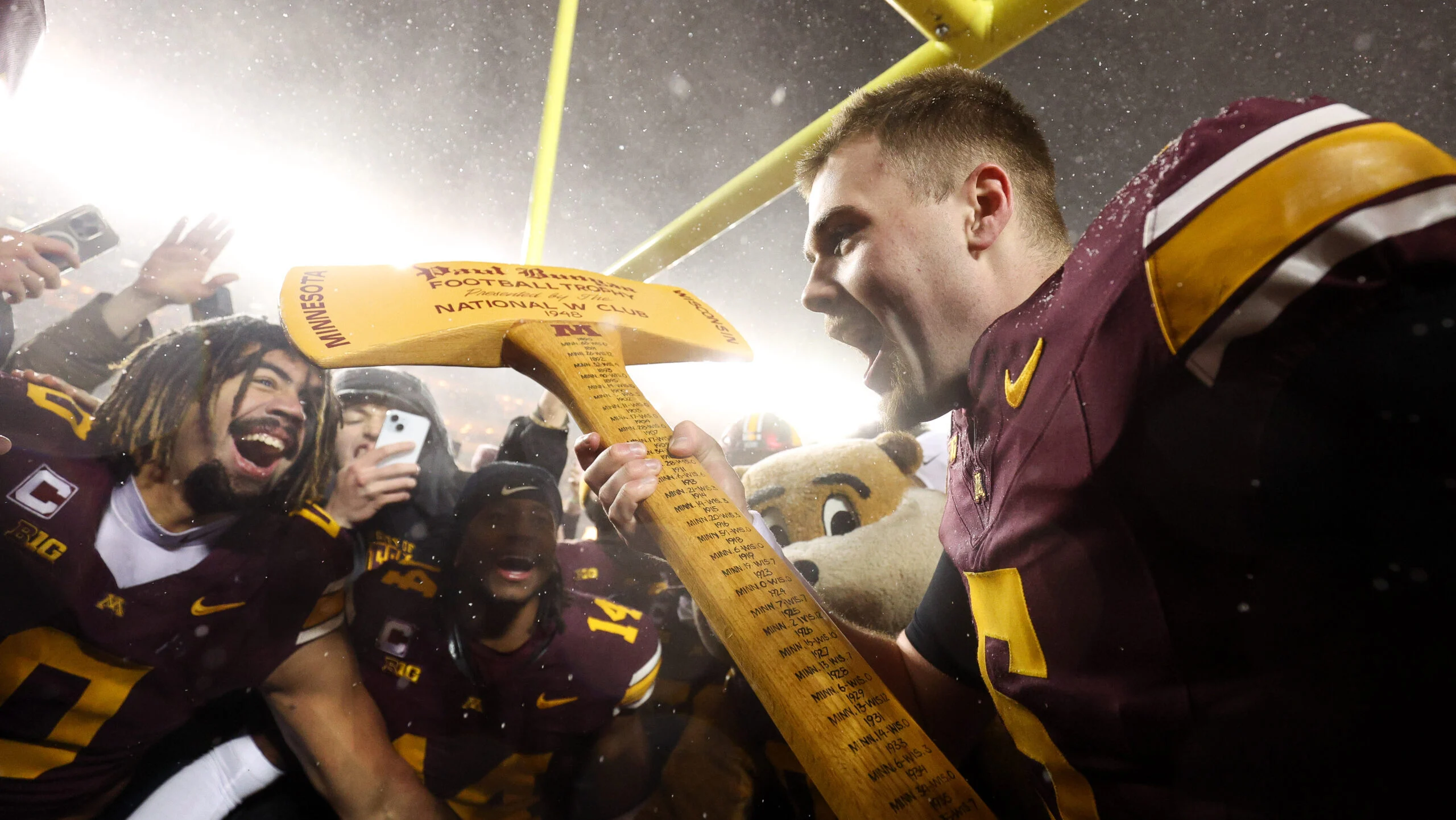
2025 was a disappoint season for the Minnesota Gophers. P.J. Fleck was starting a redshirt freshman quarterback, but heading into the season there was legitimate hope this team could win nine or ten games.
Not only did they win just seven, but Fleck got embarrassed by Iowa in his ninth season on the job, and they didn’t perform well against Northwestern, either. Minnesota is headed to the Rate Bowl against New Mexico in Phoenix, but the page needs to be flipped to 2026.
If the Gophers are going to be better next year, it will be because Drake Lindsey, Koi Perich, and Darius Taylor contribute in a big way. They aren’t going to be cheap to keep around, either, as the transfer portal will soon heat up.
MN Gophers spending big on key roster talent
The college sports landscape has changed amidst the introduction of NIL spending. Roster creating, especially in revenue generating sports, is not simply a byproduct of recruiting anymore. Dollars are attached to expectations, and Charley Walters revealed the substantial amount Minnesota will need to pay their stars.
It is expected to cost the Gophers at least $1 million to retain redshirt QB Drake Lindsey for his sophomore season next year. That would make him and 2016 junior defensive back Koi Perich at least a $2 million duo. Add Darius Taylor and the cost could exceed $3 million for trio.
Charley Walters – Pioneer Press
Drake Lindsey hardly set the world on fire this season. He completed 63.2% of his passes, with 16 touchdowns and 6 interceptions. At times, he looked every bit of a redshirt freshman. However, he also showed off his special arm talent, and there’s clearly a path for development.
Needing to pay a guy like Lindsey seven figures to retain his services is indicative of what college football has become, way too expensive… Minnesota will likely pony up for the Arkansas native who has always had a soft spot in his heart for the home state Razorbacks. It’s also probably helpful that his mentor, Vikings QB Max Brosmer is still in town.
Perich earned a hefty jump in NIL funds after leading the Big Ten in interceptions as a true freshman. The Minnesota native was nowhere near as noticeable this year, but he did record his first pick six. It seems logical he’ll be back, but the number will only increase.
Of the trio, Darius Taylor would seem to be the most expendable. An extremely talented running back, but rarely can be counted upon to remain on the field. Taylor played in just nine games for the Gophers while nursing a hamstring injury, and someone else paying for him to be injured on their sideline wouldn’t be the worst outcome.
Attendance still an issue for Minnesota Gophers
P.J. Fleck has the best recruiting class in history for the Minnesota Gophers for 2026. He held onto that talent despite the 7-5 record, but he’ll need to do much better in order to generate additional interest in the program. Walters added this about attendance for the Gophers:
Meanwhile, Gophers football attendance has decreased for a second straight season, averaging 46,519 for its seven games this year in 50,085-capacity Huntington Bank Stadium. The Gophers’ highest attendance average in history was 62,954 in 1957 at Memorial Stadium. The Metrodome years topped out at 60,985 in 1985; and the Huntington Bank Stadium high is 52,355 in 2015. During Fleck’s nine seasons at Minnesota, home attendance — excluding the abbreviated COVID 2020 season — has averaged 45,257.
Pioneer Press
When things are good at Huntington Bank Stadium, they can be really good. The problem is that Fleck has largely failed to sustain consistency. It might have seemed odd to storm the field after beating Nebraska, but it could have held more weight if the season trended in a positive direction.
At some point Fleck needs to reach a new level. He is 6-0 in bowl games at Minnesota, but has won less than nine games each of the past three seasons. An outlier 11-2 season with Tanner Morgan in 2019 is the high-water mark, and he’s shown zero semblance of returning to those heights since.
More About: Minnesota Gophers Football
Add MinnesotaSportsFan as a preferred source on Google.

A Cade Christmas: Cunningham gives back to Detroit youth

Indy NXT heading to Miami International Autodrome for testing

Why the Texas Sport for Healing Fund Should Return – The Daily Texan

Boys’ Varsity Basketball Honors Coach Darrell Sumpter, Defeats Sachem North

Ilott joins Wright Motorsports for full IMSA season; will dovetail IndyCar commitments

Kids, Inc., Toot’n Totum launch ‘Change for Better’ campaign for Rockrose Sports Park

Mason Bendinger’s big week earns him Big South Co-Player of the Week – University of South Carolina

Rick Ware Racing is switching to Chevy for the 2026 season

Was Jeff Choate’s viral sales pitch good for Nevada football?

Economist says NASCAR owes $364.7M to teams in antitrust case

NCAA Women’s Div I Volleyball Tournament Glance

In a matter of one year, Cal and Stanford went all in on football

NASCAR Driver Logan Misuraca Set to Return to Daytona for 2026 ARCA Menards Series Opener with City Garage Motorsports

Info on Purdue Volleyball’s Regional Semifinal Match vs. SMU Released

Lavar Scott secures full-time ride with Alpha Prime Racing

First Tee Winter Registration is open

Fargo girl, 13, dies after collapsing during school basketball game – Grand Forks Herald

CPG Brands Like Allegra Are Betting on F1 for the First Time

Volleyball Recaps – November 18

F1 Las Vegas: Verstappen win, Norris and Piastri DQ tighten 2025 title fight

Two Pro Volleyball Leagues Serve Up Plans for Minnesota Teams

Sycamores unveil 2026 track and field schedule

Utah State Announces 2025-26 Indoor Track & Field Schedule

Redemption Means First Pro Stock World Championship for Dallas Glenn

Texas volleyball vs Kentucky game score: Live SEC tournament updates

Bowl Projections: ESPN predicts 12-team College Football Playoff bracket, full bowl slate after Week 14

Indiana’s rapid ascent and its impact across college football

How this startup (and a KC sports icon) turned young players into card-carrying legends overnight

Pohlman admits ‘there might be some spats’ as he pushes to get Kyle Busch winning again

Robert “Bobby” Lewis Hardin, 56

 Why a rising mid-major power with an NCAA Tournament team opted out of revenue-sharing — and advertised it
 NBA Legend Michael Jordan to Join NBC Sports as Special Contributor
 Falcons mailbag
 Portal Update – Basketball and Gymnastics Take Hits
 has always dreamed in Mercurial. Now his initials are on the boots.
The new Kyl…
has always dreamed in Mercurial. Now his initials are on the boots.
The new Kyl…
-
 Rec Sports2 weeks ago
First Tee Winter Registration is open
-
 Rec Sports2 weeks ago
Fargo girl, 13, dies after collapsing during school basketball game – Grand Forks Herald
-
 Motorsports2 weeks ago
CPG Brands Like Allegra Are Betting on F1 for the First Time
-
 Sports3 weeks ago
Volleyball Recaps – November 18
-
 Motorsports2 weeks ago
F1 Las Vegas: Verstappen win, Norris and Piastri DQ tighten 2025 title fight
-
 Sports2 weeks ago
Two Pro Volleyball Leagues Serve Up Plans for Minnesota Teams
-
 Sports2 weeks ago
Sycamores unveil 2026 track and field schedule
-
 Sports2 weeks ago
Utah State Announces 2025-26 Indoor Track & Field Schedule
-
 Motorsports2 weeks ago
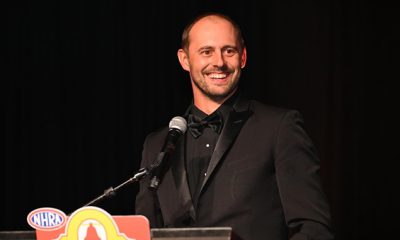
Redemption Means First Pro Stock World Championship for Dallas Glenn
-
 Sports2 weeks ago
Texas volleyball vs Kentucky game score: Live SEC tournament updates