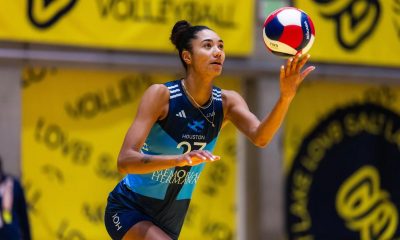
It’s never too early for children to get into physical activity. The benefits include physical fitness, socialization and learning about teamwork. A Baylor College of Medicine and Texas Children’s Hospital pediatric orthopedic surgeon explains the importance of exposing children to sports at a young age.
“The earlier kids are exposed to these activities, the more likely they are to make them a regular part of their lives,” said Dr. Scott Rosenfeld, professor in the Joseph Barnhart Department of Orthopedic Surgery at Baylor.
Early on, children can visit toddler gyms to engage in basic gymnastic-type activities that focus on coordination, balance and basic strength. Kids start to play organized sports at around school-age, participating in activities like little league baseball or softball, soccer, dance and gymnastics.
Parents and family members should model and motivate their children to engage in physical activity. In addition to promoting a lifelong commitment to fitness, early exposure also encourages socialization. They learn how to socialize with other kids, the rules of socialization and the values of working together and being a teammate.
“We don’t always win when playing sports, and that’s a hard lesson to learn – to lose – but it teaches kids how to deal with loss in a positive way and to win with character,” Rosenfeld said.
Rosenfeld recommends exposing children to opportunities and allowing them to explore to see what they enjoy. Allow free play at home or on the playground. Each season of the year, put them in a different activity so they have a variety of activities available to them.
As children get older and play sports in leagues or school, they should still be involved in multiple sports instead of focusing on one. One season they might play football, then basketball followed by track. While each sport has an off season, year-round physical activity is available and encouraged. Multiple-sport participation is beneficial in the off-season as well as regular exercise under the guidance of a qualified adult trainer or parent.
“Participating in multiple sports or activities allows the development of other skillsets that not only contribute to overall growth in kids but can actually help them out in getting better at whatever they consider to be their primary activity,” Rosenfeld said. “If you look at high-end, elite athletes, many of them were two-sport or three-sport athletes as kids, like Patrick Mahomes, who is considered one of the best quarterbacks; he played football and baseball in high school.”
Any participation in physical activities can put you at risk for injury. The most common injuries in youth sports are overuse injuries where athletes do repetitive motions.
“That can be really difficult on a growing skeleton as many of our muscles are attached to our skeleton through growing growth plates. When we go through these repetitive motions, it can put stress on those tendons where they plug into these growth plates. This can cause chronic injury that can lead to potentially long-term problems with those joints,” Rosenfeld said.
Research shows that limiting the overuse activities can protect growing children from injuries and long-term issues, such as limits on pitch counts in baseball and softball. Experts recommend daily limits and weekly limits based on the activity. Some youth sports centers recommend young athletes take three months off from throwing out of every 12 months to rest. Families should educate themselves on potential injuries in which their child could be at highest risk depending on their sport. If a child has trouble or pain, they should be evaluated by a trainer or medical provider.
“Make sure that kids are at low risk for injury so they can perform at their highest level,” Rosenfeld said.
Bank of America, one of the world’s leading financial institutions, will be featured prominently on the Timbers’ home and away kits beginning in 2026, marking the first time it has been featured on a professional sports jersey. This partnership is part of Bank of America’s broader, ongoing commitment to supporting communities through soccer. Bank of America is also an official sponsor for FIFA World Cup 26 and U.S. Soccer.
“The Timbers are a tremendous asset to Portland, and this partnership is an opportunity to strengthen ties in the community and create meaningful economic impact across the region,” said Roger Hinshaw, Bank of America Oregon and Southwest Washington president. “Our collaboration goes well beyond the pitch, as we build programs that create greater access for youth to experience soccer and deliver lasting benefits throughout the community.”
The partnership introduces Bank of America’s Soccer with Us to the Portland community. The initiative aims to make soccer more inclusive and accessible, and will extend this national platform across Oregon and Southwest Washington.
Soccer with Us is designed to remove barriers to play and promote equity through grassroots investments in the community. The program will be activated locally through a series of youth-centric efforts, including free camps, equipment donations and infrastructure improvements:
The partnership includes the development of “Community Futsal Courts,” with plans to build and or resurface 10 futsal courts over the course of the partnership in Portland and underserved communities throughout Oregon. The initiative will provide new goals, nets, and soccer equipment to enhance safe and inclusive spaces for play.
The “Camps for All” program will offer 50 free youth soccer camps at Providence Park and select community locations, engaging 5,000 young athletes across the region. 250 scholarships to PTFC Camps will be awarded, resulting in 750,000 minutes of youth soccer exposure.
Through the “Equipped to Play” initiative, the Timbers and Bank of America will donate $200,000 worth of soccer equipment to local schools and community groups. The effort will support 1,000 youth, including Special Olympics athletes, providing them with essential gear such as jerseys, balls, socks, backpacks, and ball bags.
Additionally, Bank of America is committed to strengthening economic opportunities throughout Oregon and Southwest Washington, and will invest in the city through a program aimed at supporting local small businesses with the following initiatives:
Through “First Match Access Pass,” the Timbers and Bank of America will provide 100 tickets per game to individuals who have never been to a match, with the intention of introducing low-income families, local youth organizations, and new residents to the Portland Timbers community.
As part of the “Small Business of the Game” platform, Bank of America will select 50 local small businesses over the course of the partnership to promote at home Timbers games, and each will receive a $5,000 grant.
“Game Changers of Tomorrow” will identify 20 students over the course of the partnership who demonstrate exceptional promise to be given a VIP experience at a Timbers match and receive an educational grant for making a difference in their school or community.
Bank of America will annually host the “Small Business Summit” at Providence Park, welcoming over 100 local businesses to attend and benefit from workshops, panels and keynote speakers, networking and more.
As a co-presenting partner of “Stand Together,” Bank of America will support the club’s annual week-long community initiative, serving non-profit projects and in-person volunteer opportunities across Portland.
The club partnered with Elevate to secure the jersey partnership with Bank of America.
A partner of the club since 2014, Tillamook will transition its representation on Portland’s jerseys to the sleeve patch after two years of being displayed on the front.
“Tillamook has been an incredible partner of the club, and we’re excited to continue our relationship for years to come,”Davis said. “Their move to the sleeve patch reflects their enduring support of the club and shared commitment to our community.”
The Oregon-based, farmer-owned dairy cooperative will continue its support of the club’s community programs, partnering with Stand Together, PTFC Camps, and activating other local youth initiatives.
“We’re thrilled to continue our partnership with the Portland Timbers — a team that shares our deep Oregon roots and commitment to community, and excellence. As fellow champions of the Pacific Northwest, we’re grateful for the opportunity to keep celebrating what makes this region so special, both on the field and at the table.”Kate Boltin, Senior Vice President of Marketing at Tillamook shared.
The Portland Timbers are an American men’s professional soccer club based in Portland, Ore., that plays their home matches at the iconic Providence Park. Founded in 1975, the Timbers have been a beloved part of the Portland sports landscape since their early beginnings in the North American Soccer League, launching the era of “Soccer City USA” in the Rose City. The club joined Major League Soccer (MLS) – the top division of men’s professional soccer in the United States – in 2011, winning its first league championship in 2015.
Bank of America is one of the world’s leading financial institutions, serving individual consumers, small and middle-market businesses and large corporations with a full range of banking, investing, asset management and other financial and risk management products and services. The company provides unmatched convenience in the United States, serving nearly 70 million consumer and small business clients with approximately 3,600 retail financial centers, approximately 15,000 ATMs (automated teller machines) and award-winning digital banking with approximately 59 million verified digital users. Bank of America is a global leader in wealth management, corporate and investment banking and trading across a broad range of asset classes, serving corporations, governments, institutions and individuals around the world. Bank of America offers industry-leading support to approximately 4 million small business households through a suite of innovative, easy-to-use online products and services. The company serves clients through operations across the United States, its territories and more than 35 countries. Bank of America Corporation stock (NYSE: BAC) is listed on the New York Stock Exchange.
The New England Patriots are gearing up for what head coach Mike Vrabel has described as a “championship game” against the Buffalo Bills this Sunday.
The locker room is experiencing a shake-up ahead of Sunday afternoon’s battle, as offensive guard Mehki Butler was re-signed to the practice squad Monday morning.
The Patriots released Bill Murray, also an offensive guard, in a corresponding move.
Butler is an undrafted rookie out of Arkansas State who has spent time with the Patriots on and off since first being signed in May. He spent all of training camp with New England before being cut on August 26th and signed to the practice squad the following day.
The 24-year-old was released from the practice squad on September 11th and has remained unsigned until being brought back Monday.
Story continues below advertisement
Murray has had a long history with the Patriots, having been signed as an undrafted rookie free agent in 2020.
He began his career as a defensive lineman, playing on the Patriots’ practice squad until switching to offensive guard in 2022.
He spent two seasons with the Chicago Bears before re-signing with the Patriots this season.
Story continues below advertisement
The decision to add youth lines up with rookie offensive guard Jared Wilson returning to the practice field.
Wilson went down with an ankle injury just three snaps into the Week 12 road win over the Cincinnati Bengals. He was inactive last Monday against the New York Giants but seems to have progressed well in the bye week.
The Sport & Rights Alliance, in collaboration with UNESCO’s Sport Section, led a consultation to gather perspectives on UNESCO’s Global Policy Standards for Inclusive, Equitable and Safe Sport. A 1-hour online workshop will share key findings and discuss insights shaping the future of safe sport on December 17, 2025.
In collaboration with UNESCO’s Sport Section, the Sport & Rights Alliance has led a two-phase consultation consisting of an online survey and in-person focus groups to gather the perspectives of impacted people on UNESCO’s Global Policy Standards for Inclusive, Equitable and Safe Sport and Physical Education (Global Policy Standards).
The Global Policy Standards aim to harmonize approaches to safe sport across UNESCO member states, provide a clear benchmark and metrics for measuring progress and accountability, guide evidence-based policy and practices, and build momentum to improve safe sport efforts at the global level.
Join us for a 1-hour online workshop to learn the key findings of the consultation and discuss insights shaping the future of safe sport.
In view of our mission to create and strengthen safe spaces for people affected by abuse in sport to heal, amplify one another’s voices, and advocate for systemic change, we hope you will join us and bring any questions you may have about the the Global Policy Standards.
Date: Wednesday, 17 December 2025 Time: 09:00 New York // 10:00 São Paulo // 15:00 Zurich
Format: 1-hour online session with interpretation in Spanish and Portuguese.
Panelists:
Diaba Konaté (she/her): former French basketball and NCAA collegiate player, human rights advocate against hijab bans in sport.
Kim Shore (she/her): recognized safe sport advocate, former elite athlete, sport abuse survivor and founder of Project Safe Kids.
Nancy McLennan (she/her): Fit for Life Lead and program specialist at UNESCO’s sports sector.
Moderator: Joanna Maranhão, (she/her) Network Coordinator at the SRA
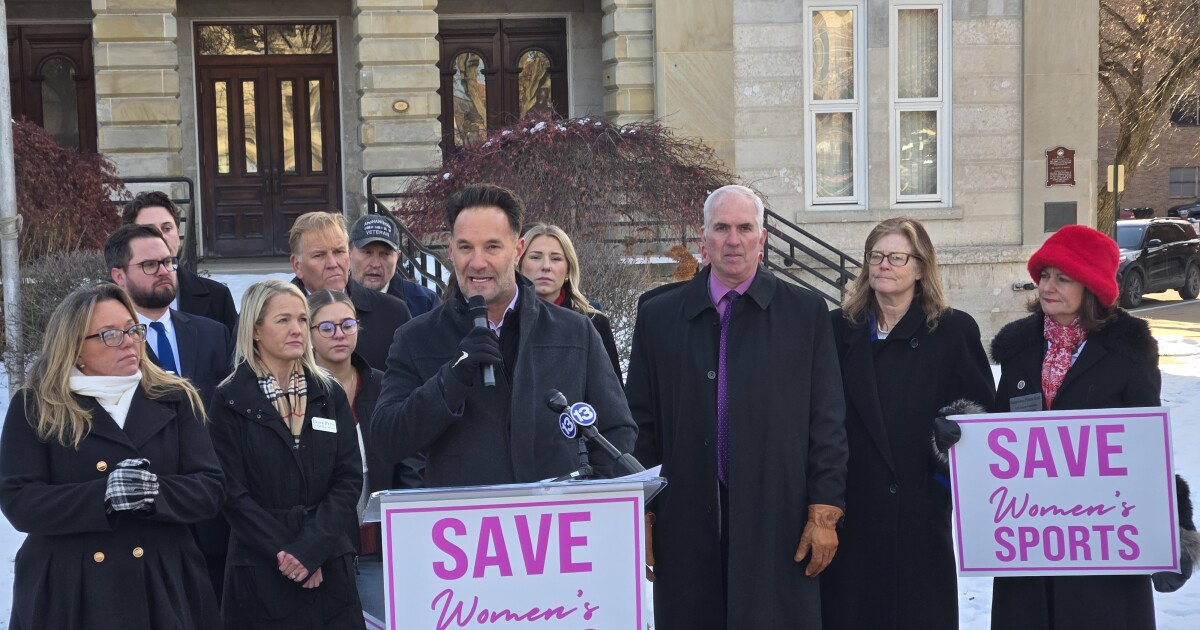
A southeast Michigan parent has filed a Title IX complaint with the U.S. Department of Education over claims a transgender student athlete played against his daughter’s volleyball team.
The complaint alleges the opposing school didn’t submit the proper waiver for the child to play, that parents didn’t get notice ahead of the match, and that both teams shared a locker room while playing in Monroe.
Monroe High School student Briley Lechner plays on the volleyball team. She said her team was caught off guard by the player.
“Nobody would have expected that. That would’ve been the last thought because as I was looking at this person, admiring how amazing they were, admiring how high they could jump, I was kind of getting down on myself. Like, I wonder why I’m not capable of that,” Lechner said during a press conference to announce the complaint in Monroe Monday.
The Michigan High School Athletic Association (MHSAA) says it received one waiver for a transgender child to play sports this past fall but that it couldn’t give more information for privacy reasons.
MHSAA spokesperson Geoff Kimmerly said those waivers are granted on a case-by-case basis, using factors like medical records and whether the student has gone through hormone therapy or gender-affirming surgery.
“We look at every athlete individually,” Kimmerly said. “We’re talking about one individual student, so they’re all going to be different a little bit in some way and so they’re all going to be unique.”
Kimmerly said that’s been the practice for several years. Sometimes sports seasons don’t get any requests for transgender students to play.
The stated goal of the Title IX complaint is to stop all transgender kids from competing in girls’ sports.
Sean Lechner, Briley’s father, said he believed a student assigned male at birth would always have a competitive edge when competing against athletes assigned female at birth.
“It’s not fair, it’s not equal, and it’s not right. It takes every bit of dignity and privacy away from our girls,” Sean Lechner said.
Michigan civil rights law bans discrimination based on gender identity. But, in February, President Donald Trump issued a federal executive order banning trans athletes from girls’ sports.
Kimmerly said the MHSAA, a private non-profit that coordinates Michigan’s school sports, needs state lawmakers to give it more guidance about what to do with the conflicting policies.
“We know that they recognize these issues. We have reinforced over and over again that we have to follow the law. And when there are conflicts in the law, we rely on the Legislature and the courts to provide clarity,” Kimmerly said.
Several Republican state lawmakers and candidates for state and federal office attended Monday’s press conference.
In May, the Republican-led state House of Representatives passed bills to exempt school sports from that anti-gender identity discrimination law.
Package co-sponsor State Representative Rylee Linting (R-Grosse Ile Twp) said the new complaint was about keeping student athletes safe.
“To be clear, this is not about singling out a particular student, this is about calling out the individuals that are allowing this to happen,” Linting said.
The bills have stalled in the Democratic-led state Senate where they’re not likely to see any movement.
Meanwhile, LGBTQ rights advocates say transgender children should have equal chances to play youth sports. They argue zeroing in on one students’ case takes away from their teams’ accomplishments and makes them a target for adults to harass and bully them both online and in person.
The U.S. Supreme Court is scheduled to hear arguments over whether trans athletes should be allowed to play in girls’ and women’s sports next year.
Decision making is a crucial skill in several sports, which researchers and practitioners have for a long time sought to improve. Recent studies have focused on the potential of video-based training, but most examined adult athletes and did not typically measure transfer to on-field performance. Therefore, we investigated the effect of a 4-week video-based training on youth volleyball players’ on-field decision making. Twenty female volleyball players between 13 and 15 years old were initially assigned to either an experimental or control group, of whom 16 (eight per group) completed the entire study. Decision making skill was assessed on a video-based task, as well as an on-field task. The results of our pilot study demonstrated that only the experimental group significantly improved their decision making skills on both the video-based assessment and on-field test (motor decision) between baseline and retention. This pilot study indicates that video-based training can be an effective way to improve young players’ on-field decision making skills, although improvements in motor execution may require intermittent physical practice.
Citation: De Waelle S, Bennett SJ, Scott MA, Lenoir M, Deconinck FJA (2025) Improving on-field decision making using video-based training – A pilot study with young volleyball players. PLoS One 20(12):
e0338523.
https://doi.org/10.1371/journal.pone.0338523
Editor: Gustavo De Conti Teixeira Costa, Universidade Federal de Goias, BRAZIL
Received: April 4, 2025; Accepted: November 24, 2025; Published: December 9, 2025
Data Availability: All relevant data are within the manuscript and its Supporting information files.
Funding: The author(s) received no specific funding for this work.
Competing interests: The authors have declared that no competing interests exist.
Introduction
To make appropriate decisions in team sports such as soccer, volleyball or basketball, it is necessary to process and monitor multiple sources of information from opponents, teammates and the ball [1]. Expert athletes in these sports exhibit superior decision making skills than sub-elite athletes or novices [2,3]. This expert advantage is even present in young athletes (i.e., during adolescence), with high-level soccer players outperforming lower-level athletes on decision making skills [4]. The implication is that decision making is already an important aspect of expertise in young athletes, and that its development at this crucial period for talent identification warrants consideration [5,6].
On-field decision making in team sports can be trained by manipulating task constraints that influence the number or nature of decisions to be made [7,8]. This is often done by means of small-sided games, which usually involve fewer opponents and a smaller pitch size in order to reduce the number of decision making options. Despite the success of this on-field training method, it is not simple and/or efficient to implement, and is not individualized. Therefore, researchers have considered how to improve decision making through off-field training [9], such as watching sport-specific videos outside of their regular practice sessions. Typically, this would involve watching an unfolding sequence of play, with the video being stopped at a key point of interest (e.g., ball-foot contact in soccer), after which the participant is required to select the best possible decision (e.g., where to pass the ball) by means of a button press, verbal report or the appropriate sport-specific movement [10].
In sports such as softball [11], cricket [12] and basketball [13], most studies have shown task-specific improvements in adult participants decision making after sports-specific video-based training. However, the extent to which the positive effects of off-field, video-based training transfer to on-field performance remains unclear [14], in part because transfer is rarely measured [15,16]. Of the few studies that did examine transfer, the evidence is equivocal [12,13,17,18]. For example, Gorman and Farrow [18] found that a four-week, video-based training intervention in basketball improved decision making of all groups of adult participants (including the control and placebo group) on the video-based test, but not in on-field, match situations. Conversely, Pagé and colleagues [13] reported transfer of video-based training effects to on-field decision making in basketball, but only when the on-field situations matched those presented during the training (near transfer). Moreover, when practice occurred in virtual reality using a head mounted display instead of 2D videos displayed on a computer monitor, the training effect was extended to untrained situations (far transfer).
With youth athletes there are a similarly small number of studies that have investigated the effect of video-based training on decision making skills [17]. As with the adult studies, findings are mixed and little consideration is given to on-field transfer. Nimmerichter and colleagues [14] reported that 6 weeks of video-based training improved the video-based decision making skills of 14-year-old soccer players, but transfer to on-field performance was not measured. Panchuk and colleagues [18] found that 17-year-old female basketball players (n = 6) significantly improved their decision making following 3-weeks of immersive training on a video-based decision making test, but only to a similar extent as the control group (n = 3) (15). The male counterparts showed no improvements in video-based decision making irrespective of whether they took part in the intervention (n = 5) or control protocol (n = 4). No significant improvements were found in on-field performance for either group. More positive effects initially seem apparent in a recent meta-analysis on the effectiveness of decision making training in volleyball players [19]. However, closer inspection of the six original articles that studied youth players indicates that only four used off-field video-based training, and that of those only one found a 20% positive transfer to on-field performance [20].
At present, therefore, despite there being some evidence that video-based training can be a useful tool for the improvement of video-based decision making abilities, the extent of transfer to on-field performance remains unclear, particularly in youth athletes. The current pilot study aims to explore the effects of a four-week, video-based decision making intervention on on-field performance in youth female volleyball players. As commented above, decision making in volleyball requires the athlete to process and monitor multiple sources of information from opponents, teammates and the ball. The constant movement of the ball (i.e., it is not allowed to be caught and held) and the speed at which it travels (e.g., in excess of 100 km/h), combined with the dynamic player positioning, means that quick, accurate decisions on where and how to spike the ball are essential to capitalize on scoring opportunities. Simple and efficient training methods that improve decision making of youth athletes could have meaningful impact on their enjoyment and progression, as well as match outcome. To assess learning and transfer in these athletes, baseline and retention tests on video-based and on-field decision making tasks in volleyball were performed either side of the training phase. To permit a comprehensive analysis of on-field decision making [21], three measures were included: verbal decision, motor decision and motor execution. The general hypothesis was that the experimental group would improve their decision making performance on both the video-based task and on-field decision making task, while we expected no improvements in the control group on either task.
Materials and methods
Participants
Assuming an effect size of Cohen’s f = 0.25 (ηp² = 0.059), a power of 0.8 and a correlation between repeated measurements of 0.25, it was determined that a total sample of N = 50 would be required for the interaction effect of our mixed design ANOVA (G*Power 3.1). Despite only being able to recruit 20 participants, it was decided to proceed with this sample on the basis that the initial effect size estimation could have been too conservative compared to previous similar work [12,13,18], and that any findings could still contribute to subsequent meta-analysis.
The recruitment period started on 03/08/2020 and ended on 25/09/2020. Participants of the under 15 age category were recruited from four different teams within three Flemish youth volleyball clubs and were either assigned to the control group that would be receiving the placebo training (n = 9), or the experimental group that would be receiving the decision making training (n = 11). To limit baseline difference between groups, the selected volleyball teams were all playing at the same competition level. Participants were unaware of the fact that there were two different groups, and were randomly assigned to the experimental or control group per team. Prior to the study, participants and their parents provided written informed consent and were made aware of the fact that they could withdraw from the study at any time without consequences. The study was conducted in accordance with the ethical standards of the Helsinki Declaration and approved by the Ghent University Hospital ethics committee (registration number: B670201836811).
Procedure
Participants completed baseline assessments of video-based and on-field decision making skill, followed by a 4-week intervention involving different types of video-based training. The initial study design included measurements of both the video-based and on-field tests immediately following the intervention. However, it was only possible to administer the video-based test at the participant’s home without the supervision of a trained researcher (NB. These data are not reported). Between 28 and 31 days after the intervention ended, participants completed retention assessments of both the video-based and the on-field tests. Neither of the groups took part in any on-field practice during the study.
Measurements
Video-based test.
The video-based decision making task was based on the decision making task developed by De Waelle and colleagues [4] and validated for use in youth volleyball players. In this task, players viewed a series of 38 video clips of a progressing offensive sequence that was occluded 66ms before ball contact by the spiker. Participants were asked to imagine themselves as the spiker, and to decide on the most optimal zone to play the ball (i.e., with the highest chance of scoring a point). They then indicated their decision by pressing the corresponding key on a keyboard as fast as possible. To ensure face validity of the task, the video scenarios were developed in close collaboration with three certified volleyball coaches. The test included four different viewing conditions with 2, 3, 4 and 6 opponents, thereby reflecting realistic volleyball training and match situations. For the first two conditions, with 2 and 3 opponents, participants could choose between 6 zones, while for the last two conditions (with 4 and 6 opponents), there were 9 zones to choose from. The inclusion of more players resulted in progressively more complex conditions requiring a larger field size and more zones. This also ensured that zone size was similar across all conditions. The number of opponents, the size of the field, the number of zones and the number of clips per condition are displayed in Table 1. Each video clip lasted about 5 seconds, after which participants had 5 seconds to execute their response. However, participants did not have to wait until the screen was occluded to make their decision. A screenshot of exemplar video clips is presented in Fig 1, and a schematic of the test setting is shown in Fig 2.
The test took place in a separate and quiet room, with only the participant and the experimenter present. The video clips were projected on a 1.07m (w) x 0.6m (l) projection screen using an LED HD video projector (LG PH550G, Seoul, South Korea) that was placed on a table 1.50m from the screen. Subjects were instructed to stand behind this table at 2.00m from the screen. Video clips were displayed with OpenSesame software [22], which was also used to record the responses using a regular USB-connected keyboard.
At the start of the decision making test, participants received detailed instruction, as well as an example and two practice trials. All participants completed the different viewing conditions in the same order, and within each condition trials were randomized for each participant separately. For each new viewing condition, a familiarization clip was shown, as the number of players and size of the court would change. The decision making test lasted about 10 minutes.
On-field test.
A series of simulated offensive sequences using actual players that represented the video-based test was used for the on-field decision making test, but only with six opponents as this relates closely to the actual game setting. Eight experienced volleyball players were recruited as ‘actors’ to play the roles of the six defenders on the defensive side, as well as the libero (who plays the ball towards the setter) and setter (who passes the ball to the participant) on the side of the participant. This did not reproduce exactly the video-based test but it did ensure that the participants received high-quality passes that provided them with optimal scoring conditions in terms of time and space. Before the test, the six defenders were given explanations and time to practice the different defence patterns they would have to execute. These defence patterns were the same as in the video-based test, and prior to each trial, one of the researchers would indicate through a sign which defence pattern was to be executed. The defence patterns were presented in a random order that was the same for all participants. The field of the defenders was divided in 9 zones using orange tape and zones were marked with colours to facilitate the participant’s verbal response. The net was a regulation height of 2.24m and the ball was a Mikasa V020W size 5. A schematic is provided in Fig 3.
Prior to the test the participant was given time 15 minutes to warm-up, including light jogging, dynamic stretches and volleyball-specific passing and attacking drills. Each trial of the test started with a free ball tossed to the libero on the participant’s side. The libero would then play the ball to the setter, who would pass the ball to the participant acting as the spiker. The participant was instructed to play the ball where they were most likely to score on the opposing side of the field, using any technique. They were also asked to call out the zone where they intended to play the ball (i.e., verbal reports). This was done because participants between 13 and 15 years old are not always technically skilled enough to play the ball where they actually intend to play, and thus verbal reports provide information on intended behaviour. If the defenders were able to defend the ball, they played a free-ball back to the libero on the participant’s side to start a new trial. If the ball was not defended, a new trial was started by a free-ball toss to the libero. Verbal reports were noted on paper by one of the researchers at the time of testing, and two cameras (see Fig 3) recorded the test from different angles to allow for analyses of (1) each decision, based on the landing location of the ball as well as the execution of the action, and (2) the correctness of the actors’ defence positions. Participants completed 20 trials as the left wing spiker and 20 trials as the right wing spiker. Rest periods between trials were not included, other than the time it took to prepare for the next trial, which reflects an actual game situation. The entire on-field test lasted 15–20 minutes, and there were no obvious signs or reports of fatigue from the participants. While a participant was actively performing the on-field task, no other participant were present.
Intervention
Both groups received 4 weeks of video-based training, with 4 sessions of 15 minutes per week, resulting in a total of 16 training sessions. The training sessions were conducted at home using the OpenSesame software, and commenced during the first week of the 2020–2021 season. Participants received a detailed manual before the study and were contacted by one of the research team to check that the software had been correctly installed and that they understood when and how to use it. Participants were instructed to spread out their training sessions over the week, and to not perform two sessions during the same day. This was checked in the log-files created by the OpenSesame software, which the participant sent by email to the research team after each training session. The log-files contained information about the participants’ responses and response times during training, as well as when they executed each session. While it is feasible that someone other than the participant could have completed the training, it is highly unlikely given that they would need access to the participants computer and email.
Experimental group.
The experimental group received training sessions that were highly similar to the video-based test, with the same instructions and manner of response. However, training sessions became gradually more difficult, starting with 2 opponents in the first week, 3 and 4 opponents in the second week, and ending with 6 opponents during the last two weeks. At the beginning of each training session, detailed instruction was given about which areas of the display players should pay attention to in order to make optimal decisions. Different topics were addressed within each of the difficulty levels. For example, it was explained that the role of the setter is to pass the ball to the left wing or the right wing spiker to ensure they have the time and space to score a point, and that the defending team will try to block the ball played by the spiker, usually with two players at the net in a position relative to each other that limits the zones available to the spiker that are not covered by remaining four defenders. It was also clarified what to do when receiving a pass that is difficult for the spiker to reach, or does not provide optimal scoring conditions. In this way, the intervention aimed to improve the participants’ decision making in standard, but also in non-standard situations (e.g., when you get a bad pass, or when the block has not formed correctly). Per training session, each participant completed 20 trials, i.e., 20 different video clips of 20 different volleyball scenarios. They were provided with feedback after each trial about the outcome of their response.
Control group.
The structure of the placebo training was similar to the experimental group, as they too completed 16 sessions (4 weeks x 4 sessions/week) that included detailed instructions followed by video clips to which they had to respond using the keyboard. The clips and responses were designed such that participants engaged in game settings. In the first two weeks, participants had to judge the quality of the first ball reception as quickly as possible, and in the third week, they had to judge the quality of the pass given by the setter. In the last week, they had to predict the direction of set-up. Accordingly, these tasks required participants to focus on the ball’s flight path, and not the positioning of blockers and defenders, which is considered critical for offensive decision making. As the control group did not receive feedback between trials, they completed 30 trials each training session to ensure they spent a similar amount of time performing the training task.
Dependent variables
Video-based decision making.
Prior to the study, a panel of three expert coaches viewed the video clips for the decision making test and selected the most optimal zone (i.e., the zone with the highest scoring probability, based on the position of the block and the defenders). Only the clips for which all three experts agreed were included in the test. Each participant’s performance on the video-based decision making task was assessed using the percentage accuracy of the 6×6 condition (i.e., percentage of times the optimal zone was selected). The 6×6 condition was chosen because this relates most closely to the on-field test and to the actual game that is played by this age group.
On-field performance.
This was assessed using 3 separate measures. First, the on-field verbal decision, i.e., where participants said they were going to play, was registered. Second, the on-field motor decision was recorded, i.e., where participants intended to play the ball, regardless of the quality of their execution and final ball landing location [21]. To this end, two experienced volleyball coaches analysed the direction in which the ball was played, in combination with the technique used, to decide on the player’s intended action. Interrater reliability of this judgement was examined by having 2 coaches evaluate all trials (n = 40) from 4 participants (2 from each group). This analysis indicated excellent agreement (Cohen’s unweighted kappa = 0.814). Finally, the on-field motor execution, i.e. what participants ended up doing, for which actual ball landing location was analysed from the video footage from the on-field test. For each of the three measurements, percentage accuracy was calculated per participant for the baseline and retention test.
Data analysis
Of the initial 20 participants, three from the experimental group dropped out during the study as they found it too time-consuming. In addition, one participant from the control group was unable to complete the retention test. Therefore, for both the video-based tests and on-field tests, we had complete data sets (baseline and retention) for 8 participants in each group (see Table 2).
To assess whether the intervention influenced learning of the video-based decision making task, the percentage accuracy scores were submitted to a mixed ANOVA, with group as the between-subjects factor and phase as the within-subjects factor (baseline, retention). To assess learning of the on-field task, the three dependent measures (verbal decision, motor decision and motor execution) were submitted to a mixed MANOVA, followed by mixed ANOVA, with group as the between-subjects factor and phase (baseline, retention) as the within-subjects factor. Assumptions of normality and homogeneity of variances were confirmed using QQ plots and Levene’s test. Significant interaction effects were further analysed using pairwise comparisons of estimated marginal means with Bonferroni correction. The alpha level was set to 0.05 and partial eta square effect sizes are reported. Statistical tests were conducted using IBM SPSS Statistics for Windows, Version 28.0.
Results
Video-based decision making task
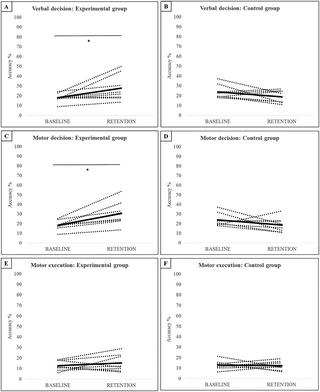
Mixed ANOVA indicated a main effect for phase, F(1,14)= 10.93, p = 0.005, ηp² = 0.44, as well as a significant phase x group interaction, F(1, 14)= 9.43, p = 0.008, ηp² = 0.40. There was no significant main effect of group, F(1, 14)= 0.69, p = 0.42, ηp² = 0.05. While performance of the control group did not differ between baseline and retention (Fig 4B), there was a significant improvement (p = 0.003) exhibited by the experimental group (Fig 4A). Importantly, no between-group differences were apparent at baseline.
Fig 4. Accuracy scores for the video-based decision making (6×6 condition).
Dotted lines represent individual results, the black line represents the group mean. *significant difference in the group mean, p < 0.05.
https://doi.org/10.1371/journal.pone.0338523.g004
On-field task
Mixed MANOVA revealed no significant multivariate main effect for phase, F(3, 12)= 1.29, p = 0.332, ηp² = 0.22, or group, F(3, 12)= 1.89, p = 0.185, ηp² = 0.32, but there was a significant multivariate phase x group interaction, F(3, 12)= 4.65, p = 0.022, ηp² = 0.54. Univariate tests also indicated no significant main effect for phase or group for any of the dependent variables. However, there was a significant phase x group interaction for verbal decision, F(1, 14)= 9.19, p = 0.009, ηp² = 0.40, and motor decision, F(1, 14)= 13.39, p = 0.003, ηp² = 0.49, but not for motor execution, F(1, 14)= 0.631, p = 0.44, ηp² = 0.04. There was no difference between the groups at baseline or retention for any of the dependent measures. However, the experimental group did significantly improve their motor decisions (Fig 5C, p = 0.017), but not their verbal (Fig 5A, p = 0.085) and motor execution (Fig 5E p = 1.00), between baseline and retention. The control group did not show any improvement in their verbal decision (Fig 5B), motor decision (Fig 5D), or motor execution (Fig 5F), with negative group mean differences between baseline and retention for each measure.
Fig 5. Accuracy scores for the on-field decision making variables.
Dotted lines represent individual results, the black line represents the group mean. *significant difference in the group mean, p < 0.05.
https://doi.org/10.1371/journal.pone.0338523.g005
Discussion
This pilot study investigated the effect of a 4-week video-based training intervention on the decision making skills of youth volleyball players. Consistent with the general hypothesis, only the experimental group exhibited improved decision making in the video-based task, as well as the controlled and representative on-field task (motor decision only). This latter finding is in line with some previous studies [13], and suggests that video-based training can indeed be useful to improve decision making skills in youth team sports athletes. Contrasting effects have been reported [18,23] but there are notable differences in the methodologies. For example, the aforementioned studies measured on-field decision making in small-sided games or actual match performance (far transfer), whereas both the current study and Pagé et al. [13] used a controlled, on-field test designed specifically to replicate the situations of the video-based test (near transfer). In addition, we found evidence for improved on-field decision making skills when video-based training employed a first-person perspective and provided feedback after each trial (see also [13]), implying that these may be crucial elements for a successful video-based training intervention.
Although there was a significant interaction for verbal decision making in the on-field task, there was no improvement by the experimental group after Bonferroni correction for multiple pairwise comparisons. Verbalizing a motor plan is a common approach in perceptual-cognitive research, but is a somewhat artificial task that is rarely practiced in an on-field setting. This could have posed an additional challenge for the youth volleyball players in the current study, thereby limiting their improvement. Observation of the individual data (Fig 5A) shows that while none of the participants in the experimental group exhibited a decrease in verbal decision making accuracy from baseline to retention, 2 participants exhibited less than 1% change. The lack of improvement by the experimental group in on-field motor execution was more robust, with no significant main or interaction effects. Observation of the individual data (Fig 5E) shows that 3 of 8 participants in the experimental group exhibited a decrease between baseline and retention. This finding is partly consistent with a recent systematic review that showed programs designed to train decision making usually only benefit perceptual-cognitive measures, and not perceptual-motor measures [17]. This could simply be due to the fact that perception and action are uncoupled in video-based training, with no or a non-representative motor execution required when responding to the video clips. However, the lack of perception-action coupling in the current study did not prevent participants from improving on the motor decision task, indicating that they were better able to correctly identify where and how to respond following the intervention. An alternative interpretation could be that not having the opportunity to physically practice the motor task, such as during 2 months of the current intervention, prevented participants from applying what they learned during the video-based training. Similar effects are found in work on voluntary imitation, with observational practice alone being less beneficial to subsequent motor execution compared to observational practice interspersed with physical practice [24,25]. As is the case for observational practice [26], it is possible that video-based training enables participants to perceive and represent relevant information, but it does not engage feedforward and feedback processes that are critical for skilled motor execution. The implication for future studies on decision making in sport is that video-based training should be combined with physical training, although the frequency and volume of each type of training remains to be determined. That said, if an individual is unable to take part in on-field practice sessions, video-based training can provide a valuable alternative by which decision making skills, and in particular motor decision making, can still be improved. Indeed, when looking at the individual data (Fig 5C and 5D), it can be seen that the majority of participants in the control group showed a decline or no change in performance, whereas all participants in the experimental group showed an increase in performance. This implies that video-based training might also be important in avoiding performance decline when athletes cannot physically train, for example when they are injured [27].
While this pilot study provides valuable insights into the use of individualized video-based training, it is important to acknowledge that there are some limitations. As noted in the methods, we initially planned to recruit 50 participants, but were only able to recruit 20 participants, of whom 4 did not complete the retention test, leaving us with 8 participants per group. Although this meant a reduction in power to detect smaller and moderate effects, a post-hoc sensitivity analysis indicated that this sample size was sufficient to detect an effect size of at least ηp² = 0.175 with a power of 80%. Notably, the effect size of ηp² = 0.04 found for motor execution was lower than both the a-priori and post-hoc critical thresholds, thus indicating that the finding of no significant improvement in this dependent measure by the experimental group was not due to insufficient power. As with some previous studies [20,28], the small sample size not only highlights the difficulty recruiting participants for training studies involving several sessions over several weeks (16 in total) followed by a delayed-retention, in which there are measures of off-field and on-field performance, but also raises a question about generalizability of the findings and the need for a replication study with a larger sample. Ideally, this would include a longer term follow-up to determine if there is any consolidation of the learning effects having resumed typical practice procedures. It could also be interesting to include more sequences of offensive play to better reflect the dynamic complexity of real competitions, and to determine transfer to the field in actual volleyball matches. Indeed, our use of simulated 6×6 offensive sequences with actual players in the on-field test was intended to closely reproduce the video-based test, and as such did not allow us to determine transfer to novel attacking sequences. Conducting such a study would benefit from collaboration with coaches of larger teams, allowing decision-making training to be integrated into regular practice activities, while also reducing the risk of participant drop-out.
In conclusion, this pilot study provides preliminary support for the effectiveness of video-based training for improving and retaining on-field motor decision making in youth volleyball players. Although the quality of motor execution did not improve, we suggest that this could be overcome by providing intermittent on-field training. Video-based training is easily accessible and low cost compared to virtual reality training, and could thus be an effective tool to maintain or improve the decision making abilities of youth players from grassroots to club level.
References
1. Davids K, Savelsbergh GJP, Bennett SJ, Va der Kamp J. Interceptive actions in sport: information and movement. London: Routledge; 2002.
2. Bar-Eli M, Plessner H, Raab M. Judgement, decision-making and success in sport. Hoboken, New Jersey, US: John Wiley and Sons; 2011.
3. Williams AM, Jackson RC. Anticipation in sport: fifty years on, what have we learned and what research still needs to be undertaken? Psychol Sport Exerc. 2019;42:16–24.
4. De Waelle S, Warlop G, Lenoir M, Bennett SJ, Deconinck FJA, Waelle SD. The development of perceptual-cognitive skills in youth volleyball players. J Sports Sci. 2021:1–15. https://doi.org/10.1080/02640414.2021.1907903
5. Bennett KJM, Novak AR, Pluss MA, Coutts AJ, Fransen J. Assessing the validity of a video-based decision-making assessment for talent identification in youth soccer. J Sci Med Sport. 2019;22(6):729–34. pmid:30587435
6. de Joode T, Tebbes DJJ, Savelsbergh GJP. Game insight skills as a predictor of talent for youth soccer players. Front Sports Act Living. 2021;2:609112. pmid:33521633
7. Timmerman EA, Savelsbergh GJP, Farrow D. Creating appropriate training environments to improve technical, decision-making, and physical skills in field hockey. Res Q Exerc Sport. 2019;90(2):180–9. pmid:30794115
8. Turner AP, Martinek TJ. An investigation into teaching games for understanding: effects on skill, knowledge, and game play. Res Q Exerc Sport. 1999;70(3):286–96. pmid:10522286
9. Larkin P, Mesagno C, Berry J, Spittle M, Harvey J. Video-based training to improve perceptual-cognitive decision-making performance of Australian football umpires. J Sports Sci. 2018;36(3):239–46. pmid:28282740
10. Piggott B, Müller S, Chivers P, Cripps A, Hoyne G. Small-sided games can discriminate perceptual-cognitive-motor capability and predict disposal efficiency in match performance of skilled Australian footballers. J Sports Sci. 2019;37(10):1139–45. pmid:30424715
11. Gabbett T, Rubinoff M, Thorburn L, Farrow D. Testing and training anticipation skills in softball fielders. Int J Sport Sci Coach. 2007;2(1):12–7. https://doi.org/10.1260/174795407780367159
12. Hopwood MJ, Mann DL, Farrow D, Nielsen T. Does visual-perceptual training augment the fielding performance of skilled cricketers? Int J Sport Sci Coach. 2011;6(4):523–36. https://doi.org/10.1260/1747-9541.6.4.523
13. Pagé C, Bernier P-M, Trempe M. Using video simulations and virtual reality to improve decision-making skills in basketball. J Sports Sci. 2019;37(21):2403–10. pmid:31280685
14. Nimmerichter A, Weber N, Wirth K, Haller A. Effects of video-based visual training on decision-making and reactive agility in adolescent football players. Sports. 2016;4(1):1–9. https://doi.org/10.3390/sports4010001
15. Green CS, Strobach T, Schubert T. On methodological standards in training and transfer experiments. Psychol Res. 2014;78(6):756–72. pmid:24346424
16. Alsharji KE, Wade MG. Perceptual training effects on anticipation of direct and deceptive 7-m throws in handball. J Sports Sci. 2016;34(2):155–62. pmid:25917061
17. Silva AF, Ramirez-Campillo R, Sarmento H, Afonso J, Clemente FM. Effects of training programs on decision-making in youth team sports players: a systematic review and meta-analysis. Front Psychol. 2021;12:663867. pmid:34135822
18. Panchuk D, Klusemann MJ, Hadlow SM. Exploring the effectiveness of immersive video for training decision-making capability in elite, youth basketball players. Front Psychol. 2018;9:2315. pmid:30538652
19. Conejero Suárez M, Prado Serenini AL, Fernández-Echeverría C, Collado-Mateo D, Moreno Arroyo MP. The effect of decision training, from a cognitive perspective, on decision-making in volleyball: a systematic review and meta-analysis. Int J Environ Res Public Health. 2020;17(10):3628. pmid:32455852
20. Gil-Arias A, Moreno MP, García-Mas A, Moreno A, García-González L, Del Villar F. Reasoning and action: implementation of a decision-making program in sport. Span J Psychol. 2016;19:E60. pmid:27644584
21. Bruce L, Farrow D, Raynor A, Mann D. But I can’t pass that far! The influence of motor skill on decision making. Psychol Sport Exerc. 2012;13(2):152–61.
22. Mathôt S, Schreij D, Theeuwes J. OpenSesame: an open-source, graphical experiment builder for the social sciences. Behav Res Methods. 2012;44(2):314–24. pmid:22083660
23. Gorman AD, Farrow D. Perceptual training using explicit and implicit instructional techniques: does it benefit skilled performers? Int J Sport Sci Coach. 2009;4(2):193–208. https://doi.org/10.1260/174795409788549526
24. Hayes SJ, Elliott D, Andrew M, Roberts JW, Bennett SJ. Dissociable contributions of motor-execution and action-observation to intramanual transfer. Exp Brain Res. 2012;221(4):459–66. pmid:22821082
25. Maslovat D, Hodges NJ, Krigolson OE, Handy TC. Observational practice benefits are limited to perceptual improvements in the acquisition of a novel coordination skill. Exp Brain Res. 2010;204(1):119–30. pmid:20496059
26. Foster NC, Bennett SJ, Pullar K, Causer J, Becchio C, Clowes DP, et al. Observational learning of atypical biological kinematics in autism. Autism Res. 2023;16(9):1799–810. pmid:37534381
27. Van Pelt KL, Lapointe AP, Galdys MC, Dougherty LA, Buckley TA, Broglio SP. Evaluating performance of National Hockey League players after a concussion versus lower body injury. J Athl Train. 2019;54(5):534–40. pmid:31084502
28. Gil-Arias A, Garcia-Gonzalez L, Del Villar Alvarez F, Iglesias Gallego D. Developing sport expertise in youth sport: a decision training program in basketball. PeerJ. 2019;7:e7392. pmid:31423354
When a former rock musician steps in to fix an $11 billion industry problem, you pay attention.
Meet John D’Orsay. Long before he became a tech founder, he spent his late teens and early twenties chasing a career in music. But when the touring life didn’t pan out, he pivoted to his other passion: building software. That shift ended up transforming one of the most overlooked sectors in youth sports.
Back in 2013, as John and his co-founder, Eric, were shuttling their kids across the country for tournaments, they kept running into the same frustrating reality: booking hotels for youth sports travel was a mess. Each event used a different system or no system at all. Families jumped between clunky websites, spreadsheets, and unofficial “group links,” all while knowing they probably weren’t getting the best rates.
John D’Orsay in the early days of EventConnect
So John built a solution.
What started as a simple, free tool to help organizers and families coordinate lodging has since evolved into EventConnect, a platform that centralizes hotel bookings for youth tournaments nationwide.
The model is straightforward but powerful: by aggregating demand from entire teams, EventConnect negotiates lower, guaranteed rates with hotel partners. Families benefit from better pricing, closer proximity to venues, and more reliable amenities. Hotels benefit from thousands of room nights secured months in advance. Tournament operators get real-time reporting and a smoother travel experience for every attending team.
And the market responded fast. Even in its earliest form, EventConnect signed 15 clients within a single month of launching.
But the real significance lies in what the company foreshadowed. When John and Eric started, youth sports travel was still seen as a niche side segment. Today, lodging alone in the youth sports economy represents nearly $11 billion annually a staggering figure for an industry many still underestimate.
Not bad for a former rockstar with a backup plan.
About Youth Sports Business Report
Youth Sports Business Report is the largest and most trusted source for youth sports industry news, insights, and analysis covering the $54 billion youth sports market. Trusted by over 50,000 followers including industry executives, investors, youth sports parents and sports business professionals, we are the premier destination for comprehensive youth sports business intelligence.
Our core mission: Make Youth Sports Better. As the leading authority in youth sports business reporting, we deliver unparalleled coverage of sports business trends, youth athletics, and emerging opportunities across the youth sports ecosystem.
Our expert editorial team provides authoritative, in-depth reporting on key youth sports industry verticals including:
Sports sponsorship and institutional capital (Private Equity, Venture Capital)
Youth Sports events and tournament management
NIL (Name, Image, Likeness) developments and compliance
Youth sports coaching and sports recruitment strategies
Sports technology and data analytics innovation
Youth sports facilities development and management
Sports content creation and digital media monetization
Whether you’re a sports industry executive, institutional investor, youth sports parent, coach, or sports business enthusiast, Youth Sports Business Report is your most reliable source for the actionable sports business insights you need to stay ahead of youth athletics trends and make informed decisions in the rapidly evolving youth sports landscape.
Join our growing community of 50,000+ industry leaders who depend on our trusted youth sports business analysis to drive success in the youth sports industry.
Stay connected with the pulse of the youth sports business – where industry expertise meets actionable intelligence.
Sign up for the biggest newsletter in Youth Sports – Youth Sports HQ – The best youth sports newsletter in the industry
Follow us on LinkedIn
Follow Youth Sports Business Report Founder Cameron Korab on LinkedIn
Are you a brand looking to tap into the world’s most passionate fanbase… youth sports?
Introducing Play Up Partners, a leading youth sports marketing agency connecting brands with the power of youth sports. We specialize in youth sports sponsorships, partnerships, and activations that drive measurable results.
About Play Up Partners
Play Up Partners is a leading youth sports marketing agency connecting brands with the power of youth sports. We specialize in youth sports sponsorships, partnerships, and activations that drive measurable results.
Why Sponsor Youth Sports?
Youth sports represents one of the most engaged and passionate audiences in sports marketing. With over 70 million young athletes and their families participating annually, the youth sports industry offers brands unparalleled access to motivated communities with strong purchasing power and loyalty.
What Does Play Up Partners Do?
We’ve done the heavy lifting to untangle the complex youth sports landscape so our brand partners can engage with clarity, confidence, and impact. Our vetted network of accredited youth sports organizations (from local leagues to national tournaments and operators) allows us to create flexible, scalable programs that evolve with the market.
Our Approach
Every partnership we build is rooted in authenticity and value creation. We don’t just broker deals. We craft youth sports marketing strategies that:
Deliver measurable ROI for brand partners
Create meaningful experiences for athletes and families
Elevate the youth sports ecosystem
Our Vision
We’re positioning youth sports as the most desirable and effective platform in sports marketing. Our mission is simple: MAKE YOUTH SPORTS BETTER for athletes, families, organizations, and brand partners.
Common Questions About Youth Sports Marketing
Where can I sponsor youth sports?How do I activate in youth sports?What is the ROI of youth sports marketing?How much does youth sports sponsorship cost?
We have answers. Reach out to info@playuppartners.com to learn how Play Up Partners can help your brand navigate the youth sports landscape.
Youth sports organizations: Interested in partnership opportunities? Reach out to learn about our accreditation process.