
Rec Sports
Red flags in youth sports programs, how to spot and respond to them




Texas parents speak out on Dallas Stars’ control over youth ice hockey
Youth hockey parents in Texas say the Dallas Stars threatened and retaliated against them and their kids. Now they’re speaking out.
USA Hockey didn’t invent the line, but Ken Martel has used it when he talks about succeeding in sports.
“As many as possible for as long as possible with the best environment possible,” the organization’s senior director of player and coach development told USA TODAY Sports in an interview last year.
He was referring to the American Development Model program he helped install more than a decade and a half ago, when the sport was losing young players in our country.
The ADM, which has become the cornerstone of USA Hockey’s message, has helped bring them back to the ice in droves and, in Martel’s thinking, continues to help generate world junior championship titles.
“When you have more kids playing, certainly a few more of them will turn out to be good and you’ll see ’em on TV, right?” he says.
USA Hockey created the ADM to help keep kids, parents and coaches engaged while, at least in theory, giving everyone a chance to organically develop to his or her full athletic potential.
It starts with getting boys and girls enthused from an early age, infusing a love of competition (without a laser focus on winning) and engaging them into adulthood.
USA Hockey reports 577,864 registered players (kids and adults) for 2024-25, up from 465,975 in 2008-09.
“Geography is no longer a predetermining factor in who can be good in our sport,” Martel says.
USA TODAY reported Aug. 1, however, about how one NHL club has a monopoly over North Texas ice. It effectively controls the pathways by which the region’s young players advance, Kenny Jacoby writes, and has reminded (and even threatened) parents they can block it at any time.
“You get so beaten down, and you see your kid get screwed over for opportunities, and you decide, ‘You know what? Maybe I do have to play by their rules to get where I want to be,’ ” says Kat Pierce, a hockey mom whom a Dallas Stars employee attempted to reprimand when she criticized them in a social media post.
The power to decide to play a sport, and to stick with it, is ultimately the choice of our kids. As parents we have a right to speak up to a coach or organization without fear of them being penalized.
We know from this story and others about the so-called “professionalism of youth sports” that the system isn’t always that simple. Here are eight red flags to watch with youth sports programs:
You don’t feel like you have a say with anything
USA Hockey delegates much of its authority to regional affiliates. The Texas Amateur Hockey Association oversees Texas and Oklahoma.
Member associations’ votes are weighted by the number of players they register and, as USA TODAY reports, tilt heavily in the interests of those in Stars leagues or with teams that rent Stars ice.
It’s an issue with which many of us can relate, at least to some degree. Running a youth team or league is entrusted in the hands of a few – club owners or the board. All too often, it seems, they prioritize their own interests: Making a steep profit or giving their own kids All-Star slots.
You should never feel you don’t have power, though. Volunteer for the board, file a complaint with the league about a nepotistic coach or speak to other parents if something doesn’t feel right. It probably isn’t.
Band together in your opposition. A board or coach can brush aside one complaint but collective one isn’t as easily ignored, and it isn’t good for business.
Coach Steve: How do I deal with a bad coach? Here are three steps
You fear if you speak up, your kid will be penalized
OK, maybe it’s not that simple. When Jacoby, my USA TODAY colleague, reported about the Stars’ heavy influence in North Texas, he came across a number of parents hesitant to raise concerns out of fear of retaliation against their kids.
One dad who coached at a Stars complex inquired about coaching at a competing rink after he felt the Stars had failed to address a safety concern. The Stars fired him when he did so, according to emails he provided, and allegedly banned his 5- and 7-year-old daughters. (A Stars employee denied banning his daughters.)
No one wants to risk putting their kids’ dreams, or even their playing time, in jeopardy. But think about the concern for a moment. Is being on a team where you’re afraid to rock the boat really a situation you want your child to have to endure?
Before you do anything, talk to your son or daughter about their experience. They might not want to be there anyway. You always have a voice in their sports journey.
You fear if you leave, there will be no ‘better’ options
Think of yourself as an investor in your team or league. Its leaders should be open to your constructive criticism on how to make it better.
Don’t take to social media to complain, where you risk making someone feel public embarrassment. Instead, schedule a private meeting where you can mention your concerns diplomatically. The reaction you get will give you a good indication of where you stand.
If they aren’t willing to consider spreading out rink fees over a larger group of teams, or giving every kid equal playing time when you’re paying for a college showcase experience, for example, this might not be worth your time.
No single team will make or break whether your child reaches an elite level of a sport, but a single experience might determine whether they keep playing at all.
We can help. Submit your feedback here about how the corporatization of youth sports has affected you and your kids. We wrote in a line specifically for those of you who’ve faced retaliation or threats.
You feel pressured (or are outright told) not to play other sports
An internal study the NHL and NHL Players’ Association conducted in 2018 found that out of the 700-plus players on rosters, 98% of them were multisport athletes as kids.
“Get out, play multiple sports,” says USA Hockey’s Martel. “Look, if your passion’s not ice hockey, you’re never gonna really turn out to be a great player if you don’t truly love it. And if you find a passion that happens to be another sport, wonderful.”
The American Development Model recommends multisport play until at least age 12. Arguments can be made to take it longer.
“I am dead set against single-sport athletes (while kids are growing up),” former football coach Urban Meyer has said. “When my son was playing baseball I had many people tell me that he should just stop playing other sports and focus on baseball. I got in big arguments with people, and a lot of those kids that (at) nine, 10 years old were great – they blew out. They burned out, and they’re not playing anymore.”
Meyer said he looked at kids who played football and another sport at a high level. Brenda Frese, another national championship-winning coach, also loves recruiting basketball players who play multiple sports.
“We just see the benefits of it – you know, mentally, physical, socially, you name it,” Frese’s husband, Mark Thomas, told me in an interview for a 2023 profile of the Maryland women’s coach and her family.
“At an early age, teams try to take over your calendar. A key little tool I learned is that as long as you’re playing multiple sports, you give yourself some leverage that they can’t take over your schedule completely because you have commitments to multiple teams. Eventually, you may have some hard-line coaches.”
When one of the couple’s twin sons played club soccer in seventh grade, Thomas recalled the coach telling parents and players: We expect you to only play soccer now and if you’re not just playing soccer, then we don’t want you.
“From the soccer club’s end, why wouldn’t you keep more kids involved?” Thomas said. “I mean, he was never a kid who was gonna be a professional or anything like that. I didn’t understand the point.”
The National Athletic Trainers’ Association recommends playing for one team at a time, playing a sport for less than eight months per year and at no more hours per week than your age.
You can always specialize the year before high school if you are concerned about making a specific team, but playing other sports recreationally on the side will make you a better athlete.
You’re on a team with a primary focus of winning titles
As Martel looked to reinvent American hockey, he discontinued a 12-and-under national championship.
“The only pushback we got was from a few adults that run programs; it was more about them than it was about the kids,” he says. “Why do we need to run across the country at 12 for a championship? If you’re gonna run a 12U national championship, the 10U coach starts aggregating players because we need to get them all together so that they’re ready by the time they’re 12. And it just starts the race to the bottom sooner.”
Project Play, a national initiative of the Aspen Institute to build healthy communities through sports, surveys children. When it asks them what they like most about playing sports, having fun and playing with friends always ranks at the top and by a lot, according to Aspen Sports & Society community impact director Jon Solomon.
Solomon says winning games and chasing scholarships rank lower, such as in the Washington, D.C. State of Play report.
Yes, kids thrive off game situations. But instead of loading up on age-specific travel tournaments, play the 8- through 12-year-olds together, as USA Hockey suggests. Prioritize small-sided games in practice over “boring” drills, as Martel calls them.
“We do different things in that to get them to work on different technical abilities and different tactical situations,” Martel says. “But kids have fun. They get to problem solve. There’s autonomy to that. And you see that in our play.”
It costs a lot less, too.
A team – or a tournament – requires you to stay at specific hotels with no flexibility
We love the adventure of traveling with our kids through their sports. Hitting the road can give them exposure to top competition. It’s also a prime intersection for collusion.
For years, according to USA TODAY reporting, three Stars executives organized tournaments that required out-of-town participants to book minimum three-night stays at select hotels. At the same time, they ran their own for-profit company that took a cut of the revenue.
After our investigation, the Stars say they will be “loosening” the policies.
Although stay-to-play arrangements remain common across youth sports, I have never encountered one over about eight years of traveling with my sons for their baseball teams.
The hotels our team or a tournament recommends are always suggestions. I book at a better rate through my rewards program if I find one.
We sometimes run into tournaments that are a couple of hours from home. Once the game times are announced, we might choose to return for one of the nights.
Having that choice improves our quality of life, and our satisfaction with the team.
The coach has a chummy relationship with a few of the other players’ parents
The most effective coaches maintain a cordial yet arm’s length rapport with parents.
They lay out the ground rules in a meeting before the season – no parent coaching from the bleachers, perhaps? – and say something to parents who violate them.
Playing for close friends is inevitable when kids are younger. When they are preparing to play high school ball or competing in front of college coaches, though, there are enough distractions without having to worry about your coach favoring someone over you.
You can’t answer affirmatively: ‘Is it worth it?’
Brent Tully was a former defenseman who helped Team Canada win two world junior championships in the 1990s. He later became general manager for an elite junior hockey team in Ontario and has coached younger players. He’s also a father of two athletes.
He has seen first hand the long hours and travel, the tens of thousands of dollars spent, the living “hand-to-mouth,” as Pierce, the Texas hockey mom, described in my colleague’s story.
All for what?
“I can’t imagine parents at the end of that last year (when) their child isn’t drafted,” Tully said in 2024. “And that’s the end. The disappointment of the ending, it’s all too frequent.
“My oldest son, back when he was playing, they were an average to below average team. And they stayed that way, even beyond the years he had stopped playing. I knew some of the fathers pretty well. And one father, at the end of nine years of minor hockey – and he complained all the time, complained about his son’s ice time, about the coaching – I remember saying to him, ‘So was that all worth it?’ Was that fun? All the money you spent. Your son’s now gone to college, and he’s working a job and you could have had him play house league, probably left with a lot less frustration. And he can still play the game his whole life at the level he’s playing. …
“Regardless of where a boy or girl plays, that should be a great experience.”
Coach Steve: 10 questions athletes should consider if they play on a travel team
With the right experience, his sport can be ingrained in someone from “cradle to grave,” as USA Hockey’s Martel describes.
“Hockey is played with no contact in a lot of places,” he says. “We have 70-and-over national championships. It’s really low impact and it’s a lot of fun. There’s people that play when they’re 100. So hopefully you come back to the sport and you’re involved over a life.
“You don’t see that in American football. No one wants to go out and get tackled and have to go to work the next day.”
Steve Borelli, aka Coach Steve, has been an editor and writer with USA TODAY since 1999. He spent 10 years coaching his two sons’ baseball and basketball teams. He and his wife, Colleen, are now sports parents for two high schoolers. His column is posted weekly. For his past columns, click here.
Got a question for Coach Steve you want answered in a column? Email him at sborelli@usatoday.com

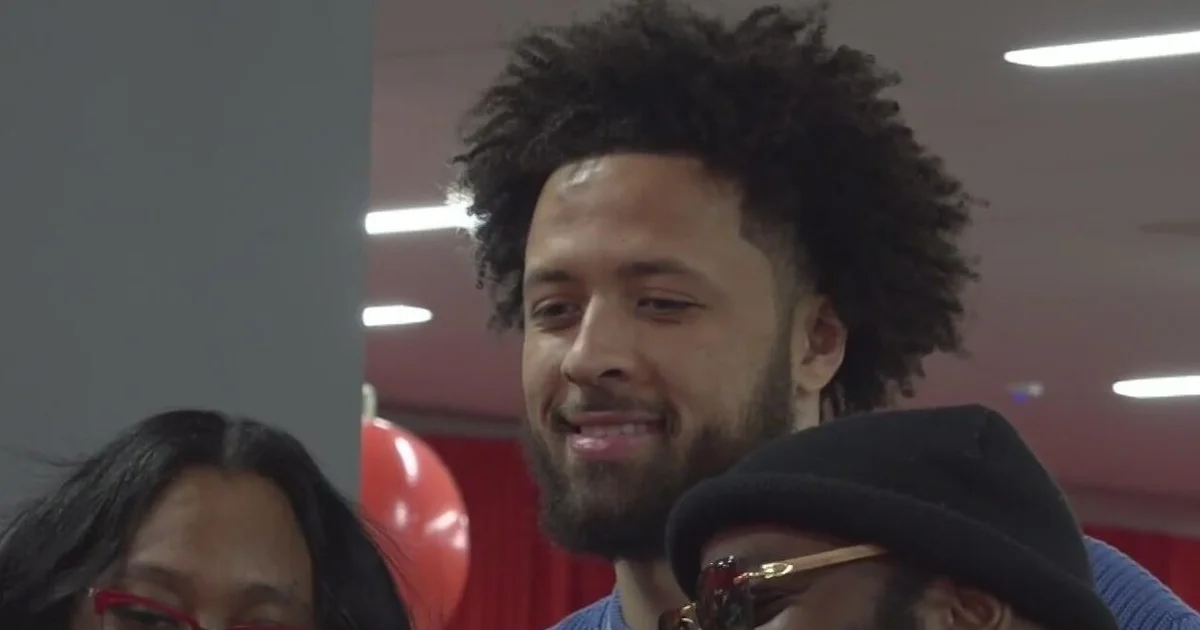
After winning back-to-back games on Friday and Saturday, Pistons guard Cade Cunningham spent his Sunday giving back to his community.
“This is special,” said Cunningham. “This is the cool part about doing what I get to do.”
Cunningham hosted “A Cade Christmas” in Detroit, providing holiday support, including a fully catered meal, brand new bicycles for every child, free gift-wrapping stations, along with grocery and gas cards for parents.
“You know, being in their shoes at one point, I always appreciated when people came back to talk to me or just getting to see people that I looked up to or admired,” said Cunningham.
“They don’t get to experience this,” attendee Kalaundra Hall said. “How often do they get to meet an NBA athlete? How often do they get to come out into the community? Some kids might not even be experiencing a Christmas, but they got to come here and get some things.”
Cade says that giving back to his community is something that has always been a priority.
“As a kid, I thought like once I make it one day, that is something I would love to do, so to be in those shoes now and to be real is still surreal,” said Cunningham. “Through the ups and downs, I’ve always had so much support being in Detroit. So being able to give back and support neighborhoods and communities around here means a lot.”
The kids seemed excited to interact with Cade and many showed their support by wearing his jersey.
“I think seeing them wear my jersey is some of the coolest things I could see,” said Cunningham.
The event was hosted in partnership with Give Merit, a Detroit-based youth organization that provides educational access and mentorship to underserved students.
“I think it’s super important for our students in the community to see someone who looks like them,” said Hall. “To see someone who can identify with them giving back. They need to see that. This month, we’re talking about generosity so to have these kids understand what that is, is amazing.”
“I’ve been able to make money playing the game that I love and so to be able to put some of that back into helping some of the communities that support me, it’s special,” Cunningham said. “So, I’m going to keep on doing that as long as I can play.”
Cade and the Pistons return to the court on Friday when Detroit hosts Atlanta at 7:00 pm.

Texas Sport for Healing Fund was a charitable endeavour set up this year. Raising money for flood devastation, the scheme could be a permanent fixture of the state’s charity calendar.
The state of Texas has had a tough year, with floods causing chaos and ruining lives over the summer. Yet it was also a time when the state came together, and sport was at the forefront of this. The Texas Sport for Healing Fund embodied this ethos, raising money to help those impacted. But should this be a regular occurrence, and can sport be utilised for even more good in the area?
The Texas Sport for Healing Fund
This July, after the devastating floods that engulfed central Texas, an initiative known as the ‘Texas Sport for Healing Fund’ was put in place. This saw around 40 national and local sports teams come together to raise money for relief efforts. This was done through a charity auction, packed with interesting and unique items of sports memorabilia.
The items on offer were donated by a range of teams and individuals, with 80 players and squads represented. In total, 150 items were up for grabs. Running until the 8th of August, all proceeds from the auction went to support immediate relief efforts and the long-term recovery of the sport.
The Popularity of Sport in Texas
The popularity of this auction was unprecedented. Sport has always been huge in the US, with a range of activities from football to baseball and basketball being popular. In recent years, this growth has reached even further, and has been due to numerous factors. These have included the dawn of the streaming era, which has made it easier to watch games and engage with teams and players. In addition, the growth of sports betting online has been legalized in many states, adding an extra layer of excitement to game day for many players.
Missouri has been the latest state to change its laws regarding online betting, and it already has licenses lined up for some of the best global brands. Amongst them is Bet365, which is using a new user promo at Bet365 Missouri to attract new customers. This is a great introduction to the holiday season schedule, letting people place bets on the NBA and prepare for the Super Bowl.
Items That Were Sold
The range of prizes on offer ran the whole gamut. At the top end, sat some very high ticket prices. A VIP Formula One United States Grand Prix package was available with a starting bid of $50,000.
There were also much smaller game packages available for a wide range of sports, and some of the most popular were autographed pieces of memorabilia. A Dirk Nowitzki jersey, signed by the former German player who now works for the Dallas Mavericks, managed to fetch $2,200. A Mikko Rantanen Autographed Dallas Stars Jersey managed to bring in $5,150.
Even in the lower price range, there were items for everyone. Soccer fans could have picked up a signed Houston Dynamo match ball for $350, with autographed photos going for between $100 and $150.
Why Sport for Healing Should Continue
In the end, Texas Sport for Healing raised over $6.3 million in profit. Yet this unique event was only set up to help the floods, in an isolated occurrence. But why couldn’t it do this yearly?
Texas, with its love of sports, has many sports-based charities that would benefit highly from this type of endeavour. Take Atlas Adaptive Sports. This non-profit organisation, based in Round Rock, is dedicated to providing opportunities for those with disabilities. It does this through adaptive sports and recreational activities. Funding of this nature would help them provide STEM activities, along with fun and interactive learning programmes.
Another Texas charity is Every Kid Sports. They pay youth sports registration fees for low-income qualifying families, allowing access to sport for those who would not normally be able to afford it. They believe kids are missing out simply because of the cost. They work in Texas and across the US and have so far provided $21 million to families, with access for over 182,000 children.
One of the biggest has to be the Sports Authority Foundation. This is a Houston-based organisation that holds numerous events, with its crowning glory being the Olympic and Paralympic days. This gets actual athletes who have competed to teach and train over 250 children. Sports taught include basketball, tennis, track and field, taekwondo, and more.
By holding these charity auctions, more could be ploughed into youth and adult sports alike. In fact, it does not have to stop at sport. This money could be used for a range of charitable causes. The real golden nugget from his is that it costs very little: Sports organisations lose nothing in donating match-worn and signed shirts or memorabilia, and turning them into money, which can build the future of Texas sports.
Promoted content by Bet365 Missouri.
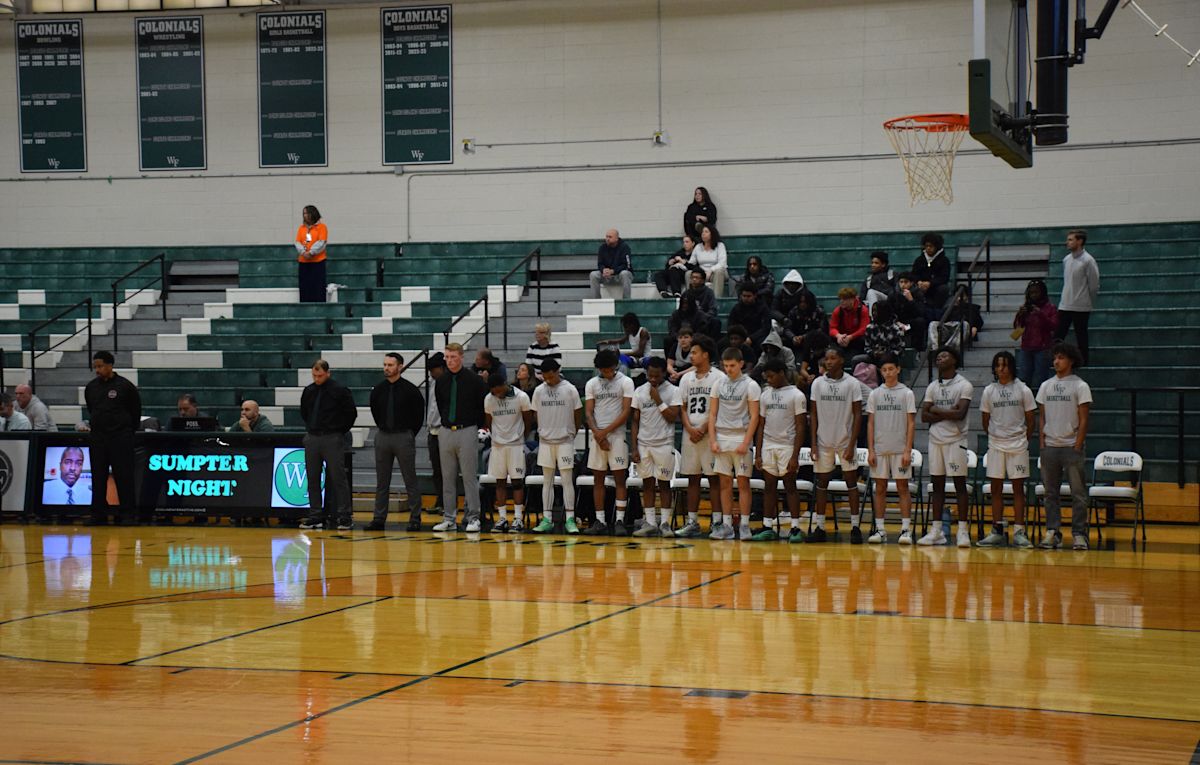

The William Floyd Colonials varsity basketball team stands during the pre-game tribute to Coach Darrell Sumpter. Click to view additional photos.
The William Floyd High School boys’ varsity basketball team, led by head coach Will Slinkosky, recently hosted their first annual Coach Darrell Sumpter Memorial Game in a matchup against Sachem North. Coach Sumpter was a beloved varsity assistant coach who tragically passed away last year at the age of 51. Coach D, as he was affectionately known, had a deep passion for the game of basketball and a love for the kids of the community, having served as a mentor and coach for both the boys’ and girls’ basketball programs. He also played an integral role in the creation of the community’s youth basketball program and basketball booster club.
As a tribute to Coach D, the Colonials left an empty seat on the bench adorned with a memorial t-shirt, a clipboard and a pack of Mamba candy that he often gave to players as a reward. Before the starting lineups were introduced, public address announcer Michael Feldstein shared a heartfelt tribute that celebrated Coach D’s life and legacy, followed by a moment of silence.
Please see below to view the pre-game tribute.
The Colonials, who played their hearts out for Coach D, defeated Sachem North 63-51 to earn their first win of the young season. In the game, the first quarter was a back-and-forth affair that ended with a buzzer beating three-pointer from senior Sharod Sutton, putting the Colonials up 17-14. The green and white never looked back after that, outscoring Sachem North 20-5 in the second quarter to take a 37-19 halftime lead, and opening up a 27-point lead by the end of the third quarter.

Senior Sharod Sutton attempts a three-point basket in the Colonials’ 63-51 victory over Sachem North in the Coach Darrell Sumpter Memorial Game. Click the image above for additional photos!

An empty chair was left in honor of Coach D (Newsday photo). Click to view more photos.
Seniors Jesse Durham and JJ Smith led the Colonials in scoring with 12 points apiece, while Sharod Sutton added nine points on three baskets from behind the arc. Sharod spoke to Newsday after the game to talk about Coach Sumpter, whom he described as a father figure. “I felt like his presence was there the way we were playing and moving the ball,” said Sharod. “I just know he was watching.”
Between the pre-game ceremony, the convincing win and the presence of friends and family cheering the team on, this was a fitting tribute to honor Coach D.
The Colonials next game is scheduled for Tuesday, December 9, as they host Longwood at 4 pm.
Please click here for rules and regulation for attending indoor sports games.

AMARILLO, Texas (KFDA) – Kids, Incorporated has announced that Toot’n Totum will host a Change for Better campaign from Dec. 8 through Dec. 21, with all proceeds benefiting Kids, Inc. and the development of Rockrose Sports Park.
This year’s campaign adds a new option for giving: Customers can now round up at the pump, in addition to rounding up at the register inside any Toot’n Totum location.
The partnership comes as both organizations celebrate milestone anniversaries. Kids, Inc. marks 80 years of serving youth and families in the Amarillo area, while Toot’n Totum celebrates 75 years of service to the community.
“Toot’n Totum believes in investing in the communities that have supported us for 75 years,” said John Lutz, vice president of fuel and marketing. “Kids, Inc. has shaped countless young lives in our region, and we’re proud to stand with them as they build Rockrose Sports Park. When our guests choose to round up—whether inside the store or at the pump—they’re helping create opportunities that will benefit families for generations.”
“Two longtime Amarillo institutions—each with decades of commitment to our region’s growth—are coming together to invest in the next generation,” Haley Bell, vice president for development. “We are grateful for Toot’n Totum’s transformational support and for every customer who chooses to round up. Change truly adds up, and together, we’re building something lasting for our community.”
Funds raised through the Change for Better campaign will support ongoing development of Rockrose Sports Park, Kids, Inc.’s new multi-sport complex.
The park broke ground Oct. 7, and construction is underway. Drivers along I-27 can already see early progress at the site.
Kids, Inc. is encouraging the community to participate by visiting their local Toot’n Totum and rounding up their purchase—either inside the store or, for the first time, at the pump.
For more information about Rockrose Sports Park, click here.
Rockrose Sports Park is planned as a premier hub for Kids, Inc. sports and regional tournaments, with facilities for baseball, softball, soccer, flag and tackle football and more. The complex is expected to enhance youth sports experiences and boost the local economy by attracting teams and visitors to Amarillo.
Copyright 2025 KFDA. All rights reserved.
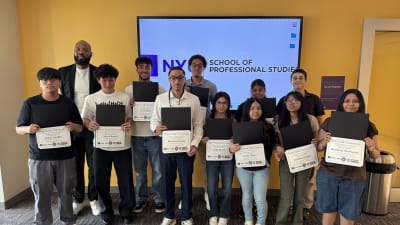
This summer, City in the Community (CITC) partnered with New York University (NYU) to deliver a free, three-week Artificial Intelligence (AI) course designed to equip young leaders, aged 16-23, with the tools to use technology for social good. Hosted at NYU and facilitated by faculty from the NYU School of Professional Studies and the NYU Tisch Institute for Global Sport, the program marks the fourth year of collaboration between CITC and NYU in creating college and career pathways for high school youth.
Participants from CITC’s weekend programs, including the citywide Saturday Night Lights initiative, explored how AI can be applied to sport, community development, and entrepreneurship. Students worked in small teams to design AI-powered solutions that expand access, inclusion, and innovation across their neighborhoods.
Guided by NYU Adjunct Professor Herbert Hill, along with CITC staff Jack Jacobs and Joe Sullivan, young leaders gained hands-on experience in sports technology, applied AI, machine learning, and creative problem-solving. Their work blended academic exploration with CITC’s mission to empower youth through sport, education, and emerging technology.
“In most large organizations, programs like this can feel like a surface-level initiative, but New York City FC was fully present and supportive every step of the way,” said Herbert Hill, Adjunct Professor, NYU Tisch Institute for Global Sport. “Their commitment helped our students feel heard, valued, and confident, knowing that no dream or idea is too big. This class also showed them how AI can be used in meaningful ways, not only in sports but in their everyday lives to improve their schools and strengthen their communities.”
The initiative reflects CITC’s broader effort to create equitable pathways into STEM fields for young New Yorkers from diverse backgrounds. It also advances CITC’s vision to integrate sport, innovation, and technology to strengthen health, leadership, and opportunity across the city.
“We are deeply grateful to NYU and the Department of Youth & Community Development for their continued partnership and support in making this work possible,” said Bailee Eaglin, Director of Community Development, City in the Community and New York City FC. “This program reinforces how powerful it is when young people gain real access to emerging technology and the space to explore what it can mean for their futures. We are excited about what this creates for the years ahead and look forward to growing our role in this space across our city and our Club.”
At the program’s conclusion, participants presented final projects to NYU faculty, CITC mentors, and community partners, showcasing ideas that will guide future programming and inspire the next generation of innovation in sport and technology.


Triple Crown: Monks Men Collect GNAC Track, Field, and Rookie of the Week

After 36-year career, Beth Launiere announces retirement as Utes volleyball coach

Stephen Nasse finally wins Snowball Derby after Ty Majeski penalty

Vanderbilt Football | Lea is Finalist for Another Award

Volleyball ends rocky season with hope for the future — The Panther Newspaper

Coalition files petition to end auto racing at Nashville Fairgrounds Speedway

The backstory on the search that made Bob Chesney a Bruin
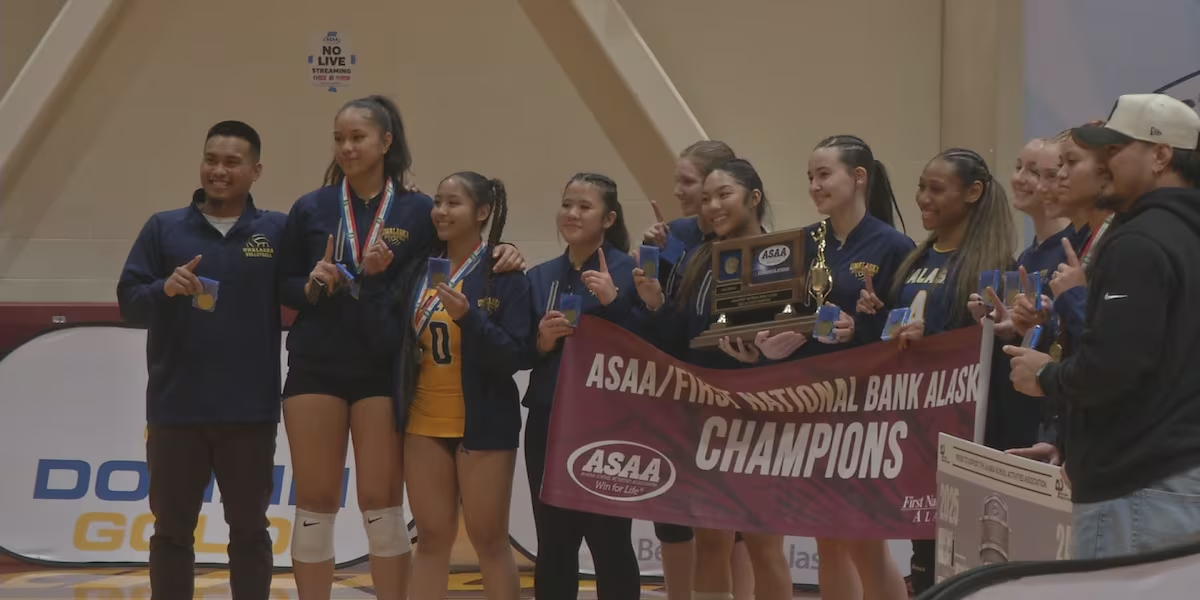
Unalaska, Tanalian both repeat as state volleyball champs

NASCAR owes $364.7M to teams in antitrust case

Lynchburg Announces Joshua Knapp As Head Men’s Volleyball Coach

Arch Manning reclaims No. 1 NIL value in the nation at $5.3M

PLNU volleyball joins Elite 8 after NCAA Tournament West Regional win – NBC 7 San Diego

Penn State Women’s Volleyball Outside Hitter Karis Willow Enters Transfer Portal
UW-Oshkosh women’s volleyball team wins national championship

College football exec declares bowl games ‘officially dead’ amid new controversy

First Tee Winter Registration is open

Fargo girl, 13, dies after collapsing during school basketball game – Grand Forks Herald

CPG Brands Like Allegra Are Betting on F1 for the First Time

Volleyball Recaps – November 18

F1 Las Vegas: Verstappen win, Norris and Piastri DQ tighten 2025 title fight

Two Pro Volleyball Leagues Serve Up Plans for Minnesota Teams

Utah State Announces 2025-26 Indoor Track & Field Schedule

Sycamores unveil 2026 track and field schedule

Redemption Means First Pro Stock World Championship for Dallas Glenn

Bowl Projections: ESPN predicts 12-team College Football Playoff bracket, full bowl slate after Week 14

Texas volleyball vs Kentucky game score: Live SEC tournament updates

Indiana’s rapid ascent and its impact across college football

How this startup (and a KC sports icon) turned young players into card-carrying legends overnight

Pohlman admits ‘there might be some spats’ as he pushes to get Kyle Busch winning again

Robert “Bobby” Lewis Hardin, 56

 Why a rising mid-major power with an NCAA Tournament team opted out of revenue-sharing — and advertised it
 NBA Legend Michael Jordan to Join NBC Sports as Special Contributor
 Falcons mailbag
 Portal Update – Basketball and Gymnastics Take Hits
 has always dreamed in Mercurial. Now his initials are on the boots.
The new Kyl…
has always dreamed in Mercurial. Now his initials are on the boots.
The new Kyl…
-
 Rec Sports2 weeks ago
First Tee Winter Registration is open
-
 Rec Sports2 weeks ago
Fargo girl, 13, dies after collapsing during school basketball game – Grand Forks Herald
-
 Motorsports2 weeks ago
CPG Brands Like Allegra Are Betting on F1 for the First Time
-
 Sports3 weeks ago
Volleyball Recaps – November 18
-
 Motorsports2 weeks ago
F1 Las Vegas: Verstappen win, Norris and Piastri DQ tighten 2025 title fight
-
 Sports2 weeks ago
Two Pro Volleyball Leagues Serve Up Plans for Minnesota Teams
-
 Sports2 weeks ago
Utah State Announces 2025-26 Indoor Track & Field Schedule
-
 Sports2 weeks ago
Sycamores unveil 2026 track and field schedule
-
 Motorsports2 weeks ago
Redemption Means First Pro Stock World Championship for Dallas Glenn
-
 NIL1 week ago
Bowl Projections: ESPN predicts 12-team College Football Playoff bracket, full bowl slate after Week 14