
Rec Sports
What’s It Like to Play Softball at IMG Academy?

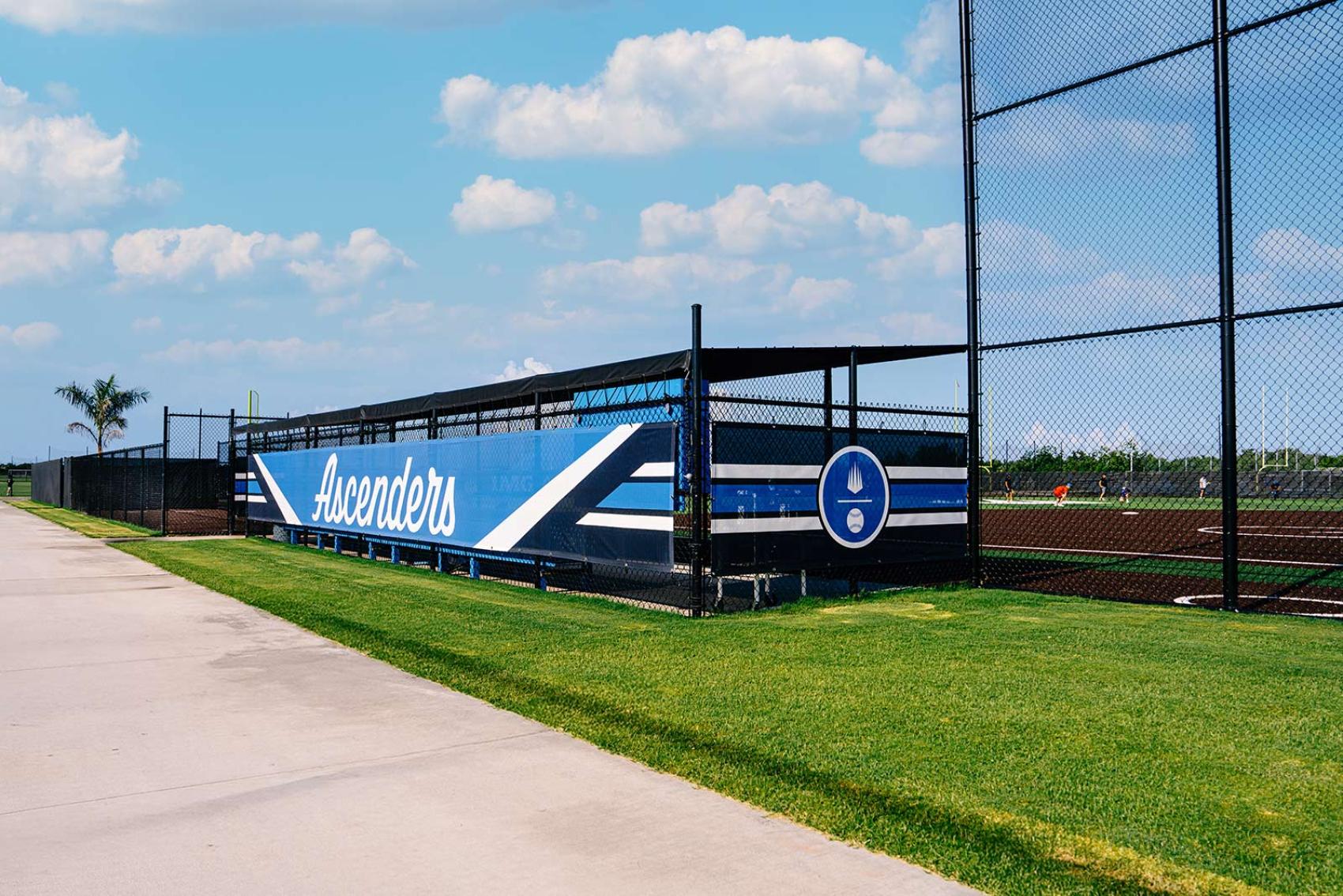
IMG Academy’s softball program provides the most effective training environment for student-athletes of various levels and age groups at state-of-the-art facilities.
Training takes place at a premiere softball complex with two natural and two turf fields, eight covered batting cages, and modern locker rooms.
The softball program is IMG Academy’s latest investment in female youth sports designed to open doors for student-athletes worldwide. Additional girls sports boarding school and camp programs offered at IMG Academy include basketball, golf, lacrosse, soccer, tennis, track & field, and volleyball.
What Is it like to play softball at IMG Academy?
IMG Academy’s softball program focuses on developing the total student-athlete through cutting-edge training methodologies.
It’s an environment that is intense and fueled by a championship mindset, while also being fun and supportive. Student-athletes are surrounded by peers and coaches dedicated to maximizing their potential.
“I’m excited to start a new journey and to have the first experience with all these ladies, just to learn new things and get better,” said student-athlete Shyann Jenkins. “And leave better than I came.”
IMG Academy has decades of experience in helping youth athletes strive for greatness on and off the field. That proven development methodology is the foundation of the new softball program.
“IMG Academy has set the standard for holistic development in the sports education space and to add softball as a sports program means the sport will benefit greatly from their future impact,” said Sue Enquist, legendary former UCLA softball head coach. “I look forward to seeing what these future student-athletes will bring to the game.”
Watch the video below to get a behind the scenes look at IMG Academy’s inaugural softball practice:
Why Top Softball Players Choose IMG Academy
From the exceptional training facilities to the highly experienced coaching staff, IMG Academy’s softball program is the best opportunity for student-athletes to reach their full potential.
Players gain access to state-of-the-art equipment and facilities, such as the 4-plex Softball Complex with two natural and two turf fields, eight covered batting cages, and a Softball Center with modern locker rooms and coaching offices.
When players aren’t training, they can enjoy additional social areas on the IMG Academy campus, including recreational areas and dining options.
Who is the IMG Academy Softball Coach?
On the field, IMG Academy Softball Director Joey Lye leads the coaching staff. She brings 14 years of coaching experience along with an impressive softball playing career, including a bronze medal in the 2021 Olympics.
“This opportunity allows me to bring my passion for the game and my commitment to developing well-rounded student-athletes to a place globally known for excellence in sports education,” said Lye. “My experience with Softball Canada, coupled with my background in coaching, playing and personal development, will enable me to build and lead a program empowering softball student-athletes to win their future at every level.”
IMG Academy’s softball program is expertly designed so that student-athletes feel more prepared and confident on the field and are fully equipped to succeed in college and in life.
Learn more about the softball facilities at IMG Academy.
Ready to elevate your softball game?
No matter your level, IMG Academy’s softball camps are tailored to help all student-athletes reach their full potential.
In addition to position-based drills and group training, customizable options include personalized coaching and specialized training in areas such as mental performance, speed & agility, leadership, and injury prevention. These unique training specializations help further set athletes apart from competition and give campers takeaways to significantly impact their game.
Learn more about IMG Academy softball camps.
For youth softball players looking to level up their game, IMG Academy softball camps are available year-round with durations varying by season including 3-day, 5-day, or multiple weeks that reinforce a progressive training curriculum.
There’s something for everyone from those looking to compete in college, make a varsity team roster, or seeking to learn from expert coaches.
Consider the IMG Academy softball boarding school program
Dedicated softball players looking for an innovative year-long training experience that sets them up to compete at the collegiate level will benefit from IMG Academy’s softball boarding school, which mirrors a professional training program.
Learn more about boarding school for softball players.


Twin Creeks Sports Complex to undergo major enhancements as Unrivaled Sports deepens its commitment to Bay Area youth sports
SUNNYVALE, Calif., Dec. 9, 2025 /PRNewswire/ — Unrivaled Sports, the nation’s leader in youth sports experiences, today announced the acquisition of Twin Creeks Sports Complex, a recreational landmark in Santa Clara County and the broader South Bay community.
As new leaders of this complex, Unrivaled Sports will invest in Twin Creeks and partner with the communities in Santa Clara County to enhance and expand local and national youth sports opportunities at the facility. Unrivaled Sports plans to preserve the legacy of Twin Creeks while elevating the venue through thoughtful property improvements and diverse sports programming to welcome even more athletes and their families.
“We are thrilled to welcome the Twin Creeks Sports Complex into our growing network of premier youth sports venues and to work hand-in-hand with the communities in Santa Clara County to usher in the next chapter of this long-standing facility,” said Wade Martin, Chief Commercial Officer and CEO, Baseball of Unrivaled Sports. “Our commitment is to elevate Twin Creeks into a truly top-tier sports venue — investing in the improvements and enhancements needed to create a best-in-class experience for athletes, families and fans for years to come.”
Unrivaled Sports plans to invest millions in targeted facility upgrades that will elevate the quality of play and improve the overall experience for athletes and families at Twin Creeks. The company has a proven record of transforming and revitalizing youth sports venues — including recent enhancements across Ripken Baseball facilities and Big League Dreams in Manteca, California — and is ready to bring that same level of investment and care to the next chapter of Twin Creeks.
“The Santa Clara County Parks Department welcomes Unrivaled Sports as our new partner to operate Twin Creeks,” said Todd Lofgren, Director of Santa Clara County Parks. “This partnership reaffirms the Department’s commitment to providing and increasing access to outstanding recreational opportunities within a diverse regional park system for all Santa Clara County residents. Twin Creeks provides local youth spaces to recreate, supporting healthy lifestyles and better public health outcomes for all.”
As part of the Unrivaled Sports family, Twin Creeks will offer a diverse range of programming for local youth athletes, including leagues, clinics and multi-sport opportunities. By expanding the youth sports programming at the facility, Unrivaled Sports aims to enrich the recreational landscape of the South Bay while supporting the next generation of athletes.

Click the + Icon To See Additional Sharing Options
The Green Hills Recreation Association has released its sponsorship opportunities for 2026, offering four levels of support for youth sports programs.
The bronze package, priced at $399 or less, provides sponsors with a group banner.
The silver package, set at $400, includes exclusive team sponsorship for one sports season, a name and logo displayed on player shirts, and one individual banner for the summer league.
The gold package, available for $550, offers exclusive team sponsorship for two sports seasons, a name and logo on player shirts, and one individual banner for the summer league.
The platinum package, listed at $750, includes exclusive team sponsorship for three sports seasons, a name and logo on player shirts, and two individual banners for summer leagues.
All sponsorship levels include recognition on the Green Hills Recreation Association’s website and social media platforms.
Sponsorships help offset the cost of equipment, uniforms, facility and field rentals, maintenance, and other expenses associated with youth sports. Scholarships are available to ensure participation across all income levels.
Sponsorship requests are filled on a first-come, first-served basis.
Anyone interested in a sponsorship is asked to contact Cara McClellan by December 31 with a requested sponsorship level. She can be reached at 660-359-3973 or 660-359-1301.
Post Views: 0
Related
Click the + Icon To See Additional Sharing Options
An eighth grade Tamika Catchings sat in front of her television, mindlessly flipping through channels, when the screen stopped on a pair of eyes.
As the picture zoomed out, Tennessee women’s basketball coach Pat Summitt came into focus. Young Catchings became mesmerized. She watched Summitt march back and forth on the sideline, screaming and yelling.
“I was fixated on the game, but even more, I was like, ‘Who is she?'”
The television introduced Catchings to Tennessee and Summitt.
It also marked the first time Catchings had ever seen a women’s basketball game on TV.
“At that point, I was like, ‘Gosh, if I could ever get good enough, that’s where I want to play.’ It was my dream,” she said.
What the eighth grade Catchings didn’t quite yet dream was her future as a women’s basketball trailblazer. The Hall of Famer is a four-time Olympic gold medalist, five-time WNBA Defensive Player of the Year, and an NCAA and WNBA champion. Catchings is also a servant leader, hosting youth basketball camps and clinics in her community, leading a foundation she created that has given $1 million in scholarships, and working as a sports commentator and an entrepreneur.
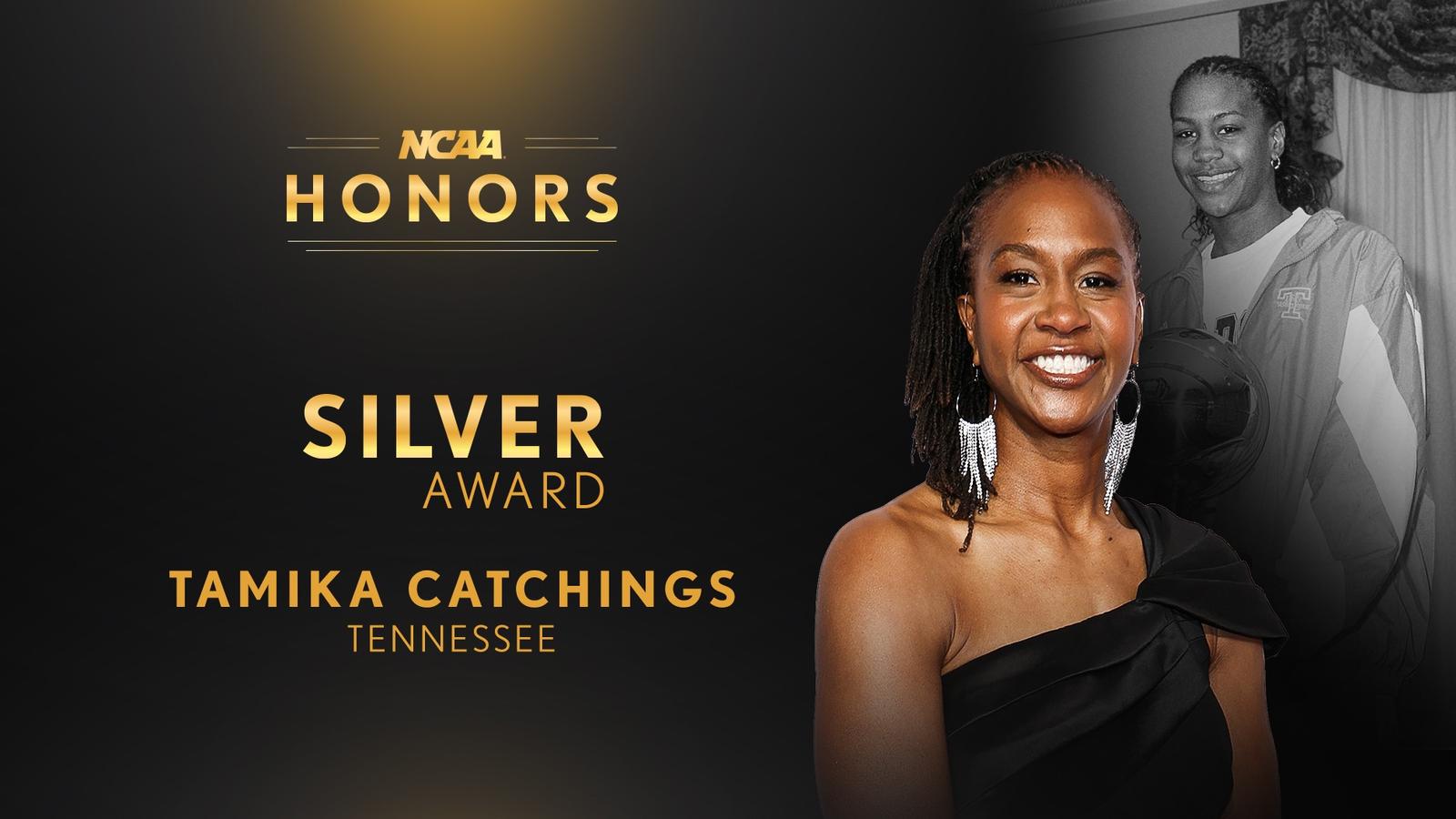
The NCAA has awarded Catchings with the Silver Anniversary Award. She will be honored at the 2026 NCAA Convention alongside other Honors recipients. The Silver Anniversary Award, which is presented to former student-athletes 25 years after their college careers end, honors the achievements and contributions of those who have excelled in their professional lives and continue to exemplify the values of collegiate athletics.
Catchings fell in love with basketball in seventh grade, a devotion marked by a goal. She remembers writing it on a piece of paper, showing it first to her siblings – “That’s so cool,” they said – then running downstairs and shoving it into her parents’ hands.
After reading the note, they looked at each other and said, “Honey, if anyone can do it, you can.”
Her goal: To become a professional basketball player and compete in the NBA.
“From that moment, I was going to the NBA. Nobody could say anything else about it,” she said.
Tauja, Catchings’ older sister, said her big dreams weren’t a surprise to the family.
“Whatever she put her mind to, she does,” Tauja said. “She’s always been very intense, very intentional and the hardest worker, whether it was in the classroom or on the court.”
Tauja, who played at Illinois, said their backyard basketball games often resulted in bloody noses and fights so bad their parents had to schedule separate times for them to play.
“Then we missed each other,” Tauja said. “(Basketball) brought us all closer, tied our family together.”
In fifth grade, their father, Harvey, a former NBA player, would take the girls to the gym to play against grown men. Tauja said they had to rip Tamika off the court at the end of the night.
“She just loved, loved being there,” Tauja said of her sister. “I think for her, growing up being different, basketball was her safe space and a place where she felt like ‘Yeah, you might talk about me in other places, but I’m kicking your butt on the court.'”
By her freshman year of high school, Tennessee mailed Catchings a recruitment letter, and by her junior year, Summitt came on a home visit. The coach joined the Catchings family at church, where Tamika fell asleep.
“It was this whole thing,” Catchings said, laughing. “But just having her there, she was so down to earth, so humble.”
Catchings remembers that Summitt made no promises to the two-time Miss Basketball high school star.
“She said, ‘Look, you come to Tennessee, you play with the best. You play for the best. You play against the best.’ Take it or leave it,” Catchings recalled.
Catchings remembered thinking, “Where else would I go if I want to be the best player and I want to make it to the NBA?”
“The rest was history,” she said.
That history has Catchings’ name etched all over Tennessee’s record books.
She earned national Freshman of the Year honors, All-America honors all four years and five Player of the Year awards from different publications. In her time at Tennessee, she won a national championship as a freshman and four Southeastern Conference regular-season championships. She made three trips to the Elite Eight and two trips to the Final Four. She also maintained a 4.0 grade-point average in sports management.
But before all of the accolades, Catchings showed up on campus in awe. Her first week on campus, the upperclassmen came to her dorm, warning the freshman players that training camp would kill them if they weren’t prepared.
The Fab Four freshmen – Catchings, Semeka Randall, Kristen “Ace” Clement and Teresa Geter – hit the bleachers of the football stadium, sprinting up and down, persuading themselves and one another not to throw up. During training camp and practice, the highly touted freshman class became a unit, finding a place among the reigning national championship team.
“For them to accept us the way that they did, and to love on us and to believe in us, when you think about the idolization of like, ‘Oh my gosh, oh my gosh, Kellie Jolly and Pat Summitt,’ you kind of lose that because now we are all here for one common goal: They want a championship,” Catchings said.
Now known as Semeka Randall Lay, Catchings’ teammate and friend said academics wasn’t her strong suit at the time, but Catchings planned to graduate in three years and encouraged her teammates to focus on their schoolwork so they could do the same.
“She set the standard for the freshman class,” said Randall Lay, currently head coach of the Winthrop women’s basketball team.
“Her time in the gym, she was relentless,” she added. “She never cut corners, and she put her mind and her heart into everything she did. She made herself into this prolific WNBA player because all of that was already in the making by how she carried herself behind closed doors.”
Catchings’ preparations paid off. She dominated, being named Freshman of the Year by the U.S. Basketball Writers Association and helping lead the Lady Vols to an undefeated record and a national championship.
“I don’t even know how to explain the feeling,” Catchings said. “It was absolutely amazing.”
But even after the high of an undefeated year and an NCAA championship, Catchings and her team had to prepare all over again for their sophomore year. She worked even harder in the off season than in season.
“She’s got her clipboard, her notes for meeting with the coaches like, ‘What can I improve on? What can I do in the off season?’ There were no days off,” Tauja said.
“Honestly, I would not be the person that I am today without going through the experiences that I went through at the University of Tennessee,” Catchings said.
Summitt set standards of excellence off the court. Her players had to sit in the first three rows in class – no falling asleep or being late.
Yet the coach also employed an open-door policy. Players would go into her office and talk about life, their dreams and goals. Catchings said it was like having another mother.
Of course, when they stepped on the court, Summitt would push them to their limits to become great.
“But her being able to provide that open-door policy, her being able to provide the knowledge, the wisdom, the advice meant everything,” Catchings said.
In particular, Catchings remembers when Summitt found out about a long-kept secret.
Summitt called Catchings to the training room, where she said, “We had a conversation with your mom, and she told us you were born with a hearing disability and you have not worn your hearing aids since second grade.”
Classmates had bullied Catchings so badly for wearing a hearing aid, having a speech impediment, being tall, being different that she threw her hearing aid out. She learned to read lips. She would read chapters of her textbook before class. Her notes were often littered with “fill in the blanks” for the words she couldn’t hear.
She carried the embarrassment to her freshman year of college.
But that day, Summitt told her, “Catch, one day your story will impact thousands, maybe millions of people. I think you should get back to wearing them.”
Who could say no to Summitt? So Catchings was fitted for hearing aids and began working with a speech therapist. The coaches encouraged the players to volunteer for causes they believed in; Catchings focused on giving back to the next generation of hard-of-hearing athletes.
“I didn’t have people that I looked up to. I didn’t know athletes that were born deaf or that were hard of hearing that I could have as a role model,” she said.
Tauja remembers the shift in her sister after that conversation with Summitt.
“Mika was extremely introverted and lacked confidence,” Tauja said. “She didn’t enjoy speaking, and I always spoke for her growing up. Everything shifted at Tennessee, where coach Summitt encouraged her to lean into her story more. She really started to embrace it and find her voice not only on the court as a leader but in the community.”
Catchings became that role model Summitt envisioned her to be. She has established two scholarships at Tennessee: a fund for people who need hearing aids but can’t afford them and a scholarship for students who want to study audiology or speech pathology.
“From that conversation, we now literally are impacting through my story and showing millions of people around the world,” Catchings said.
After graduating from Tennessee with a perfect grade-point average and a master’s degree, Catchings was selected by the Indiana Fever in 2001 as the third overall pick. At this point, the WNBA had been created, so her dream to play in the NBA had changed.
Carlos Knox, an assistant coach for the Fever during Catchings’ time on the team, said Catchings’ tenacity amazed him. He has many stories of her discipline, but one particular day they planned a 6 a.m. workout. When Knox arrived at the gym, Catchings was already in a full sweat, cones and chairs spread across the court.
Knox had challenged her the day before with drills that typically take weeks to figure out. Catchings had already mastered the moves.
After the workout, they laughed about it.
“You are unbelievable,” Knox said.
Catchings responded, “Yeah, I studied it. I watched it.” Then she said, “But, Coach, I’m sorry to tell you this, but I gotta go. I have an hour and a half swimming workout in 30 minutes.”
“She was just an another-level athlete,” Knox said. “She had a regimen that was crazy.”
After graduation, Catchings continued being a Volunteer. Her first year in Indiana, Catchings fulfilled a lifelong dream of creating a youth basketball camp and clinic, aptly titled Catch the Stars.
At the weeklong camp, hundreds of 7- to 15-year-old kids learned basketball from 8 a.m. to 5 p.m. Catchings demonstrated the moves for drills, giving out high-fives and smiles. Knox remembers watching Catchings’ vibrance and inviting nature.
“She’s walking around, and she’s communicating with everybody. She’s never meeting a stranger – ever – which is just a beautiful thing to see,” Knox said.
“Her hugs are unbelievable,” he added. “You know, when she hugs you, you can feel the love.”
Randall Lay said in a generation that is frequently about “me,” Catchings centers her work on uplifting others, not herself.
“She has invited herself in and found her lane for how to give back to the women’s basketball community and giving back to those in need,” she said. “Her faith speaks to how grounded she is. Meek is an absolutely great human being and a lovable person.”
Her camps laid the groundwork for her foundation, which she co-founded with Tauja. The Catch the Stars Foundation empowers youth throughout Indianapolis, with a specific emphasis on supporting underserved communities.
Current programs include a college scholarship program for Indianapolis high school scholar-athletes, holiday basketball camps, Catch on to Fitness clinics, Catchings Corner (donated Fever game tickets) and a mentorship program, Sisters Teaching and Reaching Sisters.
“We have to make a conscious and intentional choice to impact other people’s lives,” Catchings said. “At the end of the day, nine years removed from being a professional athlete, this generation has no idea who I am. This generation knows who I am as an entrepreneur, as a commentator, as somebody that owns a foundation, as somebody that gives back in the community. That is what I’m most proud of.”
Each time, Catchings reflects on the shy, lanky girl with a hearing and speech impediment who dreamed of becoming a professional basketball player.
“Without sports, I would not be confident. I would not have the voice that I have. I would not have the platform that I have,” she said. “When I look back at just my life and the trajectory that I was on, if I had not had sports, not just basketball, I would be a totally different person.”
Now, in the moments when Catchings isn’t changing the world, she relishes turning on the television and finding multiple women’s sports games. She’s calling the games on the sidelines, giving back through her perspective. She loves the opportunity female athletes have to become role models to little girls.
“I am a trailblazer of this game,” she said. “I was that girl flipping through the channels, trying to find somebody that looked like me, that I could not find until eighth grade. Look at where we have come.”

The following letter was sent to the Amherst Town Council and Town Manager Paul Bockelman on December 8, 2025.
I am the parent of four children and have been a resident of Amherst for more than 30 years. My three older children graduated from the Amherst public schools after successful experiences in soccer, track, volleyball, and several other sports. Their participation in athletics contributed significantly to their academic success and provided structured, healthy activities that kept them engaged and supported.
My youngest son is now in 7th grade, and I am concerned that the current athletic offerings at the middle school are extremely limited—and in some cases nonexistent. The absence of accessible, structured sports opportunities is a real loss for our students at a critical age. For the past two years, I have contacted school administrators to request the addition of boys’ soccer to the fall schedule and indoor track to the winter schedule. I was recently informed that these requests must be directed to the town, as the town oversees middle-school recreational athletics.
The Morning Movement and Mentoring program before school is appreciated and is a valid effort, but it does not address the need for appropriate after-school athletics. After-school hours are when students most need structured, engaging, skill-building activities. Amherst often speaks about investing in its people. Please do so now—by investing in the youth who will shape the future of this community.
It is important for the town to understand how closely connected middle school offerings are to the health of our high school athletic program. Amherst High School athletics operate on a very lean budget. The Athletic Director meets with athletic directors across Western Massachusetts well before each season to plan cooperative teams (“co-ops”), which are formed when a school does not have enough high school athletes to field a team. When numbers fall short, the high school can apply for a waiver to allow 7th and 8th graders to participate. If that still isn’t enough, the school seeks co-op partnerships with neighboring districts. For example, student athletes from Granby and Pathfinder can participate in Amherst football program. Amherst does not have a girls ice hockey team, so interested athletes participate at Longmeadow. Hopkins participates in the Amherst swimming program and Amherst athletes can participate in the wrestling program at Granby. When the high school has enough student athletes—as they do in boys’ soccer and indoor track—middle schoolers cannot participate, regardless of skill, because these rules are governed by the MIAA. This highlights why a strong feeder program at the middle school level is essential.
This year, for example, Amherst was only able to field a single varsity girls’ basketball team due to low participation. Although middle school athletes are allowed to play to help fill a roster, high school players cannot be cut to make space for a more skilled middle school athlete. This reality underscores how essential it is for Amherst to provide strong, consistent youth and middle school development programs. Without early opportunities, fewer students enter high school prepared or confident enough to join a team.
The town should be working in collaboration with the Athletic Director to support and enhance the full pipeline of athletic opportunities—from youth through high school. Our students deserve programs that develop skills, build confidence, and create continuity across levels.
Moreover, expanding middle school sports does not require major investment. Soccer and track require minimal equipment, and the middle school gym could easily accommodate indoor soccer or winter conditioning. Amherst’s proximity to several colleges also presents an excellent opportunity to partner with college students seeking community engagement or academic fieldwork experience.
Middle school is a pivotal age. Students benefit enormously from positive, structured activities between the end of the school day and the late bus—time that too often is spent on phones or unsupervised at home. Athletics promote equity, physical and mental health, and the sense of belonging that every adolescent needs.
There has been extensive discussion in Amherst about the importance of investing in our people. I urge the town to extend that investment to our youth by expanding athletic opportunities at the middle school level. Survey families. Engage students. Ask them what programs they want. They are the future of our community, and strengthening youth athletics is a direct investment in their well-being, development, and long-term success.
Renata Shepard
Renata Shepard is a resident of Amherst.

Despite heterogeneity in youth-onset type 2 diabetes (T2D), clustering does not currently outperform simple clinical measures in predicting risk for complications, according to study results published in Diabetes Care.
Clustering has emerged as a promising strategy to shift diabetes care from a one-size-fits-all model toward precision medicine. However, given the gaps in knowledge about youth-onset T2D compared with adult-onset diabetes, the comparative clinical utility between clustering and simple clinical measures remains unclear.
In this observational cohort study, researchers performed phenotypic clustering of youths with T2D onset to assess whether distinct clusters offered meaningful clinical utility.
The study included individuals diagnosed with T2D before 20 years of age from the SEARCH for Diabetes in Youth (SEARCH; n=333) and Treatment Options for Type 2 Diabetes in Adolescents and Youth (TODAY; n=525) studies. Participants were excluded if they were taking a cholesterol-lowering medication or had a positive pancreatic autoantibody test.
Nevertheless, cluster membership did not add clinical utility beyond simple clinical measures for predicting outcomes.
In a diverse subset of autoantibody-negative T2D cases, the researchers conducted data-driven clustering into 3 clusters: youth-onset insulin-deficient diabetes (YIDD-T2), youth-onset insulin-resistant diabetes, and intermediate youth-onset diabetes. Differences among clusters were tested using Kruskal–Wallis with Wilcoxon post hoc comparisons for continuous variables and χ² tests for categorical variables.
The primary outcome was loss of glycemic control and treatment failure as defined by hemoglobin A1c (HbA1c) of at least 8% over 6 months or the need for insulin.
Three clinically distinct clusters with different rates of treatment failure emerged in both SEARCH and TODAY. Cluster 1 individuals (25.5%) showed the highest fasting glucose, HbA1c, and triglycerides; Cluster 2 individuals (40.5%) had the highest body mass index (BMI) z-scores; and Cluster 3 individuals (33.9%) demonstrated the highest high-density lipoprotein (HDL) and lowest fasting glucose, HbA1c, and triglycerides.
Cluster distributions did not differ by race or Tanner stage but varied significantly by sex (P =.004) and medication use (P <.0001): Cluster 3 included the most women (73%) whereas Cluster 2 included the fewest women (53%); Cluster 2 included the highest proportion of individuals on metformin alone (58%), whereas Cluster 1 included the most insulin users (60%).
In the TODAY trial, these clusters showed divergent therapeutic responses and treatment failure risks, with the YIDD-T2 group consistently exhibiting the highest failure rates and the greatest burden of diabetes complications.
Study limitations include the possibility that different input variables may yield different optimal k values; the absence of essential biomarkers, such as complete Tanner staging and liver transaminases; the likelihood that additional complications will emerge with follow-up beyond 10 years; and potential differential risk estimates due to limited follow-up duration.
The study authors concluded, “Youth-onset type 2 diabetes can be characterized into reproducible clusters that demonstrate differential response to treatments and risk of complications. Nevertheless, cluster membership did not add clinical utility beyond simple clinical measures for predicting outcomes.”
Rec Sports
#SnowStories: Raised in the desert, defined by the mountains – Alex Astridge puts UAE on the Alpine map

A mentorship that forged a career
For many young skiers, their coaches or mentors are found from within their family unit. Parents will often take up that role across the formative years, helping them grow both personally and professionally.
For Alex, his mentorship came under the guidance of Mohamed Moulay, who has channeled his own love of snow sports into shaping the next generation.
An instructor in the early days of Ski Dubai, Mohamed has worked his way to the role of Head Coach, both he and Alex sharing their journey side-by-side and growing together.
Not only was he the Alpine skier’s first coach when he joined at three, he remains his mentor to this day as the two embark on a historic outing at the upcoming Winter Olympics.
“When I was a kid, it was a coach-athlete relationship, but as I’ve grown up I see it more as a friendship,” Alex explained.
“He is someone I can speak to and someone who understands me, understands that when I’m angry or screaming it’s not who I am, it’s just frustration.”
On the biggest lesson that Mohamed has taught him, Alex adds: “To not give up, to understand that even when things are difficult, I just have to keep going.
“He was with me through my biggest injury where I had people telling me I wouldn’t ski again… he was there in the hospital every day and we were back on skis within five months.”
Despite the teacher-student dynamic, sharing wisdom is very much a two-way street between this pair.
The teenager has passed on the value of finding joy in what he does and, even in the face of career-threatening injuries, simply enjoying the journey.
“It’s something that everyone can learn from him,” Mohamed said.
“You’re not going to see him upset or overwhelmed about something, he is enjoying the moment and going with the flow.”
Unrivaled Sports Announces Long-Term Investment in Twin Creeks Sports Complex

Recreation association announces 2026 sponsorship tiers for youth sports

Grace Camerlingo Earns Patriot League Women’s Rookie of the Week

Volleyball Senior Trio Earns AVCA All-Region Honors

North Florida Motorsports Park led by Indy 500 Champion and motorsports legend Bobby Rahal Nassau County, FL

NASCAR Commissioner Explains Why He Called SRX a “Trash Series”

NCAA Silver Anniversary Award Winner Tamika Catchings Represents What’s Possible

Major college football program loses 15 players to transfer portal after 2025 season

Cosby Named CIAA Track Athlete of the Week

Southeastern’s McKelvey Earns AVCA All-Region Mention

Tower Motorsports sets 2026 IMSA line-up

Williams Named NEC Co-Rookie of the Week

Myers Crowned AVCA Region Player of the Year

CFR Partners With SBM for 2026Performance Racing Industry

Letter: Stop the Cuts to Middle School Athletics

First Tee Winter Registration is open

Fargo girl, 13, dies after collapsing during school basketball game – Grand Forks Herald

CPG Brands Like Allegra Are Betting on F1 for the First Time

Volleyball Recaps – November 18

F1 Las Vegas: Verstappen win, Norris and Piastri DQ tighten 2025 title fight

Two Pro Volleyball Leagues Serve Up Plans for Minnesota Teams

Utah State Announces 2025-26 Indoor Track & Field Schedule

Sycamores unveil 2026 track and field schedule

Redemption Means First Pro Stock World Championship for Dallas Glenn

Bowl Projections: ESPN predicts 12-team College Football Playoff bracket, full bowl slate after Week 14

Texas volleyball vs Kentucky game score: Live SEC tournament updates

Indiana’s rapid ascent and its impact across college football

How this startup (and a KC sports icon) turned young players into card-carrying legends overnight

Jo Shimoda Undergoes Back Surgery

Pohlman admits ‘there might be some spats’ as he pushes to get Kyle Busch winning again

 Why a rising mid-major power with an NCAA Tournament team opted out of revenue-sharing — and advertised it
 NBA Legend Michael Jordan to Join NBC Sports as Special Contributor
 Falcons mailbag
 Portal Update – Basketball and Gymnastics Take Hits
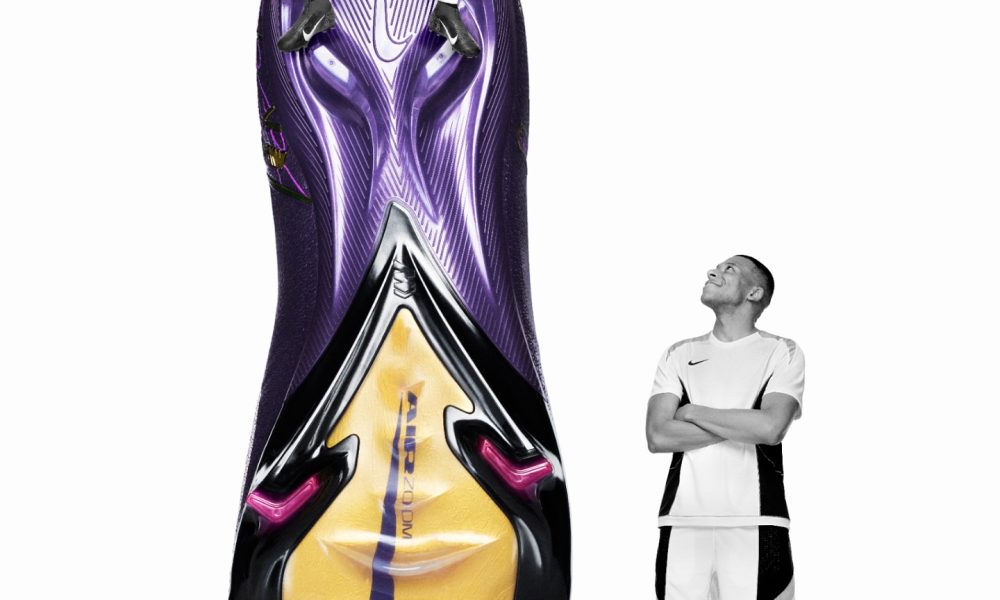 has always dreamed in Mercurial. Now his initials are on the boots.
The new Kyl…
has always dreamed in Mercurial. Now his initials are on the boots.
The new Kyl…
-
 Rec Sports2 weeks ago
First Tee Winter Registration is open
-
 Rec Sports2 weeks ago
Fargo girl, 13, dies after collapsing during school basketball game – Grand Forks Herald
-
 Motorsports2 weeks ago
CPG Brands Like Allegra Are Betting on F1 for the First Time
-
 Motorsports2 weeks ago
F1 Las Vegas: Verstappen win, Norris and Piastri DQ tighten 2025 title fight
-
 Sports2 weeks ago
Two Pro Volleyball Leagues Serve Up Plans for Minnesota Teams
-
 Sports2 weeks ago
Utah State Announces 2025-26 Indoor Track & Field Schedule
-
 Sports2 weeks ago
Sycamores unveil 2026 track and field schedule
-
 Motorsports2 weeks ago
Redemption Means First Pro Stock World Championship for Dallas Glenn
-
 Sports2 weeks ago
Texas volleyball vs Kentucky game score: Live SEC tournament updates
-
 NIL1 week ago
Bowl Projections: ESPN predicts 12-team College Football Playoff bracket, full bowl slate after Week 14