
NIL
101 Days Out



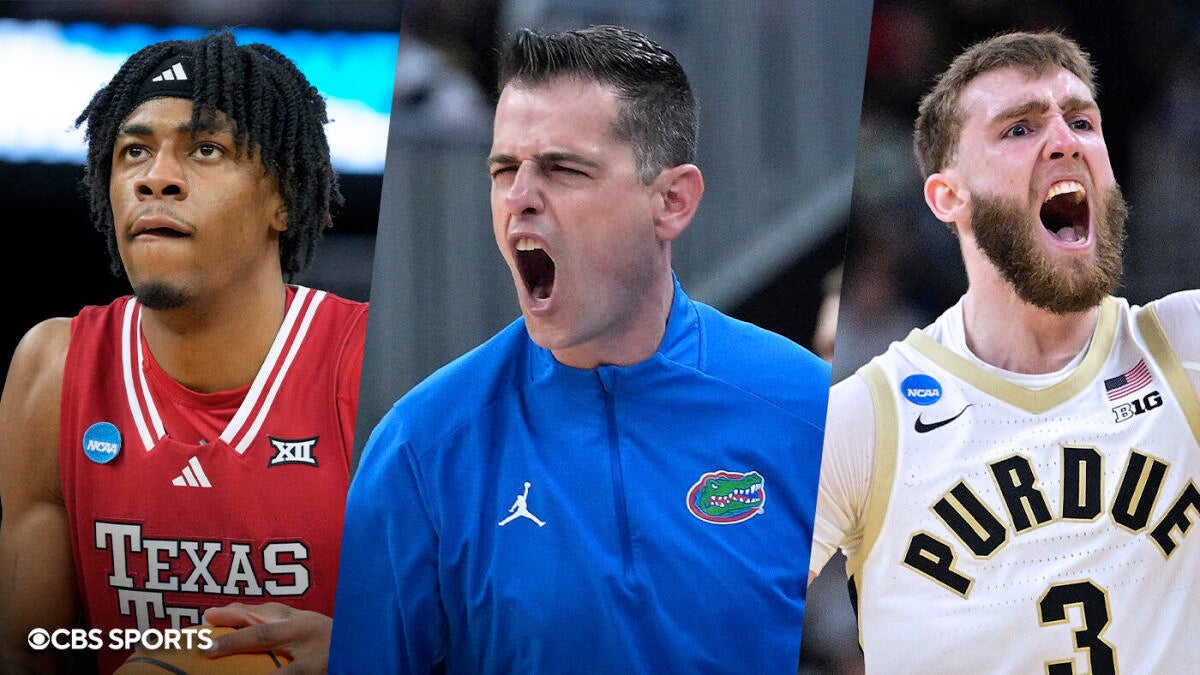
We are 101 days away from the glorious return of college basketball. There is no offseason in college basketball, especially in this money-crazed transfer portal cycle that finished with over a dozen high-major schools building rosters that cost north of $10 million. The ripple effects are obvious. Multiple players who would’ve left for the NBA Draft without a second thought returned to college basketball to cash in. There’s a massive influx of international talent on its way to the United States this year, too.
The lookaheads to 2025-26 are here. It’ll be time for tip-off before we know it.
Let’s dive in.
Prominent storylines
1. Florida’s encore
It is not quite the same as 2006-07 when Corey Brewer, Lee Humphrey, Taurean Green, Al Horford and Joakim Noah all opted to run it back to chase another title, but Florida’s got a ton of familiar faces just itching to repeat.
Florida’s entire frontcourt is back. Two-way forward Alex Condon passed on the NBA to return for his junior season. Tommy Haugh broke out down the stretch of his sophomore season and has become a legit NBA Draft prospect. He’s back for Year 3, and the Gators landed his old high school point guard (Xaivian Lee) from the portal. Both of Florida’s enormous centers, Rueben Chinyelu and Micah Handlogten, opted to stay in Gainesville, too. Florida’s star coach, Todd Golden, will enter 2025-26 with a frontcourt that is the envy of almost every coaching staff in college basketball.
Florida has six (!) players with legitimate NBA interest on this roster, but the whole band is not back. Florida will dearly miss Walter Clayton Jr.’s utterly absurd shot-making, Alijah Martin’s rugged defense and turbo-smash dunks and Will Richard’s steady two-way presence. It will have a void to fill without dialed-in assistants like John Andrzejek and Kevin Hovde, who took head coaching gigs at Campbell and Columbia, respectively.
Can the Gator Boys stay hot?
2. Fueled by a gut-wrenching, title-game loss, can Houston finally get Kelvin Sampson his ring?
The anguish and distraught in Houston’s locker room was palpable in the bowels of the Alamodome after a 12-point, second-half lead slipped away in the title-game bout against Florida. That last possession, where Emanuel Sharp couldn’t get a potential game-winning three-pointer off, is seared into memory forever.
That veteran-laden team just desperately wanted to win it for Kelvin Sampson, who has led Houston to four-straight top-two finishes on kenpom.com but still hasn’t won the big one, yet.
Could this 2025-26 team do it? With returners like Sharp, Milos Uzan, JoJo Tugler and the best recruiting class in Houston’s history, the talent on this roster is undeniable. Uzan, Tugler, five-star forward Chris Cenac Jr. and five-star guard Isiah Harwell are all candidates to be first-round picks in 2026.
3. Kentucky and Louisville are big and bad again
Kentucky was a good team last year under first-year coach Mark Pope, but it wasn’t scary. It didn’t have those bona fide pros. It was a darn good Mid-Major All-Star Team. No shame in that.
It was a similar vibe in Louisville. Pat Kelsey built a solid ball club for a fanbase that was just elated to be competent. 27 wins? 18-2 in a garbaggio ACC? A No. 8 seed in the NCAA Tournament? Sure, sign me up after the Kenny Payne-led debacle.
Kentucky and Louisville were feel-good stories last year.
After this spring, they’re back to being mean, nasty Big Dawgs who are coming for it all.
Both hated rivals massively unloaded the coffers in the transfer portal. Kentucky has built a roster that’s sniffing $20 million. Louisville has also invested heavily into basketball to build a powerhouse backcourt stuffed with five-star Mikel Brown Jr., sharpshooters like Xavier transfer Ryan Conwell and Virginia transfer Isaac McKneely and prized Kennesaw State transfer Adrian Wooley.
Both teams have National Championship aspirations, and they might have to go through one another to get to the mountaintop. Whew, how much fun would that be?
4. The snippy UConn-St. John’s rivalry takes center stage in frenzied Big East race
The caliber of rosters that UConn and St. John’s have put together just looks a little different than the rest of their Big East brethren.
Dan Hurley didn’t seem to take kindly to ceding the Big East crown to St. John’s, and he’s done something about it. UConn crushed it in retention (Alex Karaban, Solo Ball, Jaylin Stewart and Jayden Ross are all back). It looks to have nailed its portal class with Silas Demary Jr. and Malachi Smith solving the point guard woes. Oh, and it reeled in the No. 7-rated recruiting class, headlined by five-star Braylon Mullins who shreds nets for a living.
Meanwhile in Jamaica, Rick Pitino will cycle in six new faces surrounding big man Zuby Ejiofor, the best defensive player in the league. Ejiofor and forward Dillon Mitchell are as good of defenders as you’ll find at their respective positions. St. John’s hopes to have fixed its shooting issues by landing Ian Jackson, Oziyah Sellers, Joson Sanon and Dylan Darling. But the X-Factor is Bryce Hopkins. For the second offseason in a row, Pitino has snatched a talented transfer from a fellow Big East program. Last year, it was Seton Hall’s Kadary Richmond. This year, it’s Providence’s Hopkins who, when healthy, is a menacing pass-dribble-shoot forward. The catch is that Hopkins has played just four games since New Year’s Day … in 2024.
The mutual respect between Hurley and Pitino is obvious, but these two hyper-competitive coaches have their sights set on a championship. The two tangles in Big East play will be tremendous. Maybe they will meet at Madison Square Garden in the pure Big East Tournament. If the basketball Gods have some spunk, we’ll receive a fourth matchup in the Big Dance.
UConn-St. John’s. We need it.
5. The new face of Duke basketball: Goodbye, Cooper Flagg. Hello, Cam Boozer
The captivating Cooper Flagg entered college basketball with oodles of hype and somehow surpassed all of it on his way to National Player of the Year honors. Flagg is off to the Dallas Mavericks, and Duke starts all over again with Cam Boozer. The heralded five-star freshman is just a straight winner who has cut down nets at every single stop along the way. He has no plans to change anything at Duke.
Some scouts have joked that Boozer just does not play a poor game because of how many different things he does so well on both ends of the floor. The 6-9, 250-pound forward is shaping up to be one of the best players in college basketball next winter.
Burning questions
6. With Purdue carrying the flag, can the Big Ten finally break the 25-year national title drought?
Purdue has the pieces to do something special this year. Braden Smith is the best point guard in the country, and he’s just 319 assists away from passing Bobby Hurley’s NCAA Division I career assist record. If Purdue makes the Final Four, Hurley’s mark is firmly in jeopardy of getting lassoed by Smith.
Matt Painter has gone all-in to construct a contender around Smith, bucket-getting forward Trey Kaufman-Renn and Fletcher Loyer. Smith and Loyer are an ode to the past. They’ve started all 110 games since they were freshmen in 2022. This is their last chance to win a title, and Purdue’s supporting cast looks terrific on paper, especially if 7-foot-4 center Daniel Jacobsen can get up to speed. Purdue is going to be a freight train because it has Smith, and you do not.
But the Big Ten will have a host of other real contenders behind Purdue. Dusty May and Michigan are spending the big bucks to compete with the nation’s best, and May’s three-headed monster of Yaxel Lendeborg, Aday Mara and Morez Johnson is one of the best frontcourts in the country. Illinois‘ Band of Balkan Brothers is a fun storyline, but the Illini will go as far as Kylan Boswell, Tomislav Ivisic and Andrej Stojakovic take ’em.
Purdue, Michigan and Illinois look like top-10 clubs, and UCLA could certainly be in that discussion after landing prized New Mexico transfer point guard Donovan Dent and retaining Eric Dailey Jr., Tyler Bilodeau, Skyy Clark and Trent Perry.
The Big Ten is making stylistic changes, too. Two years ago, no league played slower than the Big Ten. The Big Ten finished 10th in tempo last season, which ranked second among high-majors, only behind the SEC.
Styles make fights, but talent tends to trump all, and the Big Ten is loaded with awesome lead guards. Smith and Dent are the cream of the crop, but Iowa‘s Bennett Stirtz, Wisconsin‘s John Blackwell, Ohio State‘s Bruce Thornton and Oregon‘s Jackson Shelstad are legitimate All-American candidates, too.
Eighteen teams give the Big Ten extra bites at the apple to win it all, but playing faster and loading up on excellent guards are good recipes to snap the streak.
7. Armed with a tweaked roster-building game plan, does John Calipari have a run brewing at Arkansas?
John Calipari was more comfortable than any coach in flipping his roster on its head in a quest to land the best talent in the country. But this Arkansas club has four rotation players back from a Sweet 16 team. It’s the most retention a Calipari-coached team has had since the 38-0, 2015 Kentucky group that made it to the Final Four. This Arkansas roster does not have a Karl-Anthony Towns, but it’s a talented bunch. Five-star prospects like Darius Acuff and Meleek Thomas add a jolt of shot-making to a strong defense-first corps of DJ Wagner, Karter Knox, Billy Richmond and Trevon Brazile.
Great retention paired with a splash of five-star talent and a couple of portal additions was a roster-building blueprint that helped UConn win the title in 2024. Arkansas had some high highs and low lows in 2024-25. This group, thanks to real retention, should be much steadier with the personnel to be a top-20 offense and defense if things click.
8. Is this a make-or-break year for UNC’s Hubert Davis?
The flip-flops at North Carolina during the Hubert Davis tenure have been a rollercoaster. An out-of-the-blue run to the National Championship game in Year 1 and then missing the tournament after unfairly being pegged as the No. 1 team in the preseason. Building a No. 1 seed in 2024 and barely sneaking into the First Four in 2025.
Year 5 is when everything comes to a head. UNC has invested $14 million into this roster. It hired general manager Jim Tanner and gave him a contract that could eclipse $1 million in incentives.
The investment in basketball is real.
Beating San Diego State in Dayton won’t cut it anymore for Davis.
It’s time for UNC to play like UNC again. While this roster doesn’t have the magnetism, there’s more than enough for North Carolina to be a top-25 team. Five-star forward Caleb Wilson and incoming Arizona transfer Henri Veesaar should buff up the interior defense in a mighty way. The shooting from Kyan Evans, Luka Bogavac, Jarin Stevenson and Jonathan Powell should make Seth Trimble’s life a whole lot easier, and the size up and down this roster is noticeable.
The pieces make more sense this year, so if things don’t go well, you’ll probably know what’s on tap.
9. Can Darryn Peterson revive slumping Kansas?
Bill Self, paired with a future NBA player at lead guard, is usually a tasty combination. Kansas has it in No. 1-rated signee Darryn Peterson, who is revered as one of the top guard prospects in recent memory. Peterson is a total alpha, capable of dropping a 30-piece (or 61, just ask AJ Dybantsa) anytime he walks onto the floor. Oh, and he defends, rebounds and gets to the foul line at will.
Peterson is going to be tremendous, and Kansas will need every ounce of his production to get back on track after back-to-back seasons that started with high expectations and ended with a whimper.
The Big 12 isn’t Kansas’ league anymore. This is Houston’s playground until proven otherwise.
Having a pro guard and a pro at the 5 is usually a good place to start. Kansas has that with Peterson and Flory Bidunga. Can that change the calculus even after the Jayhawks missed on both Dame Sarr and Darrion Williams in the transfer portal?
10. Who emerges as the No. 1 pick?
Peterson will be one of the top lead guards in the country. Boozer is slated to be one of the elite power forwards in college basketball, and then there’s BYU‘s AJ Dybantsa, who could be the best wing in the country.
The top of this freshman class is all the way legit.
Peterson, Boozer or Dybantsa are all firmly in the mix to be the No. 1 pick in next summer’s 2026 NBA Draft, and the jostling between three premier prospects will be a firm subplot throughout the 2025-26 campaign.
Old faces in new places, coaches’ version
There are 57 new Division I coaches. Who is primed to shine right away?
11. Ryan Odom, Virginia
The days of long rebuilds are over. Virginia should be highly competitive right away under Odom, who has beaten his preseason KenPom rating in eight of his nine seasons at the helm.
Virginia’s new roster is ready to win immediately. San Francisco transfer Malik Thomas is a flat-out baller, and Virginia’s backcourt is brimming with shooters and experience. UVa went international to fill its frontcourt void with German 7-footer Johann Grunloh, who profiles to fill that coveted archetype of a big man who can splash 3s and block shots. Belgian forward Thijs de Ridder is another outstanding addition. de Ridder, already 22 years old, is a plug-and-play starting 4-man who has been a pro for years, and Odom has accrued plenty of depth off the bench. Virginia should give Duke and Louisville a run for its money in the ACC and make the NCAA Tournament comfortably.
12. Will Wade, NC State
The revival of the ACC is another under-the-radar storyline in 2025-26 because it crushed it in the coaching carousel. NC State hiring Will Wade is a hand-in-glove fit, and his roster has the pieces to be a top-5 team in the ACC.
Texas Tech transfer Darrion Williams is the gem of the group, but NC State’s roster is chock-full of two-way, high-motor players like Tre Holloman, Ven-Allen Lubin, Terrance Arceneaux and Quadir Copeland. NC State also has some high-upside swings in top-30 freshman Matt Able, sophomore guard Paul McNeil and McNeese transfer Alyn Breed.
Rim protection could be a weakness for the Wolfpack, but NC State’s defense should be a takeaway machine.
13. Ben McCollum, Iowa
McCollum is your favorite coach’s favorite coach for a reason. Iowa has a chance to make the NCAAs in Year 1 because the McCollum-Bennett Stirtz duo is elite. Mind-meld between head coach and point guard is so underrated, and Iowa has it. The Hawkeyes should have no problems finding solutions offensively with Stirtz operating as the maestro and excellent complementary pieces like Brendan Hausen, Alvaro Folgueiras, Cam Manyawu and Tavion Banks orbiting around the alpha.
14. Darian DeVries, Indiana
DeVries is another new coach who has outplayed his preseason KenPom ranking in four of the past five seasons. He’s got a chance to do it again with an Indiana group that’s loaded with shooting, skill and lesser-known names that fit together well. Tucker DeVries and Lamar Wilkerson can go band-for-band with any pair of 3-point shooters in college basketball, and the Hoosiers smartly loaded up on paint-touch guards like Tayton Conerway and Conor Enright, paired with a slick-handling big in Davidson transfer Reed Bailey.
Expecting Indiana to win the Big Ten is probably a bridge too far — the interior defense is a serious question — but the Hoosiers look like an extremely high-floor team because it has so many vets, and the sum is greater than the parts.
This is a tournament team. Be a friend, tell a friend.
15. Phil Martelli Jr., VCU
Martelli has quickly built one of the top rosters in the A-10. High-major transfer-down prospects like Ahmad Nowell (UConn), Tyrell Ward (LSU) and Bam Tracey (Oregon) all project to be serious difference-makers from the jump, alongside intriguing forward Barry Evans, who followed Martelli from Bryant to VCU. Plus, there’s a host of competent depth pieces up and down this roster. VCU will have serious lineup optionality to navigate the five-month gauntlet.
Making the Big Dance in Year 1 would be a real success for these first-year coaches
16. Sean Miller, Texas
It won’t take long for Miller to get Texas humming, but the Longhorns don’t look like an unquestioned tournament team in Year 1. Tramon Mark and Jordan Pope are serviceable veterans who can score. The interior defense should be a strength with FAU transfer Matas Vokietaitis and Xavier transfer Dailyn Swain. Texas is clearly solid, but there are a ton of good rosters in the SEC. The margins are slim.
17. Niko Medved, Minnesota
Medved has made a career doing more with less. Minnesota’s roster won’t jump off the Google Sheet at you, but the pieces do make some semblance of sense. Western Michigan transfer Chansey Willis Jr. is a stat-stuffing lead guard who can get two feet in the paint and distribute, and Minnesota loaded up on plus-sized wing shooters like Bobby Durkin, BJ Omot and Cade Tyson. Medved is a revered X’s and O’s coach for a reason, but Minnesota’s big men don’t look like Big Ten dudes. Minnesota will be frisky, but if it doesn’t make the Big Dance, we’ll know why.
18. Ross Hodge, West Virginia
Hodge’s plan to load up on veterans is pretty self-explanatory. West Virginia’s top eight players will all be upperclassmen. North Texas transfer Brenen Lorient is uber-familiar with Hodge’s scheme, and the 6-foot-9 forward can really play. Hodge’s defense-first mentality should be on full display with Jasper Floyd at the point of attack, Chance Moore hounding the top wing with the long-armed Lorient and 7-footer Harlan Obioha looming in the paint. West Virginia will desperately need one of Treysen Eaglestaff or Honor Huff to transform into a no-doubt, high-major dude. The 6-foot-6 Eaglestaff seems like the best bet. He dropped a 40-burger on Alabama while he was at North Dakota last December. Transfer-ups who have hit a high volume of pull-up 3s have translated well in the last few transfer portal cycles. Eaglestaff is hoping to follow that trend. West Virginia’s at-large hopes hinge on his offense translating from the Summit League to the Big 12.
19. Jai Lucas, Miami
Miami is giving Lucas his first chance at this whole head coaching thing. The former Duke assistant has constructed a team with rock-solid personnel across the board. Tre Donaldson, Malik Reneau and Ernest Udeh Jr. are all proven high-major starters. Udeh, Tru Washington and prized recruit Shelton Henderson should be impact defenders from the jump. Donaldson and Reneau should sop up plenty of usage as the No. 1 and No. 2 option, respectively. Freshman Dante Allen is a hooper, too. Miami’s record should look gaudy after a puff-piece non-conference schedule and a gift from the ACC schedule-makers to not face Duke in the regular season. That does not mean it will make the tournament, though.
20. Buzz Williams, Maryland
Maryland is going to batter some opponents with its physicality, specifically from monster big man Pharrel Payne and physical wings like Elijah Saunders, Solomon Washington and Rakease Passmore. With a sturdy interior defense and a dominant glass-cleaning identity, Maryland should be competent. The bounce-back case for point guard Myles Rice ultimately determines whether the Terrapins are a tournament team or not. Rice lost all his confidence at Indiana, and Williams breathes faith into his lead guards.
All-American prophecies
This is my ballot. I’ll debate with my CBS Sports colleagues about their selections in a few months!
FIRST TEAM
21. PG Braden Smith, Purdue
22. G Darryn Peterson, Kansas
23. PG Bennett Stirtz, Iowa
24. F Cameron Boozer, Duke
25. F JT Toppin, Texas Tech
SECOND TEAM
26. PG Milos Uzan, Houston
27. G Otega Oweh, Kentucky
28. G Labaron Philon, Alabama
29. Wing AJ Dybantsa, BYU
30. F Yaxel Lendeborg, Michigan
THIRD TEAM
31. PG Donovan Dent, UCLA
32. PG Tahaad Pettiford, Auburn
33. F Zuby Ejiofor, St. John’s
34. F Trey Kaufman-Renn, Purdue
35. C Nate Bittle, Oregon
Old faces in new places, players’ version
Over 2,500 players entered the transfer portal this past spring to cash in on the most lucrative cycle the sport has ever seen. Here’s are our predictions about which 10 will be the most impactful, factoring in fit, talent and projected usage with his new club.
36. F Yaxel Lendeborg
Transferring from: UAB | To: Michigan
The scout: A 6-foot-9, 240-pound do-it-all forward who can play the 4 or smallball 5. Lendeborg was the most complete player in this portal cycle thanks to his combination of size, skill, strength, playmaking and defense. He’s a First Team, All-Big Ten talent with a chance to be a first-round pick in the NBA Draft under Michigan coach Dusty May’s watchful eye.
37. PG Bennett Stirtz
Transferring from: Drake | To: Iowa
The scout: Pick-and-roll maestro and elite shot-maker who shot over 70% at the rim. Led Drake‘s NCAA run and followed coach Ben McCollum to Iowa. One of the Big Ten’s best floor generals.
38. G PJ Haggerty
Transferring from: Memphis | To: Kansas State
The scout: The turbo scoring guard is one of the elite transition terrors in college basketball who just lives at the charity stripe. The AAC Player of the Year is capable of scoring 40 or picking defenses apart as a creator. Haggerty isn’t a high-volume 3-point shooter or an elite defender, but the 6-3 guard will threaten for the Big 12 scoring title.
39. PG Donovan Dent
Transferring from: New Mexico | To: UCLA
The scout: Elite pick-and-roll operator with uncanny touch and feel. Lives in the paint and creates high-percentage looks. The best transition scorer in the country last year. Surrounded by shooters at UCLA, he could thrive as Mick Cronin’s lead guard.
40. F Darrion Williams
Transferring from: Texas Tech | To: NC State
The scout: Swiss army forward who can handle, post, shoot (38% from 3-point range), and pass. Tough, physical mismatch hunter who’s been a key cog on three straight NCAA teams. All-League upside.
41. G Boogie Fland
Transferring from: Arkansas | To: Florida
The scout: A slippery lead guard who is just wired to score and whip dimes. He posted a 3.4-to-1, assist-to-turnover ratio and quickly became Arkansas’ go-to creator while flashing real on-ball defensive chops. Fland shot over 46% on catch-and-shoot 3s, so he can play off the ball, too. Fland has lots of areas to improve upon, especially finishing at the rim, but Florida offers a snug fit.
42. G Ja’Kobi Gillespie
Transferring from: Maryland | To: Tennessee
The scout: Gillespie broke out as one of the nation’s top point guards, hitting 80+ 3-pointers with a 27% assist rate. He blends playmaking and scoring with elite off-the-dribble shooting and physical perimeter defense. Undersized but fearless, he impacts winning every night.
43. PG Rob Wright
Transferring from: Baylor | To: BYU
The scout: National champ at Montverde with Cooper Flagg and Big 12 All-Freshman pick. Savvy, shifty floor general with a strong handle and paint pressure. All-American potential if he stays in school for multiple seasons.
44. G Ryan Conwell
Transferring from: Xavier | To: Louisville
The scout: Conwell is a lethal catch-and-shoot and movement shooter with high efficiency and zero fear. Conwell rounded out his game with burrowing drives, a nifty floater package and some additional playmaking. Conwell at Louisville is a match made in basketball heaven.
45. G Jaland Lowe
Transferring from: Pittsburgh | To: Kentucky
The scout: One of the most prolific ball-screen scorers in the country with a deep bag and real playmaking chops. Needs more consistency from 3-point range, but with extra spacing and easier shots, he could explode in Mark Pope’s offense.
Best (projected) offenses
46. UConn: Hurley is armed with three of the best movement shooters in the country: Solo Ball, Braylon Mullins and Alex Karaban. That trio’s gravity in this gorgeous scheme should be a sight to behold. Big man Tarris Reed Jr. is a double-double machine in the paint, and UConn massively upgraded its point guard room with portal imports like Silas Demary Jr. and Malachi Smith. The UConn coaching staff has built three-straight top-15 offenses. This staff with this personnel? Look out below.
47. Purdue: The Braden Smith-Trey Kaufman-Renn pick-and-roll is one of the most unstoppable actions in college basketball. When in doubt, Purdue can tap that button and find instant offense. Add in a seasoned veteran like Fletcher Loyer, who is a threat to go for 20 on any given night, and Purdue’s floor offensively is one of the nation’s best.
But the new faces could ramp Purdue’s offense into overdrive. Oscar Cluff should help buff up the offensive rebounding and interior finishing in a real way, and 7-foot-4 redshirt-freshman Daniel Jacobsen offers appeal because he’s enormous (which helps in basketball) and has also flashed real touch all the way out to the 3-point stripe. Israeli product Omer Mayer is another baller and joins Gicarri Harris and CJ Cox to round out a deep backcourt. But Smith’s return is the story. The senior point guard is one of the elite players in America. He creates fantastic shots in his sleep.
48. Louisville: Pat Kelsey’s offense is about to go vroom-vroom. The Cardinals are fueled by one of the best backcourts in the nation. Five-star freshman Mikel Brown Jr., Virginia transfer Isaac McKneely, Xavier transfer Ryan Conwell and Kennesaw State transfer Adrian Wooley can blowtorch any defense with a barrage of treys. Louisville also wisely built a deep frontcourt mix with little positional overlap. Sananda Fru, Kasean Pryor, Aly Khalifa and J’Vonne Hadley all do a little something different.
49. Florida: The Gators have six legitimate NBA prospects on the roster. That guarantees nothing, but it’s a good problem to have. New Florida guards Boogie Fland and Xaivian Lee can create their own offense in a flash, and the Gators should have one of the elite offensive-rebounding rates in the nation with Tommy Haugh, Alex Condon, Rueben Chinyelu and Micah Handlogten ravaging the boards for all 40 minutes. Walter Clayton Jr. and Alijah Martin will be missed, but Florida’s player-development program is superior.
50. Kentucky: Mark Pope’s club should be nasty in transition. The Jaland Lowe-Otega Oweh combination has serious jets, and Mo Dioubate is another excellent grab-and-go candidate. Kentucky has excellent lineup optionality, and Pope helped guys like Lamont Butler and Oweh post career-best offensive numbers last year. If he can do the same with Lowe, Kentucky could have one of the best lead guards in the country … and he’s playing alongside the probable SEC Preseason Player of the Year frontrunner in Oweh. Kentucky doesn’t have a bunch of proven, high-volume, net-shredders at the high-major ranks, but Denzel Aberdeen, Kam Williams and Jasper Johnson are capable, and open looks should be easy to find with so many skillful slashers. SEC athletes in a scheme like Pope’s is a dangerous combination.
51. Illinois: Big men who can pass and make 3-pointers are a cheat code for building an outstanding offense, and Illinois has the best-shooting frontcourt in the country. Only two (of the four) 7-footers who made 40+ treys last year returned to the college ranks. Both will play for Illinois. Tomislav Ivisic can prove that he is one of the elite centers in the Big Ten, and his twin brother, Zvonimir, may be the most talented backup 5-man in the game. Bullyball handlers like Kylan Boswell and Andrej Stojakovic are primed to take advantage of the open paint that the Ivisic boys create with turbo drives and lots of free throw attempts. Boswell, Stojakovic and Tomislav Ivisic form one of the better trios in college basketball because their offensive strengths complement each other so flawlessly.
52. BYU: Kevin Young has a dynamic point guard in Rob Wright, a hyper-efficient scorer in Richie Saunders, the potential No. 1 pick in AJ Dybantsa, a rugged interior scorer in Keba Keita and a host of spot-up shooters. BYU will be able to find answers to the test at all three levels, whether that’s with a Wright-Keita pick-and-roll, Saunders going to work as an off-ball cutter or Dybantsa obliterating defenders in transition. This NBA-like process is going to hum in Provo.
53. Texas Tech: JT Toppin is a total load, Christian Anderson is a bucket, Texas Tech’s transfer portal haul is filled with excellent fits and both Grant McCasland and top offensive coordinator Jeff Linder are still patrolling the sidelines. Is there anything else you need to hear? Texas Tech has the pieces it needs to be a versatile offensive wagon, especially with a mismatch hunter like LeJuan Watts, a massive lob threat like Luke Bamgboye, and two more net-shredders in Donovan Atwell and Tyeree Bryan joining the Toppin-and-Anderson war machine.
54. Duke: A pass-dribble-shoot forward like Cam Boozer is a cheat code, and Duke has a wealth of talented pieces up and down this roster that were brought in to make sure Boozer’s lone year in college basketball is a banger. The big man platoon of Pat Ngongba and Maliq Brown provides a wealth of lineup flexibility. Both can really pass the rock, which is an essential aspect in how Jon Scheyer wants to play. Scheyer’s a terrific offensive coordinator, and this is a bet on him finding the right buttons to press with a roster loaded with NBA prospects and plus positional size at every single position.
55. Wisconsin: The Badgers have three guards who can play on or off the ball in John Blackwell, Andrew Rohde and Nick Boyd, surrounding two sweet-shooting forwards (Austin Rapp and Nolan Winter). That’s a dangerous combination offensively. Losing John Tonje stings, but the Blackwell is the total package and has All-America upside as the go-to alpha.
Best (projected) defenses
56. Houston: Kelvin Sampson has constructed five-straight top-10 defenses, and he has the bones to make it six in a row. JoJo Tugler, the reigning Big 12 Defensive Player of the Year, is a freakshow both trapping on the perimeter and also recovering to swat layups. He’s just ferocious. Houston also has three enormous guards in Milos Uzan, Emanuel Sharp and five-star freshman Isiah Harwell to unleash on opposing backcourts. Oh, and five-star freshman Chris Cenac Jr. has a 7-foot-3 wingspan and bounds across the floor effortlessly. With two five-star freshmen slated to play a ton, Houston may have a few more scouting-report mistakes than normal while the youngsters get up to speed, but the floor is so high defensively because of Tugler’s brilliance and Sampson’s havoc-wrecking scheme.
57. Iowa State: T.J. Otzelberger is an excellent defensive mastermind, and his personnel this year rocks on that side of the floor. Tamin Lipsey is a hounding point-of-attack defender, and forward Josh Jefferson is a rugged, smart, strong defender who doesn’t budge an inch. Those two lynchpins make this defense stout alone. New big man Blake Buchanan is mobile and athletic. Utah Valley transfer Dom Nelson can wreak havoc. Nate Heise gave Iowa State plenty of plus defensive minutes last year, too. Iowa State’s starting lineup should also feature three guys (Milan Momcilovic, Buchanan and Jefferson) who are 6-foot-8 or taller. Otzelberger-coached teams always force turnovers and limit shots at the rim at a high level, and this iteration should be able to do both very well. Iowa State was the second-best defense in the Big 12 last year, and the personnel defensively is even better.
58. Tennessee: There’s going to be an adjustment for Tennessee’s defense without Jahmai Mashack and Zakai Zeigler blowing actions up left and right, but the pieces are still absolutely in place to be a high-level defensive club. Big man Felix Okpara is one of the better rim protectors in the country. That’s a good place to start. Tennessee seems poised to play plenty of double-big lineups with Cade Phillips, Jaylen Carey or JP Estrella joining Okpara to form a physical front-line duo. Five-star freshman Nate Ament has terrific physical tools to be a good defender even in Year 1, and Maryland transfer Ja’Kobi Gillespie brings it on the defensive end every single night. Tennessee should have at least four good defenders on the floor at all times. Good things tend to percolate when your coach is Rick Barnes.
59. Duke: There is not a Cooper Flagg to fly around on this defense, but Duke’s defense should create problems with a similar recipe. Jon Scheyer has multiple big guards and wings who are switchable, headlined by Caleb Foster (6-5) and Dame Sarr (6-7). The frontcourt is littered with high-IQ, mobile defenders like Maliq Brown and Cam Boozer. Duke should be able to have scheme versatility defensively, depending on the matchup with loads of size both in the starting lineup and coming off the bench. We haven’t even mentioned a piece like Patrick Ngongba, who showed flashes defensively in Year 1, or souped-up 6-foot-8 forward Sebastian Wilkins, who is built like a freight train.
60. San Diego State: Brian Dutcher gets six rotation players back from a defensive unit that finished just outside the top-15 nationally, including big man Magoon Gwath and lanky guard Miles Byrd, who are some of the best defenders at their respective positions. Gwath is a threat to lead the nation in blocked shots, and Byrd can guard four positions effortlessly. There’s continuity on the roster. This is a staff that has built six-straight, top-21 defenses. The Aztecs should have elite rim protection, real length on the wing and lots of answers at all three levels of the floor. This should be one of the best 10 defenses in America.
61. Michigan: Eleven of the best 13 defenses last year leaned heavily on a double-big lineup. With Lendeborg, high-flying Morez Johnson and 7-foot-3 center Aday Mara in the fold, Michigan should have good-to-great rim protection for all 40 minutes. A double-big lineup will be on the floor a ton for Dusty May. It’s going to be hard to generate layups against Michigan, and that alone immediately raises the floor considerably. You’re forcing teams to take a ton of jumpers, and it allows point-of-attack defenders to be even more aggressive. Michigan should have two big guards on the floor at all times with some combination of Roddy Gayle, Nimari Burnett or Trey McKenney to go along with a supersized frontcourt that should be much-improved on the glass. No second-chance opportunities and nothing allowed at the rim should make this defense stout.
62. St. John’s: Rick Pitino brings a different gear out of his teams on the defensive end. With Zuby Ejiofor returning, St. John’s has one of the most switchable big men in the country. It feels almost impossible for St. John’s to stink defensively with Pitino on the sideline and both Ejiofor and Dillon Mitchell on the floor together. Both of those forwards can guard anybody and everybody. St. John’s should trot out plenty of lineups with a 6-foot-4 athletic guard like Ian Jackson being the smallest player on the floor. Growing pains seem obvious with so many new faces, but this is mostly a bet on Pitino doing what Pitino does when he has personnel with this much athleticism.
63. Kentucky: Mark Pope has never built a top-10 defense, but if he were going to, this would be the personnel to do it. Otega Oweh, Denzel Aberdeen, Mo Dioubate and Jayden Quaintance are all outstanding individual defenders who could meld into something nasty. Of course, Quaintance has to get healthy, but that quartet is so tantalizing defensively.
64. Florida: You physically cannot have a good defense without a sound big fella. Florida has four frontcourt studs (Haugh, Condon, Chinyelu and Handlogten) who all strap up and guard at a high level almost every night. Florida will rebound and protect the rim at a high level. The X-Factor is how Florida replaces the perimeter defense of Alijah Martin, who took the toughest assignments all year. Florida will also miss Will Richard on that end. Incoming Arkansas transfer Boogie Fland flashed solid defensive tape as a true freshman in the SEC, and top-20 freshman CJ Ingram has the physical tools to be an asset defensively, as well. The Gators’ defensive ceiling is quite as high as last year, but there’s not going to be a steep dropoff, either.
65. Oregon: The Ducks’ defense rated in the 99th percentile nationally when Nate Bittle and KJ Evans Jr. were on the floor together last year, per CBB Analytics. The eye test backs it up. Bittle is both mobile on the perimeter and an excellent shot-blocker, and Evans is a fluid-moving 6-foot-9 forward who covers so much ground. It’s a menacing duo inside the paint. Oregon is going to lean heavily on those two this year, and Texas transfer Devon Pryor is another plus athlete who could step into some of TJ Bamba‘s big shoes defensively. Pryor, Bittle and Evans is a strong nucleus for a stiff defense, and Oregon has plenty of frontcourt depth with Sean Stewart and Ege Demir.
National championship contenders (or pretenders)
Let’s play buy, pass or sell. Odds via Fanduel Sportsbook.
66. Purdue (9-1): Pass. Purdue is going to be terrific, but the value is not ideal.
67. Houston (10-1): Pass. The reliance on five-star freshmen could lead to a bit of a slower start and open up more value after some big tests early in non-conference play.
68. Duke (11-1): Sell. I just can’t get there at this price because of the reservations at lead guard. Can Caleb Foster find his groove? I’m hopeful, but we still need to see it. Is Cayden Boozer ahead of schedule? I have too many super important qualms to bite at this number. Let’s revisit in December.
69. Florida (17-1): Pass. But I do not think there’s a massive gap in talent between Duke’s roster and Florida’s roster.
70. Kentucky (17-1): Buy. The more I dig into Kentucky, the more I like ’em. Like the coach. Like the roster. Like the number, too. This team is going to be awesome.
71. UConn (17-1): Buy. Defensive concerns are fair, but this offense could be the top-rated unit in the country.
72. Michigan (19-1): Pass. I’m nervous that the halfcourt offense could be a bit too clunky to win six in a row.
73. St. John’s (19-1): Sell. Just too rich a price for a team that lost RJ Luis and Kadary Richmond. I’m not worried about the point guard concerns, but I am worried if Bryce Hopkins can stay healthy for a full season.
74. Louisville (20-1): Pass, for now. Louisville’s backcourt is going to be tremendous, and J’Vonne Hadley is one of the elite glue guys in college basketball. Do the 5s translate and bring legitimate rim protection? That’s one burning question.
75. Texas Tech (20-1): Buy. Retaining a dynamic lead guard like Christian Anderson and a stud Big 12 Player of the Year like JT Toppin opens the doors for some special seasons. Oh, and Texas Tech crushed it in the portal.
76. Kansas (20-1): Pass. Change is good, but this is a brand-new team that could have some rocky showings in non-conference play. Could a number better than 20-1 be in the cards? I think so. There’s a pretty obvious scenario where Kansas outplays preseason expectations, but I’m not ready to pull the trigger quite yet.
77. BYU (20-1): Buy. Offense will be legitimately awesome, fueled by a Big Three that can go bucket-for-bucket with anybody. BYU’s sieve-like defense should take a step in the right direction thanks to the added athleticism from Dybantsa and Southern Illinois transfer Kennard Davis. Kevin Young won’t have a bunch of guards who had to go under every single screen anymore, thank the Lord.
National championship dark horses, longshot looks
78. Alabama (35-1): Alabama has quietly flown under the radar this offseason with Mark Sears, Grant Nelson and a host of other familiar names dipping. It didn’t make cannonball splashes in the portal, either. But Nate Oats is one of the sharpest offensive masterminds in college basketball, and he has an electric backcourt, headlined by Labaron Philon, Aden Holloway, Latrell Wrightsell Jr. and former five-star Jalil Bethea. Alabama will have plenty of five-out lineups that could give opposing defenses fits.
79. Arizona (35-1): Playing Arizona is going to be miserable because it will easily be one of the most physical teams in the country. Jaden Bradley is a bulldog at point guard. The front-line combination of five-star Koa Peat, Tobe Awaka, Motiejus Krivas and Sidi Gueye is ridiculous. Caleb Love is gone, but Arizona has a plug-and-play difference-maker on the way in five-star freshman Brayden Burries, who will turn 20 before the season starts. Arizona is going to bludgeon teams this year and looks every bit the part of a top-15 team in the country.
80. San Diego State (150-1): Laughable price for a team that looks like a top-20 club and has multiple NBA players on the roster.
Good teams hidden in plain sight
81. Mississippi State: Josh Hubbard is back to fly around handoffs, drain ridiculous treys and make a run at SEC Player of the Year honors, but this portal class is filled with pieces that make sense. Quincy Ballard is that monster interior defender and play-finisher that Mississippi State needed. Achor Achor is a terrific buy-low option. Jayden Epps’ knack for scoring shows up when he’s playing on or off the ball. Hubbard and Epps should share the sugar all year, and head coach Chris Jans has intriguing depth pieces here and a long history of developing talent.
82. Baylor: Sometimes, change is good. Baylor’s revamped roster has much more size and positional flexibility. Wyoming transfer Obi Agbim is a flat-out stud lead guard, and Oregon State transfer forward Michael Rataj should be a productive, double-figure scorer all year. But Baylor has also transformed its wing room with the addition of heralded freshman Tounde Yessoufou, Cincinnati transfer Daniel Skillings Jr. and Tennessee transfer Cameron Carr. The Bears aren’t quite at the level of Texas Tech, BYU and Houston in the Big 12 pecking order, but Scott Drew has more than enough in the cupboard to make the NCAAs for the eighth straight year.
83. USC: The news that five-star freshman Alijah Arenas will miss at least six months with a knee injury is a gut-wrenching sting, but USC has seriously upgraded its talent. Rodney Rice and Chad Baker-Mazara are the big-ticket acquisitions, but USC loaded up on nasty defenders all across the board. Positional size reigns supreme for Eric Musselman, dating back to his NBA days. This roster is no different.
84. Providence: Jason Edwards is a professional scorer, and Jaylin Sellers can dominate in transition. Those two alone raise the floor substantially for a Friars offense that went MIA during Big East play. Add in rising big man Oswin Erhunmwunse, and Providence is clearly slated to be much improved.
85. Gonzaga: Graham Ike and Braden Huff will take a blowtorch to a ton of opposing frontlines this year, and Gonzaga has some eyebrow-raising guard options to replace the dynamic Ryan Nembhard. Keep an eye on Spain product Mario Saint-Supery and former Colgate transfer Braeden Smith, who sat out all of last year learning the lay of the land. If Tyon Grant-Foster is cleared to play, Gonzaga has all the pieces to make the second weekend again.
Don’t overlook these mid-majors
86. Illinois State: Ryan Pedon returns his starting lead guard (Johnny Kinziger) and starting big man (Chase Walker). The Redbirds are the only team in the Missouri Valley — and one of just a handful of true mid-majors — to return multiple double-figure scorers at huge positions of need. Toss in Butler transfer Landon Moore and North Dakota State transfer Boden Skunberg, and Illinois State has the pieces to make serious noise in the Valley.
87. Boise State: It didn’t work out for Dylan Andrews at UCLA, but he can be one of the Mountain West’s top guards in Boise State’s point guard-friendly schemes. He defends, hits pull-ups and understands how to run a team. Andrews should rise into a high-floor, table-setter surrounding reliable returners like Javan Buchanan, Andrew Meadow and Pearson Carmichael. Georgetown transfer Drew Fielder should be a serviceable stretch 5 for the Broncos, too. San Diego State is the Mountain West favorite, but Boise State won’t go quietly.
88. Saint Louis: Josh Schertz has his stud stretch 5 back in Robbie Avila and a host of new faces that look like smart portal evaluations. Xavier transfer Trey Green is wired to score and should step right into the Isaiah Swope role. Quentin Jones is a 6-foot-5 guard who shot over 35% from downtown last year at Northern Illinois with heavy on-ball responsibilities. Avila, Green and Jones should be the needle-movers for the Billikens, but keep an eye out for Quinnipiac transfer Paul Otieno, who is the shot-blocking, uber-athletic, 4-man that Schertz needed next to Avila. If SLU can extract value out of three transfer-down pieces in St. John’s Brady Dunlap, Boston College‘s Dion Brown and Virginia’s Ishan Sharma, it can contend for the A-10 title.
89. Towson: Tyler Tejada and Dylan Williamson both would’ve had a bunch of interest from high-majors in the portal. They both chose to stay under Pat Skerry’s leadership. That speaks volumes. A mid-major keeping two (!) guys like that just rarely happens in this era. Towson has not made the Big Dance since 1991, but that could change in 2026.
90. UC Santa Barbara: It didn’t work out for Miro Little at Baylor or Utah, so he parachuted to UC Santa Barbara. It didn’t work out for Aidan Mahaney at UConn, so he’s also parachuted to … UC Santa Barbara. Plus, Joe Pasternack was able to retain two key pieces in Jason Fontenet and Colin Smith, while reeling in a few extra key portal additions. This backcourt could transform into one of the best in the mid-major ranks if Mahaney, specifically, can find his swagger again. UC Irvine looks like the team to beat in the Big West, but UC Santa Barbara will put up a stiff fight.
Breakout candidates!
91. Patrick Ngongba, Duke: Ngongba is a problem in the paint, and if he can stay healthy, he could assert himself as one of the best players on this team.
92. Derrion Reid, Oklahoma: Reid has a massive runway for playing time at Oklahoma. The jumbo forward should be one of Porter Moser’s best defensive players from Day One.
93. Eric Dailey Jr., UCLA: Dailey was good last year. He can be great in Year 2 under Mick Cronin. The 6-foot-8 forward shot 58% on 2s and 38% from downtown as a sophomore, and now he gets to play with Donovan Dent, who creates a galore of open transition looks. Dailey has to be licking his chops to be playing with one of the best point guards in America.
94. Daniel Skillings, Baylor: Situation is everything. Skillings left a rough offensive ecosystem in Cincinnati for a Baylor scheme that consistently churns out some of the best offenses in college basketball. Skillings should find his groove in Waco and be a productive, two-way difference-maker who cracks double figures night after night.
95. Jacob Cofie, USC: The 6-foot-9 forward has pass-dribble-shoot vibes that will come to fruition sooner rather than later. His tape is way better than the counting stats would suggest. He’s slated to get plenty of playing time for Musselman at USC.
96. Neoklis Avdalas, Virginia Tech: The smooth 6-foot-7 wing figures to be one of Virginia Tech’s go-to options. Don’t be surprised if the Hokies are much-improved this year, and Avdalas firmly positions himself as a NBA Draft pick in 2026.
97. Nolan Winter, Wisconsin: Winter has packed on weight and could be a force for a Wisconsin offense that will hum. John Blackwell will be the Badgers’ star, but Winter’s two-way appeal is clear as day. A 6-foot-11 big man who drills 3-pointers and is a menace on the boards is an ultra-valuable piece.
98. Elijah Mahi, Santa Clara: Being the top guy on the scouting report at Santa Clara is a good way to make a name for yourself. Mahi is up next. The flashes were there in 2024-25, but there’s a new level coming in 2025-26. The 6-foot-7, 220-pound forward will flirt with multiple triple-doubles. Mark it down.
99. Hannes Steinbach, Washington: Steinbach looks like he’s itching to be a major weapon in Washington’s frontcourt mix. He’s big, strong, sets hard screens, defends, catches everything and owns a revving motor. Steinbach even showed some comfort stretching the floor with some much-needed 3-pointers. Steinbach will be in the race for Big Ten Freshman of the Year all season.
100. Royce Parham, Marquette: Parham learned plenty of lessons as David Joplin‘s backup. It’s time for the rubber to meet the road. The 6-foot-8 stretch 4 is not afraid to pull the trigger from downtown or put it on the deck for bulldozing drives.
Final Four prediction that’s sure to be wrong
101. Kentucky, Texas Tech, UConn and Purdue.

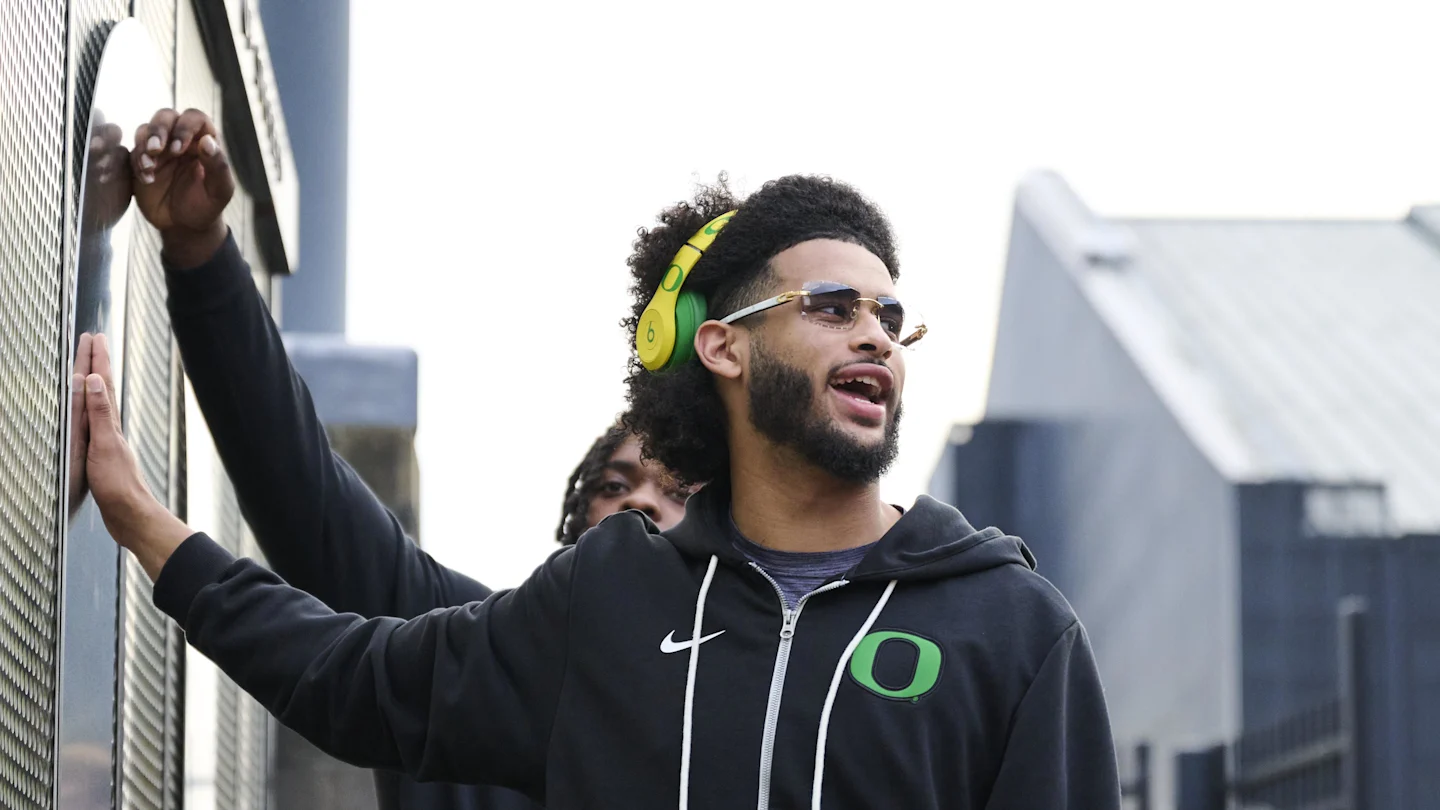
Quarterback Dante Moore is currently leading the No. 5 Oregon Ducks in the College Football Playoff, and faces a major decision while also preparing to face the No. 4 Texas Tech Red Raiders in the Orange Bowl on New Year’s Day. Will Moore declare for the NFL Draft and forgo his final year of college eligibility, or will he return to Eugene, Oregon, for his senior season?
How NIL Could Impact Dante Moore’s NFL Draft Decision
According to On3, Moore has an NIL valuation of $2.3 million, and his roster value is projected to be $2.1 million. His NIL valuation is the 14th-highest in the country, per On3’s rankings, and it’s the highest on Oregon’s roster as well. Other notable quarterbacks like Texas’ Arch Manning, Michigan’s Bryce Underwood, Indiana’s Fernando Mendoza, and Nebraska’s Dylan Raiola all rank above Moore in terms of NIL valuation.

However, Moore is widely considered to be one of the top prospects in the upcoming NFL Draft if he chooses to declare. From a pure football perspective, Moore and Mendoza have seemingly separated themselves as the top quarterbacks in the 2026 NFL Draft class.
From an NIL perspective, Moore lacks the star power of a quarterback like Manning or Mendoza, especially after the Indiana passer’s Heisman Trophy win. Still, Moore has inked NIL deals with Nike, eBay, and Beats by Dre.
MORE: Big Ten Team Emerges as Dark Horse in National Championship Odds
MORE: Oregon Ducks Could Steal Another Transfer Portal Player From USC Trojans
MORE: Oregon Fans Won’t Like ESPN’s Score Prediction For Texas Tech vs. Ducks
SIGN UP FOR OUR NEWSLETTER HERE!

For Moore to turn down the NFL Draft as a projected top-five pick, Oregon would clearly need to make a competitive offer to keep Moore in college. Additionally, Moore and the Ducks could buy draft protection insurance to protect Moore from any injuries that would hurt his earning potential as a professional athlete.
NFL Draft Deadline
Underclassmen that are not participating in the CFP must declare for the NFL Draft by Jan. 5, but Moore and other players in the postseason have a deadline of Jan. 23. The length of Oregon’s season is to be determined, but Moore could wait until late January to reveal his plans for 2026.
Oregon will face No. 4 Texas Tech on New Year’s Day in the Orange Bowl, and the winner of the Orange Bowl will face the winner of No. 9 Alabama vs. No. 1 Indiana on Jan. 9 in the Chick-Fil-A Peach Bowl in Atlanta, Georgia, in the CFP Semifinals. The National Championship will not be played until Jan. 19, explaining the later NFL Draft deadline for underclassmen participating in the CFP.
However, a few Ducks have already announced their intentions to forgo the NFL Draft and return to Oregon for another season. Ducks center Iapani “Poncho” Laloulu and defensive lineman Bear Alexander will spend another year in Eugene, Oregon.

Will ‘Poncho’s’ decision have any impact on what Moore chooses? The Ducks will have a new offensive coordinator with Will Stein being hired by Kentucky as the Wildcats’ newest head coach. With a lot of factors at play, including NIL, Moore’s decision is the biggest one on Oregon’s roster ahead of the 2026 season.
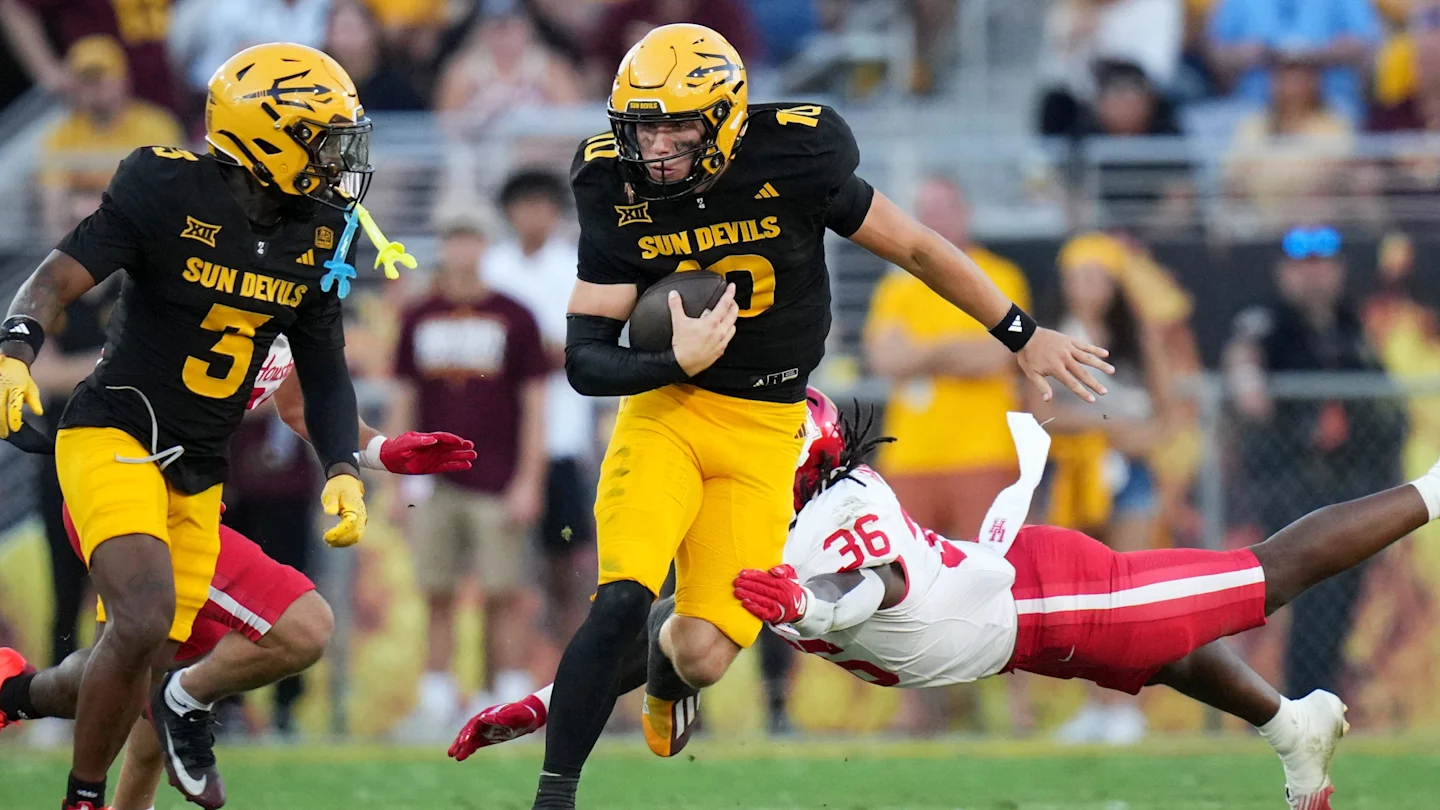
A week out from the transfer portal officially opening, some top college football stars have indicated the intention to move on to a new school. Per On3sports’s rankings, here are the top five portal prospects, and a likely landing spot (or two) for each.
Sam Leavitt, Arizona State QB
Despite many more QBs entering the portal, Leavitt remains at the top of the list of the top portal passers. Leavitt’s 2025 season was limited to just seven games, in which he threw for 1,628 yards and 10 touchdowns. He showed more in 2024, taking ASU to the College Football Playoff with over 3,300 all-purpose yards and 29 touchdowns.
Leavitt is thought to be focusing in on Indiana and Oregon as potential landing spots. He’ll have two years to play and figures to be one of the top passers in college football, wherever he lands.
In 2024, he helped Arizona State reach the College Football Playoff by passing for 2,885 yards and 24 touchdowns and rushing for 443 yards and five more scores. His 2025 season was cut short by an injury in October, but in the portion of the year he could play, Leavitt passed for 1,628 yards and 10 scores in just seven games.
Chaz Coleman, Penn State DE
Colemani is an elite 6’4″ edge rusher who didn’t see a ton of time at Penn State in 2025 as a freshman. Coleman played in nine games, making eight tackles, including three tackles for loss with one QB sack.
Coleman has been projected as likely to end up at Ohio State, where the Buckeyes have done well in developing pass rushers. His position coach at Penn State has now been hired at South Carolina, so the Gamecocks might be a surprise contender on his recruitment.
Drew Mestemaker, North Texas QB
Mestemaker is one of those players who seemingly emerged from nowhere. A former-walk on, he passed for 4,129 yards and 31 touchdowns as a redshirt freshman at North Texas. The 6’4″ QB has three years of eligibility left.
The likely landing spot for Mestemaker remains Oklahoma State, where his North Texas coach Eric Morris has settled. He has also been linked with Texas Tech as one of several other schools interested in the talented young QB.
Byrum Brown, South Florida QB
Brown has spent four years at South Florida, but did preseve his redshirt year in 2022. Last season, he threw for 3,158 yards and 28 touchdowns while running for another 1,008 yards and 14 scores on the ground. He’s the premier dual-threat QB in this transfer class.
Brown’s most likely landing spot will be Auburn, where his USF coach Alex Golesh has landed. Florida is another school that has been documented as a possibility, as former Tulane boss Jon Sumrall will need a talented passer to lead his offense.
Jontez Williams, Iowa State CB
Williams was injured in late September and missed most of the 2025 season, but is a talented defensive back. The 6’2″ defender picked off four passes in 2024 and broke up five more passes. He’ll have two years of eligibility remaining.
Williams hails from Florida and Miami has been notable as a contender for his next landing spot. Of course, Iowa State coach Matt Campbell has moved on to Penn State, so the Nittany Lions should probably be in the conversation as well.


UAB star Iverson Hooks is choosing to enter the transfer portal. His decision not to continue his college football career creates an interesting situation regarding his NIL money.
Does he owe it all back to the Blazers?
I do not know the specific terms of Hooks’ agreement with the university but it appears as though he is on the hook (pun intended) for every single penny he has ever received while in Birmingham. This could get litigious.
Who is Iverson Hooks?
Hooks is not a name you would know unless you are a diehard fan of college football. He was one of the best players on the Group of Six level in 2025.
The former three-star recruit committed to UAB in the Class of 2022 over 11 other offers from schools like UCF, Arkansas State, Western Kentucky and Troy. His first three years with the program saw him record 25 catches for ~300 yards and three touchdowns.
This past season was a huge breakout year for the 5-foot-10, 175-pound pass-catcher.
Hooks caught a team-high 72 passes for a team-high 927 yards and seven touchdowns. He has two years of eligibility remaining.
However, the rising redshirt junior does not plan to finish out his career in Birmingham. Hooks is going to enter the transfer portal.
How much money does he owe back to UAB?
This is where things get murky.
The exact details of Iverson Hooks’ financial agreement at UAB are unknown. Perhaps it had already reached its conclusion after four seasons. I don’t know. Maybe there is no buyout attached to his deal.
However, there is a specific clause for termination attached to a majority of contracts with Blazer Impact, the primary NIL arm in Birmingham.
“If Blazer Impact terminates the Agreement pursuant to Section 13.1.2, 13.1.3, 13.1.4, or 13.1.7, Licensor shall pay Blazer Impact a lump sum payment, as liquidated damages and not a penalty, 100% of all Licensing Fees and Endorsement Activity Fees that were paid to Licensor under the Agreement through the date of termination, or 100% of the total Licensing Fees and Enforcement Activity Fees that were scheduled to be paid to Licensor under the remaining term of the Agreement, whichever amount is more. Licensor shall pay the above liquidated damages within 30 days of termination by Blazer Impact.”
This may not apply to Hooks. He might be exempt based off of the unique language in his unique contract. We don’t know.
If he is not exempt, Hooks will be expected to pay back every last dollar he was paid by Blazer Impact over the last four years. Maybe the bigger school that ultimately receives his commitment will pay the buyout? Maybe this will go to court. We’ll see.
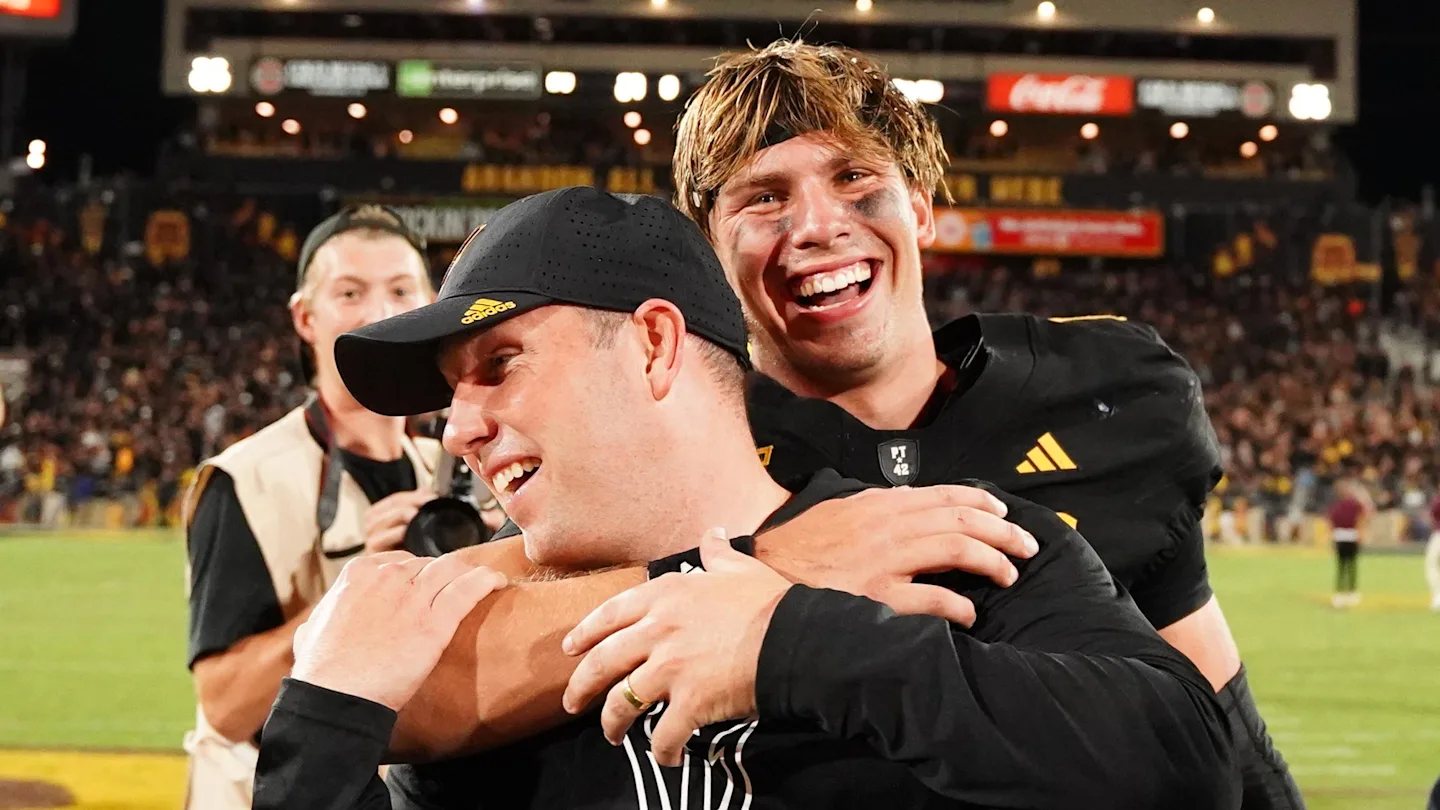
Although he hasn’t made his intentions known, Oregon Ducks’ quarterback Dante Moore has a chance to become one of the top players selected in the 2026 NFL Draft if he chooses to declare. The junior quarterback has thrown for 3,046 yards and 29 touchdowns, leading the Ducks to their second straight College Football Playoff appearance.
If Moore does wind up turning pro, here are three quarterback transfers who the Ducks could wind up targeting this offseason.
1. Sam Leavitt

One of the top players who will enter the transfer portal is Arizona State’s Sam Leavitt. He helped the Sun Devils to a Big 12 title and a CFP appearence in 2024. This past season, he was plagued by an injury that limited him to just seven games.
Leavitt will have plenty of suitors interested in his services and the Ducks should be among them if Moore ends up declaring for the draft. He is currently ranked as the No. 1 quarterback and No. 2 player in the transfer portal according to 247Sports’ rankings.
Although his NIL price tag will be high, the Washington state native could be the perfect one-year rental for Oregon as they aim to make the CFP for a third straight season in 2026.
2. Drew Mestemaker

Arguably the biggest riser from the entire 2026 season, North Texas’s Drew Mestemaker, a former walk-on, exploded onto the scene and led the country with 4,129 yards and threw for 31 touchdowns in his first season as the Mean Green’s starter.
Mestemaker would be another solid choice as a one-year rental for Oregon. The jump from the American to the Big Ten would be a big one in terms of competition, but the surrounding cast around him will be strong. He ranks as the No. 2 quarterback and No. 3 player in the portal.
MORE: Dan Lanning Reveals Oregon Ducks’ Christmas Plan Ahead Of Texas Tech
MORE: Tickets Surge For Oregon vs. Texas Tech In Historic Orange Bowl
MORE: Oregon Quarterback Dante Moore Becoming Biggest Question of NFL Draft
SIGN UP FOR OUR NEWSLETTER HERE!
3. Kenny Minchey

The only unproven option on the list, Notre Dame’s Kenny Minchey lost the starting competition to CJ Carr before the start of the year. He only appeared in six games for the Fighting Irish before electing to hit the transfer portal at the end of the regular season. Minchey threw for 196 yards this season.
The potential is there with Minchey, who was a former highly-touted recruit. He was the No. 14 quarterback and No. 169 player in the country during the 2023 recruiting cycle according to 247Sports’ rankings. As a transfer, he checks in as the No. 9 quarterback and No. 23 player in the country.
If Minchey does land with Oregon, he could be a multi-year starter for the Ducks similar to a situaion with Joe Burrow and LSU. Burrow, a talented high school recruit, was beat out at Ohio State and transferred to LSU where he was a two-year starter for the Tigers.
Recommended Articles
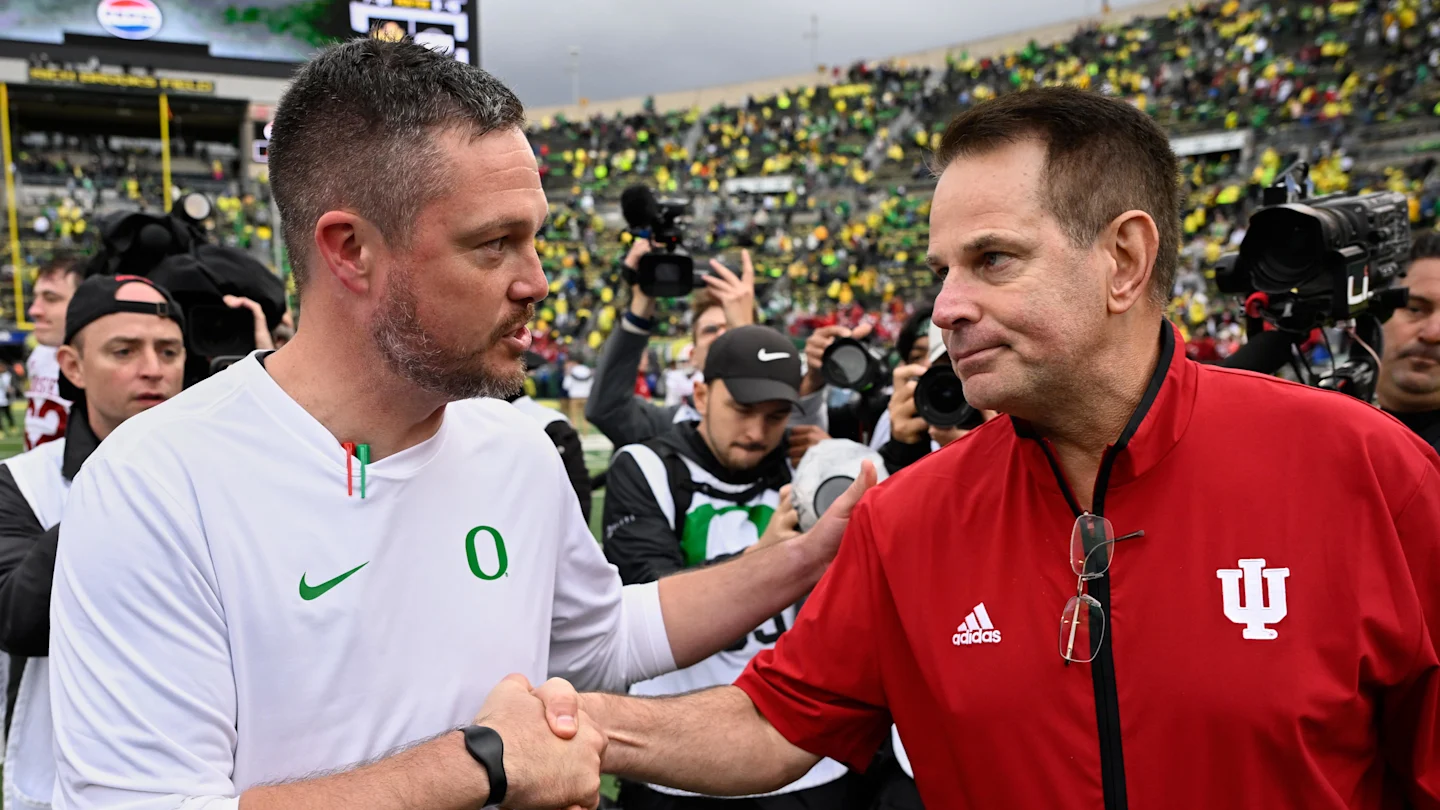
The Oregon Ducks are among the eight teams left in the College Football Playoff. Next up for the Ducks are the Texas Tech Red Raiders in the Orange Bowl.
With the college football season winding down, who are the favorites to win the national championship?
Oregon With 4th Best National Title Odds

According to DraftKings Sportsbook, Oregon has the fourth best odds to win the national title at +750. Here are the odds for all of the remaining teams:
Ohio State Buckeyes +190
Indiana Hoosiers +320
Georgia Bulldogs +475
Oregon Ducks +750
Texas Tech Red Raiders +850
Alabama Crimson Tide +1800
Miami Hurricanes +2200
Ole Miss Rebels +2500
The path for the Oregon to win their first national championship in program history will begin at the Orange Bowl against Texas Tech. The Ducks are currently a 2.5-point favorite over the Red Raiders. If Oregon were to win this game, they would advance to the semi-finals against the winner of the Indiana-Alabama game. With Indiana and Ohio State being the top two teams in the rankings and betting odds, it solidifies Oregon as the Big Ten dark horse.

Oregon has seen Indiana one time already this season. They faced off in October in Autzen Stadium and the Hoosiers handed the Ducks their only loss of the season to this point. It was an impressive showing for Indiana, who put the country on notice in this game by snapping the nation’s longest active home winning streak.
The Ducks were in the quarterfinals of the playoff last season after earning the No. 1 overall ranking in the field and earning a first round bye. Their run did not last long as Ohio State beat them in the Rose Bowl.
MORE: Dan Lanning Reveals Oregon Ducks’ Christmas Plan Ahead Of Texas Tech
MORE: Tickets Surge For Oregon vs. Texas Tech In Historic Orange Bowl
MORE: Oregon Quarterback Dante Moore Becoming Biggest Question of NFL Draft
SIGN UP FOR OUR NEWSLETTER HERE!
Ohio State Favored To Repeat As National Champions

The favorites heading into the quarterfinals is Ohio State. This comes as no surprise as the Buckeyes have been the odds on favorites to win the national title for a majority of the season. They looked as dominant as ever in the regular season, allowing just about eight points per game. The Buckeyes had a hiccup in the Big Ten championship game, where they lost to Indiana.
If Ohio State were to win the title this season, it would be their second in a row. After earning the No. 8 seed in the playoff last season, the Buckeyes ran through the rest of the field, beating Tennessee, Oregon, Texas, and Notre Dame to win their first national championship since the 2014-15 season.
Ohio State is ranked No. 2 this year and will face No. 10 Miami in the Cotton Bowl. The Buckeyes are heavy favorites with a 9.5-point spread in their favor for that quarterfinal matchup.
- Game odds refresh periodically and are subject to change.
- If you or someone you know has a gambling problem and wants help, call 1-800-GAMBLER.

In the wake of the University of Georgia Athletic Association (UGAA) recently suing him for $390,000 over a breached NIL deal, Missouri defensive end Damon Wilson II—who played for the Bulldogs in 2023 and 2024—sued UGAA and others on Tuesday. Wilson insists his NIL deal wasn’t a contract and thus isn’t enforceable, and that UGAA falsely told other schools he had to pay a $1.2 million buyout to transfer.
Wilson’s complaint was filed in Boone County (Mo.) Circuit Court, a potentially friendlier forum for the Tigers star than Athens-Clarke County (Ga.) Superior Court, where UGAA sued him in October.
Advertisement
More from Sportico.com
As detailed by Sportico, UGAA seeks a court order to compel arbitration. On Dec. 21, 2024, Wilson signed what UGAA says was a 13-month, $500,000 NIL deal with Classic City Collective (CCC)—a Georgia-aligned former NIL collective that shut down after U.S. District Judge Claudia Wilken approved the House settlement. In that process, CCC assigned its Wilson contract to UGAA, meaning the athletic association has the legal right to enforce the contract.
Four days after he signed the original agreement—Christmas Day 2024—CCC paid Wilson $30,000. In early January, the player entered the transfer portal and then joined Missouri. UGAA contends that Wilson breached his NIL deal by entering the transfer portal and that the deal contains a $390,000 liquidated damages provision. In general, a liquidated damages provision is designed to clarify the amount of money a contracting party owes in the event of a breach.
Through Jeff Jensen, Bogdan Susan and other attorneys from Torridon Law and Holder Susan Slusher, Wilson offers a very different retelling of events.
Advertisement
Wilson argues he only signed a term sheet that “contained a non-binding list of key terms” that “would be used to create a legally binding document.” The term sheet, Wilson says, went so far as to say it “precedes” a “full License and Option Agreement” that would reflect a “full legal contract.” The term sheet also allegedly directs Wilson to “seek legal counsel” before signing a “full License and Option Agreement.” Wilson says CCC didn’t present him with the full agreement and thus he wasn’t in contract with CCC.
Wilson’s complaint implies he was surprised when, four days after signing the term sheet, he was paid $30,000. When CCC later demanded he pay $390,000, Wilson says that was part of UGAA’s “coordinated effort” to “strong-arm” the player and “punish” him for entering the portal. Wilson contends that UGAA has violated confidentiality provisions in the term sheet by leaking term sheet provisions “to sympathetic news outlets and affiliates to tarnish Wilson’s reputation.”
Further, Wilson claims that UGAA has no right to compel arbitration since—he says—he never agreed to mandatory arbitration. As described by Wilson, the term sheet ambiguously references “arbitration” and omits key details including the method for appointing an arbitrator, the applicable procedure for arbitration and a specific scope of topics subject to arbitration.
Wilson describes UGAA and by extension “sophisticated and prominent universities like Georgia” as “exploiting their bargaining power” in the aftermath of the House settlement. Among other features, the settlement allows participating colleges to directly pay athletes a share of up to 22% of the average power conference athletic media, ticket and sponsorship revenue. Wilson points out this new framework means schools can “directly enter into NIL agreements” with athletes and “thus no longer rely on a collective or similar intermediary to arrange NIL deals.” He contends schools are abusing this newfound power to convince athletes “to sign NIL agreements with unconscionable and unenforceable provisions that the universities can use to threaten a student-athlete who is considering transferring and prevent the student-athlete from realizing the benefits of free and open competition for their athletic services.”
Advertisement
Much of Wilson’s complaint rebukes the liquidated damages provision. Wilson claims UGAA “weaponized this provision” by “falsely representing” to coaches of at least three other schools where Wilson “actively discussed potentially transferring” that he would be liable for a $1.2 million buyout.” These alleged representations, Wilson argues, financially harmed him since it denied him a chance to realize “the benefits of free and open competition for his athletic services and his NIL licensing rights.”
The Missouri DE also attacks the structure of the liquidated damages provision. He argues it “makes no attempt” to connect what he would have to pay with a “reasonable estimate of the harm to CCC that would result from a breach.” In other words, Wilson describes the provision as imposing an excessive penalty that is more about punishing him than compensating CCC. Wilson says the provision is “masquerading” under the moniker “liquidated damages” when it should be better understood as an unconscionable “penalty provision” designed to retaliate against him for entering the transfer portal.
Wilson’s complaint seeks a judicial declaration that the term sheet is unenforceable, or if it is enforceable, the arbitration and liquidated damages provisions within it are unenforceable. Claims for tortious interference, civil conspiracy, defamation and breach of confidentiality are included, too.
“Damon never had a contract with them,” Jensen, Wilson’s attorney, said in a statement. “I don’t see how Georgia thinks intimidation and litigation will help their recruitment efforts—maybe players could bring lawyers with them to practice.”
Advertisement
In the coming days and weeks, expect attorneys for UGAA to raise several counterarguments.
They will assert the dispute should be heard in Georgia, not Missouri, since UGAA filed first and the center of the controversy arguably occurred in Georgia. UGAA attorneys will also contend that Wilson and CCC signed an enforceable contract that contains the basic elements of a contract, including offer, acceptance and, with Wilson accepting the $30,000 payment, a bargained-for exchange.
Similarly, UGAA will insist the arbitration and liquidated damages provisions are reasonable in the context of NIL at a power conference school and binding. To that end, expect UGAA to note that Wilson was an adult when he signed the NIL contract/term sheet—he was 19 years old and thus not a minor—and that CCC’s recommendation he hire an attorney didn’t create an obligation on the part of CCC to stop negotiating with him if he hadn’t secured an attorney.
Best of Sportico.com
Advertisement
Sign up for Sportico’s Newsletter. For the latest news, follow us on Facebook, Twitter, and Instagram.

Dante Moore’s NIL Valuation As He Weighs NFL Draft Or Oregon Ducks

Predicting landing spots for the top 5 college football transfers (Dec. 26)

Men’s Volleyball Picked Second In Preseason AVCA Poll

Hendrick Motorsports reveals rare ‘Days of Thunder’ photos with Tom Cruise, others

Racing Ritual Announces Grand Opening of Premier Racing Simulator Experience in Tempe, Arizona

Gibbs-Lawhorn Named Raising Cane’s Outstanding Rebel Of The Week

Out of indoor eligibility, Texas A&M’s Hellmuth transfers to LSU beach volleyball program

Iverson Hooks Triggers NIL Money Dispute With UAB Contract

A&M Volleyball’s Lednicky signs professional contract with LOVB Houston | KWKT

Purdue Volleyball Loses Freshman to NCAA Transfer Portal

Aggies Sign Mountain West Freshman of the Year Eliza Sharp to 2026 Class – Texas A&M Athletics

Three Potential Quarterback Transfers That Make Sense for Oregon Ducks

Real Madrid ready to part ways with midfielder to accommodate former youth prodigy

Weatherly youth teams were toast of town – Hazleton Standard Speaker

Granby native leads MSU Denver volleyball team to first national title

SoundGear Named Entitlement Sponsor of Spears CARS Tour Southwest Opener

Jo Shimoda Undergoes Back Surgery

Redemption Means First Pro Stock World Championship for Dallas Glenn

Black Bear Revises Recording Policies After Rulebook Language Surfaces via Lever

Bowl Projections: ESPN predicts 12-team College Football Playoff bracket, full bowl slate after Week 14

Donny Schatz finds new home for 2026, inks full-time deal with CJB Motorsports – InForum

Robert “Bobby” Lewis Hardin, 56

How this startup (and a KC sports icon) turned young players into card-carrying legends overnight

How Donald Trump became FIFA’s ‘soccer president’ long before World Cup draw

Men’s and Women’s Track and Field Release 2026 Indoor Schedule with Opener Slated for December 6 at Home

David Blitzer, Harris Blitzer Sports & Entertainment

Indiana’s rapid ascent and its impact across college football

Michael Jordan’s fight against NASCAR heads to court, could shake up motorsports
Wisconsin volleyball sweeps Minnesota with ease in ranked rivalry win

Pohlman admits ‘there might be some spats’ as he pushes to get Kyle Busch winning again





-
 Motorsports2 weeks ago
SoundGear Named Entitlement Sponsor of Spears CARS Tour Southwest Opener
-
 Motorsports3 weeks ago
Donny Schatz finds new home for 2026, inks full-time deal with CJB Motorsports – InForum
-
 Rec Sports3 weeks ago
David Blitzer, Harris Blitzer Sports & Entertainment
-
Sports3 weeks ago
Elliot and Thuotte Highlight Men’s Indoor Track and Field Season Opener
-
 Motorsports3 weeks ago
Rick Ware Racing switching to Chevrolet for 2026
-
 NIL3 weeks ago
Colleges ponying up in support of football coaches, programs
-
Sports3 weeks ago
West Fargo volleyball coach Kelsey Titus resigns after four seasons – InForum
-
 Sports2 weeks ago
#11 Volleyball Practices, Then Meets Media Prior to #2 Kentucky Match
-

 NIL2 weeks ago
DeSantis Talks College Football, Calls for Reforms to NIL and Transfer Portal · The Floridian
-

 Technology3 weeks ago
Wearable Gaming Accessories Market Growth Outlook