
NIL
136 teams, 20 tiers: Ranking all FBS programs ahead of the 2025 season

-

David Hale
If there’s one thing we’ve learned from the debate among the Big Ten, SEC, ACC and Big 12 over the future of the College Football Playoff, it’s that committees are awful. They get it wrong nearly every year despite the fact that they’ve mostly gotten it right.
Of course, Top 25 lists are no better. You know who votes in those? Reporters and coaches. Reporters clearly don’t know ball, and coaches don’t have the time to watch the games. We can’t trust them either.
There was a time when we entrusted computers with assembling a proper ranking of teams. The BCS crunched the numbers based on some nebulous inputs and spat out the results. And while it might feel as if ChatGPT could step in now and become a neutral arbiter, it would also be one more step toward our eventual demise as a species. If humans can’t rank college football teams, it’s just a matter of time before we’re all controlled by a sentient version of those coffee delivery drones.
No, there is really just one honest way to evaluate college football’s 136 FBS teams, and that is to sort through all the data, talk to a host of coaches and players and analysts, and then unilaterally put them into tiers.
And with that, we give you the most official, guaranteed-to-be-accurate, tiered preseason ranking for the 2025 season.
Jump to a section:
Cream of the crop | Teams that are hot | Big Ten’s ticking clocks
Room for improvement | Could be talked into them

Tier 1a: A great matchup for Week 1 and/or the championship game (two teams)
Ohio State
Texas
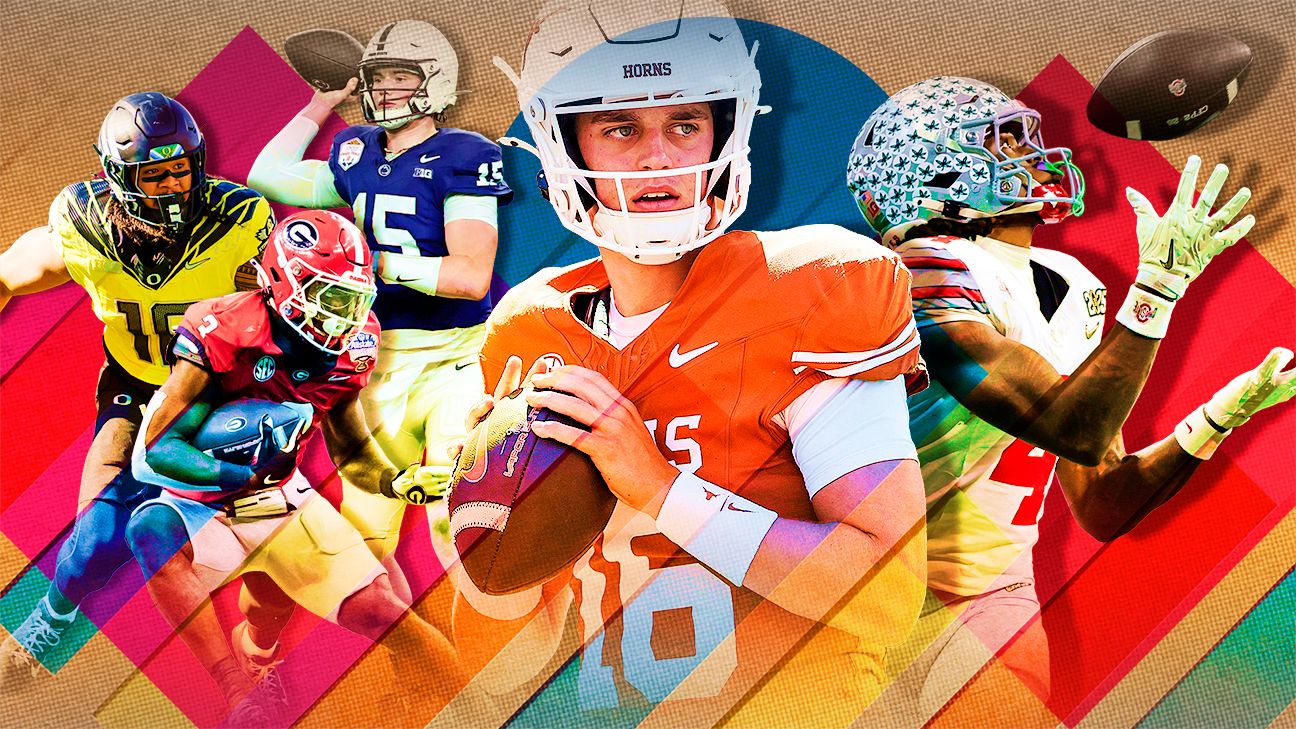
Last season, Ohio State won a national championship and, according to virtually every coach we’ve asked, the Buckeyes were the most talented team in the country all along. Only, if the playoff had waited one more year to expand, Ohio State would’ve missed out, and Ryan Day might’ve been looking for a job.
There’s a fun thought experiment to be done with those facts in mind: Did expanding the playoff give more teams an opportunity to win it all, or did it simply ensure that the best teams wouldn’t miss their chance due to something fluky (or, in Ohio State’s case, something that has become increasingly common)?
We pose this question because it might apply to the Buckeyes again in 2025. With a bevy of veterans off to the NFL from the 2024 national championship team and a fresh-faced quarterback taking over the offense, it’s entirely reasonable to think Ohio State might need a few weeks to get rolling again. The only problem is the Buckeyes don’t have an inch of runway: Texas is waiting in Week 1.
In another era, this game would be not just the marquee event of the opening weekend but a turning point in the season. The loser would then face another 11 games while residing on a knife’s edge. A second loss — to Michigan, perhaps — would doom the Buckeyes. Texas would still have an entire SEC slate ahead with no margin for error. And yet, it could still be entirely true that the loser of this game would have a claim to the title of the country’s most talented squad.
Of course, this is the 12-team playoff era (and soon to be the 14-, 16- or, if Eli Drinkwitz has his way, 30-team playoff era) which means that the first showdown between Ohio State and Texas will be but an appetizer, and the schools will remain the two most likely to hoist the trophy in late January.
Is that better? Would the 2024 campaign have been more fun if Ohio State had been left out because of the loss to Michigan?
With all due respect to the folks in Ann Arbor nodding their heads like they’re at a Pantera concert, the verdict seems to be that the sport benefits when the best teams get as many bites at the apple as they need to close the deal.
Tier 1b: The rest of the best (three teams)
Georgia
Oregon
Penn State
At this year’s SEC media days, we posed a question to one of the league’s upper-tier coaches: How many teams each season can really win it all?
His answer: Four. Maybe five.
This is the secret that few in college football like to discuss, because it invariably quashes hope for lots of other fan bases, and aside from five-star recruits, hope is a program’s most valuable asset.
But this coach is certainly not alone. It’s a theory posited again and again by folks inside the sport. Just which four or five teams it is might change from year to year, but no matter how much the playoff expands, the number of teams that realistically have a chance to still be standing at the end remains mostly fixed.
That’s sort of the point of why we’re ranking teams by tiers. There are lots of “good” teams, but how many are really within striking distance of winning a national title? Probably four or five.
Now, we could be wrong about the makeup of that five-team upper tier. There’s a first time for everything, after all. But if we’re looking at top talent, a path to the playoff and recent history and we’re properly reading our Magic 8 Ball, then Georgia, Oregon and Penn State are at the front of the line (alongside Ohio State and Texas).
The potential pitfall for each? QB play.
Georgia turns things over to Gunner Stockton, who started last year’s playoff loss to Notre Dame but also drives a 1985 Ford F-150. Aside from a Trans Am with a giant gold bird on the hood, there’s no better vehicle a QB can drive to provide assurance that he knows what he’s doing.
At Oregon, Dan Lanning turns to Dante Moore, the former prized recruit for UCLA who learned behind Dillon Gabriel last season. Moore has ample talent to get the job done, and if he struggles early, there’s at least a 20% chance Phil Knight bribes Tom Brady to come out of retirement, don a fake mustache and use the name “Dom Frady” to lead the Ducks to a title.
And then there’s Drew Allar, who enters his second year with offensive coordinator Andy Kotelnicki alongside arguably the most talented supporting cast in the Big Ten. The pressure is on for Allar — who has been very good but not entirely elite — to finish the job. We can’t help but feel like Penn State replacing the old press box at Beaver Stadium is exactly the type of curse-ending decision Allar and the Nittany Lions needed to change their fortunes.
Tier 2: Playoff expectations (six teams)
Alabama
Clemson
Miami
Michigan
Notre Dame
LSU
Anything less than a playoff appearance would feel like a serious disappointment for the teams in Tier 2. None feels like an absolute lock, though.
Michigan’s schedule is certainly accommodating. The only team on the docket to finish 2024 with more than seven wins is Ohio State, on the final Saturday of the regular season. But Michigan also has QB questions, with freshman Bryce Underwood considered the likely starter. Last season’s offensive woes led to five losses on the heels of a national title, so getting the QB choice right is imperative.
Notre Dame and Alabama are breaking in new QBs, too. CJ Carr has plenty of hype, and the Irish probably have their best skill position depth in Marcus Freeman’s tenure. The Tide lost four games last season for the first time since Nick Saban’s debut campaign. Patience will be thin in Tuscaloosa, making Kalen DeBoer’s handling of the quarterbacks room a tricky situation. Ty Simpson, a once-prized recruit, has the inside track, but freshman Keelon Russell is incredibly talented. Could this look a little like the 2016 opener, when Blake Barnett got the start only to be benched in favor of a freshman by the name of Jalen Hurts after two drives?
LSU hasn’t won an opener since 2019. Clemson has lost three of its past four openers. Something has got to give when the two teams face off in Week 1. Clemson can probably survive a defeat, even if Dabo Swinney’s critics will begin the chorus once again that he’s past his prime. LSU will have a tougher time recovering with a schedule that still includes Florida, Ole Miss, South Carolina, Texas A&M, Alabama and Oklahoma. Brian Kelly’s head exploding with fire like the red guy in “Inside Out” should at least provide some entertainment if things go south in Baton Rouge.
Then there’s Miami, a team with all the talent to make a title run but enough self-inflicted wounds over the years to wonder whether it’ll be the likes of Stanford or Virginia Tech that trips up the Canes.
(Note: It’ll be Syracuse. We all know it’ll be Syracuse.)
Tier 3: Someone in the SEC has to lose games, too (six teams)
Florida
Oklahoma
Ole Miss
South Carolina
Tennessee
Texas A&M
Fun fact: All 16 SEC teams rank among the 20 hardest schedules in the country, according to ESPN’s metrics, from the grueling path for Florida (No. 1) to the easy (relatively speaking) slate at Missouri (No. 20).
We know you’re shocked to learn that life is difficult in the SEC. The league so rarely mentions its depth or strength of schedule, and its coaches are reticent to suggest that their teams deserve any additional benefit of the doubt as a result. Oh wait, they’re actually contractually obligated to mention it in every interview.
Lane Kiffin drew the ire of some ACC fans when he said another SEC coach suggested it’d be easier to play Clemson each week than an SEC schedule. That might have been an exaggeration, but according to ESPN Research, a slate that included eight games against Clemson plus a reasonable nonconference schedule would work out to be almost exactly as difficult as the schedule Florida plays this season.
The Gators play eight teams that have spent time in the AP top 10 in the past two seasons, all of which have rosters boasting a blue-chip recruit majority. By SP+, the Gators get six of the top 13 teams (and also Long Island). It’s a schedule DJ Lagway called “fun” and Florida fans call “less enjoyable than a root canal.”
Now, others might parse the data differently, but the bottom line is inarguable: No one in the SEC has an easy ride to the playoff, which makes Tier 3 likely to include at least two playoff teams and at least two schools that fire their coaches, and the difference between those camps will be a few plays one way or the other.
The SEC is designed to eat itself, which is one of the reasons it has pushed so hard for increased playoff access. There’s simply not a scenario in which every school that invests in winning, has a playoff-caliber roster and features fans who expect to make a playoff run will actually do so.
Tier 4: Last year’s playoff surprises (four teams)
Arizona State
Boise State
Indiana
SMU
In 2023, Arizona State and Indiana each won three games, Boise State fired its coach after a 5-5 start, and SMU was in the American Athletic Conference and lost in a bowl game to Boston College.
In 2024, they were all playoff teams.
The initial 12-team playoff was truly remarkable in that it didn’t simply reward 12 blue bloods. It coincided with an abrupt change in the sport that allowed complete afterthoughts in September to play meaningful football in December and January.
Yes, playoff expansion was the key here, but it’s true, too, that the era of name, image and likeness, the transfer portal, and bloated conferences that equate to disparate schedules set the stage for far more volatility in the standings than ever. The top end of the bell curve might remain static at four or five elite teams, but the meat of it keeps getting wider.
Indiana and Arizona State both went from three wins to double digits. In the entire playoff era (minus the COVID-19 year), that had happened only one other time at a Power 5 school (2017 Michigan State, which promptly regressed to 7-6 the next year).
SMU came within a hair’s breadth of winning the ACC title. TCU, Utah, UCF, Cincinnati, BYU, Houston — the past six teams to move up from a non-power league — were a combined 16-38 in conference play in their first years in a Power 5 conference, and none had a winning record.
Since firing Andy Avalos after that 5-5 start, Boise State has won 15 of 18 games, with all three losses coming to Power 4 foes.
Life moves quickly in college football these days. The big question as this foursome looks to return to the College Football Playoff is whether the pendulum swings just as fast in the other direction.
(Note from Tallahassee: It does.)
Tier 5: So hot right now (four teams)
Illinois
Louisville
Texas Tech
Utah
We probably shouldn’t use last year’s playoff as an indication of what the future might hold. It’s a one-year sample size, after all. But 2024 gave us six first-time playoff teams, and odds are we’ll get two or three more this season. And when it comes to predicting which teams that might be, the schools in Tier 5 are the hottest things since Hansel hit the runway in “Zoolander.”
There’s plenty of buzz that this year’s Indiana could be Illinois. If the implication is that the Illini could be a surprise playoff team out of the Big Ten, it makes sense. But the key difference here is that Indiana came out of nowhere to go 11-1 last regular season. An Illinois run into the playoff would be far less shocking. The Illini went 10-3 last season, with two losses coming to playoff teams. They also beat Michigan (transitive property national champs!) and South Carolina (though that doesn’t count because the SEC doesn’t care about meaningless bowls). Bret Bielema has built something that looks an awful lot like his old Wisconsin teams — veteran QB, heavy dose of the run game behind a massive O-line, stout defense — capable of competing with nearly anyone. Of course, those Wisconsin teams were notable for being routinely good but never quite great. How high is the ceiling for Bielema now?
Utah enters this season as a trendy pick in the Big 12 thanks to some returning stars, an expectation that last year’s bad luck has to turn and finally opening a season with someone other than the hollowed-out shell of Cam Rising at QB.
If luck kept Utah from the Big 12 race last season, it might have kept Louisville from the playoff. The Cards lost four games — three to top-15 teams — all by a touchdown or less, along with a defeat at the hands of Stanford that will go down as possibly the single dumbest way to lose a football game that didn’t involve throwing a shoe.
And if you’re not psyched for Texas Tech this year … how much cash would it take to change your mind?
Tier 6: The Big 12 is the new ACC Coastal (four teams)
Baylor
Iowa State
Kansas State
TCU
Ever play credit card roulette? When the bill comes at a restaurant, everyone at the table puts their credit card into a hat, then the server picks one at random to pay the entire bill. That’s effectively how the Big 12 is looking right now. (In this analogy, though, Texas Tech should probably be picking up any checks.) Look at the betting markets and every team in the conference is projected to win between 5.5 and 8.5 games this season.
So, throw the names into a hat and pull one out. You’re as likely to get it right as we are.
Tier 7: Flying beneath the radar like Tom Cruise in ‘Maverick’ (five teams)
Georgia Tech
Iowa
Kansas
Minnesota
Washington
We’ve seen a lot of change in college football in recent years, which has made Iowa’s offense such a needed through line connecting the modern version of the sport with an older generation. Granted, that generation probably lived through the Great Depression, but let’s not split hairs. Nevertheless, there were signs that even the Hawkeyes might be taking a small step forward, as the offense scored 40 points in a game four times last season — something Iowa had done just four times in the previous four seasons combined. Now, Iowa has a QB it likes in South Dakota State transfer Mark Gronowski, the defense should be stout again, and nobody punts like the Hawkeyes.
Kansas was 1-5 in games decided by a touchdown or less last year but also had wins over three straight ranked teams in November. With a more settled offensive approach and the return of Jalon Daniels, this Jayhawks squad looks like a potential sleeper.
Not counting the 2020 COVID-19 season, Minnesota is one of just 15 teams to win 60% of its Power 5 games. That’s more impressive than it sounds. It’s better than Washington, Tennessee, Ole Miss, Miami and Texas A&M. The Gophers enter 2025 with a ton of intriguing options led by Koi Perich and Darius Taylor, and while the schedule includes road trips to Ohio State and Oregon, there’s certainly a path for PJ Fleck to get Minnesota back to the 10-win plateau.
Fun fact: Since Brent Key took over as head coach at Georgia Tech on Sept. 26, 2022, the Yellow Jackets have as many wins against ranked foes (six) as Clemson and more than Penn State (five), Oklahoma (four) or LSU (four). In fact, they have more than Miami, Colorado, Boise State, Indiana and BYU combined — and all five of those teams finished last year in the top 25. Of course, in that same span, Georgia Tech has losses to Virginia, Bowling Green, Virginia Tech and Vandy. So, it’s a work in progress.
Washington is a work in progress, too. In Year 1 under Jedd Fisch, the Huskies floundered to a 6-7 record, including losses to Washington State and Rutgers. But Demond Williams Jr. looks like a difference-maker at QB, and it’s worth remembering that, at Arizona, Fisch went from a completely noncompetitive 1-11 in Year 1 to 5-7 in Year 2 with one of the most improved teams in the country. Washington might still be a year away, but it wouldn’t be a surprise if the Huskies take a big leap forward now before threatening in the Big Ten in 2026.
Tier 8: Regression to the mean (the bad kind) (five teams)
BYU
Duke
Missouri
Syracuse
Vanderbilt
This group of teams won 32 games against Power 4 opponents last season. Twenty-four of those wins (75%) came by a touchdown or less.
Missouri and Duke each won four games in which they trailed in the fourth quarter.
BYU and Syracuse each were tied or trailing in the fourth quarter seven times. Each went 6-1.
Vanderbilt is Vanderbilt.
If you look up and down the list of luck-influenced metrics, these teams raise more red flags than Kanye’s Bumble profile.
Perhaps these guys all fend off the fickle college football gods for another year, but if the “Final Destination” movies have taught us anything, it’s that Ali Larter should be in more movies. But if there’s another thing they taught us, it’s that you can only avoid a disastrous fate for so long.
Tier 9: Regression to the mean (the good kind) (four teams)
Auburn
Florida State
NC State
Virginia Tech
This spring, ESPN’s Bill Connelly dug into three metrics that often rely heavily on luck: turnovers, close games and injuries. His findings: A lot went wrong for Florida State last year.
Now, it’s admirable that Connelly dug deep into the numbers, ran some regression analysis and employed NASA-level computing power to identify this. Another way to do it would’ve been to simply watch five minutes of FSU football last season, because at any given moment, something ridiculous was going wrong for the Seminoles.
You simply don’t go from 13-1 to 2-10 without the football gods deciding to do some serious smiting.
Everything that could go wrong did go wrong, from Connelly’s stats — FSU was 128th in turnover luck, 90th in close-game luck and 110th in lineup consistency — to the types of things that were probably a bit more predictable (settling for DJ Uiagalelei at QB over Cam Ward).
It should be noted that, once again, FSU has rolled the dice on a QB with a checkered past, and Tommy Castellanos seems intent on taunting the aforementioned football gods, but at the very least, some of that bad luck has to go the other way in 2025, putting the Seminoles on course to improve by a good measure.
The same can be said for Virginia Tech. The Hokies are 1-12 under coach Brent Pry in games determined by a touchdown or less, but it’s also worth noting that last year marked the first time since 2010 the Hokies didn’t lose a single regular-season game by more than 10.
NC State adds to the ACC’s run of bad luck last season, with Grayson McCall’s early-season injury upending the offense and a 45-point year-over-year swing in points off turnovers for a team that lost five games by 10 or fewer points.
But the team that might have the best chance to turn the disappointments of 2024 into a serious playoff run in 2025 is Auburn. Jackson Arnold takes over at QB for an offense loaded with skill-position talent. The defense should be solid. Then look at the luck-based numbers: Auburn was 124th in turnover luck and dead last in close-game luck, which covered up the fact it was among the best teams in the country in success and explosive play rate differential. The pieces are in place, the Tigers just need a little more luck to make a run at 10 wins.
Tier 10a: The Big Ten’s ticking clocks (three teams)
Nebraska
USC
Wisconsin
Matt Rhule, Lincoln Riley and Luke Fickell each seemed like absolute home run coaching hires. Setting aside Riley’s 11-1 start to his tenure at USC, the three are now a combined 40-39 overall with a 23-32 record in Big Ten play since Dec. 1, 2022. That has put all three in a position to make 2025 a must-win year. What exactly “winning” means probably differs a bit by school, but the pressure is on.
Nebraska might be best equipped to make the leap to the next level. Dylan Raiola goes into Year 2 running the offense, but it’ll be his first full season with Dana Holgorsen calling the plays. Add in that, at some point, Nebraska’s run of awful luck in close games has to swing the other way and it’s not unfathomable that the Huskers are in the mix for a playoff bid.
For Wisconsin, it’s a return to the Badgers’ foundations as Fickell has abandoned plans to bring an up-tempo passing attack to the stodgy Big Ten and will build around the ground game.
At USC, Riley lost a ton of big-name talent in the portal and will move forward with a QB who has 19 touchdown passes and 17 turnovers in nine career starts against teams with a winning record.
They can’t all turn it around this year, which makes this perhaps the most interesting portion of the Big Ten’s standings.
Tier 10b: The Group of 6’s other top playoff contenders (six teams)
Liberty
Memphis
James Madison
Toledo
Tulane
UNLV
Liberty is the gold standard in soft scheduling. The Flames have the worst preseason strength of schedule in the country after finishing 2024 with … the worst strength of schedule in the country. Half of Liberty’s 12 games are against teams that were at the FCS level in 2021. It has four games against first-year head coaches. Eight games come against teams that won four or fewer FBS games last year. Jamey Chadwell should have a good team, but the schedule also should make it nearly impossible to finish worse than 10-2.
UNLV and Memphis both figure to be in contention for the Group of 6’s playoff bid, and their schedules certainly make the path a little easier. The Rebels (No. 113 schedule) have a home game against UCLA and a road trip to Boise State to contend with, but they also have eight games against teams ranked 100th or worse in preseason FPI (including six ranked 120th or worse). Memphis (No. 106 schedule strength) also has a relatively clear path. The Tigers get Arkansas — their lone Power 4 opponent — at home, miss Army, Tulane and UTSA from the conference schedule, and follow the game against the Razorbacks with five games in six weeks against teams that finished a combined 15-41 vs. FBS opponents last year. If Memphis can topple the Hogs, expect the Tigers to enter November with a top-20 ranking.
Since 2022, no Group of 5 team has won more games than Tulane (32). The Green Wave ought to again be among the best of the American in terms of talent, but the schedule is no easy task to manage. In nonconference play, Tulane hosts Northwestern, goes on the road to South Alabama, hosts Duke (and QB Darian Mensah, who transferred from Tulane after last season), then travels to Ole Miss. In conference play, Tulane gets ECU, Army, UTSA and Memphis — four of the six other American teams to make a bowl last year. If Tulane makes the playoff, it will have earned the spot.
Could Toledo make a run at the playoff? The Rockets open with a trip to Kentucky, which isn’t exactly an insurmountable hill to climb unless you’re Ole Miss. Win that and the next week against Western Kentucky, and Toledo should have a little buzz. Then check out the back half of the schedule: vs. Kent State, at Washington State, vs. NIU, at Miami (Ohio), vs. Ball State and at Central Michigan. Those six teams finished a combined 16-24 in the second half of last season.
JMU has won 28 games in three seasons since moving up from the FCS, and of its nine losses, four have come by a touchdown or less. The Sun Belt is deep, but it’s not top-heavy, opening the door for the Dukes to make a run at the Group of 6’s playoff bid.
Tier 11: Potential sleepers (seven teams)
Cincinnati
Colorado
Houston
North Carolina
Pittsburgh
Rutgers
Virginia
This tier includes Deion Sanders and Bill Belichick so, for media purposes, it should probably be Tier 1. But there are still some big questions surrounding Colorado and UNC.
For the Buffaloes, it’ll be the first time Coach Prime will have to go to battle without Shedeur Sanders or Travis Hunter. Colorado has topped 150 yards on designed runs only once in two years under Deion Sanders, and the Buffs’ 74 designed rush yards-per-game in that stretch is, by far, the worst in the country. How will Colorado adapt after losing two of the most explosive players in the country in the passing game?
UNC has completely overhauled its roster from the Mack Brown era, with Belichick dipping heavily into the transfer portal — including nearly three dozen spring portal additions. Numerous coaches who spoke with ESPN said this spring was an incredibly shallow pool of talent. Can that actually translate to wins, or will 2025 be more about building a foundation than reviving the program?
Instead, it might be the lower-profile programs in this tier that have the real upside.
Virginia added transfer QB Chandler Morris alongside one of the better portal classes in the ACC and plays one of the weakest schedules of any Power 4 school this season. Louisville, Washington State and Duke are the only opponents on this season’s slate that won more than six games in 2024.
Houston showed signs of promise in Year 1 under Willie Fritz with wins over TCU, Utah and Kansas State, even if the final record was ugly (4-8). An offensive overhaul led by Texas A&M transfer Conner Weigman should help a program that finished 133rd in scoring last season.
Each of the past two seasons, Rutgers has gone 6-6 with a four-game losing streak in the mix then won a bowl game. Usually, that would count as real success at a place like Rutgers, but coach Greg Schiano clearly has higher aspirations, and the Scarlet Knights might have the talent to push for bigger things in 2025.
Cincinnati blew a big lead to Pitt in Week 2. Pitt went on to start 7-0 before injuries and a handful of close losses derailed its season. Had Cincy hung on, it could’ve opened 6-1 with a win over Arizona State on its record. Instead, the Bearcats finished on a five-game losing streak and did not make a bowl. Both teams are deeper and more experienced this season, with veteran QBs and stars on defense (Kyle Louis, Dontay Corleone).
Tier 12: Even Stevens (seven teams)
Arkansas
Boston College
Cal
Kentucky
Maryland
Michigan State
UCLA
In the playoff era, BC has finished with either six or seven wins nine times.
Arkansas is 30-31 under Sam Pittman. Not counting the COVID-19 season, it’s 20-21 vs. FBS teams. The Hogs are 21-9 vs. teams with a losing record and 9-22 vs. teams with a winning record.
Cal has finished with between five and seven wins six times in the playoff era, and it has 61 games (fifth most nationally) decided by a touchdown or less.
Since 2018, Michigan State is 41-41 — though that includes seasons of 11-2 and 4-8.
Since Mark Stoops’ second year, Kentucky is 65-63 vs. FBS opponents. From 2015 to 2023, the Wildcats were 31-29 in SEC play.
UCLA is 66-64 in the playoff era, averaging 29.6 points and surrendering 29.1 points against FBS opposition.
Now, Oscar Wilde said that consistency was the last refuge of the unimaginative, but The Rock said success was more about consistency than greatness. Who are you going to believe — some long-dead writer or the star of “Jumanji: The Next Level”?
Tier 13: Stars & stripes (three teams)
Air Force
Army
Navy
Army and Navy were a combined 22-5 last season. In 2023, Air Force won nine games. In the playoff era, the military academies have 11 10-win seasons. And they’ve done it all without NIL deals or taking transfers.
Now, if we wanted to really protect America’s interests, we’d start putting tariffs on the portal and using that money to fund academy revenue sharing.
Tier 14: Room for improvement (six teams)
Arizona
Northwestern
Oklahoma State
UCF
Wake Forest
West Virginia
Arizona and Oklahoma State were a combined 20-7 (and 14-4 in conference play) in 2023. Both fell off a cliff in 2024.
The Wildcats struggled in Year 1 under Brent Brennan, but they bring back Noah Fifita at QB and showed enough life that a step forward in 2025 isn’t unrealistic.
Mike Gundy has made it a habit of having big seasons mixed with mediocre ones in the past few years, but last year’s winless Big 12 schedule was an anomaly. Gundy is high on QB Hauss Hejny, who should at least be able to open things up a bit for the run game.
Wake Forest is getting a fresh start under new coach Jake Dickert. The roster needs work — QB and O-line are blank slates — but the Deacons bring back a talented tailback in Demond Claiborne and have the weakest schedule in the Power 4.
UCF is looking to go back to the future by bringing Scott Frost home after his dismal stint at Nebraska. Frost inherited a train wreck during his first stint in Orlando and turned things around quickly — though that was in the American, not the Big 12.
For virtually the entirety of this millennium, Northwestern has effectively put the same team on the field — shaky QB, good defense, smart players — and watched as the results come up with either 10 wins and a run at the Big Ten or a 3-9 season that’s physically painful to watch.
Aside from the surprising 9-4 season in 2023, West Virginia has won either five or six games every year since 2019.
In other words, it’s hard to feel particularly good about any team in this tier, but it’s also entirely within reason that some team here wins 10 games.
Tier 15: Group of 6 with upside (15 teams)
App State
Buffalo
East Carolina
Florida Atlantic
Fresno State
Louisiana
Ohio
North Texas
South Alabama
Texas State
Troy
UConn
South Florida
UTSA
Western Kentucky
North Texas has been a perennial six-win team, but this could be the Mean Green’s chance to make a big leap up the standings. They check in only one spot ahead of Liberty with the No. 135th-ranked schedule in the country, miss ECU, USF, Memphis and Tulane in conference play, and, after Oct. 1, go on the road only three times — to Charlotte, UAB and Rice.
Florida Atlantic was another team snakebit by bad luck last season. As Connelly noted in his analysis of teams facing the worst luck, only one program finished 111th or worse in all three categories he evaluated: FAU. Now add new head coach Zach Kittley and QB transfer Caden Veltkamp and there’s a lot to like about the Owls’ upside.
South Alabama also had plenty of bad luck in close games. The Jaguars lost to Ohio, Arkansas State, Georgia Southern and Texas State — all teams that won eight or more games — by a combined 20 points.
Tier 16a: At least you tried (three teams)
Mississippi State
Purdue
Stanford
Stanford has won nine Power 5 games since 2021. Five of those wins came against teams that either finished ranked in the top 25 or were ranked there at the time of the game. Another came against Deion Sanders. Stanford makes no sense.
Mississippi State is 2-16 vs. Power 5 competition in the past two years. The two wins are by a combined 11 points. The losses are by an average of 18.
Purdue. More like Pur-don’t. We’ll show ourselves out.
Tier 16b: The lost boys (two teams)
Oregon State
Washington State
In the past 24 months, Oregon and Washington agreed to move to the Big Ten for 40 cents on the dollar. Stanford and Cal took even less from the ACC. SMU agreed to play ACC ball for nothing, and Memphis just offered the Big 12 $200 million for an invite.
Why?
Because of zombified remains of Washington State and Oregon State.
From former Cougars QB John Mateer, who transferred, along with his offensive coordinator, to Oklahoma after last season’s surprising 8-4 finish, on seeing what became of Wazzu after the Pac-12 fell apart: “I loved my time there. I never thought I’d leave. It sucked. I couldn’t control it. I was going to play against whoever I was going to play against, but it broke my heart.”
Tier 17: They’re fine. Solid. Decent. OK. (10 teams)
Arkansas State
Bowling Green
Colorado State
Georgia Southern
Miami (Ohio)
Northern Illinois
Old Dominion
San Diego State
San José State
Utah State
Bronco Mendenhall had New Mexico on the verge of a bowl last season, so it wouldn’t be a shock if he rights the ship quickly at Utah State.
Eddie George inherits a solid squad at Bowling Green, and he’s thinking — well, either aspirationally or he’s delusional — that the Falcons can win big.
Jay Norvell has gone from three to five to eight wins in his time at Colorado State. This could be his real breakthrough season.
Unfortunately for NIU, it lost out on an easy win without Notre Dame on the schedule this season.
Tier 18: We could be talked into them (eight teams)
Coastal Carolina
Hawai’i
UL Monroe
Louisiana Tech
Sam Houston
Southern Miss
UAB
Wyoming
Hawai’i won five games and missed out on beating UCLA and UNLV by a combined five points. The Rainbow Warriors are trending in the right direction.
Louisiana Tech finished 5-8, but its first six losses of the season all came by 10 or fewer points.
ULM finished on a six-game losing streak, even wasting a chance to embarrass Hugh Freeze at Jordan-Hare in late November, which had become one of our favorite Group of 5 traditions.
Tier 19: The best entertainment you’re likely to find on a Tuesday night in mid-November (12 teams)
Central Michigan
Delaware
Eastern Michigan
Florida International
Jacksonville State
Marshall
Missouri State
Nevada
Temple
Tulsa
UTEP
Western Michigan
You might be surprised to learn that Delaware is an FBS football program beginning this season. To help with your preseason preparation, here are some fun facts to familiarize yourself with the program.
The Blue Hen is the only explicitly female mascot in FBS football (not counting Ms. Wuf at NC State).
Delaware’s winged helmet design was created by former coach David Nelson, a former Michigan football player, who essentially cut and pasted his former team’s look.
Rich Gannon and Joe Flacco both played at Delaware.
Delaware is, in fact, an entire state and not just 18 miles of highway between toll booths in Maryland and New Jersey.
Tier 20: Participation trophies (11 teams)
Akron
Ball State
Charlotte
Georgia State
Kennesaw State
Kent State
Middle Tennessee
New Mexico
New Mexico State
Rice
Massachusetts
You know what they call the guy who finishes last in his class at medical school? They call him “doctor.” And so it is that the teams in Tier 20 are technically FBS football programs, though they’re as likely to finish with a conference championship as they are to finish medical school themselves.
Since the end of 2022, Kent State has had a head coach quit to become a coordinator for Deion Sanders (then be demoted), another get fired for taking loans from a booster and the program posting a 1-23 record, including 21 straight losses. Last season, Kent State was outgained by an average of 282 yards per game — 120 more than any other team. The Golden Flashes play Texas Tech, Florida State and Oklahoma in the first five weeks this season.
Last season, Ball State became only the fourth team of the playoff era (not counting the 2020 COVID season) to have a turnover margin of plus-2 or better and still be outscored by at least 14 points per game and outgained by at least 100 yards per game. So, what happens if the turnover luck is a little worse in 2025?
Then there’s Charlotte, a program that couldn’t even afford sleeves for its last head coach, has had only one winning season in its history and now faces the second-most daunting schedule of any Group of 6 team in the country. Per ESPN’s metrics, the 49ers’ schedule is tougher than those of all but one Big 12 team.


Getty
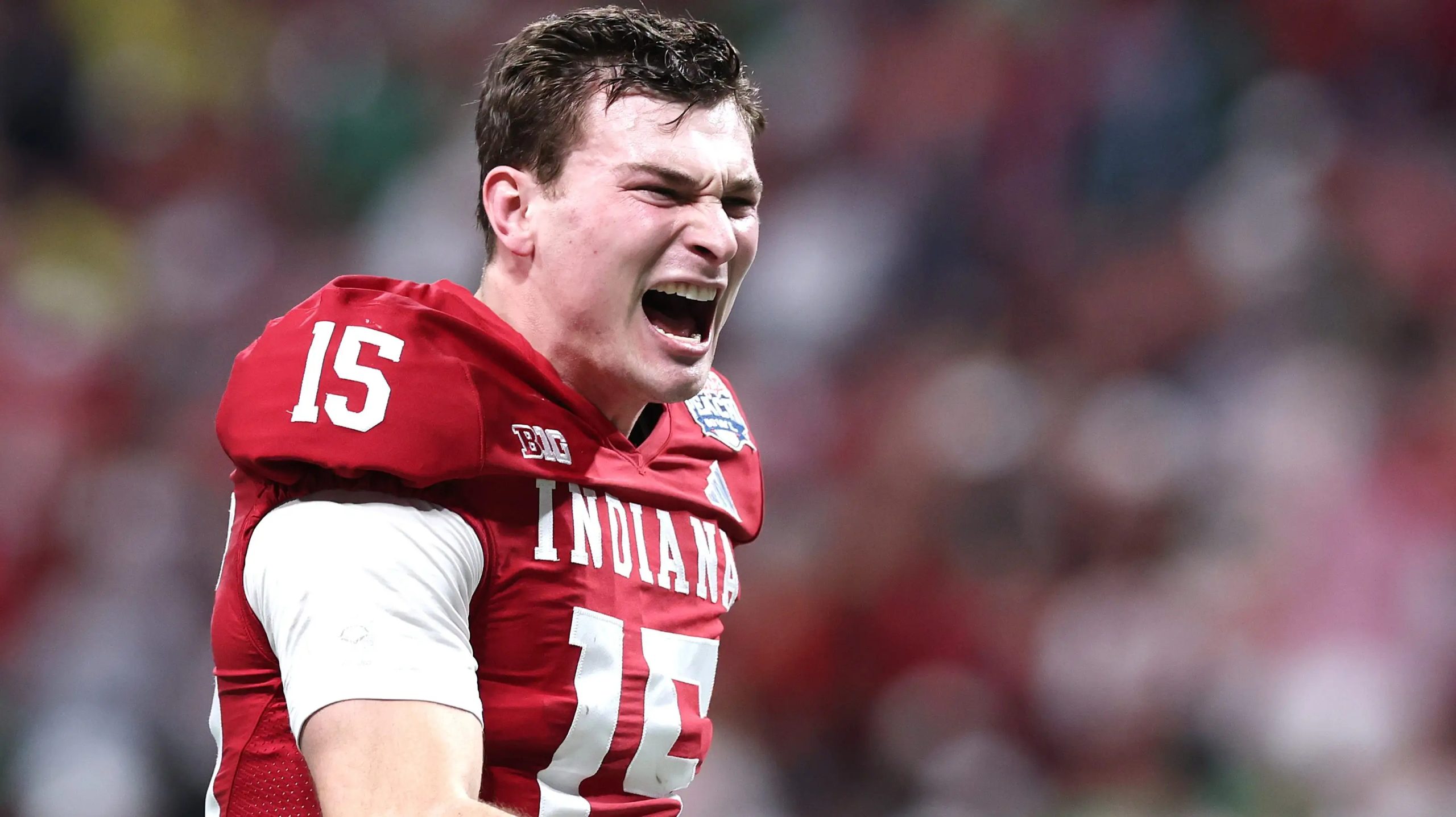
Fernando Mendoza turned down major NIL offer from Miami to join Indiana.
Fernando Mendoza has become the top quarterback in college football. The Indiana Hoosiers star captured the Heisman Trophy and is now one win away from leading Indiana to its first national championship in program history.
Indiana will meet the Miami Hurricanes at Hard Rock Stadium in Miami Gardens on January 19, a matchup that adds an extra layer of intrigue.
Not only is the national championship game being played in Miami’s home stadium, it also represents a homecoming for Mendoza. He attended Christopher Columbus High School in Miami, where he won a state championship — the same school Hurricanes head coach Mario Cristobal attended.
Mendoza’s father was teammates with Cristobal at Christopher Columbus, while his mother played college tennis at the University of Miami. Mendoza grew up just a mile from the university’s campus.
That background raises a natural question: How did Mendoza end up at Indiana instead of Miami — and now find himself facing the Hurricanes in the biggest game of his career?
More Indiana football on Heavy: Indiana Football Accused of Cheating as Wild Social Media Rumor Spreads
Fernando Mendoza Wasn’t Offered by Miami
Coming out of high school, Mendoza was a three-star prospect, ranked as the No. 135 quarterback in the country and the No. 250 overall player in Florida, according to 247Sports. Despite his local ties, the only Power Four program to offer him a scholarship was California Golden Bears, where he ultimately committed.
At the time, then-Miami head coach Manny Diaz and his staff never extended an offer and were even hesitant to bring Mendoza on as a walk-on, according to The Athletic’s Dane Brugler.
Mendoza entered the transfer portal last December, and many believed he could land with his hometown team, which was searching for a replacement for Cam Ward. That scenario never materialized, even though Miami eventually made an offer.
Miami Was Turned Down by Fernando Mendoza
Miami was desperate to replace its Heisman Trophy finalist from the 2024 season and reportedly made Mendoza a lucrative NIL offer, according to Newsweek’s Ben Dogra.
“Mendoza made $2.3 million from Indiana, but he only made $100,000 at Cal,” Dogra said. “But he was offered more by the University of Miami and turned it down. That’s why they got Carson Beck.”
So why didn’t Mendoza choose Miami? Dogra said the decision had everything to do with development, despite the Hurricanes’ larger offer.
“Let’s just say Indiana was a better fit,” Dogra said. “If you’ve got a kid from Florida that goes to Cal broke for three years and then transfers to Indiana, and his NIL money is going significantly up — let’s say $2 million-plus — but he was offered $3 million-plus at Miami, his hometown, there’s a reason he didn’t take it.
“The reason he didn’t take it is because he had a better chance to become a more successful quarterback and grow to get ready for the next level. And that’s exactly what happened. So that’s coaching.”
Mendoza is now widely viewed as the projected No. 1 overall pick in the NFL draft, a selection currently held by the Las Vegas Raiders.
Before the draft becomes the focus, Mendoza has one more goal: leading Indiana to its first national championship. At this point, he is already considered a Hoosiers legend. If he delivers a title in his hometown — against the team that once passed on him — that legacy will only grow larger.
Shane Shoemaker Shane Shoemaker is a sports journalist covering college football and the NFL for Heavy.com. His work has also appeared in The Sporting News, Athlon Sports, USA TODAY, and ClutchPoints, along with high school sports coverage for the Marion Tribune. More about Shane Shoemaker
More Heavy on Indiana
Loading more stories

Nearly 5,000 Division I college football players have officially entered the NCAA transfer portal since it opened for business on January 2. The numbers are vast, but the cream of the crop always rises to the top.
There are a few positions that aren’t as deep on the open market this year, including offensive tackle and linebacker. The top players at those spots are becoming increasingly coveted by teams looking to flip their rosters ahead of the 2026 season.
MORE: 3,500-yard college football transfer QB announces commitment after All-American season
In a recruitment that has provided plenty of twists and turns, one of the most desired defenders in the portal continues to explore his options.

According to CBS Sports’ Matt Zenitz, Pittsburgh junior linebacker transfer Rasheem Biles is expected to visit Miami on Sunday, the final day before a dead period. Biles previously took trips to Texas, Michigan, and Colorado. He also cancelled a visit to Florida State.
The Hurricanes are gearing up for a national championship appearance against the Indiana Hoosiers next week, but are pulling double duty in the portal. Miami is a known spender in the NIL era, while the Longhorns and Wolverines have plenty of funds as well.
A big payday appears to be exactly what Biles is searching for, going into his final season of eligibility. There’s a good chance he’ll be able to cash in, considering his production at Pittsburgh over the last three years. Biles is ranked No. 1 among linebackers in the transfer portal, per On3.
MORE: Big 10 starter eyeing three major programs in college football transfer portal
In just ten games this past season, Biles totaled a career-high 101 tackles, 17 tackles for loss, 4.5 sacks, 2 forced fumbles, 1 fumble recovery, 4 pass deflections, 2 interceptions, and three defensive touchdowns. He tied for the most pick-sixes in the country, earning a second-team All-ACC selection. Biles ranked in the top five in the conference in total tackles and tackles for loss.
Biles broke onto the scene in 2024, recording 82 tackles, 14.5 tackles for loss, 5.5 sacks, 1 forced fumble, 1 fumble recovery, 9 pass deflections, and 1 interception that he returned for a touchdown.
The Ohio native tied the Pittsburgh record for blocked kicks in a single season during his true freshman campaign. He blocked three punts, getting his hands on a kick against West Virginia, North Carolina, and Florida State.
Biles stands at 6-foot-1, 215-pounds. He will have one season of eligibility remaining.
Read more on College Football HQ
• College Football Playoff team loses key starter to NCAA transfer portal
• Top 3 transfer portal landing spots for UNLV QB Anthony Colandrea
• Bowl game star leaving team to enter college football transfer portal
• College football team set to be without nearly 20 players for upcoming bowl game

As Curt Cignetti and Indiana put together a storybook run to the national championship game, Mark Cuban watched closely. He has made multiple donations to his alma mater’s football program, including one ahead of this year’s transfer portal cycle.
Cuban graduated from Indiana in 1981 before becoming an entrepreneur and owner of the Dallas Mavericks. Over the last two years, since Cignetti arrived in Bloomington, he has contributed to the school amid the Hoosiers’ historic turnaround.
SUBSCRIBE to the On3 NIL and Sports Business Newsletter
But when Cuban cuts checks for IU, he told SiriusXM College Sports Radio he doesn’t ask for much in return. Simply, he just wants one thing: to win.
“I just say the same thing all the time. … I just say, ‘Win, motherf—ers,’” Cuban said ahead of Friday’s Peach Bowl. “That’s it.”
Indiana has certainly done that this year. The Hoosiers improved to 15-0 with the Peach Bowl win over Oregon, which they dominated from the start. IU forced three turnovers from Dante Moore, including a pick-six on the first play of the game, en route to the 56-22 victory at Mercedes-Benz Stadium. That sent Indiana to the national title game, where Miami will await Jan. 19.
Mark Cuban: ‘I’m the luckiest dude in the world’
Prior to Curt Cignetti’s arrival, Indiana was the losingest program in college football history and had never won 10 or more games in a season. But over the last two years, the Hoosiers are 26-2 with two College Football Playoff appearances – and they still have one more game to go.
For Mark Cuban and other alumni, it’s an opportunity to show out and support. The IU faithful seemingly took over Mercedes-Benz Stadium for Friday’s game, proving the power of having the largest alumni base in the country.
“Look, I’m the luckiest dude in the world,” Cuban said. “To be able to be in this situation – and I know they’ll be good to me and all that kind of stuff. I get the nice suite. I have to pay for it, but at least I get first crack at it. The reward is, when we win, every Hoosier fan everywhere – my buddies, my boys. I played rugby at IU, so all my teammates, a bunch of them are here. They flew in from all over.
“All my buddies that I grew up with, went to IU with, lived with in Dallas. They’re all here. They all flew down. Come on, now. You don’t live forever. These are the moments.”

The NCAA transfer portal is now in its final week for college football players to enter their names in search of a new school for the 2026 season. The portal officially opened on Jan. 2 and will close on Jan. 16.
More than 4,000 players from all different areas of the college football world have decided to transfer to new programs next season in the weeks after the 2025 season’s end. Much of the shuffling on the Power Four level involves the search for better NIL compensation or quicker paths to playing time.
One significant Power Four name on the move is former Missouri defensive end Damon Wilson II. He will have two seasons of eligibility remaining at his third school.

The 6-foot-4, 250-pounder began his college football journey with Kirby Smart at Georgia in 2023. Wilson used his redshirt that season, making two tackles to go with half a sack in the Bulldogs’ games against Florida and Ole Miss.
The Bulldogs featured Wilson in 12 of their 14 games in the 2024 season. He made 22 total tackles along with three sacks and a pair of forced fumbles, assisting Georgia in a run that featured an SEC Championship victory and College Football Playoff appearance.
Wilson transferred to Missouri in the 2025 offseason. In 12 games with the Tigers, he made 23 tackles and compiled a team-high nine sacks, a fumble recovery, two pass breakups and an interception.
247Sports and On3 consider Wilson a top 10 prospect and the consensus No. 2 defensive end in the 2026 portal cycle. Pete Nakos of On3 reported four different linkages between Wilson and Power Four schools on Saturday.
LSU
Lane Kiffin has established a reputation as one of the biggest users of the transfer portal in college football. So far, LSU has 18 commitments in Kiffin’s first portal class.
LSU has already made two acquisitions at defensive end from the SEC ranks in the portal cycle. Wilson would be the most proven addition to that position group should he commit to the Tigers out of the portal.
Miami

One of the most important tasks for the Hurricanes this offseason will be replacing a pair of dominant defensive ends, Reuben Bain Jr. and Akheem Mesidor. The run to the 2025 College Football Playoff national championship has reduced much of Miami’s portal activity to visits in the first week of the portal’s window.
If proximity to the hometown is important, Miami is the closest of the four schools to Wilson’s hometown of Venice, Florida. Though Venice and Miami are on different coasts of Florida, the drive takes a little more than 3 hours.
Ohio State
The Buckeyes are another College Football Playoff team seeking defensive end talent for its 2026 roster. With Caden Curry running out of eligibility and Beau Atkinson likely to head to the NFL draft, Ohio State is working the portal to find new options.
CJ Hicks is heading for USF, and Kenyatta Jackson Jr. will likely remain at Ohio State another season. The Buckeyes have yet to add a defensive end from the portal, despite adding players at other positions.
Texas Tech

The Red Raiders began scouring the NCAA transfer portal for talent the moment it opened. Some notable acquisitions include quarterback Brendan Sorsby (Cincinnati), defensive lineman Mateen Ibirogba (Wake Forest) and linebacker Austin Romaine (Kansas State).
If NIL compensation is a driving factor in Wilson’s decision, Texas Tech is a strong fit. However, the Red Raiders have already acquired defensive ends Adam Trick (Miami, OH), Amarie Fleming (Allen) and Trey White (San Diego State), so playing time could be more sparse for Wilson there.
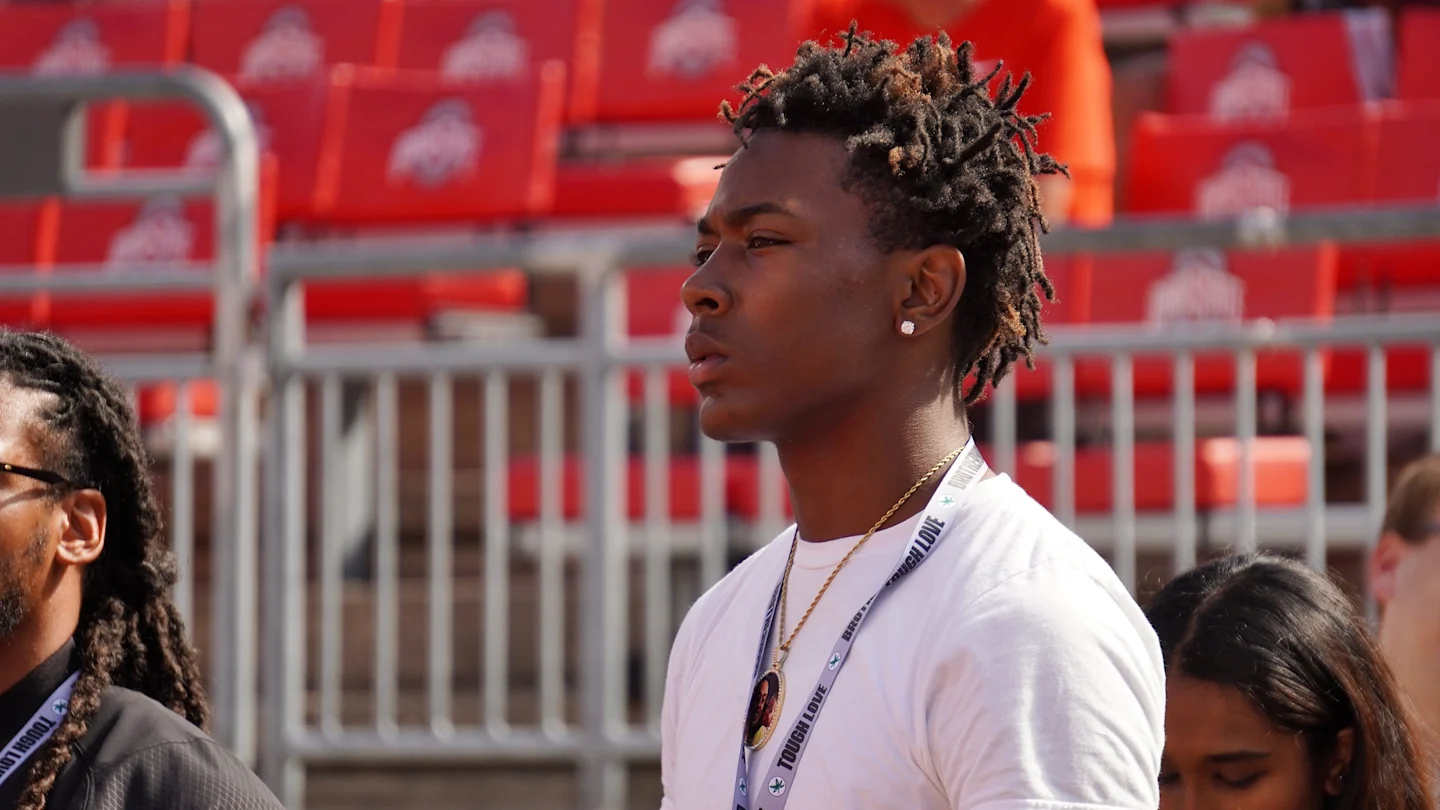
Two of the biggest programs are college football got some transfer portal bad news as one of the top players in the portal reportedly made his commitment on Saturday. Neither Ohio State nor LSU will lack for talented football players in 2026, but one player each school had reportedly coveted is moving on.
Penn State transfer Chaz Coleman has reportedly made his commitment to Tennessee on Saturday morning. Coleman, who had been ranked as the No. 3 player in the portal by On3sports and the No. 5 player by 247sports, had long been linked to Ohio State as a recruiting favorite. On the other hand, LSU had received a recent visit from Coleman. But neither school was able to land him away from the Volunteers.
Coleman was a four-star recruit out of Ohio in the class of 2025. He took official visits to Kentucky, Penn State, and then Ohio State in the final days before the early signing period, but chose to sign with Penn State. The 6’4″ EDGE has bulked up to near 250 pounds, but saw little action in his season at Penn State, making eight tackles in nine games. He’ll have three years of remaining eligibility.
Favorites Come up Empty on Coleman
Ohio State had long been considered the favorite to sign Coleman. Pete Nakos of On3 tied Coleman to Ohio State early in the portal process. Coleman visited Ohio State last week and the vast majority of On3 prediction were for the Buckeyes.
LSU, on the other hand, was thought to be more of a last-minute option for Coleman. He visited Lane Kiffin and the Tigers first, before heading to Tennessee and OSU, and many thought LSU had positioned itself as a switch-over option from the Buckeyes.
Tennessee, on the other hand, has several former Penn State defensive coaching now on staff, with former coordinator Jim Knowles and co-coordinator Anthony Poindexter joining the Vol staff. Tennessee is clearly making good use of this connection, as Coleman is the third Penn State transfer that the Vols have snagged, with linebacker Amare Campbell and lineman Xavier Gilliam also on board.
The remaining EDGE market
The EDGE market is narrowing with the early commitment of John Henry Daley to Michigan and Coleman heading to Tennessee. LSU and Ohio State might move on to Missouri transfer Damon Wilson II. Oklahoma State’s Wendell Gregory could be another option there, although many are linking Gregory to Missouri at this time. The market on top EDGE talent is thinning out and two surprising teams came up empty on Chaz Coleman.

The transfer portal is really bringing out some of the wildest recruiting tools from college football programs.
For example, on Saturday, both UCF and Houston posted photos on social media aimed at players in the transfer portal to advertise there is “no state income tax” in either Florida or Texas.
It’s certainly a big, bold strategy for both programs to take with the portal deadline approaching on Jan. 16. They could use any advantage at their disposal right now as they try to keep pace with the rest of the Big 12.
BYU is the only program in the conference behind Houston and UCF in 247Sports’ transfer portal rankings.

Patriots Drop Season Opener to Catawba in Five Sets

Native Youth Olympics preparations under way | Sports

NDSU handles business against Omaha WBB in blowout fashion | Sports

Fernando Mendoza Spurned Miami’s $3 Million Offer To Join Indiana

Staten Island youth sports notebook: Two basketball teams from borough play at Barclays Center

La Habra girls basketball team captures decisive home league victory over Pacifica –

No. 1 transfer portal defender set to visit fourth college football program

Intramurals | Calvin University

Mark Cuban reveals message to Indiana after donating to football program

Building their future, one brick at a time | News, Sports, Jobs

Men’s Volleyball vs UBCO on 1/9/2026 – Box Score

HS ROUNDUP: Schimelfenig leads West past Scranton in City Rivalry game | Football

Eagles fall short against Pioneers on “Bubba’s Youth Day” | Sports

Commodore Success Continues Saturday – Vanderbilt University Athletics – Official Athletics Website

Penn State Men’s Volleyball Beats Mount Olive 3-1 In Season Opener

#11 Volleyball Practices, Then Meets Media Prior to #2 Kentucky Match

Stempien to seek opening for Branch County Circuit Court Judge | WTVB | 1590 AM · 95.5 FM

Ross Brawn to receive Autosport Gold Medal Award at 2026 Autosport Awards, Honouring a Lifetime Shaping Modern F1

Maine wraps up Fall Semester with a win in Black Bear Invitational

Nascar legal saga ends as 23XI, Front Row secure settlement

Princeton Area Community Foundation awards more than $1.3 million to 40 local nonprofits ⋆ Princeton, NJ local news %

Downtown Athletic Club of Hawaiʻi gives $300K to Boost the ’Bows NIL fund

Sunoco to sponsor No. 8 Ganassi Honda IndyCar in multi-year deal

WNBA’s Caitlin Clark, Angel Reese and Paige Bueckers in NC, making debut for national team at USA camp at Duke

Badgers news: Wisconsin lands 2nd commitment from transfer portal

Nike Signs 10 LSU Athletes to NIL deals

Five Youth Sports Trends We’re Watching in 2026

Three Clarkson Volleyball Players Named to CSC Academic All-District List

Beach Volleyball Unveils 2026 Spring Schedule – University of South Carolina Athletics

Kentucky AD explains NIL, JMI partnership and cap rules





-
 Sports3 weeks ago
Badgers news: Wisconsin lands 2nd commitment from transfer portal
-
 Rec Sports1 week ago
Five Youth Sports Trends We’re Watching in 2026
-
 Sports2 weeks ago
Kentucky VB adds an All-American honorable mention, loses Brooke Bultema to portal
-

 Motorsports3 weeks ago
Dr. Patrick Staropoli Lands Full-Time O’Reilly Ride with Big Machine Racing
-

 Rec Sports3 weeks ago
NBA, Global Basketball Community Unite for World Basketball Day Celebration
-
 Sports2 weeks ago
2025 Volleyball Player of the Year: Witherow makes big impact on Central program | Nvdaily
-

 Motorsports2 weeks ago
BangShift.com IHRA Acquires Historic Memphis Motorsports Park In Millington Tennessee. Big Race Weekend’s Planned For 2026!
-
 Sports2 weeks ago
Colorado volleyball poised to repeat success
-

 Sports2 weeks ago
Texas A&M volleyball’s sweep of Kentucky attracts record viewership
-

 NIL3 weeks ago
Insider Reveals Biggest Reason Behind Colorado’s Transfer Portal Mass Exodus