
NIL
2025 Year in Review: Top 10 biggest NIL, sports business storylines

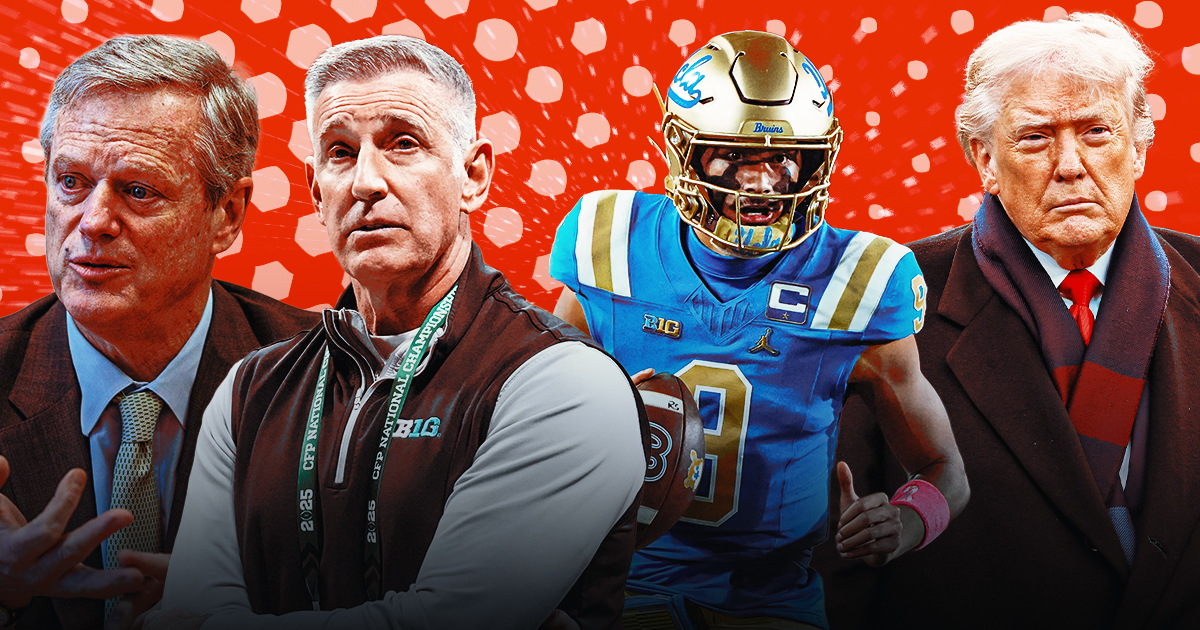
In 2025, college sports underwent another major transformation as revenue-sharing arrived. But that was just one of the top storylines in the NIL and sports business space.
The House v. NCAA settlement became the top story from this calendar year, but private equity is also sure to be part of the conversation into 2026. Those talks took place throughout 2025, with the Big Ten and Big 12 at the forefront.
SUBSCRIBE to the On3 NIL and Sports Business Newsletter
Of course, there was also a high-profile NIL dispute and a major step in the NCAA’s quest for federal legislation to help settle the landscape. Here is On3’s 2025 year in review, breaking down the Top 10 storylines in NIL and sports business.
House settlement ushers in rev-share era
After receiving preliminary approval in 2024, the quest for final approval of the House settlement ended in June 2025. That’s when Judge Claudia Wilken approved the landmark agreement, paving the way for schools to directly share up to $20.5 million with athletes. It also brought about the College Sports Commission as a new enforcement entity, led by CEO Bryan Seeley.
The CSC launched to enforce key terms of the 10-year settlement, including the NIL Go clearinghouse, which received a slew of criticism after its initial debut. NIL Go has cleared $87.5 million in deals as of the last update Nov. 6. However, the CSC’s participation agreements are also generating skepticism as 2025 winds down.
Private equity, capital talks swirl
As schools prepared for rev-share, the idea of private equity and private capital came about in college sports, with the Big Ten and Big 12 front-and-center. The Big Ten has explored a more than $2 billion private capital deal, but it generated pushback from some member schools.
Additionally, Ross Dellenger reported the Big 12 is nearing a private capital deal of its own which would infuse millions to member schools. A Big 12 school also announced a first-of-its-kind equity deal in December. Utah announced a deal with Otro Capital, which would infuse up to nine figures in cash and create a for-profit entity, Utah Brands and Entertainment.
Nico Iamaleava transfers amid NIL dispute
Late in the spring college football transfer portal window in 2025, On3’s Pete Nakos reported Tennessee and quarterback Nico Iamaleava were in active negotiations about a new deal. However, the situation took multiple turns, and Iamaleava later entered the portal.
Iamaleava missed a practice before the Vols’ spring game, Volquest reported, and Tennessee ultimately decided to move on from him. He later committed to UCLA, but the reaction poured in from across the college football world after the NIL dispute.
One of the biggest storylines of the 2025 college football season was the amount of money schools paid in coaching buyouts. Multiple high-profile firings led to more than $228 million in buyout money handed out, flying past the previous record of $132 set in 2023 – fueled by Jimbo Fisher’s $77 million figure.
LSU coach Brian Kelly received the highest buyout of the cycle at $53 million, and James Franklin’s $49 million buyout at Penn State dropped to $9 million after he took the Virginia Tech job and triggered his duty to mitigate clause. Kelly’s buyout is the second-largest in history behind Fisher’s, and Billy Napier received the third-largest from Florida at $21 million.
Wisconsin sues Miami after Xavier Lucas transfer
One of the biggest transfer stories of 2025 didn’t involve the portal at all. Wisconsin DB Xavier Lucas withdrew from the university and enrolled at Miami. The University of Wisconsin then sued the University of Miami and its NIL collective for alleged tortious interference.
The suit marked an unprecedented moment in college athletics as one university sued another over financial damages. Miami later filed a motion to dismiss the suit, On3’s Pete Nakos and Brett McMurphy reported, which is still being worked through.
ACC settles lawsuit with Florida State, Clemson
One of the ACC’s top priorities in 2025 was to settle lawsuits brought by Florida State and Clemson, challenging the conference’s grant of rights. Both boards approved settlement terms in March, ending the legal battles on all fronts.
As part of the agreement, the ACC will have a new exit fee structure and revenue distribution model. It will now be based on a five-year rolling average of TV ratings, with a majority share of the base media rights placed into a viewership pool for distribution.
Former NBA Draftee James Nnaji deemed eligible
Amid multiple eligibility questions the NCAA faced in 2025, one of the biggest decisions came in December. James Nnaji, a former NBA Draft pick, signed with Baylor after receiving four years of eligibility. That decision brought plenty of reaction across college basketball.
Though the Detroit Pistons drafted Nnaji – and his draft rights were part of the Karl-Anthony Towns trade to the New York Knicks – he never played in an NBA or NBA G-League game. Instead, he played professionally in Europe. The NCAA granted Nnaji four years of immediate eligibility, meaning he can join Baylor for the rest of the 2025-26 season.
NCAA’s quest for federal legislation stalls
Since the NIL era began, the NCAA has been searching for federal legislation to help settle the landscape. Those efforts ramped up in 2025, and the SCORE Act was on track for a vote on the floor of the U.S. House of Representatives at one point. However, the vote was removed from the schedule that day, and Senate Democrats criticized the legislation.
The SCORE Act was one of a handful of college sports-focused bills announced. The COACH Act was introduced in October to cap college football coaches’ salaries and buyouts, and the “Restore College Sports Act” was introduced in March. That bill would create an entity to replace the NCAA.
President Donald Trump wants to get involved
Amid the NCAA’s pursuit of a federal bill, President Donald J. Trump also made it clear he was willing to step in to help settle things down. He took multiple steps toward that goal, notably signing an executive order in July to crack down on pay-for-play, third-party NIL deals.
Trump was also putting together a presidential commission with Texas Tech booster Cody Campbell and former Alabama head coach Nick Saban as co-chairs. Plans for the commission were paused, but Trump remained vocal about NIL in college athletics.
Throughout the 2025 college football season, TV ratings surged. Regular-season viewership increased by 9% from a year ago, and ABC emerged as the biggest winner.
ABC aired 17 of the Top 20 most-watched games of the year, led by Texas vs. Texas A&M in their Week 14 rivalry game. FOX, however, had the top two games of the season: Ohio State’s Week 14 win over Michigan (18.4 million) and the Buckeyes’ Week 1 victory over Texas (16.6 million) led the way.
College athletics saw plenty of changes throughout 2025 as the NIL and rev-share eras are officially underway. Heading into 2026, though, there are still plenty more storylines to track in the ever-changing space.

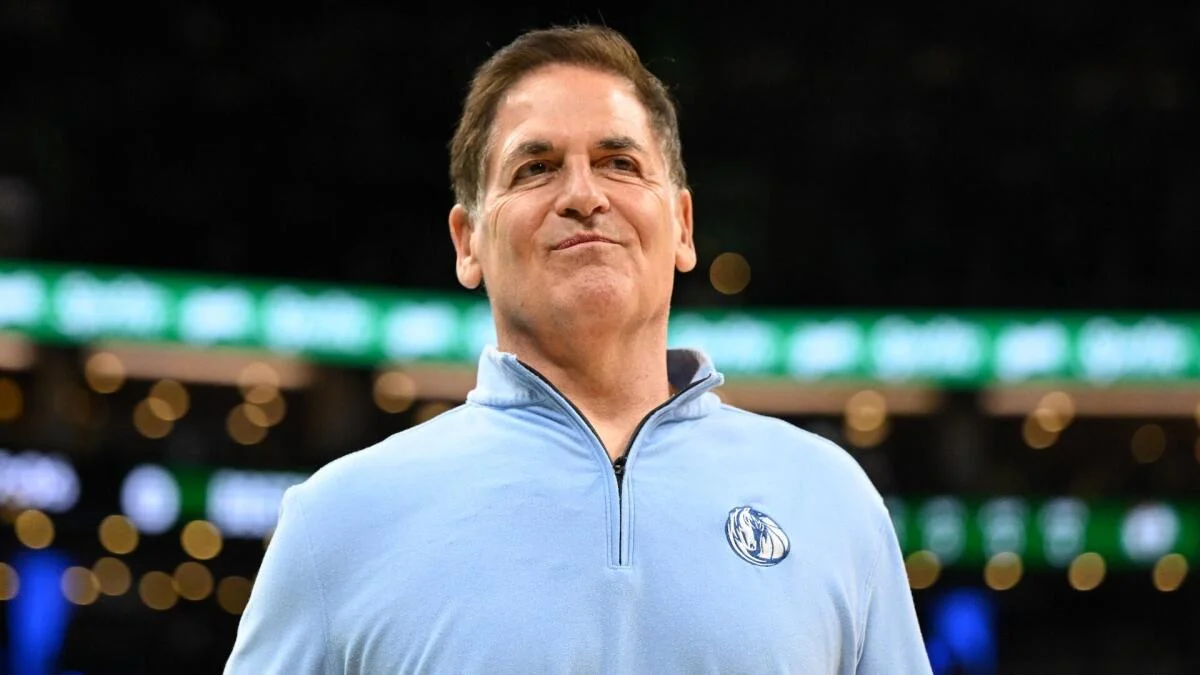
Indiana’s ascendence to the top of the college football world is nothing short of stunning, as Curt Cignetti arrived in Bloomington and immediately turned into a contender. Cignetti’s displays a powerful ability to get buy-in from all levels of the program, from players to the administration to boosters, tapping into Indiana’s alumni base to get the Hoosiers closer to the nation’s top programs in spending.
Among the alumni that Cignetti convinced to invest in the program is billionaire Mark Cuban. The investor and now-minority owner in the Dallas Mavericks has plenty of cash on hand after selling the majority stake in the Mavs, and after never giving to his alma mater’s athletics department previously, Cuban made back-to-back major donations to help the Hoosiers compete in the portal.
Cuban confirmed he sent in another donation prior to the opening of the transfer portal on Jan. 2, telling Front Office Sports he “already committed for this portal.” While he wouldn’t confirm how much he gave, he did hint that it was a bigger gift than last year — “Let’s just say they are happier this year than last year.”
That investment from Cuban and others has already paid major dividends for the Indiana program. After a playoff berth in 2024, the Hoosiers improved even further in 2025, landing the No. 1 overall seed in the College Football Playoff after an undefeated season and winning the Big Ten championship. They’re now the favorites to win it all and will look to punch their ticket to their first national title game in a rematch with No. 5 Oregon on Friday night in the Peach Bowl.
The transfer portal played a huge role in Indiana’s success, as Cignetti brought much of his James Madison team with him in addition to a number of key players via the portal — most notably Heisman Trophy winning quarterback Fernando Mendoza.
While the on-field focus remains the Ducks, the Hoosiers are aggressive once again in the portal for 2026. Indiana’s put together another big portal haul, ranking fourth in 247Sports’ transfer portal class rankings, putting Cuban’s money to good use by landing nine commits. The headliners so far are TCU quarterback Josh Hoover and Michigan State wide receiver Nick Marsh, as they look to reload at key positions on offense to stay on top of the Big Ten.
The NIL era continues to be wild.
Since the NIL era began in college athletics back in 2021, the landscape of college sports has often been described as ‘The Wild, Wild West.’ As we enter 2026, that phrase doesn’t do the current situation any form of justice. There were at least some laws in the Wild, Wild West.
While there are rules – it would be more accurate to just call them guidelines – when it comes to what you can and can not do regarding NIL, they very much feel optional at this point in the proceedings.
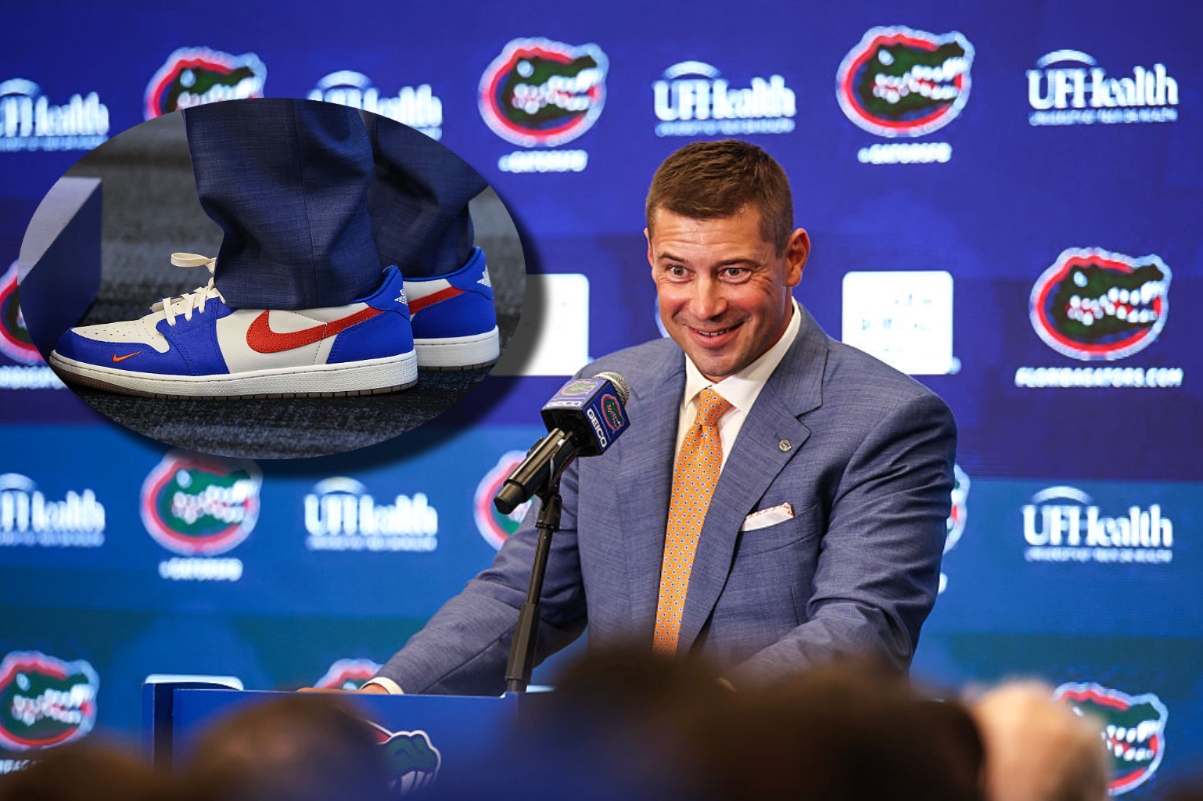
Newly appointed Florida head coach Jon Sumrall recently joined Jonathan Hutton and Chad Withrow on OutKick’s Hot Mic and gave a very real example of just how little sense said NIL guidelines make.
With Florida being sponsored by the Jordan brand, one would imagine that Sumrall could hand out as many pairs of shoes as humanly possible to players after their careers wrap up in Gainesville. But no, that isn’t the case at all.
“We give out Jordan Brand shoes here, because we’re a Jumpman school,” Sumrall noted. “So, that’s like a cool, hip thing. And I’ve got all those Jordans on my desk here, but we can’t give them to the players after their careers are over because the monetary value is too great. It’s called an extra-benefit.”
“I’m like, the shoes are worth a couple-hundred bucks, I don’t know maybe a couple thousand bucks, I don’t know how much they’re worth. But, we’re already paying these dudes. Why can’t we give them these shoes?”
That’s a valid question, coach.
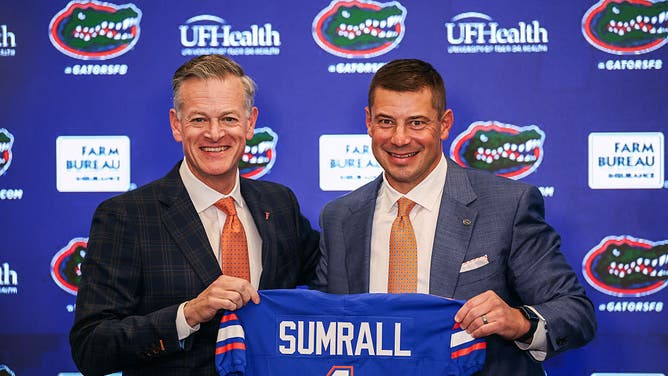
Jon Sumrall being introduced as Florida’s next head coach. (Photo by James Gilbert/Getty Images)
Many players are being paid six to seven figures per season to play, and are paid that sum regardless of performance, but handing out a pair or two of shoes that your team is already sponsored by is a no-no.
Good luck trying to make that make any sense.
The funniest piece in all of this is that someone at Florida likely had to tell Sumrall shortly after he was hired that he wasn’t allowed to hand out shoes. The look on his face when he was told that had to have been priceless.

A fresh NIL deal signed last week is now at the center of a potential legal battle as Washington challenges the quarterback’s attempt to leave football program.
Demond Williams Jr. signed a new NIL contract with Washington just days ago to return for the 2026 season as the Huskies starting quarterback. On Tuesday night, the football program was shocked to see on social media that Williams had announced his intentions to enter the transfer portal.
In a post on Instagram, Williams said that entering the portal was “best for me and my future” where he proclaimed that he was now planning on leaving Seattle.
But there’s one big problem for the quarterback, and it all centers around the revenue-sharing contract he signed with the school.
Trinidad Chambliss’ Ole Miss Future Hinges On NCAA Waiver — New NIL Deal Raises Stakes With Potential Lawsuit
His announcement came as a shock to those within the Washington football building, according to multiple sources. When you consider the fact he just signed a new deal, it’s not hard to imagine the reactions within the program.
Sources also told OutKick that the school has no reason to let Williams out of his agreement, which could end up carrying a heavy financial burden if taken to court. Right now, Washington is exploring its options when it comes to legal remedies around the situation.
The crux could come down to whether Washington will now have the rights to his NIL, meaning he would not technically be able to sign the same type of agreement with a different school. This could also mean the Huskies would own Demond’s rights pertaining to NIL, which could lead to Williams paying the school a substantial amount of money to play somewhere else next season.
After passing for over 3,000 yards and 25 touchdowns last season, the Huskies negotiated a new deal for Williams, which he had signed within the past week.
Now, we could have a major battle playing out while the transfer portal continues to produce interesting storylines, along with seven-figure deals.
In the case of Washington, the school uses a template that is provided by the Big Ten in signing Demond Williams. If you remember, this is the same type of agreement that Wisconsin used two years ago when signing Xavier Lucas.
Wisconsin Accuses Miami Of Tampering With Xavier Lucas, Has Full Support Of Big Ten
The Wisconsin transfer ended up leaving Madison, and then enrolling at Miami as a non-student athlete in hopes of skirting the contract.
The school said that Xavier Lucas entered into a ‘binding two-year NIL agreement’ with Lucas, along with a deal also executed between the DB and the Badgers collective.
Washington Prepared To Legally Fight To Uphold Contract
For Demond, the school could come after him for liquidated damages in this case. According to multiple sources, Washington is prepared to fight this through legal remedies, while also looking into other schools for potential tampering.
One prominent NIL attorney spoke with OutKick on Tuesday night, and had this to say about where we are now in terms of contracts with schools, compared to past years.
“This isn’t like it was when you were dealing with collectives and funneling money. You are now dealing with legitimate contracts and legitimate attorneys or general counsel from major universities. The stakes are larger, which means the liability is greater.
“If you don’t have real attorneys from the players’ side reviewing your contract, you’re opening yourself to potential litigation.”
Jon Sumrall Has A ‘Common Sense’ Way To Fix College Football, Hopes To Replicate Ole Miss’ NIL Strategy
Also, officials at Washington are gathering evidence that another school made contact with Williams after he had signed his new deal with the Huskies.
Even though this does play out behind the scenes every so often, this has been a hot-button topic around athletic departments on Tuesday night. There have been plenty of threats made by athletes, through their representatives, in these cases before pertaining to negotiations.
But, having an athlete sign a deal, and then potentially be shopped around in this era might not end up turning out how Demond Williams might’ve hoped.
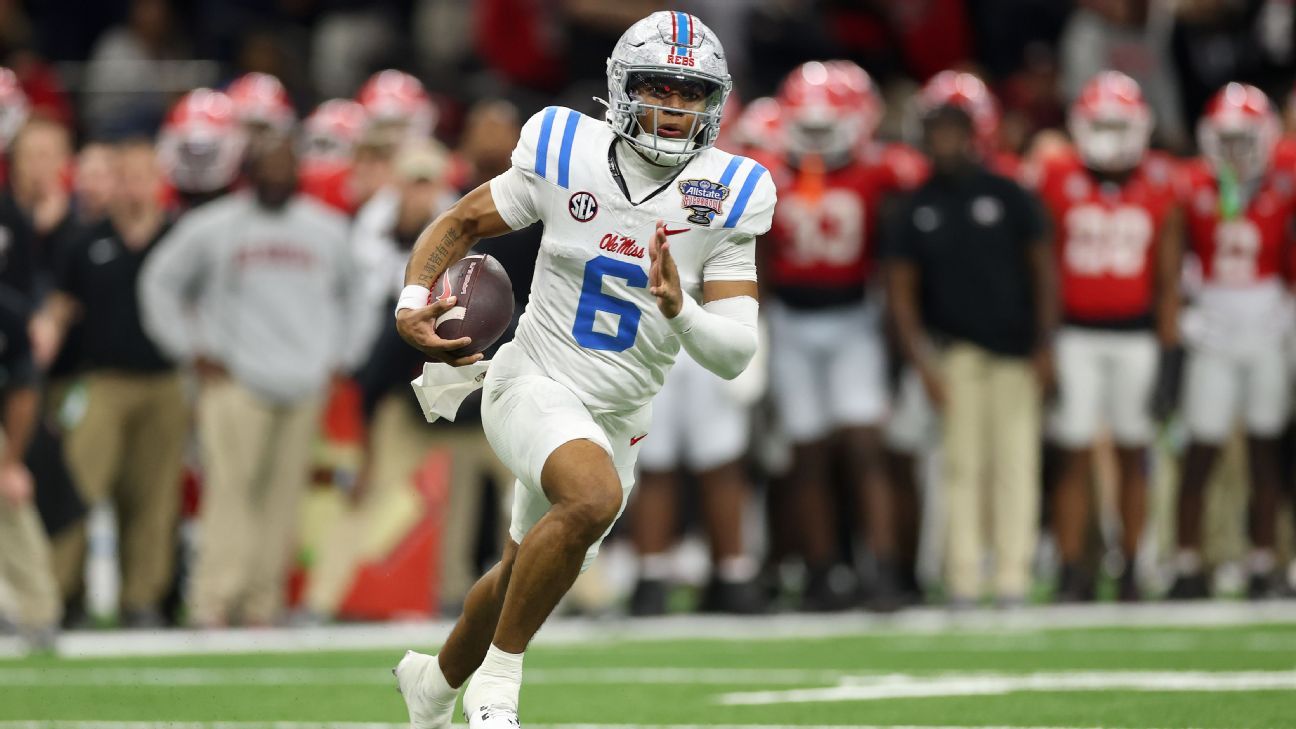
SCOTTSDALE, Ariz. — Quarterback Trinidad Chambliss already agreed to a deal to return to Ole Miss next season. Now, he has to wait to see if he’ll be eligible to play.
Chambliss, one of the breakout college football stars of 2026, filed a medical redshirt waiver for a sixth year of eligibility on Nov. 16. He has yet to receive a definitive answer from the NCAA, although it gave a verbal denial for the waiver in December.
“It has been a little frustrating,” Chambliss told ESPN on Tuesday ahead of the Rebels’ College Football Playoff semifinal Thursday against Miami. “But I can’t let that overtake what my mindset is right now and that’s to win a football game and beat Miami. So I would say I’m a little frustrated, but I can’t let that take over me.”
Chambliss is coming off one of the season’s defining performances in one of its wilder games, as he threw for 362 yards in a 39-34 quarterfinal win over Georgia, which included 20 fourth-quarter points for the Rebels. If he were to return next season, he’d be set to earn millions of dollars, something he didn’t get when he left Division II Ferris State for Ole Miss last year. Entering the season, he was slated to back up Austin Simmons.
Chambliss’ lawyer, Tom Mars, mentioned in a letter to the NCAA on the quarterback’s behalf that his client would “suffer irreparable harm” if he’s not granted the waiver. The crux of Chambliss’ case is that he’s asking for a medical redshirt year from his sophomore season at Ferris State. He supplied 91 pages of medical documents that showed he was battling a respiratory issue and hired Mars to help his case. The NCAA is seeking contemporaneous notes that detail his care.
Mars expressed his frustration with the pace of the case to ESPN on Tuesday night.
“It’s been more than seven weeks since Ole Miss provided the NCAA with all the information they needed to make a decision,” he said. “If the NCAA believes its bylaws clearly required more than what was provided, or that the information wasn’t sufficient to justify a waiver, one has to wonder why they still haven’t made a decision.”
Mars said that he and other lawyers have been working for the past week on immediate contingency plans in the event the waiver is denied.
When asked by ESPN how he’d plead his case to the NCAA, Chambliss responded: “I would just say we have evidence and we have an actual reasoning. There’s some kids that don’t have a reasoning on why they should get another year. And I mean, I have an actual case.
“It’s legit, and I hope that they can find whatever in their hearts or in their minds that they can see that and see that I’m a great guy. I’m all for college football and I feel like this year has proven that I’m good for college football and I think that I should deserve another year.”
Chambliss also reflected on what the money in the contract he agreed to with Ole Miss would mean to him and his family.
“It would mean a lot,” he said. “Not everything is about money, but that sure does help. And for me to be in the position that I’m right now, all the hard work and sacrifice that I put in to get to where I am right now, I feel like I’ve earned that. And I feel like with the waiver being approved, I’ve earned the right to have the success or whatever comes with it. And that if it’s NIL or any other things, then so be it.”
Chambliss’ public commitment to return to Ole Miss for 2026 provided another mile marker of momentum. This all came a few weeks after the school appeared fragile in the wake of Lane Kiffin’s departure to LSU.
But two CFP wins and a flurry of returners such as Chambliss, star tailback Kewan Lacy and a handful of star defensive players have fortified Ole Miss for the future.
“We’re committed to him and I’ll leave that to the legal people, who have kind of looked into the case, and whether or not it has legs,” Ole Miss quarterback coach Joe Judge said. “And obviously they felt very strongly about it. So when they told us like, ‘Hey, this is something that absolutely should be ruled in his favor.’ Then we said, ‘Let’s be committed to our player and back him up.'”
Updated Jan. 6, 2026, 12:36 p.m. ET
One of the top quarterbacks in the transfer portal is now off the board — and headed to an expected destination.
Former South Florida quarterback Byrum Brown has committed to Auburn, he announced on Tuesday, Jan. 6.
With his move, Brown follows new Tigers coach Alex Golesh from South Florida, where the two teamed up last season to engineer one of college football’s most explosive and productive offenses.
According to ESPN, Brown signed a deal that “projects as one of the most lucrative in the NIL era.”

Given his recent track record, it’s easy to understand why.
While helping guide the Bulls to a 9-3 record in the regular season, Brown threw for 3,158 yards, 28 touchdowns and seven interceptions while adding 1,008 rushing yards and 14 touchdowns. His 347.2 total yards per game ranked first among all FBS players, right ahead of Heisman Trophy runner-up Diego Pavia.
South Florida’s nine wins last season were the program’s most in eight years, helping Golesh earn the opportunity at Auburn after a strong three-year run with the Bulls in which his teams went 23-15.
The 6-3, 232-pound Brown was South Florida’s starter each of the past three seasons, though a lower leg injury in 2024 limited him to five games. As a sophomore in 2023, he threw for 3,292 yards and 26 touchdowns while rushing for another 809 yards and 11 scores.
At Auburn, he’ll step into the starting role at a program that has been in desperate need for a difference-maker at quarterback for years.
Despite having offensive-minded head coaches throughout that stretch, the Tigers haven’t finished higher than 68th among FBS teams in scoring offense since 2019. Last season, they averaged just 26.8 points per game, the 74th-best mark of 136 FBS teams. Those struggles negated what was a largely stout defense, one that finished 35th in the FBS in points allowed per game.

When Tennessee swim and dive graduate Griffin Hadley arrived at the University of Tennessee, he entered a college athletics landscape that was already in flux.
The NCAA had just passed its name, image, and likeness (NIL) policy, allowing college athletes to make money from their brand. Swimmers were just trying to make sense of these changes.
Now, four years later, Hadley has graduated, but the chaos of NIL remains, and the UT swim team in particular tries to adjust to a new series of changes stemming from the House v. NCAA settlement.
This lawsuit allows schools like Tennessee, which opt into the deal, to start paying athletes a piece of the school’s athletic department revenue. The House v. NCAA also enforces a roster cap, which limited swimming and diving to only 30 athletes, with the SEC now proposing to lower caps even further, dropping the men’s cap down to 22.
These changes bring great concern for Hadley, who worries this will only create a divide between Olympic sports and the sports that are deemed to be ‘revenue-generating.’
“As far as Olympic sports go, Olympic sports are gonna start fighting for their life,” Hadley said.
With the new era of NIL and revenue sharing, UT swimming and diving is a unique place as a high-performing team at an ‘Everything School,’ but a non-revenue-generating Olympic sport in the era of the House settlement. Hadley, fellow graduate and 2024 Olympian Jordan Crooks, and former swim and dive strategic information director Josh Lively believe in the future of this team, but recognize that the financial realities of college athletics pose new challenges for programs like this.
Revenue sharing at Tennessee
The House settlement allows UT to allocate up to 18.5% of the school’s athletic revenue to athletes. Tennessee has chosen to divide this money, a total of $215,469,808, across all 16 NCAA-sanctioned sports.
During an October press conference, Tennessee’s Athletic Director Danny White shared the specifics of this revenue-share split. The football team receives 75% of the share, men’s basketball receives 15%, women’s basketball receives 5% and the last 5% is left to “other.”
The other comes out to about $900,000, he noted.
Based on those percentages and budget reports, during the 2024-2025 season, the football team received $162,539,638 in revenue, men’s basketball received $35,316,920, and women’s basketball received $4,352,348, according to Tennessee athletic public records. Swim and dive earned a percentage of the 5% left, which came out to $370,687 for the combined teams.

White said that these numbers are “consistent with the House settlement.”
While swimming & diving’s numbers remain low, despite both the men’s and women’s teams finishing top-five nationally in both of the last two seasons, Lively is still impressed that White allocated any money to swimming and diving. Opting to rev share with those programs, Lively said, emphasizes White’s commitment to the ‘Everything School’ tagline at Tennessee.
“Danny specifically has been all in on day one of ‘We’re gonna be an everything school. We’re gonna try to give everyone a piece of the pie when it comes to rev share,’” Lively said. “And he has never wavered from that.”
UT sports studies professor and NIL expert Dr. Adam Love said Olympic sports like swimming have always faced an uphill battle for equitable funding and support, even on campuses like Tennessee’s, where swimming and diving are still getting some portion of the revenue-sharing pie.
“There are certainly inequities that exist when it comes to NIL rights,” Love said. “But to emphasize, those are also long-running inequities where there is a long struggle for Olympic sports seeking to carve out a little bit more of the pie.”
One way athletes bring in revenue is through storytelling, both at the individual and team level. But on an SEC campus largely dominated by football, capturing audience attention can be challenging.
Lively’s job was to help sell a story of the swimming and diving team that inspired audience care. He wrote press releases for the program, managed media requests and ran the team’s social media account.
While his job now falls to Bryant Avery, these athletes have also taken it upon themselves to tell their own stories through social media in an effort to spread the word about the team’s success and generate individual side income through brand deals and social media advertising. UT even links to athletes’ Instagram accounts on the official school roster as a way to drive more traffic to those athletes’ profiles.
JB Bowling, Tennessee’s chief NIL officer, said that UT is committed to helping athletes capitalize on their experience as student-athletes at Tennessee in the NIL era.
“The ability to leverage their hard work to build a personal brand and potentially earn money is a tremendous advantage for students at schools like the University of Tennessee,” Bowling said in an email. “The benefits of NIL agreements go beyond immediate financial gains; they also include valuable connections with companies and brands that can lead to further opportunities after their athletic careers.”
Gui Caribe leads the men’s team in followers with 44.5K, while Mizuki Hirai leads the women’s team with 8,949 followers as of Nov. 17, 2025. Their content serves as an additional marketing arm for themselves and their program.

“It’s hard to showcase people multiple times, let alone consistently enough to be like ‘OK, let me help you build your brand up,’” Lively said.
Olympian Crooks would be one of the most obvious social media and NIL stars amongst the team, but Crooks says he, like Hadley, doesn’t have a ton of interest in social media or NIL. He finds it overwhelming, especially given everything else that he has going on as a student-athlete.
“It was just very confusing to me, and I wanted to just focus on my sport and be able to have a great four years in that aspect,” Crooks said. “I just didn’t really understand it, so I left it alone.”
Crooks finished his career at UT as a four-time NCAA champion, two-time SEC Swimmer of the Year and an 11-time conference champion. He credits some of his success to the fact that he chose not to have the distraction of NIL. Instead, Crooks focused solely on his sport and his studies while being on scholarship.
That was enough for him.
Investing in building a personal brand in the NIL is extra labor that some athletes choose to engage with, according to Love, but others like Crooks recognize that they aren’t interested in allocating time to such efforts.
“When I talk to people that have those kinds of followings, they often talk about how it takes a lot of time and effort to build that kind of brand and then develop content that’s gonna keep a large group of followers engaged,” Love said. “So certainly some people have benefited tremendously financially at least from being able to profit from NIL, but of course it’s also given rise to other conflicts, other complications both for student athletes and for athletic departments to deal with.”
These complications could include time management strains, interpersonal conflicts with teammates over brand deals and revenue, or other financial and personal stressors, situations that Crooks chose to avoid, despite the potential to generate revenue from his brand by pursuing such opportunities.
Future
During Hadley and Crooks’ careers, the men’s swim team progressed from an 18th-place finish to three top-10 finishes nationally. Meanwhile, the women’s team placed inside the top 10 all four years, climbing as high as No. 4
While Crooks and Hadley appreciate the investment UT has made into swimming and diving as part of its commitment to an “Everything School,” they still worry about the potential implications of this changing landscape on the future of the sport.
Bowling is more reassuring.
“NIL will always be a part of the landscape, but I don’t believe it will be the primary factor shaping the future of Olympic sports,” Bowling said. “Providing resources and creating opportunities will be crucial, and we will work to maximize those opportunities for our sports. However, we believe that a significant aspect of the future of our sports will continue to be the overall support we offer and the excellence of our coaches.”
Swimming and diving is objectively part of UT’s future in the House settlement plan, and 21st-year swimming and diving head coach Matt Kredich does have $370,687 in revenue sharing to play with on the recruiting trail and within his team.
Kredich is leading a stronger team, athletically and financially, than he ever has before, but Hadley knows as well as any Vol that so much can change in the college landscape in four years.
“This is the modern day of college athletics, and non-revenue and Olympic sports have to respond. It’s up to us,” Hadley said.

Former Beach Volleyball Standout Elevated to Assistant Coach

Indiana football gets big Mark Cuban NIL donation as transfer portal heats up

Dubai 2025 Asian Youth Para Games sets new benchmark

Building Confidence and Wellness Through Coaching

Colyer Named CWSA Honda Cup Finalist

Gaming Controller Market Size | Gamers

Florida Coach Jon Sumrall Can’t Hand Out Shoes, But Can Pay Players ‘Whatever’

Jackson Tovo Joins Nitro Motorsports TA2 Program for 2026
Louise (Murphy) Devaney Obituary – Cape Cod Times

Belmont Volleyball Adds Butler Transfer Lauren Evans

Vote for your 2025 NASCAR Driver of the Year!

Track and Field Returns to Indoor Season

Nissan and NMC announce new initiatives for the NISMO brand — TradingView News

Spring youth soccer registration through Jan. 31

Demond Williams Jr. Entering Portal Could Start NIL Legal Battle With Washington

SoundGear Named Entitlement Sponsor of Spears CARS Tour Southwest Opener

Donny Schatz finds new home for 2026, inks full-time deal with CJB Motorsports – InForum

David Blitzer, Harris Blitzer Sports & Entertainment

DeSantis Talks College Football, Calls for Reforms to NIL and Transfer Portal · The Floridian

#11 Volleyball Practices, Then Meets Media Prior to #2 Kentucky Match

Rick Ware Racing switching to Chevrolet for 2026

Maine wraps up Fall Semester with a win in Black Bear Invitational

Stempien to seek opening for Branch County Circuit Court Judge | WTVB | 1590 AM · 95.5 FM

Nascar legal saga ends as 23XI, Front Row secure settlement

Ross Brawn to receive Autosport Gold Medal Award at 2026 Autosport Awards, Honouring a Lifetime Shaping Modern F1

Princeton Area Community Foundation awards more than $1.3 million to 40 local nonprofits ⋆ Princeton, NJ local news %

Sunoco to sponsor No. 8 Ganassi Honda IndyCar in multi-year deal

Downtown Athletic Club of Hawaiʻi gives $300K to Boost the ’Bows NIL fund

WNBA’s Caitlin Clark, Angel Reese and Paige Bueckers in NC, making debut for national team at USA camp at Duke

North Florida Motorsports Park led by Indy 500 Champion and motorsports legend Bobby Rahal Nassau County, FL





-
 Rec Sports3 weeks ago
Princeton Area Community Foundation awards more than $1.3 million to 40 local nonprofits ⋆ Princeton, NJ local news %
-

 Sports2 weeks ago
Badgers news: Wisconsin lands 2nd commitment from transfer portal
-
 Sports3 weeks ago
Badgers news: Final Four Game Thread vs. No. 1 Kentucky Wildcats
-

 Rec Sports5 days ago
Five Youth Sports Trends We’re Watching in 2026
-

 Sports2 weeks ago
Is women’s volleyball the SEC’s next big sport? How Kentucky, Texas A&M broke through
-
 Sports3 weeks ago
Four From Women’s Volleyball Named to College Sports Communicators Academic All-District Team
-

 Rec Sports2 weeks ago
NBA, Global Basketball Community Unite for World Basketball Day Celebration
-
 Rec Sports3 weeks ago
Refugee-Focused Youth Sport Initiatives : Moving for Change
-
 Rec Sports3 weeks ago
Youth Sports Business in 2025: The Year the Industry Grew Up
-
Rec Sports3 weeks ago
Inside the NWSL’s first combine: Can the league create a more robust pathway for American talent development?