
Sports
4 ways women are physically stronger than men


In September, Tara Dower became the fastest person ever to complete the Appalachian Trail. Her record – 40 days, 18 hours and 6 minutes – was 13 hours faster than the previous record holder, a man. That same year, 18-year-old Audrey Jimenez made history in Arizona as the first girl to win a Division 1 high school state wrestling title – competing against boys.
Across a variety of sports, women are not just catching up after generations of exclusion from athletics – they’re setting the pace. In ultramarathons, women regularly outperform men, especially as distances stretch toward the extreme. Jasmin Paris, who in 2024 became one of only 20 people ever to finish the brutal 100-mile Barkley Marathons race in under 60 hours – while pumping breast milk.
Advertisement
In long-distance swimming, female athletes now so routinely excel that within the community, their records are just part of the sport. In climbing last year, Barbara “Babsi” Zangerl became the first person, man or woman, ever to “flash” – climb without prior practice and sans falls – the towering Yosemite rock formation El Capitan in under three days.
These aren’t just athletic feats. They’re cultural resets. Experts say we’re finally waking up to what women’s bodies are capable of.
And it’s not just young women blazing new physical trails.
Advertisement
“In the Masters 70-plus, they just set a record for the women’s deadlift,” says exercise physiologist Stacy Sims, who teaches at Stanford University and the Auckland University of Technology in New Zealand. “Older women are demonstrating that ‘I am strong and I can do this.’”
– – –
Built to endure
Generally, discussions of “strength” have meant brute force and speed over short distances – qualities historically associated with male physiology. But stamina, recovery, resilience and adaptability are as essential to athletic performance. And in those areas, female physiology holds real advantages, experts in sports science, human physiology, and biological anthropology have found.
Advertisement
The myth of female fragility is relatively modern. For most of human history, women were hauling gear, tracking prey, and walking eight to 10 miles a day – often while pregnant, menstruating, nursing or carrying children (one estimate found that hunter-gatherer women covered more than 3,000 miles in a child’s first four years of life).
That evolutionary foundation undergirds today’s feats, experts say. “Female bodies have superior fatigue resistance,” says Sophia Nimphius, pro-vice-chancellor of sport at Edith Cowan University in Perth, Australia.
In test after test, female muscles outlast men’s when doing repetitive, if lower-weight, work, according to the pioneering research of Sandra Hunter, an exercise physiologist at the University of Michigan. Hunter’s research – and others since – has shown that women’s muscles fatigue more slowly than men’s, so they can knock out more reps, more consistently. Men might start strong with heavier lifts, but when the workout gets long? Women can keep going, sometimes twice as long, or longer, outlasting even the most jacked guys.
That endurance capacity is likely due to female bodies preferentially using slow-burning fat over quickly exhausted carbohydrates, in both athletes and less sporty people, studies have shown.
Advertisement
In addition to using fat for staying power, fatigue-resistant slow-twitch muscle fibers are generally more common in women’s bodies (though all bodies vary in their proportion of muscle fibers according to individual genetics). This muscle type is also more efficient than fast-twitch, which are generally higher in men’s muscles. “Our muscles do more with less,” Nimphius says.
– – –
Recovery and resilience
Beyond endurance, several small studies on sprinting and heavy weightlifting have shown that women also recover from hard workouts more quickly. Slow-twitch muscles inherently have a higher capacity to recover, but the female advantage may also be explained by faster healing: A study shows two times faster muscle repair rates for female mice (though mice studies don’t always translate to humans). The reason? There’s strong evidence that estrogen reduces inflammation and supports muscle repair (one reason that Sims recommends postmenopausal women get targeted training support and recovery time).
Advertisement
However, some studies show that women are more prone to other kinds of sports injuries, especially certain kinds of knee and ACL injuries, but it’s not yet known whether that’s explained by biomechanical differences in bodies, hormones, or poor training. Some researchers say the greater injury rates in women are because existing research is based on men’s bodies: “Female bodies are different – I tell [women] the protocols you’re applying aren’t meant for your body,” says Sims.
Feats of bodily strength – in both ordinary women and trained athletes – are more than just purely physical. Many experts on competitive strength remark on this mental aspect of female endurance: “I do think that there is a mental grit, a resilience factor that helps women go to a place in their mind – a state that allows them to continue to push to the limit,” says Emily Kraus, director of the Female Athlete Science and Translational Research (FASTR) Program at Stanford University.
– – –
A changing future
Advertisement
Men have usually defined strength by what their bodies tend to be good at, but max bench presses or fastest sprint times, both of which men tend to excel at, are just a few ways to test the human body. If we instead focused on endurance, resilience, longevity and recovery, the narrative of who is “strong” would probably have a female form, many experts say.
Currently, young female athletes still don’t receive the same level of encouragement, training, and scientific attention as boys, Nimphius says. Research into girl’s and women’s health, while slowly improving, still lags – just 6 percent of sports and exercise research has looked exclusively at female bodies, according to a 2021 study.
Considering all the wins for women already, what would the landscape look like if we designed sports science around female physiology – rather than downsizing routines created for men? The current generation of women athletes is challenging the very architecture of athleticism. Soon, experts say, they will have better information to help female athletes understand and train, and that will be true for weekend warriors and 5k racing types as well. Ongoing and anticipated sports science studies will be “a game changer for girls and women – not just now, but in five, ten, fifteen years from now,” Kraus says. “And that’s really exciting.”
– – –
Advertisement
Four things women’s bodies do exceptionally well
– Pain tolerance
Human bodies endure all kinds of pain – from menstrual cramps and childbirth to back injuries and broken bones. Pain is subjective, so difficult to measure, but most research agrees with your grandma – women seem to handle pain better. Athletes are pain experts, and numerous studies show that they have higher pain tolerance than non-athletes – and when you break it down by sex, the limited research shows that female athletes don’t differ from their male counterparts’ pain tolerance despite higher pain sensitivity and that women are more likely to play through injuries. This is probably due to both biology and experience, says Sophia Nimphius, pro-vice-chancellor of sport at Edith Cowan University in Perth, Australia. A 1981 study put it plainly: “Female athletes had the highest pain tolerance and threshold.”
– Immunity
Advertisement
Among mammals, including humans, it is widely accepted that females have stronger immune systems than males. That’s due to the power of estrogen, and also of the XX chromosome carried by women but not men, which provides more variability in immune function. As the University of Minnesota evolutionary biologist Marlene Zuk wrote in a 2009 article, “There is no contest about the identity of the sicker sex – it is males, almost every time. Everyone knows that old age homes have more widows than widowers, but the disparity extends far beyond the elderly.” (There is a downside though; the majority of autoimmune disease patients are female. It’s the cost that women bear for an aggressive immune system.)
– Resilience
Women’s bodies seem better built for the long haul – less wear and tear, more staying power, according to the limited research. The data on long-term exercise suggests women may also pay a lower price for physical strain. For instance, the British Heart Foundation studied the vascular condition of 300 Masters’ athletes (meaning over age 40), that included a mix of long-distance runners, cyclists, rowers and swimmers. In men, vascular aging increased among the athletes – by some markers up to 10 years, increasing their risk of cardiovascular issues. Among the female athletes, the reverse was true, they had biologically younger vascular systems, lowering their risk of heart problems.
– Longevity
Advertisement
Arguably, the truest test of any body is longevity. And with rare exceptions, no matter the species or culture, women live longer. That’s partly behavioral – men tend to take more risks that can kill them – but it’s also biological. Women tend to survive disease, starvation and injury at higher rates than men do. Studies have shown that the Y chromosome, which is unique to men, can degrade over time – a phenomenon known as mosaic loss of Y. This degradation has been linked to a range of health issues in men, including increased risks of heart disease and cancer.
Related Content
Joy, tension collide as WorldPride arrives in Trump’s Washington
Kari Lake won awards for overseas reporting. Now she has the job of cutting it.
Harvard celebrates graduation in the shadow of its fight with Trump


BLOOMINGTON, Ind. – The fourth-seeded Indiana volleyball team (25-7, 14-6 B1G) will play in the Sweet 16 for just the second time in program history. The NCAA announced start times and dates for next week’s regional semifinals on Sunday (Dec. 7) afternoon. The Hoosiers will play top-seeded Texas at Gregory Gymnasium on Friday (Dec. 12) afternoon at Noon ET on ESPN.
Following the greatest regular season in program history, IU was awarded a top-16 national seed and the chance to host the opening two rounds of the NCAA Tournament. The Hoosiers made quick work of their first two matchups, sweeping Toledo and fifth-seeded Colorado in Bloomington to advance to the Sweet 16.
IU is one of five Big Ten programs remaining in the NCAA Tournament. Of the 16 schools left in the big dance, IU is one of two teams (Cal Poly) that didn’t make the big dance last year. The Hoosiers have already set a single-season program record for wins (25) and will attempt to advance to the regional final for the first time in program history.
The other matchup in the Austin Regional will pit second-seeded Stanford and third-seeded Wisconsin against each other. Their match will begin 30 minutes after the conclusion of IU’s. The winners of both regional semifinals will meet on Sunday (Dec. 14) afternoon for a spot in the national semifinals in Kansas City.
Dec. 6, 2025Updated Dec. 7, 2025, 6:08 a.m. ET

After defeating Marquette 3-2 in the second round of the NCAA Volleyball Tournament on Saturday night, No. 2 Louisville will travel to Lincoln, Nebraska, and take on No. 3 Texas A&M in the Sweet 16 at 7 p.m. Friday.
This will be the Cardinals’ seventh consecutive regional appearance but first with Dan Meske as head coach.
Here’s everything you need to know to keep up with the match from home:
No. 2 seed Louisville versus No. 3 seed Texas A&M will be broadcast live on ESPN or ESPN2.
Authenticated subscribers can access ESPN2 via TV-connected devices or by going to WatchESPN.com or the WatchESPN app.
Those without cable can access ESPN2 via streaming services, with Fubo offering a free trial.
Buy Louisville volleyball tickets here
After defeating Marquette, UofL will play Texas A&M in the Lincoln, Nebraska, Regional Friday at 7 pm. Here’s a look at the tournament schedule:
- First and second rounds: Dec. 4-6
- Regionals: Dec. 11-14
- Semifinals: Dec. 18 at T-Mobile Center in Kansas City, Missouri
- Championship: Dec. 21 at T-Mobile Center in Kansas City, Missouri
Click here to view the complete bracket.
- Aug. 29: Louisville 3, Auburn 0
- Aug. 31: Louisville 3, Morehead State 0
- Sept. 1: Louisville 3, St. John’s 0
- Sept. 7: Louisville 3, Illinois 1
- Sept. 10: Texas 3, Louisville 2
- Sept. 12: Louisville 3, Creighton 1
- Sept. 13: Louisville 3, UNI 1
- Sept. 14: Louisville 3, Rice 1
- Sept. 18: Kentucky 3, Louisville 2
- Sept. 22: Louisville 3, Western Kentucky 0
- Sept. 26: Louisville 3, Boston College 0
- Sept. 28: Louisville 3, Syracuse 0
- Oct. 3: Louisville 3, California 0
- Oct. 5: Louisville 3, Stanford 1
- Oct. 10: Louisville 3, Virginia Tech 0
- Oct. 12: Louisville 3, Virginia 1
- Oct. 17: SMU 3, Louisville 2
- Oct. 19: Pitt 3, Louisville 2
- Oct. 24: Louisville 3, Duke 0
- Oct. 26: Louisville 3, North Carolina 1
- Oct. 29: Louisville 3, Notre Dame 0
- Nov. 1: Louisville 3, Notre Dame 0
- Nov. 7: Louisville 3, N.C. State 0
- Nov. 9: Louisville 3, Wake Forest 1
- Nov. 13: Louisville 3, Florida State 1
- Nov. 16: Louisville 3, Miami 2
- Nov. 21: Louisville 3, Georgia Tech 1
- Nov. 23: Louisville 3, Clemson 0
- Nov. 26: Pitt 3, Louisville 0
- Nov. 29: Stanford 3, Louisville 2
- Dec. 5: Louisville 3, Loyola Chicago 0 (NCAA Tournament First Round)
- Dec. 6: Louisville 3, Marquette 2 (NCAA Tournament Second Round)
- Dec. 11: Louisville vs. Texas A&M (NCAA Tournament Regional Round)
Reach college sports enterprise reporter Payton Titus at ptitus@gannett.com and follow her on X @petitus25. Subscribe to her “Full-court Press” newsletter here for a behind-the-scenes look at how college sports’ biggest stories are impacting Louisville and Kentucky athletics.

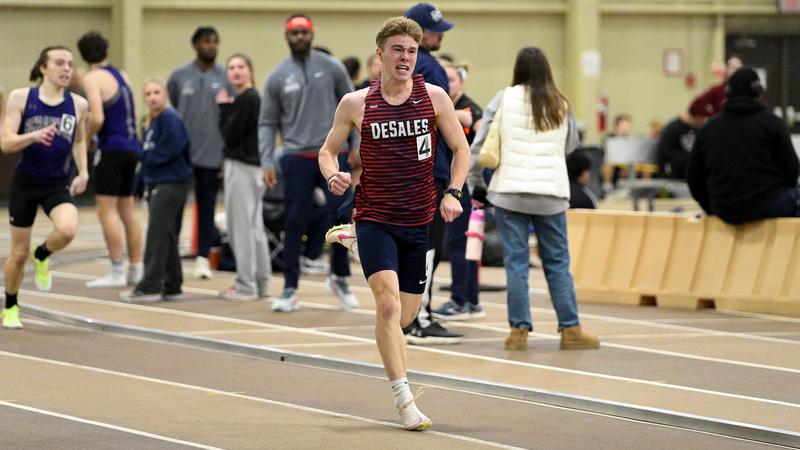
Lancaster, PA (December 6, 2025) – The DeSales University men’s track & field team opened the 2025-26 indoor T&F season competing at the Diplomat Open at Franklin & Marshall College on Friday.
The Bulldogs posted 10 MAC qualfying times/marks in the meet.
Among the qualifying times were junior Bryce Guthier taking second in the 400-meters with a time of 52.08. It is the fifth fastest time in indoor history. Senior Davis Trump also qualified in the 5K with a time of 16:20.32.
In the field events, DSU posted eight qualfying marks. Junior Weston Simak qualified for the MAC Championships in both the long jump (6.52m) and triple jump (13.72m). His triple jump mark was the second best in team history. First-year Luke Heimann also qualfied in the triple jump (11.86m).
Junior Jonathan Castronovo took home first place in the long jump with a mark of 6.58m, the second best long jump in team history.
First-year John Amoretti qualified in the shot put (12.33m), seniors Jonathan Eudja and Giovanni Wellington qualified in the weight throw with marks of 14.85m and 14.23m. First-year Ryan Rodriguez also quallified in the weight throw (11.89m).
The Bulldogs won’t return to action till the New Year at the Blue and Grey Invitational on Jan. 17th.
RESULTS
ITHACA, N.Y. –
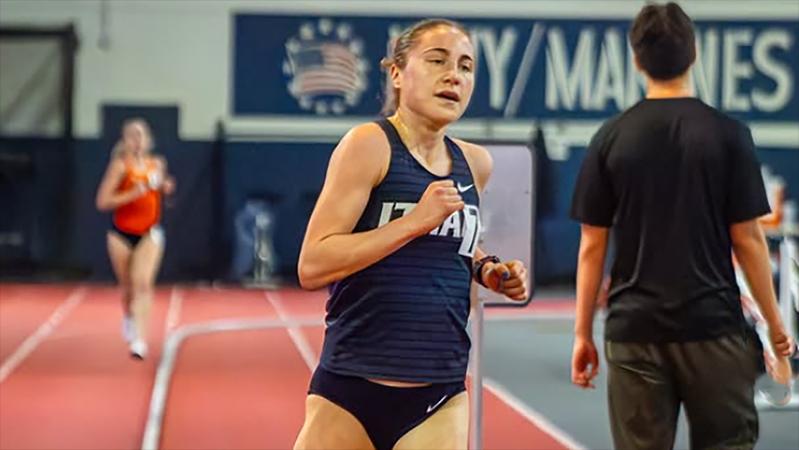
The Ithaca College women’s track & field team opened its 2025-26 season over the weekend as the Bombers made the short trip across town to compete in the Greg Page Relays hosted by Cornell University on December 5-6.
Lola Gitlin posted a time of 10:25.57 in the 3000-meter run to finish third overall.
Rachel Larson was a fourth place finisher with a time of 8.58 seconds in the 60-meter hurdles. That time is currently No. 1 in Division III after the opening weekend of the season.
Aynisha McQuillar took fifth in the 200-meter dash in a time of 26.61 seconds. McQuillar also ran in the 60-meter dash and posted the 11th fastest time in DIII during the prelim with a performance of 7.78 seconds.
Lyla Powers was fifth in the 500-meter dash with a time of 1:21.75.
Lily Seyfert claimed fifth in the shot put with a heave of 12.78 meters, which is currently ninth in the nation.
Bree Boyle and Erin Eastwood each cleared 3.54 meters in the pole vault, which is tied for 11th on the Division III performance list.
Alexis Brown turned in a leap of 11.02 meters in the triple jump for the 17th best mark in the country.
Ithaca is off for the remainder of 2025 and will return to Cornell on January 10 for the Southern Tier Invitational.
RESULTS
ITHACA, N.Y. –
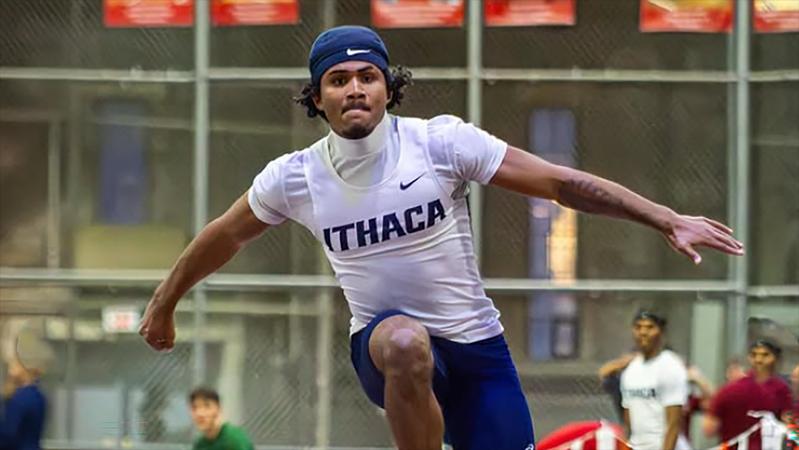
The Ithaca College men’s track & field team opened its 2025-26 season over the weekend as the Bombers made the short trip across town to compete in the Greg Page Relays hosted by Cornell University on December 5-6.
Anik Vossschulte claimed third in the 200-meter dash in a time of 23.32 seconds, while Jacob Antilety was seventh at 23.71 seconds.
Matt Lokshin posted a time of 8.65 seconds in the 60-meter hurdles to place third in the event. Aidan Irwin took fourth in the high jump with a mark of 1.70 meters.
Quinten Lewis posted a mark of 13.73 meters in the triple jump to place fourth and Sebastien-Oliver Lacrete was sixth at 12.68 meters, while Evan Cherry secured fifth in the long jump with a leap of 6.84 meters.
IC’s 4×400-meter relay team of Damian Simmonds, Griffin Lupes, Noah McKibben and George Nilson placed sixth in 3:34.49.
Luke Ellor finished sixth in the shot put with a mark of 14.40 meters.
Three Bombers finished within the top eight in the 500-meter dash as Brad Kellogg was sixth in 1:09.73, Peter Tysiak followed in seventh with 1:10.74 and Matthew DeJulio was next at 1:11.59.
Kaiden Chandler and Luke Ferrer posted times of 4:41.29 and 4:53.44 in the mile to finish in seventh and eighth.
Raf Campanile was seventh in the pole vault with a clearance of 4.25 meters.
Ithaca is off for the remainder of 2025 and will return to Cornell on January 10 for the Southern Tier Invitational.

College Football Playoff Rankings Just Shook the National Championship Odds

Steady Droppin Dimes – NIL on National Signing Day: Is it all about the highest bidder now?

Robert Griffin III blasts College Football Playoff committee for not punishing Alabama, references BYU

NCAA Volleyball Regional Schedule Set

Lando Norris wins F1 world championship by just two points – Motorsport – Sports

‘The Nutcracker’ — a place where area youth grow, families thrive

BCS Formula adds to the Final College Football Playoff Rankings controversy
Louisville volleyball NCAA Tournament bracket, Texas A&M vs UofL game

Mitchell Lawrie, 15, described as ‘future of darts’ after 6-3 loss to Jimmy van Schie in WDF World Darts Championship final | Darts News

NASCAR driver loses ride immediately after winning the championship

Dom Amore: What’s in a number? UConn women raise the perfect ’10’ to the rafters at Gampel Pavilion

The Omaha World-Herald’s Nebraska All-Class volleyball teams

Iowa and Vanderbilt head to Tampa for ReliaQuest Bowl

Snowball Derby 2025 postponed to Monday

Mill Creek Activity Center to increase gymnastics space to help meet demand

First Tee Winter Registration is open

Fargo girl, 13, dies after collapsing during school basketball game – Grand Forks Herald

CPG Brands Like Allegra Are Betting on F1 for the First Time

Volleyball Recaps – November 18

F1 Las Vegas: Verstappen win, Norris and Piastri DQ tighten 2025 title fight

Two Pro Volleyball Leagues Serve Up Plans for Minnesota Teams

Utah State Announces 2025-26 Indoor Track & Field Schedule

Sycamores unveil 2026 track and field schedule

Redemption Means First Pro Stock World Championship for Dallas Glenn

Bowl Projections: ESPN predicts 12-team College Football Playoff bracket, full bowl slate after Week 14

Texas volleyball vs Kentucky game score: Live SEC tournament updates

Indiana’s rapid ascent and its impact across college football

How this startup (and a KC sports icon) turned young players into card-carrying legends overnight

Pohlman admits ‘there might be some spats’ as he pushes to get Kyle Busch winning again

Robert “Bobby” Lewis Hardin, 56

 Why a rising mid-major power with an NCAA Tournament team opted out of revenue-sharing — and advertised it
 NBA Legend Michael Jordan to Join NBC Sports as Special Contributor
 Falcons mailbag
 Portal Update – Basketball and Gymnastics Take Hits
 has always dreamed in Mercurial. Now his initials are on the boots.
The new Kyl…
has always dreamed in Mercurial. Now his initials are on the boots.
The new Kyl…
-
 Rec Sports2 weeks ago
First Tee Winter Registration is open
-
 Rec Sports2 weeks ago
Fargo girl, 13, dies after collapsing during school basketball game – Grand Forks Herald
-
 Motorsports2 weeks ago
CPG Brands Like Allegra Are Betting on F1 for the First Time
-
 Sports3 weeks ago
Volleyball Recaps – November 18
-
 Motorsports2 weeks ago
F1 Las Vegas: Verstappen win, Norris and Piastri DQ tighten 2025 title fight
-
 Sports2 weeks ago
Two Pro Volleyball Leagues Serve Up Plans for Minnesota Teams
-
 Sports2 weeks ago
Sycamores unveil 2026 track and field schedule
-
 Sports2 weeks ago
Utah State Announces 2025-26 Indoor Track & Field Schedule
-
 Motorsports2 weeks ago
Redemption Means First Pro Stock World Championship for Dallas Glenn
-
 NIL1 week ago
Bowl Projections: ESPN predicts 12-team College Football Playoff bracket, full bowl slate after Week 14