Motorsports
8 Great Reads: Must-Have Motorsports Books
Up for a little light reading? How about a lot of heavy reading? When it comes to motorsports, there are plenty of good choices. Whether you are looking for some time-fillers for the holidays or a last-minute present for a racing fan, allow me to present some of my favorites. Note that while I’m linking a place to buy each book that I’m confident should have them in stock, they may be available elsewhere as well.
The Other Side of The Fence
Bill Warner is perhaps best known for founding the Amelia Island Concours, but he truly made a name for himself long before that as a photojournalist who captured images of the most accomplished racers of our time… and in some cases, well before. Warner finally assembled his work into a book, and it’s an invaluable chronicle of some of the most historic moments in the sport, be it sports car racing, stock car racing, IndyCar competition, even Formula 1. The Other Side of the Fence: Six Decades of Motorsport Photography is a coffee table book that is actually worth reading; at $99.99, it isn’t cheap, but know that—as he did when he was running Amelia (which is now in the hands of Hagerty, with Warner as an advisor)—he is donating proceeds to Spina Bifida of Jacksonville, a non-profit organization that is close to his heart because his granddaughter has the condition. It’s available from the Revs Institute, which published it, here.
Legacy of Justice

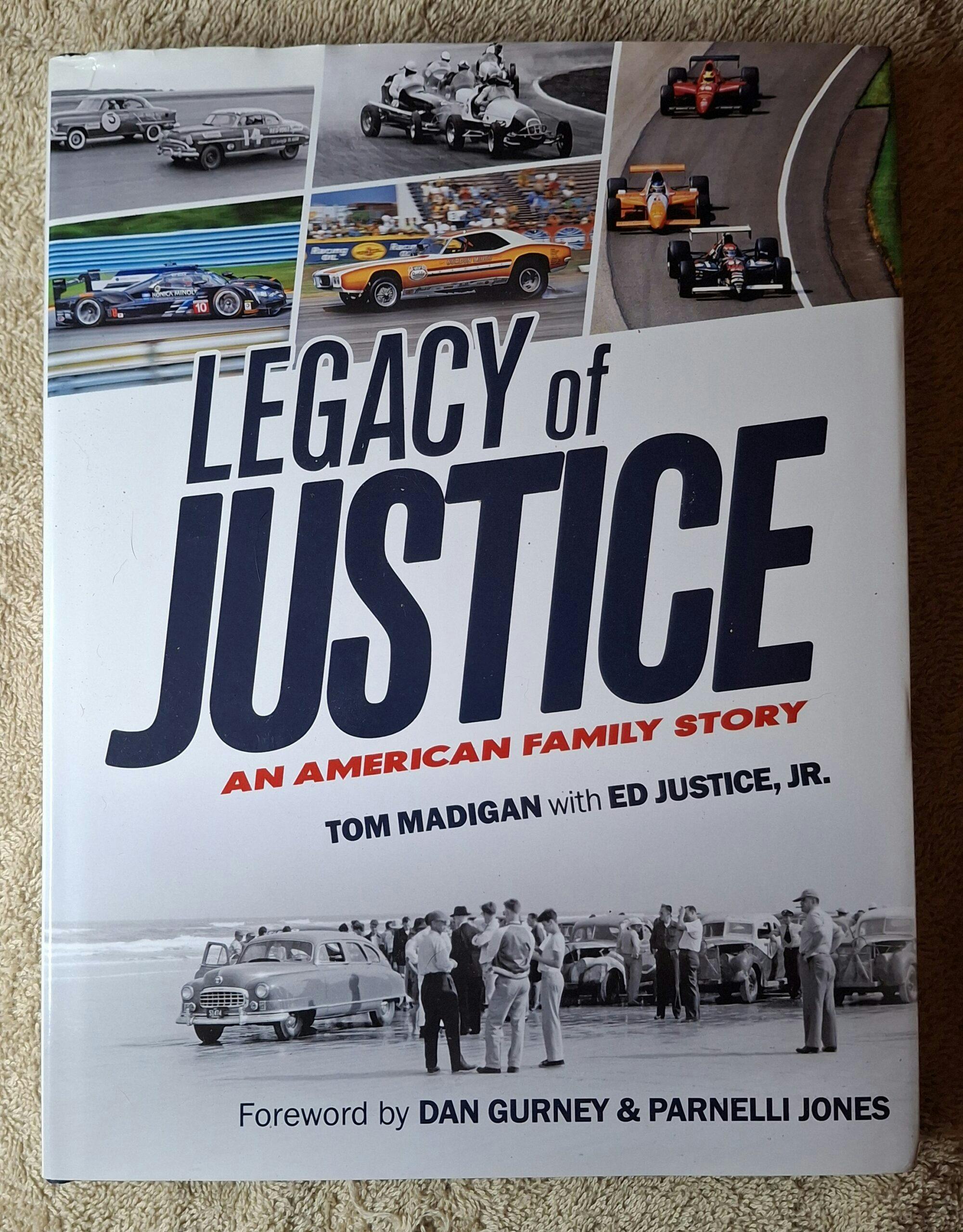
Along similar lines, Ed Justice, Jr., was and still is one of motorsports’ top photographers, first picking up a camera as a teenager more than 50 years ago, and following his family from race to race. Like Warner, Justice finds the view much more favorable from inside that fence surrounding the tracks, and that’s where Legacy of Justice: An American Family Story lives. If the name is familiar, it’s because Ed is part of the Justice Brothers, the petroleum and lubricant company for which he’s now president and CEO. The Justice brothers became part of the Indianapolis 500 in the 1940s, when the company was associated with the Wynn’s brand, and has sponsored race cars ever since, including for the 2026 season. Photos in this book are from the family collection as well as Ed’s camera, and the accompanying text, co-written by Tom Madigan, tells the tale of Ed’s family and their involvement in racing.
It also introduces us to the drivers and owners who carried their brand, from drag racing king “Big Daddy” Don Garlits to Johnny Mantz, winner of NASCAR’s first 500-mile race, the 1950 Southern 500 at Darlington; that same year, the Justice brothers also sponsored the Indianapolis 500 winner, Johnnie Parsons. Ed Justice, Jr. simply knows everybody, and you’ll feel you do, too, after reading this book. At 496 pages, it’s another coffee table book that really belongs in your lap, explaining insights into motorsports you never knew. (Worth noting is that Justice is from Southern California, while Warner is from Florida, and you get a great East Coast-West Coast feel from the two books.) Legacy of Justice is available from Autobooks-Aerobooks; it costs $90. One more thing: Justice Brothers has a stellar museum just outside Los Angeles; check it out here.
Kinser: A Racing Career Like No Other

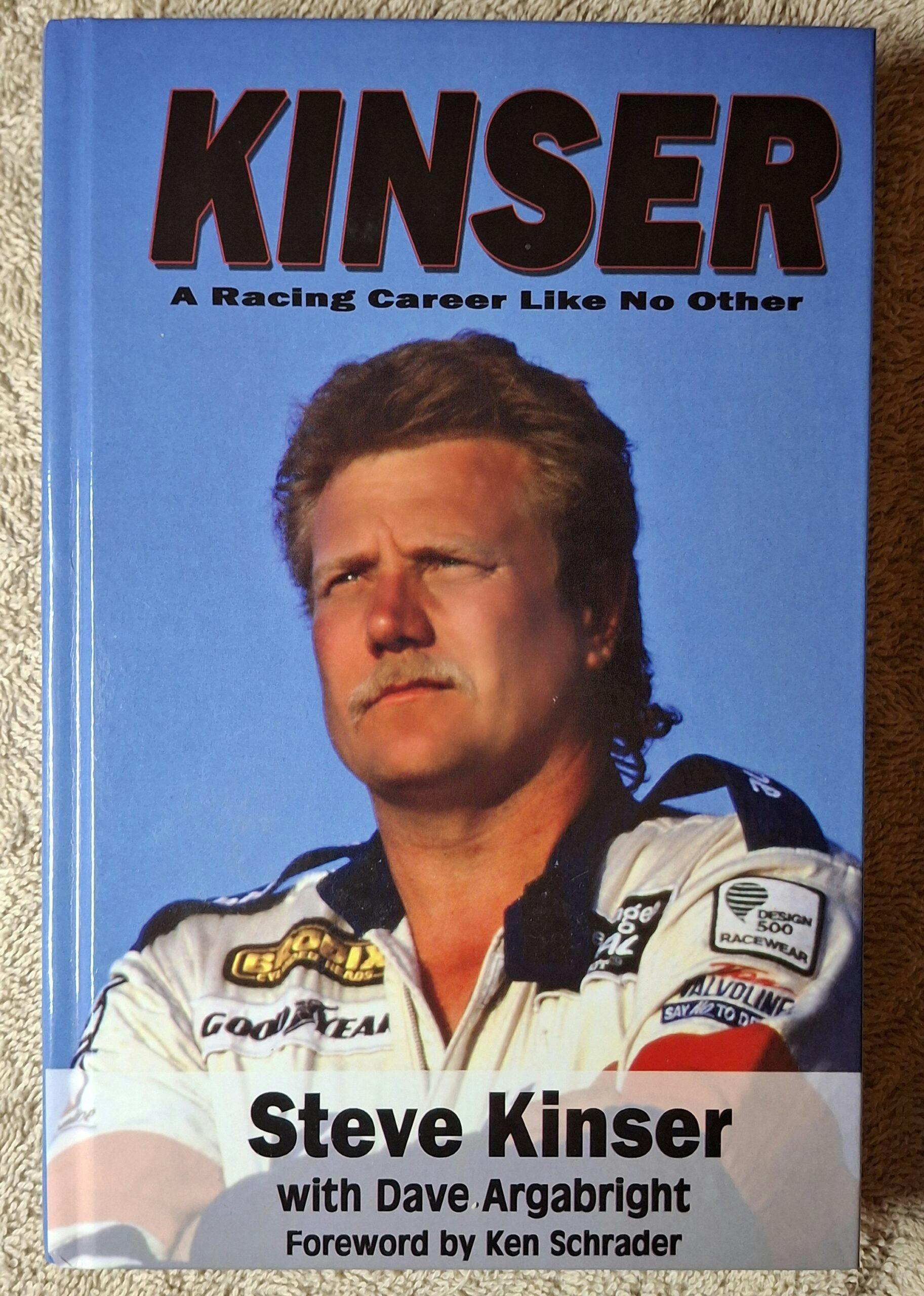
I admit it: I have a lifelong, unshakeable affinity for dirt sprint car racing, which crystalized with the formation of the World of Outlaws, founded in 1978 by the late Ted Johnson. He was the first to truly organize the sport, scheduling big-money races at tracks across the country and actually paying the advertised purse. For years, the biggest rivalry in sprint car racing was between Indiana’s Steve Kinser, 71, and Tennessee’s Sammy Swindell, 70. And me being a Memphis boy, as Sammy was, I had a clear favorite. (But I had, and have, mad respect for Steve Kinser, especially after I became friends with his genius crew chief and cousin, Karl Kinser.) Dave Argabright, inarguably one of the country’s best motorsports writers, co-authored the new Kinser: A Racing Career Like No Other, Steve’s long-awaited autobiography that tells the story not only of Kinser’s 950 career feature wins, but his foray into NASCAR and IndyCar racing. There are 32 pages of color and black-and-white photos, and like everything Argabright writes, Kinser is an easy and entertaining read. It’s available from multiple sources, including here from Argabright’s own company, for $29.95.
Sammy! 50+ Years of Winning

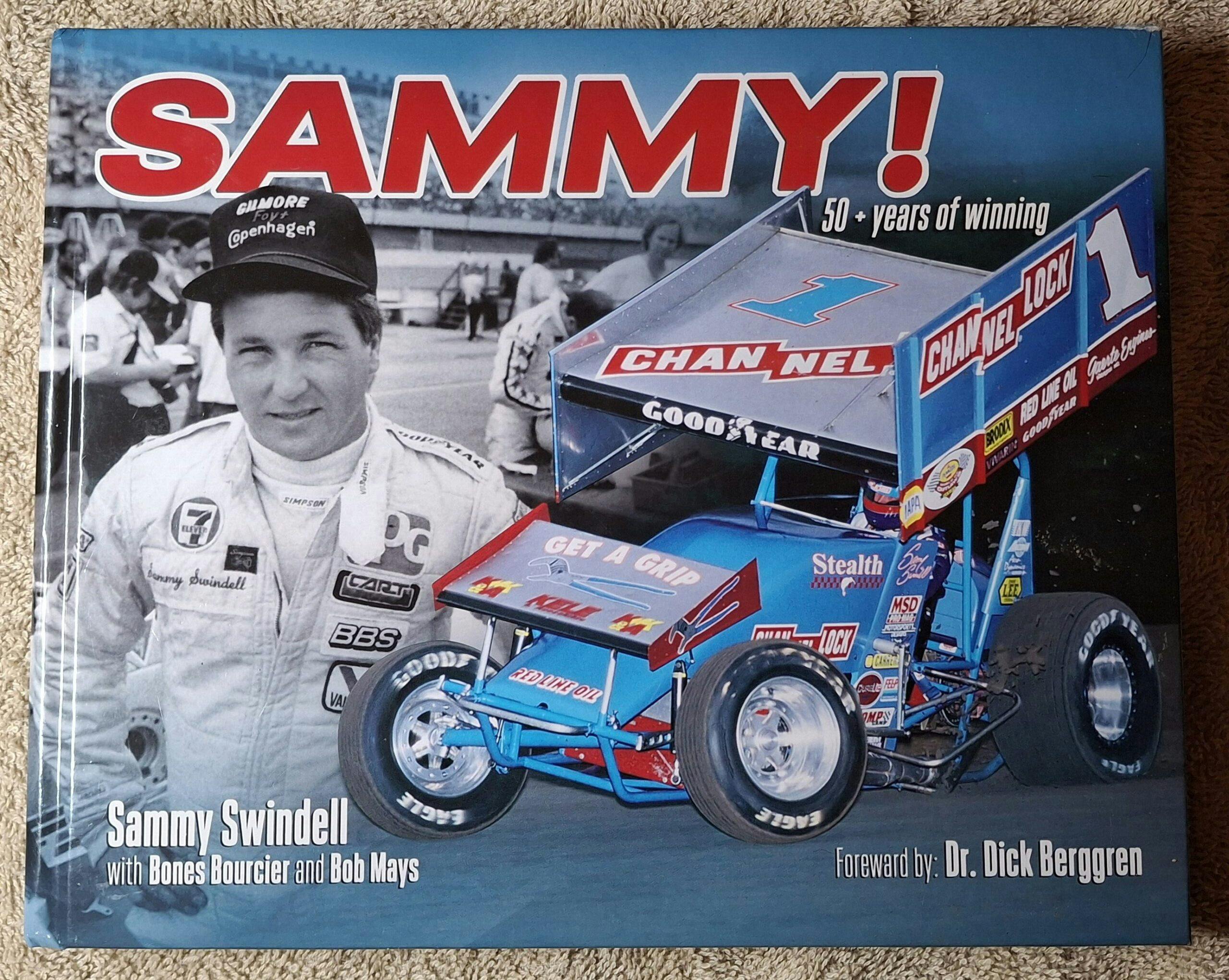
And you don’t think I’d leave out Swindell, do you? Sammy will be inducted into the Motorsports Hall of Fame of America in March; Steve Kinser is already there, a 2017 inductee. Swindell’s career, like Kinser’s, includes time in NASCAR and IndyCar, and is told in Sammy! 50-Plus Years of Winning by motorsports journalists Bones Bourcier and Bob Mays, along with Swindell himself. Sammy is an amazing driver, but he is also a genuine, hands-on innovator when it comes to sprint car technology, something that Steve generally left to his crew chiefs. While Kinser retired from competition in 2016, Swindell, who has won the prestigious Chili Bowl indoor midget race five times, continues to race, and win. Sammy! Is available from Speedway Motors for $45.99. By the way, both books detail the Kinser-Swindell rivalry, and the accounts are quite a bit different…
Dirt Tracks To Glory

These next two books are also connected, but in a very different way. First, let’s look at Dirt Tracks to Glory: The Early Days of Stock Car Racing, as Told By the Participants, which was written by Sylvia Wilkinson, a professional writer and novelist who has been involved in motorsports for decades (more about that in a moment). Wilkinson knows how to dig for a story, and she knows how to make racers comfortable enough to tell her the truth. Unlike some NASCAR history books, she has no agenda, no one to please but herself and her readers. Her story on perennial race queen Linda Vaughn is a wonderful read, and Vaughn tells Wilkinson a story Linda told me decades ago: She had a soft spot for British racer Jimmy Clark, much to the dismay of a jealous A.J. Foyt: “‘You kissed that foreigner!’ A.J. said. He wouldn’t speak to me for two years.’” And she tells a story of a different time, when pioneer Wendell Scott, who was black, competed in NASCAR. “Wendell Scott, he’s the sweetest thing,” Vaughn told Wilkinson. “He won a race and he said, ‘Miss Linda, you don’t have to kiss me. I wouldn’t do that to you.’ I just hugged his neck and almost cried.” You’ll meet everybody from Soapy Castles to Fred Lorenzen to Bill France, Sr., plus Tim Flock, who details his early bootlegging days. Great read, great photos, available autographed at Johnmortonracing.net for $34.95.
Inside Shelby American

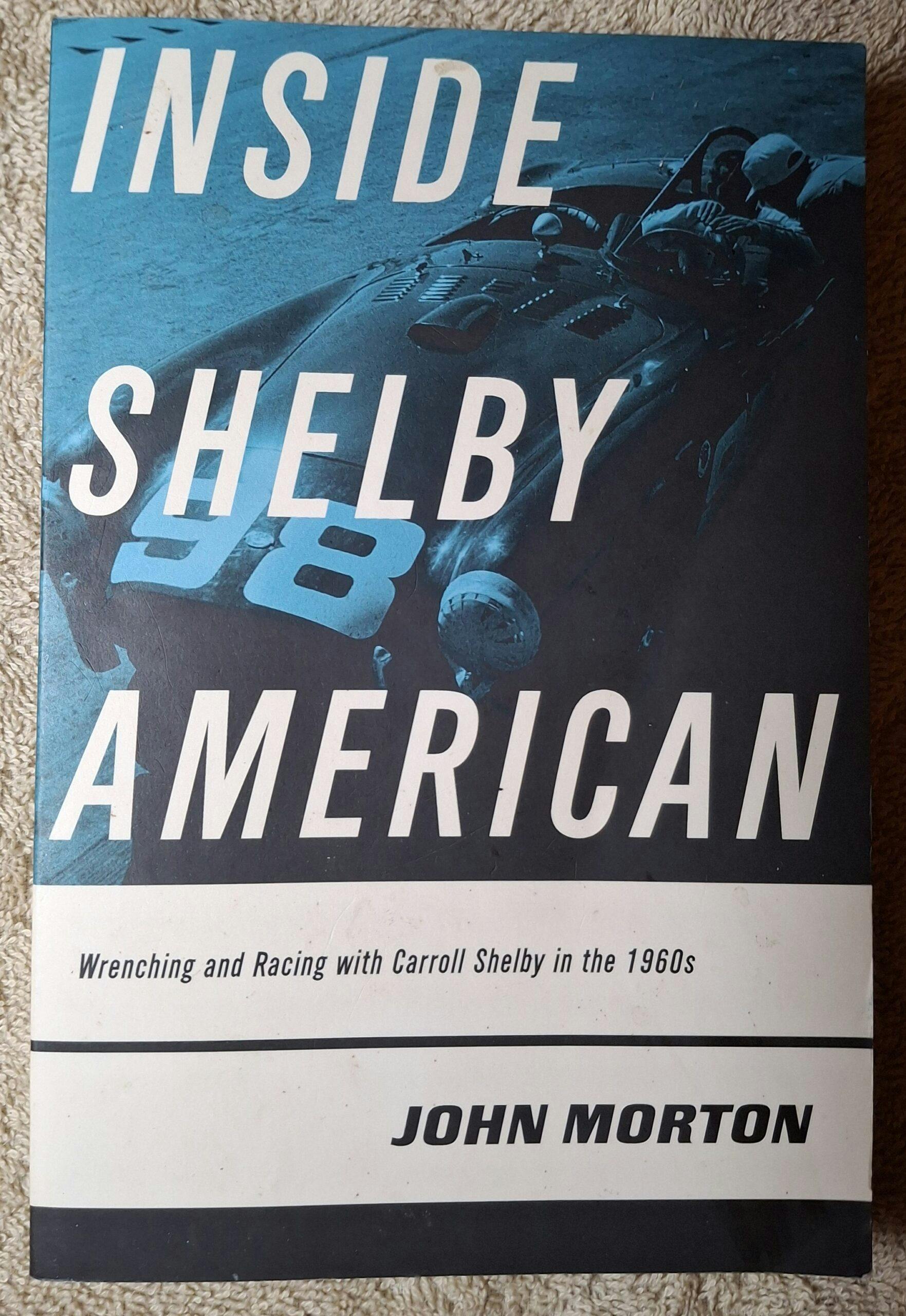
That may be a hint about this book, Inside Shelby American: Wrenching and Racing with Carroll Shelby in the 1960s by race car driver John Morton. Wilkinson and Morton are a couple, one of my favorite ones; Sylvia likes to say that they’ve been boyfriend and girlfriend for more than 50 years, “and we plan to get married just as soon as we think it’s gonna last.” Though Morton and Wilkinson swear that he wrote Inside Shelby American with no help from his journalist girlfriend, he dedicates the book to Wilkinson, saying “I hope this is my last one, and so does she.” Morton’s family racing history is fascinating, and aside from driving Cobras for Shelby, John has driven everything from sprint cars to a top fuel dragster. That’s all in here, but as the title suggests, you’re probably coming to read his account of driving for Shelby, which begins on page 38, when he attends the Carroll Shelby Driving School at Riverside. It was there he met someone who would be responsible for several chapters. “I’m going to be your instructor,” said a young but tall man. “My name’s Pete Brock.” Yes, that Peter Brock, who was—and thankfully still is—a team owner, designer and writer who is an absolute legend in the automotive world, and a big part of Shelby’s racing success.
Morton went to work for Shelby, literally sweeping floors: Fast-forward a few years to the Twelve Hours of Sebring, where Morton had been picked to partner with Ken Miles in a persnickety Cobra powered by a 427-cubic-inch V-8, which wasn’t as much fun as it sounds, having been wrecked two days earlier: He lost the brakes, then the clutch, and just before dark, the engine quit, and Morton coasted into the grass. “I opened the hood,” he writes. “I saw engine parts on the outside that are supposed to be on the inside.” A wonderful read, the softcover Inside Shelby American is also offered at Johnmortonracing.net for $27.99. And while you’re there, I should mention that Wilkinson’s invaluable and updated classic The Stainless Steel Carrot e-book is also available there for $9.99. It’s about Morton’s post-Shelby seasons with Peter Brock’s fledgling Datsun team, and it drew rare praise from Mark Donohue: “Racing’s a tough sport and the book shows that. If you read between the lines, however, you’ll see racing’s no different than real life. People make things happen, everyone has an important role, and destinies are worked for, not inherited.” Morton, by the way, is also going into the Motorsports Hall of Fame of America in March. Can’t wait to hear his speech.
Lions Drag Strip: 1955-1972

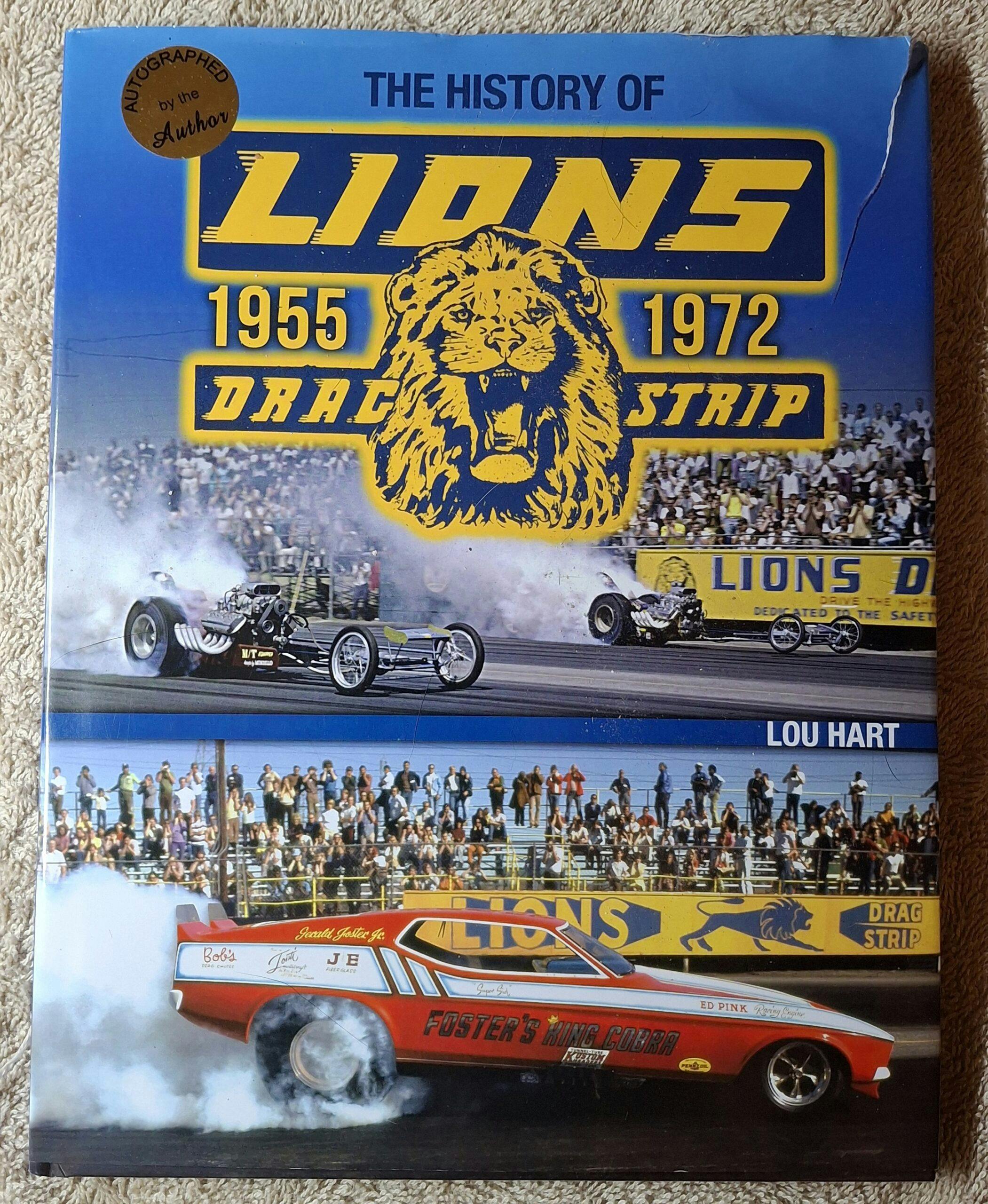
If you prefer your racing to go in a straight line, you’ll probably like photojournalist Lou Hart’s Lions Drag Strip: 1955 to 1972. Lions, located in the Los Angeles suburb of Wilmington, was an absolute drag racing mecca when it opened in October of 1955 until it closed on December 2, 1972 with a final race that drew a record 25,000 fans. Plenty of things happened at Lions that you might be familiar with, including the devastating transmission explosion that severed part of Dan Garlits’ foot, leading him to famously move the engine in his Top Fuel dragster from the front to the rear, and Evel Knievel’s record 1970 jump over 125 feet of side-by-side cars and trucks and vans, accomplished on his backup Harley-Davidson XR-750, when the magneto suddenly failed on his primary bike. The NHRA-owned Pomona drag strip was seminal, yes, and fortunately still exists, but Lions was just as important in the early days of Southern California drag racing, and it’s all in Lions Drag Strip. It’s available for $59.95 at Lionsmobilia.org, which is also the website for the superb but sadly almost-unknown Lions Automobilia Museum, located in Rancho Dominguez, and full of cars and exhibits that go far, far past just Lions nostalgia.
Isky

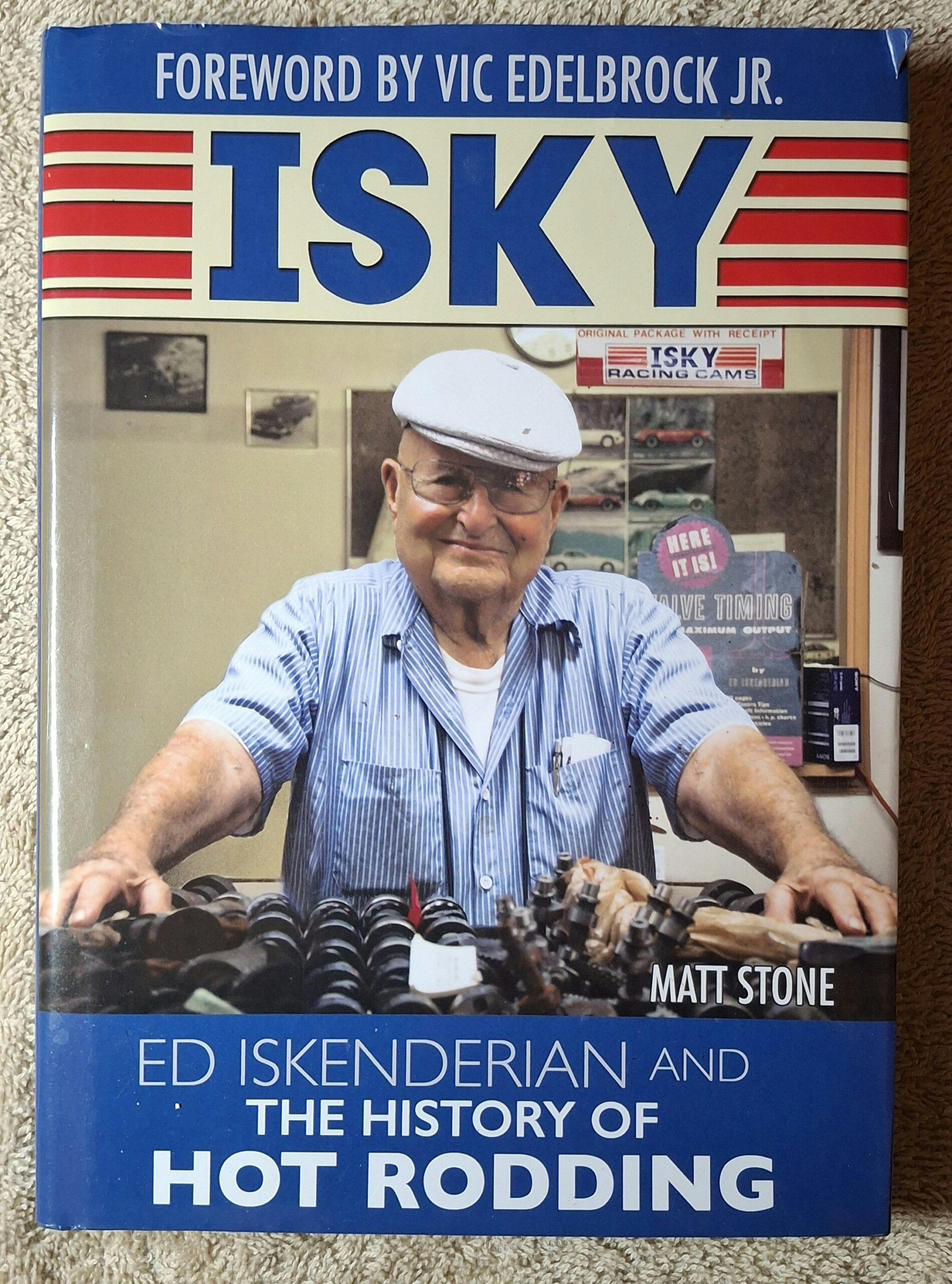
Finally, during a recent visit to Southern California places of interest with my friend Dean, which almost invariably involved racing and included everything from the Autobooks-Aerobooks store up north in Burbank to the little Barona Speedway dirt track near Ramona, we spent an hour with a legend: Ed Iskenderian, the founder of Ed Iskenderian Racing Cams. Everybody just calls the man and the company “Isky.” Ed is 104, the oldest resident of his nursing home, and according to the staff, perhaps the most cheerful. He has an amazing memory, though the stories are sometimes slow to come: You can almost see the gears grinding in his head as he concentrates, lining up the details. Those details are, as this book suggests, invaluable, and they are all contained in Isky: Ed Iskenderian and the History of Hot Rodding, written by former Motor Trend editor Matt Stone, when Isky was “just” 94, and still going to work every day. Isky was a genius when it came to making cars go fast, starting out with flathead Fords, working up to powering engines like the 426-cubic-inch Chrysler Hemi V-8. The cigar-chomping, self-proclaimed “Camfather,” Isky was an absolute marketing genius, using the media of the day to promote his products through his drivers’ accomplishments, and many of his more memorable ad campaigns are included in the book. This is indeed the story of hot rodding; I was lucky enough to hear it first-hand from the Camfather, and read about it in Stone’s book. It’s available on Amazon for $32.