
Sports
8 Top 100 Pitchers With Intriguing Pitch Mix Data So Far In 2025

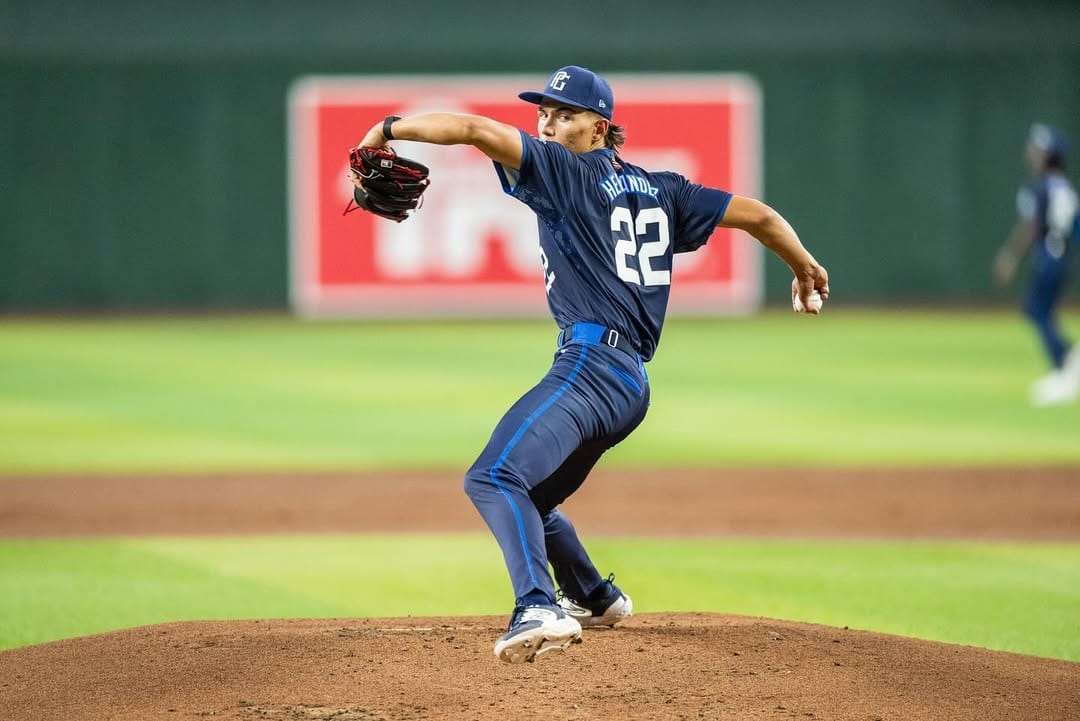
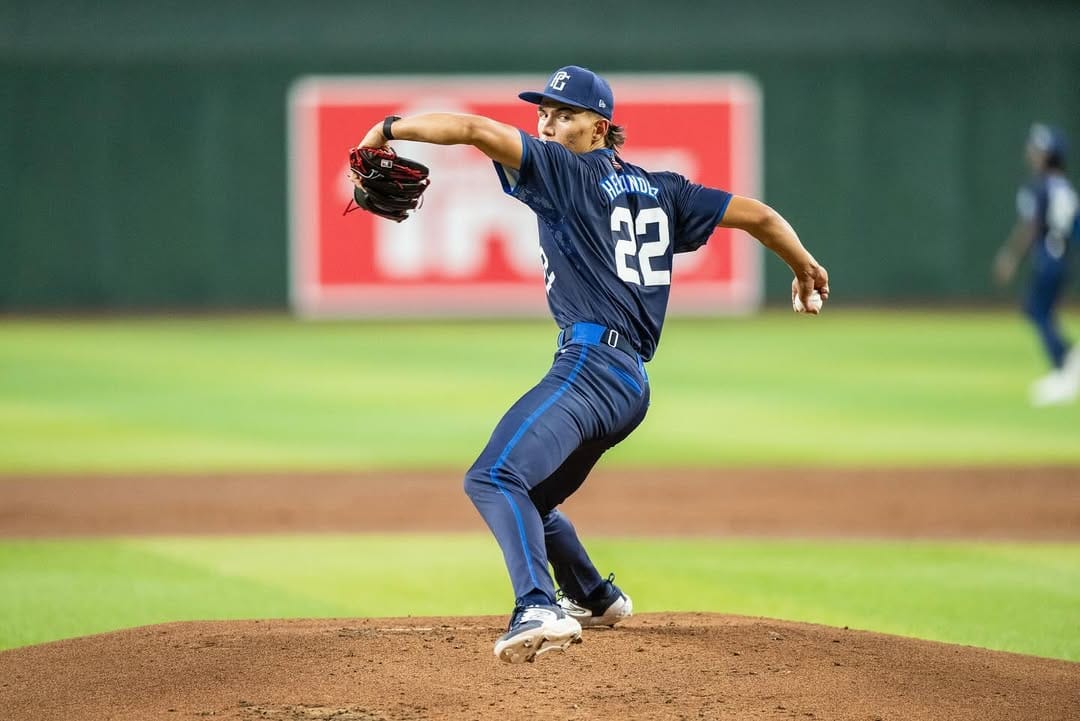

Today, we will explore pitchers on the Top 100 list who have yet to debut in the major leagues by looking at their pitch mixes—how each pitch moves, how often they’re used, the success of the pitch and more. The goal is to identify traits that make each pitcher a Top 100 prospect while also picking out issues that might prevent them from being a successful MLB starter.
Unlike hitters, pitchers evolve and devolve all throughout their journey to the major leagues. We’ll simply be taking a snapshot along the way to see if we can project where these potential studs might end up.
Noah Schultz, LHP, White Sox
The White Sox lefthander has been one of the most celebrated pitching prospects in recent seasons (he’s No. 15 on the BA Top 100 Prospects list), but his lack of track record led to questions entering the season. While Schultz has shown an ability to handle more innings this season, pitching into the fifth inning or later in four out of seven starts, his command has been shaky with a 12.8% walk rate.
As far as the stuff, goes Schultz is still in the neighborhood of last year’s markers, but his velocity is down slightly on his two-seam fastball and slider. Those two pitches are his primary offerings. Both his slider and two-seamer generate a tremendous amount of horizontal movement, with each pitch moving heavily to each side of the plate. The sinker sits 94-95 mph with an average of 16 inches of horizontal break and eight inches of vertical break. His slider works the opposite side of the plate, moving 13 inches gloveside with -4 inches of vertical break. The slider has not generated the whiffs it has in previous seasons, as his whiff rate is down from 41% in 2024 to 26% in 2025. His two-seam has been more effective this season, however, generating more whiffs (29%) than in previous years.
Schultz has also leaned more into his cutter, upping the usage from under 10% in 2024 to 20% in 2025. The cutter sits 89-91 mph with around nine inches of ride and nearly zero horizontal break. He’s used the changeup far less this season, and it lacks vertical and velocity separation from the fastball.
Overall, Schultz’s command has been his biggest bugaboo this season, as he’s struggled to land his pitches consistently in the zone.
Chase Burns, RHP, Reds
The Reds 2024 first-round pick was the No. 2 overall selection in the draft and signed for a record bonus of $9.25 million. After being held back post-draft, Burns made his professional debut earlier this season. So far so good, as Burns has made seven starts, pitching to a 2.35 ERA with 48 strikeouts to seven walks. Burns quickly worked his way through High-A and has now made three starts with Double-A Chattanooga.
So far, Burns’ stuff has been electric, giving rise to the belief that the Reds righthander could be the best pitching prospect remaining in the minor leagues.
He mixes four pitches: a four-seam fastball, slider, changeup and curveball. His primary mix is his fastball and slider, which account for around 90% of his usage. Burns’ fastball is a double-plus offering sitting 99 mph and touching 102 at peak. It shows 18-19 inches of ride and two inches of horizontal, leading to heavy cut. So far, the pitch has generated whiffs at a rate of 28%.
His slider sits 89-91 mph with about an inch of drop and 6-7 inches of horizontal break. The pitch has dominated this season with a 74% strike rate (well above-average), 50% whiff rate and 54% chase rate—an elite blend of numbers.
Burns also throws a changeup and curveball, but each pitch is used less than five percent of the time. There are some questions regarding whether or not Burns truly has a third pitch, but his fastball and slider combination is elite.
Thomas White, LHP, Marlins
The first time I saw White was during the summer of 2020. After the early days of the pandemic, it was the first game I had attended in close to a year. That day, a 15-year-old White dominated a lineup of high school seniors, as not a single ball was put in play. White continued to impress over the next three years, capping off one of the most decorated careers in Massachusetts high school baseball history.
Since turning pro, White has grown by leaps and bounds, and he’s added physicality to his 6-foot-5 frame in recent years. After a strong first full season in 2024, White has begun 2025 with High-A Beloit. Over six starts, he’s pitched to a 3.24 ERA with a 34.3% strikeout rate but struggled with control, posting a 14.8% walk rate.
While the control has been a struggle early, White has shown swing-and-miss stuff, mixing a four-seam fastball, changeup, curveball and slider. White’s fastball sits 95-97 mph with around 18 inches of vertical break and nine inches of horizontal break, resulting in a flatter approach to the plate. The pitch boasts a 38% whiff rate, but his command of the pitch has been iffy.
The changeup has become White’s primary secondary this season, and he’s seen success with it due to improved shape. He has created more vertical separation off of his fastball with a -3 degree difference in plane of approach.
His two breaking ball shapes are different from previous seasons. His curveball, which is his primary breaking ball, is generating more depth and horizontal sweep. His slider sits 86-87 mph with gyro shape, which is a departure from last season’s slider that was more of a cutter. While White’s command has been fringe this season, the evolution of his pitch mix is impressive.
Hagen Smith, LHP, White Sox
The second pitcher selected in the 2024 draft, Smith had a highly successful career in the SEC at Arkansas. After three appearances with High-A in 2024, he began 2025 with Double-A Birmingham. Smith has pitched to a 2.10 ERA over seven starts, but his control has been an issue with a scary 18.1% walk rate. While strike-throwing has been deflating, his ability to still generate strikeouts has limited the damage to his overall line.
Smith mixes three pitches in a four-seam fastball, slider and changeup. To begin the season, he’s been heavily fastball and slider, using the changeup less than five percent of the time. His fastball has sat 93-95 mph with 15-16 inches of vertical break and 11-12 inches of horizontal movement. His 5-foot-5 release height allows the pitch to play above its velocity and pure movement, as he generates a flatter approach to the plate. These traits have led to a plus whiff rate of 34% against the pitch this season. His command of the fastball, however, has been his greatest hurdle, as his 58% strike rate is well below-average.
Smith has shown better command of his slider, which in many ways has a similar profile to the “deathball” curveball that’s been popularized in recent years. It’s slurvy shape in the low 80s and has an equal amount of drop and sweep. Smith has commanded the breaking ball far better than his fastball to begin the season with a 60% strike rate (around average for a slider) and a 49% whiff rate (well above-average).
The development of a third pitch has been a question for Smith dating back to his amateur days, and it’s still a lingering question, as the changeup is not a major part of his plan of attack.
Robby Snelling, LHP, Marlins
Our 2023 Minor League Pitcher Of The Year endured a difficult go-round in his second full professional season last year, as everything seemed to tick downward. After a trade to the Marlins at the 2024 trade, Snelling continued to struggle. However, following a full offseason with Miami, Snelling has returned to prominence to begin 2025. All of his stuff is better than ever, and the results so far have followed.
Snelling mixes four pitches in a four-seam fastball, curveball, changeup and newly-added slider. The fastball is up 1-2 mph on average with a spin rate that’s increased by 200 rpm. These added traits have led to not only more ride on the pitch but also a flatter plane of approach to the plate. His whiff rate on the pitch has taken a noticeable jump from 22% in 2024 to 27% in 2025.
His curveball has also added spin and some velocity, leading to improved results, as he’s generated more swings and chases. His changeup has taken a step forward, too, as he’s killing more lift on the pitch while creating more vertical and velocity separation. His whiff rate against the changeup has nearly tripled this season, giving him a true third pitch and a way to pacify righthanded hitters.
His slider is still only used around 12% of the time, but it has become a more significant piece of his arsenal. The pitch sits 84-86 mph with true gyro shape. While it has not generated a ton of whiffs, it is another option and a bridge pitch between his fastball and slider.
With good command, an improving arsenal and a new fourth pitch, Snelling is back on track for a midrotation spot in the coming years.
Ryan Sloan, RHP, Mariners
Sloan’s arm strength and pure power is tantalizing. The 2024 second-round pick from the Illinois prep ranks has begun his professional career with Low-A Modesto to begin the season. Over five starts, he has struck out 23 batters across 20.1 innings while pitching to a 3.54 ERA and 1.28 WHIP. Sloan has shown command of his four-pitch mix with a 7.1% walk rate to begin his career. His pitch mix features plus velocity and power, but his shapes still leave something to be desired.
Sloan mixes a four-seam fastball, slider, cutter and changeup, with his fastball and slider seeing just under 90% of his usage at present. His fastball sits 95-97 mph and touches 98 at peak, but it shows below-average shape with between 12-13 inches of vertical break from a 5-foot-5 release point. The fastball has been well-commanded with a 71% strike rate and 60% zone rate, and it’s missed an average amount of bats with a 23% whiff rate. It’s lack of ride, sink or run, however, give it questionable shape.
His primary secondary is his slider, a low-to-mid-80s sweeper with an average of 14-15 inches of horizontal break and 2-3 inches of drop. It has been his primary whiff-generating pitch with a 48% whiff rate and a 40% chase rate. The slider is performing like a plus pitch at present and will be a primary piece of his arsenal going forward.
Sloan’s cutter looks like a bridge pitch between his slider and fastball and, in many ways, it resembles more of a gyro slider than a cutter. The changeup is his most interesting pitch, as he boasts traits that could project success in the future. His low spin rate of 1050-1100 rpm is almost splitter-like and it generates 12-13 inches of armside run and a negative vertical break. While the velocity separation off the fastball is minimal, his vertical separation is substantial, hinting at future success.
Sloan very much looks like a talented prospect whose arsenal is not yet fully formed.
Payton Tolle, LHP, Red Sox
The Red Sox targeted the former two-way player in the second round last July, signing him for a bonus of $2 million out of TCU. Entering 2025, it’s the first season of Tolle’s life where he’s been a pitcher only. With this move the results have followed.
Assigned to High-A Greenville to begin the season, Tolle has made five starts as a professional. After a rough first outing in which the lefty allowed six earned runs over 1.2 innings, Tolle has allowed just two runs in his subsequent 18 innings while racking up 31 strikeouts to three walks and 12 hits. It’s been an impressive run for Tolle, who leads a talented group of Red Sox pitchers in the lower levels.
Mixing four pitches, Tolle throws a four-seam fastball, gyro slider, sweeper and changeup. The fastball is the selling point, as his velocity is up a couple ticks from last year with the four-seam fastball now sitting 93-95 mph. Outlier extension on the pitch of nearly seven-and-a-half feet allows Tolle to generate a flat plane of approach to the plate, giving him the ability to eat up barrels at the top of the zone. So far on the season, the pitch has a 50% whiff rate with strong command metrics, giving it the look of potential plus pitch when you factor in his 17 inches of induced vertical break from a 5-foot-7 release height.
Tolle’s pair of breaking ball shapes are average but have the potential to improve with added power. His changeup is a fringe-average offering that will flash average-or-better for spurts. Tolle has a starter’s build at 6-foot-6 and 250 pounds, and his fastball shows plus major league traits. Now, it’s simply a matter of developing his secondaries over the next year-plus.
Brandon Clarke, LHP, Red Sox
The Tolle vs. Clarke debate has raged over the early part of the season. While Tolle ranks higher in our rankings, Clarke is certainly neck-and-neck with his fellow lefthander.
Like Tolle, Clarke generates outlier extension and has unusual traits for a lefthander. His fastball shape and release traits aren’t quite as outlier as Tolle, but his slider is the best pitch thrown by any Red Sox pitching prospect at present.
Clarke sits 97-98 mph on two fastball shapes, with his two-seamer getting the majority of his usage. His sinker generates around nine inches of vertical break with 12-13 inches of armside run. His four-seam has well below-average shape and lacks whiff potential despite its upper-90s velocity.
Clarke’s high-80s sweeper is his primary pitch, seeing a 42% usage rate. There’s a good reason behind its high usage, as it has an outlier combination of power (sitting 87-89 mph) and movement (10 inches of horizontal break on average). There are few sliders on the planet that move as much with that type of velocity, and the pitch has overwhelmed hitters across both levels of A-Ball. Clarke boasts an insane 72% whiff rate on a swing rate of 52% against the offering, absolutely gaudy numbers for any level of professional baseball. However, the numbers against the pitch have been heavily boosted by a 43% chase rate, leading some to question whether or not upper-level or major league hitters will bite on the pitch at the same rate.
Clarke also mixes a low-80s, two-plane curveball and changeup. However, each are used less than five percent of the time, and he’s shown an inability to land either.
While Clarke is one of the fastest-rising prospects over the first half of the season, his lack of fastball shape, questions around how upper-level hitters will be fooled by the breaking ball and checkered injury history as an amateur give some reasons for pause.

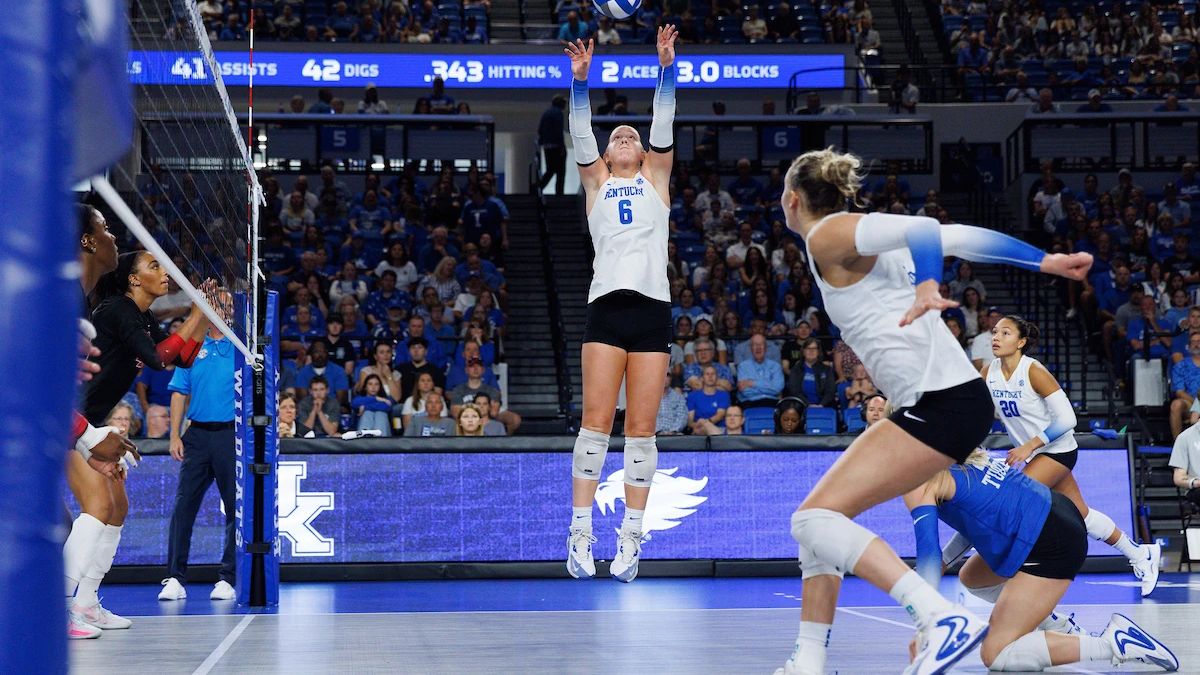
LEXINGTON, Ky. — The University of Kentucky is hosting the 2025 NCAA Volleyball Lexington Regional. Matches will be played Thursday and Saturday at Memorial Coliseum.
Top-seeded Kentucky opens play Thursday afternoon at 3:30 p.m. ET against Cal Poly, who beat the No. 4 seed USC in five sets Friday to advance. In the regional’s opening match, second-seeded Arizona State will play third-seeded Creighton at 1 p.m. ET. ESPN2 will have live coverage of the matches Thursday, with both also shown live on the ESPN app. The two winners of Thursday’s matches will meet Saturday afternoon in the regional final, with the winner advancing to the NCAA Final Four the following weekend in Kansas City, Missouri. The Lexington Regional final on Saturday will be aired live on the ESPN networks, with a time to be announced Thursday.
All-session tickets for the 2025 Lexington Regional go on sale Monday at 10 a.m. ET through UK Athletics by calling the ticket office at 859-257-3838 or visiting the ticket office in the Joe Craft Center. Fans interested in purchasing single-session tickets can acquire those tickets beginning at 10 a.m. ET Tuesday. One ticket will get fans into both regional semifinal matches Thursday.
2025 NCAA Volleyball Lexington Regional Memorial Coliseum — Lexington, Ky.
Thursday, Dec. 11
- Match 1: 1 p.m. ET — (2) Arizona State vs. (3) Creighton [ESPN2]
- Match 2: 3:30 p.m. ET — (1) Kentucky vs. Cal Poly [ESPN2]
Saturday, Dec. 13
- Match 3: Time TBA — Winner Match 1 vs. Winner Match 2 [TV TBA] — Winner advances to NCAA Final Four
Dec. 7, 2025, 9:15 a.m. MT

Eastlake High School volleyball player Giselle Gandara has been named to the MaxPreps Freshman All-American volleyball team.
The 5-9 outside hitter had 427 kills, 378 digs, 66 blocks and 53 aces for the Falcons, who finished 36-5 and won two playoff matches this past season. She is one of five Texas players on the 20-person team.
“Giselle is a fantastic player,” Eastlake coach Roel DeAnda said. “She has a strong work ethic and her future is bright. It’ll be great to see her compete in the next three years.”

Gandara’s sister, Genna, is the setter for Eastlake and is a junior.
“To see Giselle’s growth as player has been amazing,” Genna said. “She’s hard working and plays with confidence,”
Added Giselle: “It was a blessing for the great season we had as a team. Playing alongside my sister Genna helped me so much, I learned a great deal from here. I wanted to make an impact as a freshman. I wanted to prove people wrong this year and that I could play at a high level. We had an amazing team and beating Keller in the playoffs was a special moment.”
Felix F. Chavez can be reached at fchavez@elpasotimes.com; @Fchavezeptimes on X
Sports
Bump, set, spike: Dinos teach students of all skill levels volleyball during unique one day camp
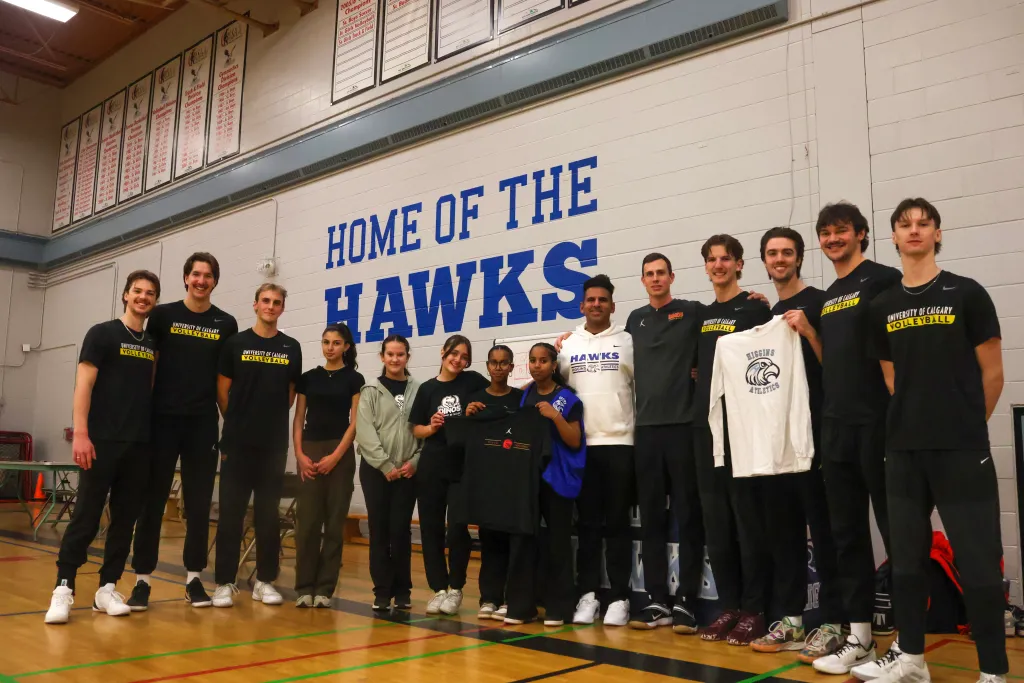
For the average junior high student, volleyball can be a counterintuitive and hard-to-learn sport. By partnering with the Calgary Dinos Men’s Volleyball team, Andy Brar, a Teacher at Dr. Gordon Higgins School, hopes to break as many of those barriers as he can.
For a one day camp, players and coaches from the Calgary Dinos Men’s volleyball team visited the Dr. Gordon Higgins junior high school for a three-hour, two section volleyball camp, at no cost to the school or the students.
“It’s the culmination of two individuals coming together and really highlighting the beauty of their two institutions, for example, the University of Calgary and their esteemed athletic program and the beautiful diversity that exists in a northeast school like this,” Brar told LWC.
With attendance set through an open sign up, Brar said he encouraged students who are unfamiliar with volleyball to attend, as volleyball, though the root of the event, was only a piece of the camp.
“The hope for this camp would be to take these skills and apply them to their everyday life, but also to understand the next time I’m faced with the challenge or I haven’t done something before to step up and jump on opportunities,” he said.
Life skills aside, Brar valued a camp of this caliber, having university level athletes and a former Olympian as instructors at over $20,000 per student. The camp offered a unique opportunity to learn from the best, especially for the students who may have less experience with the sport.
“If you give students confidence months in advance of tryouts, you’re exposing them to a new sport. When that individual who’s giving the instruction is a two-time Olympian, it really highlights the importance of the sport and the underlying commitments of teamwork, communication and building togetherness,” Brar said.
The Olympian in question, second-year Dinos’ head coach Graham Vigrass, said the opportunity was equally valuable for the Dinos team, especially at this point in the season.
“I was excited to see how much fun our guys are having. It’s a time of the year that they’re a bit burnt out from all the practices and matches that we have and this is a bit of a refresh and gets back to their love of the game,” said Vigrass, who represented Canada at the Olympics in 2016 and 2020.
“They see kids that are pumped and excited to see them and get their autographs, I hope that it makes them understand why they fell in love with the game when they were this age, because it’s kind of easy to forget it.”
Brar, who recently was honoured with the 2025 Prime Minister’s Award for Teaching Excellence, hopes the camps can become a somewhat regular thing for his students, a feeling reciprocated by Vigrass.
“This is the first time we’ve done (a camp like this). I’m a newer coach at U of C, but this is a huge priority of mine, is to get out to community and ideally, to communities like this that don’t necessarily have that same opportunity as some others in Calgary,” he said.
Liked it? Take a second to support Kaiden Brayshaw – Local Journalism Initiative on Patreon!

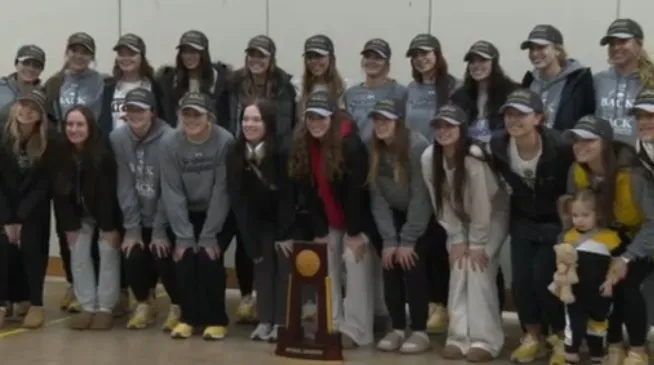
(WFRV) – The UW-Oshkosh women’s volleyball team returned to campus as national champions for the first time in program history, welcomed home by a crowd of celebrating fans.
The Titans capped a dominant postseason run with a 3–0 sweep of No. 5 La Verne in the NCAA Division III title match — completing the tournament without dropping a single set on their way to the crown.
For reaction from the team, click the video above for the full story.

As artificial intelligence continues to make appearances in almost all aspects of our lives, there have been rising concerns for whether it’s taking jobs, especially those of new college graduates entering the labor market.
Colorado State University student Eleanora Proffitt said AI has caused her to worry for the future in an already tight labor market.
“We’re already in a job shortage,” Proffitt said. “AI should be helping us, … not taking our jobs away.”
The unemployment rate of newly graduated college students reached its highest percentage since July 2021 — 5.8% — in April, according to a report by the Federal Reserve Bank of New York. This number, compared to an unemployment rate of 4% for all workers that same month, has raised some alarms regarding AI’s impact.
Oxford Economics, a global economic advisory firm, stated in a recent report that “there are signs that entry-level positions are being displaced by artificial intelligence at higher rates.”
Various job sectors have been affected by AI differently. A working paper published by Stanford Digital Economy Lab found that between late 2022 and July 2025, areas of employment for young workers in software engineering, which SDEL referred to as an “AI-exposed occupation,” has declined by nearly 20%.
Other fields such as customer service, accounting and auditing, secretarial and administrative work, computer programming and sales revealed a similar pattern, according to the paper.
According to CNBC, Some major firms and companies such as JPMorgan Chase, Amazon and Walmart are starting to make the switch to AI for lower-level white-collar jobs because of its cheaper price and supposed efficiency. However, there are still many findings that claim AI is not a major component regarding recent unemployment rates for all recent college graduates.
“Will (AI) take jobs? Yes,” said Martin Shields, a Colorado State University professor of economics. “Will it take all the jobs? Certainly not. And will it create a lot of opportunities? Yes, it will.”
According to an article by The Budget Lab at Yale, the broader labor market has not been hugely disrupted since the release of ChatGPT — a popular AI chatbot developed by OpenAI. The lab notes that an impact on the labor market is likely to take much longer than just 33 months and can take decades to fully settle in.
A current trend in the labor market is that fewer people are quitting their jobs, and fewer employers are hiring because of economic uncertainty. This is known as a labor market tightening, which poses an even greater challenge for fresh college graduates trying to get their foot in the door.
Adjustments to technological progress has been done throughout history and are expected to a certain degree, but some are concerned that job losses may look a little different now, as AI is replacing jobs that were generally thought of as “safe.” Despite the current state of the job market, the Future of Jobs Report 2025 by World Economic Forum estimated that although AI could displace 92 million jobs by 2030, it could add 170 million new ones.
These positions could be in areas of AI development, research and safety, as well as robotics.
“People who can use the technology, lead the use of this technology, communicate it, can check it, can ask it the right questions — those people will thrive with that skill set,” Shields said.
A report by Lightcast, a labor insight platform, found that in an analysis of over 1.3 billion job postings, there has been a surge in demand for AI skills — and higher average pay for jobs that required them.
CSU alumnus and Chief Operating Officer for ZenRows, a web data company, Robert Mata said he has been in tech for 15 years and pays close attention to AI usage when hiring. Mata is not just interested in whether new hires use AI, but more so how they use the tool in the context of the role they are applying for.
“It goes way beyond, ‘Hey, do you use AI daily for X, Y, Z?’” Mata said. “It really depends on the role and the usage of AI.”
Mata said he has had to assess how potential candidates for various positions utilize AI. For example, he asks applicants for sales positions how they use AI to better find leads, source data, acquire contact information and more.
Taking on the potential growth and challenges brought by AI, CSU has begun integrating AI literacy into higher education. The webpage titled AI @ CSU has news related to AI, resources for learning how to use AI and pages describing the institution’s mission and vision with AI.
CSU also offers a range of classes available to students who wish to expand their skills in AI, with more to come. As the job market adjusts to new technology, experts suggested that no matter what field students dream of working in, learning how to better navigate AI and use it as a tool are what experts and the job market are alluding to as crucial in this job climate.
“Let’s use this tool,” Shields said. “Let’s recognize its limitations. Let’s recognize that there are a lot of things that we can do that it can’t and hone in on those skills.”
Reach Katya Arzubi at news@collegian.com or on social media @RMCollegian.
Dec. 8, 2025, 3:02 a.m. CT
EVANSVILLE — Ashley Kaczmarski remembers when everything clicked into place this season.
Her North High School volleyball team was on the road at Heritage Hills. The Huskies lost the second set to the eventual sectional champions. Kaczmarski sensed her group was off that evening — none moreso than star setter Kenlee Barnard.
The coach pulled her senior captain aside during the break with a message: the team needed her. What transpired that night, and by extension the rest of the season, summed up what many in the program already knew. Barnard was going to lead the way.

The College Football Playoff Committee took the messy route, but still landed on the right bracket

Lando Norris breaks down in tears after winning F1 world championship – Motorsport – Sports

Wearable Gaming Accessories Market Growth Outlook

Kentucky set to host volleyball regional

Marko defends promotion of ‘mature’ teen Lindblad

Major changes predicted after controversial College Football Playoff decision

Three Orange County football teams go for CIF state championships –
El Paso volleyball player Giselle Gandara named MaxPreps All-American

TOYOTA GAZOO Racing World Premieres GR GT & GR GT3 — TradingView News
Cal Petersen gives back to youth hockey with the Iowa Wild

Bump, set, spike: Dinos teach students of all skill levels volleyball during unique one day camp

Auto racing legends honored | Local

UW-Oshkosh volleyball celebrates first national championship | WFRV Local 5

Gaming CEO says Cyprus is ‘rocket fuel’ for global tech growth

Major college football program declines bowl game bid after losing head coach

First Tee Winter Registration is open

Fargo girl, 13, dies after collapsing during school basketball game – Grand Forks Herald

CPG Brands Like Allegra Are Betting on F1 for the First Time

Volleyball Recaps – November 18

F1 Las Vegas: Verstappen win, Norris and Piastri DQ tighten 2025 title fight

Two Pro Volleyball Leagues Serve Up Plans for Minnesota Teams

Utah State Announces 2025-26 Indoor Track & Field Schedule

Sycamores unveil 2026 track and field schedule

Redemption Means First Pro Stock World Championship for Dallas Glenn

Texas volleyball vs Kentucky game score: Live SEC tournament updates

Bowl Projections: ESPN predicts 12-team College Football Playoff bracket, full bowl slate after Week 14

How this startup (and a KC sports icon) turned young players into card-carrying legends overnight

Indiana’s rapid ascent and its impact across college football

Pohlman admits ‘there might be some spats’ as he pushes to get Kyle Busch winning again

Robert “Bobby” Lewis Hardin, 56

 Why a rising mid-major power with an NCAA Tournament team opted out of revenue-sharing — and advertised it
 NBA Legend Michael Jordan to Join NBC Sports as Special Contributor
 Falcons mailbag
 Portal Update – Basketball and Gymnastics Take Hits
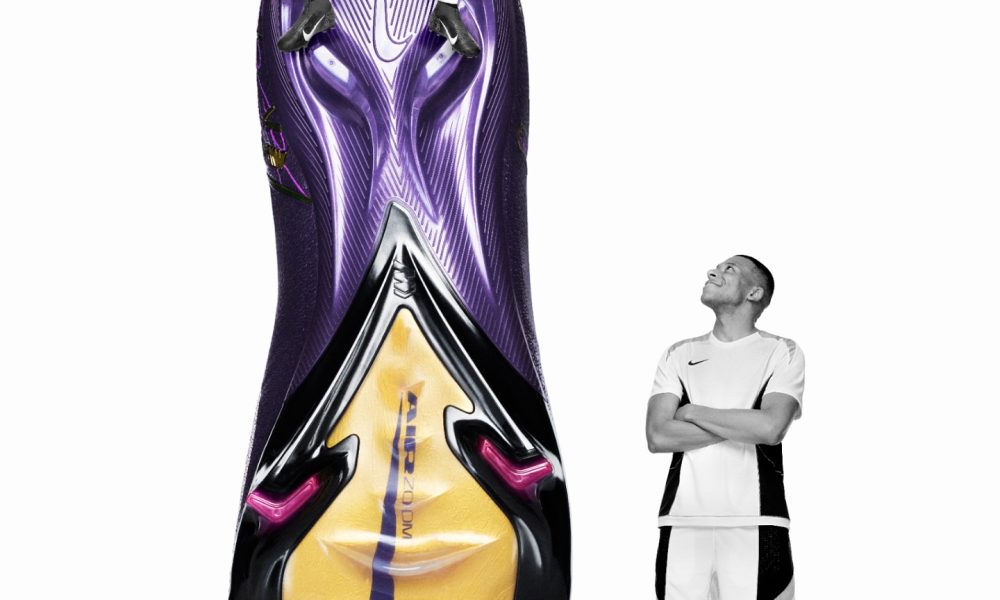 has always dreamed in Mercurial. Now his initials are on the boots.
The new Kyl…
has always dreamed in Mercurial. Now his initials are on the boots.
The new Kyl…
-
 Rec Sports2 weeks ago
First Tee Winter Registration is open
-
 Rec Sports2 weeks ago
Fargo girl, 13, dies after collapsing during school basketball game – Grand Forks Herald
-
 Motorsports2 weeks ago
CPG Brands Like Allegra Are Betting on F1 for the First Time
-
 Sports3 weeks ago
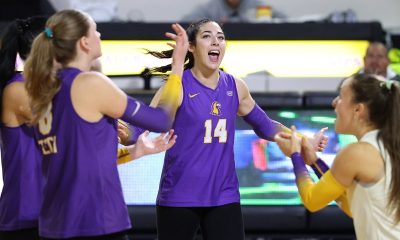
Volleyball Recaps – November 18
-
 Motorsports2 weeks ago
F1 Las Vegas: Verstappen win, Norris and Piastri DQ tighten 2025 title fight
-
 Sports2 weeks ago
Two Pro Volleyball Leagues Serve Up Plans for Minnesota Teams
-
 Sports2 weeks ago
Utah State Announces 2025-26 Indoor Track & Field Schedule
-
 Sports2 weeks ago
Sycamores unveil 2026 track and field schedule
-
 Motorsports2 weeks ago
Redemption Means First Pro Stock World Championship for Dallas Glenn
-
 Sports2 weeks ago
Texas volleyball vs Kentucky game score: Live SEC tournament updates