
NIL
As Deloitte's 'NIL Go' Draws Heat, Other Athletic Work Stays Low



Last September, Deloitte and the University of Kansas announced a “first-of-its-kind” partnership between the consulting giant and a college athletic department.
The $200,000 deal was unveiled by KU months before Deloitte was publicly identified as the firm tasked with administering a digital clearinghouse for college athlete NIL deals, as stipulated in the pending House v. NCAA settlement.
Notably, the concept of such a clearinghouse was broached in a Wall Street Journal sponsored column in Jan. 2021—seven months before the NCAA ever adopted its interim NIL policy. The article, authored by three Deloitte principals and titled “Colleges Brace for New Student-Athlete Sponsor Rules,” envisioned “a clearinghouse for NIL payments with a means for estimating fair market value of NIL opportunities.” That vision is now close to becoming reality, with Deloitte set to play a central role in administering the athlete deal information center known as “NIL Go.”
With the settlement process having hit headwinds in its final stages, Deloitte’s prospective engagement in the NIL system is facing heightened scrutiny amid newly surfaced details.
At the same time, Deloitte’s other athletic department work has made little noise in the nine months since the KU partnership was announced.
For years, Deloitte has maintained an extensive presence in both the athletics and higher education sectors. However, the prospect of one arm of the firm specifically advising athletic departments on NIL issues while another plays a role in evaluating or adjudicating athlete NIL deals at those same schools raises concerns about potential conflicts of interest.
“Deloitte maintains a robust governance process and thoroughly vets all projects across a number of dimensions including potential conflicts,” a company spokesperson told Sportico in a statement. “Regarding this project, the new entity that will be stood up by the defendant conferences’ settlement implementation committee (pending the final approval for the settlement) will be responsible for the enforcement of its terms, including all decision-making pertaining to third-party NIL deals.”
An official with one of the defendant conferences told Sportico that there will be “bright lines” separating the firm’s consulting work from its clearinghouse duties—boundaries that will be clearly defined in Deloitte’s contract with the new enforcement entity, College Sports Commission LLC.
“There is a general expectation and verbal understanding that is the way this is going to get papered up and locked in,” said the conference official, who spoke under the condition of anonymity since the settlement has not been finalized.
Steve Berman, co-lead counsel for the House plaintiffs, expressed confidence in the oversight mechanisms that will be in place.
“Deloitte must abide by the settlement terms, and all of its decisions will be subject to review through the neutral arbitration system—with respect to individual athletes—and by the court if it acts in a way contrary to the settlement agreement,” Berman said in a written statement. “We will monitor as class counsel.”
According to a person familiar with the situation, Deloitte’s “NIL Go” team includes several key figures: Tim Juravich, leader of the firm’s design-led products and engineering practice; Peter Woelflein, a senior manager with expertise in valuation services; Nicholas Eyer, a senior strategy manager in Deloitte’s sports and entertainment practice; Nick Fries, lead product manager at Deloitte Digital; and Kat Harwood, a leader in the firm’s sports industry practice. Overseeing Deloitte’s broader sports industry work is Pete Giorgio, who co-authored a 2021 Wall Street Journal sponsored column.
Deloitte’s advisory services for athletic departments are led by Caitlin Field Jacklin, who, according to her LinkedIn profile, was named the U.S. College Athletics Leader in Feb. 2024. While Jacklin’s résumé does not indicate prior direct experience in college athletics, she has a background in higher education consulting. She is joined by Sam Renault, a former NFL agent and former director of sports law and business at Arizona State University’s law school.
Based on their LinkedIn profiles, several others on the team bring firsthand experience as former college athletes: former LSU swimmers Angele Cherbonnier and Summer Spradly; Gib Versfeld, who played lacrosse at Johns Hopkins; Tyler Rudy, a former Georgetown and MLS soccer player; and Max Winters, who played baseball at William & Mary.
While Deloitte’s “NIL Go” and college sports consulting practices appear to each operate with distinct personnel, there has already been some overlap. For example, Harwood contributed to an eight-page white paper Deloitte published in January titled The New Era of College Athletics. Another contributor to that report was former University of Iowa athletic director Gary Barta, who retired in 2023. Reached by text, Barta said he was “thrilled to have been asked to assist Deloitte with its college sports practice,” but declined to elaborate on the nature or extent of his involvement.
To be sure, athletic department advisory services amount to a microdroplet in the revenue bucket of Deloitte, a global firm with $67.2 billion in annual revenue. And, so far, there’s been little indication that athletic departments are flocking to engage the firm’s services, even if it’s just to get in good with “NIL Go.”
“I look at it as an asset even though the two [services] are completely separate,” Collin Sexton, KU’s deputy athletic director and chief strategy officer, said in a telephone interview. “From a brand association (perspective) … what would preclude someone from wanting to be associated with Deloitte? To me it is only a potential benefit to have an expert in the commercial NIL space.”
Sexton said Kansas primarily was interested in seeking help in terms of House revenue-sharing, and wanted expertise outside the traditional rolodex of athletic department consultants.
“We figured we needed to take a deep dive into our business setup as a whole to see how we were set to take on a new $20 million line item every year,” said Sexton, referring to the maximum amount of combined revenue schools can share with athletes next year under the terms of the settlement.
Aside from Kansas, only one other university, Alabama A&M, has publicly announced retaining Deloitte for athletics-related work. In March, the SWAC school signed a $50,000 contract for two months of consulting that included hosting an “in-person strategy session” with AAMU staff to address “fundraising, NIL strategy, community engagement and competitive excellence.”
According to a statement of work obtained by Sportico, the project was led by ShaVonne Cammack, a Deloitte manager and Alabama A&M alumna who served as the university’s 2023 Founder’s Day speaker.
That same month, public records show East Carolina University entered an 18-month, $50,450 contract with Deloitte for consulting services related to its athletic department. The project, overseen by Renault, also included involvement from Game Plan founder and CEO Vin McCaffrey, a Deloitte consultant. In its request-for-proposal submission, Deloitte indicated its focus would be on financial modeling related to athlete compensation and sport-specific budget planning.
While the partnership was not formally announced by either ECU or Deloitte, Pirates athletic director Jon Gilbert told the university’s athletics and advancement committee in February that Deloitte was helping to develop a House-compliant revenue-sharing model for the school. An ECU athletics spokesperson declined to comment.
In September, Texas A&M paid Deloitte $99,000 for what appears to be, at least in part, athletic consulting work. A purchase order posted online shows the school retaining Jacklin, a Texas A&M graduate, alongside six other Deloitte employees, including Kat Ladd, McCaffrey, Rudy, and Maya Bordas—a former collegiate gymnast at Cal.
A Texas A&M spokesperson did not respond to a request for comment.
Deloitte effectively signaled its entry into the intercollegiate athletics space last July by co-sponsoring the annual convention of the National Association of Collegiate Directors of Athletics. A NACDA official confirmed that Deloitte will return as a sponsor for this year’s upcoming convention in Orlando.
“College sports is really, really unique … and incredibly complex,” Jacklin said in a sit-down interview with D1.ticker and Athletic DirectorU last summer. “What we do at Deloitte is bring together the depth and breadth of all the services that we offer all our clients across all industries—retail, banking, hospitality, travel.”
Jacklin added, “I really see our superpower being connecting all the dots across our specialties and disciplines.”
(Jacklin did not respond to repeated interview requests for this story.)
Around the same time, Jacklin moderated a one-hour webinar titled “The Current State of College Athletics,” featuring Washington AD Pat Chun and Baylor president Linda Livingstone, who also serves as chair of the NCAA Board of Governors. While both of their institutions have existing relationships with Deloitte, neither has contracted the firm for athletic department consulting work to date.
Deloitte’s entry into college sports consulting follows the move by Chicago-based Huron Consulting Group, a higher education and healthcare advisory firm which launched its collegiate athletics practice in 2023. Huron assembled a high-profile advisory team that included former Big Ten commissioner Jim Delany, former Big 12 commissioner Kevin Weiberg, former Penn State athletic director Sandy Barbour and longtime Duke AD Kevin White.
Sexton said Kansas had considered partnering with Huron before ultimately selecting Deloitte.
According to a person familiar with Deloitte’s collegiate sports strategy, the firm’s expanding presence in the space appears to be driven less by short-term revenue and more by long-term talent development, expanding upon initiatives like its “Student-Athlete Leadership Experience”—partially funded by the Deloitte Foundation—that offers career development opportunities for college athletes.
For now, Deloitte’s initial consulting work with athletic departments doesn’t appear to be aimed at securing immediate repeat business.
“We loved working with them,” said Sexton. “But the goal wasn’t to bring them back—hopefully, that won’t be necessary.”

Jan. 11, 2026Updated Jan. 12, 2026, 1:12 a.m. ET
Quarterback Ty Simpson may be headed to the NFL, but it’s not because he didn’t have suitors in college football.
Simpson, who started for Alabama during the 2025 season, declared for the 2026 NFL Draft on Jan. 7.
A source close to Simpson told The Tuscaloosa News on Jan. 11 that Miami offered him $6.5 million to play for the Hurricanes in 2026. That would have made him the highest-paid player in college football.
Tennessee and Ole Miss each offered Simpson $4 million, the newspaper reported through the same source.

Simpson is a Tennessee native from Martin, where he won a TSSAA state championship his senior season at Westview in West Tennessee.
Simpson’s base salary at Alabama was $400,000, the newspaper reported. That doubled to $800,000 with incentives.
Simpson has not entered the NCAA transfer portal and has not yet signed his NFL paperwork. However, he plans to play in the Senior Bowl later this month in Mobile, Alabama, according to the newspaper.
Simpson played all four seasons for the Crimson Tide, but did not start until 2025, when he threw for 3,567 yards and had 28 touchdowns and five interceptions. He helped Alabama reach the College Football Playoff quarterfinals, where it lost to Indiana in the Rose Bowl.
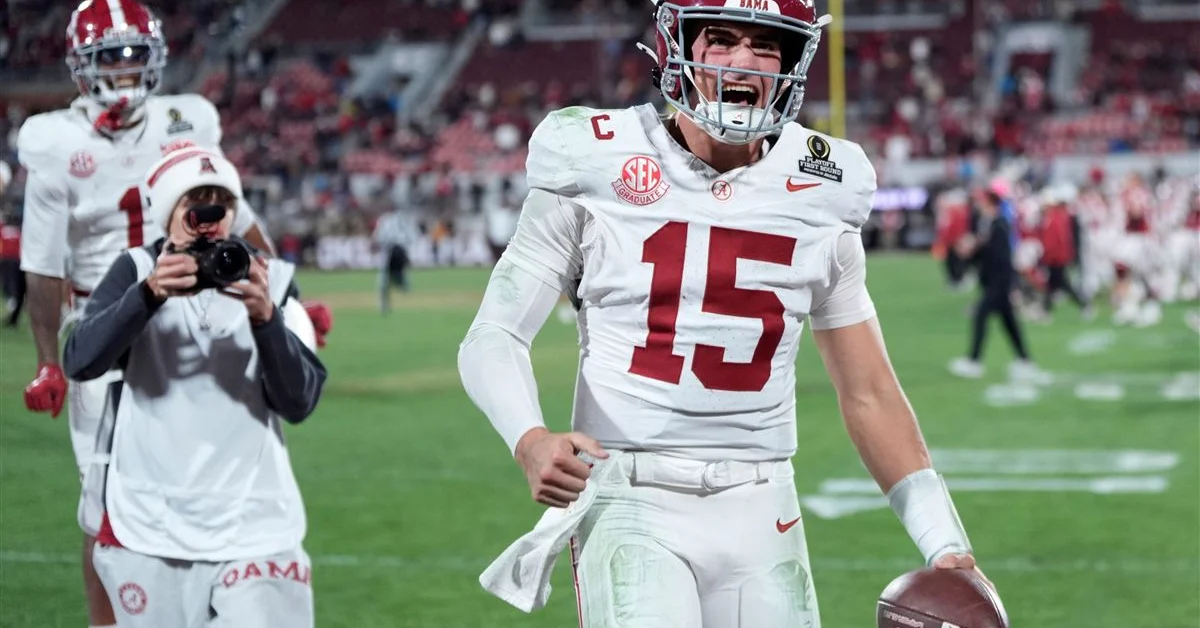
Alabama quarterback Ty Simpson announced last week that he was leaving school early to enter the NFL draft. But that hasn’t stopped other college programs from offering him lucrative NIL deals.
What started out in the $4 million range has reached in excess of $6 million, a source with knowledge of the situation told Bama247.
But that same source said the offers were unsolicited and that Simpson “hasn’t wavered” in his decision to enter the NFL draft. The expectation is he will not change his mind before the Wednesday deadline for underclassmen to declare.
Al.com was first to report the unrelenting interest in Simpson as the draft deadline approaches.
Simpson went 11-4 in his lone season as the starter, leading Alabama to the College Football Playoff and a come-from-behind victory at Oklahoma in the first round. But his season ended on a sour note as he threw for only 67 yards and no touchdowns in a 38-3 loss to Indiana in the Rose Bowl that saw him sidelined for much of the second half with a rib injury.
Simpson, who was named a team captain in the summer, finished the season with 3,567 passing yards, 28 passing touchdowns and five interceptions. He also ran for 93 yards and two scores.
Recent NFL mock drafts have had Simpson ranked among the top three quarterbacks — behind Indiana’s Fernando Mendoza and Oregon’s Dante Moore — and a borderline first-round pick.
Alabama 2026 NFL draft decision tracker: Who will stay in school or enter draft?
With Simpson gone, Mack and Russell are the two most experienced quarterbacks on the roster. The two were listed as co-backups this season with Mack having a 62-to-36 edge in total offensive snap over Russell.
Both Mack and Russell resigned with Alabama last week.

When Ohio State made the decision to hire Ross Bjork as athletic director once Gene Smith stepped down, a large reason was that he was supposed to be an expert in the NIL space. Bjork touted his ability to galvanize donors and pay the athletes what they rightly deserved.
The end of his tenure at Texas A&M did see the football program spend a lot of money on recruits. It backfired spectacularly. Jimbo Fisher did not coach the team well, and Bjork had to fire him and pay him around $77 million to not coach the program.
Since coming to Columbus, Bjork has used the opposite approach. He has been borderline stingy at every corner when it comes to NIL for the Ohio State football program. Instead of helping the Buckeyes, he is actively sinking the ship just a year after winning a national title.
Ross Bjork is actively hurting the Ohio State football program
30 players have entered the Transfer Portal from this year’s version of the Ohio State Buckeyes. That is by far the most since the portal became a widely used thing. What’s even worse is that Bjork has refused to pay enough to bring enough players in to replace those guys leaving.
There have been several instances of the Buckeyes losing out on talented portal players because they did not use their NIL money correctly. Bjork seems to think that the College Sports Commission is actually going to be able to enforce any sort of cap when it comes to revenue sharing.
No other high-major program is operating under those assumptions. In fact, most of Ohio State’s competitors keep reloading in the portal. Indiana is arguably passing the Buckeyes when it comes to finding talented older players in the portal, and that’s why they are playing for a national title.
Bjork was a questionable hire when he was brought in. The shine has worn off from the 2024 national championship, and more people are realizing that the title was won in spite of him, not because of him. Ryan Day needs to start putting his foot down when it comes to the football program.

After some marquee portal losses, the Texas Longhorns needed to add elite talent to the wide receiver room and did just that with the addition of Auburn Tigers transfer Cam Coleman over the Alabama Crimson Tide, Texas A&M Aggies, and Texas Tech Red Raiders.
Coleman is one of the crown jewels of the portal class, the No. 4 player overall and the No. 1 wide receiver and five spots ahead of the next-best offensive player — former Alabama wide receiver Isaiah Horton. The elite wideout made the most of his second recruiting cycle, but traveled to Austin first before trips to College Station, Lubbock, and Tuscaloosa. He’s ranked as a five-star portal prospect after arriving at Auburn two years ago as a five-star high school prospect, the second-ranked wide receiver behind Ohio State’s Jeremiah Smith.
In two years at Auburn, the 6’3, 200-pound wideout emerged as one of the nation’s most explosive targets despite the Tigers struggling to find consistency at quarterback. In two seasons, he accounted for 1,306 yards and 13 touchdowns catching passes from Peyton Thorne, Jackson Arnold, and Ashton Daniels. The hope for both Texas fans and Coleman is that putting him with a quarterback who specializes in the deep ball, like Arch Manning, will both open up the Texas offense and set him up for a one-year springboard on the Forty Acres.
This plan has worked wonders for Texas in previous years, with Matthew Golden and Adonai Mitchell putting up big numbers in Burnt Orange and hearing their names called early in the NFL Draft.
Texas was likely heading to the portal in the offseason regardless, but the departures of DeAndre Moore and Parker Livingstone made it a true necessity for the Longhorns. The Longhorns have bolstered the skill position talent on offense with the additions of Coleman and former Arizona State running back Raleek Brown.

As more and more Ohio State football players enter the Transfer Portal, the Buckeyes continue to let prospects go by without adding them to the roster. Despite several high-profile visits, the Buckeyes have only brought in five players from the portal to offset the 30 they’ve lost.
Ross Bjork should receive the majority of the blame. His failure to use NIL effectively, while every other major program seems to be able to, is a massive problem. Of course, there is something to be said for the change in mindset for some of the college football players these days.
Former Ohio State running back Maurice Clarett had his own gripes with the NCAA. He tried to challenge the NFL rule so that he could enter the NFL after his freshman season. Ultimately, that failed. Regardless, he gave his take on the portal situation.
Maurice Clarett explains why Ohio State football players are transferring
From Clarett’s perspective, he believes that college kids are just looking around to capture the most money possible.
There’s nothing going on besides money. Kids talk to kids. Parents talk to parents. Programs around the country need to win now. They’re paying a premium for guys. Not really hard to leverage yourself when you’re a former 4-5 star recruit that comes from Ohio State. 🤷🏾♂️
Not…
— Maurice Clarett (@ReeseClarett13) January 11, 2026
Clarett isn’t wrong that Ohio State certainly props up other kids who aren’t at the top of the depth chart. The cache of being at an elite program for a year helps them get more NIL money from a lower-level school, allowing them to maximize their earning potential.
That’s still no excuse for what is happening with the Ohio State Buckeyes. There is no reason that they should have this many players exiting the program and so few coming in. Ryan Day needs to get Bjork’s expectations in line for how the NIL game is played.
If that doesn’t happen, Ohio State is going to start to fall behind very quickly. Other programs have risen, and old powers are using NIL to get back to the top, as well. The Buckeyes need to fix their approach before it is too late and they fall too far behind.
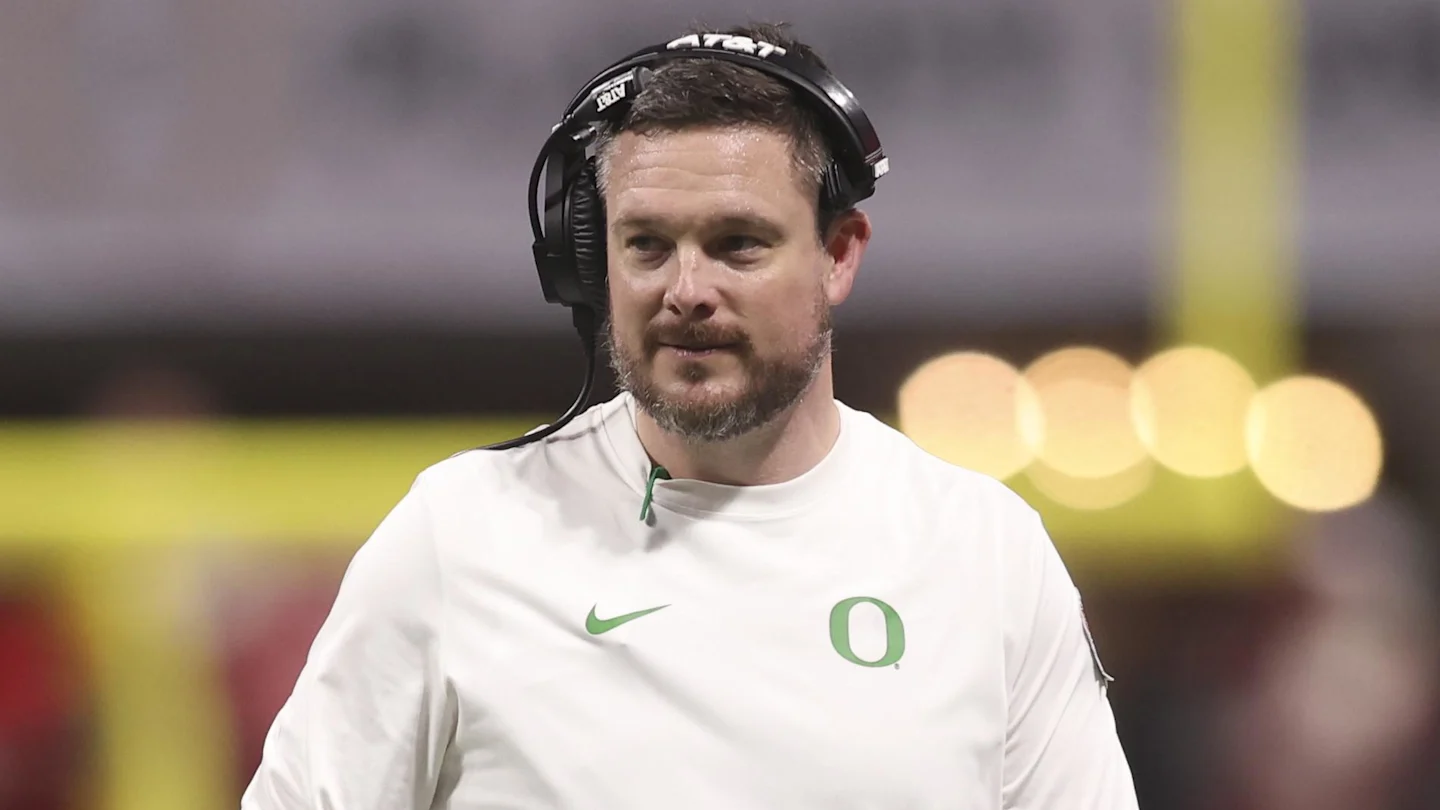
The Oregon Ducks took a hit to their linebacker depth with Kamar Mothudi entering the transfer portal the day after Oregon’s season-ending Chick-fil-A Peach Bowl loss according to 247Sports’ Matt Zenitz.
Mothudi appeared in six games this past season and recorded four tackles. He is the first Oregon linebacker to enter the transfer portal.
High Expectations, Low Production

Mothudi came to Oregon as apart of their 2024 recruiting class. Listed as the No. 13 linebacker and No. 145 player in the country according to 247Sports’ rankings, Mothudi came into Eugene with big expecations as he was the top-ranked linebacker in the Ducks’ 2024 class. However, he never really found his footing in the Ducks’ linebackers.
After appearing in only one game as true freshman, the 2025 Big Ten Championship game, Mothudi was still buried on the depth chart as a redshirt freshman. He played mainly in blowout wins for Oregon and made his last appearance in the Nov. 22 win over USC.
Potential Landing Spots For Mothudi

Tosh Lupoi | Chris Pietsch/The Register-Guard / USA TODAY NETWORK
The Los Angeles native took five official visits during his high school recruitment. Mothudi visited Oregon, Oregon State, Washington, Michigan State, and Utah.
One schoool that stands out among the rest for Mothudi is Cal. The Golden Bears hired Oregon defensive coordinator Tosh Lupoi as their head coach following the dismissal of Justin Wilcox. Lupoi is known as a tenacious recruiter and was a big reason why the Ducks’ constantly reeled in top talent, including Mothudi.
247Sports lists Lupoi as one of the primary recruiters in Mothudi’s recruitment. The two could reunite in the Bay Area next season as the Golden Bears reload their roster via the transfer portal.
UCLA has been quietly making some noise in the transfer portal. Mothudi spent his first three years of his high school career at Campbell Hall, which is 12 miles away from UCLA’s campus. The Bruins also went through a coaching change and brought in James Madison’s Bob Chesney, making them active in the portal as well. They could make a push to bring Mothudi home to close out his college career.
MORE: What Dan Lanning Said After Oregon’s Loss to Indiana
MORE: Instant Takeaways From Oregon’s Playoff Loss to Indiana
MORE: Dante Moore NFL Outlook Comes Into Focus After Peach Bowl Loss
SIGN UP FOR OUR NEWSLETTER HERE!
Ducks Will Be Okay

Although Mothudi was a promising underclassman, his departure isn’t the end all, be all for the Ducks’ linebacker unit. With Devon Jackson, Nasir Wyatt, and Blake Purchase all set to come back next season, Oregon will have plenty of talent coming back in addition to their 2026 recruiting class signees.
Oregon 2026 signees’ Braylon Hodge and Tristan Phillips both rank as top 15 linebackers in the country according to 247Sports’ rankings.
That’s not taking into consideration the fact that Mixon and Teitum Tuioti, both starters, still have eligibility left.
The departure of Bryce Boettcher will be the biggest impact on the linebacker unit as he was a multi-year starter and a leader of the team. But if Oregon coach Dan Lanning has proven anything during his time with the Ducks, it’s that they will be ready on the defensive side of the ball. Especially with the front seven.
Recommended Articles
Tennessee football offered Alabama quarterback Ty Simpson $4 million

SBU Sports: Women’s Track & Field returns to competition at TCNJ Invitational

Ty Simpson “not wavering” on decision to turn pro amid NIL bidding war

Upcoming season could be last for transgender teen athlete | Shareable Stories

Community and Youth | Miami Recreation

The Ohio State football program is in Transfer Portal crisis thanks to Ross Bjork

Two School Records Fall for Women’s Track & Field in VIrginia

No. 1 portal WR Cam Coleman commits to Texas

Legend posts Transfer Portal message that Ohio State football fans needed to see

Ball State Finishes Weekend Victorious Versus NJIT

Fort Lewis College women’s basketball uses strong shooting in win over Westminster

Vasseur outlines Ferrari’s 2026 development strategy

Steelers surprise local flag football leader with Super Bowl LX tickets

Gauchos Down Harvard to Start Season 3-0

Upcoming season could be last for transgender teen athlete

Stempien to seek opening for Branch County Circuit Court Judge | WTVB | 1590 AM · 95.5 FM

Ross Brawn to receive Autosport Gold Medal Award at 2026 Autosport Awards, Honouring a Lifetime Shaping Modern F1

Maine wraps up Fall Semester with a win in Black Bear Invitational

Downtown Athletic Club of Hawaiʻi gives $300K to Boost the ’Bows NIL fund

Princeton Area Community Foundation awards more than $1.3 million to 40 local nonprofits ⋆ Princeton, NJ local news %

Badgers news: Wisconsin lands 2nd commitment from transfer portal

Three Clarkson Volleyball Players Named to CSC Academic All-District List

Five Youth Sports Trends We’re Watching in 2026

Nike Signs 10 LSU Athletes to NIL deals

Beach Volleyball Unveils 2026 Spring Schedule – University of South Carolina Athletics

Kentucky AD explains NIL, JMI partnership and cap rules

Badgers news: Final Four Game Thread vs. No. 1 Kentucky Wildcats

PRI Show revs through Indy, sets tone for 2026 racing season

Central’s Meyer earns weekly USTFCCCA national honor

Kentucky VB adds an All-American honorable mention, loses Brooke Bultema to portal





-
 Sports3 weeks ago
Badgers news: Wisconsin lands 2nd commitment from transfer portal
-
 Rec Sports1 week ago
Five Youth Sports Trends We’re Watching in 2026
-
 Sports3 weeks ago
Kentucky VB adds an All-American honorable mention, loses Brooke Bultema to portal
-

 Motorsports3 weeks ago
Dr. Patrick Staropoli Lands Full-Time O’Reilly Ride with Big Machine Racing
-
NIL2 weeks ago
Fifty years after IU’s undefeated champs … a Rose Bowl
-

 Motorsports2 weeks ago
BangShift.com IHRA Acquires Historic Memphis Motorsports Park In Millington Tennessee. Big Race Weekend’s Planned For 2026!
-
 Sports2 weeks ago
Colorado volleyball poised to repeat success
-
 Sports2 weeks ago
2025 Volleyball Player of the Year: Witherow makes big impact on Central program | Nvdaily
-
 Sports2 weeks ago
H.S. INDOOR TRACK & FIELD: GLOW region athletes face off at Nazareth University | Sports
-

 Rec Sports3 weeks ago
Tennessee Developments: Rolling on the River