
Rec Sports
Rising Use of Steroids and Other Performance-Enhancing Drugs Carries Risks

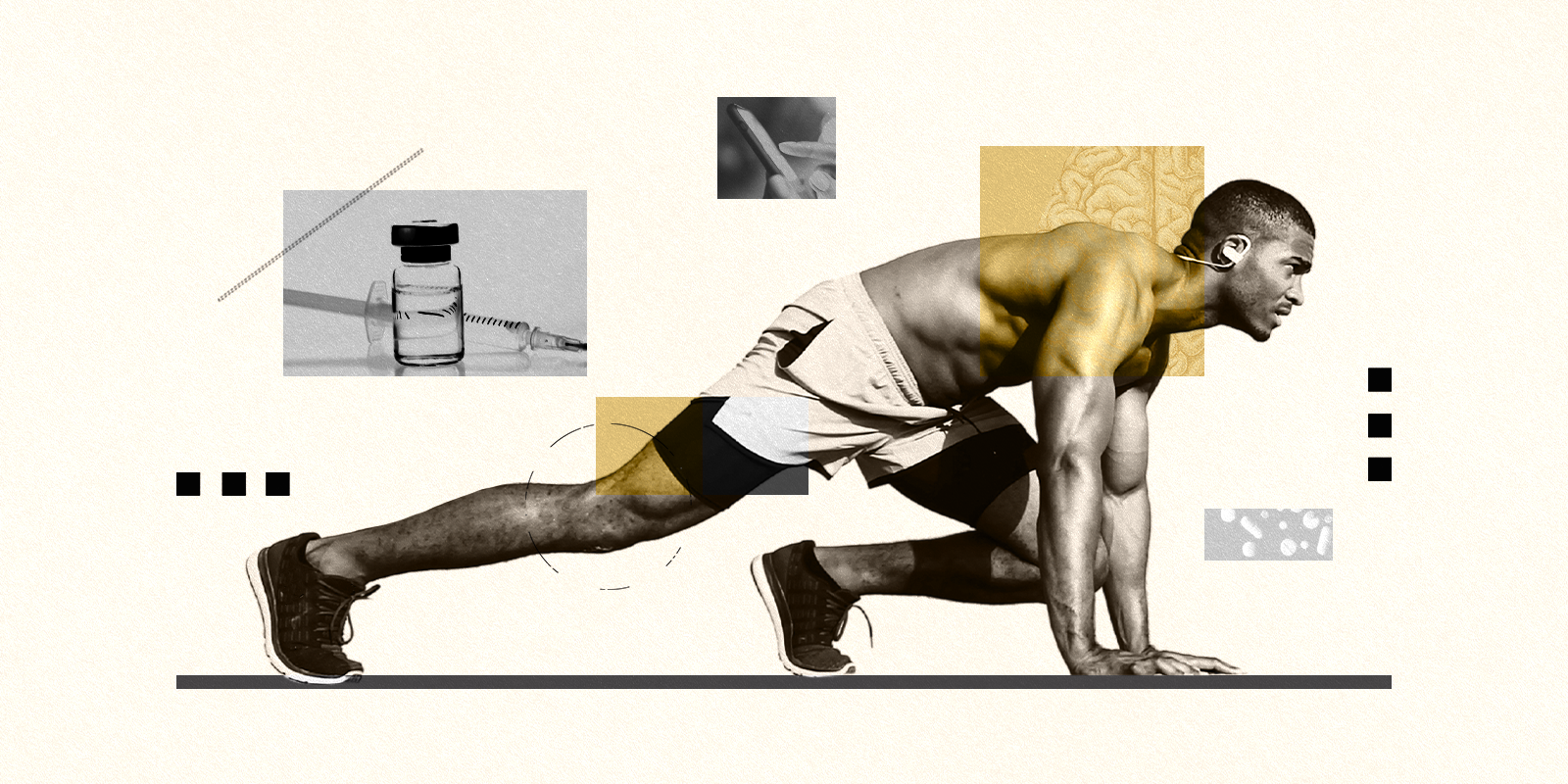
While historically tied to athletes cheating in their respective sports, the specter of performance-enhancing drugs (PEDs) has found its way into local gyms and youth athletics. As the scope of PED use grows, so do healthcare provider concerns, as problems associated with the dangerous drugs spill into their practices. An estimated 3 million to 4 million Americans use unregulated and unsupervised PEDs – more than the number of U.S. patients with type 1 diabetes. However, the estimate is likely a significant undercount. Federal health agencies do not keep statistics on adult PEDs use – in contrast to other illicit drugs – leaving researchers and providers to approximate the problem’s scope.
“PED use is probably more widespread than we would assume,” said Derek Stokes, assistant professor and sports medicine physician in the Department of Physical Medicine and Rehabilitation at the CU School of Medicine. “I would say that it’s problematic and it’s a significant growing public health concern, not only in competitive athletes, with much of the media attention focusing on those stories, but also in recreational athletes at your local gym and even high school student athletes.”
As their use expands, understanding the perplexing world of PEDs – which include far more than steroids – is critical for users, providers and parents. The multi-billion-dollar industry raises significant mental and physical health concerns, preys on people through social media and fuels negative body image issues, experts say.
What are PEDs and are they safe?
“I think when people hear ‘steroids’ or ‘PEDs,’ they think of exogenous – external and supplemental – testosterone, but it can actually encompass several drugs,” said Ben Hill, PharmD, an assistant professor in the Department of Clinical Pharmacy at the Skaggs School of Pharmacy and Pharmaceutical Sciences.
“For example, in shooting sports or archery, they would consider a beta blocker a performance-enhancing drug. They have a medical use in treating heart conditions, but they can also be used to slow the heart rate to make shooting easier and more accurate.”
From anabolic steroids to insulin, the scale and diversity of drugs and products used to promote muscle growth and enhance image are numerous and evolving, making staying updated a continual struggle for experts.
PEDs: Controlled substances
All testosterone-based products and anabolic steroids are listed as Schedule III drugs under the Controlled Substances Act. That means providers can prescribe only limited amounts at a time and all refills require written approval. Possession without a prescription is also illegal, carrying fines and potential incarceration depending on the offense. Trafficking the drugs brings stiffer penalties. The United States has also made periodic updates to legislation regarding PEDs, which last expanded in 2014.
“Our scientific understanding is being outpaced by the clinical or public use of these PEDs,” Stokes said. “Scientists are working as fast as possible, but we also need to make sure that providers, including primary care physicians and pediatricians, have adequate educational exposure to these topics to identify risk behaviors in patients early on.”
Because many PEDs are produced in murky, underground markets, users have little insight into safety or ingredient integrity, whether they buy products online or through “medical spas or clinics” that offer compounded versions.
“Unless you have specific high-quality tests being done on those products,” Hill said, “you can never say for sure what you’re going to be receiving or putting into your body, on top of risking infection through injectable drugs. A fancy website doesn’t mean it is reputable, especially if it is advertising that you can bypass your doctor and all these regulations.”
PED terminology
PED users have a series of colloquial terms for the drugs and their use:
- Stacking: using a combination of drugs and supplements simultaneously to further push bodies to achieve a response (while also increasing health risks).
- Cycling: switching on and off from one PED to another to give the body breaks from a single PED.
- Pyramiding: gradually increasing dosage amounts.
A shrouded problem boosted by social media
The reasons behind the high use of these dangerous products are multifaceted, according to Emily Hemendinger, MPH, LCSW, an assistant professor of psychiatry at the CU School of Medicine. But they center around a societal conception that ties worth to physical appearance – a notion that technology has made inescapable, she said.
“Our algorithms are flooded with influencers, athletes and other public figures selling the latest supplements to lose weight, enhance our cognitive functioning or even reverse aging. They are touting the supposed benefits of these drugs without understanding the dangers they pose.”
When existing emotional issues are combined with use, it creates “a perfect storm,” Hemendinger said.
“These drugs are frequently used by people who are unhappy with their appearance, have lower self-esteem and self-worth, and who may have co-occurring mental health conditions,” Hemendinger said. Many users consider more traditional efforts – exercise combined with diet and nutrition – insufficient or too slow, she said.
PED use poses widespread physical risks
The list of PEDs’ potential physical effects is long and can ultimately spiral from “mild” headaches and nausea to strokes and cancer. The products are even more dangerous in youth.
“From a pediatric standpoint specifically, premature growth-plate closure can be an issue, which will stunt height development,” Stokes said. “Delays to puberty can cause big issues, and rapid muscle gain on developing bodies can overload the tendinous points leading to significant injuries.”
Environmental factors, such as Colorado’s high altitudes, can also play a role in physical effects from PEDs, Hill said. Testosterone or synthetic testosterone can increase red blood cell count, especially hemoglobin and hematocrit, he said. “If you start thickening your blood, you’re at a higher risk of having a clot form that can induce heart attacks or strokes, especially at altitude.”
In her practice, Alice Barnes, PT, DPT, SCS, sees another group that might be interested in PEDs: those recovering from a sports injury.
A medical need, but dangerous availability
Despite the raft of online vendors (many underground) for performance-enhancing drugs, some products (such as testosterone) still have a medical purpose for patients when taken under supervision and with the right testing support. For example, low testosterone in those of male-born sex could trigger decreased libido, sexual dysfunctions, depressive episodes, tiredness or fatigue.
He emphasized: Several FDA-approved testosterone-boosting drugs are sourced from reputable providers and help fix an underlying condition to get a patient back to a healthy baseline. “Those with low testosterone undergo regular lab monitoring to avoid these side effects,” Hill said. “Taking these drugs without talking to your primary care provider can lead to a risk of pretty detrimental side effects when you are at a normal level of testosterone.”
A significant challenge for healthcare providers, however, is the ease of access and attendant opportunities for misuse.
“I just got on Google last night and typed in various anabolic steroids and clicked shop,” said Derek Stokes, assistant professor of physical medicine and rehabilitation at the CU School of Medicine. “These could ship directly to me without any input from a medical professional. It’s a big issue because this is a wild west of unregulated sources combined with an ease of access.”
“I see adolescent and adult athletes at our practice, from those on their high school teams to those running the Leadville 100 and professional organizations such as the U.S. Tennis Association,” said Barnes, a lecturer and associated faculty member in the University of Colorado Physical Therapy Program, who specializes in sports and athletic physical therapy.
“After an injury, the conversation ends up being, ‘Well, how do I get back faster?’ And as providers, we have to help ask patients important questions around: ‘How are you fueling? What does your nutrient timing look like? What types of foods are you putting into your body?’ We have to tell patients they can’t rely on these products for recovery or enhancement.”
Another scenario Barnes sees: When PEDs themselves lead to injuries. “A lot of times with PEDs, you may see an immediate response. However, you’re going to have an overall decrease in your lean muscle mass as it gets broken down, which opens the door for injuries. If you combine that with a false sense of security when it comes to unsustainable and fast increases in strength, endurance, recovery and other physical abilities, you might be at a further risk of injury when you are supposed to “cycle” off these drugs ” she said.
PEDs can create a heavy mental load
“We need to take a step back and think a lot about the long-term health impacts – both physical and mental – in order to address this issue,” Stokes said. “On the mental health side, there’s such a potential for a larger pattern of impulsive and risk-taking behavior – alongside illicit drug use, especially in young males.”
Hemendinger agreed, and said the risks of PEDs only exacerbate existing mental health issues and do not address the underlying conditions. “Use of these drugs can be related to body image distress, perfectionism and eating disorders, all of which will only worsen with the continued use. The same can be said for aggression, irritation, depression and anxiety,” she said.
Since these drugs can affect the neurotransmitter pathways in the brain, sleep patterns, movement, emotions, appetite, sexuality and learning are all impacted, Hemendinger said. All these changes stack up while the root cause or reason for taking PEDs in the first place could be reduced and better addressed by speaking with a therapist or psychiatrist, she said.
Fighting back against marketing
While it can be difficult to avoid falling for PED marketing tactics and influences, Hemendinger says there are a few steps to take to practice body acceptance and neutrality. First step, balancing your social media use and realizing when those feeds aren’t serving you.
“You have to start by acknowledging that our culture is obsessed with appearance, winning, and achievement,” Hemendinger said. “Focusing on those things won’t help you in the long run. From there, recognizing when you are being critical of your body and performance and naming those as thoughts, not the truth, while practicing what you are grateful for with your body to shift the function of exercise to less around physical appearance and letting go of comparisons to other ‘ideal’ bodies.
Stokes emphasized that education about PEDs is even more important for youth – and that support networks of parents and peers play an essential role in their behaviors.
“With younger populations, a lot of times it’s peer pressure and normalization around these drugs,” Stokes said. “There’s a thinking of invincibility, that these side effects and growth and development delays won’t happen to them. So we need the coaches and adults in their lives to be present and a safe outlet. Role models alongside peer support are huge in stopping these behaviors.”
Experts: Solutions lie in trust and guidance for better long term health
So how can providers, coaches and parents help? Have open, honest and non-judgmental discussions about PED use and body acceptance, the experts said.
“We’re movement specialists,” Barnes said. “How do we help our patients think about the way we move, take care of their bodies and reach their goals in a healthy and sustainable way?” Conversations should include everything from protein timing and training schedules to integrating mental health support during recovery, she said.
And open conversations, whether it’s providers or parents, must include listening, Stokes said. “It is important to explore why they are using PEDs. What are their goals? Strength? Self-esteem? Performance? Knowing that can be key to understanding how to guide them to healthier and safer pathways for those same goals.”
Barnes has one such patient she started such a conversation with.
“I have an adult athlete that had a bilateral quad tear that was sent to the hospital for rhabdomyolysis – a serious injury where your muscles break down and toxic pieces of your muscle fiber can enter your bloodstream,” Barnes said.
“He sustained this injury playing pickleball, which is uncommon. After looking at his lab numbers, we had to have a conversation asking, ‘Are you cycling on and off steroids? That’s going to affect your tendon health. I think that’s great that you feel strong and look great at the gym, but is it functional? You’re a dad of three. You have to be able to run around with your kids.’”

Rec Sports
Sure, the newspaper informed. But as it fades, those who used it for other things must adjust, too – Butler Eagle

This photo shows a completed Montana Standard crossword sitting on a chair in Colleen Elliott’s home on Oct. 18 in Butte, Mont. Colleen Elliott via AP
The sun would rise over the Rockies in Butte, Mont., and Robin Gammons would run to the front porch to grab the morning paper before school.
She wanted the comics and her dad wanted sports, but the Montana Standard meant more than their daily race to grab “Calvin and Hobbes” or baseball scores. When one of the three kids made honor roll, won a basketball game or dressed a freshly slain bison for the History Club, appearing in the Standard’s pages made the achievement feel more real. Robin became an artist with a one-woman show at a downtown gallery and the front-page article went on the fridge, too. Five years later, the yellowing article is still there.
The Montana Standard slashed print circulation to three days a week two years ago, cutting back the expense of printing like 1,200 U.S. newspapers over the past two decades. About 3,500 papers closed over the same time. An average of two a week have shut this year.
That slow fade, it turns out, means more than changing news habits. It speaks directly to the newspaper’s presence in our lives — not just in terms of the information printed upon it, but in its identity as a physical object with many other uses.
“You can pass it on. You can keep it. And then, of course, there’s all the fun things,” says Diane DeBlois, one of the founders of the Ephemera Society of America, a group of scholars, researchers, dealers and collectors who focus on what they call “precious primary source information.”
“Newspapers wrapped fish. They washed windows. They appeared in outhouses,” she says. “And — free toilet paper.”
The downward lurch in the media business has changed American democracy over the last two decades — some think for better, many for worse. What’s indisputable: The gradual dwindling of the printed paper — the item that so many millions read to inform themselves and then repurposed into household workflows — has quietly altered the texture of daily life.
American democracy and pet cages
People used to catch up on the world, then save their precious memories, protect their floors and furniture, wrap gifts, line pet cages and light fires. In Butte, in San Antonio, Texas, in much of New Jersey and worldwide, lives without the printed paper are just a tiny bit different.
For newspaper publishers, the expense of printing is just too high in an industry that’s under strain in an online society. For ordinary people, the physical paper is joining the pay phone, the cassette tape, the answering machine, the bank check, the sound of the internal combustion engine and the ivory-white pair of women’s gloves as objects whose disappearance marks the passage of time.
“Very hard to see it while it’s happening, much easier to see things like that in even modest retrospect,” says Marilyn Nissenson, co-author of “Going Going Gone: Vanishing Americana.” “Young women were going to work and they wore them for a while and then one day they looked at them and thought, ‘This is ludicrous.’ That was a small but telling icon for a much larger social change.”
Nick Mathews thinks a lot about newspapers. Both of his parents worked at the Pekin (Illinois) Daily Times. He went on to become sports editor of the Houston Chronicle and, now, an assistant professor at the University of Missouri’s School of Journalism.
“I have fond memories of my parents using newspapers to wrap presents,” he says. “In my family, you always knew that the gift was from my parents because of what it was wrapped in.”
In Houston, he recently recalled, the Chronicle reliably sold out when the Astros, Rockets or Texas won a championship because so many people wanted the paper as a keepsake.
Four years ago, Mathews interviewed 19 people in Caroline County, Virginia, about the 2018 shuttering of the Caroline Progress, a 99-year-old weekly paper that was shuttered months before its 100th anniversary.
In “Print Imprint: The Connection Between the Physical Newspaper and the Self,” published in the Journal of Communication Inquiry, wistful Virginians remember their senior high school portrait and their daughter’s picture in a wedding dress appearing in the Progress. Plus, one told Mathews, “My fingers are too clean now. I feel sad without ink smudges.”
The many and varied uses
Flush with cash from Omahans who invested years ago with local boy Warren Buffett, Nebraska Wildlife Rehab is a well-equipped center for migratory waterfowl, wading birds, reptiles, foxes, bobcats, coyotes, mink and beaver.
“We get over 8,000 animals every year and we use that newspaper for almost all of those animals,” Executive Director Laura Stastny says.
Getting old newspapers has never been a problem in this neighborly Midwestern city. Yet Stastny frets about the electronic future.
“We do pretty well now,” she says. “If we lost that source and had to use something else or had to purchase something, that, with the available options that we have now, would cost us more than $10,000 a year easily.”
That would be nearly 1% of the budget, Stastny says, but “I’ve never been in a position to be without them, so I might be shocked with a higher dollar figure.”
Until 1974, the Omaha World-Herald printed a morning edition and two afternoon ones, including a late-afternoon Wall Street Edition with closing prices.
“Afternoon major league baseball was still standard then, so I got to gorge on both baseball and stock market facts,” an 85-year-old Buffett told the World-Herald in 2013, By then, he had become the world’s most famous investor and the paper’s owner.
The World-Herald ended its second afternoon edition in 2016 and Buffett left the newspaper business five years ago. Fewer than 60,000 households take the paper today, according to Northwestern University’s Medill School of Journalism, down from nearly more than 190,000 in 2005, or about one per household.
Time marches on
Few places symbolize the move from print to digital more than Akalla, a district of Stockholm where the ST01 data center sits at a site once occupied by the factory that prints Sweden main newspaper, Kaun says.
“They have less and less machines, and instead the building is taken over more and more by this colocation data center,” she says.
Data centers use huge amounts of energy, of course, and the environmental benefit of using less printing paper is also offset by the enormous popularity of online shopping.
“You will see a decline in printed papers, but there is a huge increase in packaging,” says Cecilia Alcoreza, manager, of forest sector transformation for the World Wildlife Fund.
The Atlanta Journal-Constitution announced in August that it would stop providing a print edition at year’s end and go completely digital, making Atlanta the largest U.S. metro area without a printed daily newspaper.
The habit of following the news — of being informed about the world — can’t be divorced from the existence of print, says Anne Kaun, professor of media and communication studies at Södertörn University in Stockholm.
Children who grew up in homes with printed newspapers and magazines randomly came across news and socialized into a news-reading habit, Kaun observed. With cellphones, that doesn’t happen.
“I do think it meaningfully changes how we relate to each other, how we relate to things like the news. It is reshaping attention spans and communications,” says Sarah Wasserman, a cultural critic and assistant dean at Dartmouth College in New Hampshire who specializes in changing forms of communication.
“These things will always continue to exist in certain spheres and certain pockets and certain class niches,” she says. “But I do think they’re fading.”
This photo shows the Montana Standard lying on Colleen Elliot’s doorstep on Oct. 18 in Butte, Mont. Colleen Elliott via AP
This photo shows a Montana Standard article about Colleen Elliot’s daughter, Robin Gammons, that was cut out of the paper and put on Elliott’s refrigerator, on Oct. 18 in Butte, Mont. Colleen Elliott via AP
This photo shows a Montana Standard article about Colleen Elliot’s daughter, Robin Gammons, that was cut out of the paper and put on Elliott’s refrigerator, on Oct. 18 in Butte, Mont. Colleen Elliott via AP
Rec Sports
Bay Area man arrested in racist vandalism of youth basketball coach’s vehicle – East Bay Times

A 20-year-old Petaluma man has been arrested in connection with the racist vandalism left on the vehicle belonging to a well-known local youth basketball coach and former Harlem Globetrotter, police said.
The suspect, Corey Newman, was linked to the vandalism through surveillance video, police said. He was arrested Wednesday during a traffic stop and taken into custody without incident.
RELATED: San Jose high school investigating ‘human swastika’ formed by students in photo on campus
Newman was booked into Sonoma County jail on suspicion of vandalism for defacing property and commission of a hate crime, police said.
The arrest marked a breakthrough in an incident that drew widespread condemnation after the coach, William Bullard, who is Black, posted on social media about the vandalism of his vehicle, which included racist slurs and swastikas scrawled in the dust on his SUV.
He also shared his account with The Press Democrat.
The vehicle was parked in a downtown Petaluma garage near Bullard’s apartment from Dec. 1 through Dec. 9, and was defaced at some point during that time.
Bullard, who noted the garage surveillance cameras in his social media posts about the incident, contacted police.
After reviewing more than a week of surveillance footage, officers identified Newman as the person believed responsible for the vandalism, police said.
Bullard, who has lived in Petaluma for about five years, said the vandalism left him concerned about his safety.
“It is tough to deal with being a minority here in Sonoma County, where it is 1-2% Black,” Bullard previously told The Press Democrat. “With my impact within the community, to walk outside to your car and see that is really tough.”
Police, in their news release on the arrest, noted the media coverage and attention the attack had drawn through social media.
The department said it takes all hate-related incidents seriously and remains committed to thorough and impartial investigations, noting that crimes motivated by bias affect not only those directly targeted but the broader community.
You can reach Staff Writer Isabel Beer at isabel.beer@pressdemocrat.com. On Twitter @IsabelSongbeer

The Ks Foundation recently held a toy drive for children in the area.
Kia Rose believes every child deserves the opportunity to play a sport.
“Sports play a vital role in fostering physical health, teamwork, discipline and confidence for these young kids,” said Rose.
Unfortunately, said the Uniontown mom of six, some families can’t afford to do so.
Through her nonprofit the Ks Foundation, Rose wants to remove the financial obstacle. The foundation, started in July, will cover registration for youth sports for families that make $49,000 or less yearly.
All of her children are sports-oriented, Rose said, and there were times that she found it difficult to pay for their participation.
“I see how much sports can affect kids and how far it can go for them to excel in anything,” Rose said. “I created this foundation so it can take away the financial barriers for children and families so they at least have a chance to get out of the house.”
Rose, a 2013 graduate of Uniontown Area High School, said everything is private, so no one will know who is asking for the help.
The Ks Foundation has held a number of events to raise funds for the cause, such as a Night at the Oscars Gala in November at the Uniontown Country Club.
On Dec. 20, the foundation held a Christmas Toy Drive and were able to help at least 40 families, said Rose.
“I’m so grateful and thankful for our community as a whole to be able to get together and help these children so (they were) able to open up something during this holiday season,” she said.
On Jan. 25, the Ks Foundation is holding the “Dodge for a Cause” dodgeball tournament at the Uniontown YMCA.
While the focus is currently on children in Fayette County, Rose hopes to expand the foundation’s reach, first to neighboring counties. Then, said Rose, she hopes to take it statewide.
“It has to start somewhere. Every child deserves a chance to play, grow and succeed,” she said.
Those interested in contributing can contact the foundation on its Facebook page or by calling 724-434-9061. Rose said the foundation is in the process of establishing a website.

HARTFORD — Some people have no business coaching youth sports. Then there are those like Joseph Shattie who seemed to have been born for the role.
A standout athlete at Rice Memorial High School in Burlington and a Division I baseball player in college, Shattie certainly knew the game of baseball. He would later learn to ice skate and coach hockey, while also officiating youth and high school games.
But coaching impressionable youths takes more than an understanding of the fundamentals and game strategies.

“He just had a way of connecting with kids,” said Bob Gaudet, a close friend and former longtime head coach of the Dartmouth men’s hockey team. “He was really respected. Joe was a big guy, but a Teddy Bear with a big smile. He had a way of communicating with the kids. He spoke to them at their level and made them feel comfortable.”
Shattie, who died June 23, at the age of 73 after a decades-long battle with heart disease, emphasized to his players what some might consider old school attributes such as doing the right thing, discipline and character.
“Joe was all about that stuff,” said Gaudet, who first met Shattie when their children played youth sports together in the 1990s. They stayed close over the years.
Sports were a thread that went through much of Shattie’s life.
He was born in Winooski, Vt. When he was just 3, his father died from an injury he had suffered during World War II and his mother moved him and his brother, Sam, to Florida to live with their aunt. He later returned to Vermont to finish high school at Rice and went on to play baseball at the University of Missouri.
His first career was in the bar and restaurant business in Burlington which led him and a friend to open Than Wheeler’s in White River Junction, which has since closed. It was there he met his future wife, who was playing in a women’s softball league at the time.
“It was my first summer playing and a friend on the team was celebrating her birthday so we went over there,” Cheryl Shattie recalled.

The couple were married almost 47 years before Shattie’s death. Together, they raised three sons, Jason, Kellen and Bryce.
“I would watch them interact together and they had this special bond,” said Todd Bebeau, the Hartford High School boys hockey coach who worked with Shattie at the Quechee Golf Course for a couple of years. “I had so much respect for the love they shared.”
All three of the Shattie sons played sports and their dad often coached them.
“He was a firm believer in hard work and having fun,” said Bryce, who lives in East Hampton, Mass. “He thought you could be both competitive and a good sport. It was what we often talked about.”
Growing up in Florida, Shattie never learned how to skate, but when his children took an interest in skating and hockey, he decided to learn, which is not an easy task as an adult.
“It took a lot of courage to learn how to skate and learn the game of hockey,” Bebeau said. “But Joe did it because he wanted to be involved with his kids and the hockey community. Joe did things for all the right reasons. It is the type of father Joe was. If his kids were involved in something, he wanted to be fully engrossed in it.”
Shattie learned how to coach and referee hockey games, often traveling long distances after working his day job in Richmond, Vt., where he was a sales manager for Caterpillar equipment. Shattie joined Caterpillar after selling Than Wheelers. Despite the long drives every day to Richmond, Shattie maintained his commitment to his family and his children’s sports.

“He would drive 50 miles one way to work, drive 50 miles home and then hop in the car and drive us to where our sporting event was,” recalled his son, Kellen, who lives in White River Junction.
Even after his children had aged out of the recreation and high school sports scene, Shattie didn’t want to give up what he loved doing for the kids and his community.
“I said, ‘Why are we going all over the state of New Hampshire when we don’t even have a kid in any of this?’ ” Cheryl Shattie once asked her husband. “I just know how much he loved doing it.”
Shattie also was known for his easy-going temperament. Stephen DeFelice, Shattie’s neighbor whose son, Brad, played baseball with Shattie’s son, Bryce, remembers those qualities on display when Shattie was a hockey referee.
Some parents, who think their child is destined for the NHL, can get a little overzealous watching a game, DeFelice said.
“It was not uncommon for your neighbor to be hollering at you if you made a bad call,” DeFelice said. “It may not have been a bad call, but they thought it was. And Joe would just have this big grin on his face when people would holler at him.”
In addition to coaching, Shattie served on the Hartford Zoning Board of Adjustment and his work with the Rotary Club earned him the Paul Harris Fellow Award, the service organization’s highest award. Shattie also served on the Friends of Dartmouth Hockey, helping to raise money through events such as the annual golf tournament.
After retiring, Shattie, around the age of 70, took a job working at the driving range at the Quechee Golf Course and was soon known as the “Mayor of the Driving Range,” Cheryl Shattie said.
Bebeau, the Hartford hockey coach, has fond memories of his time with Shattie at the Quechee Golf Course, listening to his stories about his time on the road with Caterpillar.
“He didn’t need to work, but he just loved being around people,” Bebeau said. “He always had a big smile on his face and was a great storyteller. He was one of the most positive people I have known. People you talk to will tell you they were drawn to Joe because Joe was a quality human being.”
Health problems plagued Shattie beginning at age 40 when he suffered a heart attack that required stents. Ten years later, after another heart attack, Shattie had quadruple bypass surgery and finally, he had a third heart attack at age 66. Shattie’s many heart problems were hereditary and he worked hard, with an exercise routine and nutritious meals, to improve his health.
“Family was first for him and that was a big motivator,” Cheryl Shattie said.
Shattie, who was an avid birdwatcher who enjoyed their peaceful vacations in Upstate New York, knew he was lucky to survive his health scares and never took a day for granted, his son Kellen said.
“He really wanted to enjoy the time he had,” Kellen said.
Shattie used his own experience to help his neighbors, the DeFelices, when Dawn DeFelice had open heart surgery at the onset of COVID in 2020.
“Anytime my wife had a question, ‘Is this normal?’ or ‘Should this be happening?’ Joe had an answer,” Stephen DeFelice said. “He knew what she was going through and would call to check on her to be sure she was OK because we were isolated. Joe was a real godsend for us during that time.”
Gaudet began his remarks at a memorial service for Shattie by referring to a video of the Shatties filmed for Dartmouth Health. The couple talked about Shattie’s heart attacks and the care he received, hoping it would encourage others to pay closer attention to their health and not let the busy lives they lead prevent them from taking care of themselves.
Gaudet noted that Shattie began the video by saying, “Life is precious.”
It was a credo Shattie lived each day, Gaudet said at the memorial.
“All of us who knew Joe remember how uplifted we were in any encounter with him,” Gaudet said. “We miss him so much.”
Patrick O’Grady can be reached at pogclmt@gmail.com.
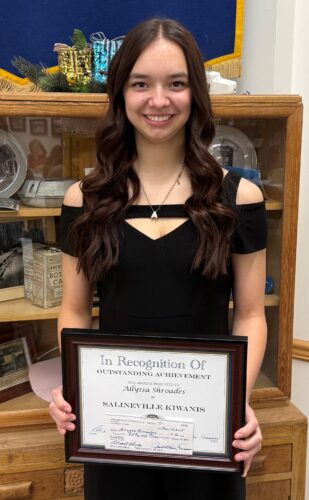
Allyssa Shroades
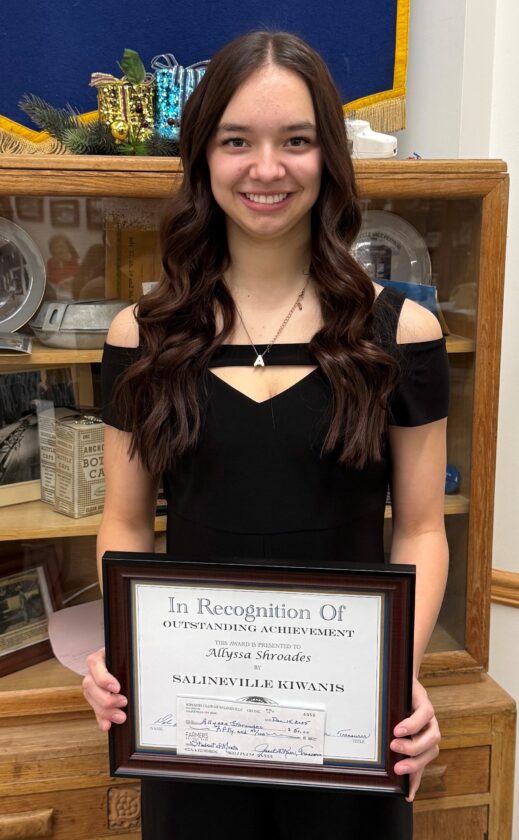
SALINEVILLE – Southern Local High School senior Allyssa Shroades has been selected as the Salineville Kiwanis December Kiwanis Student of the Month.
Shroades, the daughter of Christina Shroades of Salineville, is currently ranked seventh in her class and holds a 3.978 GPA. She has yielded successful athletic and academic careers, being a member of the SLHS volleyball and basketball teams. Shroades has received First Team EOAC, All-Conference OVAC, Second Team OHSVCA District 1, and MaxPreps Player of the Year in volleyball and earned various titles in basketball, includingFirst Team EOAC, All Star 2023, Second Team All Columbiana County All Star 2023, Second Team All-OVAC All-Star 2023, Honorable Mention All-Area Morning Journal 2023, Honorable Mention Northeast Inland District Division IV 2023, and First Team All-EOAC Honors for 2024-2025. She also currently holds the school records for three-pointers in a game, in a season, and in a career.
Additionally, Shroades is a member of student council, Spanish Club, Varsity Club, and National Honor Society and volunteers at youth basketball tournaments.
Following graduation, she plans to attend Kent State University and major in nursing.

The Inter-Mountain photos by Steve Chamberlain
Players take part in a Jerry West Basketball contest this past Saturday at the Elkins-Randolph County YMCA.
Players take part in a Jerry West Basketball contest this past Saturday at the Elkins-Randolph County YMCA.
Players take part in a Jerry West Basketball contest this past Saturday at the Elkins-Randolph County YMCA.
Players take part in a Jerry West Basketball contest this past Saturday at the Elkins-Randolph County YMCA.

Sure, the newspaper informed. But as it fades, those who used it for other things must adjust, too – Butler Eagle

Bay Area man arrested in racist vandalism of youth basketball coach’s vehicle – East Bay Times

Giving children a chance – Observer-Reporter

A Life: Joseph Shattie ‘just loved being around people’

Salineville Kiwanis Student of the Month | News, Sports, Jobs

Youth Sportslight: Jerry West/Youth Basketball Action | News, Sports, Jobs

Hot Start Sets Tone In Maryland’s 73-58 Win Over Old Dominion

Dabo Swinney addresses next steps for Clemson football program after disappointing 2025

Kyle Whittingham admits he didn’t know if he was done coaching after stepping down at Utah before Michigan hire

‘Cinderella exists in college basketball’ but not college football

NASCAR star was pardoned by president after months in prison – Motorsport – Sports

Ed Orgeron on SEC paying players before NIL: ‘We used to walk through the back door with the cash’ – Tar Heel Times

What is the projected NIL value of a top DB & DL?

Purdue Volleyball Adds ACC All-Freshman Outside Hitter to 2026 Roster

How does a Q-Collar work?

SoundGear Named Entitlement Sponsor of Spears CARS Tour Southwest Opener

Donny Schatz finds new home for 2026, inks full-time deal with CJB Motorsports – InForum

Black Bear Revises Recording Policies After Rulebook Language Surfaces via Lever

Bowl Projections: ESPN predicts 12-team College Football Playoff bracket, full bowl slate after Week 14

Robert “Bobby” Lewis Hardin, 56

Men’s and Women’s Track and Field Release 2026 Indoor Schedule with Opener Slated for December 6 at Home

How Donald Trump became FIFA’s ‘soccer president’ long before World Cup draw

David Blitzer, Harris Blitzer Sports & Entertainment
Wisconsin volleyball sweeps Minnesota with ease in ranked rivalry win

Michael Jordan’s fight against NASCAR heads to court, could shake up motorsports

JR Motorsports Confirms Death Of NASCAR Veteran Michael Annett At Age 39

DeSantis Talks College Football, Calls for Reforms to NIL and Transfer Portal · The Floridian

Rick Ware Racing switching to Chevrolet for 2026
Elliot and Thuotte Highlight Men’s Indoor Track and Field Season Opener

Colleges ponying up in support of football coaches, programs






-
 Motorsports3 weeks ago
SoundGear Named Entitlement Sponsor of Spears CARS Tour Southwest Opener
-
 NIL3 weeks ago
DeSantis Talks College Football, Calls for Reforms to NIL and Transfer Portal · The Floridian
-
 Sports2 weeks ago
#11 Volleyball Practices, Then Meets Media Prior to #2 Kentucky Match
-

 Motorsports2 weeks ago
Sunoco to sponsor No. 8 Ganassi Honda IndyCar in multi-year deal
-
 Motorsports2 weeks ago
Nascar legal saga ends as 23XI, Front Row secure settlement
-

 Motorsports3 weeks ago
North Florida Motorsports Park led by Indy 500 Champion and motorsports legend Bobby Rahal Nassau County, FL
-

 Motorsports3 weeks ago
Accelerating Inclusion: Breaking Barriers in Motorsport
-

 Rec Sports2 weeks ago
WNBA’s Caitlin Clark, Angel Reese and Paige Bueckers in NC, making debut for national team at USA camp at Duke
-
 Sports2 weeks ago
Maine wraps up Fall Semester with a win in Black Bear Invitational
-

 Sports2 weeks ago
Pinterest predicts the biggest Gen Z trends of 2026 | News