
Sports
From 'nude parades' to Imane Khelif



Less than a week before Imane Khelif was poised to return to competitive women’s boxing, the sport’s new global governing body set up a potential roadblock.
World Boxing announced last Friday that Khelif cannot participate in any future women’s events unless the Olympic champion takes a gender verification test to prove that Khelif is biologically female.
Advertisement
The International Olympic Committee ignited global outcry in Paris last summer when it allowed Khelif to march to a gold medal in the women’s welterweight division. Only a year earlier, Khelif was disqualified before the gold-medal bout of the International Boxing Association’s world championships. The IBA, then recognized as amateur boxing’s global governing body, claimed that a sex test showed the presence of Y chromosome and ruled Khelif ineligible to compete against women.
Three months later, the IOC stripped the IBA of its governing status for multiple reasons, after which IOC leaders chose to overlook Khelif’s alleged failed gender test because they had questions about the fairness of the IBA’s process. That turned the IOC into a piñata for critics at last summer’s Olympic Games as Khelif pummeled an overmatched Italian fighter into quitting in 46 seconds, then toyed with her remaining opponents while displaying superior reach and punching power.
In February, the IOC recognized World Boxing as its new governing body for the sport — and assessing how to be fair to Khelif and her potential female opponents instantly moved atop World Boxing’s to-do list. The solution that World Boxing chose was making sex testing mandatory for all boxers who compete in events it sanctions. The organization announced the policy change ahead of this week’s Eindhoven Box Cup to get ahead of the tournament Khelif was targeting for her potential return.
“This decision reflects concerns over the safety and well-being of all boxers, including Imane Khelif,” World Boxing said in last Friday’s statement. “It aims to protect the physical and mental health of all participants in light of some of the reactions that have been expressed in relation to the boxer’s potential participation at the Eindhoven Box Cup.”
Advertisement
The Khelif controversy exemplifies why dividing athletes into male and female categories for competition isn’t always straightforward. Gender policing has existed in women’s sports for nearly a century as administrators have grappled with deliberate cheating, transgender athletes and complex medical conditions resulting in ambiguous development of sex organs.
Sports governing bodies have used anything from invasive visual examinations, to testosterone tests, to chromosome analyses in their long-running attempts to distinguish men from women. The most common outcome has been humiliation for female athletes confronted for the first time with the possibility that their genitalia, internal anatomy, hormones or chromosomes developed differently than most of their peers.
That presents a conundrum for sporting governing bodies: How should they treat an athlete who was classified female at birth and identifies as a woman yet possesses a Y chromosome? How should they handle it when that athlete’s differences in sexual development offer a potential advantage in sporting performance over other female competitors?
Dr. Richard Holt, professor of endocrinology at the University of Southampton, describes that decision as a “minefield.”
Advertisement
Says Holt, “There is no easy solution — all have potential pitfalls.”
Helen Stephens smiles for the cameraman after setting a world record in the 100 meter finals at the 1936 Olympics in Berlin. (Getty Images)
(Bettmann via Getty Images)
‘The nude parade’
The desire to define who counts as a woman for the purpose of sports dates back to Hitler’s Olympics. On the night of Aug. 4, 1936, 18-year-old Helen Stephens of Fulton, Missouri, went to bed the newly crowned fastest woman in the world. The next morning, Stephens awoke to an international firestorm.
A Polish newspaper correspondent could not accept that Stephens had defeated famed Polish sprinter Stella Walsh to win Olympic gold in the 100-meter dash. He published a story discrediting Stephens’ world record performance by alleging that the tall, muscular American with an unusually deep voice was really a man masquerading as a woman.
Advertisement
Rather than dismissing the Polish sportswriter’s accusation as sour grapes, Olympic officials responded by revealing that they had anticipated such a controversy. They told reporters they had Stephens examined before the Olympics and cleared her to compete after confirming she was female.
At least one U.S. media outlet reached out to Stephens’ mother seeking her response to the speculation about her daughter’s gender.
“Helen is absolutely a girl,” Bertie May Stephens told the reporter by telephone from Missouri, adding that she better not say what she thinks of “anyone who would charge that she is anything else.”
The scandal reflected the growing unease at the time over the physical appearance of female athletes enjoying success in sports once deemed too strenuous for women. They were often perceived as suspiciously masculine because they didn’t conform to the era’s notion of femininity.
Advertisement
In early 1936, American Olympic Committee chairman Avery Brundage wrote to IOC colleagues expressing concern about “various female (?) athletes in several sports” who seemed to possess “apparent characteristics of the opposite sex.”
“Perhaps some action has already been taken on this subject,” Brundage added. “If not, it might be well to insist on a medical examination before participation in the Olympic Games.”
The first known gender verification rule in women’s sports took effect less than a week after Stephens’ gold medal win in Berlin. Track and field’s international governing body implemented a policy requiring female athletes to submit to physical examination should any protest be filed regarding their sex.
When the Olympics first became a stage for Cold War tensions in the 1950s, familiar concerns about female athletes deemed too man-like suddenly were seen through a geopolitical lens. Rumors flew that the brawniest female athletes from the Soviet Union and other Eastern-bloc nations were taking performance-enhancing drugs or were actually men in disguise.
Advertisement
Soviet track and field stars Irina and Tamara Press, sisters who combined to claim five Olympic gold medals and set 26 world records, aroused the most suspicion. Western media outlets derisively labeled Irina and Tamara “the Press brothers.” In 1964, a New York Times reporter wrote that Tamara “was big enough to play tackle for the Chicago Bears” and that “they could probably use her, too.”
In 1966, international track and field officials responded by enforcing a mandatory sex testing policy often referred to by athletes as “the nude parade.” Every female participant at that year’s Commonwealth Games had to undress on-site before the meet and display themselves to doctors for visual inspection.
Irina and Tamara Press hung up their track spikes and retired. Other athletes gritted their teeth and endured the humiliation. In an interview with NPR’s “Tested” podcast last year, Canadian discus thrower Carol Martin described being taken into a large room underneath the stands and having “to pull my pants down in front of this woman so she could see I had a vagina.”
“I remember thinking, ‘What the [expletive] is this?’” Martin told the podcast. “And I was a nice person. I never said that at the time, but I remember thinking, ‘Whoa, this seems a little invasive. This seems a little inappropriate. I mean, can’t you see I’m a girl?’”
Advertisement
Nude parades, unsurprisingly, proved deeply unpopular. Athletes successfully campaigned to abolish the practice after only two years.
Algeria’s Imane Khelif, right, defeated Italy’s Angela Carini in their women’s 66 kg preliminary boxing match at the 2024 Summer Olympics. Carini abandoned the fight after just 46 seconds. (AP Photo/John Locher, File)
(ASSOCIATED PRESS)
‘There’s definitely not an easy solution’
Modern methods of sex testing may only require a swab to the cheek or a few drops of blood, but critics contend they’re still traumatic.
Athletes rights advocate and Humans of Sport founder Payoshni Mitra has worked on behalf of numerous high-profile athletes revealed to have unusually high testosterone levels. Some battled through severe depression, Mitra said. One family even lost their daughter to suicide.
About a decade and a half ago, Caster Semenya became the unwilling face of a complex, emotionally charged debate over what to do with athletes who don’t fit neatly in the “male” or “female” category. The muscular South African middle-distance star blew away the women’s 800 meters field at the 2009 World Championships, but she couldn’t outrun the whispers and innuendo that followed.
Advertisement
“For me she is not a woman,” said one beaten fellow finalist, Italy’s Elisa Cusma Piccione.
Another overmatched rival, Russia’s Mariya Savinova, sneered, “Just look at her.”
At the request of track and field’s governing body, Semenya submitted to a gender verification test and found out along with the rest of the world that she was different. While Semenya was born with a vagina and assigned female at birth, her test results showed XY chromosomes, no uterus and unusually high testosterone levels.
Stunned and devastated, Semenya weighed her options. Either she had to quit track at age 18 on the heels of winning World Championship gold or consent to hormone treatment to lower her testosterone to a predetermined level.
Advertisement
The hormones felt like “poison,” Semenya wrote in her 2023 memoir “The Race To Be Myself,” but she fought through panic attacks, night sweats and nausea to keep flourishing. Second place finishes at the 2011 World Championships and the 2012 Olympics were later upgraded to gold medals when Savinova was found guilty of doping. Semenya also led a podium sweep by DSD runners at the 2016 Olympics after the Court of Arbitration for Sport temporarily forced World Athletics to suspend its testosterone regulations.
On the eve of the 2016 Olympic final in the women’s 800, Yahoo Sports asked American 800-meter runner Ajee’ Wilson how she felt about Semenya. Should Semenya be free to compete without being forced to take testosterone suppressants? Or should her basic rights be infringed on to avoid unfairly disadvantaging the other female competitors?
“There’s definitely not an easy solution,” Wilson conceded. “There’s a saying that says you shouldn’t really come hard at a problem unless you have a solution. I don’t have one at this point, so I have to go with the flow of things.”
While World Athletics now administers gender tests to all female athletes, from 1999 to 2024, track and field’s governing body tested only targets of suspicion. Human Rights Watch condemned that approach in 2020, pointing out that the athletes being ensnared by sex testing were “overwhelmingly women of color from the Global South.”
Advertisement
Among those is Annet Negesa, a promising Ugandan middle-distance runner targeted under sex testing regulations and found to have unusually high testosterone levels. Negesa agreed to undergo what she was told was minor surgery in late 2012 in hopes of altering her body and saving her career.
When she awoke in a hospital bed, she told Human Rights Watch in 2020 that she had scars on her belly and discharge papers mentioning an orchiectomy — a procedure to remove testicles. The recovery from the surgery was long and painful. Never again did Negesa regain her previous fitness levels. Her manager dropped her and her university yanked away her scholarship.
Today Negesa lives in Germany, where she was granted asylum in 1999. The athlete ambassador to Humans of Sport shares her story as often as possible in hopes that it can help others. She has been following Imane Khelif’s story from afar.
“I am extremely disappointed to see how another athlete from a different sport is being made to face such a public trial,” Negesa said this week in a statement to Yahoo Sports. “It is devastating for the athlete. Federations must act responsibly. They have played with our lives for too long.”
Both IOC president Thomas Bach (R) and IOC spokesman Mark Adams defended the IOC’s decision to allow Imane Khelif to participate in the Paris Olympics, calling tests that showed Khelif has a male karyotype not legitimate. (Fabrice Coffrini/AFP via Getty Images)
(FABRICE COFFRINI via Getty Images)
IOC has egg on its face
Thirty-six hours after World Boxing ruled that Khelif would need to pass a gender verification test to be eligible to fight against women again, the document at the heart of this entire saga may have surfaced.
Advertisement
American sportswriter Alan Abrahamson, formerly of the Los Angeles Times, published to his website 3wiresports.com what appears to be a leaked image of Khelif’s sex-test results from the 2023 IBA world championships in New Delhi.
The chromosome analysis says that Khelif has a “male karyotype” (an individual’s complete set of chromosomes). IBA officials had previously alleged without offering proof that Khelif was XY.
It’s unclear how Abrahamson attained the apparent leaked document or whether it is legitimate. Neither Khelif nor anyone with the Algerian Boxing Federation have publicly addressed the 3wiresports.com report or World Boxing’s mandatory sex testing policy.
The test results carry the letterhead of Dr. Lal Path Labs in New Delhi, accredited by the American College of Pathologists and certified by the Swiss-based International Organisation for Standardisation. That appears to fly in the face of claims made last August by IOC spokesman Mark Adams, who during a news conference at the Paris Olympics took the stance that any test administered by the IBA was essentially fruit from a poison tree.
Advertisement
“The tests themselves, the process of the tests, the ad hoc nature of the tests, are not legitimate,” Adams said.
Also left with egg on his face is IOC president Thomas Bach, who several times insinuated that the Khelif test results were part of a Russian disinformation campaign. The IBA is run by Umar Kremlev, a Russian businessman with close ties to the Kremlin.
“This was part of the many, many fake news campaigns we had to face from Russia before Paris and after Paris,” Bach told Reuters last March.
If the leaked test results put pressure on IOC officials to explain why they believe they’re illegitimate, they also increase the burden on Khelif to make a public comment.
Advertisement
When speaking to reporters in Paris after her gold-medal match victory last summer, Khelif brushed aside questions about her gender.
“I am a woman, like any other woman,” Khelif said. “I was born a woman. I have lived as a woman. I compete as a woman.”
Khelif has previously said she wants to win a second gold medal at the 2028 Los Angeles Games. For now, the notion of her receiving clearance to fight against women again at a future Olympics is becoming more difficult to envision.


MUMBAI: Naman Mathur, popularly known as Mortal has joined cricketing star Smriti Mandhana, youth icon Rannvijay Singha, and rapper Srushti Tawde for Royal Challenge Packaged Drinking Water’s new campaign ‘Main Nahi Toh Kaun Be’.
This is a celebration of self-belief and authenticity. It reflects a shift from living by inherited norms to defining success on one’s own terms, from “what will people think” to “what do I think.” Brought to life through Srushti Tawade’s spirited anthem of the same name, the campaign is a tribute to those who’ve chosen bold at every turn and earned the right to say, Main Nahi Toh Kaun Be.
As an esports athletes and co-founder of S8UL Esports, Mortal’s inclusion in this national campaign highlights the growing influence of gaming and content creation within India’s youth culture. His journey from starting out as a mobile gamer to representing India on the global stage in esports and winning the Esports Content Creator of the Year 2024 award at the global Esports Awards symbolizes a new generation of achievers who have turned unconventional passions into professional careers.
“Gaming has never just been about winning, it’s about the mindset. Every match is a test of strategy, patience and self-belief. You enter the battlefield knowing anything’s possible if you trust your grind. That’s why ‘Mai Nahi Toh Kaun Be’ isn’t just a line- it’s a reminder to back yourself, every single time,” said Naman Mathur aka Mortal.
Representing diverse passions that define young India, from sports and entertainment to music and gaming, the campaign speaks to a generation unafraid to dream big and carve its own path.
The film opens with an energetic montage capturing each icon in their own world: Mandhana on the pitch, commanding every shot; Singha pushing boundaries with confidence; Mortal deep in gameplay strategy; and Tawde delivering fiery verses that echo her individuality. Their journeys unfold through moments of hustle, passion and triumph, all connected by one powerful idea, belief in oneself. ‘Main Nahi Toh Kaun Be’ goes beyond being a campaign. It is a movement that encourages everyone to make boldness a defining part of who they are.

Speaking on the launch, Varun Koorichh, VP marketing – Portfolio Head Premium and Luxury, Diageo India, said, “Main Nahi Toh Kaun Be is the next chapter in our Choose Bold journey, and it mirrors the wave of confidence shaping India today. Being bold is no longer limited to the big screen or the big stage – it’s about backing yourself in any arena where ambition runs high.
“That’s why this campaign champions everything from high-pressure cricket moments to the explosive rise of e-sports – a space where young Indians are proving that skill, resilience and self-belief are the new markers of success. Whether you’re battling it out in a competitive gaming lobby, creating in the fast-moving digital landscape, or building something from the ground up – it’s that inner conviction that sets you apart. With this campaign, we’ve brought together cultural icons who embody this fearless spirit and we hope it inspires every young Indian to step up and say, ‘If not me, then who?”
According to the FICCI EY Media and Entertainment Industry Report 2025, the number of brands investing in esports is set to rise from 68 in 2024 to 75 in 2025. Royal Challenge Packaged Drinking Water’s association with India’s gaming and esports industry reflects this growing trend. The brand has been consistently engaging with the gaming community, from creating a “Cricket Gaming Zone” with NODWIN Gaming at Mumbai Comic Con 2025 to hosting branded game nights and collaborating with leading Indian gaming creators, showcasing its commitment to the country’s thriving gamer ecosystem.
With this campaign, Royal Challenge Packaged Drinking Water is looking to champion a generation that steps up, takes risks, and embraces boldness in every moment. It stands as a celebration of confidence, courage, and conviction — a reminder to make things happen, because if not you, then who?
Watch the film here:
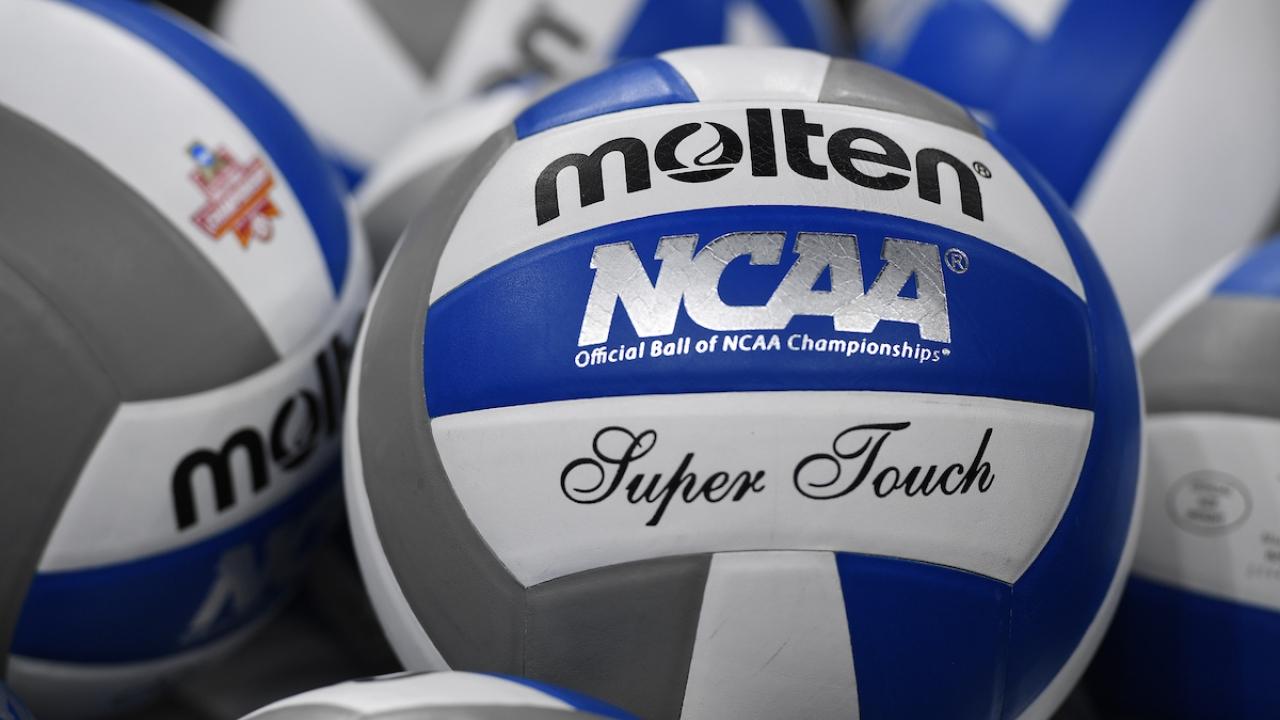


The stage is set for the 2025 DI women’s volleyball championship. No. 1 Kentucky is set to face No. 3 Texas A&M on Sunday, Dec. 21 at the T-Mobile Center in Kansas City, Missouri.
Both programs earned their spot in the final after clinching victories on Thursday, Dec. 18 to set up the first ever all-SEC national championship in DI women’s volleyball history.
The Aggies knocked off No. 1 Pitt in three straight sets, continuing their historic season by etching their names in the program’s first-ever national championship. Kyndal Stowers powered the Maroon and White with 16 kills on .433 hitting while setter Maddie Waak orchestrated her balanced offense to an impressive .382 clip with four different Aggies earning at least eight put-aways. Texas A&M has now knocked off back-to-back No. 1 seeds (Nebraska, Pitt) and look to the next in No. 1 Kentucky.
Big Blue earned a dramatic five-setter victory over No. 3 Wisconsin to earn its second ever national championship appearance and first since their 2021 national title. The Badgers seemed to have all control after a Set 1 25-12 victory, but Kentucky wouldn’t be denied. Eva Hudson was on fire, accruing 29 kills on .455 hitting while Molly Tuozzo’s back-court defense with 17 critical digs fought off a career night from Mimi Colyer. The Cats have the momentum heading into Sunday’s match with 27 straight wins.
The full 64-team bracket was announced on Sunday, Nov. 30. Thirty-one conference champions earned automatic bids to the tournament, with the NCAA DI women’s volleyball committee selecting 33 other teams as at-large picks.
Here is everything you need to know about the 2025 women’s volleyball championship.
2025 DI women’s volleyball championship bracket
👉 Click or tap to see the interactive bracket

2025 DI women’s volleyball championship schedule
All times listed in ET
- National championship: 3:30 p.m. on Sunday, Dec. 21 | ABC
- Selection show: 6 p.m. on Sunday, Nov. 30
- First round:
- Thursday, Dec. 4
- No. 5 Colorado 3, American 0
- No. 6 Baylor 3, Arkansas State 2
- No. 8 UCLA 3, Georgia Tech 2
- No. 5 Miami (Fla.) 3, Tulsa 1
- No. 4 Indiana 3, Toledo 0
- No. 6 UNI 3, Utah 2
- North Carolina 3, No. 6 UTEP 1
- Utah State 3, No. 7 Tennessee 2
- No. 1 Kentucky 3, Wofford 0
- No. 3 Purdue 3, Wright State 0
- No. 4 Kansas 3, High Point 0
- Cal Poly 3, No. 5 BYU 2
- No. 3 Creighton 3, Northern Colorado 2
- No. 3 Wisconsin 3, Eastern Illinois 0
- No. 2 Arizona State 3, Coppin State 0
- No. 4 USC 3, Princeton 0
- Friday, Dec. 5
- Marquette 3, No. 7 Western Kentucky 0
- Michigan 3, No. 8 Xavier 0
- Florida 3, No. 7 Rice 0
- No. 6 TCU 3, SFA 0
- No. 5 Iowa State 3, St. Thomas (Minn.) 2
- No. 8 Penn State 3, South Florida 1
- Kansas State 3, No. 8 San Diego 2
- No. 2 Louisville 3, Loyola Chicago 0
- No. 1 Pittsburgh 3, UMBC 0
- No. 2 SMU 3, Central Arkansas 0
- Arizona 3, No. 7 South Dakota State 1
- No. 3 Texas A&M 3, Campbell 0
- No. 4 Minnesota 3, Fairfield 0
- No. 1 Nebraska 3, LIU 0
- No. 1 Texas 3, Florida A&M 0
- No. 2 Stanford 3, Utah Valley 1
- Thursday, Dec. 4
- Second Round:
- Friday, Dec. 5
- Saturday, Dec. 6
- Regionals
- Thursday, Dec. 11
- Friday, Dec. 12
- Saturday, Dec. 13
- Sunday, Dec. 14
- Semifinals: Thursday, Dec. 18
DI women’s volleyball championship history
Here is the complete history of DI women’s volleyball champions:


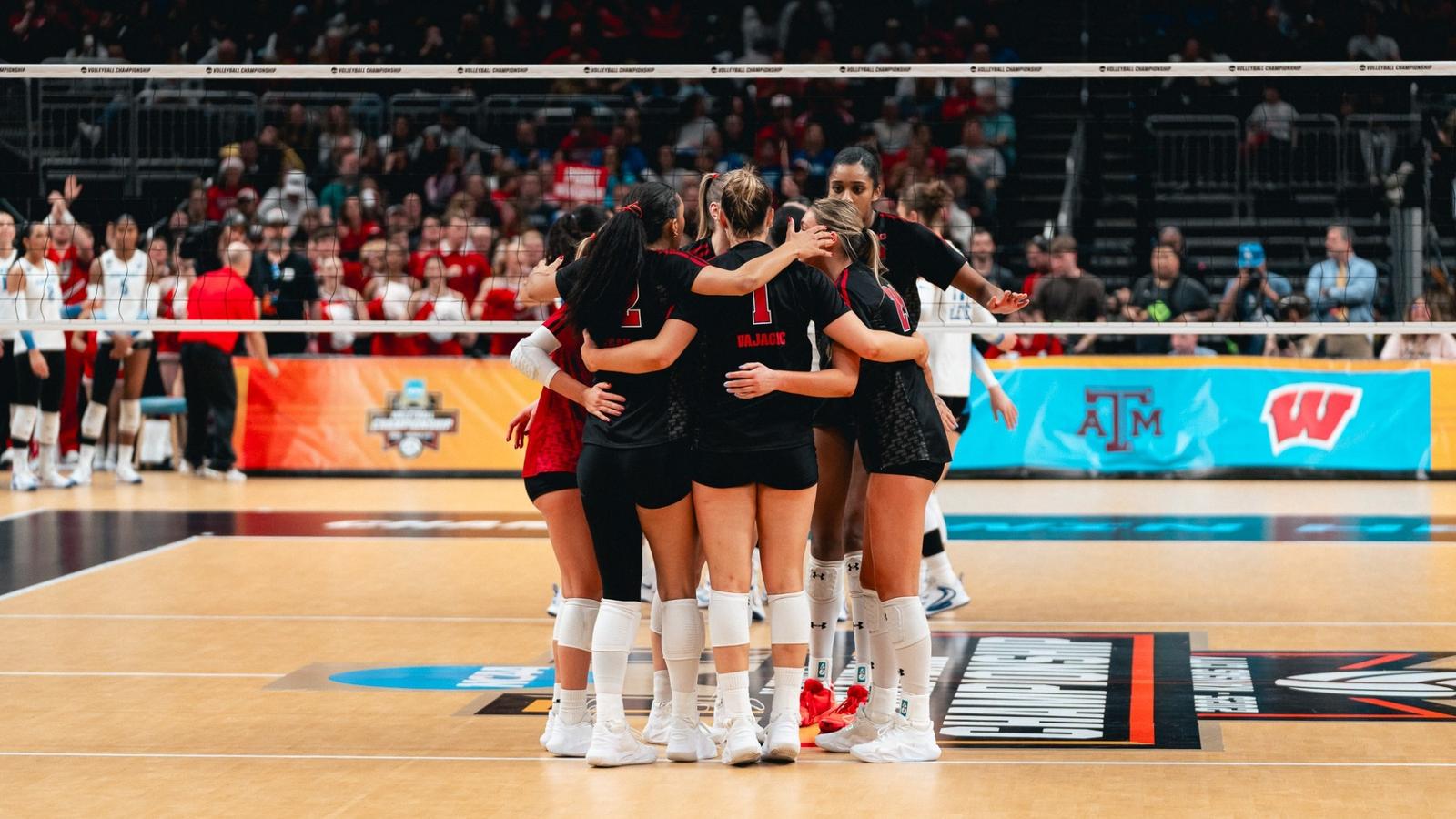
AVCA National Player of the Year finalist Mimi Colyer led the way with a career-best 32 kills on a .348 hitting percentage. The senior racked up her 10th double-double of the season as well, chipping in 12 digs. Fellow All-American Carter Booth joined her at a .633 swing percentage (21 – 2 – 30), accumulating the most kills in her career in her final collegiate match.
Charlier Fuerbringer and Una Vajagic each finished with double-doubles, too. Fuerbringer dished out a career-best 63 assists to pair with her 14 digs. Vajagic was more of the same in this tournament run, concluding the match with 10 kills and 12 digs.
The Badgers exploded out of the gates in set one, putting the Wildcats on their heels early. UW converted each of its first 10 attacks as All-Americans Colyer and Booth led the way, combining to go 7-for-7 to give UW a 7-2 advantage.
Wisconsin pulled away in the first frame and Booth concluded the set with her seventh kill of the match to give the Badgers a 25-12 win and a 1-0 lead.
After battling back-and-forth in the second frame, the Badgers led 20-18 late. But the Wildcats rattled off six-straight points to take a lead and force match point.
After a service error, a block from senior Alicia Andrew and Fuerbringer brought the match within 22-24. Unfortunately for UW, AVCA Player of the Year finalist Eva Hudson capped it off with a kill to knot it up at 1-1.
In set three, the Badgers built an early lead and maintained that cushion throughout, winning the final three points of the frame to take a 2-1 lead heading into set four. Outside hitter Vajagic finished it off with a kill, tallying 10 on the evening.
Set four saw the most intense action at the T-Mobile Center, a frame that witnessed multiple runs en route to extra points. The Badgers started it with a 4-0 burst of their own, as Booth notched a solo block to make it 6-4.
Kentucky was quick to respond once again, winning five of six points to take a 15-13 lead heading into the media timeout.
The teams continued to trade rallies during the latter half of the set, but Wisconsin was able to respond by winning three Kentucky match points, highlighted by a kill from outside hitter Trinity Shadd-Ceres.
The Wildcats secured a pair of blocks to secure the win, tying the match at 2-2. Kentucky continued to find their rhythm in set five, enjoying an 8-2 lead as the teams switched sides.
The Badgers continued to battle, going to Colyer and Booth on the offensive end to bring it within 13-14 to force a Kentucky timeout. However, one final block from the Wildcats secured the match, as the Badgers fell 13-15 in the final frame.
Wisconsin concluded the season with a 28-5 overall record and made an appearance in their seventh NCAA National Semifinal.
Straight from the Court
Head Coach Kelly Sheffield (on reflecting on this season): “I feel like this one of the most successful seasons that I have ever been a part of. You can hurt, but you can also be proud. Both of those things are together.”
Notes:
- The Badgers fall to 76-28 in the NCAA Tournament
- UW moves to 4-4 in NCAA National Championship matches.
- Senior Mimi Colyer recorded double-digit kill totals for the 20th-straight match. The Lincoln, California, native notched a career-best 32 kills in her final collegiate match.
- Libero Kristen Simon passed former Badger great Lauren Carlini for fourth-most digs in a freshman season, concluding the year with 376.
- Middle blocker Carter Booth continued to shine on the big stage, accumulated a career-best 21 kills on a .633 hitting percentage.
- Setter Charlie Fuerbringer earned a double-double behind a career-high in assists with 63. The sophomore chipped in 14 digs, too.
- Outside hitter Una Vajagic excelled once again, turning in her 11th double-double of the season with 10 kills and 12 digs.
- Right side Grace Egan racked up a season-high in digs with 15.

Details
Posted: 18-Dec-25
Location: Tulsa, Oklahoma
Type: Full-time
Categories:
Coaching
Coaching – Volleyball
Sector:
Collegiate Sports
Required Education:
4 Year Degree
Oral Roberts University is seeking applicants for the position of Assistant Women’s Volleyball Coach. The Assistant Women’s Volleyball Coach provides significant assistance in the development and implementation of the Department’s mission to “Develop Whole Person Champions”. This includes implementing programs at the direction of the Head Women’s Volleyball Coach, the Director of Athletics and the University President that promote Spiritual, Academic, Athletic and Social Development of the Women’s Volleyball student-athletes.
Assists with organizing team practice and schedule
Assists with recruiting process under direction of Head Coach
Monitors student-athletes class attendance, study hall, and grades
Assists with scheduling and team travel
Maintains records of participation and other compliance related matters
Responsible for the maintenance and accountability of equipment (i.e. uniforms, game equipment)
Other duties as assigned
A Bachelor’s degree is required.
Candidates with coaching experience at the Division I level are preferred. Those with playing experience at the same level or internationally will also be favored.
A thorough and demonstrated knowledge of recruiting practices and NCAA rules is critical, including successful completion of the annual certification requirements to recruit as designated by NCAA legislation
Excellent organizational, communicative, and time management skills as well as the ability to take on multiple tasks and work independently or in a team setting are needed.
The candidate must be willing to work nights, weekends and some holidays as well as be available for extensive travel.
Maintain Current Certification in First Aid, CPR and AED, if not currently certified upon hire, ORU will provide certification opportunity that must be completed within 30 days of first date of employment
Adhere to ORU Honor Code for Faculty, Staff and Students
About Oral Roberts University
Oral Roberts University is a non-profit organization whose staff and faculty actually make a difference in the lives of its students. We pride ourselves in our culture and the values we uphold. Our team is passionate about what we do, and we want you to make us even better! Oral Roberts University Athletics mission is to “Develop Whole Person Champions”. This is done by focusing on developing Intellectually Alert, Athletically Excellent, Socially Developed and Spiritually Alive student-athletes.
Connections working at Oral Roberts University
https://ncaamarket.ncaa.org/jobs/21915725/assistant-coach-women-s-volleyball

The No. 3 Wisconsin Badgers are taking on the No. 1 Kentucky Wildcats in the Final Four on Thursday, with first serve set for 8:00 P.M. on ESPN.
The Badgers have gone on an incredible run so far in the NCAA Tournament, most recently beating the No. 2 seed Stanford Cardinal and the No. 1 seed Texas Longhorns 3-1 to advance to Kansas City.
Star Mimi Colyer has been on a tear, recording 50 kills in the two wins, including a career-high 27 kills against Stanford. Carter Booth has also come up huge, recording a career-high 14 kills against Stanford as well.
But, the Badgers will be facing a Kentucky team that has won 26 straight matches. They went 29-2 this season, including wins over Texas, Texas A&M, and Louisville.
The Wildcats have dropped only one set in the tournament in the Second Round against UCLA, winning that one 3-1. Apart from that, Kentucky has swept its other three opponents, including most recently against the Creighton Blue Jays.
The winner of Thursday’s matchup will face the Texas A&M Aggies, who swept Pitt on Thursday as well.

Lee University is a private, comprehensive university located in Cleveland, Tennessee, in the foothills of the Appalachian Mountains. Lee is emerging as a leader in higher education in the southeastern region and is consistently ranked in the “Top Tier” of the Best Regional Universities in the South by U.S. News & World Report.
Over the past two decades, Lee has become one of the largest Christ-centered private institutions in Tennessee and the largest in the Appalachian College Association. During that period, the university has seen a remarkable transformation that has included significant growth in its academic programs, student enrollment, faculty expertise, and diversity, as well as an expanded sense of mission and vision.

WATCH | Ole Miss AD Keith Carter on College Football Playoffs, SEC Schedule, NIL, Rev Share and more

esports athlete Mortal joins Royal Challenge Packaged Drinking Water’s new campaign

2025 DI women’s volleyball championship: Bracket, schedule, scores

Badgers season ends in five-set thriller

Major SEC program emerges as candidate for $2.4 million college football quarterback

Assistant Coach-Women’s Volleyball in Tulsa, OK for Oral Roberts University

Badgers news: Final Four Game Thread vs. No. 1 Kentucky Wildcats

Brightspeed invests $580,000 in STEM and esports, supporting North Carolina schools and programs — EdTech Innovation Hub

Ohio State football has set a new record with its unanimous All-American selections

Assistant Women’s Volleyball Coach in Cleveland, TN for Lee University

Reaction To The Loss Of NASCAR Driver Greg Biffle, His Wife-Cristina, Daughter-Emma, Son-Ryder, Friend-Craig And Pilots-Dennis and Jack

Joel Klatt admits his viral NCAA Tournament stance ‘was a terrible take’

Wilson aiming for Olympic heights following graduation

Pitt Falls In National Semifinal

TOYOTA GAZOO Racing Announces 2026 Motorsport Program | Corporate | Global Newsroom

First Tee Winter Registration is open

Fargo girl, 13, dies after collapsing during school basketball game – Grand Forks Herald

CPG Brands Like Allegra Are Betting on F1 for the First Time

F1 Las Vegas: Verstappen win, Norris and Piastri DQ tighten 2025 title fight

Volleyball Recaps – November 18

Sycamores unveil 2026 track and field schedule

Two Pro Volleyball Leagues Serve Up Plans for Minnesota Teams

Utah State Announces 2025-26 Indoor Track & Field Schedule

SoundGear Named Entitlement Sponsor of Spears CARS Tour Southwest Opener

Redemption Means First Pro Stock World Championship for Dallas Glenn

Jo Shimoda Undergoes Back Surgery

Texas volleyball vs Kentucky game score: Live SEC tournament updates

Bowl Projections: ESPN predicts 12-team College Football Playoff bracket, full bowl slate after Week 14

How this startup (and a KC sports icon) turned young players into card-carrying legends overnight

Robert “Bobby” Lewis Hardin, 56




-
 Motorsports1 week ago
SoundGear Named Entitlement Sponsor of Spears CARS Tour Southwest Opener
-
 Motorsports3 weeks ago
Jo Shimoda Undergoes Back Surgery
-
 NIL3 weeks ago
Bowl Projections: ESPN predicts 12-team College Football Playoff bracket, full bowl slate after Week 14
-
 Rec Sports3 weeks ago
Robert “Bobby” Lewis Hardin, 56
-
Sports3 weeks ago
Wisconsin volleyball sweeps Minnesota with ease in ranked rivalry win
-

 Motorsports1 week ago
Donny Schatz finds new home for 2026, inks full-time deal with CJB Motorsports – InForum
-

 Motorsports3 weeks ago
Increased Purses, 19 Different Tracks Highlight 2026 Great Lakes Super Sprints Schedule – Speedway Digest
-

 Rec Sports2 weeks ago
How Donald Trump became FIFA’s ‘soccer president’ long before World Cup draw
-
 Sports2 weeks ago
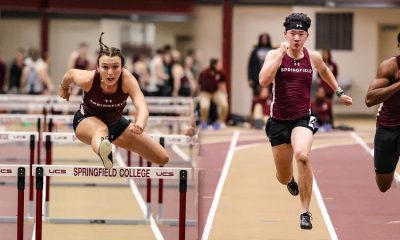
Men’s and Women’s Track and Field Release 2026 Indoor Schedule with Opener Slated for December 6 at Home
-

 Motorsports3 weeks ago
Michael Jordan’s fight against NASCAR heads to court, could shake up motorsports