
Sports
Twins' minor


WEST SACRAMENTO, Calif. — The risk simply wasn’t worth it for Carlos Correa.
Recognizing the soreness developing in the middle of his back after two days of slipping and sliding in a rock-hard batter’s box at Sutter Health Park, the Twins shortstop elected to sit out the final two contests of a four-game series at the temporary home of the Athletics.
Advertisement
In abandoning Oakland to spend three seasons in the California state capital before they move to a new ballpark on the Las Vegas Strip, the A’s made a controversial decision by voluntarily relocating to a Triple-A stadium they’re sharing with a minor-league affiliate of the San Francisco Giants.
While the refurbished facility’s amenities drew rave reviews from every Twins player interviewed by The Athletic, including Correa, several noted multiple “minor-league” issues with its playing surface.
After playing in West Sacramento and at George M. Steinbrenner Field in Tampa, the temporary home of the Tampa Bay Rays and spring training facility for the New York Yankees, during their recent three-city road trip, the Twins have a fresh perspective on Major League Baseball’s minor-league issues as the weather heats up.
From Tampa’s oppressive heat and humidity to its poor outfield lighting and short foul poles to a batter’s box in Sacramento multiple players described as akin to hitting on cement and a rigid pitcher’s mound that’s drawn the ire of hurlers across the league, the Twins experienced the full range of challenges these parks present in playing seven away games against the Rays and A’s since May 26.
Correa’s experience with the batter’s box represents one of the bigger hardships Twins players faced during their minor-league adventure.
“It’s the worst box I’ve ever stepped in,” Correa said. “I like (the park). The ball travels very well. The facilities are good. They did it right. The plate is the only problem. … I’m not going to sacrifice two months of my season because of a couple of at-bats here.”
How the clubhouses at the temporary stadiums are arranged isn’t an issue. But the playing conditions are a different story.
In Sacramento, the dirt and the disconnected dugouts create difficulties for the home and visiting players. Both teams’ clubhouses are located beyond the left-field fence at the ballpark, which means players and trainers are often commuting across the field between innings.
Advertisement
Athletics pitcher Luis Severino voiced his frustration with his home stadium last month.
During a typical start, Severino reportedly likes to retreat to the clubhouse between innings to watch film and move around, something he can’t do at Sutter Health Park. This season, Severino, who signed a multiyear contract with the A’s in free agency, has a 0.87 road ERA and a 6.99 ERA at home.
Before their four-game series began Monday, Twins manager Rocco Baldelli joked about how awkward it would be to get ejected, as he did in Seattle on Saturday night. Noting fans described the potential scenario as a walk of shame, Baldelli suggested he’d be worried about how his stride would look with such a long walk.
Still, Baldelli determined that if an ejection occurred, he’d make the most of it.
“It’s the march of triumph,” he said.

After games — and during them — players and coaches must walk across the field to get to the visiting clubhouse at Sutter Health Park. (Dan Hayes / The Athletic)
The batter’s box and mound, which the grounds crew pores over daily to handle a combined 156-game schedule for the Athletics and Triple-A River Cats, have also been heavily criticized for their firmness.
When he pitched in Sacramento on May 24, Philadelphia Phillies starter Zack Wheeler struggled to dig a hole on the mound in front of the rubber with his foot because of the hard clay used. Wheeler said he couldn’t “get into the dirt to drive” through his pitches, which left him throwing “all arm.”
Wheeler’s phrasing stuck with Twins pitcher Joe Ryan, who wondered aloud if a firm mound played a role in the significant injury suffered by teammate Pablo López this week in Sacramento. Coming off a daytime start in which he pitched in 100-degree temperatures in Tampa, López suffered a Grade 2 teres major muscle strain Tuesday and is expected to miss eight to 12 weeks.
Ryan is perplexed by how a teammate as fit and process-oriented as López — “he spends hours a day (warming up) to go play catch” — could suffer such an injury.
Advertisement
“The first thing I thought of was Wheeler saying, ‘I was all arm when I was here,’” Ryan said. “Does that play into that? Someone was mentioning it. We’re in the big leagues, and we have these amenities for a reason. It’s to get prepared and go inside if you need to for a second. Whatever your routine is, you can’t do that here. You can’t do that in Tampa. As (Lopez’s) teammate, it makes it sting a little bit more. I don’t think Pablo is the kind of guy that’s going to say (the mound was the issue), but I’ll say it.”
During his May 28 start in Tampa, López called a timeout in the first inning for groundskeepers to fix the mound. Ryan also took issue with the mound in Tampa and said it was much different than the one he warmed up on in the bullpen before his start.
“Tampa was a fricking sh– box and they have a massive mound in the bullpen before,” Ryan said. “It’s a huge contrast.”

In Tampa, umpires walk from a portable trailer located outside the ballpark to get into Steinbrenner Field. (Dan Hayes / The Athletic)
According to players, the issues in Tampa, which is scheduled to be used by the Rays for only the 2025 season after Hurricane Milton destroyed the roof of Tropicana Field last September and caused massive flood damage, include poor outfield lighting, a short porch in right field and short foul poles. The miniature poles likely cost Aaron Judge a home run in an April 20 game, as the ball appeared to be incorrectly ruled foul. Poor lighting seemed to hamper Twins outfielder Trevor Larnach’s ability to track fly balls in a May 26 loss to the Rays.
“I could see better at Tampa at the beginning of the game, and then at night it was really difficult for me,” Larnach said. “(In a regular park), the lights are bright and you see the ball a tad bit better, whether it be in the outfield, at the plate or whatever.”
Lighting doesn’t seem to be an issue at Sutter Health Park, which has a berm beyond the fence in right field with trees that offer fans a unique way to catch a major-league game. But the lack of a third deck in both stadiums allows wind to impact the ball in different ways.
The ball carries extremely well in Sacramento, which Baseball Savant ranks as tops in the majors, tied with the Baltimore Orioles’ Camden Yards, in Park Factor, meaning it is the most hitter-friendly park in baseball.
Advertisement
Athletics outfielder Lawrence Butler hit a three-run homer Monday, a 100.9-mph, 28-degree fly ball, which Ryan and Byron Buxton swore would have been an out at the Twins’ home ballpark, Target Field. However, Buxton also benefited at the plate as the wind turned what likely would have been an out into a two-run double.

Byron Buxton leaps for a ball hit by Lawrence Butler that went over the center-field wall for a home run. (Thearon W. Henderson / Getty Images)
By comparison, Steinbrenner Field is playing as a neutral venue, according to Baseball Savant’s Park Factor.
“Big-league stadiums, you don’t have the ball dancing like these balls are moving here,” Buxton said of Sacramento. “My double, fly out, wind takes it, almost takes it out, and it’s like, ‘What?’ … (Butler’s) ball, I’m (normally) catching at the warning track.”
Players described the wind in Tampa as swirling and unpredictable. Twins outfielder Willi Castro raced toward the left-field foul line during a May 27 game, only for the wind to spin the ball back into play, well out of his grasp, for a double.
Even the view of left field from the visiting dugout in Tampa is deceiving. From his perch atop the dugout, Baldelli couldn’t see any plays that occurred in left field. The park’s configuration is such that the visiting dugout juts out into the field of play with the left-field foul pole situated about 15 feet behind where Baldelli stands.
“Every ball that’s hit down the left-field line, we think it’s foul by like 100 feet,” Baldelli said. “It looks like it’s foul off the bat, like the hitter’s not even hitting it, and it’s getting blown up, and they’re fair.”

Twins manager Rocco Baldelli’s view from the top step of the visiting dugout at Steinbrenner Field. (Dan Hayes / The Athletic)
Both parks are expected to heat up like a microwave as summer arrives. The heat issues in Tampa are concerning enough that MLB scheduled the Rays away for a 10-game road trip in July and a 12-game road trip to the West Coast in August.
Despite pitching at night in Tampa on May 27, Twins starter Chris Paddack went through four baseball caps and jerseys as well as multiple undershirts. For the teams’ May 28 day game, the temperature was sweltering as Twins players scrambled for minimal shade in the visiting dugout.
Advertisement
“I was sweating a ton right after (batting practice),” Twins infielder Royce Lewis said. “Sweating through batting gloves and stuff. The heat for some guys definitely played a part. To stand out in the sun for hours is depleting.”
Still, it’s not all bad.
Although the layout of the visitors’ locker room, weight room and cafeteria at Steinbrenner Field is unlike almost any other ballpark in the majors, having two batting cages for visiting teams — instead of one, as is usually the case — was lauded by nearly every Twins hitter.
“We’re finding our bearings,” Baldelli said. “We’re finding meeting rooms and weight rooms. It’s not set up where it’s all in one space, like guys are typically used to, but it’s nothing that we can’t get familiar with and figure out.”
Similarly, players raved about the behind-the-scenes setup at Sutter Health Park.
Multimillion-dollar offseason upgrades at the stadium included a renovated visiting clubhouse, a revamped scoreboard and a new playing surface. Though MLB originally wanted the Athletics and River Cats to play on synthetic turf, a decision was made to use real grass. Buxton described the outfield grass as playing faster than the grass at most parks, while Baldelli described the turf as squishy.
Stadium officials plan to re-sod the playing surface in mid-July to help combat dead spots during a stretch where temperatures are expected to soar above 100 degrees.

“It’s the worst box I’ve ever stepped in,” Carlos Correa said of Sutter Health Park. (Lachlan Cunningham / Getty Images)
As much as each stadium has its drawbacks, nothing compares to Sacramento’s hard dirt, several Twins hitters said. Throughout their four-game series, Twins hitters could be seen slipping in the batter’s box when swinging at pitches.
Correa slipped during his first at-bat Monday (a double) and tried to improve his footing by changing into catcher Ryan Jeffers’ metal spikes. After dealing with plantar fasciitis in each foot over the past two seasons, Correa ditched metal spikes in favor of moldings, comfortable shoes that don’t grip the ground as well. But he quickly rid himself of Jeffers’ spikes because they began to hurt his feet.
Advertisement
Over the next two days, Correa’s back began to hurt. He experienced back issues earlier in his career and could tell the new soreness was in a different location. He believed it was related to slipping in the batter’s box and overcompensating with his back.
To test and confirm his hypothesis, Correa hit on flat ground in the indoor batting cages and felt fine each time. At that point, Correa determined he would sit out the final two games of the series rather than risk a severe back injury.
“The plate here is killing me right now,” Correa said. “It’s very slippery. … For us that play with moldings, it’s a tough time getting grip on the plate, but it’s better than your feet hurting.”
(Top photo of Twins reliever Jonah Bride pitching at Sutter Health Park: Scott Marshall / Associated Press)

Sports
UC Davis Athletics Concludes Fall With Competitive Success, National Honors and Facilities Investment

DAVIS, Calif. — UC Davis Athletics capped the Fall 2025 season with record-setting performances, national and conference honors, and postseason success across multiple programs. The season also marked the announcement of Aggie Ascent, a $265 million facilities plan designed to enhance the student-athlete and fan experience.
“Across multiple programs this fall, our teams competed at a high level, earned conference championships, advanced in postseason play, and achieved milestones that reflect the depth and consistency of our department,” said UC Davis Athletic Director Rocko DeLuca. “Those results are a direct credit to our student-athletes, coaches, and staff, who continue to raise the standard through their commitment, preparation, and belief in what we’re building here. As we celebrate those accomplishments, we’re focused on matching that competitive momentum with long-term investment in our facilities and resources to support our teams at the highest level of Division I athletics. I’m proud of what this group accomplished this fall and excited about where Aggie Athletics is headed.”
Aggie Ascent Announcement
This fall, UC Davis Athletics announced Aggie Ascent, a comprehensive facilities master plan. The $265 million, phased, gift-driven project prioritizes high-impact and revenue-generating facilities, beginning with a reimagined UC Davis Health Stadium featuring premium seating, suites, and a year-round hospitality space, alongside a new NCAA-compliant Woody Wilson Track and Field Complex and a Golf Training Center serving both Aggie programs and the surrounding community. Future phases include upgrades to baseball, soccer, and the University Credit Union Center, as well as a new softball stadium and redevelopment of south campus facilities.
Developed in partnership with ELS Architecture and Urban Design, the plan represents the university’s unified vision for athletics infrastructure, focused on enhancing the student-athlete experience, elevating the fan experience, and ensuring long-term sustainability. The project reflects UC Davis’ commitment to innovation and competitive excellence at the Division I level.
Championships and Postseason
UC Davis Athletics delivered a strong year highlighted by postseason appearances, conference championships, and historic milestones across multiple programs. Aggie football, gymnastics, and women’s golf each qualified for NCAA postseason competition, with several teams extending their seasons beyond conference play.
Conference success followed, as volleyball captured the Big West regular season title and men’s water polo claimed the Big West Conference championship, continuing the program’s tradition of postseason success.
Football, under second-year head coach Tim Plough, continued its national climb by advancing to the NCAA Quarterfinals for a second-straight year, while posting a top eight finish nationally in back-to-back seasons coming in at No. 8 following the most recent fall. Field hockey also marked a milestone year, hosting and competing in its first Mountain Pacific Sports Federation Championship game.
Historic Wins and Notable Awards
UC Davis student-athletes earned significant national and conference recognition across multiple programs this year. Men’s water polo standout Thomas Kiesling was named a third-team ACWPC All-American after earning All-Big West First Team honors, placing him among the nation’s top collegiate players.
Field hockey collected major accolades, as Karly Redman earned MPSF Offensive Player of the Year honors, while freshman goalkeeper Addie Collingwood was named MPSF Freshman of the Year following an impactful debut season.
Football earned multiple postseason honors this season, highlighted by a handful of Aggies receiving All-America recognition from four different national organizations. Among those was first team All-American Jacob Psyk, making it three-straight seasons the Aggies have had at least one first team All-American.
Volleyball capped a strong season with multiple major awards. Jade Light was named Big West Player of the Year and earned American Volleyball Coaches Association All-American Honorable Mention, becoming the program’s first All-American since 1996. She was joined by Mia Starr, the Big West Setter of the Year, and Ximena Cordero Barr, who earned Libero of the Year honors. These accolades coincided with a record-setting season, as the Aggies posted the most conference wins in program history.
ABOUT UC DAVIS ATHLETICS:
UC Davis, the No. 2 ranked public university by the Wall Street Journal, is home to 40,000 undergraduate students and 12,000 employees. Ranked #1 in Agriculture and Forestry as well as #1 in Veterinary Medicine, UC Davis is located in a true California college town nestled between world-class destinations such as the San Francisco Bay Area, Napa Valley and Lake Tahoe. Over 650 Aggie student-athletes compete in 25 Division I varsity sports, with 16 sports transitioning to the Mountain West Conference beginning in 2026–27.
# # #
Sports
Fabela, Tavita named to Softball America Freshman Watch List – BYU Athletics – Official Athletics Website


January 12, 2026
BIG RAPIDS, Mich. —
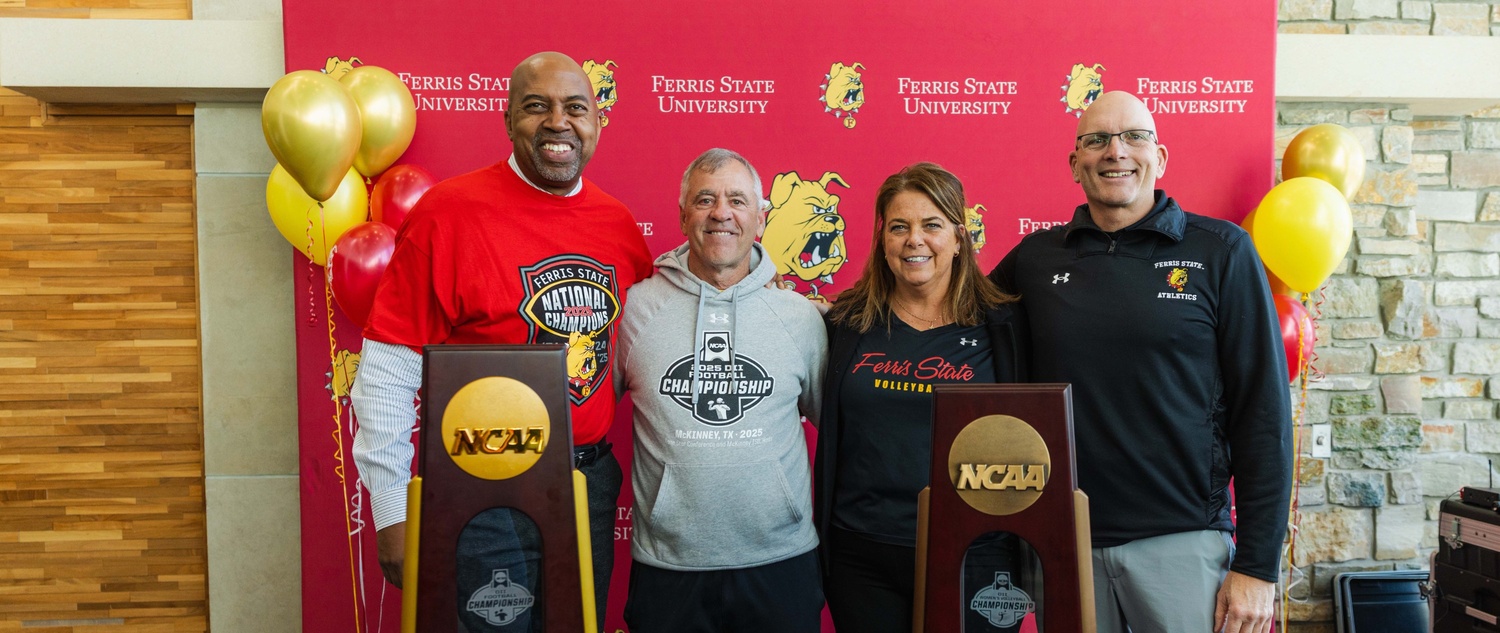
Ferris State University students, alumni, faculty, and community members poured into the David L. Eisler Center
for the 2026 “Bulldog Spirit Day,” on Monday, Jan. 12, to recognize the success of
both the football and volleyball programs.
The football team was ranked No. 1 in the nation all season long and capped and capped
the historical run with a perfect 16-0 record and earning their fourth NCAA Division
II National Championship title in five years.
Women’s volleyball remained as a national contender while crowning themselves as NCAA
Midwest Regional Champions for the second straight season and securing the 2025 GLIAC
Regular Season Championship – closing the season 27-8 overall.
“It’s a good time for community today,” said Ferris State President Bill Pink during
the celebration. “This semester and this year, we are focused on opportunities to
come together (and) to build community.”
Those efforts were seen as Mecosta County Commissioner and longtime Bulldog Bill Routley
presented a resolution to Ferris State Athletics – and hundreds of students, dozens
of alumni, and campus administration were in attendance to celebrate the championships.
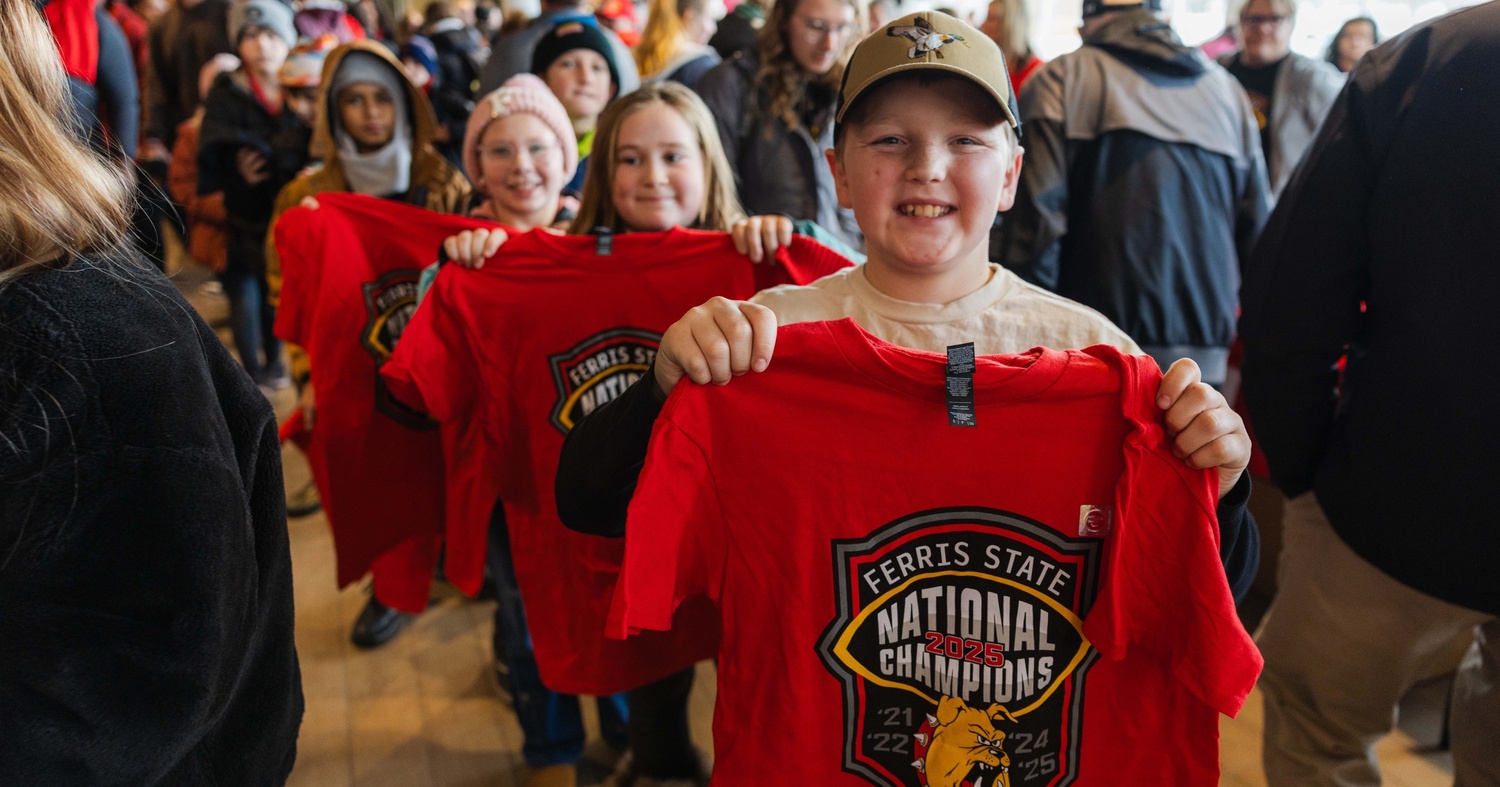
Big Rapids elementary school students also made a visit to the Ferris State main campus
to join the Bulldog Spirit Day fun.
Freshman middle hitter Aaliyah Cage of the volleyball team not only saw her first
collegiate reps this season but was also called on to help steer the Bulldogs to the
regional championship victory over Indianapolis last month on Dec. 26. With the first
season under her belt, she’s thankful for the support Ferris State provides to student-athletes
and their programs to help them feel a sense of belonging.
“Today is important for the community because sports are known to bring everyone together,
and when you’re starting college, it’s natural to feel isolated,” Cage said. “So,
it’s important to know that you have a school that supports programs helping students
to get involved. It’s also good to see that you (student-athletes) have a community
that support what you do on and off the court.”
A large part of building a strong community within athletics boils down to having
strong leaders. Head football coach Tony Annese and volleyball coach Tia Brandel-Wilhelm
expressed their gratitude to the administration for a consistent effort to support
all Ferris State Athletics, while noting that their programs wouldn’t achieve their
success without the support or the constant hard work of their athletes.
While it’s easy to show community support around the time that championships are won,
Pink says building a community is an ongoing effort, and something he wants to be
at the forefront of Ferris State Athletics fans.
“You have to be intentional about building relationships and community… If no one
else is going to do it, Ferris State can. We’re building community, and we’re building
champions. It’s just the way Bulldogs do it,” he said.
Those unable to attend Bulldog Spirit Day will have another opportunity to celebrate
the recent championship success during a victory parade this spring. The time and
date have yet to be determined.

CHICAGO — In its 41st year celebrating the nation’s best high school athletes, Gatorade recently announced that Logan Cary of Rock Canyon High School is the 2025-26 Gatorade Colorado Volleyball Player of the Year.
Gatorade Player of the Year is the top honor in high school sports, celebrating the nation’s best high school athletes for their excellence in sport, academics and community.
The award recognizes Cary as Colorado’s best high school volleyball player, and she joins an elite legacy that spans professional athletes and coaches to CEOs, such as Kerri Walsh Jennings (1995-96, Archbishop Mitty High School, CA), April Ross (1999-00, Newport Harbor High School, CA) and Campbell Flynn (2024-25, Mercy High School, MI).
The 6-foot-2 senior setter and right-side hitter recorded 468 assists and 289 kills this past season, leading the Jaguars (24- 4) to the Class 5A semifinals and a third-place finish in the tournament. Ranked as the state’s No. 2 recruit in her class by PrepDig, Cary was a First Team All-State selection and was selected to play in the Colorado Sports All-State Games. She also compiled 245 digs, 64 blocks, and 49 service aces last fall.
Last summer, she helped her Front Range Volleyball Club squad take 13th at the 17s Division Nationals.
Cary has volunteered locally on behalf of HCA HealthONE Sky Ridge Hospital, the American Cancer Society Walk and Girls on the Run event, Momentum Services and the Children’s Diabetes Foundation Boo Bash. She has also donated her time as a peer math tutor and as a youth volleyball coach.
“Logan has played a major role in her team’s success as one of the most complete players in the state,” said Gwen Forster, Club Director for EVA. “Offensively, she excels both as a setter by making smart decisions and distributing the ball effectively for three rotations, and then, as an attacker, she is a significant scoring threat. Her ability to run an offense while also terminating sets her apart. She’s a solid blocker and a reliable defender, contributing across all phases of the game. Her volleyball IQ, versatility and competitiveness project well at the collegiate level.”
Cary has maintained a weighted 4.12 GPA in the classroom. She has signed a written letter of athletic aid to play volleyball at San Diego State University.
The Gatorade Player of the Year program annually recognizes one state winner from each of the 50 states and Washington D.C., in 12 different sports: football, girls volleyball, boys and girls cross country, boys and girls basketball, baseball, softball, boys and girls soccer, and boys and girls track & field. In total, 610 high school athletes are honored each year. From the pool of state winners, one national winner is selected in each of the 12 sports. The selection process is administered by the Gatorade Player of the Year Selection Committee, which leverages experts including coaches, scouts, media and others as sources to help evaluate and determine the winners in each sport.
As part of Gatorade’s commitment to breaking down barriers in sport, every Player of the Year also receives a grant to donate to a social impact partner. To date, the Gatorade Player of the Year program has provided more than $6.4 million in grants to winners across more than 2,200 organizations.
To learn more about the Gatorade Player of the Year program, check out past winners or to nominate student-athletes, visit playeroftheyear.gatorade.com or follow us on social media on Instagram at instagram.com/Gatorade, Facebook at facebook.com/GatoradePOY and X (Twitter) at x.com/Gatorade



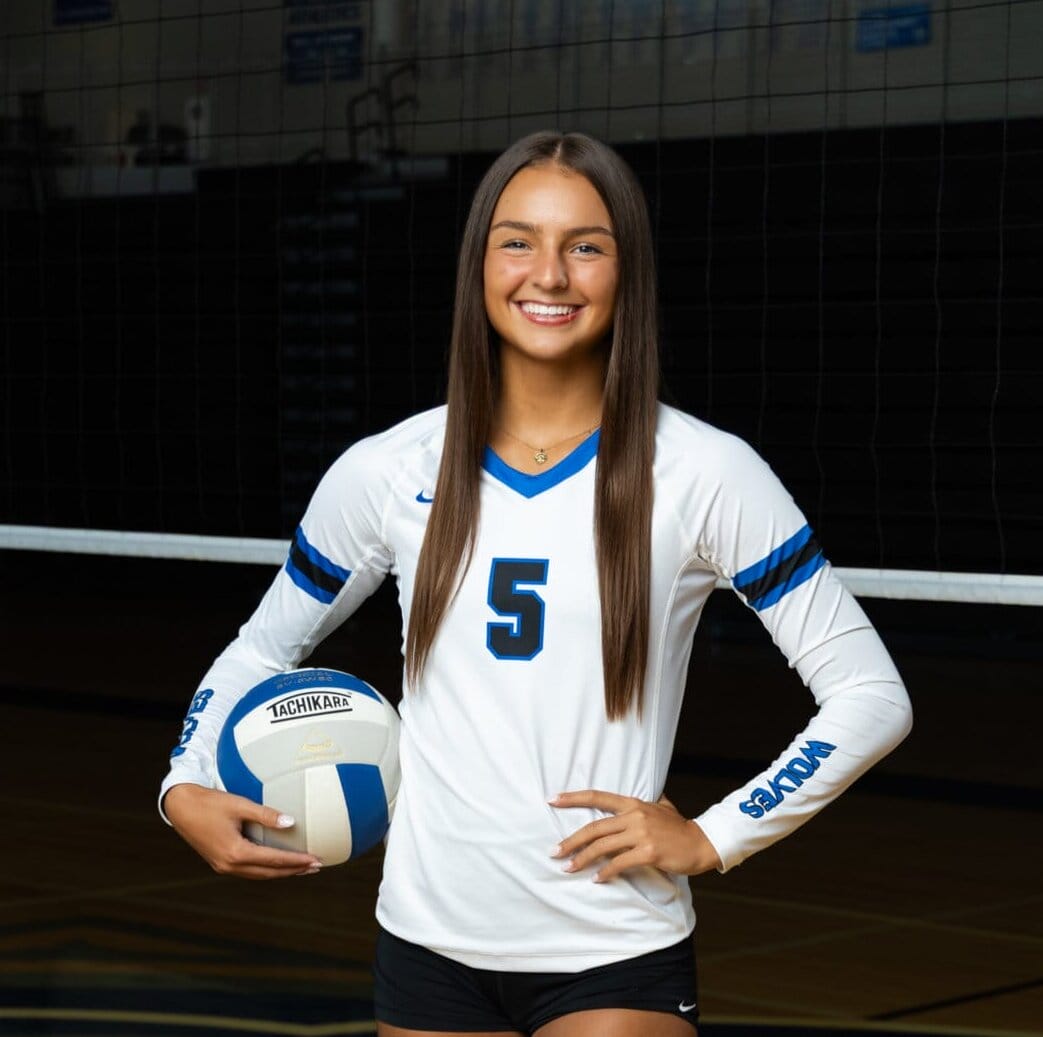

Photo taken by Next Level Portrait
Avery Vogt, a senior at Waukee Northwest High School, has been named the 2025–26 Gatorade Iowa Volleyball Player of the Year, one of the top honors in high school athletics. The Gatorade Player of the Year award recognizes student-athletes for success in athletics, academics, and community involvement.
Avery helped lead the Wolves to an impressive 38–1 season and the program’s second state championship. She finished the year with 939 assists, along with 216 kills, 171 digs, 45 blocks, and 38 service aces, highlighting her versatility and leadership on the court. Her season also earned her AVCA Honorable Mention All-American and AVCA All-Region recognition.
In addition to the Gatorade honor, Avery was named to the IGCA Elite All-State Team, selected as the State Tournament Most Valuable Player, and received the 5A Ms. Volleyball award. She played a key role in Northwest closing the season with 52 consecutive set victories.
Off the court, Avery enjoys giving back to the community. She volunteers as a mentor at camps and clinics and supports literacy outreach by reading to elementary students throughout the Waukee Community School District.
After graduation, Avery will continue her volleyball career at Drake University. Congratulations, Avery, on this incredible honor

UC Davis Athletics Concludes Fall With Competitive Success, National Honors and Facilities Investment

Fabela, Tavita named to Softball America Freshman Watch List – BYU Athletics – Official Athletics Website

Ferris State celebrates football and volleyball success during Bulldog Spirit Day

$1.8 million transfer QB expected to visit sixth college football program

‘Shelby Legacy: Past, Present, and Future’ Tireside Chat at Savoy Automobile Museum

Girls Volleyball: Rock Canyon’s Logan Cary Named Gatorade Player of the Year for Colorado

NASCAR reverts to the Chase for the Championship format in 2026

Men’s Volleyball vs Rockhurst on 1/11/2026 – Box Score

Avery Vogt Named Gatorade Iowa Volleyball Player of the Year

College Football’s Semi-Pro Economy & Why the NFL Draft Isn’t a Sure Thing

This Week in Saluki Athletics: January 12-18

Ahen Kim Named Head Coach of Duke Volleyball

Bulldogs See Two First Place Finishes in First Chance Qualifier

Granby adult volleyball standings (Jan. 5)

NASCAR Brings Back ‘The Chase’ Championship Format for 2026 Season – Speedway Digest

Stempien to seek opening for Branch County Circuit Court Judge | WTVB | 1590 AM · 95.5 FM

Ross Brawn to receive Autosport Gold Medal Award at 2026 Autosport Awards, Honouring a Lifetime Shaping Modern F1

Princeton Area Community Foundation awards more than $1.3 million to 40 local nonprofits ⋆ Princeton, NJ local news %

Downtown Athletic Club of Hawaiʻi gives $300K to Boost the ’Bows NIL fund

Badgers news: Wisconsin lands 2nd commitment from transfer portal

Five Youth Sports Trends We’re Watching in 2026

Beach Volleyball Unveils 2026 Spring Schedule – University of South Carolina Athletics

Nike Signs 10 LSU Athletes to NIL deals

Three Clarkson Volleyball Players Named to CSC Academic All-District List

Kentucky VB adds an All-American honorable mention, loses Brooke Bultema to portal

Badgers news: Final Four Game Thread vs. No. 1 Kentucky Wildcats

Kentucky AD explains NIL, JMI partnership and cap rules

Central’s Meyer earns weekly USTFCCCA national honor

PRI Show revs through Indy, sets tone for 2026 racing season

Teesside youth discovers more than a sport

 NBA Legend Michael Jordan to Join NBC Sports as Special Contributor
 Why a rising mid-major power with an NCAA Tournament team opted out of revenue-sharing — and advertised it
 Trackhouse to pair Chastain with McSwain
 Volleyball Falls to SEMO – Tennessee State University
 Kennewick School Board backs changes to gender inclusion in sports | News
-
 Rec Sports1 week ago
Five Youth Sports Trends We’re Watching in 2026
-
 Sports3 weeks ago
Kentucky VB adds an All-American honorable mention, loses Brooke Bultema to portal
-

 Motorsports2 weeks ago
BangShift.com IHRA Acquires Historic Memphis Motorsports Park In Millington Tennessee. Big Race Weekend’s Planned For 2026!
-
NIL2 weeks ago
Fifty years after IU’s undefeated champs … a Rose Bowl
-
 Sports2 weeks ago
H.S. INDOOR TRACK & FIELD: GLOW region athletes face off at Nazareth University | Sports
-
 Sports3 weeks ago
Colorado volleyball poised to repeat success
-
 Sports3 weeks ago
2025 Volleyball Player of the Year: Witherow makes big impact on Central program | Nvdaily
-

 Motorsports3 weeks ago
NJ Motorsports Park Announces 2026 Event Schedule
-

 Sports3 weeks ago
Texas A&M volleyball’s sweep of Kentucky attracts record viewership
-

 Rec Sports3 weeks ago
Tennessee Developments: Rolling on the River