
Sports
Schools can now pay college athletes. What does that mean for HBCUs?


Schools can now directly compensate their athletes, ushering in a transformative era for college sports following Friday’s formal approval of a multibillion-dollar legal settlement.
U.S. District Judge Claudia Wilken gave the green light to the agreement reached between the NCAA, its leading conferences, and attorneys representing all Division I athletes. This House v. NCAA settlement resolves three federal antitrust lawsuits, alleging that the NCAA unlawfully restricted student-athletes’ ability to earn money.
Judge Wilken’s long-anticipated ruling comes just weeks before schools begin issuing payments to athletes, starting July 1.
The annual cap is expected to start at roughly $20.5 million per school in 2025-26 and increase yearly during the decade-long deal. These new payments are in addition to scholarships and other benefits the athletes already receive.
The settlement gives schools the power to create new rules designed to limit the influence of boosters and collectives. Starting this summer, any endorsement deal between a booster and an athlete will be vetted to ensure it is for a “valid business purpose” rather than a recruiting incentive.
The agreement will resonate in nearly every one of the NCAA’s 1,100 member schools, boasting nearly 500,000 athletes.
NCAA President Charlie Baker said the deal “opens a pathway to begin stabilizing college sports.”
Multiple HBCUs, such as Morgan State, University of Maryland Eastern Shore, North Carolina A&T, and Hampton (through an association with the CAA) have agreed to opt in to the House settlement agreement.
What does opting in mean?
Institutions that opt in will also be subject to new roster limits and scholarship guidelines. This antitrust settlement, valued at over $2.8 billion, addresses past restrictions on student-athlete compensation and establishes a revenue-sharing framework.
While schools in the power conferences (SEC, Big Ten Big 12, ACC and Pac-12) will be automatically bound by the terms of the settlement, schools outside those conferences had the choice to opt in or out to the settlement. Schools that opt out will not be able to directly pay players through revenue sharing.
“The decision to opt in to the settlement allows for financial support and revenue sharing to give student-athletes a real opportunity to earn income while acknowledging the time, talent, and energy student-athletes bring to UMES,” Vice President of Athletics & Recreation Tara A. Owens said in a statement. “We continue to explore all avenues to establish and maintain competitive teams while providing an optimal collegiate experience for our student-athletes.
Owens said the decision “will not increase the financial investment the university makes” athletics.
“UMES will utilize our department resources strategically and cultivate new pathways for student-athlete financial support,” Owens said. “We are excited about the new landscape of college athletics and the future of Hawk athletics.”
Morgan State is expected to contribute over $230,000 to the settlement fund and reduce football roster size to add Olympic sports to remain in compliance with Title IX.

What does the decision mean for NIL?
In specific reference to NIL, the settlement aims to create a more equitable model for college athletics, ensuring that student-athletes receive fair compensation and support.
Participating schools can now offer direct NIL payments and other financial benefits to student-athletes, potentially including scholarships above the NCAA’s previous limits. Schools can also engage in direct NIL contracts with student-athletes, such as licensing agreements, endorsement deals and brand promotion agreements.
“Furthermore, opting into the settlement aims to enhance the student-athlete experience, increase visibility and access, and ensure competitive recruitment and positioning within the MEAC and Northeast Conference,” the school said in the release.
For scholarship and roster management purposes, opting into the settlement allows schools, including HBCUs that opt in, to use a portion of their athletic revenue to directly benefit student-athletes, and scholarship limits may be eliminated.
Settlement could create ‘challenging times’
SWAC Commissioner Charles McClelland addressed the House vs. NCAA settlement last winter.
“It is now allowable for institutions to directly give NIL money to their student-athletes. That means there’s going to be an influx of athletes that are looking for NIL payments,” he said in December. “You’re going to have to have some name image and likeness money set aside to compete.”
McClelland explained that the House settlement will impact the finances of every SWAC institution.

“The SWAC conference’s contribution to that [settlement] is $30 million. There’s going to be some challenging times from a financial standpoint.”
To counteract that, McClelland said that resources are being developed to help each school compete in this new era of college athletics.
“We’re going to develop a best practice document that we’ll give to all presidents and chancellors as a guide,” he said. “We are in a good spot from a revenue standpoint; we’re going to be just fine, but it will take some additional effort. We will need NIL dollars on the inside, and we will work with you to help develop that. We’re going to continue to stay on top.”

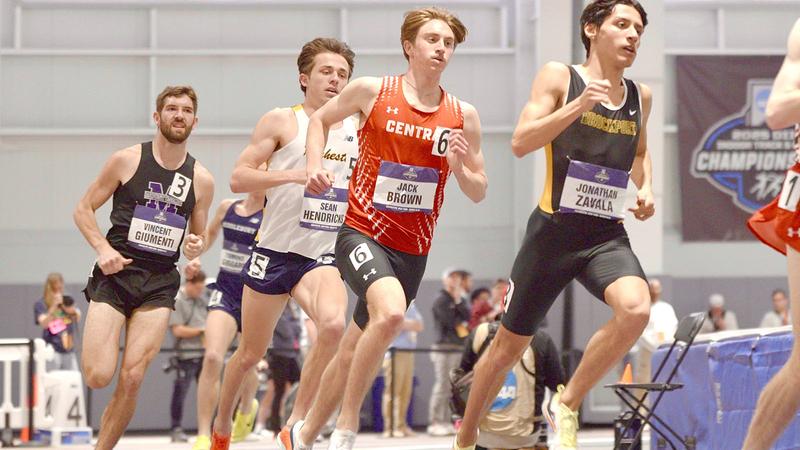
PELLA— Winning the mile in his first action of the indoor season, Central College men’s track and field junior Jack Brown (Norwalk) was named the American Rivers Conference Track Events Performer of the Week Monday.
Brown’s mile time clocked in at 4 minutes, 7.80 seconds at the Frigid Bee Opener hosted by St. Ambrose University on Saturday. He won the race by 4.87 seconds and currently has the top time in Division III.
Central hosts the Dutch Holiday Preview on Friday, December 12 inside the H.S. Kuyper Fieldhouse.
Dec. 9, 2025, 3:00 a.m. CT

Limestone High School junior Mia Lamberti is the 2025 Journal Star Volleyball Player of the Year, the second year in a row for the University of Illinois commit.
MATT DAYHOFF/JOURNAL STAR

Limestone junior Mia Lamberti repeats as the Journal Star Volleyball Player of the year. The University of Illinois commit helped lead the Rockets to a 34-3 record and Mid-Illini Conference Championship.
MATT DAYHOFF/JOURNAL STAR

Limestone junior Mia Lamberti is the Journal Star Volleyball Player of the Year for the second year in a row.
MATT DAYHOFF/JOURNAL STAR

Limestone junior and University of Illinois commit Mia Lamberti repeats as the Journal Star Volleyball Player of the Year.
MATT DAYHOFF/JOURNAL STAR

Limestone’s Mia Lamberti, right, spikes the ball against Morton’s Harper Strube in the first set of their high school volleyball match Thursday, Sept. 18, 2025 in Morton. The Rockets took the match in three sets 25-15, 20-25, 25-21.
MATT DAYHOFF/JOURNAL STAR

Limestone’s Mia Lamberti spikes the ball against Morton in the third set of their high school volleyball match Thursday, Sept. 18, 2025 in Morton. The Rockets took the match in three sets 25-15, 20-25, 25-21.
MATT DAYHOFF/JOURNAL STAR

Limestone’s Mia Lamberti tries to put the ball past Washington’s Haley Ashley in the second set of their Class 3A volleyball regional title match Thursday, Oct. 30, 2025 at Washington Community High School. The Panthers upset the Rockets in straight sets 25-23, 25-23.
MATT DAYHOFF/JOURNAL STAR

FARMINGDALE, N.Y. | The Skyline Conference released its weekly winter reports Monday, and Farmingdale State College men’s basketball junior forward Kentrell Evans (Brooklyn, N.Y.) was tabbed to its honorable mention listing.
SAAC Toys for Tots Drive Wraps Up This Week
The Farmingdale State College Student-Athlete Advisory Committee’s annual Toys for Tots Drive continues this week, with collection boxes set up in the Nold Hall lobby through the coming weekend. Students, faculty, staff and fans are encouraged to donate new, unwrapped toys for the annual initiative conducted nationwide by the United States Marine Corps, including Wednesday’s men’s basketball game versus Swarthmore at 7 p.m., along with Saturday’s noontime women’s basketball contest against Old Westbury.
Men’s Basketball (6-2) | Skyline Report
Farmingdale State registered an 86-76 road win Wednesday at SUNY New Paltz, before falling at national finalist NYU on Saturday afternoon, 84-68.
Evans averaged 17 points and 10 rebounds per game during the stretch, including a double-double in Wednesday’s victory over the Hawks and a career-high 18 points on the weekend against the Violets, while shooting 70 percent (14-of-20) from the field.
Following Wednesday’s 7 p.m. non-conference tilt at home versus Swarthmore College, the Rams will begin Skyline play on the road Saturday in a noontime start at Old Westbury.
Women’s Basketball (3-4, 2-3 Skyline) | Skyline Report
FSC dropped a 66-64 decision at home Wednesday night to Skyline foe Purchase College, before capturing a 64-56 win Saturday at defending conference champion Mount Saint Mary – the Rams’ first victory over the Knights since 2017.
Senior point guard Shyann Parker (Floral Park, N.Y.) scored a career-high 25 points midweek against Purchase, before junior guard Mia Simmons (Queens, N.Y.) led the Rams with 16 in Saturday’s triumph.
Following Tuesday’s 6 p.m. Skyline game at Mount Saint Vincent, Farmingdale State will play host to Old Westbury on Saturday at noon.
Indoor Track and Field
Farmingdale State’s men’s and women’s indoor track and field teams got underway Friday at the Fastrack Season Opener in Staten Island, with junior men’s thrower Adonias Mercado (Hillsdale, N.Y.) recording a first-place effort in the shot put with a mark of 15.86m (52-0.5). His effort was good for the second-best mark in school history.
The Rams next compete Friday and Saturday in New Haven, Conn., at the Art Kadish Elm City Challenge.
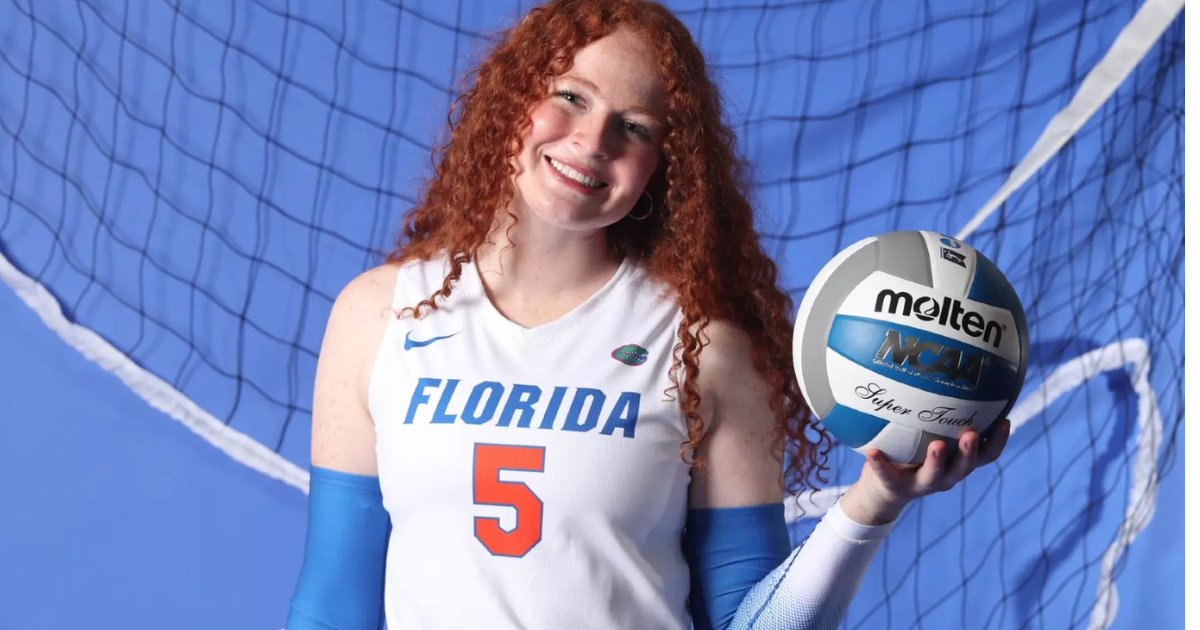
Florida setter Alexis Stucky has entered the transfer portal, sources told On3.
Stucky was named to the 2025 All-SEC Second Team and enters the portal as a grad transfer.
Transfer portal background information
The NCAA Transfer Portal, which covers every NCAA sport at the Division I, II and III levels, is a private database with names of student-athletes who wish to transfer. It is not accessible to the public.
The process of entering the portal is done through a school’s compliance office. Once a player provides written notification of an intent to transfer, the office enters the player’s name in the database and everything is off and running. The compliance office has 48 hours to comply with the player’s request and that request cannot be refused.
Once a player’s name shows up in the portal, other schools can contact the player. Players can change their minds at any point and withdraw from the portal. However, once a player enters the portal, the current scholarship no longer has to be honored. In other words, if a player enters the portal but decides to stay, the school is not obligated to provide a scholarship anymore.
The database is a normal database, sortable by a variety of topics, including (of course) sport and name. A player’s individual entry includes basic details such asynchronous contact info, whether the player was on scholarship and whether the player is transferring as a graduate student.
A player can ask that a “do not contact” tag be placed on the report. In those instances, the players don’t want to be contacted by schools unless they’ve initiated the communication.
Track transfer portal activity
While the NCAA Transfer Portal database is private, the On3 Network has streamlined the reporting process tracking player movement. If you find yourself asking, ‘How can I track transfer portal activity?’ our well-established network of reporters and contacts across college athletics keeps you up to speed in several ways, from articles written about players as they enter and exit the transfer portal or find their new destination, to our social media channels, to the On3 Transfer Portal.
The transfer portal wire provides a real-time feed of player activity, including basic player profile information, transfer portal ranking and original On3 Industry recruiting ranking, as well as NIL valuation (name, image and likeness).
The On3 Transfer Portal Rankings allow for you to filter the On3 Industry Rankings to find the best of the best in the portal, starting with Overall Top Players.
The On3 Transfer Portal Instagram account and Twitter account are excellent resources to stay up to date with the latest moves.
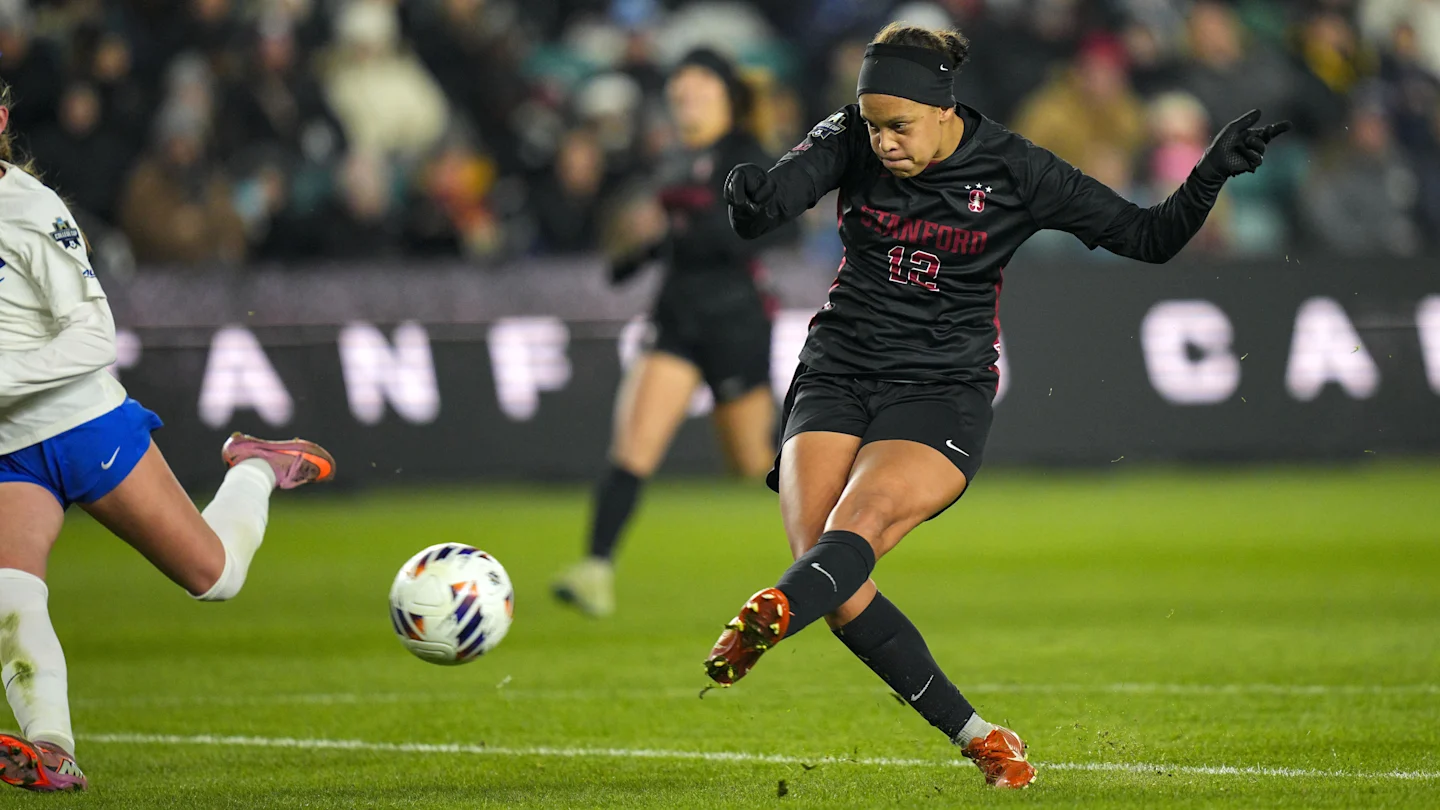
Monday night in Kansas City, the Stanford women’s soccer team plays Florida State for the NCAA championship. If the No. 1 seed Cardinal win, the most remarkable streak in college sports reaches a half-century milestone.
On Nov. 28, 1976, Stanford beat UCLA for the men’s water polo national title. Every school year since then, the Cardinal have won at least one natty. This year, 2025–26, they are trying to make it 50 straight on The Farm.
As you might imagine, this streak is completely without peer in college sports annals. The second-longest in history is 19 years by USC from 1959–60 through 1977–78. The second-longest active streak is North Carolina with seven straight years.
When Stanford won that water polo title, current NCAA president Charlie Baker was a sophomore on the junior varsity basketball team at Harvard and the Cardinal’s conference was the Pac-8. If you told anyone on campus then that the school would end up joining the Atlantic Coast Conference, you’d have been suspected of using psychedelics.
The championships have come like clockwork, and sometimes they come in bunches. Twice, in 1996–97 and 2018–19, Stanford won six titles in a single academic year. Three times—in 1996, 2003 and 2019—the Cardinal won championships in two different sports on the same day.
It’s just different there, where excellence is the expectation both academically and athletically, and in a vast array of different sports. Twenty different programs have won NCAA titles: women’s tennis (20 of them), men’s tennis (17), women’s swimming (11), men’s water polo (11), women’s water polo (10), men’s gymnastics (10), women’s volleyball (nine), men’s swimming (eight), men’s golf (eight), women’s cross country (five), men’s cross country (four), men’s outdoor track and field (four), women’s basketball (three), women’s golf (three), women’s rowing (three), women’s soccer (three), men’s soccer (three), men’s volleyball (two), baseball (two) and men’s basketball (one).
(The big-revenue, glamour sports are a bit of a different story. Stanford has been successful for long stretches in football and men’s basketball, but the only national championship for either of those programs came in men’s hoops in 1942.)
Some of the most famous names in American sports were part of team national titles at Stanford: John McEnroe in men’s tennis; Katie Ledecky in women’s swimming; Pablo Morales in men’s swimming; Jennifer Azzi in women’s basketball; Hall of Famer Mike Mussina and Cy Young winner Jack McDowell in baseball; water polo star Maggie Steffens; and so on. (Tiger Woods won an individual golf national title, but not a team championship.) The U.S. Olympic teams are routinely populated by Cardinal athletes.

The school’s 137 total NCAA titles are the most in history, outdistancing UCLA (124) and USC (115). From there it drops off to Texas at 60. Stanford has a wider distance in women’s natties over the competition with 67 to runner-up UCLA’s 45.
It’s true that Stanford casts a wider net than virtually anyone else, sponsoring 36 varsity sports (15 men, 19 women, two co-ed). But the ability to excel in so many of them over such a long period of time speaks to a school culture that embraces athletics as opposed to tolerating it, as some of the more high-powered academic schools do. With an undergraduate enrollment of about 8,000, the percentage of athletes in the student body is quite high.
Climate, facilities and the allure of graduating with a high-powered degree attract elite athletes across a broad spectrum. But the realities of modern college sports have challenged Stanford’s sustainability—this is not a school that works well in the transfer portal, given the academic strictures of gaining admission, and it has been playing from behind in the NIL market.
Nothing underscores Stanford’s struggles there more than two transfers to nouveau riche Texas Tech. Softball pitcher NiJaree Canady helped the Cardinal to the Women’s College World Series Final Four in 2023 and ’24, then made a big-money transfer to Tech and led the Red Raiders to a runner-up finish last spring. Then defensive end David Bailey was a dominant player at Stanford for three years before transferring to Texas Tech and helping the Red Raiders to the current College Football Playoff.
Along the way, Stanford has lost its forever grip on the Learfield Directors’ Cup, the annual all-sports championship for the best athletic department. From 1994–95 through 2018–19, the school won every year. The COVID-19 pandemic interrupted that run, and jarred Stanford’s primacy. Since then, Texas has won it four times and Stanford once. Last year the Cardinal finished third, their lowest finish in the Cup’s 31-year history.
New athletic director John Donahoe has been tasked with modernizing the department after replacing longtime AD Bernard Muir. Donahoe has a business background, having previously worked at Nike and elsewhere in the private sector. The football program is getting a makeover under general manager Andrew Luck, a former star quarterback at the school and in the NFL as well.
Yet even in changing times, Stanford’s title string has endured to this point.
The women’s soccer team has the best chance of extending it to 50 years among the fall sports, entering the NCAA tournament with a 16-1-2 record and reeling off five straight wins by a combined score of 22–5. Stanford defeated Florida State, 2–1, during the regular season in Tallahassee.
But if the Cardinal don’t get it done Monday night, there are more opportunities to come. The No. 2-seeded women’s volleyball team has advanced to the Sweet 16 of that tournament and will face Wisconsin on Friday. Winter and spring sports should have multiple national title contenders as well.
At most schools, a single national title at any point in time is a historic event. At Stanford, it has been an annual happening since shortly after Jimmy Carter won the 1976 presidential election. Nobody has ever done it better, for longer, with greater consistency.
More College Football from Sports Illustrated
Listen to SI’s new college sports podcast, Others Receiving Votes, below or on Apple and Spotify. Watch the show on SI’s YouTube channel.
Dec. 9, 2025, 5:03 a.m. CT
After years of knocking at the door, Keira Garinger and Clarksville volleyball broke it down in 2025.
The Wildcats lost in the sectional round and fell one game short of the TSSAA volleyball state tournament every year from 2017-2024. But on Oct. 16, Clarksville beat longtime nemesis Houston in four sets to make it to Murfreesboro for the first time in program history.

Philly youth football players arrested for stealing in Florida – NBC10 Philadelphia

Want To Avoid Having A Troublesome Teen? Get Boys Involved In Youth Sports, Study Says

Central’s Brown named conference men’s runner of the week
Limestone’s Mia Lamberti repeats as Volleyball Player of the Year

Greene chosen to AFCA 35 Under 35 Leadership Institute

Coggins Auto Group celebrates five years of local ownership, community commitment, and growth | Business

Josh Harris, Harris Blitzer Sports & Entertainment/Washington Commanders

FSC Athletics Update – December 8

Florida volleyball’s Alexis Stucky enters transfer portal

SSWSC adds avalanche and backcountry training and touring courses for adults

Shelby Chamber Bucks program helps keep money in the community

The Mind-Boggling History Behind Stanford’s Almost 50-Year Run of NCAA Titles
Clarksville All Area TSSAA volleyball team for 2025

Parts of Cleveland in the dark after thieves steal thousands of feet of streetlight wiring

SPOTLIGHT: New LA84 Foundation Grant Cycle has opened in Southern California

First Tee Winter Registration is open

Fargo girl, 13, dies after collapsing during school basketball game – Grand Forks Herald

CPG Brands Like Allegra Are Betting on F1 for the First Time

Volleyball Recaps – November 18

F1 Las Vegas: Verstappen win, Norris and Piastri DQ tighten 2025 title fight

Two Pro Volleyball Leagues Serve Up Plans for Minnesota Teams

Utah State Announces 2025-26 Indoor Track & Field Schedule

Sycamores unveil 2026 track and field schedule

Redemption Means First Pro Stock World Championship for Dallas Glenn

Texas volleyball vs Kentucky game score: Live SEC tournament updates

Bowl Projections: ESPN predicts 12-team College Football Playoff bracket, full bowl slate after Week 14

Indiana’s rapid ascent and its impact across college football

How this startup (and a KC sports icon) turned young players into card-carrying legends overnight

Pohlman admits ‘there might be some spats’ as he pushes to get Kyle Busch winning again

Robert “Bobby” Lewis Hardin, 56

 Why a rising mid-major power with an NCAA Tournament team opted out of revenue-sharing — and advertised it
 NBA Legend Michael Jordan to Join NBC Sports as Special Contributor
 Falcons mailbag
 Portal Update – Basketball and Gymnastics Take Hits
 has always dreamed in Mercurial. Now his initials are on the boots.
The new Kyl…
has always dreamed in Mercurial. Now his initials are on the boots.
The new Kyl…
-
 Rec Sports2 weeks ago
First Tee Winter Registration is open
-
 Rec Sports2 weeks ago
Fargo girl, 13, dies after collapsing during school basketball game – Grand Forks Herald
-
 Motorsports2 weeks ago
CPG Brands Like Allegra Are Betting on F1 for the First Time
-
 Sports3 weeks ago
Volleyball Recaps – November 18
-
 Motorsports2 weeks ago
F1 Las Vegas: Verstappen win, Norris and Piastri DQ tighten 2025 title fight
-
 Sports2 weeks ago
Two Pro Volleyball Leagues Serve Up Plans for Minnesota Teams
-
 Sports2 weeks ago
Utah State Announces 2025-26 Indoor Track & Field Schedule
-
 Sports2 weeks ago
Sycamores unveil 2026 track and field schedule
-
 Motorsports2 weeks ago
Redemption Means First Pro Stock World Championship for Dallas Glenn
-
 Sports2 weeks ago
Texas volleyball vs Kentucky game score: Live SEC tournament updates