
Rec Sports
2025 Tracking Federal Developments | Equality Florida

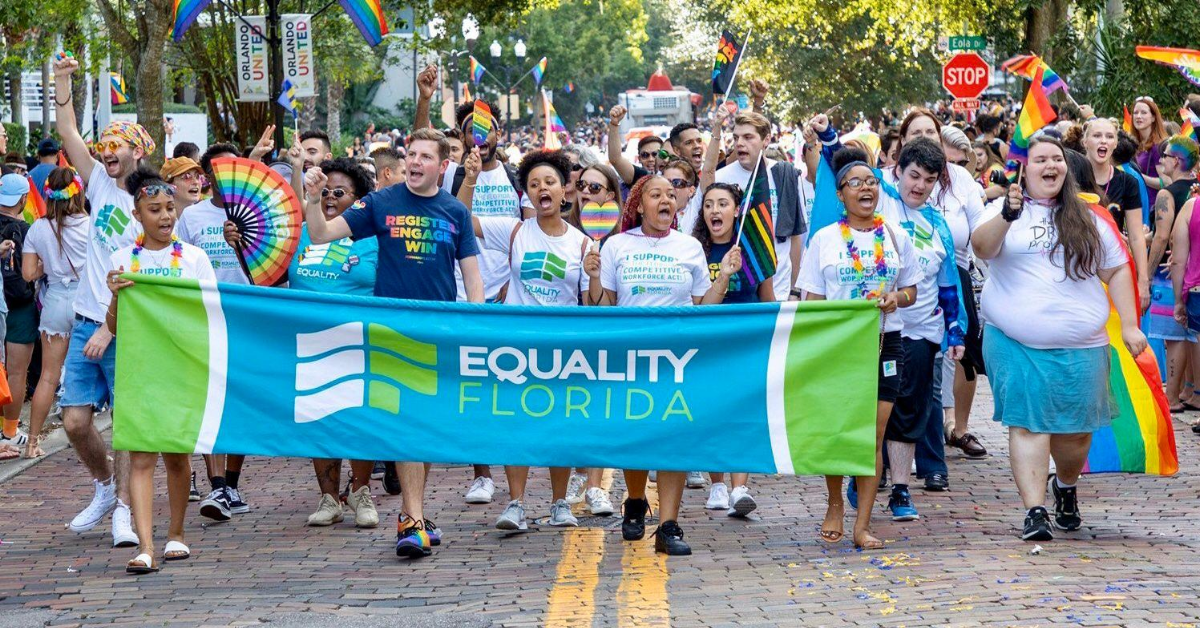
Tracking Federal Developments
Updated as of June 6, 2025
Since Inauguration Day, we’ve seen many of the cruel attacks targeting the rights and freedoms of LGBTQ+ Americans–especially transgender Americans–that we anticipated from the Trump Administration and its implementation of Project 2025. Their move fast and break things approach is overwhelming by design, and it’s clear they have no concern for the law or the devastating consequences their policies will inflict on everyday Americans.
We’re tracking federal developments and strengthening our resistance by leveraging every opportunity to push back. In Florida, we’ve been living under a MAGA supermajority for years, and have fought back against similar anti-LGBTQ laws and policies. We understand how to resist, claw back important protections, and connect our community with vital resources. Below are some of the federal actions we’re monitoring that impact our community and ways to join us in the fight.
Executive Orders
In the first days of his Administration, Trump signed a slew of executive orders that directly target LGBTQ+ Americans. While the impacts are wide-ranging, executive orders do not override constitutional protections, established legal precedent, or federal law, and usually require federal agencies to issue rules or guidance to implement an order’s directives. These processes take time and may offer additional opportunities for public engagement and pushback during agency rulemaking, so stay tuned for more information on ways to take action. The anti-LGBTQ impacts of several executive orders and status of legal challenges are described below.
Redefining Sex to Increase Discrimination Against Transgender People
Trump issued a Day One executive order that made it the policy of the federal government to recognize only two sexes, defined as sex assigned at birth, and refuse to accept that people transition or that nonbinary and intersex people exist. This order attempts to end the legal recognition of transgender Americans across federal agencies, which could increase discrimination in education, employment, healthcare, and housing, and includes additional directives to agencies to:
-
Prohibit access to accurate identity documents issued by the federal government that affirm an applicant’s gender identity, including Passports, Visas, and Global Entry Cards;
-
Prohibit trans people from accessing restrooms on federal property–like in government offices, military bases, and national parks–that align with how they live their lives;
-
Force transgender people entangled in the federal corrections system to be classified according to their sex at birth–transferring transwomen to men’s facilities–and prohibiting access to gender-affirming care or accommodations;
-
Halt all federal funding for anything related to a vague and offensive definition of “gender ideology”;
-
Rescind all previously issued federal guidance related to LGBTQ-inclusive practices.
Many lawsuits challenging various provisions of this executive order have been filed in court.
In Orr v. Trump, the ACLU sued Trump and his Department of State over their anti-trans passport policy, and, in April, received a preliminary injunction that requires updated passports to be reissued to the lawsuit’s named plaintiffs that reflect their gender identity. The ACLU then asked the court to extend the preliminary injunction to all trans, intersex, and nonbinary people seeking accurate and affirming passports, which was argued on May 27 and is currently under review.
In March, through multiple cases–Moe v. Trump, Doe v. Bondi, and Jones v. Bondi–brought by GLAD Law and NCLR, federal judges temporarily blocked Trump’s attempts to force incarcerated trans women to be housed in men’s prisons. In a separate case– Kingdom v. Trump–, a federal court issued a preliminary injunction in June that temporarily blocks Trump’s directive to prohibit incarcerated trans people from accessing necessary transition-related medical care and social accommodations, like clothing.
And in May, a new class action complaint challenging the order’s anti-trans restroom ban on federal property was filed with the National Guard Bureau Equal Opportunity Office on behalf of a civilian employee of the Illinois National Guard, and is currently under review.
Restricting Access to Gender Affirming Care
Through multiple executive orders, the Trump Administration has attacked the validity of gender-affirming care and the concept of transitioning itself, swapping all previously published guidance in support of gender-affirming care, including patient standards of care, for explicitly anti-trans materials. Trump directed federal agencies to restrict access to lifesaving care for transgender young people, by excluding coverage for care from federal health insurance policies and Affordable Care Act plans, and withholding federal funding from hospitals and other medical providers that provide gender-affirming care to people under 19.
The ACLU and Lambda Legal sued the Administration, and in March, won a preliminary injunction in PFLAG v. Trump, prohibiting the federal government from withholding or terminating federal funding if a medical facility or provider delivers gender-affirming care to patients under 19. For more information, visit PFLAG’s FAQs.
Transgender Military Ban
On January 20, Trump issued a complete ban on transgender people serving in the military, which was swiftly implemented by the Department of Defense, and disqualified anyone who has gender dysphoria or has received transition-related care from enlisting, barring new recruits and forcing thousands of highly trained troops actively protecting our country to be discharged.
Several lawsuits challenging Trump’s military ban have been filed. After winning a nationwide preliminary injunction in March that blocked the ban, the US Supreme Court granted the Administration’s request to put the injunction on hold in May, allowing the ban to take effect while the legal challenges proceed. For additional information, visit Lambda Legal and HRC’s Shilling v. Trump page and GLAD Law and NCLR’s Talbot v. Trump page.
Transgender Youth Sports Ban
On February 5, Trump issued an executive order that categorically bans transgender girls from participating on school sports teams that align with their gender identity and threatens to rescind federal funding from any school that fails to comply. Multiple lawsuits have been filed in response, including Tirrell and Turmelle v. Edelblut on behalf of two teen girls from New Hampshire, and are currently under review.
Sweeping Attacks on Diversity, Equity & Inclusion
In January, Trump issued two executive orders targeting diversity, equity, and inclusion in the federal government. The first requires the Office of Budget Management to end all government policies, programs, preferences, and activities related to DEI or accessibility; the other requires federal agencies to terminate all grants, contracts, and other operations related to DEI initiatives, empowers the Attorney General to find ways to eliminate DEI from the private sector, and threatens to withhold federal funding from educational institutions that fail to comply.
Multiple lawsuits–including National Association of Diversity Officers in Higher Education v. Trump, filed by Democracy Forward–were filed against both executive orders. Although a federal court issued a nationwide preliminary injunction in February that prohibited enforcement of key provisions of these orders, the Fourth Circuit Court of Appeals issued a stay to lift the lower court’s injunction in March and has allowed both orders to go into effect while the case proceeds on appeal.
Increasing School Censorship
On January 29, Trump issued an executive order that seeks to export Florida’s “Don’t Say Gay” and “Stop WOKE” laws to K-12 schools nationwide by attempting to dictate to students, parents, and educators what books, conversations, and social supports are acceptable in classrooms, censoring honest history and inclusive curricula, threatening teachers who affirm LGBTQ+ students with criminal penalties, and eliminating federal funding for schools that don’t comply. In April, students sued the federal government over its school censorship policies, and the case is currently under review.
Codifying DOGE Cuts to Reshape Government Agencies
Supplementing attacks from Trump’s executive orders, we’ve seen widespread efforts from the Administration and DOGE to gut sources of federal funding, fire thousands of government employees, and completely shut down federal agencies, like the Department of Education.
Many of these actions impact discretionary funding that was already approved and dispersed by Congress, and will require formal implementation through the “recission” process because the President lacks the authority to make unilateral decisions about federal funding. On May 28, Trump sent his rescission package request to the relevant Congressional committees to facilitate $9 billion in federal cuts. The rescission process is governed by federal law, and requires Congress to approve requests within 45 days through a simple majority vote in each branch.
Since January, Trump has relentlessly attacked and defunded programs at every level of government that work to treat and prevent HIV, hampering detection and intervention, derailing livesaving medical advancements, and jeopardizing efforts worldwide to end the epidemic. Under Robert F. Kennedy, Jr., the Department of Health & Human Services has canceled hundreds of federal HIV research grants, shut down critical vaccine trials, fired thousands of scientific staff, and eliminated entire programs and offices dedicated to treatment and prevention. Federal budget cuts targeting health programs that reference LGBTQ+ people, equity, or diversity have further constrained the ability of Florida’s medical institutions and community-based health programs to continue research and deliver care.
Although we’ve seen major pushbacks to these actions nationwide, now that the rescission process is formally underway, we must keep the pressure on Congress to oppose the package’s massive cuts to education, public health, and global aid. Call your Members of Congress in the US House and Senate today to urge them to reject funding cuts that undermine these critical government programs and services.
FY 2025 Budget Reconciliation Bill
On May 22, the US House of Representatives passed a Budget Reconciliation Bill that implements Trump’s tax cuts for the rich and fuels deportations, by taking healthcare and food assistance away from millions of Americans. In a last ditch effort to appease extremists, Republicans amended the bill overnight to include discriminatory exclusions on transition-related healthcare coverage for trans people of all ages. The House’s version of the bill prohibits Medicaid and Children’s Health Insurance Program (CHIP) coverage for gender-affirming care, and removes transition-related services from the list of “Essential Health Benefits” that Affordable Care Act plans are required to cover. These changes would reduce access to livesaving medical care that is supported by every major medical institution nationwide, allowing bias, instead of science, to determine who can receive what type of care. The bill also jeopardizes reproductive healthcare nationwide by banning Medicaid funding for Planned Parenthood. And its deep Medicaid cuts threaten progress on ending the HIV epidemic, as more than 40% of adults with HIV rely on Medicaid coverage for care, with many more depending on coverage for access to the critical HIV prevention medication, PrEP.
Even though every Democratic member of the US House–including Florida’s Democratic delegation–voted no on the bill, it still moved to the Senate, where it will only need 51 votes to pass, instead of the regular 60. Although we expect significant changes to be made by the Senate, Republicans want to send this bill to Trump before July 4, so we need to keep the pressure up in both branches.
FY 2026 Budget
While most of the anti-LGBTQ attacks we’ve seen since January have originated from Trump’s executive orders and federal agency cuts, we know that extreme Republicans have used the budget negotiation process before to sneak in discriminatory anti-LGBTQ policies. Last year, with sustained opposition and outreach, we ensured that not a single anti-LGBTQ policy rider—of more than 50 proposed to the FY25 budget—was approved. While we don’t yet know exactly what type of anti-LGBTQ policy attacks might be proposed in the FY26 budget, we are prepared to fight back alongside our communities and partners.
In addition to anticipated anti-LGBTQ policy riders, Trump’s newly released budget proposal contains serious cuts that will jeopardize the health and wellness of LGBTQ+ Americans nationwide. The proposal slashes more than $1.5 billion in critical HIV-related funding, which experts estimate could lead to 143,000 new infections and 14,700 HIV-related deaths in the US within 5 years and over $60 billion in avoidable healthcare costs. It would also eliminate all funding for the Department of Health and Human Service’s Suicide & Crisis Lifeline’s LGBTQ+ Youth Specialized Services, a federal program that provides emergency crisis support to LGBTQ+ youth.
We’ll continue monitoring FY26 budget negotiations, so stay tuned for additional ways to take action.
Landmark Supreme Court Decisions
Several landmark legal challenges to anti-LGBTQ actions, laws, and policies have made their way to the Supreme Court in recent years, and this month, we’re expecting decisions that could impact the fight for LGBTQ+ equality nationwide. The Court’s decision in US v. Skrmetti–a challenge to Tennessee’s ban on gender-affirming care for youth brought by the ACLU and Lambda Legal–will determine what kind of legal review gender identity based discrimination should receive, and, potentially, whether state laws banning gender-affirming care for youth are unconstitutional.
The stakes are also clear in Kennedy v. Braidwood, in which discriminatory religious beliefs about HIV prevention medication could undermine access to a wide range of essential health services–including cancer screenings, heart disease treatments, and other preventative care measures–that are currently required to be covered by health insurance plans at no cost to patients under the Affordable Care Act.
And in Mahmoud v. Taylor, school book bans could drastically expand nationwide, as the Court decides whether the inclusion of LGBTQ+ books in public schools that don’t provide a notice-and-opt-out option violates religious freedom protections for parents.
Decisions in these cases are expected in the next few weeks, and will shape the future fight for equality nationwide. And while we don’t know how the Court will rule, we do know that we will continue to fight for the rights of Floridians to receive the care they need and access inclusive education, free from discrimination. Stay tuned for more information about what the Supreme Court’s decisions mean for Floridians, and make plans today to join Equality Florida at St. Pete Pride’s Trans March on Saturday, June 28 to find resistance in community and affirm that trans rights are human rights, no matter what the Supreme Court decides.
Standalone Anti-LGBTQ Bills
As harmful policies are reviewed by the courts and continue to move through the Executive Branch and budget processes, an early test of Congress has buoyed hope that standalone anti-LGBTQ bills do not have the momentum to pass both branches of this Congress, despite Republican majority control.
After passing the US House of Representatives in January, H.R. 28, a federal trans sports ban that would withhold federal funding from schools nationwide with inclusive athletics policies and violate the safety and privacy of all girls, failed to pass the US Senate.
We will continue to monitor legislative developments in Congress, and we must all continue to reach out to lawmakers to defend our trans family, friends, and neighbors from harmful attacks by the Trump Administration and extremist Republicans.


The ‘Moving for Change’ corporate social responsibility initiative is designed to support UNHCR’s Sports for Protection programming and Primary Impact education initiative. The first focuses on utilizing structured sports activities for child protection and psychosocial support, while the second aims at sustaining primary education in refugee settings by funding teachers and essential learning materials.
ANTA Group reports that these combined efforts have reached an estimated 300,000 children and adolescents to-date.
Image Credit: UNHCR/Eric Bakuli
Rec Sports
California orders Tahoe Truckee schools to leave Nevada sports over transgender athlete dispute
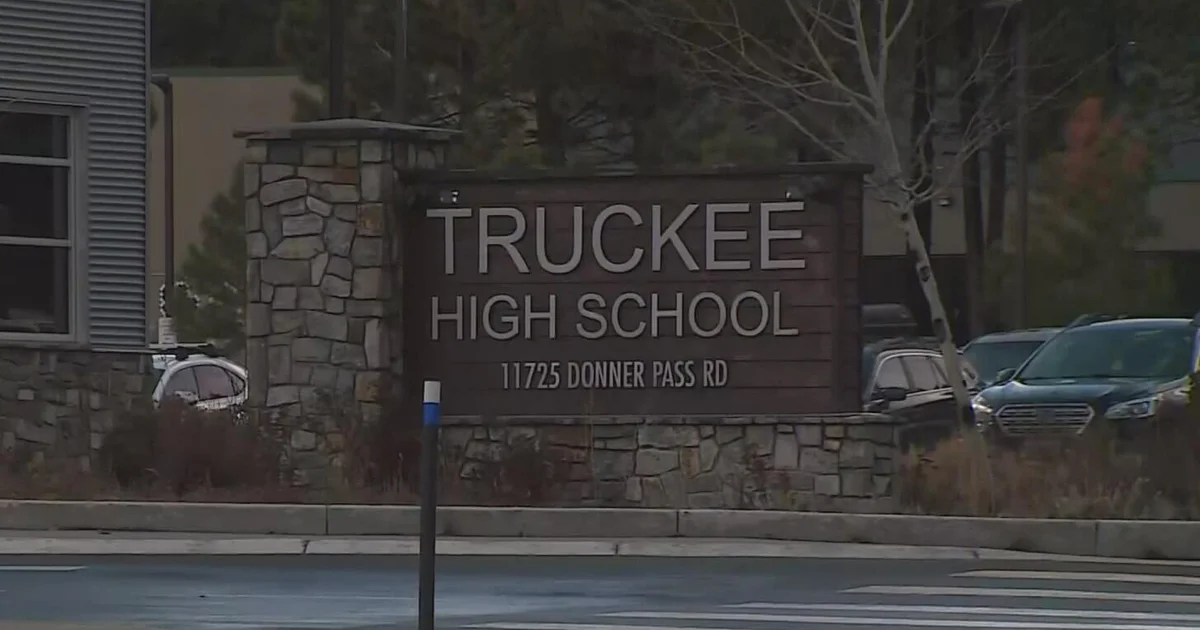
The California Department of Education is requiring the Tahoe Truckee Unified School District to follow state law in another clash over transgender athletes in youth sports in the state.
Currently, student-athletes in Tahoe Truckee Unified play sports in Nevada because of how close they are. But Nevada now bans transgender athletes in girls’ sports, which is against California state law.
So after decades of playing in Nevada, California’s Department of Education is requiring the Tahoe Truckee Unified School District to compete in California to comply with state laws that allow student athletes to compete based on their gender identity.
David Mack is the co-founder of Tahoe Pride and describes the new youth sports divide in the Tahoe region.
“So no one’s happy, it’s really sad, it’s quite tragic in that way,” Mack said. “People feel really upset that the school moved so fast on this. They feel blindsided, they feel not listened to, and then other people, like the trans kids, are getting steamrolled over like they’re not recognized in this argument.”
Nevada state lawmakers passed a law in April requiring a mandatory physical signed by a doctor to deem the athlete male or female based on their birth sex.
“This is a politically manufactured issue to try to divide people,” Mack said.
The Tahoe Truckee Unified School District is responding to the California Department of Education with a solution that the district legally join the California Interscholastic Federation in 2026, but continue to play in the Nevada Interscholastic Activities Association through 2028.
When asked if transgender athletes would be able to compete while operating in the NIAA, the district said it’s “still in the early stages of this transition, and many details are still being developed.”
In an October letter addressed to the California Department of Education, the school district’s attorney, Matthew Juhl-Darlington, said the Tahoe Truckee Unified is “not aware of any transgender youth who have expressed interest in participating in its 2025-2026 athletic programs.”
“While the NIAA recently updated its polices to define ‘male’ and ‘female’ based on sex assigned at birth and not as reflected in an individual’s gender identity, as required under California law, the District is interpreting and implementing this policy in a manner consistent with California’s legal requirements,” Juhl-Darlington said in the letter.
California Republican Rep. Kevin Kiley is opposed to the state order, arguing the weather conditions in Tahoe need to be considered.
“So in order to compete in a California league, you have to deal with this snowy weather and the travel dangers and so forth,” Kiley said.
The school board was expected to explain its solution to both join California’s CIF while playing in the NIAA through 2028 to parents and students Wednesday night at a board meeting.
So far, the California Department of Education has not said if it will accept this as a solution.
Rec Sports
Quincy University on probation after allowing over 100 ineligible students to participate in sports

QUINCY (WGEM) – Quincy University has to pay a $5,000 fine and spend two years on probation after the NCAA issued sanctions tied to more than 120 ineligible student-athletes who were allowed to play for the school.
The problem first surfaced in August 2024 when staff preparing the men’s and women’s soccer roster lists discovered three players had not received the required amateurism certification. That same day, another school alerted QU’s athletics office that a transfer student from Quincy also lacked the certification. The athletic office then launched a broader review.
What began as a handful of missing documents quickly grew. The department found potential eligibility problems for 95 student-athletes during the 2022-23 and 2023-24 school years. In November 2024, the department self-reported the findings to the NCAA and cooperated with an investigation.
The NCAA report names former Assistant Director of Athletics for Compliance Taylor Zerbe as central to the violations. Zerbe admitted to changing 74 student-athletes’ eligibility certifications and told investigators she felt overwhelmed by the workload. According to the report, she did not raise those concerns with her supervisor. Zerbe also admitted to knowing some athletes were ineligible when she altered their certification. She was not employed by QU when the problems were discovered.
QU’s internal review reached back to the 2021-22 school year, which coincided with Zerbe’s employment. That review uncovered additional violations. Overall, the NCAA says Zerbe falsified eligibility squad lists and that QU improperly certified 121 student-athletes across 17 sports.
The report details several consequences for those athletes: 93 practiced beyond the allowable 45-day period, 78 competed when they were not eligible, and 26 received financial aid while ineligible. The university also allowed 27 student-athletes to compete before their eligibility was formally reinstated, and two transfer student-athletes competed despite not meeting transfer eligibility rules.
QU and the NCAA agreed to a set of penalties intended to correct the system and increase transparency. In addition to the $5,000 fine and two-years probation, the school must tell prospective student-athletes in writing that the program is on probation and disclose the violations.
- Vacate any wins, records or participation that involved ineligible student-athletes from the time those athletes became ineligible until they were reinstated.
- Prevent head coaches from counting wins from games where ineligible athletes competed toward milestone totals (for example, a coach’s 100th win).
- Allow individuals who were eligible to keep any personal records or awards they earned.
- Undergo a comprehensive external review of certification and eligibility procedures during the probation period.
The NCAA report contains the full list of prescribed penalties.
Regarding Zerbe, the NCAA has barred her for two years from working at a member institution in any role that involves eligibility certification responsibilities.
QU declined on-camera interviews, but Athletic Director Josh Rabe told WGEM the university acted with integrity by self-reporting and taking steps to address the problem. Rabe said the department has tightened procedures and added what he called “a double-check to check the double-check.”
QU released the following statement:
Below is the full case summary:
Copyright 2025 WGEM. All rights reserved.

PRESS RELEASE
Minnesota Legislature
Rochester Delegation
FOR IMMEDIATE RELEASE
December 18, 2025
HOUSE CONTACT: Marlee Schlegel
651-296-9873 or marlee.schlegel@house.mn.gov
SENATE CONTACT: Jack Vinck
651-440-5056 or jack.vinck@mnsenate.gov
Rochester DFL Legislators to Take Action on Rochester Sports Complex
Rochester, Minn – On Monday, Rochester Mayor Kim Norton vetoed the city council’s plan for a $65 million sports complex that is not reflective of the ballot initiative that funded the project in 2023. The city council is expected to overturn the Mayor’s veto at their December 22nd meeting.
In response, the DFL Rochester delegation intends to introduce legislation to revoke authorization of the Local Option Sales Tax they previously passed into law to fund the project. The delegation released the following statement:
“Rochester residents deserve to get what they paid and voted for. The updated plan for the sports complex no longer serves the best interests of Rochester residents. Rather, it serves a narrow set of special interests and ignores the community’s need for indoor recreation space — the very reason voters approved the project in the first place.
“Both as legislators who passed the legislation that allows the complex to be funded by the Local Option Sales Tax, and as voters who were excited to support the community-oriented initiative, we feel deceived. The changes made to the project to eliminate the indoor portion of the complex also eliminates the reason that many Rochester residents supported the project.”
Not long after the ballot approval of the complex, a new cost assessment was completed. Updated estimates came back at $120 million, nearly twice the cost of the initial $65 million proposal approved by voters.
“It’s unclear to us how such an expensive oversight was made on cost — and it’s equally unclear why the city council has chosen to prioritize the outdoor complex over the part of the project that won community support in the first place. Whatever the reason, the city council should either find a way to deliver on what voters approved or bring these significant changes back to the ballot.
“As legislators, we urge the Rochester council to change course and return to the original goal of meeting residents’ needs for indoor recreational space. After many conversations with stakeholders and community members, it is clear to us that as proposed, the project now falls outside of the parameters outlined in the original use of funds request. If the city council does not change course, we plan to introduce legislation to revoke authorization to use Local Option Sales Tax funds for the project. We remain committed to meeting the needs of our community and seeing that the residents of Rochester get what they’ve voted for, and we remain willing to work with the city council toward that goal.
“We want to see this project fully realized in a form that serves the entire community, as we were all assured it would.”
The DFL Rochester Delegation includes Senator Liz Boldon (DFL—Rochester), Representative Kim Hicks (DFL—Rochester), Representative Tina Liebling (DFL—Rochester) and Representative Andy Smith (DFL—Rochester).
###

TWIN FALLS, Idaho (KMVT/Gray News) – Two children in Idaho are critically injured after a tree fell on them while they were waiting for the school bus.
The Twin Falls County Sheriff’s Office said high winds caused rotten trees to fall on power lines before collapsing on the children.
The kids, both under the age of 10, and an older sibling were waiting outside for their bus when the tree collapsed. According to the sheriff’s office, the older sibling was not injured.
Aaron Hudson, the Twin Falls fire deputy chief, told KTVB first responders had to first get the kids out from the tree and downed power lines before they could prepare them for transport.
The sheriff’s office said one of the children was taken to the hospital by ambulance, while the other was airlifted.
According to Hudson, the weather conditions caused difficulties during transport. He said that it prevented the helicopter from going any further than the local hospital.
The family of the children has started a GoFundMe to help cover medical expenses.
Copyright 2025 KMVT via Gray Local Media, Inc. All rights reserved.
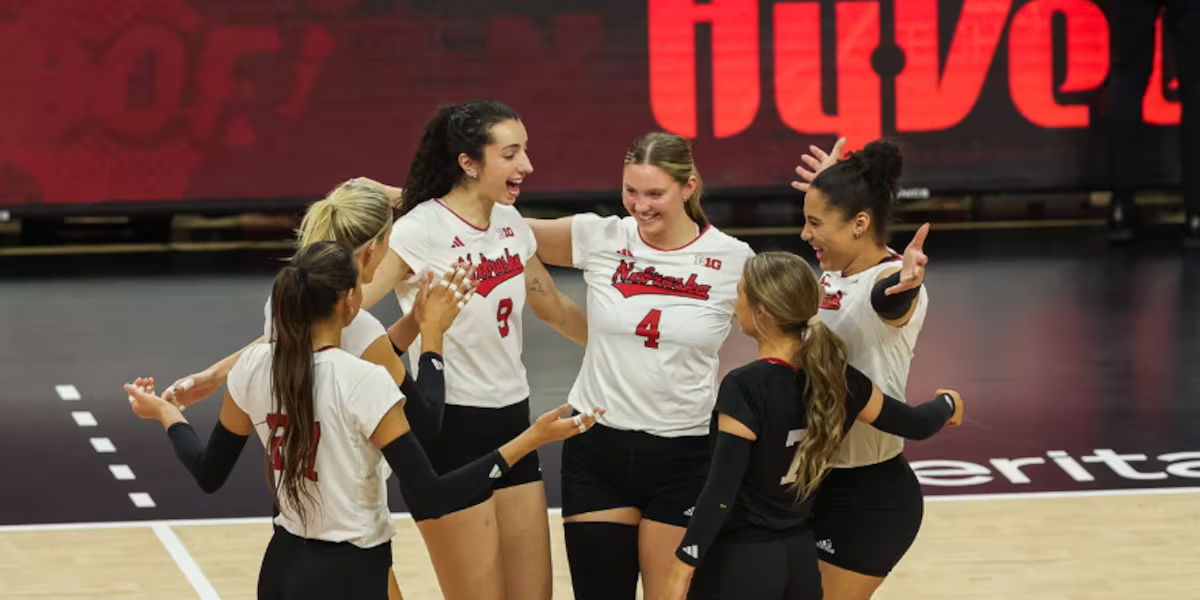
LINCOLN, Neb. (KOLN) – Athletic Director Troy Dannen reflected on another year of Nebraska Athletics, sharing highlights and achievements of the men’s and women’s sports teams and hinting at what’s to come.
In competition, Huskers excelled in multiple sports:
- Nebraska volleyball team just completed a remarkable 33-1 season
- Wrestling finished as the national runner-up as a team and two Husker wrestlers won individual national championships
- Softball made an NCAA Super Regional appearance
- Football earned a second straight bowl berth
- Both basketball teams are undefeated and ranked in the AP Top 25.
This year, student-athletes set a school record with a 3.464 GPA, led the Big Ten Conference with 117 fall Academic All-Conference selections and once again posted a Graduation Success Rate over 90%, among the best in the nation. Dannen said they also made a positive impact in Lincoln and surrounding communities through their volunteer work.
Alcohol and food sales at Husker venues
The start of alcohol sales at all on-campus venues and the addition of new food options resulted in an increase of 75% in total concession revenue compared to last year, Dannen said.
“More than 313,000 alcoholic beverages were served and new food options were added to the menu, resulting in an increase of 75% in total concession revenue compared to last year,” Dannen said.
The introduction of alcohol sales came with concerns about the impact on fan behavior, but Dannen said it remained consistent with the previous five years.
John Cook Arena reseating
The John Cook Arena reseating process planned for 2026 has drawn criticism from longtime season ticket holders.
Dannen said the athletic staff has developed a plan that ensures that season-ticket holders in 2025 will be guaranteed season-tickets next year.
Dannen said 10% of current season-ticket holders did not use their tickets this year but rather sold those tickets through secondary markets. Those tickets, originally purchased for a total of $600,000 by those ticket holders, were then resold for a total of $3.2 million on the secondary market. Ticket use for this purpose is strictly prohibited.
The accounts that resold the entirety of their tickets will be excluded from the ability to purchase season-tickets in 2026, Dannen said.
1890 Nebraska winding down operations
With the implementation of the House settlement, 1890 Nebraska, Husker Athletics’ NIL collective, has begun winding down its operations.
“Hundreds of Husker fans donated millions of dollars over the past 24 months to support NIL for our student-athletes, as the rules at the time permitted,” Dannen said the in the letter.
The House settlement now prohibits much of what 1890 Nebraska provided, but in turn allows the university to share $20.5 million directly with student-athletes as they pay to license their NIL rights.
The five sports primarily supported by the collective include the Nebraska wrestling team, football team, two basketball teams and the volleyball team.
Facility upgrades
Several Nebraska athletic facilities saw enhancements including the completion of the track and field complex, along with new facilities for golf, rifle, swimming and diving and bowling.
In 2026, the athletics department is planning to renovate the softball and baseball clubhouses. Dannen said they are also looking forward to expanding the Devaney Center.
Entertainment
Three shows have been scheduled to take place inside Memorial Stadium next year. Zach Bryan will perform on April 25, the Savannah Bananas on June 13 and The Boys from Oklahoma on Aug. 22.
“Our plan is to continue to utilize our facilities for outside events to bring new events to our spaces and to help drive entertainment options in Lincoln,” Dannen said.
Due to anticipated construction, Nebraska Athletics will hold off on booking events for Memorial Stadium in 2027.
The athletics department is expecting to make two “big announcements on the Husker women’s sports front” early next year that will have a tremendous impact on its female student-athletes.
Click here to subscribe to our 10/11 NOW daily digest and breaking news alerts delivered straight to your email inbox.
Copyright 2025 KOLN. All rights reserved.

Indian Supercross Racing League Team Indewheelers Motorsports onboards Apollo Techno Industries as Title Sponsor

ASUS Seizes Market Leadership in the OLED Monitor Market as Shipments Soar in 2025

UK volleyball outlasts Wisconsin to make national championship

NASCAR drivers mourn tragic deaths of Greg Biffle and family

Badger volleyball battles to the bitter end in a five-set thriller at the national semifinals – UW–Madison News

NBC Sports confirms 2026 IMSA TV coverage schedule

Boise State transfers, NIL money, portal plan

WATCH | Ole Miss AD Keith Carter on College Football Playoffs, SEC Schedule, NIL, Rev Share and more

esports athlete Mortal joins Royal Challenge Packaged Drinking Water’s new campaign

2025 DI women’s volleyball championship: Bracket, schedule, scores

Badgers season ends in five-set thriller

Major SEC program emerges as candidate for $2.4 million college football quarterback

Assistant Coach-Women’s Volleyball in Tulsa, OK for Oral Roberts University

Badgers news: Final Four Game Thread vs. No. 1 Kentucky Wildcats

Brightspeed invests $580,000 in STEM and esports, supporting North Carolina schools and programs — EdTech Innovation Hub

First Tee Winter Registration is open

Fargo girl, 13, dies after collapsing during school basketball game – Grand Forks Herald

CPG Brands Like Allegra Are Betting on F1 for the First Time

F1 Las Vegas: Verstappen win, Norris and Piastri DQ tighten 2025 title fight

Volleyball Recaps – November 18

Sycamores unveil 2026 track and field schedule

Two Pro Volleyball Leagues Serve Up Plans for Minnesota Teams

Utah State Announces 2025-26 Indoor Track & Field Schedule

SoundGear Named Entitlement Sponsor of Spears CARS Tour Southwest Opener

Jo Shimoda Undergoes Back Surgery

Redemption Means First Pro Stock World Championship for Dallas Glenn

Texas volleyball vs Kentucky game score: Live SEC tournament updates

Bowl Projections: ESPN predicts 12-team College Football Playoff bracket, full bowl slate after Week 14

How this startup (and a KC sports icon) turned young players into card-carrying legends overnight

Robert “Bobby” Lewis Hardin, 56






-
 Motorsports1 week ago
SoundGear Named Entitlement Sponsor of Spears CARS Tour Southwest Opener
-
 NIL3 weeks ago
Bowl Projections: ESPN predicts 12-team College Football Playoff bracket, full bowl slate after Week 14
-
 Rec Sports3 weeks ago
Robert “Bobby” Lewis Hardin, 56
-
Sports3 weeks ago
Wisconsin volleyball sweeps Minnesota with ease in ranked rivalry win
-

 Motorsports1 week ago
Donny Schatz finds new home for 2026, inks full-time deal with CJB Motorsports – InForum
-

 Rec Sports2 weeks ago
How Donald Trump became FIFA’s ‘soccer president’ long before World Cup draw
-

 Motorsports3 weeks ago
Michael Jordan’s fight against NASCAR heads to court, could shake up motorsports
-

 Rec Sports2 weeks ago
Black Bear Revises Recording Policies After Rulebook Language Surfaces via Lever
-

 Sports3 weeks ago
Men’s and Women’s Track and Field Release 2026 Indoor Schedule with Opener Slated for December 6 at Home
-
 Rec Sports2 weeks ago
David Blitzer, Harris Blitzer Sports & Entertainment