Connect with us
https://yoursportsnation.com/wp-content/uploads/2025/07/call-to-1.png

Motorsports

Race to the Road: Introducing the Porsche 963 RSP

Published

on


Le Mans, June 06, 2025 (GLOBE NEWSWIRE) — As Porsche prepares for the 24 Hours of Le Mans, a sister to the 963 Hypercar has been revealed – named the 963 RSP. An extreme one-off based on the IMSA championship and WEC championship winning machine, the car closely follows the design direction taken by a very special 917 50 years ago. Fittingly, it made its debut today on the streets near the Circuit de la Sarthe alongside the car that inspired its creation.

The work of a team from Porsche AG, Porsche Penske Motorsport and Porsche Cars North America in partnership with motorsport legend Roger Penske, whose initials form the name of the car, the 963 RSP was influenced by the trailblazing 917 and an audacious drive that took place half a century ago.

In April 1975, a 917 (chassis 30) – the most advanced endurance race car at that time – made an extraordinary journey, not on the track, but on public roads. From the factory in Zuffenhausen, it traveled to Paris – at the wheel was its enigmatic owner, who insisted on as few changes as possible to the car, which remains in France, and on the road, to this day.

“This really started out as a ‘what if?’ – a passion project by a small team of enthusiasts at Penske and at Porsche who together imagined a version of the 963 that really resembled as closely as possible the spirit and appearance of the Count Rossi 917,” said Porsche Cars North America President and CEO Timo Resch, who conceived of the original idea. “The 917 from the story was every inch a race car – albeit one driven on the road – and we took the same approach with the 963 RSP. It uses beautiful materials of the best quality available, but is still every bit a race car underneath.”

The 963 RSP features significant changes over the car on which it is based. Unlike the competition racecars, which are wrapped in different colors, the 963 RSP is the first of its kind to be painted; a unique challenge due to the nature of the carbon fiber and Kevlar® bodywork which is ultra-thin in places to save weight.

In a nod to the Count Rossi 917, the 963 RSP is finished in Martini Silver and features uniquely altered bodywork and a bespoke tan leather and Alcantara interior inspired by the trim choices made by Count Rossi 50 years ago.

A dedicated mechanical and electronic setup were configured for its debut on the streets near Le Mans – including a raised ride height and softened dampers, as well as a reprogrammed control unit to allow for the headlights and taillights to operate closer to those of a road car.

These changes along with modified bodywork to cover the wheel arches, the use of Michelin wet weather compound tires and even the fitment of a horn meant the car met the necessary criteria to be allowed to drive on the road and wear license plates under special permission from the French authorities and with the enthusiastic support of the Automobile Club de l’Ouest (ACO), which runs the 24 Hours of Le Mans race.

“That was an experience that will stay with me for a lifetime,” said Timo Bernhard, who was at the wheel of the 963 RSP for its first miles on the road. “Driving down a public road with a 917 beside me – it felt unreal. The car behaved perfectly – it felt a little friendlier and more forgiving than the normal 963 – and felt super special and a lot more comfortable, especially as I was not needing all my safety gear.”

“We have enjoyed a terrific relationship with Porsche dating back to 1972. The Porsche 917/30, in particular, was one of the greatest eras in Team Penske history with numerous wins and championships, along with the closed-course speed record set by Mark Donohue in 1975,” said Roger Penske, Chairman of the Penske Corporation.

“With such a remarkable partnership continuing to this day, we felt it was time to create the most exciting car we could imagine. Just like the 917, I wanted this car to be authentic to its origin and have as few changes to it as possible. When we got into the project, the differences in the two generations of race cars provided a great challenge. What emerged is a car that has lost none of its edge and is exciting whether on the track or on the road.”

The 963 RSP will go on public display at the Circuit de la Sarthe during the 24 Hours of Le Mans before it returns to Stuttgart to be shown at the Porsche Museum. In July the car will appear alongside the 917 at the Goodwood Festival of Speed.

The 963 project in detail:
The concept originated during a trackside meeting between Timo Resch, President and CEO of Porsche Cars North America, Thomas Laudenbach, Vice President, Porsche Motorsport, and Urs Kuratle, Director Factory Racing LMDh at Road Atlanta.

Inspired by the 917, they imagined repeating the feat with a 963. This small group took the basic premise of the project to Roger Penske and Jonathan Diuguid, Managing Director of Porsche Penske Motorsport – both of whom encouraged and developed the idea further. Roger Penske was nominated as the customer for the car, with the 963 being named in his honor.

Design process – exterior:
With the concept established, the Sonderwunsch team in Zuffenhausen began translating the idea to reality in cooperation with the Sonderwunsch colleagues at Porsche Classic in Atlanta – a standalone facility opened in 2023.

Drawing on the changes selected by Count Rossi in 1975, Grant Larson, Director of Special Projects at Style Porsche, and his designers envisioned a 963 that would stay as close as possible to the original car with a silver and black color pallet on the outside, and a tan leather and Alcantara mix for the interior.

This extended to the decision to paint the car – as was the case with the 917 – rather than wrapping it, as is the norm with current race cars, and a significant challenge due to the Kevlar® and carbon fiber body construction. The paint to sample color – ‘Martini Silver’ – was verified from the records held by the Porsche Museum in Stuttgart-Zuffenhausen, with a triple-layer lacquer applied. Minor components such as hinges and wing connectors are all finished in satin black with a unique 3D printed ‘963 RSP’ created and applied to the rear of the car.

To closer align the 963 to the form of the 917, bodywork changes were made to the 963 RSP. These include the creation of unique fender vents – where otherwise the front and rear fender vents would be open.

A collaboration between Sonderwunsch and Porsche Penske Motorsport, the vents were digitally rendered first before applied to the car, with the new design allowing air within the wheel wells to escape. Additionally, the carbon fiber blanking plates that sit within the rear wing – a requirement on the race car – were able to be removed for the 963 RSP.

Added to the nose of the car – replacing the graphic that is applied to all conventional 963s – was an enamel Porsche badge, a detailed shared with the 917.

A small detail change was the addition of 1970s-era Michelin logos for the tire walls, and rain-spec 18-inch tires over forged OZ racing wheels. Finally – and in another first – mounting points for front and rear license plates were added ahead of the car being driven on public roads to mark the 50th anniversary of the first street drive of the 917.

Design process – interior:
Possibly the greatest departure from the 963 race car occurs inside the 963 RSP. Following the lead of the handcrafted and completely bespoke interior of the 917 (which remains unrestored to this day) the 963 RSP features a mix of soft tan leather and Alcantara. Whereas the race car features very few comfort features, the 963 RSP is more accommodating – with the single piece carbon seat trimmed in leather with soft cushioning placed down the center and a fixed headrest mounted on the carbon fiber bulkhead.

The seats are – in common with the race version – air conditioned. The leg cushions in the footwell as well as the roof lining and pillars have been retrimmed in light Alcantara while the steering wheel – where the majority of the vehicle’s functions are located – has been finished in leather. A light-hearted addition is a detachable 3D-printed cup holder capable of securely holding a Porsche travel mug.

Next to the driver, a new trimmed panel provides a location for the car’s Peltor headset and steering wheel when not in use as well as a platform for the laptop that starts and assists in the operation of the car and Roger Penske’s custom carbon crash helmet.

While the color of design of the interior are obvious references to the 917, more subtle design elements can be found – among them bespoke end plates for the ventilation system which mimic the styling of the fan on top of the 917’s flat-12 engine.

The doors are finished in leather and Alcantara, with a small alloy plaque set into one of them denoting the chassis number and the date and location of construction.

Mechanical changes:
The ride height of the car was raised to its maximum available setting to accommodate road use, while the adjustable Multimatic DSSV dampers designed for racing prototypes are in their softest setting to create a more compliant ride.

The control unit was modified to allow the car to operate turn signals and allow the headlights to be adjusted for road. The hybrid V8 powertrain with a lithium-ion battery – capable of being run on electrical power only – remains in standard race tune in the 963 RSP, but power delivery from the MGU has been remapped to provide smooth delivery more appropriate for road use versus race competition The powertrain was also re-mapped to be capable of running on pump gas – a significant undertaking for the team.

Finishing touches:
Accompanying the 963 RSP are a custom fitted carbon crash helmet with Martini Silver accents to match the car, and a bespoke Snap On toolset with a chest bearing accents in the same color, a plaque commemorating the project and its namesake, and handles wrapped in the same leather used in the interior of the car. The drawers also feature custom foam inserts to carry tools and special equipment necessary to start, service and operate the car.

While capable of being driven on the road under special circumstances and in accordance with local requirements (the modifications to the car allowed it to use French ‘W’ or manufacturer license plates for its debut), the 963 RSP is not a homologated addition to the Porsche model line-up and is intended to remain a very special one-off.

The powertrain of the 963:
The 963 is powered by a 4.6 liter twin-turbocharged V8 making up to approximately 680 hp that has its origins in the RS Spyder race program operated by Penske which claimed all titles in the LMP2 class of the American Le Mans Series from 2006 to 2008. The engine was enlarged from 3.4 to 4.6 liters and then used in the limited-production 918 Spyder road car, which debuted in 2013.

The flat crankshaft and short stroke of the engine allow for a low mounting point, helping to optimize the center of gravity of the car. While the 918 Spyder used the engine in naturally aspirated form, the 963 pairs it with two turbochargers provided by the Dutch manufacturer Van der Lee.

These turbochargers generate very moderate boost pressure and are mounted on the hot side of the engine, optimizing throttle response. Overall, around 80 percent of the engine components in the 963 are shared with the 918 Spyder, which was already designed to work together with a hybrid system.

The standardized components of the electric boost system are supplied by Bosch (motor generator unit, electronics and software) and Williams Advanced Engineering (high-voltage battery). The motor generator unit (MGU), which is responsible for the power output and recuperation under braking at the rear axle, works in direct interaction with the sequential seven-speed gearbox from Xtrac. The MGU sits in the bell housing between the combustion engine and the gearbox.

The hybrid’s entire electrical system produces up to 800 volts. The uniform battery has an energy capacity of 1.35 kWh, which can be mobilized at any time under acceleration. An output of 30 to 50 kW is available in short bursts but does not change the overall output of the powertrain. When the thrust of the MGU kicks in, the power of the combustion engine, which can reach over 8,000 rpm (depending on the BoP), automatically decreases.




Link

Continue Reading
Click to comment

Leave a Reply

Your email address will not be published. Required fields are marked *

Motorsports

Denny Hamlin Discloses the Massive Figure Teams Pay Because of NASCAR’s Sponsorship Restrictions

Published

on


Denny Hamlin addressed growing frustrations a few months ago following NASCAR’s move to fully standardized parts in 2022. While the shift was intended to control costs, its ripple effects have extended far beyond that goal.

Competitive balance has tightened to the point where cars now mirror one another almost perfectly, leaving drivers with fewer tools to create separation on track. Passing has become more difficult, short-track racing has lost much of its edge, and teams have found themselves boxed into purchasing expensive components from approved suppliers, even when those parts fail to suit their setups or when alternatives elsewhere in the market might outperform them.

Hamlin explained that once NASCAR signs a category partner, teams lose their entire freedom within that space. If the sanctioning body locks in a fuel or tire partner, teams cannot seek sponsorship from a competing brand in the same category.

That restriction applies regardless of competitive benefit or financial upside. According to the Joe Gibbs Racing driver, the most critical performance elements on a race car, fuel and tires, sit squarely within those locked categories, yet teams remain unable to leverage them commercially.

Hamlin expanded on that point with a concrete example, saying, “I think we probably pay about $700,000 a year in tires. In tires. I mean, Goodyear is the official provider of NASCAR tires, but we have to purchase them. They’re not given to us. We have to purchase them.

“But that’s an agreement that they have with NASCAR itself. And again, it’s a category where we couldn’t go get a Michelin to sponsor our car.”

The structure has contributed to broader consequences across the garage. Mechanical innovation has slowed as teams operate within the limits of a spec car. Distinct driving styles carry less influence when equipment behaves the same across the field. At the same time, safety and performance concerns tied to mandated components often leave teams powerless to act independently.

NASCAR’s requirement that teams purchase parts exclusively from approved vendors has shifted problem-solving authority away from the organizations that race the cars weekly.

Manufacturers have felt the effects as well. Chevrolet, Ford, and Toyota now have limited room to highlight engineering identity or technical evolution. With fewer avenues to differentiate, their ability to connect innovation to on-track performance has diminished, a factor that could affect long-term investment and fan engagement.

When flaws emerge in a required component, the impact becomes universal. Every team must wait for NASCAR and its supplier to address the issue. The early version of the Next Gen chassis highlighted that risk. Its excessive stiffness failed to absorb impact energy effectively, contributing to a series of injuries and concussions before adjustments were made.

Tires present another constraint. With Goodyear serving as the sole supplier, teams cannot explore alternative compounds or manufacturers to better match track characteristics or driving approaches.

That strategy exists in other forms of motorsport. Formula 1, while also operating under a single-supplier model with Pirelli, still allows teams to select from multiple compounds. NASCAR’s low-profile Next Gen tires have further altered feedback, reducing the tactile “feel” drivers rely on to manage grip and balance.

Although standardization was intended to reduce costs, several teams argue that the economics remain unfavorable. The mandated parts come with high purchase prices, yet teams do not retain ownership, as the components remain NASCAR property. That imbalance has fueled recent antitrust litigation, prompting teams to question the model’s sustainability.

Now, with NASCAR signaling openness to restoring limited innovation and increasing horsepower, optimism has begun to surface. If implemented, those changes could reintroduce speed, improve race quality, and give teams greater control starting next season.


Link

Continue Reading

Motorsports

Denny Hamlin On Exactly How He Kickstarted the 23XI Dream With Michael Jordan

Published

on


Michael Jordan and Denny Hamlin created history last week by forcing NASCAR to settle the antitrust lawsuit that was in trial at the courthouse since the beginning of the month. The settlement represented a huge win for every team owner in the sport and catapulted 23XI Racing to a legendary status. To think all this began in a basketball game that Hamlin happened to attend.

Speaking on the Digital Social Hour podcast earlier this year, the No. 11 driver narrated how he became a business partners with Jordan and how 23XI Racing came to exist. He said, “I met him at a Charlotte Hornets game. I had courtside seats.

“I’m leaving to go to the restroom at halftime. He had his security guys come grab me. He said, “Hey, Michael would like to meet you”, Hamlin added. 

“From that point on, he got my number, started asking me all these questions about NASCAR. And I’m like, ‘What? Wait a minute. You watch NASCAR?’ He’s like, ‘Dude, I never miss. Every Sunday, I’m sitting in front of a TV watching NASCAR.”

Jordan has been an avid NASCAR fan since childhood, developing the interest from the races that his father used to take him to as a kid. Following that first meeting, they’d taken their friendship to the next level by playing games of golf together.

Noticing Jordan’s interest, Hamlin requested that he supply the gear for his No. 11 Joe Gibbs Racing team through Nike, and the NBA legend obliged. Soon enough, the idea of owning a race team together popped up, and the rest is history. 

Has Hamlin taught Jordan how to race cars?

Driving a stock car is not an easy business. Even for Jordan. Wanting to experience what it was like, he once asked Hamlin for the chance to get into the professional-grade simulator that Cup Series drivers use to prepare for races.

Following some special adjustments to the rig to fit his size, the Chicago Bulls legend got into the simulator and came out with a very clear picture of just how hard it is to handle a stock car.

Hamlin said, “He got in it, and he probably lasted 10 minutes, and he’s like, ‘It’s making me shake.’ They had to retrofit him to get in there in the first place. But they did, and he had a blast.” Jordan developed a newfound respect for what drivers did that day.


Link

Continue Reading

Motorsports

Great Ideas in Destination Branding: Pennsylvania Tourism Office

Published

on


Activations: NASCAR Xfinity Series Explore the Pocono Mountains 250; NASCAR Cup Series The Great American Getaway 400 presented by VisitPA.com

The money trail: The state’s Sports, Marketing and Tourism Account, a $5 million annual fund developed in 2022 within the state’s Gaming Economic Development and Tourism Fund, is backed by tax revenue generated from sports wagering in the state. The fund provided $250,000 to the Pocono Mountains Visitors Bureau to support the 2024 NASCAR tripleheader weekend at Pocono Raceway. Additionally, the state paid a total of $1.1 million for the title sponsorship of the 2024 and 2025 NASCAR Cup Series The Great American Getaway 400 presented by VisitPA.com.

What makes these great: Legislators were careful to get a quantifiable return on their grants, as event operators must include a link to VisitPA.com on all related marketing materials and must allocate in-kind sponsorship benefits to the state, valued at up to 10% of the total awarded grant amount. Also unique was that the grant for the raceway helped offset the purchase of machinery and equipment that was used during a $1.8 million capital improvements project, which benefits future track operations and events.

Pennsylvania paid paid $575,000 for the title sponsorship of the June 22 NASCAR Cup Series race. Pennsylvania Tourism Office

Measuring success: The Pennsylvania Independent Fiscal Office estimated that 60% of the 92,900 unique visitors to the region during NASCAR weekend — including fans and race participants — came from outside the Poconos. Those visitors booked an estimated 30,700 hotel and short-term rental room nights, generated $240,000 in lodging tax revenue and spent $27.4 million at local businesses. Additionally, the media value from the 2025 Cup Series race (which aired on Prime Video and HBO Max) was $3.8 million for the VisitPA and The Great American Getaway branding, according to the state’s Department of Community & Economic Development.


Link

Continue Reading

Motorsports

NASCAR Settles Landmark Antitrust Lawsuit

Published

on


NASCAR has ended a major antitrust lawsuit, brought by team owners including basketball legend Michael Jordan of 23XI Racing and Bob Jenkins of Front Row Motorsports, after reaching a settlement on Thursday.

The agreement was finalised following eight days of a federal trial, representing a major concession by NASCAR that introduces “evergreen” or permanent charters for all teams and includes an undisclosed financial element.

The lawsuit was initiated after 23XI Racing and Front Row Motorsports, two of the 15 Cup Series organisations, refused to sign a 2024 extension of NASCAR’s charter agreements.

These agreements grant teams franchise-like ownership over their entries and a share of prize money.

The plaintiffs argued that the charters did not provide teams with enough rights or financial viability, accusing NASCAR of operating a non-transparent monopoly that stifled competition.

Testimony during the trial revealed that teams received approximately $12–13 million annually under the old agreement, while they claimed they needed closer to $20 million to be financially sustainable.

The key commercial adjustment secured by the teams is the establishment of “evergreen” charters, subject to mutual agreement from the other charter holders.

This permanence is expected to significantly increase charter valuations, attracting greater investment and stability to the sport’s ownership base.

The settlement also returns the six respective charters (three each) to 23XI and Front Row Motorsports, restoring them to full chartered status alongside the other 30 chartered entries in the field.

While the financial terms of the settlement are confidential and were not specified in the joint statement, industry sources suggest the settlement included compensation for the plaintiff teams for lost income incurred while they raced unchartered in the 2025 season.

Furthermore, the amendment to the charter agreement for all teams is understood to include increased team influence, such as a return to a “strike rule” (now increased to five) allowing teams to veto major decisions, and a new portion of revenue from NASCAR’s international media rights deals.

The resolution, which avoids a court verdict that could have forced NASCAR to sell its tracks or face damages estimated at over USD300 million (AUD528 million), allows the series to focus on the future.

Don’t miss out on the latest in sports business – Subscribe today to the free Ministry of Sport newsletter and stay ahead of the game. For even more exclusive insights, event tickets, professional development and networking events, become a MoS Member today!.


Link

Continue Reading

Motorsports

Corvette ZR1 Sets New Lap Record At Canadian Tire Motorsports Park: Check Details

Published

on


The Chevrolet Corvette ZR1 has been making waves this year, setting a series of performance records hard to ignore. Chevrolet brought a pre-production ZR1 equipped with the ZTK Performance Package to some of the most demanding tracks in the US. This resulted in five new production-car lap records – at Watkins Glen, Road America, Road Atlanta, and both the Full and Grand layouts at Virginia International Raceway.

Chevrolet’s most powerful combustion-only Corvette, the ZR1, may sit in the shadow of the flashier all-wheel-drive ZR1X, but it continues to prove its strength. Recently, with veteran driver Ron Fellows at the wheel, the ZR1 set another production-car lap record. At Canadian Tire Motorsport Park (CTMP), it comfortably outpaced the Ford Mustang GTD, adding to its growing list of achievements.

Also Read: 2026 Skoda Slavia Facelift Snapped, Here’s What Could Be New On Verna Rival

In 2026, the Corvette ZR1, driven by Canadian racing legend Ron Fellows, smashed the Mosport production-car lap record with a quick 1:18.2. This new time beat the previous 1:22.12 mark, set in 2023 by a Corvette Z06, also piloted by Fellows, further highlighting both his skill and the ZR1’s impressive track performance.

Also Read: Tata Sierra Top Variants’ Prices Revealed- Check Details

At Canadian Tire Motorsport Park, the 2026 Corvette ZR1 showcased its extreme performance with the optional ZTK package, which adds massive downforce. Powering the car is a twin-turbocharged 5.5-liter V-8 mounted toward the rear, giving it excellent balance and agility. Chevrolet claims the ZR1 can accelerate from 0-60 mph in just 2.3 seconds, making it one of the quickest Corvettes ever. With the ZTK kit, the car produces up to 1,200 pounds of downward force, ensuring superior grip, stability, and cornering ability during high-speed track runs.

Also Read: Tata Safari, Harrier With Hyperion Petrol Engine To Launch Soon: What To Expect

Equipped with the ZTK aero package, the Corvette ZR1 produces over 550 kilograms of downforce at high speeds. This added grip allows drivers to brake later and maintain higher speeds through Mosport’s fast, flowing sections, where confidence in the car is crucial. The balance of stability and control helps unlock quicker lap times without the need for dramatic maneuvers. Instead, the ZR1 delivers a consistent, relentless pace, showing how advanced aerodynamics can transform performance into smooth efficiency and competitive advantage on demanding tracks.


Link

Continue Reading

Motorsports

New ownership group takes over Canadian Tire Motorsport Park in Bowmanvile, Ont. – Brandon Sun

Published

on


BOWMANVILLE – Canadian Tire Motorsport Park has been purchased by a new ownership group.

The new group is led by Peter Thomson with Chris Pfaff and Alek Krstajic as partners.

CTMP is a multi-track motorsport facility outside Bowmanville, Ont., that opened in 1961.

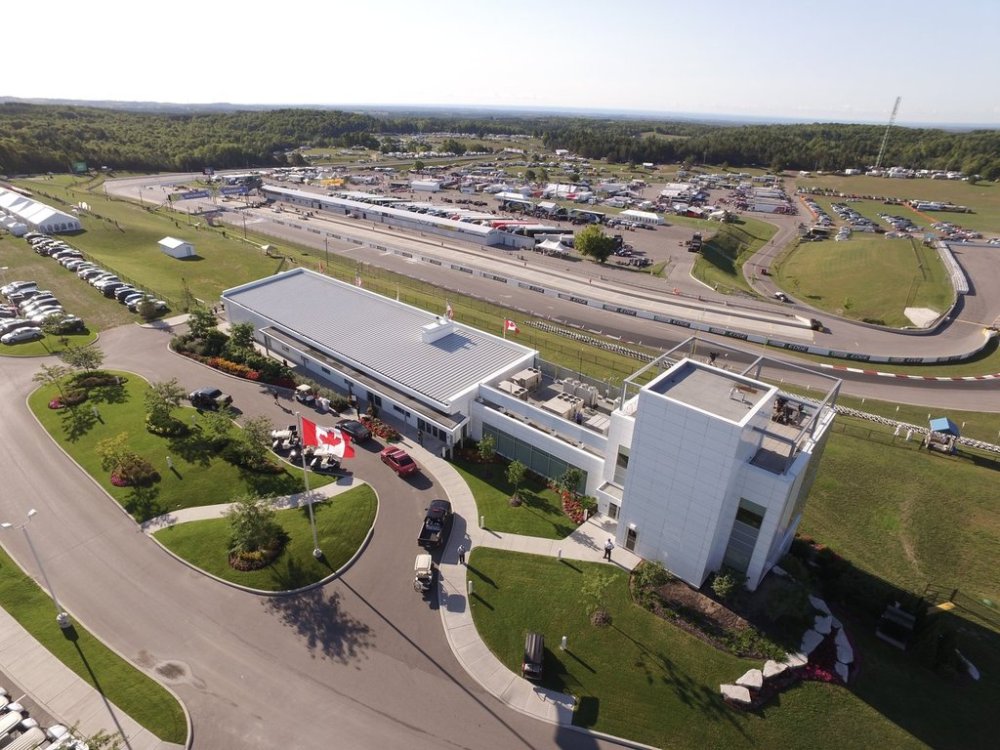
Canadian Tire Motorsport Park, a multi-track motorsport facility about 100 km east of Toronto, has been purchased by a new ownership group. An aerial view of the CTMP event centre is seen in an undated handout photo. THE CANADIAN PRESS/Handout - CTMP (Mandatory Credit)

Canadian Tire Motorsport Park, a multi-track motorsport facility about 100 km east of Toronto, has been purchased by a new ownership group. An aerial view of the CTMP event centre is seen in an undated handout photo. THE CANADIAN PRESS/Handout – CTMP (Mandatory Credit)

“Canadian Tire Motorsport Park is a place with deep heritage and a loyal community,” said Pfaff in a statement. “Our team is proud to be its next steward. We’re committed to respecting everything that makes CTMP special today, while building the foundation for an elevated experience in the years ahead.”

The existing management team and staff, led by Myles Brandt, will remain in place.

A broader vision for the future of the site will be unveiled at the Canadian International Auto Show in February 2026, where the ownership group will share the roadmap for CTMP’s long-term development, investment strategy, and enhanced role within the Canadian motorsport and entertainment spaces.

The team encourages current customers, partners, and media to reach out with any immediate questions about CTMP’s future.

This report by The Canadian Press was first published Dec. 11, 2025.


Link

Continue Reading

Most Viewed Posts

Trending