How do we get more boys to play sports and keep them involved?
Seattle Mariners’ newest player shares promotion with family
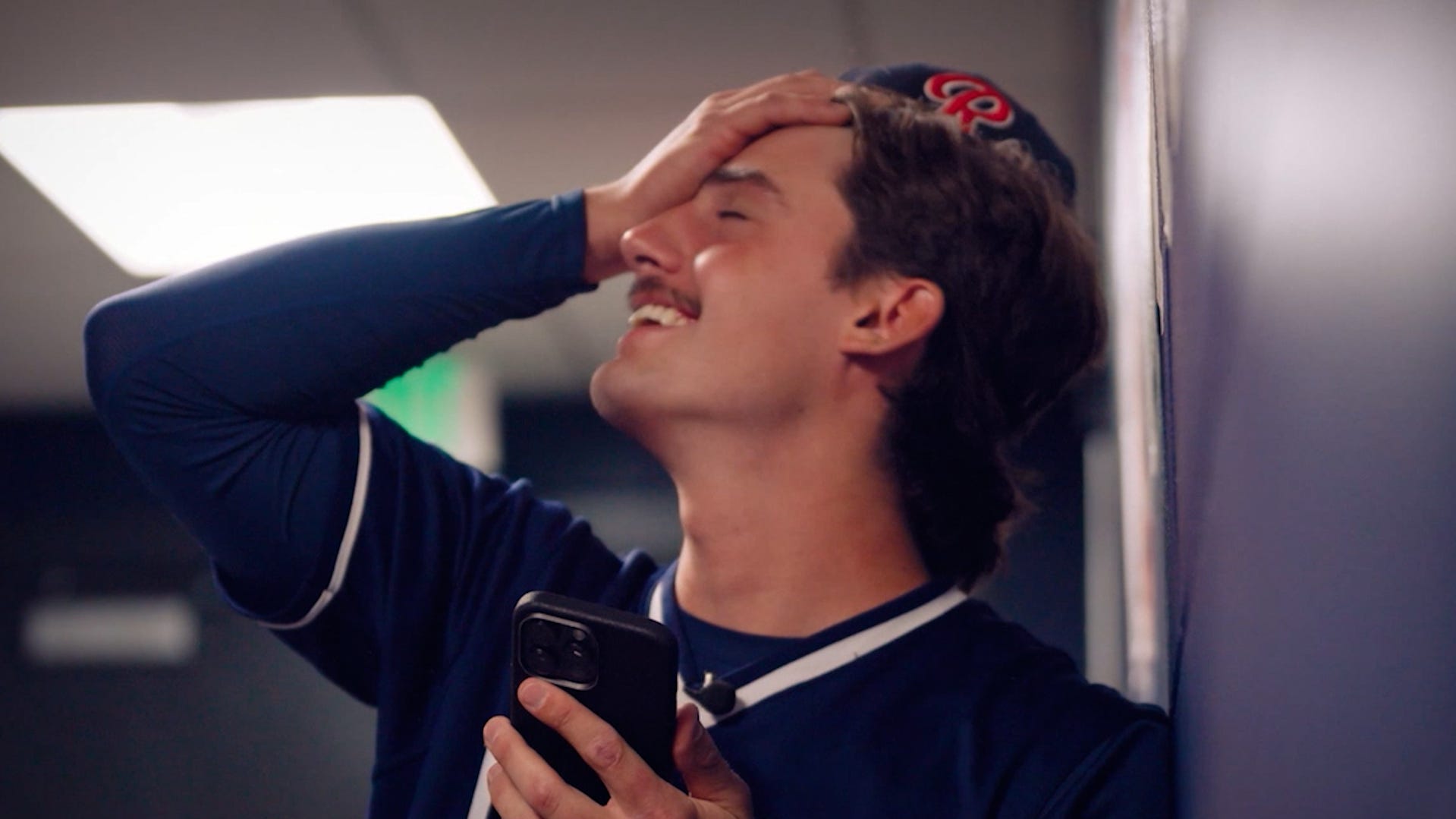
Cole Young announces his move to the big leagues playing for Seattle Mariners during an emotional phone call with his family.
BERKELEY, CA – If you saw Antonio Davis on the court, you remember a fierce power forward and rebounder. As he played, he saw failure as something he couldn’t afford.
“If you would have taken sport away from me, where would I be today?” says Davis who helped lead the Indiana Pacers to four NBA Eastern Conference finals in the 1990s.
“That’s a scary feeling for me, and I don’t know what a 6-9 skinny kid would have been doing, but it wouldn’t have been pretty. Growing up here in Oakland, I could have done a lot of other things.”
We were at March’s Project Play Summit, asking him and two other successful men brought up in their own distinct ways through sports, about why they think the athletic participation rate among boys has crashed.
As the Pacers play the Oklahoma City Thunder in the NBA Finals, a trend you might find troubling lurks at the grass-roots levels. It underscores the thesis of Richard Reeves’ 2022 book, “Of Boys and Men: Why the Modern Male is Struggling, Why it Matters, and What to Do About it,” and a more recent brief undertaken by his institute about “The quiet decline of boys’ sports.”
According to the latest data from Sports & Fitness Industry Association, half of boys aged 6 to 17 participated regularly in sports in 2013. But only 41% did in 2023. The number has been at 41% or lower for eight straight years as the participation rate for girls (35.6% in 2023) has remained steady.
At the same time, according to Reeves’ research team, sports are the only extracurricular activity boys are more likely to do than girls.
“It’s not like on the average, boys are going to go to theater or math club – maybe they should,” Reeves tells USA TODAY Sports. “Participation in youth sports is a big issue in and of itself, but the stakes are even higher for boys than they are for girls, because they’re less likely to do other stuff and they need to move more.”
How do we get more boys to play sports, and keep the ones who are playing? We spoke with Reeves and sat in on his discussion with Davis and Larry Miller, the chairman of Nike’s Jordan Brand advisory board, to help find answers that could help you and your young athlete.
Another ‘way out’
Miller, who grew up in Philadelphia, says he was the teacher’s pet through elementary school. He was in junior high when he got distracted.
“The cool guys were doing the stuff that was in the street and I got pulled into that,” he told the crowd in Berkeley.
At 16, he killed another teenager he mistakenly believed was a rival, according to ESSENCE.com, and spent years in a juvenile correction center.
He rehabilitated himself first by taking college classes in jail, eventually matriculating at Temple University.
“Of all things, as a criminal I decided to get an accounting degree,” he said.
After revealing his dark background to a hiring manager cost him a job with Arthur Anderson, he kept the story to himself for 40 years. After Miller built his career at Nike, though, his eldest daughter, Laila, suggested it might inspire other people. They collaborated to write, “Jump: My Secret Journey from the Streets to the Boardroom.”
Michael Jordan and Phil Knight, the company’s chairman, supported his decision, and he meet with the family of the young man he shot to ask for their forgiveness. In February, Miller launched the Justice and Upward Mobility Project (JUMP) to provide opportunities to those affected by the justice system.
“Part of our goal is how can we provide more opportunity for people who have the talent but just don’t have the ability to utilize that talent?” he said.
Why not through sports?
“I think in the Black communities, brown communities, the sense of hope has kind of dissipated,” Miller says. “And I think that’s why boys in particular are saying, ‘Hey, there’s no reason for me to do this, because it’s not going to lead to anything.’
“In our community, people saw sports as a way out. And I think what happens as boys advance, (they) realize that, ‘I’m not gonna be able to play professionally, I’m not gonna to be able to get a college scholarship, so I’m just going to fall off and try to figure out a different way out. I’m gonna go do something else that can allow me to get paid.’ ”
A re-education starts, Davis suggests, with a change in perception of what it means to be a kid, and what it means to be a man.
‘Get back to the basics’: Normalize what success means for kids
Davis’ dad was killed when he was in high school. He remembers being singularly motivated to provide for his family. After he played for 13 years in the NBA and raised a son (A.J.) and daughter (Kaela) who both played high-level college basketball and professionally, he thinks more about the benefits he got from sports.
Today, youth coaches seem to link their self-worth with winning a game more than providing kids with an experience.
“All the pressure that’s being put on them by their team and their parents, I just think they’re opting to do all the other stuff that’s kind of pulling and tugging on them, whether it’s playing video games or just hanging out or doing other things,” Davis says. “I think they’re just being kind of turned off. And I feel we just have to get back to the basics of the importance of all the other life lessons that you’re going to learn from just playing sport. I’m a big advocate of just give kids space to move around and move their bodies and learn how to be in shape and to be healthy.
“And then as we go on, as I did with my kids, introduce all kinds of sport and whatever they gravitate towards, because that’ll be something that’ll be tugging at their heart and not forced into.”
Coach Steve: American kids get a D- in physical activity. What can we do about it?
Davis, who is also the CEO of the National Basketball Retired Players Association, says the No. 1 thing former players say they miss about the NBA is the camaraderie.
That’s a benefit from sports we all get.
“I’ve played almost every sport you can think of really badly, but I had a great time,” says Reeves, the British author, who played rugby at the University of Oxford. “The great thing about sport is that someone has to lose. I think one thing that should be zero-sum in sport is you have to lose. And by God, you can lose brutally sometimes. Some of my strongest memories were playing in subzero temperatures (against) these massive kids and losing like 67-0. So you lose. …
“And because I moved around from different sports, probably I would lose more. And I think that that sense of you can compete, you can lose, and that’s great, was actually an incredibly important life lesson for me because you lose in life all the time.”
Coach Steve: Have we lost the sportsmanship in high school sports?
What do we ‘call a man’? Boys need male role models
Reeves, who raised three boys who are now in their 20s, writes in “Of Boys and Men” about how girls consistently outperform boys in school, and about how men are struggling to fit into society and the workforce.
He founded the American Institute For Boys and Men (AIBM), which shares in its brief that while we don’t have definitive answers as to why boys might be playing sports less often, one hypothesis behind it is the decline in male teachers who serve as coaches, particularly at the high school level.
Meanwhile, according to AIMB research, men account for 23% of U.S. elementary and secondary school teachers, down from about 30% in 1988.
“Coaches of boys sports are mental health professionals in disguise, and part of it is because they do it shoulder to shoulder, which is a much more male friendly way of doing it,” Reeves tells USA TODAY Sports, “but the coach sitting next to the young man or the boy on the bench saying, ‘How you doing? You seem off today. How are things at home?’ … that may be one of the most important men in that boy’s life. That’s very interesting to me, coming from a different culture and raising my kids here, is the almost iconic position of coach in American culture.”
Davis was raised in Oakland by his mom. He says his grandmother told him what to avoid, and he had influential men around him who gave him sports opportunities and a safe space. Being a professional athlete, he says, doesn’t make you a role model. What does is taking accountability for yourself and what you make out of your life.
“I hate that if we play sport and we don’t make it, we feel like a failure,” Davis says. “Whether you are a young man or a growing man, we have to learn how to take this stance, that no matter what society says, no matter the outcome, I’m doing the things that I’m supposed to do: Being a contributor to my community, taking responsibility if I have kids,” Davis says. “And we have to find ways to let our kids know that it’s OK to hopefully graduate from high school, go off to college if he or she is lucky, and then go on to get a job.
“It’s not bad to just say, ‘Hey, I got a job. I’m making good money, I’m taking care of my kids, I got a ride that can get me from A to B.’ We don’t have to have the best car and the biggest house and a pocket full of money in order to be what we call a man.”
Ask your kids about what they get out of sports, and always be there to support them
Our life in sports doesn’t have to end when our career does. Reeves plays squash and tennis, “and I can still beat my kids at badminton,” he says.
Working for Jordan Brand, Miller has gotten to travel the world, where, he says, he can attend any sporting event he wants.
“I never even came close to being a professional athlete,” he says. “There are all these other incredible benefits that come from playing sports and I think we’ve gotten away from teaching that: The teamwork you learn, the working with others, the being able to be part of something that’s bigger than yourself.”
Basketball remains perhaps the most popular sports for boys and girls to play. According to the Aspen Institute’s State of Play 2024 report, more than 7 million kids between the ages of 6 and 17 played it regularly in 2023. However, the percentage of kids who play it has declined or remained the same since 2013.
“As I kind of move around and watch a lot of youth basketball, and coach youth basketball, I feel that there’s just kind of this pressure: If you’re not the best, if you’re not going to succeed, then why even try?” says Davis, 56. “And I think there’s a lot of layers to why that happens: Parents, the way that it is today with social media and I think a lot of our young men are getting turned off very early by I guess the system.”
He has a grandson who plays football.
“I ask him why is he playing,” Davis says. “Regardless of what’s going on outside of my house and all this other stuff that I can’t control, what I can control is his perception: ‘Did you learn something? I saw you get knocked on your butt. How did that feel?’ We have to fight against it by getting into the heads of your kids and the teams that you run.
“We can’t let it take away what we know to be true, which is, if our kids play sports, they’re eventually gonna be better off than not playing.”
His grandson is a 12-year-old lineman. When Davis watched him recently, though, he was allowed to play quarterback. He took the ball, went a couple of steps, and was tackled. Davis acted like he scored a touchdown.
“I’m not sure why I did it,” he said, “but I needed him to understand the fact that he did something should be celebrated: that he was out there and he was engaged and he got up and he was smiling and having fun. Like, make that the normal, not being a champion.”
Reeves said the anecdote reminded him of when he was 12, and he finally managed to break through that rugby line. As he ran to score, he saw someone tagging along with him on the sideline. It was his father.
“He was more excited than I was,” Reeves said.
Steve Borelli, aka Coach Steve, has been an editor and writer with USA TODAY since 1999. He spent 10 years coaching his two sons’ baseball and basketball teams. He and his wife, Colleen, are now sports parents for two high schoolers. His column is posted weekly. For his past columns, click here.
Got a question for Coach Steve you want answered in a column? Email him at sborelli@usatoday.com
RIO GRANDE VALLEY – The University of Texas Rio Grande Valley (UTRGV) men’s and women’s tennis teams will host a free junior clinic on January 10 at H-E-B Tennis Center in Harlingen prior to the men’s tennis dual match against Arkansas.
The youth tennis clinic is free and open to all participants. Participants must be enrolled in grades 5-10 to register. The clinic will run from 3:30 to 4:30 p.m. and those participating in the clinic will be treated with food at the conclusion of the clinic.
All participants are encouraged to stay and watch UTRGV’s season-opener against Arkansas which will begin at 5 p.m. at H-E-B Tennis Center.
Those interested in signing up for the youth clinic can do so at GoUTRGV.com/TennisClinic.
“The clinic is going to be a great opportunity for the kids to come out and get on court with Division I athletes, work with them, ask them questions, and then get to see what match day looks like,” head men’s tennis coach Nathan Robinson said. “They will get to see the players warm up and play against a top 50 program in the country in Arkansas. It’s going to be a great afternoon and evening of tennis for the Valley.”
“Our goal is to get kids fired up about tennis and sharing the experiences of our student-athletes to inspire them about sports and education,” head women’s tennis coach West Nott said. “Tennis is a lifelong sport where chasing the yellow, fuzzy ball can provide a lot of health benefits. We want to connect the dots for young kids on learning the values of exercise, sticking with a long-term goal, and most importantly, a way to have fun without being in front of a screen. Beginners are welcome to attend as we will have rackets for players to borrow.”
For more information, please contact assistant coach Ekaterina Vorobeva at ekaterina.vorobeva@utrgv.edu.
Support UTRGV Tennis | Become a Fan on Facebook | Follow us on Twitter | Follow us on Instagram | Follow us on YouTube
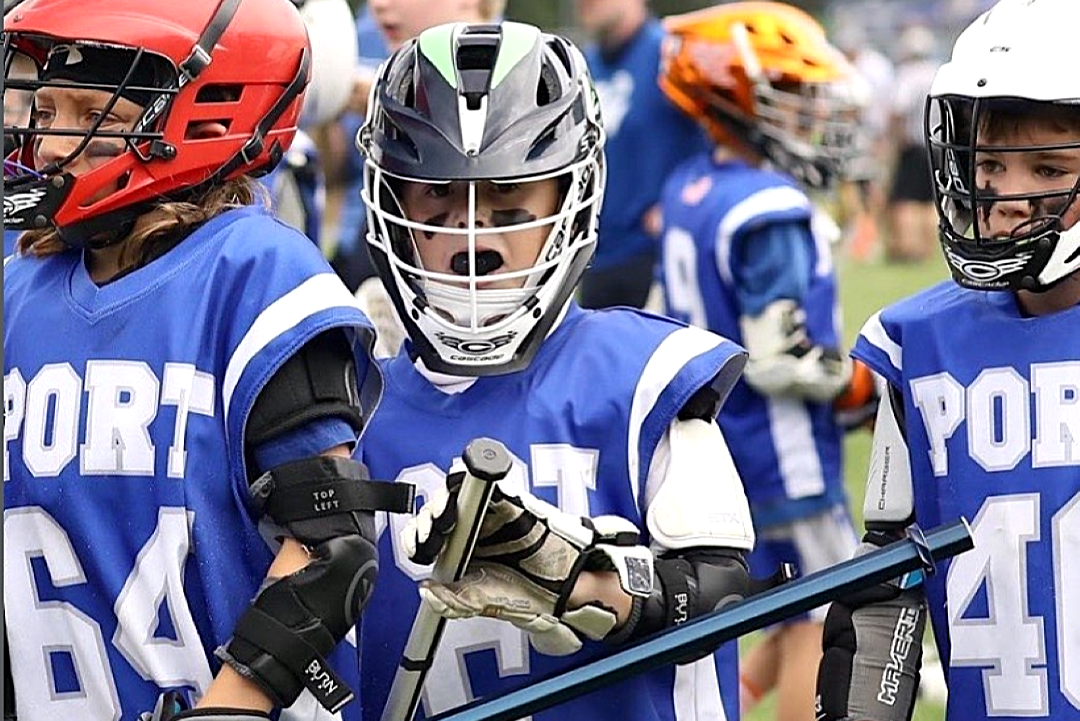
The community of Port Washington, located on the North Shore of Long Island, understands the important role that athletics can play in shaping the development of its youth.
Since 1963, the Port Washington Youth Activities (PYA) organization has played a central role in providing year-round playing opportunities for local youth, with sports offerings ranging from baseball to wrestling, from field hockey to lacrosse.
While most of the PYA’s programs are top-notch, perhaps none is more impactful in the community than the lacrosse program. Registration numbers were at an all-time high last season, with 300 boys’ and girls’ participants from K-6. That’s in addition to a robust “littles” lacrosse program for 3-4 year olds.
“We’re fully invested in developing all kids,” said Morgan O’Connor, who has served as a PYA coach for the past six years and now oversees the girls’ lacrosse division.
O’Connor credits the quality of the PYA’s volunteer coaches as one of the primary reasons for the success of the lacrosse programs.
“We work hard to find the best coaches in the area, and have been pretty fortunate through the years to have so many be a part of our program,” she said.
Community support is one of the hallmarks of the Port Washington youth program, a USA Lacrosse member organization. Having its own outdoor complex — Lions Field — with ample field space helps overcome one of the barriers that many other youth programs face. A strong partnership with the varsity and JV teams at Paul D. Schreiber Senior High School provides additional support.
Matt Lilien, commissioner of the boys’ division, says that the older kids serve as important role models for the younger kids.
“The impact of the high school players is immense,” Lilien said. “Whether they are demonstrating drills at a practice or helping with our winter program, they really have the attention of the younger boys.”
“There’s a great trickle-down effect by having the local high school players helping with beginner clinics and events,” O’Connor said.
Lilien says that while the PYA is committed to providing a quality top-down lacrosse experience for all, the coaches also put some responsibility back on the kids.
“It’s important to us that kids are learning the right way, but also the right things,” he said. “We really harp on kids being good teammates and having the right attitude. Effort, team, and sportsmanship are all really important things that we stress. We want lacrosse to be fun for everyone.”
One of the PYA’s biggest events is the annual Harvey Cohen Youth Tournament, named in honor of the legendary National Lacrosse Hall of Fame member who committed most of his adult life to growing the game on Long Island. The two-day event in late May attracts as many as 80 town teams and serves as a major fundraiser, including donations to charity.
“The tournament is a major undertaking, but it’s a very fun event,” O’Connor said. “We’re fortunate to have so many people who are willing to help.”
Lilien credits Port Washington’s family atmosphere and parental involvement as being strong support pillars for the PYA program.
“Port Washington is a sports town, and people are always looking to help out,” Lilien said. “The more people that we have involved, the better the overall experience will be for the kids.”
Now in its sixth decade of serving the community, the PYA appears top be as strong as ever.
“Lacrosse has always been big here, but we’re very grateful for the commitment of so many others through the years that have helped build this thing to where it is now,” Lilien said. “Our success is due to all of them.”
President Donald Trump announced Thursday the White House will host the “Patriot Games,” a competition with young athletes from across the county, as part of the celebration of the United States’ 250th anniversary next year.
“In the fall, we will host the first ever Patriot Games, an unprecedented four-day athletic event featuring the greatest high school athletes — one young man and one young woman from each state and territory,” Trump said.
Democrats have mocked the athletic competition online, comparing it to “The Hunger Games,” a dystopian young adult novel and popular movie franchise in which children are forced to fight to the death in televised arenas.
The president revealed the plans for the Patriot Games in a video announcement from Freedom 250, which was launched Thursday. It is a “a national, non-partisan organization leading the Administration’s celebration of America’s 250th birthday,” according to a news release.
Trump previously previewed the competition in July, saying at the time it would be televised and led by Health and Human Services Secretary Robert F. Kennedy.
During the video, Trump also highlighted his plans to begin construction soon on a new arch monument in the nation’s capital.
“We are the only major place without a triumphal arc. A beautiful triumphal arc, one like in Paris, where they have the great, a beautiful arc. They call it the Arc de Triomphe, and we’re going to have one in Washington, DC, very soon,” Trump said.
A UFC fight on the South Lawn is another of Trump’s ideas for the 250th celebration and will take place on his birthday, June 14.
“On Flag Day, we will have a one-of-a-kind UFC event here at the White House. It’ll be the greatest champion fighters in the world, all fighting that same night. The great Dana White is hosting, and it’s going to be something special,” Trump said.
Trump has long touted his desire to shape the nation’s 250th celebrations. In the past year, the Trump administration has moved quickly to align federal funding with the president’s anniversary priorities, and agencies have followed suit.
The Department of Agriculture, for instance, has embraced the president’s Great American State Fair initiative. The idea was first floated by Trump on the campaign trail in 2023, and it asks states to compete to have their fair chosen by Trump as the “most patriotic.”
Meanwhile, the White House is conducting a sweeping review of the Smithsonian Institution and has demanded the 250th content at the nation’s largest museum complex renews national pride.
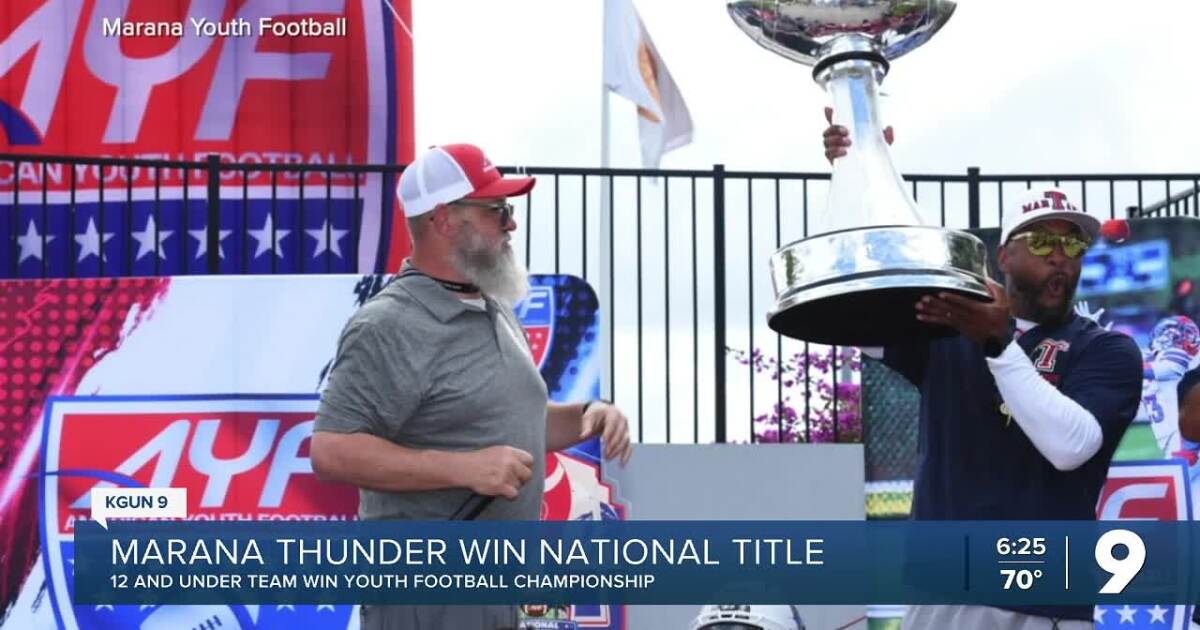
NAPLES, Florida — The Marana Youth Thunder 12-and-under football team has achieved the pinnacle of youth football success, capturing the Division 3 National Championship in the American Youth Football (AYF) tournament.
The thrilling championship game, held in Naples, Florida, saw the Thunder dominate the Woodbridge Raiders from Delaware with a convincing 40-19 victory. This win marked sweet redemption for the team, as they had previously lost to the same Raiders squad in double overtime the year before, finishing in third place nationally.
Leading the charge was standout player Princeton Britt, who earned the prestigious Most Valuable Player (MVP) award for his exceptional performance throughout the tournament.Guiding the team from the sidelines was head coach Philip Britt, Princeton’s father, adding a special family touch to this historic accomplishment.
This group of young athletes has been a force in recent years, securing an impressive five consecutive city championships along with two regional titles. The national championship represents the breakthrough moment, capping off years of hard work and dedication.
The victory highlights the strength of youth sports programs in Marana and serves as an inspiration for young athletes across the region. Congratulations to the Marana Youth Thunder on their well-deserved national title!
Courtesy photo
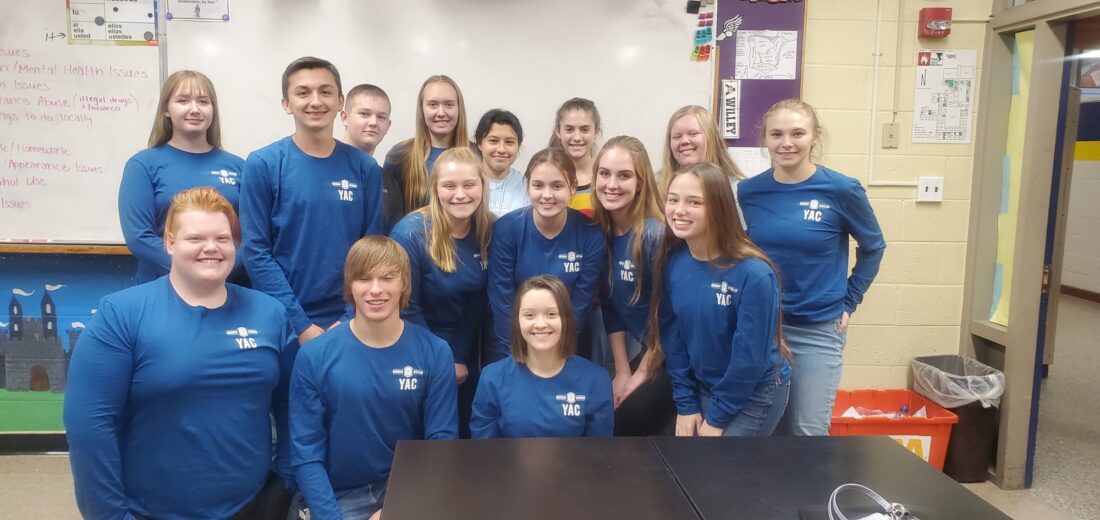
Members of the Youth Advisory Council for the Community Foundation for Northeast Michigan pose for a photo. The council allocates money for youth related projects in the region.
ALPENA — Education, arts programs, sports programs, mental health and human services programs are just some of the areas touched by the most recent round of youth grants totaling $22,141.75. Youth Advisory Council grants covering a four-county area of Alcona, Alpena, Montmorency, and Presque Isle Counties include:
– $1,450 to Alcona Community Schools to offer cultural enrichment through field trips, cultural exchanges, and community events for the Alcona High School French Club; to help start the Alcona High School Theatre Club; and to purchase supplies that would help in educating students about distracted driving.
– $500 to Future Farmers of America and its State Association and Local Chapter to provide winter gear for students of Alcona Community Schools.
– $500 to K’Lorne Acres to build a sheltered pavilion for equine therapy students.
– $1,500 to Matrix Community Ministries to host a basketball tournament for community-based recreation for the youth in Alcona and surrounding counties.
– $1,991.75 to Alpena Gymnastics to bring Pied Piper students to the gymnastics center for open gym exercise and fun.
– $2,000 to Ana’s Treasures to provide essentials for foster children and families.
– $2,000 to the Boys and Girls Club of Alpena to help teens build positive peer connections, learn healthy decision-making skills, and enjoy activities that foster life and career development.
– $2,000 to Rayola to purchase care package supplies for foster kids (pictured above).
– $2,500 to Thunder Bay Transportation Authority to transport youth to summer programs at the Boys & Girls Club.
– $700 to Alpena Montmorency Alcona Educational Service District to provide supplies for therapeutic groups for Hillman students in the summer months.
– $1,500 to Atlanta Community Schools to purchase supplies to help grow the new wrestling program.
– $1,500 to NEMCSA to purchase supplies for hygiene kits and tools that would teach students how to maintain good health.
– $2,500 to Michigan Works! Northeast Consortium to purchase supplies for practical care items that promote mental health, stress relief, and personal well-being.
– $1,500 to Posen Consolidated Schools to fund the Students Against Destructive Decisions assembly and after-hours event.
The next opportunity for grants is through the CFNEM Community Impact Grants and the next cycle of the NEMYAC Grants. Applications for both grant opportunities are due on January 15, 2026.