June 09, 2025
9 min read

June 09, 2025
9 min read

The ruling of the United States Supreme Court in National Collegiate Athletic Association v. Alston, 2021, paved the way for collegiate athletes to monetize their name, image and likeness.
Since then, the professionalization of amateur athletics has evolved rapidly, with name, image and likeness (NIL) policies expanding to apply to high school athletes in states where it has been legalized. However, many physicians fear the rapid, unregulated growth of NIL may put physicians and amateur athletes at risk.


Eric McCarty
“If done the right way, NIL can be very good,” Eric McCarty, MD, chief of sports medicine and shoulder surgery at the University of Colorado School of Medicine and head team physician at the University of Colorado, told Healio. “But right now, it is out of hand and continues to take turns and courses that put a lot of entities and people in an uncomfortable position.”
When treating an athlete with NIL opportunities, Robin V. West, MD, president of the Inova MSK Service Line and team physician for the Washington Nationals, said there are new considerations for both the athlete and the physician.

Robin V. West
“As a surgeon, the shift is that these athletes are viewing their bodies from more than just the medical or injured aspect but looking at them as business assets,” West, a Healio | Orthopedics Today Editorial Board Member, said.
Because of that shift, Brian D. Anderson, JD, partner and global head of the sports industry team at the international law firm Sheppard Mullin, said physicians need to recognize that high school or collegiate athletes with NIL opportunities should be treated like professional athletes.

Brian D. Anderson
“It does not change the underlying diagnosis and medical advice, but it is more about appreciating the stakes and the pressures that are involved,” Anderson told Healio.
The addition of high school athletics to the NIL landscape poses its own set of unique challenges, according to West.
“This is a different kind of liability because now they have these high school athletes who potentially could earn $8 million a year,” West told Healio. “But if they tear their ACL their senior year and you reconstruct it and they do not get back to play, then all of a sudden are you then bound to that $8 million a year that he potentially could have made?”
Anderson also said high school or collegiate athletes with NIL opportunities may have NIL representatives, agents, accountants and parents involved in their careers and wanting a say in the decision-making process. To navigate the pressures that external stakeholders may place on athletes, Anderson recommends athletes have adequate legal representation and emphasized the importance of involving family, guardians and loved ones to help look out for the best interested of the young athlete and provide crucial support.
“I would recommend having a lawyer and a trusted advisor to help navigate [NIL] issues,” Anderson said. “There are a lot of intermediaries involved that may not have [the athlete’s] best interests in mind. At the high school level, most of these athletes are not legally allowed to sign a binding contract. The parents need to be involved and sign the contract as well to make sure it is enforceable.”
In addition to the physical demands athletes may already experience from performing on the field, NIL has introduced an increased mental burden as well, according to Alex B. Diamond, DO, MPH, FAAP, FAMSSM, professor of orthopedic surgery, pediatrics and neurological surgery at Vanderbilt University Medical Center and team physician for Vanderbilt University.

Alex B. Diamond
“It is that dual threat of they are just regular people like the rest of us, and they go through the same things we do, but they also have this entirely separate world that is complex and intense and public that can affect their health and well-being,” Diamond told Healio. “NIL only acts to amplify all of those things.”
He said student athletes from disadvantaged backgrounds may even become “breadwinners” for their families in the NIL era, which can pose additional pressure to provide at such a young age.
The sense of a student athlete’s self-worth may also be tested by the pressures of NIL contracts and opportunities, according to Peter J. Millett, MD, MSc, orthopedic surgeon and partner at The Steadman Clinic in Colorado. Because athletes may associate self-worth with performance, he told Healio an athlete may begin questioning their self-worth after an injury that may prevent them from playing.

Peter J. Millett
“Sometimes there is a level of grief that sets in, an imposter syndrome type situation where they start to feel like maybe they were not as good as they thought they were, or they did not reach their potential because of this injury,” Millett, a Healio | Orthopedics Today Editorial Board Member, said.
Increased use of the NCAA transfer portal — a compliance tool used to manage the student-athlete transfer process — has also created challenges in the NIL landscape. According to McCarty, the transfer of student athletes can happen quickly and sometimes there is a lack of communication on where they transferred.
But just because a player may leave an institution, that does not mean they leave the physician’s care, according to Diamond.
“They are always still your patient, whether you are actively treating them or passing them along to a friend or partner or colleague,” Diamond said. “You have to do the right thing regardless of whatever emotions may be there from a school team perspective. We are part of that team, but first and foremost we are providers for that patient.”
McCarty said physicians want to be able to adequately care for student athletes transferring into their institution, as well.
“If we have an athlete coming in, we also want to take care of that athlete if they are having surgery or treatment for an injury,” McCarty said. “We want to make sure that they are taken care of when they come in and get all the records.”
However, with no national shared electronic medical record database for student athletes, physicians may not have all of the documents needed and may need to rely on the athletic trainers and administrative staff to obtain medical records from previous institutions, according to McCarty.
As NIL contracts continue to increase in value, private equity firms may start to dip their toes in the NIL pool, which may lead to some positive outcomes, such as providing more money to the athletic program, according to Anderson, who represents teams, leagues, sponsors and investors in the sports industry. He said private equity firms can also provide “expertise in professionalizing organizations that have typically been departments within nonprofit academic institutions.”
“I am sure there are efficiency gains that a smart private equity fund would be able to find and optimize,” Anderson said. “In terms of maximizing media rights and revenue generation and bringing in expertise in commercializing the stadiums and the venues, it could be a good thing.”
However, Millett said the entrance of another external stakeholder would only further increase the risk and liability placed on physicians as there may be “significant legal ramifications for poor outcomes.”
“The medical responsibility gets heightened, and if there are increased financial incentives, you can argue if there is a bad outcome that there are bigger lost earnings. It creates a situation that can be challenging,” Millett said.
According to Diamond, the advanced professionalization of youth sports is a major concern, as children should participate in sports to learn the game, build fundamentals and learn about fitness and exercise.
“We are throwing those aside when we start bringing in this concept of social media likes and presence, and contracts and money,” Diamond said. “We are eroding that base of what makes sports so special at a young age.”
With the added pressures and money surrounding student athletes, Diamond said it is important that physicians advocate for their patients and provide them with an outlet for education and trust in the NIL era.
“That is where we can be effective, providing them that support and safe place,” he said. “We are an independent group that certainly care about their success on the field or court, but our only responsibility is their health and wellness. We can be a safe place for them to raise those concerns and questions with us, and we can hopefully help them navigate this new space.”
West said specialty societies can also play an important role in advocating for both physicians and athletes in the NIL landscape.
“We do not have the legal backing, but we can go and explain the surgeon’s role. We can help to identify that, define it and advocate for the surgeons, which ultimately we are advocating for our patients,” West said. “We can stay involved by understanding [NIL], by educating ourselves on the latest and greatest of what is going on with NIL and then also representing our members.”
As the NIL landscape continues to develop, Diamond said the hope is it “becomes more straightforward.”
“We see [NIL] being the Wild West right now,” Diamond said. “The hope is that the larger systems and governing bodies will start working together to provide guardrails and guidance to help with this because the structure helps the families and the kids.”
Regardless of the structure NIL takes as it evolves, Diamond said it is important to recognize that it is not going away, and physicians will need to be involved with the student athlete beyond their injury.
“We have to understand that these [injuries] affect their overall health and well-being,” Diamond said. “We need to be better about recognizing and referring to where they need to be. This is a time where we have to work as a collaborative unit. It is not just the physicians and athletic trainers, but our sports psychologists, mental health professionals and academic partners. It is using that whole network as available to the students and trying to connect them to the right people sooner rather than later.”
According to Millett, it is also important for physicians to overcommunicate with the patient and their team, and to continue to lean on their medical expertise and judgement.
“Do not get caught up in all the noise of the media or the press or the pressure from the team,” Millett said. “If the patient is ready to return to play, you can clear them. If they are not ready to return to play or it is unsafe for them, you do not clear them. If they need surgery, you recommend surgery. If surgery is optional, you tell them it is optional, and then you do a shared decision-making process to help figure out what the best solution is.”
Surgeons should also remain educated on the latest developments in NIL and participate in policy formation and advocacy of both physicians and athletes, according to West.
“The most important thing is staying athlete-centered,” West said. “As this commercialization of sports continues to grow, how do we stay true to our focus and our mission?”
Although the appropriate care of student athletes should be one of the top priorities of physicians, McCarty said it is also important for physicians to protect themselves in the face of financial risk and liability.
“It is important that the physicians make sure they have the appropriate malpractice insurance for the reason that these athletes, because they now have a value attached to them when they are in this NIL, may also have people or agents or attorneys now looking at that value in case they get hurt and cannot return,” McCarty said. “Unfortunately, that is becoming more common, and we need to make sure that physicians and any providers are protected as we do the right thing for these athletes.”
Brian D. Anderson, JD, can be reached at banderson@sheppardmullin.com.
Alex B. Diamond, DO, MPH, FAAP, FAMSSM, can be reached at alex.b.diamond@vumc.org.
Eric McCarty, MD, can be reached at eric.mccarty@cuanschutz.edu.
Peter J. Millett, MD, MSc, can be reached at drmillett@thesteadmanclinic.com.
Robin V. West, MD, can be reached at robin.west@inova.org.
Collapse
Healio Interviews
Disclosures:
Millett reports receiving stock options from VuMedi. Anderson, Diamond, McCarty and West report no relevant financial disclosures.
Read more about

If I were given $25 million to build the 105-man Arkansas football roster, how would I do it? All schools on the Power Four level have $22.5 million allotted for revenue sharing across all sports. SEC programs have pledged to donate $2.5 million of that to scholarships. For most schools, football is expected to receive approximately 75% of the remaining balance.
That comes out to $13.5 million in revenue sharing for football. That means we need to raise an additional $11.5 million in NIL to get to $25 million, which is probably the amount of money a program would need to be considered to be in the upper-half of NIL among SEC programs. And that’s an educated guess. Arkansas is likely working somewhere between $20 million and $25 million, I would assume.
That’s probably what it takes to bump someone out among programs like Georgia, Alabama, Texas, Texas A&M, Florida, Tennessee, Oklahoma, Auburn and Ole Miss. Let’s suppose the breakdown below is for Arkansas. It has always been said Arkansas must do more with less. I’ve got a formula that should stretch that $25 million in Monopoly Money I’m playing with today…

Today we are talking about Mizzou Football!
In case you missed it, Mizzou defensive end Damon Wilson II got sued by Georgia in regards to breached agreement by transferring and owes $390,000, the unpaid portion of the deal, under a liquidated damages clause.
The Missouri defensive end challenges whether or not that agreement was ever legally binding.
Wilson is suing for defamation after spokesman Steven Drummond told ESPN that Georgia “expects student athletes to honor commitments.” The complaint alleges the comment damaged Wilson’s character by falsely implying he breached a contract.
This is definitely an ongoing subject so the best way to stay updated is the Rock M+ forums!
Let’s shift our focus to Mizzou Football as Missouri plays in the TaxSlayer Gator Bowl vs Virginia on Saturday night. For the final time this season, it’s game week.
Hey… Missouri Football is playing! Should be an exciting matchup to wrap up Christmas festivities!
MU has seen its three-point field goal percentage drop from 45 percent to 31 percent since Stone, who shot 41.7 percent from beyond the arc in his six games this season, left the rotation. Gates used the analogy of his team as a puzzle in the postgame press conference, pointing to Pierce and Stone as key (missing) pieces.
Key players missing leads to major impact. Mizzou needs to get healthy if it wants a chance to compete in the SEC.
In this episode, what turned into a slaughter fest of the Braggin’ Rights matchup is previewed. More to come soon on Rock M Radio!
If you like Rock M Radio drop us a Review and be sure to subscribe on your preferred podcasting platform. Follow @RockMRadio on Twitter and if you haven’t already head over to our YouTube channel and click that subscribe button!
(** RockMNation has affiliate partnerships. These do not influence editorial content, though RockMNation may earn commissions for products purchased via affiliate links.**)

ATHENS — Collectively, the Georgia football program is focused on its Sugar Bowl showdown with Ole Miss that’s rapidly approaching.
But behind the scenes next season’s roster is being determined, as Kirby Smart has met with players about their football futures.
Smart — arguably the master of modern-day roster management with the most NFL draft picks (46) and national titles (2) in college football the previous four years — has held private meetings with players about their football futures.
It’s fair to say retention, as much as recruiting, has been key to the Bulldogs’ championship runs going back to Jordan Davis and Devonte Wyatt deciding together to return for the 2021 season.
Georgia, with 54% of its roster made up of first- or second-year players, figures to have several key contributors returning to a team Smart has enjoyed coaching this season.
“A couple of them just told me they want to go back and practice tonight, they said they want to get out there tonight and get on a Bloody Tuesday when we get back home,” Smart said in his postgame on-field interview after the 28-7 SEC title game win over Alabama.
“That’s the kind of mentality this team has — they want to practice some more, they want to practice some more, they love contact, and we love them.”
If there is a silver lining to Georgia missing out on 2026 quarterback recruit Jared Curtis — whose signing would have cost in excess of $700,000 — it’s that Smart has more funds to spread around on returning players.
The Bulldogs, like many other programs, front-loaded investing in the 2025 class with the settlement of the landmark House vs. NCAA case pending, as it brought about a $20.5 million cap that schools could directly pay student-athletes for usage of their Name, Image and Likeness.
Smart noted the challenge some of the front-loaded deals would bring when discussing last year’s signing classes.
“ … What’s going to happen when those people expect that same money the next year and it’s not there because you’re in a cap?” Smart said last April. “There’s going to be a correction eventually, and I don’t think any of us know what’s going to happen.”
What has happened is that Georgia, like other schools, is working to help secure NIL deals for student-athletes that meet the standard for approval required by the College Sports Commission’s “NIL Go” platform.
“We can now help our athletes really serve as a marketing agency to go out and source opportunities, whether it’s corporate opportunities, whether it’s local opportunities, whether it’s social media opportunities,” Ohio State athletic director Ross Bjork said on Front Office Sports Today. “That’s going to be the next race.”
Per ESPN, more than 8,300 NIL deals worth approximately $80 million were approved between June 11 and Aug. 31 alone.
Name Image and Likeness deals, though not intended to be an incentive for recruiting talent or inducing transfers, certainly have had an effect.
But in a college football world dominated by high-profile transfers — including seven of the 10 Heisman Trophy finalists — Smart’s program continues to feature a culture built from within.
Indeed, the difference between Georgia and Ole Miss — its CFP Sugar Bowl quarterfinal opponent (8 p.m. Jan. 1) — is no less than stunning.
UGA recruits have made 90% of the starts for the Bulldogs this season, while nearly two-thirds (66.3%) of the starts made in the Rebels’ program have been made by transfers.
Perhaps it’s fitting that Lane Kiffin, the architect of the Ole Miss roster, has himself transferred in the sense of leaving his team for what’s perceived to be a better job as LSU’s head coach.
Indiana and Texas Tech — the next two most transfer-heavy teams in the 12-team College Football Playoff — took different approaches to free agency.
Hoosiers coach Curt Cignetti has brought 13 transfers with him from his previous job as James Madison head coach, effectively replanting a team culture in Bloomington, Indiana.
Cignetti, like Kiffin a former Nick Saban assistant, was not like Kiffin when it came to cashing in on his success in pursuit of a better job, even while his name was among the hottest for the most high-profile jobs.
Cignetti, whose most recent portal haul included 23 players (including Heisman Trophy-winner Fernando Mendoza and veteran Notre Dame starting center Pat Coogan), re-signed an 8-year contract with Indiana that will pay him $11.6 million annually — this, after more than doubling his salary at Indiana with an extension worth more than $8 million annually signed the year before.
Texas Tech, meanwhile, has a roster reportedly worth some $25 million reportedly funded by prominent Texas Tech booster and billionaire oilman Cody Campbell, a former Red Raiders offensive lineman (2001-04).
Campbell, who founded the Double Eagle Energy oil and gas company, leads the school’s “Matador Club” NIL collective and he is the school’s Chairman of the Board of Regents.
The Red Raiders brought in seven of the top 75 players in ESPN’s transfer rankings.
It’s worth noting five of the top 10 ESPN transfers helped lead their respective new programs into the 12-team College Football Playoff:
• John Mateer (Oklahoma, ranked No. 1)
• Carson Beck (Miami, ranked No. 2)
• Fernando Mendoza (Indiana, ranked No. 5)
• Makhi Hughes (Oregon, ranked No. 7)
• Zachariah Branch (Georgia, ranked No. 10).
The Red Raiders will next face Oregon in the CFP Orange Bowl quarterfinal at noon on Jan. 1.
The Ducks’ roster is widely believed to benefit from the school’s well-known association with Nike co-founder and billionaire booster Phil Knight.
Smart said at the 2024 SEC Media Days: “(I) wish I could get some of that NIL money (Knight is) sharing with Dan Lanning.”
Arizona State coach Kenny Dillingham openly campaigned on Saturday for $20 million in NIL money from someone — anyone — in the Phoenix community.
“We need to find one of these really rich people in this city to step up and stroke a check,” said Dillingham, whose Sun Devils missed making this year’s CFP field after winning the Big 12 last season.
“We live in Phoenix, Arizona. You’re telling me there’s not one person who could stroke a $20 million check right now? There is somebody out there who can.”
The funding required to compete for championships doesn’t stop with NIL dollars.
Per a recent story in “The Athletic,” this year’s College Football Playoff field reflected the four schools with the highest football budgets — not all calculated the same, the story notes — each made the field.
Total expenses submitted by the schools for 2023-24:
• Alabama: $112.2 million
• Texas A&M: $82.2 million
• Ohio State: $78.6 million
• Miami: $78.1 million
• Georgia: $68.9 million
• Oklahoma: $65.8 million
• Indiana: $61.3 million
• Ole Miss: $57.1 million
• Oregon: $53.9 million
• Texas Tech: $34.3 million
• James Madison: $15.9 million
• Tulane: $13 million
At Georgia, Smart works closely with athletics director Josh Brooks to stay within the proposed budget, while maintaining the necessary relationships with players, eschewing the trend of hiring a general manager.
“It’s still a relationship business for us,” Smart said last spring. “We find our niche in our culture, which is relational, and trying to have a relationship with somebody.”
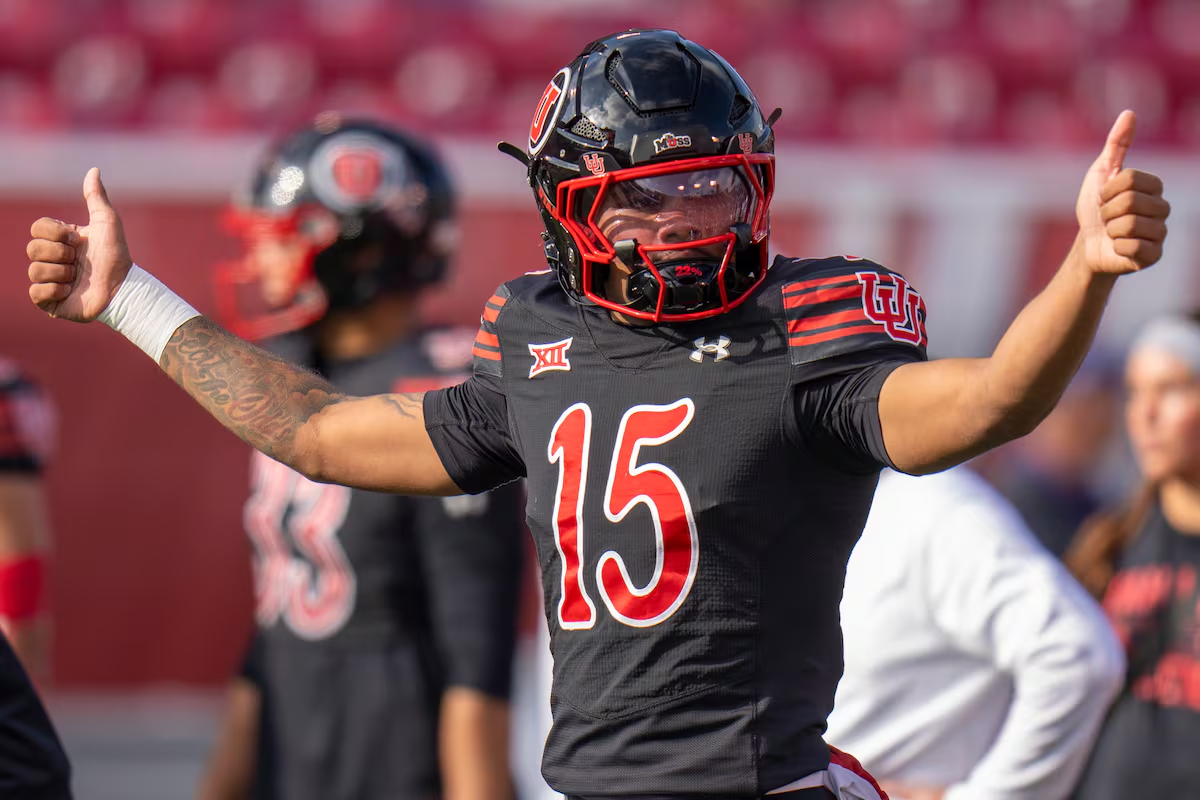
(Rick Egan | The Salt Lake Tribune) Utah Utes quarterback Byrd Ficklin (15) warms up on the field before Big-12 Football action between the Utah Utes and the Kansas State Wildcats at Rice-Eccles Stadium, on Saturday, Nov. 22, 2025.
I enjoy college football, but the College Football Playoff Selection Committee just killed my postseason viewing. I’ll only watch the Utah Utes in the Las Vegas Bowl, but I’m supporting Notre Dame’s bowl boycott after it was cheated out of a spot in the College Football Playoff. The University of Alabama was chosen instead, despite having poorer performance stats and losing big in its conference championship game. The University of Miami was also elevated above Notre Dame despite its less impressive stats — with the exception of having narrowly beaten The Fighting Irish in the season opener.
In recent years, the National Collegiate Athletics Association has made a mess of college football, but if the NCAA wants to redeem itself, it could:
1. Expand the playoff to 16 teams with no byes which would have eliminated this year’s fiasco.
2. Realign conferences to have no more than ten teams. The conference champion would be the team with the best record in nine conference games. No conference championship game needed.
3. Eliminate publishing CFP rankings before the end of the season. The committee embarrasses itself when it reorders those without cause.
4. Put income limits on Name Image Likeness as it grossly enriches some players. NIL has turned college football into the NFL Lite.
5. Fix the transfer portal. Allow players only one transfer and perhaps a second if a coach moves on.
6. Convince the Heisman Trophy Trust to award its statue at the end of the playoffs eliminating the embarrassment when an awardee fizzles in postseason play.
7. Consider eliminating conferences altogether. Create leagues of 60 or so teams in upper and lower divisions like European sports are structured with fluidity between the divisions based on teams’ previous year’s performance.
To do all this would just require some good will.
Jim Catano, Salt Lake City
Submit a letter to the editor
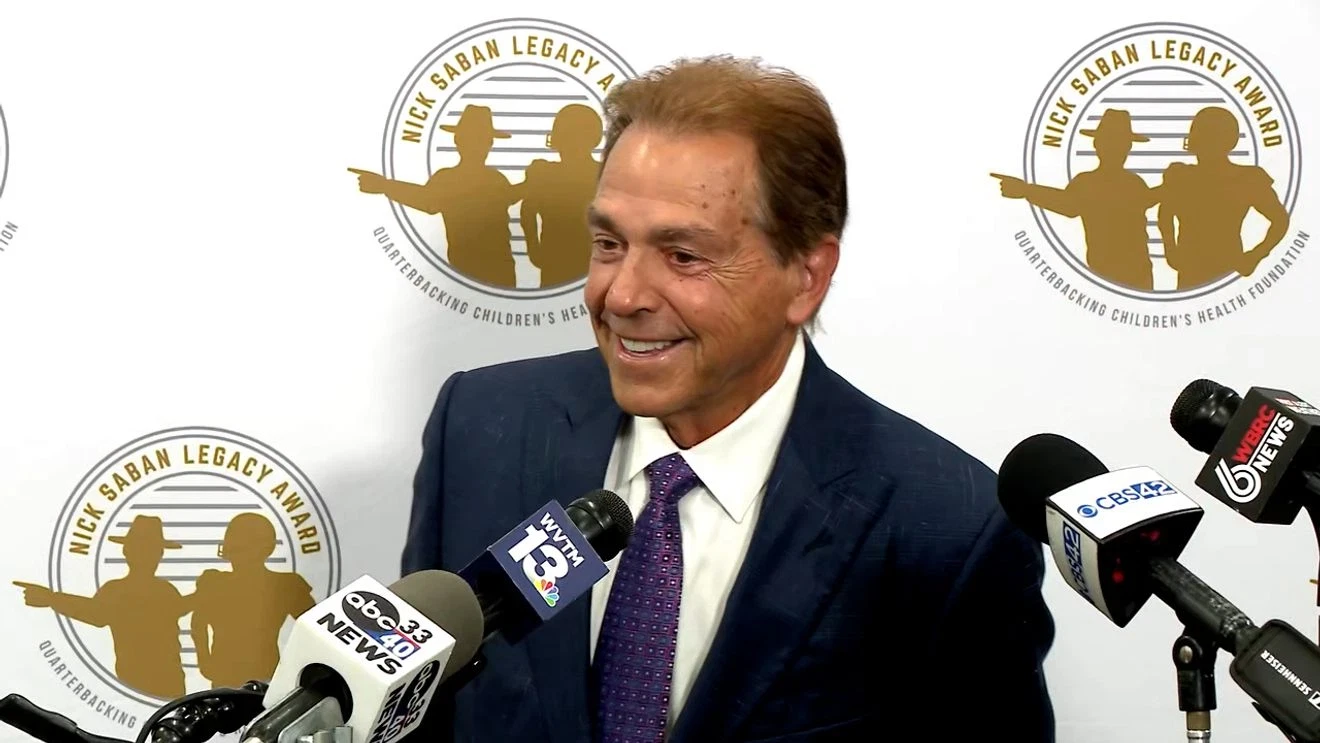
NASHVILLE, Tenn. (AP) — Nick Saban knows his strengths with seven national championships as a college football coach. He also understands how to put coaches and athletes in the best position to succeed.
That’s what he hopes to bring to the NHL’s Nashville Predators after joining the franchise as a minority owner.
“I’m no expert in hockey, so don’t look at me like I’m going to make some huge impact coaching around here because that’s not going to happen,” Saban said Monday. “But I do have a pretty good idea of what it takes to have successful organizations.”
Saban made his first appearance Monday in his new role as a minority owner alongside Predators chairman Bill Haslam.
The Predators announced Saban’s purchase Dec. 16 through Dream Sports Ventures LLC, an entity controlled by Saban and business partner Joe Agresti. That business group features 10 car dealerships, including two in Nashville.
Haslam, a former Tennessee governor, was working on a possible WNBA expansion franchise when Saban told the Predators controlling owner that he also might be interested in hockey.
“I thought, ‘Well, that’s the greatest no brainer of all time,’” Haslam said. “You have somebody who understands building a championship culture, who understands, I think, better than almost anybody in sports the process that’s needed to get to where you can compete as a champion.”
Saban grew up in West Virginia with no hockey around. He became interested in hockey when coaching at Michigan State and became friends and shared ideas with that team’s coach. Saban called this an opportunity to be involved with a team for the first time since he announced his retirement Jan. 10, 2024.
So what will Saban bring to the NHL and the Predators in his newest role?
His experience building programs both in college football and six seasons in the NFL working for Bill Belichick in Cleveland and as head coach of Miami. A “transformational leader” as Saban put it. Once college football season ends, Saban said he will be involved as much as Haslam wants.
Saban already has spoken to coaches and some players during what he called a minicamp. Saban also has met a couple times with general manager Barry Trotz, saying his goal is to support Trotz and everyone else with the Predators.
Nashville won the Western Conference before losing the Stanley Cup Final in 2017 to Pittsburgh in six games. The Predators won the Presidents’ Trophy for the 2017-18 season but ranked 26th out of 32 NHL teams Monday five points back of the second wild-card spot in the West.
“To be a part of the hockey team here is something special, and we’d love to build it into a championship,” Saban said. “We’d love to partner with Mr. Haslam to do anything that we can do to help this organization be successful.”
___
AP NHL: https://apnews.com/hub/nhl
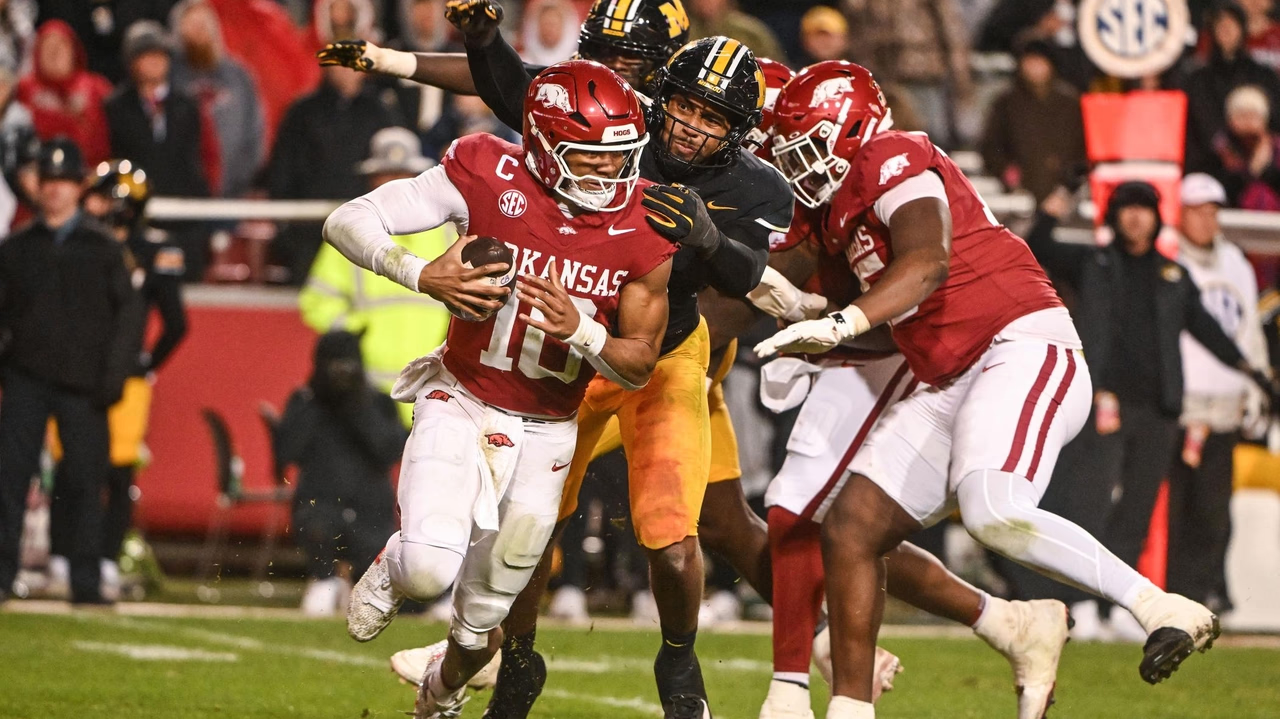
COLUMBIA, Mo. — Missouri pass rusher Damon Wilson II claims that the athletic department at Georgia is trying to illegally punish him for entering the transfer portal in a lawsuit filed by the linebacker in state court Tuesday in Boone County, Missouri.
Wilson transferred to the Tigers last January after signing a 14-month deal with Georgia’s booster collective to capitalize on his name, image and likeness. He received $30,000 in an initial payment on a $500,000 deal before entering the transfer portal.
Georgia filed a lawsuit last month claiming that Wilson owed its athletic department $390,000 in liquidated damages for leaving the team. Wilson’s countersuit claims that his former school is using such damages to “punish” him for his decision to leave.
Georgia spokesman Steve Drummond said the school had no comment because it involves pending litigation.
“When the University of Georgia Athletic Association enters binding agreements with student-athletes, we honor our commitments and expect student-athletes to do the same,” Drummond said upon the school’s initial lawsuit in early December.
Wilson had nine sacks and an interception this season for the Tigers. They will play Virginia in the Gator Bowl on Saturday.



SoundGear Named Entitlement Sponsor of Spears CARS Tour Southwest Opener

Donny Schatz finds new home for 2026, inks full-time deal with CJB Motorsports – InForum

How Donald Trump became FIFA’s ‘soccer president’ long before World Cup draw

David Blitzer, Harris Blitzer Sports & Entertainment

JR Motorsports Confirms Death Of NASCAR Veteran Michael Annett At Age 39
Elliot and Thuotte Highlight Men’s Indoor Track and Field Season Opener

Rick Ware Racing switching to Chevrolet for 2026
West Fargo volleyball coach Kelsey Titus resigns after four seasons – InForum

#11 Volleyball Practices, Then Meets Media Prior to #2 Kentucky Match

Temple Begins Indoor Track & Field Season at UPenn This Weekend