
Sports
The Battle For Professional Volleyball Has Officially Begun

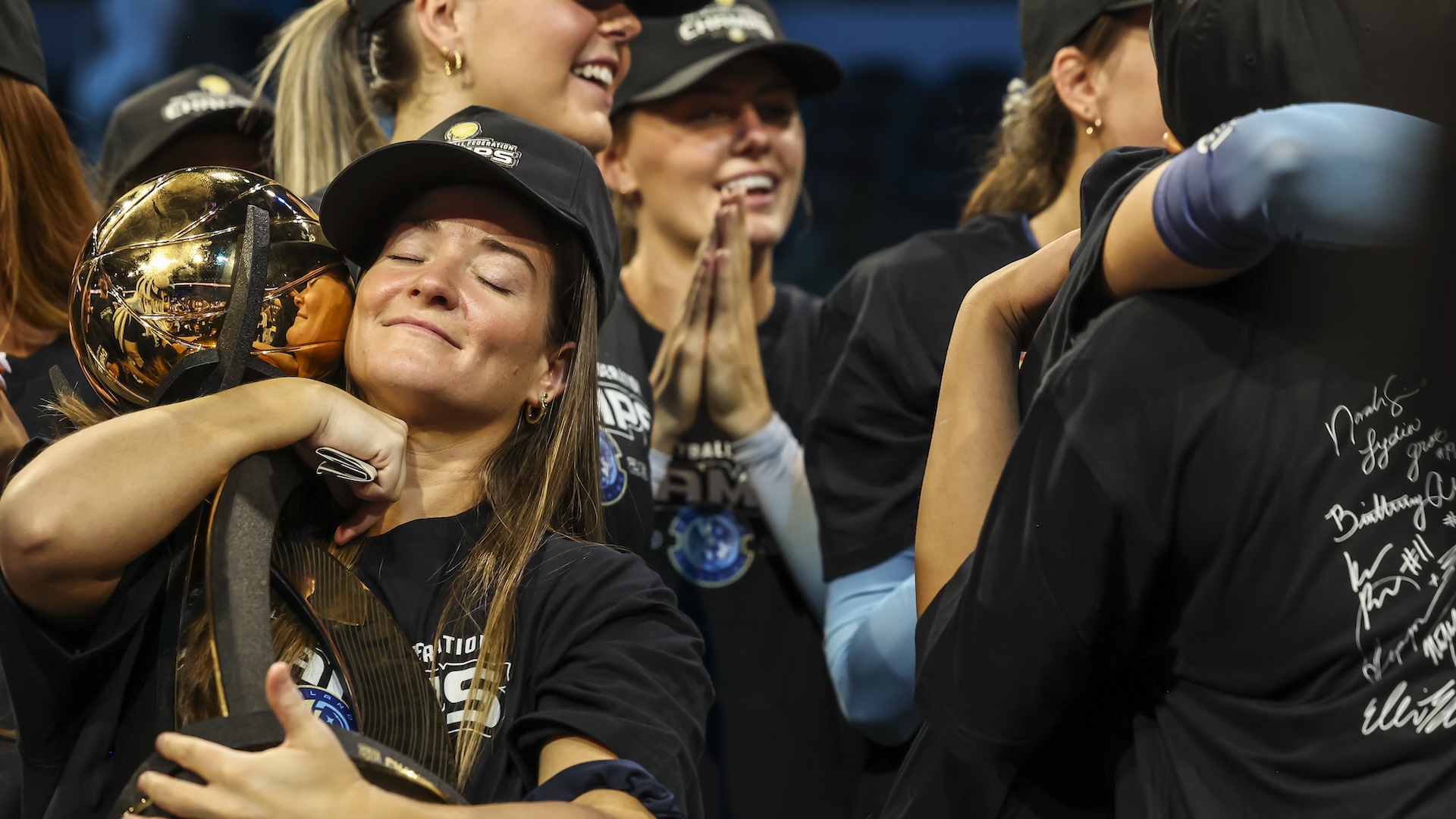
Megan Courtney-Lush was ready to retire. She played four years of college volleyball at Penn State and then went on to play professionally in Puerto Rico, Poland, Turkey, and Italy. After 10 years, she had decided that it was time to come home and move on to the next stage of her life. She bought a house in Columbus, Ohio and was several months pregnant in 2023 when she got an unexpected phone call. Someone was starting a professional women’s volleyball league in the U.S., and they wanted her to play. “I said ‘No thanks, I’m out,'” she told me, laughing.
But the calls kept coming. Columbus would have a team, they told her, coached by Ángel Pérez, former captain of the Puerto Rican men’s national team. Pérez called Courtney-Lush himself, trying to see if he could get her on the court, and she kept looking for excuses to stay home: “I played hardball. I kept coming up with all these random things I would need and they kept saying yes.” Four months after having her first child, Courtney-Lush found herself back on the volleyball court, playing in the first active professional women’s volleyball league in the United States since 1989.
Her teammate Jill Gillen’s story is almost the opposite. Gillen wanted to go pro, but didn’t think she had any chance at it. She’s short (for a volleyball player) and didn’t go to a school known for the sport. “I just thought nobody’s gonna want to take a 5-foot-7 kid from Kansas who went to Arkansas,” Gillen said. But in 2023, her Razorbacks team made a run into the NCAA women’s tournament, and she started getting phone calls and hearing from coaches. “I remember thinking, OK, wow, this is really happening.”
Courtney-Lush and Gillen both play in the Pro Volleyball Federation (PVF), which just finished its second year. But this season, competition didn’t just come from other teams in the league—it came from another organization entirely. In January, League One Volleyball, (LOVB, which the league wants people to pronounce as “love”) kicked off their own professional season featuring six new teams.
Add to the mix Athletes Unlimited—which runs a short-form fall season—and 2025 was an embarrassment of riches for the American volleyball fan. But it was also a year of confusion. Who was playing where? How do you watch? Which league is the one to pay attention to? Which games are worth attending? “Honestly, I’m sometimes just as confused as everyone else,” Courtney-Lush told me.
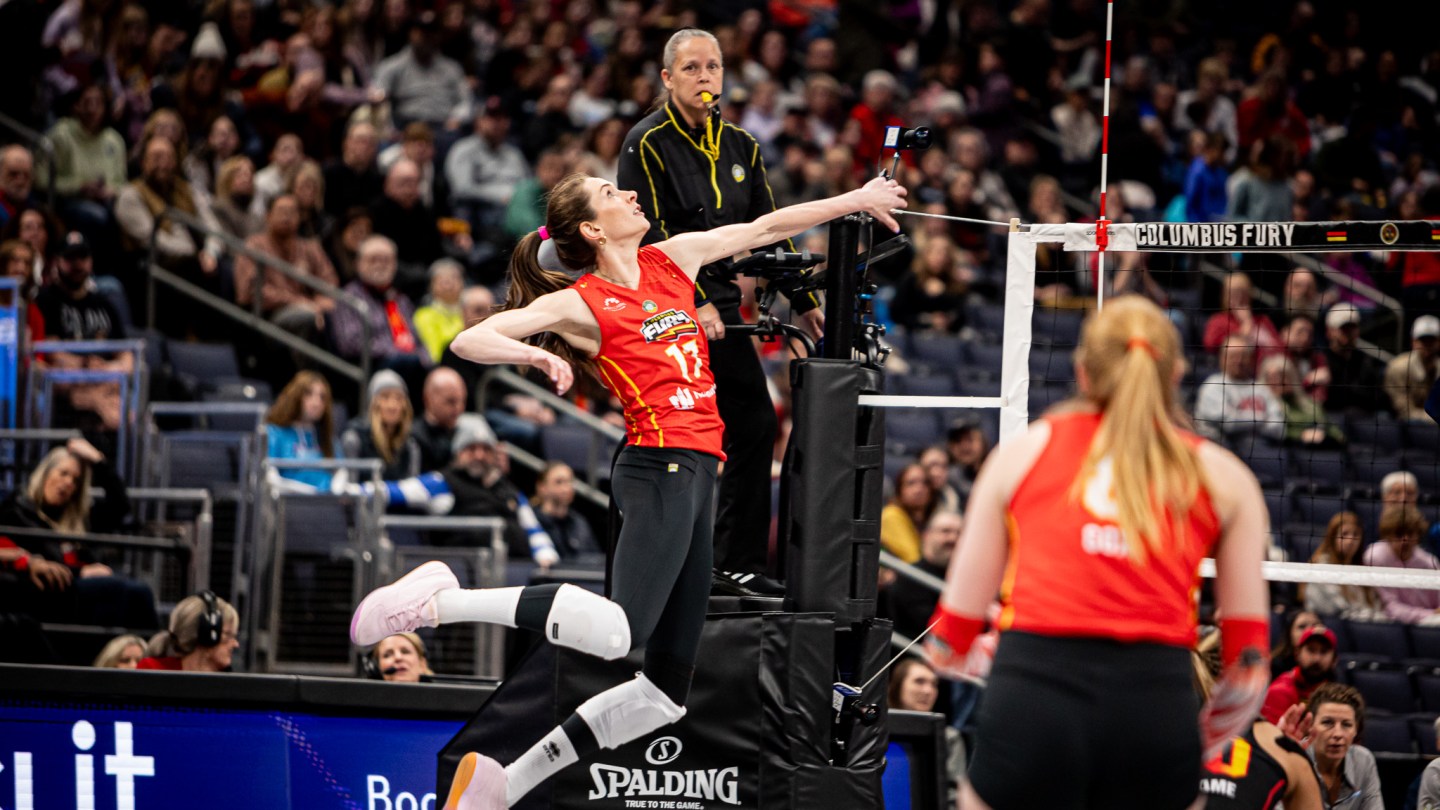
To make things even more complicated, one of the most popular teams in the PVF announced in January that it would be leaving to start its own new league: Major League Volleyball (MLV). If MLV gets off the ground on its proposed time table, something not everyone is convinced will happen, there will be three professional women’s volleyball leagues in action next January.
As a volleyball sicko, I’ve spent the last two years watching almost every PVF and LOVB game, along with Athletes Unlimited, the Olympics, and the Volleyball Nations League. For this story, I spoke with over 20 people in the volleyball world, including 10 athletes, six team staff, and nearly a dozen die-hard fans of both PVF and LOVB. Nearly everybody told me the same thing: It’s exciting, but also a little bit scary.
At a time when interest and investment in women’s sports is at an all-time high, the battle for women’s volleyball provides both inspiration and caution. Everybody wants to win, but if the wealthy investors behind the scenes can’t put their egos aside and come to some kind of agreement, it might be the players who ultimately lose.
It’s not that surprising that new investment is flooding into women’s volleyball. The NCAA game has surged in popularity in the last decade. In 2023, over 90,000 people filled the Nebraska Cornhuskers’ football stadium to watch the women’s team play. That same year, the NCAA championship final between Nebraska and Texas was watched by 1.69 million people. Volleyball is now the No. 1 team sport in high school for girls in the United States.
From a less mercenary perspective: Volleyball is fun! The sport moves quickly, someone scores on every single play, and the rules are pretty easy to learn. Some of these women jump over 11 feet into the air, then make reflexive dives onto the floor to save a ball. Almost everybody I talked to for this story, when asked how to get people into volleyball, told me that you just have to show it to them. Fans in the stadiums are glued to their seats, so much so that it’s actually kind of a problem. “Our venue partner wants us to do more breaks so people leave their seats and buy concessions,” Mary Kay Huse, president and general manager of the PVF’s Indianapolis Ignite, told me.
And yet until recently, volleyball’s inherent qualities weren’t enough to attract investment into a professional league. “I always wanted to play pro, and I always knew in my head it was going to be in Europe somewhere,” Aiko Jones, opposite hitter for the Atlanta Vibe, told me. Her teammate Leah Edmond said the same thing: “I for sure didn’t want to go overseas.” Edmond played in Puerto Rico for a year, but she didn’t want to go any farther. “I was just like, we have to find some other options to be able to stay in the States.”
Morgan Hentz, a libero for the Vibe, did go abroad. “When I was overseas, I felt like I was putting my life in the U.S. on hold,” she said. “And it was really difficult to see friends’ and family’s lives continue on while I just felt so distanced and disconnected from them.”
Volleyball’s surge in popularity, coupled with the general boom in investment in women’s sports, made a pro league an enticing investment for people from all kinds of industries. LOVB started developing its pro league in 2020, and three years later secured $60 million in investments from Billie Jean King, Amy Schumer, Chelsea Handler, Lindsey Vonn, and Kevin Durant. In 2023, PVF announced an influx of cash from investors like Dan DeVos, Jason DeRulo, Danny White, and Joe Burrow. And in 2024, LOVB announced that it had received $100 million more from Atwater Capital, although not all of this investment was purely for the professional side of the LOVB business.
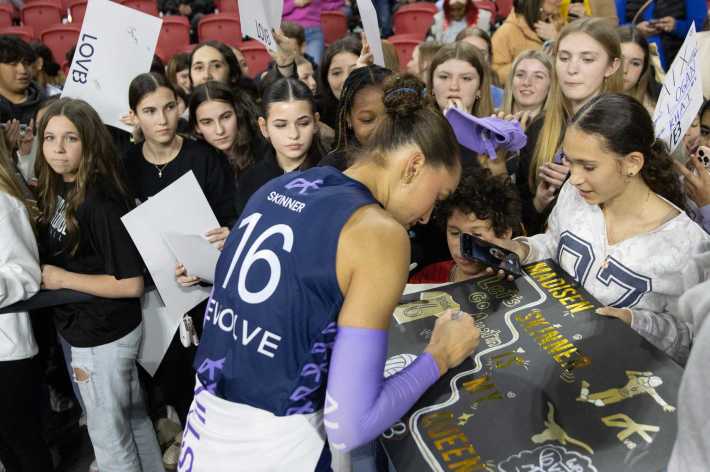
These investors have chosen sides not just in terms of branding and players, but business models. The PVF is a more traditional American sports league, where each team has its own franchised ownership. LOVB is centrally owned: Players sign contracts with the league, and are assigned to teams. LOVB says that in the future it will sell its teams off to owners, but hasn’t put a timeline on that.
LOVB is also tying its professional league to a push into the youth market by buying youth clubs around the country and taking over their operations, housing them under the LOVB Clubs umbrella. In theory, this means players could progress through junior clubs directly into a professional league, all within the same organization. “We wanted to create a pro league that was deeply connected to its youth community and provide this true pathway for women in this country to play professionally,” Rosie Spaulding, president of LOVB Pro, the professional side of the league, told me. This is the model for many clubs across lots of sports in Europe, but remains uncommon in the United States.
These different business models have pros and cons. Centralized ownership can be more stable as a league is getting off the ground. “I think when you’re in the beginning, the most important thing for us is that we’re sustainable and here for the long haul,” Spaulding said. “So we’re not just a flash in the pan, here for a couple of years and then gone.” (This isn’t entirely unprecedented in the U.S. sports world. Major League Soccer has a related structure: the league is a single business entity and team owners are shareholders in the league, but not true franchises.)
Some critics of LOVB have concerns that the league is using fees from youth sports to fund its professional league—essentially taking the money parents are paying for their kids to participate in youth club volleyball, to subsidize the pros. In an interview from June 2024, one of the founding LOVB athletes, Kelsey Robinson Cook, did a podcast interview with her husband Brian Cook, who, while answering a question about how a U.S. league might be able to last, said, “There’s so much money in youth club volleyball, and they’re kind of putting them all under one umbrella really optimizing things, making them even more profitable, and that money is being used to kind of start this pro league.” Spaulding told me that that is an incorrect description of their model: “Our club and pro businesses operate independently from one another, which means our club operations do not finance any of our pro operations.” Other critics of LOVB are concerned that the league buying up club teams constitutes “turning youth club volleyball into a private equity investment,” as Nikki DelZenero, the co-host of the Court Captains Podcast, put it.
Teams in the PVF seem to have a better connection to the places they actually play. “The teams have kind of embraced the personality of their local markets. What San Diego might do for fan engagement is not necessarily what Orlando might do, you know, and it’s just, you can cater to your markets,” said Rob Carolla, the vice president of public and media relations for the PVF. PVF games are more raucous and wacky. There are hype people and T-shirt tosses. The Orlando Valkyries have turned their towel guy into a whole character who does media interviews. The Indy Ignite have a mascot named Pepper who says things like, “I was born with this beautiful, round volleyball head and decided to make the most of it.”
Kevin Pflanger wasn’t a volleyball fan at all until he went to the season opener of the Supernovas, the PVF’s team in Omaha and one of the league’s most popular squads. Tickets were cheap, so he thought “Why not?” From that game on, he was hooked. Pflanger lives in Omaha, which has a LOVB team too, and he went to those games to check them out. But it wasn’t the same. “It feels like a more sterile, corporate environment,” he told me.
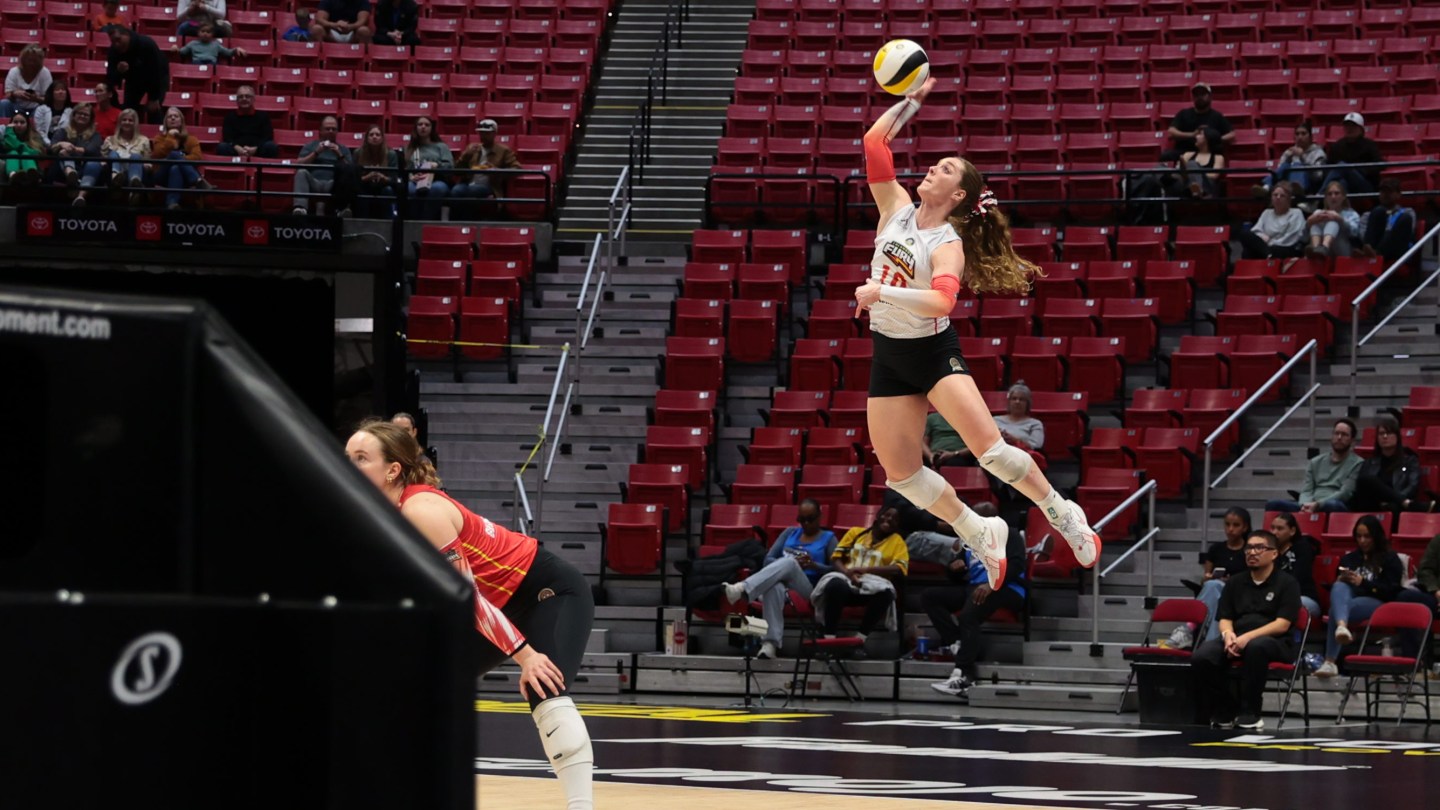
On the flip side, nearly everybody I talked to agreed that the actual volleyball in LOVB is at a higher level than the PVF. The league has more international talent and 17 Olympians, a fact that their announcers seem contractually obligated to point out at least 10 times per match. Overall, the play is faster and teams are running more complex offenses. Only one player from the PVF was named to this summer’s U.S. National Team roster—Hentz, who’s been playing with the national team for years—while 14 LOVB players will be there. And several fans told me that they found LOVB games are easier to actually watch on TV, because the league has a deal with ESPN, whereas PVF games are spread across YouTube, CBS Sports, Roku, and Fox Sports.
It’s not all that unusual to see competing leagues at the beginning of a sport’s emergence into professional play. The National League and the American League ultimately became MLB. The NFL absorbed the All-America Football Conference and then merged with the American Football League. The NBA merged with the ABA. The NHL partially merged with the World Hockey Association. More recently, the two women’s professional hockey gambits were forced to merge into the Professional Women’s Hockey League. Even the leaders of some of these teams and leagues seem to know what’s coming. “There will ultimately be one league,” Kay Huse told me.
In the meantime, some are happy to have a little rivalry. “A rising tide lifts all boats,” Kay Huse said. “Competition is a good thing. We’re constantly making each other better.” Spaulding, president of LOVB Pro, said the exact same thing, and volleyball experts seem to agree. “It’s better for players,” Kelly Wolinetz, of the Court Captains podcast, told me. “You get some competition with salaries and things like that.” DelZenero, her cohost, agrees. “I do think it’s better for player power. I don’t know that salaries would have increased the way that they did in the PVF without the presence of LOVB.”
Most people I talked to agreed that if there were simply two leagues, LOVB and the PVF, the professional game would sort itself out eventually, as it has many times before.
It’s the third league that really throws a wrench into things.
In January of this year, the owners of the Omaha Supernovas announced that they would be leaving the PVF to start yet another league called Major League Volleyball. “The Supernovas will continue to play their home games at CHI Health Center in Omaha and remain Nebraska’s professional volleyball team,” the statement said, “ensuring the same world-class competition and hometown pride that fans have come to love.” (In case you weren’t keeping track, LOVB has a pro volleyball team in Omaha, which means that the Supernovas are not, in fact, the only pro team in the state.)
Details about the split, the future of the Supernovas, and MLV’s plans remain shrouded in mystery. The Supernovas’ move seems to have been instigated by a dispute between the team’s controversial co-founder Danny White and the league. Volleyball fan forums are full of rumors about exactly why White felt the need to leave the league and take his team with him, but nothing has been publicly verified, and nobody I spoke to could offer a concrete explanation. A spokesperson for the team told me via email that “at this time, plans for next season are still evolving behind the scenes, so it would be premature for anyone from the Supernovas to speak on the record.”
Since the announcement, MLV has made a handful of vague statements about what’s coming. The website is sparse on details, but it claims it’ll have the first serve in January 2026, with 10 teams. White brought some old business partners (like Jason Derulo) with him, and added in a new group of founders that includes Vivek Ranadivé, the owner of the Sacramento Kings, and Kerri Walsh Jennings, an iconic Olympic beach volleyball player.
On social media, MLV acknowledged being late to the party. “Multiple competing leagues are not ideal long term for this sport,” the league said in a statement on Instagram. The post went on, attempting to explain what will separate MLV from the other pro leagues: “MLV provides major league level ownership, major league level venues and major league level pay for players and staff. This isn’t just another league. This is major.”
Kerri Walsh Jennings, on her own post announcing MLV, wrote, “Here in the states, there’s never been a league ambitious enough – MAJOR enough – to attract the BEST OF THE BEST.” It’s not clear who Walsh Jennings would like to see come to the U.S. to play, given that 11 of the 17 women on the U.S. Olympic team from Paris played in either the PVF or LOVB last season.
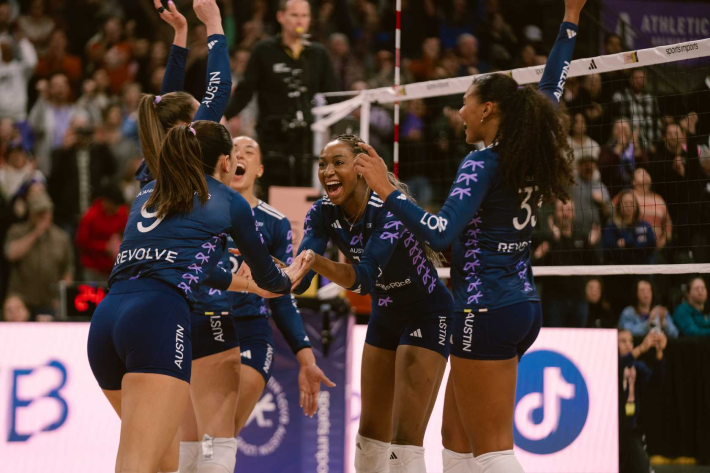
The tone of these posts hasn’t gone over well with some players. “Respectfully, this ain’t it chief,” commented M’Kaela White, who played this past season on the PVF’s Orlando Valkyries. “Further dividing viewership and a quality product for audience retention isn’t a healthy approach to attaining a strong unified national volleyball league. PVF and League One are on the right track to develop something sustainable in the next 3-5 years and we need everyone to stand behind that.”
Haleigh Washington, a U.S. Olympian and middle blocker on the Salt Lake LOVB team, turned the announcement into a joke. “Since everyone and their Great Aunt Shirley wants to make a New Pro Volleyball League, here’s your chance to join in on the fun!” she wrote, followed by an ad-libs form:
“This just in! Coming in (year)! A brand new Professional Women’s Volleyball League! The (superlative) (synonym for Pro) Volleyball League! With key investors like (TikTok influencer), (random pop celebrity), (a volleyball player important enough to make this seem legit)!!! Launching in cities like (Midwest city) and (nickname of a city)!!!”
Fans have been turned off, too. “When I saw Major League Volleyball I was ‘Oh my god this is ridiculous,'” Mollie Turner, a Columbus Fury season ticket holder (and LOVB fan) who got into volleyball during the pandemic after watching the anime Haikyu!!, told me. Every other fan I talked to said some variation of the same thing. Pflanger told me he won’t be going to Supernovas games anymore if they play in MLV. “I’m kind of furious,” he said, and told me that he’ll probably be switching his allegiance to LOVB Omaha.
Pflanger might not have to make that choice. It’s not clear right now whether MLV is actually going to get off the ground at all. Starting a sports league isn’t easy. It took both LOVB and the PVF several years to get going; signing players, designing logos, securing venues, finding coaches and local sponsors, and getting their legal structures figured out took a great deal of time and effort. While MLV might have a jumpstart with the Omaha team, many people I spoke with found the idea that they’d be able to launch a whole league with 10 teams by January of next year hard to believe.
The mystery seems to extend even to insiders. Most athletes are free agents now, and some of them told me that if MLV’s contracts are good, they’d be open to playing there. But their agents haven’t been able to figure out what is going on, or if the league will exist at all. Brooke Nuneviller, the Supernovas’ star outside hitter, laughed when I asked her what was going on with MLV. “It’s such a mystery to everybody,” she said. “I’ve heard tiny bits of details, but nothing concrete. I’m just as curious about it as you are.” I reached out to several people involved in MLV, and no one was willing to comment. One Supernovas fan told me that they’d been getting calls from the team trying to sell a season ticket package for next year. When they asked the representative whether the Supernovas would be playing in the MLV, they were told “that’s the plan.”
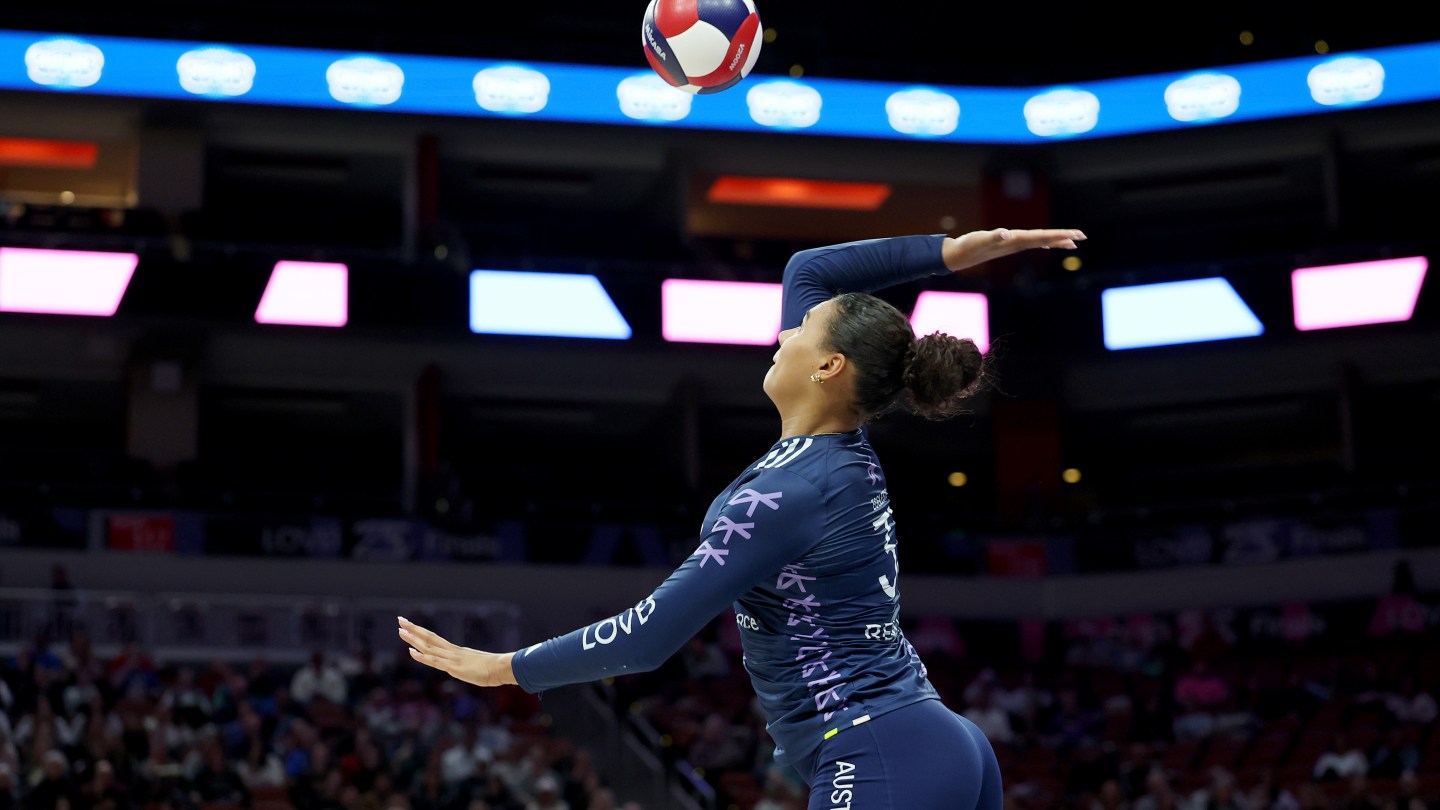
It’s this additional drama that has people most nervous. Competition might be good, but it’s not a given that any of these leagues will actually succeed. No matter what the perky Instagram captions say, both leagues right now are precariously positioned. Both have struggled with live attendance numbers. The PVF final’s stands were barely half full. LOVB’s weren’t much better. Taking the Omaha Supernovas from the PVF—the most successful team thus far in terms of ticket sales—could spell trouble for that league as a whole. Bryan McCann, a fan and occasional volleyball historian, told me that losing the Supernovas would be like MLB losing the New York Yankees. Carolla told me that PVF plans to add a team in Dallas for the 2026 season, but nothing official has been announced yet, and he hinted by email that there may be other additions, too. “While I have nothing new to report on that front, the Board is consistently evaluating opportunities for new teams,” he told me.
Lots of fans and players are worried that the sport can’t actually support quite this much competition. “People are just going to be like, ‘Oh, my god, I can’t follow volleyball, there’s all these leagues,'” said Turner.
Meanwhile, the actual athletes are stuck in the middle of it all. “I think players just pray that a league sustains,” Hentz told me. “I think the worst thing that can happen would be these leagues stay stubborn and don’t merge one day, or they’re not fully funded. The resources right now are being so dispersed, and my fear is that maybe they all die out.”
The players I talked to all told me that they don’t really care who wins the Great Pro Volleyball Wars, as long as they get to play. “I don’t think really anybody cares about what letters are in front of the league we play for. We just want volleyball to be successful. We just aren’t the ones with the wads of cash,” Courtney-Lush said. She said she also can’t help but feel like the players are caught in the middle of an argument between rich people. “It feels like they’re doing it for the dollar sign, rather than doing it to support women’s sports and bring a product that’s worthy of equality. That’s the most frustrating thing. It feels like it’s all very money-driven. Which is how the world works. But we’re second-tier to their money.”
Logan Eggleston, a LOVB founding athlete, felt the same way. “I think that’s kind of where the people at the top have to maybe put their egos aside a little bit and decide what’s best for our sport, which is to not be competing against each other and instead be competing for one major goal, which is to create great volleyball in our country,” she said.
Eggleston is returning to LOVB next year, and she hopes to keep playing in the U.S. If the U.S. doesn’t work out, Eggleston will go back to Europe and play there. Courtney-Lush isn’t sure what she’s going to do. Maybe she’ll play another season in PVF. Maybe she won’t. In some ways, she’s lucky to be on the tail end of her career. She was ready to retire, anyway. Gillen won’t be staying in the PVF; she signed with a Swiss team just last week, so she’s going overseas no matter what happens with the domestic leagues. Nuneviller told me that she’ll go wherever she has to go to play. “We’re in a really fantastic situation right now with the opportunity to play in the states,” she said. “And absolute worst-case scenario, I go play in Italy, and that’s a pretty fantastic state to be in. I’m not stressed about my career, I’m excited to see how it will all play out.”
Volleyball isn’t going away. But for all the promotional material that the three leagues have generated about how amazing it is to have opportunities to play in the U.S. for players, they don’t seem to take into account how their behavior could wind up meaning that nobody does.


Avery Elizabeth Merritt, born Feb. 27, 2009, embodied the best parts of all of us. The beloved daughter to Russell Merritt and Tina Dombroski, younger sister to Jackson Merritt and Nathan Young, and cherished granddaughter to Janice Merritt, journeyed beyond this world Tuesday, Dec. 23, 2025.
Avery was the glue that connected our lives. She saw through pretenses and offered advice with a depth of insight and clarity far beyond her 16 years.
Her natural creativity was boundless, and throughout her life, she produced incredible sketches, paintings, sculpture, jewelry, clothing, written stories, and culinary delights. Her attention to detail was evident in everything she did, completing even the simplest tasks with an artistic whimsy or a deeply thoughtful purpose.
Avery had a profound love for animals and was pursuing a future in veterinary medicine. She devotedly cared for her dog Lucy, her cats River Forrest and Terra, and her hamster Seuss. Her “heart horse” was Miley, with whom she shared an incredible bond of loving, trust and understanding. Together, they had become a fearless duo completing high jumps, courses, and liberty work. Avery competed in many equestrian shows and received numerous ribbons and accolades.
Avery’s natural curiosity of the world around her also included plants and herbology. She often grew plants from clippings or seeds to create natural products and art, many times drawing her inspiration from Native American culture.
Avery loved an engaging story and enjoyed reading books, listening to podcasts about a wide range of topics from true crime to indie music to survivalism. She was a true aficionado of SpongeBob SquarePants as well as the Breaking Bad series. Despite living in an age of online content, she had an innate ability to remain connected in the present moment. To say she was nonconformist by nature would be an understatement. She was a truly special person in so many ways but did not like to receive attention for her exceptionalism. She was also academically gifted, excelling in all subjects, especially math, science, and literature.
Avery also shared a love for volleyball and grew her skills while playing for Premier travel teams, Sandsharks beach team and Sussex Technical High School. The friendships she gained through these leagues were meaningful to her, and the shared experiences of victory, loss, and growth made a great positive influence in her life
Avery was taken from this world far too early, leaving before her full potential was ever realized. Her family will never allow the beauty of her life to be overshadowed by the tragedy of her death and will honor her with every beat of their collectively heavy hearts.
A viewing will be held from 10 a.m. to noon, Tuesday, Jan. 6, at Watson Funeral Home and Crematorium, 211 S. Washington St., Millsboro. A funeral service will follow at noon. Burial will be private.
In lieu of flowers, memorial contributions may be made in Avery’s name to feast-ed.org, an organization dedicated to bringing awareness and support to loved ones suffering from the illness of an eating disorder.
Visit Avery’s Life Tribute webpage and sign her online guest book at watsonfh.com.
Dec. 31, 2025, 3:04 a.m. CT
In the immediate aftermath of Kansas women’s volleyball’s NCAA tournament loss in mid-December against Nebraska, KU coach Matt Ulmer praised the winning side.
Ulmer highlighted Cornhuskers coach Dani Busboom Kelly, and her team. He mentioned it’s been exciting to watch their run, even as much as it was a bummer to be a part of it. He looked forward to seeing how far they could go, which ended up being an Elite Eight exit against eventual national champion Texas A&M.
But as much as Ulmer understood the moment didn’t feel all that great for his team, he also pointed to how much the Jayhawks achieved this season and how proud he was of them. He couldn’t help but gush over the community support, that helped make the run to the Sweet 16 special. Ulmer left Oregon to take over at KU after Ray Bechard — the program’s all-time winningest head coach — retired, and enjoyed a stellar first season at Kansas.
“That was a lot of blue shirts, as many as we could have, I think, as many as Nebraska would allow,” Ulmer told reporters in Lincoln, Nebraska. “Having the band here — we had a sendoff before. When we left, we had sendoff from the hotel. Like, things like that which, maybe Nebraska’s used to, I’m not. Never had that at Oregon. And this is my sixth one of these, and that was the first time that I’ve experienced that.”
Ulmer both hopes the seniors are proud of what they did, and sees this first year at Kansas as the foundation for what the program is going to be moving forward. He committed to the Jayhawks consistently making runs like this, as his players get a taste of what it’s like to make it this far. It’s fuel for the offseason, for those who’ll be back in 2026, because after KU made its fourth-ever trip to the Sweet 16 — and first since 2021 — he wants to keep raising the bar.
This year alone, from Ulmer’s perspective, already saw a mind-blowing journey take place. His first conversations with the team included returning players mentioning playing time as a goal, and it made him think about how far they have to go to just be competitive. And now, considering all the individual growth from those returners and how the newcomers were embraced, they can build on a Sweet 16 run as he continues to develop the roster as needed to compete at the highest level.
The journey the 2026 Jayhawks go on will be different, just as any team’s is, but one characteristic that they could take from the group in 2025 is how adaptable it was. Senior Ryan White, a libero/defensive specialist, said she learned that about her team as it went through a schedule she thought was the most competitive season she’s ever played — if not the most competitive the majority of the team’s played. White, one of those newcomers and an Oregon State transfer, described this as the best last year she could have wished for.
“At my program before this, I didn’t even make it to the tournament,” White said. “So, I’ve never been in the tournament before. I think Matt told me something earlier, like this week, but this is like the most I’ve ever won in my career, in this season. Like, the most games I’ve won. So, looking back on it, it’s been, like, such a great experience. And obviously to come in and play the best team in the nation, like they were firing on all cylinders tonight. But it’s just been the greatest experience. Like, I’m so thankful for it. And never would I have thought that I’d be in Kansas playing college volleyball, but it’s been super, super fun.”

Jordan Guskey covers University of Kansas Athletics at The Topeka Capital-Journal. He was the 2022 National Sports Media Association’s sportswriter of the year for the state of Kansas. Contact him at jmguskey@gannett.com or on Twitter at @JordanGuskey.
Dec. 31, 2025, 3:01 a.m. CT

Two of the most successful high school volleyball coaches in northeastern South Dakota, Rosemary Bellum of Watertown and Nancy Hoeke of Milbank, are stepping down.
Bellum announced her resignation, which is pending approval from the Watertown School Board in January, on Monday, Dec. 22, 2025.
The announcement came a couple of weeks after Hoeke’s resignation was approved by the Milbank School Board on Dec. 8, 2025.
Bellum is the winningest coach in Watertown High School history, leading the Arrows to a 192-80 record in nine seasons. She spent the past 28 years involved in the program either as a head coach or an assistant.
Hoeke spent 35 years as a volleyball coach, including the past 25 as a head coach at Milbank. She is the school’s all-time winningest coach with a career record of 449-279.

Successful run for former Arrow
Bellum, a 1994 Watertown High School graduate, was a member of the Arrows’ state Class AA girls basketball championship team in 1993 and the Arrows’ state Class AA volleyball runner-up team in 1994.
She became the sixth head coach in the history of the program (which began in 1990-91) when she replaced Kim Rohde in April of 2017. Other Watertown coaches and their records with the Arrows include Beth Schutt (139-71-5 in seven seasons), Tiffany Beste (88-69 in seven seasons), Rohde (64-60 in five seasons), Karen Bossman (74-150 in seven seasons) and Jeff Denzer (9-24 in one season).
Under Bellum’s guidance, the Arrows qualified for the state Class AA tournament seven times in nine seasons highlighted by a state Class AA championship in 2019 (the second in program history).
“Coach Bellum emphasized fundamentals, discipline and preparation. She not only had high expectations for her athletes but also for herself. ” Watertown School District Activities/Athletic Director Craig Boyens said. “Her dedication extended far beyond the matches as she spent countless hours in the gym developing the program and players with it. She poured herself into this program with her amazing work ethic, attention to details and a commitment of doing things the right way.”
In her final season this fall, the Arrows went 22-11 and concluded a third-straight appearance in the state Class AA tournament with a fourth-place finish.
“It was a really a hard decision. There’s just so many good things about what you do that it’s hard to step away from the girls, the families and and the athletic department,” Bellum said. “And all of my assitant coaches. They have just been an amazing part of my coaching. The hardest part about giving this up is all the relationships and memories.”
Boyens also thanked Bellum for the positive way she led the program. A search for a new head coach is underway.
Not only is Bellum the winningest coach in program history, under her watch the Arrow program has been one of the best in the state. That could very well continue.
“I feel the cupboards are well stocked,” said Bellum. “There’s so much talent and energy and the culture is good coming up. I feel it’s been left in good condition.”
Bellum plans to continue as a social studies instructor at Watertown High School.

Hoeke also left a lasting mark
Hoeke, a 1984 Aberdeen Central High School graduate, also left a lasting mark on the volleyball program at Milbank.
She took over as the third head coach is Milbank volleyball history in 2001 (following Gloria Van Dykhorst and Brad Olson) and produced a very successful run that included nine trips to the state Class A tournament.
The Bulldogs made seven consecutive appearances in the state Class A tournament from 2003 through 2009. Included in the run were state Class A championships in 2004 and 2007 and state runner-up finishes in 2007 and 2009. The Bulldogs also qualified for state in 2015 and 2016.
“It was my decision,” Hoeke said. “I wanted to go out on my terms instead of going out when somebody says you need to move on. I don’t feel like I have the edge anymore. You need to make some tough and unpopular decisions and it’s harder for me to make those.”
Hoeke also plans to continue teaching (she’s an e-mentor for online and middle school classes in Milbank) and plans to continue coaching middle school and club volleyball for Milbank.
She thanked Olson and Vaughn Johnson for their help when she first joined the program as an assistant and also all the assistants she’s worked with as a head coach. That group included Nancy Paulson, who was a long-time assistant for the Bulldogs during Hoeke’s tenure.
“I’ll remember being in the state championship four times and all of the times at state that ended with our last match being a win,” she said. “I feel very fortunate and blessed to have been in those situations and to have those players get to experience that.”
Hoeke currently serves as the executive secretary of the South Dakota Volleyball Coaches Association and has coached a variety of sports at Milbank. She will continue to serve as the Bulldogs’ head softball coach.
Follow Watertown Public Opinion sports reporter Roger Merriam on X (formerly known as Twitter) @PO_Sports or email: rmerriam@thepublicopinion.com
Dec. 31, 2025, 4:01 a.m. ET

Up next for voting is volleyball.
Below are the 2025 Athens high school volleyball all-area players, which were hand selected by the coaches. Cast a vote for who you think deserves the ultimate title of “Volleyball Player of the Year.”
The poll will be open until Wednesday, Jan. 7, at 5 p.m.
Athens all-area high school volleyball player of the year poll
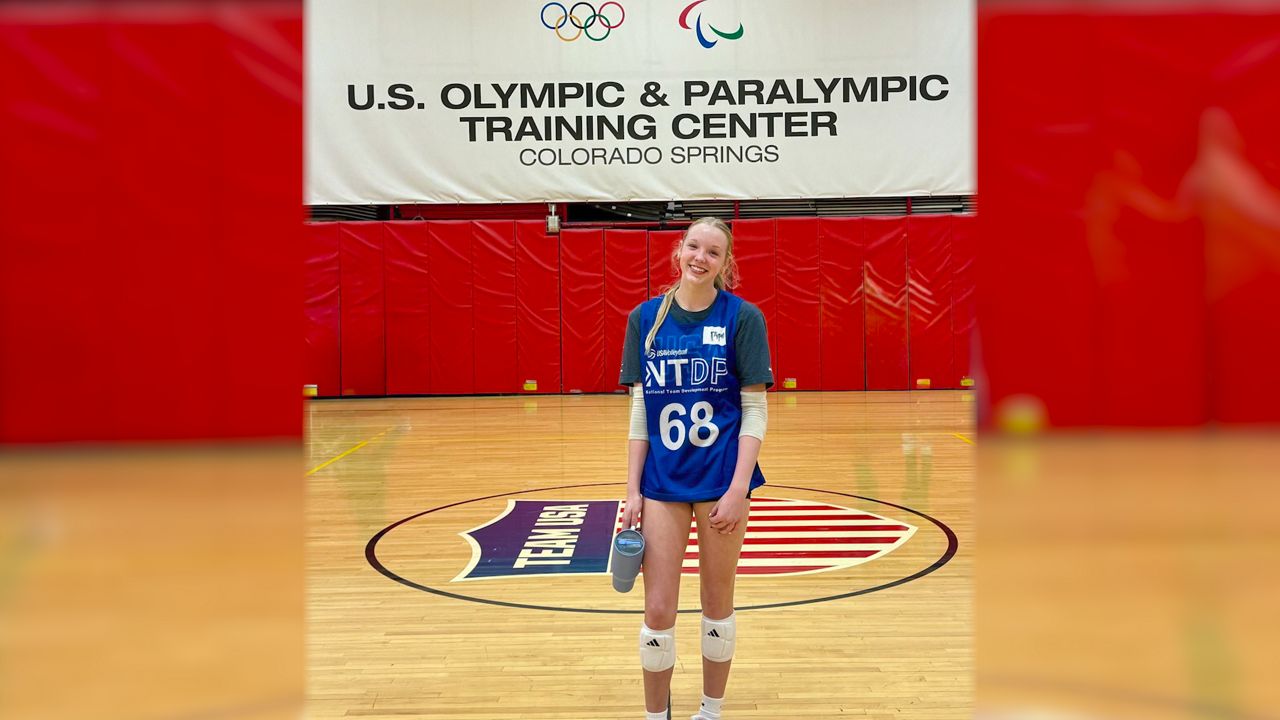
KANSAS CITY, Mo. — A student from Oak Grove High School was recently invited to the U.S. Olympic and Paralympic Training Center in Colorado Springs.
Freshman Piper Hudson was invited to the USA Volleyball National Team Development Program where she spent four days of her winter break refining her skills and showcasing her talents.
The school shouted out Hudson on its social media commending the freshman for her achievement.
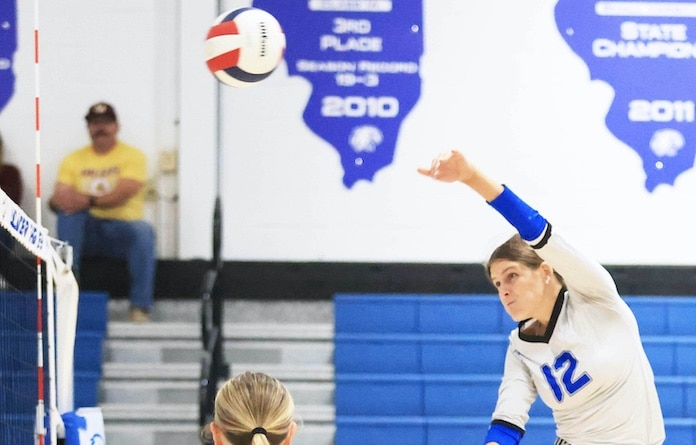
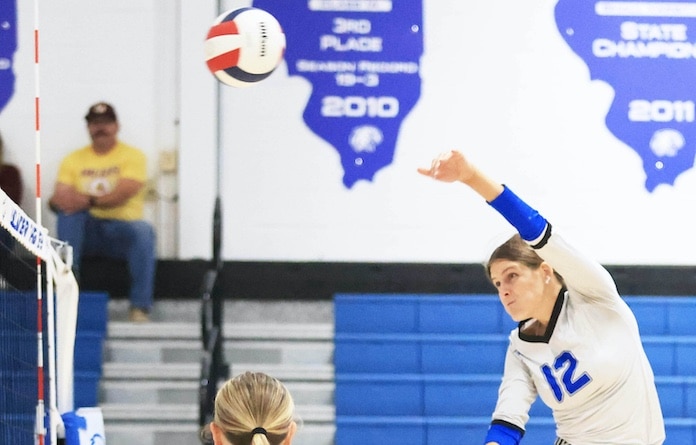
With a state title and school-record 39 wins from Columbia this fall, this year’s Republic-Times All-Local Volleyball Team will feature several Eagles.
But there were other standout team and individual volleyball highlights locally, as this list will show.
FIRST TEAM
Ava Mathews, Columbia. This all-state senior will showcase her talents at Southeast Missouri State University next season. She did just about everything on the court, finishing with 248 kills, 485 assists, 95 blocks and 264 digs for the state champs.
Claire Sandstrom, Columbia. An all-stater for the second time, this junior led the Eagles with a whopping 348 kills. She also recorded 296 digs and 62 blocks.
Ellie Day, Waterloo. A senior all-conference selection, she led the Bulldogs with 340 assists and 179 service points. Day will play next season at St. Louis Community College.
Karmon Grohmann, Gibault. An all-around amazing athlete, this senior led the Hawks in points, kills and assists this fall. Grohmann will play next season at Lewis & Clark Community College.
Ella Horner, Columbia. The captain of the state champs, she provided senior leadership and recorded a team-high 536 digs to go along with 156 points.
Kenzy Koudelka, Waterloo. Another senior all-conference selection, she capped off a solid Bulldogs volleyball career with 113 points, 148 kills and 395 digs this fall.
Ellie Zweigart, Waterloo. An all-conference senior libero, Zweigart was the engine that made the Bulldogs go this fall. She finished with 471 digs and 110 points.
Maura Kohlenberger, Columbia. An all-conference senior, she led the state champion Eagles with 130 blocks and also contributed 153 kills.
Kadence Seitz, Valmeyer. The lone all-conference selection for the Pirates, Seitz led her team in both kills and digs.
Samantha Spruill, Columbia. This junior led the Eagles with 503 assists and contributed 237 points. She’ll be a key part of Columbia’s 2026 squad.
Megan Huebner, Waterloo. Yet another senior all-conference selection, She finished with 67 blocks and 98 kills on the season.
Sam Juelfs, Waterloo. A tall multi-sport talent, this senior all-conference selection finished with 120 kills.
SECOND TEAM
Kinley Jany, Columbia. This senior will play sand volleyball for McKendree University next season after leading the state champion Eagles in points with 244 to go along with 444 digs and 139 kills.
Hope Chambers, Gibault. Another top senior for the Hawks, she led the team with 317 digs and also had 146 kills.
Izzy Mushaney, Dupo. Just a sophomore, she earned all-conference honors after leading the Tigers in kills.
Addison Dewilde, Columbia. This fabulous freshman finished second on the team with 117 blocks. The future looks bright.
Aubry Thomas, Gibault. Another senior leader for the Hawks, she led the team with 419 digs.
Maddi Huddleston, Valmeyer. She led the Pirates in assists this season.
Marley Mathews, Columbia. The younger sister of Ava, this sophomore recorded 199 kills and 63 blocks.
Ashlynn Reinhold, Gibault. A sophomore, Reinhold finished with 204 assists and 130 digs for the Hawks.
Kaitlyn Roberts, Dupo. A junior all-conference selection, she led the Tigers in aces and made her mark in other statistical categories.
Claire Kessler, Gibault. This senior led the Hawks in blocks.
Alli DeClue, Dupo. A junior all-conference selection, she was an important part of the passing game for the Tigers.
Addison Mitchell, Dupo. This senior all-conference selection led the Tigers in assists this season.
SPECIAL MENTION
Emery Bockhorn (Waterloo), Julia Briggs (Waterloo), Raina Roessler (Waterloo), Maggie Altes (Gibault), Kaleigh Hicks (Valmeyer), Kylie Fillinger (Dupo), Lilianna McMannis (Dupo), Leah Schlemmer (Gibault), Olivia Biffar (Gibault), Ava Gilbert (Waterloo), Kaidyn Moore (Waterloo), Brynn Moore (Gibault)


Avery Elizabeth Merritt, loved animals, volleyball
How Kansas women’s volleyball will remember 2025 season, Sweet 16 run

Boise State hoops grinds out New Mexico after a slow start
NIL gives football programs like Texas Tech a ‘taste of success’
Two of area’s best high school volleyball coaches call it quits

Sports Daily Digest December 30, 2025 – WRBI Radio

New gym opens in Santa Maria where kids can embrace their inner-warrior
Vote for Athens all-area high school volleyball player of the year

Rick’s Sports Corner: Karisma Mendez, Two-Sport Stand Out

State rep. blasts Gov. Walz for ignoring daycare fraud warnings

Here’s which FLC basketball players rank in top 10 in RMAC in key categories

Kendall Young Library announces teen events for January | News, Sports, Jobs

Youth soccer league registration closes Jan. 31 | News, Sports, Jobs

$1.6 million WR makes transfer portal decision ahead of College Football Playoff game

The Best of 2025: Historic season on the pitch

SoundGear Named Entitlement Sponsor of Spears CARS Tour Southwest Opener

Donny Schatz finds new home for 2026, inks full-time deal with CJB Motorsports – InForum

Black Bear Revises Recording Policies After Rulebook Language Surfaces via Lever

Men’s and Women’s Track and Field Release 2026 Indoor Schedule with Opener Slated for December 6 at Home

David Blitzer, Harris Blitzer Sports & Entertainment

How Donald Trump became FIFA’s ‘soccer president’ long before World Cup draw

DeSantis Talks College Football, Calls for Reforms to NIL and Transfer Portal · The Floridian

Rick Ware Racing switching to Chevrolet for 2026
Elliot and Thuotte Highlight Men’s Indoor Track and Field Season Opener

JR Motorsports Confirms Death Of NASCAR Veteran Michael Annett At Age 39

#11 Volleyball Practices, Then Meets Media Prior to #2 Kentucky Match

Colleges ponying up in support of football coaches, programs

23 عاما من الفضائح السياسية والجنسية منذ انقلاب حمد بن خليفة.. استغلال الفتيات الصغيرات في الدعارة.. ضبط ابنة رئيس وزراء قطر خلال ممارستها لجنس الجماعي.. ملامح الحكم تتخبط بين المنفي وتدخلات النساء
West Fargo volleyball coach Kelsey Titus resigns after four seasons – InForum

23 عاما من الفضائح السياسية والجنسية منذ انقلاب حمد بن خليفة.. استغلال الفتيات الصغيرات في الدعارة.. ضبط ابنة رئيس وزراء قطر خلال ممارستها لجنس الجماعي.. ملامح الحكم تتخبط بين المنفي وتدخلات النساء






-
 Sports3 weeks ago
#11 Volleyball Practices, Then Meets Media Prior to #2 Kentucky Match
-
 Motorsports3 weeks ago
Nascar legal saga ends as 23XI, Front Row secure settlement
-

 Motorsports3 weeks ago
Sunoco to sponsor No. 8 Ganassi Honda IndyCar in multi-year deal
-
 Sports3 weeks ago
Maine wraps up Fall Semester with a win in Black Bear Invitational
-
 Rec Sports3 weeks ago
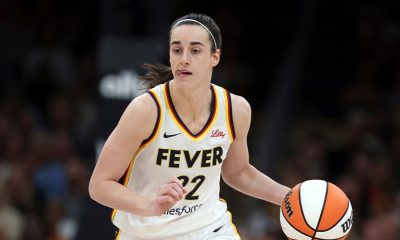
WNBA’s Caitlin Clark, Angel Reese and Paige Bueckers in NC, making debut for national team at USA camp at Duke
-

 Motorsports2 weeks ago
Ross Brawn to receive Autosport Gold Medal Award at 2026 Autosport Awards, Honouring a Lifetime Shaping Modern F1
-
Motorsports3 weeks ago
NASCAR, 23XI Racing, Front Row Motorsports announce settlement of US monopoly suit | MLex
-

 Motorsports3 weeks ago
Rick Hendrick comments after the NASCAR lawsuit settlement
-

 Sports3 weeks ago
Hope College Tops MIAA Commissioner’s Cup Fall Update
-

 Rec Sports2 weeks ago
Stempien to seek opening for Branch County Circuit Court Judge | WTVB | 1590 AM · 95.5 FM