
NIL
Wait, isn’t this a college sports salary cap? What to know about House-NCAA for now

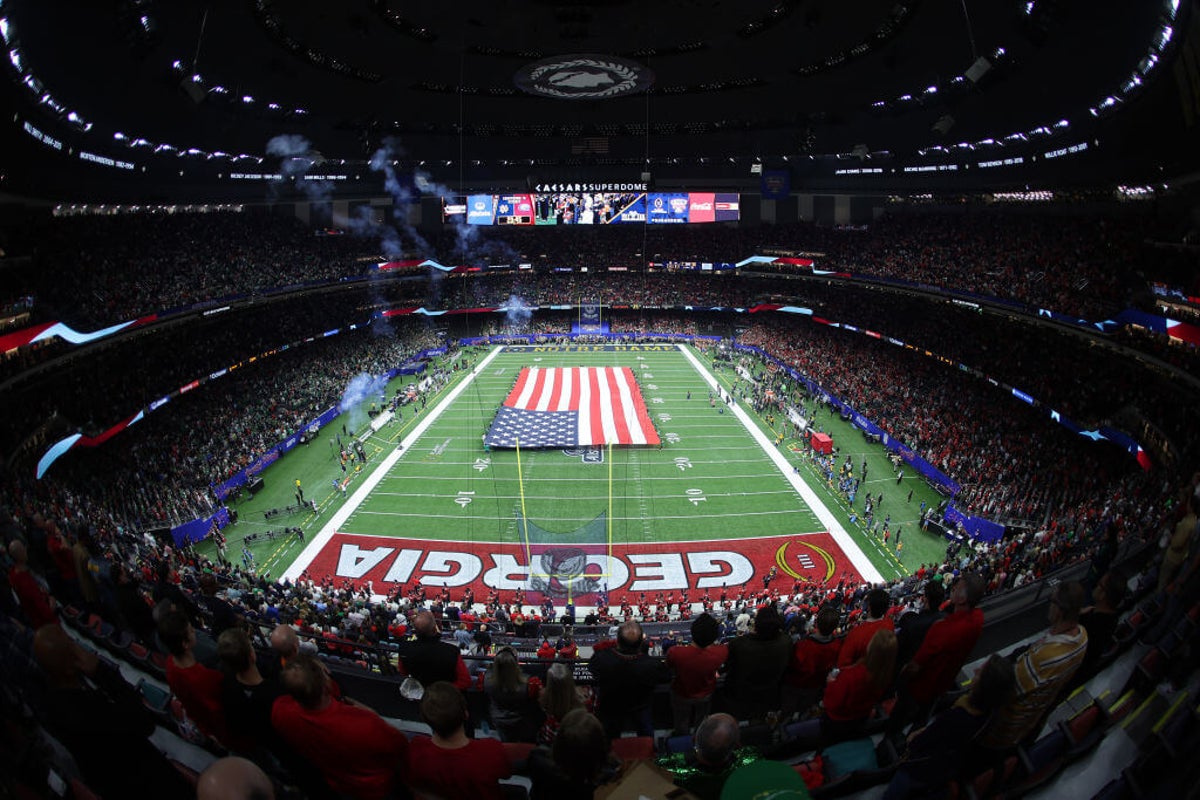
“We crafted the term student-athlete, and soon it was embedded in all NCAA rules and interpretations as a mandated substitute for such words as players and athletes.”
That was Walter Byers, writing in his 1995 book “Unsportsmanlike Conduct: Exploiting College Athletes.” Forty-four years prior, he’d been named the first executive director of the rapidly expanding NCAA. (Obviously, his mind had changed along the way.)
Why’d the NCAA concoct “student-athlete”? Because those are just college students who happen to play sports, not people employed by athletic departments as revenue generators … your honor. (“South Park” was all over this in 2011, months after an Auburn student named Cam Newton paused his studies to seek full-time employment.)
Years later, Byers’ confession remains one of the starkest reasons to mistrust the NCAA’s favored jargon. And lately, another term has appeared a lot in college sports contexts. It strikes me as curious, the way it’s being used right now:
“Revenue sharing.”
The term has emerged as the most important part of the long-awaited legal settlement that will greatly reshape college sports, following its approval late last week. This is that House v. NCAA thing that’d been drip-dripping in the news forever, the Colleges Can Now Pay Their Athletes Actual Money thing.
Except technically, according to the people who define what “technically” means, these transactions amounting to as much as $20.5 million per school aren’t payments. Technically, they’re merely revenue being shared.
The term “revenue sharing” makes total sense to me when we’re talking about 32 teams in a professional league pooling their money as veritable equals. But when we’re talking about powerful humans passing portions of money along to the less powerful humans who are doing the heavy labor that is the core attraction? That’s “sharing”? Jeff Bezos “shares” with delivery workers?
To make a little more sense of this, let’s turn to The Athletic’s Justin Williams, who’s been on the House beat for a long time now. He will maybe soon be free to write about things besides courtrooms. But not yet, because for now, he has been turned to by us.
Why is this called “revenue sharing,” and who was it that decided “salary cap” is a dangerous pairing of words that must never be uttered? Was it the NCAA? The courts? Doctor Strange?
The answer, as usual: lawyers. It’s helpful to remember that the House settlement was born out of the NCAA and power conferences attempting to avoid yet another high-profile defeat in court — and the financial ruin that could have come with it. Some of this is about progress, sure, but a lot of it is about the top stakeholders in college sports trying to mitigate the onslaught of legal battles in recent years.
It’s “revenue sharing” because the pool of money that can be paid directly from colleges to athletes under the settlement is calculated using the revenue that power conference athletic departments generate through television contracts, ticket sales and sponsorships. The reason it’s a “revenue cap” and not a “salary cap” is because “salary” would imply that the athletes are being paid for their services — or as employees — which remains taboo for the leaders of college sports. The settlement has ripped away the facade of amateurism, but the NCAA and power conferences still want to classify athletes as students, not employees.
Got it, thank you. I’ll keep calling it a “salary cap” until I am sued. (Since, after all, the NFL’s salary cap is also calculated based on that league’s revenue.) Speaking of lawyers, surely this was the last court battle on the subject of college athlete compensation, right?
Unlikely. Even the settlement’s most ardent supporters acknowledge that it is not a fix-all. There are still plenty of unresolved questions about things like Title IX, conflicting state laws, athlete employment status and whether the settlement’s efforts to curb third-party NIL deals violate antitrust laws. This is why the NCAA and power conferences continue to lobby Congress for antitrust exemptions and federal legislation that will preempt state laws and help set the settlement terms in stone. What that congressional intervention looks like — or whether it’s even a realistic option — remains to be seen. Until then, expect more lawsuits. Billable hours remain undefeated.
Thank you to Justin. For more from him, try out his full story on how college sports money works now, which is packed with details like this:
“The top (football) teams are going to cost $40-50 million a year,” said one power conference personnel director. “That’s where this is going. Anyone who thinks different is nuts.”
Okie dokie. Below, we have plenty more House ramifications, after a quick break for non-House news.
(Side note. Now that I think about it, the term “revenue sharing” feels OK, on one condition: The NCAA’s most powerful member schools admit the sharing of revenue is exactly how employer-employee relationships have worked since many thousands of years ago, when one caveperson first paid another caveperson in berries to go trade an axe for a hammer.)


On the cusp of the 45th anniversary of their defeat of the Soviet Union in the 1980 Lake Placid Winter Olympics, the United States’ “Miracle on Ice” Olympic men’s hockey team was honored at the White House on Friday, Dec. 12 with Congressional Gold Medals.
It led into a brief discussion on the current state of Name, Image and Likeness (NIL) in college sports when Team USA captain Mike Eruzione was asked about the topic by a reporter. Following a brief response from Eruzione, President Donald Trump joined the conversation and made a statement.
Advertisement
“Something ought to be done, and I’m willing to put the federal government behind it,” Trump said of overhauling NIL in college sports during a bill signing ceremony in the Oval Office. “And if it’s not done fast, you’re going to wipe out colleges.”
REQUIRED READING: ‘Miracle on Ice’ team honored with Congressional Gold Medals by President Trump
This is not the first time that Trump has spoken on the state of college athletics in a time where NIL and the transfer portal have taken over. He made similar remarks on “The Pat McAfee Show” during a phone call interview on Veterans Day.
Republicans in the U.S. House of Representatives recently pulled the scheduled final vote for the Republican-backed SCORE Act that would have allowed the NCAA and its recently formed College Sports Commission to create and enforce national rules that have been under legal dispute in recent years.
Advertisement
The SCORE Act (Student Compensation And Opportunity Through Rights and Endorsements) had sought to provide more regulation and calm the chaotic environment created by the introduction of NIL compensation, revenue sharing and the transfer portal to college sports.
The USA TODAY app gets you to the heart of the news — fast. Download for award-winning coverage, crosswords, audio storytelling, the eNewspaper and more.
This article originally appeared on USA TODAY: Trump says ‘something ought to be done’ about NIL in college sports
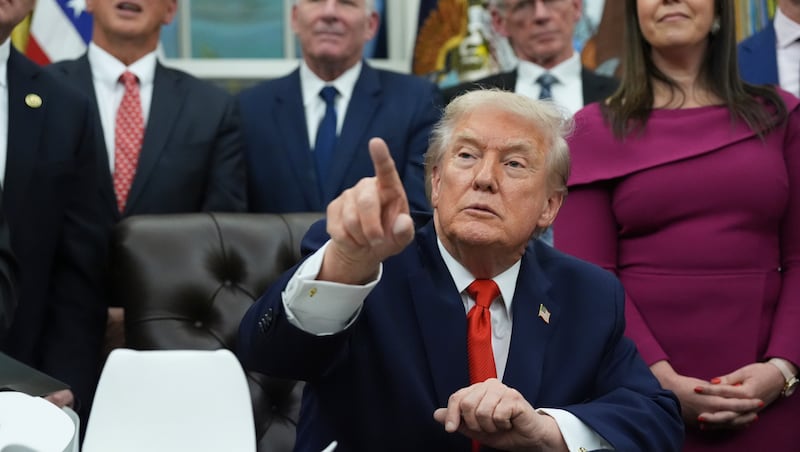
President Donald Trump isn’t a big fan of college athletes being paid for the use of their name, image and likeness.
In fact, he trashed NIL in response to a question about it Friday.
During a ceremony at the White House to honor the gold-medal winning 1980 U.S. Olympic hockey team, a reporter asked about NIL deals and the transfer portal, noting the “Miracle on Ice” players were amateurs who didn’t get paid.
Advertisement
Team captain Mike Eruzione said he didn’t like it, but that’s the state of college sports today and “we have no control over that.”
Trump, though, said maybe there is something to do about it.
“I think the NIL is a disaster for sports. It’s horrible for the Olympics, and I think it’s actually horrible for the players,” he said.
Trump said colleges are cutting “lesser” sports, those that don’t bring in revenue but help train athletes for the Olympics.
“Those sports don’t exist because they’re putting all their money into football, and by the way, they’re putting too much money into football,” Trump said.
As NIL and now revenue sharing has entered college sports, many schools across the country are having to make tough decisions about whether to maintain Olympic or nonrevenue sports.
Advertisement
The House v. NCAA settlement allows universities to pay their athletes up to $20.5 million per year, which works out to about 22% of the average athletic department revenue at Power Four schools. The vast majority of the money goes to football and men’s basketball players, the two most revenue-generating sports at most universities.
“You can’t pay a quarterback $14 million to come out of high school. They don’t even know if he’s going to be a very good player,” Trump said. “Colleges cannot afford to pay the kind of salaries you’re hearing out there.”
The highest reported NIL payments for football players have been in the $6 million to $8 million range. But Trump said schools won’t be able to stop paying more and more to get the player they believe will win them a national championship.
“You’re going to have these colleges wipe themselves out. And something ought to be done and I’m willing to put the federal government behind it. But if it’s not done fast, you’re going to wipe out colleges. They’re going to get wiped out, including ones that do well in football,” Trump said.
Advertisement
The president didn’t specify what he thinks the federal government should do. Several bills regulating NIL have been filed in Congress, but none have gained traction.
“Colleges cannot afford to play this game, and it’s a very bad thing that’s happening,” he said.

President Donald Trump answers media questions after a bill signing ceremony with members of the 1980 U.S. Men’s Olympic Hockey team, Friday, Dec. 12, 2025, in the Oval Office of the White House in Washington. | Jacquelyn Martin, Associated Press
Private equity enters college sports
Trump comments come as the University of Utah became the first school in the country to announce a deal with a private equity firm to infuse cash into its athletics program.
University administrators said the program has operated efficiently and generated a modest surplus over the years with the support of donors and student fees. But the decision to share revenues with athletes under the House settlement and the emergence of the transfer portal have added significant costs to the school.
Advertisement
The cost of supporting a nationally competitive athletics program has risen dramatically and far outpaces revenue growth, they said.
Utah intends to create a for-profit company called Utah Brands & Entertainment through its university foundation. It will partner with Otro Capital to run the commercial side of its sports program.
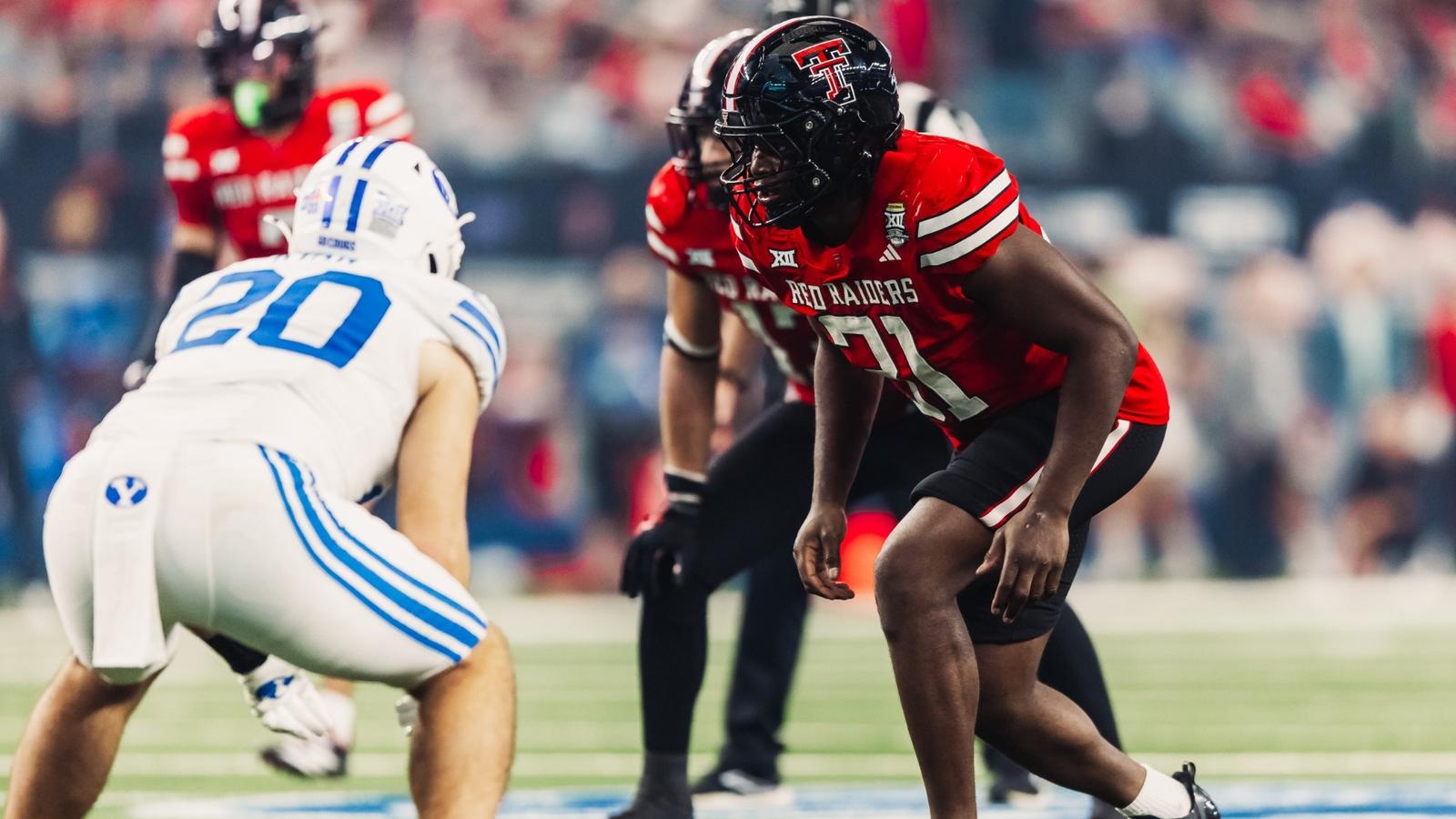
LUBBOCK, Texas – Texas Tech senior outside linebacker David Bailey and senior linebacker Jacob Rodriguez were both named first team All-Americans by the Walter Camp Foundation on Friday evening during the Home Depot College Football Awards Show on ESPN.
This is the first career All-America honor for both Bailey and Rodriguez, who became only the third set of Red Raider teammates to collect first team All-America honors in school history. Texas Tech had both linebacker Zach Thomas and defensive back Marcus Coleman represented on an NCAA-recognized All-America team in 1995, while the quartet of wide receiver Michael Crabtree, quarterback Graham Harrell and offensive linemen Rylan Reed and Brandon Carter were all recognized in 2008.
The Walter Camp All-America teams kick off the list of NCAA-recognized organizations that determine the NCAA’s annual consensus and unanimous All-America teams. The Associated Press All-America team will be unveiled Monday followed by the American Football Coaches Association (AFCA) on Tuesday, the Sporting News on Wednesday and the Football Writers Association of America (FWAA) on Thursday.
Now in its 136th year as the nation’s oldest All-America team, the Walter Camp Foundation had not previously recognized a Red Raider since tight end Jace Amaro was a unanimous selection to the first team in 2013. Rodriguez joins Thomas (1994-95) and Thomas Howard (1976) as the only linebackers in program history to receive first team All-America honors. Bailey, meanwhile, became the third Red Raider defensive end or outside linebacker to be recognized on the first team, joining two other greats in Montae Reagor (1998) and Tyree Wilson (2022).
The All-America honor only adds to a memorable week for Rodriguez, who was also named the winner of the Bednark Award Friday evening during the ESPN broadcast. Rodriguez has collected the Butkus Award (nation’s top linebacker), the Bronko Nagurski Trophy (nation’s top defensive player), the Lombardi Award (nation’s top lineman or linebacker) and the Pony Express Award (nation’s top duo with Bailey) in the past week alone.
Rodriguez has been the most-disruptive player in college football this season as he enters the College Football Playoff Quarterfinal at the Capital One Orange Bowl as the FBS leader with seven forced fumbles and ranks among the top-15 players nationally with 117 tackles. He is the first FBS player since 2005 to record at least five forced fumbles, two fumble recoveries and four interceptions all in the same season.
His impact has bolstered a Texas Tech defense that leads the nation with 31 takeaways and ranks third nationally in scoring defense at 10.9 points per game. Rodriguez was responsible for nine takeaways himself — all in Big 12 play – thanks to his ability to punch the ball out and also read the quarterback in coverage. Rodriguez is currently the highest-rated player in all of college football, according to Pro Football Focus, grading out at 93.3 overall so far this season.
Bailey, meanwhile, leads possibly the best defensive line in college football this season with 13.5 sacks, which leads all power conference players and ranks second overall nationally entering bowl season. Bailey, who is also third in the FBS with 17.5 tackles for loss, is in the midst of his most-productive collegiate season after arriving from Stanford this offseason with 14.5 sacks for his career at the time, one more than his total this season under head coach Joey McGuire and outside linebackers coach C.J. Ah You. He is 1.5 sacks shy of the Texas Tech single-season sacks record of 15.0 that was set by Brandon Sharpe in 2009.
Pro Football Focus has credited Bailey with 74 pressures this season, easily the most in college football as Adam Trick of Miami (Ohio) ranks second with 66. Louisville’s Clev Lubin is the next-closest power conference player to Bailey with 61 pressures of his own. Bailey’s ability to get to the quarterback has also caused three forced fumbles, a pass breakup and a fumble recovery.
As a team, Texas Tech is the only team in the country to rank in the top five nationally for not only scoring defense and total defense but also total offense and total offense. The result has pushed Texas Tech to its first Big 12 Conference title and a 12-1 record, marking the most wins in a season in school history.
The Red Raiders await the winner of the College Football Playoff opening round game between No. 5 Oregon and No. 12 seed James Madision in the Capital One Orange Bowl. Kickoff on New Year’s Day is set for 11 a.m. CT with coverage provided on ESPN and the Texas Tech Sports Network.
Updated Dec. 12, 2025, 9:24 p.m. ET
Two Georgia football players were arrested Friday and charged with misdemeanor theft by shoplifting.
Starting offensive guard Dontrell Glover and running back Bo Walker were booked into the Clarke County Jail after 5:30 p.m. and released before 8 p.m, according to the jail’s online booking report. The arresting agency is the Athens-Clarke County Police.

Amid all the complaints about the current state of college football, be it the College Football Playoff or NIL and the NCAA Transfer Portal, the only solution that has any consensus is the overwhelming desire for a “commissioner” to create and enforce rules and regulations across the sport.
And, whenever the topic of a college football commissioner comes up, one name always seems to be connected: Nick Saban. Of course, the 74-year-old former Alabama head coach-turned-ESPN College GameDay analyst has repeatedly shot down any such suggestion when it inevitably comes up.
“I don’t want to be in that briar patch of being a commissioner,” Saban told the Associated Press in late August. “But I do want to do everything I can to make it right.”
But now the call is coming from inside the house. This week, Nebraska head football coach Matt Rhule openly championed for Saban to accept the yet-to-be-created position during a discussion about the untenable current college football calendar on his House Rhules podcast.
“I can tell you this, I know most coaches, I know me, if that was one the table, I’d certainly vote yes,” Rhule said during Thursday’s episode of his podcast, House Rhules. “Because he’s been in the trenches, he has experience, he has the vision. And you also have to have someone who has the guts and the toughness to make hard decisions, because you’re not going to make everyone happy. That’s why the NFL has Roger Goodell, he’s going to do things, even if people don’t like them, he’s going to do what’s right for the game. And they protect the league.
“For us, our conferences are our leagues, so everyone is protecting their own conference, which is why things end up being maybe a little disjointed as a result,” Rhule concluded. “So, shoot, come on Coach Saban, do it, man. We need you.”
Saban has long been a proponent of more regulation and structure in the sport, especially after this summer’s passage of the House v. NCAA settlement that ended the NCAA’s outdated “amateur” model. The settlement ushered in revenue-sharing across college athletics, allowing programs to pay as much as $20.5 million to their student-athletes, with football teams expected to receive roughly 75% of that total annually. Of course, that has only created more issues, so much so that Congress is now getting involved.
“For years and years and years as coaches, and when we were players, we learned this, we’re trying to create value for our future,” Saban told the AP. “That’s why we’re going to college. It’s not just to see how much money we can make while we’re in college. It’s, how does that impact your future as far as our ability to create value for ourselves?”
That said, if Saban really wants to be part of the solution to what ails college football, Rhule knows the perfect way for him to make the biggest impact.

CLEMSON — While Clemson continues to prepare to play Penn State in the Pinstripe Bowl on Dec. 27, there are things happening inside the program that will help shape what takes place next year.
The next month is going to be the most important month Dabo Swinney’s program will have in a very long time.
Why?
There is a lot going on, whether it be through the transfer portal, NIL or coaching. There are a lot of moving parts right now and it is all important to next year’s team.
Though Swinney will not talk about next year’s team until this season is over, we can.
As we have reported, there are and there will be more changes to the coaching staff. There will also be more changes to the personnel.
The transfer portal officially opens on Jan. 2, and, as you know, several Tigers have already given their intentions to enter the portal. Four underclassmen have declared for the NFL Draft, as well.
Clemson welcomes 19 freshmen to the team, most of them will enroll in January. However, the Tigers will have two weeks to bring in some more talent from the portal.
How Swinney and the coaching staff attack the portal will be paramount to the 2026 team’s success?
It has been well documented Clemson has not handled the NIL and portal as well as other schools. You only need to look at the four previous seasons to see what I am talking about.
Since 2021, the Tigers are 37-16 (.698) with one College Football Playoff appearance. Granted, the Tigers did win ACC Championships in 2022 and ’24, but it is obvious the program has slipped a notch in this new era of college football.
Can the Tigers reach the top of the mountain, again?
I am not sure.
Let’s be honest, the NIL has hurt Clemson. Part of that is Clemson’s fault, part of that is just the way things are. It’s hard for Clemson to compete in the third-party NIL world with schools that can. That is one reason why the Tigers cannot sign 5-star prospects anymore.
While Clemson continues to struggle with the NIL, other schools within the ACC, continue to have success. ACC Champion Duke is a perfect example of this.
Before the NIL, Duke was irrelevant in football and there was no way they could compete with the Clemson’s and Florida State’s. These days, the Blue Devils own a two-game win streak against the Tigers.
Why?
Because they are more successful with the NIL.
Virginia is another example. Tony Elliott went to the portal and pulled 30 new players on a team that made it to the ACC Championship Game. He used revenue sharing and NIL funds to get the best players he could.
As we mentioned before, the changes in college football are very reminiscent of how new rules in college baseball affected the Clemson baseball program some 15 years ago. Clemson baseball has never fully recovered.
Will Clemson Football?
To do that, Clemson must change its philosophy when it comes to paying players from the portal.
This is like free agency in the NFL. You must go and pay for the best.
You must do what is best for the program, not worry if you hurt the feelings of a current player on the roster.
Look at it this way, Clemson is losing, potentially, three first-round picks—Peter Woods, Avieon Terrell and T.J. Parker—and one second-round pick in Antonio Williams. Those guys are all underclassmen. Who are the Tigers replacing them with?
Let me ask you this. How many first-round picks will next year’s roster have?
This is an important off-season. Swinney must make the right choices in the portal.
The Tigers cannot afford to go 4-4 in the ACC again, which is possible if you look at next year’s schedule.
Clemson will play Georgia Tech, Miami, North Carolina and Virginia at home in 2026. As well as visit California, Duke, Florida State and Syracuse. Look at that schedule, do you think the Tigers, with the current roster, can win the ACC next season?
This is why the next month is going to be so big for the Clemson Football program.

Trump ‘willing to put the federal government behind’ changes to NIL

UAA signs trio of Alaska prep stars

UGOLINI NAMED TO ALL-ECAC SECOND TEAM

Here’s what Trump has to say about NIL in college sports

No. 1 seed Texas hosts No. 4 seed Indiana in the Sweet 16

Nebraska Volleyball sweeps Kansas; advances to NCAA Regional Final

Husker Volleyball dominates Kansas, advances to Elite 8

Bailey, Rodriguez garner Walter Camp All-America honors

Hillsborough Democrats announce 2026 committee slate

Concord sports memorabilia dealer admits to fraud after selling phony Willie Mays items

Allan Mark Moses – Concord Monitor

Long Beach Poly Earns First Win in League Opener vs. Millikan – The562.org

USC Men’s Volleyball Set for Inaugural MPSF Media Day
Georgia football’s Dontrell Glover, Bo Walker arrested for shoplifting
Pennsauken sprinter Sianni Wynn tabs Florida as college choice

First Tee Winter Registration is open

Fargo girl, 13, dies after collapsing during school basketball game – Grand Forks Herald

CPG Brands Like Allegra Are Betting on F1 for the First Time

Volleyball Recaps – November 18

F1 Las Vegas: Verstappen win, Norris and Piastri DQ tighten 2025 title fight

Two Pro Volleyball Leagues Serve Up Plans for Minnesota Teams

Sycamores unveil 2026 track and field schedule

Utah State Announces 2025-26 Indoor Track & Field Schedule

Redemption Means First Pro Stock World Championship for Dallas Glenn

Jo Shimoda Undergoes Back Surgery

Robert “Bobby” Lewis Hardin, 56

Texas volleyball vs Kentucky game score: Live SEC tournament updates

Bowl Projections: ESPN predicts 12-team College Football Playoff bracket, full bowl slate after Week 14

How this startup (and a KC sports icon) turned young players into card-carrying legends overnight

Indiana’s rapid ascent and its impact across college football

 NBA Legend Michael Jordan to Join NBC Sports as Special Contributor
 Why a rising mid-major power with an NCAA Tournament team opted out of revenue-sharing — and advertised it
 Falcons mailbag
 Portal Update – Basketball and Gymnastics Take Hits
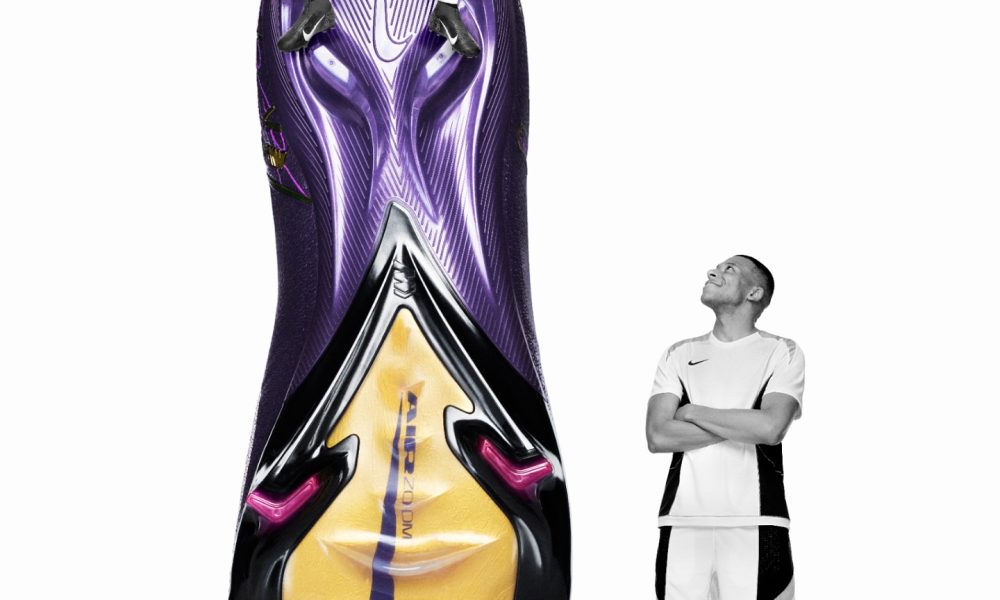 has always dreamed in Mercurial. Now his initials are on the boots.
The new Kyl…
has always dreamed in Mercurial. Now his initials are on the boots.
The new Kyl…
-
 Rec Sports3 weeks ago
First Tee Winter Registration is open
-
 Rec Sports2 weeks ago
Fargo girl, 13, dies after collapsing during school basketball game – Grand Forks Herald
-
 Motorsports3 weeks ago
CPG Brands Like Allegra Are Betting on F1 for the First Time
-
 Motorsports3 weeks ago
F1 Las Vegas: Verstappen win, Norris and Piastri DQ tighten 2025 title fight
-
 Sports3 weeks ago
Two Pro Volleyball Leagues Serve Up Plans for Minnesota Teams
-
 Sports3 weeks ago
Sycamores unveil 2026 track and field schedule
-
 Sports2 weeks ago
Utah State Announces 2025-26 Indoor Track & Field Schedule
-
 Motorsports2 weeks ago
Redemption Means First Pro Stock World Championship for Dallas Glenn
-
 Motorsports2 weeks ago
Jo Shimoda Undergoes Back Surgery
-
 Rec Sports2 weeks ago
Robert “Bobby” Lewis Hardin, 56