
NIL
NCAA Roster Caps Could Squeeze Out High School Recruits Under NIL Settlement

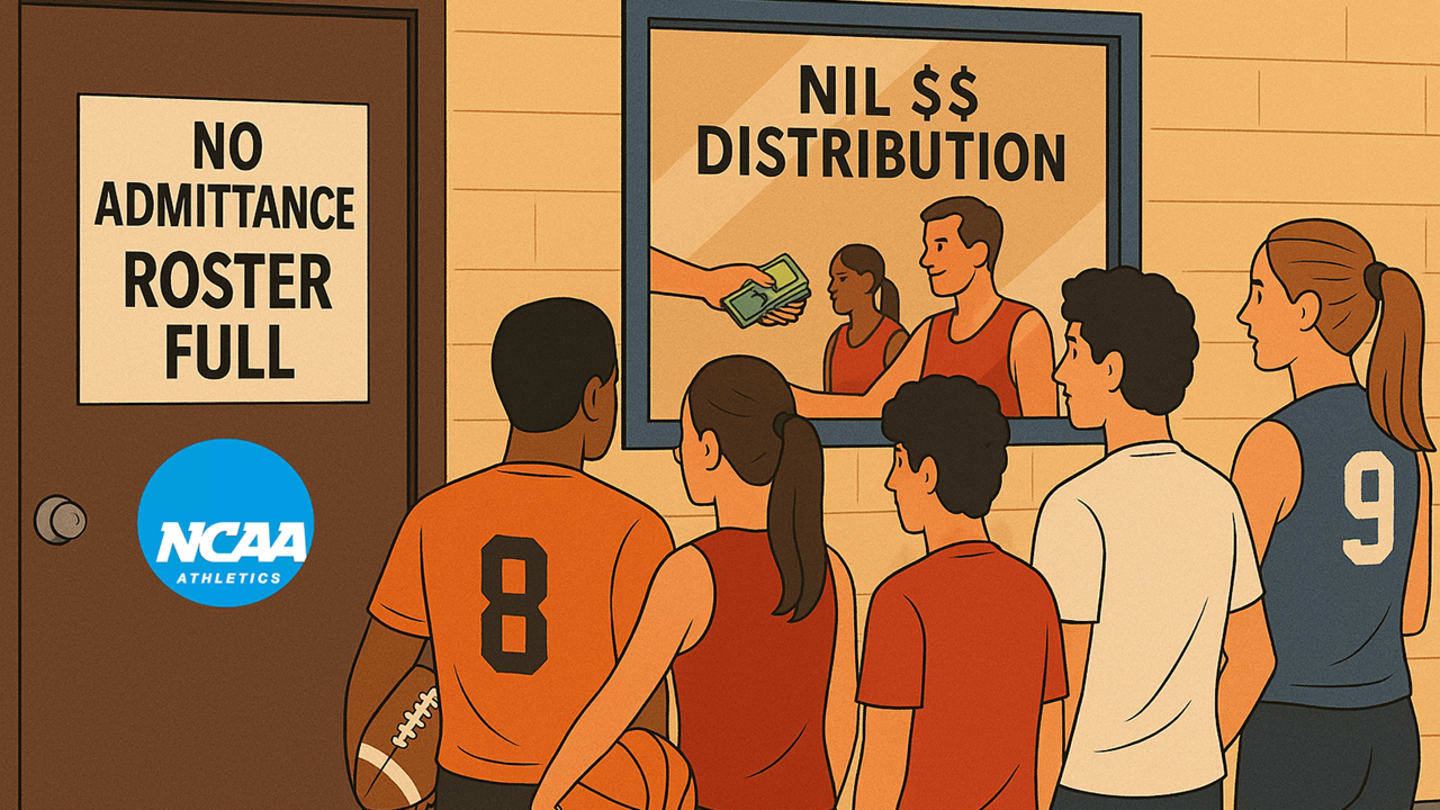
What had been anticipated for many months, became a reality last Friday when U.S. District Judge Claudia Wilken, in Oakland, California, granted final approval of the settlement of three antitrust class action lawsuits brought against the NCAA and each of, what were, its Power 5 conferences (now down to four). The settlement created a $2.8 billion damages pool to make Name, Image and Likeness (NIL) payments to former college athletes, while providing the framework for schools to directly pay current and future college athletes.
In addition to the funds set aside to pay former college athletes, who competed between 2016 and 2024, over the next 10 years, the settlement allows schools to share as much as $20.5 million of their athletic revenues with their student athletes during the upcoming 2025-26 academic year. The revenue sharing cap will grow by 4% each year of the 10-year agreement. In addition, college programs will no longer be limited in how many scholarships they can offer to the athletes on their rosters. If a school so chooses, every athlete on every team it fields, can be offered a full scholarship.
On the flip side, roster sizes have been cut for all but a handful of sports, in an effort, theoretically, to control costs. Discussions around roster limits were the biggest hold up in securing final approval for the settlement, which was agreed to by the lawyers for the plaintiffs and the NCAA in 2024.
One of the reasons the approval of the settlement, which was expected in early April, was delayed until June was to allow the parties to resolve concerns over the proposed cuts to roster sizes.
Estimates on the number of rosters cuts called for under the settlement range between 5,000 and 13,000 across the 43 sanctioned NCAA sports. For example, football programs will be limited to 105 players. Some football programs have carried as many as 180 players with the average roster size being around 125. Men’s basketball has been cut from 17 players to 15, baseball rosters decreased from an average size of 41 to 34. Some sports, mostly on the women’s side, increased.
Arguments seeking to protect the roster spots of student-athletes already on college teams resonated with Judge Wilken. During an April 7th hearing in which various parties were allowed to voice objections to the settlement, the issues revolving around roster limits were the ones which carried weight.
In an April 23rd ruling, Judge Wilken stated, “Because the settlement agreement is not fair and reasonable to the significant number of class members whose roster spots will be or have been taken away because of the immediate implementation of the settlement agreement, the Court cannot approve the settlement agreement in its current form.
“The Court will delay denial of final approval to permit the parties to attempt to modify the settlement agreement so that members of the Injunctive Relief Settlement Class will not be harmed by the immediate implementation of the roster limits provisions. One way of achieving that could be to modify the settlement agreement to ensure that no members of the Injunctive Relief Settlement Class who have or had a roster spot will lose it as a result of the immediate implementation of the settlement agreement. Limits could be accomplished gradually by attrition. There may be other ways of mitigating the harm to members of the Injunctive Relief Settlement Class. A new round of notices to class members may not be required if the parties modify the settlement agreement in a manner that does not adversely affect class members.”
The agreement the parties reached, which ultimately cleared the way for Judge Wilken’s final approval of the settlement, allowed for current college athletes who would not make the cut under the new roster limits, to be classified as “Designated Student-Athletes (DSA),” which, in theory, protects their place on a team’s roster, as an exemption. Athletes with the DSA status will be allowed to remain on their teams and will not count against their program’s roster limit. When all DSAs exhaust their college athletic eligibility, the team will have to fully comply with its mandated roster limit.
“The individual universities have 30 days, and if my math is right, until July 6, to create a list of those designated student athletes from the 2024-25 school year and provide that to class council and their conferences,” said Doug DePeppe, an attorney in the Denver office the Buckalter law firm, which represented several objectors to the settlement, based on the original roster limit provisions. “They have to use good faith and identify those athletes.”
Proposed NCAA Settlement Threatens Non-Revenue Sports: Roster Caps Jeopardize 25,000 D1 Roster Spots
Graduating high school student athletes in the Class of 2025, who were being recruited and/or offered scholarships or walk-on opportunities, are also eligible for the Designated Student Athlete Status.
Those who receive it, most likely owe that opportunity to Gracelyn Laudermilch, a cross country and track star at Northeast Bradford High School in Rome, Pennsylvania.
Laudermilch was set to commit to her dream college. She was not guaranteed a scholarship, but she was assured of a roster spot with an opportunity to earn a scholarship if she could meet certain performance levels, according to a May 14 story by Front Office Sports. When it came time to make her formal commitment, however, her future coach gave her some tough news.

“You cannot commit. … I just found out four hours earlier that I have to cut half of my team,” Laudermilch told FOS of her conversation with the coach.
Laudermilch was in a bind, as she had passed on all of her other Division I suitors. After news accounts about the settlement case, she learned she could apply to be an objector, for which, to her astonishment, she was selected. She flew to California to testify before Judge Wilken and, according to many observers, stole the show.
In her passionate testimony, Laudermilch said, “I believe this settlement is unfair. The roster limits destory the hard work and dreams of thousands of student athletes like me all over the nation. By God’s grace, I have been able to reach many of my desired stepping stones: I am a 4x state medalist and an All-American. I hold numerous school records. As a junior, I had met the walk-on and scholarship standards of several D1 schools. As I began my senior year, I was on course to attend my dream college. My 14-year old self would have been so proud.
“But then came the House vs. NCAA case, and all of my plans came to a halt. I had been in contact with five Division I schools and one NAIA school. I went on three college visits and carefully made my decision. My other offer deadlines came. I politely declined them. My dreams, prayers and hopes were becoming my reality. I was so excited to have the opportunity to train in impressive facilities under outstanding coaches and with amazing girls who have the same high goals. I made the call to commit. It was October 30, 2024 at 4 pm. The coach compassionately told me that mere hours earlier she had been informed that their university was opting into the settlement. I hung up the phone and cried.”
According to DePeppe, college coaches will have to make a list of current high school senior athletes which they recruited and submit them for approval on the DSA list.
“Certainly, those who accepted a scholarship will be granted the DSA status,” said DePeppe. “If they were actively being recruited or offered walk-on opportunities, the universities will be required to use good faith to identify them, but the coaches will have some discretion there.”
Unfortunately, no such protections were offered to athletes in the Class of 2026 or beyond. Those student-athletes will experience the full impact the limited Division I opportunities. Those athletes will be forced to move their aspirations to the Division II or III and JUCO levels, possibly taking spots from other athletes who may have found their place at those levels.
In a communication to Kansas University student-athletes, issued on June 7 by Kansas Athletic Director Travis Goff and obtain by High School On SI, Goff explained the impact of the new roster limits.
“With the settlement, most sports will see their rosters reduced, though a couple may see minor increases,” wrote Goff. “There will now be ‘designated student-athletes.’ What this means is that student-athletes that would have been cut from the team due to roster limits will receive special designated status that allows them to not count against any roster limit, whether at KU or another university.
“Over the next several weeks we will be working with conference officials on this designation process and will then communicate with those impacted.”
The College Sports Commission (CSC), which was established immediately after the settlement was announced, to insure enforcement and compliance with the provisions of the settlement, defines a Designated Student Athlete as follows:
Any student-athlete who a school attests was or would have been removed from the school’s 2025-26 roster due to the implementation of roster limits who was either:
There will always be college opportunities for elite high school student-athletes, especially those of the 4- and 5-star variety in football as well as men’s and women’s basketball. But the dawn of the NIL era, which has reached warp speed in the last 2-3 years, had already begun to make being recruited a difficult task for those athletes not as highly regarded as those in the top trier.
The relaxing of transfer rules and the flood of NIL money into big time college athletics, which essential has made every athlete a free agent each and every year of his or her college eligibility, has led to an explosion in the use of the transfer portal.
No longer can a college coach count on a player remaining and developing within a program. If an athlete does not receive enough playing time or believes more NIL money awaits at another program, they can up and leave. Coaches are often faced with fielding an entirely new roster from one season to the next. This has led coaches to hedge on offers to high school athletes not in the top tier, or preferring to recruit a transfer with proven college experience.


Are top-drawer college football teams and their name, image and likeness collectives simply trying to protect themselves from willy-nilly transfers or are they bullying players to stay put with threats of lawsuits?
Adding liquidated damage fee clauses to NIL contracts became all the rage in 2025, a year that will be remembered as the first time players have been paid directly by schools. But some experts say such fees cannot be used as a cudgel to punish players that break a contract and transfer.
It’s no surprise that the issue has resulted in a lawsuit — make that two lawsuits — before the calendar flipped to 2026.
Less than a month after Georgia filed a lawsuit against defensive end Damon Wilson II to obtain $390,000 in damages because he transferred to Missouri, Wilson went to court himself, claiming Georgia is misusing the liquidated damages clause to “punish Wilson for entering the portal.”
Wilson’s countersuit in Boone County, Mo., says he was among a small group of Bulldog stars pressured into signing the contract Dec. 21, 2024. The lawsuit also claims that Wilson was misused as an elite pass rusher, that the Georgia defensive scheme called for him to drop back into pass coverage. Wilson, who will be a senior next fall, led Missouri with nine sacks this season.
Georgia paid Wilson $30,000, the first monthly installment of his $500,000 NIL deal, before he entered the transfer portal on Jan. 6, four days after Georgia lost to Notre Dame in a College Football Playoffs quarterfinal.
Bulldogs brass was not pleased. Wilson alleges in his lawsuit that Georgia dragged its feet in putting his name in the portal and spread misinformation to other schools about him and his contractual obligations.
“When the University of Georgia Athletic Association enters binding agreements with student-athletes, we honor our commitments and expect student-athletes to do the same,” Georgia spokesperson Steven Drummond said in a statement after the school filed the lawsuit.
Wilson’s countersuit turned that comment on its head, claiming it injured his reputation because it implies he was dishonest. He is seeking unspecified damages in addition to not owing the Bulldogs anything. Georgia’s lawsuit asked that the dispute be resolved through arbitration.
A liquidated damage fee is a predetermined amount of money written into a contract that one party pays the other for specific breaches. The fee is intended to provide a fair estimate of anticipated losses when actual damages are difficult to calculate, and cannot be used to punish one party for breaking the contract.
Wilson’s case could have far-reaching implications because it is the first that could determine whether schools can enforce liquidated damage clauses. While it could be understandable that schools want to protect themselves from players transferring soon after receiving NIL money, legal experts say liquidated damage fees might not be the proper way to do so.
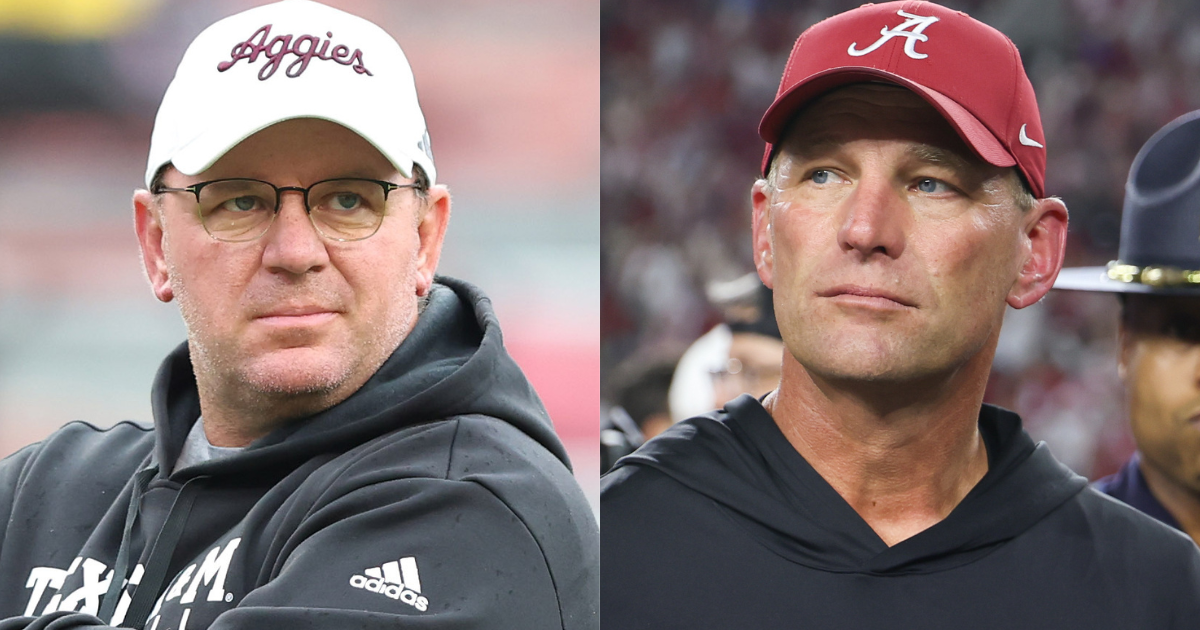
Penn State‘s head coaching search may have taken longer than expected, but the Nittany Lions ultimately landed their guy — Matt Campbell from Iowa State. According to a recent report from ESPN, however, the search apparently featured a number of big-name college football candidates to replace James Franklin.
These names included Alabama‘s Kalen DeBoer, Notre Dame‘s Marcus Freeman and Texas A&M‘s Mike Elko. All surfaced as “potential candidates,” with Elko looked at as “the most realistic,” given his ties to the region.
“The whole time, we thought Elko was going to be the guy,” one SEC coach told ESPN. “Then he came off the board.”
Elko just finished an 11-2 season at Texas A&M, leading the Aggies to its first-ever College Football Playoff. His Aggies were undefeated for the first 13 weeks of the season while Penn State continued it’s head coaching search. Texas A&M went on to extend his on Nov. 15.
For DeBoer, he denied having interest in the Nittany Lions’ job. Freeman was in the middle of leading Notre Dame to a 10-game win streak to lose the season. According to another ESPN source, Penn State “never spent a ton of time on those guys knowing their current situations.”
It wasn’t until early December that Penn State announced the hire of former Iowa State head coach Matt Campbell. The hire appears to have been well-received on social media and recruits alike.
He’s bringing to Happy Valley a resume that includes a 107–70 overall as a head coach. He built the Iowa State program from the ground up after a successful stint as Toledo’s head coach. Starting with a 3-9 finish in his first year with the program, Campbell led the Cyclones to a program record five-straight bowl games.
In 2024, Iowa State had its best season yet under Campbell. Leading the Cyclones to an 11-3 record, they came up just short of the College Football Playoff after losing to Arizona State in the Big 12 Championship game. They were ranked as high as No. 9 in the AP Poll last season.
He is expected to mirror that success and then some as the Nittany Lions’ new head coach, all while competing alongside the DeBoer’s, Freeman’s and Elko’s at the forefront of college football. Campbell’s effort is already underway in Happy Valley, and the product of it will be seen next fall.
The first step — the NCAA transfer portal. Penn State was left with two signees in its 2025 recruiting class, so he’ll be focused on bolstering his roster once it opens on Jan. 2.
South Carolina freshman EDGE rusher Taeshawn Alston plans to enter the NCAA Transfer Portal, On3’s Pete Nakos reports. Alston did not see any game action this season and redshirted.
The news of Alston’s transfer comes one day after it was revealed that All-SEC EDGE rusher Dylan Stewart would be returning to Columbia next season. The projected future top-ten NFL Draft pick signed a new rev share/NIL agreement with the school and announced his return on Instagram Tuesday.
Prior to enrolling at South Carolina, Alston was ranked as a three-star prospect and the No. 674 overall player in the 2025 class, according to the On3 Consensus. He was the No. 65-ranked EDGE rusher in his class and the No. 16 overall player from the state of North Carolina, hailing from Vance County.
Alston chose South Carolina over programs such as Colorado, West Virginia, Georgia Tech, Virginia Tech, and North Carolina coming out of high school. Alston’s secondary recruiter, defensive line coach Sterling Lucas, was poached by Lane Kiffin and LSU this offseason.
This past season was extremely disappointing for South Carolina, which opened the season ranked No. 13 in the Preseason AP Poll. The Gamecocks kicked off their season with back-to-back wins, but went just 2-8 over their remaining 10 games to finish with a 4-8 record.
To keep up with the latest players on the move, check out On3’s Transfer Portal wire.
The On3 Transfer Portal Instagram account and Twitter account are excellent resources to stay up to date with the latest moves.
Part 1:
Part 2:
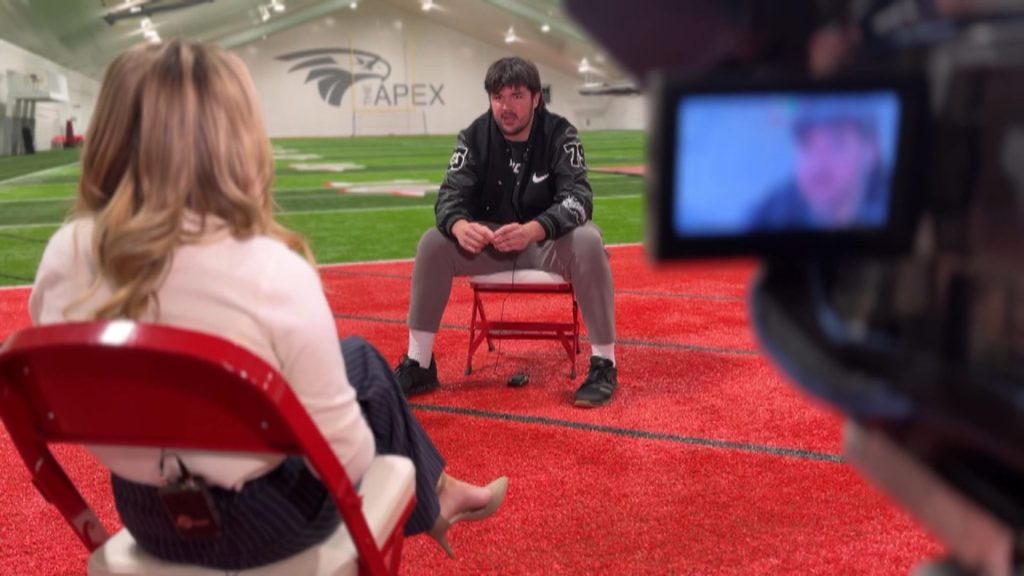
Nixa’s Jackson Cantwell made the transition from tight end to the offensive tackle and quickly realized that his talents would take him far. He racked up accolades like Gatorade’s National Player of the Year and No. 1 college football recruit in the 2026 class.
As a high school junior, he came to realize that his top-tier college recruiting brings NIL into the picture.
Cantwell and KY3’s Danielle King sat one-on-one to discuss how he navigated NIL, from hiring sports agent Drew Rosenhaus to enjoying the food that comes with brand deals.
Rosenhaus, one of the leading NFL representatives, also chatted with King about representing Cantwell, the young NIL landscape and more.

The college football transfer portal is only ten days away from officially opening for business. That hasn’t stopped players around the country from getting a head start on the action, as nearly 1,100 names are expected to transfer.
That number will continue to rise over the next few weeks. The movement could be unprecedented this offseason, as the spring window has been eliminated, meaning there will be only 15 days for players to appear in the portal.
The quarterback market is packed. Though the group might not be as top-heavy as the last few seasons, there will still be plenty of talented signal-callers available.
Former Freshman Of The Year Transferring From Arkansas State
On Tuesday evening, Arkansas State junior quarterback Jaylen Raynor revealed his intentions to transfer, per 247Sports’ Matt Zenitz.
Raynor spent the last three seasons as the starter for the Red Wolves. In 2025, he completed 333/501 passes for 3,361 yards with 19 touchdowns to 11 interceptions. He added 154 rushes for 423 yards and 7 more scores.
Raynor led the Sun Belt Conference in completions, attempts, yards, and interceptions.
Arkansas State finished 7-6, defeating Missouri State, 34-28, in the Xbox Bowl.
Raynor signed with the Red Wolves as a two-star prospect in the 2023 class. He leaped into the starting role early in his true freshman season, taking the reins for the final 10 games of the year.
Raynor was named the Sun Belt’s Freshman of the Year after completing 166/285 passes for 2,550 yards with 17 touchdowns to 7 interceptions. He rushed for 5 more scores.
The North Carolina native tied Arkansas State’s program record with six touchdown passes against UMass on September 30, 2023.
Raynor continued to lead the Red Wolves as a sophomore. In 2024, Arkansas State went 8-5 and defeated Bowling Green in the 68 Ventures Bowl.
Overall, Raynor is 20-16 as a starting quarterback and he’s 2-1 in bowl games.
During his college career, he’s completed 758 of 1,206 passes for 8,694 yards with 52 touchdowns and 28 interceptions. Raynor has rushed 414 times for 1,183 yards and 15 more scores.
The 6-foot-0, 202-pound quarterback has two years to play one at the college level.
Out of high school, Raynor held offers from programs such as UMass, Miami (OH), Army, Air Force, and Navy.
Read more on College Football HQ
• $45 million college football head coach reportedly offers Lane Kiffin unexpected role
• Paul Finebaum believes one SEC school is sticking by an ‘average’ head coach
• SEC football coach predicts major change after missing College Football Playoff
• Predicting landing spots for the Top 5 college football transfers (Dec. 17)

1. The latest actual numbers I can find…per 247 sports, U of L was 20th in NIL monies in college sports at about 450 million. Now we are approaching 2026 and things obviously have changed, but we were at least trying to play the NIL game.
2. Jeff did not leave Purdue the first time because the timing wasn’t right or he still had a job to do with the Boilermakers. I respected Jeff for that and quite frankly made me feel more proud of who he was as a person .
I could be naive and stupid but:
A. This crazy money by rich people to pay athletes is just that, crazy and not sustainable long term.
B. U of L is probably doing the best it can but can not compete against oil monies etc.
C. Love him or not, (I love Jeff as our coach) he is the best we could have and feel safe he wants to stay. (Is this a dumb statement given the leaving fears?)
D. Let’s keep winning at Jeff’s level or better

PROFILE | Red Star’s Damien Durand – from youth activity leader at 25 to Ligue 2 top-scorer at 30

Merry Christmas to one and all

Georgia case could determine if schools can get damages from transfers

Public Defender Melanie Sellers announces 2026 candidacy for Public Defender

Mite 1 and Mite 2 Jamboree at the Ruk | North Shore Journal

Metro Nashville Public School students’ artwork to be featured on new salt trucks

Bonners Ferry runner Colton Cohen commits to Missouri Valley College

Report shares why Penn State did not spend ‘a ton of time’ pursuing Kalen DeBoer, Mike Elko

Best Stories of 2025: “Record-setter Ethan Strand now ‘future of U.S. distance running’”

VUU coach honored with Triad of Excellence Award | Richmond Free Press

Pitt Middle Blocker Ryla Jones Transfers To Penn State Women’s Volleyball

South Carolina EDGE Taeshawn Alston plans to enter NCAA Transfer Portal

ALL-STATE VOLLEYBALL: Storro named honorable mention

Regional Youth Assessment Center corporal hopes to provide familiarity, positivity during Christmas shift – Grand Forks Herald
Newark Catholic honors state champion volleyball at boys basketball

Fargo girl, 13, dies after collapsing during school basketball game – Grand Forks Herald

CPG Brands Like Allegra Are Betting on F1 for the First Time

Sycamores unveil 2026 track and field schedule

Two Pro Volleyball Leagues Serve Up Plans for Minnesota Teams

Utah State Announces 2025-26 Indoor Track & Field Schedule

SoundGear Named Entitlement Sponsor of Spears CARS Tour Southwest Opener

Jo Shimoda Undergoes Back Surgery

Redemption Means First Pro Stock World Championship for Dallas Glenn

Bowl Projections: ESPN predicts 12-team College Football Playoff bracket, full bowl slate after Week 14

Black Bear Revises Recording Policies After Rulebook Language Surfaces via Lever

Texas volleyball vs Kentucky game score: Live SEC tournament updates

Robert “Bobby” Lewis Hardin, 56

How this startup (and a KC sports icon) turned young players into card-carrying legends overnight

Donny Schatz finds new home for 2026, inks full-time deal with CJB Motorsports – InForum

How Donald Trump became FIFA’s ‘soccer president’ long before World Cup draw






-
 Motorsports2 weeks ago
SoundGear Named Entitlement Sponsor of Spears CARS Tour Southwest Opener
-
 Motorsports2 weeks ago
Donny Schatz finds new home for 2026, inks full-time deal with CJB Motorsports – InForum
-
 Rec Sports3 weeks ago
How Donald Trump became FIFA’s ‘soccer president’ long before World Cup draw
-
 Rec Sports2 weeks ago
David Blitzer, Harris Blitzer Sports & Entertainment
-

 Motorsports3 weeks ago
JR Motorsports Confirms Death Of NASCAR Veteran Michael Annett At Age 39
-
Sports3 weeks ago
Elliot and Thuotte Highlight Men’s Indoor Track and Field Season Opener
-
Sports3 weeks ago
West Fargo volleyball coach Kelsey Titus resigns after four seasons – InForum
-

 Motorsports2 weeks ago
Rick Ware Racing switching to Chevrolet for 2026
-
 Sports3 weeks ago
Temple Begins Indoor Track & Field Season at UPenn This Weekend
-
 Sports2 weeks ago
#11 Volleyball Practices, Then Meets Media Prior to #2 Kentucky Match