Connect with us
https://yoursportsnation.com/wp-content/uploads/2025/07/call-to-1.png

NIL

Hope springs eternal with new NIL rules. History doesn’t lie

Published

on


In case you hadn’t heard, it’s a brand new day in college sports. You’ve undoubtedly felt the tremors, the equivalent of shifting tectonic plates in a changing sports landscape.

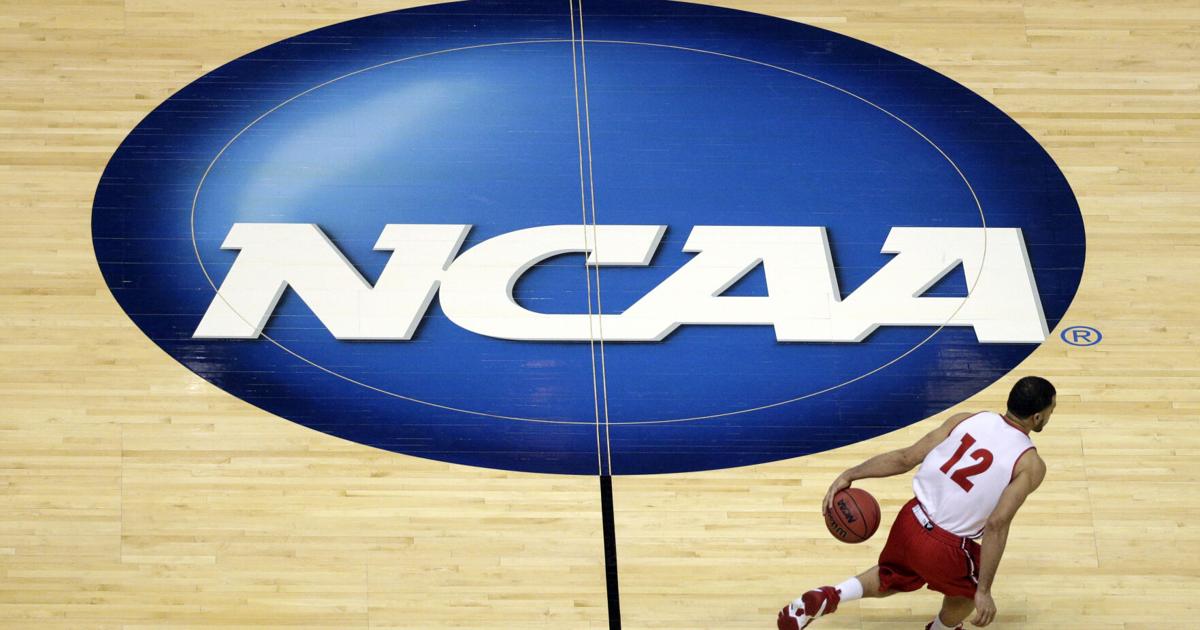
Thanks to a federal judge’s approval of a settlement agreement in the House v. NCAA case about 10 days ago, everything has changed.

Well, change might be a bit strong. Things will definitely take a different shape.

But what if this whole thing is overly optimistic and idealistic? What if the more things change, the more they fall back into familiar flaws.

Now, colleges can pay players directly through licensing deals, a cap has been created on the amount of money schools can distribute to players, third-party name, image and likeness (NIL) agreements will continue, but a newly created College Sports Commission — referenced in the settlement agreement as the “Designated Reporting Entity” — will assume oversight over NIL deals and serve as a clearing house for any third-party deal for more than $600.

People are also reading…

“I think we all have to make a commitment, particularly as leaders — as athletic directors, presidents — and I think that’s what you’re seeing and will continue to see,” University of Missouri athletic director Laird Veatch said during a media availability Thursday at Mizzou Arena. “Even when you talk to coaches, particularly behind the scenes, they’re tired of operating in the environment that we have been.”


St. Louis University Billikens defeat Loyola Chicago Ramblers 98-67

St. Louis University center Robbie Avila, right, celebrates a win with teammates Kalu Anya, left, and Kobe Johnson on Saturday March 1, 2025, after beating Loyola Chicago at Chaifetz Arena in St. Louis.


The previous dynamics caused never-ending headaches for athletic departments and coaches and athletic departments.

NIL guidelines varied from one state to the next. Deals made through other entities on behalf of a school or program became the subject of disagreement and disgruntlement among players. The requirements and responsibilities for players to earn NIL payments varied wildly. Not to mention, players could be lured off of another team’s roster by the promise of a bigger dollar figure.

This new system seeks to formalize the rules and regulations across the nation.

If you’re a power conference school like Missouri in the SEC, this saves you and your partner schools from yourselves. In the name of competition, you might have bankrupted or nearly bankrupted your colleges in effort to compete in an ever-escalating recruiting arms race.

If you’re a school outside the power conferences yet you want to vie for the top talent and have a chance to achieve the highest levels of success, this seemingly levels the playing field. You’re no longer just waiting to find out that you and your supporters have been outspent.

Now, everyone has the same financial restrictions and the same chance to land talent. That’s what’s behind comments like the ones St. Louis University athletics director Chris May made to the Post-Dispatch recently, when he said of the settlement, “It allows us to compete at the highest levels, especially when you add on the layers of recruiting and now revenue sharing.”

The wave of optimism is understandable. In a perfect world, every school now stands on equal footing and there are new guardrails.

Of course, this could be just another form of what we’ve all seen fail before.

Even Veatch’s optimism came with significant caution layered into it.

“I do think we have an opportunity to take a significant step, and we do have some structure and foundation here to work from,” Veatch said. “We do need to be committed to it and give it an opportunity to work and be successful. This is only going to be as successful as the members decide to make it. And if we are committed to it and give it a chance, then that’s a starting place.

“Will there be lawsuits? Will there be continued outside pressures? Absolutely, and that’s why it is a step. But it’s not the last or final step. It is also why we need congressional support. Why we need to have, at some level, some federal action that gives us a level of protection so we can continue to move forward with the collegiate model in a new way in a new day.”

Even if we set aside the fact that there seems to be an overwhelming willingness to put governors on the money the athletes — and only the athletes — make from this multi-billion-dollar industry, there’s still some very fragile pillars holding up the foundation to this new approach to college athletics and the compensation of college athletes.

The College Sports Commission, an entity that didn’t even officially exist at the start of this month, will basically take on roles once held by the NCAA. That’s widescale oversight, rules enforcement and investigation of potential violations of the new compensation and revenue sharing system, placed in the lap of this commission starting July 1.

When the NCAA served as the governing body, coaches, boosters, family members, amateur coaches, representatives of outside companies, AAU coaches and agents all played parts in circumventing the rules.

Whether it’s stories of hundred dollar handshakes or the infamous SMU football pay-for-play scheme of the 1980s or larger more complex scandals like the FBI arresting college basketball coaches in 2017, the pursuit of college sports glory has a history of outweighing “the rules.”

So, once again, this whole thing hinges largely an overwhelmed governing body and the collective will of fiercely competitive people to play within the rules.

Why? For the greater good.

“We have to get to a point where we’re at least operating from the same set of rules,” Veatch said. “I believe we’re all embracing that piece of it. We’re all going to continue to push, and we’re all going to be aggressive. Mizzou will be too. We’re going to do what it take to win and be aggressive, but we also have to be committed to being a part of a larger whole.”

I guess everybody is allowed to hope.


Worthy: Doubling down on Nolan Gorman's upside as he searches for his old form at the plate


Worthy: UFL championship game a full circle moment for Jordan Ta'amu, the original Battlehawk


Worthy: Postseason jinx lives on as Battlehawks again fall short of UFL title game

Mizzou football coach Eli Drinkwitz speaks with the media on Wednesday, April 9, 2025. about the NCAA House settlement lawsuit. (Video by Mizzou Network, used with permission of Mizzou Athletics)

Ethan Erickson | Post-Dispatch


Link

Continue Reading
Click to comment

Leave a Reply

Your email address will not be published. Required fields are marked *

NIL

Grading the Sherrone Moore era at Michigan

Published

on


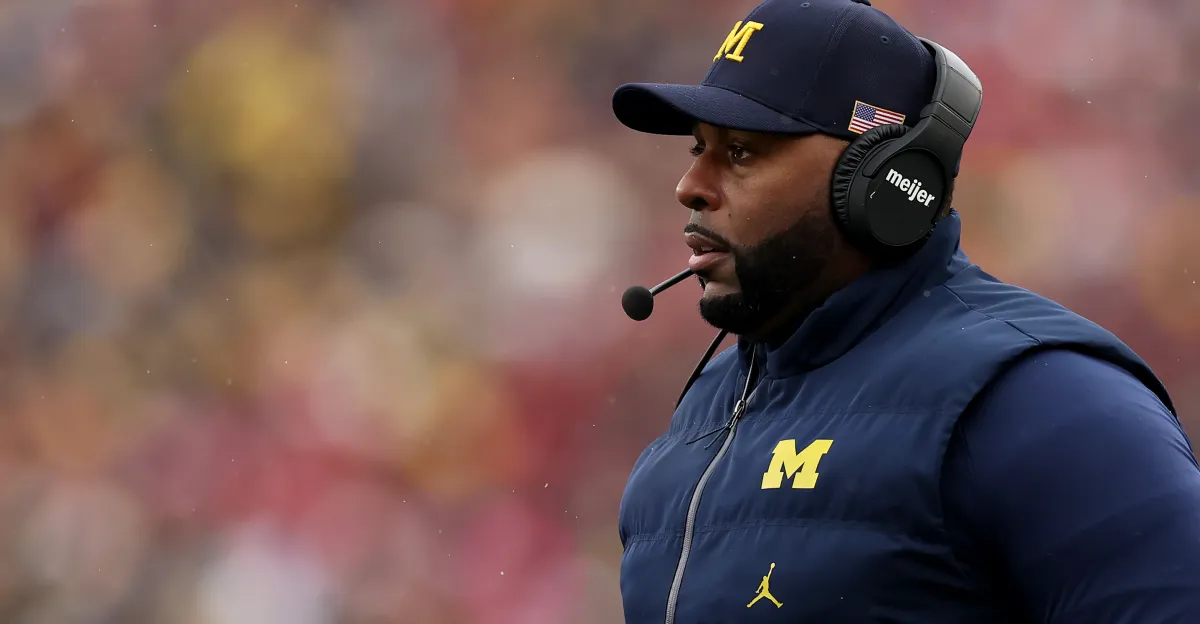
The Sherrone Moore era is over at Michigan after two short years, and for good reason. Now that he’s in the rearview mirror, we can begin to assess the overall job he did as Michigan’s head football coach.

Today, we broke down a few of the key qualities of a football coach and assessed how he performed as Michigan’s leading man.

Following Jim Harbaugh’s departure, Moore had to rapidly fill out a staff as Harbaugh took most of Michigan’s assistants with him to the NFL. Moore hired Kirk Campbell to be his offensive coordinator, Wink Martindale to be the defensive coordinator, and J.B. Brown to be the special teams coordinator. Swing and a miss. Campbell and Brown were abject disasters, with Campbell being let go after just one season while Brown made it two yeaes before being fired. Martindale was well on his way to needing to find a new job as well.

As for position coaches, Moore does get credit for bringing in defensive line coach Lou Esposito and running backs coach Tony Alford. However, the rest of the staff has been disappointing to various degrees. Alford and Esposito prevent this from being an F, but Moore was pretty close to flunking this department.

High School Recruitment: A-

Moore did well on the recruiting trail. The 2026 class was a borderline Top-10 class and included two five-stars in running back Savion Hiter and edge rusher Carter Meadows. But since his firing, two members of the class in four-star tight end Matt Ludwig and three-star offensive lineman Bear McWhorter have already left. However, it’s okay to give Moore some credit for putting together very good classes. Don’t forget the class of 2025 also included two five-stars in Bryce Underwood and Andrew Babalola.

Transfer Portal Management: B

In the transfer portal era, it’s unfair to define this category based on quantity as back-ups move around at their own pleasure now. However, we have to look at the quality of players in and out. Michigan lost a small handful of notable players in Keon Sabb, DJ Waller Jr. and Matthew Hibner after winning Harbaugh left and Moore was hired. However, Moore then brought in Jaishawn Barham, Josh Priebe and Dominic Zvada, to name a few, that same offseason. At worst, he broke even that season.

Before his second year, he was able to bring in Justice Haynes, Donaven McCulley, Damon Payne Jr. and Tre Williams, to name a few. The transfers out were plentiful, but very few made an impact at their respective new schools. It’s safe to say Moore brought in more talent than he lost in each of his two years. However, there were a few glaring holes each offseason that he did not address (quarterback in 2024, punter in 2025, etc.).

It’s hard to give Moore anything other than an A in this category, as he essentially got NIL off the ground at Michigan. Harbaugh’s famous “transformational, not transactional” model was destined to be dead-to-rights. Moore was able to retain players such as Mason Graham, Will Johnson, Kenneth Grant and Colston Loveland thanks to NIL deals, and he also played a role in Underwood signing with the Wolverines. Say what you will about Moore’s tenure at Michigan, but this was one of his legitimate strengths.

To me, this is the single most-damning category for Moore. He seemed to have no clue what he was doing when it came to clock-management and his use of timeouts. The 2024 Indiana game is the best example, as it quite literally cost the Wolverines a chance at winning. However, alternative examples are numerous and there were no signs of improvement. Under his watch, Michigan routinely challenged obviously correct calls, failed to challenge obviously incorrect calls, and played an all-around undisciplined brand of football. This category is easily an F.

When Moore was first promoted, his main mantas quickly became “SMASH” and “Team over Me.” At the time, most fans were optimistic about these, as Moore was the former offensive line coach and had developed three stellar offensive lines from 2021-23. But that quickly deteriorated, as the 2024 and 2025 offensive lines were average at best.

However, the main reason we are giving this an F is the events of the past few weeks. The fact players and staffers in the program were aware of the inappropriate relationship between Moore and the staffer but were seemingly too afraid to speak up tells you all you need to know. The culture appears to be significantly worse now than what it was when Moore took over, prompting an easy F in this field.


Link

Continue Reading

NIL

Missouri DE Damon Wilson II sues Georgia, setting up landmark player vs. school NIL legal battle

Published

on


Former Georgia defensive end Damon Wilson II has sued the school’s athletic association, escalating one of the messiest player-school disputes of the NIL and transfer portal era.

In a 42-page complaint filed Tuesday morning in Boone County, Mo., Wilson’s attorneys allege a civil conspiracy involving the Bulldogs and Georgia’s collective to try to “penalize Wilson for his decision to transfer.” The suit alleges that they interfered with his ability to enter the portal and lied about his NIL buyout. The former five-star recruit spent this season at Missouri.

The move is a counter to Georgia earlier seeking to go to arbitration to get $390,000 from Wilson, alleging damages after the player signed an agreement to return to Athens for his junior season before entering the transfer portal a month later.

It’s also believed to be the first time a player and school have taken each other to court over an NIL dispute. The resolution could hinge on Wilson’s argument that the NIL agreement with Georgia’s collective was a binding contract.

“Georgia appears intent on making an example of someone, they just picked the wrong person,” said Jeff Jensen, one of Wilson’s attorneys. “Damon never had a contract with them. I don’t see how Georgia thinks intimidation and litigation will help their recruitment efforts — maybe players could bring lawyers with them to practice.”

“As this matter involves pending litigation, we will have no additional comment at this time and refer you to our previous statement,” University of Georgia Athletic Association spokesman Steven Drummond said.

The backstory

Wilson appeared in 26 games at Georgia from 2023 to ‘24 and was expected to be a significant contributor this season when he signed an NIL agreement last December with Georgia’s Classic City Collective. The terms sheet called for him to receive $30,000 per month from December 2024 through January 2026.

A month after signing the deal, he transferred to Missouri, where he led the Tigers with nine sacks. Because the agreement was contingent upon his staying at Georgia, the collective ended the deal.

In October, the UGAAA filed an application to compel arbitration in Athens-Clarke County, Ga. It alleged Wilson owed $390,000 — the unpaid amount on the deal — in liquidated damages, as spelled out in the terms sheet.

What Wilson’s suit argues

The suit alleges Georgia staffers falsely told multiple unnamed Power 4 programs that Wilson would owe the Bulldogs $1.2 million if he left. That action was “an effort to prevent (other schools) from offering Wilson an NIL agreement, thereby impeding his ability to obtain an NIL agreement from a competing program that was the product of free and open competition for his athletic services and NIL licensing rights.”
It also contends the Bulldogs didn’t immediately put his name in the portal but instead launched an “all-out offensive” to try to keep him at Georgia. Those acts were part of what the suit called a “civil conspiracy” to interfere with Wilson’s business endeavors by the suit’s defendants: UGA’s athletic association, the collective and its two now-former CEOs, Matt Hibbs and Tanner Potts.

The suit also includes a count of interfering with Wilson’s business opportunities and accuses UGA’s athletic association of violating the confidentiality provision of the terms sheet by sharing its contents, including through a public court filing.

Much of the complaint addresses the NIL deal itself. The suit said Wilson and several other teammates were simply told by a Bulldogs employee to go upstairs at the football building to sign the agreement during preparations for the College Football Playoff. Wilson’s filing argues the deal is not enforceable because it says its terms would “be used to create a legally binding document.” That document was not created. The filing also notes that the terms sheet encouraged Wilson to “seek legal counsel” before finalizing a full agreement. If Wilson’s reading is correct, he would not owe the $390,000 the Bulldogs claim he does.

Finally, the suit includes a count of defamation over a line from a Bulldogs spokesperson about expecting athletes to honor commitments. The statement, the complaint said, implies that Wilson was dishonest, which hurts his reputation.

Wilson lost out on endorsement opportunities and NIL revenue and suffered emotional and mental distress caused by the Bulldogs’ false claims, his attorneys allege. He’s seeking a “fair and reasonable amount of damages” for the “financial and reputational harm he has suffered” along with legal fees.

Why this case is important

Georgia’s filing against Wilson this fall was the first known instance of a school taking a current/former player to court over an NIL buyout. And this complaint appears to be the first time a player has sued a school regarding an NIL deal.

The closest comparison is one-time Florida signee Jaden Rashada’s pending lawsuit over a $13.85 million dispute. But he filed that against three individuals involved (including now-former Florida coach Billy Napier) and a booster’s private company; the Gators have not been named as a party in the case.

As the player compensation space evolves in the first year of direct revenue sharing between schools and athletes, disputes will continue to arise. Whether contracts are binding is, to some degree, an open question and affects whether players can essentially act as free agents every year. This case is one of the first, best looks into how the issue might be resolved.


Link

Continue Reading

NIL

Former Tennessee QB Nico Iamaleava returning to UCLA for second season

Published

on


Updated Dec. 22, 2025, 10:57 p.m. ET


Link

Continue Reading

NIL

Four takeaways from the first weekend of the College Football Playoff

Published

on


Dec. 23, 2025, 5:35 a.m. ET

If you watched any part of Ole Miss’ 41-10 blowout of Tulane, the one common theme you felt was that the absence of former head coach Lane “Benedict” Kiffin was not acknowledged by the home fans; they even appeared to embrace it. It took a while for Rebel Nation to realize it but Kiffin simply was never “one of them” and, while he built the program, he did not measure up to the “Ole Miss family.” Most Rebel fans would probably tell you now they’d rather lose without him than win with him. Kiffin has now been fully exposed and St. Nick (Saban, now known as Mr. Hypocrite) and Pete Carroll, his self-proclaimed advisers, should be ashamed for their comments supporting the manner in which he tried to negotiate his way to both coaching one team and recruiting for another simultaneously. One is the GOAT who ran away from NIL and the transfer portal while the other is a recognized cheater by many. The best part is Kiffin’s LSU Tigers play at Mississippi next year. Good riddance!


Link

Continue Reading

NIL

The Year Schools Paid Their Players

Published

on


The Year Schools Paid Their Players


Link

Continue Reading

NIL

Kenny Dillingham-Michigan saga proves college football about money

Published

on


Dec. 23, 2025, 6:07 a.m. ET


Link

Continue Reading

Most Viewed Posts

Trending