
Sports
At Jackie Robinson’s high school, Altadena rebuilds after fire

-

Alyssa Roenigk
ONE HUNDRED AND FORTY-NINE days after the fire, around 70 seniors from John Muir High School rise from their seats inside Pasadena’s historic Civic Auditorium. Like their 200 classmates seated around them, their dark blue gowns are draped with colorful ribbons and stoles. Blue-and-yellow tassels hang from their graduation caps.
“Give these students a round of applause for their perseverance, for staying focused and for overcoming adversity,” Muir’s principal, Dr. Lawton Gray, says as raucous cheers echo through the theater.
Five months ago, these 70-some seniors lost or were displaced from their homes when one of the most destructive fires in California history ripped through their town. Jasmine Collins, a three-sport standout, is one of them. Now, she glances around the auditorium, her eyes welling with tears. She’s surrounded by the most important people in her life. Her friends. Her family. Her coaches and teachers. She adjusts her graduation cap, which she’s lovingly decorated with a photo collage and the words, “To grow is to change.”
The moment is just like she’d imagined it would be ever since her mom, Brenda Sharpe, first told her about her own graduation from Muir nearly 30 years ago. But nothing her mom told her could have prepared her for the months leading up to this day.
Jasmine’s family has lived in Altadena for generations. They lost everything in the Eaton fire. Their homes. Old photographs. Their favorite places. On the way to the ceremony today, Brenda hugged nearly everyone who crossed her path. She knows this town and its people. They know her. Her father graduated from Muir, as did her two oldest daughters. She was classmates with so many parents and faculty gathered here today. Jasmine included many of them in the collage on her graduation cap: Dr. Gray, head water polo coach Micol Issa, athletic director Alfredo Resendiz.
They all came back to their hometown because they believe Altadena is special, a place where families put down roots and stayed. In the weeks and months after the fire, they tracked every student’s whereabouts, feeling keenly the loss of each family that left. For the students who made it here to graduation, and especially for the 70 or so who stand, today is a celebration. As they move their tassels from right to left and toss their caps into the air, they cry and hug and take in this moment of reprieve from living in hotel rooms, waiting in line at donation centers and sitting in unending uncertainty.
Their families stand and cheer the new graduates. Today is for them, too. They live with what was lost every day, not just in homes and possessions, but in the places and people that made their community what it was. Five months after the fire, a new reality is setting in. For each person, moving forward means answering impossible questions.
When so much has been lost, what reason do any of us have to stay? And if we stay, how do we hold on to all that was precious about Altadena before 6:30 pm on Jan. 7, when sparks from a transmission tower likely ignited a fire that decimated our beautiful town?
It is possible to rebuild houses, schools and churches. But is it possible to rebuild what’s been lost?
THE NIGHT OF the fire, Jasmine is at a friend’s house when she first sees the flames. She has a feeling this isn’t like other fires she’s heard about in the Angeles National Forest, although she’s too young to have experienced those. Another fire has been raging in Los Angeles since a little after 10 this morning, and the images on the news and social media are scary.
Jasmine calls her older sister, Janiya, to pick her up. At home, she pleads with her family to evacuate. “I kept saying to Jas, ‘We’re gonna be OK; the fire is gonna burn through the mountains like always,'” Brenda recalls.
“But she was afraid, and that fear is what we should have listened to earlier,” she says. “It wouldn’t have stopped the devastation, but at least she would have felt safe immediately.”
NINE DAYS AFTER the fire, Brenda and her three youngest are in a motel room near the freeway in Pasadena. The space is nothing like the three-bedroom house they were renting, but that home is uninhabitable. Each day, she asks herself, “How do I make this situation bearable for my kids?”
She blows up air mattresses and drapes them in multicolored quilts from donation centers. She helps Jasmine carve out a space that is just hers, where she can be quiet and crochet, draw or write poetry. “When her mind is racing, she needs to let her creative side flow out,” Brenda says.
Brenda has been back to her neighborhood only once since the fire. What wasn’t burned was sopping and moldy and smelled like smoke. But in one room, she saw two houseplants she had been watching for a housekeeping client. They were still alive. She poured a bit of water into the pots and carried them to her truck.
The family keeps what’s left of their belongings in that truck. They don’t have much. Jasmine was the only one who packed a bag when they evacuated. She stuffed a change of clothes, her swimsuit, goggles, swim cap, softball glove, schoolbooks, a crochet needle and yarn into her water polo bag, navy blue with the University of Michigan-style “M” for Muir on the side.
Jasmine has been withdrawn since the fire. She’s tired of adults telling her that it will all work out, that things will get better. Nine days feels like a lifetime ago. Back then, she was outgoing and joyful, known for showing up to school with a purple crew cut or wearing a unicorn onesie. Back then, she was looking forward to attending Cal State Northridge in the fall. The school is only 30 minutes from Altadena, but even that seemed too far away. Now, she’s not sure about anything. She’s barely slept. She hasn’t seen her friends. She doesn’t know where the family will go next.
Schools will reopen in a few weeks. Brenda wonders how she’ll manage the choreography of it all. It’s hard to plan for anything beyond today. She doesn’t know where or when she’ll find more work. All but two of her clients’ homes burned. But she sees no other choice than to stay. She is determined to give her kids the life she wants for them, the beautiful life she had here.
Brenda’s grandparents moved to the area in 1952, one of the first Black families to buy a house on tiny Glenrose Avenue, in a neighborhood that existed outside of the restrictive housing covenants that governed the rest of Pasadena at the time. Her parents purchased their home in northwest Altadena in the mid-1970s. By 1980, Altadena’s population was more than 40% Black, and generation after generation, Black families owned their homes at a far greater rate than the national average, passing the wealth held in those homes on to their children.
When she was a kid, Brenda and her brothers spent their summers swimming at Loma Alta Park, a short walk from their home. They played baseball there in the spring and hiked Chaney Trail, winding northeast from the park into the Angeles National Forest.
She graduated from Muir in 1996. She was a cheerleader, and when she talks about her high school years now, it’s like she’s back there again, singing the fight song, performing at pep rallies. “We drank out of the water hose. Always walking from one end of Altadena to the other, riding our bikes, eating honeysuckle and picking citrus and pomegranates off people’s trees,” she says. “Altadena was beautiful. The people were beautiful.”
IT’S BEEN ELEVEN days since the fire. For many Altadenans, dates are no longer defined by a calendar but instead by how much time has passed since that fateful Tuesday. There is only life before the fire and life after the fire.
Jasmine and her family are at a picnic organized by Micol Issa, the head water polo coach. The school was hit hard — one in four students lost their homes or were displaced — and the aquatics program was hit even harder. Twenty-one athletes lost everything. Most of them lived near Loma Alta Park and its pool, in the area that sustained the most damage.
This is the first time many of them have seen each other since. They cry, laugh and talk about the favorite places they’ve lost.
“Nearly every anchor these kids have ever known, the places where they felt safe and felt joy are gone,” Issa says. “I try to remind them that we can be devastated about the loss of a place like a park or a pool and remember how we felt at that park. But a lot of our memories center around people, and you still have those people.”
She looks around the picnic and sees the impact the pool has had on so many of her athletes. Jasmine didn’t know it when she tried out freshman year, but she was becoming part of a rich history of Black athletes who learned to swim at Loma Alta and played water polo at Muir. “People talk about wanting to diversify the sport and Muir has been doing it for decades,” Issa says.
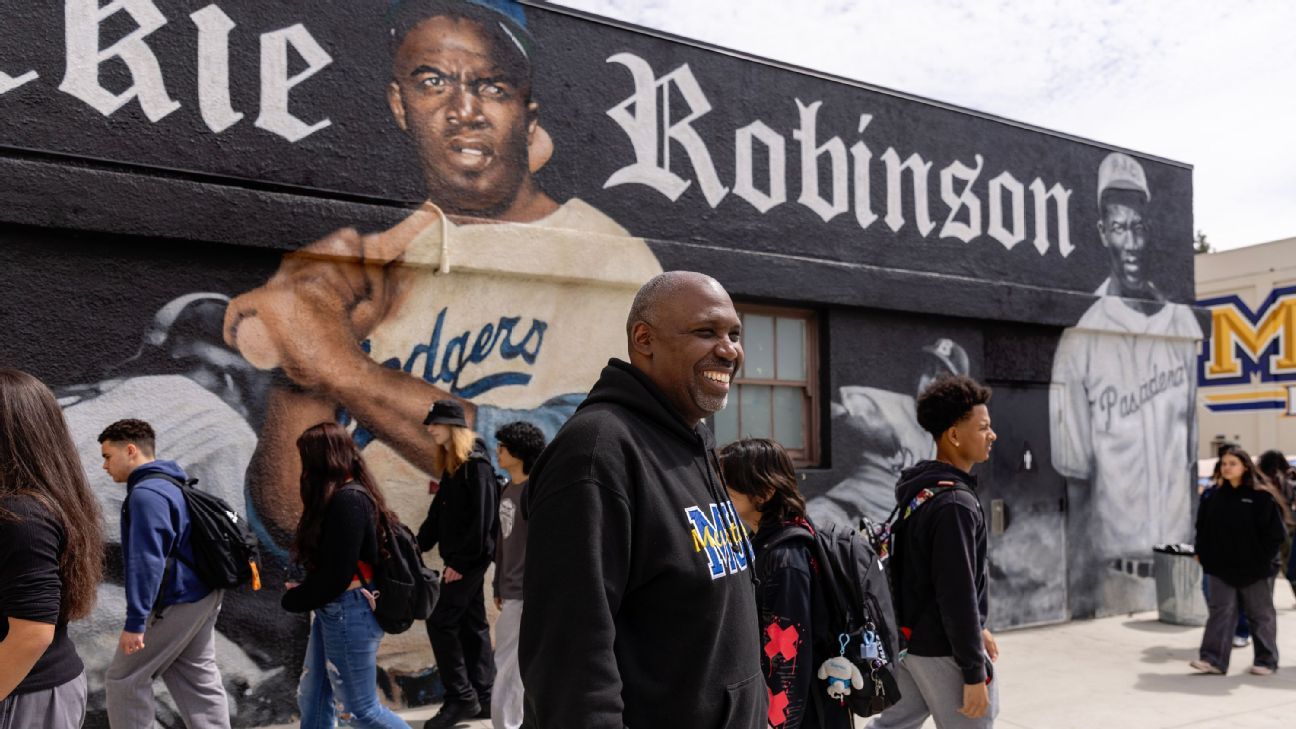
Muir’s walls are lined with images of famous Black alumni. Jackie Robinson graduated in 1936, a year after his older brother Mack Robinson, who finished second behind Jesse Owens in the 200 meters at the Berlin Olympics. Science fiction author and 1995 MacArthur fellow Octavia Butler graduated in 1965, five years before a landmark federal court decision made Pasadena the first city on the West Coast ordered to desegregate its schools. Rodney King was in the class of 1984.
The school is still closed, but sports resume next week. The girls’ water polo team is having its best season in four years. A conference championship is within its grasp. Issa wants to give her athletes something positive to look forward to, but she wants the decision to be theirs. She and her assistant coach gather the players and ask if they want to finish out their season.
“We said, ‘We’re not asking you to win. Do you want to play?'” Issa says. Jasmine is quiet. Her teammates notice. The girls look at each other and a few offer opinions. They don’t know what to expect from themselves or how they’ll respond to the pressure once they get in the water. Issa tells them their competitors may not care what they’re going through. “In life, they might have empathy for what you’ve lost,” she says. “But in the pool, they might take advantage of your vulnerability.” She tells them the games will be hard, but worth playing.
“A big feeling in a loss this monumental is feeling like you’ve really lost everything,” Issa says. “But if they can continue playing, if they have this, then they have something. And they haven’t lost everything.”
FOURTEEN DAYS AFTER the fire, Alfredo Resendiz is driving through Altadena, surveying the damage. He’s been doing this nearly every day. He wants to see the devastation with his own eyes. During the fire, he spent all night hosing down his mom’s house. His ex-wife’s parents lost their home. So did his niece.
Like many of his peers at Muir, the athletic director left his hometown for college but returned to give back to the community he feels gave so much to him. It’s hard to process what’s happened to this place he holds so dear. As he drives north, the blocks seem almost blurry, like they’re passing by at high speed. He slows down, but the blur is still there. He knows these streets, knows their stories. But he barely recognizes them.
“This is where it began,” Resendiz says.
He parks near a sign for Eaton Canyon, a beloved nature preserve located at the base of the San Gabriel Mountains. The air still smells like fire. The canyon’s walls, green and lush with growth just two weeks ago, are brown and marred with the charred remains of chaparral, sage and wildflower bushes. “The Altadena apocalypse,” he says.
He drives on, past rows of blackened brick chimneys and concrete slabs reaching skyward from piles of twisted metal and ash, incomplete outlines of once familiar homes. He wonders when the clearing will begin. His phone rings constantly. A local sports reporter asks when Muir’s games will be rescheduled. Another school’s AD offers the use of her gym for a senior night celebration.
At a light on East Washington Boulevard, Resendiz notices one of his former students next to him. He rolls down his passenger window. “What’s going on?” he yells. “How are you?”
“Good.” she responds. “You? Did you lose?”
“I’m good,” he says. “Did your dad lose?”
She shakes her head no. Resendiz rolls up the window. He lets out a deep breath.
“That’s always the first question,” he says. “It’s heart-wrenching.”
Did you lose?
Those three words have become shorthand between neighbors. There is a knowing in this way of asking, an unspoken understanding that the loss in question approaches totality. A home. A business. A life. The full question is too much to ask of anyone.
SIXTEEN DAYS AFTER the fire, Jasmine and her teammates step off a bus and walk toward the pool to take on Burbank High School. Resendiz chartered the bus so the girls could ride to the game together as a team. He wanted to give his athletes a win before the first whistle.
From the moment Jasmine stepped onto the bus, she’s been quiet. Her eyes rarely lift from the pool deck. Her teammates and coaches try to buoy her spirits, but they know what she needs right now is time. “It’s hard to see her hurting like this,” Issa says. “She’s a big part of why our team wanted to be here today. They wanted to show up for her.”
Muir has only nine players tonight, not even enough to sub a full lineup when lungs start burning and legs get tight. Late in the first quarter, the Mustangs are up 2-1 and they’re playing smart. Issa was right. Burbank is doing everything they can to frustrate Muir’s players. But despite Burbank’s aggressive, physical game plan, the Stangs are keeping their calm.
Near the pool, Dr. Gray’s phone rings. He motions to Resendiz, and the AD drops his head. Another student’s parents have called to say they’ve moved away, this time across the country, and their daughter won’t be returning to Muir.
Dr. Gray leans over his laptop and makes a note in a color-coded spreadsheet. He’s tracking each student’s story: where they lived, how their home fared in the fire, where they are now, where they plan to be when school reopens. He’s received dozens of calls like this over the past two weeks. Each call feels like a monumental loss for the school and an even deeper cut to the community.
“When generations are lost like this, it breaks my heart,” Issa says. “They’re what makes this place unique. A lot of the Black families who came here found something special and continued to build and pour into this community. If those families don’t come back, then what?”
Jasmine scores on a penalty shot with two minutes left in the first half and Brenda leaps into the air. She hugs every parent around her. Muir wins 10-2.
After the game, the team changes out of their suits, then gathers around Issa in a semicircle. Jasmine sits in a chair next to her, her head down and her eyes cast toward the ground. Issa places her hand on Jasmine’s shoulder.
“We’re so super proud of you all,” Issa says. “How do you feel?” She gives Jasmine’s shoulder a light squeeze.
Jasmine looks up. “I …” She stops. Her eyes fill with tears. She smiles and forms a heart with her hands.
FORTY-EIGHT DAYS after the fire, Jasmine is wearing her new varsity letter jacket, with the Michigan-style “M” on the front and her last name on the back. A few days ago, her coaches surprised her with it. They pitched in to buy it for her. “She hasn’t taken it off since,” Brenda says.
The jacket represents so much to Jasmine. It comforts her to wear it, to wrap herself in a reminder that she hasn’t lost everything, which is important in what Issa calls “the hard stretch” of surviving this fire. “It’s real now,” she says. “Everyone is realizing, ‘This is our life.'”
Money from online fundraisers is drying up. Donation centers are packing up and closing. The rebuilding process is slow. But life and the news cycle roll on.
The people of Altadena know that while their loss feels singular, their pain is not unique. They’re every community facing impossible questions after a loss. They’re Asheville, North Carolina, after Hurricane Helene; Waverly, Tennessee, after devastating flooding; Uvalde, Texas, after another deadly school shooting; Paradise, California, after the Camp fire.
“I don’t know that we can hold on to what Altadena was,” Issa says. “But if we’re choosing to stay, then we’re going to have to embrace that it’s never going to be the same again.”
THE SUN IS rising as Brenda leaves to take her son Joshua to school, 50 days after the fire. Yesterday, she ran into the couple who owned the houseplants she rescued from her home. Their house burned, too. She told them their plants had survived. She smiles remembering what it felt like to tell them they hadn’t lost everything.
Now, as she and Joshua approach the truck, they see someone has broken in overnight. Everything inside is gone. Their clothes and shoes. Their blankets. Important paperwork.
Jasmine’s letter jacket.
When she tells her daughter her new jacket is gone, Jasmine is dumbstruck. She can’t imagine that someone would take all they had left. “They could clearly see we were homeless,” she says. “I walked around the block for a while crying.” At school, her friends try to comfort her. When she gets home, Brenda promises her they won’t live out of her truck forever.
“I can’t protect them from any of this,” she says. “That’s the hardest part as a mom.”
ONE HUNDRED DAYS after the fire, lots in Altadena are being cleared. Heavy machinery and demolition crews are everywhere. Issa passes many of the 9,000 destroyed structures on her drive to Muir each morning. Twelve houses burned on her street alone, and many of their remnants still wait to be carried away. Taken in total, the destruction is overwhelming. Each individual clearing brings a sense of optimism.
“There’s something hopeful about the clean slate of cleared lots that’s bringing people peace of mind,” she says. “We’re moving forward.”
In a little over a week, a crew will break ground on the first home to be rebuilt in Altadena. New construction will replace a 100-year-old cabin on West Palm Street, a half mile south of Loma Alta Park. “Altadena is changing,” Resendiz says. “It’s inevitable. Even before the fire, there were signs of loss and change as West Altadena started to gentrify. But that was a trickle. This was an avalanche.”
For weeks after the fire, Resendiz continued to drive around his community. But he can’t bring himself to take those drives anymore. “I’ve fluctuated in weight throughout my life,” Resendiz says. “When I’m heavier, I avoid looking in the mirror. That’s where I am right now with Altadena. I need to look away.”
ONE HUNDRED AND SIXTEEN days after the fire, Jasmine is dancing with her best friend Eva at senior prom. She’s wearing a chic white suit and her favorite hot pink Nikes. Halfway through the dance, she slips into a bathroom and changes into a strapless black dress. She received both outfits at charity events. She and Eva dance and pose in the bathroom mirror and post TikTok videos.
Her friends notice the change. They catch glimpses of the old Jasmine, the confident, funny girl who inspired other kids to join the water polo team just to be around her. She’s still finding her way back to herself, to the girl she was the day before the fire, but in this moment, in her outfit swap and hot pink Nikes, they see her again.
Since spring break, she’s been staying with Eva and her mom, Johanna, who went to Muir with Brenda and is now Jasmine’s golf coach there. With all the moving over the past two months, Jasmine has struggled to stay focused at school. “Jasmine has a hard time in the motels,” Brenda says.
ONE HUNDRED FORTY-NINE days since the fire, Jasmine is outside with her classmates, diplomas in hand, taking photos. She’s posing with Coach Issa and her water polo teammates, and with coach Matt Milton and her softball team. She’s hugging her grandparents and her siblings. Joshua graduated from eighth grade earlier in the day. Janiya can’t stop crying. “I’m just so proud of her,” she says. “We’ve been through a lot, and she’s gonna make it out.”
Jasmine turned down her acceptance to Cal State Northridge. For so long, she wanted nothing more than to stay close to home. But too many of the things that brought her comfort are no longer there.
“Everything here is gone,” Jasmine says. “I want to start new for myself. There’s not really anything to come back to. It’s a time for me to take the next step into life.”
She and Eva will attend Cal Poly Humboldt in Arcata, a 10-hour drive north of Altadena. She hears it’s beautiful. She’s excited to explore Redwood National Park and spend time at the beach. She’s thinking about trying out for softball her sophomore year.
Brenda is heartbroken that Jasmine will be so far away, but she understands. In the meantime, she’ll focus on rebuilding. She and two of her children are still living in the motel. She sees corporations and investment companies buying up the property where she once rode her bike and picked citrus and pomegranates off her neighbors’ trees, but she holds out hope she will find affordable housing. Loma Alta Park reopened last month, and she believes one day she and her family will return to swim in its pool and hike its trails.
On the days when it feels impossible to keep going, she looks at Joshua. She has one more Muir graduation ceremony to attend.
As the crowd outside the Pasadena Civic Auditorium thins, Dr. Gray finds Jasmine who, despite the June temperatures, is wearing a new varsity letter jacket over her gown. It’s not the original, but it has the same Michigan-style “M” on the front and her last name stitched onto the back.
A few weeks ago, Dr. Gray and Coach Issa called Jasmine out of class. “I thought I was in trouble,” Jasmine says. When she arrived, Dr. Gray told Jasmine they had a surprise for her. Tears streamed down his cheeks as he handed her the new jacket, which they ordered the day they learned the other one had been stolen.
She wrapped the jacket around her shoulders and headed back to class, betraying little emotion. When she got back to her classroom, “I started crying so hard,” she says.
Now, draped in her jacket outside the auditorium, she finishes saying her goodbyes. Brenda stands with her family and takes it all in. She doesn’t know when they will be together like this again. She watches as Jasmine and Dr. Gray hug and she’s thankful for everyone who helped them make it to this day.
“I hope to see you soon, Jazzy,” Dr. Gray says. He hopes that, like him, she finds a reason one day to return.
“I’ll see you soon,” Jasmine says, walking away. She stops and looks back at him. “I mean it. I can’t say it will be real soon, but I’ll be back.”
ESPN researcher John Mastroberardino contributed to this story.

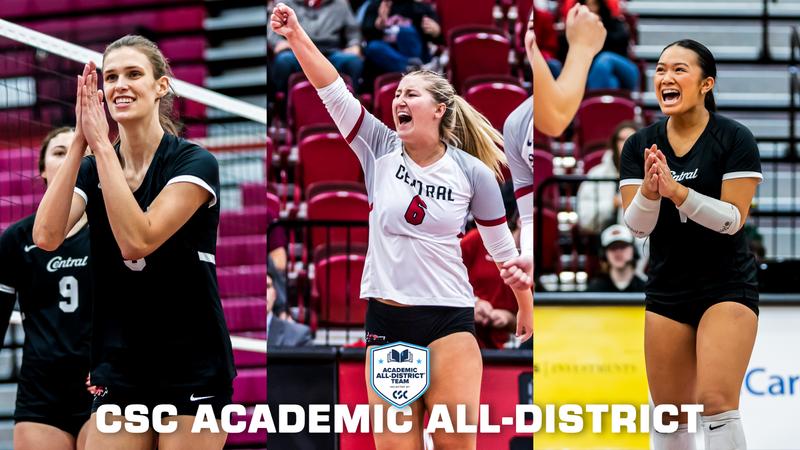
ELLENSBURG, Wash. – Three Central Washington University volleyball student-athletes were named to the College Sports Communicators (CSC) Division II Academic All-District Women’s Volleyball Team. This will be Scottie Ellsworth’s second time earning Academic All-District while Ellie Marble and Kayleigh-Shay Chang both will earn the honor for the first time.
The 2025-26 Academic All-District Women’s Volleyball teams, selected by College Sports Communicators, recognize the nation’s top student-athletes for their combined performances on the court and in the classroom. The CSC Academic All-America program separately recognizes women’s volleyball honorees in four divisions — NCAA Division I, NCAA Division II, NCAA Division III and NAIA.
Student-athletes selected as CSC Academic All-America finalists will advance to the national ballot to be voted on by CSC members. First-, second- and third-team Academic All-America honorees will be announced January 13, 2026.
The Division II and III CSC Academic All-America programs are partially financially supported by the NCAA Division II and III national governance structures to assist CSC with handling the awards fulfillment aspects for the 2025-26 Divisions II and III Academic All-America programs. The NAIA CSC Academic All-America program is partially financially supported through the NAIA governance structure.
Ellsworth, an AVCA Honorable Mention All-American and a three-time Academic All-GNAC honoree, owns a 3.99 GPA in Elementary Education. Marble, a First Team All-GNAC and two-time Academic All-GNAC honoree, has a perfect 4.0 GPA in Physical Education & School Health. Chang, an Honorable Mention All-GNAC and Academic All-GNAC honoree this season, has a 3.75 GPA and is undeclared on a major.
The entire CSC Academic All-District list can be found HERE
NEW YORK – A total of seven CUNY Athletic Conference women’s volleyball student-athletes were named to the 2025-26 College Sports Communicators (CSC) Academic All-District Team for NCAA Division III announced Tuesday afternoon.
The 2025-26 Academic All-District® Women’s Volleyball Team, selected by College Sports Communicators, recognizes the nation’s top student-athletes for their combined performances on the field and in the classroom.
To be eligible for CSC Academic All-America® honors, a student-athlete must maintain at least a 3.50 grade-point average, be a sophomore, junior, or senior, and be a starter or significant reserve.
Academic All-District® honorees advance to the CSC Academic All-America® ballot. First-, second, and third-team Academic All-America® honorees will be announced on January 13, 2026.
CUNY Athletic Conference
2025-26 CSC Women’s Volleyball Academic All-District
Karolina Lundqvist, Baruch
Ruti Joshi, Brooklyn
Malia Reyes, Brooklyn
Ivanna Zamora Sanchez, CCNY
Alex Overcamp, John Jay
Hailey Waugaman, John Jay
Maritza Argueta, Medgar Evers
For the latest news on the CUNY Athletic Conference, log on to cunyathletics.com – the official site of the CUNY Athletic Conference. Also, become a follower of the CUNYAC on Instagram (@CUNYAC), Twitter (@CUNYAC) and YouTube (@CUNY Athletic Conference), and “LIKE” Us on Facebook (CUNY Athletic Conference).
Sign up to receive the latest CUNY Athletic Conference news delivered right to your email inbox HERE.

RIO GRANDE VALLEY – The College Sports Communicators (CSC) announced the 2025 CSC Academic All-District Team Tuesday and The University of Texas Rio Grande Valley (UTRGV) Vaqueros volleyball team had four earn the recognition in junior setter Isabella Costantini, junior libero Celianiz Cabranes, junior outside hitter Nadine Zech and sophomore outside hitter Martina Franco.
Academic All-District selections are part of the Academic All-America program, which is the longest running and premier award for athletic and academic success across many levels of college sports. To be eligible, student-athletes must be at least a sophomore athletically and academically with a 3.50 cumulative GPA or better. Requirements to earn Academic All-District for volleyball student-athletes also include competing in 90% of matches or starting in at least 66% of matches. Select student-athletes will advance to the national ballot for consideration for the Academic All-America teams, selected by CSC.
Costantini is a multidisciplinary studies major earning her second CSC Academic All-District honor. The two-time Southland Conference (SLC) Setter of the Year and All-Conference First Team member was named to the SLC All-Tournament Team after helping the Vaqueros reach the championship match. Costantini led the SLC averaging 10.62 assists/set and with 57 service aces. She facilitated the conference’s best offense to a program-record .275 hitting percentage which aided a program-best 16-match winning streak.
Cabranes is a kinesiology major who earned All-SLC Second Team honors this season for her defensive excellence. She totaled 503 digs for an average of 4.79 digs/set, both top 10 marks in program history. Cabranes also totaled 88 assists and 21 aces in 2025.
Zech was named to the All-SLC Second Team for the second consecutive year, earning her third conference honors in a row. The exercise science major averaged 2.68 kills/set and 1.82 digs/set in 2025 while totaling 30 blocks and 10 aces. She scored 3.10 points/set as a key contributor on the most efficient and diverse offense in the conference.
Franco, a transfer studying kinesiology, was named the SLC Newcomer of the Year and to the All-SLC First Team after a stellar debut season at UTRGV. She led the team averaging 3.44 kills/set and hit .258 while scoring 4.04 points/set. Along with totaling 248 booming kills from the outside and back row, Franco served 16 aces and averaged 2.43 digs/set with 44 total blocks.

LINCOLN, Neb. (KOLN) – Four Nebraska volleyball players were named to the American Volleyball Coaches Association (AVCA) All-America Teams, Nebraska Athletics said Wednesday.
Andi Jackson, Harper Murray and Bergen Reilly were selected to the AVCA All-America First Team. Rebekah Allick was chosen to the AVCA All-America Second Team.
Huskers.com said the Huskers’ four All-America selections bring their nation-leading total to 111 all-time.
Murray and Reilly are now three-time AVCA All-Americans, but both earned first-team honors for the first time in their careers.
Jackson earned a second straight nod on the First Team, while Allick was named an All-American for the first time.
AVCA All-America First Team
Andi Jackson, Jr., MB, Brighton, Colo.
- Jackson was chosen to the AVCA All-America First Team for the second straight year, as well as the All-Big Ten First Team. She was also an AVCA Player of the Year Semifinalist.
- Jackson averaged 2.74 kills per set on .467 hitting with 1.12 blocks per set, and she served 16 aces.
- Jackson’s .467 hitting percentage leads the nation and was the No. 3 hitting percentage in school history for a single season.
- In conference-only matches, Jackson hit .559 to break the Big Ten record for hitting percentage in conference-only matches in a season, which was .541 by Arielle Wilson from Penn State in 2008.
- Jackson has a career hitting percentage of .437, which is the No. 1 mark in school history and the No. 1 mark among active Division I players.
- Jackson earned Big Ten Player of the Week, Big Ten Defensive Player of the Week and AVCA First Serve Match MVP honors this season.
Harper Murray, Jr., OH, Ann Arbor, Mich.
- Murray earned AVCA All-America and All-Big Ten First Team honors for the third straight year.
- Murray led the Huskers with a career-best 3.54 kills per set on a career-high .295 hitting percentage.
- A standout six-rotation player, Murray also contributed 2.16 digs per set and 0.60 blocks per set along with a team-high 34 aces. She totaled a career-high 4.21 points per set for the season.
- One of the best passers in the nation at her position, Murray passed a 2.52 throughout the season.
- Murray finished the season at 1,181 career kills, which ranks 19th all-time in school history and 10th in the rally-scoring era.
- Murray’s career kills per set average of 3.38 ranks third at NU in the rally-scoring era behind only Sarah Pavan and Jordan Larson.
- Murray’s 109 career aces are the sixth-most at NU in the rally-scoring era.
Bergen Reilly, Jr., S, Sioux Falls, S.D.
- Reilly has been an AVCA All-American each year of her Husker career but earned a first-team accolade for the first time after a record-breaking season.
- Reilly set the Huskers to a school-record .351 hitting percentage, shattering the previous record of .331 in 1986. NU’s .351 hitting percentage ranks first nationally and is the best hitting percentage by a Big Ten team since 2009 Penn State.
- Reilly averaged 10.47 assists per set and 2.70 digs per set. She also totaled 73 kills, 67 blocks and 19 aces.
- Reilly was named Big Ten Player of the Year and AVCA Region Player of the Year, as well as Big Ten Setter of the Year and All-Big Ten First Team for the third time.
- Reilly set Nebraska to a .400 or better hitting percentage nine times on the season, a school record in the rally-scoring era. She had double-doubles in all six of the Husker matches that went longer than three sets, and she had four double-doubles in sweeps.
- Reilly ranks No. 3 in school history in career assists in the rally-scoring era with 3,723. Her career assists per set average of 10.70 ranks No. 4 among active Division I players and No. 2 in school history in the rally-scoring era.
- Reilly was named Big Ten Setter of the Week four times this season, giving her 13 for her career.
AVCA All-America Second Team
Rebekah Allick, Sr., MB, Lincoln, Neb.
- Allick earned the first AVCA All-America honor of her career after being named All-Region three times. She also earned All-Big Ten First Team accolades for the first time.
- Allick had the best season of her standout career with 2.56 kills per set on .450 hitting with a team-high 1.27 blocks per set.
- Allick’s .450 hitting percentage ranks as the No. 4 single-season mark in school history, as well as the No. 4 mark in the country this season.
- Allick finished her Husker career at No. 5 in career blocks in the rally-scoring era with 543. Her career blocks per set average of 1.31 ranks fourth.
- Allick was named AVCA National Player of the Week, a two-time Big Ten Defensive Player of the Week, and to the AVCA All-First Serve Team.
- Allick was on the AVCA Player of the Year Watch List at the midway point of the season.
Click here to subscribe to our 10/11 NOW daily digest and breaking news alerts delivered straight to your email inbox.
Copyright 2025 KOLN. All rights reserved.
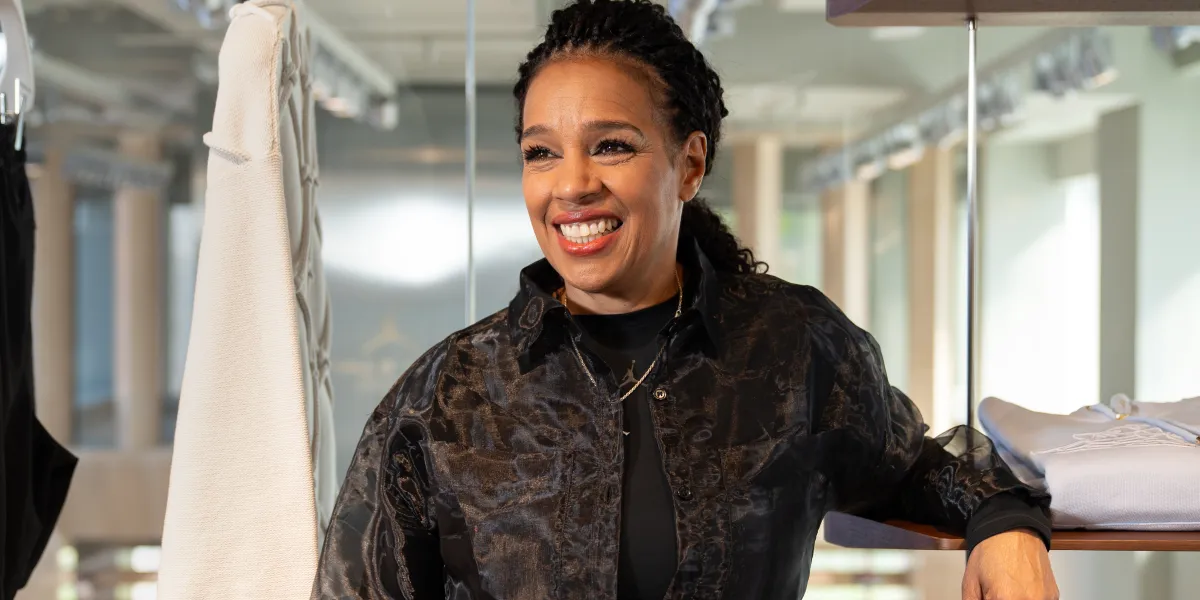
Within Nike, the Jordan brand has always come with a significant opportunity—and challenge. The more than $7 billion business is the “blueprint” of what it means to be an athlete-centered brand, says brand president Sarah Mensah (so much so that its origin with Michael Jordan was dramatized in the film Air).
But for some athletes, the Jordan legacy has come with too much pressure. “In the men’s game, we tend to compare every athlete: are they another MJ?” Mensah says. “That can kind of get in your head.”
That’s one reason Mensah is excited about the potential for female athletes and the Jordan brand, as well as its women’s business. “You don’t have that same sort of comparison with female athletes,” Mensah says. WNBA star Napheesa Collier moved from an overall Nike deal to the Jordan brand earlier this year, citing the investment the brand was making in the women’s game as a reason for the switch. Last year, the Jordan brand debuted the Jordan Heir series, which was designed for WNBA stars. It was the first line of product from the brand “specifically for female hoopers,” Mensah says.
Beyond comparisons with a basketball legend, Mensah thinks female athletes inherently understand the DNA of the Jordan brand, which comes down to “greatness” on the court and off. “They’re defining the game in their own terms, and they’re overcoming adversity,” she says. “They’re overcoming perceptions. And there’s something about that. There’s something about charting a new course, going in a new direction, redefining the game.” These themes are among the top reasons female athletes resonate so strongly with consumers, making them the most effective influencers compared to male athletes or general lifestyle influencers.
Nike is now a year into a turnaround under new CEO Elliott Hill, who aims to return Nike to its roots in sports. While Nike was struggling in recent years, the Jordan brand had been an exception—but this year saw sales fall. Hill has said he believes in the Jordan brand as a pillar of Nike’s return to dominance in sportswear.
There’s a new generation of consumers, however, who have never seen Michael Jordan play basketball and associate the brand only with its Jumpman logo. For Mensah, who has been with Nike for more than a decade and took over the Jordan brand in 2023, female athletes are an essential tool to communicate the original message of “greatness” to a new generation.
“That’s always been the distinction for this brand. It’s never just been about sport, it’s never just been about being an athlete,” Mensah says, “but the body of the athlete, the mind of the athlete, the spirit of the athlete, what the athlete does on the court, the greatness that’s displayed there, and the greatness that they bring to the rest of their world.”
Emma Hinchliffe
emma.hinchliffe@fortune.com
The Most Powerful Women Daily newsletter is Fortune’s daily briefing for and about the women leading the business world. Subscribe here.
ALSO IN THE HEADLINES
OpenAI is under a ‘code red.’ It’s an alert of “rough vibes” and economic headwinds as the AI leader faces increased competition, especially in enterprise. CEO of Applications Fidji Simo says it’s a “signal to the company that we want to marshal resources in one particular area, and that’s a way to really define priorities and define things that can be deprioritized.” Fortune
Weight Watchers revamps for the GLP-1 era. Under CEO Tara Comonte, the company’s name is two words again. Its new pitch is that anyone can get you a GLP-1, but Weight Watchers can keep you healthy and on track through the process. Fast Company
Inside Nancy Mace’s run for governor. In South Carolina, the congresswoman is running as an outsider, reportedly with few allies among her fellow GOP politicians. WSJ
Two Palantir alums just raised $20 million for patent filing. My colleague Jeremy Kahn has the exclusive on Ankar, a London-based startup that’s trying to use AI to transform the process for filing and managing patents. It’s founded by Tamar Gomez and Wiem Gharbi. Fortune
ON MY RADAR
How Dairy Boy’s rise signals the next phase of creator-led brands Ad Age
Watching Liberation with a women’s movement pioneer, my mom NYT
Motherhood is filled with agony. So are the best films of the year Marie Claire
PARTING WORDS
“It was jumping out of an airplane for me creatively, emotionally, and it did give me confidence.”
— Jamie Lee Curtis on her role in The Bear and this era of her career
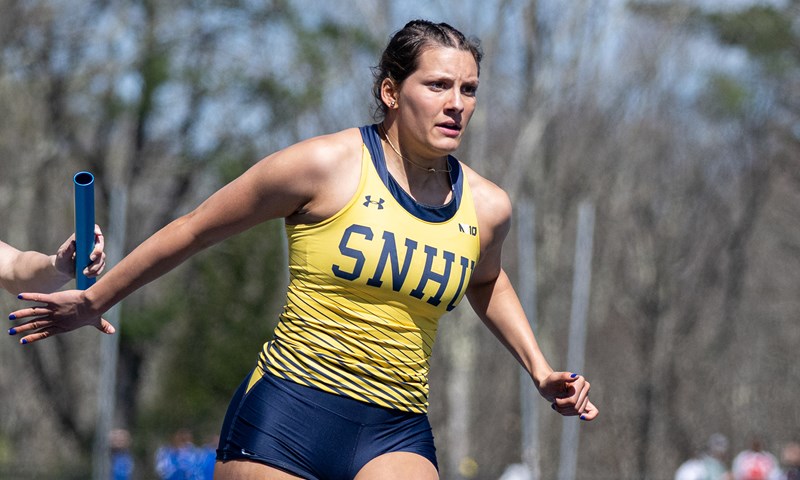

Each week during the academic year, the NE10 honors Athletes of the Week for all of its 24 sponsored sports while they are in season. Faces in the Crowd shines a spotlight on outstanding on-field performances that didn’t earn Athlete of the Week recognition, while also highlighting academic or community efforts from student-athletes across the league.
Faces in the Crowd is presented by Athletic Solutions, a national leader in NIL fan engagement and e-commerce technology, collaborating with colleges and universities to bring NIL Locker Rooms to life. Their platform simplifies NIL opportunities, providing student-athletes with the tools and exposure needed to thrive in the evolving landscape of college athletics.
Below are this week’s NE10 Faces in the Crowd.
Gigi Morossi
School: Pace
Sport: Swimming and Diving
Pace bounced back after a head-to-head loss to SCSU to improve to 7-1 on the season. Morossi was an anchor in a four-point win over Bridgeport, winning the 50 Back, 100 Back and 200 Freestyle. The sophomore was also part of Pace’s 200 Medley Relay that came in second.
Jack Hall
School: SNHU
Sport: Basketball
Hall started his second game of the season at Saint Anselm Saturday and opened 7-for-7 from three. The AIC transfer finished with a season-best 23 points in the Penmen victory.
Jordan Wheaton
School: SNHU
Sport: Track and Field
Wheaton matched her career and program best with an 8.86 in the 60M Hurdles at the Dartmouth December Invite on Saturday. The time is best for third in the conference this indoor season. She also set a new PR in the 60 M Dash. Wheaton had established the mark the prior week at BU and also has the NE10’s top High Jump this season (1.58m), set on 12/5.
Makenzie Shean
School: Franklin Pierce
Sport: Soccer
An All-American, Shean delivered the game-winning-goal in the NCAA Division II semifinals over Washburn last week, pushing the Ravens to the national championship game. It was Shean’s ninth goal of the season and came with only seven and a half minutes remaining in regulation.
Raymond Baka
School: Franklin Pierce
Sport: Basketball
Baka had a day last week at Saint Michael’s, going off for 28 points and 14 rebounds. It was his third double-double in nine games this season. The points total ranks fifth-best by an NE10 player this season and the rebound mark sits fourth. Baka is averaging 14 points and 9.6 rebounds as a first-year player in the NE10 following a transfer from Vermont State.
This Year’s Faces in the Crowd
Week 1
Anna Daggatt, Saint Michael’s Volleyball
Dillon Labonte, SNHU Cross Country
Jakkai Stith, AIC Football
Jenni Huttunen, Franklin Pierce Soccer
Taylor Leckey, SCSU Field Hockley
Week 2
Alice Bender, Pace Volleyball
Annie Lorenz, Bentley Field Hockey
Isabel Hughes and Claudia Keith, SNHU Soccer
Reese Swanson, Franklin Pierce Field Hockey
Connor Dietz, AIC Football
Jay Kastantin, Assumption Football
Week 3
Dillon Labonte, SNHU Cross Country
Elizjah Lewis, Pace Football
Grace Almeida, Saint Michael’s Volleyball
Lana Mignon De Wet, Adelphi Field Hockey
Paola Soto Burgos, AIC Volleyball
Week 4
Brennah Abilheira-Cargill, Assumption Volleyball
Kerrigan Habing, SCSU Volleyball
Drew Forkner, St. Anselm Football
Khais Milligan, Pace Soccer
Madeline Krepelka, Bentley Field Hockey
Week 5
Connor Dietz, AIC Football
Elizjah Lewis, Pace Football
Kaylise McClure, Mercy Field Hockey
Mackenzie Casey, Adelphi Volleyball
Michael Guarnieri, St. Anselm Football
Week 6
Andrew Surprenant, SNHU Men’s Golf
Isaiah Osgood, Bentley Football
Jessica Evans, Mercy Field Hockey
Sarah Henault, SCSU Volleyball
Sydney DeRoche, Bentley Women’s Soccer
Week 7
Faith Kosiba, Saint Michael’s Soccer
Grace Presswood, Assumption Volleyball
John Giller, SCSU Football
McKenzie Carey, Bentley Field Hockey
Ruby Harrington, Saint Michael’s Field Hockey
Week 8
Avery Frommer, Bentley Field Hockey
Billy Gould, Assumption Football
Kerrigan Habing, SCSU Volleyball
Maya Fisher, SCSU Cross Country
Quinlyn Moll, AIC Field Hockey
Week 9
Isaiah Decias, Bentley Football
Jessica Evans, Mercy Field Hockey
Milagros Zanatelli, AIC Field Hockey
Ryan Rosario, Franklin Pierce Women’s Soccer
Sasha Luzina, Bentley Volleyball
Week 10
Connor Smith, Assumption Football
Jake Croce, Saint Anselm Football
Madeline Chaapel, Adelphi Volleyball
Maggie Burchill, Saint Anselm Field Hockey
Riley Mastowski, Franklin Pierce Hockey
Week 11
Ana Carolina Westerich, Adelphi Volleyball
Dayshawn Walton, Adelphi Basketball
Taeya and Rheyna Steinauer, SCSU Basketball
Will Gomes, Franklin Pierce Football
Amelia Hohos, Saint Anselm Soccer
Week 12
Brady Gaudet, Franklin Pierce Soccer
Dom Santiago, Assumption Football
Elena Coban, Bentley Volleyball
Olivia Crespo, Franklin Pierce Soccer
Will Davies, Saint Anselm Basketball
Week 13
Alvaro Garcia, SNHU Soccer
Jojo Wallace, SNHU Basketball
Kaitlin McDonough, Saint Anselm Basketball
Margaret Montplaisir, Saint Michael’s Basketball
Zee McCown, Assumption Basketball
Week 14
Hope Fox, SCSU Basketball
Jodiann Ebanks, AIC Track and Field
Ruzgar Christina Boyle, AIC Basketball
Skyla Lang, Benltey Swimming
Valerii Pidhoretskyy, Adelphi Swimming
Week 15
Gigi Morossi, Pace Swimming and Diving
Jack Hall, SNHU Basketball
Jordan Wheaton, SNHU Track & Field
Makenzie Shean, Franklin Pierce Soccer
Raymond Baka, Franklin Pierce Basketball
ABOUT THE NE10
The NE10 is an association of 10 diverse institutions serving student-athletes across 24 NCAA Division II sports. Together we build brilliant futures by embracing the journey of every student-athlete.
Each year, 4,500 of those student-athletes compete in conference championships in 24 sports, making the NE10 the largest DII conference in the country in terms of sport sponsorship. Leading the way in the classroom, on the field and within the community, the NE10 is proud of its comprehensive program and the experience it provides student-athletes.
Fans can subscribe via this link to follow NE10 NOW on FloSports this season. The partnership between the NE10 and FloSports works to provide funds back to the athletic departments of the Northeast-10 Conference in support of student-athletes while promoting the league on a national platform.

Three Wildcat Volleyball Standouts Name CSC Academic All-District

Jade Avedisian signs ARCA Menards Series deal with Nitro Motorsports

Jayden Maiava returning to USC on new NIL deal

CSC Announces 2025 Women’s Volleyball Academic All-District

2025 DragChamp TD/TS Racer of the Year

True Hero Inspiring Native Youth

Volleyball Places Four on CSC Academic All-District Team

Denny Hamlin Addresses SiriusXM NASCAR Radio After Antitrust Settlement

Youth sports costs over $1,000 per year, pushing families to sidelines

Dale Earnhardt Jr.’s Insane Story of How He Got to Know About His Wife’s Pregnancy

Four Nebraska volleyball players named AVCA All-Americans

The Comeback with a Backbone: Single-Mom Alli Owens Charges into ARCA to Champion Blue-Collar America and Empower the Next Generation of Women – Speedway Digest

Down Arrow Button Icon

A new era of NIL at Oklahoma State

NE10 Faces in the Crowd, Presented by Athletic Solutions

First Tee Winter Registration is open

Fargo girl, 13, dies after collapsing during school basketball game – Grand Forks Herald

CPG Brands Like Allegra Are Betting on F1 for the First Time

F1 Las Vegas: Verstappen win, Norris and Piastri DQ tighten 2025 title fight

Volleyball Recaps – November 18

Sycamores unveil 2026 track and field schedule

Two Pro Volleyball Leagues Serve Up Plans for Minnesota Teams

Utah State Announces 2025-26 Indoor Track & Field Schedule

Redemption Means First Pro Stock World Championship for Dallas Glenn

Texas volleyball vs Kentucky game score: Live SEC tournament updates

Jo Shimoda Undergoes Back Surgery

SoundGear Named Entitlement Sponsor of Spears CARS Tour Southwest Opener

Bowl Projections: ESPN predicts 12-team College Football Playoff bracket, full bowl slate after Week 14

How this startup (and a KC sports icon) turned young players into card-carrying legends overnight

Robert “Bobby” Lewis Hardin, 56

 NBA Legend Michael Jordan to Join NBC Sports as Special Contributor
 Why a rising mid-major power with an NCAA Tournament team opted out of revenue-sharing — and advertised it
 Falcons mailbag
 Portal Update – Basketball and Gymnastics Take Hits
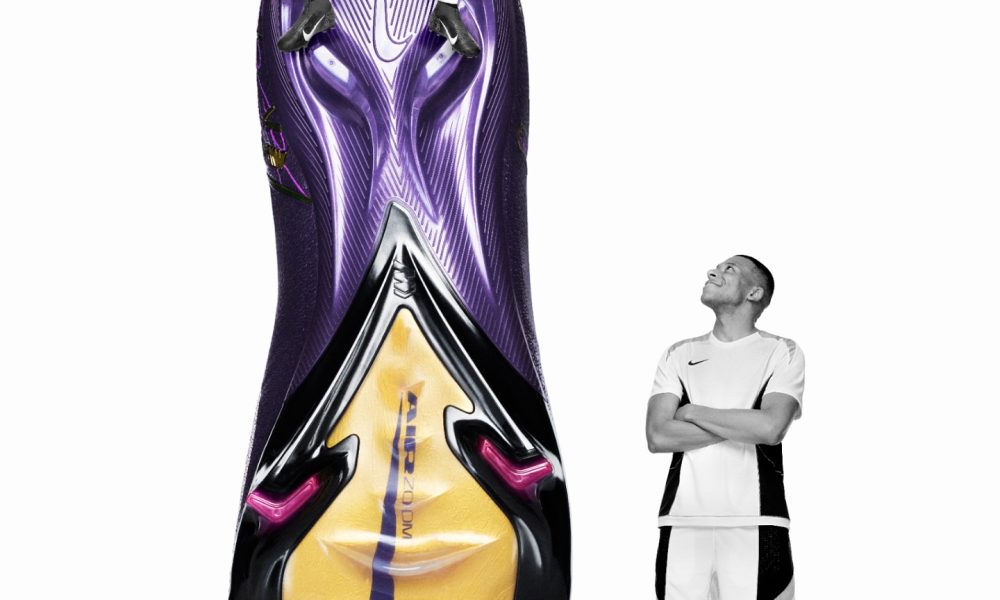 has always dreamed in Mercurial. Now his initials are on the boots.
The new Kyl…
has always dreamed in Mercurial. Now his initials are on the boots.
The new Kyl…
-
 Motorsports3 weeks ago
Jo Shimoda Undergoes Back Surgery
-
 NIL2 weeks ago
Bowl Projections: ESPN predicts 12-team College Football Playoff bracket, full bowl slate after Week 14
-
 Motorsports7 days ago
SoundGear Named Entitlement Sponsor of Spears CARS Tour Southwest Opener
-
 Rec Sports3 weeks ago
How this startup (and a KC sports icon) turned young players into card-carrying legends overnight
-
 Rec Sports3 weeks ago
Robert “Bobby” Lewis Hardin, 56
-

 NIL3 weeks ago
Indiana’s rapid ascent and its impact across college football
-

 Motorsports3 weeks ago
Pohlman admits ‘there might be some spats’ as he pushes to get Kyle Busch winning again
-
Sports3 weeks ago
Wisconsin volleyball sweeps Minnesota with ease in ranked rivalry win
-

 Motorsports1 week ago
Donny Schatz finds new home for 2026, inks full-time deal with CJB Motorsports – InForum
-

 Motorsports3 weeks ago
Increased Purses, 19 Different Tracks Highlight 2026 Great Lakes Super Sprints Schedule – Speedway Digest