
Sports
College Sports’ Financial Hurdles Go Way Beyond NCAA House Settlement

In the wake of U.S. District Judge Claudia Wilken granting final approval to the 10-year settlement between the NCAA, power conferences and current and former D-I athletes represented by the House, Carter and Hubbard antitrust litigations, some fear the settlement will encourage schools to cut Division I non-revenue and Olympic sports teams.
A popular narrative is setting in: It insists the House settlement will impose new costs on schools that make it harder to justify keeping teams that aren’t either money-makers or needed to comply with Title IX’s gender equity requirements. But while the settlement is impactful, don’t fall for the head fake that it is the only or most important factor in schools’ decisions to keep certain sports or cut sports altogether.
It’s true that sports like tennis, track and field, and swimming and diving are more vulnerable in the post-settlement world. American Volleyball Coaches Association CEO Jaime Gordon recently said that 32 Division I Olympic sports teams have been cut since the settlement’s announcement.
To be sure, the House settlement will place new costs on colleges and up the cost of college sports. Colleges can elect to directly pay athletes a share of up to 22% of the average power conference athletic media, ticket and sponsorship revenue, with $20.5 million pegged as the initial annual cap. Those payments are in addition to athletic scholarships, which cover tuition, housing, health resources and other benefits, and NIL deals athletes with third parties.
Division I schools that decline to share revenue with athletes will face new costs, too.
The settlement calls for qualified athletes who played as far back as 2016 to receive about $2.8 billion over the next decade. The money reflects forgone NIL opportunities, denied revenue from broadcasts and potential earnings from video games that were never made on account of NCAA rules.
Both revenue-sharing and non-revenue-sharing schools, including Houston Christian University, which challenged the back pay feature, will see funds withheld. HCU has argued it will essentially pay $300,000 a year over the next 10 years, for a total of $3 million, on account of a settlement that it insists it never approved. Wilken denied that argument, noting HCU is bound by virtue of its NCAA membership.
But it’s important to remember that House settlement-related costs are not occurring in an intercollegiate sports vacuum. They should be placed in the broader context of higher ed; universities face a multiple budget challenges that aren’t related to athletics but will make it harder to fund athletics.
As a starting point, colleges face the dreaded “enrollment cliff.” A decline in U.S. birthrates beginning in 2008 means that an accompanying drop in the population of U.S. college-age students will hit universities by next year. The drop is expected to be about 15% and last until around 2041.
This development will have profound impacts on many universities, especially those in states expected to endure the harshest reductions—Illinois, for example, is projected to see a 32% drop in high school graduates between 2023 and 2041. Fewer students will mean decreases in revenue from tuition, dormitory, meal plan and student fees. Universities could mitigate the financial hit by raising prices on students, but that would be unpopular and could undermine recruitment and retention efforts.
Universities will also need to compete aggressively for fewer students. This is likely good news for students, as schools dangle more competitive financial aid packages and bad news for schools as they receive less money. This is particularly worrisome for the numerous colleges that are “tuition-dependent,” meaning most of their operating budget isn’t funded by donors, endowments or grants but instead by tuition dollars.
The Trump administration’s hostility toward international students is also a key consideration. Trump has attempted—unsuccessfully thus far—to block Harvard University from admitting international students. Also, the State Department has directed embassies to determine if prospective international students of U.S. universities have “hostile attitudes” before student visas are issued.
While these efforts are legally problematic and substantively dubious—the U.S. is strengthened when talented international students study here and join the American workforce—they’ll encourage some international students to head for other countries’ universities. A drop in international students will have sizable economic ramifications. Those students typically pay full tuition.
As schools brace for smaller enrollments, they also face the prospect of fewer and downsized federal grants. The Trump Administration has targeted federal assistance to universities for budget cuts. Research grants and Pell grants (which help undergraduate students who have financial needs) have faced, or are expected to face, reductions and more eligibility limitations. As of last month, universities had lost about $11 billion in research grants. Some researchers might leave U.S. schools and head abroad.
Another lifeline for colleges, the federal student loan system, is also in lawmakers’ crosshairs. As part of the ongoing budget debate, Congress is weighing reforms designed to increase the government’s chances for repayment, but critics charge this would lead more borrowers into risk of default. Colleges worry they would be required to reimburse the federal government if their students fail to repay their loans.
In addition, university endowments are eyed by lawmakers as a source of revenue to offset business and income tax cuts and other reforms. Congress is weighing several concepts that would raise, in some instances by high degrees, the excise tax universities pay on their endowment income. Endowments are often portrayed as de facto savings accounts for colleges, but that depiction is off base. Endowment funds are usually restricted for specific purposes, such as a scholarship for a student who meets certain criteria. They can’t be used to address most operational needs.
Universities’ tax-exempt status on account of their educational missions is also under review. Trump has openly questioned the justification of the tax exemption, particularly for Harvard but more broadly as well. Bloomberg recently reported that the Treasury Department is considering a reform that could revoke a college’s tax-exempt status if the school considered “race in student admissions, scholarships and other areas.”
It’s not just the federal government that could take money away from colleges. Some states are expected to reduce support. For example, in New Hampshire—which is already last among the 50 states for state public education funding as a percentage of revenue receipts—legislators are debating substantial reductions in financial assistance aimed at higher ed and public education.
The challenging landscape that colleges face won’t necessarily be all bad. It could lead universities to innovate, especially as the scope and quality of online education degrees and offerings. Colleges could attract new types of students, including adults who worked for years after high school and are interested in pursuing college as older students.
Likewise, four-year colleges will be incentivized to identify more students from junior colleges as attractive candidates for enrollment. There is a sports hook to note. The NCAA requires that junior college students have a 2.5 GPA at their school to become Division I eligible at a four-year college, whereas the NCAA usually requires only a 2.0 GPA for an athlete to remain eligible after transferring from one Division I college to another. Some junior college students who are athletes might thus be discouraged from continuing their studies at four-year schools.
This is not an abstract concern. University of Nevada wide receiver Cortez Braham Jr., who is currently suing the NCAA to play another season, has noted he would have transferred to West Virginia University in 2021, but his 2.47 GPA was judged too low.
The NCAA has maintained the GPA policy is sensible given educational goals.
“Academic achievement remains a priority for Division I members,” an NCAA spokesperson told Sportico. “The NCAA continues to work to find new ways to support student-athletes as they work toward earning their degree.”
Jeff White, the chief legal officer and a senior vice president at the National Junior College Athletic Association, told Sportico the NCAA should modify the GPA requirement for JUCO-to-four-year-college transfers so that it matches that for transfers between four-year schools.
“That does not mean [the NCAA] should lower the GPA requirements for two-year students,” White said. “We believe raising the standard for four-year students is just as reasonable.”
White added: “Ironically enough, many NCAA members already offer guaranteed transfer opportunities to two-year students at participating two-year colleges. So participants can transfer and attend as a student, but the NCAA will not allow them to participate as a student-athlete. In the face of the enrollment cliff, the NCAA is forcing its members to turn away student-athletes that otherwise academically qualify. Make that make sense.”
This new era of higher ed could also force universities to face hard, but necessary, choices that they’ve punted on for years. Some will decide whether to close a school or program that has become less relevant in an economy that will be shaped by AI and demographic shifts. To that point, given that about 95% of colleges report losing money on athletics, perhaps some should rethink offering varsity athletics or at least certain teams.
One thing is for certain: The House settlement is merely one of many factors that will reshape the future of college sports in America. Don’t give it more credit or blame than it deserves.
McCann is a professor of law and associate dean at UNH Franklin Pierce School of Law and a visiting professor of law at Harvard Law School.

Sports
UC Davis Athletics Concludes Fall With Competitive Success, National Honors and Facilities Investment

DAVIS, Calif. — UC Davis Athletics capped the Fall 2025 season with record-setting performances, national and conference honors, and postseason success across multiple programs. The season also marked the announcement of Aggie Ascent, a $265 million facilities plan designed to enhance the student-athlete and fan experience.
“Across multiple programs this fall, our teams competed at a high level, earned conference championships, advanced in postseason play, and achieved milestones that reflect the depth and consistency of our department,” said UC Davis Athletic Director Rocko DeLuca. “Those results are a direct credit to our student-athletes, coaches, and staff, who continue to raise the standard through their commitment, preparation, and belief in what we’re building here. As we celebrate those accomplishments, we’re focused on matching that competitive momentum with long-term investment in our facilities and resources to support our teams at the highest level of Division I athletics. I’m proud of what this group accomplished this fall and excited about where Aggie Athletics is headed.”
Aggie Ascent Announcement
This fall, UC Davis Athletics announced Aggie Ascent, a comprehensive facilities master plan. The $265 million, phased, gift-driven project prioritizes high-impact and revenue-generating facilities, beginning with a reimagined UC Davis Health Stadium featuring premium seating, suites, and a year-round hospitality space, alongside a new NCAA-compliant Woody Wilson Track and Field Complex and a Golf Training Center serving both Aggie programs and the surrounding community. Future phases include upgrades to baseball, soccer, and the University Credit Union Center, as well as a new softball stadium and redevelopment of south campus facilities.
Developed in partnership with ELS Architecture and Urban Design, the plan represents the university’s unified vision for athletics infrastructure, focused on enhancing the student-athlete experience, elevating the fan experience, and ensuring long-term sustainability. The project reflects UC Davis’ commitment to innovation and competitive excellence at the Division I level.
Championships and Postseason
UC Davis Athletics delivered a strong year highlighted by postseason appearances, conference championships, and historic milestones across multiple programs. Aggie football, gymnastics, and women’s golf each qualified for NCAA postseason competition, with several teams extending their seasons beyond conference play.
Conference success followed, as volleyball captured the Big West regular season title and men’s water polo claimed the Big West Conference championship, continuing the program’s tradition of postseason success.
Football, under second-year head coach Tim Plough, continued its national climb by advancing to the NCAA Quarterfinals for a second-straight year, while posting a top eight finish nationally in back-to-back seasons coming in at No. 8 following the most recent fall. Field hockey also marked a milestone year, hosting and competing in its first Mountain Pacific Sports Federation Championship game.
Historic Wins and Notable Awards
UC Davis student-athletes earned significant national and conference recognition across multiple programs this year. Men’s water polo standout Thomas Kiesling was named a third-team ACWPC All-American after earning All-Big West First Team honors, placing him among the nation’s top collegiate players.
Field hockey collected major accolades, as Karly Redman earned MPSF Offensive Player of the Year honors, while freshman goalkeeper Addie Collingwood was named MPSF Freshman of the Year following an impactful debut season.
Football earned multiple postseason honors this season, highlighted by a handful of Aggies receiving All-America recognition from four different national organizations. Among those was first team All-American Jacob Psyk, making it three-straight seasons the Aggies have had at least one first team All-American.
Volleyball capped a strong season with multiple major awards. Jade Light was named Big West Player of the Year and earned American Volleyball Coaches Association All-American Honorable Mention, becoming the program’s first All-American since 1996. She was joined by Mia Starr, the Big West Setter of the Year, and Ximena Cordero Barr, who earned Libero of the Year honors. These accolades coincided with a record-setting season, as the Aggies posted the most conference wins in program history.
ABOUT UC DAVIS ATHLETICS:
UC Davis, the No. 2 ranked public university by the Wall Street Journal, is home to 40,000 undergraduate students and 12,000 employees. Ranked #1 in Agriculture and Forestry as well as #1 in Veterinary Medicine, UC Davis is located in a true California college town nestled between world-class destinations such as the San Francisco Bay Area, Napa Valley and Lake Tahoe. Over 650 Aggie student-athletes compete in 25 Division I varsity sports, with 16 sports transitioning to the Mountain West Conference beginning in 2026–27.
# # #
Sports
Fabela, Tavita named to Softball America Freshman Watch List – BYU Athletics – Official Athletics Website


January 12, 2026
BIG RAPIDS, Mich. —
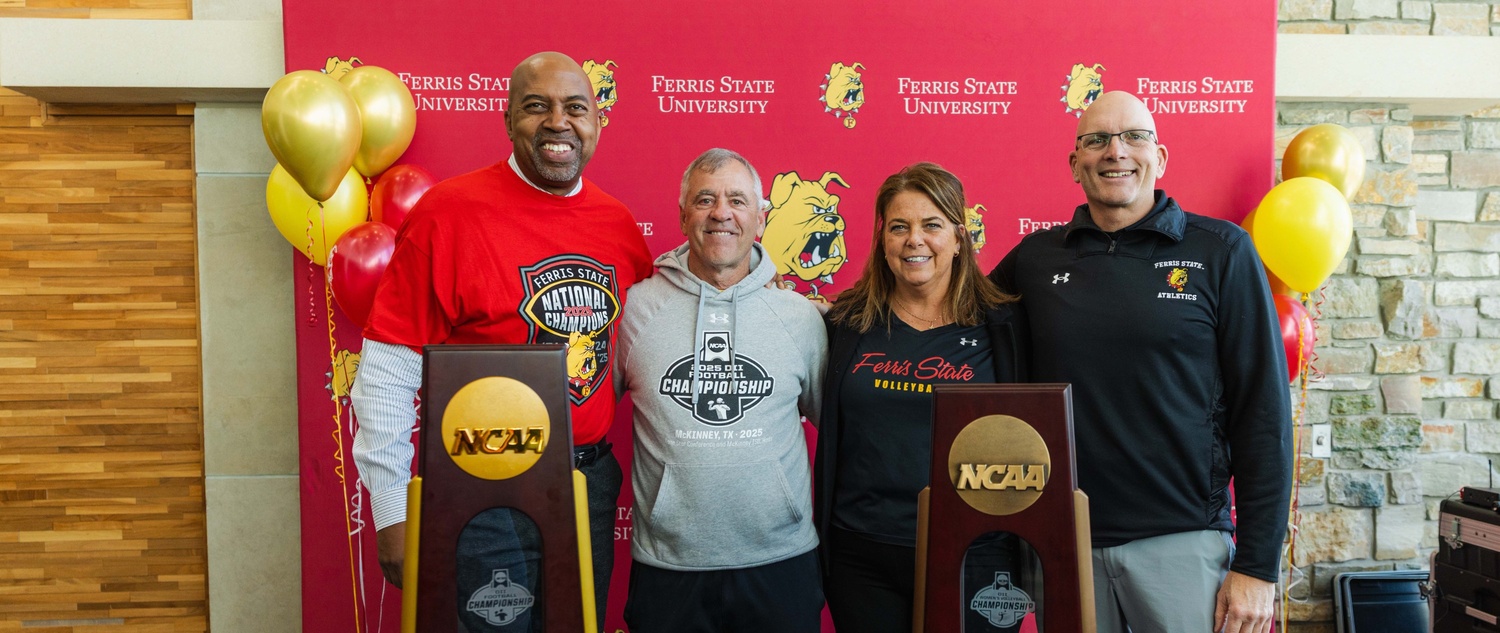
Ferris State University students, alumni, faculty, and community members poured into the David L. Eisler Center
for the 2026 “Bulldog Spirit Day,” on Monday, Jan. 12, to recognize the success of
both the football and volleyball programs.
The football team was ranked No. 1 in the nation all season long and capped and capped
the historical run with a perfect 16-0 record and earning their fourth NCAA Division
II National Championship title in five years.
Women’s volleyball remained as a national contender while crowning themselves as NCAA
Midwest Regional Champions for the second straight season and securing the 2025 GLIAC
Regular Season Championship – closing the season 27-8 overall.
“It’s a good time for community today,” said Ferris State President Bill Pink during
the celebration. “This semester and this year, we are focused on opportunities to
come together (and) to build community.”
Those efforts were seen as Mecosta County Commissioner and longtime Bulldog Bill Routley
presented a resolution to Ferris State Athletics – and hundreds of students, dozens
of alumni, and campus administration were in attendance to celebrate the championships.
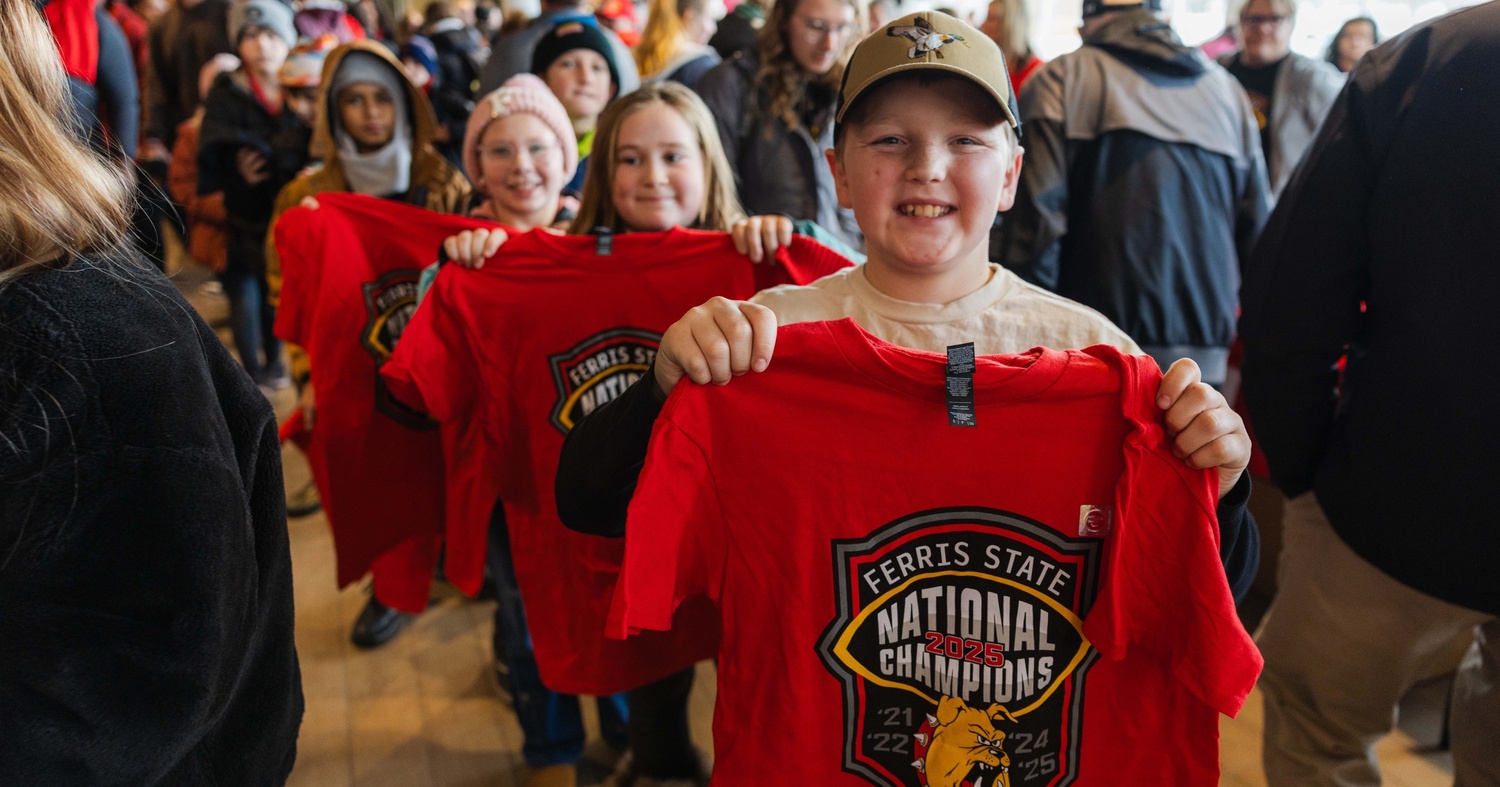
Big Rapids elementary school students also made a visit to the Ferris State main campus
to join the Bulldog Spirit Day fun.
Freshman middle hitter Aaliyah Cage of the volleyball team not only saw her first
collegiate reps this season but was also called on to help steer the Bulldogs to the
regional championship victory over Indianapolis last month on Dec. 26. With the first
season under her belt, she’s thankful for the support Ferris State provides to student-athletes
and their programs to help them feel a sense of belonging.
“Today is important for the community because sports are known to bring everyone together,
and when you’re starting college, it’s natural to feel isolated,” Cage said. “So,
it’s important to know that you have a school that supports programs helping students
to get involved. It’s also good to see that you (student-athletes) have a community
that support what you do on and off the court.”
A large part of building a strong community within athletics boils down to having
strong leaders. Head football coach Tony Annese and volleyball coach Tia Brandel-Wilhelm
expressed their gratitude to the administration for a consistent effort to support
all Ferris State Athletics, while noting that their programs wouldn’t achieve their
success without the support or the constant hard work of their athletes.
While it’s easy to show community support around the time that championships are won,
Pink says building a community is an ongoing effort, and something he wants to be
at the forefront of Ferris State Athletics fans.
“You have to be intentional about building relationships and community… If no one
else is going to do it, Ferris State can. We’re building community, and we’re building
champions. It’s just the way Bulldogs do it,” he said.
Those unable to attend Bulldog Spirit Day will have another opportunity to celebrate
the recent championship success during a victory parade this spring. The time and
date have yet to be determined.

CHICAGO — In its 41st year celebrating the nation’s best high school athletes, Gatorade recently announced that Logan Cary of Rock Canyon High School is the 2025-26 Gatorade Colorado Volleyball Player of the Year.
Gatorade Player of the Year is the top honor in high school sports, celebrating the nation’s best high school athletes for their excellence in sport, academics and community.
The award recognizes Cary as Colorado’s best high school volleyball player, and she joins an elite legacy that spans professional athletes and coaches to CEOs, such as Kerri Walsh Jennings (1995-96, Archbishop Mitty High School, CA), April Ross (1999-00, Newport Harbor High School, CA) and Campbell Flynn (2024-25, Mercy High School, MI).
The 6-foot-2 senior setter and right-side hitter recorded 468 assists and 289 kills this past season, leading the Jaguars (24- 4) to the Class 5A semifinals and a third-place finish in the tournament. Ranked as the state’s No. 2 recruit in her class by PrepDig, Cary was a First Team All-State selection and was selected to play in the Colorado Sports All-State Games. She also compiled 245 digs, 64 blocks, and 49 service aces last fall.
Last summer, she helped her Front Range Volleyball Club squad take 13th at the 17s Division Nationals.
Cary has volunteered locally on behalf of HCA HealthONE Sky Ridge Hospital, the American Cancer Society Walk and Girls on the Run event, Momentum Services and the Children’s Diabetes Foundation Boo Bash. She has also donated her time as a peer math tutor and as a youth volleyball coach.
“Logan has played a major role in her team’s success as one of the most complete players in the state,” said Gwen Forster, Club Director for EVA. “Offensively, she excels both as a setter by making smart decisions and distributing the ball effectively for three rotations, and then, as an attacker, she is a significant scoring threat. Her ability to run an offense while also terminating sets her apart. She’s a solid blocker and a reliable defender, contributing across all phases of the game. Her volleyball IQ, versatility and competitiveness project well at the collegiate level.”
Cary has maintained a weighted 4.12 GPA in the classroom. She has signed a written letter of athletic aid to play volleyball at San Diego State University.
The Gatorade Player of the Year program annually recognizes one state winner from each of the 50 states and Washington D.C., in 12 different sports: football, girls volleyball, boys and girls cross country, boys and girls basketball, baseball, softball, boys and girls soccer, and boys and girls track & field. In total, 610 high school athletes are honored each year. From the pool of state winners, one national winner is selected in each of the 12 sports. The selection process is administered by the Gatorade Player of the Year Selection Committee, which leverages experts including coaches, scouts, media and others as sources to help evaluate and determine the winners in each sport.
As part of Gatorade’s commitment to breaking down barriers in sport, every Player of the Year also receives a grant to donate to a social impact partner. To date, the Gatorade Player of the Year program has provided more than $6.4 million in grants to winners across more than 2,200 organizations.
To learn more about the Gatorade Player of the Year program, check out past winners or to nominate student-athletes, visit playeroftheyear.gatorade.com or follow us on social media on Instagram at instagram.com/Gatorade, Facebook at facebook.com/GatoradePOY and X (Twitter) at x.com/Gatorade



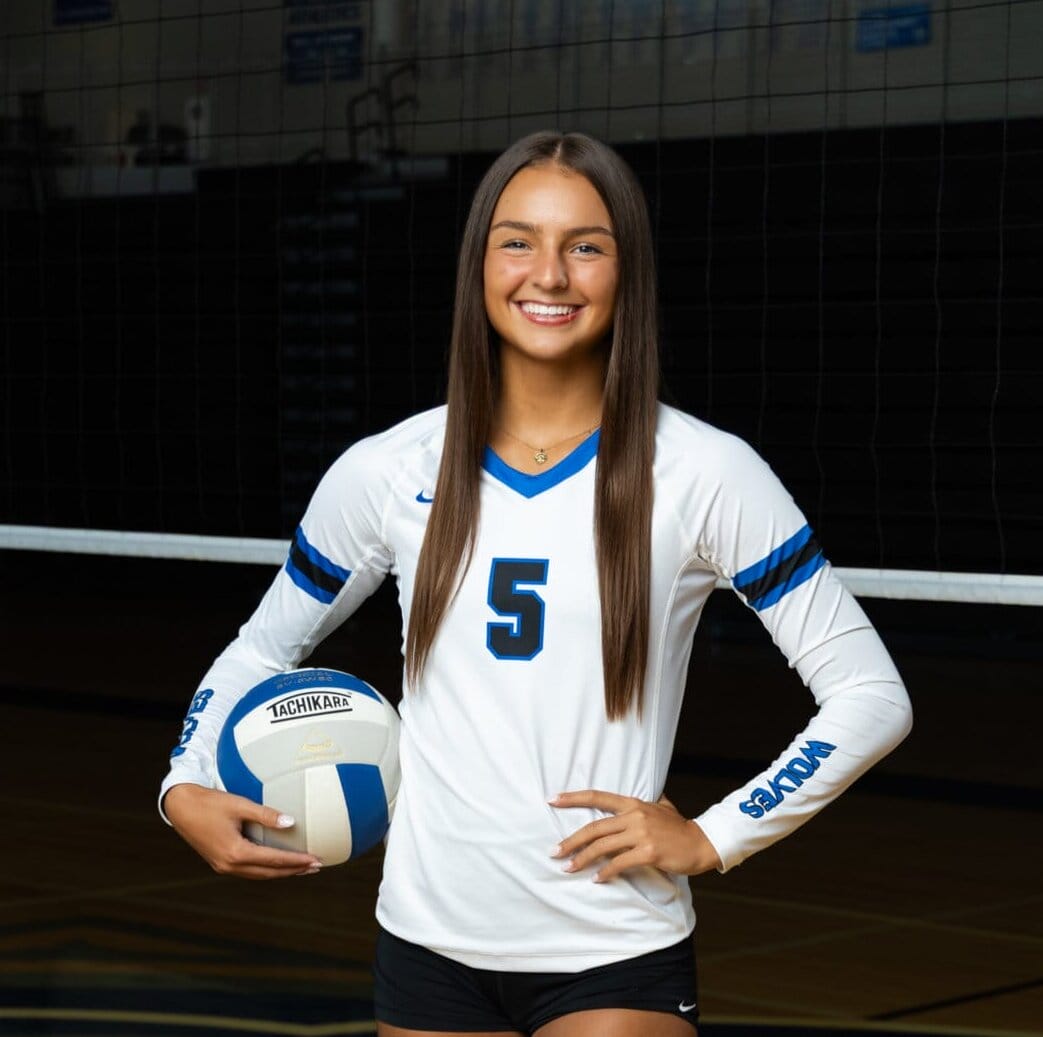

Photo taken by Next Level Portrait
Avery Vogt, a senior at Waukee Northwest High School, has been named the 2025–26 Gatorade Iowa Volleyball Player of the Year, one of the top honors in high school athletics. The Gatorade Player of the Year award recognizes student-athletes for success in athletics, academics, and community involvement.
Avery helped lead the Wolves to an impressive 38–1 season and the program’s second state championship. She finished the year with 939 assists, along with 216 kills, 171 digs, 45 blocks, and 38 service aces, highlighting her versatility and leadership on the court. Her season also earned her AVCA Honorable Mention All-American and AVCA All-Region recognition.
In addition to the Gatorade honor, Avery was named to the IGCA Elite All-State Team, selected as the State Tournament Most Valuable Player, and received the 5A Ms. Volleyball award. She played a key role in Northwest closing the season with 52 consecutive set victories.
Off the court, Avery enjoys giving back to the community. She volunteers as a mentor at camps and clinics and supports literacy outreach by reading to elementary students throughout the Waukee Community School District.
After graduation, Avery will continue her volleyball career at Drake University. Congratulations, Avery, on this incredible honor

UC Davis Athletics Concludes Fall With Competitive Success, National Honors and Facilities Investment

Fabela, Tavita named to Softball America Freshman Watch List – BYU Athletics – Official Athletics Website

Ferris State celebrates football and volleyball success during Bulldog Spirit Day

$1.8 million transfer QB expected to visit sixth college football program

‘Shelby Legacy: Past, Present, and Future’ Tireside Chat at Savoy Automobile Museum

Girls Volleyball: Rock Canyon’s Logan Cary Named Gatorade Player of the Year for Colorado

NASCAR reverts to the Chase for the Championship format in 2026

Men’s Volleyball vs Rockhurst on 1/11/2026 – Box Score

Avery Vogt Named Gatorade Iowa Volleyball Player of the Year

College Football’s Semi-Pro Economy & Why the NFL Draft Isn’t a Sure Thing

This Week in Saluki Athletics: January 12-18

Ahen Kim Named Head Coach of Duke Volleyball

Bulldogs See Two First Place Finishes in First Chance Qualifier

Granby adult volleyball standings (Jan. 5)

NASCAR Brings Back ‘The Chase’ Championship Format for 2026 Season – Speedway Digest

Stempien to seek opening for Branch County Circuit Court Judge | WTVB | 1590 AM · 95.5 FM

Ross Brawn to receive Autosport Gold Medal Award at 2026 Autosport Awards, Honouring a Lifetime Shaping Modern F1

Princeton Area Community Foundation awards more than $1.3 million to 40 local nonprofits ⋆ Princeton, NJ local news %

Downtown Athletic Club of Hawaiʻi gives $300K to Boost the ’Bows NIL fund

Badgers news: Wisconsin lands 2nd commitment from transfer portal

Five Youth Sports Trends We’re Watching in 2026

Beach Volleyball Unveils 2026 Spring Schedule – University of South Carolina Athletics

Nike Signs 10 LSU Athletes to NIL deals

Three Clarkson Volleyball Players Named to CSC Academic All-District List

Kentucky VB adds an All-American honorable mention, loses Brooke Bultema to portal

Badgers news: Final Four Game Thread vs. No. 1 Kentucky Wildcats

Kentucky AD explains NIL, JMI partnership and cap rules

Central’s Meyer earns weekly USTFCCCA national honor

PRI Show revs through Indy, sets tone for 2026 racing season

Teesside youth discovers more than a sport

 NBA Legend Michael Jordan to Join NBC Sports as Special Contributor
 Why a rising mid-major power with an NCAA Tournament team opted out of revenue-sharing — and advertised it
 Trackhouse to pair Chastain with McSwain
 Volleyball Falls to SEMO – Tennessee State University
 Kennewick School Board backs changes to gender inclusion in sports | News
-
 Rec Sports1 week ago
Five Youth Sports Trends We’re Watching in 2026
-
 Sports3 weeks ago
Kentucky VB adds an All-American honorable mention, loses Brooke Bultema to portal
-

 Motorsports2 weeks ago
BangShift.com IHRA Acquires Historic Memphis Motorsports Park In Millington Tennessee. Big Race Weekend’s Planned For 2026!
-
NIL2 weeks ago
Fifty years after IU’s undefeated champs … a Rose Bowl
-
 Sports2 weeks ago
H.S. INDOOR TRACK & FIELD: GLOW region athletes face off at Nazareth University | Sports
-
 Sports3 weeks ago
Colorado volleyball poised to repeat success
-
 Sports3 weeks ago
2025 Volleyball Player of the Year: Witherow makes big impact on Central program | Nvdaily
-

 Motorsports3 weeks ago
NJ Motorsports Park Announces 2026 Event Schedule
-

 Sports3 weeks ago
Texas A&M volleyball’s sweep of Kentucky attracts record viewership
-

 Rec Sports3 weeks ago
Tennessee Developments: Rolling on the River