Connect with us
https://yoursportsnation.com/wp-content/uploads/2025/07/call-to-1.png

NIL

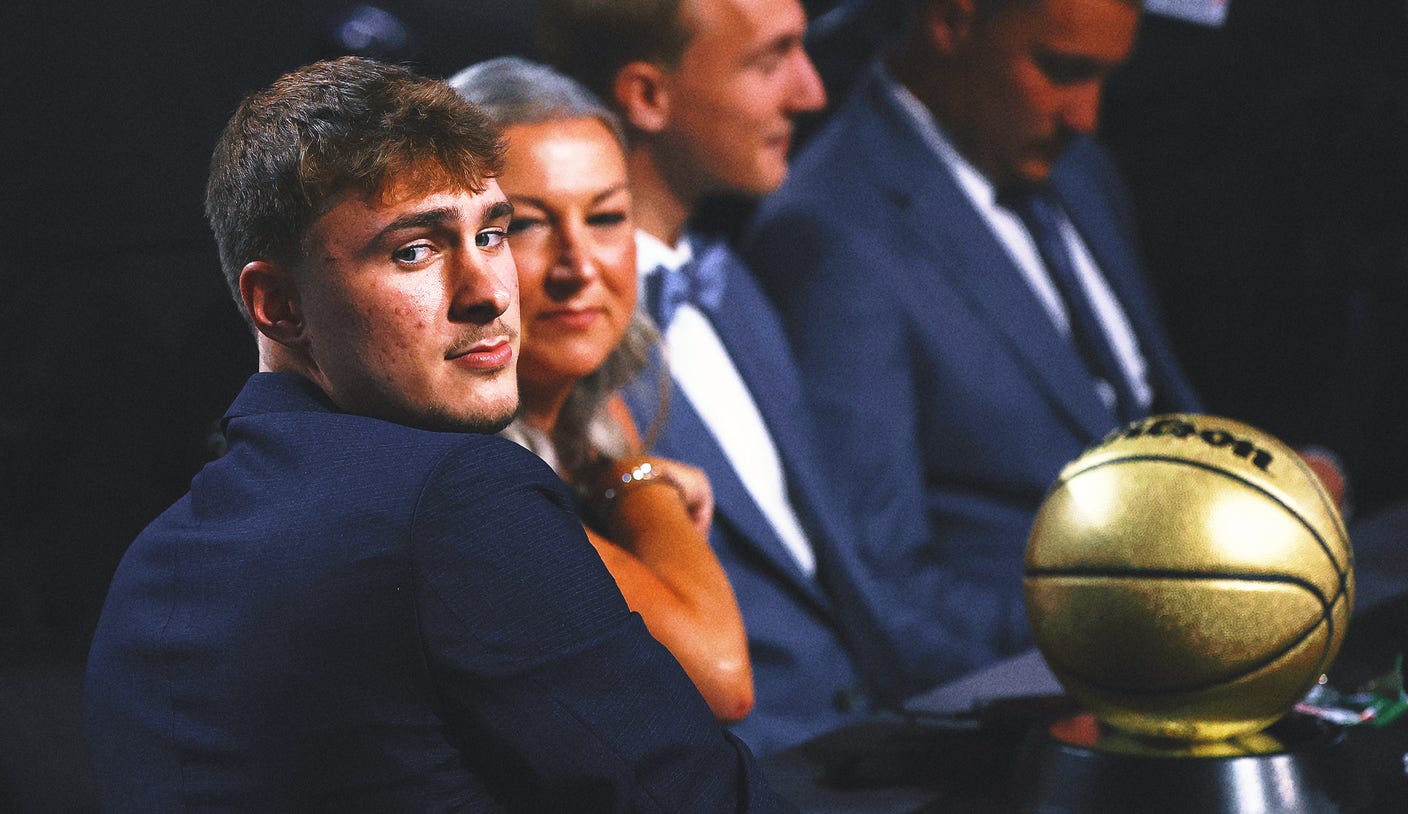
Cooper Flagg talks NIL, Finances and New Partnership

Published

on


The number is $28 million.

According to a report that surfaced earlier this month, that is the amount of money that Cooper Flagg earned in NIL deals during his one year at Duke. 
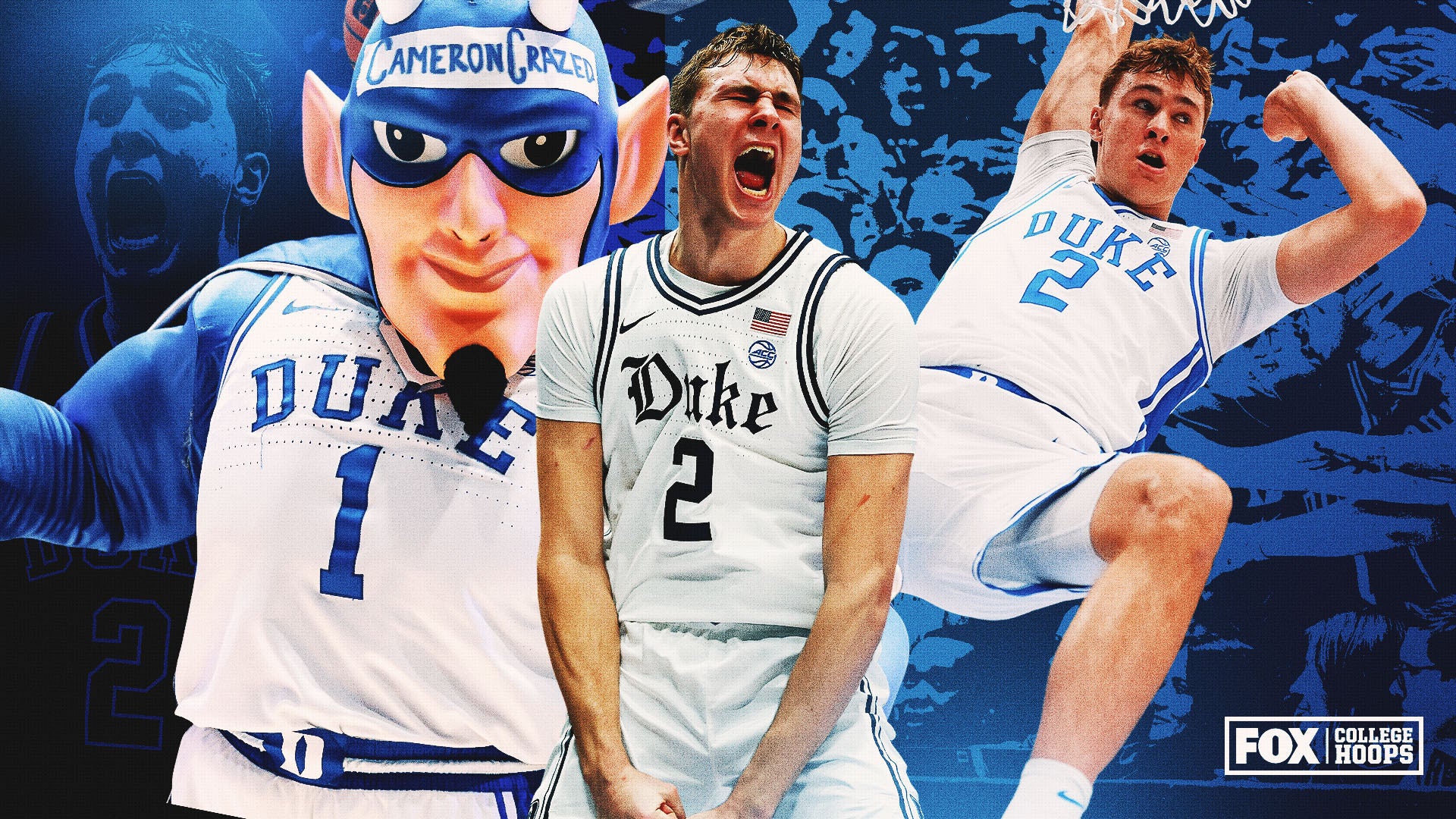
Fast-forward to Wednesday night, when Flagg was selected with the No. 1 overall pick in the NBA Draft by the Dallas Mavericks. The 2025 Naismith Award winner, which is given to the top player in college basketball, is projected to make upwards of $62 million on his rookie deal over the next four years. If Flagg lives up to his billing as a generational talent, it’s possible his second contract could be more than $350 million, while that figure for his third contract might be north of $500 million, according to projections from Spotrac.

Those are staggering numbers, and it could result in Flagg becoming the first North American athlete to earn $1 billion in on-court earnings. So, what is Flagg’s plan to manage that type of money?

On Thursday afternoon, less than 24 hours after he was selected at the top pick in the draft, Flagg announced a new partnership with Chime, kicking off a long-term collaboration rooted in financial success. To kick off the partnership, Flagg and his mother, Kelly, will star in the latest episode of “Mama, I Made It” — an original YouTube series that highlights the real stories behind success through the lens of the moms who helped shape it.

We caught up with Flagg ahead of his announcement to discuss his new partnership, as well as his experience as a high-profile athlete in the new-look NIL world of college athletics.

Tell me about your new partnership with Chime and what led to your decision to enter this partnership?

“It’s big for me. Obviously, I’ve been making money for a little while now. It started when I got to college and I think the partnership just really makes sense. I’m trying to learn about money, and Chime is a great tool that I can use to help teach me about finances.”

This partnership with debut in the “Mama I Made It” series. After talking with you, I know that your mom plays a big role in your life. Can you talk about the role she has played in your career as a role model and beyond that?

“My mom has been a huge role model. She was one of my first influences of everything and anything, specifically basketball. She played Division I herself at the University of Maine and she put a ball in my hands early. 

As far as finances, as I started to get more and more attention, she’s been really important when it comes to handling everything and putting a good system in place. She’s been there every step of the way and that has helped me navigate everything.”

How involved are you personally with some of your financial decisions when it comes to NIL dollars (and now NBA dollars) and how much of a role do your mom, family and advisors play in that?

“I have a team that helps me out with everything as far as finances. My mom is the main person that it all goes through. As far as myself, it’s kind of up to me what I want to know and what I want to learn. I’ve learned a lot from my mom as I’ve gone through this because of how important she’s been with handling everything and putting important systems in place. It’s been a learning curve for both of us.”

Let’s go back to the “Mama, I Made It” series where this partnership will debut. We talked about your mom, but what does the phrase “I Made It” mean to you?

“For me, it’s about being in a place where I’m in a very good spot financially. I’ve been blessed with a lot of good opportunities, but it’s about being prepared for the moment and having systems in place and being ready to handle everything that’s being thrown my way.”

What’s been the most eye-opening thing for you when it comes to navigating this new-age NIL world of college athletics?

“The biggest part is just trying to balance it all. It can demand a lot of time, and you can get lost and focused on that. But having systems in place and a team that is around to help me go through everything and make everything easier for me has been huge and just lets me focus on basketball.”

One thing that really stands out in the NIL space is how many big dollar numbers and arbitrary reports are thrown out there when it comes to NIL earnings. Do you pay attention to that stuff?

“A lot of basketball players and athletes deal with it … it’s really just something that you have to learn to deal with in your own certain ways. For me, it’s about ignoring it and not really reading into it. I know what the truth is and what’s going on. It’s about focusing on the people around me that are in my circle.”

Is that something that you’ve had to really learn and work with people that you’re close to? I have to imagine that it has to be really challenging to ignore all of that.

“It does come with challenges, and you learn over time how you deal with it personally. I think just having a support system around me – people that you’re really close with – has really helped with blocking out all the outside stuff.”

What advice would you give to an incoming highly touted freshman about navigating the NIL space?

“The biggest thing is getting educated and learning about it yourself so you know what’s going on. You have to have people around you that you trust and know are all about the right things so they can help lead you in the right direction and make things easier on you. You want to be able to focus on just playing and be able to do what you love to do.”

How is this new partnership with Chime going to help you navigate your finances?

“It’s going to help me learn and educate me on the financial aspects of everything. It’s a really great tool. It’s going to help educate me and continue to grow and learn about finances as it becomes more and more important in my life.”

Let’s close it out with a really fun question. If you could pick one guy in the NBA, a current player or incoming player, who you can’t wait to go up against, who is that player and why?

“I would say Khaman [Maluach]. He’s one of my former teammates. I love him, and he’s one of my best friends. That would be really cool.”

Want great stories delivered right to your inbox? Create or log in to your FOX Sports account, and follow leagues, teams and players to receive a personalized newsletter daily!

FOLLOW Follow your favorites to personalize your FOX Sports experience

College Basketball

National Basketball Association


Get more from College Basketball Follow your favorites to get information about games, news and more



Link

Continue Reading
Click to comment

Leave a Reply

Your email address will not be published. Required fields are marked *

NIL

The $5 million NIL figure that transfer portal QBs are expected to cost

Published

on


If you thought the NIL transfer market in college football already was out of control, just wait until the upcoming battles next month for the top quarterbacks looking to switch schools.

ESPN college football insider Pete Thamel believes the dollar figures during the January cycle could be as much as $5 million for one season.

“This market looks robust already, guys,” Thamel said Friday on College GameDay ahead of Alabama’s playoff win over Oklahoma. “You’ve got Cincinnati’s Brendan Sorsby at [the top], Nebraska’s Dylan Raiola, TCU’s Josh Hoover went in [this week], you have Arizona State’s Sam Leavitt, Florida’s DJ Lagway.”


Cincinnati Bearcats quarterback Brendan Sorsby warming up.
Cincinnati Bearcats quarterback Brendan Sorsby (2) warms up before the game against the Utah Utes at Rice-Eccles Stadium. Rob Gray-Imagn Images

“So I made some calls today, guys, and sources told me the tip-top of this quarterback market, financially, could reach $5 million for one season. Look, it’s supply and demand. You have all those guys. Sorsby’s been linked early to Texas Tech. Dylan Raiola, there’s some smoke to Louisville, although maybe a [College Football Playoff] team jumps in late there. There have been early links between Indiana and Hoover, assuming that [Heisman Trophy winner Fernando Mendoza] goes pro.”

Thamel also noted that CFP programs such as Oregon and Miami are likely to be looking for a new quarterback for 2026, as well as LSU, with new coach Lane Kiffin looking to make a splash.

“Look, this is what’s going to drive the market,” Thamel said. “Oregon may lose [draft prospect] Dante Moore. Miami will be in the quarterback market again. So will LSU. So, when you really take a look at what could drive this quarterback market, it’s going to be the most expensive in the history of college football.”

Thamel also pointed out that seven of the past nine Heisman winners landed at those schools through the transfer portal, including Mendoza, who moved from Cal to Indiana for this season.

The main transfer portal window is open from Jan. 2-16.


Link

Continue Reading

NIL

Pay To Play: University Of Wyoming’s Battle To Remain Division I In An NIL World

Published

on


Late one night, Sundance Wicks scrolled through a spreadsheet containing 3,500 names. 

The Gillette native and University of Wyoming men’s basketball coach was hunting for something his competitors might not see — a player hidden in plain sight, undervalued by the market, waiting to be discovered.

He applied an algorithm designed to identify under-the-radar talent, as described in the best-selling book and hit 2011 film “Moneyball” starring Brad Pitt about how the Oakland A’s built their rosters with players no one else wanted.

Wicks found Damarion Dennis at Texas A&M Corpus Christi. 

A freshman backup averaging seven points in 17 minutes per game, he wasn’t a starter and he played at a backwater school. Every other team in the Mountain West Conference likely scrolled right past him.

But the algorithm told Wicks a different story.

“We looked at the numbers and we recruited him as a human being, knowing that he loves to compete,” Wicks said. “He wanted to come up a level and play more minutes at a competitive place, willing to take less money because he wanted to come up a level. 

“And he was the most efficient player in the transfer portal, per the money that he could make.”

Heading into 2026, this is the reality facing the University of Wyoming: To maintain its major Division I basketball and football programs, it needs to generate revenue that is then paid to players.

As much as that disappoints many UW alumni, there is no turning back, according to Wicks and others adapting to the pressures of professional college sports in the age of Name, Image and Likeness deals that have turned college athletics into a pay-to-play system. 

As NIL money reshapes college athletics, the state's only Division I program turns to analytics — and a Gillette native's vision — to compete against schools with deeper pockets. It’s a new pay-to-play landscape for the University of Wyoming. Men's basektball coach Sundance Wicks found Damarion Dennis at Texas A&M Corpus Christi using a "Moneyball" approach.
As NIL money reshapes college athletics, the state’s only Division I program turns to analytics — and a Gillette native’s vision — to compete against schools with deeper pockets. It’s a new pay-to-play landscape for the University of Wyoming. Men’s basektball coach Sundance Wicks found Damarion Dennis at Texas A&M Corpus Christi using a “Moneyball” approach. (University of Wyoming Athletics)

Compete With The ‘Big Dogs’

The question is whether Wyoming can compete with programs that have far deeper pockets — and whether an approach borrowed from professional baseball can help level the playing field.

“Look at the movie ‘Moneyball,’” Wicks said. “It’s a great movie. Every time you watch, you get goosebumps because you’re going, ‘Man, every one of us can relate to being the Oakland A’s at some point in their life where we’re having to compete against big dogs.’”

Wicks digs into his spreadsheet, crunching numbers like minutes played, effective field goal percentage, turnover percentage, rebounding, steals, blocks — all the things that indicate whether a player helps a team win, not just whether he scores points.

“We look at the person over the position,” Wicks said. “We always preach minutes over money because I still think valuing to play the game of basketball should reign supreme. 

“And if you’re finding a kid or a player that’s worried about money over minutes, then he’s probably not very competitive.”

With Dennis, Wicks said Wyoming found exactly what it was looking for. 

“This is a guy we have to have,” Wicks recalled thinking. “We believe that he can come in and help Wyoming win while nobody else will value him.”

Here’s the question that keeps Wicks and others at UW up at night: Will athletic talent continue to value the University of Wyoming when other, better-financed schools offer bigger paydays? 

Now that Division 1 athletes are able to profit from their Name, Image and Likeness (NIL) and revenue sharing with their chosen school, is the “Moneyball” approach enough to maintain a winning edge? 

Will Wyoming keep up as rivals like Colorado State and BYU build war chests to pay for top players?

Shifting Landscape

Athletic Director Tom Burman has watched Wyoming’s position evolve rapidly since NIL became legal in 2021, and again after the landmark House v. NCAA settlement opened the door to direct revenue sharing this past July. 

Initially, the response from Wyoming donors was discouraging.

“We struggled from the time NIL started really in ’22 until the end of June this past year,” Burman said. “We struggled getting people — Wyoming fans, alumni, donors — to invest in the collective or provide money through our third-party portals. It’s just not something Wyoming people embraced.”

The resistance, Burman believes, reflects regional culture. 

“It’s kind of funny. You look at schools around the country that had success with those things,” he told Cowboy State Daily. “The areas along the coast did really well with it — the Californias, the Washingtons, Oregons. 

“The middle of America struggled with it. I think it has a little bit to do with a conservative nature and style. They just were like, ‘I’m not sure who I’m giving this money to. I don’t feel comfortable with it.'”

But attitudes are changing. 

“Now we are seeing people say to us, ‘OK, if I can give the money to Cowboy Joe (the UW booster club), I’ll up my annual Cowboy Joe donation,’” Burman said, adding an optimistic spin. “If you ask me where we are a year from now, we’ll have caught up significantly to our competition.”

The structural disadvantages, however, remain. UW is an isolated school and the state lacks the corporate base that funds competitors. 

“I was just visiting with some people in San Diego,” Burman said. “There’s companies there that have $3- or $4-million ad budgets. For them to spin off 10% to support the Aztecs is kind of a no-brainer.

“In our case, a big ad budget for a company in Wyoming is $500,000 to $600,000. So they spin off 10%, that’s $50,000. It helps, but it doesn’t change the formula.”

Just Business

When Josh Allen returned to Laramie in November for his jersey retirement, Burman had a chance to discuss the NIL landscape with Wyoming’s most famous football alumnus.

“He’s like, ‘I didn’t have it,’” remembered Burman, noting how Allen’s college career ended before pay-for-play kicked in. “He didn’t say he doesn’t like it. He just — it’s just weird to him.”

Allen’s perspective mirrors that of many former players.

“Guys like him see what the business side of football is,” Burman said. “I’ve had this conversation with Frank Crum and Dewey Wingard. They’re like, ‘You know, this is business. It’s not nearly as fun anymore.'”

That business reality has Burman contemplating scenarios that would have seemed unthinkable a decade ago.

The best outcome is Wyoming develops what Burman called “a really magical scenario” where Wyoming leverages all it has to offer — great degree programs, a cool college town and enough money for players so top talent keeps picking UW. 

As NIL money reshapes college athletics, the state's only Division I program turns to analytics — and a Gillette native's vision — to compete against schools with deeper pockets. It’s a new pay-to-play landscape for Athletic Director Tom Burman and the University of Wyoming.
As NIL money reshapes college athletics, the state’s only Division I program turns to analytics — and a Gillette native’s vision — to compete against schools with deeper pockets. It’s a new pay-to-play landscape for Athletic Director Tom Burman and the University of Wyoming. (University of Wyoming Athletics)

How To Stay Division I

This allows the Pokes to continue to be competitive against its rivals and prevents UW from dropping down into the Football Championship Subdivision of Division 1 play where the Big Sky Conference and teams like Montana and Idaho compete. 

Instead of dropping down, Burman envisions another possible scenario. Like other fans and officials across college sports, Burman wonders about a future where Wyoming always has a shot at playing at the highest level.

To do that, a productive combination of smart recruiting and revenue generation needs to blossom for UW, he said.

Burman also recognizes that fans could see, “The top 40-ish spin off — basically the Big Ten, SEC. And they invite a few others that have great television markets and maybe some with great traditions, but a lot will be left out. 

“Whether that number is 40 or 60, I don’t know. But I think that happens someday. And then the rest of us recalibrate and build what I would call a more traditional college model.”

A relegation system, similar to European soccer, could be looming on the horizon. 

“There could be a relegation model created for Division I athletics, even within conferences,” Burman said.

In such a scenario, the current Football Championship Subdivision — home to Idaho State, Montana State, North Dakota State — could merge with programs left out of the super league. 

“Maybe there’s a scenario where the level of play goes up because all of these teams that got left out of the top 40 Premier League come together,” Burman said.

In the meantime, Burman and the rest of UW’s athletic department want to remain competitive as television revenue and the financial side of college sports continues to reshape football and basketball. 

“We have 400 student athletes here at the University of Wyoming, and revenue sharing might really affect a small portion of that,” said Alex Jewell, UW’s assistant athletic director for development. “The majority of our student athletes are the same student athletes that were here 10 years ago, 15 years ago, 30 years ago.”

The rising costs affect everyone, though. 

“Scholarships cost more than they did 20 years ago,” Jewell noted. “Nutrition, team travel, uniforms.” 

Then there’s health insurance and travel. 

The goal isn’t just recruiting, he said, it’s retention.

“If we can help them with revenue sharing, in conjunction with all the other great things that we think we excel in compared to some of our competitors — like our class sizes, like our educators, like the coaches we have here, like the fan base we have here — all of those things, combined with some revenue share, helps us retain some great student athletes,” Jewell said.
Cultural Resistance

For all the urgency from athletics officials, a stubborn resistance among some Wyoming fans complicates the path forward, according to those keeping tabs on the intersection of money and athletic talent drawn to Laramie. 

“A lot of fans, especially the older ones, are really late to the game,” said Cody Tucker, founder of 7220Sports.com and one of the state’s leading voices on Cowboys athletics. “They’re still in the mindset like, ‘Hey, these guys have scholarships, they get free room and board.’ They do not want to pay players.”

Tucker recalled hearing about a donor who made a $15,000 contribution to the Cowboy Joe Club, designating $5,000 for NIL. The donor had one stipulation: “I don’t want to hear about it. I don’t want to know who it goes to.”

“Some people just cannot live with the idea that they’re paying a player and giving them a scholarship,” Tucker said. “I get the sentiment. But it is what it is, man. You either get on board or you’re going to get left behind.”

The resistance extends to corporate partnerships. 

When Wyoming announced a $90,000 sponsorship deal with Ramos Law, a Denver-based firm with an office in Cheyenne, to put its name on the 25-yard lines for the final home game, fans revolted, calling the attorney an “ambulance chaser” and complaining about Colorado money on their sacred field.

“You can’t have it both ways, man,” Tucker said. “It’s the new order.”

Fans don’t always know what they missed, Tucker noted, as recruiting battles play out and Wyoming loses quietly. 

“There’s another school that offered more,” he said. “Those are the stories we don’t often hear.”

Tucker noted structural advantages enjoyed by rival Colorado State, home to around 34,000 students.

“Wyoming has, like, 11,000,” he said. “Those student fees alone are incredible.”

How might UW close this funding gap without hiking student fees in Laramie? A booster in Gillette has a plan. 

A Tourism Tax For Athletics?

Alan Stuber, a Gillette Police Department patrol officer and lifelong Wyoming fan, has a novel idea that he believes holds promise. 

“What I want to do is find somebody in the Legislature that would be willing to sponsor a bill to come up with some sort of resort tax,” Stuber said. “So, you would hit like the Brush Creek Ranch down in Saratoga or your big resorts in Jackson. 

“If there was some sort of a resort tax, it doesn’t come out of my pocket unless I go stay there.”

Stuber, who wrestled in college at Dakota Wesleyan and remains a diehard Pokes booster across several sports, understands the political challenge in tax-averse Wyoming. 

Campbell County, he noted, “is the only county in the entire state that doesn’t have a local lodging tax.”

But as a father who travels around Wyoming for his kids’ activities, Stuber sees the appeal. 

“I am more than happy to spend $20 a year on that tax staying in Casper, staying on the other side of the mountain for football, for wrestling, for swimming — and have that money go towards NIL,” he said. 

The best part in Stuber’s mind? Visiting fans would fund Wyoming’s competitiveness.

“How great would it be to sit there and shake these people’s hands and say, ‘Hey, thanks for coming. Thanks for traveling with your team to Laramie,'” Stuber said. “Oh, yeah, by the way, because you’re staying here, you’re getting taxed. You’re paying our players to play against you.”

Thunder Model

Back on the hardwood in Laramie, coach Wicks has built a payment structure modeled on one of the NBA’s most analytically sophisticated franchises: the Oklahoma City Thunder.

“The Oklahoma City Thunder are a great team to study,” Wicks said. They use what’s called the Gini coefficient, which is named after an Italian statistician. 

Wyoming’s basketball budget this year started at roughly $550,000 for a roster of up to 15 players. 

“All our guys sign non-disclosure agreements,” Wicks said. “That’s a big deal for us to have in these days, because I think that’s the first thing that becomes divisive in the locker room.”

Under the Gini coefficient, the best player on the roster makes 20% of the budget. 

“The next best player makes 18%, the next 16, so on and so on all the way down,” Wicks said. “Because if you overspend for one player, then you hurt the back end of your roster. And your chance to be successful drops if injury happens.”

For a program operating with such constraints, every dollar matters, and so does knowing what opponents are spending.

“Every single team that we play outside of Air Force — because Air Force is government — has a bigger budget,” Wicks said. 

When asked about upcoming opponent Grand Canyon University, he offered a stark assessment: “They’re a for-profit university. I’ll be completely honest with you. I don’t know the exact numbers, but they may have the most expensive roster in the Mountain West.”

Wyoming, by contrast, may have “one of the least expensive rosters at the mid-major-plus level,” Wicks said. “And we’re producing results. That means we’re doing our job.

“We’re a conservative, fiscally conservative state,” he said. “We spend wisely around here. And that’s why I say it’s a value-based approach to all this stuff. There has to be value for us. There has to be value for them. And then we have to meet in the middle somewhere to make sure this all works out.”

David Madison can be reached at david@cowboystatedaily.com.


Link

Continue Reading

NIL

College Football Transfer Quarterback Market Could Reach $5 Million This Offseason

Published

on


As programs across the country begin to settle into the NIL and revenue-sharing era of college athletics, it’s clear that the annual pay of key positions on the field is starting to take shape.

That’s especially true, of course, at the quarterback position, where ESPN’s Pete Thamel says that the annual pay in the transfer portal could approach all-time highs at the top of the market.

“I made some calls today, guys. Sources told me that the tip top of this quarterback market financially could reach $5 million for one season,” Thamel said in a College GameDay hit on Friday night.

Thamel mentioned where some of the biggest names on the market are trending, including Cincinnati quarterback Brendan Sorsby, TCU’s Josh Hoover and Nebraska’s Dylan Raiola.

“Sorsby’s been linked early to Texas Tech. Dylan Raiola there’s some smoke to Louisville, although maybe a playoff team jumps in late there. There’s been some early links between Indiana and Hoover, assuming that [Fernando] Mendoza goes pro.”

Thamel emphasized that supply and demand for the most important position on the field is driving prices up to historically high levels.

It’ll be interesting to see where the top players eventually land.

More College Football on Sports Illustrated


Link

Continue Reading

NIL

Wisconsin’s new $104.5 million Under Armour deal could help launch athletics into NIL-era

Published

on


The University of Wisconsin-Madison and Under Armour agreed to a 10-year, $104.5 million apparel relations extension on Nov. 24, retaining UA as the Badgers’ exclusive outfitter and injecting new funding into NIL.

The partnership with Under Armour first started in 2015 with the Badgers men’s basketball run to the Final Four. In the decade since, Athletic Director Chris McIntosh considers Under Armour one of the university’s “most valued partners.” 

In the recent history of Wisconsin football, the Badgers have struggled to compete with other Big Ten foes during the NIL era of college athletics. Since NIL was implemented into college sports in 2021, Wisconsin Football has experienced difficulties with gathering the funds necessary to recruit high-end talent. 

Under Armour’s sponsorship aims to help the Badgers further adapt to the NIL era of college football, including the transfer portal by giving the Badgers the ability to acquire great talent throughout the rest of the country. The contract contains a “starting sum of $175,000 annually”, that will continue to rise, to reward NIL contracts to Badger athletes. Under Armour is not only providing the Badgers with NIL, but they are also providing brand and business opportunities for UW athletes. 

In order to achieve success in the modern college football landscape, programs have to devote more monetary rewards than just scholarships to athletes. For example, the defending national champion Ohio State Buckeyes spent around $20 million in NIL on their program

In comparison to the Buckeyes, Wisconsin’s football budget is significantly less. After another abysmal football season and ranking towards the bottom of the Big Ten in NIL funds, this renewed contract with Under Armour will help catapult Wisconsin into the top half of the conference in NIL funds. 

Under Armour sponsors other notable football programs like Notre Dame and Texas Tech. These two football powerhouses — who finished the regular season  in the mix for the College Football Playoff — have seen direct benefits, such as new apparel, more flexibility, and better morale within their respective programs from their sponsorships with Under Armour. 

In a new era of collegiate athletics, the Badgers have found themselves trailing not just the Big Ten, but most Power-4 programs throughout the country as well. While their sponsorship with Under Armour doesn’t fix everything, it is definitely a step in the right direction for the future of Wisconsin Athletics. 

The Daily Cardinal has been covering the University and Madison community since 1892. Please consider giving today.


Link

Continue Reading

NIL

No. 1 transfer portal quarterback predicted to join major college football program

Published

on


The NCAA transfer portal will feature hundreds of players across all levels of college football in the 2026 offseason.

Prominent quarterbacks have begun to declare their intent to enter the transfer portal in the weeks before it opens. DJ Lagway, Josh Hoover, Rocco Becht and Dylan Raiola are among the Power Four quarterbacks who will be at a new school in 2026.

One of the first Power Four quarterbacks that decided to enter the transfer portal was Arizona State quarterback Sam Leavitt. He will have two seasons of eligibility at his next school.

One program linked to Leavitt when he enters the portal is Oregon. Leavitt is from West Linn, Oregon, just south of Portland and an hour and a half drive from Eugene by interstate highway.

Oregon has not started a quarterback that it recruited from high school for an entire season since Justin Herbert in 2019. Bo Nix, Dillon Gabriel and Dante Moore (transferred back) all came to the Ducks via the transfer portal.

The 6-foot-2, 205-pounder began his college football career at Michigan State in 2023. He played in a maximum of four games to keep his redshirt for the Spartans, passing for 139 yards, two touchdowns and two interceptions on 15-of-23 passing.

Sam Leavitt throws the ball in Arizona State's game against Houston.

Arizona State Sun Devils quarterback Sam Leavitt (10) | Mark J. Rebilas-Imagn Images

Leavitt transferred to Arizona State in the 2024 offseason. He started every game for the Sun Devils while accumulating 2,885 passing yards, 24 touchdowns and six interceptions while rushing for 443 yards and five touchdowns en route to their Big 12 Championship victory and subsequent College Football Playoff appearance.

The Big 12 named Leavitt its Freshman of the Year and Second-Team All-Big 12 for his heroics. The conference also named him as its Newcomer of the Week on multiple occasions. He finished 2024 with the most passing yards by a freshman in a season in Arizona State history.

Leavitt’s 2025 season was cut to just seven games due to injuries. He passed for 1,626 yards, 10 touchdowns and three interceptions while rushing for 306 yards and five touchdowns.

The Sun Devils will not start Leavitt in their bowl as he has declared his intent to leave. Arizona State (8-4, 6-3) will face ACC champion Duke (8-5, 6-2) in the Tony the Tiger Sun Bowl in El Paso, Texas on Dec. 31 (3 p.m. EST, CBS).

The NCAA transfer portal will officially open for all college football players looking for new destinations on Jan. 2, 2026. The portal will stay open until Jan. 16, 2026.


Link

Continue Reading

NIL

This college football team is creatively approaching NIL like NFL free agency

Published

on


The way college football operates in the NIL/revenue-sharing era has moved a lot closer to the NFL model, and one high-profile program is acknowledging that in a very public way.

USC has been announcing on social media that players have “re-signed” with the program, essentially acknowledging that all college football players are free agents each year now, thanks to the transfer portal and the ability to chase better compensation elsewhere.

A big one for the Trojans this week was quarterback Jayden Maiava’s decision to return to USC rather than pursue the NFL draft this year or a bigger payday from another school, but USC has publicized the return of more than two dozen players in this way — from starters to little-used freshmen and even its kicker.

Coach Lincoln Riley was asked about this new approach for his program.

“I think that’s something that should be celebrated. In this day and age, it’s almost more like an NFL team. Like, it’s an accomplishment to be welcomed back, and then on top of that, when you do have that option, it’s something that should be celebrated by a school or a program that somebody wants to continue on what’s being built or what they’ve already started at that place,” Riley said.

“… It’s changed so much on all accounts. It’s changed a lot for the players. It’s obviously changed a lot for us.”

USC overhauled its player personnel/recruiting department a year ago by hiring general manager Chad Bowden away from Notre Dame and building a new staff for him. Bowden has a reputation for thinking outside the box, so this was likely an idea that he and his staff came up with for the Trojans.

College football analyst Adam Breneman chimed in with his thoughts on USC’s “creative” approach to roster management.

“To me, USC has always been known for creativity. They’re in Los Angeles, the creative capital of the world, that’s where great things happen, and a great job here by USC’s creative department, having this idea. I think we’ll see teams around the country copy this, announcing the re-signing of players to new contracts for the upcoming season with NIL and rev-share deals,” Breneman said.

“Chad Bowden, the USC general manager, is ahead of his time. He’s innovative, he thinks forward, he’s proactive, and his staff clearly has something here, really great with announcing the re-signing of the roster at USC. What a great idea.”

USC may have indeed started something with this, as Missouri announced the return of star running back Ahmad Hardy in the same way.


Link

Continue Reading

Most Viewed Posts

Trending