
NIL
Listen: How will UTEP manage paying its collegiate athletes?

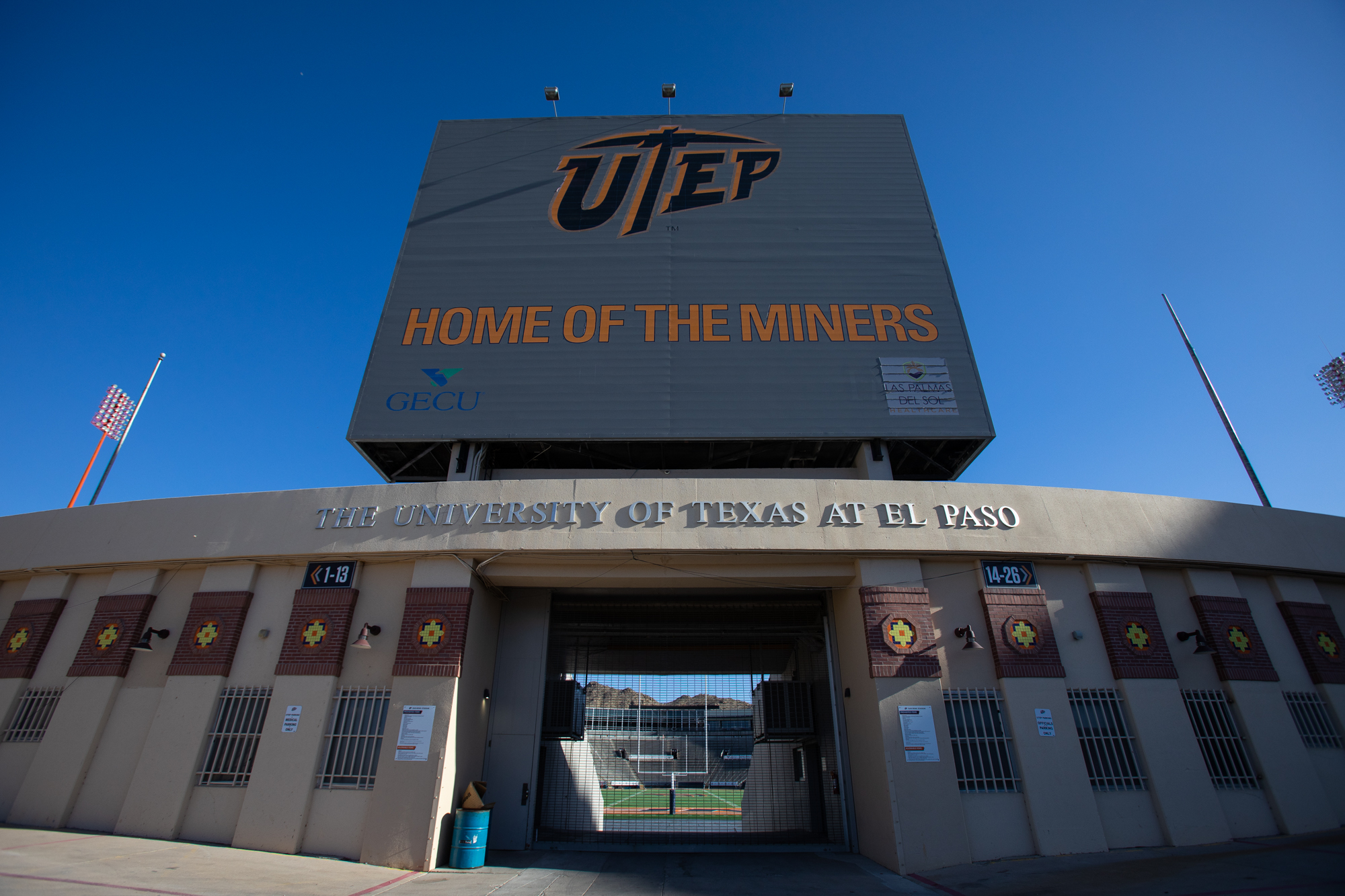
Diego Mendoza-Moyers: Earlier this month, the world of college athletics changed forever. After the National Collegiate Athletics Association – the NCAA – agreed to a settlement with former college athletes earlier this month, Division 1 schools will now begin directly paying college athletes, splitting as much as $20.5 million annually with players of different sports.
Just a few years ago, that would have landed a school in deep trouble. But now, it’s created something of a free agent market for college athletes. And for schools like UTEP that won’t approach anywhere near $20 million in revenue to split with athletes, it shifts the competitive landscape. A recruit’s relationship with a school’s coaching staff now will matter less than the dollars the school is willing to dole out to the player.
UTEP is having to get creative quickly. The head coaches of the school’s main sports – football, men’s and women’s basketball and volleyball – are having to add fundraising to their list of duties so the programs can compensate players and keep them from transferring elsewhere.
And, compared to a lot of other schools of its size, UTEP at the moment has limited resources to divvy up. One of the first steps the school took was doing away with the women’s tennis program earlier this year. And, for years, the school’s track and field program has had a lot more success than the football team. But Jim Senter, UTEP’s athletic director, is now having to figure out how to pay college football recruits and also stay competitive in sports that generate less revenue.
It all means more turnover on the school’s different sports teams. A lot of players, especially on the basketball team, have left to pursue more money elsewhere. And on the flip side, UTEP was able to put some funds together to land Malachi Nelson, a quarterback who, a couple of years ago, was rated as the top high school football player in the country.
And amid all of this, UTEP is preparing to transition to the Mountain West Conference, a higher-profile conference than Conference USA, which it’s leaving after this school year. But UTEP will have to beef up its resources to be able to pay players anywhere near as much as the better-funded schools in the new conference, such as the University of Nevada-Las Vegas and the University of New Mexico.
I’m your host, Diego Mendoza-Moyers, and I sat down this week with ESPN 600 radio hosts Steve Kaplowitz and Adrian Broaddus, as well as El Paso Matters assistant editor Pablo Villa, to talk about the different aspects of this shift in college athletics, and the challenges and opportunities it presents for UTEP.
But before we move on to our conversation with Steve and Adrian:
This El Paso Matters Podcast episode is sponsored by Tawney, Acosta and Chaparro: truck crash and injury attorneys. Their team of local, seasoned trial attorneys are ready to help if you’ve been injured in a crash.
Steve, Adrian, thanks for joining me and Pablo.
Adrian: Thanks for having us.
Steve: Thank you.
Diego: So, let’s get right into it. Can you guys share some thoughts with us about how the NCAA’s recent settlement related to NIL affects UTEP, and how revenue sharing will work at UTEP and all that kind of stuff?
Steve: Sure. So, clearly, every school has an opportunity to opt in to the revenue sharing as a result of the settlement. Some universities might decide to wait, and we’ll talk about UTEP in a moment, how that could affect them. Others are going to say, “Yes, let’s go.”
Because, now, there’s two ways to look at the way revenue sharing is going to work, guys. Number one, schools are going to start to back-pay athletes who jumped in on this lawsuit over the last 10 years and make sure that, as every school pays a portion of those damages, they will go to the former athletes.
Now, we don’t know how many UTEP athletes joined the lawsuit. That wasn’t privy to us, but everybody around the whole NCAA has to pay all of the athletes, no matter whether their former athletes opted in or not.
Also, part of the revenue share could go to the current and future athletes. And what’s important there is that you can use that money on top of NIL to help supplement this. And, for example, let’s say a school has a foreign athlete. Foreign athletes were not eligible to collect NIL. That’s just the way the whole process worked. But, with revenue share, all of a sudden, you can now give foreign athletes a stipend versus no money whatsoever from the NIL.
Adrian: Yeah. The other thing I’d say, Steve, to all of this is it’s about $20.5 million dollars that each school will receive annually for the NIL base compensation thanks to the settlement that we’re seeing with the NCAA and the Supreme Court. How quickly UTEP jumps into this – I mean, I’ll swing it back to you on that, Steve, because of it’s complicated with UTEP making the transition from Conference USA to the Mountain West. But, I will say this, what we do know from UTEP, so far, is back in April, the UTEP athletic department announced that they would disband the women’s tennis program.
And that’s interesting because, at that point, they cited rising costs with revenue sharing. And they were saying how they’ve got to save some money down the line. So, that was the most cost-effective model to really go off of when it came to disbanding women’s tennis. That was kind of, like, the first move, Steve, where they really took in order to try to combat the NIL and the revenue sharing.
Steve: Now, you said $20.5 million, and I think that it’s important to note that not every school is going to have $20.5 million to distribute. That’s the maximum amount of money. And there are certain Power 4 schools that will be making so much money from their media deals that they’ll be able to easily take that amount and start putting it back in. But there’s plenty of Group of 5 schools, like UTEP, that could be dealing with a fraction of that amount of money because they simply will not be receiving $20.5 million.
It could be closer to $4 million, $5 million, depending on what their media deal is. And, for UTEP, it’s all about the Mountain West. Because this season coming up is their final year in Conference USA, and UTEP is not receiving a penny from that media deal. So, I’ve already been told that UTEP will not opt in to revenue sharing this year because there’s no money to share, because they’re not getting anything from that. In fact, they’re raising money to help offset the lack of media rights money that they should be getting and also having to pay Conference USA to get out and going into the Mountain West.
Diego: Yes, Steve, and I’ll just jump in. Can we talk some numbers here? I’m curious, what’s UTEP’s NIL fund going to look like this year? And then, how does the transition to the Mountain West affect that with the TV deal you’re talking about?
Steve: OK, it’s a great point. It’s something we talk about here, Adrian and I, on the show all the time. As we know now, UTEP has about $600,000 in NIL for men’s basketball. They went from zero to about $600,000 now for football. And I believe they also have about $120,000 for women’s basketball.
And what’s interesting to note is, take women’s basketball, for example. That money has been raised solely by (head coach) Keitha Adams. And the same thing goes for Joe (Golding) for basketball for men’s and (head coach) Scotty Walden for football. A lot of the coaches are having to help raise that money themselves because, if they don’t, it’s not going to magically appear in an NIL fund.
So, it’s almost like the coaches now have become active fundraisers to try and build up their NILs.
Adrian: Yeah. And I’ll just say to put it on a national scale, guys, where UTEP is trying to stand out is to be creative in NIL. Other programs at the Group of 5 level – you talk about the UTSAs of the world, you talk about maybe even other conference mates that UTEP had in the past, like UAB or even North Texas – they have much bigger pools to get from when it comes to NIL.
And UTEP used to be in the same conference as these guys. So, when you compare UTEP to other teams in the Mountain West or other schools in the Mountain West, they’re near the bottom. Right now, in Conference USA, when it comes to, I guess, basketball and football, they’re closer to the top. They’re probably middle of the pack, but closer to the top. It’s just not as competitive as where they need to be going next year into the Mountain West.
Diego: Yeah, and I guess that’s sort of – just to go back to your point, Steve, I mean, so we’re talking this year, UTEP maybe is not going to have a whole lot of money going around. But maybe after they transition to the Mountain West, you think there will be millions more? Is that what we’re talking about here?
Steve: Potentially. Now, here’s also what’s really interesting to think about these media deals, okay? So let’s take Conference USA, for example. Each school is supposed to have now about $800,000 a year in their media deal, but that’s not necessarily the case because certain schools like Middle Tennessee and Western Kentucky were looking at moving a few years ago when all that conference reshuffling took place. But they ultimately chose to stay in Conference USA.
Well, Conference USA said, “You know what, we’re going to give you more than these other schools because we didn’t want to lose you.” So, it doesn’t always divide up equally among each school the way you would think. Same thing’s going to go for the Mountain West.
Their new media deal is going to happen starting next year when we see the exodus of certain programs and the arrival of UTEP and other schools. So, we’ve already been told that, based on the media deal, it could be around that $48 (million) to $54 million-a-year range total in media rights.
Well, guess what? UNLV could receive a bigger chunk of that money than UTEP and other schools because UNLV has been on the verge of leaving and going to the (Pac-12). And Mountain West worked really hard on trying to keep UNLV around. That’s also kind of interesting is when we hear this total dollar amount from media rights, not everybody is going to receive an equal share. And some schools might receive more if they have, let’s say, more to lose than others. And that could be the case even going into the Mountain West if you’re UTEP.
Adrian: And I’ll add to that by just saying, look, the biggest part when you talk about how they’re growing or how they’re maybe growing that NIL in the future, they have to. If you’re not growing that NIL, you’re going to be left in the dust behind.
There have been UTEP athletes who people might write off and say “Oh, well, they didn’t contribute as much as fans wanted them to contribute to the team at the time.” Well, they hit the transfer portal, they go to a school that might, on paper, seem pretty similar to UTEP. But then they get a big pay raise. They go to another school and they get paid a lot more than they were making here at UTEP.
Which, again, it’s UTEP being competitive in these mid-major or Group of 5 fields like they wouldn’t be any other time.
Steve: So, we’ll give you an example of that. Corey Camper, OK, part of the UTEP basketball team last year – got hurt, but he was one of their top scorers, right? Corey Camper goes to Nevada. We heard that the NIL dollar figure for Corey Camper Jr. is $300,000. That’s half of UTEP’s total NIL right now at $600,000.
So, you say to yourself, “How can UTEP afford to keep players around if this is what they’re getting in the open market?” David Terrell Jr., their starting point guard from the last couple of seasons, goes to North Texas. He gets $160,000 in NIL value. And again, that is a quarter of UTEP’s total NIL. Point is this, guys, is that UTEP, like a lot of schools, has to just cope with the fact that they’re going to be building a new team every year.
Because, if you have a good season, chances are you’re going to go into the portal, you’re going to try to make more money. And until UTEP has more money to offer, they’re going to have a very difficult time retaining their top talent from year to year.
Pablo: So, really good insights from you guys, Steve and Adrian. It’s a real pleasure to be here listening to all this.
One of the things I wanted to touch on, it’s a money thing as well, but one of the sentiments that’s been expressed with UTEP’s move to the Mountain West is this feeling that they’re going to be able to ride the coattails of programs like a Boise State when they make the playoff. They get the payouts from those media deals that happen in the postseason. But you mentioned UNLV, a program that the Mountain West worked really hard to keep. But Boise State is not one of those teams, right? They’re going to be leaving to the Pac-12 in 2026.
We can’t predict the future, of course, but it seems like at least one of the football powers from that conference will be gone by the time UTEP gets in there. How much do things like that hurt UTEP in the long run? Because, yes, we struggled to build our own money here locally, but now we might not even be able to count on that money throughout the rest of the conference.
Steve: Yeah, you’re not going to count on that money because what’s going to happen is Boise State’s money that they made will be split. amongst the current schools in the Mountain West, minus the schools leaving for the Pac. So, the New Mexicos, the Wyomings, the Air Forces, they’re the schools that are going to profit from that.
The Nevadas, the UNLVs, not necessarily the UTEPs. So, you can’t count on that money right now. And, unfortunately for UTEP, they can’t count on any of the Conference USA money either because that’s not going to them. That’s kind of the thing fans don’t really necessarily understand. UTEP is in limbo right now. They’re not making money going into the Mountain West, and they’re certainly not making money staying in Conference USA.
And that’s really the biggest reason why, when they raised the $10 million to try to help with the transition, it was to cover a lot of these missing revenue funds that would normally be filtering into the school.
Adrian: And I would just say that UTEP’s got to worry on their side about winning on themselves. I mean, you’re talking about a basketball organization on the men’s side that hasn’t been to the NCAA tournament since 2010. And hasn’t had an NCAA tournament win since 1992. I mean, we’re talking more than three decades’ worth of basketball right there that you haven’t had that success in the NCAA tournament.
On the football side of things, success doesn’t really come at UTEP when it comes to football. You talk about winning seasons, the last winning season they had, sure, 2021, they go to the New Mexico Bowl and they lose in the final quarter against Fresno State that year. They were 7-6. But, I mean, the last bowl win UTEP had was 1967 against Ole Miss at their own bowl, the Sun Bowl, the hometown bowl. So, you talk about that football program, they’ve got to stay in their own lane and just try to find their own success. Same with men’s basketball.
Instead of worrying about what other teams in Conference USA or even the Mountain West are doing in the future, you’ve got to win if you’re UTEP.
Diego: Yeah. Maybe we didn’t appreciate (late former UTEP head football coach) Dana Dimel enough. But, let me say this. So, we’re saying they’re not going to get enough money from Conference USA, or at least for this year. When they enter the Mountain West, maybe there will be some TV money. We’re not sure. So, at this point, UTEP, as it relates to NIL, is really just relying on local donors. Is that fair to say?
Steve: That’s correct. That is absolutely correct. And, obviously, the most wealthy donors in this city and around the area aren’t pumping tons of money into UTEP like other schools are. Because if they were, we’d see the NIL over a million, easily, in football and basketball. Which, honestly, that’s kind of the minimum benchmark they need to at least be competitive in the Mountain West.
They have to have a football NIL over a million dollars and they need a basketball NIL of over a million dollars. And something Adrian brought up, which is really true, when you don’t win, you don’t put fans in the seats. And when you don’t have butts in the seats, you don’t make any money. And, that’s the other issue right now, is if the football program was averaging 30,000 to 40,000 fans a game, and the basketball program was averaging 8,000 to 10,000 fans a game, then the university would be making enough money to sustain on itself and be able to put it back into these other programs, which they’re not right now.
And that’s the other issue is – and fans will say, “Well, we’re not coming until they win.” Well, something’s got to give, right? They either have to start winning to get fans in or, they got to have the fans just commit and say, “You know what? Regardless of what happens, we’re going to go to help try to support this athletic department.” But, if you’re a fan and you’ve seen a product that has not been good for so long and prices aren’t dirt cheap to go watch games, especially as a season ticket-holder, it’s hard to justify spending that money. So, that’s the other issue that UTEP has right now, is just fan support.
Adrian: Yeah. And I’d say it’s not so much donor fatigue guys as it’s, I would say, for donors, it’s almost donor confusion. There’s just so many buckets that UTEP needs to fill, right? They need to fill the support, athletic side, when it comes to just helping these teams out, whether it’s private jet, whether it’s meals for some of these organizations or some of these teams, giveaways that might happen, you name it.
And then on the flip side, it’s acquiring the talent, retaining the talent and throwing the money out there for that. And then on top of all that, it’s facility maintenance too. So, you’re talking about having to maintain these facilities, make sure they’re up-to-date, modern, so that when you bring recruits into El Paso and you have people here, you have people who want to stay and be here for their college experience.
Diego: Yeah. And it can’t help that two of the sellouts we saw last year, NMSU in basketball and then the other sellout against Southern Utah in football, UTEP lost both of those games in kind of painful fashion, right? And, so, you have sellouts, right, you put fans in seats and then the product isn’t exactly what, I think, fans would like to see.
I wonder, though, as it relates to the transition to the Mountain West, I wonder how you think that will affect recruiting for UTEP at all, right? In addition to the dollars, will it help that maybe UTEP will be playing some more prominent programs, right?
Steve: It will, assuming the Mountain West stays where it’s at right now. Now, listen, there’s still the possibility that UNLV could end up in the Pac, despite everything the Mountain West has tried to do to keep UNLV around. And let’s just say the Pac expands, brings UNLV with them, and then all of a sudden you just lost the Las Vegas market, right? And that’s a prominent program out there.
So, that’s the other thing. We still don’t know for sure what the Mountain West is even going to look like when UTEP joins it. And that’s the other issue that needs to be in play here, because the Pac is not done expanding. We keep hearing Texas State, but that might not be it, guys. There might be other schools coming, and if they continue to take from the Mountain West and deplete the conference pretty soon, UTEP’s going to be going into a league that doesn’t look much different than Conference USA.
Adrian: Yeah, let’s talk about the sports that are making money, right? Like men’s basketball and football. So, for football, on their side, they have a philosophy of “Let’s recruit Texas high school athletes and let’s go after those guys.” When you talk about geographic reasons, I like the Mountain West much better compared to Conference USA.
You’re telling me that a family from East Texas is going to make the trip out to Delaware, to Lynchburg, Virginia? No, it’s not going to happen. They’re going to be more inclined to go out west. and maybe make the New Mexico trip to Albuquerque, jump on a flight from Dallas, to Las Vegas because it’s nonstop and they could watch UTEP versus Nevada, UTEP versus UNLV. There’s more of a geographic sense when it comes to football.
Now, basketball, they recruit all over the country, at least under their current regime, under Joe Golding. They recruit the DMV area very well. They’re going to go out and recruit the Midwest. They’re going to get junior college guys. So, for men’s basketball, I don’t think it really matters as much. Although, I would like, on the men’s basketball side of things, for them to tap into more of the West Coast area. If they’re going to more of the west, if they’re playing Mountain West teams, go to the West Coast. Go find yourself some Cali guys who can hoop.
Diego: Yeah, kind of on the recruiting strategy, I guess, we’ve seen Scotty Walden, his approach, as you said, I think he’s really more focused on high school players and I’ve seen him quoted saying, “We can’t outbid the big schools and, so, we got to kind of bring guys in and recruit from the high school level.”
And, then, Joe Golding has really focused very little on recruiting from high school right? We’ve seen a lot of turnover the last couple of years, mostly guys from the transfer portal. And, so, it seems like those are two different approaches in the NIL era. Maybe it has to do with the sport, right? Maybe basketball just lends itself more to guys coming in and out. But, I just wonder what you all make of those two kinds of recruiting strategies we’ve seen from the head football coach and basketball coaches at UTEP?
Steve: UTEP basketball cannot afford to recruit via high school like they used to. You can’t, because there’s so much turnover now that you almost have to look at putting the best possible team on the floor year-to-year. Maybe you bring in one or two freshmen a year. Maybe. But, even so, if a freshman comes in, chances are they’re not going to play.
So, you have to think about it as, “Hey, we need the portal,” because you’re only dealing with a roster of 14, 15 guys versus, right now, 85 in football. So there’s a big, big difference there. And, in basketball, all you really need are three, four difference makers, and you could be an NCAA tournament team.
Where in football, it’s so much bigger than that. You need just a huge roster, and you need a great line. You need skill players. You need a quarterback. You need defensive stoppers. There’s so many more components to having a winning football team versus a winning basketball team.
Adrian: And this is the first time around that we’ve ever seen on the football side of things where players weren’t necessarily poached, but you could kind of read between the lines that they were poached after spring. Like, the spring ball happens and then guys hit the portal and then they magically land on another team within a day or so. Like, come on.
These coaches are in these players’ DMs, their direct messages. They’re talking to these athletes illegally because there’s not a window where you can actually go into the players’ direct messages and say, “Hey, I want to recruit you. Are you in the portal?” That’s not legal out there, but there’s still teams doing it. Why? Because the transfer portal, even when we’re talking about NIL, it’s the wild, wild west.
There’s no regulations out there with this. There’s no one policing this across college athletics. We just saw something last week where Wisconsin is trying to sue the University of Miami and, and also one of their student athletes who made the decision to transfer over from Wisconsin to Miami saying that he breached sort of his NIL contract.
So, we’re seeing these things evolve on a daily basis, we’re seeing new landmark decisions, even in courts, being decided on a daily basis, and it’s truly the wild wild west when you talk about NIL.
I’d also say this, for sports like volleyball, women’s basketball, track, they have to get extremely, extremely creative on how they recruit athletes here to El Paso or how they sell this program to people when you don’t have things like NIL.
Steve: It’s even more amazing to think that volleyball has been this good with no NIL. Let’s be honest, because they’ve been able to bring in players and have a conference championship-caliber program here in the last few years. Ben Wallis has. And athletes are making nothing. And by the way, athletes now are starting to get NIL for volleyball. He kept a player here that was offered a six-figure deal to leave elsewhere, and she decided to stay.
Now, granted, they’ve got some NIL now versus none over the last couple years. But even still, how much longer can they sustain that once the revenue sharing comes into play and volleyball teams from around the country can start to give good money to their athletes that currently aren’t aren’t making as much right now?
Pablo: To stay on the recruiting point, I mean, you guys have outlined a lot of things that sort of paint a gloomy picture for UTEP over the next couple of years, right?
But Adrian referenced the House-NCAA settlement. One of the components of that is putting that $20.5 million cap on what a school can directly pay its student-athletes. Another component that we’ll see sort of how it plays out over the next three, four years is that it’s supposed to establish tiers of how much you could pay certain athletes, right? Sort of like a rating system. And part of that is it’s meant to keep this wild, wild west picture from continuing, right?
So, you won’t necessarily have an athlete that comes to UTEP that’s going to get a better deal because of that cap, right? And I know it’s really too early to really say anything about how that’s going to impact the recruiting picture, but is that the kind of thing that can maybe keep some of those three-star, two-star athletes from trying to find “better” deals outside of UTEP? Is that something that can sort of keep them here? Or do you guys think that this wild, wild west picture is going to continue?
Steve: Until the portal goes back to the way where you’re only allowed one transfer without sitting out, OK? And they go back to that rule, they’re never going to stick around. They’re always going to see the grass is greener going someplace else. Because, think about it, if you don’t like your situation, jump right into the portal, go someplace else, and immediately you’re eligible.
Or, as it used to be where you had one transfer like that, and then if you wanted to go back in, you had to sit out a year. So, players would always think twice about entering the portal because they don’t want to sit out a year. They want to play immediately. What’s happened is this: they’ve given so much control to student-athletes that now schools have no control left. They have no power in this game. All of the power is with every college athlete.
Adrian: And I would also say this. It depends on how the season goes, right? You have a good season. You have a couple three-star, even four-star, athletes on your roster. Those guys might be thinking, “Well, you know, we did our duty here in El Paso. Now, it’s time to find maybe a more lucrative deal.”
Now, on the flip side, if you don’t have a great roster, then it might be the coach who says to himself, “I need a whole reset. I need to hit a big reset. I don’t care what kind of pedigree the previous players on this roster had on this group. I just need to completely redo my roster. So, that’s why I think year-to-year roster building is so important. Even year-to-year staff turnover, we’re seeing that a lot more at the college level here, because there’s more money at the (Power 4 conference) levels.
Steve: Joe Golding is a great example of what Adrian just talked about. Because, think about this: They didn’t lose all their players because they wanted to leave and go into the portal. Plenty of these players were told “We’re moving on, UTEP is going to take a different direction.” And Joe Golding chose to reset his roster versus the other way around.
He also chose to hire new assistant coaches. He knew after last season – and, by the way, last season every player that could have come back came back, OK? They were all in for basketball and things looked great up until the beginning of the year, and then all of a sudden things went completely downhill and they could never recover. So, he knew “Hey, look, I tried doing it the right way and it didn’t pay off. So, I can’t keep running back with those same guys, we had to look in a different direction.” Which is what they decided to do.
So, interestingly enough, some players, when they have success, are going to try to parlay into a better position. But, in the case of UTEP, their coach, their head coach, knew “Hey, this didn’t work. We have to start over from scratch and completely reset this thing, otherwise the program is going nowhere.”
Diego: Yeah. And on the flip side, it seems like the NIL might create some opportunities for UTEP. I mean, I think we can all look at Malachi Nelson as potentially an opportunity, right? Where, on the flip side, yeah, you have a good season, maybe you go to a bigger school. Or, you’re a touted prospect, maybe it doesn’t pan out as well as you want it to, and then you can sort of – a school like UTEP, maybe through NIL has the opportunity to go, “Hey, come here, we’ll pay you.” And a guy that maybe wouldn’t have – UTEP may not have been on his radar prior, UTEP ends up landing him. And we’ll have to see how the season plays out, and if he even wins the starting job, right? But I just wonder how you all think about a high recruit like Malachi and the situation with him, and how NIL maybe enabled that?
Steve: So, interestingly enough, I think about the Malachi Nelson situation a lot. Because here was the number one player coming out of high school two years ago who’s now at UTEP. And suddenly you have people in the NIL game, donors, that are like, “You know what? If we can get him, we’ve got to get him. Let’s secure him.”
You can’t miss on a situation like this, because UTEP doesn’t have enough people giving to NIL, when they’re giving big dollars, that will afford to just keep giving every year if these NIL gambles don’t pan out. So, I’m really hoping Malachi Nelson is able to do what a lot of people are hoping he does, because then those that helped contribute to his NIL are like, “Hey, we can do this. We can do this with others.” As opposed to saying, “God, what a bust. Why should we keep giving $25,000, $50,000, $100,000 to these NIL players if they’re not going to turn out to be what we hoped they would?”
Adrian: Yeah, and the gripes are valid, right? Because you think about
the Charlie Brown effect that you talked about earlier. You get all excited for the Southern Utah game in football, the coach’s opener, and you lay an egg and you lose in double overtime. And you have everybody show up to the Don Haskins Center for the New Mexico State rivalry battle of I-10 in men’s basketball, and you lose that one. Your season kind of spirals downward from that game.
And I’d say this: while NIL is beneficial – and I’m sorry to paint such a doom and gloom situation, it truly is a doom and gloom situation – the way I look at it because of no regulations involving NIL. But while NIL can help when it comes to getting bigger prospects like
as their last stop, or maybe a bounce back opportunity, it won’t help UTEP retain or get local talent. It just won’t, guys. I worry about that in the future.
Because you’re seeing – I mean, you guys did a great story on El Paso Matters talking about Jake Fette. But it’s not only Fette, it’s guys like Ryan Estrada, who’s now committed to Minnesota. It’s guys like Justin Morales, who took one visit and committed on the spot to Kansas State, even though some of these guys had UTEP offers. I’d throw Daveon Singleton in that same category as well, as one of the top prospects in town and UTEP was able to secure a commitment from him. But I don’t know if you’re gonna get another Deion Hankins, who had an all-time – he is the all-time leading rusher in El Paso football history who decided to go to UTEP versus going to a school in the SEC, like he was recruited back in the day like Arkansas.
Steve: But, historically UTEP has always lost their best prospects to bigger schools. You can go back to Ed Stansbury and how he went to UCLA. You can go to Cliff Tucker, who went to Maryland. And the point is that, long before NIL and long before the transfer portal, was if you were a terrific athlete, chances are, if you had Power 4, Power 5 offers, you were gone. Deion is the exception to the rule. He wanted to play close to home in front of family. He’s a religious man, and he wanted his mom to come watch him play. But for every Deion Hankins, there’s four to five others that are gone because they see the offers coming their way. And, now with NIL dollars attached to it, there’s no way they’re going to want to stick around.
Diego: Yeah, and Pablo’s done some good reporting on Jake Fette’s situation and obviously some offers came in (from) Arizona State and really big schools.
I wonder, can you guys put any dollar figures out there as it relates to compensation of UTEP athletes? And I’m curious, I mean, for, like, the basketball team, are they compensating guys equally? Are the star players getting more? I wonder if you can talk about sort of the dollar figures guys are earning here?
Steve: They’ve had interesting models in basketball. They tried a model where everybody got paid a similar amount of money. That didn’t work. So now they’ve changed the game, and they essentially said, “We’re going to spend big on three or four players, and then we’ll build out the rest of the roster accordingly.”
And you want to know something? I have no problem with that. If they’re spending good money on a nucleus and they provide good value, then that’s probably the way to go. The flip side to that is, well, players not making a lot of money are going to be upset and say, “Well, why should I pass the ball to this guy if he’s making all the money?” And they were worried too much about how to (not) hurt everybody’s feelings. Well, clearly, it’s all about wins and losses. And if you can have the best players for NIL carry your team and lead you, I’m all for it.
Adrian: Yeah, it takes a lot of selflessness, I should say, as a person in the locker room. And I would say it’s also really affecting the smaller sports because, like Steve talked about earlier, you have a volleyball standout who stays in El Paso. I mean, that person right there, that individual is probably getting more NIL, or all the NIL, compared to everybody else on the team.
For football, you maybe make a priority list and you have a list of 10 guys, right, before they establish the $600,000. And you say, “OK, these are our priority guys out there. We’re going to go out and try to pay them.” Whereas men’s basketball might focus on three or four guys for six-figure deals, maybe football has more of a priority list to try to spread the money accordingly, fairly and make their situation – at the end of the day, at the end of the season, these guys should look back and say, “Hey, is my situation better now versus before?” And I think UTEP’s trying to create that environment.
Pablo: Steve, you mentioned Malachi Nelson and that you’ve thought about him a lot. I have as well, and I draw a lot of parallels to his story with Kai Locksley, who you might remember played at UTEP 2018-2019 time frame. Also a celebrated high school quarterback who started at Texas, right, before bouncing around some (junior colleges) and ending up here. A similar path that Malachi has taken, but the one variable that’s completely different is the NIL thing, right?
We saw Kai compete here, and he did alright during his time here at UTEP. If Malachi just does alright, I mean, what does that do with regard to the NIL picture? I mean, does it make UTEP less desirable to other QBs who might be trying to take that similar route? Or, I guess, what kind of impact would that have?
Steve: It’s a really good question because you think about Malachi Nelson and everybody thinks, “Well, if he’s the number one player in the country two years ago and he comes to UTEP, he should immediately take UTEP to a bowl game.” Well, there’s other ways to look at this. Number one, maybe Malachi Nelson was overrated out of high school. Maybe he truly wasn’t the number one overall prospect that everybody thought he was. And you look at his situations at USC and Boise State, he didn’t win the jobs there. So, he comes to UTEP to play for the immediate opportunity to contribute.
But, if Malachi Nelson is not as good as everybody expected, then it would be a tougher go for him even here than people would have otherwise thought. The interesting thing when you talk about Kai Locksley was he came to UTEP to play. That was why he was here. He came because he knew he would have an opportunity to play.
And he did play, but he was on a team in which his skill set really never was able to show how good he could possibly be, whether it was the offensive line, the lack of receivers, the offense in general, because it was more of a conservative offense. Malachi, they’re going to give him the keys to the car and say, “Here. Take the job. We want you to try to take the job.” And not to say Skyler Locklear or Cade McConnell can’t lead the team, but we all know why Malachi was brought in.
He’s got to perform because, let’s be honest, if Malachi Nelson gets the job and they don’t go to a bowl game and they win three, four, five games, that’s going to be considered a failure. That’s not a success.
Adrian: I just say it’s a real complicated question because it does have future ramifications, and it could have ripple effects in the future. Now, there’s always ways you could spin it positively, right? Like, let’s say the young freshman, redshirt freshman, Shay Smith, gets some playing time. And then you’re talking at the end of the season, “Well, you’ve got a future to build upon.” Or, you throw out Skyler Locklear in the mix and he wins you some games. And it’s like, “Hey, let’s see if he could come back for one more senior year” or whatever that might look like.
It didn’t work out for Malachi Nelson at USC. It didn’t work for him at Boise State. So, at UTEP, this is kind of the resurrection project right here for Malachi Nelson. And there was a reason why he was thrown with Jordan Palmer in the offseason to work with a QB guru who had a chance to play in El Paso. There’s a reason why this coaching staff went all-in to make him one of their priority recruits over the offseason, the spring ball period. I trust my eyes, though. I mean, I watched him in the spring game, and I’d probably say that I’d put him closer to three than I’d put him closer to one, just as of now. But that was April. He has four months between April and August to earn that starting job and to refine his skills.
Steve: I’ll ask you guys this question, okay? And we’re talking about Dana Dimel. We’re talking about Sean Kugler. We’re talking about Mike Price. All three of those guys had recruiting classes near the bottom of the league every single season, right? Every single season. Mike Price took two UTEP teams immediately to bowl games and a third years later. Sean Kugler had one team that went to the New Mexico Bowl, OK? Dana Dimel had another team that went to the New Mexico Bowl. All with the worst recruiting classes in the league.
Last two years, what have we seen from Scotty Walden? The number one recruiting class in Conference USA. And immediately you think, well, that should translate to wins. What if it doesn’t? That’s the other thing to think about, is it’s great having these recruiting classes. It’s terrific for UTEP. They’ve never had this before. But ultimately, guys, it all comes down to wins and losses. Whether you’ve got the worst recruiting class in your league or you’ve got the best, it doesn’t matter if you’re not winning football games.
Diego: Yeah, and on that point, I’ll just mention, I think, one of the top recruits the year before last was Jaylin Jones, who was kind of a pass-rushing linebacker. And he transferred, right, before – he really didn’t have a lot of playing time. And I think people looked at him as, “Hey, let’s develop this guy. He’ll become a star.” And then he leaves, and that seems to be another kind of result, on the flip side, of the NIL era for UTEP.
Just a couple more questions here for you guys. I wonder, you guys have talked about some of the other sports a little bit – volleyball, and I think you mentioned women’s tennis is being done away with. But I wonder if you can expand a little bit on, sort of, the effect of NIL to other sports at UTEP? And could we see a consolidation where UTEP just goes, “Hey, let’s really just stick with football, basketball, maybe volleyball.” Maybe they just try to apportion the money a little bit (to) softball, golf. I think they just added the, what was it, the beach volleyball team recently, right? So, just wonder what you think the effect is on them?
Adrian: Yeah, I would say that the model that they adopt through the revenue sharing will dictate everything, right? I was talking to Steve about this beforehand. Most colleges at the mid-major or Group of 5 level will adopt, like, a 75% to football, 15% to men’s basketball, 5% to women’s basketball and then 5% to other sports model.
Now, I think – and we were talking about this before – but I think UTEP will probably prioritize men’s basketball a little higher than 15 percent. Actually, I would say much higher. This is a basketball town still, and football still needs a little bit more love as far as their fans and also some more wins in order for them to warrant that kind of ratio right there as far as spending.
So, maybe you’re talking about this trickling down to the other non-revenue generating sports in the future. Not to say that those sports don’t matter. I mean, they’re raising banners in Conference USA in track far more than they’re raising banners in men’s basketball or football, the two money-making sports. So, I’d say for all these other sports, If UTEP opts into the revenue sharing next year when they make that transition to the Mountain West, it’ll have that ripple effect down the line for those other sports.
Steve: So, here’s what’s interesting, right? Let’s just say the Miners, just for argument’s sake, make $4 million a year in their media rights deal. And they decide to do the revenue share, and we’re talking 5% spread out to all the sports after football, men’s basketball, women’s basketball, right? And then you look at the rest of the sports all divided out. What about the conferences that all have teams that are making $20 million? They go right to the cap, $20.5 million. And they’re dividing 5% of that amount of money.
The point is, UTEP will never be able to compete with the Power 4s. They never will, right? So, you’ve got to hope that between NIL and revenue share, they can compete with all of their schools in the Group of 5. But New Mexico has got a $2 million NIL deal for basketball. That shows you – and UTEP’s going into the Mountain West next year. And New Mexico, they’re probably going to be sticking around. Maybe they grow it to $2.5 million or $3 million. Who knows after their successful season last year?
So, that’s where you’ve got to start thinking about right now. Start looking at these other Mountain West schools and where is UTEP’s NIL going to fall in that? They’ve got to do a lot better, guys, than $600,000 in men’s basketball and $600,000 in football even with revenue share, to try to stay at least near the top half of everybody in the league.
Diego: Yeah. OK, we’ll sort of end here. I just wonder, we’ve had kind of a, like I say, a little bit of gloom and doom, I guess, and also trying to point out some of the opportunities that UTEP’s trying to make with this NIL era. But, I just wonder, can you guys give us a general outlook, right, for how you expect maybe this season to go for the football, basketball, volleyball teams?
And then, just curious, if you think we’ll see a shift once UTEP gets in the Mountain West in terms of competitiveness?
Steve: OK, great question. I’ll start it off here. I think football’s going to win – I said 4-8, okay? They were 3-9 last season. I’m going on the low end of things, 4-8. I keep seeing people that are not from El Paso thinking UTEP’s going to win nine football games this year. And I’m like, can you please find out and tell me how is UTEP going to suddenly go from 3-9 to 9-3? I’ve done this too many years around here to suddenly jump on the bandwagon and say, “Oh yeah, UTEP’s a nine-win football team. They’re not. So, I’ll be very conservative.
And, by the way, 4-8 with their schedule is a disappointment. That will not be a good year. And Scotty Walden will start to hear those same moans and groans like we’ve seen from Joe Golding and Dana Dimel and all these other coaches in the past. Basketball, please. I’ve got no idea. It’s a whole new roster. Everything is different outside of a handful of guys. So let’s just say we go conservative there and we say 15 to 18 wins. Is that going to be near the top of the conference? No. Will that be good enough to get into the NCAA tournament? No. Will fans be upset, especially since Joe Golding just signed a contract extension? Absolutely, yes.
But I haven’t seen these guys enough to just say, “Oh my God, they’re so much better than they’ve been the last couple of seasons.” The only constant we have is volleyball, because Ben Wallis has the nucleus of his team back. They were an at-large NCAA pick last year. They’re going to be good again this year as long as they stay healthy. So, the only sure thing I can tell you right now, here in the summer of 2025, is that I expect volleyball to still be near the top of the league.
Adrian: Yeah, and I’d say for the future for UTEP, in order to remain competitive, they’re going to have to get creative, you all. Is it far-fetched to call UTEP possibly in the future maybe a feeder school to a bigger program? I was talking about something crazy, where could UTEP be like, a rental location? “Hey, I’m Ole Miss, and I have this prospect who’s an incoming freshman. I want UTEP to play him his first two years, and we’ll take him the last two years, junior, senior year.”
Pick a sport. It doesn’t have to be men’s basketball. I just picked men’s basketball because Chris Beard and Joe Golding are friends. So, maybe you make some kind of binding agreement. Since everybody’s throwing out contracts for NIL, these are binding deals through agents that are involved in this process. Why not get creative if you’re UTEP? Be a feeder school. Go out there and compete with higher prospects, with better recruits.
These schools aren’t recruiting freshmen. They don’t want the high school guys. Well, why not have them at UTEP, have them mold and get better here, win here, be competitive here, and then go elsewhere for their final years of college? I think you have to get creative if you’re UTEP. Jump into different hoops that no one else wants to get in. Have general managers in your big money-making sports to help generate more revenue for you. Maybe it’s a former player, an alumni.
We had Tim Hardaway on SportsTalk, and he said that he would love to be the general manager of men’s basketball. So, just examples like that. Get creative if you’re UTEP in order to try to be competitive. If you’re just doing the bare minimum, if you’re UTEP, you’re just going to hit that three to four win threshold every year in football. You’re going to be a .500 team in basketball. Maybe just a middle of the pack group in every other sport.
Steve: I’ll piggyback off of what Adrian just said. OK, a few years back the late Dana Dimel was excited because he just got a recruit in a wide receiver named Jacob Cowing. And I asked him about him, and he said “Man, you’re going to love him. He wanted to go to Texas, and Texas really wanted to take him, but they had no room for him. They were already filled up, so we were able to get him.” And he said he’ll be an instant impact player on this team. And that’s exactly what ended up happening.
And that was before NIL took place. That’s just knowing, “Hey, Texas wanted him.” He was highly regarded. They couldn’t fit him in. Came to UTEP. He starred. Ended up going to Arizona. And now he’s in the NFL. So the only difference is now we could be talking about the NIL version of that. Where, as Adrian said, maybe UTEP is almost like a JUCO, but like a farm system where you take players for a couple of years, let them develop here and then they’ll go off to the Power 4s.
And, to be honest, who cares? As long as this could lead UTEP to winning what would be the – I don’t think fans would care about that. All they want to do is win, that’s all fans care about. And if you could have a player for a year or two to help get to that goal, even if they leave afterwards, the end result is you’re still winning.
Pablo: I don’t disagree with any of the negative sentiments that are being expressed here. I think it’s going to be a challenging year for UTEP sports. The only positive thing I have to say is just the home game I’m looking forward to the most this year is September 11th, when UCLA comes to town to play our volleyball team at Memorial Gym. I think that’s going to be a fun one. Hopefully it sets up the volleyball team for another good season.
Adrian: They’ve had awesome, awesome scheduling in non-conference. That’s a credit to Ben Wallis. I mean, he schedules all these groups who have high, high rankings on their side. and what does that do for UTEP? Well, that makes them an NCAA at-large bid like they were last year.
They play all these non-conference teams. They have success against them. They make a great case and put together a great resume, even though they’re not winning Conference USA, to be an at-large bid in the NCAA tournament.
Steve: And I want to give Jim Senter some credit here, OK, because he takes a lot of grief for the lack of success that the programs have had and the lack of fan support. And all of that is justified. But let’s take Ben Wallis for a second. Very successful volleyball coach, turning UTEP into a winner, which they’ve never been before.
So, what does Senter do? He adds another sport in beach volleyball, makes Ben Wallis the head of it, increases his salary and gives him the bump up to make him paid high enough to where he’s not going to leave. And then, when they find an actual head coach for (beach) volleyball, they don’t take the salary away from Ben. He just oversees it. So, he’s still, right now, the highest paid volleyball coach in the conference, and making enough money to where he’s turning down Power 4 jobs because he sees where his situation is at UTEP, and he’s not looking to jump ship and leave right away.
And it was a smart move. It was a great way to keep him. So, in that regard, I give Senter a lot of credit, because we could have lost Ben Wallis a few years ago. And the volleyball program probably would have dipped like every other program has. But in this sense, it’s still on the way up, because they thought a little bit out of the box, added beach volleyball, bumped up his salary, and now Ben Wallis is paid well enough to where he’s not looking to take that next jump.
Diego: Yeah. And just last comment here. When it comes to men’s basketball, one guy I’m particularly interested in is this guy, Kaseem Watson, who’s 6’9, and scored a lot, I believe, last year at Delaware State, right?
And, so, to your point, Adrian, about UTEP being a farm team, it’s almost like the reverse. They find this guy overperforming in this small conference. They go and pluck him, and it’s almost like now, the best-case scenario is that Kaseem Watson has a great year. Maybe he’s UTEP’s leading scorer. They perform really well in Conference USA, and then he goes somewhere else, right?
And I think you’ve written, Steve, that it’s sort of like, we’re entering this era where that’s kind of the best case scenario. And as a fan, you can’t really root for the name on the back of the jersey anymore, right?
Steve: No, you can’t. Because they’re going to leave you year-to-year. They really are. Just like coaches are going to leave. The minute coaches have success, they’re going to leave. And you want to know something? As long as the program wins, to me, that’s all that matters. That’s all you care about right now.
You can’t get used to players. You can’t get used to coaches. All you can worry about is the name on the front of the jersey and hope that those programs will get back to the levels that we saw years ago.
Adrian: I just think that you can’t take players for granted anymore. If they’re here now, you can’t think that they’re going to be here next year. You can be a fan of the player. You can have support for that player. But know that it’s not as slight to you as a fan if they hit the portal.
And people in El Paso – I think it’s an El Paso thing – guys. People in El Paso take it personal, right? You leave the program, you leave El Paso, you say that you don’t want to be here anymore. They take it personal. We see it on this show all the time.
A player will leave UTEP, they’ll have success or maybe not success at their next location. They might be a pro player, and fans here could not care about them at all. They don’t care anything about it. They don’t want to know anything about what they’re doing at that pro level. They just care that they hit the portal and they’re gone, or they left UTEP at some point.
Steve: And the truth is, this is college athletics. It’s not just here at UTEP. It’s everywhere. If you’re on the biggest stage and you succeed, you’re going to hit the portal because you think you can make even more money. If you’re on the biggest stage and you don’t play, you’re going to leave because you want to get an opportunity to go play somewhere else.
Every roster is the same. They’re all turning over. No schools are keeping their nucleus anymore year-after-year. So, unfortunately for UTEP, they’re now in the same exact boat as every other college in America.
Diego: Cool. This has been a great conversation. We’ll go ahead and leave it there, Steve and Adrian. Appreciate you guys hosting me and Pablo here at your studio and doing this with us. So, thanks so much for your time.
Adrian: Thank you, guys.
Steve: Thanks for having us.

The National Championship Game is set! Andy Staples, Ross Dellenger and Steven Godfrey look ahead to the final matchup of the season by reacting to both semifinal matchups. They first talk about Indiana’s dominating performance over Oregon. Will the Hoosiers’ execution and talent win them a national title? How does Indiana stack up with the historically dominant national champions of the past? Then, they discuss the much more exciting semifinal matchup that saw Miami come out on top. How can Miami upset Indiana? What kind of advantage will playing in their home stadium create for the Hurricanes? Plus, will Oregon ever win a national championship?
Advertisement
Then, the guys look at some things happening off of the field in the college football world. After their loss to Miami, Ole Miss found out that Trinidad Chambliss’ request for another year of eligibility has been denied by the NCAA. However, this is not the end of the story as Chambliss will now sue the NCAA for damages spawning from the money he would make in NIL with that additional season. The guys discuss if Chambliss’ has a chance in this case, or if there is another motive behind the lawsuit.
Finally, the guys look at the madness of the transfer portal. First, they discuss the Demond Williams drama. After trying to enter the transfer portal, and Washington refusing to enter his name due his signed contract, Williams has now returned to the Huskies. Andy, Ross and Godfrey discuss what all happened in Seattle. Then, they look at the College Sports Commission’s investigation into how schools are writing NIL contracts. How will these contracts continue to evolve over time?
Get ready for the Natty with College Football Enquirer.
Miami and Indiana advance to Natty Photo by CFP/Getty Images Photo by Jeff Robinson/Icon Sportswire via Getty Images
(Photo by CFP/Getty Images Photo by Jeff Robinson/Icon Sportswire via Getty Images)
0:00:00 – Indiana dominates Oregon
Advertisement
14:37 – Miami advances over Ole Miss
24:51 – Will Oregon ever win a Natty?
29:46 – Trinidad Chambliss’ fight for a 6th year
40:49 – Demond Williams drama
52:12 – College Sports Commission investigation
Check out all the episodes of the College Football Enquirer and the rest of the Yahoo Sports podcast family at https://apple.co/3zEuTQj or at yahoosports.tv

Missouri finished the 2025 campaign as an interesting mix of promise and turnover under sixth-year head coach Eli Drinkwitz.
The Tigers posted an 8–4 regular-season record, going 4–4 in SEC play, and leaned heavily on a dominant run game led by sophomore running back Ahmad Hardy, who finished with 1,649 rushing yards (second most in college football) and 16 touchdowns on 256 carries (6.4 yards per carry).
However, the quarterback position quickly became a central offseason storyline when starter Beau Pribula re-entered the transfer portal.
On3’s Pete Nakos has tracked Pribula’s early January visit cycle, which included stops at Virginia Tech and Georgia Tech, followed by a visit to Washington as the Huskies navigated uncertainty surrounding Demond Williams.
On Friday, Nakos also reported that Pribula is expected to visit Tennessee, adding another SEC program to his growing list of suitors.
Pribula began his college career at Penn State, where he redshirted and served as a backup from 2022–24 before transferring to Missouri for the 2025 season.
In 2025, he completed 182 of 270 passes (67.4%) for 1,941 yards, 11 passing touchdowns, and nine interceptions across 10 games, while adding 297 rushing yards and six rushing scores on 95 carries, making him one of the more intriguing dual-threat quarterbacks available with both Big Ten and SEC experience.
That experience, paired with his production, has also made Pribula one of the more marketable players in the portal, with an NIL valuation reported in the neighborhood of $1.8 million as he navigates a crowded quarterback market this offseason.
A Central York (PA) product, Pribula was a three-star high school prospect and the No. 27 quarterback in the 2022 class per 247Sports, signing with Penn State over more than a dozen offers, including Nebraska, Northwestern, Rutgers, and Syracuse.

All four programs Pribula has been linked to make sense for different reasons.
Virginia Tech stands out as a logical reunion target, as James Franklin’s staff has been actively pursuing quarterbacks and has prior Penn State ties to Pribula, while Georgia Tech is looking to replace the expiring Haynes King era after losing depth when backup Aaron Philo transferred to Florida.
Washington, meanwhile, has hosted multiple quarterback visitors amid uncertainty surrounding Williams, as the Huskies look to stabilize the position within a program that offers Power-4 exposure and strong NIL opportunities.
At Tennessee, Josh Heupel’s offense has historically prioritized mobile playmakers, and ongoing quarterback turnover makes a veteran option like Pribula appealing, particularly with senior starter Joey Aguilar expected to move on.
Read More at College Football HQ
- Major college football programs lose transfer portal recruitment for $2 million QB
- College football program loses 34 players to transfer portal
- Stephen A. Smith deals $92 million college football coach blunt reality check
- Three major college football programs battling for former 5-star recruit

Over the past few years, the SEC’s reputation has not matched its on-field results. The conference’s reign atop college football has now officially come to an end. The debate over whether the SEC is still the most dominant conference in college football is over. The SEC’s failure to place a team in the national championship game for a third consecutive year has settled it.
For nearly two decades, the SEC ruled the sport under the conference mantra “It Just Means More.” The mantra was built by the conference’s superior talent and its unmatched level of passion. Their dominance was largely driven by the perceived recruiting advantage resulting from their geographical location. Proximity to recruiting hotspots in the South has enabled programs to consistently accumulate elite talent year after year.
That advantage led to an SEC team being crowned the national champion 13 of the last 19 years. However, the SEC’s dominance has slipped away over recent years. Why? July 1, 2021. The date the back door closed and the front door opened.
The SEC’s biggest advantage was never geographical location or its mantra of just meaning more. It was the SEC acceptance of if you’re not cheating you’re not trying. The understanding within the SEC that bending and sometimes breaking the rules was acceptable allowed the SEC to thrive for two decades. What most programs in other conferences frowned upon was overlooked in the SEC.
The instituting of Name, Image and Likeness (NIL) took away the SEC’s biggest advantage. Every school could now use monetary resources to get top talent to commit to their programs. And with it, the SEC’s ability to stockpile talent evaporated.
Recruiting Edge Lost With NIL
How does the SEC dominate for two decades with no end in sight, then tumble back to reality in just three years? Simply, they lost the paid-to-play advantage. There was a belief that the SEC was using NIL before NIL was something you could use. But no one could say for sure, that is, until former LSU coach Ed Orgeron let the cat out of the bag.
More Sports News
On an appearance of “Bussin’ With the Boys,” Taylor Lewan got the dirt from Orgeron.
“We all know that the SEC was NIL before NIL,” Lewan said. “We’re way past it. Can we now just admit it?”
“They say, ‘Hey, coach. You know, you’ve been out of coaching for a while. How are you going to adjust to NIL?’” Orgeron said. “‘Well, it’s a minor adjustment.’ They said, ‘What do you mean?’ I said, ‘Back then, we used to walk through the back door with the cash. Now, we just got to walk through the front door with the cash.’”
You can’t assume that every team was using the back door for recruiting. However, what else in the last four-and-a-half years could have changed the hierarchy of college football?
Trophies Define Conference Supremacy
There is no arguing that the SEC is the deepest conference in college football. But it’s not about being deep when arguing which conference is the best. To be considered the best, it’s putting trophies in the trophy case and playing for national championships. Something the SEC has not done in three years after Ole Miss was eliminated from the College Football Playoff. The only thing that matters is which teams are in the CFP.
Using meaningless losses in bowl games as a talking point that really has little to no impact on being the best conference. Bowl games are nothing more than spring games against other teams. Most teams bear little resemblance to what they were during the regular season. What really matters is how teams perform in the College Football Playoff against programs with equal or superior talent.
In the first nine years of the CFP, the SEC failed to have at least one team in the final. This year’s national championship will be the third straight year the SEC has failed to have a team advance to the final. The Big Ten, on the other hand, has had and will have a team playing in all three. The Big Ten has also won the last two national championships.
The SEC plays semantics in its effort to stay atop of college football. But the “best” means producing elite national championship contenders capable of winning it all and actually doing it. Something the Big Ten has accomplished each of the last two years, Michigan two years ago, Ohio State last season, and now Indiana has a chance to make it three straight for the Big Ten. The SEC is the deepest conference, considering five teams reached the College Football Playoff. What the SEC failed to do was to create a truly elite team that made it.
Moving forward, being a blue blood no longer matters. The only thing that matters now is being a “Green Blood.” A university with ultra-rich alumni willing to invest, with the only reward being wins. The days of “Bob’s Used Cars” putting cash in fast food bags are gone. Now it’s about billionaires and multi-millionaires like Mark Cuban or Nike founder Phil Knight handing over seven-figure checks, and there’s no conference with more than the Big Ten.
And if no rules exist, it is only a matter of time before the Big Ten becomes the deepest conference as well.
College football’s transfer portal season has taken some odd twists and turns this year. Now it’s entering … tax season?
In one of the latest oddities, schools in certain states began trading “no state income tax” social media posts as a way to entice players in the portal. Currently, nine states don’t levy income taxes: Alaska, Florida, Nevada, New Hampshire, South Dakota, Tennessee, Texas, Washington and Wyoming.
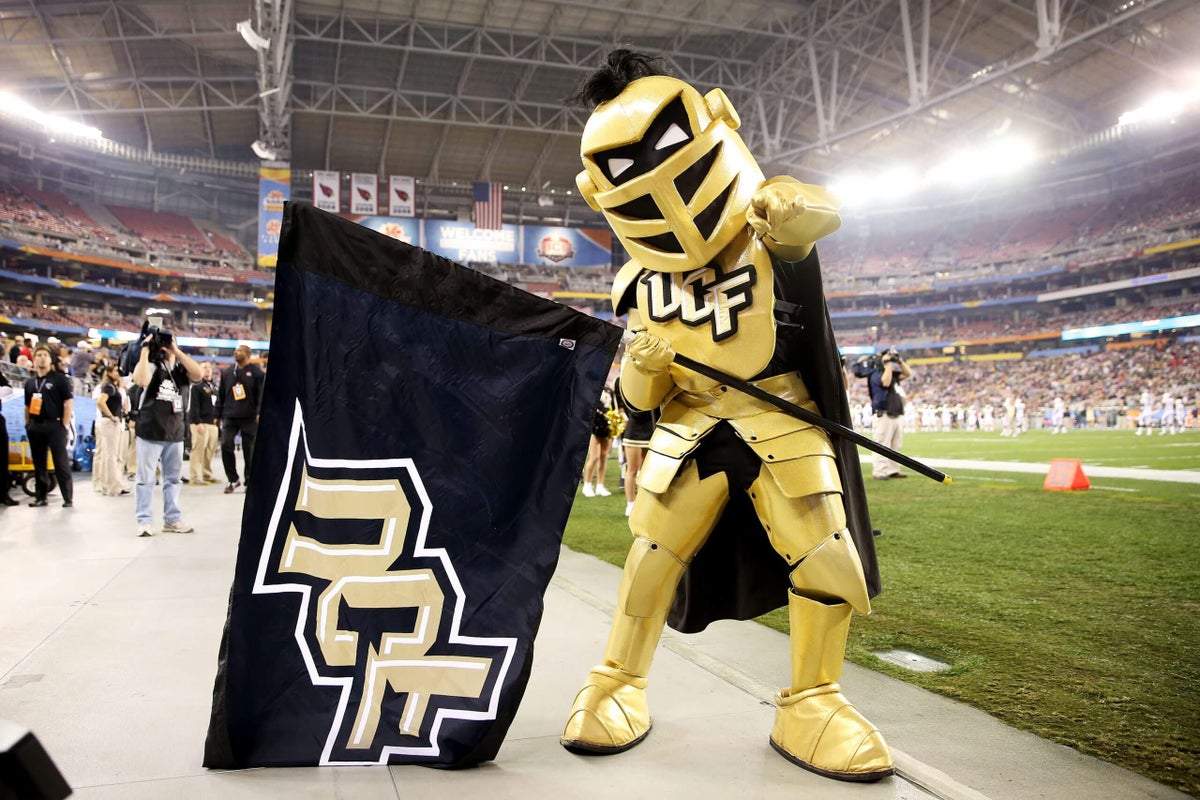
The Houston Cougars, UNLV Rebels and UCF Knights — all universities within one of those nine states — posted about their lack of state income taxes on X on Saturday, featuring an image of either a mascot or cheerleader lifting a comically large bag of cash above their heads.
UCF started the movement with a post on Saturday morning featuring its mascot, Knightro. Houston and UNLV soon followed suit, as did the UTEP Miners, FIU Panthers and North Texas Mean Green.
🤝 https://t.co/rqQdM0cpCQ pic.twitter.com/OgtMjGVhdx
— Houston Football (@UHCougarFB) January 10, 2026
How effective will that pitch be? UCF, Houston and UNLV were all outside the top 40 of 247Sports’ portal rankings as of Saturday night, so any little bit helps. Central Florida was the highest at No. 47 in the 247Sports rankings, followed by Houston at No. 49 and UNLV at No. 86. Texas Tech, Texas A&M and Houston were all in the top 10 of On3’s portal rankings.
College athletes are not only taxed on their NIL earnings, but also on anything they receive of value. If an athlete receives a new car, for example, they have to pay taxes on it in accordance with its value.
Arkansas has tweaked its tax code so that NIL income is tax-exempt as an incentive to induce athletes to sign at the University of Arkansas or other in-state schools.
There was no indication that income taxes were the reason behind another buzzy portal storyline earlier this week: Quarterback Demond Williams changing his mind about entering the portal and deciding to stay with the Washington Huskies. On Tuesday, Williams announced he was entering the portal — four days after signing with the Huskies, a Washington source close to the negotiations told The Athletic’s Bruce Feldman. On Thursday, he said he was “excited to announce that I will continue my football journey at the University of Washington.”
The Huskies were prepared to pursue legal action against Williams to enforce the contract, a source briefed on the situation told Feldman. Williams could have owed the school up to $4 million for transferring, according to Big Ten rules that state that if a player intends to transfer before the end of a payment period, he owes the remaining amount on his contract, unless the school agrees to accept a buyout from the player or the player’s next school.
Williams and his team ultimately decided to stay in Seattle — where he won’t have to pay state income taxes.

Boston College finished the 2025 season 2–10 (1–7 ACC) in what was a down year for the program under former NFL head coach Bill O’Brien.
The Eagles had gone 7–6 in back-to-back seasons, including O’Brien’s first year in 2024 after arriving from Ohio State, where he served as the Buckeyes’ offensive coordinator and quarterbacks coach.
However, the 2025 campaign marked Boston College’s worst season since 2012.
Despite the disappointing results, athletic director Blake James announced that Boston College will retain O’Brien for a third season and increase its financial investment in the football program ahead of 2026.
Still, with both the offense and defense struggling to produce consistent results throughout the year, a wave of players elected to seek new opportunities via the transfer portal, including redshirt-junior wide receiver Ismael Zamor, who announced his decision to enter the portal on January 6.
Zamor, listed at 6-foot, 193 pounds, enrolled at Boston College in 2022 out of Everett (Mass.) High School, where he was rated a three-star prospect and the No. 129 wide receiver nationally in the 247Sports Composite rankings.
He chose the Eagles over nearly a dozen other scholarship offers, including Michigan, Syracuse, Temple, Buffalo, and UMass.
Despite being viewed as an intriguing developmental prospect coming out of high school, Zamor primarily contributed on special teams during his time at Boston College, appearing in limited games and failing to record a reception across four seasons with the program.
He now enters the transfer portal as a redshirt junior.
Aside from Zamor, who saw limited action during his time in Chestnut Hill, Boston College has now seen 29 players depart via the transfer portal, including several notable contributors.
That group includes wide receiver Reed Harris (committed to Arizona State), running back Turbo Richard (committed to Indiana), tight end Ty Lockwood (committed to Arkansas), tight end Stevie Amar Jr. (committed to UCLA), and safety Omarion Davis (committed to Penn State), among others.
Richard was the Eagles’ leading rusher in 2025, totaling 749 rushing yards and nine touchdowns on 145 carries (5.2 yards per carry), while also adding 213 receiving yards and two receiving scores.
Harris, meanwhile, finished as the team’s second-leading receiver, recording 673 yards and a team-high five touchdowns on 39 receptions (17.3 yards per catch).

This level of turnover following a 2–10 season is significant for two primary reasons.
First, it strips Boston College of experienced contributors across multiple position groups, most notably at the skill positions, tight end, and throughout portions of the defensive front seven and secondary.
Second, it signals a program reset of sorts, as more than two dozen players are effectively voting with their feet in search of better fits, greater stability, or clearer paths to playing time.
Read More at College Football HQ
- First-team All-conference player announces transfer portal decision
- No. 1 transfer portal player visits fourth college football program
- Son of NFL Pro Bowl QB announces transfer portal commitment
- $1.8 million QB set to visit fourth college football program in transfer portal

Getty
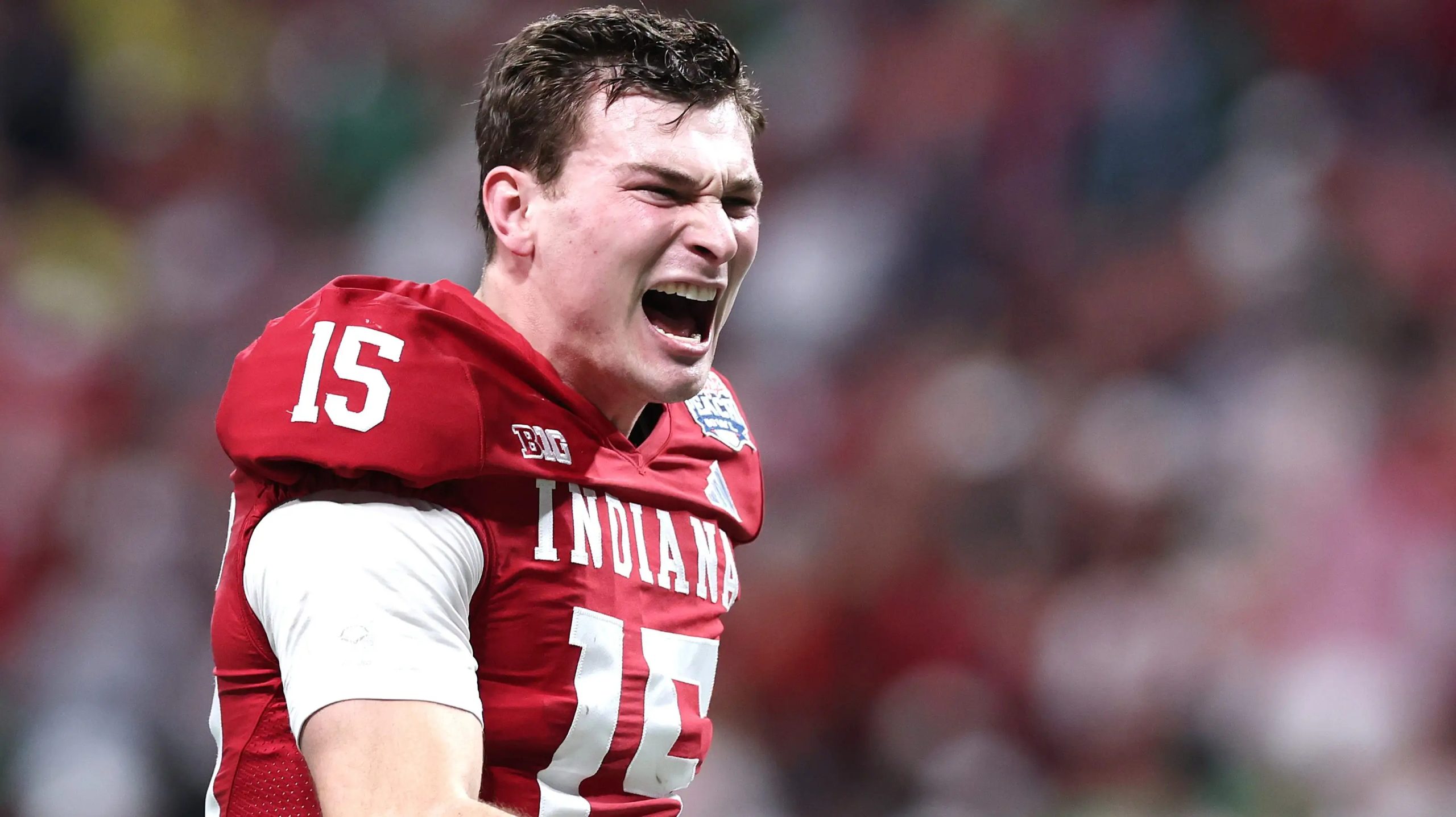
Fernando Mendoza turned down major NIL offer from Miami to join Indiana.
Fernando Mendoza has become the top quarterback in college football. The Indiana Hoosiers star captured the Heisman Trophy and is now one win away from leading Indiana to its first national championship in program history.
Indiana will meet the Miami Hurricanes at Hard Rock Stadium in Miami Gardens on January 19, a matchup that adds an extra layer of intrigue.
Not only is the national championship game being played in Miami’s home stadium, it also represents a homecoming for Mendoza. He attended Christopher Columbus High School in Miami, where he won a state championship — the same school Hurricanes head coach Mario Cristobal attended.
Mendoza’s father was teammates with Cristobal at Christopher Columbus, while his mother played college tennis at the University of Miami. Mendoza grew up just a mile from the university’s campus.
That background raises a natural question: How did Mendoza end up at Indiana instead of Miami — and now find himself facing the Hurricanes in the biggest game of his career?
More Indiana football on Heavy: Indiana Football Accused of Cheating as Wild Social Media Rumor Spreads
Fernando Mendoza Wasn’t Offered by Miami
Coming out of high school, Mendoza was a three-star prospect, ranked as the No. 135 quarterback in the country and the No. 250 overall player in Florida, according to 247Sports. Despite his local ties, the only Power Four program to offer him a scholarship was California Golden Bears, where he ultimately committed.
At the time, then-Miami head coach Manny Diaz and his staff never extended an offer and were even hesitant to bring Mendoza on as a walk-on, according to The Athletic’s Dane Brugler.
Mendoza entered the transfer portal last December, and many believed he could land with his hometown team, which was searching for a replacement for Cam Ward. That scenario never materialized, even though Miami eventually made an offer.
Miami Was Turned Down by Fernando Mendoza
Miami was desperate to replace its Heisman Trophy finalist from the 2024 season and reportedly made Mendoza a lucrative NIL offer, according to Newsweek’s Ben Dogra.
“Mendoza made $2.3 million from Indiana, but he only made $100,000 at Cal,” Dogra said. “But he was offered more by the University of Miami and turned it down. That’s why they got Carson Beck.”
So why didn’t Mendoza choose Miami? Dogra said the decision had everything to do with development, despite the Hurricanes’ larger offer.
“Let’s just say Indiana was a better fit,” Dogra said. “If you’ve got a kid from Florida that goes to Cal broke for three years and then transfers to Indiana, and his NIL money is going significantly up — let’s say $2 million-plus — but he was offered $3 million-plus at Miami, his hometown, there’s a reason he didn’t take it.
“The reason he didn’t take it is because he had a better chance to become a more successful quarterback and grow to get ready for the next level. And that’s exactly what happened. So that’s coaching.”
Mendoza is now widely viewed as the projected No. 1 overall pick in the NFL draft, a selection currently held by the Las Vegas Raiders.
Before the draft becomes the focus, Mendoza has one more goal: leading Indiana to its first national championship. At this point, he is already considered a Hoosiers legend. If he delivers a title in his hometown — against the team that once passed on him — that legacy will only grow larger.
Shane Shoemaker Shane Shoemaker is a sports journalist covering college football and the NFL for Heavy.com. His work has also appeared in The Sporting News, Athlon Sports, USA TODAY, and ClutchPoints, along with high school sports coverage for the Marion Tribune. More about Shane Shoemaker
More Heavy on Indiana
Loading more stories

Lang’s Shot Put Win Paces Garnet Chargers at Middlebury

Field Events Power DePaul at Gately Indoor

Lehigh Competes in First Away Meet at Penn Select

Indiana & Miami advance to Natty + QB transfer portal madness

Szepieniec, VanZeeland Secure Individual Victories at Minnesota Open

Panthers Turn In 3 Podium Sweeps at Minnesota Open

Lenes, Kermath take First at Wesleyan Indoor Invite I

$1.8 million QB set to visit fourth college football program in transfer portal

Sullivan Leads Cardinals at Wesleyan Indoor Invite I

Photos: Fort Lewis College women’s and men’s basketball take on Westminster University

Mountain Hawks Produce Top Performances at Penn Select

City to unveil sports park master plan

The wildest hockey brawl of the year was at an AHL intermission youth game

Bulldogs Set Three School Records in Season Opener at Tryon

PEM hosts area athletes in wrestling invitational

#11 Volleyball Practices, Then Meets Media Prior to #2 Kentucky Match

Stempien to seek opening for Branch County Circuit Court Judge | WTVB | 1590 AM · 95.5 FM

Ross Brawn to receive Autosport Gold Medal Award at 2026 Autosport Awards, Honouring a Lifetime Shaping Modern F1

Maine wraps up Fall Semester with a win in Black Bear Invitational

Nascar legal saga ends as 23XI, Front Row secure settlement

Princeton Area Community Foundation awards more than $1.3 million to 40 local nonprofits ⋆ Princeton, NJ local news %

Downtown Athletic Club of Hawaiʻi gives $300K to Boost the ’Bows NIL fund

Sunoco to sponsor No. 8 Ganassi Honda IndyCar in multi-year deal

WNBA’s Caitlin Clark, Angel Reese and Paige Bueckers in NC, making debut for national team at USA camp at Duke

Badgers news: Wisconsin lands 2nd commitment from transfer portal

Nike Signs 10 LSU Athletes to NIL deals

Five Youth Sports Trends We’re Watching in 2026

Three Clarkson Volleyball Players Named to CSC Academic All-District List

Beach Volleyball Unveils 2026 Spring Schedule – University of South Carolina Athletics

Kentucky AD explains NIL, JMI partnership and cap rules





-
 Sports3 weeks ago
Badgers news: Wisconsin lands 2nd commitment from transfer portal
-
 Rec Sports1 week ago
Five Youth Sports Trends We’re Watching in 2026
-
 Sports2 weeks ago
Kentucky VB adds an All-American honorable mention, loses Brooke Bultema to portal
-

 Motorsports3 weeks ago
Dr. Patrick Staropoli Lands Full-Time O’Reilly Ride with Big Machine Racing
-
NIL2 weeks ago
Fifty years after IU’s undefeated champs … a Rose Bowl
-

 Motorsports2 weeks ago
BangShift.com IHRA Acquires Historic Memphis Motorsports Park In Millington Tennessee. Big Race Weekend’s Planned For 2026!
-
 Sports2 weeks ago
2025 Volleyball Player of the Year: Witherow makes big impact on Central program | Nvdaily
-

 Sports2 weeks ago
H.S. INDOOR TRACK & FIELD: GLOW region athletes face off at Nazareth University | Sports
-
 Sports2 weeks ago
Colorado volleyball poised to repeat success
-

 Motorsports3 weeks ago
NJ Motorsports Park Announces 2026 Event Schedule