
NIL
Former mid-major stars make significant impact at 2025 NBA Draft

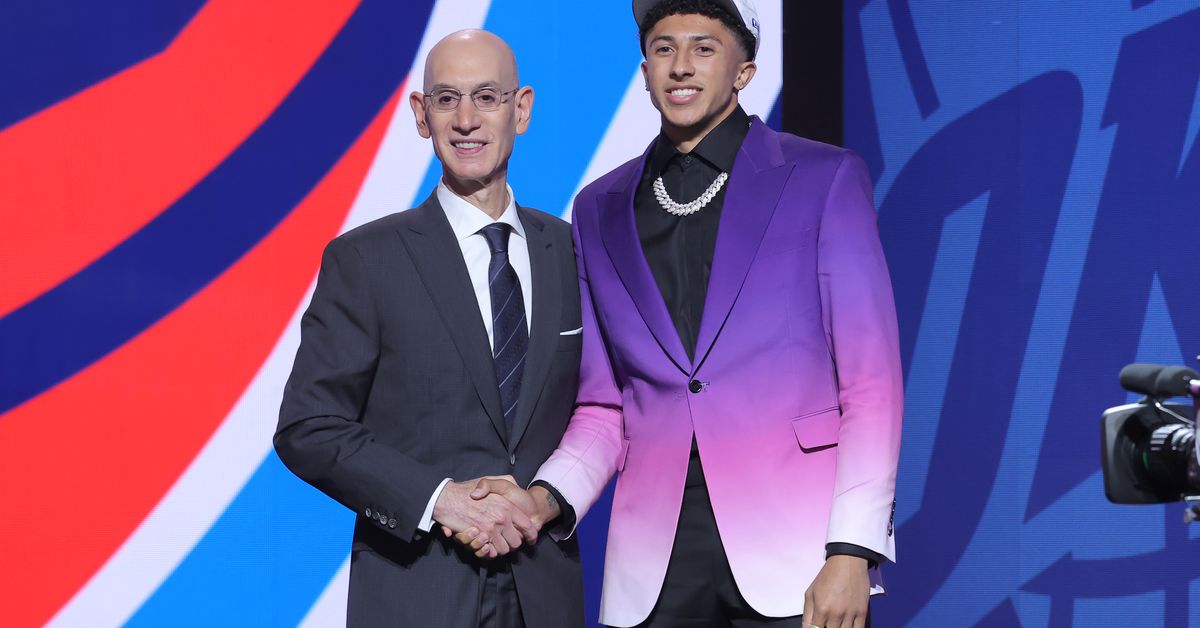
With all the recent developments surrounding college basketball from NIL to the transfer portal, we’re seeing more and more mid-major talent than ever selected on Draft night. Whether it was under-recruited prospects who fell through the cracks, mid-major stars who found high major opportunities or even the occasional mid-major journeymen, we saw it all at the 2025 NBA Draft.
In honor of all the former mid-major talent selected this week, here’s the official Mid-Major Madness recap of the 2025 NBA Draft.
First Round, Pick 11: Cedric Coward (Washington State) – Portland; Traded to Memphis
In perhaps the best story of the 2025 NBA Draft, Coward’s career began at Division III Willamette where he was crowned 2021-22 Northwest Conference Rookie of the Year. His eccentric scoring style and size caught the attention of then Eastern Washington head coach David Riley who offered Coward an opportunity at the DI level back in 2022.
Though Coward’s transition took time, he blossomed the following season under Riley’s leadership and lifted the Eagles to a second consecutive Big Sky title. Averaging 15.4 PPG and 6.7 RPG, he was selected to the 2023-24 All-Big Sky First Team before transferring over to Washington State alongside his head coach in Riley. Though he suffered an injury early into his final season, Coward proved his talent to NBA scouts even in limited action as he managed a career-high 17.7 PPG in just six appearances.
First Round, Pick 18: Walter Clayton Jr. (Florida/Iona) – Washington; Traded to Utah
2025 National Champion, the Final Four’s Most Outstanding Player, a consensus First Team All-American and it all started at Iona. With limited interest out of high school it was legendary head coach Rick Pitino who spotted the talent of Clayton early on and presented him with one of his three Division I offers out of high school.
Clayton had an instant impact for the Gaels as he was selected to the All-Conference Freshman Team in 2021-22 but with several seniors departing he truly broke out in 2022-23. Averaging 16.8 PPG, he helped Iona back to the NCAA Tournament with a pair of MAAC titles and was later tabbed Conference Player of the Year over current Detroit Pistons guard Daniss Jenkins.
First Round, Pick 24: Nique Clifford (Colorado State) – Oklahoma City; Traded to Sacramento
As a native of Colorado Springs, Clifford actually began his career with Colorado in the Pac-12 but never quite found his footing as a member of the Buffaloes. So, he transferred in-state ahead of the 2023-24 campaign and joined head coach Niko Medved at Colorado State where the former four-star prospect proved a two-way starlet.
In his first season as a Ram, Clifford averaged 12.2 PPG, 7.6 RPG, and 3.0 APG while playing a critical role in lifting the program to the NCAA Tournament. For back-to-back March Madness appearances he took his game to new heights with 15 double-doubles in 2024-25 and produced career-high averages of 18.9 PPG and 9.6 RPG.
First Round, Pick 27: Danny Wolf (Michigan/Yale) – Brooklyn
With dreams of playing for Michigan, Wolf had an offer to walk on out of high school under then head coach Juwan Howard but instead opted to go the Ivy League route with Yale. His freshman season was a learning process but he quickly emerged as a sophomore with consistent playing time. Averaging 14.1 PPG, 9.7 RPG and 1.3 BPG, he led the Ivy League in blocks and rebounds while the Bulldogs fought to a conference tournament title. In the First Round of the 2024 NCAA Tournament, Wolf’s 13 points, five rebounds and three assists saw Yale upset Auburn 78-76 for just the program’s second Tournament win in 75 years.
All of the accolades and plaudits saw Wolf achieve his dream as the 7-footer left Yale following his sophomore season to join Michigan and newly minted head coach Dusty May. With the Big Ten’s leading rebounder in toe, the Wolverines ran all the way to the 2025 Sweet Sixteen and eventually fell despite 20 points from their future First Rounder.
First Round, Pick 30: Yanic Konan Niederhauser (Penn State/Northern Illinois) – LAC
Born in Switzerland before beginning his professional career in Germany, the 6-foot-10 Niederhauser flew under-the-radar after just two season’s at Northern Illinois. He averaged only 4.8 PPG and 3.0 RPG during that span but went on to lead the MAC in blocks as a sophomore, which sparked the interest of Penn State head coach Mike Rhoades.
In the midst of a rebuild, Rhoades took a gamble and offered Niederhauser the opportunity to ply his trade within the high major ranks. A risk that almost instantly paid dividends as Niederhauser led the Nittany Lions in rebounding and blocked shots during the 2024-25 season while showing vast improvement as a scorer with 12.9 PPG.
Second Round, Pick 31: Rasheer Fleming (Saint Joseph’s) – Minnesota; Traded to Phoenix
Fleming was undervalued his entire basketball career. At Camden High School as a senior, he played sixth man to a pair of former top-100 prospects in DJ Wagner and Aaron Bradshaw. Averaging just 6.9 PPG, his only reported collegiate offers came from St. Joe’s, Temple, Seina, Albany and Saint Francis-PA.
With the staff at St. Joe’s touting NBA experience, Fleming steadily improved over his three years on Hawk Hill going from a 18-game starter as a freshman to an All-A10 First Teamer in 2025. That significant growth and development saw NBA interest pour in throughout the 2024-25 campaign with Fleming the first Hawk selected in the Draft since DeAndre’ Bembry in 2016.
Second Round, Pick 33: Sion James (Duke/Tulane) – Charlotte
Over four seasons in New Orleans under a well-respected coach in Ron Hunter, James was a development project going from just 5.8 PPG as a freshman to proving a solid contributor as a junior. However, it was during the 2023-24 season where he truly emerged for Tulane, averaging career-highs of 14.0 PPG and 5.4 RPG while starting 31 out of 31 games.
A move to Duke in the ACC the following season showcased James’ talent on the world’s stage with the graduate transfer playing a key role in the Blue Devils’ run to the Final Four. He was picked to the conference’s 2024-25 All-Defensive Team, shot 52% from the floor, 41% from three and dropped 16 points in Duke’s Sweet Sixteen win over Arizona.
Second Round, Pick 35: Johni Broome (Auburn/Morehead State) – Philadelphia
Broome’s story begins back in 2020 at Morehead State where he was an under-recruited prospect out of Plant City, Fla. but had no problems dominating the OVC. In just two season’s with the Eagles, he racked up the awards earning OVC Rookie of the Year, OVC Defensive Player of the Year, a pair of all conference First Team selections and even 2021 OVC Tournament MVP.
Though many doubted he’d be able to handle a high-major transition, a transfer to Auburn produced much of the same as Broome ascended the ranks to national prominence with the Tigers. With his final season of eligibility he was a double-double machine, averaging career-highs of 18.6 PPG, 10.8 RPG and even 2.1 BPG to lead the SEC in rebounding and blocked shots.
Second Round, Pick 37: Chaz Lanier (Tennessee/North Florida) – Detroit
During his first three years with North Florida Lanier quietly worked as a depth piece before exploding onto the scene as a redshirt senior with his innate scoring ability. Averaging just 3.6 PPG over the three season’s prior, he paved the way for North Florida’s most wins since 2020 with an insane increase in production as he tallied 19.7 PPG and shot an ASUN best 44% from three.
As Lanier entered the portal ahead of the 2024-25 campaign it was Rick Barnes and Tennessee who received a commitment from one of the nation’s most converted transfers. In the SEC he maintained that same scoring prowess, earning an All-Conference Second Team selection and leading the Volunteers to an Elite Eight appearance.
Second Round, Pick 39: Alijah Martin (Florida/FAU) – Toronto
As a former leader of two historic Florida Atlantic teams, Martin was always viewed as a potential pro prospect who played within the mid-major ranks. When the Owls climbed to new heights in 2022-23, soaring all the way to the Final Four, Martin was honored with an All-NCAA Tournament award for his integral role in FAU’s success.
When Florida Atlantic returned to the NCAA Tournament in 2024, Martin was once again instrumental in leading the way now with an All-AAC Second Team selection to his name. But as May departed during the 2024 offseason, so did Martin, opting to stay in-state with Florida where he averaged a career-high 14.4 PPG during the Gators’ national title run.
Second Round, Pick 41: Koby Brea (Kentucky/Dayton) – Golden State; Traded to Phoenix
Four seasons at Dayton honed Brea into one of the Atlantic 10’s premier three-point shooting threats as he earned a pair of Sixth Man of the Year awards coming off the bench for the Flyers. Most impressively, he led the conference in 3-point shooting during the 2023-24 season while averaging 11.1 PPG and connecting on 50% of his 201 attempts from behind the arc.
Many thought of Brea as something of a one-trick pony when he transferred up to join Kentucky but he was quick to prove the doubters wrong as his scoring seemingly improved. He averaged a career-high 11.6 PPG in his lone season within the SEC, led the conference in 3-point shooting for the second consecutive year and was a capable starter at the high-major level.
Second Round, Pick 43: Jamir Watkins (Florida State/VCU) – Washington
Watkins’ time at VCU was hampered by injuries as he missed the 2021-22 season before returning in 2022-23 with averages of 9.5 PPG and 5.4 RPG to help secure a pair of A10 titles. Though he primarily came off the bench during the Rams’ regular season, his production in the A10 Championship garnered Watkins an All-Tournament selection and some high-major interest.
While the numbers looked somewhat underwhelming, Watkins saw no issue with a transition to the ACC and Florida State as he averaged a then career-high 15.6 PPG as a junior. He eclipsed that with an All-ACC Second Team selection in 2024-25 and managed 18.4 PPG despite the Seminoles season-long struggles.
Second Round, Pick 46: Amari Williams (Kentucky/Drexel) – Orlando; Traded to Boston
Arriving in the city of Philadelphia by way of England, Williams staked his claim as possibly the greatest defensive player in Drexel history over his four years with the program. As a redshirt freshman he was crowned CAA Defensive Player of the Year, as a sophomore he went on to repeat and as a junior he became the only three-time CAA Defensive Player of the Year. As it stands, he leads the program in defensive box plus/minus, defensive rebounding percentage and is fourth all-time for the Dragons in blocked shots with 186.
Joining Kentucky for the 2024-25 season saw much of that two-way tenacity continue as Williams produced 10.9 PPG and 1.2 BPG while making his first career NCAA Tournament appearance.
Second Round, Pick 48: Javon Small (West Virginia/Oklahoma State/East Carolina) – Memphis
Small’s career began at East Carolina where he played just 9.2 MPG as a freshman before being given the keys to the offense as a sophomore amidst a coaching change for the Pirates. Though he battled injuries and made just 18 appearances, Small’s offensive game was undeniable when healthy as he led East Carolina in scoring with 15.8 PPG on 40% shooting.
That production was enough to see high-major interest with Small eventually transferring to join Oklahoma State in 2023 where he once again led his team in scoring with 15.1 PPG. Another coaching change would see Small portaling again where he committed to West Virginia for his senior season. Going on to earn an All-Big 12 First Team award, he carried the Mountaineers to a 19-13 record as, one again, his team’s leading scorer.
Second Round, Pick 50: Kobe Sanders (Nevada/Cal Poly) – New York; Traded to LAC
In spite of his positional size and versatility, Sanders was another who went under-recruited out of his school as the San Diego native played his first four years at Cal Poly in the Big West. Though the Mustangs struggled mightly in 2023-24, finishing dead last in the Big West and without an in-conference win on their record, Sanders provided a major bright spot. His 19.6 PPG averaged afforded him tons of high major interest as he entered the portal last offseason but instead he decided on mid-major powerhouse in Nevada.
Thrust into the starting lineup as a veteran graduate transfer, Sanders took to leading with his play on the floor as he averaged 15.8 PPG alongside Nick Davidson. Though the duo only managed 17 wins in the ever-competitve Mountain West, Sanders continued development was recognized with an All-Conference Third Team selection.
Second Round, Pick 53: John Tonje (Wisconsin/Missouri/Colorado State) – Utah
Tonje was extremely undervalued coming out of Omaha, Neb. with his only reported college offers coming from Colorado State, his local Omaha and Division-II Missouri Western State. Like many on this list though, he climbed the ranks and after primarily working as a depth piece for three seasons with the Rams. He finally got the opportunity in 2022. Tasked as a 33-game stater, Tonje put together a career-defining campaign with an average of 14.6 PPG while shooting 47% from the field and 39% from deep.
After a brief and injury-plagued stint in Missouri, the world discovered Tonje this past season as he led Wisconsin to the NCAA Tournament while garnering All-American honors.
Second Round, Pick 54: Taelon Peter (Liberty/Tennessee Tech) – Indiana
Though Peter’s career started at Tennessee Tech with six appearances during the 2020-21 season, Division-II Arkansas Tech is where he was given the chance to mold his game. Over three season’s in DII’s Great American Conference, Peter was selected to the All-Conference Second Team and First Team, and he finally capped it off as Player of the Year in 2024.
Ultimately, he once again caught the attention of Division-I coaches and entered the portal last offseason where he transferred up to Liberty. In 35 appearances with the Flames, Peter primarily came off the bench but averaged 13.7 PPG to be awarded Conference USA’s Sixth Man of the Year title.
Second Round, Pick 56: Will Richard (Florida/Belmont) – Memphis; Traded to Golden State
As a three-star prospect from Fairburn, Ga., Richard held some solid offers coming out of high school including VCU, Loyola-Chicago and Rice before initially committing to Belmont. That wouldn’t last long though as he flashed tons of talent in his freshman season with the Bruins, averaging 12.1 PPG and leading Florida to quickly swoop in.
Richard spent the next three years as a fixture of the Gators starting lineup and was a leader during the program’s 2025 national championship run. Not only did he start all 40 of Florida’s 40 games during the 2024-25 season, but he averaged a career-high 13.3 PPG to earn some NBA interest.
Second Round, Pick 57: Max Shulga (VCU/Utah State) – Orlando; Traded to Boston
Shuga has been instrumental to Ryan Odom’s success as a head coach, starting at Utah State in 2022 where he helped the Aggies to a 26 wins and the NCAA Tournament. When Odom got the job at VCU the following season, Shulga was the first to follow and went on to lead the Rams in scoring in another 20+ win season for the dynamic duo.
However, after falling just short of the NCAA Tournament in 2024, Shulga entered the transfer portal and initially committed to join Villanova ahead of the 2024-25 season. While it ultimately never came to fruition, Shulga returned to VCU under Odom and was rewarded on the court with a career-best season. Earning the Atlantic 10 Player of the Year award, he returned to the NCAA Tournament, leading the Rams to a 28-7 record and a pair of conference titles.


Amid the spectacle of the College Football Playoff’s opening weekend — and the nagging sense that we’re watching a sport we no longer love — here’s the uncomfortable question no one in power seems eager to answer:
Is college football slowly turning off the very fans who built it?
The other day on our radio show, we asked a simple poll question: “What’s your excitement level for this year’s College Football Playoff?” The result wasn’t close. The runaway winner was: “Mild at best.”
No, it wasn’t a scientific poll by any means. But it was taken in a college-football-crazed state, in a city that hosts three bowl games, from listeners who have spent decades scheduling fall Saturdays around kickoff times. These are not casuals. These are the lifers.
And they sound tired.
College football has always thrived on passion — irrational, inherited passion. We fell in love with this sport because we were loyal to our hometown or home-state schools. Because our dads and moms went there. Because our grandparents wore the colors. Because even when our teams were bad, they were ours. We believed players loved our schools the way we did. We believed coaches were stewards of something bigger than themselves.
That belief is gone.
What we’re left with now is a sport that feels increasingly transactional, untethered from its own history, and openly hostile to the idea of loyalty. The transfer portal and NIL didn’t just change college football — they rebranded it. Players are no longer student-athletes growing into men within a program; they’re year-to-year contractors shopping their services to the highest bidder. And coaches are no longer culture builders; they’re free agents with obscene contracts and super-agents who are already negotiating new deals with new teams by midseason.
Lane Kiffin didn’t even wait for the College Football Playoff selection committee to put his Ole Miss team in the 12-team field before bolting for his next big job. Think about it: the head coaches from three CFP teams will be elsewhere next season, meaning in the most important tournament in the sport that a quarter of its leaders already had one foot out the door before the playoff even started.
That’s not continuity. That’s chaos.
And the collateral damage is everywhere. Bowl games — once the measuring stick of success — are now disposable. This year alone, Notre Dame opted out because it got snubbed by the CFP committee while Kansas State and Iowa State opted out because they lost their coaches. Bowls used to mean something. They were a reward, a destination, a final chapter. Now they’re an inconvenience.
Missouri coach Eli Drinkwitz didn’t mince words when he said earlier this week: “College football is sick.” He warned that the sport is “cracking” — not metaphorically, but structurally. Rules without consequences. Participation agreements nobody honors. Tampering without punishment. Freedom without guardrails.
UCF coach Scott Frost went even further. He said the quiet part out loud: “It’s broken.” And for that honesty, he was attacked. Not because he was wrong — but because he threatened those who benefit from the disorder. Frost described a world where participation agreements are ceremonial, salary caps are fiction and booster money determines competitive balance more than coaching or development ever could.
That’s not college football. That’s the NFL without contracts, unions or rules.
Minnesota coach P.J. Fleck summed it up best: “College football does not have any of what the NFL has in place. … I don’t think the general public actually knows what it looks like when you peel back the onion.”
And that’s the point. Fans (and coaches) are finally peeling it back — and they don’t like what they see.
Conferences now stretch from coast to coast, stripping the sport of its regional soul. Rivalries that once defined generations are disappearing in favor of television windows. Which brings us to a fair question for UCF fans: With USF no longer on your schedule, who’s your big rival? Answer: You don’t have one.
A sense of place used to matter in college football. Geography mattered. Identity mattered. Tradition mattered. Now everything is optimized for TV inventory and gambling markets.
Don’t get me wrong, college football is still idiot-proof. It will march on. ESPN needs the programming. Sportsbooks need the content. Saturdays will still be filled with games, spreads and parlays. The machine will not stop.
But what happens when the true fans — the ones who stayed and cheered through the losing seasons, NCAA sanctions and decades of irrelevance — start checking out emotionally? When excitement becomes obligation? When loyalty feels foolish?
We’re already seeing the signs. Fans less invested in bowls. Fans less connected to rosters that turn over annually. Fans who no longer recognize their own conferences. Fans who watch out of habit, not hope.
This isn’t about opposing player compensation. Players deserve to be paid. It’s not about nostalgia for unpaid labor or closed systems. It’s about structure, fairness and meaning. A sport without rules isn’t freedom — it’s anarchy. And anarchy is exhausting.
College football was never supposed to be perfect. It was supposed to be personal. It was supposed to mean something beyond the scoreboard. It was supposed to connect campuses, communities and generations.
Right now, it feels like a sport in disarray where even coaches and administrators are just hopeless spectators to its unraveling. It’s so bad that they are begging the federal government to get involved. Can you name another multi-billion-dollar business that actively seeks governmental regulation?
The scariest part isn’t that coaches like Frost and Drinkwitz are speaking up.
It’s that we longtime fans are starting to quietly nod along and wonder why we’re still watching.
Yes, the College Football Playoff arrived this weekend and it’s never been bigger.
But, sadly, the sport itself has never felt emptier.
Email me at mbianchi@orlandosentinel.com. Hit me up on social media @BianchiWrites and listen to my new radio show “Game On” every weekday from 3 to 6 p.m. on FM 96.9, AM 740 and 969TheGame.com/listen
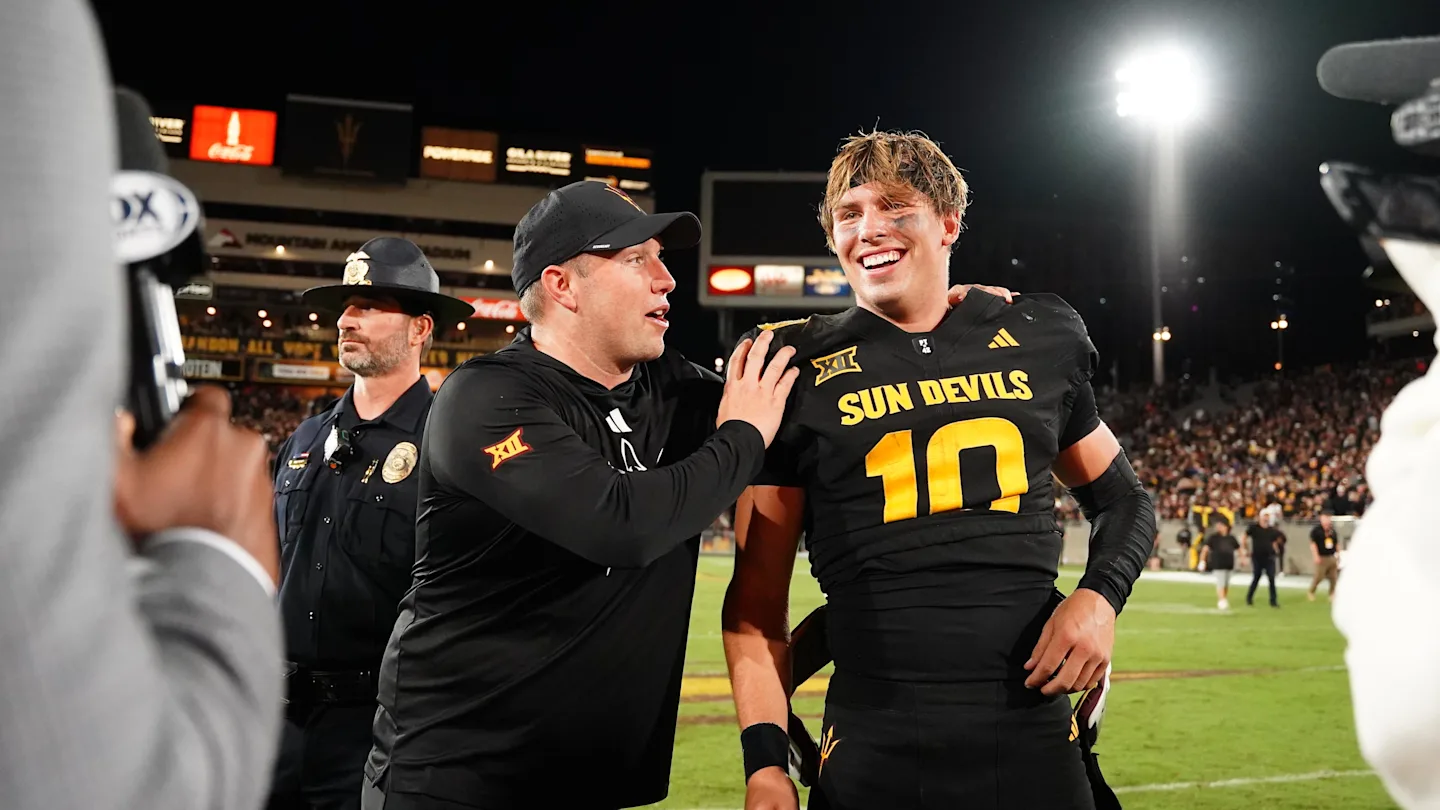
Aftter helping propel Arizona State to its first College Football Playoff run in 2024, quarterback Sam Leavitt is officially preparing to test the transfer market.
Multiple outlets report Leavitt intends to enter the portal when the window opens in January, and early lists of suitors already include Oregon, Indiana, LSU, and Miami.
Leavitt’s 2025 season was cut short by a persistent foot injury that required surgery and ended his year after seven appearances.
Despite limited time, he finished the campaign with 1,628 passing yards, 10 touchdowns and three interceptions, and leaves Tempe with a two-year body of work that includes a 2024 breakout season (2,885 passing yards, 443 rushing yards, 29 total TDs).
ASU closed 2025 at 8–4 under coach Kenny Dillingham, going 6-3 in Big 12 play.
On Wednesday, Mike Golic Jr. weighed in on potential transfer portal destinations, explicitly linking Leavitt to Miami as a natural schematic fit.
“Sam Leavitt, to me, would be a fascinating fit at the University of Miami. We reckon Carson Beck is going to be out after this playoff run, and when I look at Sam Leavitt’s game, I think about the Miami offense they ran with Cam Ward, an offense predicated on the quarterback’s ability to drop back, create, and make plays with both his arm and his legs. That feels like a very easy comparison.”

The Hurricanes went 10-2 this season and enter the postseason with a quarterback (Beck) who posted 3,072 passing yards and 25 passing touchdowns with a 74.7% completion rate.
However, despite Beck’s productive year as the starter and Miami’s CFP berth, the senior quarterback is widely expected to move on after the season, opening a potential vacancy at one of college football’s biggest brands.
Leavitt combines a CFP start, redshirt-sophomore eligibility, mobility, and a nationally ranked NIL valuation (estimated at $2.1 million), positioning him as one of the portal’s most attractive quarterbacks.
Read More at College Football HQ
- $2.1 million QB ranked as top quarterback in college football transfer portal
- $87 million college football coach predicted to accept Michigan head coaching job
- Top transfer portal QB reportedly receives ‘multiple offers’ over $4 million
- Kirby Smart sends strong message on Nick Saban before College Football Playoff
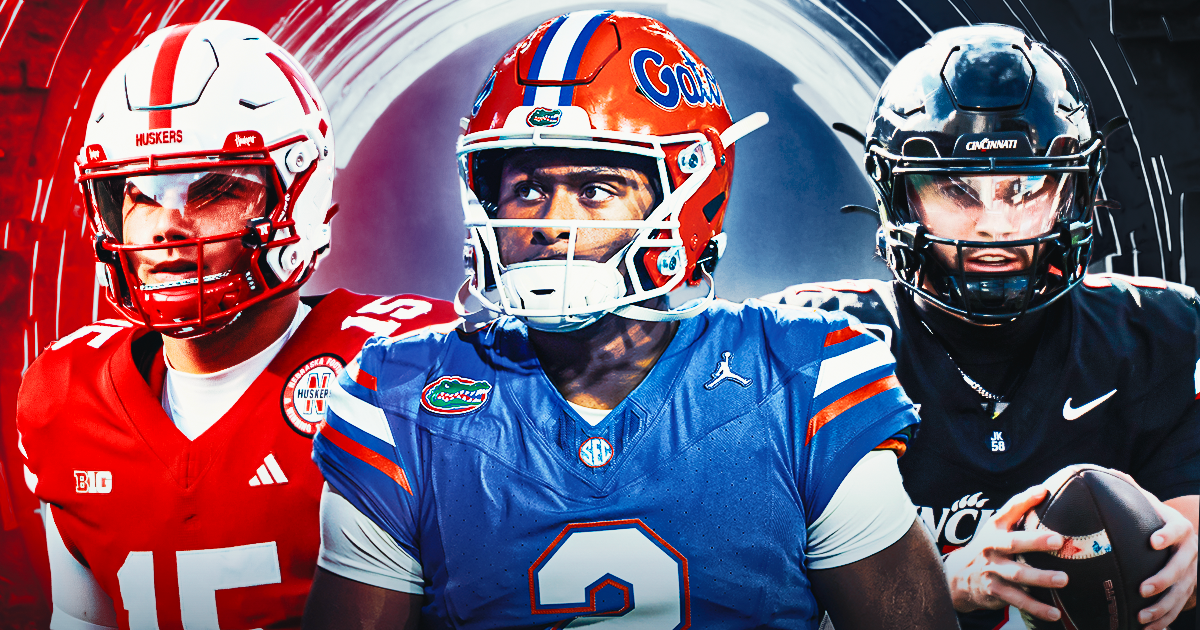
Although the transfer portal doesn’t open until Jan. 2, the quarterback market is starting to take shape. Multiple high-profile signal-callers announced their plans to hit the portal, and ESPN’s Pete Thamel reported how much the top QBs could make.
Thamel reported the “tip-top” of the quarterback market could reach $5 million. For comparison, Duke quarterback Darian Mensah was one of the highest-paid players in the country this past season at $4 million, On3’s Pete Nakos previously reported.
SUBSCRIBE to the On3 NIL and Sports Business Newsletter
Multiple big-name schools are expected to be looking for a quarterback in the portal this year, and names such as Brendan Sorsby, Dylan Raiola and Josh Hoover are already front-and-center. As a result, the market could surge, Thamel said.
“This market looks robust already, guys. … I made some calls today. Sources told me the tip-top of this quarterback market, financially, could reach $5 million for one season,” Thamel said Friday on ESPN College GameDay. “Look, it’s supply and demand. You have all those guys. Sorsby’s been linked early to Texas Tech. Dylan Raiola, there’s some smoke to Louisville, although maybe a playoff team jumps in late there. There’s been early links between Indiana and Hoover, assuming that [Fernando] Mendoza goes pro.
“Look, this is what’s going to drive the market. Oregon may lose Dante Moore, Miami’ll be in the quarterback market, so will LSU. So when you really take a look at what’s going to drive this quarterback market, it’s going to be the most expensive in the history of college football.”
Quarterback remains one of the biggest positions in the transfer portal, especially considering the recent success. Seven of the last nine Heisman Trophy winners have been transfers, including Mendoza this year. DeVonta Smith and Bryce Young are the only ones to stay with their own program at Alabama and win the award during that time.
Last year’s transfer quarterbacks were also among the highest-paid players in college football, On3 previously reported. Mensah’s $4 million payday was part of a two-year, $8 million deal at Duke. At Miami, Carson Beck inked a deal worth between $3 and $3.2 million, but up to $6 million with incentives.
The NCAA transfer portal window officially opens Jan. 2, meaning that’s when players’ names will start to appear. It will stay open for two weeks, closing Jan. 16.

The perception of bowl games and their significance to college football programs and players has undergone a rapid shift over the last decade.
In the current age of the sport, teams are turning down postseason bids while the transfer portal is filling up before most bowl games even kick off.
That’s just the reality of the situation. Normally, it’s the needy who are hit the hardest as G6 schools and poorly constructed FBS programs have their rosters raided.
Just take a look at what’s happening at UTSA.
UTSA’s Jeff Traylor: ‘I Hate What’s Going On In College Football’
Since transitioning to the FBS over a decade ago, UTSA has established itself in the Conference USA and the American Conference.
Head coach Jeff Traylor has led the program to six consecutive bowl games. That includes an up-and-down campaign in 2025, when the Roadrunners started 0-2 and won two of their final three games to finish 6-6.
UTSA is a week away from taking on FIU in the First Responder Bowl on December 26.
Going into the matchup, the Roadrunners could be without as many as 20 players. Many of those losses are due to the portal.
“We’ll be a shell of ourselves, but whoever we got out there, we’re going to go out there and play the best we can,” Traylor said, according to KENS 5’s Vinnie Vinzetta. “It’s just the numbers are so big with all the tampering. All the agents, it’s coaches too, it’s all of them. Our kids are being promised such incredible numbers, they’re getting lured into the portal.
“I just hope all the things those coaches and agents are promising they’re going to do for my kids. I hate it because I really want to coach them in a bowl game, but they’re getting leveraged out of it,” Traylor continued. “Their agents are telling them, they’ve got to not play in the bowl, they’ll get this number, they don’t play in the bowl [they’ll get this number].”
“I hate what’s going on in college football. I just think the numbers have gotten so large. You’re talking about teams that have $26 million to $40 million, and the number’s just too big, and who knows if they’re being told the truth? It’s sad, it really is sad,” Traylor added. “I never thought we’d be punished for making a bowl game by being leveraged, that if you don’t give them a certain number, they’re not going to play in a bowl.

Traylor is focused on the players still with the team, but he couldn’t help but recognize that college football looks a lot different than it did in his first season on the job.
“I’m going to celebrate the kids we have left, whoever that is, we’re going to go out there and play our tails off, and I’m very grateful for them,” Traylor said. “Again, I hate we’re talking about the 10 to 15 that probably are not going to play in the game, or 20, whatever that number ends up being. We should be talking about the 90 to 85 that are going to play with their teammates.”
“It’s like I just woke in another world as compared to where we were six years ago,” Traylor added.
Is there a way to combat what’s going on? Not really. There have been calls for coaches to report instances of tampering.
Most of the time, it’s hard for the people in charge to get the specifics of whose saying what.
“There’s no such thing as tampering. Coaches talk to players, agents talk to players,” Traylor said. “Oh, then turn them in, coach. You think those players are going to give me the coach that’s actually talking to them? Why? It’s driving the price up. The more they get driven up, the price goes up higher and higher.
“As long as there’s people gonna pay it, who’s going to stop it? What’s going to stop this? What’s going to stop it? Only the freedom of process is going to stop because when there’s no money left, what are we going to all do?”
As of December 19, four players who started multiple games for UTSA have announced plans to enter the transfer portal, including cornerbacks Davin Martin and KK Meier, defensive end Kenny Ozowalu, and defensive tackle Chidera Otutu.
More attrition is possible in the next seven days.
Read more on College Football HQ
• $45 million college football head coach reportedly offers Lane Kiffin unexpected role
• Paul Finebaum believes one SEC school is sticking by an ‘average’ head coach
• SEC football coach predicts major change after missing College Football Playoff
• Predicting landing spots for the Top 5 college football transfers (Dec. 17)
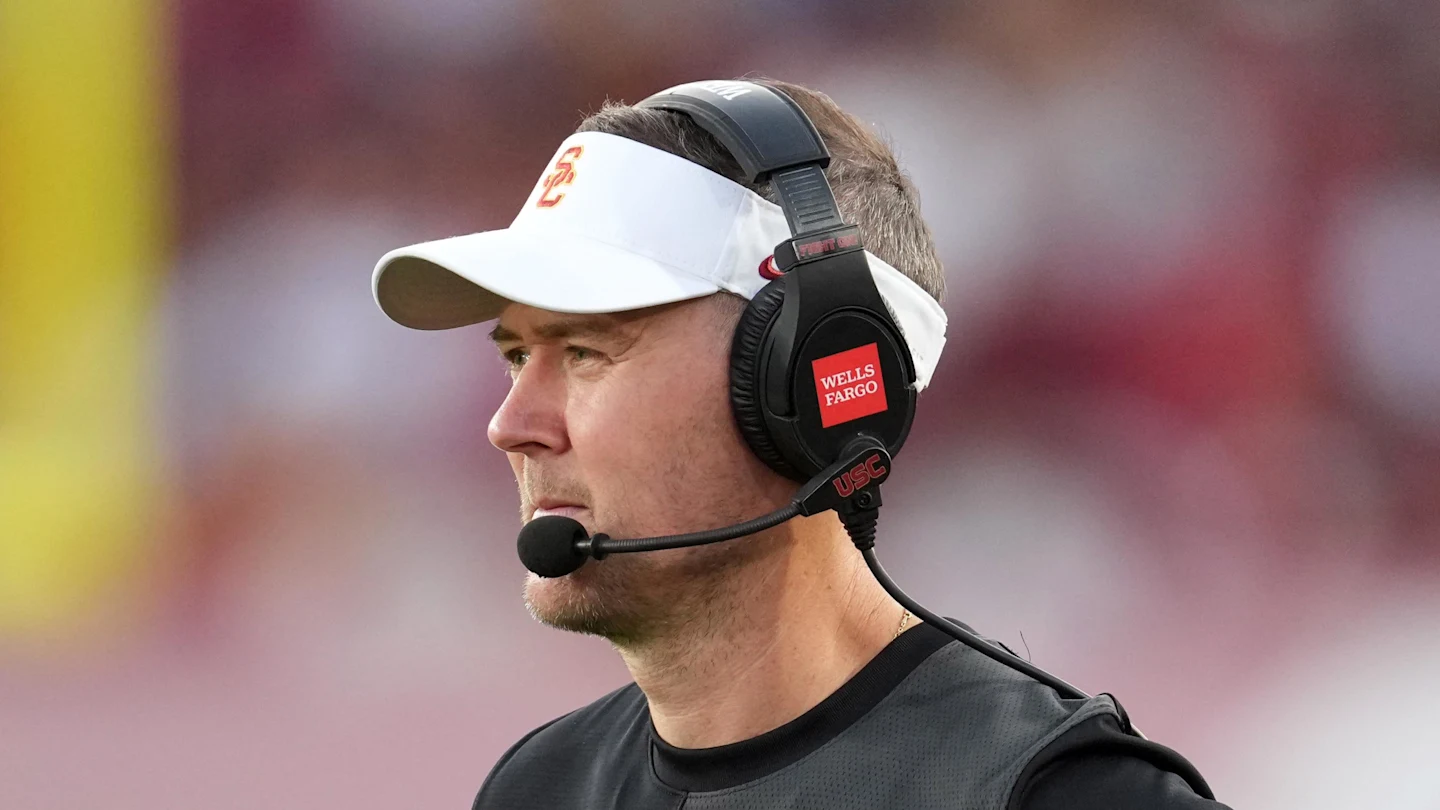
Since the introduction of name, image and likeness (NIL) in July 2021 and the transfer portal turning every offseason into free agency with no guidelines, college football has never been the same. It’s an unprecedented era but the current state of the sport.
NIL effects recruiting, it factors into a player’s decision to enter the draft or return to school and can determine whether someone decides to return to their current school or explore other options in the portal. Revenue-sharing was also instituted this summer.
It’s a battle to retain players on your own roster. The portal allows student-athletes to transfer as many as they want with no restrictions and player movement has become rampant, seven of the last nine Heisman winners were transfers.

It’s all part of the new norm of college football and the USC Trojans have embraced it. Re-signing players is nothing new, it has always been happening at the end of every semester with scholarships.
It’s the same idea with NIL and revenue-sharing, but the Trojans are just approaching it in a different way than the rest of the country and it has gone viral.
Southern Cal has been making official re-signing announcements and posting them on social media. Players are making video messages for the fans. It’s all reflective of the NFL model when a player signs an extension with their current team or sign with a different team in free agency.
Everything USC general Chad Bowden does is with purpose. In just first season with the Trojans, Bowden reeled in the No. 1 ranked recruiting class. It’s a strategic personnel and creative department in Los Angeles that could be on their way to starting a new trend in college football.
Returning Star Players

All eyes have been on what will redshirt junior quarterback Jayden Maiava do in 2026. The lure of entering the NFL Draft was tempting, especially considering it’s a particularly weak quarterback class that he could take advantage of.
Well, the re-signing of Maiava made it official that he would be returning to USC. So will the team’s two leading scorers in Waymond Jordan and King Miller. Freshman standout receiver Tanook Hines, also made his official.
Tobias Raymond’s versatility was massive for the Trojans. The local product started all 12 games at either guard or left tackle.
MORE: USC Quarterback Husan Longstreet Faces a Transfer Question
MORE: USC Faces Uncertainty As Penn State Turns Up Heat On Coach D’Anton Lynn
MORE: USC Trojans Receive Brutal Injury Update Involving Star Transfer Guard
Jahkeem Stewart arrived last winter as a highly touted five-star defensive lineman. The New Orleans native played all 11 games this season with a stress fracture in his foot. It limited his practice reps, but still, Stewart made his presence known in the Big Ten.
He is joined by starting defensive ends Kameryn Crawford and Braylan Shelby, and fellow freshman defensive lineman Floyd Boucard.
Redshirt freshman Marcelles Williams quietly became one of the top cornerbacks in the Big Ten the second half of the season. With a season under his belt and the guidance of cornerback coach Trovon Reed, sky is the limit for Williams.
Jadyn Walker started any time USC went with a 4-3 defense, rather than its traditional 4-2-5 defense. Walker will get the start in the bowl game in its traditional defense, with Eric Gentry opting out of the bowl game and is prime candidate to become a full-time starter next season.
Underrated USC Re-Signings

Redshirt freshman offensive tackle Justin Tauanuu started all 12 games this season. In a year where the Trojans had to shuffle around its offensive line on almost a weekly basis, the 6-foot-6, 315-pound Huntington Beach (Calif.) product was a constant at right tackle with Raymond playing on the left side.
Prophet Brown has missed the entirety of the 2025 season after suffering a hip injury during the second week of fall camp. Brown was projected to start at nickel and then it was freshman Alex Graham, who missed the first half of the season with an injury himself. Those injuries caused a ripple effect in the secondary.
The redshirt senior is able to use a medical redshirt. Brown dressed for practice this week for the first time since fall camp. Whether he plays is the bowl game in some capacity or not, Brown will be back in 2026.
One of the more intriguing players come this spring will be freshman cornerback RJ Sermons. The local product reclassified to the 2025 class in May and did not enroll on campus until just before the start of fall camp.

Originally the No. 1 rated cornerback in the 2026 class, Sermons spent his first season working with the Trojans staff and getting acclimated to college football. Although he didn’t take a single snap this season, USC brought Sermons with the team on every road trip he was healthy for.
Sermons will be part of a young, but incredibly talented cornerback room for Southern Cal in 2026 and a position battle that will carry well into fall camp, if not the season.
When Kamari Ramsey and Bishop Fitzgerald went down with injuries in the first half against Iowa on Nov. 15 that cost them the rest of the season, safety Kennedy Urlacher stepped into the lineup opposite of Christian Pierce.
With Ramsey primarily playing nickel this season and occasionally moving back to safety, Pierce has started almost every game this season. Now, he becomes the vocal presence on the backend of the defense.
But for Urlacher, when the injuries happened, he had not taken a defensive snap since week 2. The Notre Dame transfer played well in the second half the Trojans big time win over Iowa, and started the final two games.
Urlacher and Pierce project as the starting safeties next season. Redshirt freshman Marquis Gallegos, who also resigned, will serve as the third safety and get a head start on that competition.
Recommended Articles
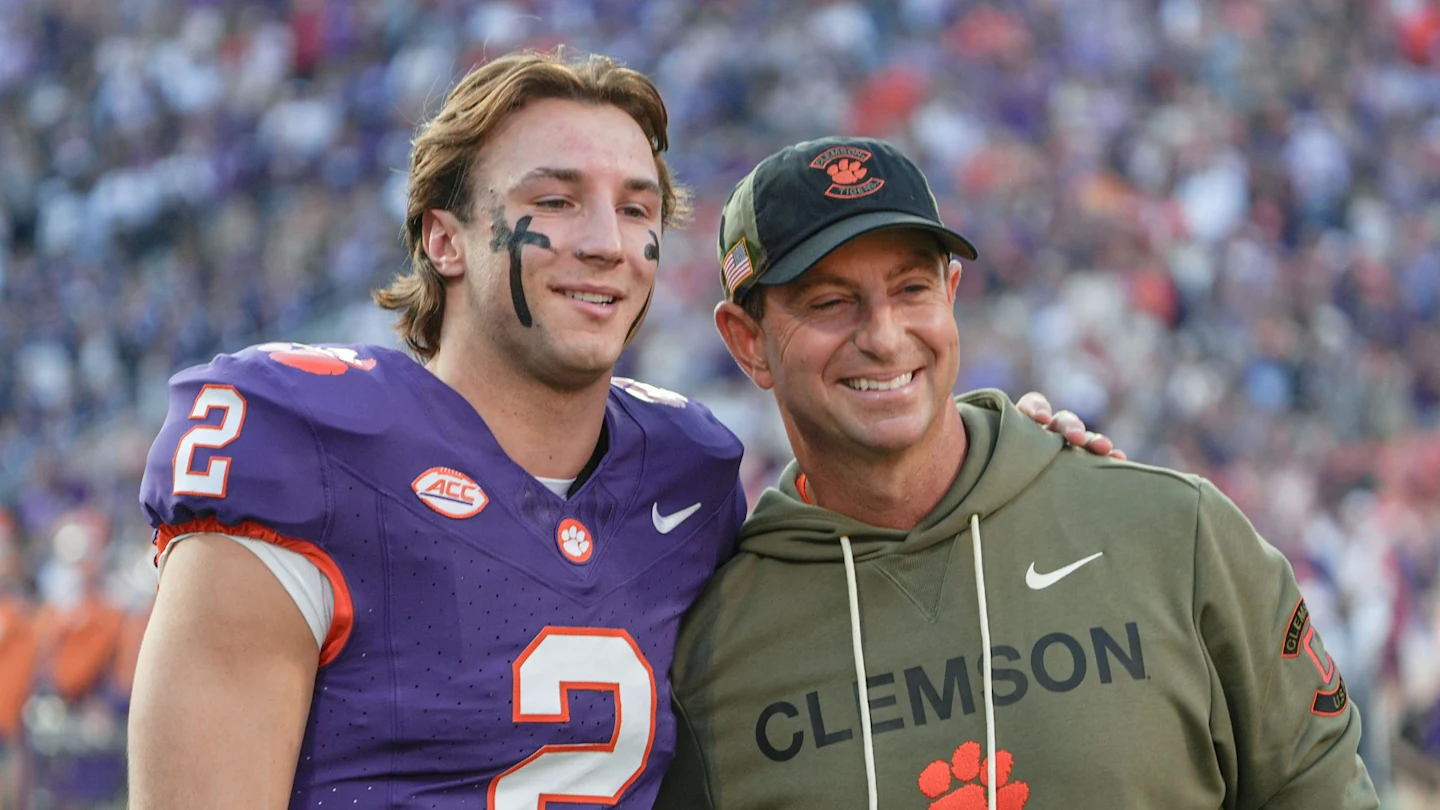
The Pinstripe Bowl was meant to serve as a bridge year moment for Clemson, a chance to reset expectations and evaluate younger talent with an eye toward 2026.
Instead, Dabo Swinney’s Monday media session revealed that 26 scholarship players won’t be available for the Tigers’ Dec. 27 Pinstripe Bowl against Penn State.
That tally, largely injuries, a cluster of transfer departures and a handful of early NFL opt-outs, compounds a season that started with top-five expectations and ended 7-5.
Swinney said 17 absences are injury-related, five players opted to transfer, and four declared for the NFL Draft; among those not playing are defensive stalwarts such as linebacker Wade Woodaz, defensive end T.J. Parker, and cornerback Avieon Terrell.
Offensively, Clemson still has quarterback Cade Klubnik, who threw for 2,750 yards and 16 touchdowns this season, but the Tigers will be without several key offensive linemen and skill-position contributors, including Antonio Williams and Bryant Wesco Jr., the team’s second- and third-leading receivers.

The 2025 campaign itself was already a disappointment by Clemson standards.
A series of close losses to LSU, Georgia Tech, and Duke left Clemson 7–5 and out of playoff contention despite opening the season ranked No. 4 in the preseason AP Top 25.
Those results eliminated any margin for error, and the loss of more than two dozen scholarship players now makes the bowl a significant test of depth.
Penn State enters at 6–6 amid a coaching transition, with roster questions of its own but fewer high-profile opt-outs reported so far.
Penn State will be coached by interim Terry Smith after James Franklin was fired midseason and later took the Virginia Tech job.
For Clemson, the situation has immediate implications for its bowl competitiveness and longer-term questions about roster depth, retention, and development.
The Pinstripe Bowl will be played at Yankee Stadium on Dec. 27 (Noon ET, ABC).
Read More at College Football HQ
- $2.1 million QB ranked as top quarterback in college football transfer portal
- $87 million college football coach predicted to accept Michigan head coaching job
- Top transfer portal QB reportedly receives ‘multiple offers’ over $4 million
- Kirby Smart sends strong message on Nick Saban before College Football Playoff

College Football Playoff is here, but sport’s soul is gone

2025 AVCA All-American | First Team At the AVCA Major League Volleyball All-America / Players of the Year Banquet presented by Nike, Elia Rubin was recognized as a 2025 AVCA All-American First Team selection. Reflecting on the honor, Rubin shared: “It’s such a huge honor. Being surrounded by so many amazing people makes it even more special. We were a young team, and every day brought a different challenge—but that’s what made it so much fun.” Rubin emphasized the importance of enjoying the journey and credited her teammates and coaches for creating a season defined by growth, connection, and joy. Congratulations to Elia Rubin on an outstanding season and First Team All-American recognition.

2025 Mirror Girls Volleyball All-Stars | News, Sports, Jobs

Grizzly Youth Academy graduates largest-ever class of cadets
Wisconsin lands All-American middle blocker Jaela Auguste via portal

Outdoors North: John Pepin | News, Sports, Jobs

Curb Records and Motorsports manager reflects on Biffle’s legacy

Four soccer hosts announced for 2026-2027 Youth National Championships

At the AVCA Major League Volleyball All-America / Players of the Year Banquet presented by Nike, Brooklyn DeLeye was recognized as a 2025 AVCA All-American First Team selection. Reflecting on the honor, DeLeye shared: “This is such a high honor. We talk about grit, competitiveness, and joy all the time. Playing alongside my teammates this year has been amazing—I wouldn’t be here without them, our staff, and my family.” DeLeye’s season was marked by resilience, connection, and a shared commitment to excellence. Congratulations to Brooklyn DeLeye on her First Team All-American recognition.

Page Not Available – Woodlands Online

$2.1 million transfer portal QB predicted to join College Football Playoff team

Accessible Hockey Ventures : Montreal Canadiens Children’s Foundation
Wisconsin’s Aniya Warren, Addy Horner to enter transfer portal

Youth Basketball Teams Crowned Tip-Off Tourney Champs – The Newtown Bee
ESPN recognizes North Salem High for commitment to Unified Sports

First Tee Winter Registration is open

Fargo girl, 13, dies after collapsing during school basketball game – Grand Forks Herald

CPG Brands Like Allegra Are Betting on F1 for the First Time

F1 Las Vegas: Verstappen win, Norris and Piastri DQ tighten 2025 title fight

Sycamores unveil 2026 track and field schedule

Two Pro Volleyball Leagues Serve Up Plans for Minnesota Teams

Utah State Announces 2025-26 Indoor Track & Field Schedule

SoundGear Named Entitlement Sponsor of Spears CARS Tour Southwest Opener

Redemption Means First Pro Stock World Championship for Dallas Glenn

Jo Shimoda Undergoes Back Surgery

Texas volleyball vs Kentucky game score: Live SEC tournament updates

Bowl Projections: ESPN predicts 12-team College Football Playoff bracket, full bowl slate after Week 14

Robert “Bobby” Lewis Hardin, 56

How this startup (and a KC sports icon) turned young players into card-carrying legends overnight

Indiana’s rapid ascent and its impact across college football




-
 Motorsports1 week ago
SoundGear Named Entitlement Sponsor of Spears CARS Tour Southwest Opener
-
 NIL3 weeks ago
Bowl Projections: ESPN predicts 12-team College Football Playoff bracket, full bowl slate after Week 14
-
 Motorsports2 weeks ago
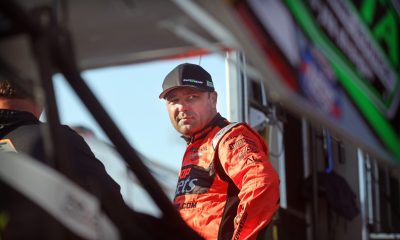
Donny Schatz finds new home for 2026, inks full-time deal with CJB Motorsports – InForum
-

 Rec Sports2 weeks ago
How Donald Trump became FIFA’s ‘soccer president’ long before World Cup draw
-

 Rec Sports2 weeks ago
Black Bear Revises Recording Policies After Rulebook Language Surfaces via Lever
-
 Sports3 weeks ago
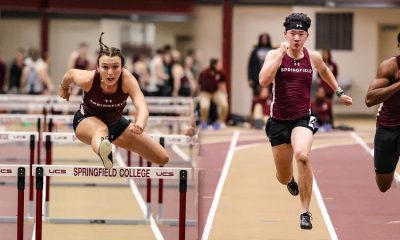
Men’s and Women’s Track and Field Release 2026 Indoor Schedule with Opener Slated for December 6 at Home
-

 Motorsports3 weeks ago
Michael Jordan’s fight against NASCAR heads to court, could shake up motorsports
-
 Rec Sports2 weeks ago
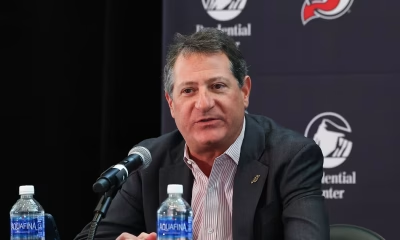
David Blitzer, Harris Blitzer Sports & Entertainment
-
 Motorsports2 weeks ago
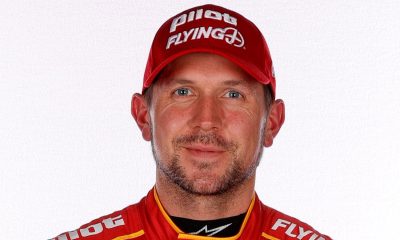
JR Motorsports Confirms Death Of NASCAR Veteran Michael Annett At Age 39
-
 Motorsports2 weeks ago
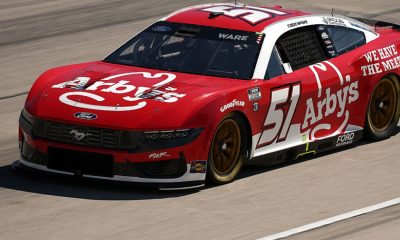
Rick Ware Racing switching to Chevrolet for 2026