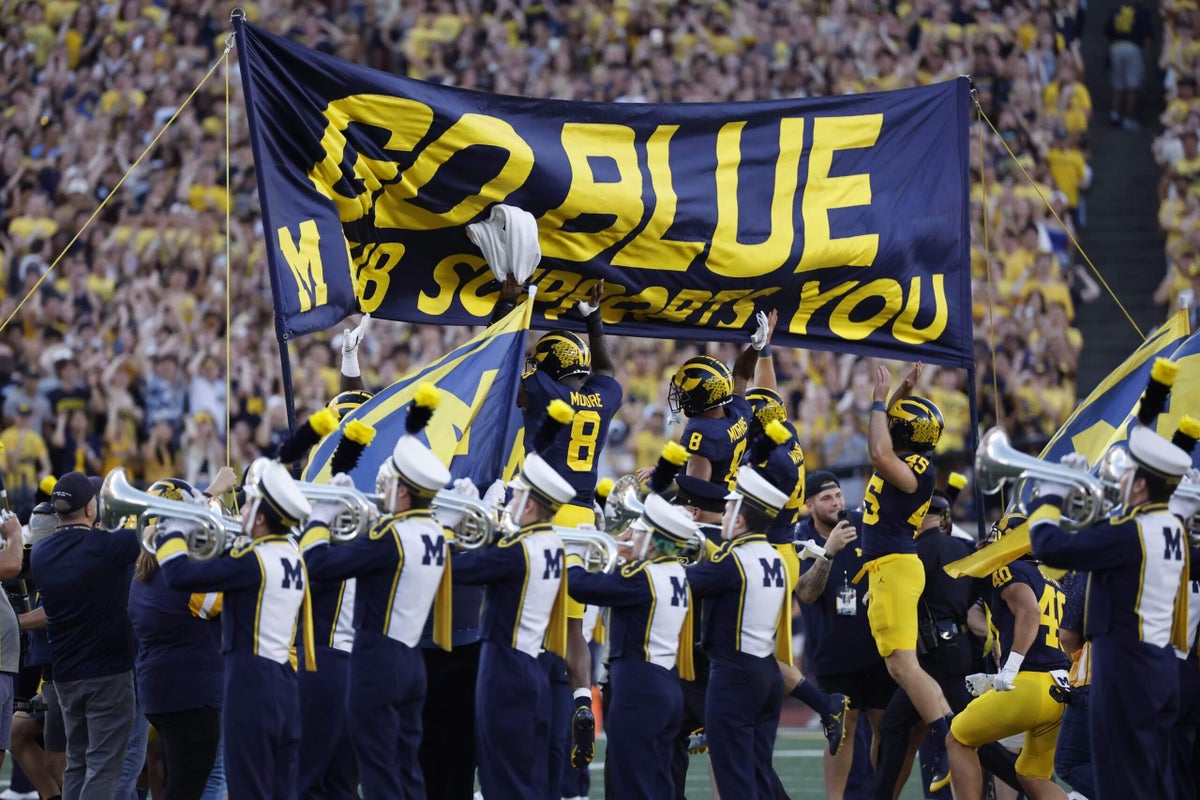
ANN ARBOR, Mich. — In an email to fans last week, athletic director Warde Manuel said Michigan is continuing to evaluate ways to pay for 82 new scholarships and $20.5 million in revenue-sharing funds that will be distributed to athletes in football, basketball, volleyball and ice hockey.
If Manuel needs more input, The Athletic’s Michigan fan survey is here to help. More than 1,000 fans shared their thoughts last week on scheduling more events at Michigan Stadium (yes, please), higher ticket prices (no way!) and permanent advertising inside the Big House (a definite maybe), along with numerous topics related to the upcoming football season. The overall picture reveals a fan base that, despite some short-term uncertainty, feels confident in the long-term trajectory of Michigan athletics in the revenue-sharing era.
“I think UM is generally in a good place,” wrote Chris P. “Football needs to take a step forward after a natty hangover year in 2024, but I like that the team finished strong last season, and I think Sherrone Moore’s approaches to recruiting, the transfer portal and building his coaching staff make sense.”
“I don’t think this is THE year for Michigan football,” added Noah K. “We should be good, not great. The next two years are going to be the hot zone for Bryce (Underwood) and the elite recruiting class we just pulled in to develop.”
Here’s the full breakdown of the survey results.
1. How would you grade Sherrone Moore’s performance so far as Michigan’s head coach?
A — 11.3%
B — 75.3%
C — 12.6%
D — 0.5%
F — 0.4%
In last year’s fan survey, the vast majority of Michigan fans said they were on board with promoting Moore to replace Jim Harbaugh. Moore’s first season was far from flawless, but the combination of beating Ohio State and Alabama and landing the No. 1 recruit in the nation earned Moore solid marks in this year’s survey.
“Sherrone Moore had me very nervous at first,” wrote Michael L. “I think he underestimated how bad his QB was and killed the season because of it. I do think he has bounced back in a major way.”
Despite the optimism, there’s a sense that Moore needs to show something in 2025. Most fans seem willing to give him some runway as Underwood develops, but they’d also like to see Michigan back in the CFP conversation.
“This season is time for Sherrone to prove he can win outside of the shadow of the national championship,” wrote Bruce B.
2. How many games will Michigan win this season?
12 or more — 3.5%
11 — 13.8%
10 — 42.3%
9 — 30%
8 — 4.6%
7 or fewer — 0.7%
3. What is Michigan’s minimum requirement for a successful 2025 season?
CFP semifinal or beyond — 0.8%
CFP + Big Ten championship — 3.2%
CFP bid — 29.4%
9 or 10 wins, beat Michigan State and Ohio State — 53.7%
Beat Michigan State and Ohio State — 6.8%
Other — 6.1%
The takeaway here is that a majority of fans would accept a season similar to 2024 as long as Michigan wins its two rivalry games. There’s a clear expectation that Michigan should be back in the CFP by 2026, but fans can deal with some growing pains as long as Michigan is moving in the right direction.
“To think this team is ready to compete for a national title with a true freshman QB (though I believe he is talented) and a patchwork offensive line is probably unrealistic,” wrote Sam K. “My hope is that we can see this team start to jell in the back half of the season, keep the core in place, and 2026 could set up for a special year.”
4. How would you grade the hiring of offensive coordinator Chip Lindsey?
A — 26.5%
B — 63.5%
C — 9.1%
D — 0.5%
F — 0.4%
5. Michigan’s offensive MVP will be:
RB Justice Haynes — 33.6%
RB Jordan Marshall — 32.7%
QB Bryce Underwood — 29.5%
Other — 4.2%
With a freshman quarterback and two excellent running backs, Michigan’s new offensive coordinator would be smart to rely on the ground game as much as possible. That’s what fans expect, though many find it hard to contain their expectations for Underwood.
“I don’t think I have ever been this excited for a quarterback,” wrote Adam S. “I can’t wait to see Underwood play.”
6. Michigan’s defensive MVP will be:
Edge Derrick Moore — 36%
DT Rayshaun Benny — 15.1%
DB Rod Moore — 14.6%
LB Ernest Hausmann — 14.2%
LB Jaishawn Barham — 11.4%
Edge TJ Guy — 7.4%
Other — 1.3%
The split vote reflects a defense that will rely on depth rather than star power. It will be a great sign for Michigan if Rod Moore is in the conversation given the severity of his knee injury and his lengthy path to recovery.
Derrick Moore had two sacks in the bowl win vs. Alabama. (Matt Pendleton / Imagn Images)
7. Which game on Michigan’s 2025 schedule are you most excited for?
Ohio State — 76.7%
Oklahoma — 15.3%
USC — 3.9%
Michigan State — 2.3%
Other — 1.8%
The top choice is no surprise, but I thought Michigan’s first Big Ten game in L.A. might rate a bit higher. Fans are right to be excited about the Week 2 trip to Oklahoma, a great intersectional matchup that will set the tone for the rest of Michigan’s season.
8. Other than Bryce Underwood, which member of Michigan’s 2025 recruiting class will make the biggest impact as a freshman?
WR Andrew Marsh — 30.9%
OL Andrew Babalola — 28.4%
CB Shamari Earls — 22.4%
Edge Nate Marshall — 8.6%
WR Jamar Browder — 5.6%
OL Ty Haywood — 3.5%
Other — 0.6%
Aside from quarterback, wide receiver is the position that seems most ripe for a breakout season from a freshman. Even so, I might cast my vote for Earls, who has a great shot to be Michigan’s third cornerback and might even work his way into the starting lineup.
9. What is Michigan’s strongest position group?
Defensive line — 46.1%
Running back — 23%
Linebacker — 15.1%
Offensive line — 7%
Quarterback — 3.4%
Secondary — 3.4%
Other — 2%
Fans seem confident that Michigan’s defensive line won’t miss a beat despite losing Josaiah Stewart, Mason Graham and Kenneth Grant. I expected the vote to be closer between the D-line and the running backs, though it’s tough to go wrong either way.
10. What is Michigan’s weakest position group?
Wide receiver/tight end — 68.1%
Offensive line — 12%
Quarterback — 8.1%
Secondary — 6.4%
Other — 5.4%
No surprises here. Michigan had one of the least productive wide receiver units in college football last season and returns many of the same players after swapping Tyler Morris for Indiana transfer Donaven McCulley. The long-term picture looks brighter thanks to a strong 2025 class and Zion Robinson’s commitment for 2026, but it remains to be seen if any of the young players are ready to emerge.
My other takeaway: Michigan fans aren’t sure what to make of this offensive line. I’d like to get the 7 percent who graded the O-line as the strongest position group in the same room with the 12 percent who think it’s the weak link and let them hash it out.
11. How concerned are you about the NCAA’s pending ruling in the Connor Stalions scouting investigation?
Extremely concerned — 5.1%
Moderately concerned — 30.3%
Not very concerned — 63.3%
Other — 1.3%
We’re going on 18 months of opposing fans claiming the sign-stealing scandal is a capital offense while Michigan fans claim it’s much ado about nothing. We can all agree on one thing: It will be nice to have closure.
“I feel the Connor Stalions story, while an entertaining distraction, is just that: a distraction,” wrote Nick M. “Most people will swiftly forget it in a few years, and it will be little more than an embarrassing blip on our reputation.”
I do wonder if Michigan fans are setting themselves up for disappointment if the NCAA ruling is harsher than they expect. The case wouldn’t have gone all the way to an infractions hearing if the NCAA’s enforcement staff was content to let Michigan off with a wrist-slap. That doesn’t mean the Committee on Infractions will see it the same way, but Michigan definitely is not in the clear.
12. How would you grade Michigan’s approach to roster construction (high school recruiting, transfer portal, NIL, etc.)?
As good as any in college football — 28.3%
Very good but not quite elite — 63.2%
Above average but significantly behind the top programs — 6.9%
Average — 0.7%
Below average — 1%
The perception a few years ago was that Michigan lagged behind its peers in the NIL space. That’s no longer the case. Michigan has modernized its personnel department and committed to doing what’s necessary to land elite players like Underwood. Give credit to general manager Sean Magee, who has proven to be a smart hire for Moore.
13. What are your expectations for Michigan men’s basketball in Dusty May’s second season?
Final Four — 21.8%
Elite Eight — 37.5%
Sweet 16 — 24.2%
Big Ten championship + second weekend of the NCAA Tournament — 10.1%
NCAA Tournament — 4.9%
Other — 1.5%
The vibes continue to be immaculate for May and his program. Replacing Vlad Goldin and Danny Wolf is no small task, but fans are confident Michigan can build on last year’s success with the additions of Yaxel Lendeborg, Morez Johnson Jr. and Elliot Cadeau.
14. Which strategy should Michigan pursue in allocating its $20.5 million in revenue-sharing funds?
Aggressive football (85%-plus), remainder to basketball and hockey — 17.4%
Majority football (75%), remainder to basketball and hockey — 46.2%
Two-thirds football, one third basketball and hockey — 18.2%
Manuel didn’t provide the exact percentages, but Michigan’s strategy seems roughly in line with fan preferences. Football is the bell cow and is going to get a majority of the revenue-sharing funds. The next biggest chunk will go to basketball, with volleyball and ice hockey also receiving some funding. The distribution model may evolve over time, Manuel said, and could include payouts for top performers in sports that aren’t on the initial list.
Football is king, but fans want to ensure sports like swimming, gymnastics and track and field have the resources they need to survive. Those fans will be happy to hear that, according to Manuel, cutting any of Michigan’s 29 varsity sports programs is not a consideration.
“I really hope Michigan avoids cutting sports such as track, rowing, field hockey, etc.,” wrote Baker C. “I feel having those sports plays a part in the overall athletic culture of the university and have each had moments of individual excitement and success that I would be sad to see leave.”
15. What’s your preferred format for the CFP?
12 teams, five auto-bids — 30.2%
12 teams, no auto bids — 18.2%
Go back to four teams — 17.5%
16 teams, five auto-bids — 16.6%
16 teams, no auto-bids — 11.3%
4-4-2-2-1 — 6.3%
Keeping last year’s format was the most popular choice, though fans are ambivalent overall about the expanded playoff. It’s notable that an option the Big Ten has pushed for — four guaranteed bids for the Big Ten and SEC, two apiece for the Big 12 and ACC, one for the Group of 5 and three at-large — was the last-place option.
“The powers that be are going to ruin college football with expanding the Playoff, doing nothing about transfers/tampering and moving away from regional conferences,” wrote Ben K. “The regular season used to be special. Now an Ohio State team can win the national title without beating Michigan. We probably don’t need more than six playoff spots.”
16. How has your consumption of college football changed since the advent of NIL, the transfer portal, revenue sharing, etc.? (Take into account the time/money you spend attending games in person, watching/streaming games on TV, consuming college football content on the Internet, etc.)
I consume significantly less — 4.9%
I consume slightly less — 17.9%
My consumption habits haven’t changed — 68.5%
I consume slightly more — 6.3%
I consume significantly more — 2.5%
17. How have your feelings about college football changed since the advent of NIL, transfer portal, revenue sharing, etc.?
I am significantly less interested — 17.4%
I am slightly less interested — 30.2%
My interest has not changed — 52.3%
I am slightly more interested — 8.4%
I am significantly more interested — 1.9%
These two questions were designed to test the hypothesis that changes in college football have affected fans’ attitudes more than their habits. The results bear that out: 47.6 percent of fans feel less interested, but only 22.8 percent are consuming less college football.
While interest in college football remains strong, fans are expressing fatigue with the endless tinkering with Playoff formats, conference realignment, player movement and legal wrangling.
“The transfer portal, revenue sharing and NIL do not bother me in the least,” wrote Andrew R. “However, expanding the playoff field to an absurd 12 teams has ruined the sport and greatly reduced my interest. Conference expansion at the same time has not helped, either. The regular season no longer matters, officially, so why should we care about it? It’s a real shame.”
18. Which of the Big Ten’s media partners has the best overall production?
Fox — 57.8%
CBS — 23.9%
NBC/Peacock — 10.3%
Big Ten Network — 7.9%
Michigan fans are divided on the Gus Johnson/Joel Klatt combo, but the Big Noon window is their clear favorite. It’s interesting to me that while Ohio State fans clamor for fewer noon kickoffs, Michigan fans would gladly take more if it meant fewer night games. Perhaps that’s because night games are a relatively recent phenomenon at the Big House.
19. Michigan Athletics has a $15 million budget shortfall that will be covered by central campus as a result of the House v. NCAA settlement. Long term, which of the following would be acceptable ways to cover the costs of revenue sharing? (select all that apply)
More events at Michigan Stadium — 75.1%
Advertising at Michigan Stadium — 44.2%
Private equity — 28.7%
Smaller athletic department staff — 22.7%
Higher ticket prices — 17.6%
Cutting sports budgets — 11.6%
Eliminating sports — 5.6%
Hosting events at Michigan Stadium seems like a no-brainer, and I’d expect more of those in the coming years. Michigan hasn’t made a decision on permanent advertising at the Big House, but the wording of Manuel’s email made me think it’s only a matter of time.
“Permanent advertising in Michigan Stadium has been a topic of discussion for many years, predating my tenure at Michigan,” Manuel wrote. “It’s essential for us to assess all potential advertising opportunities to generate new revenue while respecting our traditions. Every decision we make will take into account Michigan’s traditions and values while also understanding the decisions we need to make to continue to support the success of our teams.”
As someone who didn’t grow up attending games at the Big House, my first reaction was, “Wait, Michigan doesn’t have advertising at the stadium?” I can’t say that I notice the difference when I travel to other venues, but I understand that some longtime fans have strong feelings about it.
“Never, ever have advertising in or around Michigan Stadium or the uniforms!!” wrote a fan named Jim.
Fans may not like it, but if the alternative is cutting sports or raising ticket prices, they’ll take the ads. For a fan base that’s more tradition-minded than most, Michigan fans expressed a surprising openness to private equity funding, too.
“College football is trending toward the structure of the English Premier League,” wrote Dana B. “As such, Michigan should get ahead of the game and bring in private equity investors ASAP. Without a doubt this is the direction the sport is headed.”
That’s not quite the last resort, but it’s fairly low on the list of options. Fans can think of much better ways to pay for those new revenue-sharing deals.
With elite high school football and basketball traditions stretching from Shreveport to New Orleans, the new pay-the-players era that allows kids to profit from paid endorsements has led to big business in Louisiana, and some athletes are bringing home six-figure incomes before they even graduate.
But it’s also spawned a host of concerns around a lack of financial protections for young athletes, and who can claim a stake in the money they’re now allowed to earn.
Those concerns were a key focus this year of a 22-person legislative task force involving Louisiana lawmakers, lawyers, college athletic administrators, coaches and student athletes. The group was empaneled to study the effects of paid endorsements and salaries for the state’s high school and college players.
They began shortly after a landmark NCAA settlement in June, which allowed college athletes to begin collecting salaries directly from their universities this season. For the past four years, college athletes could earn money through outside endorsement deals but not directly from their schools.
Over the course of five meetings, the panel zeroed in on the so-called “NIL” era in high school sports, named for the money that athletes have been allowed to earn since 2021 through endorsements or other use of their name, image and likeness.
Under the task force’s recommendations, which will be forwarded to lawmakers in January, the state would require that anyone other than a parent who helps high schoolers negotiate endorsement contracts must register as an agent with the Louisiana Attorney General’s Office. That requirement is already in place for professional sports agents in Louisiana.
The agents would also be subject to background checks and required to complete training.
Lawmakers could craft the changes to allow high schoolers to recoup any money paid to an unlicensed agent, said Harry J. “Skip” Philips, Jr., assistant Chief Deputy Attorney General.
“You’d try to get back as best you can the ill-gotten gains, as it were, and give it to the student athlete,” Philips said during the task force’s December meeting.
“I’m not sure we’ve fixed this problem altogether,” Philips added, but the changes give authorities a mechanism for pursuing what Phillips called “renegaders,” or people posing as professional agents in order to reap the benefits.
The panel’s chair, Rep. Rashid Young, said in an interview that the recommendations are meant to be a starting point, and lawmakers are welcome to add revisions.
“This is sort of one of those building-a-plane-as-we-fly type of situations,” said Young, a Homer Democrat and former linebacker and strong safety at Grambling State. “We’ll see how it works. If we need to come back and adjust, I think everybody is open to doing that.”
The task force didn’t recommend any specific NIL-related changes to state law regarding college athletics, other than a resolution that would study the “funding structures of athletic departments” and “evaluate the financial implications of NIL activities.”
The panel did recommend a list of best practices for Louisiana college athletic departments, including educating athletes on “available mental health resources” and to “carefully consider Title IX implications” when deciding how to dole out college athlete salaries.
LSU has said 90% of the $18 million it has earmarked in salaries will go to football and men’s basketball players. The university — and all others in the state — have rejected public records requests to turn over salary data per individual athlete.
The task force turned its attention to high school agents after J.T. Curtis, football coach at John Curtis Christian School in River Ridge, told the panel of “rampant” problems among the state’s premier football schools.
Adults with no professional certifications or backgrounds in the law swoop in to secure representation from Louisiana’s top recruits, some as young as 12 or 13 years old, Curtis told the panel.
“Until we find a way to get outside influences out of the lives of our high school athletes, we’re going to continue struggling with this,” Curtis said during an August meeting.
In the task force’s final meeting in December, Curtis called the panel’s recommendations “a good beginning.”
Historically, Louisiana has one of the nation’s largest shares of high school football players who are recruited by Division I colleges.
In the upcoming 2026 class, eight football players from Louisiana high schools are ranked in the Top 200, according to 247 Sports. In 2025, it was nine.
For athletes under the age of 17, the task force recommended legislation requiring them to deposit a portion of their compensation into a trust account, which they’d have access to later as an adult.
The account could be drawn from “under specified conditions, such as educational expenses or milestone events, while maintaining safeguards to prevent misuse,” per the task force’s adopted language.
The task force also recommended the Louisiana High School Athletic Association adopt a formal set of NIL bylaws that it would police among the state’s members.
They include prohibiting athletes from endorsing products associated with alcohol, cannabis, tobacco, adult entertainment and gambling.
The rules would allow schools to prohibit students from NIL activities if they interfere with classes, practices, games or competitions.
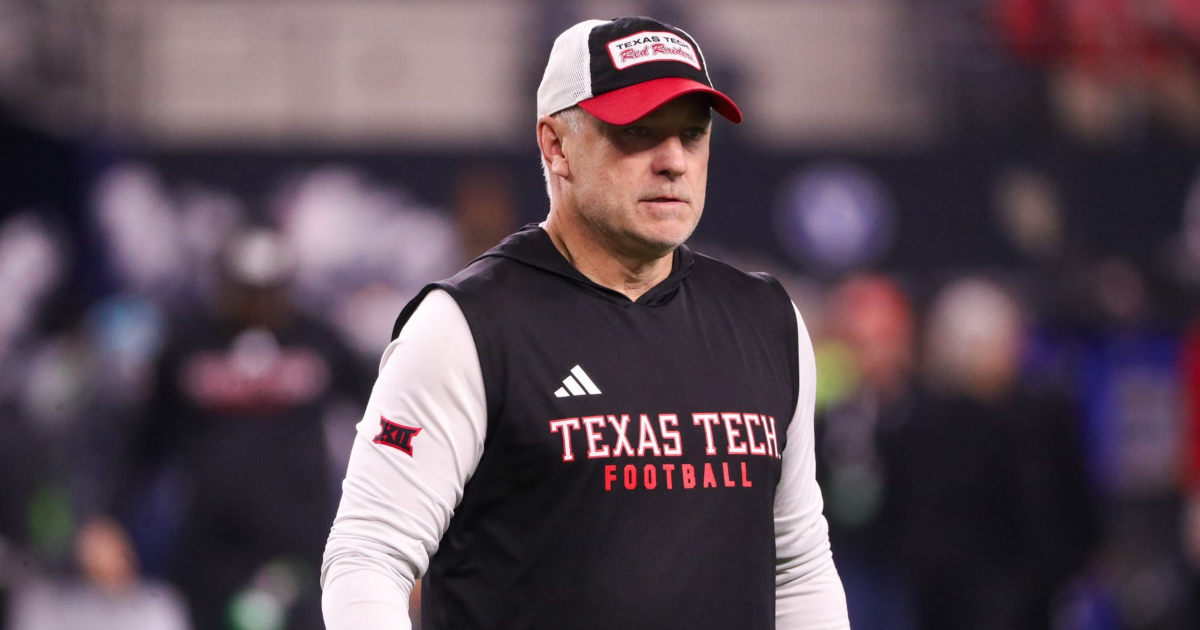
Joey McGuire pushed back on the idea that Texas Tech is in the position it is due to NIL money. The Red Raiders made the College Football Playoff for the first time ever this season after winning the Big 12, but also paid a big price to get here.
According to On3’s Pete Nakos, a survey revealed Texas Tech spent the second-most money of any college football team on their roster this season. That has led to a lot of chatter from fans that the Red Raiders “bought” their success and spot in the CFP.
Although it’s certainly true that Texas Tech spent a lot of money, it isn’t exactly unique in that way with the current era of college sports. McGuire also believes that there was more than just the dollar figures that attracted players to Lubbock, citing the academic success of the team during his tenure.
“Texas Tech has been playing football for 100 years,” the coach said in an appearance on The Triple Option. “Since I’ve been here, we hold every single GPA record in the history of Texas Tech football. With all these guys that we brought in, they just set the all-time GPA record as a team for a fall semester. We have a 3.23 team GPA. So whenever you’re sitting there and taking about, ‘All these guys came in because of money,’ we have 33 graduates who will play in this playoff game and this team set the all-time GPA record.
“So that tells you right there what this building’s all about. How they hold each other accountable, how everything is important. Everything that we do, we do it at the highest standard. So I am really proud of that. I just think that shows that this team’s come here for one reason and one reason only. They came here to be better football players and better men.”
Texas Tech has five players ranked inside On3’s NIL Top 100 for college football. That includes edge rusher David Bailey, who led the Big 12 with 13.5 sacks, and quarterback Behren Morton.
Regardless, they aren’t the only players in this College Football Playoff who are receiving big pay days. Ohio State receiver Jeremiah Smith has an NIL valuation of $4.2 million, while Miami quarterback Carson Beck is making an estimated $3.1 million.
So as much talk as there has been about what Texas Tech players are being paid, it’s not against the rules anymore. This is the kind of team you can build in the NIL era, and at least the Red Raiders are also focusing on more than just the money. They take on Oregon in the Orange Bowl at 12 p.m. ET on New Year’s Day.
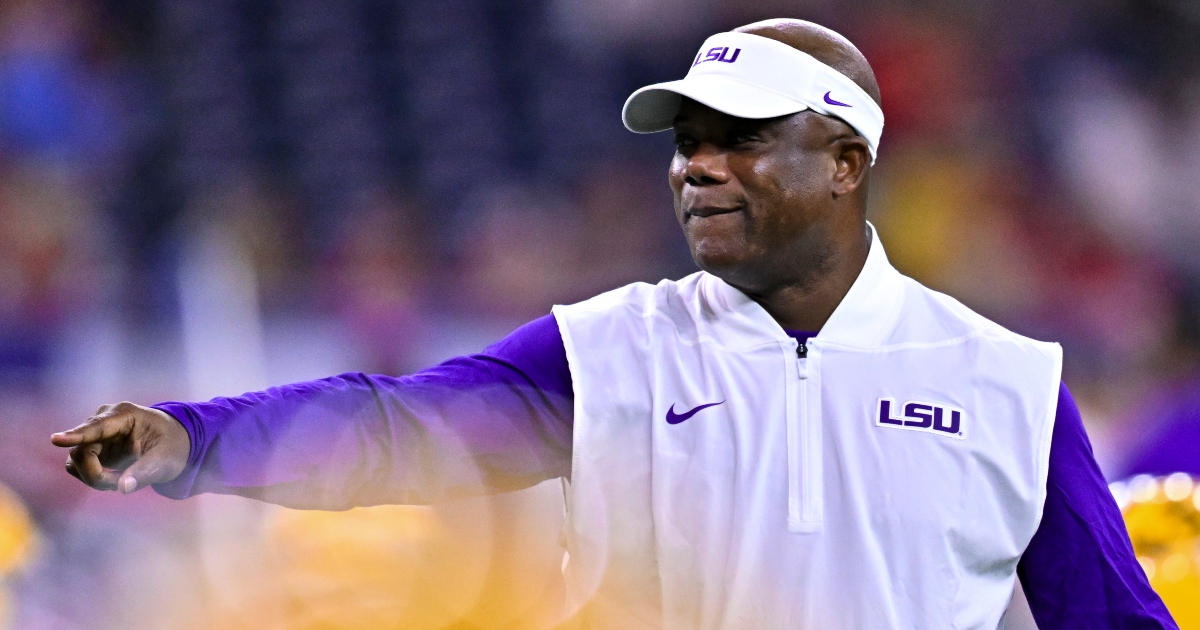
There has been a tremendous amount of staff turnover around the SEC, but particularly between LSU and Ole Miss in recent weeks. That includes Frank Wilson, who has been the interim head coach for the Tigers since the firing of Brian Kelly and has since taken the running backs coach job at Ole Miss.
Wilson was hired by Ole Miss in the middle of December, during bowl prep. That was notable because LSU had hired Lane Kiffin to be its next head coach away from Ole Miss. Kiffin had publicly made it clear that he wanted to coach Ole Miss through the College Football Playoff, but wasn’t allowed to do so. It was a different situation for Wilson, though, who was allowed to coach LSU through the bowl game.
LSU would end up losing the Texas Bowl 38-35 to Houston. After the game, Wilson spoke passionately about why it mattered to him to be on the sidelines for this game.
“Very proud to get this team to the finish line,” Frank Wilson said. “And when we were in the midst of the transition, and I was asked about coaching in this game, I said to an administrator, ‘Yeah, I’m gonna finish with my boys. I’ll burn this building down if you don’t let me finish. I’m gonna finish with my boys.’”
Obviously, the Wilson and Kiffin situations are unique from one another. Wilson was an interim, and the Texas Bowl is not the College Football Playoff. Kiffin left for a rival, while Wilson may have needed to leave for a new job regardless. Still, in all of that, Wilson had that desire to finish what he started with players he loved.
“Because the love is unconditional,” Wilson said. “So, they go out and they compete today and we finished second against a quality opponent.”
Frank Wilson was in his second stint at LSU. This stint had been since 2022, with him taking on the duties of assistant head coach and running backs coach before his promotion to interim head coach. He finished that run with a record of 2-3.
Frank Wilson addresses decision to leave LSU for Ole Miss
Prior to the bowl, Frank Wilson opened up on his decision to leave LSU for Ole Miss. He also noted the role that Lane Kiffin played in that, helping for him to make it work.
“We talked about it. We talked about ways that it could work out. Coach Kiffin was absolutely awesome the entire time in wanting to try and find a way to work it out. We didn’t come to that resolution, and so there were other opportunities out there,” Wilson said.
“Pete Golding is a guy who I’ve known for many years, from the time he concluded playing college football and was a young coach at Delta State Southeastern and then Southern Miss of course. Then, I had an opportunity to hire him back at UTSA. We’ve forged an even closer bond and mutual respect professional for one another, so when the opportunity came, he extended himself to me and I thought it was a great fit for myself and my family.”
A major SEC football powerhouse is undergoing some notable unwelcome change on its roster as it brings on a new coaching regime in time for the 2026 season.
Jon Sumrall is poised to step onto the Florida Gators’ sideline starting next fall, but the transition from Billy Napier to his tenure has already resulted in key personnel losses on the field as players look for an exit via the college football transfer portal.
Exodus from the Swamp
Since the coaching change, the Gators have lost a reported total of 26 players from their roster through the portal, including a stunning six total defensive backs.
The latest was Aaron Gates, the redshirt sophomore secondary defender with plans to depart the Florida program and transfer to another school, according to On3 Sports.
That leaves Sumrall and the Gators without a half-dozen defensive backfield contributors, among the 22 total players who have exited the program already.
Included among that number are two starting safeties in Jordan Castell and Sharif Denson, alongside cornerbacks Teddy Foster, Josiah Davis, and Jameer Grimsley.
Defense is losing a lot
Ten of those outgoing Florida players are on the defensive side of the ball, including defensive linemen Tarvorise Brown and Michai Boireau, linebacker Grayson Howard, and edge rusher Jayden Woods.
High-profile players like quarterback DJ Lagway, a former five-star prospect, and one-time four-star wide receiver hopeful Eugene Wilson are also leaving Florida as transfers.
On the good side, the Gators are set to return corner Dijon Johnson and rising sophomore Lagonza Hayward, who took over Gates’ spot this past season after his injury.
Sumrall will dip into the portal
Sumrall is considered one of the most promising younger head coaches to emerge from the active 2025 coaching carousel, but he will have a tall task ahead of him replacing that outgoing talent.
It doesn’t sound like he’s averse to using the transfer portal to his own advantage.
“We will use the transfer portal. If you’ve studied my rosters the last couple years, I haven’t had the resources to keep very many of my good players. They all end up getting poached,” Sumrall said earlier this month.
“So I’ve had to embrace the transfer portal probably more than most, maybe even more than I’d like to at times, by necessity. But we will use the portal to enhance our team and to supplement where there may be holes or deficiencies.”
Where the Gators ranked defensively
Florida’s defense ranked 10th among the 16 SEC teams this past season against the pass, allowing almost 223 air yards per game on average.
And the Gators were just 12th in the SEC in scoring defense, allowing opponents to score 24 points per game each time out.
Nationally, Florida’s defense ranked 74th among the 136 FBS teams in passing defense, letting opposing quarterbacks complete nearly 64 percent of their pass attempts.
That figure included allowing 8.0 yards per pass attempt on average, although the Gators stiffened when in scoring position, ranking sixth nationally by surrendering just 13 passing touchdowns all year.
And they were top 20 in FBS when defending the red zone, allowing opponents to convert 75 percent of possessions into points.
How the college football transfer portal works
College football’s transfer portal officially opens on Jan. 2, but that hasn’t stopped a flurry of players from entering their names for consideration at a new school right now.
The new 15-day transfer portal window from Jan. 2-16 and the elimination of the spring transfer period has condensed the timeline for players and programs to make their moves.
The NCAA Transfer Portal is a private database that includes the names of student-athletes in every sport at the Division I, II, and III levels. The full list of names is not available to the public.
More college football from SI: Top 25 Rankings | Schedule | Teams
Follow College Football HQ: Bookmark | Rankings | Picks
The college football transfer portal officially opens just one day after the College Football Playoff Quarterfinal on Jan. 2, and with just one window, is expected to be as wild as ever.
While the transfer portal isn’t officially open, the NCAA is not only drowning in lawsuits, but also has no way to prevent contact from occurring before the window opens. There have already been plenty of reports linking some of the top names in the portal to other programs despite the fact that they aren’t technically allowed to be in contact.
Regardless of the back-channeling, which is most certainly happening, teams across the sport need the portal for a variety of reasons. Some schools will be using it to completely revamp their roster after a down year, while others are looking for the perfect piece or two to help them make a title push.
Although just about every team in the country has portal needs, five programs stand out among the rest in terms of who is under the most pressure.
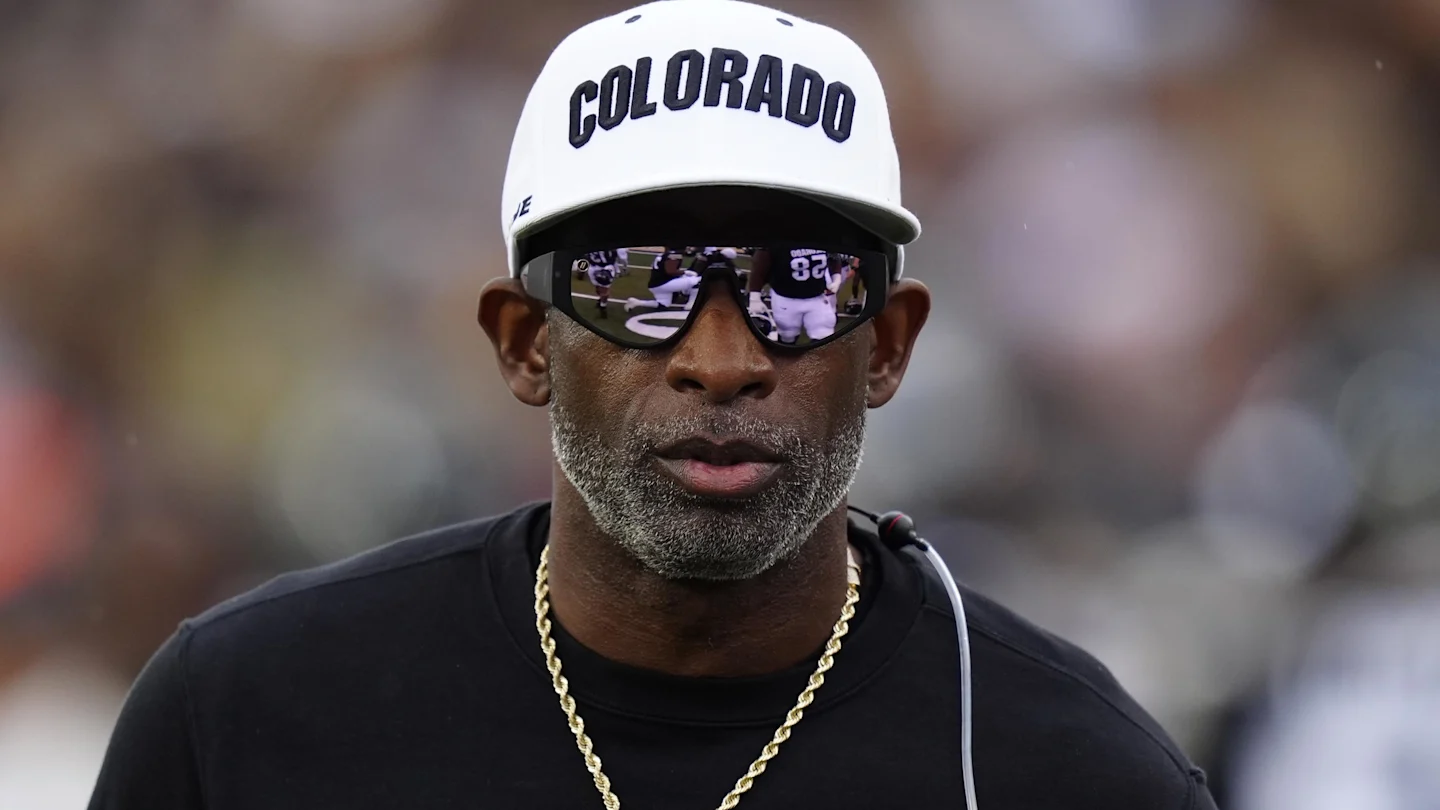
Colorado Buffaloes head coach Deion Sanders looks on during a time out in the game against the Utah Utes during the second quarter at Rice-Eccles Stadium. | Rob Gray-Imagn Images
Colorado Buffaloes
We are three seasons into the Deion Sanders era at Colorado, and the Pro Football Hall of Fame corner has shown minimal interest in recruiting from the high school ranks. In fact, Sanders has made zero off-campus visits, brought in just 14 recruits in the 2026 class and said he’d be a “fool” to try and recruit 30 freshmen a year since “half” will “probably” leave.
That said, the portal method has drawn mixed reviews, as his first year saw him bring in 52 transfers and go 4-8, just one year after the program’s dreaded 1-11 season.
Year two saw Colorado bring in a 43-man class, go 9-4 and make its first bowl game since 2020, while Travis Hunter won the Heisman. However, this season saw Colorado bring in 33 transfers, but the Buffs took a huge step back, going 3-9.
With Colorado already losing 25 players to the portal in addition to a slew of other upperclassmen, they will need to bring in around 50 transfers. If they miss this group, it very well could mark the beginning of the end for Sanders in Boulder.
Texas Longhorns
As I mentioned earlier, no two programs use the transfer portal in the same manner. While Colorado needs a portal class that can revive the program again, Steve Sarkisian and the Longhorns need a portal class that can be the difference between them being left out of the College Football Playoff by a couple of spots, and getting into the dance for the third time in four years.
The Longhorns have already let All-SEC running back Tre Wisner and former five-star running back CJ Baxter walk, while also seeing their linebacker room take a hit with Liona Lefau (transfer portal) and Anthony Hill (NFL Draft) both leaving as well.
Quarterback Arch Manning turned things around at the end of the year, but it was clear that, based on the fact that he was constantly running for his life, had receivers with drop problems and no run support, the team around him wasn’t necessarily helping his case.
Texas started this season ranked No. 1 and came up short of its goal. While the portal isn’t open yet, they are expected to take some massive swings that could be the difference between them not coming up short next year.
North Carolina Tar Heels
Oh, where to begin with Bill Belichick and the North Carolina Tar Heels. It was already viewed as somewhat of a risk for Belichick to go from being one of the winningest coaches in NFL history to a college game he had never coached in, but this season didn’t instill any confidence in the 73-year-old.
Whether it be behind-the-scenes drama with his 24-year-old girlfriend, or the fact that his team had the No. 110 average scoring margin of -8.9, Belichick found himself on the hot seat after about four games.
It’s truly unclear how long of a leash he has in Chapel Hill, but he does have a guaranteed deal that sees him earn $10 million a year, so a hefty buyout could work out in his favor. However, the best way to ease the tensions and distract fans from his girlfriend’s attempts to trademark everything is to win games.
The Tar Heels have been linked to Bobby Petrino for the offensive coordinator role, and Belichick now knows what he struggled with this season. A good portal class can gain some faith, but another down year filled with shenanigans could mark the end of his legendary career.
LSU Tigers
Much of the pressure here stems solely from Lane Kiffin leaving Ole Miss for the LSU job. The new Tigers head coach led the Rebels to their best regular-season record in program history and their first College Football Playoff appearance, but still couldn’t turn down the opportunity to coach at a blueblood.
Since winning the title in 2019, the Tigers have gone 47-29 and haven’t really come close to making the College Football Playoff. Kiffin won’t be getting very much grace in Baton Rouge from LSU fans, but those around the country are simply waiting for the 50-year-old head coach to fail in order to scold him for leaving Ole Miss.
As we have seen with Kiffin at Ole Miss, the right portal class can get you in the playoff, and that appears to be the immediate expectation. So, anything short of that will already have fans turning on the controversial head coach.
Florida State Seminoles
Whether it was due to money or just how many other programs moved on from their head coach, the Florida State Seminoles opted not to fire Mike Norvell this season. After a 13-1 season in 2023, the Seminoles have gone a combined 7-17 over the past two seasons, and Norvell is on ice that is as thin as it gets.
The Seminoles have relied on the portal for two consecutive years to fill certain positions, but the program’s biggest flaw has been its quarterback evaluations. They whiffed on DJ Uiagalelei (Oregon State) and Tommy Castellanos (Boston College) in the portal, and really haven’t found a steady solution at the position since Jordan Travis’ departure.
To put it bluntly, if Florida State has another down year, or even a slow start because of an underwhelming portal class, Norvell will be in the unemployment line.
The college football transfer portal will officially open Jan. 2 and with it should come a flurry of activity, big-money deals and roster transformations.
There is more pressure than ever this time around with the spring portal period disbanded in favor of a sole winter period that runs from Jan. 2 through Jan. 16. It’s why this year’s winter portal could resemble what we see with NFL free agency with many of the best options coming off the board quickly for big money deals.
“People are going to spend out of the gate — like immediately — your top guys, your best guys, are going to go quick,” said a Big Ten general manager. “Then it’s the rest of them that are asking for money, but at some point they’re going to come down a little bit because the money has already been spent.”
There was a belief a year ago that with the passing of the House settlement and introduction of the College Sports Commission as an enforcement arm that last year may have been the Golden Age for big paydays. With a $20.5 million revenue share cap and a promise for stricter enforcement of NIL deals, the idea was that prices would come down this cycle as teams could no longer double dip between unlimited collective money and the rev share. For a variety of reasons, however, that hasn’t proven to be the case.
In some cases, even, prices have doubled.
Low–High ranges and average compensation by position for the 2026 transfer portal cycle. Averages are marked as dots; some highs are open-ended.
CoPilot
“I feel like the average starter this cycle, the sort of line you have to hit, is $600,000,” said one SEC general manager. “I feel like last year starters’ in our conference were $300,000. Now it feels like starters are more like $600,000.”
What does that look like for the entire market? CBS Sports talked to dozens of sources from agents to general managers to collective leaders to put together value ranges for each position ahead of this window’s official opening.
Quarterback
High End: > $3.5 million Average: $1.5 million to $2.5 million Low End: $750,000 to $1 million
Just like in the NFL where the top quarterbacks account for around 20% of a team’s cap, the best portal quarterbacks this cycle are expected to command a hefty chunk of the pie.
Top-ranked arms like Brendan Sorsby (from Cincinnati), Josh Hoover (from TCU) and Sam Leavitt (from Arizona State) are expected to reach — and possibly pass — the $3.5 million mark.
It’s well-documented last cycle’s double dip (teams spending freely before rev-share caps were put into place over the summer) allowed teams to go gangbusters in transfer portal spending, including at QB where Duke made the little-known Darian Mensah famous for a $4 million annual salary. General managers thought there would be a downturn in spending at the position this cycle because of rev-share caps, but that sentiment has changed in recent weeks.
The best QB in the portal, Brendan Sorsby is set for a monster payday.
Getty Images
Schools are figuring out creative ways to exceed the rev-share cap, usually through marketing deals the school can find for their high-profile QB1.
“Six weeks I would have said no way,” an ACC GM said. “In the last six weeks people have figured out ways to construct a contract. You can put 15 deals together to get to $4 million.”
What 20% of a team’s cap looks like depends on the school. Some Power Four programs will only be at the full revenue sharing max, around $14-18 million for each Power Four football programs. Other big spenders will be at $25 million-plus due to the outside name, image and likeness deals the program manages to generate.
As for whether it makes sense to pay a quarterback that much, it’s a matter of debate for the general managers we spoke with.
“Even if you’re at $25 million, are you really going to put 20 percent of your resources into one player?” a Big Ten GM said. “You better hope he’s good. You better hope he’s Fernando Mendoza or Diego Pavia – he has to be or that’s a bad investment.”
Beyond the upper end of the market, the number required for a quality starter in the portal continues to creep up. Last year, quality-starting QBs could be found in the upper 600s and low million-dollar range. Now the same level of player costs $1.5 to $2.5 million.
Even high-upside backups who haven’t started are making that sort of ask.
“I don’t know in the portal if you’re going to get a guy experienced and proven (for) less than $2 million,” a SEC GM said.
As for the low end of the market, there are some Power Four teams who could choose to go the discount route for a starter, be it a player jumping up from the FCS or Group of Five ranks — there are starters who’ve played a lot of snaps who can be found at that price — or betting on a player who’s shown flashes in short bursts on the Power Four level.
Running back
High End: > $1 million Average: $400,000 to $700,000 Low End: $250,000
Similar to the NFL, at the running back spot you’ll see some college teams really prioritize it and others shy away from spending big money. There are multiple running backs this cycle who could command seven figures if they enter the portal such as Louisville’s Isaac Brown and Florida’s Jaden Baugh. The idea of a $1-million plus running back prompted strong reactions.
“If you’re spending a million dollars on a running back, you need a new GM,” said one agent.
Said a Big Ten general manager: “The running back numbers have been absolutely stupid. They don’t make any sense.”
Still, there are those willing to invest major resources in a top running back just like the Philadelphia Eagles did in plucking Saquon Barkley away from the New York Giants or the Atlanta Falcons drafting Bijan Robinson 8th overall in the 2023 NFL Draft.
“I’m a bigger fan of running backs than the whole trend 10-15 years ago,” said an ACC general manager. “‘Oh don’t ever draft a running back in the first round’. Well, look at all the best ones that ever played. They were all drafted in the first round.”
Once you get past the top-end running backs, most agree that you can get a good back in the $300,000-$500,000 range.
Wide receiver
High End: $1 million to $2 million Average: $500,000 to $800,000 Low End: $300,000 to $500,000
If you want a top receiver out of the transfer portal, be prepared to spend big. Auburn’s Cam Coleman could be in the $2 million range, predicted one Big Ten general manager. Coleman is ranked as the No. 1 overall transfer in Cooper Petagna’s 247Sports transfer portal rankings.
Auburn star WR Cam Coleman to enter transfer portal: 7 potential destinations for No. 1 player in 2026 cycle
Cody Nagel
With receivers, it can depend on whether the player is viewed as a true No. 1 receiver or more of a No. 2. If you’re a true No. 1 with legitimate NFL talent, you’ll command $1 million and upward, especially the big-bodied outside plays. A Big Ten general manager, throwing out a hypothetical, said Ohio State’s Jeremiah Smith could command up to $4 million for one year of his services should he transfer. Smith is a cut above the rest of the sport, though. The hypothetical gap between him and Coleman could be $2 million — though a bidding war could also push Coleman’s number above $2 million — while the gap between Coleman can be hundreds of thousands of dollars.
As one Big 12 general manager explained: “$1 million for elite receivers, $1.5 million to $2 million for freak receivers and $400,000-$750,000 for everyone else.”
A No. 2 starting receiver could be more in the $300,000-$600,000 range. What determines the price range for those? Some of it is based on production, some of it is based on traits and some of it is simply physical attributes.
“Bigger, taller WRs, even without production, can be in that $600,000-$700,000 range,” said an agent. “Smaller guys/third guy is $200,000-$300,000. Decent guy is $400,000-$600,000 at No. 2. Tall guys get an extra $100,000.”
In last year’s cycle, there were multiple receivers who were in the seven-figure range including Auburn’s Eric Singleton and Texas A&M’s KC Concepcion. Multiple receivers will hit that range again.
Tight end
High End: $600,000 to $800,000 Average: $300,000 to $500,000 Low End: $200,000 to $300,000
Tight end is an eye-of-the-beholder position. Some schools don’t use them much in their offense. Others require two on the field at a time. The best ones can be game changers at receiver like Tanner Koziol was for Houston this year (727 yards, 6 TDs) for a 10-win team. Interestingly, Koziol transferred to Wisconsin first, didn’t mesh and reentered the portal in the spring to emerge as a difference maker for the Cougars.
That’s why the range for tight ends is so varied.
Value is there to be found on the lower range — with at least one all-conference player this year making $200,000 this year — but mostly it’s the block-first tight ends who fit in the lower range. Most starters will be between $300,000 to 500,000 while the elite players of the cycle, like Iowa State’s Benjamin Brahmer and Tulsa’s Brody Foley, will sit between $600,000-800,000.
The 6-foot-7 Brahmer is (currently) the top-ranked tight end in the transfer portal.
Getty Images
Offensive Tackle
High End: > $1 million Average: $500,000 to $1 million Low End: $300,000 to $500,000
Outside of quarterbacks, offensive tackle is the position that traditionally commanded the highest average premium. Even some non-proven tackles last cycle — think 300 or fewer snaps coming from a high-end Power Four program — commanded well into the seven-figure range last year.
That seems to have shifted, or at least plateaued, this cycle.
“That’s the one position that oddly feels like it’s the same market as last year,” the SEC GM said.
As one agent with several high-level tackles — those located in the top 15 of the 247Sports rankings — put it: “Last year it seemed like if you were pretty good you could get a million. This year it seems like teams are shying away from a million. I’ve seen a lot of $700,000 to $900,000 offers for the tackles. The minute you ask for a million they clam up.”
Regardless, elite tackles will still command a million-plus. There just aren’t that many of them with those like Auburn’s Xavier Chaplin and LSU’s Carius Curne fronting the market as currently constructed — and a few big names are floating out there still as hot rumors.
A transfer last cycle too, Xavier Chaplin (No. 65) now leaves Auburn with eyes on another big payday.
Getty Images
Teams still have to pay up even for the solid starters. The average in the Power Four for that level of player will still sit between $500,000 and a million. Some teams will try to find value between $300,000 to $500,000 at tackle, but those players will either be FCS players jumping up or unproven Power Four players teams are taking a chance on.
Interior Offensive Line
High End: $600,000 to $800,000 Average: $300,000 to $500,000 Low End: $200,000 to $300,000
Opinions on guard can vary depending on a team’s priorities. Seeing them as critical interior anchors and a huge piece of the run game, some high-profile programs are willing to shell out up to $800,000 for an elite guard. Other schools, even the high-profile ones, consider them the most replaceable pieces on offense and allot around $400,000 on the high end.
Thus, the salary range can be extreme.
“A large-bodied guard could warrant $700-800K plus for a guy who could be drafted,” said one agent who represents a blue-chip guard. The agent noted there would only be a handful of those types this cycle.
Center is a more specialized position generally than guard, so the better ones tend to be a bit more expensive. A good center with experience will be in the $500,000 range, a little higher than the average on the inside.
EDGE
High End: $1 million to $1.7 million Average: $600,000 to $1 million Low End: $300,000 to $500,000
After quarterback and offensive tackle, edge-rusher is the premium position where you’ll see considerable resources dedicated for many programs. If you have a game-wrecker at this position, it can open so much for you defensively and it’s why so many programs want a great one.
With high demand comes hefty prices. If a player like South Carolina’s Dylan Stewart, who recently re-upped with the Gamecocks, had instead hit the portal, he would have garnered in the $2 million range, according to a Big Ten personnel executive. If you want anyone even in the neighborhood of Stewart’s caliber, you’ll be spending seven figures this cycle. One general manager known for shopping in the expensive portal aisles said “the really good ones are between $1-$1.5 million.”
Penn State edge-rusher Chazz Coleman is the top-rated edge transfer, according to 247Sports, and No. 2 overall transfer.
If Chazz Coleman’s payday matches his ranking, he is set to make above $1.5 million.
Getty Images
Even just an average starting edge-rusher can command in the $700,000 range, according to a different Big Ten general manager.
“I don’t know if it’s desperation or scarcity,” the GM said, “but guys without a whole lot of production or proven impact are commanding eye-brow raising money.”
Defensive tackle
High End: $800,000 to > $1.5 million Average: $500,000 to $700,000 Low End: $250,000 to $500,000
The scarcity of talented defensive tackles has made this a position of high value if you’re going shopping out of the transfer portal. The gem of this year’s class is Wake Forest’s Mateen Igirogba (No. 5 in 247Sports’ rankings) who could command in that range of $1.5 million or a little more. USC transfer Devin Thompkins, No. 11 in the rankings, is another expected to be in the seven-figure range.
For a top interior defensive linemen, according to a Big Ten general manager, “to get you in the conversation it has to be at least $800,000.” An SEC GM summed it up well, “Decent DT for $400,000-$500,000, really good ones $700,000-plus. Great ones $1 million-plus.”
Linebacker
High end: > $700,000 Average: $250,000 to $500,000 Low end: $150,000 to $250,000
The general consensus is this is the cheapest starting position outside of the specialists. Multiple people we talked to believed you could get a good starter around $300,000. If you wanted an all-conference type, it’d be in the $600,000 range. While the linebacker position isn’t where programs like to spend up, Jacob Rodriguez, who finished fifth in Heisman Trophy voting, proved this year at Texas Tech just how potent having a top linebacker can be.
‘It’s like euphoria’: How Texas Tech All-American LB Jacob Rodriguez mastered the art of the punch-out fumble
Chris Hummer
Cornerback
High end: $800,000 to > $1 million Average: $400,000 to $700,000 Low end: $150,000 to $350,000
In part because programs need so many cornerbacks, this position has one of the widest ranges in salary, according to one agent who represents multiple top options. Some programs really value the position while others prefer quantity over well-paid quality.
Elite cornerbacks, especially in the Big Ten and SEC, can command $1 million and up. Another agent, who represents cornerbacks, says SEC and Big Ten schools will pay $700,000 to $800,000 for those 6-foot-1, 195-pound cornerback types that Nick Saban loved. Meanwhile ACC and Big 12 programs, excluding Texas Tech, might be more willing to accept a 5-foot-10 fast DB, and spend only $400,000.
A viable starting cornerback is usually going to cost you $300,000 and up. If you want more of a higher end option, that number is more in the $400,000-$600,000 range. But a Power Four nickel back could be more in the $150,000 neighborhood.
“That’s a position I feel you can get a good player for a reasonable number,” said the SEC GM. “It’s hard to get a proven player for a reasonable number. There are good players out there for less than $400,000.”
Safety
High end: $700,000 to $1 million Average: $350,000 to $500,000 Low end: $200,000 to $350,000
Once again similar to how NFL teams see the position in the draft, there are a few programs that really value this position but the majority are going to see an opportunity to invest elsewhere. One GM even said it wasn’t an impact position. For those that really value it and want their version of a Caleb Downs-type, as if they grow on trees, that could cost up to $1 million.
An outgoing Boise State transfer, Ty Benefield is slotted as one of the best defensive backs in the 2026 cycle.
Getty Images
But, by and large, there is value to be found in the $350,000-$500,000 range. One agent even said that multiple schools told them that their budget was $350,000 for a starting safety.
“It’s just a position where there’s a lot of them,” the agent said. “If you’re not elite they fall into a different bucket.”
Specialists
General range: $50,000 to $200,000
Specialists make money, too! It’s not often discussed in portal season, but there’s a healthy market for specialists, especially the really good ones. Solid starters will be in the $50,000 to $100,000 range. But the best kickers and punters, especially in the Big Ten and SEC, can push between $100,000 and $200,000.