
Rec Sports
What a journey it has been for Jeff Cooke at North Muskegon


This story was originally published in LSJ’s June magazine. To see the PDF version, click here.
By Jim Moyes
LocalSportsJournal.com
It will look different when the school year rolls around this fall at North Muskegon High School … much different.
For the first time in many years, Norseman icon Jeff Cooke will not be seen walking the hallways of NMHS. Cooke will be stepping down and getting a well-earned retirement from his many roles he has served at his beloved school, first as a student/athlete and for the past 32 years as coach and athletic director.
Cooke has announced his retirement and will officially clean out his office on June 30. Cooke will depart as the Norse AD with the cupboard well-stocked as NM has enjoyed unparalleled success in recent years. Despite numerous health setbacks Cooke has been resilient over the years, dating back to his days as a standout athlete on the Northside.
And what an athlete was Cooke! Our lifetimes are full of ‘What If’ moments in life as well as in the world of sports. For me, and I’m sure it’s true with Jeff, I have often thought how great an athlete Jeff Cooke would have been if not for a ‘What If’ moment.

North Muskegon Athletic Director, Jeff Cooke. Photo/Leo Valdez
Cooke was destined for stardom as early as his ninth-grade year at NMHS in the Fall of 1977. Cooke was a starter in football as a freshman and teammate with a young sophomore quarterback who went on to become a legendary coach for the Norse in later years, Larry Witham.
One week after the duo teamed up for the first of their TD receptions in a win over Ravenna, Cooke etched his name into the record book as he intercepted three passes in a win over Montague, a record still unsurpassed in Norse football history. As fate would have it, it was the only season of football for Cooke.
However, it was in basketball where a young Jeff Cooke really excelled. As a freshman he tallied 23 points in wins over Whitehall and Montague, a program record for a freshman that lasted until 2000, a total second only to future MSU cage star Drew Naymick’s 26 points as a freshman against Western Michigan Christian. Cooke was so proficient as a rebounder that he led the entire West Michigan Conference in rebounding and was selected to the All-Conference first team – as a freshman.
In a premonition of what was to be, Cooke was injured in a practice session the day before the Norsemen were to begin play in the 1978 MHSAA playoffs when he hyperextended his knee, the first of what would prove to be the first of many knee injuries and surgeries. With Cooke beginning his Norse career on the varsity, NM had gone from a winless season the previous season to 13-7. To no one’s surprise, without Cooke in the lineup the Norse lost their opening-round playoff game to Hart.
During a summer workout a few months later, Cooke again reinjured the knee so badly that it prematurely ended what surely would have been a promising football career for the burly 6-4, 220-pound Cooke. He did not return to the hardwoods as a basketball player until the eighth game of his sophomore season.
Cooke was regaining his form following a 27-point effort in a narrow loss to Whitehall when fate again stepped in. With a knee encased in a brace and a wrap that encompassed nearly his total leg, disaster struck for Cooke in a moment that remains clear to me nearly 50 years later. With 5:31 to go in the fourth quarter in a game with Reeths Puffer, the once energetic crowd turned suddenly stone silent as NM’s sophomore center laid in agonizing pain on the floor after reinjuring his knee. Situated high above the court while broadcasting the game I could clearly hear the hideous break from my catbird seat at the old Rocket gymnasium.
The injury was so severe that Cooke missed his entire junior season.
Cooke sat out his first game of his senior season, but that was the only game the gritty Cooke missed in his final year as a Norse athlete. One of the highlights for Cooke in his senior season was leading NM to a 65-53 victory over neighboring Reeths Puffer when he scored 22 points and grabbed 16 rebounds. Oddly enough, despite their proximity to one another, the two teams have not met again in more than 40 years.
Cooke and current NM football coach Larry Witham shared many athletic highlights as young boys in North Muskegon.
As kids in North Muskegon, Witham recalls several highlights the duo shared along the way. There was a thrilling 13-12 victory over Oakridge on Homecoming in 1977 when the defense stuffed a 2-point conversion to preserve the victory.

Cooke stands in the weight room with Norse students. Photo/Leo Valdez
“Jeff and I were so excited that night,” said Witham. “The thrill of winning a game like that, and to share it with your best friend was simply amazing.”
Witham also recalls a game in the eighth grade when Cooke scored 42 points and grabbed 31 rebounds.
But one of the biggest moments came in 2023 when Cook handed a regional championship trophy to Coach Witham.
“Coming from my childhood friend was a very special moment,” Witham said. “We exchanged a couple of words at the trophy presentation of how proud we are of each other, something lifelong friends exchange in moments like that.”
Cooke led the Norse to the WMC championship playing on a leg and a half and easily led the WMC in rebounding, a feat he first achieved in his freshman season. NM did not win another basketball conference championship until Cooke, as the head coach of his alma mater, led the Norse to a title years later.
After leaving NMHS, Cooke was determined to give basketball another shot and who better to play for then the new coach at Muskegon Community College, Gene Gifford.
“Jeff played for me my first two years at MCC. He was one of the hardest and most dedicated athletes that I have coached,” said Gifford. “Jeff practiced and played hard and was a great example for other players on the team. He was always a team player and never complained about his knee or the knee injury he had suffered. He was truly a student-athlete and was always a positive representative of the Jayhawk basketball program.”
Cooke left MCC after two years and got his degree from Central Michigan University. Cooke’s first job was at the Tri-Cities Family YMCA where he served for eight years.
“I was a Program Director responsible for weightroom, pool, aquatic programs, youth sports, youth summer camps and helped with many special events. I say all this, because much of what I did at the “Y” is the same as being at NM. You need to wear many hats,” said Cooke.
Cooke returned to his alma mater in 1993 to begin a long career, first as the Athletic Director, a role he filled for 32 years.
NM’s basketball program was in the doldrums before Cooke was asked to take over the head coaching duties beginning with the 1996-97 season. Beginning in 1984, until Cooke took over as coach, the Norsemen had won 75 games and lost 162.
It took Cooke just two seasons to produce a winning team as NM went 12-10 in the 1988-99 season, their first winning season since 1985 when, ironically, the head coach was none other than Jeff’s father, Dave Cooke. Under Jeff’s leadership, NM had turned the tables. With Cooke at the helm, the Norsemen over the next five years won 81 games and lost 33. In 2002-03, NM had arguably their finest team in NM history when they went 24-2 and advanced to the quarterfinals before losing a tight contest to perennial powerhouse Flint Beecher.
In a move that surprised many, Cooke was replaced as the head coach at NMHS despite winning 184 games in his 18 years as the Norse mentor. When asked his biggest personal disappointment at NMHS Cooke replied: “When I was let go from coaching the boys varsity basketball team. That was very tough for me.”
Fortunately, the hierarchy at NM retained Cooke as the school’s athletic director where he has loyally served for more than three decades. During Cooke’s tenure, NM recently has seen unprecedented success, especially in the boys’ major sports of football, basketball, baseball and track. NM has even brought a wrestling program out of the mothballs that has done surprisingly well.
Cooke departs leaving NM in exceptionally good shape. In the last three years the boys’ football, basketball, and baseball teams have won an amazing 180 games while losing 31. In all nine of those seasons, NM was the Rivers Division champs in the West Michigan Conference.
But it hasn’t been easy for Cooke. Although he incurred numerous knee injuries and surgeries as a prep performer at NMHS, it pales with the health issues Cooke has had to overcome in recent years. Cooke lost a kidney in 2012, just the beginning of numerous health issues he faced in the upcoming years. In April of 2022 Jeff had a heart valve replaced. In August of the same year, he had a brain tumor removed and as if that wasn’t enough, just a month later, a melanoma cancer was removed from his back. As recent as 2023, Cooke had melanoma cancer removed from his lung.
Instead of lamenting on his health issues, Cooke see’s it in a different light.

At the podium, Cooke gives words of advice during his retirement speech.
“I’m now positive, I get tested every 3-6 months, so far so good.”
Always standing by his side was his beautiful wife, Kim.
To be a successful coach as well as an athletic director one needs a supportive wife. For Jeff Cooke he hit the jackpot with Kim.
“I am so grateful for Kim and love her!!” said Jeff. “Without Kim, I would have been up (a certain well known) creek without a paddle. It is Kim who has kept me together.”
Despite his health issues, Cooke has taken a positive stance.
“There is always somebody that has had a tougher time than me, so I am thankful and understand how things have worked out for me.”
For the first time in nearly 60 years, there will not be a Cooke active at North Muskegon High. One of those who made a lasting impact on his life was his father Dave Cooke, who served many years at NM, first as a basketball coach dating back to 1968, and for 22 years as the football coach at NM.

“My Dad has been a big factor in my career. His years in education, coaching and recreation, are second to none. Again, not worrying about wins or losses, the quality people Dad worked with at Whitehall, Reeths Puffer and North Muskegon, really wore off positively on me,” Jeff said.
Cooke’s was quick to give praise to the number of excellent coaches he has worked with during his long tenure at North Muskegon.
“I’ve been blessed to work with so many people here, both young and old, that were hard working people, honest, and willing to share. Those wins are always nice, but a positive work ethic, seeing the value of the team and cheering and helping your teammates are important.” 
Jeff also is so proud of his three children, all of whom starred in athletics at North Muskegon and have gone on to receive their degrees and play sports in college. Jeff also said he enjoyed working with the teachers, coaches, both past and present, and appreciated the relationship he had over the years with his fellow athletic directors.
Jeff currently has no specific plans for retirement, but you can be sure he will be a fixture at upcoming NM athletic events. He did mention he would still like to coach NM JV boys’ basketball.
Jeff just couldn’t escape his ties and love of basketball over the years. One can bet he won’t be too far away from the stomping grounds of NMHS where he has made a positive impact for more than 40 years as a student, coach and athletic director.
“Walking through doors for the last time – I’m sure it will make me think! My mind will also recall my student years at NM, my NM employment, my years as a parent of NM students and being a part of the NM community. It’s been a great ride.”



Whether points of origin, transit, destination or return — cities are where most displaced people and migrants live, with nearly 80 per cent of displaced people residing in urban areas. Cities can offer opportunities for inclusion to newly arrived people, but too often migrants and refugees experience isolation and discrimination, hindering their development as well as their physical and mental health.
When used appropriately, sport can provide an opportunity for cities to strengthen the inclusion of displaced people, while advancing broader city priorities around health, climate, youth engagement and economic opportunity.
The ORF’s contribution is part of an innovative partnership with the Mayors Migration Council (MMC), which will support between three and five cities with two-year grants of up to USD 500,000 each to launch city-led sport initiatives aimed at improving health, inclusion and opportunities for migrants, refugees and their host communities.
The announcement coincides with the Global Refugee Forum (GRF) Progress Review taking place in Geneva, Switzerland, furthering the implementation of two global commitments made at the GRF in 2023: the Multi-Stakeholder Pledge on Sport for Inclusion and Protection, and the MMC’s pledge to grow its Global Cities Fund for Migrants and Refugees (GCF) to USD 50 million by 2030. Cities will be selected in 2026 through an invitation-only process.
ORF Head Jeroen Carrin said: “Cities are where displaced young people build their futures, and sport is one of the most effective ways we can support them with dignity, confidence and hope. The Olympic Refuge Foundation is proud to partner with the Mayors Migration Council to invest directly in city leaders who are using sport to break down barriers, strengthen communities and open doors to opportunity. We invite donors around the world to join us in scaling this movement and ensuring that every young person forced to flee has the opportunity to play, belong and thrive.”
The ORF’s contribution to the GCF will support city projects that may include:
-
Integrating sport into refugee resettlement and services
-
Expanding access to sport for crisis-affected women, children and LGBTQIA+ communities
-
Creating safe, inclusive, climate-resilient sport and play spaces in cities
-
Creating labour pathways through local leagues, coaching jobs or event management
-
Leveraging major sports events to foster visibility, pride and belonging.
Cities: a strategic priority
This latest commitment from the ORF builds on the Foundation’s strategic priority to focus on cities and municipalities.
A recently developed policy plan by the ORF Think Tank outlines practical guidance for how cities can leverage sport to improve existing settlement and inclusion practices. Recommendations included in the document are structured across three levels depending on available resources and capacities, and each helps cities move from ideas to action. The Policy Plan, which has been drafted following a consultation with people with lived experience of displacement, city officials and stakeholders, draws attention to five key areas.
The Policy Plan highlights how cities like Paris, Bogotá and Amman are creating welcoming spaces and developing policies that make sport a powerful tool for belonging.
Explore the full Policy Plan to learn how your city can take action and use sport for inclusion.
Rec Sports
‘Underground’ Moorhead gym associated with some big-name athletes helping area youth hone athletic skills – InForum

MOORHEAD — ETS Performance is an athletic training brand that has more than 50 locations around the country that work with youth, high school, collegiate, professional and Olympic athletes.
ETS gyms have a particularly strong presence in the Twin Cities, but Moorhead has one, too, and a big part of the facility’s clientele is comprised of young athletes from around the area.
“We’re almost more underground,” said Tim Osterbauer, director of operations and lead trainer at ETS, which is located in Moorhead’s industrial park at 2732 22nd Ave. S., not far from the former Anheuser Busch plant.

Alyssa Goelzer / The Forum
On a recent afternoon, a number of area high school standouts were at ETS performing individualized workouts prepared by Osterbauer and other trainers.
The athletes moved between various types of equipment ranging from stationary “assault” bikes to an Olympic weightlifting platform.
All ETS facilities are part of the national brand, but each location has its own owners, according to Osterbauer, who noted that one of the owners of the Moorhead location is Chase Morlock, a former North Dakota State University Bison player
who also owns Rise Fitness in Moorhead.

Alyssa Goelzer / The Forum
Osterbauer, who has been a trainer in the area since about 2016, worked at Rise Fitness for a time before joining ETS when the Moorhead facility opened in December 2022.
A number of athletes who train at ETS have been with Osterbauer for years, including
Zak Walker and Taye Reich,
Moorhead High School football players who were among the athletes working out at ETS on a recent afternoon.
Reich said he started training with Osterbauer around sixth or seventh grade.

Alyssa Goelzer / The Forum
“This is a great place to be,” Reich said, adding: “He (Osterbauer) is a great person and a great trainer. It’s a community. It’s a family.”
Osterbauer said when athletes arrive for the first time they undergo a full assessment when it comes to things like injuries, power and speed.
Then, ETS designs individual workouts tailored to an athlete’s specific needs.
Osterbauer said ETS keeps a record of every athlete’s history and to underscore the point he pulled Reich’s folder from a large collection of folders that are kept on a wall of the facility.

Alyssa Goelzer / The Forum
“This is a record of all the work Tye has done since middle school,” Osterbauer said.
In addition to youth, Osterbauer also trains with professional athletes, among them
Fargo Davies High School graduate Tyler Kleven
and
Moorhead High School graduate Will Borgen,
both of whom play in the National Hockey League.
Another pro athlete associated with the ETS brand is Detroit Lakes, Minnesota, native and former Minnesota Viking Adam Thielen, who is
part owner of a number of ETS locations,
mostly in the Midwest.
When it comes to young athletes, Osterbauer said ETS is currently working with about 240 during the current school year, though he noted the number peaked just shy of 300 this past summer.
In addition to schools in the immediate Fargo-Moorhead area, Osterbauer said ETS also trains athletes from nearby school districts, ranging from Northern Cass in North Dakota to Hawley in Minnesota.

Alyssa Goelzer / The Forum
Athletes come from a variety of sports, including: boys and girls track and field, boys and girls basketball, as well as boys football and girls volleyball, according to Osterbauer, who said when he talks with parents they often ask about the training regimen and potential impacts on bodies that are still developing.
For his answer, he turns to a kitchen metaphor:
“We don’t want to flash fry our athletes, we want to slow cook them,” Osterbauer said.
“We’re teaching them meaningful, foundational-type movements and skills versus, ‘Let’s push these kids as hard as we can.’ They’re still growing,” Osterbauer added.

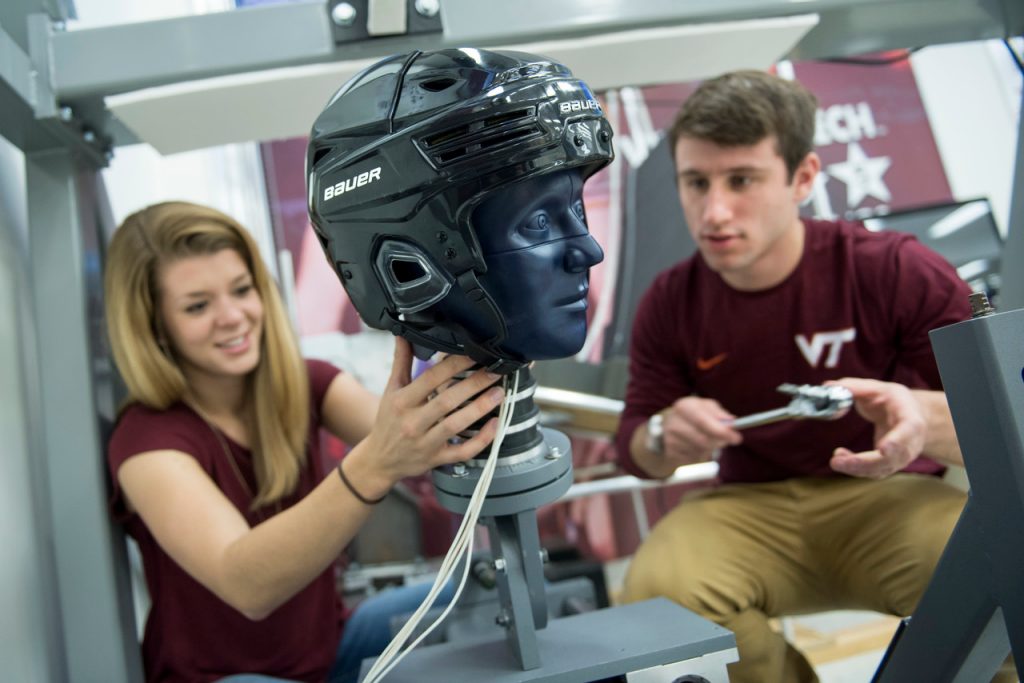
The latest ratings from the Virginia Tech Helmet Lab aim to help young people select the best headgear for hat tricks.
On Dec. 16, the lab released its first-ever ratings for youth hockey helmets. Using the lab’s Summation of Tests for the Analysis of Risk (STAR) framework, 33 helmets were given a star rating from 0 to 5, with the latter being the top performing products.
“It includes every helmet we could get our hands on, including some that are no longer being manufactured but that players might still be wearing,” said Steve Rowson, the lab’s director. “The goal is simply to provide moms and dads and other stakeholders in the youth hockey community an independent resource so they can make an informed decision and purchase a helmet in the context of impact protection.”
Ten helmets earned a five-star rating and six earned four stars. A complete list of helmets rated, including available advertised retail prices, is available at the Helmet Lab’s webpage.
In 2015, the lab released its first ratings for varsity, or adult-size, hockey helmets and soon after hockey helmet performance reached new heights. Rowson said the response to those ratings helped motivate this new research.
“Turns out the people most interested in the varsity ratings were the parents of youth players,” said Rowson, who is also a professor of biomedical engineering. “So the lab initiated this work to make sure the people who really want that data can have it.”
Rowson said the ratings are especially important because there is more than double the number of youth hockey players compared to adults. There are about 800,000 youth players combined in the United States and Canada, according to each country’s national ice hockey organizations, USA Hockey and Hockey Canada. There are also about 275,000 players throughout Europe, according to the International Ice Hockey Federation.
Currently, the Hockey Equipment Certification Council is the only widely used benchmark for hockey helmets, both youth and adult. The council doesn’t produce performance-based ratings, but rather certifies hockey helmets meet certain American Society for Testing and Materials safety standards.
To complete the new ratings system, Virginia Tech researchers leveraged existing literature on impact exposures in youth hockey and utilized some of the equipment they had previously used for youth football helmet ratings. This included a youth-sized test dummy and testing at lower impact energies associated with the youth game compared to the adult version.
Youth hockey helmets are the 13th sport or industry-specific safety headgear for which the Helmet Lab has generated comprehensive, publicly available ratings since it debuted ratings 15 years ago. During that time, the lab has developed a reputation as both an independent consumer guide and a road map for industry to develop safer products. This summer, the lab even had to update its ratings for bicycle, varsity football, and youth football helmets as a result of those helmets’ growth in safety performance.
Rowson said that while the primary goal of the research is to empower individuals to make the best choice in headgear, they also always hope to empower the helmet industry and collective sports culture to move toward safer products.
Updated Dec. 16, 2025, 8:00 a.m. ET
While at least 55% of youth ages 6-17 appear to be playing sports, a potential threat to the rising rate hovers over it, according to the Aspen Institute’s national State of Play 2025 report.
The percentage, according to the latest available data, pushes youth sports participation toward the 63% target set through the Healthy People 2030 program administered by the government and championed by Aspen’s Project Play.
However, as Aspen writes in its 2025 report of trends across the landscape, government raids of parks where immigrant children play, as well as other developments, have created an environment that suggests a reshaping of youth sports. Perhaps it even threatens the target goal of 63%.
“People will have different views about immigration and enforcement actions – and that’s understandable,” Oregon Youth Soccer Association executive director Simon Date wrote to parents this fall. “But wherever you stand on the politics, we stand unapologetically with kids not being scared to be at our events. Every child deserves to play soccer without fear, and that will always be our north star.”
The OYSA had announced that as many as 16 teams withdrew from competition in Portland after people reported Immigration and Customs Enforcement (ICE) activity in community parks.
Overall, the Aspen Institute concludes, through assessment of government and industry data and its national sports parent survey, American youth sports has effectively recovered from the COVID 19 pandemic, with participation rates continuing to rebound.
But the cost of youth sports has risen 46% since 2019, and significant access gaps remain among youth from upper- and lower-income households.
Youth Sports Business Report predicts that by 2030 only two distinct tiers of sports offerings will be available for families as the growing influence of private equity continues to affect sports families.
Here are highlights of the Aspen report, which was provided to USA TODAY Sports before its release this week, and what youth and adolescent athletes and their parents can learn from it.
YOUTH SPORTS SURVIVAL GUIDE: Pre-order Coach Steve’s upcoming book for young athletes and their parents
Latino youth sports participation is up, with a caveat
Sixty-five percent of Latino youth ages 6-17 tried sports at least one day in 2024 over the previous 12 months – a higher rate than Black and white youth, according to data from the Sports & Fitness Industry Association (SFIA).
Participation among Latina girls rose from 39.5% in 2019 to 48.4% in 2024, according to “Unlocking the growing power of Latino fans,” research published by the McKinsey Institute for Economic Mobility. The report attributes this rise to organizations such as ELLA Sports Foundation, Girls on the Run, Sports 4 Life and the Women’s Sports Foundation that have launched programs targeting underrepresented groups.
Latino youth still regularly play sports at lower rates than white youth based on SFIA’s core participation statistic. Research by McKinsey and the U.S. Soccer Federation also found that Latino and Black children are three times more likely than white children to stop playing soccer because they feel unwelcome.
Aspen raises the issue of whether current immigration raids will have an adverse effect on Latino sports participation rates that appear in future analysis.
“It’s affecting our community-based (sports) programs and parks programs. It’s not a surprise,” said Renata Simril, president & CEO of LA84 Foundation, which ensures children have access to sports.
The State of Play report also cites 2025 media accounts in New York, California and Oregon that document fears due to immigration raids. According to a story posted at Today.com in July, Youman Wilder, the founder of Harlem Baseball Hitting Academy, said a group of ICE agents approached members of his team while they were practicing in a park.
“I heard them saying, ‘Where are you from? Where are your parents from?'” Wilder told MSNBC’s Nicolle Wallace. “And I just stepped in and said this is very inappropriate to ask these kids anything … I’m just going to have them implement their Fifth Amendment right, and not say anything to you.’ ”
The Aspen Institute’s Project Play has developed a Children’s Bill of Rights in Sports with a working group of human rights and sports policy experts. It offers eight rights recognizing that all youth should have the opportunity to develop as people in safe and healthy environment through sports.
The first right: “To play sports. Organizations should make every effort to accommodate children’s interests to participate, and to help them play with peers from diverse backgrounds.”
Municipalities in Tacoma, Washington; Akron, Ohio; Alexandria, Virginia; Perris, California; and Chapel Hill, North Carolina endorsed the Bill of Rights in 2025.
Casual organized sports play is a hot trend
About 55.4% of youth ages 6-17 were playing sports as of 2023, according to the federal government. Seventeen states and the District of Columbia were within a percentage point of or greater than the 63% mark.
Also, 6% more children ages 6-17 played a team sport at least once in 2024 compared to 2023, according to SFIA data.
“The rebound in participation since the pandemic is a credit to all who have innovated to improve access to quality sport programs,” said Tom Farrey, executive director of Aspen’s Sports & Society Program. “But we’re going to need leadership to ensure that as more money flows into the space, the needs of children – all children – are prioritized in the development of policies, practices and partnerships shaping what is still a disjointed landscape.”
Teenagers ages 13-17 continued to regularly play sports at lower rates, with their participation dropping by 3% in 2024.
Girls and boys play rises; non-traditional sports are thriving
Boys 6-17 regularly played sports in 2024, marking a 2% increase over one year, but boys participation has resided at 42% or lower for nine straight years. Girls participation, while still trailing boys, increased for the third straight year (to 37%).
Coach Steve: Why are boys’ sports on the decline? A former NBA star looks at solutions
From 2019 to 2024, according to the State of Play report, flag football was the only team sport tracked by SFIA that experienced growth in regular participation among kids ages 6-17. However, Tennis and golf increased as individual sports through separate data shared with Aspen.
Flag football was up 14% while baseball was down 19%, tackle football down 7%, soccer down 3% and basketball was down 2%.
Among youth ages 13-17, tackle (6.4% participation) is still much more popular than flag (2.8%).
Flag’s growth, according to Aspen, is largely attributed to the NFL, which has invested more in the sport as some parents delayed or walked away from tackle due to the risk of brain injuries and shifting U.S. demographics.
The NFL has also campaigned to bring flag football to high schools for girls, and 28 states either sanction girls’ high school flag or are in stages of pilot programs.
“There are so many young boys and young girls, you look at them the first time that they go out there to a practice, and then by the end of the season, it’s almost like they’re a totally different little kid,” former Notre Dame and NFL cornerback Bobby Taylor, an important figure in developing programs for the sport, told USA TODAY Sports in 2024. “You see that progression.”
Volleyball participation is growing faster than any other high school boys sport (a 13% increase in 2024-25, according to National Federation and State High School Associations.) Volleyball is nearing the top 10 of the most-played boys high school sports, while over the past six years, nine states have added varsity boys volleyball: Oregon, Kentucky, Indiana, Utah, Colorado, Michigan, Minnesota, South Carolina and Missouri.
Meanwhile, the number of children ages 6-12 who played another wildly popular sport – pickleball – at least once in the past year doubled over a two-year period, getting to 2.2 million in 2024.
Teenagers 13-17 increased their pickleball participation by 157% over two years.
More Coach Steve: Why pickleball is the perfect sport for everyone
Youth sports still cost too much, and it’s cutting families out of the picture
The average U.S. sports family spent $1,016 on their child’s primary sport in 2024, a 46% increase since 2019, according to Aspen’s parent survey in partnership with Utah State University and Louisiana Tech University.
According to Aspen, that’s twice the rate of price inflation in the U.S. economy during the same period. Baseball ($1,113) was the most expensive of the three most popular sports, costing more on average than soccer ($910) and basketball ($876).
The Aspen parent study came before President Trump’s tariffs and the federal government shutdown, and the organization says both could impact the economy and how families view their child’s sports costs. According to ESPN, $6.27 billion worth of sporting goods imported into the U.S. came from China, accounting for 61% of these imports.
Sports & Fitness Industry Association CEO Todd Smith told ESPN that tariffs may slow sports participation and physical activity for households earning less than $25,000 a year.
Thirteen years ago, 35.5% of kids ages 6-17 in homes with incomes under $25,000 regularly played sports vs. 49.1% who played from homes earning $100,000 or more. In 2024, the gap was 20.2 percentage points, according to SFIA data.
Mega-facilities (and mega-bucks) are becoming a permanent fixture
Aspen’s sports parent survey found that children from homes earning $100,000 or more are two times more likely to play travel sports than those in homes making under $50,000.
Project Play’s youth surveys in communities across the country show more children saying that what they dislike most about sports is that it’s too expensive, while, perhaps increasingly, they are feeling they can’t let down their parents.
“When kids or adults get emotional talking about their sports career almost always has something to do with their parents,” Linda Martindale, a boys high school basketball and mental fitness coach in the Boston area who also hosts the GameChangers podcast, recently told USA TODAY Sports. “It’s amazing how kids say, ‘I feel bad when I didn’t get to play or I didn’t perform, I feel bad for my parents.’ It’s like, ‘Wait, what?’ And a lot of times they say, ‘Well, my parents put so much into my playing career.’ ”
Commercial real estate and local economic development officials continue to capitalize on youth sports. This year, Ocoee, Florida approved development of a 159-acre youth sports and hotel complex (called The Dynasty project) valued at up to $1 billion.
While Project Play pushes for 63% participation by 2030, Youth Sports Business Report predicts that by that year, only two tiers of sports offerings will be available for families – premium destination experiences like Dynasty and community-based recreational programs.
“The middle market of regional tournament facilities faces the greatest disruption risk,” Youth Sports Business Report writes.
More coaches are getting trained
A cohort of partners, including Little League International, the Positive Coaching Alliance, the U.S. Soccer Foundation and many others, has trained 1 million youth coaches in evidence-based youth development practices. The milestone was reached in 2025.
The Million Coaches Challenge also offers coaching strategies and a vision for making youth-centered coaching the standard nationwide.
Aspen created a 63X30 roundtable of 20 organizations that trained more than 263,000 coaches and administrators in 2025.
However, according to Aspen, coaches who were trained at least once in the previous 12 months dropped over a five-year period. For instance, in 2024, 26% of coaches had recent training in general safety and injury prevention, down from 34% in 2019.
The U.S. Tennis Association, Aspen says, has taken an unprecedented step for a National Governing Body (NGB) of sport, with USTA Coaching. It provides anyone who delivers tennis (parents, volunteers, high school coaches, staff pros, directors of tennis and certified professionals) access to resources and benefits such as liability insurance, telehealth, equipment discounts, coaching tools and a peer community.
Parents are much more about playing time than winning
According to Aspen’s parent survey, the most important coaching philosophy to parents (out of a choice of 10) was “supporting athletes in being healthy and fit.” “Winning games or competitions” was No. 8, but “distributing playing time in a fair manner” was No. 2.
Among parents with kids ages 6-10, only 23% say equal playing time is the right policy for their child’s age and competitive level. That’s nearly the same rate as parents of children ages 11-14 (19%) and 15-18 (17%).
About half of all surveyed sports parents believe every child on a team should receive some playing time.
NIL and AI are influencing the youth sports landscape
Forty-four states and Washington, D.C., allow name, image and likeness (NIL) agreements for high school students. There are even signs that NIL, in some cases, is changing the non-scholastic sports experience for middle schoolers (and younge)r.
The New York Times, for example, profiled an eighth-grade football player in Washington D.C. who signed sponsorship deals with a local fashion brand and hired an agent for future deals. “The goal is for him to reach a million dollars his freshman year of high school,” his mom said.
Elliot Hopkins, director of student services for the National Federation of State High School Associations (NFHS), told USA TODAY Sports in May he doesn’t see the system as sustainable. Hopkins played on the defensive line at Wake Forest from 1975 to 1979.
“You just can’t keep doing this long term, because what happens is you and I are teammates and you get a bigger deal than I am, but I’m blocking for you,” he says. “I’m like, ‘What the heck? You wouldn’t be getting any money if I didn’t block for you. I need more money so you can do your job,’ and the whole locker room becomes frazzled, and then no one trusts each other, no one wants to work for each other. They’re out for themselves.”
Meanwhile, artificial intelligence-powered video analysis, wearable sensors and analytics platforms potentially offer youth sports families a more personalized and engaging experience.
According to the State of Play Report, AI-powered platforms can analyze individual player performance and biometric data to create customized training programs and provide coaches with statistics to evaluate players that were previously unavailable. The advanced training, safety and administrative tools could help injury prevention.
But, according to Aspen, AI also carries concerns about costs, data privacy, balancing technology with personal coaching, and time commitment for younger children.
One New York soccer club offers parents the option of paying $300 annually for their child’s analytics.
“Reluctantly, the ecosystem has forced us to start younger and younger to stay in the game,” FC Westchester President George Gjokaj told NBC News. “I’d prefer to let them just have fun and support them without taking it too seriously at that young an age.”

FARMINGDALE, N.Y. | The Skyline Conference and New Jersey Athletic Conference released their weekly winter reports Monday, and Farmingdale State College men’s indoor track and field freshman Ethan Zacarolli (Hillsdale, N.Y.) was selected as the NJAC’s Field Athlete of the Week after a school record-setting performance in the heptathlon, while men’s basketball senior guard Sean Conroy (Staten Island, N.Y.) was tabbed on the Skyline’s honorable mention listing.
Indoor Track and Field | NJAC Men’s Report | NJAC Women’s Report
The Rams’ men’s and women’s teams competed Friday and Saturday at the Art Kadish Elm City Challenge in New Haven, Conn., and Zacarolli set a FSC record with his winning total of 4,550 points in the heptathlon. His total surpassed Nicholas Lourenco’s previous record of 4,038 points, which was set in 2023.
Farmingdale State returns to action on January 9, when it travels to the Ocean Breeze complex in Staten Island, N.Y., for the St. Thomas Aquinas Spartan Invitational at noon.
Men’s Basketball (8-2, 1-0 Skyline) | Skyline Report
FSC earned a pair of wins on the week, capturing an 87-72 home victory Wednesday versus regional mainstay Swarthmore (Pa.) College, before opening up Skyline play with an 83-66 decision Saturday at SUNY Old Westbury.
Conroy earned honorable mention praise after averaging 19 points, 6.5 rebounds and 3.0 assists per game while shooting 50 percent from the floor and 3-point range over the two-game stretch. Included in his totals was a season-high 24-point showing midweek versus the Garnet.
The Rams are back in action January 3 (Sat.), when they play host to St. Joseph’s-Brooklyn in a 2 p.m. tip-off. Prior to the contest, the team will welcome youth basketball players as part of its annual CYO Day.
Women’s Basketball (5-4, 4-3 Skyline) | Skyline Report
Farmingdale State has now won three-straight Skyline Conference games, as it defeated Mount Saint Vincent on the road Tuesday, 65-53, before downing Old Westbury at home by a 66-48 count on Saturday. Sophomore Emily Tsiforas (Manhasset Hills, N.Y.) scored a career-high 22 points on the weekend against the Panthers, sinking 10 of her 15 field goals – including both of her 3-point attempts.
The Rams’ next two games will be on the road and conclude their regular-season non-conference slate. FSC travels to John Jay for a 6 p.m. tip-off Tuesday night, before returning in the new year for a noontime start on January 3 (Sat.) at Hunter.
Rec Sports
Osage Beach Responds To Outcry Over Baseball Field Demolition | Lake Of The Ozarks Politics & Government

OSAGE BEACH, Mo. — Construction has begun, with plans for a new playground and splash pad at Osage Beach’s Peanick Park on Highway 42. However, the city’s plan to remove the small baseball field at the front of the park to make way for the playground and splash pad caught was an unpleasant surprise for some.
 Exciting changes ahead for Peanick Park!

2026 is a busy year for the Parks Department! The new playground is just the first phase of coming improvements to Peanick, with more coming through the year.
This week we say goodbye to a baseball field that’s seen decades of play. So many memories were made here and we’re grateful for every practice, inning, dropped ball and home run.
We’re also very excited for what’s ahead! This space will soon become home to new park amenities that will bring our community even more ways to gather, play, and enjoy Peanick Park.
Here’s to honoring our past while building something brand new and laying the groundwork for what’s to come in Peanick Park!


Not everyone seemed to think the changes were exciting, and — from the reaction in the comments to that and subsequent posts — many community members were surprised and disappointed by the decision to tear-out the old ballfield.
In an interview with LakeExpo, Mayor Michael Harmison — an avid baseball fan — agreed the City could have handled communications better, pointing out what the Facebook post did not include was a rendering and explanation of the large playground and splash pad the City would be installing where the ballfield once stood.
The proposal for that playground and splash pad had been met with excitement in the community, with the City putting out a survey to the public, offering three different playground design options and opting for the one that got the most votes. However, it appears many people assumed the design could fit at Peanick Park without impacting the ball field.
Harmison says the City still plans to continue its recreational youth baseball/softball programs next year, utilizing the three fields at City Park as well as the lower field (Field 2) at Peanick Park. He says the City chose to demolish Field 1 at Peanick Park because its 200-foot fence depth made it the least useful for youth baseball, making it suitable mostly as a practice field or only for t-ball/coach pitch games. The t-ball and coach pitch programs will be moved to Field 2 in 2026, he said, with no impact to those programs.
However, some local coaches say they already have a tough time reserving one of the city’s five fields during the busy spring baseball/softball season, and they worry this will only make it worse.
Harmison says the City’s 2023 Parks Master Plan did include the demolition of Peanick. That plan was approved by the City Board of Aldermen and was based on community input.
On March 11, 2024, LakeExpo reported on the City’s plan to develop the new playground where the upper ball field currently stood. However, the community was still clearly caught off-guard.
Three longtime youth baseball coaches — Paul Dulle, Kevin Meglan, and Brock Heerdt — said they were surprised when the City began removing the fencing around Field 1 earlier this month.
“This is honestly the first I heard of this,” Dulle said.
Meglan added that he had heard of a plan to demolish one or both fields at Peanick, but he never heard that anything had been finalized.
“I think it’s an awful decision,” said Heerdt, who manages LOZ Sports Training — a youth sports training facility just a few homeruns away from Peanick Park. “It’s going to hurt a lot. Would I love to see a bigger better park for my kids somewhere? Of course! But not at the expense of a field that is in constant use.”
The work at Peanick Park is part of a three-phase plan.
Phase 1 – New Playground
• Approved & equipment arrives mid-December
• Installation begins soon after
• Park staff prepping the site now
Phase 2 – New Pavilion
• Approved & scheduled to begin in January
• Will provide shaded gathering and event space
Phase 3 – Splash Pad & Parking Expansion (2027)
• Medium-sized splash pad planned
• Additional parking
• Pending Board approval & funding
The City has given significant attention to its park and public recreation facilities this year, having made the following improvements at City Park — the other, larger park owned and operated by Osage Beach:
• Work began on the new Hatchery Ridge Trail in November (completion expected in spring 2026)
• Dragon Hatchery Disc Golf Course completed
• Sand volleyball courts reopened
• Watercraft rental & batting cages were added

ORF commits USD 2.25 million to support city-led sports projects

‘Underground’ Moorhead gym associated with some big-name athletes helping area youth hone athletic skills – InForum

Helmet Lab releases its first ratings for youth hockey helmets | Virginia Tech News

Sam Hunt Racing, Harrison Burton secure 2026 NASCAR sponsor
Immigration raids could threaten the rise of youth sports

FSC Athletics Update – December 16

Arby’s To Support JR Motorsports

Discipline and determination drive track and classroom success for graduating student-athlete

Mitch Barnhart defends UK NIL approach amid basketball recruiting questions

President Trump appears to take jab at Michigan football while talking about NIL

Oregon State Announces Termination of Blueprint Sports Deal

How do College Football Playoff teams compare financially? The gap can be tens of millions

Transfer QB Sam Leavitt pursued by four elite college football programs

Why On Is Entering Football

How the Heartbreaking Cup Title Loss to Tony Stewart All But Ended Carl Edwards’ Xfinity Career

First Tee Winter Registration is open

Fargo girl, 13, dies after collapsing during school basketball game – Grand Forks Herald

CPG Brands Like Allegra Are Betting on F1 for the First Time

Volleyball Recaps – November 18

F1 Las Vegas: Verstappen win, Norris and Piastri DQ tighten 2025 title fight

Two Pro Volleyball Leagues Serve Up Plans for Minnesota Teams

Utah State Announces 2025-26 Indoor Track & Field Schedule

Sycamores unveil 2026 track and field schedule

Redemption Means First Pro Stock World Championship for Dallas Glenn

Texas volleyball vs Kentucky game score: Live SEC tournament updates

Jo Shimoda Undergoes Back Surgery

Bowl Projections: ESPN predicts 12-team College Football Playoff bracket, full bowl slate after Week 14

How this startup (and a KC sports icon) turned young players into card-carrying legends overnight

Robert “Bobby” Lewis Hardin, 56

SoundGear Named Entitlement Sponsor of Spears CARS Tour Southwest Opener

 NBA Legend Michael Jordan to Join NBC Sports as Special Contributor
 Why a rising mid-major power with an NCAA Tournament team opted out of revenue-sharing — and advertised it
 Falcons mailbag
 Portal Update – Basketball and Gymnastics Take Hits
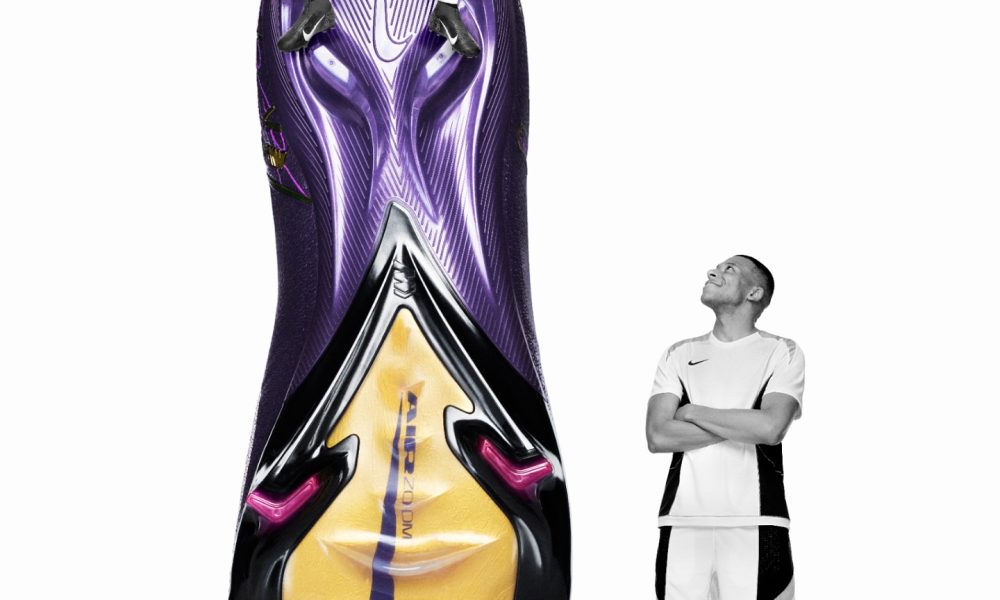 has always dreamed in Mercurial. Now his initials are on the boots.
The new Kyl…
has always dreamed in Mercurial. Now his initials are on the boots.
The new Kyl…
-
 Rec Sports3 weeks ago
Fargo girl, 13, dies after collapsing during school basketball game – Grand Forks Herald
-
 Motorsports3 weeks ago
Redemption Means First Pro Stock World Championship for Dallas Glenn
-
 Motorsports2 weeks ago
Jo Shimoda Undergoes Back Surgery
-
 NIL2 weeks ago
Bowl Projections: ESPN predicts 12-team College Football Playoff bracket, full bowl slate after Week 14
-
 Rec Sports2 weeks ago
How this startup (and a KC sports icon) turned young players into card-carrying legends overnight
-
 Rec Sports2 weeks ago
Robert “Bobby” Lewis Hardin, 56
-
 Motorsports6 days ago
SoundGear Named Entitlement Sponsor of Spears CARS Tour Southwest Opener
-

 NIL3 weeks ago
Indiana’s rapid ascent and its impact across college football
-

 Motorsports3 weeks ago
Pohlman admits ‘there might be some spats’ as he pushes to get Kyle Busch winning again
-
Sports2 weeks ago
Wisconsin volleyball sweeps Minnesota with ease in ranked rivalry win