
NIL
Updating the playbook




This is part 2 of a 2-part series examining the rapidly changing landscape of college sports. Read Part 1, The New Playbook here.
Mackenzie Yoakum’s college volleyball story has many layers.
The former Homewood High School standout took an unconventional journey, beginning at Seton Hall University and later transferring to the University of West Georgia, where she found both stability and meaning in the sport she loves.
She was recruited during a time when athletes were being granted extra years of eligibility due to COVID. Her commitment to Seton Hall nearly fell through, and she later entered the transfer portal.
Her experience is one of dealing with continuous adversity.
“I have had to learn how to stick up for myself and fight my internal battle of thinking I am not good enough,” she said. “It is much more than [volleyball],” she said. “It’s about how you respond when life knocks you down at 17, and what person you’ll come out of it by 21.”
Things didn’t go as planned at Seton Hall, and she decided to enter the transfer portal after her sophomore season. She landed at West Georgia last year and took a redshirt season.
“I love my teammates, I am an hour and a half from home, I travel to some of the best cities in the South, and I’m part of the athletic media team,” she said.
Yoakum’s path reflects the resilience today’s college athletes need in an era of NIL, transfers and uncertain futures.
THE GAME JUST CHANGED
If you played Division I college sports in the last decade — or your kid did — this summer, money’s coming.
Not from boosters. Not from collectives. From the university itself.
On June 14, a federal judge finalized House v. NCAA, a $2.8 billion antitrust settlement that shatters the 119-year model of amateurism. For the first time, schools can pay their athletes directly — not for appearances, not through shell groups — but straight from university revenue.
If you are a fan of college sports, the games are now unlike anything you’ve known.
And it starts now.
WHO GETS PAID – AND HOW
The House settlement triggers two historic changes:
Backpay: Any Division I athlete who competed between 2016 and 2024 can file for compensation. Payouts will depend on sport, tenure and school revenue — with football and men’s basketball expected to receive the largest shares.
Revenue sharing: Starting this fall, schools can pay current athletes up to $20.5 million annually. The cap will rise each year over the 10-year agreement. Most schools are expected to split it like this:
- 75% to football
- 15% to men’s basketball
- 5% to women’s basketball
- 5% to all other sports
This is not NIL 2.0. This is something else entirely.
NIL was always about outside money — sponsors, side hustles, booster funds. The House settlement puts the money on campus. Schools will now pay athletes from the same pool used for coach salaries, facilities and scholarships.
That makes it bigger. And messier.
Only the Power 4 conferences — SEC, Big Ten, ACC, Big 12 — were named in the suit. But all Division I schools must contribute to the backpay fund, even if they’ve never had a single NIL deal. Many smaller schools are already trimming rosters, adjusting scholarships and revisiting budgets. Some athletes will get paid. Others may get cut.
‘TRANSFORMATIVE LEGISLATION’
Birmingham entrepreneur and athlete advocate Jim Cavale has been tracking this shift from the beginning.
“In just the first year — from July 2021 to July 2022 — we tracked $350 million in NIL activity,” Cavale said. “And 90% of that was donor-driven funds funneled through collectives to pay athletes to play.”
Now, he says, things are even murkier.
“The biggest issue athletes face is confusing and misleading contracts,” Cavale said. “These so-called NIL deals are often performance-based agreements in disguise.”
ESPN national analyst Tom Luginbill sees the same storm building.
“This is the most transformative legislation in college sports in the last 15 years — and it dropped with no guardrails,” he said. “(Resource-rich) programs like Alabama, Ohio State, Georgia can do whatever they want. Most others can’t.”
And he’s worried.
“What’s coming is this: players getting paid big money, surrounded by bad actors. Agents want 20–30%. A kid enters the portal, takes bad advice, spends the money — and doesn’t go pro. That’s the reality.”
NEXT: CONGRESS AND COURTS
Just days after the House ruling, a bipartisan group in Congress introduced the SCORE Act — a bill that would:
- Cap revenue sharing and standardize disclosures
- Pre-empt state NIL laws
- Create a federal enforcement commission
- Affirm that college athletes are not employees
That last point might be the whole game.
The NCAA’s biggest fear isn’t payment — it’s employment. If athletes are ruled to be employees, everything changes: benefits, unions, workers’ comp, labor law. The House deal opened the door to paychecks. Congress is now trying to close it before anyone says the E-word.
But Cavale says the conversation still leaves out the people it claims to protect.
“These are being structured as NIL, not employment — and there’s still no agent regulation, no contract standards,” he said. “The athlete’s voice is missing. What’s really needed is collective bargaining.”
Meanwhile, legal uncertainty continues. The House settlement is not the final word — and may not withstand future challenges.
In June, eight current and former female athletes filed a Title IX lawsuit challenging the revenue-sharing model, arguing that its disproportionate distribution to men’s sports violates federal gender equity laws. More suits are likely. Title IX, employment law and due process could all play a role in shaping — or unraveling — the current plan.
NCAA leaders say that’s why congressional intervention is critical. The proposed SCORE Act would codify House into law, protect it from further litigation and preempt conflicting state-level NIL rules. But despite years of lobbying, no federal college sports law has ever passed. For now, the policy landscape remains a moving target.
WELCOME TO NIL GO
On June 17, a new layer of regulation arrived: NIL Go — a clearinghouse overseen by the Collegiate Sports Commission and run by Deloitte.
Athletes must now report any deal over $600. Each gets reviewed for “fair market value.” If Deloitte flags it as inflated, it can be denied or sent to arbitration. There is no legal standard for that value. No consistent appeal process. Just a new filter between athletes and the opportunities they chase.
And that’s happening as university-issued paychecks are set to hit.
The result? Confusion, whiplash — and change.
Athletes like Yoakum have already weathered NIL, the transfer portal and scholarship uncertainty. Now they face something even stranger: a paycheck from the school they play for.
What that means — and how long it lasts — is still in question.
The checks start July 1.
The system? Still up for grabs.
It’s not slowing down any time soon.
“With NIL expanding and the transfer portal becoming a more disposable route, I think that the use of the portal is being warped to fit what these athletes initially want out of their college experience: money and a good time,” Yoakum said.
House vs. NCAA Settlement Explained
WHAT IS IT?
The House v. NCAA antitrust settlement marks the official end of amateurism in college sports. Starting July 1, schools can pay athletes directly for the first time in NCAA history. The new model applies to current and future Division I athletes — not just those already on campus.
KEY TERMS
- $2.8 billion in back payments (2016-2024) to former D-I athletes
- The annual cap grows by at least 4% per year
- 10-year agreement: runs through 2035
- Roster limits: schools must reduce rosters to meet compensation caps
- Revenue sharing begins: schools can share up to $20.5M per year with athletes
WHY IT MATTERS
This formalizes athlete compensation, bringing college sports closer than ever to a pro model — and away from the 119-year “student-athlete” model.


stl.pony said:
Feel like it’s largely being paid for by sales tax the new stadium development will generate.
Not in finance, so someone should absolutely check my math/analysis on this.
State of Kansas has an 8.25% sales tax. For the sales tax to generate 3 billion, the total sales would need to be about 36 billion. According to this article the Royals stadium and Arrowhead stadium collectively generate 55 million a year in tax revenue. (Don’t know what the analysis is to produce that; admit it could be wrong.) If you round it up to 60 million a year, the break even point is 600+ years.
If you take the numbers the Chiefs put out, 1 billion in economic impact for the region and 29 million in tax revenue per year. The break even point from tax revenue would be 1800 years?
I don’t know what is considered the region for the economic impact evaluation and how that changes based on if the stadium is on the Missouri side or the Kansas side of Kansas City. I also remember reading a report about the state fair of Texas that claimed that events like the state fair and sporting events don’t necessarily generate additional economic activity in a region, it just concentrates it into the event rather the wider community. (Admittedly, that could mean more tax revenue for one city in the region over another.) In my layperson’s opinion, a sports stadium deal like this doesn’t seem to be as smart of a decision as offering economic incentives to a Toyota or other non-entertainment business to move to your city.
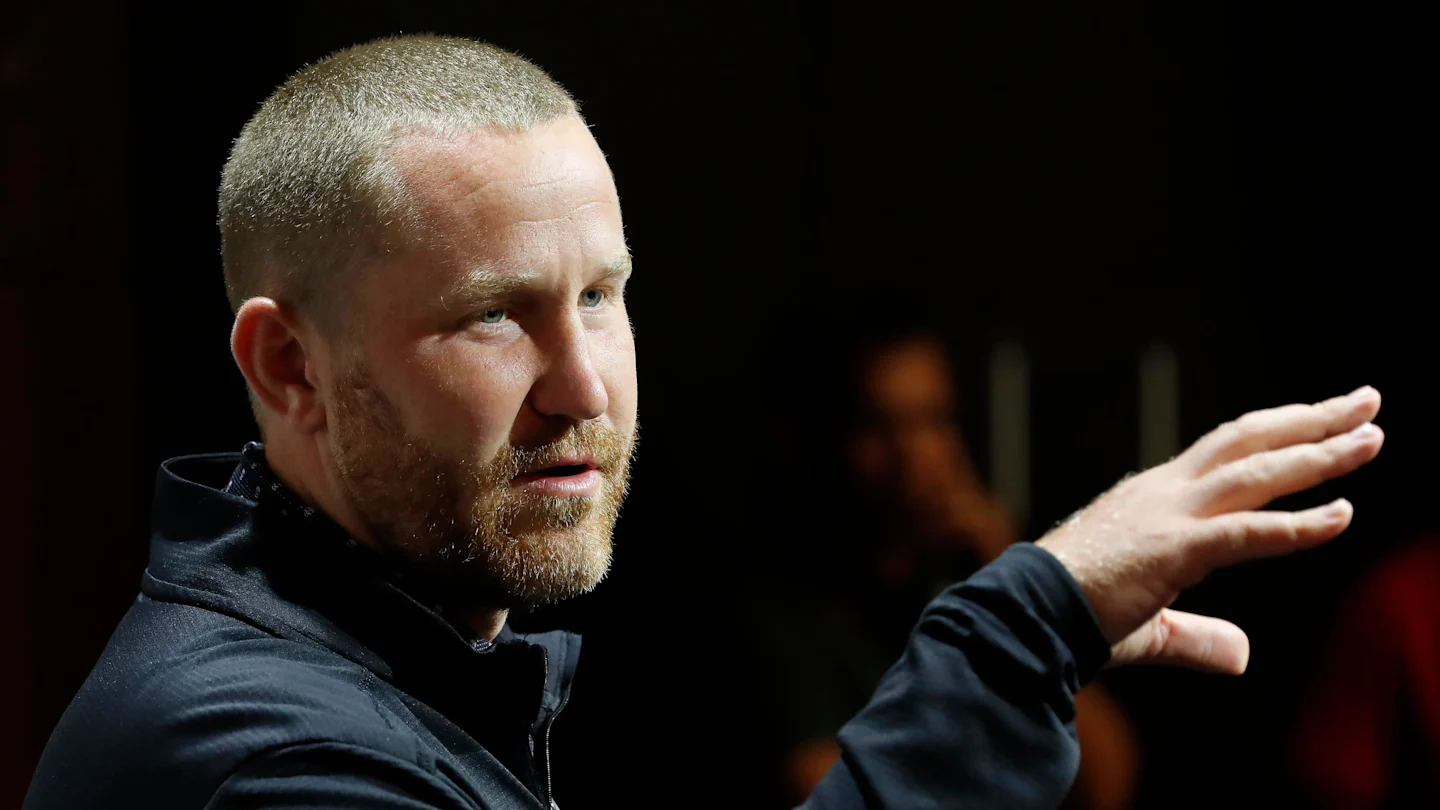
As Michigan’s coaching search drags on, some overlooked possibilities could be floating back to the forefront. After apparently striking out on established head coaches like Kenny Dillingham and Kalen DeBoer, one SEC coordinator is exactly such a possibility for the Wolverines.
In a recent episode of Andy and Ari On3, Andy Staples and Ari Wasserman pointed out that the current coaching carousel has been virtually obsessed with established head coaches. Kentucky hired Oregon offensive coordinator Will Stein as its next coach, but otherwise, schools have passed on coordinators in favor of coaches with head coaching experience.
Both Staples and Wasserman singled out Georgia defensive coordinator Glenn Schumann as a strong coaching possibility who Michigan should consider. “Why hasn’t he been in the conversation,” asked Wasserman. “He’s been intereviewed by schools, they just haven’t hired him,” noted Staples. “Normally, multiple coordinators would have either gotten these jobs or been finalists for these jobs.”
“If I were Michigan, I would hire Schumann over all the others,” said Wasserman. “I feel like if you’re Michigan, you want to get the guy that reshapes how you do things. It’s not that Jedd Fisch wouldn’t or Jeff Brohm wouldn’t….Don’t you want to go get the younger coordinator from Georgia who recruits his ass off and has been around big builds and has he defense playing like this at the right time and try to build you program around that?”

Schumann is only 35 years old, but has spent the last 17 seasons with either the Alabama or Georgia programs. He went to Alabama to be a student assistant coach under Nick Saban, then moved up to graduate assistant and then to Director of Football Operations.
When Kirby Smart left Alabama to take the Georgia head coaching job, Schumann went with him. First, he was the inside linebacker coach. In 2019, he added co-defensive coordinator to his responsibilities and ahead of 2024, he became the sole defensive coordinator
Georgia has historically been a very aggressive big-play-oriented defense, but Schumann has helped remake them on the fly. In 2025, the Bulldogs have held opponents to 15.9 points per game, second in the SEC, despite being near the bottom of the conference standings in sacks (tied for last), tackles for loss (next to last), and turnovers forced (13th).
Schumann was considered in 2023 for the Philadelphia Eagles defensive coordinator role, but hasn’t been significantly linked with another collegiate job. Despite his relative youth, his experience inside two of the foremost college football dynasties of recent vintage makes him an intriguing possibility, should Michigan decide to take a chance.
As much as the state of college athletics these days drives people to distraction, coaches and administrators don’t have many options.
So, you don’t like players being paid? You don’t like players have the ability to transfer to another program anytime they choose? You don’t like lawyers and agents raking in huge amounts of cash? What can unhappy fans do about it?
You can stop supporting your favorite program. You can stop going to games or even watching games. If enough people do that, what they will accomplish is making it more difficult for their favorite programs to win. They will change nothing.
Despite all of it, coaches are expected to win. Athletics directors are expected to provide the resources for them to win. They have no choice but to play the game with the rules – or lack thereof – in place today.
Is it out of control? Of course it is, in football and basketball. Will there be efforts to mitigate the damage that is being done to the sports so many love? There will be. Will they be successful? Maybe, but so far we’re not seeing it. Yet, TV ratings are higher than ever. Stadiums are filled. It’s still fun, which is what it was always meant to be.
For sure, there are some misconceptions out there.
Players, in fact, can and do sign contracts. There is nothing to keep them from signing multi-year contracts, but those are iffy for both sides. Maybe a player turns out not to be worth what he is being paid. Or maybe he turns out to be worth more than he’s being paid.
None of this is simple. It is further complicated by agents who are neither qualified nor interested in much anything beyond making money for themselves.
Maybe, one day, someone will find a solution. Maybe Congress will step in and help, though there has been no indication that is close to happening.
Players and coaches are better-trained, better-informed and more knowledgeable than they have ever been. Players are not the spoiled, entitled young men they are accused of being. They are being pulled in all sorts of directions by family, agents, boosters and others with agendas of their own.
Almost every effort to find common ground has blown up.
The December signing period was meant to give players who had made up their minds opportunities to get the recruiting process over with. Previous to that move, it was rare for players to graduate early and enroll in time for spring practice. Now, it’s what every coach wants and most players want.
NIL was supposed to be about players having opportunities to earn spending money, maybe even get a car. It was never meant to make anybody wealthy. Along came collectives, and that changed.
Penalty-free transfers were supposed to be about players having opportunities to go in search of more playing time. Instead, added to NIL, it become a monster. Without penalty-free transfers, things would be different today.
For now, if people let this destroy their love for the game, they are letting the forces of chaos win. It’s still college students – yes, they are students – playing football. And they pay a fearsome price in blood, sweat and mental challenges to do it.
Once the portal has opened and closed and rosters begin to be set, things will calm down. The focus will return to where it should be, on those who play the game and the season ahead.
***
To all of you who do us the honor of coming here to read and comment and debate, and to Ron Sanders, Nathan King, Christian Clemente, Jason Caldwell and Patrick Bingham, my valued colleagues, I wish joy, peace and love on this day.
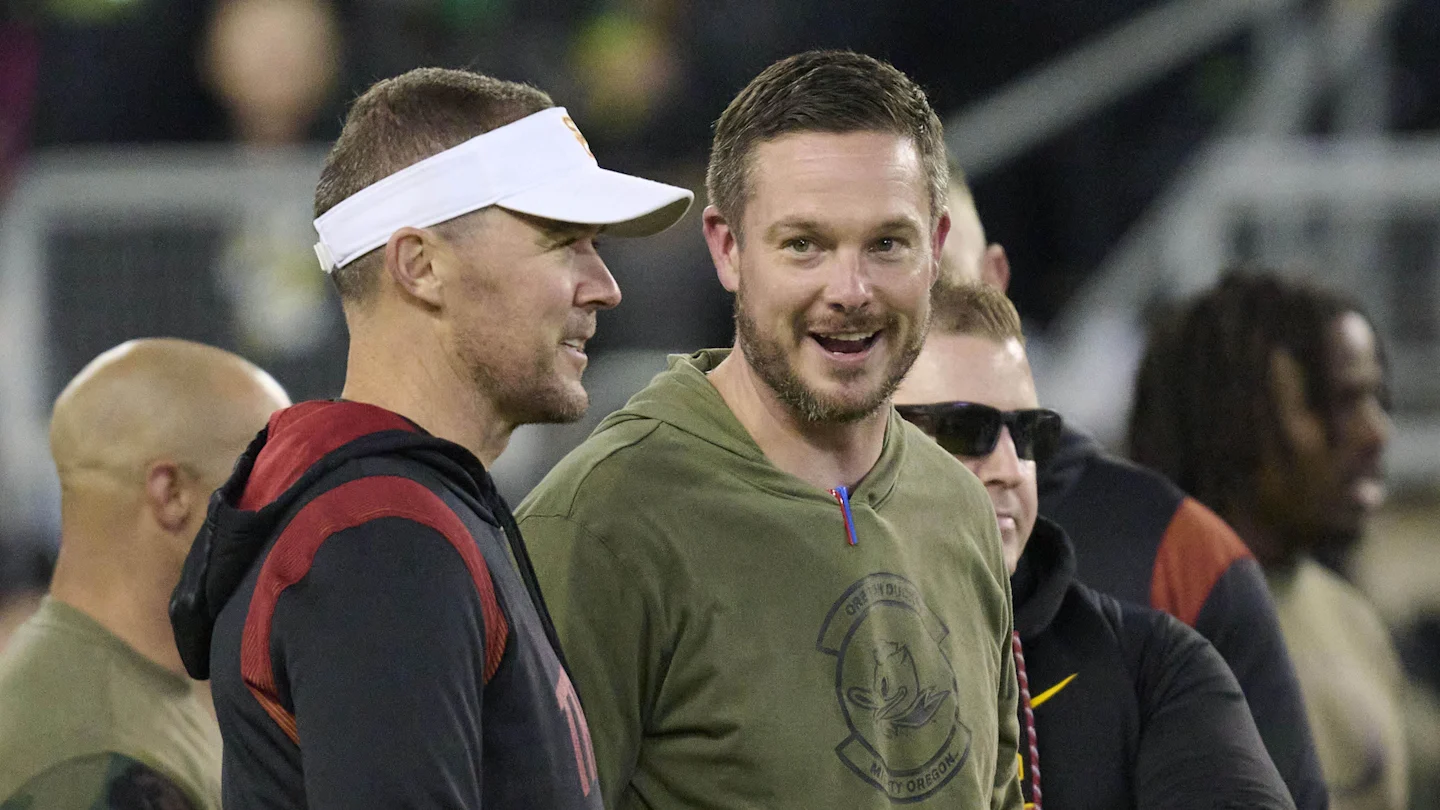
The Oregon Ducks are in the middle of what hopes to be a memorable run to the National Championship after beating the James Madison Dukes 51-34 in the first round of the College Football Playoff at Autzen Stadium on Saturday.
But with the way the transfer portal calendar works, the coaching staff is still having to do its due diligence when it comes to targeting new additions for next year’s roster.

The Ducks have already been connected to some notable portal players, including Arizona State quarterback Sam Leavitt. More names will certainly be added to the list in the coming weeks, but one interesting player could be joining the mix.
Per reports from On3’s Pete Nakos, Oregon is a potential team to watch for USC Trojans defensive lineman Devan Thompkins. He spent the past three years with the Trojans and
This mirrors what Oregon did last offseason with defensive lineman Bear Alexander, who spent the 2023 and ’24 seasons at USC before transferring to Eugene. This proved to be a
MORE: Three Biggest Takeaways From Oregon’s Playoff Win Over James Madison
MORE: Oregon Coach Dan Lanning Is Turning Heads For Ducks’ Playoff Entrance
MORE: National Championship Betting Odds After Oregon’s Win Over James Madison
SIGN UP FOR OUR NEWSLETTER HERE!
Alexander, who played his freshman season with the Georgia Bulldogs before joining USC, has already confirmed that he will be returning to Oregon for the 2026 season.
“I prayed for this moment. Grateful beyond words to be back on the field. Every doubt, every setback, every hard day led me back here. I am truly thankful for my staffs commitment to my growth both personally and professionally. Stepping back onto this field felt like breathing again and I’m forever grateful. Being away from the game last year was tough, I really missed this more than I can explain. Thankful for the strength, support, and grace that brought me back to this point in my life with all my dreams within reach,” wrote Alexander onto social media.
Alexander posted 45 total tackles and one sack during the regular season with Oregon. In his second-career CFP game against James Madison on Saturday, he had four total tackles (two solo).

As for Thompkins, it’s a bit too early to know which team he will end up choosing, as the portal is set to open on Jan. 2 after the College Football Playoff Quarterfinals.
However, if he does end up choosing Oregon, the Ducks would be getting an experienced player on the defensive line while simultaneously snagging him away from a Big Ten rival.
This past season, Thompkins had 31 total tackles (18 solo), three sacks, one forced fumble and two pass breakups. He had 4.5 career sacks in three seaons with the Trojans.
But before looking too far ahead when it comes to the portal, the Ducks will look to keep their championship hopes alive on New Year’s Day at the Orange Bowl in Miami against the Texas Tech Red Raiders.
Recommended Articles
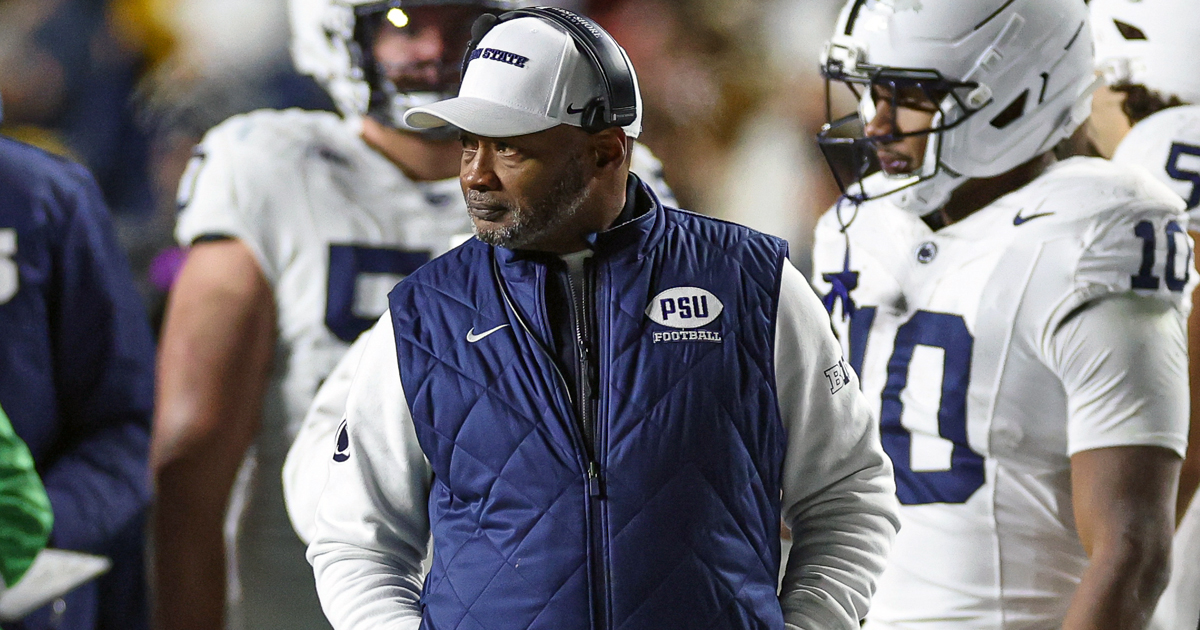
Despite being one of the first major Power Four openings following the Oct. 12 firing of James Franklin six games into the season, Penn State was without a full-time head football coach for 58 days until Iowa State‘s Matt Campbell was formally hired on Dec. 5.
During the two-month-long coaching search, more than 10 candidates — from Alabama‘s Kalen DeBoer to Nebraska‘s Matt Rhule — were reportedly mentioned in connection to the Nittany Lions opening, even if most were never serious options. Several of those candidates — Rhule, Indiana‘s Curt Cignetti and BYU‘s Kalani Sitake — received lucractive contract extensions just for being mentioned in connection to Penn State.
In the meantime, longtime assistant and interim head coach Terry Smith did his best to pick up the pieces of the once-promising season and closed out on a three-game win streak to secure bowl eligibility for Penn State (6-6). That late-season surge helped boost support for Smith to be promoted to full-time head coach, especially among current and former players.
During Penn State’s victory over Rutgers, multiple players held up signs that read, “Hire Terry Smith,” which showed the amount of support the veteran coach had built within the program. Former PSU star Michael Robinson also advocated for Smith to get the top job.
Terry Smith on support from PSU alumni: ‘It means everything’
“It means everything,” Smith said in late November. “Obviously, the support that the lettermen are giving me, especially Michael Robinson doing that, obviously it means we’re doing something right. Just trying to create a culture for our team to play hard, play tough, and for our fans to get behind us and support us and stay in our corner.”
Smith, a four-year letter winner between 1987-91 under legendary head coach Joe Paterno, was ultimately retained and will return as the associate head coach under Campbell. But the lengthy search left many wondering why the 56-year-old alum and longtime associate head coach wasn’t given more serious consideration.
Turns out Smith was a “legitimate candidate,” according to a detailed report from ESPN’s Adam Rittenberg, Max Olson and Eli Lederman released on Christmas Eve. The ESPN report revealed Smith was among five candidates that actually interviewed with PSU athletic director Pat Kraft, though he “ultimately lacked the FBS head coaching experience Penn State desired.”
Of course, prior to his interim gig this season, Smith has never led his own collegiate football program. The former collegiate receiver nicknamed “Superfly” has served as the Nittany Lions’ cornerbacks coach since 2014, adding the title of assistant head coach two years later in 2016 before becoming the associate head coach in 2021. Given that wealth of experience, Smith was a priority for Campbell and Penn State, which reportedly made him college football’s highest-paid non-coordinator, according to NFL insider Jordan Schultz.

Tom Izzo has been vocal about disliking the direction in which college athletics are headed, and it has a lot to do with the transfer portal and the crazy NIL deals that players are signing.
Some college athletes are making more than professionals and that irks Izzo. He also thinks that it’s doing these athletes a disservice. He’s not against NIL, if it’s used correctly.
Izzo has to love what Kaleb Glenn is doing with his NIL money, however.
Huge shout out to Kaleb Glenn, a @MSU_Basketball player and native Louisvillian, who donated $5,000 of his NIL proceeds to our Hardship to Hope effort.
Thank you, Kaleb, for giving back to our community and for setting such a great example! ♥️#UnitedIsTheWay pic.twitter.com/rj6hgnmkFZ
— Metro United Way (@MetroUnitedWay) December 23, 2025
Glenn donated $5,000 to his local United Way for their Hardship to Hope effort over the holiday break, and that’s something that no one told him to do, but he wanted to give back. Glenn is from Louisville, so he’s giving back to his hometown’s United Way. That’s exactly why NIL can be a good thing because these players want to be able to give back.
The FAU transfer hasn’t even played a game this season, but he’s now the second Spartan that has done charity work during the holidays (at least publicly).
Earlier this month, Trey Fort provided food at a local food bank for people in need. Izzo has built a program of players who are willing to give some of their hard-earned NIL money back. That’s something that not a lot of programs have.
Tom Izzo has assembled a roster of OKGs
Not often does it feel like all the players on a team are great for the program, but you can just tell that Michigan State’s roster is full of “OKGs”, as Izzo calls them.
Jeremy Fears Jr. is one of the best leaders that Izzo has ever coached, Jaxon Kohler has turned into a great leader, too, Carson Cooper and Coen Carr have also grown into that role, the freshmen seem to be learning quickly, and the transfers are doing charity work left and right.
The entire team feels like a perfect Izzo mold.
Rarely has Izzo had guys who didn’t buy into his culture or sense of family, but this year’s team seems to be exactly what he hoped for — much like last year’s squad.
We’ll see if this pays off with a run at a national title.

Chiefs Stadium Deal Is Insane

Michigan urged to hire SEC coordinator over head coaches to replace Sherrone Moore

Young residents support Cheer Club | News, Sports, Jobs

Hendrick Motorsports Icon Delivers Powerful Christmas Reminder As NASCAR Still Reels From Greg Biffle Loss

Sarasota Sun Devils 14U Football Team Flourishes on National Stage

Palm Beach 7A-5A girls volleyball first team, second team, honorable mention and coach of the year

Kick Off the Cold: Winter Soccer Events | Communities

A youth art contest for the FIFA World Cup 2026™

Volleyball Player of the Year: Millbrook’s Aaliyah Green | Winchester Star

City of Fillmore Youth Basketball Underway

Volleyball Coach of the Year: James Wood’s Adrienne Patrick | Winchester Star

KohR Motorsports to run Greg Biffle tribute livery in IMSA Michelin Pilot Challenge at Daytona

IHRA is Brining Memphis International Raceway Back From the Dead! – Drag Bike News

TOYOTA GAZOO Racing to Release New GR Brand Video “WILD ROAD” on January 1 | PRESS RELEASE

No easy fix for what ails college football, but it’s still fun

Fargo girl, 13, dies after collapsing during school basketball game – Grand Forks Herald

SoundGear Named Entitlement Sponsor of Spears CARS Tour Southwest Opener

Redemption Means First Pro Stock World Championship for Dallas Glenn

Jo Shimoda Undergoes Back Surgery

Black Bear Revises Recording Policies After Rulebook Language Surfaces via Lever

Bowl Projections: ESPN predicts 12-team College Football Playoff bracket, full bowl slate after Week 14

Robert “Bobby” Lewis Hardin, 56

Donny Schatz finds new home for 2026, inks full-time deal with CJB Motorsports – InForum

How this startup (and a KC sports icon) turned young players into card-carrying legends overnight

How Donald Trump became FIFA’s ‘soccer president’ long before World Cup draw

Men’s and Women’s Track and Field Release 2026 Indoor Schedule with Opener Slated for December 6 at Home

David Blitzer, Harris Blitzer Sports & Entertainment

Indiana’s rapid ascent and its impact across college football
Wisconsin volleyball sweeps Minnesota with ease in ranked rivalry win

Michael Jordan’s fight against NASCAR heads to court, could shake up motorsports






-
 Motorsports2 weeks ago
SoundGear Named Entitlement Sponsor of Spears CARS Tour Southwest Opener
-
 Motorsports2 weeks ago
Donny Schatz finds new home for 2026, inks full-time deal with CJB Motorsports – InForum
-
 Rec Sports3 weeks ago
David Blitzer, Harris Blitzer Sports & Entertainment
-
 Motorsports3 weeks ago
JR Motorsports Confirms Death Of NASCAR Veteran Michael Annett At Age 39
-
Sports3 weeks ago
Elliot and Thuotte Highlight Men’s Indoor Track and Field Season Opener
-
Sports3 weeks ago
West Fargo volleyball coach Kelsey Titus resigns after four seasons – InForum
-
 Motorsports2 weeks ago
Rick Ware Racing switching to Chevrolet for 2026
-

 NIL2 weeks ago
DeSantis Talks College Football, Calls for Reforms to NIL and Transfer Portal · The Floridian
-
 NIL3 weeks ago
Colleges ponying up in support of football coaches, programs
-
 Sports2 weeks ago
#11 Volleyball Practices, Then Meets Media Prior to #2 Kentucky Match