
Rec Sports
49ers plan rehab of Santa Clara youth football field ahead of major sports events


A FOOTBALL FIELD in Santa Clara could be on tap to receive a long overdue upgrade.
The 49ers Foundation and Bay Area Host Committee may partner with Santa Clara Unified School District to rehabilitate Townsend Field, which is connected to Buchser Middle School and home to the Santa Clara Lions Youth Football and Cheer club. The project is still in the design phase and cost details need to be worked out before it comes back to the district board of trustees in the fall for approval.
School district employees presented some of the project’s early plans at a June 12 board meeting and most of the SCUSD trustees were excited about the project, though they raised multiple questions about the fine print.
“I share the concern with just wanting to know what costs are going to be involved, getting a little bit more detail on that, because there might be ongoing costs and we know that we have a challenging budget picture so we just want to get a better handle on that, but I think it’s very exciting,” Trustee Michele Ryan said at the meeting.
This field rehabilitation is part of the 49ers Foundation’s philanthropic work supporting the greater Santa Clara community, but it’s also coming at a pivotal time, as the city prepares to host two of the world’s largest sports events — the FIFA World Cup and Super Bowl 60.
Zaileen Janmohamed, the Bay Area Host Committee’s CEO and president, said this is one of nine projects in the committee’s Sports for All initiative, as they aim to engage athletic groups throughout the region ahead of the sports events.
“It’s (one) of many legacy investments we’re making to ensure that the Super Bowl and FIFA World Cup aren’t just events that pass through the Bay Area, but moments that leave a lasting impact in the communities that need it most,” Janmohamed told San José Spotlight. “This initiative is about equity, access and building opportunity.”
A spokesperson from the 49ers Foundation said they’re proud of their ongoing partnership with the school district
“Because of the relationship with the Santa Clara Lions, we thought this was a great opportunity to give them a safe and sustainable playing space for years to come,” 49ers Foundation Executive Director Justin Prettyman said during the board meeting.
Linda Connelly, Santa Clara Lions president, said she’s excited about the field rehabilitation. When the team moved in about 25 years ago, she and her husband and former president Craig Connelly personally renovated the two snack shacks and painted the bleachers.
She hopes the renovations include updating the field’s bathrooms and paving the dirt track with rubber, as the dust kicks up into the snack shack. Connelly also said she wants the field to remain natural grass, citing some of the health dangers of artificial turf.
“My concern is for the health of our children, that’s why I don’t want turf,” Connelly told San José Spotlight. “I’d rather have them recrowned or replanted with grass. The field’s all dirt, if they really want to improve this place, put a rubber track around the place. That would really improve the facilities.”
The dangers of artificial turf have been a growing debate, as Santa Clara County almost banned it in January 2025. Multiple cities have removed artificial turf fields from planned park renovations, including Sunnyvale and Palo Alto.
Trustee Andrew Ratermann wants more information on the projects, such as 49ers expectations or whether the timeline is attainable given the district’s need to run projects through state regulators. Despite his concerns, Ratermann said he’s been hearing good updates about the project’s development, and is looking forward to learning more when the full proposal comes back to the board.
“I do know that sometimes, when you get into asking questions about these details, it comes across as negative, and I don’t really want that to happen,” Ratermann told San José Spotlight. “Here is … one of our corporate entities that is reaching out to do something very positive, and I want to keep it in that positive vein.”
Contact B. Sakura Cannestra at sakura@sanjosespotlight.com or @SakuCannestra on X.
This story originally appeared in San José Spotlight.

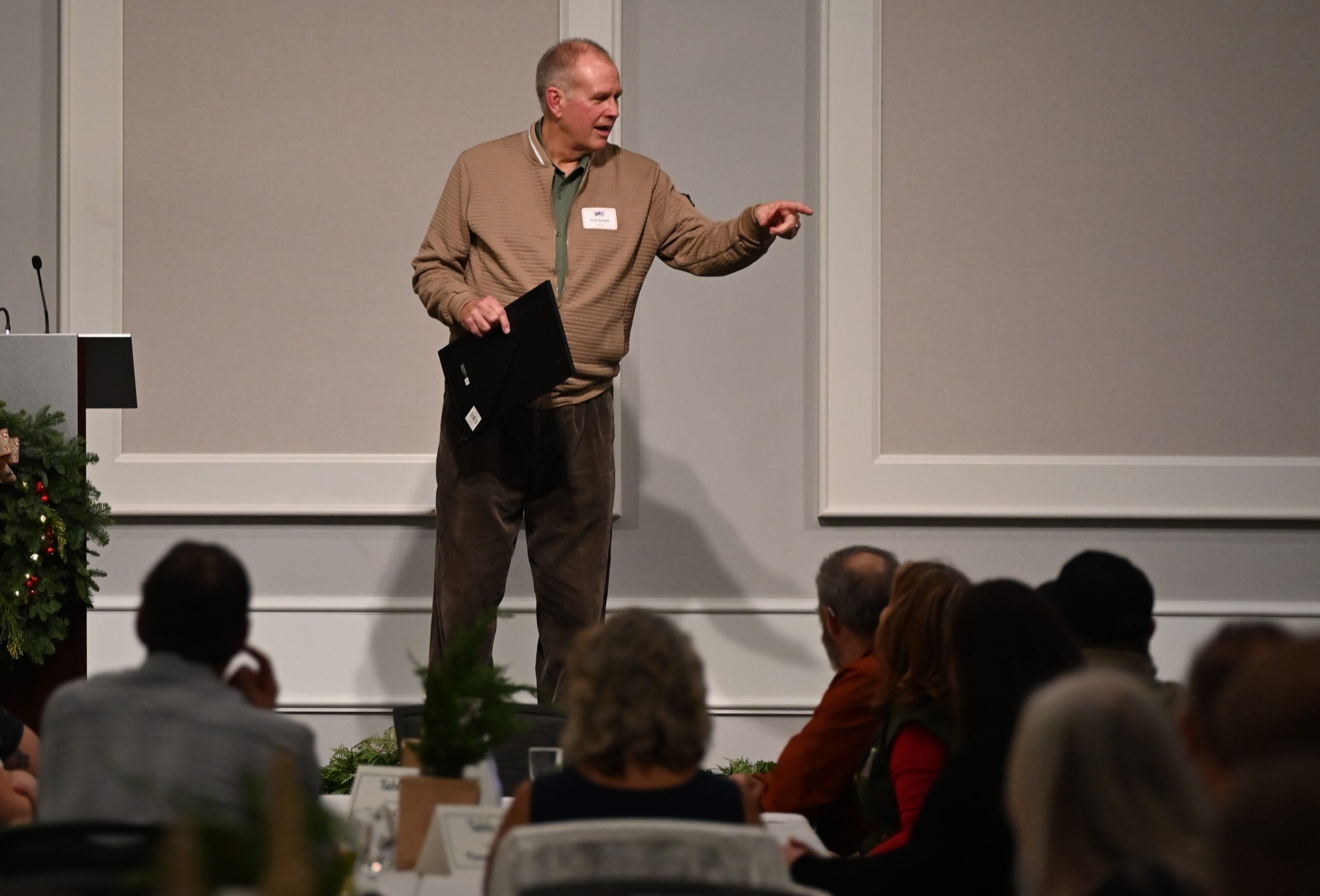
CORVALLIS — Rick Bennett’s dedication to Philomath youth earned him recognition as the Philomath Youth Activities Club’s Promise Builder of the Year at the organization’s annual fundraising dinner Friday night at the CH2M Hill Alumni Center on the Oregon State University campus.
PYAC Executive Director Eddie Van Vlack said the award honors “a person or business that best exemplifies an unwavering desire to make a positive difference in the lives of the youth in our community.”

The recognition caught Bennett by surprise — he’s not one for the spotlight.
“My wife snuck pictures to Eddie,” Bennett said, referring to photos from past years that were shown as part of a slide presentation. “It’s fun to see some of the pictures. I had hair back then.”
For Bennett, the commitment started when his twin sons, Koeby and Spencer, joined PYAC programs in second grade.
“I coached them every year in basketball starting at a really young age and have always tried to be a support financially of PYAC,” Bennett said.
His approach to service stems from his upbringing.

“I was raised in a family with not a lot of money but we always learned to help others,” he said. “I learned that from my parents at a young age.”
Bennett’s daily priorities reflect that philosophy.
“When I wake up in the morning, my first thoughts are how much time to I get to spend with my wife, how much time do I get to spend with my boys … and how much time do I get to spend with a youth to make a difference.”
That commitment shows up in practical ways. Bennett has spent months volunteering with basketball players, hosting early morning workouts at his house.
“I had five girls show up at 7:30 in the morning and work out at my house for two hours and then at 9:30, I had five guys show up and work out for two hours,” he said.
With 44 years of experience in the fitness business, Bennett said he wants to help “youth become more fit and change their lives in a positive way — not just as an athlete but maybe long-term health as they get older.”
He currently coaches middle school basketball with assistance from his son, Spencer, and Preston Kramer.

Bennett credits the community for making youth development possible.
“It’s a funny old saying but it takes a village and Philomath is an amazing village with amazing people that want to help out,” he said. “And it’s emotional for me to see all the help.”
He sees PYAC as foundational to the community’s success.
“There’s so much help in this community and I just love that — that’s part of the reason why Philomath is so successful with the school programs and kids graduating,” Bennett said. “A lot of it starts with kids that go at a young age to PYAC and see the value of making friendships and connecting.”
Van Vlack said the PYAC board selects the Promise Builder award recipient from an evolving list of candidates.
“It’s not scientific by any stretch but there are certain things and certain people that just have a tendency to rise to the top,” he said. “One of the policies we have in general is we try not to recognize people that are still involved, whether that be as a board member or active coach and kind of wait until they’ve done their time, if you will.”

Van Vlack emphasized that award recipients represent the broader spirit of PYAC volunteers.
“There’s not a person in this room that does what they do for our organization because they want to get an award or want to be recognized,” he said. “They all have the right thing in mind and a big heart. I think it’s fantastic.”
The honor obviously had a personal impact on Bennett. The emotion of the moment played out at the table where he sat with his wife, Danielle, and during the few minutes he spent on stage, his voice cracked a few times.
“He has his heart in the right place, he really does,” Van Vlack said. “He wants to do the right thing, he wants to help kids, he loves basketball. … That emotion you saw in his face wasn’t fake — he was super excited, super honored.”
Bennett’s contributions extend beyond coaching. Van Vlack noted his longtime support of the PYAC Carnival, one of the organization’s most successful fundraisers.
“Every year, he dedicates himself and his family to the PYAC Carnival fundraiser, filling the high school football field with S&K Inflatables, games and rides just to enjoy the kids and families across our community,” Van Vlack said. “While this event has been crucial for helping our organization raise much-needed resources for our programs for the past 18 years, Rick would be the first one to tell you we measure the success of the event not by the dollars but by the smiles on kids’ faces.”

The evening also featured Gerry Alston, pastor at The Refuge in Philomath, as the keynote speaker. Alston shared his personal story of overcoming childhood struggles and discussed how PYAC has benefited his family and the broader community.
“His story is not a common one to us but the organization made such a difference to his whole family — not just to him, but his whole family,” Van Vlack said.
Jeff Minter, PYAC board vice president, served as master of ceremonies, and Mike King gave the invocation.

Authors: Nicholas Zoroya1, Joshua Greer2, Carla Blakey3
Corresponding Author:
Nicholas Zoroya
20932 Hasenclever Dr., South Lyon, MI 48178
(248)420-9200, [email protected]
1 Madonna University
2 Cumberland University
3 University of Alabama
ABSTRACT
Purpose:
This study examines the ongoing decline of lacrosse officials in the Midwest by exploring how stakeholder behavior, organizational support, and personal motivations affect officials’ decisions to continue or leave the profession. The goal is to identify key factors contributing to attrition and provide practical recommendations for improving retention.
Methods:
A mixed-methods survey design was used to collect data from 55 lacrosse officials who had officiated in the Midwest within the past five years. Participants responded to a series of closed-ended questions assessing demographics, officiating experience, and interactions with coaches, fans, and players. Open-ended responses were also collected to contextualize and support quantitative results. Data were analyzed using descriptive statistics, and illustrative quotes were used to reinforce common trends.
Results:
Most participants were White males over the age of 40, with more than a decade of officiating experience. While abuse from players was reported less frequently, officials indicated that verbal abuse from coaches and fans occurred often and significantly impacted their officiating experience. Additionally, officials expressed mixed feelings about the support they receive from associations and assignors. Despite these challenges, most participants reported a strong personal connection to the game and cited their passion for lacrosse and desire to give back as primary reasons for continuing. A subset of respondents, however, acknowledged that negative experiences have made them consider leaving the profession.
Conclusions:
Findings highlight the important role personal passion plays in keeping officials engaged despite a lack of institutional support and ongoing negative stakeholder interactions. Without meaningful changes to reduce abuse and increase organizational support, the officiating pipeline will remain vulnerable. The study also raises concerns about the lack of demographic diversity in lacrosse officiating, warranting further exploration.
Applications in Sport:
The results have practical implications for lacrosse governing bodies, assignors, and administrators. Improving sideline behavior, increasing compensation, offering mentorship, and expanding recruitment efforts to underrepresented groups could significantly improve retention and build a more sustainable and inclusive officiating workforce.
Key Words: officiating, lacrosse, referee retention, stakeholder behavior, sport management
INTRODUCTION
The shortage of sports officials, particularly in youth and high school sports, is a pressing issue that threatens organized athletics’ operational integrity and sustainability. The National Federation of High School Associations (NFHS) found that around 50,000 individuals have stopped serving as high school officials since the onset of the pandemic in 2020 (Niehoff, 2022). This decline can be attributed to several interrelated factors, including occupational stress, abuse from spectators, insufficient support systems, and inadequate training opportunities for officials.
Literature Review
The shortage of sports officials is increasingly attributed to the rising incidence of verbal and physical abuse directed at referees by players and spectators. Research indicates that abusive behavior, particularly at the grassroots level, significantly contributes to high turnover rates, with negative experiences reducing officials’ willingness to continue in the profession (Dawson et al., 2021; Rayner et al., 2016). Dawson et al. (2021) highlight the alarming decline in the number of qualified officials, stressing that this culture of abuse not only affects officials but also threatens the integrity of competitive sports. Additionally, issues such as harassment and discrimination, especially against female officials, further intensify attrition, creating a hostile environment that undermines the overall health of sports communities (Marshall et al., 2022; Webb et al., 2020).
In addition, the lack of adequate support, resources, and effective training opportunities exacerbates attrition, as many organizations fail to provide the necessary infrastructure to sustain officials’ careers (Webb et al., 2020; Tingle et al., 2014). Insufficient professional development and an aging workforce further compound the issue, necessitating innovative strategies to attract and retain younger officials (Ryan et al., 2014; Barnhill et al., 2018; Pierce et al., 2021). This literature emphasizes the multifaceted challenges in officiating and highlights the critical need for systemic changes to address the issues of abuse, support, and recruitment.
The Decline of Lacrosse Officials
The decline of lacrosse officials in the Midwest has raised concerns regarding the sustainability of officiating in growing sports leagues. In recent years, the shortage of qualified officials has emerged as a critical issue. Lacrosse, a sport that has enjoyed significant regional growth in the Midwest, now faces challenges similar to those observed in other sports arenas (Ridinger et al., 2017). The decline in the number of lacrosse officials not only impedes game integrity but also affects the overall development of the sport. Existing literature has shown that multifaceted factors, including motivational changes, psychosocial stressors, and insufficient support structures, play essential roles in the retention and attrition of referees (Livingston & Forbes, 2016; Ridinger, 2015).
Negative Stakeholder Behavior
The decline in the number of lacrosse officials in the Midwest can be tied to negative stakeholder behavior, particularly from parents, coaches, and fans. This trend is troubling, as officials play a critical role in maintaining the integrity and safety of the game. The psychological impact of abuse from various stakeholders on referees cannot be overstated. Studies indicate that officials often experience significant stress and mental health challenges due to verbal abuse and aggression directed at them during games, which can lead to a decline in their overall job satisfaction and motivation (Breslin et al., 2022; Giel & Breuer, 2021).
It is important to note that the abuse received by officials, from players, coaches, and spectators, is frequently normalized within many sports environments. Research in sports such as rugby and football demonstrates that officials often report feeling overwhelmed by hostility from these groups (Webb et al., 2019; Webb et al., 2018). This hostility not only affects the officiating experience but can also deter potential new referees from entering the field. Furthermore, the retention rates of officials are directly influenced by the social interactions they have with these stakeholder groups, and the lack of positive reinforcement or sportsmanship has been shown to exacerbate dropout intentions (Giel & Breuer, 2021).
The influence of these stressors is particularly notable in the context of youth sports, where the pressure from parents and coaches can create a toxic atmosphere for officials trying to enforce rules and manage games. Coaches, in their roles, often have a substantial impact on how players perceive referees, which in turn affects the emotional atmosphere during matches (Webb, 2020). If coaches model negative behaviors, such as disrespect towards referees, it can lead to a cycle of abuse where players mimic these actions, further isolating officials and intensifying their negative experiences (Webb et al., 2018).
Interventions aimed at increasing awareness and promoting mental health support among referees are essential in addressing this decline. Recommendations have been made for mental health training for stakeholders to improve the overall environment surrounding officiating and reduce instances of abuse (Breslin et al., 2022). Additionally, stakeholder education on the consequences of negative behaviors towards officials can help reshape perspectives and foster a more respectful sporting culture. Such measures would not only help in maintaining a robust pool of lacrosse officials but also promote a healthier, more inclusive environment for all participants in the sport.
Abuse
Abuse, both verbal and physical, is a significant contributor to officiating attrition, with numerous studies highlighting its impact on officials’ mental health and intentions to quit. Brick et al. (2022) found that nearly all Gaelic Games officials surveyed (94.29%) had encountered verbal abuse, and almost one in four (23.06%) had experienced physical abuse during their careers. Verbal abuse was shown to be frequent and directly linked to mental health issues and quitting intentions, with distress acting as a mediating factor. Similarly, Webb et al. (2018) documented the prevalence of both verbal and physical abuse in rugby league, finding that emotional abuse (i.e., intimidation, swearing, and threats) and physical aggression (i.e., pushing and hitting) significantly reduced job satisfaction. These hostile environments, particularly when abuse is persistent and unaddressed, contribute to officials leaving their roles.
The impact of abuse on officiating extends across various sports and levels. For instance, Ridinger et al. (2017) revealed that 42% of 2,485 high school referees identified abuse as the most significant challenge in their roles, and 10% cited abuse as a factor in their intention to quit. This aligns with findings from Kavanagh et al. (2021), who reported that abuse in youth soccer led to emotional exhaustion and burnout among officials. Tingle et al. (2014) also noted that the normalization of verbal abuse within sports culture exacerbates the negative effects on officials, especially for newcomers lacking support systems. Collectively, these studies underscore the need for sports organizations to implement proactive abuse prevention measures and institutional support to mitigate attrition and improve the officiating experience.
Unsupportive Interactions
Unsupportive social dynamics play a critical role in officials’ decisions to leave their positions. Warner et al. (2013) examined the effects of problematic peer interactions and inadequate mentoring in sports such as lacrosse, revealing how these relational shortcomings contribute to officiating attrition. When officials lack meaningful support from mentors or peers and feel disconnected from a broader officiating community, their engagement and satisfaction decline. The Referee Retention Scale (Ridinger et al., 2017) identifies several social factors that contribute to retention, including several factors that address a sense of community and mentoring support. These elements reflect the importance of fostering interpersonal relationships that reinforce a positive officiating experience (Table 1).
Table 1
Key Factors Contributing to Referee Retention
| Factor Name | Description |
| Administrator Consideration | Level of perceived fairness and consideration from assigners and administrators |
| Mentoring | Support and encouragement from a mentor or a friend to become involved with officiating |
| Sense of Community | Perceived sense of belonging to a supportive community of officials |
| Lack of Stress | Infrequent encounters with stressful situations related to officiating |
Note. Adapted from Ridinger, L. L., Kim, K. R., Warner, S., & Tingle, J. K. (2017). Development of the Referee Retention Scale. Journal of Sport Management, 31(5), 514–527.
In addition to interpersonal issues, organizational shortcomings also undermine retention efforts. Warner et al. (2013) highlighted how insufficient policy frameworks and administrative neglect exacerbate attrition, particularly when officiating structures fail to proactively address the evolving needs of officials. The Referee Retention Scale provides a methodological foundation for identifying these structural deficiencies. Notably, factors such as “Administrator Consideration” and “Lack of Stress” underscore the role of fair management practices and manageable work environments in referee satisfaction. Furthermore, Livingston and Forbes (2016) and Ridinger (2015) emphasize the necessity of aligning recruitment and retention strategies with officials’ motivations and expectations. Collectively, these findings stress that without intentional and sustained institutional support, officiating organizations risk ongoing loss of personnel due to preventable burnout and disengagement.
Referee Retention
Research on referee retention has provided useful insights into the systemic and individual challenges impacting officiating roles. Ridinger et al. (2017) developed the Referee Retention Scale to assess factors such as job satisfaction, perceived organizational support, and the prevalence of abuse, all of which are directly linked to declining retention rates. Their work underscores that referee attrition is often precipitated by issues that extend beyond the administrative domain and delve into psychosocial and environmental stressors. Similarly, Livingston and Forbes (2016) investigated the evolving motivations of amateur sport officials and confirmed that changes in personal goals and external support diminish retention levels over time. Their study, although centered on Canadian officials, provides a framework that is applicable to the Midwest context, where similar socio-organizational dynamics are at play.
Ridinger (2015) compared the experiences of baseball umpires and lacrosse officials, revealing common constraints such as economic shortages and inadequate mentorship. This comparative analysis highlights that lacrosse officials, in particular, face challenges that are exacerbated by limited training opportunities and the absence of community-based support systems. In other research pertinent to community sports, Baxter et al. (2021) examined the experiences of female volunteer officials, outlining barriers and motivators that resonate with broader issues affecting retention. Although focused on gender-related dimensions of officiating, their findings reinforce the notion that organizational policies and social support are crucial to sustaining a committed officiating workforce.
The literature clearly indicates that the decline of lacrosse officials in the Midwest is a complex phenomenon influenced by issues of retention, support deficiency, and exposure to abuse. By synthesizing insights from multiple studies, this review stresses the importance of a comprehensive strategy that includes recruitment, retention, and preventive measures to improve the working environment for lacrosse officials. Future research and policy changes informed by these findings will be crucial in reversing the downward trend and ensuring the long-term sustainability of lacrosse officiating.
Conclusion
Despite a growing body of literature on officiating attrition, few studies have examined the distinct cultural and geographic dynamics affecting lacrosse officials in emerging regions like the Midwest. The reviewed research highlights a multifaceted crisis, with lacrosse serving as a representative case of the broader challenges afflicting youth and high school sports. Across regional and national contexts, verbal abuse and safety concerns have emerged as key contributors to attrition. In the Midwest, the shortage of lacrosse officials is impeding sport development and compromising game quality.
National survey findings from NASO and NFHS reinforce the severity of the crisis, revealing that a majority of new officials depart within three years due to burnout, safety concerns, and undervaluation. While recent initiatives, such as the NFHS National Officials Consortium Summit and the #BecomeAnOfficial campaign, represent positive steps forward, the literature suggests that these efforts must be part of a broader, coordinated strategy. Interventions focused on stakeholder education, mental health support, structured mentorship, and the public acknowledgment of officials’ contributions are necessary to reverse current trends. Sustaining officiating in lacrosse will require systemic change, cultural realignment, and a renewed commitment to valuing those who enforce the rules and protect the integrity of the game.
METHODS
Purpose
The purpose of this study is to examine the underlying causes of the declining number of lacrosse officials in the Midwest. Specifically, it seeks to determine how stakeholder interactions, support structures, and personal motivations influence officials’ decisions to remain active in the field. The study is designed to inform retention strategies and stakeholder education efforts.
Participants
Participants in this study were 55 lacrosse officials who officiated games across the Midwest region of the United States. Eligibility criteria required participants to have officiated lacrosse at any level (youth, high school, college, or club) within the past five years in a Midwest state. Participants were predominantly male and white, and ranged in age from 25 to 72 years old, with officiating experience spanning from less than 1 year to over 30 years. Participation was voluntary, and no compensation was provided.
Procedures
Data was collected via an anonymous online survey distributed through Qualtrics. Recruitment was conducted through email invitations sent to lacrosse officiating associations, assignors, and personal networks within the officiating community, as well as through social media posts targeting officials in the Midwest. The survey remained open for three weeks, with one reminder sent midway through the collection period. Prior to data collection, the study received Institutional Review Board (IRB) approval from Madonna University. Participants provided informed consent at the beginning of the survey.
The survey consisted of both closed and open-ended questions. Closed-ended items collected demographic information (age, gender, race/ethnicity, years of officiating experience) and information on perceived challenges in officiating (e.g., pay, scheduling, respect from stakeholders). Open-ended questions invited participants to elaborate on their experiences, including reasons for continuing or discontinuing officiating and suggestions for improving the officiating experience.
Data Analysis
Quantitative data were analyzed using descriptive statistics (frequencies, percentages, means) to summarize participant demographics and the prevalence of key issues identified by officials. Open-ended responses were reviewed to identify illustrative quotes that reinforced or provided examples of the quantitative findings. Qualitative responses were not formally coded or thematically analyzed but were used to add narrative context to the statistical results.
RESULTS
A total of 55 lacrosse officials from the Midwest region completed the survey. Participants ranged in age from 23 to 67 years (M = 45.8, SD = 11.2), with the majority identifying as male (85%) and White/Caucasian (94%). Officials reported working across multiple states, most commonly Indiana, Illinois, Michigan, Ohio, and Wisconsin. On average, participants had 14.3 years of officiating experience, with nearly all officiating at the youth and high school levels (92%). Additionally, 64% reported officiating collegiate lacrosse, and 9% officiated at the professional level.
Officials were asked about their experiences with negative interactions from various stakeholders. Verbal abuse from coaches was reported as occurring “sometimes” by 58% of respondents and “often” by 16%. Similar patterns emerged regarding fans and parents, with 49% reporting “sometimes” and 22% reporting “often” experiencing verbal abuse. Abuse from players was less frequent, with 51% of officials reporting “rarely” and 38% reporting “sometimes.” Despite these negative interactions, officials rarely reported fearing for their personal safety, with 74% indicating “never” and 18% “rarely” feeling unsafe while officiating.
Perceptions of support from officiating associations were mixed. While 42% of respondents felt “often” supported by their associations, 33% reported “sometimes” feeling supported, and 25% “rarely.” When asked how often they considered quitting due to negative experiences, 56% reported “never” considering leaving officiating, 24% “rarely,” 11% “sometimes,” and 9% “often.”
Qualitative responses provided further insight into officials’ motivations and concerns. Officials frequently cited a love for the game, a desire to give back to the sport, camaraderie with fellow officials, and ensuring opportunities for young athletes as primary reasons for continuing to officiate. One participant explained, “I won’t stop until my body no longer allows me to officiate,” while another noted, “If associations or assignors supported officials more, I’d feel better about continuing.” Conversely, low pay, spectator abuse, insufficient support from associations, and the physical demands of officiating as they age were commonly cited factors contributing to potential attrition.
Discussion
The findings of this study provide a nuanced look into the factors influencing lacrosse officials’ retention in the Midwest. Despite frequent reports of verbal abuse from coaches, players, and fans, many respondents reported continuing to officiate due to intrinsic motivations such as a love of the sport and a desire to give back. This aligns with prior research emphasizing passion and sport commitment as key drivers of officiating persistence. Finding joy in officiating can lead to better psychological outcomes, fostering an environment where officials are more likely to continue their engagement with the sport (Carson et al., 2020).
However, respondents also highlighted significant deterrents to retention, including low compensation, lack of recognition, poor treatment from stakeholders, and limited support from assigning organizations. These challenges are consistent with broader officiating literature identifying unsupportive environments and abuse as predictors of attrition. Research supports the notion that the challenges of managing player dynamics and external pressures, such as crowd noise, significantly impact officials’ performance and mental states (Carter et al., 2024). Therefore, the emotional and psychological investment in sport, empowered by both passion and commitment, is essential in nurturing a sustained career in officiating.
Interestingly, while many officials expressed dissatisfaction with aspects of the officiating experience, few indicated plans to immediately stop officiating, suggesting a complex interplay between commitment, tolerance for negative experiences, and practical constraints.
The demographic homogeneity of the sample raises additional concerns. The overwhelming representation of older White men suggests potential gaps in recruitment or retention efforts targeting women and racial minorities. Given lacrosse’s growing popularity and emphasis on inclusion, this lack of diversity warrants further investigation and intervention.
Collectively, these findings reinforce the need for officiating associations and lacrosse governing bodies to implement more robust training, mentorship, and support systems. Addressing verbal abuse, improving communication, and recognizing officials’ contributions may improve retention. Ultimately, sustaining a high-quality officiating workforce requires addressing both systemic challenges and individual experiences.
Future Research
While this study offers valuable insight into the experiences of lacrosse officials in the Midwest, it also highlights several opportunities for future research. First, the demographic composition of respondents (predominantly White, male, and middle-aged or older) suggests a need to explore barriers to entry and advancement for underrepresented groups in officiating. Investigating the experiences of women, racial minorities, and younger officials could help identify structural or cultural factors limiting diversity in the officiating pipeline.
Additionally, future research could expand beyond the Midwest to assess whether similar trends exist nationally or vary by region. Comparative studies across different competitive levels (youth, high school, collegiate, professional) may also reveal distinct challenges and support mechanisms. Finally, longitudinal research could track officials over time to better understand career trajectories, burnout risk, and retention strategies. Together, these avenues of inquiry can build a more comprehensive understanding of officiating challenges and inform evidence-based recruitment and retention initiatives.
CONCLUSIONS
This study sheds light on the complex realities facing lacrosse officials across the Midwest, revealing a profession challenged by inadequate pay, lack of respect from key stakeholders, inconsistent scheduling practices, and minimal institutional support. Despite these hurdles, officials overwhelmingly cited their love of the game, passion for supporting athletes, and commitment to the sport as primary motivators for continuing their work. This finding underscores a critical dynamic: lacrosse officiating, particularly in under-resourced regions, is being sustained largely by the intrinsic dedication and personal investment of its officials rather than by systemic support or professional incentives.
Without this fierce passion for the sport, it is likely that attrition would be even higher. Many participants described tolerating negative treatment, logistical difficulties, and low compensation solely because of their deep-rooted connection to lacrosse. While this dedication is admirable, it raises serious concerns about sustainability and burnout. The profession cannot rely indefinitely on goodwill and personal sacrifice without addressing the structural and cultural issues contributing to official dissatisfaction and turnover.
These findings highlight the urgent need for action to support and retain lacrosse officials and ensure the sport’s long-term sustainability. Ultimately, this study emphasizes that lacrosse officiating in the Midwest stands at a crossroads.
APPLICATION IN SPORT
The findings of this study have clear implications for lacrosse governing bodies, officiating associations, assignors, coaches, and athletic administrators seeking to address the shortage of officials. First, targeted efforts to reduce verbal abuse and improve sideline behavior are critical for creating a more supportive environment that encourages retention. Educational workshops for coaches, parents, and athletes focused on respecting officials may help shift cultural norms and reduce negative interactions.
Second, the study highlights the need for stronger mentoring and peer support systems within officiating communities. Developing formal mentorship programs that connect new officials with experienced referees could foster a greater sense of belonging and resilience, improving retention among newer and younger officials. Assigning bodies should prioritize community-building activities, recognition initiatives, and accessible professional development opportunities to sustain engagement.
Additionally, improving compensation and scheduling practices may directly influence retention by addressing key logistical frustrations reported by officials. Providing consistent game assignments, clear communication, and timely pay can increase satisfaction and encourage officials to remain active longer.
Finally, the demographic homogeneity observed in this study signals an urgent need to broaden recruitment efforts to underrepresented groups, including women and racial minorities. Intentional outreach, training scholarships, and inclusive recruitment messaging may help diversify the officiating pipeline and ensure the sport’s continued growth. Implementing these strategies can help sport leaders, administrators, and policy makers foster a more sustainable, inclusive, and supportive officiating environment in lacrosse and beyond.
REFERENCES
- Avalos, B. L. (2020). “Friday night is their Super Bowl”: A relational investigation regarding occupational stress among American high school football officials. Communication & Sport, 8(4–5), 655–676. https://doi.org/10.1177/2167479520968932
- Barnhill, C. R., Martinez, J. M., Andrew, D. P. S., & Todd, W. (2018). Sport commitment, occupational commitment and intent to quit among high school sports officials. Journal of Amateur Sport, 4(1), 45–68. https://doi.org/10.17161/jas.v4i1.6459
- Baxter, C., Smith, J., & Thompson, R. (2021). Female volunteer community sport officials: A scoping review and research agenda. European Sport Management Quarterly, 21(3), 187-203. https://doi.org/10.1080/16184742.2021.1877322
- Breslin, G., Shannon, S., Cummings, M. P., & Leavey, G. (2022). An updated systematic review of interventions to increase awareness of mental health and well-being in athletes, coaches, officials, and parents. Systematic Reviews. https://doi.org/10.1186/s13643-022-01932-5
- Brick, N. E., Breslin, G., Shevlin, M., & Shannon, S. (2022). The impact of verbal and physical abuse on distress, mental health, and intentions to quit in sports officials. Psychology of Sport and Exercise, 60, 102162. https://doi.org/10.1016/j.psychsport.2022.102162
- Carson, F., Dynon, N., Santoro, J., & Kremer, P. (2020). Examining negative emotional symptoms and psychological wellbeing of Australian sport officials. International Journal of Environmental Research and Public Health, 17(21), 8265. https://doi.org/10.3390/ijerph17218265.
- Carter, T. B., Gorczynski, P., Coady, C. J., Cunningham, I., Mascarenhas, D., Grant, M., Sullivan, P., Webb, T., Livingston, L. A., & Hancock, D. J. (2024). Implementing a scoping review to explore sport officials’ mental health. Frontiers in Sports and Active Living, 6, 1436149. https://doi.org/10.3389/fspor.2024.1436149
- Dawson, P., Webb, T., & Downward, P. (2021). Abuse is not a zero-sum game! The case for zero tolerance of match official physical and verbal abuse. European Journal of Sport Science, 21(2), 266–274. https://doi.org/10.1080/17461391.2021.1881619
- Giel, T., & Breuer, C. (2021). The general and facet-specific job satisfaction of voluntary referees based on the model of effort-reward imbalance. European Sport Management Quarterly. https://doi.org/10.1080/16184742.2021.1964090
- Kavanagh, E., Brown, L., & Jones, I. (2021). ‘You’re not a real man’: The experiences of male sports officials in emotionally challenging environments. Sport Management Review, 24(2), 266–289. https://doi.org/10.1016/j.smr.2020.03.004
- Livingston, M., & Forbes, S. (2016). Factors contributing to the retention of Canadian amateur sport officials: Motivations, perceived organizational support, and resilience. International Journal of Sports Science & Coaching, 11(2), 406-421. https://doi.org/10.1177/1747954116644061
- Marshall, S., McNeil, N., Seal, E., & Nicholson, M. (2022). The “boys’ club,” sexual harassment, and discriminatory resourcing: An exploration of the barriers faced by women sport officials in Australian basketball. International Review for the Sociology of Sport, 57(6), 889–906. https://doi.org/10.1177/10126902221137802
- Niehoff, K. (2022, February 16). With loss of 50,000 officials, NFHS organizes consortium to find solutions. National Federation of State High School Associations. https://www.nfhs.org/articles/with-loss-of-50-000-officials-nfhs-organizes-consortium-to-find-solutions/
- Pierce, D. A., Sherman, G., Mechelin, K. J., & Kryder, B. (2021). Innovate sports officiating with design thinking. Case Studies in Sport Management, 10(1), 26–35. https://doi.org/10.1123/cssm.2020-0029
- Rayner, M., Webb, T., & Webb, H. (2016). The occurrence of referee abuse in rugby union: Evidence and measures through an online survey. International Journal of Sport Management Recreation & Tourism, 21(1), 1–17. https://doi.org/10.5199/ijsmart-1791-874x-21d
- Ridinger, L. (2015). Contributors and constraints to involvement with youth sports officiating. Journal of Amateur Sport, 1(2), 94-110. https://doi.org/10.17161/jas.v1i2.4946
- Ridinger, L., Warner, S., Tingle, J. K., & Kim, K. (2017). Development of the Referee Retention Scale. Journal of Sport Management, 31(6), 635-647. https://doi.org/10.1123/jsm.2017-0065
- Ryan, T. D., Sosa, J., & Thornton, M. A. (2014). Influences of training on individual outcomes for high school sports officials. SAGE Open, 4(2). https://doi.org/10.1177/2158244014532475
- Tingle, J. K., Warner, S., & Sartore-Baldwin, M. (2014). The experience of former women officials and the impact on the sporting community. Sex Roles, 71(1), 7–20. https://doi.org/10.1007/s11199-014-0366-8
- Warner, S., Tingle, J. K., & Kellett, P. (2013). Officiating attrition: The experiences of former referees via a sport development lens. Journal of Sport Management, 27(4), 316-328. https://doi.org/10.1123/jsm.27.4.316
- Webb, T., Dicks, M., & Thelwell, R. (2018). An explorative investigation of referee abuse in English rugby league. Journal of Applied Sport Management, 10(2), 54-71. https://doi.org/10.18666/jasm-2017-v10-i2-8834
- Webb, T., & Rayner, M., & Thelwell, R. (2019). An examination of match officials’ perceptions of support and abuse in rugby union and cricket in England. Managing Sport and Leisure. https://doi.org/10.1080/23750472.2019.1605841
- Webb, T., Rayner, M., & Thelwell, R. (2018). An explorative investigation of referee abuse in English rugby league. Journal of Applied Sport Management. https://doi.org/10.18666/jasm-2017-v10-i2-8834
- Webb, T. (2020). The future of officiating: Analyzing the impact of COVID-19 on referees in world football. Soccer and Society. https://doi.org/10.1080/14660970.2020.1768634
- Webb, T. (2020). Sports match official research: An evolving narrative, positioning future research. Managing Sport and Leisure, 25(1–2), 1–4. https://doi.org/10.1080/23750472.2020.1762304
- Webb, T., Dicks, M., Thelwell, R., van der Kamp, J., & Rix‐Lièvre, G. (2020). An analysis of soccer referee experiences in France and the Netherlands: Abuse, conflict, and level of support. Sport Management Review, 23(2), 214–226. https://doi.org/10.1016/j.smr.2019.03.003

Key Takeaways
- The U.S. sports facilities market is valued at $36 billion today and is forecast to reach more than $260 billion by 2034, implying annual growth exceeding 20 percent
- The Dynasty in Ocoee, Florida, carries a capital stack approaching $1 billion across 155 acres with 17 fields, 1,100 hotel rooms, and up to 500,000 square feet of retail space
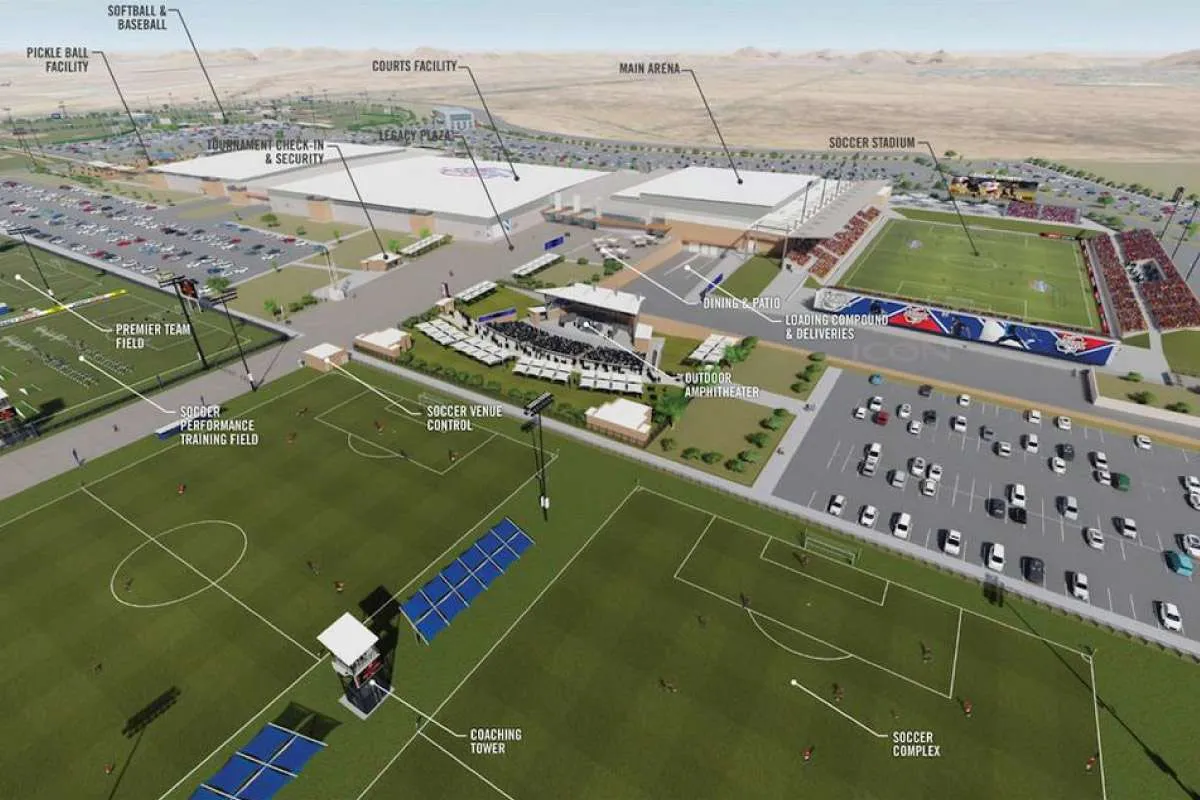
- Mesa’s Legacy Park project, anchored by Arizona Athletic Grounds, is entitled for 2,500 apartments, a 600-room hotel, 3.4 million square feet of office space, and 300,000 square feet of retail across 200 acres
- Spectator sports tourism generated $47.1 billion in direct spending in 2024 and a total economic impact of $114.4 billion, with more than 109 million non-local attendees
- Youth sports specialization has driven demand for year-round facilities, with the average number of sports per child dropping from two in 2019 to 1.6 in 2023
via: Travis Barrington – Propmodo
Youth sports facilities have moved beyond the edge-of-town field complex. Developers and cities are now treating tournament venues as anchors for mixed-use districts that include hotels, apartments, office campuses, and retail, creating what amounts to full neighborhoods organized around amateur athletics.
The economics behind the shift are substantial. Sports ETA research indicates youth and amateur sports generate more than $50 billion in direct spending annually. When combined with the broader spectator sports tourism market, which produced $47.1 billion in direct spending in 2024, the visitor volume and spending patterns now support real estate projects at scales typically reserved for downtown office towers or regional malls.
Florida Project Reaches $1 Billion Scale
Montierre Development is advancing The Dynasty in Ocoee, Florida, a privately funded complex on roughly 155 to 159 acres west of Orlando. The project includes 17 multi-sport fields, approximately 1,100 hotel rooms, multiple structured parking garages, and between 350,000 and 500,000 square feet of retail, dining, and entertainment space, plus a riverwalk along the site.
The capital stack approaches $1 billion. Construction is projected to support around 9,800 jobs, with roughly 5,000 permanent positions once operational. The estimated annual economic impact is $540 million.
Central Florida already hosts the ESPN Wide World of Sports Complex at Disney and the Boombah Sports Complex. The Dynasty represents an evolution from those earlier tournament-focused venues toward a full mixed-use district where sports are the organizing principle but not the only use.
Mesa Development Positions Sports Complex as Traffic Generator
In Mesa, Arizona, the Arizona Athletic Grounds (formerly Legacy Sports Park) operates as a regional tournament destination on the city’s southeast edge. The facility draws millions of visitors annually across dozens of fields, courts, and indoor venues.
Directly across the street, developer Vestar and landowner Pacific Proving LLC are planning Legacy Park, a 200-acre, multibillion-dollar mixed-use project. At full buildout, Legacy Park is entitled for 2,500 multifamily units, a 600-key resort hotel, about 3.4 million square feet of midrise office and corporate campus space, and 300,000 square feet of retail and restaurants. The plan includes more than 20 acres of programmed open space organized around a central lake.
The sports complex is not an amenity added to an existing development plan. It is the original traffic generator that provides the mixed-use project with a built-in customer base of traveling families, college programs, and regional tournaments.
Hamilton Shows Adaptive Reuse Model
Spooky Nook Sports at Champion Mill in Hamilton, Ohio, demonstrates another version of sports-anchored development through adaptive reuse. The city partnered with a developer to convert a historic paper mill along the Great Miami River into what is described as the largest indoor sports complex in North America. The project includes a 200-room hotel, convention space, restaurants, a microbrewery, and medical offices within the adaptive reuse framework.
Since opening, the complex has contributed to a broader downtown resurgence. Hamilton’s budget documents and local coverage describe new small businesses in the urban core, riverfront public spaces, and nearby multifamily projects such as Rossville Flats with street-level retail. The tens of thousands of visiting athletes and families each season have provided customer traffic that supports additional commercial activity in the surrounding area.
Specialization Patterns Support Concentrated Facilities
The development model is supported by shifts in youth sports participation. Research from the Aspen Institute and the Sports & Fitness Industry Association shows youth participation in organized sports has stabilized after pandemic lows, but kids are playing fewer sports and specializing earlier. The average number of sports per child dropped from about two in 2019 to around 1.6 in 2023.
That specialization has produced year-round club calendars, which favor destinations that can host multiple tournaments simultaneously across several sports. Facilities with reliable weather, quality infrastructure, and sufficient nearby hotel inventory can generate consistent shoulder-season demand that traditional seasonal field complexes cannot match.
Public-Private Structures Address Capital Requirements
The development economics remain complex despite compelling visitor numbers. A single tournament weekend might fill thousands of room nights and generate meaningful restaurant, retail, and fuel spending, but the underlying real estate requires significant upfront capital. Sports facilities carry high costs for land acquisition, design, and construction, along with long payback periods.
Most ambitious youth sports districts involve some combination of municipal land contribution, tourism improvement districts, tax-sharing agreements, and revenue participation structures. The Dynasty in Ocoee includes a development agreement where the city assembled a large portion of the site and negotiated road improvements, dedicated parking revenues, and a per-key hotel fee flowing back to the municipality.
In Hamilton, the Champion Mill project sits within a broader riverfront strategy that includes new trails, public art, and infill housing. The city views the complex as a long-term tax base and placemaking asset rather than a single facility transaction.
Strategic Implications for Developers and Municipalities
For developers and municipalities evaluating youth sports facilities, the opportunity extends beyond weekend tourism bumps. When a sports campus can reliably generate multi-day stays, repeat annual visitation, and demand during typically slow periods, it begins to support the fundamentals of a real neighborhood. That includes hotels, restaurants, service retail, and eventually housing for workers seeking proximity to employment centers.
The approach carries execution risk. Traffic impacts and neighborhood opposition can delay or reduce project scope. Overreliance on a single operator or sport leaves developments exposed to shifts in league calendars or club preferences. Secondary uses need consideration early in planning. Can a fieldhouse accommodate concerts? Can tournament housing convert to extended-stay formats in the offseason? Can parking structures support future EV charging or partial conversion to other uses?
The U.S. sports facilities market is forecast to scale from $36 billion today to more than $260 billion by 2034. The most significant projects in that growth may not be standalone mega-arenas but places where youth and amateur sports are integrated into full mixed-use environments. Cities and developers increasingly treat youth sports not as occasional programming but as durable, programmatic anchors comparable to how hospitals, universities, and professional arenas have historically organized mixed-use districts.
photo: Icon Architecture
YSBR provides this content on an “as is” basis without any warranties, express or implied. We do not assume responsibility for the accuracy, completeness, legality, reliability, or use of the information, including any images, videos, or licenses associated with this article. For any concerns, including copyright issues or complaints, please contact YSBR directly.
About Youth Sports Business Report
Youth Sports Business Report is the largest and most trusted source for youth sports industry news, insights, and analysis covering the $54 billion youth sports market. Trusted by over 50,000 followers including industry executives, investors, youth sports parents and sports business professionals, we are the premier destination for comprehensive youth sports business intelligence.
Our core mission: Make Youth Sports Better. As the leading authority in youth sports business reporting, we deliver unparalleled coverage of sports business trends, youth athletics, and emerging opportunities across the youth sports ecosystem.
Our expert editorial team provides authoritative, in-depth reporting on key youth sports industry verticals including:
- Sports sponsorship and institutional capital (Private Equity, Venture Capital)
- Youth Sports events and tournament management
- NIL (Name, Image, Likeness) developments and compliance
- Youth sports coaching and sports recruitment strategies
- Sports technology and data analytics innovation
- Youth sports facilities development and management
- Sports content creation and digital media monetization
Whether you’re a sports industry executive, institutional investor, youth sports parent, coach, or sports business enthusiast, Youth Sports Business Report is your most reliable source for the actionable sports business insights you need to stay ahead of youth athletics trends and make informed decisions in the rapidly evolving youth sports landscape.
Join our growing community of 50,000+ industry leaders who depend on our trusted youth sports business analysis to drive success in the youth sports industry.
Stay connected with the pulse of the youth sports business – where industry expertise meets actionable intelligence.
Sign up for the biggest newsletter in Youth Sports – Youth Sports HQ – The best youth sports newsletter in the industry
Follow us on LinkedIn
Follow Youth Sports Business Report Founder Cameron Korab on LinkedIn
Are you a brand looking to tap into the world’s most passionate fanbase… youth sports?
Introducing Play Up Partners, a leading youth sports marketing agency connecting brands with the power of youth sports. We specialize in youth sports sponsorships, partnerships, and activations that drive measurable results.
About Play Up Partners
Play Up Partners is a leading youth sports marketing agency connecting brands with the power of youth sports. We specialize in youth sports sponsorships, partnerships, and activations that drive measurable results.
Why Sponsor Youth Sports?
Youth sports represents one of the most engaged and passionate audiences in sports marketing. With over 70 million young athletes and their families participating annually, the youth sports industry offers brands unparalleled access to motivated communities with strong purchasing power and loyalty.
What Does Play Up Partners Do?
We’ve done the heavy lifting to untangle the complex youth sports landscape so our brand partners can engage with clarity, confidence, and impact. Our vetted network of accredited youth sports organizations (from local leagues to national tournaments and operators) allows us to create flexible, scalable programs that evolve with the market.
Our Approach
Every partnership we build is rooted in authenticity and value creation. We don’t just broker deals. We craft youth sports marketing strategies that:
- Deliver measurable ROI for brand partners
- Create meaningful experiences for athletes and families
- Elevate the youth sports ecosystem
Our Vision
We’re positioning youth sports as the most desirable and effective platform in sports marketing. Our mission is simple: MAKE YOUTH SPORTS BETTER for athletes, families, organizations, and brand partners.
Common Questions About Youth Sports Marketing
Where can I sponsor youth sports? How do I activate in youth sports? What is the ROI of youth sports marketing? How much does youth sports sponsorship cost?
We have answers. Reach out to info@playuppartners.com to learn how Play Up Partners can help your brand navigate the youth sports landscape.
Youth sports organizations: Interested in partnership opportunities? Reach out to learn about our accreditation process.

• BOWLING
Sunset Bowling Center
Bumpers
High Scratch Game Boys: Simon Mueller – 49
High Scratch Game Girls: Charlie McClellan – 62; Talissa Palmer – 43; Arden Butherus – 28
Bantams
High Scratch Game Boys: Karter Plowman – 63; Andrew Mueller – 47; Monte Strohl – 41
High Scratch Game Girls: Lylah Baheza – 27
Preps
High Scratch Game Boys: Noah Brubaker – 141; Joe Ovendale – 139; Luke Barkl – 123; Cato Cox – 123
High Scratch Game Girls: Tori Graff – 122; Ashlynn Harris – 94; Mila Butherus – 83; Evony Hastings – 83
Juniors
High Scratch Game Boys: Matthew Chavez – 248; Tristan Cord – 241; Caden Bates – 232
High Scratch Game Girls: Rosy Gallegos – 224; Katie Dewey – 196; Drew Hammond – 184
Other 200+ Games: Tristan Cord – 214. & 213; Rosy Gallegos – 210; Matthew Chavez – 203; Harrison Hunter – 203; Isaiah Pennock – 203; Derek Davison – 203; Kenton Still – 203
600+ Series: Tristan Cord – 668; Matthew Chavez – 644; Rosy Gallegos- 618
• SPIRIT LAKE PARKS AND RECREATION
Basketball
K-2nd Grades
Super 1 Foods: Mavrik Hester 2-points, Colt Trowbridge 1-point, Layla Heyden 5-points
Northern Lights Family Counseling: Gabe Merrill 3-points, Lillee Dippolito 4-points
Zs Enterprises: Addilynn Gurnard 9-points, Boidan Wessling 6-points
Lash Savy: Luke Jones 2-points, Carson Cooper 1-point, Bailey Johnson 3-points, Addyson Bradetich 1point, Ella Allen 1-point.
3rd/4th Grade
Boys
Bayview Marina: (Wed. 12-3) Owen Heyden 2- points, Easton Reyes 4-points, Henry Richter 4-points (Sat. 12-6) Kian Aga 2-points, Charlie Salie 4-points
• RATHDRUM PARKS AND RECREATION
Basketball
Kindergarten Basketball
League Sponsored By: PNW Drywall
PNW Drywall vs. Nail Pops
PNW Drywall: Elijah W (Eli) Wilhelm (6), Benjamin Guiffrida (2), Michael Boissoneau Jr. (26)
Nail Pops: Jace McMurray (8), Roman Bean (2)
Tiny Tapers vs. Mini Mudders
Tiny Tapers: Brighton Rondas (2), Kacie Stephens-Fox (2), Kayson Anderson (2), Cameron Lancaster (4), Halle Lauderdale (6)
Mini Mudders: Jameson Hammond (8), Mason Garnham (6), Timon Bird (4)
1st Grade Basketball
League Sponsored By: Les Schwab Tires – Rathdrum
Road Rascals vs. Neon Nitro
Road Rascals: Easton Zielinski (4), Roman Packer (2), Jonathan Kettle (6), Xavier Hiebert (12), Savannah Thompson (2)
Neon Nitro: Brody Novak (2), Colton Wolff (4), Grant Porter (10)
Burnouts vs. Tred Warriors
Burnouts: Kaylee Howe (8), Zach Clark (4), Theodore Snodgrass (2)
Tread Warriors: Benjamin McLane (2), Scarlett Sitar (6), Huxley Cowan (2)
Lugnut Legends vs. Road Runners
Lugnut Legends: Tucker Sigler (6). Ryder Ireland (2)
Road Runners: Barrett Thompson (2), Cooper Behmer (2), Carter Hamilton (2)
2nd Grade Basketball
League Sponsored By: Mountain View Vet Clinic
Critter Crew vs. Healing Hoopers
Critter Crew: Danielle Prutsman (4), Wilderness Mobbs (2), Camryn Reimche (6), Aiden Ketzenberg (10)
Healing Hoopers: Kamden Carter (6), Tia Rinaldi (2), Tobin Bird (6), Gianna Dahlin (2), June Sapp (2)
Vet Vipers vs. Bark Side
Vet Vipers: Ember Weitz (14), Ridge South (2), Brooks Walker (12), Caeden Bosch (2), Evan Sheppard (6), Holland Bechtel (8)
Bark Side: Xander Hall (4)
Beast Mode vs. Jungle Jammers
Beast Mode: Asher Nordstrom (4), Keeley Moody (14)
Jungle Jammers: Avery Anderson (2), Madison Lauderdale (2), Ellie Howell (2), Tristan Palmer (4), Eli McFadden (4)
Vet Vipers vs. Bark Side
Young’s Family Foundation: Reagan Bauer (2), Penny Gilbert (2), Esther Mihara (4)
Les Schwab: Paxlyn Beaver (2), Hazel Busch (2), Ariyah Lonestar (4), Charlotte Sogge (4)
3rd & 4th Grade Girls Basketball
Young’s Family Foundation vs. Les Schwab
Young’s Family Foundation: Reagan Bauer (2), Penny Gilbert (2), Esther Mihara (4)
Les Schwab: Paxlyn Beaver (2), Hazel Busch (2), Ariyah Lonestar (4), Charlotte Sogge (4)
Outreach Eats vs. NextHome Cornerstone Realty
Outreach Eats: Adeline Losee (8), Grace Howell (4), MaliaJayn Rippey (2), Adalynn Briles (2)
NextHome Cornerstone Realty: Daisy Ash (10), Alayna Sternberg (6), Norah Barnhouse (2)
Les Schwab vs. Young’s Family Foundation
Les Schwab: Paxlyn Beaver (6), Charlotte Sogge (2)
Young’s Family Foundation: Reagan Bauer (2), Esther Mihara (16)
3rd & 4th Grade Boys Basketball
CW Construction vs. Alpha Anglers
CW Construction: Cole Mayfield (1), Malachi Wilhelm (8), Hudson Hildesheim (2), Chase Hallas (2), Kallum Straw (8), Liam Reed (2)
Alpha Anglers: Connor Nelson (6), Brian Tompkins (2)
Les Schwab vs. John Brown Transport
Les Schwab: Jotham Raiche (6), Tayvin Sims (8), Blake Singleton (2), Wyatt Drake (4)
John Brown Transport: Caustin Fencl (2), Hawkin Chiciac (6), Ridge Powers (14), Zackaree Hester (2), Noah Davis (8)
• HAYDEN RECREATION AND COMMUNITY EVENTS
Basketball
Dec. 6
PRE K-K
Affordable Restoration: Cora Couzens-2 pts; Hagen Peugh-4 pts; Henry Ratcliff-2 pts
Architects West: Barrett Turley-4 pts
CDA Clean Team: Camden Anderson-22 pts; Beau Watson-12 pts
Chomper Café: Carter Astin-2 pts; Cori Dudley-6 pts; Jonsey Paul-4 pts
Edward Jones: Brody Rickel-8 pts
Heli-1 Corporation: Keenan Fowler-9 pts; Ethan Aiman-9 pts
Hot Shots: Kinley Morrison-8 pts; Jack Richardson-4 pts; Kian Farnworth-2 pts
Jacklin Northwest: Crosby Simons-8 pts; Brooks Mohawk-2 pts; Bridger Jacklin-6 pts; Porter Forsmann-4 pts
Lakeside Pediatrics: Ezekiel Mouanoutoua-4 pts; Hank Pittman-16 pts; Raegan Greve-2 pts
McDonald’s: Bernie Bauer-12 pts
NexTitle: Devin Cole-10 pts; Ezra Skala-2 pts; Ansel Young-2 pts
RMED Attorneys at Law: Fox Selbe-5 pts; Henry Symbal-3 pts
Saccone Electric: Trenton Adkinson-4 pts; Rowan Magrath-2 pts; Margot Saccone-4 pts
Saturday Night Inc: Brixton Clelland-2 pts; Greyson Young-10 pts
Slick Rock Tanning & Spa: Wesley Dahl-8 pts; Luke Drake-12 pts; River Price-16 pts
St. Joseph’s ENT: Annabelle Gardner-4 pts; Levi Forbush-8 pts
Super 1 Foods: Gus Pfinsgraff-4 pts; Brooks Shriner-4 pts; Graham Shriner-8 pts; John Lalanne-2 pts
True North Heating & Cooling: Eli Jereczek-4 pts;
Tumble Stone: Dalton Hilton-20 pts; Ruby Williams- 2 pts
Widmyer Corporation: Bennett Grambeau-4 pts; Josie Widmyer-4 pts
1st/2nd Girls
Belle’s Brunch House: Callie Brown-6 pts; Brielle Enyeart-10 pts; Everly Fraize-8 pts; Stella Richards-2 pts
Brunch Box: Avery Feagans-4 pts; Charlie Hubiak-8 pts; Landrey Ralston-28 pts; Cora Looney-6 pts
Coeur d’Alene Kids Dental: Coeur d’Alene Kids Dental: Davida Jo Basye-Reed-8 pts; Emma Burton-4 pts; Oaklie Shannon-16 pts
Dairy Queen: Mckinley Baughton-2 pts; Charlotte Lalanne-8 pts; Annie Richardson-8 pts
Daum Construction: Lola Daum-4 pts; Jade Hephner-14 pts; Joleigh Hoel-18 pts; Keeley Hofer-2 pts
Dr. Dance Dentistry for Kids: Kennedy Brown-14 pts; Rylee McCracken-6 pts; SierraMay Phillips-38 pts
Hippo Car Wash: Willa Gardner-6 pts; Andi Mitchell-6 pts; Octavia Tewalt-14 pts
Jordan Woodcraft: Molly Cohee-2 pts; Maxine Hogan-12 pts; Arwen Jackson-2 pts; Sydney Lutes-4 pts; Presley Saint-18 pts
1st/2nd Boys
ACI Northwest: Bear Gustafson-4 pts; Oliver Mensch-6 pts; Rockwell Peck-2 pts; Axel Zbinden-10 pts
Dr. Dance Dentistry for Kids: Kaden Buynak-6 pts; Taytum Davis-6 pts; Beau Barkley-2 pts
Evergroom Mobile Pet Grooming: Bentley Fiestam-10 pts; Averett Harkema-12 pts; Mason Fietsam-2 pts; Nixon Sinn-8 pts; Klyde Thompson-2 pts
Eye Guys Optical: Dawson Leary-18 pts; Miller Meeks-10 pts; Zeke Rathbun-4 pts; Anthony Lambert-2 pts; Caleb Peterson-6 pts
FirstLight Home Care: Grey Leggat-26 pts; Jacob Otto-14 pts; Parker Hampton-2 pts; Colton Cole-4 pts
Fred’s Plumbing: Henley Pospisil-10 pts; Carter Stotz-2 pts
Home Savvy: Dalton Rowland-3 pts; Waylon Webb-3 pts; Brody Corbeill-1 pts; Ryker Bartoo-9 pts
Interstate Concrete and Asphalt: Everett Feagans-14 pts; Patrick Jennings-8 pts; Garrett Kling-8 pts; Max Warker-12 pts
Lancaster Market: Liam Knutson-8 pts; Max McCracken-8 pts; Asher Wilson-2 pts
McDonald’s: Abram Kruger-4 pts; Cooper Swanson-14 pts; Henry Barnett-2 pts; Aiden Aschenbrener-2 pts
Mountain West Bank: Tommy Erickson-18 pts; Lane Palmer-10 pts; Owen Palmer-12 pts; Wells Price-20 pts; Porter Smith-2 pts; Zane Spencer-6 pts
New Leaf Nursery: Luca Clark-20 pts; Maddox Hite-2 pts; Brayden Rosenblum-8 pts; Tobias Velasquez-2 pts
NuVu Property Management: Reece Agostinelli-6 pts; Colt Brown-2 pts; Zack Hill-2 pts; Easton Hofer-10 pts; Cy Pittman- 4 pts
Polar Excavation: Owen Davis-4 pts; Leo Reyes-8 pts; Bennie Bauer-4 pts; Andrew Alberton-8 pts
Ramco Custom Construction: Bode Dale-6 pts; Jameson Fore-10 pts; Rocco Ramierz-4 pts; Karson Tonsgard-10 pts
SCJ Alliance: Michael Basye-Reed-4 pts; Sawyer Hodgson-14 pts; Jrue Galvin-2 pts
Scott Smith Homes Team: Eli Irwin-6 pts; Barrett Mason-6 pts; Konrad Schneidmiller-6 pts; Kylar Smith-4 pts
Slick Rock Tanning & Spa: Jackson Airman-18 pts; Leandro Seeds-4 pts
Super 1 Foods: Bentley Hatley-2 pts; Asa Tarbutton-4 pts
• GYMNASTICS
Avant Coeur
Boys
Dec. 6-7
Cold Turkey Meet
Metropolitan Gymnastics
Kent, Wash.
Level 5
Jakob Clinton tied for 1st on Pommel with a 8.700 and took 5th on Vault with a 8.8
Level 7
Yakym Teteria took 1st on Floor with a 11.900, 1st on Rings with a 11.000, 2nd on PBars with a 10.800, 1st on High Bar with a 10.000 and 1st All Around with a 62.700
Level 8
Preston Pool took 7th on Pommel with a 9.000
Level 9
Ethan Laughery took 6th on Rings with a 10.100 and took 2nd on PBars with an 11.100
Koda Wolfe had a high of 7.600 on Pommel
Level 10
Dylan Abrahamson-Fernandez tied for 5th on Floor with a 11.700, took 5th on PBars with a
10.400, 4th on High Bar with a 9.800 and 4th All Around with a 58.300
Dylan Coulson tied for 5th on FLoor with a 11.700, took 2nd on Rings with a 12.800 and took
2nd on High Bar with a 10.000
Lance Mosher had a high of 11.100 on Floor, took 4th on PBars with a 10.500 and 5th on High Bar with a 9.300
Conan Tapia took 4th on Floor with a 11.500, 1st on Rings with a 12.200, 2nd on PBars with a 10.600, 1st on High Bar with a 11.200 and 2nd All Around with a 66.10
Submit items for youth and non-varsity high school sports by noon Tuesday for publication Wednesday. Email stories and photos (in .jpg format) to [email protected].
Information: 208-664-8176, Ext. 1205
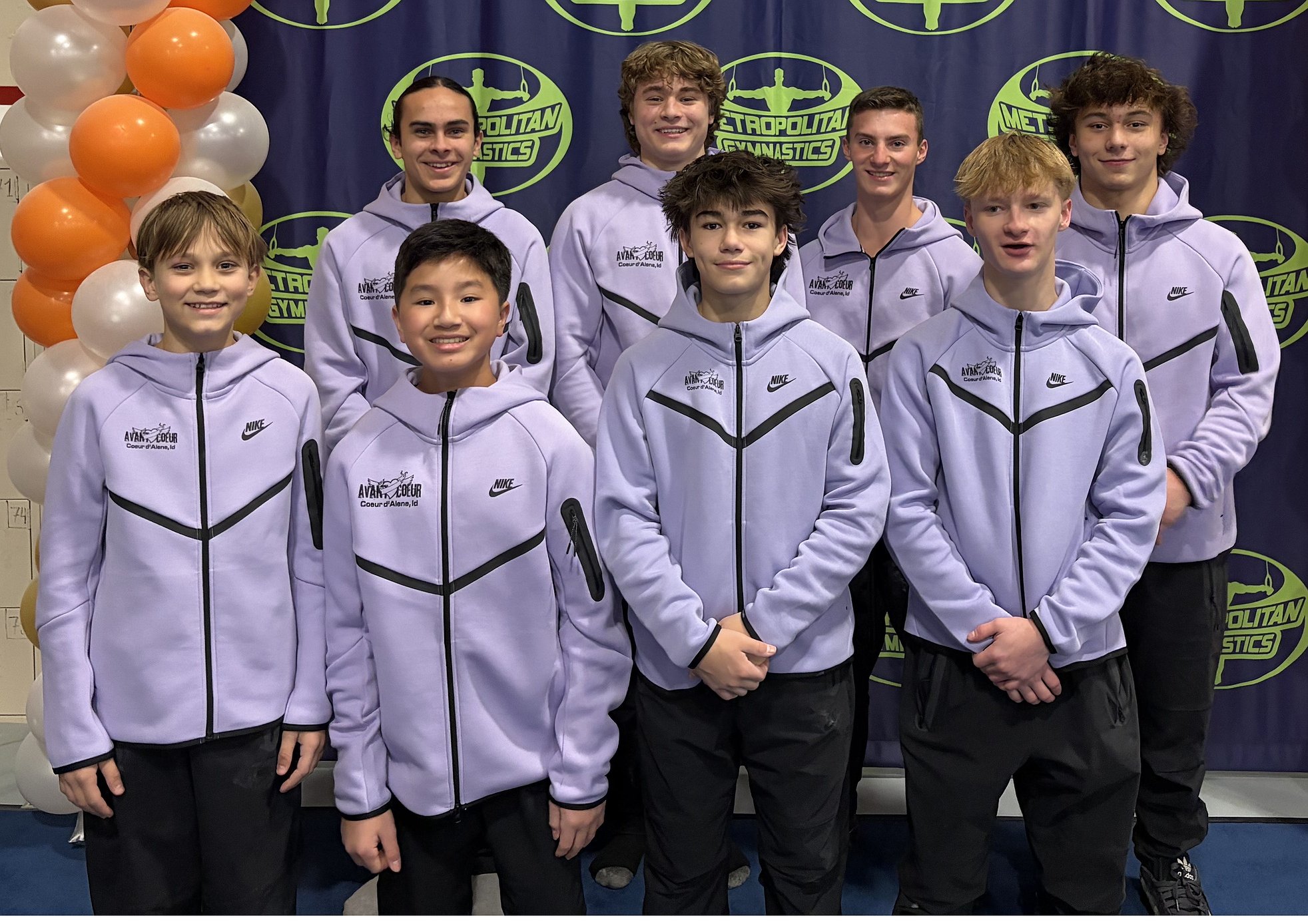 Courtesy photo Avant Coeur Gymnastics Boys Level 7-10s placed third as a team at the Cold Turkey meet in Kent, Wash. In the front row from left are Yakym Teteria, Preston Pool, Dylan Coulson and Koda Wolfe; and back row from left, Dylan Abrahamson-Fernandez, Lance Mosher, Ethan Laughery and Conan Tapia.
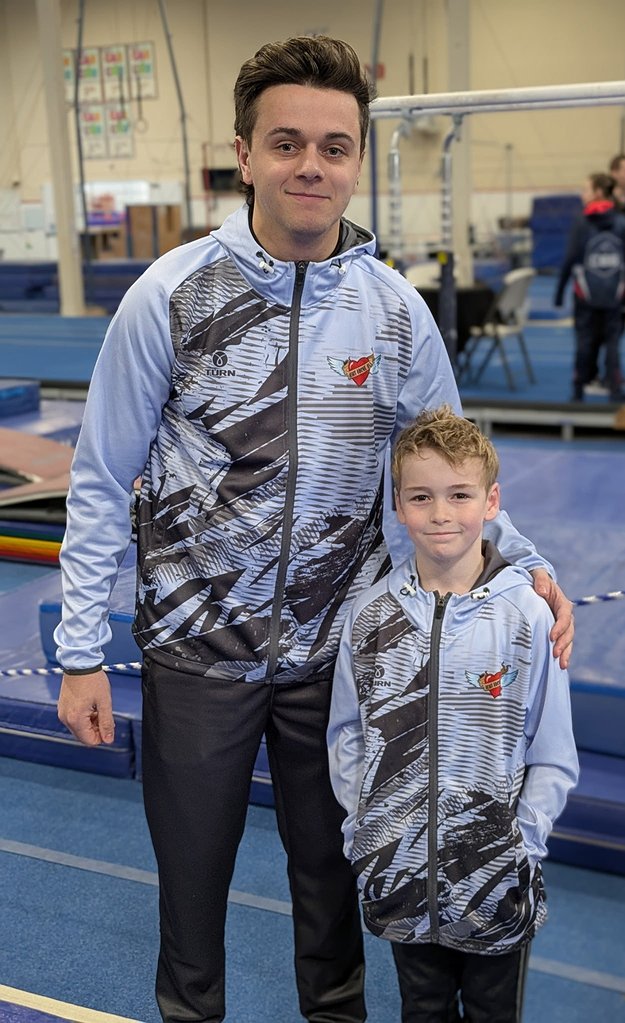 Courtesy photo Avant Coeur Gymnastics Level 5 Jakob Clinton, right, with coach Jon Malstrom at the Cold Turkey Meet in Kent, Wash. Courtesy photo Avant Coeur Gymnastics Boys Level 7-10s placed third as a team at the Cold Turkey meet in Kent, Wash. In the front row from left are Yakym Teteria, Preston Pool, Dylan Coulson and Koda Wolfe; and back row from left, Dylan Abrahamson-Fernandez, Lance Mosher, Ethan Laughery and Conan Tapia.
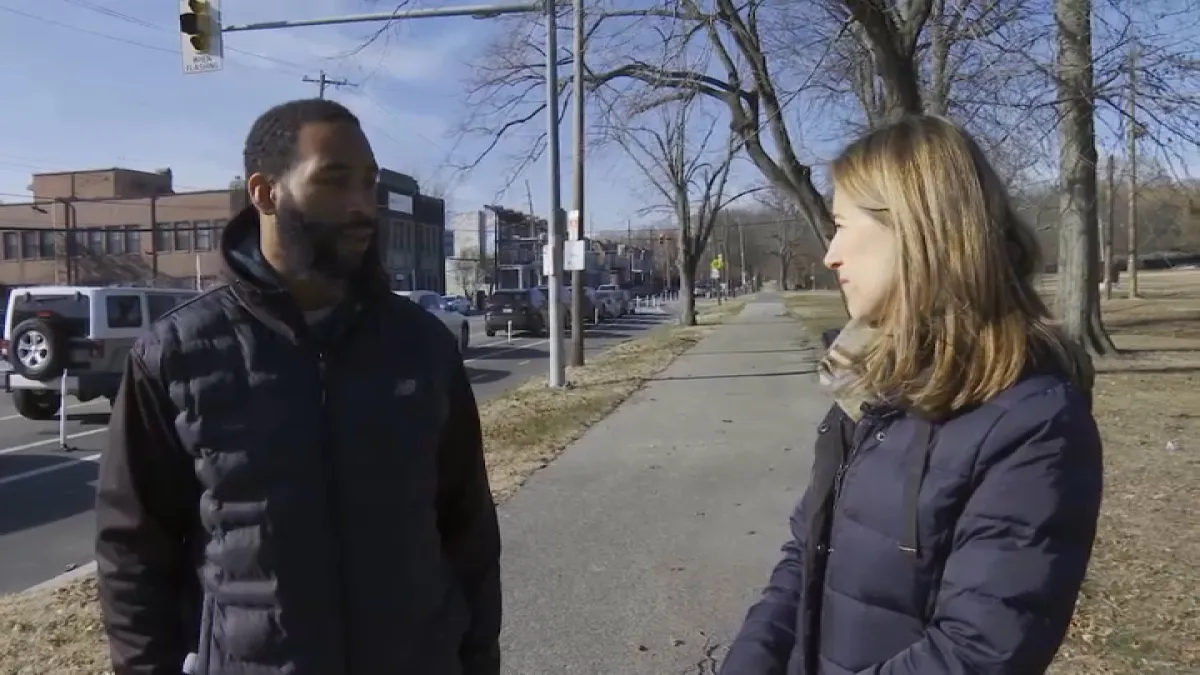
Eight Philly teens are back home after being charged with felonies in Florida for stealing more than $2,000 worth of merchandise from a Dick’s Sporting Goods over the weekend.
The teens were in Polk County, Florida, for a youth football championship game, when they allegedly walked into the store in Davenport and tried to get away with stealing dozens of items.
One of their coaches, Raekwon Bynes, spoke exclusively with NBC10 Investigators on Tuesday and explained what happened.
Bynes has been the offensive coordinator for the Olney-based United Thoroughbreds for six years, said the teens have to face the consequences for their actions.
“We strive on discipline, prayer and schoolwork too,” Bynes said.
Bynes said he went to go wake the boys up for prayer when he found that eight of them were not in their beds.
A group of eight Philly teenagers who were in Polk County, Florida, to play a youth football championship game were arrested for stealing more than $2,000 worth of merchandise from a Dick’s Sporting Goods, law enforcement said on Monday.
“I got a phone call simultaneously saying that, ‘Hey coach, can you come get us from from Dick Sporting Goods?’ And when I got there, that’s when I found out everything that was going on,” Bynes recalled.
Polk County Sheriff deputies had taken the teens into custody and were accusing them of stealing more than $2,000 in sports merchandise from the local store.
The Polk County Sheriff, Grady Judd, released surveillance video that allegedly shows the teens stealing from the store.
“They stole, and they stole, and they stole, and they stole, and they stole,” Judd said at a press conference. “Yeah. How do you like that? This is everything that they stole.”
Bynes said he was disappointed with the teens’ actions and asked the deputies and store owner not to press charges, but the teens now face felony retail theft charges.
“I just hope that they take this as a lesson learned, you know, and realize that like actions have consequences and actions also affect not just you but those around you,” Bynes said.
The teens arrested were not able to play in the championship set for that Saturday night, which the Thoroughbreds ended up losing.
After the game, Bynes and the other coaches drove their players back to Philly.
“They didn’t really share much with me. Just because, like again, when a kid is knows that he did wrong, they’re disappointing themselves and they can’t, you can’t, even really look at me in my face, really,” Bynes said.
It’s unclear when the teens will have a court date next in Florida. NBC10 reached out to the Florida Department of Juvenile Justice, but have not heard back.
Bynes said the teens arrested are no longer on the team because they both aged out and also as a consequence of their actions.

Hall of Fame QB Troy Aikman on giving NIL money: ‘I’m done with it’

PYAC recognizes Rick Bennett for unwavering commitment to Philomath youth

A Study on Retention Challenges and Stakeholder Influence – The Sport Journal

Youth Sports Facilities Are Now Anchoring Billion-Dollar Real Estate Developments

Youth Sports Dec. 10, 2025

Tips to reduce youth sports head injuries | Special Sections

Ed Orgeron on SEC paying players before NIL: ‘We used to walk through the back door with the cash, now we walk through the front door’

SMU athletics launches own division for NIL deals

Tower Motorsports adds Kyffin Simpson to Daytona 24 roster

Michael Jordan’s legal team races against time in antitrust trial against NASCAR

Childress blindsided, France evasive in NASCAR trial

High School Football Recruits Now Command Six- and Seven-Figure Compensation in Revenue-Sharing Era

Accelerating Inclusion: Breaking Barriers in Motorsport

Schatz Lands With CJB Motorsports For 2026

Three Owls Kick Off Indoor Track Season with LEC Awards

First Tee Winter Registration is open

Fargo girl, 13, dies after collapsing during school basketball game – Grand Forks Herald

CPG Brands Like Allegra Are Betting on F1 for the First Time

Volleyball Recaps – November 18

F1 Las Vegas: Verstappen win, Norris and Piastri DQ tighten 2025 title fight

Two Pro Volleyball Leagues Serve Up Plans for Minnesota Teams

Sycamores unveil 2026 track and field schedule

Utah State Announces 2025-26 Indoor Track & Field Schedule

Redemption Means First Pro Stock World Championship for Dallas Glenn

Bowl Projections: ESPN predicts 12-team College Football Playoff bracket, full bowl slate after Week 14

Texas volleyball vs Kentucky game score: Live SEC tournament updates

How this startup (and a KC sports icon) turned young players into card-carrying legends overnight

Jo Shimoda Undergoes Back Surgery

Indiana’s rapid ascent and its impact across college football

Pohlman admits ‘there might be some spats’ as he pushes to get Kyle Busch winning again

 Why a rising mid-major power with an NCAA Tournament team opted out of revenue-sharing — and advertised it
 NBA Legend Michael Jordan to Join NBC Sports as Special Contributor
 Falcons mailbag
 Portal Update – Basketball and Gymnastics Take Hits
 has always dreamed in Mercurial. Now his initials are on the boots.
The new Kyl…
has always dreamed in Mercurial. Now his initials are on the boots.
The new Kyl…
-
 Rec Sports2 weeks ago
First Tee Winter Registration is open
-
 Rec Sports2 weeks ago
Fargo girl, 13, dies after collapsing during school basketball game – Grand Forks Herald
-
 Motorsports2 weeks ago
CPG Brands Like Allegra Are Betting on F1 for the First Time
-
 Motorsports2 weeks ago
F1 Las Vegas: Verstappen win, Norris and Piastri DQ tighten 2025 title fight
-
 Sports2 weeks ago
Two Pro Volleyball Leagues Serve Up Plans for Minnesota Teams
-
 Sports2 weeks ago
Utah State Announces 2025-26 Indoor Track & Field Schedule
-
 Sports2 weeks ago
Sycamores unveil 2026 track and field schedule
-
 Motorsports2 weeks ago
Redemption Means First Pro Stock World Championship for Dallas Glenn
-
 NIL1 week ago
Bowl Projections: ESPN predicts 12-team College Football Playoff bracket, full bowl slate after Week 14
-
 Sports2 weeks ago
Texas volleyball vs Kentucky game score: Live SEC tournament updates