
Motorsports
Yuki Tsunoda's agent has now held a 'conversation' with rival F1 team ahead of a potential …


Yuki Tsunoda is facing up to the prospect of losing his Red Bull seat at the end of the season. The excitement surrounding his promotion in the spring unravelled rather rapidly.
Tsunoda has now raced 10 times for Red Bull and scored a mere seven points. In that period, only Sauber’s Gabriel Bortoleto (four) and Haas’ Oliver Bearman (two) have scored fewer (among full-time drivers).
Most damningly, predecessor Liam Lawson has picked up 12 points at Racing Bulls. Tsunoda is far from the first highly-rated driver to be undone by the extreme handling characteristics of the Red Bull car.
| DRIVER | TEAM | PTS |
| Lance Stroll | Aston Martin | 10 |
| Yuki Tsunoda | Red Bull | 7 |
| Gabriel Bortoleto | Sauber | 4 |
| Oliver Bearman | Haas | 2 |
| Franco Colapinto | Alpine | 0 |
| Jack Doohan | Alpine | 0 |
A report last month suggested that Tsunoda was ‘certain’ to lose his seat at the end of the season. His backers, Honda, are splitting with Red Bull and supplying Aston Martin instead from 2026.
Yuki Tsunoda’s agent has spoken to Cadillac as Red Bull departure looms
Aston Martin aren’t an option for Tsunoda, with Fernando Alonso and Lance Stroll under contract. Alpine also have a seat open, but appear to be looking at other candidates.
BBC journalist Andrew Benson says Tsunoda has almost a ‘zero percent’ chance of staying in F1, but there may be one last hope. Cadillac still haven’t signed either of their two drivers for their debut.
And according to Nate Saunders of ESPN’s Unlapped podcast, Tsunoda’s agent spoke to the American team at the Monaco GP. He’d scored points in back-to-back races at that stage, but he was still assessing his options.
Cadillac are speaking to a wide range of candidates. After back-to-back last-place finishes, Tsunoda will have to remind suitors of his strong form in the midfield.
MORE F1 STORIES
“What Cadillac have actually been very clever about doing is that they’ve been talking to a lot of drivers – Formula 2 drivers, they’ve been talking to Mick Schumacher,” said Saunders.
“Earlier I mentioned Yuki leaving. His agent had a very brief conversation with Cadillac in Monaco.
“All standard stuff in the Formula 1 paddock, but it shows they’ve cast their net as wide as they can, and they want to talk to every driver available.”
Red Bull have one doubt about Isack Hadjar that could still save Yuki Tsunoda
Isack Hadjar is in line to replace Tsunoda if indeed Red Bull let the Japanese driver go. He has clearly been the second-best driver in their roster this season.
Hadjar is currently in the midst of a three-race scoreless run, but with 21 points, he still sits just outside the top 10 in the standings. Many feel he’s the standout rookie on the 2025 grid.
There is a slight worry about how Hadjar will respond to setbacks. Red Bull’s second driver has often had to fight a psychological battle as well as a mechanical one.
If there are lingering doubts, then perhaps a change will be delayed. Max Verstappen’s future could also be a factor, as a departure would surely require the team to sign an A-list driver from elsewhere.
Tsunoda’s former Racing Bulls boss, Laurent Mekies, has just replaced Christian Horner at Red Bull.










Motorsports
New ownership group takes over Canadian Tire Motorsport Park in Bowmanvile, Ont. – Brandon Sun

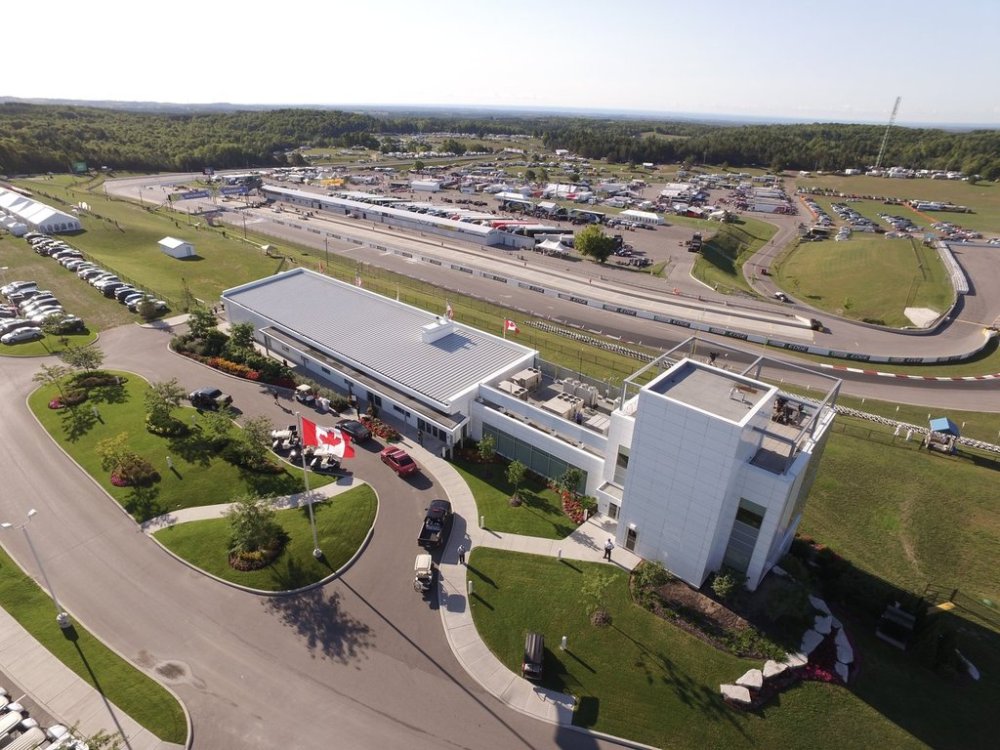
BOWMANVILLE – Canadian Tire Motorsport Park has been purchased by a new ownership group.
The new group is led by Peter Thomson with Chris Pfaff and Alek Krstajic as partners.
CTMP is a multi-track motorsport facility outside Bowmanville, Ont., that opened in 1961.
“Canadian Tire Motorsport Park is a place with deep heritage and a loyal community,” said Pfaff in a statement. “Our team is proud to be its next steward. We’re committed to respecting everything that makes CTMP special today, while building the foundation for an elevated experience in the years ahead.”
The existing management team and staff, led by Myles Brandt, will remain in place.
A broader vision for the future of the site will be unveiled at the Canadian International Auto Show in February 2026, where the ownership group will share the roadmap for CTMP’s long-term development, investment strategy, and enhanced role within the Canadian motorsport and entertainment spaces.
The team encourages current customers, partners, and media to reach out with any immediate questions about CTMP’s future.
This report by The Canadian Press was first published Dec. 11, 2025.

One of Jimmie Johnson’s Legacy Motor Club drivers revealed his retirement could be coming sooner than expected.
Erik Jones, who drives the No. 43 car for LMC in the NASCAR Cup Series, recently spoke to Motor Racing Network’s Steve Post about his career plans and balancing a variety of responsibilities, which now include being the father to a one-year-old. It comes after a NASCAR settlement gave team owners more than 40 million reasons to thank Michael Jordan.
“I was talking with somebody yesterday and we were kind of laughing about my schedule at times and how busy it gets,” Jones said. “I told them, I’m just frontloading my whole life and career right now.”
“It’s all stuff I love, and with the young one now, it’s gotten even busier,” he added. “But you know it’s fun to kind of balance all that time and get to figure out how to make it all work.”
Jones, 29, originally joined Richard Petty Motorsports, which eventually became Petty GMS Motorsports and later Legacy Motor Club, in October 2020, and recently signed a multi-year contract extension in August 2024 to stay with the Johnson-owned team.
Subscribe to our NASCAR newsletter here.
In five seasons with LCM, Jones has won one race, the 2022 Cook Out Southern 500 at Darlington Raceway, and recorded 33 top 10 finishes and nine top five finishes.
Jones and John Hunter Nemechek, who drives the No. 42 car, are LCM’s only two full-time drivers. Johnson, a seven-time Cup Series champion, continues to drive in a part-time role in the No. 84 car.
In 2025, Jones recorded four top five finishes, including a season best third-place finish at the Southern 500 at Darlington, the site of his most recent win in 2022.
In addition to being a full-time NASCAR driver, Jones has found time to participate in super late model races when it does not overlap with his LCM duties.
Add in his charity work through the Erik Jones Foundation, which he founded in 2021, and the birth of his son in November 2024, and Jones has begun to consider life beyond his racing career.
“It’s been different, in a couple ways. It changes your perspective definitely, it makes you look at things pretty different,” Jones said about how the birth of his son changed his life. “The hardest thing is probably your schedule changes so much… all of a sudden you’re not really on your time anymore, you’re on his time now.”
Motorsports
Chris Madden Set to Pilot Infinity Chassis House Car in 2026 for Wells Motorsports – St. Louis Racing

– Advertisement –
(GRAY COURT, SOUTH CAROLINA) Chris Madden, of Gray Court, South Carolina, is excited to announce today that he will pilot the Infinity Chassis House Car in 2026 for Hazard, Kentucky-based Wells Motorsports! Chris, who racked up a trio of victories and several runner-up finishes in marquee events including in the Topless 100 and the Dirt Track World Championship last season, will return to racing full-time for the first time since he decided to sell his own race team in July of 2024. The Infinity Chassis House Car will be powered by a Clements Racing Engine and will be adorned by Chris’ iconic #44, as well as several of his longtime sponsors including Henderson Amusement and Millwood Plumbing.
“I can’t thank David and Eric Wells enough for putting this deal together,” Madden said today via telephone. “They’ve always had a first-class operation with Brandon Overton and even dating back to when Eric drove himself. I’m extremely honored for them to restart their program and put me behind the wheel of their racecar. Infinity Chassis drivers have done very well all over the country since Wells Motorsports started building those cars and I’m excited to join the team!”
Preparing the #44 will be crew member Kent Fegter, who has worked for both Chris Madden Racing and Wells Motorsports in the past. Wyatt Hardison with Hardison Suspension Technology (HST) will also be a pivotal part of the team.
The Wells Motorsports team and driver Chris Madden will not follow a national touring schedule in 2026, but will instead chase the money and pick-and-choose where they will race throughout the year. Tentatively, the first three races on the schedule will be the Sunshine Nationals, which runs from January 22-24 at Volusia Speedway Park. The trio of World of Outlaws Real American Beer Late Model Series showdowns at the sprawling Barberville, Florida speedplant will shell out $12,000, $12,000, and $20,000 paychecks respectively.
Much more information, including a full list of sponsors and product supporters, will be announced as the start of the 2026 campaign nears. Keep up-to-date on “Smokey” across all social media platforms and at www.ChrisMadden44.com, which will be redesigned in the near future!
Media Contact: Ryan Delph – Delph Communications
www.DelphCommunications.com
– Advertisement –

By Neha Dwivedi, Staff Writer and Jerry Jordan, Editor
On the ninth day of proceedings in the legal battle involving NASCAR, 23XI Racing and Front Row Motorsports, the standoff concluded with a settlement. Both sides issued a joint statement confirming the resolution and emphasizing that the agreement is designed to provide long-term stability while laying the groundwork for meaningful growth across the sport in a more competitive landscape.
Under the terms of the settlement, NASCAR will distribute an amendment to existing charter holders outlining updated provisions for execution. Those terms include the introduction of a form of “evergreen” charters, contingent upon mutual consent. However, the financial details of the agreement will remain confidential and will not be made public.
The resolution prompted responses from across the garage, including industry leaders such as Team Penske and Hendrick Motorsports. Team Penske owner Roger Penske welcomed the development.
“Today’s settlement is tremendous news for the industry,” Penske said in a written statement. “We are stronger together as a sport and the agreement today allows all of us to focus on what’s important: the continued growth of NASCAR. The sport has never been more competitive and today’s resolution provides the entire industry with a platform that strengthens our business and allows us to continue to entertain our millions of passionate fans in a unified way.”
Rick Hendrick, owner of Hendrick Motorsports, echoed that sentiment while stressing the broader implications for the sport.
“Millions of loyal NASCAR fans and thousands of hardworking people rely on our industry, and today’s resolution allows all of us to focus on what truly matters, the future of our sport,” Hendrick’s written comments stated. “For more than 40 years, NASCAR racing has been my passion. I believe deeply in what we can accomplish when we work together. This moment presents an important opportunity to strengthen our relationships and recommit ourselves to building a collaborative and prosperous future for all stakeholders. I’m incredibly optimistic about what’s ahead. When our industry is united, there’s no limit to how far we can go or how much we can grow the sport we love.”
One of those immediate implications came from a team owner, who wished to remain anonymous, saying that his charters just “doubled in value.”
“We were in a bind, we had to sign, but it took someone like (Michael) Jordan to Bob (Jenkins) to stand up to NASCAR,” the source confided to Kickin’ the Tires. “We had sponsor concerns and weren’t sure what would happen if we didn’t take whatever we could get and hope for the best.”
Jordan, the NBA billionaire who co-owns 23XI Racing with NASCAR driver Denny Hamlin, framed the settlement as a continuation of the original intent behind the lawsuit. He explained the action was always about progress and ensuring the sport evolves in a way that supports teams, drivers, partners, employees, and fans alike.
“ We now have the chance to grow together and make the sport even better for generations to come,” Jordan said. “I’m excited to watch our teams get back on the track and compete hard in 2026.”
Hamlin also addressed the outcome of the case, reflecting on his lifelong connection to NASCAR. He spoke about how racing has shaped his identity and why that bond compelled his team to shoulder the challenges that came with taking a stand. Hamlin said he knew from the beginning the fight was worth it.
“I’ve cared deeply about the sport of NASCAR my entire life,” Hamlin said. “Racing is all I’ve ever known, and this sport shaped who I am. That’s why we were willing to shoulder the challenges that came with taking this stand. We believed it was worth fighting for a stronger and more sustainable future for everyone in the industry. Teams, drivers, and partners will now have the stability and opportunity they deserve. Our commitment to the fans and to the entire NASCAR community has never been stronger. I’m proud of what we’ve accomplished, and now it is time to move forward together and build the stronger future this sport deserves.”
“With this change, we can finally build long-term value and have a real voice in NASCAR’s future,’ said Jenkins, who co-owns Front Row Motorsports. “I’m excited for the road ahead—for the people in the garage, the folks in the stands, and everyone who loves this sport.”
During the trial, he testified that he had never made a profit from NASCAR. He noted that it had long been evident that the sport required a structure that treated teams, drivers, and sponsors fairly while preserving competitive integrity. This settlement offers that opportunity.
NASCAR CEO and Chairman, Jim France, whose father, Bill France Sr., first created NASCAR during a meeting at the Streamline Hotel in Daytona Beach, Fla., stated that he believes the agreement will help the growth of the sport going forward. He was the primary holdout, repeatedly refusing to grant permanent charters to the teams. In the end, he acquiesced, possibly because the trial was not going in NASCAR’s favor and possibly because sponsors began questioning the logic behind the decisions being made from the top.
“This outcome gives all parties the flexibility and confidence to continue delivering unforgettable racing moments for our fans, which has always been our highest priority since the sport was founded in 1948,” France stated. “We worked closely with race teams and tracks to create the NASCAR charter system in 2016, and it has proven invaluable to their operations and to the quality of racing across the Cup Series. Today’s agreement reaffirms our commitment to preserving and enhancing that value, ensuring our fans continue to enjoy the very best of stock car racing for generations to come. We are excited to return the collective focus of our sport, teams and racetracks toward an incredible 78th season that begins with the Daytona 500 on Sunday, Feb. 15, 2026.”

Talk about making a good first impression.
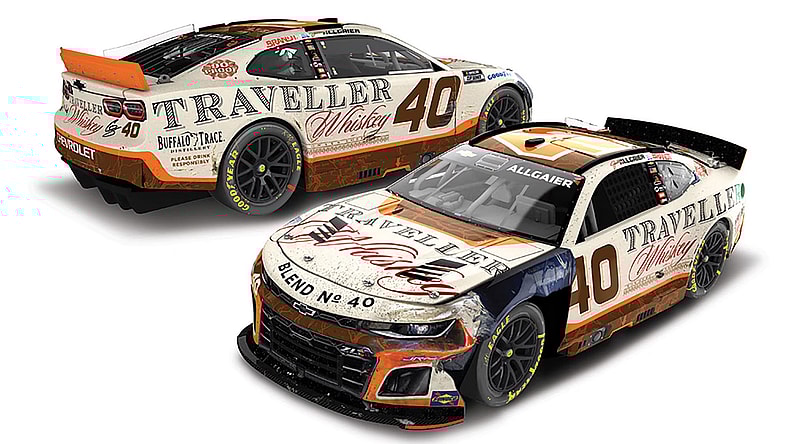
Lionel Racing has released its list of top selling NASCAR cars for 2025 and number one was only in one race.
JR Motorsports made its Cup Series debut at the Daytona 500 with Justin Allgaier driving the Traveller Whiskey Chevrolet to a ninth place finish, but he took the top spot on the sales chart.
The clean version of the car was the best-seller and the raced version, complete with battle scars and repairs, took the third spot.
See It: DODGE RETURNS TO STOCK CAR RACING
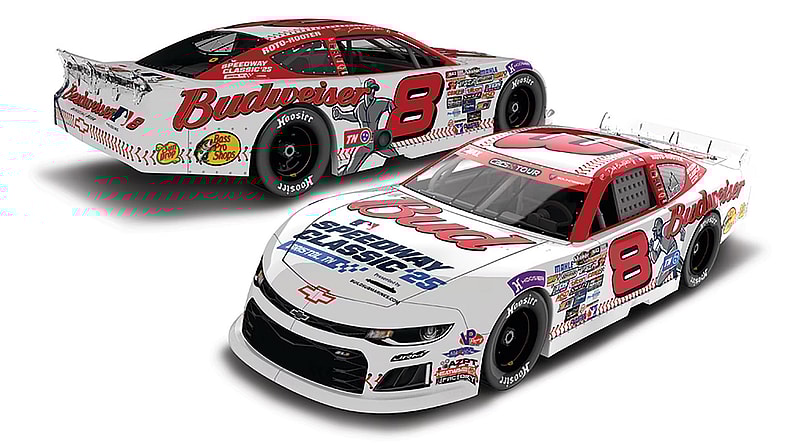
In between them was the throwback Budweiser late model that Dale Earnhardt Jr. drove to 10th place in the Cars Tour race at Anderson Motor Speedway in August. The paint scheme was inspired by his 2001 Pepsi 400-winning car.
Next up was the Atlanta-winning NAPA sponsored Chevy of NASCAR’s most popular driver Chase Elliott, while the Daytona 500-winning car of his Hendrick Motorsports teammate, William Byron, was fifth.
CLICK TO BOOST AMERICAN CARS AND AND RACING IN YOUR SEARCH RESULTS
Kyle Larson’s 2025 NASCAR Cup Series championship-winning Chevy took the sixth and seventh spots with the clean and raced versions, which were followed by Connor Zilisch’s Red Bull Cup Series car, Josh Berry’s Wood Brothers Racing Las Vegas-winning Ford and Shane van Gisbergen’s Red Bull Chevy.
“These best-sellers reflect the incredible diversity of NASCAR fandom — from legendary names like Dale Earnhardt Jr. to rising stars like Connor Zilisch, Lionel CEO Howard Hitchcock said in a news release.
CLICK TO SUBSCRIBE TO THE FREE AMERICAN CARS AND RACING NEWSLETTER FOR THE LATEST UPDATES AND MORE
“Each die-cast tells a story of triumph and tradition, and we’re proud to bring these moments to fans and collectors everywhere.
Allgaier will be back in the No. 40 car next February attempting to qualify for the Daytona 500 again, so he could repeat on the 2026 Lionel list.
LISTEN AND SUBSCRIBE TO THE GAS: AN AMERICAN CARS AND RACING PODCAST
Follow American Cars And Racing across our social media on X, Flipboard, YouTube, Reddit, Instagram, and Facebook.
Motorsports
NASCAR settlement given owners more than 40M reasons to thank Michael Jordan – Motorsport – Sports

NASCAR team investors and executives have reportedly stated that their charter values have already gone up extensively since Michael Jordan and Denny Hamlin’s $365 million antitrust lawsuit was settled this week.
On Thursday, 23XI Racing and Front Row Motorsports received a substantial financial boost after NASCAR settled its antitrust lawsuit on Day 9 of the trial. The two Cup Series teams launched the lawsuit against the sanctioning body in October of last year.
A year of legal back-and-forth ensued until the case ended up at trial in a North Carolina courthouse, with 23XI Racing owners Jordan and Hamlin in attendance as they fought and potentially risked losing millions – along with their place in the sport.
But in a surprise move, a settlement was reached on Thursday – before NASCAR had given it’s defense. Elements of the settlement agreement immediately came to light, with NASCAR teams getting permanent “evergreen charters.”
Since then, some industry execetuvies believe their charter may even double from around $45 million to even get close to the $90 million mark – with Jordan and Hamlin’s legal win aiding this.
Sign up to our NASCAR newsletter here.
Sports Business Journal contacted several teams who were asked about the charter price will rise, with some teams even suggesting that it could double.
In the post-court briefing after the settlement, the charters were discussed and agreed to remain ‘evergreen’ – being in place for the long-term so that their value will continue to rise.
Permanent charters also create a more reliable environment for sponsorship, whereas deals in NASCAR are often more short-term – perhaps making life difficult for brand to commit to deals that they perhaps would like to.
Jordan and Hamlin were both seen smiling as they left court on Thursday, knowing that they had scored a huge win over NASCAR.

New ownership group takes over Canadian Tire Motorsport Park in Bowmanvile, Ont. – Brandon Sun

Texas A&M women’s volleyball upsets Nebraska to reach final 4

CBS Sports ranks Top-25 transfer players in College Football Playoff

Live updates, how to watch

Nebraska volleyball’s season ends with loss to Texas A&M in regional finals

$87 million college football coach comments on rumor he’s leaving for Big Ten team

Texas A&M defeats Nebraska volleyball in NCAA tournament

Nebraska volleyball loses to Texas A&M in regional final
Wisconsin volleyball vs Texas score today: Live updates, channel

Crookston School Board to meet Monday (12/15) – KROX

Dick Vitale, Charles Barkley call out College Football Playoff committee over Notre Dame snub

Texas A&M volleyball beats Nebraska game score: Replay updates

2026 Heisman Trophy: CBS Sports names front-runners for the college football’s top award

Texas hosts Wisconsin with Final Four berth on the line

Dan Lanning Reveals Reasoning Behind His Loyalty to Oregon

First Tee Winter Registration is open

Fargo girl, 13, dies after collapsing during school basketball game – Grand Forks Herald

CPG Brands Like Allegra Are Betting on F1 for the First Time

Volleyball Recaps – November 18

F1 Las Vegas: Verstappen win, Norris and Piastri DQ tighten 2025 title fight

Two Pro Volleyball Leagues Serve Up Plans for Minnesota Teams

Utah State Announces 2025-26 Indoor Track & Field Schedule

Sycamores unveil 2026 track and field schedule

Redemption Means First Pro Stock World Championship for Dallas Glenn

Jo Shimoda Undergoes Back Surgery

Texas volleyball vs Kentucky game score: Live SEC tournament updates

Robert “Bobby” Lewis Hardin, 56

How this startup (and a KC sports icon) turned young players into card-carrying legends overnight

Bowl Projections: ESPN predicts 12-team College Football Playoff bracket, full bowl slate after Week 14

Indiana’s rapid ascent and its impact across college football

 NBA Legend Michael Jordan to Join NBC Sports as Special Contributor
 Why a rising mid-major power with an NCAA Tournament team opted out of revenue-sharing — and advertised it
 Falcons mailbag
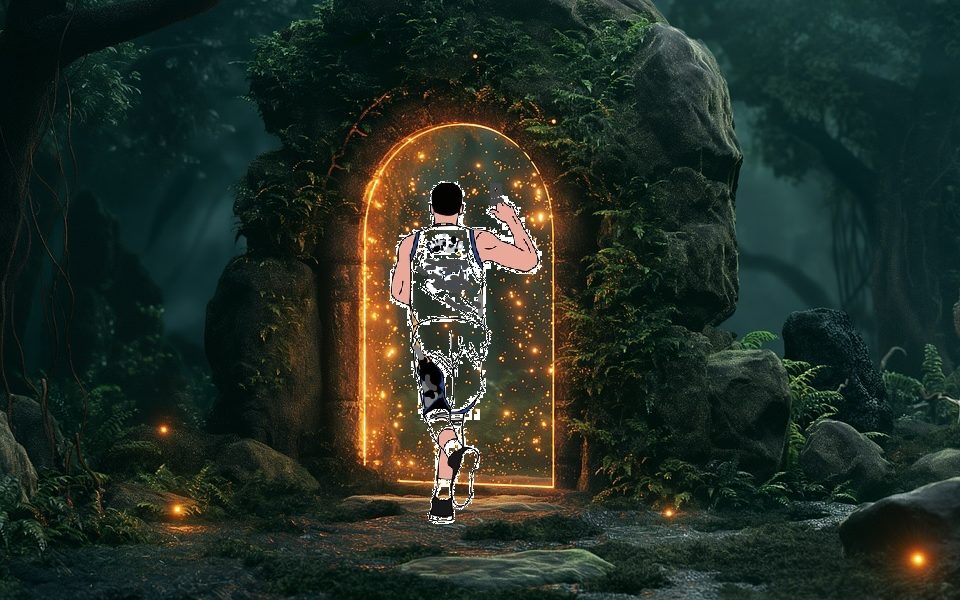 Portal Update – Basketball and Gymnastics Take Hits
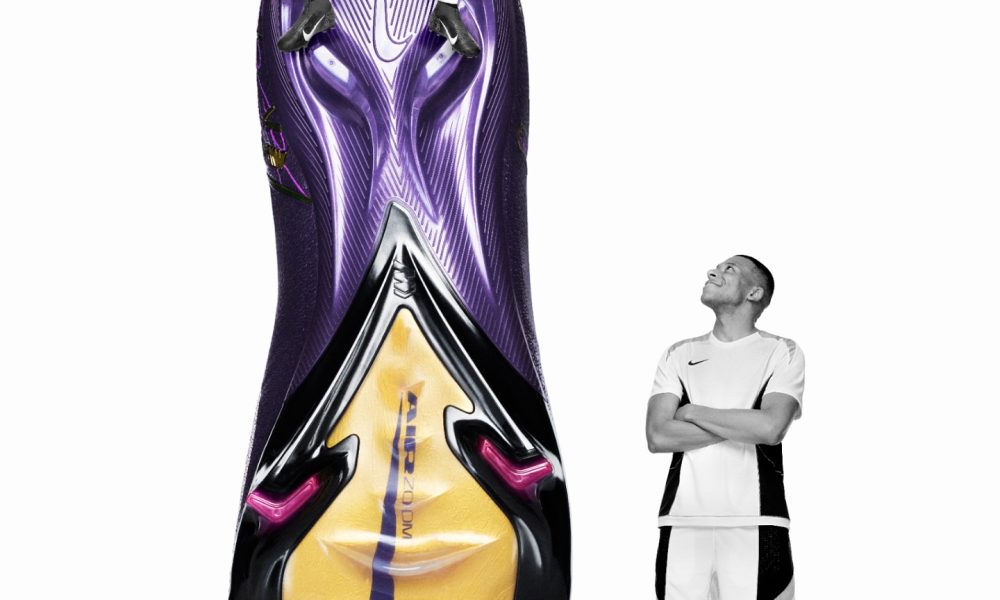 has always dreamed in Mercurial. Now his initials are on the boots.
The new Kyl…
has always dreamed in Mercurial. Now his initials are on the boots.
The new Kyl…
-
 Rec Sports3 weeks ago
Fargo girl, 13, dies after collapsing during school basketball game – Grand Forks Herald
-
 Motorsports3 weeks ago
CPG Brands Like Allegra Are Betting on F1 for the First Time
-
 Sports3 weeks ago
Two Pro Volleyball Leagues Serve Up Plans for Minnesota Teams
-
 Sports3 weeks ago
Utah State Announces 2025-26 Indoor Track & Field Schedule
-
 Sports3 weeks ago
Sycamores unveil 2026 track and field schedule
-
 Motorsports2 weeks ago
Redemption Means First Pro Stock World Championship for Dallas Glenn
-
 Motorsports2 weeks ago
Jo Shimoda Undergoes Back Surgery
-
 Sports3 weeks ago
Texas volleyball vs Kentucky game score: Live SEC tournament updates
-
 Rec Sports2 weeks ago
Robert “Bobby” Lewis Hardin, 56
-
 Rec Sports2 weeks ago
How this startup (and a KC sports icon) turned young players into card-carrying legends overnight