
NIL
Colorado Buffaloes football coach Deion Sanders accused of switching up on NIL salary cap …

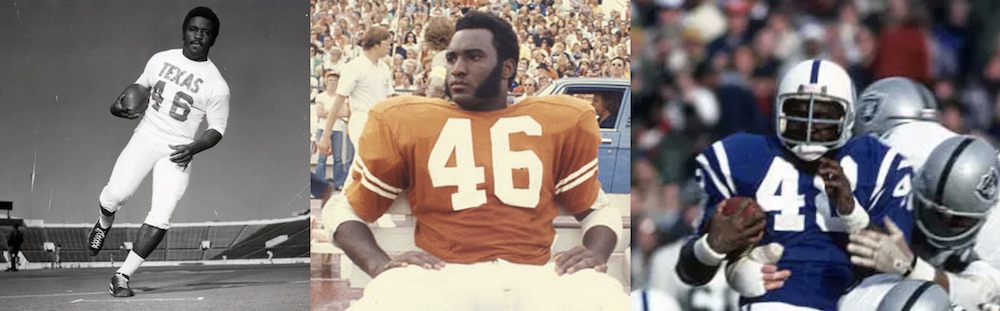
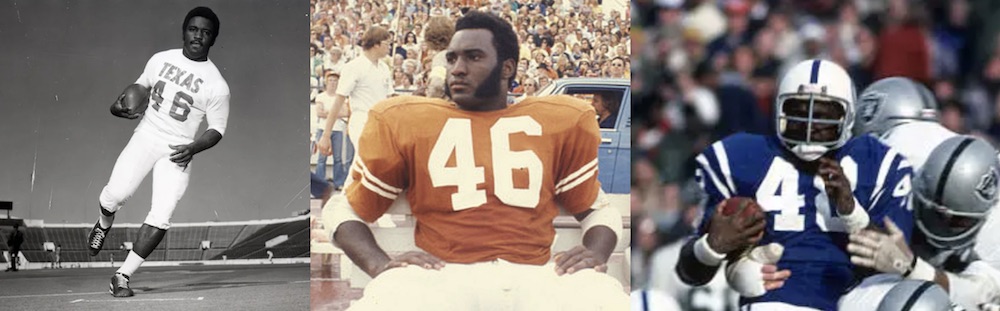

Colorado Buffaloes football coach Deion Sanders wants an NIL salary cap. Some think that’s convenient timing with Shedeur and Shilo Sanders, and Travis Hunter, off to the NFL and out of Boulder.
Cam Newton shared Coach Prime’s opinion on a college football salary cap with that timing in mind.
Advertisement
“It may be the unpopular opinion. Yeah. But was Prime worried about this when his sons was there? I would say no. You want to know why? Because he wasn’t going to let nobody just handle his sons anyway,” Newton said on the “4th&1” podcast.
“If somebody would have brokered a $1.7 million deal, he knew at the end of the day, it would have been fair. It would have been what he would have deemed as a father to say, ‘No, bro, we’re not giving you no 30%. Like, bro, we going to give you 3% or we going to give you a flat fee.’ That’s what he would have did for his son.
“He can’t do that with other people’s sons. So with that, this is where college football is now.”
Locked On Buffs’ Kevin Borba believes Sanders is set to see his wish soon.
Advertisement
“I think people have this thought he’s going to leave for another coaching job. I firmly believe that if Deion Sanders leaves Colorado, it’s not going to be to coach. I think it’s going to be to step away from coaching, to step into the media again, or just give himself a break,” Borba said.
“I don’t think there’s going to be a job out there that, one, gives him the systematic support from the top down, like Rick George; he is very supportive of him, and lets him do whatever he wants, pretty much.”
If that’s the case, Sanders’ two sons, and his non-biological son and No. 1 prospect he’s ever recruited, made out like bandits before the sport changed.
Perhaps they’re part of the reason why that change is happening. Shedeur, Shilo, and Hunter were the NIL wild west’s top money-getters when NIL was at its peak.



The following release is courtesy of Daktronics.
BROOKINGS, S.D. – The Fighting Illini turned to Daktronics (NASDAQ-DAKT) of Brookings, South Dakota, to design, manufacture and install the largest main video display in college football, totaling 17,300+ square feet. The project includes 16 LED displays that combine for more than 26,750 square feet and 30 million pixels at Gies Memorial Stadium on campus at the University of Illinois in Champaign. The project will be completed ahead of the 2026 college football season.
“We are excited to partner with Daktronics to bring the largest videoboard in college football to Gies Memorial Stadium,” said Director of Athletics Josh Whitman. “These new visual resources reflect our commitment to providing one of the nation’s best game day experiences. Under Coach Bielema’s leadership, and with an electric fan base that is now filling our stadium to near capacity, our program has become one of the most successful and exciting in major college football. We are thrilled to make this major investment in our historic stadium – one of the sport’s great venues – as we continue our efforts to enhance the experience for our fans, student-athletes, and others, all with an eye toward building a championship program.”
Main Video Display Details
The new south end zone display will measure approximately 69 feet high by 250 feet wide and will feature a 10-millimeter pixel spacing for high-resolution imagery and improved contrast. The size of the display will allow for larger-than-life content, including live video, instant replays, graphics, animations, game statistics and sponsorship messages.
The display features 16 million pixels and would be the fifth-largest display in professional football. It is roughly the same size as the main outfield display at Citi Field in New York and 3.4 times the size of the main display at Soldier Field in Chicago. For reference, it would take 1,621 60-inch televisions to cover the entire display.
“We’re excited to partner with the University of Illinois on this project to bring the largest display in college football to life,” said Daktronics Vice President of Live Events Jay Parker. “College football is a tradition that brings people together and creates unforgettable moments. This project reflects the passion and scale of college football, and we’re proud to help make those memories even more impactful in Champaign, Illinois.”
Top 10 Largest Displays in College Football
|
1. Illinois
|
17,315 sq. ft.
|
|
2. Auburn
|
10,690 sq. ft.
|
|
3. Purdue
|
8,461 sq. ft.
|
|
4. Oregon
|
8,208 sq. ft.
|
|
5. Michigan
|
8,165 sq. ft.
|
|
6. Wisconsin
|
7,941 sq. ft.
|
|
7. Utah
|
7,808 sq. ft.
|
|
8. Oklahoma
|
7,803 sq. ft
|
|
9. Mississippi State
|
7,777 sq. ft.
|
|
10. Texas A&M
|
7,635 sq. ft.
|
Additional LED Display Details
Supplementing the in-bowl experience, a super ribbon in the north end zone and two sideline ribbon displays are being installed along the seating fascia as well as two field-level displays and eight bleacher displays being installed as well. The north end zone super ribbon measures roughly 12.5 feet high by 180 feet wide and each sideline ribbon measures roughly 4 feet high by 427 feet wide. Both field level displays measure nearly 5.5 feet high by 34 feet wide. All three ribbon displays and both field-level displays feature 10-millimeter pixel spacing.
The eight bleacher displays each measure roughly 5.5 feet high by 12 feet wide and feature a tight 2.9-millimeter pixel spacing. These displays deliver additional statistics, graphics and sponsorship messaging throughout events.
On the backside of the main video display, two video displays face outside of the stadium to connect with fans as they arrive and experience the game-day atmosphere. These displays each measure 29.5 feet high by 52.5 feet wide, feature 10-millimeter pixel spacings and are some of the largest backside displays in college football. Its flexibility allows for pre-game hype videos, post-game victory animations showcasing the score for fans to celebrate, promotional opportunities for upcoming games and university events, and sponsorship or university messaging needs.
Daktronics is also including a complete Show Control solution including Camino with this installation. This industry-leading control system provides a combination of display control software, world-class video processing, data integration and playback hardware that forms a powerful yet user-friendly production solution. The addition of Camino to the control system will provide a new level of functionality to create dynamic, real-time rendered content never before possible in a Daktronics system.
Camino opens up creative possibilities to display visuals in a 2D/3D space, incorporating data-based logic to automate production elements, and developing timelines within a single piece of content so it can react in real time as the event unfolds.
In addition to the equipment installation, the Fighting Illini will also receive a content package that will be produced and delivered by Daktronics Creative Services.
Daktronics has grown with the sports industry from the company’s beginnings in 1968. Today, the company has LED video display installations at hundreds of colleges and universities across the United States. For more information on what Daktronics can provide for the collegiate market, visit www.daktronics.com/college.
About Daktronics
Daktronics helps its customers to impact their audiences throughout the world with large-format LED video displays, message displays, scoreboards, digital billboards, audio systems and control systems in sport, business and transportation applications. Founded in 1968 as a USA-based manufacturing company, Daktronics has grown into the world leader in audiovisual systems and implementation with offices around the globe. Discover more at www.daktronics.com.
Safe Harbor Statement
Cautionary Notice: In addition to statements of historical fact, this news release contains forward-looking statements within the meaning of the Private Securities Litigation Reform Act of 1995 and is intended to enjoy the protection of that Act. These forward-looking statements reflect the Company’s expectations or beliefs concerning future events. The Company cautions that these and similar statements involve risk and uncertainties which could cause actual results to differ materially from our expectations, including, but not limited to, changes in economic and market conditions, management of growth, timing and magnitude of future contracts and orders, fluctuations in margins, the introduction of new products and technology, the impact of adverse weather conditions, increased regulation and other risks described in the company’s SEC filings, including its Annual Report on Form 10-K for its 2025 fiscal year. Forward-looking statements are made in the context of information available as of the date stated. The Company undertakes no obligation to update or revise such statements to reflect new circumstances or unanticipated events as they occur.

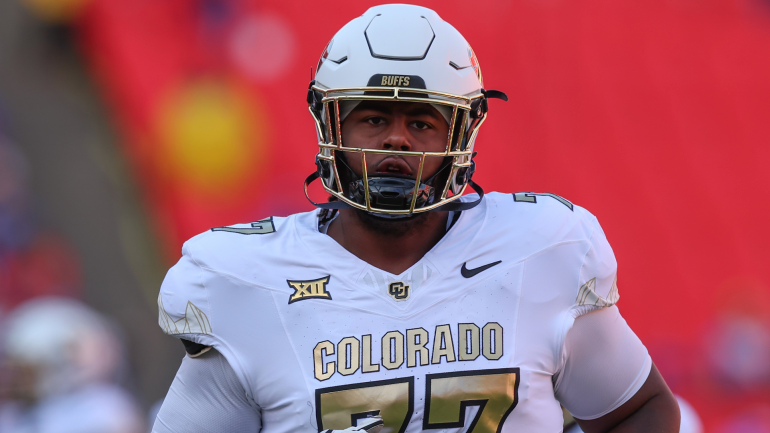
Colorado offensive tackle Jordan Seaton is the college football transfer portal’s best-available prospect after announcing entry with a goodbye letter. The 6-foot-5, 330-pounder was a five-star signee for Deion Sanders and Colorado as the gem of its 2024 recruiting cycle. He projects as one of the 2027 NFL Draft’s top prospects.
Seaton, the No. 4 overall transfer per 247Sports and the top offensive tackle, can expect quite the bidding war with NIL money.
“(His) reported asking price is around $2.5M,” 247Sports’ college football and transfer portal analyst Cooper Petagna said. “I would expect him to receive north of $3 million considering the number of tackle needy contenders.”
During his high-school recruitment, Maryland was in the mix for Seaton, a former Washington (D.C.) St. John’s College High star, as coach Mike Locksley developed a relationship with the massive blocker. The third highest-rated recruit in Colorado history, Seaton started all 22 games during which he appeared with the Buffalos.
Seaton’s exit is Colorado’s biggest loss this offseason. Seaton played 1,421 offensive snaps over his two-year stint, grading out at 67.2 as a true freshman in 2024 and 65.8 as a sophomore this season, via Pro Football Focus.
The Buffaloes lost more than three dozen players to the portal since their season-ending loss at Utah to finish 3-9.
“The thing about these guys man, you’ve got to understand when a guy leaves a program that selected him or picked him out of the portal, he leaves for a multitude of reasons,” Sanders said about Colorado’s expected roster changes. “The No. 1 reason people leave is money. It’s not a disdain for staff or a disdain for player, it’s money. Let’s just be honest man and stop sugar-coating this foolishness. That’s why most people leave.
“I admire the guys that want to go for another opportunity or bigger opportunity and play for a national championship … I applaud that, but that’s not the No. 1 reason people leave programs.”
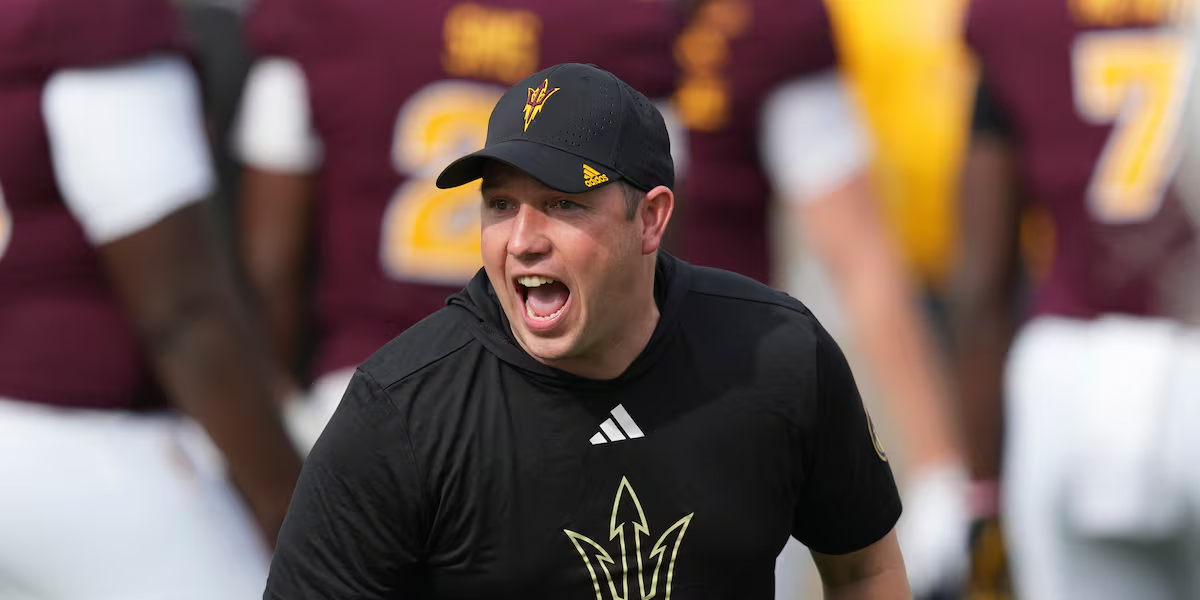
TEMPE, AZ (AZFamily) — Arizona State ranks somewhere in the middle of the Big 12 Conference for football name, image and likeness (NIL) spending, according to a Tempe-based agent.
Peter Boyle, founder and CEO of Activate Sports Management, said ASU has made significant progress since NIL rules were implemented in July 2021.
“If I were to guess based off what I see when you’re talking about football, which is primarily what people are talking, and men’s basketball,” Boyle said. “Keep in mind, there’s baseball NIL and softball NIL and volleyball. Those programs also have revenue share, although to a much lesser degree. But when it comes to football, I would put ASU somewhere in the middle of the Big 12.”
NIL transforms college sports
More than four years after NIL rules were first put in place, the impacts on college sports are becoming clear.
“It’s professional sports now,” Boyle said. “I have a kind of thing where, when my clients sign their first deal, I say welcome to professional sports. Like it is that.”
Boyle said contracts from some schools include incentive-based payments.
“You literally see contracts from some schools, not the Big 12, but I have clients across all different Power 4 schools that have, like, incentive-based payments in them,” he said. “Like, if you are the Big Ten Player of the Week, that’s another $10,000. So, these are professional sports contracts.”
When it comes to quarterback Sam Leavitt, Boyle believes his move to LSU is largely about money.
ASU’s NIL progress
Universities do not report their NIL dollars publicly, making exact comparisons difficult. However, Boyle said he has insight from running a NIL agency based in Tempe.
Three years ago, Boyle would have ranked ASU at the bottom of the pack. NIL dollars differ by conference, with SEC and Big Ten deals typically exceeding Big 12 amounts, though the gap has narrowed.
Boyle has insider knowledge from ASU athletes he represents.
“What they were making three years ago is what a lot of the roster makes now. And those are the top paid guys,” he said. “So it’s a notable difference for sure.”
Donations versus business deals
ASU football coach Kenny Dillingham recently spoke at Mountain America Stadium about finding a wealthy person in Phoenix who could give the football program $20 million. However, Boyle said large donations are not the answer.
“If a donor gives $20 million today, what does that do? It’s monopoly money,” Boyle said. “Because that’s not a business deal that has true business value that can be put into NIL go and pass the CSC. That’s a donation. That’s the old model.”
Boyle said a large donation could help offset revenue share costs and provide ASU more money for facilities, but if the university is playing by the rules, such a donation would not help with NIL deals.
Business deals are more important in college sports, according to Boyle.
“I think if businesses get involved and they can pass through the CSC and be true NIL deals, then there are certainly businesses that hopefully would get involved that would significantly increase ASU’s value provide above cap or above market deals,” he said.
Boyle said he expects the current NIL system to continue without significant changes and that fans should get used to the new landscape.
See a spelling or grammatical error in our story? Please click here to report it.
Do you have a photo or video of a breaking news story? Send it to us here with a brief description.
Copyright 2026 KTVK/KPHO. All rights reserved.

The College Sports Commission has rejected nearly $15 million in name, image, likeness agreements since it started evaluating them over the summer, representing…
UNDATED (AP) — The College Sports Commission has rejected nearly $15 million in name, image, likeness agreements since it started evaluating them over the summer, representing more than 10% of the value of all the deals it has analyzed and closed. The CSC says it did not clear 524 deals worth $14.94 million, while clearing 17,321 worth $127.21 million. All the data was current as of Jan. 1. The numbers came against the backdrop of a “reminder” memo the commission sent to athletic directors last week, citing “serious concerns” about contracts being offered to athletes before they had been cleared by the commission through its NIL Go platform.
UNDATED (AP) — Arizona has tightened its hold on the top spot in The Associated Press men’s college basketball poll after Michigan’s loss to Wisconsin. The Wildcats received 60 of 61 first-place votes. Iowa State moved up to No. 2, followed by UConn, Michigan and Purdue. Nebraska moved up two spots to No. 8 to match its highest-ever ranking set in February 1966. Vanderbilt hit No. 10 for its first top-10 ranking since the 2011-12 preseason poll. No. 19 Florida, No. 22 Clemson, No. 23 Utah State and No. 25 Seton Hall were the new additions to the poll. Kansas, SMU and UCF fell out.
UNDATED (AP) — South Carolina climbed to No. 2 in the latest AP women’s basketball Top 25. The reshuffle follows a week where four of the top 10 teams lost. UConn is No. 1. LSU and TCU jumped into the top 10, with LSU moving to No. 6 after beating Texas. Texas dropped to fourth, while No. 5 Vanderbilt has its highest ranking since 2002. Maryland and Oklahoma fall out of the top 10, and Alabama, Notre Dame, and Illinois entered the poll. The SEC leads with nine teams in the Top 25.
Copyright 2025 Associated Press. All rights reserved. This material may not be published, broadcast, rewritten, or redistributed.
NIL
Former college football coach Chris Klieman says lack of guardrails around NIL, portal led to retirement

Former college football coach Chris Klieman discussed the “factors that drove his decision” to retire, including the lack of guardrails around NIL and the transfer portal, according to Ned Seaton of the Manhattan MERCURY. Klieman said he was “kind of at my wits’ end,” as “anybody can do whatever the heck they want.” He added, “I’ve talked to (many coaches) across the country, we’re all kind of like, ‘We need some guardrails so that somebody can’t spend $45 million, while somebody else is spending 15.” Klieman: “You get done playing Colorado, and come Monday, man, there’s 20 (players’ agents) that want to know a number, or they’re ready to go into the (transfer) portal.” Klieman said for all of December and January he would “work with whatever 80 of our kids to see if we can keep them, and if not, go work with 580 kids to fill the 30 spots we’re going to need,” which to him is “not recruiting.” Klieman: “You’re just putting compensation packages together. … That’s the way college football is, and I’m OK with that, but I don’t have to be a part of it if that’s the way it’s going down.” Klieman said that the issue “needs unified action by university presidents, Congress, and ultimately, a commissioner of college football who could impose and enforce limits and guardrails.” However, he “doesn’t currently see a real path to any of those things, because it will be very difficult to get universal agreement, since those who have the most money have no incentive to sign on” (Manhattan MERCURY, 1/10).

After two seasons of despair, Virginia Tech football fans finally have something to cheer about.
The administration has launched a major financial commitment to Hokie athletics, a new head football coach is expected to bring a haul of top-flight talent with him from Penn State and, to kick things off, an anonymous fan stepped up last month with a record-setting $20 million donation.
Yet it remains to be seen if all of that will be enough to fulfill Tech’s ambition of competing with top-tier schools that have seemingly unlimited resources to invest in the post-amateur era of collegiate sports.
A court settlement last year was supposed to have brought some order to the wild-west world of Division 1 athletics. For the first time, schools were allowed to share revenue with student-athletes, but the amount per school was capped at $20.5 million a year. But the agreement has done nothing to tame the cost of “name, image and likeness” payments.
Atlantic Coast Conference members like Virginia Tech have mostly stood on the sidelines and watched as a small number of name-brand teams set the market value.
Last week, Texas Tech inked ex-University of Cincinnati quarterback Brendan Sorsby to a reportedly $5 million deal. The school, flush with West Texas oil boosters, bragged about the deal in a billboard that lit up New York’s Times Square.
Texas Tech, which rode a gusher of NIL money to this year’s College Football Playoff, has budgeted $35 million in combined revenue sharing and NIL payments to athletes in the 2025-26 school year, according to the Athletic.
There’s no way to know how Virginia Tech stacks up.
Officials in Blacksburg have provided few details about its football finances, including how it spends public funds provided by taxpayers and fees extracted from students. Tech is not an outlier when it comes to secrecy; colleges and universities fear that sharing information could provide an unfair advantage to their on-field opponents.

Reporters in North Carolina have used state open-records laws to determine how other ACC schools are distributing their $20.5 million in shared revenue.
In Virginia, however, universities have taken a unified stand in refusing to release records related to revenue sharing of public funds. Virginia Tech and other universities have used an expansive interpretation of a “scholastic records” exemption in state open government laws to withhold copies of revenue-sharing agreements or payments, even in cases when news outlets have requested the redaction of all names or other personally identifiable information.
“Even with student names redacted individual student-athletes may be identified,” the Virginia Tech FOIA office responded to a Cardinal News open-records request. “Therefore, the requested records are considered scholastic records concerning identifiable individuals. Accordingly, your request is denied.”
In December, Tech spokesman Mark Owczarski agreed via email to provide a general breakdown showing that 75% of shared revenue went to members of the football team, a higher percentage than at the University of North Carolina and North Carolina State University.
Getting accurate numbers about the value of NIL deals received by Virginia Tech football players is even harder to come by. When the settlement was announced, there was anticipation that the details of any NIL deal valued at $600 or more would be released as part of a new agency set up to make sure the terms reflected market value.
The College Sports Commission, however, has released only a top-level report on the total number of deals approved and the value. The one-page document has no information about the number of deals for any school, much less information about individual NIL arrangements.
For several weeks, Cardinal News sought to schedule a follow-up interview with Owczarski about the finances of Virginia Tech football. His office eventually said it will not make him available. “University leadership is not available for interviews on this topic.”
The lack of official information has given rise to publications that have developed formulas to place an NIL value on highly touted players. Here is what On3 Media has to say about two recent Virginia Tech portal commits:
- Ethan Grunkemeyer, 6-foot-2-inch, 207-pound quarterback from Lewis Center, Ohio. Grunkemeyer started the final six regular-season games for Penn State last season and led the Nittany Lions to a 22-10 victory over Clemson in the Pinstripe Bowl. He has three years of eligibility left. On3 Media estimates Grunkemeyer’s NIL value at $783,000.
- Javion Hilson, 6-foot-4-inch, 240-pound defensive end from Cocoa Beach, Florida. Hilson appeared in three games last season with Missouri. Hilson will arrive in Blacksburg with four years of eligibility remaining. On3 Media estimates Hilson’s NIL value at $419,000.
There’s no way to know if Virginia Tech paid more or less than the On3 Media estimates.
Kelly Woolwine, the CEO of Triumph NIL, who for several years acted as Virginia Tech’s “defacto general manager” handling negotiations with players and their families, said he learned from experience that “99 percent of what you hear” about NIL values is untrue.
“On the flip side, truth may be stranger than fiction,” Woolwine quipped in a rare interview on the Virginia Tech Sideline podcast in December 2024.
One thing is certain: last fall, many among the Hokie faithful believed the football program had lost its way.
“What was once a great program competing for championships is now a laughingstock,” wrote Robert Irby in “Sons of Saturday,” a website dedicated to Hokie fandom.
Virginia Tech football hit a low in September after a 0-3 start, ending with a 45-25 blowout at the hands of Old Dominion University in Lane Stadium. After the game, Virginia Tech fired head coach Brent Pry.
Two weeks after Pry’s exit, the Virginia Tech Board of Visitors held a special meeting to approve “Invest to Win,” a campaign to inject an additional $229 million into Virginia Tech athletics over the next four years. Figures released by the board show that about half of the funds would come from donations, while $21.3 million would be generated by an increase in student fees.
“Today, we are stepping up to compete, and we ask our loyal fans and generous donors to step forward with us,” said Virginia Tech President Tim Sands.
In November, fans also cheered news about the hiring of head football coach James Franklin, whom Big Ten powerhouse Penn State had dismissed mid-season. (In an unorthodox twist, Franklin announced he would retain Pry — with whom he had coached at Vanderbilt and Penn State — as his defensive coordinator.)
The coaching change so far has led to a huge net gain for Virginia Tech’s roster. About a half dozen players left the team when Pry was fired, but Franklin has brought talent with him from Penn State.
For instance, Franklin was hired on Nov. 17, a little more than two weeks before top high school players would announce where they would enroll in 2026. In short order, Franklin convinced 11 recruits who had committed to play for him in Happy Valley to change their minds and follow him to Blacksburg.
As a result, Virginia Tech assembled a 2026 recruiting class that ranked fifth in the ACC, behind Miami, Florida State, North Carolina and Clemson, according to 247 Sports.
There was more good news on Dec. 15, when Virginia Tech announced that an anonymous donor had agreed to give a record $20 million gift to the athletic department.
“We are deeply grateful for this extraordinary and timely gift,” Sands said. “Doing more with less, while a testament to the talent of our staff and student athletes, is no longer an option.”
The real test begins this week, as Virginia Tech competes with other schools in a NIL bidding war in the transfer portal.
Coach Franklin has imported a member of his Penn State staff, Andy Frank, to serve as general manager and assemble the roster for the 2026 version of the Hokies.
His predecessor, Woolwine, said one of the vexing challenges in major college football today is managing players’ expectations as compensation goes up year after year.
“You’re going to have a program that is going to bring in a guy for $700,000,” Woolwine said in the December 24 podcast, “and on the other side of the line from him is a guy who has been slaving away at that same university for $75,000 a year. How happy is he going to be when he sees that?”
Woolwine said compensation is by far the biggest locker room distraction in the history of college sports. “It’s bigger than girls, and drugs and partying,” he said.
Players’ concerns about where they stand in compensation can lead to negativity in locker rooms of every major program. “They think their school or their organization was holding out on ‘em, taking advantage of ‘em, sandbagging ‘em. They are very bitter about it,” Woolwine said.
The transfer portal has made it easy for disgruntled players to seek more money and/or playing time elsewhere. This has made it harder for coaches to develop players over time. Underclassmen who have been working toward playing time can find themselves knocked down the depth chart when a school signs players from the portal.
Last season, for instance, only eight of 28 seniors on the Virginia Tech football team played their entire careers in Blacksburg, according to a Cardinal News analysis.
Woolwine said the goal is to find players who are in Blacksburg because they love Virginia Tech. “We don’t have the money to buy our way through this,” Woolwine said in December 2024.
The question remains whether today’s “Invest to Win” will generate the resources that will make it possible for Hokie football to again compete at the highest level.
The loftiness of Virginia Tech’s goal was reflected in a last-minute edit to the goal of the $229 million infusion to athletics. Instead of wanting to be competitive against the ACC (considered the weakest of the Power Four conferences), Virginia Tech expressed a desire to compete with “the best institutions nationwide.”
Related stories

What’s Old Is New Again: NASCAR Changes How It Selects a Champion

Survey shows demand for Omaha after school programs

Illinois, Daktronics Install Largest Video Display in College Football

H.S. GIRLS BASKETBALL: Mahanoy Area overwhelms Nativity for Division II win | Football
Reese Shugart named Gatorade volleyball player of year in South Carolina

Golf: Brooks Koepka Returning To PGA Tour In Two Weeks

17% of Parents Think Their Athlete is ‘Meant’ to Go Pro

Millikan vs. Cabrillo, Boys’ Basketball – The562.org

The evolution of NASCAR’s championship format over the years

Michigan Central Race Days Celebrates the Tech, Talent, and Tenacity of Motorsports; Unique Public Experience Launches January 18 in Partnership with Ford Racing

Jordan Seaton enters transfer portal: Colorado OT can expect NIL bidding war
Student-Athletes Post Record GPA, 329 Earn Fall Honor Roll

Dynisma Partners with Stellantis Motorsport

Tony Stewart to make NASCAR return at Daytona

Luke Friese, Schaeffer Academy Boys Basketball

Stempien to seek opening for Branch County Circuit Court Judge | WTVB | 1590 AM · 95.5 FM

Ross Brawn to receive Autosport Gold Medal Award at 2026 Autosport Awards, Honouring a Lifetime Shaping Modern F1

Princeton Area Community Foundation awards more than $1.3 million to 40 local nonprofits ⋆ Princeton, NJ local news %

Downtown Athletic Club of Hawaiʻi gives $300K to Boost the ’Bows NIL fund

Badgers news: Wisconsin lands 2nd commitment from transfer portal

Five Youth Sports Trends We’re Watching in 2026

Badgers news: Final Four Game Thread vs. No. 1 Kentucky Wildcats

Kentucky VB adds an All-American honorable mention, loses Brooke Bultema to portal

Beach Volleyball Unveils 2026 Spring Schedule – University of South Carolina Athletics

Three Clarkson Volleyball Players Named to CSC Academic All-District List

Kentucky AD explains NIL, JMI partnership and cap rules

Central’s Meyer earns weekly USTFCCCA national honor

Is women’s volleyball the SEC’s next big sport? How Kentucky, Texas A&M broke through

BangShift.com IHRA Acquires Historic Memphis Motorsports Park In Millington Tennessee. Big Race Weekend’s Planned For 2026!

PRI Show revs through Indy, sets tone for 2026 racing season

 NBA Legend Michael Jordan to Join NBC Sports as Special Contributor
 Why a rising mid-major power with an NCAA Tournament team opted out of revenue-sharing — and advertised it
 Trackhouse to pair Chastain with McSwain
 Volleyball Falls to SEMO – Tennessee State University
 Kennewick School Board backs changes to gender inclusion in sports | News
-
 Rec Sports2 weeks ago
Five Youth Sports Trends We’re Watching in 2026
-
 Sports3 weeks ago
Kentucky VB adds an All-American honorable mention, loses Brooke Bultema to portal
-
 Motorsports3 weeks ago
BangShift.com IHRA Acquires Historic Memphis Motorsports Park In Millington Tennessee. Big Race Weekend’s Planned For 2026!
-
 Sports2 weeks ago
H.S. INDOOR TRACK & FIELD: GLOW region athletes face off at Nazareth University | Sports
-
NIL3 weeks ago
Fifty years after IU’s undefeated champs … a Rose Bowl
-
 Sports3 weeks ago
Colorado volleyball poised to repeat success
-
 Sports3 weeks ago
2025 Volleyball Player of the Year: Witherow makes big impact on Central program | Nvdaily
-

 Sports3 weeks ago
Texas A&M volleyball’s sweep of Kentucky attracts record viewership
-

 Motorsports3 weeks ago
Kyle Larson opens door to 24 Hours of Daytona comeback – Motorsport – Sports
-
 NIL3 weeks ago
NIL Funds Are at Top of Arizona State’s Christmas Wishlist