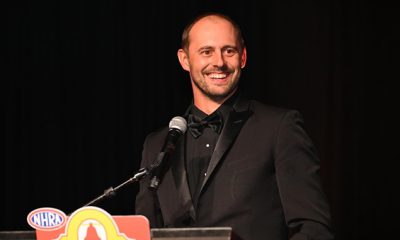
Hundreds of youth athletes packed into a University of Oklahoma practice field Saturday for a youth camp hosted by former Oklahoma Sooner Baker Mayfield.
The camp provided hands-on experience to help young athletes improve their football skills with various drills, competitions and game-day scenarios. Several current OU football players were in attendance Saturday to help run drills. Mayfield, now quarterback for the Tampa Bay Buccaneers, hosted the youth football camp series in both Tampa, Fla., and Norman.
This page requires Javascript.
Javascript is required for you to be able to read premium content. Please enable it in your browser settings.
DURHAM, N.C. (AP) — There wass a youth movement at USA Basketball camp over the weekend with young WNBA players Caitlin Clark, Paige Bueckers and Angel Reese making their debuts with the national team.
They’ve been competing against each other in college and the WNBA over the past few years and Bueckers was happy to have them as teammates again. Many of the young players had competed together for the U.S. on American youth teams. They’ll get their first taste of the senior national team in a camp at Duke this weekend.
“It’s great competing with them for a change instead of against them and I think we really bring out the best of each other,” Bueckers said. “I think that’s what USA Basketball does. Just so many amazing athletes and women coming together for one common goal. I think that’s always brought out the best of each other. It’s really fun to be able to share the court and be on the same side for a change.”
Bueckers gave the group the nickname “Young and Turnt” — a phrase used by youth players in the past to describe their high energy and excitement playing with USA Basketball.
The trio, along with other senior national newcomers Cameron Brink, Aliyah Boston and JuJu Watkins, are the future of USA Basketball with veterans Diana Taurasi and Sue Bird retired and other longtime fixtures in the lineup nearing the end of their careers. The U.S. has won eight straight Olympic gold medals and four consecutive world championships. Olympic veterans Kahleah Copper, Jackie Young and Kelsey Plum will also be at the three-day camp.
“Obviously there’s some vets and there’s the older class who have already came in and won gold medals, and they have that experience,” Bueckers said. “So as a younger group, you want to ask them questions, soak it up, be a sponge. Like, get their experience and then grow in our experience as well.”
The average age of the 17 players at the camp is just over 25. Bueckers said having so many young players who have been together brings a comfort level.
“There’s a familiarity of competing with and against each other,” she said. “We kind of know each other and it’s more comfortable that way, too. We’re all coming in and we’re having the same expectations of just wanting to go in there and compete and have fun and bring our vibes in and just be us.”
Bird, who is now the managing director for USA Basketball, said this camp will hopefully give the new players a look at international basketball at its highest level.
“Really have it be a tone setter,” said Bird, who helped the U.S. win five Olympic gold medals as a player. “What is it to wear USA on your chest? What is it to be on this team? Whether it’s a World Cup qualifier we’ll get to in March or hopefully the gold-medal game of a big competition, you have to set the tone on Day 1.”
Though many invites went out for the camp, Bird said past Olympians such as A’ja Wilson, Breanna Stewart, Sabrina Ionescu and Napheesa Collier had other commitments.
“There’s a lot of moving parts, that’s always how it is for USA Basketball,” Bird said. “For the young players, it’s a great opportunity to get their first feel and first taste.”
People spoke in favor of and against artificial turf at the PAB meeting.
By ALISON BURMEISTER
The Pacific Palisades Recreation and Park Board (PAB) monthly meeting was held on December 9 after the November session was pushed to December when some residents contacted the City Attorney, reporting inadequate public notice.
The small gym at the Palisades Recreation Center filled with neighbors, parents, coaches both in person and on Zoom, to discuss before the board, whether the 140,000-square-foot “Field of Dreams,” a heavily used athletic field near the entrance to Potrero Canyon, be resurfaced with natural grass or synthetic turf.
The proposal for synthetic grass indicated that there would no longer be a dirt infield. Synthetic grass would cover corner to corner, allowing for two full size fields for soccer and lacrosse.
The evening featured two presentations: Bryan Whalen, speaking on behalf of the Pali Community Center Committee and local youth sports organizations, and Dr. Mimi Nartey, whose resume spans environmental biology, climate and society, public health, and a career as a professional soccer player.
The two presentations, both in favor of artificial turf. Bryan Whalen described it as a modern, durable “next-generation” turf made by TenCate. This material is marketed as PFAS-free, meaning it does not have “forever chemicals” which is a growing concern for those who oppose the synthetic turf.
Dr. Mimi Nartey, framed the issue not as an environmental risk but as a public-health intervention, emphasizing that more playable hours on a safer, predictable surface means more continuous physical activity for children and teens. She pointed to research linking inactivity with depression, obesity, and even suicide, arguing that an inaccessible field isitself a health hazard.
Those in attendance opposed to the artificial turf, including members of Resilient Palisades, were not given the same amount of time to state their case for natural grass. Members of PAB indicated they had heard their side in a Zoom presentation that was also available on Y-Tube. Dr. Alisa Bromberg, a Palisadian pediatrician, wrote a letter that was distributed amongst the crowd referencing the potential health risks for the kids playing on artificial turfincluding increased heat exposure from artificial turf, “turf burns” and abrasions and broken down microplastic particles that can become airborne and end up in mouths and children’s developing airways causing respiratory issues.
Supporters of turf emphasized the chronic shortage of playable field space. They argued that synthetic surfaces expand capacity, reduce closures, and allow year-round sports. Many parents pointed out when local families are driving hours away from Pacific Palisades to El Segundo or Westchester, they are often playing on turf fields. Coaches described seasons lost to mud and laying out large plastic tarps, and parents spoke to the emotional drain and environmental costs of gas commuting for sports opportunities the neighborhood should be able to provide.
Those in favor of natural grass, urged the board not to replace the field with “plastic,” citing concerns about nanoplastics, future remediation costs, heat absorption, and runoff into Potrero Canyon—a direct path to the ocean.
A nurse and medical school instructor warned of increasing cancer-risk data; another parent questioned why children should be used as “guinea pigs” for emerging turf technologies.
Others, including teachers and pediatricians, worried about the sensory and psychological consequences of replacing natural environments with synthetic ones. “Biofilia releases oxytocin,” one environmental science teacher said. “Lying on a plastic carpet does not.”
The list of speakers was long, emotional, and deeply invested: parents of young athletes, longtime residents, environmentalists, teenagers, and coaches. Board member Mariam Zar suggested extending the discussion into January. PAB member David Card requested that the vote be postponed to January to allow the pro-grass side a fair, formal presentation equal in length to the turf advocates. Community members in the audience echoed this request, arguing that the night’s imbalance was unfair.
The motion was denied stating it had already been postponed once before. When the board voted, all but one member supported moving forward with artificial turf.
In the end, everyone one agreed on one thing. It is important for the kids to have a place to play. With the installation of synthetic turf, many feel there will be the possibility for “More kids, more sports, more often.”
While the members did vote, they also agreed for those still in favor of grass to have an opportunity to share their solutions for installing and maintaining natural grass in person at January’s meeting.
The Recreation Center gym was packed as people waited to express opinions on the topic of redoing the grass ball fields with artificial turf.
(Editor’s note: Missing from both presentations is cost. The City has not paid to maintain the Field of Dreams, which has been left up to Palisades residents. This editor would like to see the projected cost of watering, fertilizing and maintaining the grass. This editor would like to know the cost of the turf. Since the cost will have to be borne by residents, it’s important to know who will pay for it. That is a necessary part of the discussion.)
As a 15-year-old high school student, DeAnna Duran thought the little blue pills that quickly ensnarled her into addiction’s unrelenting grip were “percs” — the street name for the prescription opioid Percocet.
“At first, I didn’t want to do it, and I think it got to the point where (my friends) were doing it, so why can’t I?” DeAnna, who is now 21, recounted in a recent interview. “After a while, I was doing it more and more and more.”
She tried to convince herself that she wasn’t an addict. But she couldn’t stop, and definitely didn’t want to experience the pain of opioid withdrawal. She started skipping school, failing classes and getting in trouble with teachers. Eventually, she dropped out of high school altogether.
But the pills that DeAnna believed to be “percs” were counterfeits. She had unknowingly become addicted to fentanyl — a powerful synthetic opioid that accounts for more than half of all overdose deaths in the United States. In Santa Clara County, 807 people died from a fentanyl overdose between Jan. 1, 2018, and Oct. 25, 2025, which makes up nearly 75% of all opioid overdose deaths in that same time period. The average age of those who died is 38.
“I didn’t know what fentanyl was, period,” she said, explaining that the revelation came after she looked up the fake pills online. “I had no idea what I was taking.”
DeAnna tried to escape from fentanyl’s grasp several times, with each attempt ending in relapse. Then last December, as withdrawal symptoms started to set in once again, her mother, Jennifer Duran, showed her a video of Dr. Lee Trope talking about Santa Clara Valley Medical Center’s youth inpatient opioid treatment program.
DeAnna Duran, 21 of San Jose, — pictured at right with her mother, Jennifer Duran — enrolled in Santa Clara County’s opioid addiction treatment program for youth under the age of 21 last year and has been maintaining her sobriety. Photographed at the Reentry Resource Center in San Jose, Calif., on Oct. 27, 2025. (Dai Sugano/Bay Area News Group)
In 2021, the Santa Clara County-run hospital launched a first-in-the-nation program that caters to teens and young adults under the age of 21 who are struggling with opioid addiction. Valley Med already had been treating patients who came into the emergency department for substance use disorders, often starting them on medications like Suboxone that counteract the effects of opioids.
But to start a patient on the prescription drug — a combination of buprenorphine and naloxone that works by binding to opioid receptors and reducing cravings — the individual must be in withdrawal. Trope, a pediatric hospitalist and director of the youth inpatient program, said the ER setting wasn’t always the best option for young patients who might need a little extra “TLC.”
Instead, the program admits patients under 21 into Valley Med’s pediatric wing, where Trope said they provide medical support — including medications that can help with sleep and anxiety. The program has seen 80 patients and 115 admissions since it launched nearly five years ago.
“Our goal with our program is we want to have a menu of options that different people with different life situations … could choose different ways of starting their treatment,” Trope said. “We found that most adolescents and young adults in our community have wanted a lot of support, knowing they’re in the hospital, knowing they’re being monitored, knowing they have medications available for that hardest beginning part of getting off of the fentanyl.”
Dr. Lee Trope, director of the inpatient youth opioid treatment program for Santa Clara Valley Healthcare, inside Santa Clara Valley Medical Center on Oct. 29, 2025. (Dai Sugano/Bay Area News Group)
Dr. Lee Trope, director of inpatient youth opioid treatment program for Santa Clara Valley Healthcare, left, and Dr. Annie Chang, medical site director for Valley Homeless Healthcare Program with Santa Clara Valley Healthcare, talk during an interview at the Reentry Resource Center in San Jose, Calif., on Oct. 27, 2025. (Dai Sugano/Bay Area News Group)
Since enrolling in Santa Clara County’s opioid addiction treatment program for youth under the age of 21 last year, DeAnna Duran has been on Sublocade—an injectable medication for opioid use disorder—and has maintained her sobriety. Pictured is a box of Sublocade stored in a pharmacy at Santa Clara Valley Medical Center on Oct. 29, 2025. (Dai Sugano/Bay Area News Group)
1 of 3
Dr. Lee Trope, director of the inpatient youth opioid treatment program for Santa Clara Valley Healthcare, inside Santa Clara Valley Medical Center on Oct. 29, 2025. (Dai Sugano/Bay Area News Group)
Expand
DeAnna was just days shy of her 21st birthday — the cutoff age for the program due to hospital licensing restrictions — when her mother showed her the video. She knew it was time to get help.
“I wanted a better life for myself,” she said of why she made the decision. “I wanted to stop hurting. I wanted to stop hurting my family.”
DeAnna was admitted to Valley Med’s pediatric floor, where doctors asked her how long it had been since she last used — “10 or 11 hours,” she said. They waited for her to go into mild withdrawal before administering Suboxone. She described the symptoms that came with withdrawal as “hell.” Doctors would eventually prescribe her other medications to make her more comfortable. With her mother by her bedside, DeAnna slept for two days.
Jennifer took time off work to be with her daughter while she detoxed. The mother-of-four also didn’t know about fentanyl until well after her child was already addicted. In a recent interview, Jennifer recalled often waking up five or six times a night to check on DeAnna, frightened she was going to walk into her daughter’s room and find her dead.
“I told her it’s only a matter of time — it’s not if you OD, it’s when,” Jennifer said through tears. “I don’t want my daughter to die. I won’t make it without her. For a parent to lose a child, I don’t think it’s something you ever come back from.”
Jennifer Duran recounts difficult times when her daughter, DeAnna, was addicted to fentanyl, during an interview on Oct. 27, 2025, in San Jose, Calif. DeAnna enrolled in Santa Clara County’s opioid addiction treatment program for youth under the age of 21 last year and has been maintaining her sobriety. (Dai Sugano/Bay Area News Group)
It’s been almost a year now since DeAnna walked through Valley Med’s doors. She has almost a year of sobriety under her belt — the longest stretch of time since she first started using at age 15. Each month, she visits the county’s Re-entry Resource Center in downtown San Jose to receive a monthly shot of buprenorphine called Sublocade that reduces her drug cravings. The program also offers other services like counseling.
DeAnna’s physician, Dr. Annie Chang, said that medications like Sublocade provide patients with “stability” as they navigate sobriety. She points out the “great discrepancy” when it comes to the treatment of substance use disorder for adolescents compared to adults — many of the FDA-approved medications have only been studied in adults. That’s why Santa Clara County’s pioneering program is considered a model for other hospitals across the nation.
From a public health perspective, Chang said it’s critical that young people have the same access to treatment as adults do for opioid addiction before they get caught up in the system.
“When we see the trajectory of substance use and these behaviors that the substance use drives, and then they’re involved in the criminal justice system. Then they’re incarcerated, usually in local jails, because their first offenses were minor, and it gets more severe and deeper if that substance use disorder isn’t treated,” Chang said.
As a mother, Jennifer is proud of what her daughter has accomplished. She said they’re still earning trust back with everyone in the family, but she’s proud of DeAnna’s change.
“I want her to go out in life and become something that makes her happy and gives her joy,” she said. “This drug took everything away from her. … If it wasn’t for the support that this program gave her, I wouldn’t have my daughter.”
For DeAnna, that support has made all the difference in her ability to get sober and stay sober. She has spent the last year “trying to heal” to ensure she doesn’t “slip up” in the future. She hopes to go back to school and complete her GED, as well.
“I think overall I’m just proud of myself from where I started to where I am now,” she said. “From six years ago to now, that’s just a big difference of where I came from, especially from having an addiction.”
Individuals under the age of 21 can contact Valley Med’s youth opioid inpatient program by calling (408) 885-5255 and asking for the pediatric hospitalist on call.
Monmouth Park unveils its new 16,000 sq. ft. Caesars Sportsbook
Venue features wall-to-wall video, VIP area, kiosks and Shake Shack
Leaders highlight Monmouth Park’s role in launching legal NJ sports betting
Project strengthens partnerships and long-term development at the racetrack
Monmouth Park marked the next step in its evolution last month, as the long-anticipated Caesars Sportsbook celebrated its grand opening at the Oceanport racetrack. The ribbon cutting drew local dignitaries, leaders from Monmouth Park and Caesars Entertainment, and others.
Of course, Monmouth Park has been on the leading edge of legal sports betting here in New Jersey – serving as key advocates during the legal battle that ended with the landmark 2018 decision greenlighting legal wagers in the state. In anticipation of that ruling, Monmouth Park had made an early gamble on a sports betting with the then William Hill Sportsbook.
On June 14 that year, Gov. Phil Murphy placed the first legal bet in New Jersey. That initial sportsbook was a smaller facility attached to the grandstand. It rebranded to Caesars after the gaming giant purchased William Hill in 2022. The new project broke ground in May 2024.
Gov. Phil Murphy places the state’s first sports bets at Monmouth Park in 2018. – EDWIN J. TORRES/NJ GOVERNOR’S OFFICE
Betting big
The standalone Caesars Sportsbook features 16,000 square feet of indoor and outdoor sports viewing space, including sweeping views of the historic racetrack; wall-to-wall video; more than 25 best-in-class self-service betting kiosks; an expansive center bar; and an exclusive VIP section. The sportsbook, notably, also features a Shake Shack location with its full signature menu.
“We are so proud to partner with Caesars and delighted to offer fans this new state-of-the-art sportsbook,” said Dennis Drazin, chairman and CEO of Darby Development LLC, operators of Monmouth Park Racetrack. “This has been a long time in the making, and it’s satisfying to finally see it come to fruition as we continue the expansion of the Monmouth Park facility as a top entertainment and gaming destination in the state.”
“It’s fitting to open this cutting-edge venue at Monmouth Park, where legal sports betting in New Jersey first launched, and add to its rich history,” said Dan Shapiro, senior vice president and chief development officer at Caesars Digital. “With this investment, we are proud to continue to support horse racing in the Garden State. We expect that the new integrated sports wagering experience will draw new fans from the Jersey Shore and beyond.”
‘A long-awaited project’
During the ribbon-cutting event, Drazin spoke about the partnership between Monmouth Park and Caesars.
“Dan [Shapiro] is not only with Caesars, but he used to be here at Monmouth Park many years ago,” said Drazin. “And Dan has been here with sports betting from the beginning, to work with us in bringing sports betting to New Jersey. This has been a long battle since 2013 and, finally, the Supreme Court gave us sports betting in 2018.
“But Caesars always had the vision of having this building – that we’re standing in now – being the flagship for their sports betting models throughout the country. And I’m proud to be part of the Caesars team in bringing the sportsbook to you.”
Shapiro opened his remarks by joking that he would be brief — noting that Shake Shack was giving out free burgers, fries and chicken sandwiches to the mark the grand opening.
“This is a really exciting day,” said Shapiro. “First of all, this is a long-awaited project. When we first started working with Dennis and his team, we always knew we wanted to do something bigger than we had in the grandstand. And that day really is today – opening this beautiful venue.”
The new Caesars Sportsbook at Monmouth Park features 16,000 square feet of indoor and outdoor sports viewing space, including sweeping views of the historic racetrack; wall-to-wall video; more than 25 best-in-class self-service betting kiosks; an expansive center bar; an exclusive VIP section; and a Shake Shack location. – PROVIDED BY CAESARS/PHOTO BY BILL DENVER/EQUI-PHOTO
Shapiro noted how he had been reminiscing the day before about when the first legal bet was placed – not far from where the Nov. 20 ribbon cutting was taking place.
“We had about 1,000 people there – and you just feel the energy and enthusiasm of that day, and the pent-up demand for sports betting,” he said. “It was just great to see. This is really the evolution of that experience in this beautiful venue with these TVs and video, and this beautiful VIP area and with a Shake Shack restaurant, is just another really cool amenity to add to this.
“We really think we’ve taken sports betting here to a whole new level and really modernized the experience by integrating a great bar, Shake Shack restaurant, VIP area.”
About that Shake Shack…
He reflected on the groundbreaking last year, when several people went up to Shapiro to say how cool it was that Shake Shack was going in there – as if sports betting was old news.
“But now that we bring the two together – I think it’s really a cool thing. I want to thank our great staff here, both in the sportsbook and the Shake Shack restaurant, as well as all the folks from Darby Development that we’ve been working with all this time. Union Square Events – that team is behind Shake Shack here.”
The Caesars Sportsbook at Monmouth Park features a Shake Shack location (seen in back) with its full signature menu. – MATTHEW FAZELPOOR/NJBIZ
And Shapiro gave a special thanks to Drazin for being a partner in this project, as well as the horsemen. “It’s not without Dennis and the horsemen’s support – that it’s possible sports betting wouldn’t even be here today, legally, in New Jersey,” said Shapiro. “Through that battle that Dennis mentioned, starting in 2013, and here we are today – seven-and-a-half years removed, and just opening this beautiful venue really speaks to the success and the vision that we had over 10 years ago.”
‘Without sports betting – we’d be closed’
Drazin began his remarks by thanking all of the key stakeholders and leaders for their efforts on this project, including elected officials, such as Oceanport Mayor Thomas Tvrdik and others.
“Oceanport has been a good partner of Monmouth Park. We appreciate their support,” said Drazin. “But I would be remiss if I didn’t thank not only the Caesars team and Dan Shapiro, but certainly the Monmouth Park team has worked so hard to keep Monmouth Park open. And I would tell you, without sports betting – we’d be closed.
“We would have not survived since 2012.”
At the Nov. 20 ribbon-cutting ceremony for the new Caesars Sportsbook are (from left): Dan Shapiro, chief development officer, Caesars Digital; Dennis Drazin, chairman and CEO, Darby Development LLC, (the operator of Monmouth Park); and Oceanport Mayor Thomas Tvrdik. – MATTHEW FAZELPOOR/NJBIZ
Drazin continued, “Gov. Phil Murphy and his wife, Tammy Murphy, have been very supportive – and we believe that our new Gov.-elect Mikie Sherrill will continue the support that all of the governors have given us over the years, as well as our Legislature. And, hopefully, we’re on to bigger and better things.
“We intend to make a very serious effort again for expansion of casino gaming, which will be the perfect partner for Monmouth Park, assuming the Legislature passes it, puts it on the ballot next November, and the voters move it forward.”
That last point comes at a key time in the gaming sector here in New Jersey and Atlantic City – following the recent and widely anticipated issuance of three gaming licenses in New York City, with those new casinos set to enter the market in the coming years.
What’s to come
“We’re looking forward to a long, happy future here at Monmouth Park,” said Drazin. “We signed a new, 87-year lease – and we’re doing significant development here at the track, combined with some housing. But mainly youth sports and a hotel, and other things that we’re going to partner with the town in trying to support youth sports in the area.
“The town has some fields across the street at Gatta Park – and we’re going to work together to try to make this a destination, not only for sports, sports betting, gaming, hopefully slots, and, of course, our racing product is something we’re very proud of and continue to focus on that.”
We’re looking forward to a long, happy future here at Monmouth Park. – Dennis Drazin, chairman and CEO, Darby Development LLC
Drazin noted that the outdoor deck, which was not open during that chilly November evening event, will be a great spot to watch races during this upcoming season.
“We’re very proud of the job that everyone did,” said Drazin. “You’re all part of the team – and without our Monmouth Park family and our Caesars family, we couldn’t have accomplished this.”
MT ZION, Ill. (WAND) – During the Winter Warmup youth basketball tournament hosted by Mt. Zion High School, members of the community hosted a free throw competition for kids raising money for the “Live. Like. Jack.” scholarship fund.
Boys and girls split into groups from 2nd through 6th grade each were given the chance to compete to see how many free throw attempts they could make. All proceeds for entry fees will go toward the program’s initiative to help local graduates by making college more affordable.
“We’ve got a chance at a thousand kids coming through and giving them a free throw contest,” said Dicky Trump, President of the Mt. Zion youth basketball board. “We hope to have some good funds from that to give back to them and scholarships.”
The program is one of many ways the Mt. Zion community has paid tribute to Jack’s love of sports. Brinkoetter was just 10-years-old when he was tragically killed in a sledding crash in January 2025. In his memory, an outdoor basketball court with multiple new hoops were installed near the grade school. The Braves high school practice & youth football field was also named after Jack.