VIDEO:
AUDIO:
MP3


VIDEO:
AUDIO:
MP3
This article originates on BruinReportOnline.com.

Turns out, the rivalry between Notre Dame and USC was close to being saved earlier this season. According to Ryan Kartje of The Los Angeles Times, the two programs almost announced a 2026 game had been scheduled. However, the agreement Notre Dame put together with the College Football Playoff changed things for the Trojans.
“USC and Notre Dame were close to announcing a continuation of their rivalry earlier this season, a source told @latimes,” Kartje said via X. “USC was ready to compromise and play the ’26 game in November But then USC learned of ND’s agreement w/ the CFP to have a guaranteed spot if in the top 12.
“In light of Notre Dame’s agreement re: CFP, which USC hadn’t been aware of, USC reversed course on its plan to compromise and insisted that the ND game be played in Week Zero in 2026. A source said they felt ND’s agreement was ‘a material advantage’ that could disadvantage USC.”
Notre Dame athletic director Pete Bevacqua revealed this agreement, also called an MOU, with the CFP after this past Selection Sunday. If the Irish are placed inside the top-12 moving forward, they are guaranteed a spot in the field. The same is true if the CFP expands to 14 teams, as Notre Dame would need to be ranked inside the top 13.
If the MOU were in effect this season, Notre Dame would have gotten into the field over Miami despite being ranked lower. Miami also held the head-to-head matchup, jumping Notre Dame at the last possible moment. This scenario playing out against USC was apparently a concern for administration in Los Angeles.
“Had Notre Dame had its new agreement with the CFP committee in place in 2025, the Irish would’ve gotten in over Miami, who beat them earlier in the season,” Kartje said via X. “That scenario was a concern to USC.”
Now, for just the second time since World War II, there will not be a game between Notre Dame and USC. It’s one of the more storied rivalries in college football despite the two never sharing a conference. We are not too far away from 100 games between them, sitting at 93 after the 2025 edition took place in South Bend.
Notre Dame already has a game on the ’26 and ’27 schedule to replace USC. A home-and-home series will take place with BYU, a team they could have played in the Pop-Tarts Bowl in a few days.
HONOLULU (Island News) — When conversations turn to Name, Image and Likeness in college sports, the focus often lands on eye-popping numbers and national stars.
This year’s Heisman Trophy winner, Indiana quarterback Fernando Mendoza, reportedly earned more than two million dollars through NIL deals — a figure that has become shorthand for how dramatically the college athletics landscape has changed.
But far from the national spotlight, NIL is quietly reshaping opportunity in a very different way.
At the University of Hawaiʻi, athletes are discovering that NIL isn’t only about endorsements or social media reach. It’s about identity, adaptability, and learning how to navigate a world where athletic performance and personal story now intersect.
For kicker Kansei Matsuzawa, that intersection arrived unexpectedly.
Matsuzawa came to Hawaiʻi from Japan to play football, improve his English, and test himself at the highest level of college athletics. Branding and marketing were never part of the plan. Yet in today’s NIL era, those skills have become part of the education.
“As a business… I can apply to the business side,” Matsuzawa said, reflecting on what he’s learned through the process.
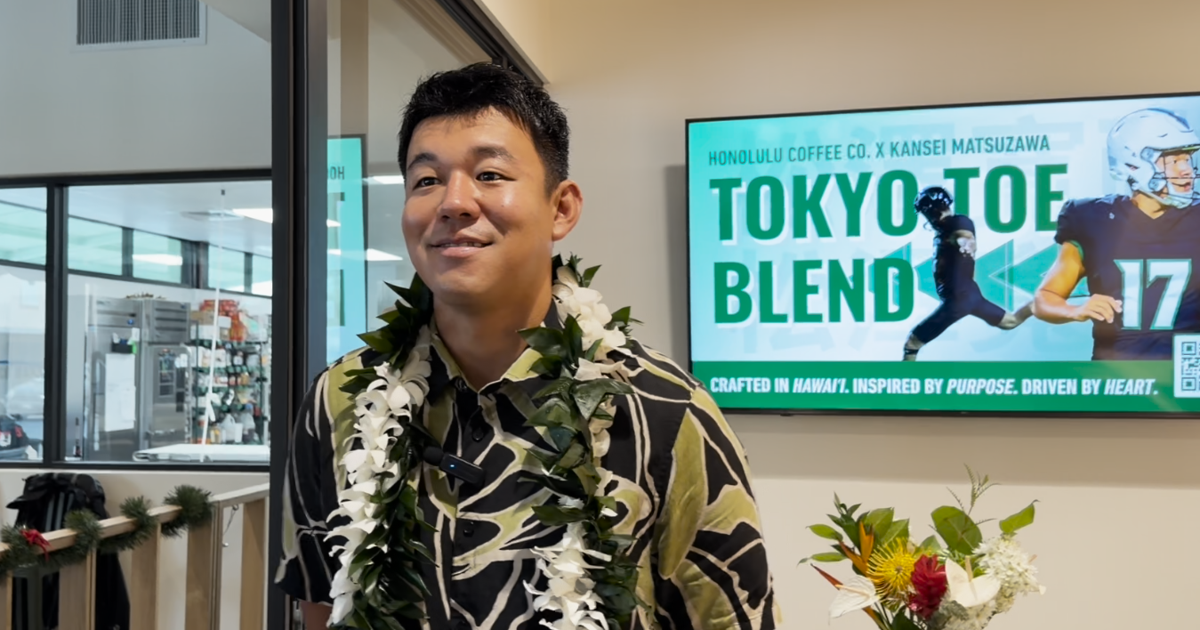
That lesson took shape through an NIL partnership with Honolulu Coffee Company, a collaboration rooted not in star power, but in storytelling. The result was the Tokyo Toe Blend, a coffee inspired by Matsuzawa’s journey from Japan to Hawaiʻi and the precision and discipline required of a kicker — details that mirror both his athletic and personal path.
For Honolulu Coffee, the partnership represented a shift in how businesses think about college athletes.
“As we really started to think about his story… and the University of Hawaiʻi athletics this year too,” said Erica Mounsey, the company’s chief operating officer. “We think this is just the beginning of many partnerships to come in the future.”
Rather than chasing national recognition, the company leaned into authenticity — choosing an athlete whose background aligned with its values and local customer base. In the evolving NIL marketplace, that approach is becoming increasingly important. Consumers respond not just to names, but to narratives that feel real and connected to place.
Those same changes are being felt inside athletic departments.
At UH, NIL has introduced a new layer of complexity to college sports — one that requires creativity, coordination, and a long-term view of athlete development beyond competition.
“We’re thinking about, okay, is there… we gotta be thinking about all at the same time,” said Matt Elliott, UH’s athletic director. “We’re putting together packages… a lot of creative problem solving.”
That problem solving reflects a broader reality: athletes are now brands, universities are strategic partners, and local businesses are part of the ecosystem. Success depends not on one viral moment, but on relationships built thoughtfully and sustainably.
For Mounsey, that mindset defines the future of NIL in Hawaiʻi.
“Anything’s possible… with a goal in mind,” she said.
As NIL continues to evolve nationwide, Hawaiʻi’s athletes are navigating it in a uniquely local way — balancing culture, community, and opportunity. For Matsuzawa, the experience has expanded his understanding of what it means to be a student-athlete.
The kicks still matter. So do the wins and losses. But increasingly, so does the knowledge gained off the field — lessons in storytelling, adaptability, and self-advocacy that will carry far beyond college football.
In Hawaiʻi, NIL isn’t just changing the game.
It’s changing what athletes take with them when the game ends.

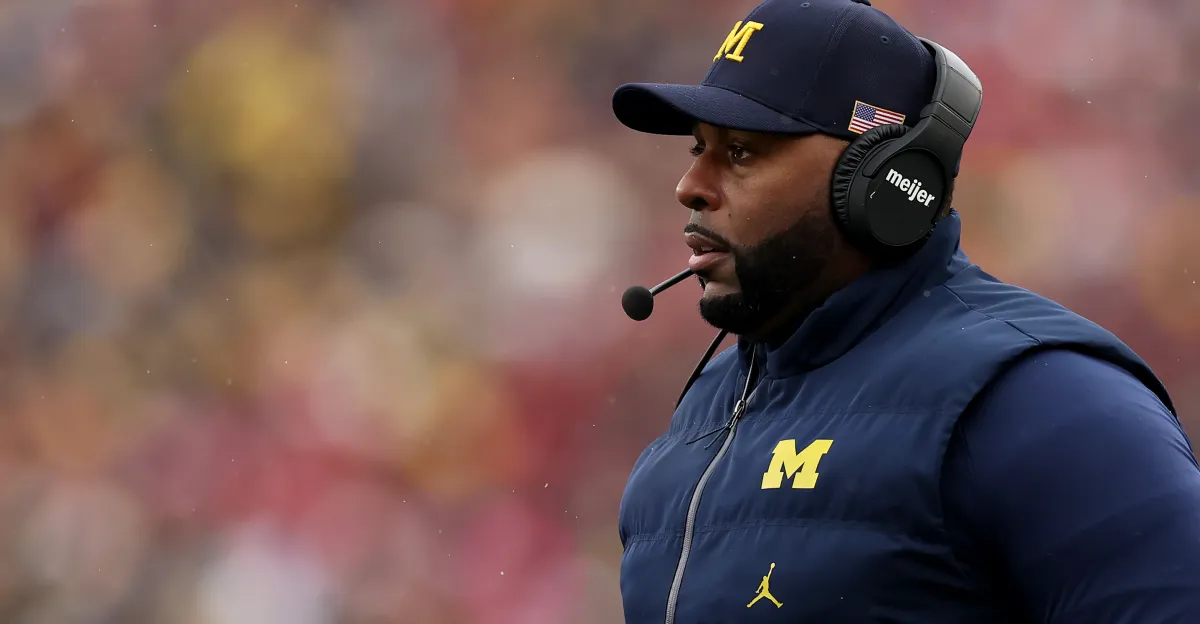
The Sherrone Moore era is over at Michigan after two short years, and for good reason. Now that he’s in the rearview mirror, we can begin to assess the overall job he did as Michigan’s head football coach.
Today, we broke down a few of the key qualities of a football coach and assessed how he performed as Michigan’s leading man.
Following Jim Harbaugh’s departure, Moore had to rapidly fill out a staff as Harbaugh took most of Michigan’s assistants with him to the NFL. Moore hired Kirk Campbell to be his offensive coordinator, Wink Martindale to be the defensive coordinator, and J.B. Brown to be the special teams coordinator. Swing and a miss. Campbell and Brown were abject disasters, with Campbell being let go after just one season while Brown made it two yeaes before being fired. Martindale was well on his way to needing to find a new job as well.
As for position coaches, Moore does get credit for bringing in defensive line coach Lou Esposito and running backs coach Tony Alford. However, the rest of the staff has been disappointing to various degrees. Alford and Esposito prevent this from being an F, but Moore was pretty close to flunking this department.
Moore did well on the recruiting trail. The 2026 class was a borderline Top-10 class and included two five-stars in running back Savion Hiter and edge rusher Carter Meadows. But since his firing, two members of the class in four-star tight end Matt Ludwig and three-star offensive lineman Bear McWhorter have already left. However, it’s okay to give Moore some credit for putting together very good classes. Don’t forget the class of 2025 also included two five-stars in Bryce Underwood and Andrew Babalola.
In the transfer portal era, it’s unfair to define this category based on quantity as back-ups move around at their own pleasure now. However, we have to look at the quality of players in and out. Michigan lost a small handful of notable players in Keon Sabb, DJ Waller Jr. and Matthew Hibner after winning Harbaugh left and Moore was hired. However, Moore then brought in Jaishawn Barham, Josh Priebe and Dominic Zvada, to name a few, that same offseason. At worst, he broke even that season.
Before his second year, he was able to bring in Justice Haynes, Donaven McCulley, Damon Payne Jr. and Tre Williams, to name a few. The transfers out were plentiful, but very few made an impact at their respective new schools. It’s safe to say Moore brought in more talent than he lost in each of his two years. However, there were a few glaring holes each offseason that he did not address (quarterback in 2024, punter in 2025, etc.).
It’s hard to give Moore anything other than an A in this category, as he essentially got NIL off the ground at Michigan. Harbaugh’s famous “transformational, not transactional” model was destined to be dead-to-rights. Moore was able to retain players such as Mason Graham, Will Johnson, Kenneth Grant and Colston Loveland thanks to NIL deals, and he also played a role in Underwood signing with the Wolverines. Say what you will about Moore’s tenure at Michigan, but this was one of his legitimate strengths.
To me, this is the single most-damning category for Moore. He seemed to have no clue what he was doing when it came to clock-management and his use of timeouts. The 2024 Indiana game is the best example, as it quite literally cost the Wolverines a chance at winning. However, alternative examples are numerous and there were no signs of improvement. Under his watch, Michigan routinely challenged obviously correct calls, failed to challenge obviously incorrect calls, and played an all-around undisciplined brand of football. This category is easily an F.
When Moore was first promoted, his main mantas quickly became “SMASH” and “Team over Me.” At the time, most fans were optimistic about these, as Moore was the former offensive line coach and had developed three stellar offensive lines from 2021-23. But that quickly deteriorated, as the 2024 and 2025 offensive lines were average at best.
However, the main reason we are giving this an F is the events of the past few weeks. The fact players and staffers in the program were aware of the inappropriate relationship between Moore and the staffer but were seemingly too afraid to speak up tells you all you need to know. The culture appears to be significantly worse now than what it was when Moore took over, prompting an easy F in this field.

Former Georgia defensive end Damon Wilson II has sued the school’s athletic association, escalating one of the messiest player-school disputes of the NIL and transfer portal era.
In a 42-page complaint filed Tuesday morning in Boone County, Mo., Wilson’s attorneys allege a civil conspiracy involving the Bulldogs and Georgia’s collective to try to “penalize Wilson for his decision to transfer.” The suit alleges that they interfered with his ability to enter the portal and lied about his NIL buyout. The former five-star recruit spent this season at Missouri.
The move is a counter to Georgia earlier seeking to go to arbitration to get $390,000 from Wilson, alleging damages after the player signed an agreement to return to Athens for his junior season before entering the transfer portal a month later.
It’s also believed to be the first time a player and school have taken each other to court over an NIL dispute. The resolution could hinge on Wilson’s argument that the NIL agreement with Georgia’s collective was a binding contract.
“Georgia appears intent on making an example of someone, they just picked the wrong person,” said Jeff Jensen, one of Wilson’s attorneys. “Damon never had a contract with them. I don’t see how Georgia thinks intimidation and litigation will help their recruitment efforts — maybe players could bring lawyers with them to practice.”
“As this matter involves pending litigation, we will have no additional comment at this time and refer you to our previous statement,” University of Georgia Athletic Association spokesman Steven Drummond said.
Wilson appeared in 26 games at Georgia from 2023 to ‘24 and was expected to be a significant contributor this season when he signed an NIL agreement last December with Georgia’s Classic City Collective. The terms sheet called for him to receive $30,000 per month from December 2024 through January 2026.
A month after signing the deal, he transferred to Missouri, where he led the Tigers with nine sacks. Because the agreement was contingent upon his staying at Georgia, the collective ended the deal.
In October, the UGAAA filed an application to compel arbitration in Athens-Clarke County, Ga. It alleged Wilson owed $390,000 — the unpaid amount on the deal — in liquidated damages, as spelled out in the terms sheet.
The suit alleges Georgia staffers falsely told multiple unnamed Power 4 programs that Wilson would owe the Bulldogs $1.2 million if he left. That action was “an effort to prevent (other schools) from offering Wilson an NIL agreement, thereby impeding his ability to obtain an NIL agreement from a competing program that was the product of free and open competition for his athletic services and NIL licensing rights.”
It also contends the Bulldogs didn’t immediately put his name in the portal but instead launched an “all-out offensive” to try to keep him at Georgia. Those acts were part of what the suit called a “civil conspiracy” to interfere with Wilson’s business endeavors by the suit’s defendants: UGA’s athletic association, the collective and its two now-former CEOs, Matt Hibbs and Tanner Potts.
The suit also includes a count of interfering with Wilson’s business opportunities and accuses UGA’s athletic association of violating the confidentiality provision of the terms sheet by sharing its contents, including through a public court filing.
Much of the complaint addresses the NIL deal itself. The suit said Wilson and several other teammates were simply told by a Bulldogs employee to go upstairs at the football building to sign the agreement during preparations for the College Football Playoff. Wilson’s filing argues the deal is not enforceable because it says its terms would “be used to create a legally binding document.” That document was not created. The filing also notes that the terms sheet encouraged Wilson to “seek legal counsel” before finalizing a full agreement. If Wilson’s reading is correct, he would not owe the $390,000 the Bulldogs claim he does.
Finally, the suit includes a count of defamation over a line from a Bulldogs spokesperson about expecting athletes to honor commitments. The statement, the complaint said, implies that Wilson was dishonest, which hurts his reputation.
Wilson lost out on endorsement opportunities and NIL revenue and suffered emotional and mental distress caused by the Bulldogs’ false claims, his attorneys allege. He’s seeking a “fair and reasonable amount of damages” for the “financial and reputational harm he has suffered” along with legal fees.
Georgia’s filing against Wilson this fall was the first known instance of a school taking a current/former player to court over an NIL buyout. And this complaint appears to be the first time a player has sued a school regarding an NIL deal.
The closest comparison is one-time Florida signee Jaden Rashada’s pending lawsuit over a $13.85 million dispute. But he filed that against three individuals involved (including now-former Florida coach Billy Napier) and a booster’s private company; the Gators have not been named as a party in the case.
As the player compensation space evolves in the first year of direct revenue sharing between schools and athletes, disputes will continue to arise. Whether contracts are binding is, to some degree, an open question and affects whether players can essentially act as free agents every year. This case is one of the first, best looks into how the issue might be resolved.
Updated Dec. 22, 2025, 10:57 p.m. ET
Quarterback Nico Iamaleava is returning to UCLA football for a second season to play under new coach Bob Chesney, the team announced Dec. 22.
The former Tennessee quarterback had transferred to UCLA in April. The Bruins went 3-9 this past season, during which DeShaun Foster was fired after an 0-3 start.
Iamaleava completed 64.4% of his passes for 1,928 yards and 13 touchdowns, with seven interceptions in 11 games. He also rushed for 505 yards and four touchdowns. He did not play at Ohio State in November due to a concussion.
Iamaleava played 18 games in two seasons at Tennessee, and started all 13 games during UT’s College Football Playoff run in 2024.
The QB threw for 2,616 yards with 19 touchdowns and five interceptions in 2024, but was less efficient in SEC play. He threw nine touchdowns in eight conference games, but four of those were against Vanderbilt in the regular-season finale.
In his UT career, he completed 241 of 379 passes for 2,930 yards with 21 touchdowns and five interceptions. He redshirted in 2023 behind starter Joe Milton.
Tennessee coach Josh Heupel informed the Vols that Iamaleava was no longer a member of the team prior to the April 12 spring game, ending the relationship between UT and Iamaleava amid an apparent NIL dispute.
Iamaleava skipped the Vols’ final spring practice on April 11, the morning after On3’s Pete Nakos reported ongoing negotiations between Iamaleava and UT. His NIL deal reportedly paid him more than $2 million per year.
ESPN’s Chris Low, citing sources, reported that Iamaleava’s representatives wanted his NIL pay increased to $4 million per year. The family used the possibility of him entering the transfer portal as leverage.
Mike Wilson covers University of Tennessee athletics. Email him at michael.wilson@knoxnews.com and follow him on X @ByMikeWilson. If you enjoy Mike’s coverage, consider a digital subscription that will allow you access to all of it.
Dec. 23, 2025, 5:35 a.m. ET
If you watched any part of Ole Miss’ 41-10 blowout of Tulane, the one common theme you felt was that the absence of former head coach Lane “Benedict” Kiffin was not acknowledged by the home fans; they even appeared to embrace it. It took a while for Rebel Nation to realize it but Kiffin simply was never “one of them” and, while he built the program, he did not measure up to the “Ole Miss family.” Most Rebel fans would probably tell you now they’d rather lose without him than win with him. Kiffin has now been fully exposed and St. Nick (Saban, now known as Mr. Hypocrite) and Pete Carroll, his self-proclaimed advisers, should be ashamed for their comments supporting the manner in which he tried to negotiate his way to both coaching one team and recruiting for another simultaneously. One is the GOAT who ran away from NIL and the transfer portal while the other is a recognized cheater by many. The best part is Kiffin’s LSU Tigers play at Mississippi next year. Good riddance!



SoundGear Named Entitlement Sponsor of Spears CARS Tour Southwest Opener
Black Bear Revises Recording Policies After Rulebook Language Surfaces via Lever
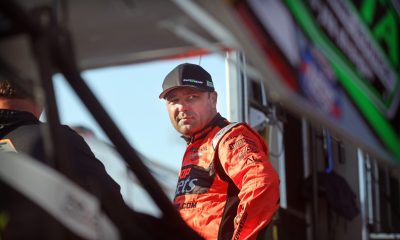

Donny Schatz finds new home for 2026, inks full-time deal with CJB Motorsports – InForum
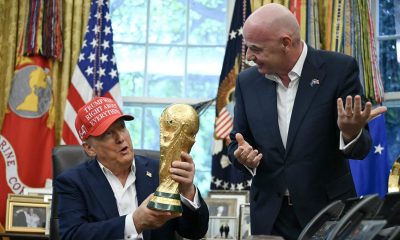

How Donald Trump became FIFA’s ‘soccer president’ long before World Cup draw
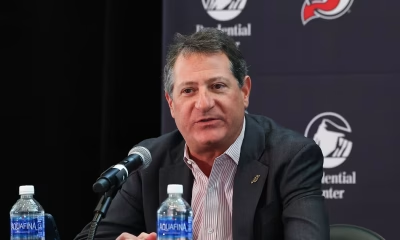

David Blitzer, Harris Blitzer Sports & Entertainment
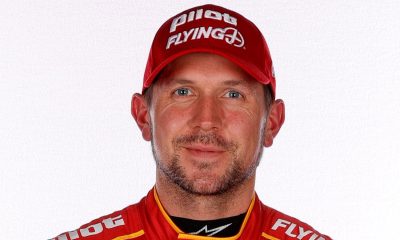

JR Motorsports Confirms Death Of NASCAR Veteran Michael Annett At Age 39
Elliot and Thuotte Highlight Men’s Indoor Track and Field Season Opener
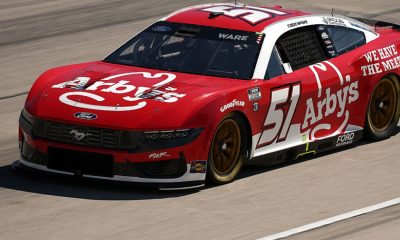

Rick Ware Racing switching to Chevrolet for 2026
West Fargo volleyball coach Kelsey Titus resigns after four seasons – InForum
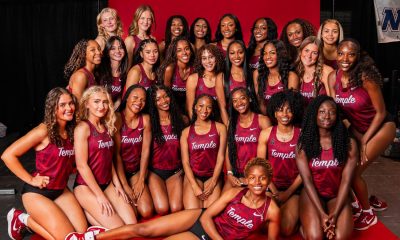

Temple Begins Indoor Track & Field Season at UPenn This Weekend