Connect with us
https://yoursportsnation.com/wp-content/uploads/2025/07/call-to-1.png

Sports

The Circumstances Under Which I Would Happily Institute a Salary Cap

Published

on

The Circumstances Under Which I Would Happily Institute a Salary Cap

The Circumstances Under Which I Would Happily Institute a Salary Cap

Kim Klement Neitzel-USA TODAY Sports

Those of you who listened to Episode 2351 of Effectively Wild can skip this preamble. You already know where I’m going.

Ben Lindbergh is on vacation, so Meg asked me to keep his seat warm for one episode of the podcast. And she was even kind enough to pick out a listener email that would give us something to talk about. I’ll skip over some extraneous context; if you want to hear the whole question go listen to the episode. The question comes down to this: If I were given the power to negotiate on the MLBPA’s behalf in the next CBA negotiation, what would it take for me to agree to a salary cap?

My answer was extensive and somewhat intemperate, and ordinarily I’d repeat the spiel about how Meg is FanGraphs’ editorial voice of reason, the one sane woman cursed to shepherd a flock of irresponsible lunatics through the workday, protecting us (and the company) from our own worst impulses.

But she knew what she was doing with this. Asking me a hypothetical about a salary cap is like waving a steak in front of a hungry wolverine. And I wanted to do the question justice, so a few minutes before we were due to record I started writing down a wish list: a salary floor, abolition of the draft, a shorter and simpler free agency process, and so on. All the serious proposals that get mooted whenever this question comes up.

A salary cap will never happen, at least not without a sport-threatening work stoppage, but it’s an interesting thing to think about from time to time.

But then, I realized I didn’t have to limit myself to working within the current system. In the real world, teams are owned by billionaire investors, most of whom care little about the on-field product. Access to high-level baseball is made as exclusive and expensive as the market will bear, regardless of how big a share of the pie labor gets. Under those terms, I want the players to make as much money as possible, because every dime that doesn’t go to Manny Machado and Bobby Witt Jr. goes to even richer men who don’t entertain me.

In an alternate universe, in which baseball teams were run as public trusts or government agencies, I’d obviously find it grotesque that the clubs’ highest-paid employees made $20 million a year — or, in some cases, upwards of $40 million a year. From a societal perspective, that’s a waste of money. Unfortunately, in our society, the only alternative is worse.

While I was mulling all this over, Meg sent me another message: Her previous appointment was running long, so would I mind pushing our recording time back?

Which is where this all went off the rails. Because not only had I gotten the gears moving on imagining a world where baseball was operated not for profit but in the public interest, now I also had time to flesh the idea out a little.

Not long after I joined this site, I chased a similar rabbit. With playoff expansion in the news in 2022, and league expansion seemingly on the horizon, I noted that MLB had not grown in accordance with the population it served. In 1910, there was one AL or NL team for every 5.76 million Americans. By 2020, that figure was one team per 11.42 million Americans. The last time that ratio got this far out of whack was in 1960, one year before MLB undertook its first expansion project in the league’s modern history. More than that, even with teams moving around the country and broadly following migration trends, the South remains underserved.

High-level baseball is not only alienating potential fans with high prices and indifferent leadership, taking for granted the civic commitment and solidarity that makes people become lifelong devotees in the first place, it is not where the people are.

The AL/NL baseball duopoly cast an unbreakable mold for the form of professional sports in North America: a centralized, closed league with a fixed number of franchises, which are owned by private interests and protected by the league’s cartel setup.

This is not how it is everywhere. The most famous and widely cited counterexample is European soccer, in which teams are (for the most part) clubs which are tied not only to specific cities, but also to specific neighborhoods. European countries smaller than the United States, but the multi-tiered pyramid system makes professional teams more numerous than they are here.

In the brief time in which Meg left me unattended (the editorial equivalent of leaving a dog alone with scissors) I cooked up the Pan-American Municipal Baseball League.

In this system, a central authority allocates club charters to every city in North America and the Caribbean with a metro area population of 1.4 million or more. In the U.S., at least, the sense of regional community often transcends municipal bounds; the greater New York area includes parts of four states, for instance.

Or, for a better example: Atlanta has the eighth-most populous metro area in the country. Culturally, it’s the cultural capital of the Southeast, and certainly one of the 10 most influential cities in the union. But Atlanta proper is relatively small; it’s the 36th-most populous city in the U.S., one step ahead of Mesa, Arizona.

A 30-team league that allocates one team to each city based on population wouldn’t include Atlanta. Obviously, that’s not what you want.

So that’s not what I’m doing. See, every metro area with at least 1.4 million residents gets a baseball team, owned by either the local government or a nonprofit trust. Every dollar the team makes in profit goes back into the community to fund the arts, youth centers, public health, transportation — anything you could tenuously connect to sports.

Here’s the catch: A city (or region) gets a team once it hits 1.4 million inhabitants. But it doesn’t stop there; it gets another team for every additional 1.4 million inhabitants. This is a hard limit — no rounding up or down. If the 2030 census comes around and Las Vegas only has 2,799,999 inhabitants, tough cookies. Maybe you’ll get a second team in 2040.

Why 1.4 million? Good question. The real answer is that I originally set the bar at 1.5 million, but there are three Canadian metro areas that came in between 1.4 million and 1.5 million in the most recent census, and I wanted to be ecumenical.

Using 1.4 million as a cutoff created an attractive coincidence as well. In the English soccer pyramid, the top four levels are considered fully professional, and by that standard there are 14 professional clubs in London: seven in the Premier League, seven more across the three divisions below.

New York has about the same population as London, with a metropolitan area about 30% bigger. If the greater New York area got allocated a professional baseball team for every 1.4 million residents, it would have — wait for it — 14 clubs. Seems reasonable enough.

One reason I like this setup is that I envy how specific European (and South American, it bears mentioning) soccer fandom can be. The U.S. is so big and so sparsely populated, there was a time when half the country got looped into Cardinals fandom just because that was what was on the radio. I’m a lifelong Phillies fan, but I’ve never actually lived in Pennsylvania; if my region had a proportional number of major league baseball teams, I would’ve grown up rooting for a team from Camden or Cherry Hill, New Jersey, with a local identity totally distinct from what you’d find on South Broad Street.

That’s a fun thing to imagine. And since I’m imagining the current professional baseball structure being torn out root and branch, in favor of a larger, more civic-oriented league, let’s imagine even bigger.

I mentioned Canada before; it’s the only country other than the United States that’s ever hosted a Major League Baseball franchise. But why should these two countries have all the fun? The U.S. and Canada are hardly the only two nations in North America where baseball is played widely. Why not extend an invitation to the other North American and Caribbean countries that 1) put a team in the most recent WBC and 2) have at least one city big enough to support a club.

I said Pan-American, after all. That means Mexico, the Dominican Republic, and Cuba as well. (You want to know how powerful my imagination is? I’m imagining a world where American foreign policy is not wantonly antagonistic toward these other four countries. Having an imagination is lots of fun; you should try it.)

Enough with the suspense: Here’s where I’ll be allocating the various PAMBL clubs.

The Pan-American Municipal Baseball League
Metropolitan Area State/Province Country Population Teams
Greater Mexico City DF/MX/HD Mexico 21,804,515 15
New York–Newark–Jersey City NY/NJ United States 20,081,935 14
Los Angeles–Long Beach–Anaheim CA United States 13,200,998 9
Chicagoland IL/IN United States 9,449,351 6
Dallas Metroplex TX United States 7,637,387 5
Houston TX United States 7,149,642 5
Washington–Arlington–Alexandria DC/VA/MD United States 6,278,542 4
Delaware Valley (Philadelphia) PA/NJ/DE/MD United States 6,245,051 4
Toronto ON Canada 6,202,225 4
Miami–Fort Lauderdale FL United States 6,138,333 4
Atlanta GA United States 6,104,803 4
Monterrey NL Mexico 5,341,171 3
Guadalajara JA Mexico 5,286,642 3
Boston–Cambridge MA/NH United States 4,941,632 3
Phoenix AZ United States 4,845,832 3
Bay Area (San Francisco–Oakland) CA United States 4,749,008 3
Inland Empire (Riverside–San Bernardino–Ontario) CA United States 4,599,839 3
Detroit MI United States 4,392,041 3
Montreal QC Canada 4,291,732 3
Greater Santo Domingo DN/SD Dominican Republic 4,274,651 3
Seattle–Tacoma WA United States 4,018,762 2
Twin Cities (Minneapolis–St. Paul) MN/WI United States 3,690,261 2
San Diego CA United States 3,298,634 2
Puebla-Tlaxcala PU/TL Mexico 3,199,530 2
Tampa Bay (Tampa–St. Petersburg–Clearwater) FL United States 3,175,275 2
Denver CO United States 2,963,821 2
Baltimore MD United States 2,844,510 2
St. Louis MO/IL United States 2,820,253 2
Orlando FL United States 2,673,376 1
Charlotte NC/SC United States 2,660,329 1
Vancouver BC Canada 2,642,825 1
San Antonio–New Braunfels TX United States 2,558,143 1
Portland OR/WA United States 2,512,859 1
Pittsburgh PA United States 2,457,000 1
Sacramento CA United States 2,397,382 1
Toluca MX Mexico 2,353,924 1
Austin–Round Rock–San Marcos TX United States 2,283,371 1
Las Vegas NV United States 2,265,461 1
Cincinnati OH/KY/IN United States 2,249,797 1
Kansas City MO/KS United States 2,192,035 1
Cleveland OH United States 2,185,825 1
Tijuana BJ Mexico 2,157,853 1
Havana HAV Cuba 2,154,454 1
Columbus OH United States 2,138,926 1
Indianapolis IN United States 2,089,653 1
San Juan PR United States 2,081,265 1
Nashville TN United States 2,014,444 1
San Jose–Sunnyvale–Santa Clara CA United States 2,000,468 1
León GJ Mexico 1,924,771 1
Chesapeake Bay (Virginia Beach–Norfolk) VA/NC United States 1,780,059 1
Providence RI/MA United States 1,676,579 1
Jacksonville FL United States 1,605,848 1
Querétaro QA Mexico 1,594,212 1
Milwaukee WI United States 1,574,731 1
Research Triangle (Raleigh–Durham) NC United States 1,562,009 1
Juárez CH Mexico 1,512,450 1
Oklahoma City OK United States 1,497,821 1
Ottawa–Gatineau ON/QC Canada 1,488,307 1
Calgary AB Canada 1,481,806 1
La Laguna CU/DG Mexico 1,434,283 1
Edmonton AB Canada 1,418,118 1
Population via most recent census data listed on Wikipedia
Regions with one current MLB franchise in blue
Regions with multiple current MLB franchises in yellow

I’ll save you the trouble of counting: There are 150 teams here. Obviously, that won’t do for a league that’s organized the way MLB is, with six divisions of five teams each and plenty of interdivisional and interleague play.

I’m actually agnostic on the best way to organize a 150-team professional baseball league, a league that, by its own charter, would add teams every decade. In fact, the full version of my spreadsheet from Hell includes a 130-team PAMBL Division II, wherein every metro area with between 500,000 and 1.4 million residents is assigned a minor league team for every half million people. This would allow up-and-coming cities to develop infrastructure for professional baseball well in advance of being inducted into the top level of the PAMBL.

Returning to the original 150-team PAMBL, the lack of any history or precedent leaves a smorgasbord of options. We could have five 30-team leagues, or 10 15-team leagues, or three 50-team leagues, with the champions coming together for the World Series. (Or at least the Hemisphere Series.)

We could introduce promotion and relegation, either on a straight ladder system, with every club in the same pot, or with different regional leagues feeding into a top international division. Going back to English soccer, the promotion and relegation system is called a pyramid because at or below a certain level (the sixth division), it branches out into multiple regional leagues at each level. The PAMBL could do something similar.

Here’s a proposal for six leagues of 25 clubs each, with promotion and relegation. The top two leagues span the whole of North America and the Caribbean, with the bottom four teams in the Premier League being relegated every year and replaced by the top four finishers from the second-division Continental League.

The PAMBL Pyramid (Tiers I and II)
Premier League (Tier I) Continental League (Tier II)
City Team City Team
Atlanta Braves Anaheim Angels
Baltimore Orioles Arlington Rangers
Chicago Cubs Boston Red Sox
Cleveland Guardians Brooklyn Robins
Detroit Tigers Chicago White Sox
Havana Industriales Cincinnati Reds
Houston Astros Denver Rockies
Kansas City Royals Durango Caliente
León Bravos Jalisco Charros
Los Angeles Dodgers Mexico City Tricolor
Mexico City Diablos Rojos Mexico City Murcielagos
Milwaukee Brewers Miami Marlins
Minneapolis Twins New York Highlanders
Monterrey Sultanes Newark Bears
Montreal Expos Pasadena Jets
New York Yankees Pittsburgh Pirates
New York Mets Puebla Pericos
Philadelphia Phillies Querétaro Conspiradores
Phoenix Diamondbacks Sacramento Athletics
San Diego Padres San Francisco Giants
Santo Domingo Tigres del Licey Santo Domingo Leones del Escogido
Seattle Mariners Santurce Crabbers
St. Louis Cardinals St. Petersburg Rays
Tijuana Toros Toronto Blue Jays
Vancouver Canadians Washington Nationals

The bottom four teams in the Continental League will be relegated to one of the two regional leagues in Tier III. I was originally going to name all 150 clubs in the PAMBL, but after having exhausted all of the real-world MLB team names and most of the real-world Mexican League team names, I realized I was already scraping the bottom of the barrel. Especially because 34 of the 150 teams in the PAMBL come from cities where the primary language is Spanish, which I do not speak. The probability of an offensive team name, at that point, greatly outweighs the probability of a clever one.

While Tiers I and II are continent-wide, Tiers III and IV will be split for geographical ease.

The PAMBL Pyramid (Tier III and IV)
Eastern Conference Western Conference
Metro Teams Metro Teams
New York 9 Mexico City 12
Chicago 4 Los Angeles 6
Philadelphia 3 Dallas 4
Washington 3 Houston 4
Miami 3 Inland Empire 3
Toronto 3 Bay Area 2
Atlanta 3 Guadalajara 2
Detroit 2 Monterrey 2
Boston 2 Phoenix 2
Montreal 2 Seattle 1
Baltimore 1 Portland 1
Jacksonville 1 San Jose 1
Santo Domingo 1 Juárez 1
Tampa Bay 1 Puebla 1
Orlando 1 Toluca 1
Chesapeake Bay 1 Las Vegas 1
Charlotte 1 San Diego 1
Raleigh 1 Denver 1
Ottawa 1 San Antonio 1
Providence 1 Calgary 1
Austin 1 Edmonton 1
Twin Cities 1 Oklahoma City 1
Indianapolis 1
St. Louis 1
Columbus 1
Nashville 1

What happens if three or four teams from the East get relegated from the Continental League in a single season? Well, you’ll notice that I’ve split up a few cities that are actually close together: Austin, for instance, is only a few hours from Houston, but they’re in separate conferences.

That’s because I spent — and this is not an exaggeration — about three hours trying to get these 100 teams into some neat, geographically coherent combination of four leagues and I couldn’t do it. At one point my morale was so low I almost hit send on a 25-team division that had Edmonton and Orlando as regional rivals.

Suffice it to say: We can fudge the composition of these leagues if geography demands it.

Obviously, there are unanswered questions in this thought experiment, but the basics are here. If MLB expanded to 150 nonprofit or government-owned teams across 61 metro areas spread over five countries, split them into six leagues with four tiers of promotion and relegation, and abolished the draft and instituted universal free agency from the amateur level… yeah I think I’d be pretty happy with a salary cap under those circumstances. Your move, Rob.

Michael is a writer at FanGraphs. Previously, he was a staff writer at The Ringer and D1Baseball, and his work has appeared at Grantland, Baseball Prospectus, The Atlantic, ESPN.com, and various ill-remembered Phillies blogs. Follow him on Twitter, if you must, @MichaelBaumann.

Continue Reading
Click to comment

Leave a Reply

Your email address will not be published. Required fields are marked *

Sports

NCAA title live updates, score, highlights

Published

on


Updated Dec. 21, 2025, 3:12 p.m. CT

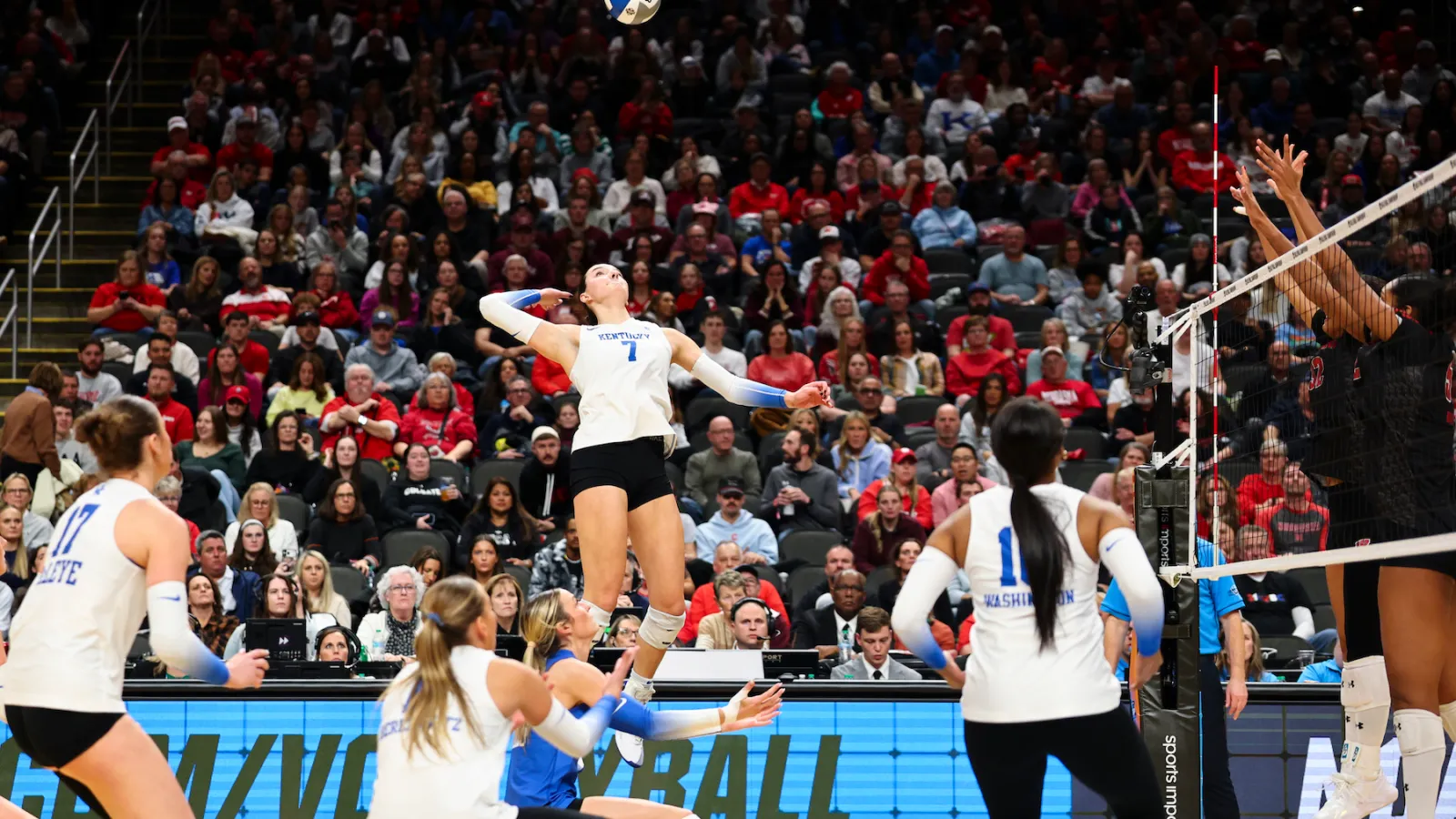
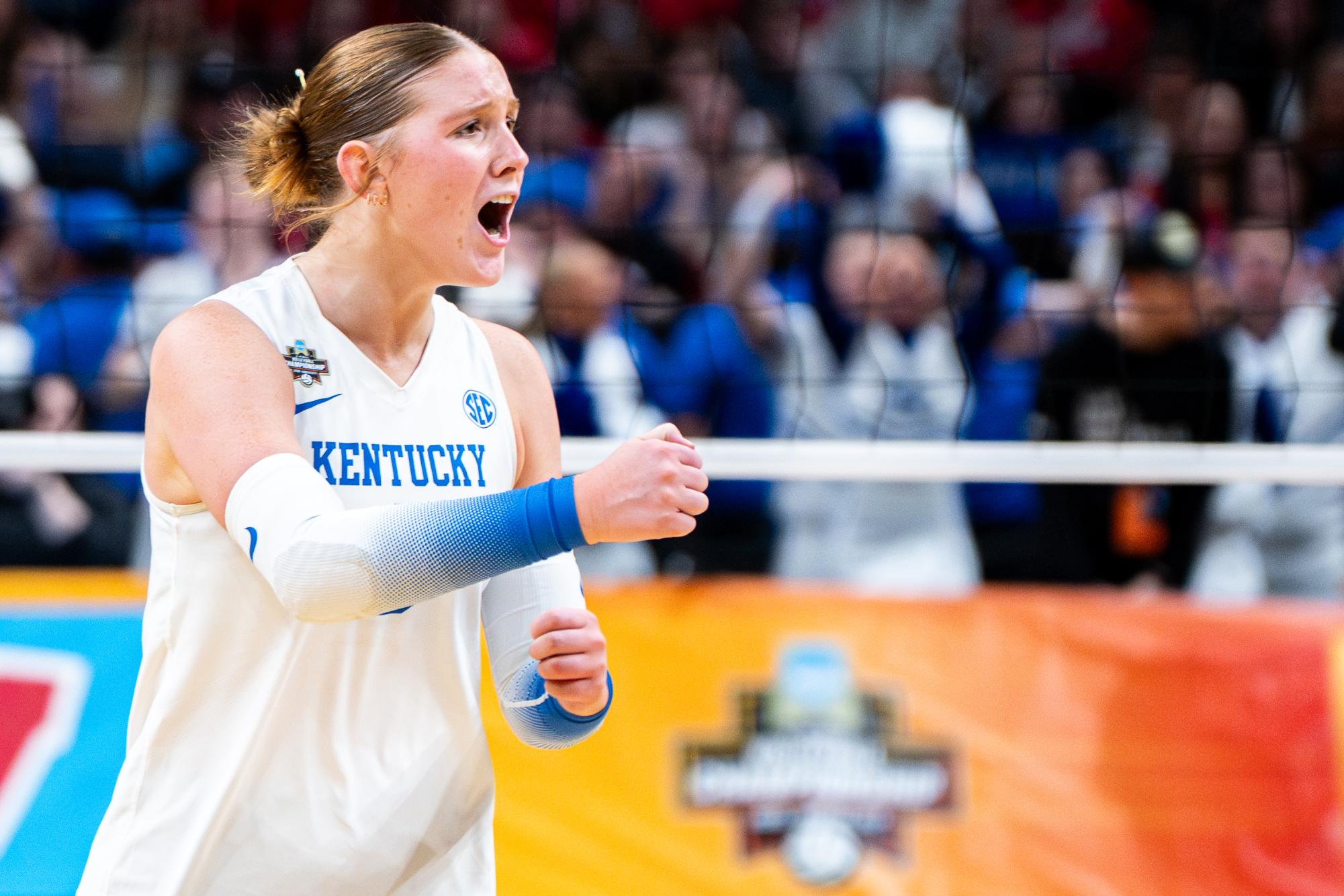
The time is here, and it’s winner‑take‑all for the 2025 NCAA Volleyball Championship. It will be an epic matchup between a red‑hot Texas A&M team and the SEC titan, the Kentucky Wildcats.

A&M plays an energetic and aggressive brand of volleyball. Their roster has few weaknesses, and they stand as the most battle‑tested team remaining. They are led by four All‑Americans and AVCA Coach of the Year Jamie Morrison, who has them on a historic run that has never been seen in Aggieland.

The Aggies will face Kentucky for the second time this season after losing to them 3‑1 for their first and only SEC loss of the season. Both history and revenge are on the line Sunday afternoon in Kansas City when the Aggies take the court to battle for the title of the NCAA’s best.


Link

Continue Reading

Sports

Kentucky Volleyball vs. Texas A&M preview, viewing info, and a prediction

Published

on


Kentucky Volleyball already knows what it looks like to beat Texas A&M. Back in October, the Cats walked into Reed Arena and handed the Aggies a four-set loss when they were ranked No. 9 in the country.

Now the stakes are just a little bit higher. Twenty-seven straight wins, one more banner on the line, and a rematch against one of the most physical teams in America.

Advertisement

First, a reminder of what happened last time.

Kentucky hit .293 as a team in that win, piling up 63 kills on 157 swings. Eva Hudson exploded for 24 kills on .373 hitting, and Brooklyn DeLeye added 19 kills. Lizzie Carr was almost automatic in the middle, finishing with 11 kills on .588.

The Cats’ sideout numbers told the story. They were at 68% or better in each of the last three sets and closed it out 21–25, 25–22, 25–15, 27–25. Texas A&M hit just .205 and never really found a rhythm once Kentucky’s block settled in.

Can Kentucky’s firepower crack Texas A&M’s huge frontline for a second time?

This time around, Texas A&M is even sharper. The Aggies are 28–4 overall, 14–1 in the SEC (that lone loss is to the Cats), and they do just about everything at a high level. They hit .298 as a team with 14.6 kills per set. Their opponents hit only .187 and average 11.5 kills per set. They control the net with 2.61 blocks per set and are steady in the backcourt with 13.3 digs per set.

Individually, it starts with outside hitter Logan Lednicky and six rotation arm Kyndal Stowers. Lednicky has 456 kills, 4.11 per set, on .312 hitting, and still gives you over 2.6 digs per set with 98 total blocks. Stowers adds 375 kills at 3.5 per set on .281 hitting and 2.26 digs per set, plus 63 blocks. That is a ton of volume and a ton of pressure from the pins.

Advertisement

In the middle, Ifenna Cos-Okpalla and Morgan Perkins are a nightmare at the net. Cos-Okpalla is hitting .430 with 236 kills and a ridiculous 195 total blocks, about 1.7 per set. Perkins is at .420 with 95 blocks of her own. Setter Maddie Waak runs the show with efficient choices, and A&M’s offense rarely beats itself.

The matchup problem is obvious. Texas A&M’s front line will test Kentucky’s ability to terminate in tight windows and stay patient when rallies stretch out. The Aggies are used to winning the block battle and forcing teams into low-efficiency swings.

The good news for Kentucky is that this team is built to hit high-level blocks and has the numbers to prove it. The Cats are hitting .293 on the season with 14.86 kills per set, almost a mirror of A&M’s attack. Opponents are at .188 with 12.35 kills per set.

Kentucky’s firepower is relentless. DeLeye and Hudson are basically co-number one options. DeLeye has 536 kills at 4.62 per set on .284 hitting, plus 2.34 digs per set and 41 total blocks. Hudson has 533 kills at 4.59 per set on .323, 2.38 digs, and 49 blocks. You cannot load up on one without the other punishing you.

Advertisement

In the middle, Carr is the key. She is hitting .349 with 222 kills and 136 total blocks, 1.23 per set. When Carr is winning quicks and closing out on the edges, Kentucky’s defense goes up a level. Around her, Brooke Bultema and Kennedy Washington both hover around .260 hitting and are capable of stealing seams and putting extra stress on Texas A&M’s middles.

The first contact battle might decide everything.

Kentucky side outs best when libero Molly Tuozzo and the backcourt are in rhythm. Tuozzo is at nearly 4 digs per set with 456 total digs and has been nailing in serve receive most of this run. Molly Berezowitz gives them another steady defender and server. If those two control the ball, setter Kassie O’Brien can run her full menu and keep A&M’s block guessing.

O’Brien has 1,244 assists this season, 11.01 per set, and mixes tempo and angles as well as anyone in the country. When she has all three levels available, Kentucky becomes almost impossible to load up against. If she is stuck living on high balls to the pins, Texas A&M’s block has the size to tilt the match back their way.

Advertisement

On the flip side, Kentucky’s serve needs to make Waak uncomfortable. The Cats average 1.21 aces per set with 140 total, but the bigger thing is disruptive serving that drags A&M off the net just enough to let Carr, Washington, and company get hands on Lednicky and Stowers. Kentucky has 282.5 total blocks this year, 2.44 per set, and they just held Wisconsin’s high-powered attack in check by turning the fifth set into a wall. This has to look similar.

Texas A&M’s resume says they can win this match in a lot of ways. They have more than enough offense, they defend with discipline, and they do not hand out free points. But Kentucky has already seen its best shot, has already solved them once, and is playing with the swagger that comes from a 27-match win streak and a miracle comeback against Wisconsin that will live in program lore.

If Kentucky passes at even an average level, keeps its serve in play, and forces Texas A&M to hit into a loaded block over and over, the Cats will have every chance to finish the job.

Advertisement

Win this one, and it is 28 straight, another trophy for the case, and the kind of back-to-back run that redefines what Craig Skinner has built in Lexington.

🗓️ Date: Sunday, Dec. 21
🕐 Time: 3:30 p.m. ET
📺 TV Channel: ABC
📍 Location: T-Mobile Center, Kansas City, Missouri
📱 Online Streaming Through Cable/Satellite: ABC is included in most standard cable and satellite packages. Check your local listings.

Streaming Services: You can stream the game on services that carry local channels, including: Hulu + Live TV, YouTube TV, FuboTV, Sling TV (Orange Plan)
You may also be able to pick up the game over-the-air for free if you are near an ABC affiliate.

Odds: FanDuel has Kentucky favored by 1.5 sets. The Moneyline for Kentucky is -156, and for A&M, it’s +120.

Advertisement

Prediction: Kentucky rides the double-headed monster of Hudson and DeLeye to title number 2, Kentucky in 4 sets.

What say you, BBN? Send us your game prediction in the comments!

Drew Holbrook has been covering the Cats for over 10 years. In his free time he enjoys downtime with his family and Premier League soccer. You can find him on X here. Micah 7:7. #UptheAlbion. Go CATS!


Link

Continue Reading

Sports

How to watch NCAA women’s volleyball finals for free: Channel, time for Texas A&M vs. Kentucky

Published

on


The two best women’s volleyball teams will square off in the national championship match.

Kentucky takes on Texas A&M in the NCAA Division I finals on Sunday, Dec. 21, at the T-Mobile Center in Kansas City, Missouri.

The NCAA women’s volleyball finals will air on ABC and can be streamed live on DirecTV Stream (free trial), fuboTV, ESPN+ and other live TV streaming services.

Here’s what you need to know:

What: NCAA Division I women’s volleyball finals

When: Sunday, December 21, 2025

Who, when: Kentucky vs. Texas A&M, 3:30 p.m. ET

Where: T-Mobile Center, Kansas City, Missouri

TV: ABC

Where to watch the NCAA women’s volleyball tournament live and on demand for free

Viewers without cable can watch games live and on demand for free by signing up for the trial offer from DIRECTV or Fubo.

What are the differences between the streaming services?

DIRECTV – Watch live TV from major broadcast and popular cable networks. Enjoy local and national live sports, breaking news and must-see shows the moment they air. Included: unlimited cloud DVR storage space so you can record as many shows as you want and stream them from wherever you go. DTV starts as low as $19.99 per month after a 5-day free trial when you shop their customizable genre packs.

DIRECTV logo

DIRECTV

5-day free trial

DIRECTV logo

Get up to $20 off your first month and enjoy local and national live sports, breaking news and must-see shows.

Free Trial

Fubo – Fubo offers one of the widest selections of channels among live TV streaming services. More than 220 channels, including all the sports and entertainment you love, plus sports add-ons for those niche networks you rely on, and it all starts with a 5-day free trial and $30 off the first month of service.

Fubo logo

Fubo

5-day free trial

Fubo logo

Stream college sports! with Fubo, and enjoy up to $30 off your first month.

Free Trial

Sling – One of the best deals in live TV streaming at just $45.99/month, offering customizable channel lineups for sports, news and entertainment. Now, Sling adds even more value with passes that let you stream live TV without a subscription: just $4.99 for a day, $9.99 for the weekend or $14.99 for a full week. These one-time payments are perfect if you just want to watch a single show, live game or special event. No commitment, no auto-renewal, just affordable access when you need it.

Here is more about the game from the Lexington Herald-Leader, via the Tribune News Service:

Two days out from the NCAA volleyball national championship match, Texas A&M’s Jamie Morrison issued an affecting truth to his players.

“Thirty-five athletes have the right to practice today,” Morrison said. “And … each one of our athletes is one of those.”

For the first time in the history of the sport, the national title match will feature two Southeastern Conference teams. No. 3 Texas A&M, in its first-ever national championship, and No. 1 Kentucky, in pursuit of its second-ever national title, and first since 2020-21.

It’s a picture that, even 10 years ago, not many would believe. But it’s not at all surprising that the only two head coaches in America still allowed to show up to practice this weekend.

Craig Skinner had turned down a few other head coaching jobs before finally deciding to accept one in 2004 at the University of Kentucky.

Skinner had experienced national recognition within the volleyball landscape at the high school and club levels in Muncie, Indiana, before successful tenures as an assistant coach for Wisconsin, Ball State (on the men’s team) and then finally at Nebraska, where he — under the legendary John Cook — won his first NCAA national championship in the year 2000.

By the end of his four seasons with the Cornhuskers, Skinner had played a role in guiding the program to an overall record of 154-11 and four-straight Big 12 championships.

When UK director of athletics Mitch Barnhart came calling to ask Skinner to lead the Wildcats, now 21 years ago, Skinner felt that it was the best choice he could make.

Ahead of Sunday’s national championship match — Kentucky’s second under Skinner and second in program history — the head coach described himself as the kind of guy who “probably operates a little bit more on feel than others.”

“And when I got here, and Mr. Barnhart picked me up at the airport, I just had a two-hour conversation with him,” Skinner said. “And felt like this is where I belonged. And it was, the people of Kentucky are who I am as a person. And I thought that was pretty easy to sell.”

But the Wildcats hadn’t recorded a winning season for half a decade, nor made the NCAA Tournament since 1993.

Kentucky had won five Southeastern Conference Tournament titles since the league championship’s inception in 1979, but the SEC was nowhere near the heavy-hitting volleyball conference that it’s become. The SEC Tournament quite literally ceased to exist following the 2005 edition.

“Material things don’t motivate me,” Skinner said. “But people and feelings do, and so Kentucky was all about that. And I can buy into hard work and effort and earning things.”

Morrison, passionate about international and Olympic-level volleyball, served as an assistant for the United States Men’s National Volleyball Team in the mid-to-late aughts before taking a job as an assitant for the U.S. Women’s National Team.

During his stints with each, he won three Olympic medals — gold in the 2008 Beijing Olympics with the men’s team, silver in the 2012 London Olympics and bronze in the 2016 Rio Olympics with the women’s team. He remains the head coach of the U.S. Women’s U19 team.

Morrison also helped establish League One Volleyball, a professional league established in 2024, and served as the league’s director of sports performance.

Dating back to 1999, beginning at his alma mater UC Santa Barbara, Morrison also made a slew of women’s collegiate assistant coaching stops, continuing to do so amid his immense success at the Olympic and professional levels — most recently at the University of Texas from 2020-21.

Like Skinner, Morrison’s first head collegiate coaching opportunity came in the form of an SEC program with some national success, but nothing like the heights they’ve eclipsed since his hiring.

Morrison was named the head coach at Texas A&M in late 2022.

“When I took this job, whenever I was telling people, they had eyebrows raised a little bit, questioning,” Morrison said.

“And it’s funny because, like, a year in, when all of the changes in college athletics started happening, and they also realized resources were really important, so then it was the first thing that happened. And the other thing that I knew was going to happen was just the conference was going to explode, and I knew it for a few reasons.”

Texas — a perennial power since former head coach Mick Haley broke a barrier (NCAA champs had hailed from California or Hawaii) by defeating Hawaii in the 1988 national championship — joined the SEC in 2024 with fellow newcomer Oklahoma.

But the most monumental shift was Skinner’s breaking through during the COVID-impacted 2020-21 NCAA national championship, during which an SEC team hoisted the trophy for the first time in history.

“I really respect what Craig did out in Kentucky,” Morrison said. “And I said at the time, I had a feeling of, I could do what I believed I could do with this program.”

Belief lies at the heart of the accomplishment of not only reaching the national championship as Texas A&M, or Kentucky, but also of an all-SEC title match. Belief is its root.

“Obviously, I knew that no SEC team had ever won a national championship,” Skinner said. “And in recruiting, it was, ‘Hey, we’re going to be the first team in the SEC to win a national championship. Come join us.’ And sometimes that’s a little … it’s not for everybody. Because to be really good, you’ve got to invest a lot of time.”

In the 20 years between Skinner’s national title as an assistant coach at Nebraska and Kentucky’s national championship, he maintained the commitment to the dream and has not once missed the postseason during his tenure as head boss.

“I’d been a part of a national championship program,” Skinner said. “And just wanted people to feel what that was like. And not just winning it, but the work, and the time and the competitive desire it takes to get to that point. Because that’s the way life is. And so for us to do that, I think, broke down doors that, either Kentucky could do it again, or someone else in the league can do it.”

Like Skinner, Morrison’s team hasn’t missed the NCAA Tournament since his hiring, with the Aggies earning a berth in 2023 after an eighth-place finish in the SEC, and reaching the Sweet 16 in 2024 after finishing fifth in the league.

Suddenly, each coach has led their respective programs to historic success in 2025, regardless of Sunday’s outcome. And their fan bases couldn’t be happier.

For Skinner and Morrison, there’s a certain power to being somewhere that could fall in love with the “special” moments, despite the fact that there may be other programs on campus that take up significant spotlight.

The Wildcats, whose men’s basketball team stands among the most successful in the history of the sport. The Aggies, whose football team will begin its college football playoff journey Saturday in a first-round playoff matchup with Miami (Fla.).

“Kentucky is a flagship institution of the state,” Skinner said. “And there’s no pro sports, and when you do something special, they will get all in, all the time. And we’re feeling that right now.”

Despite the fact that revenue sharing, NIL and the transfer portal have rocked the traditional essence of college sports, two of the college sports’ biggest brands can — as the conference likes to say — “mean more” than just men’s basketball or football.

Morrison said that he was intentional in taking a job at a school that demonstrated a serious investment in women’s athletics, and believes that there is truly room for everybody to succeed.

“There is a balance,” Morrison said. “And I think they do an amazing job of making sure that everyone can be excellent, and giving us the resources within our sports and doing their due diligence on what that’s going to take within each sport to make sure that we can be competitive.”

Morrison’s Aggies have not yet defeated Skinner’s Wildcats, and fell most recently at home, 3-1, in College Station on Oct. 8. Texas A&M, the two-seed in the league tournament, failed to reach the SEC championship match, where the Aggies would’ve had the opportunity to get its revenge.

The return of the SEC Tournament this season just so happened to coincide with the first-ever All-SEC national championship, but its high-powered talent and competitiveness on display earned viewership that would’ve been unthinkable when Skinner first took the Kentucky job, and is more than anything a testament to the elevated floor of Southeastern Conference volleyball.

“The SEC is known for putting on championships,” Skinner said. “And we’re the only sport in the league that didn’t have a championship. And so, there’s a lot of different minds and thoughts going into it, and culminating in what I thought was a spectacle for volleyball. And the league did a tremendous job of putting a spotlight on our athletes.”

In the 2025 SEC Tournament, the Wildcats drew national attention for pulling off a reverse sweep against the Texas Longhorns, who had defeated the Aggies, 3-1, in the semifinals.

Is there room for comparison in the experiences between the resurrected SEC Tournament, and a deep NCAA Tournament run? Outside of the physical and mental energy and effort, Skinner said, or the long haul of difficult competition in quick succession in hopes of a title, only time will tell.

“They had to play tough matches,” Skinner said. “We had to play tough matches. And the more you experience, the more types of matches and feelings you have, the more things you can pull from. So Sunday’s match is going to be completely different in terms of what we feel, but hopefully, at some point during this season, we have been there before, and we can draw from those situations.”


Link

Continue Reading

Sports

Kentucky volleyball game time, Texas A&M-UK NCAA Championship channel

Published

on


Dec. 21, 2025, 5:08 a.m. ET


Link

Continue Reading

Sports

How to Watch Texas A&M vs Kentucky Volleyball Championship Online Free

Published

on


It’s down to Kentucky and Texas A&M in this year’s women’s college volleyball championship. Here’s where to stream it online

It’s down to the No. 1 Kentucky Wildcats and the No. 3 Texas A&M Aggies in the 2025 NCAA Women’s Volleyball National Championship. Kentucky punched their ticket to the final after a stunning comeback win against No. 2 Wisconsin, and the Aggies swept Pittsburgh to secure their program’s first spot in the championship.

At a Glance: How to Watch Texas A&M vs. Kentucky Volleyball Championship

If you’re looking to watch the Texas A&M vs. Kentucky NCAA volleyball championship, read on. Ahead is a full guide on where to livestream the Texas A&M vs. Kentucky match online without cable.

How to Watch Texas A&M vs. Kentucky Volleyball Championship Online

The Women’s Volleyball National Championship will air on ABC. Fans without cable can watch the Texas A&M vs. Kentucky championship match online using any of the live TV streaming services listed below:

How to Watch Texas A&M vs Kentucky Volleyball Championship Online Free

editor’s Pick

➤ $39.99/month
➤ Five-day free trial
➤ Up to 185+ channels

Our favorite live TV streaming service overall is DirecTV. The streamer carries ABC in a few of its plans — the most affordable being the MyNews package at $39.99 a month. However, all DirecTV packages start with a five-day free trial, and some also offer discounts on your first month.

How to Watch Texas A&M vs Kentucky Volleyball Championship Online Free

➤ $55.99/month
➤ Free trial
➤ Up to 300+ channels

Fubo is another one of the best cable streaming solutions with up to 300+ channels, including ABC in every package. Pricing starts at $55.99 a month, but you get a five-day free trial and a discount on your first month.

How to Watch Texas A&M vs Kentucky Volleyball Championship Online Free

➤ $45.99/month
➤ Short-term passes available
➤ Up to 46 channels

Sling is a budget-friendly live TV streamer with plans starting at just $19.99 a month. You’ll need Sling Select, Blue, or Orange + Blue to get an ABC livestream. One downside of Sling is that it does not offer a free trial

How to Watch Texas A&M vs Kentucky Volleyball Championship Online Free

➤ $89.99/month
➤ Three-day free trial
➤ 95+ channels

With more than 95 top channels and other streaming services included, Hulu + Live is a great option for cord-cutters. Get a three-day free trial to start before payment kicks in at $89.99 a month.

Stream Texas A&M vs. Kentucky Volleyball Championship for Free

Want to watch the Texas A&M vs. Kentucky volleyball championship for free? Grab a free trial to DirecTV, Fubo, or Hulu + Live TV.

Texas A&M vs. Kentucky Volleyball Championship Date, Start Time

The 2025 NCAA Women’s Volleyball National Championship between Texas A&M and Kentucky will air on Sunday, Dec. 21, starting at 3:30 p.m. ET.


Link

Continue Reading

Sports

No. 1 seed Kentucky Volleyball set to take on No. 3 seed Texas A&M for 2025 National Championship – Kentucky Kernel

Published

on


No. 1 seed Kentucky and No. 3 seed Texas A&M will face off in the 2025 D-1 Women’s Volleyball National Championship. These are three important things to look at heading into the match.

The History-

Kentucky went on the road to defeat Texas A&M in four sets on Oct. 8. This was the only Aggies regular season conference loss.

Texas A&M hit .205% against the Wildcats, which was its second lowest mark of the season. The Aggies also totaled five blocks which ties for the second lowest in a match this season.

Kentucky had nine unassisted kills in the match vs Texas A&M, which was the most in a match all season.

The Wildcats have won its last four matchups against Texas A&M and  nine of the last 11. The Cats lead the all-time series 17-10.

This is the first time that two SEC teams have faced off in the national championship.

Kentucky is the only team to win the national championship as a member of the SEC.

The Wildcats are making their second national championship appearance in program history, it’s the first for Texas A&M.

The Stars Are Out in Kansas City-

Texas A&M was the only team with four players named to the All-SEC First Team with Ifenna Cos-Okpalla, Logan Lednicky, Kyndal Stowers and Maddie Waak.

Kentucky was the only team with three members of the All-SEC First Team in Brooklyn DeLeye, Eva Hudson and Kassie O’Brien. Kentucky also had Molly Tuozzo on the All-SEC Second Team.

Hudson, DeLeye and Cos-Okpalla were all named as AVCA First-Team All-Americans. O’Brien, Lednecky and Stowers were named to the AVCA All-American Second Team. Tuozzo and Waak made the AVCA All-American Third Team

Kentucky is led by the 2020-21 AVCA National Coach of the Year Craig Skinner. Kentucky’s head coach was named the 2025 SEC Coach of the Year, his seventh time earning that title.

The 2025 AVCA Coach of the Year, Jamie Morrison, is the head coach of the Aggies.

Path to the National Championship-

Kentucky has not lost in three months and 11 days. The Wildcats last loss came against Pitt on Sept. 10. Since then the Cats have won 27 straight matches.

Along the way, Kentucky picked up its ninth consecutive regular season conference title, won the first SEC postseason tournament in 20 years and made the second national championship appearance in program history,

The Cats rolled through the Lexington Regional with sweeps over Cal Poly and No. 3 seeded Creighton. These two teams were held to a combined hitting percentage of just .086%, averaging 9.67 kills per set.

In the Final Four, Kentucky took down No. 3 Wisconsin in five sets. Wisconsin led in many important stats such as kills, assists and digs. Despite this, Kentucky won the match to advance to the national championship.

Since losing to Kentucky, Texas A&M is 16-1 with that loss coming against Texas in the SEC Tournament semi-final. 

The Aggies have taken down three teams ranked top-10 in the AVCA poll, reaching the national championship with wins over No. 9 Louisville, No. 4 Pittsburgh and No. 1 Nebraska.

Nebraska and Pitt were both No. 1 seeds in the NCAA Tournament, which made Texas A&M just the third No. 3 seed to eliminate two No. 1 seeds.

Texas A&M’s last two wins were over the only two teams to beat Kentucky this season.

The championship match will take place inside the T-Mobile Center in Kansas City, Missouri on Sunday, Dec. 21 at 3:30 p.m. ET.


Link

Continue Reading

Most Viewed Posts

Trending