
Sports
FIDMarseille 2025


 Frío Metal
 Since changing its official name from Festival International du Documentaire de Marseille to Festival International de Cinéma de Marseille, FIDMarseille has become a significant premiere-driven industry festival dedicated to the expansive genre of “creative nonfiction” to include experimental, hybrid and essayistic works, often with a political ethos. For its 36th edition, FID reaffirmed its rare outspokenness on Palestine by screening To Gaza (2025) and hosting daily morning screenings of the collective work Some Strings. Through retrospectives of Radu Jude and Chilean duo Carolina Adriazola and José Luis Sepúlveda, the festival also seemed intent on signaling that it is not only political, but provocative. FID hosted the latter’s first ever European retrospective, noting that the filmmakers are rarely programmed outside of South America. For Adriazola and Sepúlveda, this appears, at least partly, by design. Beyond their filmmaking, they run workshops at the Escuela Popular de Cine (Popular Film School) and organize the Festival de Cine Social y Antisocial (FECISO), which resists the traditional urban, middle-class gaze that dominates cinephilia by foregrounding cinema for marginal communities.
My favorite film of the festival was their most recent work Cuadro Negro (2025) which won the Grand Prix at the Punta del Vista Festival earlier this year from a jury including FID’s artistic director Cyril Neyrat. So deadpan it is often unclear whether we’re watching an observational doc or bone-dry satire, this confounding docu-fiction follows “artistic” documentarian Sofía (Sofía Gómez) as she ventures with her camera and tripod into the grounds of the Chilean army—specifically, its titular equestrian acrobatic unit.
Mostly shooting on a low-res handheld digital camera, Adriazola and Sepúlveda’s rough-and-ready images are antithetical to the pageantry on display. Men and their steeds galloping past snowy mountains are stripped of their mythical quality as Sofía belligerently directs the soldiers into awkward tableaus, arms lifted feebly as their horses squirm against them. The project reportedly grew out of the directors’ fascination with horses, which led them to frequent equestrian circles that—unsurprisingly—turned out to be havens for Pinochet-worshipping nationalists. The uneasy entanglement between aesthetics and nationalism is laid bare: the ornamental function of the army’s cavalry and movie-making both rely on a choreography of order and performed dominance.
Sofía is at times comically cruel, as when she orchestrates a bizarre re-enactment of the legendary cavalry officer Alberto Larraguibel Morales setting the world high-jump record on horseback in 1949. She instructs a female soldier to mimic Larraguibel’s pose atop a metal statue mounted on the back of a slow-moving truck (decorated with a skull and cross-bones insignia, a symbol of the Prussian Hussars adopted by the Nazis). Forced into a half-mount position for hours, the soldier’s teary-eyed expression is caught in a dim close-up after finally dismounting. Sofía’s ambivalent performance as a director is Nathan Fielder-esque: both aloof and calculating, she toys with the authority she assumes, exposing the eerie willingness of her subjects to submit to spectacle. Adriazola and Sepúlveda’s anarchic experiment pushes Sofía’s see-sawing power dynamics to an absolute extreme. At one point, she inexplicably moves out of her grandmother’s home and moves in with an older woman who literally prays to Pinochet at night. Rather than the expected rupture, we see a maniacal and surprisingly tender bond develop between the women, shaped by mutual distrust.
A fixture at the festival, prolific Mexican director Nicolás Pereda took part in this year’s FidLab with his upcoming project Everything Else is Noise and premiered his latest feature, Cobre (2025), which won the Special Mention. A wry thriller of bureaucracy that started after Pereda learned about the suspicious death of an activist protesting labor conditions in a mining town, Cobre begins as Lázaro (Pereda regular Lázaro Gabino Rodríguez) finds a dead body on his way to work at the mines.
After Lázaro’s discovery, he becomes slowly encumbered by respiratory issues which are met with skepticism by his doctors, boss and aunt Rosa (new collaborator Rosa Estela Juárez, joining a career-long ensemble cast). Pereda does not build a central narrative around the murder mystery, but moves off-center to explore how systemic violence seeps into the inner lives of those on the periphery, juggling tensions between truth, performance and deception around the ambiguous origins of Lázaro’s illness, rumors around the dead body and Lázaro’s involvement, or white workplace lies. The Kafkaesque apex emerges when Rosa waits for a manager to approve her forged signature on a nondescript document to avoid a minor ouroboric workflow delay. Pereda’s static camera lingers on her face; her breathing is shallow and unsteady, her eyes dart around timidly. Trauma is first internalized, then slowly made external through phantom pains, props and repeated gestures. Lázaro’s compulsive fruit consumption, for instance, becomes a strangely sensual intermediary for displaced and unmet desire. Moments of deliberate performance paradoxically mediate moments of truth. When Lázaro sets Rosa up on a date with his creepy older doctor in exchange for a free oxygen tank, Lázaro and his mum role-play the encounter with Rosa, asking her comically pointed questions about the tensions within their own family. While Lázaro and Rosa perform, the camera pans down to linger on their hands touching timidly as a slow, transgressive desire percolates. As always, Pereda turns seemingly banal interactions into sly displays of power.
Winner of the Prix Georges de Beauregard, Clemente Castor’s sophomore feature Frío Metal (2025) builds on his debut Príncipe de Paz (2019), continuing his focus on adrift youth in the Mexico City suburb of Iztapalapa. Trained at the Béla Tarr film.factory in Sarajevo, Castor—like fellow alumnus Kaori Oda—explores a rich dialectic between subterranean spaces and the human body. The result is a highly symbolic, syncretic universe in which bodies collide dizzily with eroded landscapes shaped by human interference. A loose narrative follows two brothers, Mario (Mario Banderas) and Óscar (Oscar Hernández); the former wakes up in a body that is not his, with “images that don’t belong to him,” while Óscar is mostly absent, having escaped from rehab and disappeared from the family. The film’s segments are divided by various game sequences which operate like a secret code accessing alternate cinematic universes. “You will never progress,” a tarot reader tells Mario—an omen followed by a dreamlike encounter with Lázaro (again, Lázaro Gabino Rodríguez), who teaches him a complex hand gesture that initiates a spatio-temporal drift between urban ruins and mountainous terrain interspersed with non-fiction vignettes of idle suburban youth.
Castor’s work is often aggressively opaque, guided by a seemingly haphazard editing logic that deliberately short-circuits narrative momentum as the film drifts between non-fiction, epistolary voiceover, gestural performance and the supernatural, staged by a largely non-professional cast. Although I can’t say I understood everything, I felt so surprised by the sensation of being adrift, teleporting between ever-shifting film textures and terrains, from the underground to the skies of what appeared like the edge of the world. The film’s dialectics aren’t strictly ideological but affective: like Mario, I found myself clinging to signs, grasping at symbols, trying to decode meaning from disorder in an almost schizophrenic mode before suspending any desire for formal cohesion. The more Castor tears at the fabric of reality, the more forceful the non-fiction vignettes become. I keep returning to the black-and-white 8mm opening shot: a sour-faced roulette girl spins her wheel at a fairground. Even as she hollers for new players, her face reveals that there are no winners.
Pereda and Castor’s films both engage with the ripple effect of violence born from the extraction of natural resources in their native Mexico with radically different methods. Both filmmakers are less concerned with external representations of struggle than with the internal emotional lives of adrift, working-class individuals, foregoing documentary for a form more fantastical as a means of engaging with the conditions of their collective alienation: one evocatively minimalist; another dizzyingly maximalist.
A real discovery for me was French Competition winner Bonne Journée (2025), made over four years with almost zero budget by visual artist Pauline Bastard, who remains relatively unknown outside France. With a distinctive style rooted in a sustained commitment to recycling, here she upends the format of the durational labor film with something more spritely and camp despite remaining largely dialogue-less. At the Emmaüs centre in Grenoble—a cavernous warehouse charity shop that sells everything from kettles and electronics to statues and clothing—Bastard turns her gaze to the mostly immigrant African workers doing the tedious job of taxonomizing, repairing and displaying the incoming barrage of abandoned objects. Bastard carefully confines us within the warehouse, with shots of the famed Grenoble Alps always out of reach beyond a window, or reflected off of a pair of wide-eyed glasses adorned by one of the workers.
Another canonical French recycling film by Agnès Varda comes to mind, but this more closely resembles Sarah Maldoror’s Un Dessert pour Constance (1981) which considers the ways in which found objects can be re-used for unexpected creative purposes and how the labor of African migrants maintains the pristine appearance of the Republic. At first, Bastard’s static camera observes idling workers sorting through piles of junk—at one point, a six-foot-long shirt continually unfurls until it eclipses the man holding it. When they discover cameras in various cardboard boxes, the workers start using them to stage their own images. A kitschy trio of lamps and a pair of big baby dolls are placed gingerly on glittery fabric; their compatriots model the sartorial pieces with coy, vogue pouts. Bastard playfully renounces any steady authorial position as her own frame is subsumed by her companions’ perspectives as they transform the detritus of 21st-century overproduction into a giant costume-shop and stage.
These chichi portraits are finally displayed in frames and monitors dispersed throughout the shop; shoppers fix their gaze on them with quizzically amused expressions. It’s refreshing to see Bastard delicately reimagine the near-rote questions of the art world (what is an art gallery? What are the potentials of image-making?) without falling into self-congratulatory didacticism. In these restagings, the objects curiously sit between multiple worlds: first dispossessed, then iconic, finally just commodity. By reproducing the aesthetic of fashion catalogues and luxury-deco magazines, Bastard both makes fun of our curious fetishistic accumulation of stuff, while also lingering on the seductive quality of such images. Then Bonne Journée finally turns back to question itself: is the film an object or a product?











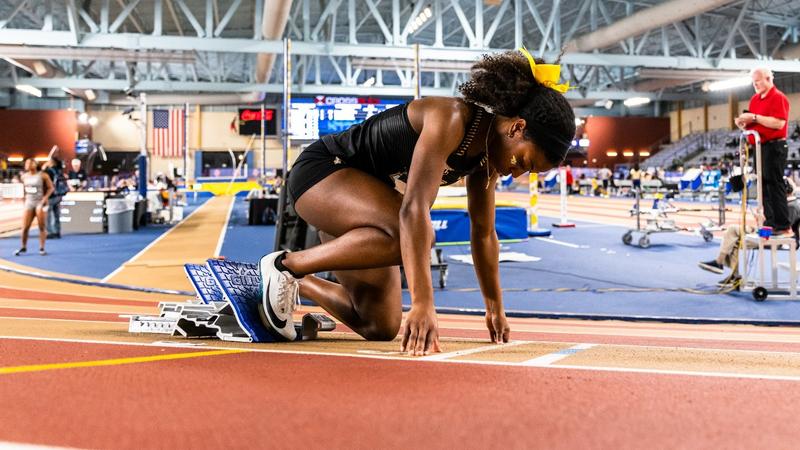
BOONE, N.C. – The App State women’s track and field team launches the 2025-26 indoor season at the Visit Winston-Salem College Kick-Off at the JDL Fast Track on Saturday. Field events will start at 9:30 a.m., and track events are scheduled to begin at 10 a.m.
Twenty-five Mountaineers return to the High Country after guiding App State to a third-place finish at the 2025 Sun Belt Indoor Championships, the best team finish for the Black and Gold since winning the title in 2016. Lilly Nichols, who set the school, conference, and Polish U20 women’s indoor pole vault record with a clearance of 4.26m (13′ 11.75″) in her collegiate debut, returns for her sophomore season. The Broomfield, Colo., native secured silver and earned Second-Team All-SBC honors in the women’s pole vault with 4.18m (13′ 8.5″) at last year’s indoor championship. Joining Nichols in the pole vault and returning for her senior season is Ava Studney. Studney matched Suzanne Makinson’s 2004 clearance of 4.06m (13′ 3.75″) during the 2024 campaign and stands tied for second on the App State all-time list. She also finished sixth at the conference championship last year with a clearance of 3.73m (12′ 2.75″).
Sprinters Kendall Johnson, Nicole Wells and Jayla Adams return for their junior seasons. Johnson set the school record with a time of 7.42 in the women’s 60-meter prelims at the SBC Championship and finished seventh overall in the final with a time of 7.51. The previous record was 7.44, set in 2005 by Jennifer Claud. Additionally, Johnson, alongside Addison Ollendick-Smith, Ja’Naya Linder and Adams, earned Second-Team All-SBC honors for their performance in the women’s 4×400-meter relay at the conference championship. The quartet stopped the clock at 3:45.19, coming within two seconds of the program record of 3:43.85, which was set at the 2023 Sun Belt Indoor Championships.
Ollendick-Smith, who holds the program record in the women’s 600 meters (1:33.95) and stands second all-time in the women’s 800 meters (2:11.13), returns for her senior season, specializing in mid-distance events. In addition to helping the Mountaineers to a second-place finish in the women’s 4×400-meter relay, she was a part of the women’s distance medley relay team that also secured silver at the conference championship meet with a time of 11:35.52.
Junior Rhys Ammon and sophomore Savannah Moore return to the track for the Mountaineers’ distance squad this year. The duo secured spots in both the women’s 600 meters and women’s 1,000 meters last winter, with Moore leading the way, ranking second all-time in the 600 meters (1:36.45) and third all-time in the 1,000 meters (2:57.90). Junior Dianna Boykin and sophomores Emily Edwards and Brittany Ellis make their returns for App State’s throws squad. Boykin and Ellis both recorded personal bests in the women’s weight throw with marks of 14.20m (46′ 7.25″) and 12.86m (42′ 2.25″), respectively at the SBC meet. Edwards led the team in the shot put last season with a personal best mark of 12.57m (41′ 3″), which she set at the 2025 Virginia Tech Invitational.
For the 2025-26 campaign, thirteen newcomers will don the Black and Gold. Senior Damyja Alejandro-Ortiz, who spent three seasons at Lenoir-Rhyne, and sophomore Micayla Collins, who spent her freshman season at Virginia Tech, joins App State’s sprints squad alongside freshman Tatiana Blake. Freshmen Alana Braxton, Kelly MacBride, and Ashlynn Wimberly will specialize in the jumps events this season. Distance freshmen Josie Jackson, Allie Kinlaw, Tessa Massa, Julia Mayer, Elizabeth McCart, Lika Strydom, and Ashby Williams are set to step onto the track after making their collegiate debuts on the cross country course this fall. Massa, Jackson, and McCart earned All-SBC honors after helping the Mountaineer women to their second consecutive Sun Belt Cross Country team title. Additionally, Massa was tabbed as the Sun Belt Women’s Cross Country Freshman of the Year for her efforts.
On Deck
App State’s indoor season will resume on Saturday, Jan. 10, with the UNC Asheville Collegiate Opener at Tryon International in Mill Spring, N.C.
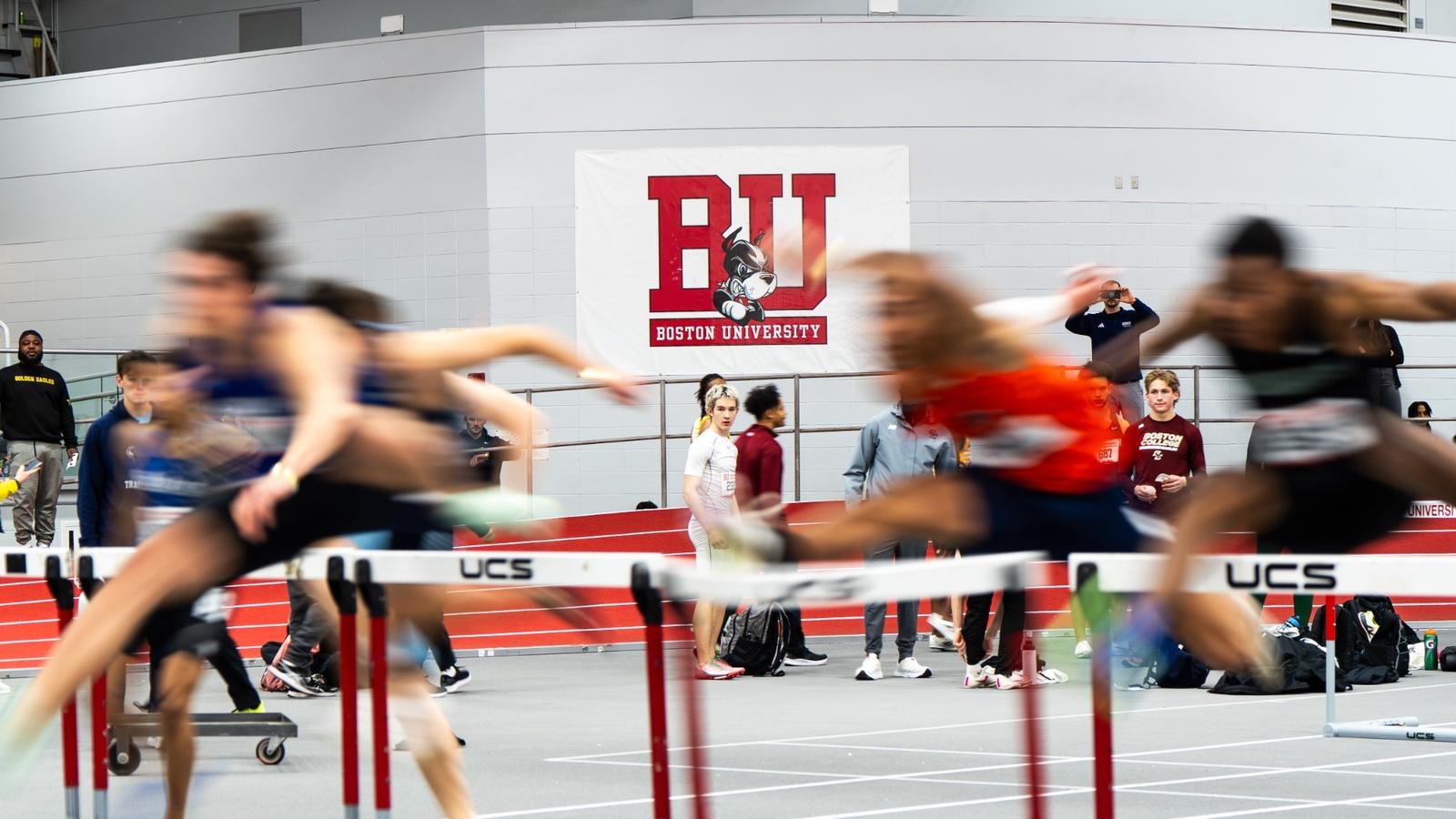
The Track & Tennis Center will host some of the top athletes in the world over the course of the day, including a 90-minute “FloTrack Night in America” session featuring top heats in mid-distance and distance events beginning at 3 p.m.
During the meet, the Terriers will honor the late Sharon Colyear-Danville ’83, who passed away in 2024. The two-time Olympian and BU Hall of Famer’s legacy will be honored with a ceremony at approximately 9:40 a.m. with her husband of 43 years Bob Danville and their two sons, Reid and Neil Danville, in attendance.
How to Watch
FloTrack brings you live coverage of the track events from the Sharon Colyear-Danville Season Opener. Catch all of the action and start your subscription today! SIGN UP HERE: https://flosports.link/3HPCJzR. In addition to live race coverage you’ll gain access to track news, events, original content, and more.
How To Watch: Sharon Colyear-Danville Season Opener
When: Saturday, December 6
TV: Download the FloSports TV app on Roku, Apple TV, Amazon Fire TV, and Chromecast
Mobile: Download the FloSports iOS and Android apps
Web: Bookmark FloTrack.org in your favorite browser
Parking Advisory
Indoor Track & Field – Sharon Colyear-Danville Season Opener (Track & Tennis Center) – 10 a.m.
Very limited parking is available at an event rate of $14 in the Langsam Garage (LOT B) located at 142 Gardner St., Boston, MA 02215. Those arriving after 8:30 a.m. should proceed directly to the Essex Street Garage & Lot (LOT F) located at 148 Essex Street, Brookline, MA 02446.
Track Schedule (Faster heats first):
9:45 a.m. Women’s 60H FINAL
9:50 a.m. Men’s 60H FINAL
9:55 a.m. Men’s 60m Trials
10:00 a.m. Women’s 400m
10:05 a.m. Men’s 400m
10:15 a.m. Women’s 600m
10:25 a.m. Men’s 600m
10:35 a.m. Women’s 300m
10:45 a.m. Men’s 300m
10:57 a.m. Women’s 60m Final
11:00 a.m. Men’s 60m Final
11:05 a.m. Women’s 800m
11:12 a.m. Men’s 800m
11:18 a.m. Women’s 200m
11:25 a.m. Men’s 200m
11:35 a.m. Women’s 4x400m
11:40 a.m. Men’s 4x400m
12:00 p.m. Women’s Mile
12:20 p.m. Men’s Mile
12:55 p.m. Women’s 3k
1:40 p.m. Men’s 3k
2:55pm – Start of FloTrack Night in America (elite window)
3:00 p.m. Women’s 800m Invite
3:05 p.m. Men’s 800m Invite
3:11 p.m. Women’s Mile Invite
3:19 p.m. Men’s Mile Invite
3:27 p.m. Women’s 3k Invite
3:39 p.m. Men’s 3k Invite
3:52 p.m. Women’s 5k Invite
4:13 p.m. Men’s 5k Invite
4:29 p.m. Men’s 600m Invite
4:30 p.m. Women’s Open 5k (9 HEATS)
7:15 p.m. Men’s Open 5k (9 HEATS)
Field Schedule (Best flights last):
Rolling start beginning at 11 a.m.
Women’s High Jump followed by Men’s High Jump
Women’s Shot Put followed by Men’s Shot Put
Women’s Pole Vault followed by Men’s Pole Vault
Women’s Long Jump followed by Men’s Long Jump
Women’s Weight Throw (Following men’s shot put) followed by Men’s WT
Women’s Triple Jump (Following men’s long jump)
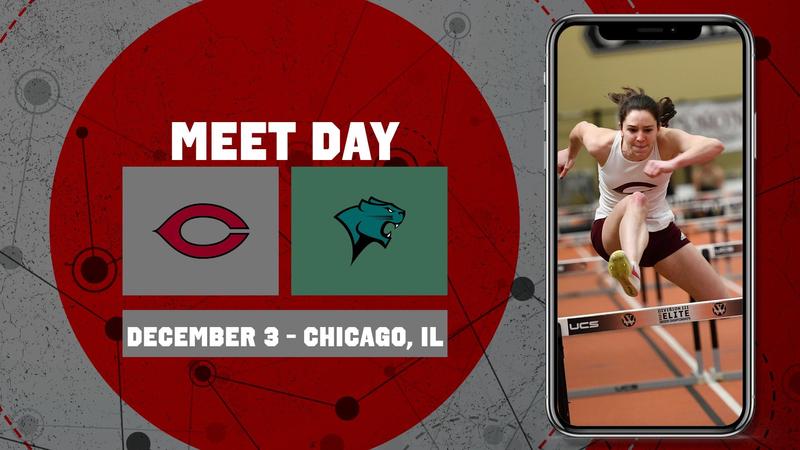
CHICAGO — The 2025-26 season begins for the University of Chicago women’s track and field season on Friday afternoon as the Maroons travel just South of campus to Chicago State for the Cougar Alumni Classic.
MEET DETAILS:
| Friday, December 5 – 2 PM CT |
| Cougar Alumni Classic |
| Chicago, IL |
| Chicago State University |
UCHICAGO WOMEN’S TRACK AND FIELD NOTES:
* The University of Chicago women’s track and field team returns to action on Friday after a successful 2025 season.
* The Maroons brought home a 6th-place finish in the National Championships and a 2nd-place finish in the UAA Championships last season.
* Marina Semple was ranked 16th in NCAA Division III, 5th in the Midwest Region, and 2nd in the UAA in the Long Jump with a mark of 5.70 meters.
* Nora Holmes was ranked 21st in NCAA Division III, 6th in the Midwest Region, and 3rd in the UAA in the 3000m Run with a time of 9:48.40.
* Estelle Snider was ranked 23rd in NCAA Division III, 7th in the Midwest Region, and 5th in the UAA in the 3000m Run with a time of 9:48.72.
* Snider was also ranked 30th in NCAA Division III, 3rd in the Midwest Region, and 6th in the UAA in the 5000m Run with a time of 17:15.83.
* Emma Kelly was ranked 30th in NCAA Division III, 8th in the Midwest Region, and 4th in the UAA in the 800m Run with a time of 2:14.16.
* Elizabeth Mulvaney was ranked 32nd in NCAA Division III, 9th in the Midwest Region, and 4th in the UAA in the High Jump with a mark of 1.65 meters.
* Celeste Taylor was ranked 39th in NCAA Division III, 4th in the Midwest Region, and 2nd in the UAA in the Pole Vault with a mark of 3.58 meters.
* Alexandra Watson was ranked 42nd in NCAA Division III, 11th in the Midwest Region, and 5th in the UAA in the Long Jump with a mark of 5.58 meters.
* After competing in the Cougar Alumni Classic this weekend, the Maroons will break for the holidays before hosting the Phoenix Invite at Henry Crown Fieldhouse on January 10.
ATHLETES COMPETING:
* Brooke Caldwell – Shot Put
* Selah Dungey – High Jump
* Camila Garanton – 200m Run / 400m Dash
* Chloe Hayden – 400m Dash
* Katherine Hunt – 60m Dash
* Maddie Lyons – 60m Dash / 200m Run
* Evelyn McCabe – 60m Dash / 200m Run
* Rielley McNeill – Shot Put
* Lindsay Recker – Pole Vault
* Nicole Roesler – 600m Run
* Ellocin Samborski – 60m Dash / 200m Run
* Lillian Seaver – Shot Put
* Alexa Shepherd – 600m Run
* Celeste Taylor – Pole Vault
* Juliet Winiecki – 60m Hurdles
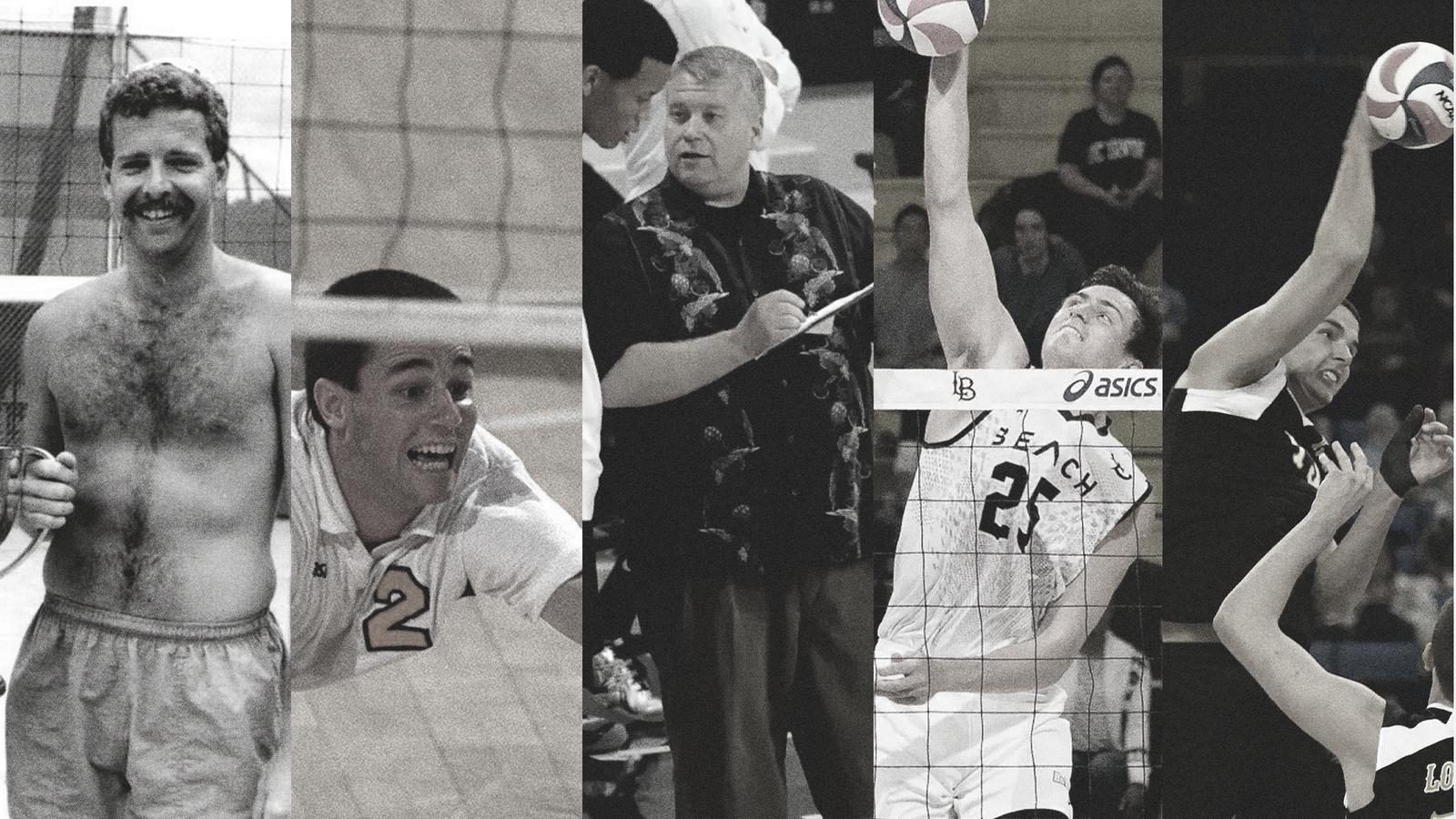
LONG BEACH, Calif. — Long Beach State Men’s Volleyball will honor five exceptional contributors to the program’s legacy this summer, as Curtis Jackson, Taylor Gregory, Nick Amado, Ralph Smith and longtime assistant coach Andy Read are set to be inducted into the Wall of Honor.
The Wall of Honor recognizes individuals who have elevated the Beach through competitive excellence, leadership, service, and lifelong commitment to the program.
“This year’s Wall of Honor recipients embody the true spirit of Beach culture and its decades-long tradition of excellence,” said Harold Noriega, co-chair of the Wall of Honor Committee. “I’ve had the privilege of watching Andy Read coach and mentor these outstanding athletes over the past thirty years, as well as the honor of sharing the court with my former teammate and fellow inductee, Ralph Smith. It’s an extraordinary group of men who continue to support the program and give back in meaningful ways. Welcome, Legends!”
“This year’s Wall of Honor committee has nominated five new inductees to the men’s volleyball Wall of Honor,” added co-chair Mike D’Alessandro. “These five honorees all had outstanding volleyball careers at the Beach. Andy Read is being honored for the three decades of coaching expertise he provided for the program. He helped develop countless great players and great teams and has been a major contributor to the Beach’s success over the years.
“There are four all-time great players for the Beach being inducted as well. Curtis Jackson, an extremely gifted player as both an outside hitter and libero, was a great leader who competed with our 1999 Final Four team and deserves to be honored among the very best who have ever played here.
“Congratulations to all of this year’s inductees. All are extremely well deserved and tremendous additions to the group of Long Beach State’s best-ever men’s volleyball players and contributors. Welcome to the group, guys!”
Head Coach Alan Knipe also expressed his pride in the 2025 class, saying “this is a spectacular class of Long Beach State greats! Each of these men has played a vital role in shaping Long Beach State men’s volleyball into what it is today. As competitors, leaders and coaches, they have left an undeniable mark on our program. I couldn’t be happier or prouder of this group. I thank them for their tremendous contributions to our culture, and I’m thrilled to see them recognized for their impact.”
Curtis Jackson (1999–2000)
A dynamic and fiercely competitive two-year standout, Curtis Jackson played a pivotal role in Long Beach State’s run to the 1999 NCAA Championship match. After transferring from Golden West College, where he was the Junior College National Player of the Year, Jackson immediately stepped in as a starting outside hitter and helped guide the Beach to the national finals.
In 2000, Jackson made one of the most selfless position changes in program history, converting to libero during the NCAA’s first season using the position. Despite being a 6-1 outside hitter capable of producing at an elite level, he embraced the transition wholeheartedly, becoming Long Beach State’s first libero and setting a standard for toughness, team-first mentality and relentless competitiveness. His impact helped bridge eras of Beach volleyball history and cemented his standing as one of the program’s most respected teammates.
Taylor Gregory (2013–16)
One of the most influential middle blockers of the modern era, Taylor Gregory was a four-year starter, an All-American and a captain whose leadership helped spark the resurgence of Long Beach State men’s volleyball in the mid-2010s.
Gregory was a freshman in head coach Alan Knipe‘s first year back from coaching the U.S. Olympic Team, and his development was central to reestablishing the Beach as a national contender. In 2016, he captained LBSU to its first NCAA Final Four appearance of the decade, the launching point for the championship era that followed.
He set, and still holds, several individual program records, establishing himself as one of the most productive and reliable middle blockers in Long Beach State history. After a successful professional playing career, Gregory transitioned into collegiate coaching and is now thriving as the Associate Head Coach at Ole Miss, continuing to develop elite blockers and defensive systems.
Nick Amado (2017–19)
A steadying force and championship anchor in the middle, Nick Amado embodied resilience, poise and competitive fire during one of the greatest eras in program history.
A junior college transfer who worked tirelessly to elevate his game, Amado became a two-year starter for the Beach. In those two seasons he won back-to-back NCAA Championships. Widely regarded as the final piece of the puzzle for the 2018 and 2019 title teams, Amado’s presence, leadership and ultra-competitive edge solidified the lineup and helped drive Long Beach State to the top of college volleyball.
He authored one of the most iconic moments in program history, delivering the championship-clinching kill to secure the 2018 NCAA title. Amado has since enjoyed a successful professional career and is currently coaching at Golden West College, continuing to shape the next generation of players.
Ralph Smith
A standout setter and one of the premier players of his era, Ralph Smith played and set for one of Long Beach State’s best teams ever during the late 1970s and early 1980s. His playmaking, competitiveness and on-court command established him among the elite setters in program history.
After his collegiate career, Smith went on to set for the U.S. Men’s National Team for multiple seasons and became a multi-time USAV All-American with the famed Outrigger Canoe Club. His longevity and excellence in both indoor and club competition helped shape an entire era of American volleyball.
And, as longtime teammates still love to joke, he “could never beat his old buddies and teammates who played for Raymond Construction.” A beloved competitor with a legendary résumé, Smith’s career represents the golden foundation of Beach volleyball history.
Andy Read
Few individuals have contributed more sustained dedication to Long Beach State men’s volleyball than longtime assistant coach Andy Read. A cornerstone of the program for nearly three decades, Read has served as an invaluable mentor, strategist and architect of the Beach’s championship success.
He coached through multiple Final Four runs, three NCAA national championships and some of the most decorated rosters in program history. Read also served as interim head coach from 2010–12 during Alan Knipe‘s tenure with the U.S. Olympic Team and has been instrumental in developing countless All-Americans, Olympians and professional athletes.
More than the wins, Read represents the heart of the program: a coach who has invested extraordinary time, energy and personal commitment. His loyalty, expertise and enduring presence have been foundational to the Beach’s culture, stability and championship identity.
The 2025 Wall of Honor Class will be formally recognized at the Randy Sandefur Memorial Golf Tournament, celebrating the legacy, history and future of Long Beach State Men’s Volleyball.

ARLINGTON, TEXAS – The UT Arlington track and field program has officially announced its 2026 indoor schedule, featuring six-regular season meets across the region before the Mavericks head to WAC Indoor Championships and pursue qualifying spots at the NCAA Indoor Championships.
UTA opens the season on January 16 at the Arkansas Invitational in Fayetteville, marking the program’s third trip to one of the nation’s best indoor facilities.
The Mavericks follow with a limited roster competing at the Robert Platt Invitational, hosted by the University of Houston, on January 30-31.
UTA will then travel down I-35 to College Station for Texas A&M’s Charlie Thomas Invitational. The two-day event is set for February 6-7 and is one of the largest, most high-profile collegiate meets in the state.
The Mavs then head to west Texas for the Texas Tech Jarvis Scott Invitational on February 13-14 in Lubbock.
UTA will close the month of February at the WAC Indoor Championships, set for February 27-28 in Spokane, Wash. The Mavericks will look to build momentum in their fourth year in the Western Athletic Conference.
Qualifying Mavericks from the conference tournament will advance to the NCAA Indoor Championships, hosted by Arkansas on March 13-14 in Fayetteville, Ark.
#BuckEm
FOLLOW ALONG
Follow the UTA track and field and cross-country teams on X (@UTAMavsTFXC), Instagram (@UTAMavsTFXC) and Facebook (/UTAMavsTFXC).

Details
Posted: 04-Dec-25
Location: Lake Charles, Louisiana
Type: Full-time
Salary: $40,000
Categories:
Coaching
Coaching – Soccer
Sector:
Collegiate Sports
Preferred Education:
Masters
McNeese State University is seeking an assistant women’s soccer coach. This 12-month full-time position will be responsible for assisting the head coach in all aspects of the NCAA Division I collegiate program. Must have a clear understanding of NCAA Division I rules and philosophy, a commitment to recruiting, developing and graduating quality student-athletes. This individual will be responsible assisting the head coach with the following:
Coach, Train, Evaluate and Mentor goalkeepers within to the McNeese State soccer program
Assists in scouting and recruiting activities; may be responsible for specific positional and geographic area. Performs specific recruiting duties as assigned.
Assist in the implementation of the academic program including monitoring of individual student athlete progress to ensure academic eligibility, enforcement of study hall program, and providing referrals to the appropriate University resources.
Run practice in the absence of the head coach.
Assist the head coach in the planning, marketing and operation of sports camps.
Participate actively in promotion of McNeese athletics and campus events.
Other duties as assigned by the head coach, athletic director/athletic director designee.
May perform duties which require irregular hours, out of town and/or overnight travel.
- Bachelor’s degree
- Relevant collegiate level coaching experience (Division 1 Level preferred)
- Proven ability to coach and motivate team members to reach new levels of accomplishment and professional fulfillment
- Demonstrated ability to work with a variety of personalities, backgrounds, and generations
About McNeese State University
For over 80 years, McNeese State University has been trusted and respected as an institution of innovation and academic excellence. Ranked as one of the top public universities in the United States and one of the finest regional universities in the South, our university is also recognized as having one of the best returns on investment for tuition and high average starting salaries for its graduates.
Connections working at McNeese State University

Mountaineers Open Indoor Season at the Visit Winston-Salem College Kick-Off

Crawford quickest in Yas Marina F2 practice for DAMS

Track & Field Prepares for Sharon Colyear-Danville Season Opener

Michael Jordan and Joe Gibbs’ daughter-in-law expected to testify Friday in NASCAR antitrust case

‘Horrible location:’ Proposed Eagle Costco sparks heated backlash and traffic concerns in a neighborhood meeting

GEAR FOR GOOD INITIATIVE NAMES FIVE YOUTH SOCCER PROGRAM BENEFICIARIES TO HELP GROW THE GAME IN 2026

Georgia seeks $390K from DE Damon Wilson for transfer damages

Women’s Track & Field Travels to Chicago State for Season Opener

Long Beach State Men’s Volleyball Announces 2025 Wall of Honor Class

Denny Hamlin was advised by his lawyers not to tweet; He did anyway
Michael Jordan and Joe Gibbs’ daughter-in-law expected to testify Friday in NASCAR antitrust case
NIL in prep sports another threat to childhood

New Martinsville Christmas in the Ville Returns | News, Sports, Jobs

UT Arlington Track & Field Announces 2026 Indoor Schedule

Assistant Soccer Coach (Goalkeepers) in Lake Charles, LA for McNeese State University

First Tee Winter Registration is open

Fargo girl, 13, dies after collapsing during school basketball game – Grand Forks Herald

CPG Brands Like Allegra Are Betting on F1 for the First Time

Volleyball Recaps – November 18

F1 Las Vegas: Verstappen win, Norris and Piastri DQ tighten 2025 title fight

Two Pro Volleyball Leagues Serve Up Plans for Minnesota Teams

Utah State Announces 2025-26 Indoor Track & Field Schedule

Sycamores unveil 2026 track and field schedule

Texas volleyball vs Kentucky game score: Live SEC tournament updates

Bowl Projections: ESPN predicts 12-team College Football Playoff bracket, full bowl slate after Week 14

Redemption Means First Pro Stock World Championship for Dallas Glenn

Pohlman admits ‘there might be some spats’ as he pushes to get Kyle Busch winning again

Indiana’s rapid ascent and its impact across college football

How this startup (and a KC sports icon) turned young players into card-carrying legends overnight

Troy Football Need to Know; Gameday at The Vet — Georgia State Game

 Why a rising mid-major power with an NCAA Tournament team opted out of revenue-sharing — and advertised it
 NBA Legend Michael Jordan to Join NBC Sports as Special Contributor
 Falcons mailbag
 Portal Update – Basketball and Gymnastics Take Hits
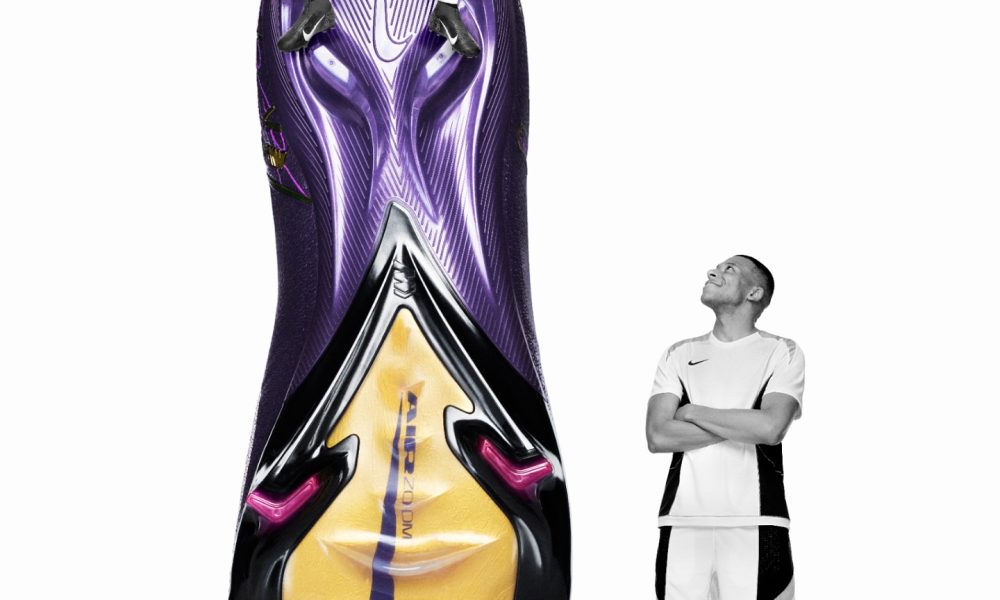 has always dreamed in Mercurial. Now his initials are on the boots.
The new Kyl…
has always dreamed in Mercurial. Now his initials are on the boots.
The new Kyl…
-
 Rec Sports2 weeks ago
First Tee Winter Registration is open
-
 Rec Sports1 week ago
Fargo girl, 13, dies after collapsing during school basketball game – Grand Forks Herald
-
 Motorsports1 week ago
CPG Brands Like Allegra Are Betting on F1 for the First Time
-
 Sports2 weeks ago
Volleyball Recaps – November 18
-
 Motorsports2 weeks ago
F1 Las Vegas: Verstappen win, Norris and Piastri DQ tighten 2025 title fight
-
 Sports1 week ago
Two Pro Volleyball Leagues Serve Up Plans for Minnesota Teams
-
 Sports1 week ago
Utah State Announces 2025-26 Indoor Track & Field Schedule
-
 Sports1 week ago
Sycamores unveil 2026 track and field schedule
-
 Sports1 week ago
Texas volleyball vs Kentucky game score: Live SEC tournament updates
-
 NIL5 days ago
Bowl Projections: ESPN predicts 12-team College Football Playoff bracket, full bowl slate after Week 14