
NIL
NIL is officially nuts, and in the long run it won't work for anyone, not even Ducks


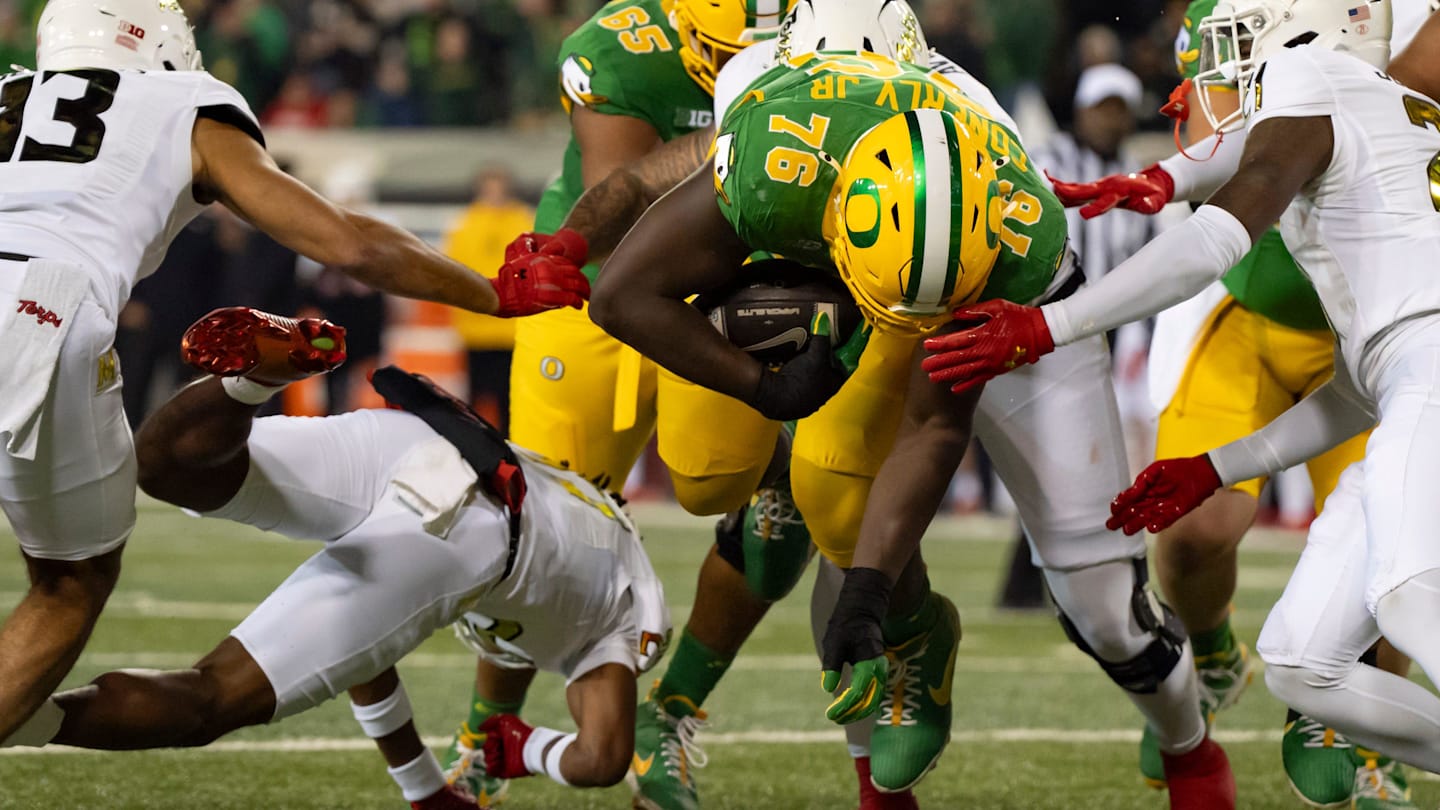
Imagine the NFL with no collective bargaining agreement, no salary cap, no draft and unrestricted free agency for every player every season and even in the middle of seasons.
That’s the current state of college football.
It’s so whacked that last year former Holy Cross quarterback Matthew Sluka left the UNLV Rebels after leading them to a 3-0 start because he was upset with his NIL deal, verbal promises that weren’t kept. Now he’s transferred to his third school, James Madison, likely to start for his old coach with the Crusaders, Bob Chesney.
It’s so upside-down that 17-year-old high school senior Jackson Cantwell signed an NIL deal with Miami worth $2.5 million in Year 1.
Cantwell cracked back on reporters who suggested he chose the Hurricanes because of the money, however. He told Jeff Sawtell of DawgNation, “I’m going to Miami because I believe in the coaches, in the system, and in the vision.”
Relationships won out in Miami, he said.
Without faulting any student-athlete’s decision, it’s the system that’s gone bat-guano crazy. Rivals analyst Keegan Pope revealed that Texas doubled the NIL offers made by Oregon and Georgia to lock down five-star linebacker Tyler Atkinson.
Texas offered double the NIL money than #Georgia and Oregon to lock down 5-star LB Tyler Atkinson, per Keegan Pope. 😳
Atkinson’s recruitment ultimately came down to Georgia and Texas in the end. pic.twitter.com/ZWV3C96BB9
— Dawg Recruiting (@DawggRecruiting) July 26, 2025
At USC, high school tight end Mark Bowman gained an NIL deal that’s projected to pay him between $8 and $10 million, one that offers him a retention bonus as a recruit, according to reports from On3’s Scott Schrader.
USC 5-star commit Mark Bowman is expected to be the highest-paid TE recruit of all time, @PeteNakos_ reports✌️
Details: https://t.co/wFcAmj8wIq https://t.co/GDKqvDQDgj pic.twitter.com/O0Qd5cy2FJ
— Rivals (@Rivals) July 23, 2025
The money is so premature and ridiculous that it makes following college football and college football recruiting a dizzying prospect. There are no apparent limits and little transparency. Duck Sports Central’s Scott Reed notes that schools with massive donor pools and infrastructure remain in position to dominate the game.
While the money has always been a part of big-time college football, in this new era it threatens to drown it out entirely. It’s all gas no brakes, all of the time.
Week-to-week, parity and competitive balance appear to be at an all-time high. Last year Vanderbilt took down Alabama. Kentucky beat Ole Miss in Oxford. Indiana made the College Football Playoff.
At the end of the year, however, the same six-to-eight schools have a real chance of winning the national title. Staying on that list requires paying a lot of money for players, more money every year. Already the top rosters reach $50 million. Bowman will make more than a handful of NFL tight ends.
So far the Ducks have been able to navigate the madness with a sound plan for player evaluation, development and competitive deals. It’s a challenge that requires a lot of fluidity, planning and judgment.
What you pay and who you pay become critical decisions. The Ducks have chosen to prioritize their existing roster, focusing on player retention. It’s a balanced approach that makes them one of those 6-8 schools, at least for now.
The uncertainty comes in when teams find themselves having to drop out of the bidding for top players. Bowman, Cantwell and Atkinson are the building blocks of a juggernaut, but acquiring them creates a lot of pressure for LIncoln Riley, Mario Cristobal and Steve Sarkisian.
Which means some of that top talent could fall into the portal, triggering a fresh round of craziness.
Read More:

Dec. 15, 2025, 3:17 p.m. CT
- Ole Miss quarterback Trinidad Chambliss is awaiting a decision on a waiver for an additional year of eligibility.
- Chambliss, a transfer from Division II, finished eighth in Heisman Trophy voting in 2025.
- If the waiver is approved, he would consider all options, including the transfer portal or the NFL.
- Chambliss believes another year in college would help his development for a potential NFL career.
OXFORD − Ole Miss football quarterback Trinidad Chambliss is in the middle of an important situation that is out of his control.
As Ole Miss (11-1) prepares to host Tulane (11-2) on Dec. 20 (2:30 p.m., TNT) in the College Football Playoff, Chambliss is getting closer to finding out about his future.
Chambliss is a senior transfer from Division II Ferris State. He applied for a waiver to get one last year of eligibility for the 2026 season. It hinges on getting a retroactive redshirt for a season in Division II when he was the backup quarterback. He hasn’t been updated on its status.

“As of right now, no,” Chambliss said Dec. 15. “But I think I’ll get an answer this week.”
Chambliss finished No. 8 in Heisman Trophy voting after taking the SEC by storm in 2025. Getting one more season in college football would afford him significant NIL opportunities.
Chambliss said he would consider all options for 2026 if his waiver is approved. That includes, presumably, weighing the benefits of entering the transfer portal and reuniting with former coach Lane Kiffin at LSU.
“I’d have to consider what the best situation is for me,” Chambliss said. “What I feel most comfortable with. Who I trust the most. Just get a feel for every possibility really. There’s a lot that goes into that.”
The NFL is also on Chambliss’ mind. He said another year in college football would be beneficial to prepare him for the NFL. He said he has talked to some people with NFL connections about how he is viewed, but he is ultimately focused on the CFP.
Chambliss said he is leaning on his faith throughout the uncertainty.
“I feel like it would be great to get another year to develop in college football,” Chambliss said. “I obviously was playing Division II ball a lot in my college career. Transitioning to the NFL, playing in a conference like the SEC would benefit me at the next level. It is kind of tough. It’s been kind of stressing me out recently.”
Trinidad Chambliss NFL draft projections
Chambliss is eligible for the 2026 NFL Draft. If his waiver is denied and he can’t return to college football, he is projected to get a shot at the next level. He’ll probably be drafted in in the middle of the draft, according to experts.
Chambliss was ranked as the No. 7 quarterback prospect on Mel Kiper of ESPN’s 2026 NFL Draft preview written Dec. 11.
An ESPN preview published Dec. 1 said Chambliss is not one of the quarterbacks with a first-round grade. None of the four ESPN draft analysts − Kiper, Matt Miller, Jordan Reid or Steve Muench − listed Chambliss as a top-five quarterback.
Sam Hutchens covers Ole Miss for the Clarion Ledger. Email him at Shutchens@gannett.com or reach him on X at @Sam_Hutchens_
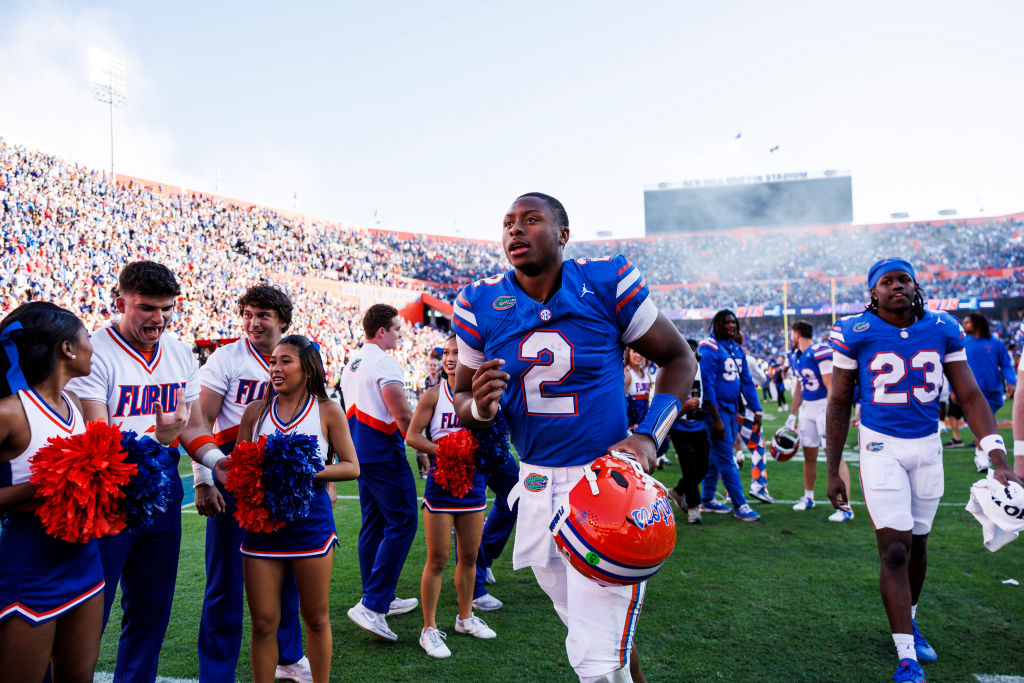
DJ Lagway’s bails on Florida looking for greener pastures in the transfer portal.
Here we go, the college football transfer portal is three weeks away from opening, and we already have one significant name deciding it’s time to move on, with Florida quarterback DJ Lagway announcing his intentions on Monday.
The Gators prized recruit in Billy Napier’s first year is moving on, and I hope college football fans are ready for what is set to be a wild month of movement. Unfortunately for Florida and Lagway, it seemed as though both needed a fresh start.
Florida’s New Coach Has A Chance To Turn DJ Lagway Into A Monster, Or Another Lesson On NIL Risks
While fans of the program were ecstatic when the 5-star committed to Florida, the expectations exceeded reality. Even though Lagway ended the 2024 season with a bang, the offseason shoulder surgery felt like a catalyst for things to come. Not once during the 2025 season did he look comfortable in the pocket, and neither did his throwing motion.
But, the bigger question is what will happen over the next four weeks in terms of others deciding to look for a better opportunity?
After Sherrone Moore Scandal, Michigan Board Orders Investigation Into Athletic Department
Payments Are Being Completed, New Destinations Await
One of the most interesting parts of this past summer came when schools were racing to the finish line before the House Settlement was complete.
Needing to beat the ruling, programs were financially taking care of contracts with front-loaded deals that saw athletes cashing lump-sum checks to help offset the $20.3 million roster caps that schools were forced to stay under.
Don’t forget that a lot of players are receiving final payments over the next few weeks from pervious contracts, though some even signed long-term deals that could have them owing the former school money.
NIL Collectives Are Back In The Game Like They Never Left, As House Settlement Lawyers Reach Agreement
This meant the majority of payments to athletes were taken care of from the start. But, this also led to players potentially having to pay back some of that money if they were intending to leave. It could be anywhere between $30,000 to the high six-figures, but players are going to take what they eventually earn at their next school, and pay back their previous team.
I don’t know if you’d want to call it a ‘buyout’, but more of a repayment plan. And, while some might think the market will settle down, the College Sports Commission not having enforcement in place right now could complicate matters.
But, are boosters getting tired of spending money on lackluster results?
Return On Investment Fatigue Is Real For Boosters
Whether a school wants to admit it or not, there are plenty of high-dollar donors across the country that have grown tired of the lack of ROI.
Let’s be clear, these boosters are not going to be happy if the school they donate to is not holding up a trophy at the end of each season. That’s a given. But, even while some colleges continue to say they are in great shape when it comes to roster retention and receiving that extra $10-15 million from outside sources.
Heck, Monday morning, current Tulane, and Florida, coach Jon Summrall announced he was donating $100,000 to the Green Wave for its ‘Talent Fund’. Yes, that’s what some are calling this period of buying players.
What Happens When College Athletes Don’t Disclose NIL Deals In House Settlement Era? Backdoor Deals Return
The reason why LSU was so hellbent on making it known that they would be providing Lane Kiffin with at least an extra $10-15 million in NIL money centers around the shiny new toy they hired to become the head coach.
Being able to actually spend that type of money will rely on schools making sure they can make this all look legitimate. This is the part that is intriguing. How do you funnel the money?
You can expect some pretty big names to test the waters that are also known as the ‘transfer portal’. Will every player that makes an announcement end up leaving for a different school? No, it’s also a bargaining tool, just like coaches using other openings to garner a new contract at their current school.
But, this will certainly turn into a pretty wild month for programs across the sport of college football. And, DJ Lagway was the first big name to kick things off.
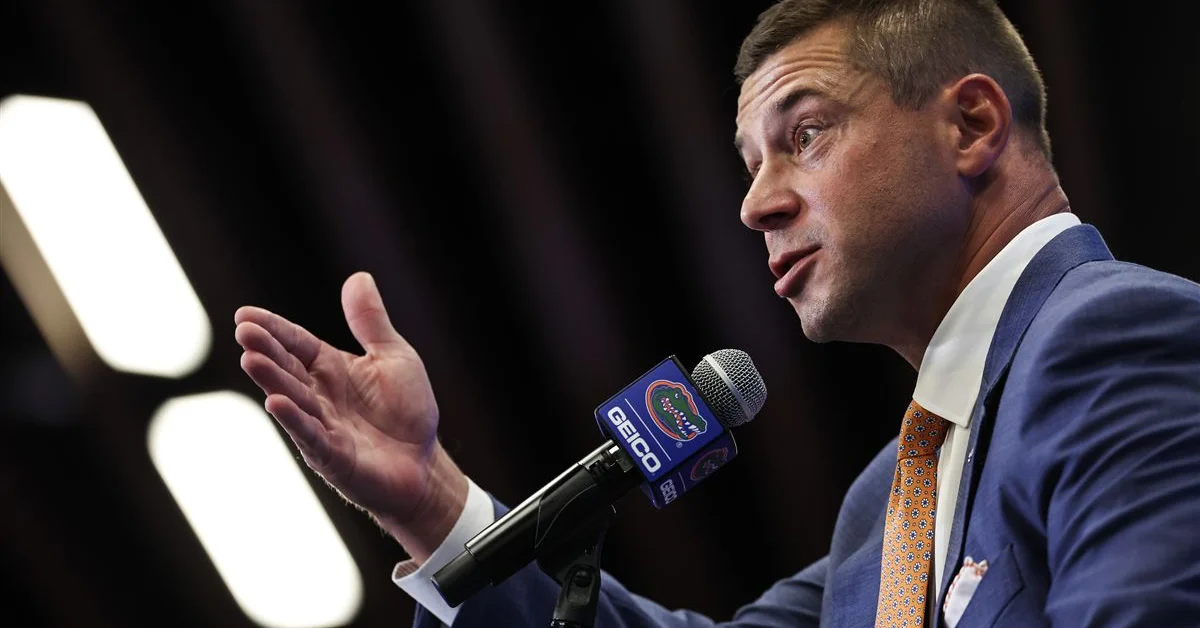
Florida’s newly hired head coach, Jon Sumrall, has made it clear he intends to leave the Tulane program in a better place than he found it.
After two seasons with the Green Wave, Sumrall is headed to Gainesville, though not before helping lead the program through the remainder of the 2025 season, with Tulane set to take on No. 6-seeded Ole Miss Saturday in Oxford in the College Football Playoff’s first round.
Along with continuing to coach his team, unlike former Rebels head coach Lane Kiffin, who’s now in Baton Rouge at LSU, Sumrall chose not to poach commits from Tulane ahead of Early Signing Day.
“I Zoomed with my signees or my commits at Tulane, and I told them to sign at Tulane because I’m not trying to poach their class,” Sumrall said at his introductory press conference in Gainesville. “I want those guys to go play there.”
Now, Sumrall has taken another step in ensuring the Green Wave remain competitive after he’s no longer in New Orleans.
Sumrall has donated $100,000 to the Green Wave Talent Fund in support of newly promoted head coach Will Hall.
The six-figure gift to the Green Wave Talent Fund, Tulane’s associated NIL collective, will aid Tulane’s ability to recruit, retain, and develop collegiate athletes.
“Tulane University and New Orleans are special to me and my family. Ginny and I are honored to support the Green Wave Talent Fund because we believe in the vision of Tulane Athletics and want to contribute to the continued success of its student-athletes. The future is incredibly bright, and we are excited for Will Hall and his family to be part of it,” Sumrall said. “Coach Hall possesses a keen understanding of Tulane University and its football program, along with a passion that greatly benefits the Green Wave. As a leader, he cares deeply about helping others reach their full potential and is dedicated to equipping them to achieve that goal in every way possible. He has our family’s full support, and we wish him nothing but success as he leads Tulane Football!”
It’s not the first time the Sumrall family has looked to invest in Tulane’s continued success; In 2024, they joined the Olive & Blue Society through a recurring philanthropic commitment to Tulane Athletics.
Sumrall’s high regard for the program is clear, and he’s taken another step to ensure the program won’t experience a significant decline now that he’s no longer leading the program.
“We are grateful to Jon and Ginny for this incredible gift,” David Harris, the Ben Weiner Director of Athletics Chair, said in a statement. “Their leadership and generosity will have a direct and lasting impact on our student-athletes as we continue to grow and elevate Tulane Athletics.”
Updated Dec. 15, 2025, 12:57 p.m. CT
Tennessee football coach Josh Heupel hasn’t announced that the Vols are in the transfer market for a 2026 quarterback, but there are strong indicators.
UT starter Joey Aguilar has exhausted his eligibility unless there’s movement in Diego Pavia lawsuit challenging the NCAA eligibility rules. Time is running out on that possibility.
Redshirt freshman Jake Merklinger is expected to enter the transfer portal, but he hasn’t announced his plans. Freshman George MacIntyre was a lauded recruit, but he barely played for the Vols this season. Five-star freshman Faizon Brandon will enroll in January, but starting a true freshman could be risky in the ultra-competitive SEC with College Football Playoff bids on the line.

If Aguilar can’t return and Merklinger enters the portal, Tennessee will need a transfer quarterback to fill at least a three-person position group. The question is whether the Vols would add a surefire starter or a optional starter to compete with MacIntyre and Brandon.
These quarterbacks have announced they’ll enter the portal when it opens Jan. 2 and could be options for the Vols.
Brendan Sorsby (Cincinatti)
Brendan Sorsby was a three-star recruit in the 2022 class, who has overachieved to become a productive dual-threat college quarterback. He spent two seasons at Indiana, including a redshirt year, and the past two seasons at Cincinnati’s starter.
In his college career, Sorsby has passed for 7,208 yards, 60 TDs and 18 interceptions. And he has rushed for 1,305 yards and 22 TDs. He has tossed more than one interception in only three of his 35 career games.
In the 2025 season at Cincinnati, Sorsby passed for 2,800 yards, 27 TDs and five interceptions. He ranked second in the Big 12 in passer rating. And he rushed for 580 yards and nine TDs.

Sorsby makes a lot of sense for Tennessee. He’s an accurate passer who rarely throws interceptions, and he can run the ball. Last summer, Sorsby told ESPN’s Greg McElroy that Tennessee’s Neyland Stadium is where he’d love to play a game because he watched a couple of games there as a kid.
He is reportedly exploring his NFL draft stock, but a sizable NIL payout likely could keep him in college. He has one season of eligibility remaining.
DJ Lagway (Florida)
DJ Lagway was a five-star recruit and the No. 2 quarterback in the 2024 class, according to 247Sports Composite. At Florida, he displayed flashes of elite talent but also inconsistency, a rash of turnovers and tendency for injuries.
Lagway completed 62% of his passes for 4,179 yards, 28 TDs and 23 interceptions over two seasons with the Gators. And he rushed for 237 yards and one TD. In the 2025 season, Lagway passed for 2,264 yards, 16 TDs and 14 interceptions, which led the SEC.
Lagway would be an intriguing project if Heupel can tap into his talent and reduce his interceptions. He has two seasons of eligibility remaining.

Dylan Raiola (Nebraska)
Dylan Raiola was a five-star recruit and the No. 3 rated quarterback in the 2024 class. He has spent the last two seasons at Nebraska. In November, he suffered a season-ending broken fibula, so any team picking him up must consider that.
Raiola has completed 69% of his passes for 4,819 yards, 31 TDs and 17 interceptions over two seasons. In the 2025 season, he completed 72% of his passes for 2,000 yards, 18 TDs and six interceptions.
Raiola has two seasons of eligibility. He is a five-star talent who appeared to turn the corner as an accurate, productive passer this season.

Kenny Minchey (Notre Dame)
Kenny Minchey, a native of Hendersonville, Tennessee, was a four-star recruit in the 2023 class out of Pope John Paul II. He signed with Notre Dame after initially committing to Pittsburgh.
Minchey showed promise at Notre Dame, but he was squeezed out of competitions for the starting job. In three seasons (including a redshirt year), he completed 23 of 29 passes for 212 yards. And he rushed for 96 yards and two TDs.
Minchey has played only 10 games and never started. He has two seasons of eligibility remaining. If Tennessee added him from the portal, he would not arrive as the surefire starter. Instead, he would compete with MacIntyre and Brandon for the starting job and round out the quarterback group.
Adam Sparks is the Tennessee football beat reporter. Emailadam.sparks@knoxnews.com. X, formerly known as Twitter@AdamSparks. Support strong local journalism by subscribing at knoxnews.com/subscribe.
Get the latest news and insight on SEC football by subscribing to the SEC Unfiltered newsletter, delivered straight to your inbox.
Dec. 15, 2025, 12:33 p.m. ET
Whenever Tulane’s run in the College Football Playoff comes to an end, so too will Jon Sumrall’s time at the school, with the second-year Green Wave coach headed to Florida.
Before he departs, though, he’ll be leaving something behind for his soon-to-be-former employer.
Sumrall and his wife, Ginny, are making a $100,000 donation to the Green Wave Talent Fund, a university initiative to expand NIL opportunities for Tulane athletes, the school announced on Monday, Dec. 15.
In two seasons with the Green Wave, Sumrall went 20-7, including an 11-2 mark this year that helped them win the American Conference and earn a spot in the playoff, where they’ll take on Ole Miss in the first round on Saturday, Dec. 20.
Though he was hired away by Florida late last month, he’ll be coaching Tulane throughout the playoff. That transition has been aided by the Green Wave hiring one of Sumrall’s assistants, pass game coordinator Will Hall, as his successor.
“Tulane University and New Orleans are special to me and my family,” Sumrall said in a statement. “Ginny and I are honored to support the Green Wave Talent Fund because we believe in the vision of Tulane Athletics and want to contribute to the continued success of its student-athletes. The future is incredibly bright, and we are excited for Will Hall and his family to be part of it.
“Coach Hall possesses a keen understanding of Tulane University and its football program, along with a passion that greatly benefits the Green Wave. As a leader, he cares deeply about helping others reach their full potential and is dedicated to equipping them to achieve that goal in every way possible. He has our family’s full support, and we wish him nothing but success as he leads Tulane Football!”
The money could be useful for Tulane, which has excelled under Sumrall despite losing talented players to bigger programs with more NIL resources. After the 2024 season, the Green Wave lost starting quarterback Darian Mensah and leading rusher Makhi Hughes to Duke and Oregon, respectively, with Mensah signing a deal worth a reported $8 million.
Since accepting the position at Florida, Sumrall has joked about balancing two FBS head-coaching jobs at once. His profile photo on X, the social media platform formerly known as Twitter, is a picture of him in half Florida attire and half Tulane attire. In a post last week, he wrote that “I’ve got 2 Phones, 2 Jobs & 2 hours of sleep.”
In four years as a head coach, Sumrall is 43-11. Prior to Tulane, he spent two years at Troy, where he went 23-4 and won a pair of Sun Belt championships. At Florida, he’ll take over a struggling program that has finished with a losing record in four of the past five seasons.

The University of Georgia Athletic Association (UGAA)’s NIL lawsuit against former linebacker Damon Wilson II, who transferred to Missouri earlier this year, could become a standard type of litigation as more and more athletes sign NIL deals with one school and then transfer to another.
The specific legal dispute is straightforward: UGAA claims that Wilson, 20, breached his NIL contract with Classic City Collective (CCC)—a Georgia-aligned former NIL collective—and failed to pay a liquidated damages provision that was triggered upon breach.
A four-star recruit from Venice High School (Fla.), Wilson played for the Bulldogs in the 2023 and 2024 seasons and, while on the Tigers in 2025, earned second-team All-SEC recognition as he amassed nine sacks—tied for third-best in the SEC.
According to litigation records at Athens-Clarke County (Ga.) Superior Court, Wilson signed a 13-month, $500,000 NIL deal with CCC on Dec. 21, 2024. The deal runs from Dec. 1, 2024, to Jan. 31, 2026 and was contingent on Wilson being enrolled as a student at Georgia and part of the football team. He was paid $30,000, his first monthly licensing fee payment, on Dec. 25, 2024. UGAA emphasizes that Wilson accepted this payment, meaning the contract went into effect. On Jan. 6, 2025, Wilson announced he was entering the transfer portal, a move that Georgia says constituted a breach of the NIL deal. About a week later Wilson withdrew from Georgia and began the process of transferring to Missouri. It’s unknown how much money Wilson received to transfer to Missouri.
Georgia moved to close CCC over the summer, when U.S. District Judge Claudia Wilken granted final approval of the House settlement, and has partnered with Learfield on NIL matters. Relevant to the school’s dispute with Wilson, CCC assigned its Wilson contract to UGAA, meaning the athletic association has the legal right to enforce the contract.
UGAA argues that under the NIL deal’s liquidated damages clause, Wilson, as the licensor, must pay all remaining license fees that would have been payable. The remaining value, according to court filings, is $390,000.
In May, attorney Spence Johnson wrote a demand letter to Wilson on behalf of CCC. The letter told Wilson that while CCC “does not want to unnecessarily undermine your financial future,” CCC also “insists that its student athletes be accountable for promises they make.” Wilson was told he had 14 days to pay or else CCC would “pursue legal action against you based on your breaches” of the NIL deal.
In August, Johnson wrote another letter to Wilson. Johnson said that UGAA had been assigned Wilson’s NIL deal with CCC. The letter indicated Wilson didn’t pay as demanded and that the NIL deal calls for arbitration to resolve disputes. In October, UGAA, through Johnson, filed a lawsuit to compel arbitration, with the complaint stating that Wilson hasn’t responded to demand for arbitration. There is no attorney listed for Wilson and it does not appear from the court docket he has responded to the litigation.
The actual legal controversy—alleged breach of contract—is ordinary, but the circumstances are extraordinary. A university, through its athletic association, is suing a former student athlete who transferred for reneging on his NIL deal.
A lawsuit like UGAA v. Wilson would have been inconceivable five years ago, but in the new college sports world, it’s the kind of case that could become more common.
Through antitrust litigation and accompanying settlements, college athletes can now transfer without sitting out of sports for a period of time. That approach is consistent with college students in general as they can transfer schools, but typical college students aren’t signing NIL deals.
There’s plenty of money to be made, too, for power conference football players to switch schools. University-aligned NIL collectives can pay athletes, some of whom also stand to benefit from the injunctive relief portion of the House settlement. Participating colleges can directly pay athletes a share of up to 22% of the average power conference athletic media, ticket and sponsorship revenue, with $20.5 million pegged as the initial annual cap. There are thus three buckets of money for some college athletes: revenue share, NIL deals and athletic scholarships.
And playing in college could become something of a career depending on the ultimate trajectory of antitrust litigation brought by Vanderbilt quarterback and former JUCO transfer Diego Pavia—the runner-up for the 2025 Heisman Trophy—and other seasoned college athletes. They wish to continue playing college football past the NCAA eligibility clock, which limits eligibility to four seasons of intercollegiate competition, including JUCO and D-II play, within a five-year period.
College sports, at least football at power conference schools, resembles professional sports—except without free agency restrictions and similar player restraints found in the NFL. Those restraints are lawful because the NFL collectively bargains them with the NFL players association. They are thus protected by the non-statutory labor exemption, which reflects U.S. Supreme Court decisions that provide antitrust immunity for bargained rules relating to wages, hours and other working conditions. The non-statutory labor exemption can’t apply in college football because the athletes are, for now at least, not recognized as employees and under labor law only employees can unionize.
Unless and until college football players are recognized as employees who in turn unionize, cases like UGAA v. Wilson could happen again and again. That’s not necessarily a bad thing, it’s just a reflection of the chaotic blend of pro and amateur sports known as modern day power conference football.

Saint Joseph’s Women Sweep Three GNAC Weekly Awards

2025 CWRU Women’s Cross Country Season Recap
Ole Miss QB Trinidad Chambliss on waiver, transfer portal, NFL draft

Crookston 7th grade girls basketball finishes 3rd at Ada Tourney – KROX

Tigers Open Season at UCCS Pre-Holiday Meet

Youth Sports, NCAA Insurance Claims Potentially Hacked

Volleyball Announces 2026 Freshman Signing Class

GHSA Reclassification transitions Midtown athletics to Class 6A – the Southerner Online

K-State Track Host Winter Camp at Cliff Rovelto Indoor Track

Support for Stewartville Wrestling family available through GoFundMe

Athletes of the Future Great Eight Youth Sports Plays of the Fall

Johansson Tabbed National Athlete of the Week – University of Nebraska

Teesside youth discovers more than a sport

Simsbury coach’s wrecked car was hidden near road after crash: Report

DJ Lagway Transfer Sparks Wild College Football Portal Season With NIL Market

First Tee Winter Registration is open

Fargo girl, 13, dies after collapsing during school basketball game – Grand Forks Herald

CPG Brands Like Allegra Are Betting on F1 for the First Time

Volleyball Recaps – November 18

F1 Las Vegas: Verstappen win, Norris and Piastri DQ tighten 2025 title fight

Two Pro Volleyball Leagues Serve Up Plans for Minnesota Teams

Utah State Announces 2025-26 Indoor Track & Field Schedule

Sycamores unveil 2026 track and field schedule

Redemption Means First Pro Stock World Championship for Dallas Glenn

Texas volleyball vs Kentucky game score: Live SEC tournament updates

Jo Shimoda Undergoes Back Surgery

Bowl Projections: ESPN predicts 12-team College Football Playoff bracket, full bowl slate after Week 14

Robert “Bobby” Lewis Hardin, 56

How this startup (and a KC sports icon) turned young players into card-carrying legends overnight

SoundGear Named Entitlement Sponsor of Spears CARS Tour Southwest Opener

 NBA Legend Michael Jordan to Join NBC Sports as Special Contributor
 Why a rising mid-major power with an NCAA Tournament team opted out of revenue-sharing — and advertised it
 Falcons mailbag
 Portal Update – Basketball and Gymnastics Take Hits
 has always dreamed in Mercurial. Now his initials are on the boots.
The new Kyl…
has always dreamed in Mercurial. Now his initials are on the boots.
The new Kyl…
-
 Rec Sports3 weeks ago
Fargo girl, 13, dies after collapsing during school basketball game – Grand Forks Herald
-
 Sports3 weeks ago
Utah State Announces 2025-26 Indoor Track & Field Schedule
-
 Motorsports3 weeks ago
Redemption Means First Pro Stock World Championship for Dallas Glenn
-
 Sports3 weeks ago
Texas volleyball vs Kentucky game score: Live SEC tournament updates
-
 Motorsports2 weeks ago
Jo Shimoda Undergoes Back Surgery
-
 NIL2 weeks ago
Bowl Projections: ESPN predicts 12-team College Football Playoff bracket, full bowl slate after Week 14
-
 Rec Sports2 weeks ago
Robert “Bobby” Lewis Hardin, 56
-
 Rec Sports2 weeks ago
How this startup (and a KC sports icon) turned young players into card-carrying legends overnight
-
 Motorsports5 days ago
SoundGear Named Entitlement Sponsor of Spears CARS Tour Southwest Opener
-
 NIL3 weeks ago
Indiana’s rapid ascent and its impact across college football