
NIL
Caitlin Clark's WNBA rookie card sold for a record

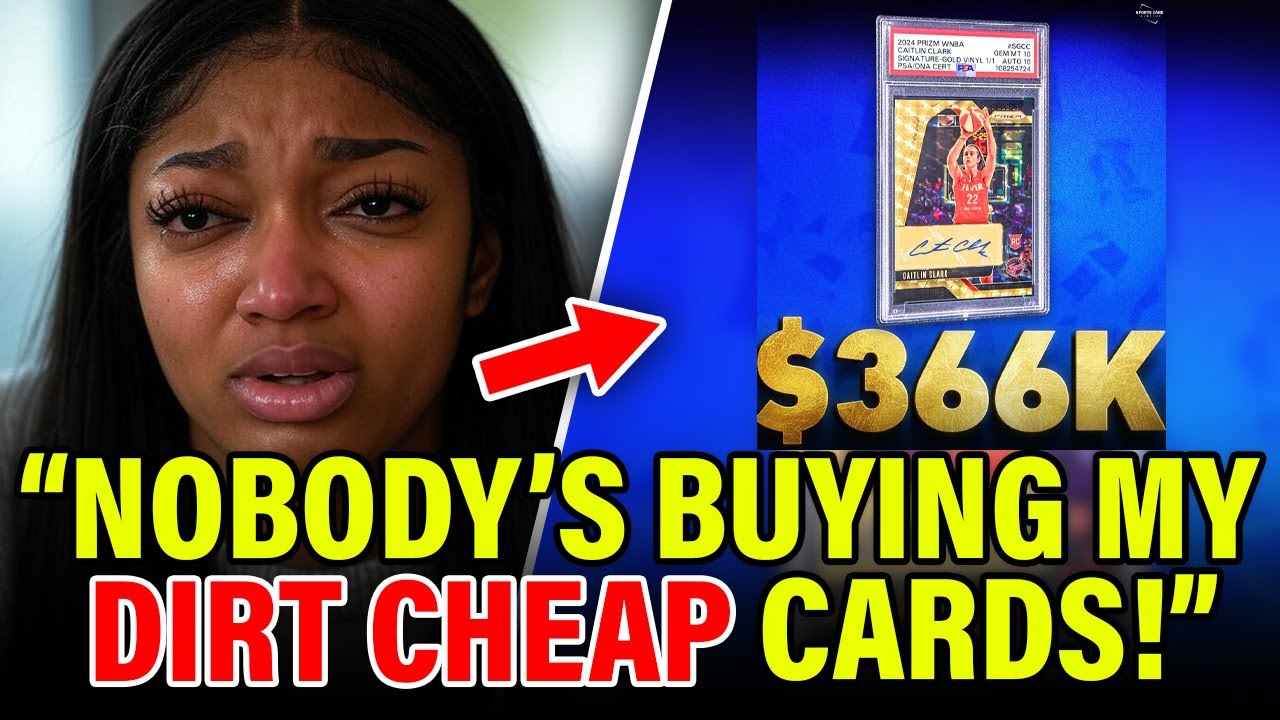
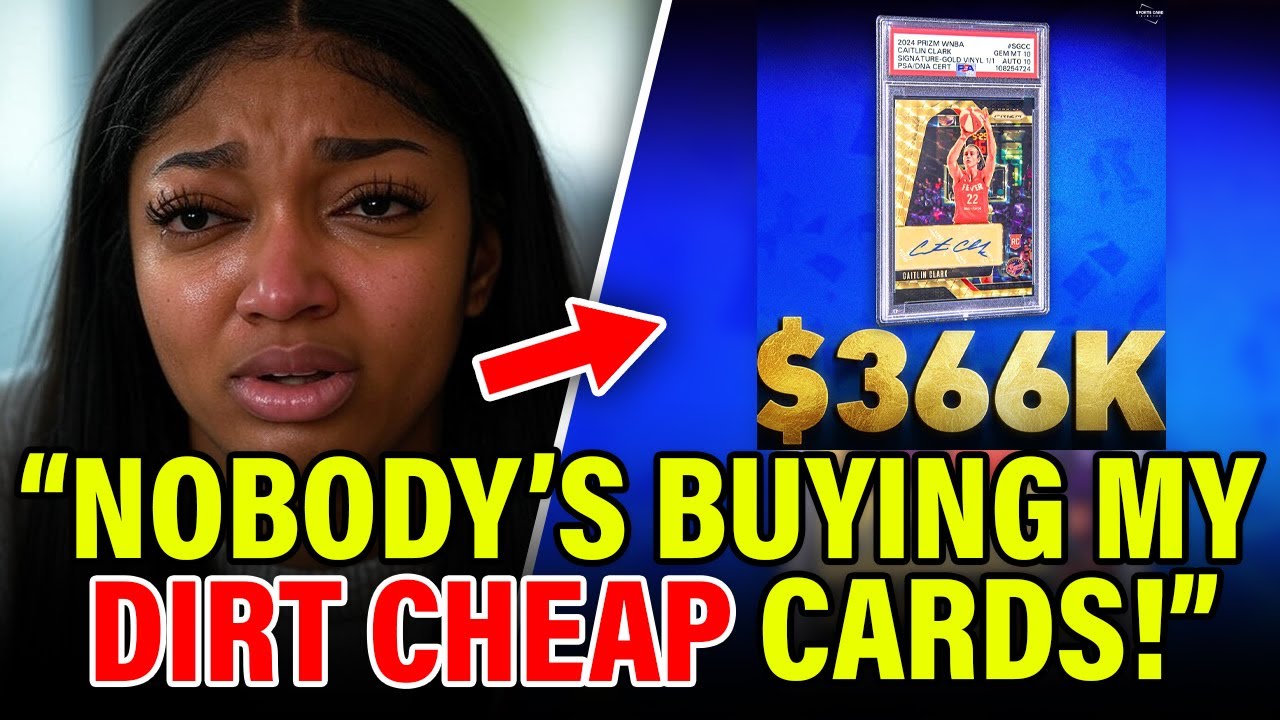

From eclipsing men’s viewership to selling out Nike collabs in minutes, the WNBA’s momentum is undeniable. Now Caitlin Clark’s memorabilia is shattering auction records—pulling in sums that dwarf her annual salary.
Clark’s Rookie Royalty WNBA Flawless Logowoman card, a piece of memorabilia which is one-of-one, sold for a whopping $660,000 last Thursday night.
It’s a rare find for collectors, as the card is signed and inscribed with Clark’s scoring total for her rookie season on the Indiana Fever, and also includes a Logowoman patch adorned on WNBA jerseys.
The card started at an extended bidding price of $336,0000—the previous sale price of Clark’s 2024 Panini Prizm WNBA Signatures Gold Vinyl 1/1 PSA 10 back in March. But when it sold for nearly double that, the collector’s item made history for the most money made at a public auction for a woman athlete—and it’s a far cry from what the superstar makes in one year.
In fact, Clark makes less than the average New Yorker; despite being the number one draft pick in the WNBA last year, she only earned a salary of $76,535 for her first year on the Indiana Fever. That’s a rock-bottom wage for the phenom of women’s basketball, as her card that fetched hundreds of thousands at auction is over 8.6 times higher than her annual pay. Even Clark’s four-year contract, in which she’ll make a total of $338,000, is just about half of the card’s value.
WNBA wages have failed to keep pace with its surging popularity; last year, the women’s NCAA March Madness tournament final had 18.7 million viewers tuning in, compared to 14.82 million watching the men’s last game. Yet the first pick of the NBA season was expected to make $10.5 million—137 times more than what Clark makes in a year.
‘Pay us what you owe us’: WNBA players leaning on NIL deals and side-hustles to make ends meet
Clark is one of the biggest names in U.S. sports, with fellow stars Cameron Brink, Rickea Jackson, and Angel Reese helping shatter records for the league. But their pay is in stark contrast to their cultural and business impact.
In 2023, the average WNBA player made a base of $113,295 per year, compared to the typical NBA hooper making around $9.7 million. Women’s low pay in the league has been a hot topic of discussion; about 40 players recently met with the WNBA to negotiate their compensation, but failed to reach a new collective bargaining agreement (CBA). The basketball stars had opted out of their last CBA in October 2024, and had hoped to broker a better revenue-sharing model, higher salaries, cushier benefits, and a more lenient salary cap.
But negotiations fell through, prompting Clark and other WNBA players to wear “Pay us what you owe us” t-shirts ahead of their All-Star game on Saturday last week. The sold-out arena of over 16,000 attendees, and millions of viewers tuning in at home, watched the stars push back against a long-held issue. Right now, WNBA hoopers receive 9.3% of their league’s revenue—in comparison, NBA players reap between 49% and 51% of the league’s basketball-related income.
“This is no laughing matter. This is no trend, this is no moment in time,” A’ja Wilson, a Las Vegas Aces player and three-time league MVP, told NPR. “You’re dealing with me, my livelihood, my future, the next generation. So we’re going to take this very, very seriously.”
Fortune has contacted WNBA for comment.
WNBA players make their millions in side hustles instead
Although the WNBA recently signed a $2.2 billion media deal with expansion fees of $250 million, the female athletes aren’t raking in millions from the sport itself. Instead, many women’s basketball stars are getting creative in the ways they supplement their income.
One popular way is through name, image, and likeness (NIL) deals—Clark made $3.1 million from NIL agreements in 2023, in the final year of her college stint.
There’s also the option to play overseas; Olympian Brittney Griner made four times her WNBA salary in Russia, earning more than $1 million.
Others without million-dollar brand deals have to resort to juggling part-time jobs. Chiney Ogwumike, who played for the Los Angeles Sparks, has since become a basketball analyst and host for ESPN; Haley Jones, a guard for the Dallas Wings, has also commentated for NBA TV and the WNBA finals. And the Atlanta Dream’s Allisha Gray has a side-hustle dishing out wings and burgers as the owner of WNB Factory restaurant.

And then there were eight.
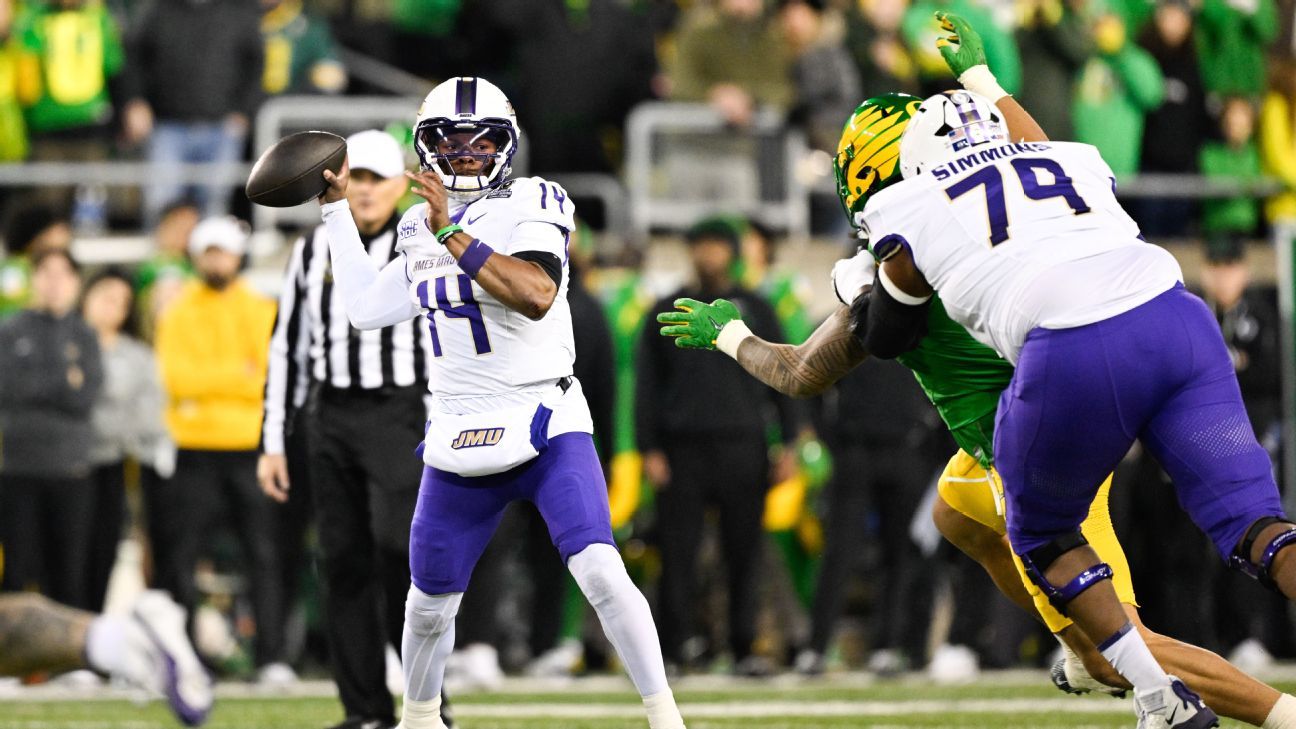
The 2025-26 College Football Playoff is here, and Saturday evening has given us our fourth eliminated team of the playoff in the James Madison Dukes. So what happens now?
We’ll tackle big questions, recruiting outlooks, portal and offseason priorities and even offer predictions for next season for every eliminated squad.
Jump to:
James Madison | Tulane
Texas A&M | Oklahoma


2025 record: 12-2
Biggest question moving forward: Can JMU make it three-for-three on coaching hires? Curt Cignetti reached the top of the mountain in the FCS and led JMU to a stellar start at the FBS level. When he left for Indiana, Bob Chesney arrived and delivered equally impressive results, getting the Dukes into the College Football Playoff. Now, Chesney is off to UCLA, and James Madison turns to Billy Napier, a coach with a history of success in the Sun Belt but who is coming off a disastrous turn at Florida. JMU’s goal has always been to measure itself against its peers rather than the upper echelon of college football, but 2025 offered a taste of the good life, and it’s now on Napier to continue to build toward that again in 2026 and beyond. The job of winning consistently at the Group of Five level has never been harder, and JMU’s aspirations have never been higher. — David Hale
Recruiting outlook: The Dukes emerged as one of the Sun Belt’s premier programs under Cignetti and Chesney, and there’s no reason to think they’ll fall off moving forward with Napier in charge. James Madison’s latest class is led by three-star cornerback Kamden Jennings, an undersized but explosive defensive back from Alpharetta, Georgia. He’s joined in the program’s secondary class by cornerback Kyle Bynes and safety D’Kwan Thomas, while defensive tackle Cory Simon arrives as a high-upside prospect. Within a deep wide receiver class, three-star Ben Whitver marks an intriguing addition with Power 4 measurables at 6-foot-2, 190 pounds. — Eli Lederman
Biggest portal priority: When Cignetti left to take over at Indiana after the 2023 season, he and his coaches took 13 players with them to Bloomington, many of whom became program leaders and All-Big Ten performers. How many Dukes will choose to move across the country to UCLA with Chesney? Alonza Barnett III, Wayne Knight, Sahir West and the rest of their top returning players have big decisions to make now, and Napier will do what he can to hold this roster together before shifting his focus to reloading in the portal. The combination of graduating seniors and potential portal defections in January likely means JMU’s starting lineup will feature lots of new faces to open the 2026 season, but Chesney’s tenure proved this program can quickly recover from a coaching transition and get right back to Sun Belt contender status. — Max Olson
Under-the-radar offseason priority: James Madison has played 40 games in three years at the FBS level, so there’s a certain level of expectation that the dominance will continue. Expectations can be dangerous, however. On its third coach in five years, maintaining high standards can be tough. With so much success, bigger schools are waiting to pick off the best talent, as is life in the Group of Five these days. But even on top of all that, so much continuous winning can breed a level of apathy when the locker room is also changing rapidly — with new players arriving and expecting the same results without fully appreciating what went into achieving that historic success. Just in the Sun Belt, App State, Coastal Carolina and Napier’s former team, Louisiana, have all had their stretches at the top, but tumbled back to earth. Reenergizing JMU after reaching what feels like a new mountaintop in 2025 will be a critical job for Napier in Year 1 on the job. — Hale
2026 prediction: JMU’s 2026 schedule looks inviting. The Dukes get a Liberty team that has been down as of late, a UConn team in the first year with a new coach and a Virginia Tech team that will just be getting its sea legs under James Franklin. Run the table out of conference, and this year showed the door is wide open for a playoff berth. The Sun Belt isn’t likely to struggle in 2026 quite as much as it did in 2025, but JMU still seems to be the clear front-runner. To aim for a second straight playoff bid is reasonable, even if realistic expectations should focus on winning the Sun Belt again and hoping the other dominoes fall into place from there. — Hale
2025 record: 11-3
Biggest question moving forward: Tulane has handled challenging coaching transitions before, going from longtime boss Willie Fritz to Jon Sumrall without any significant backslide. But Sumrall leaves a significant void as he leaves to become the head coach at Florida, and though promoting Will Hall as his successor creates some immediate stability, Hall will have to reprove himself as a program leader after a very rough end to his tenure at Southern Miss. The expectations have changed at Tulane, which is 33-13 since the start of the 2022 season. The program is set up not to revert to its pre-Fritz struggles. But the American Conference will remain a challenge, especially with significant investments at programs such as South Florida and Memphis. Similar to a lot of Group of 5 CFP teams, Tulane will lose a lot, both to graduation and the portal, and Hall and his staff will need to identify a new quarterback, replenish the offensive line and replace key defenders such as Santana Hopper and Sam Howard. — Adam Rittenberg
Recruiting outlook: The Green Wave’s 2026 class faded late, with five decommitments after Nov. 18 amid coach Jon Sumrall’s departure for Florida, headlined by the exit of four-star wide receiver Trez Davis. Still, Tulane is set to add some intriguing talent in 2026. In three-star signee A.J. Westfield, the program has its highest-ranked defensive tackle since the Green Wave landed defensive tackle Alfred Thomas and Jeffery Johnson in the 2018 class. Offensive tackle Aiden Martin and guards Tylan George and Andre Amos Jr. will provide reinforcement on the other side of the line of scrimmage. And in the skill positions, first-year coach Will Hall will have three exciting newcomers to work with — wide receivers Keyshaun Coleman and Gary Hadley Jr. and tight end Colby Simpson. — Eli Lederman
Biggest portal priority: Like any Group of 5 program going through a head coaching transition, Tulane will likely have a lot of work to do when the transfer portal opens Jan. 2. We’ll see how much roster attrition newly promoted coach Will Hall and his staff endure now that the season is over and players have Power 4 opportunities to consider. The Green Wave lost a dozen transfers to P4 programs last offseason, and all-conference defensive lineman Hopper has already announced he plans to enter the portal next month. Players who have a chance to go to Florida will have a tough time turning down those lucrative offers. There are also a bunch of freshmen on this roster who played big roles in 2025, including Jamauri McClure, Javin Gordon, Reese Baker, E’zaiah Shine and Zycarl Lewis Jr. If the new staff retains some players over these next few weeks, that’d be a good place to start. — Max Olson
Under-the-radar offseason priority: The defensive line will be an area to watch, with Hopper already heading out and others possibly to follow, but Tulane also must fortify its depth on the offensive line. First-team all-conference guard Shadre Hurst would be a massive retention, but if he moves on, along with seniors Derrick Graham, Jack Hollifield and Jordan Hall, Tulane will have to devote a lot of energy toward building around its lone returning starter, right tackle Reese Baker. Hall and Hollifield were valuable additions in last year’s portal, and Tulane should be an attractive destination for transfers with the offensive system likely not changing too much under Will Hall. — Rittenberg
2026 prediction: The Hall hire will be closely scrutinized, as Tulane prioritized continuity over candidates with more appealing credentials. Hall knows the place well after two stints as a Green Wave assistant, and he had success as a head coach earlier in his career at West Alabama and West Georgia, before the struggles at Southern Miss (14-30). Tulane’s 2026 schedule features nonleague road trips to Duke (former Tulane QB Darian Mensah is back to lead the Blue Devils) and Kansas State, as well as conference games at Army and South Florida. Given the turnover with the coaching staff and roster, Tulane is probably a seven- or eight-win team. — Rittenberg
2025 record: 11-2
Biggest question moving forward: Mike Elko loses both coordinators, with OC Collin Klein heading to his alma mater to be the head coach at Kansas State and DC Jay Bateman joining new Kentucky coach Will Stein to run the defense. Elko has opted for continuity in both roles, promoting co-OC and wide receivers coach Holmon Wiggins to take over playcalling duties and elevating Lyle Hemphill, Elko’s associate head coach for defense, to DC. Hemphill has worked with Elko since his days at Hofstra in 2006, and also served as his defensive coordinator at Duke, rejoining his staff earlier this year. Wiggins, however, is more of an unknown since this will be his first role as the coordinator. But his impact on A&M’s offense over the past two years is evident in the receivers he has identified and developed, from the additions of Mario Craver and KC Concepcion to the development of Ashton Bethel-Roman. — Dave Wilson
Recruiting outlook: The Aggies stocked up on elite defenders for another cycle on their way to landing the nation’s No. 6 class. The headliner is five-star athlete Brandon Arrington (No. 18 overall), a star sprinter from San Diego who is expected to play cornerback and could contribute on special teams from the jump. Arrington will be joined by another pair of top 100 cornerbacks in Victor Singleton (No. 56) and Camren Hamiel (No. 85) in a Texas A&M class filled with nine ESPN 300 defenders. The Aggies beat in-state rivals to an intriguing running back prospect over the summer in four-star rusher K.J. Edwards (No. 50). And Mike Elko is already rolling in the 2027 cycle, too, entering the offseason already holding onto pledges from seven members of the ESPN Junior 300, led by No. 3 dual-threat quarterback Jayce Johnson and a trio of top 70 defensive backs between JayQuan Snell, Kamarui Dorsey and Raylaun Henry. — Lederman
Biggest portal priority: Texas A&M has done an excellent job of evaluating talent in portal recruiting under Elko and finding players who fit. Last year, the glaring need was wide receiver, and the duo of Concepcion and Craver far exceeded expectations. This time around, the focus probably starts up front. Expect the Aggies to be in the mix for the top offensive tackles available as they try to find an SEC-caliber big man to take over for four-year starter Trey Zuhn III and two-year starter Dametrious Crownover. They’ll likely look into blue-chip defensive linemen as well to keep building on what this D-line achieved in 2025, and a linebacker could be needed as well if Taurean York goes pro. Craver has already re-signed to return in 2026, but there will be many more difference-makers available at wide receiver when the portal opens on Jan. 2. — Olson
Under-the-radar offseason priority: The Aggies were just 15 of 24 on field goal attempts this season, including getting a 22-yarder blocked by Jared Zirkel, who began the year as a kickoff specialist, against Miami, in a game where every point mattered. Randy Bond, the Aggies’ starting kicker, was 12-of-19 this season. The Aggies signed kicker Asher Murray out of Shreveport, Louisiana, who was 18-of-22, with a career long of 56 yards in his high school career. Elko said during his signing day news conference that Murray has a chance to be a weapon for the Aggies. — Wilson
2026 prediction: Quarterback Marcel Reed returns, but after a season in which he showcased his development, he also struggled down the stretch against South Carolina (until he played brilliantly in the second half), Texas and Miami. He’ll need to find another gear if the Aggies hope to repeat their historic 2025 season. Another 11-1 regular season looks difficult with a regular season that ends with a five-game slate that includes trips to Alabama, South Carolina and Oklahoma and home games against Tennessee and Texas. A 9-3 season looks to be challenging but also a success in the SEC’s new nine-game lineup. — Wilson
2025 record: 10-3
Biggest question moving forward: Oklahoma made important investments in its offense after the 2024 season, adding quarterback John Mateer and coordinator Ben Arbuckle from Washington State, wide receiver Isaiah Sategna III from Arkansas and other reinforcements. The Sooners now need to see the unit take a sustained step forward, or advancing in the CFP will become increasingly difficult. The offense was extremely limited during OU’s stretch run, even in wins against Alabama, Missouri and LSU. If not for superb defense and special teams, OU would have missed the CFP for a fifth consecutive season. Arbuckle will get another chance to truly upgrade the unit, and if Mateer returns rather than entering the NFL draft, the Sooners will have some beneficial continuity. OU’s offense has been hit hard by injuries in recent years, and getting Mateer healthy along with the running back room gives the unit a chance for a true breakthrough in 2026. The Sooners need to get their run game out of the 100s and ideally into the top 35 next season. — Rittenberg
Recruiting outlook: The Sooners enter the offseason prepared to add ESPN’s 16th-ranked recruiting class in 2026. The gem of coach Brent Venables’ latest class is five-star defensive end Jake Kreul (No. 25 overall), a technically-advanced edge rusher from Florida and Oklahoma’s fifth five-star signee over the past four cycles. The Sooners secured a pair of intriguing offensive additions just before the early signing period between No. 5 running back Jonathan Hatton Jr. (No. 71) and four-star wide receiver Jayden Petit (No. 178). Bowe Bentley, ESPN’s No. 2 dual-threat passer, was a priority target for Oklahoma offensive coordinator Ben Arbuckle, and he should be viewed as a potential quarterback for the Sooners when he joins the program in January. — Lederman
Biggest portal priority: Assuming Mateer bypasses the NFL draft and returns in 2026, it’ll be interesting to see how general manager Jim Nagy and the Sooners attack this upcoming January portal cycle to surround their QB1 with more premium help on offense. Expect the Sooners to go out and get proven starters at tight end and wide receiver to complement their returning playmakers and help Arbuckle’s offense take the next step in his second year. Linebackers could potentially emerge as a major need for Venables’ defense if Kip Lewis and Kobie McKinzie enter the draft and if Owen Heinecke can’t get an NCAA waiver for an extra year. Sammy Omosigho will need to step up if starters depart at that spot, but he will certainly need more help. — Olson
Under-the-radar offseason priority: Oklahoma should bring back a chunk of its depth chart on offense for 2026, but the Sooners — just like any contending team — could always use more experience on the line. The team will lose second-team All-SEC guard Febechi Nwaiwu and veteran right tackle Derek Simmons, and it needs to invest around returning players such as Michael Fasusi, who started all but three games at left tackle as a freshman. The Sooners also need playmakers for Mateer, as wide receiver Deion Burks and tight end Jaren Kanak move on and Sategna, a fourth-year junior, is a candidate to leave for the NFL draft. — Rittenberg
2026 prediction: Oklahoma was far from dominant — the Sooners won four SEC games by seven points or fewer — but showed it could hold up in a challenging SEC schedule and earn a CFP spot, albeit short-lived. The personnel picture should continue to improve in Norman, and Oklahoma should bring back enough to be in the CFP mix again. There are some significant questions about an offense that stalled out too often, though, and will be challenged early next season with Georgia (road), Texas (neutral) and Michigan (road) all within the first five games. The middle portion of the schedule softens a bit before Oklahoma closes with two CFP teams, Ole Miss and Texas A&M, in Norman and a trip to Missouri. Another 10-win season is possible, but I’ll say 9-3 for Oklahoma and very much on the CFP bubble. — Rittenberg
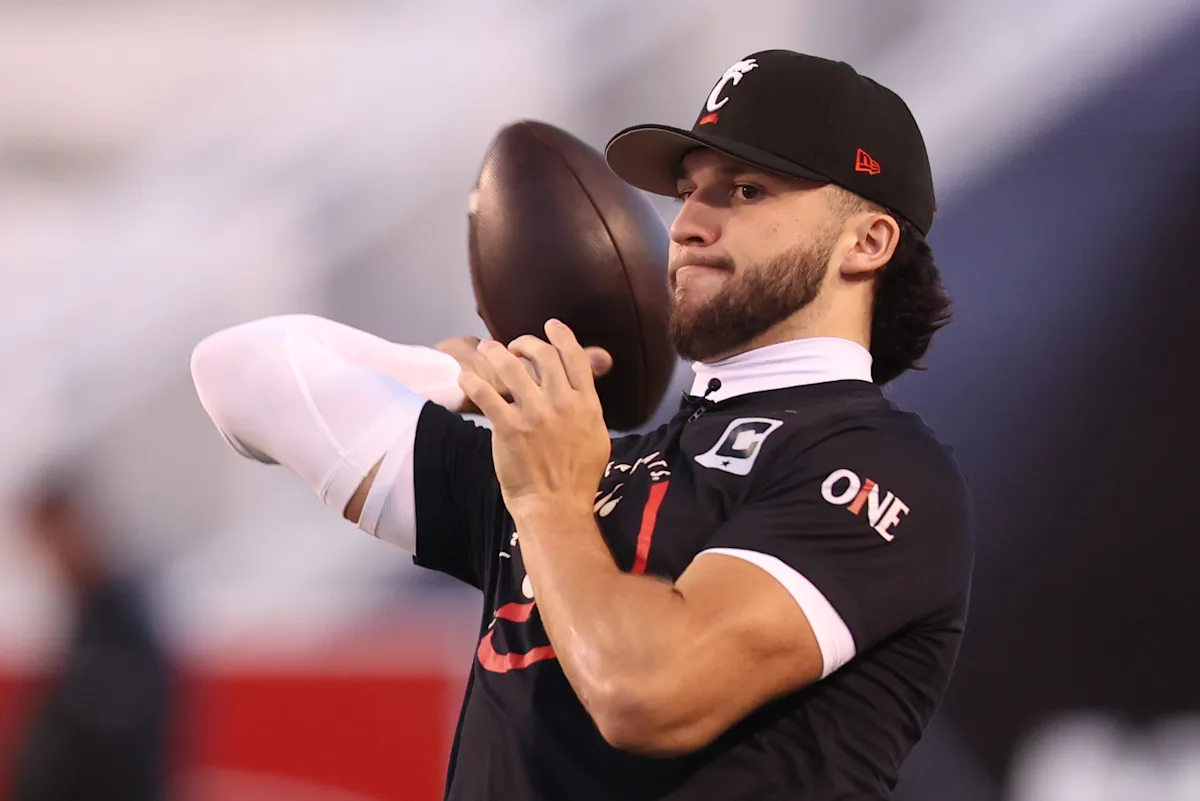
If you thought the NIL transfer market in college football already was out of control, just wait until the upcoming battles next month for the top quarterbacks looking to switch schools.
ESPN college football insider Pete Thamel believes the dollar figures during the January cycle could be as much as $5 million for one season.
Advertisement
“This market looks robust already, guys,” Thamel said Friday on College GameDay ahead of Alabama’s playoff win over Oklahoma. “You’ve got Cincinnati’s Brendan Sorsby at [the top], Nebraska’s Dylan Raiola, TCU’s Josh Hoover went in [this week], you have Arizona State’s Sam Leavitt, Florida’s DJ Lagway.”

Cincinnati Bearcats quarterback Brendan Sorsby (2) warms up before the game against the Utah Utes at Rice-Eccles Stadium. Rob Gray-Imagn Images
“So I made some calls today, guys, and sources told me the tip-top of this quarterback market, financially, could reach $5 million for one season. Look, it’s supply and demand. You have all those guys. Sorsby’s been linked early to Texas Tech. Dylan Raiola, there’s some smoke to Louisville, although maybe a [College Football Playoff] team jumps in late there. There have been early links between Indiana and Hoover, assuming that [Heisman Trophy winner Fernando Mendoza] goes pro.”
Thamel also noted that CFP programs such as Oregon and Miami are likely to be looking for a new quarterback for 2026, as well as LSU, with new coach Lane Kiffin looking to make a splash.
“Look, this is what’s going to drive the market,” Thamel said. “Oregon may lose [draft prospect] Dante Moore. Miami will be in the quarterback market again. So will LSU. So, when you really take a look at what could drive this quarterback market, it’s going to be the most expensive in the history of college football.”
Advertisement
Thamel also pointed out that seven of the past nine Heisman winners landed at those schools through the transfer portal, including Mendoza, who moved from Cal to Indiana for this season.
The main transfer portal window is open from Jan. 2-16.
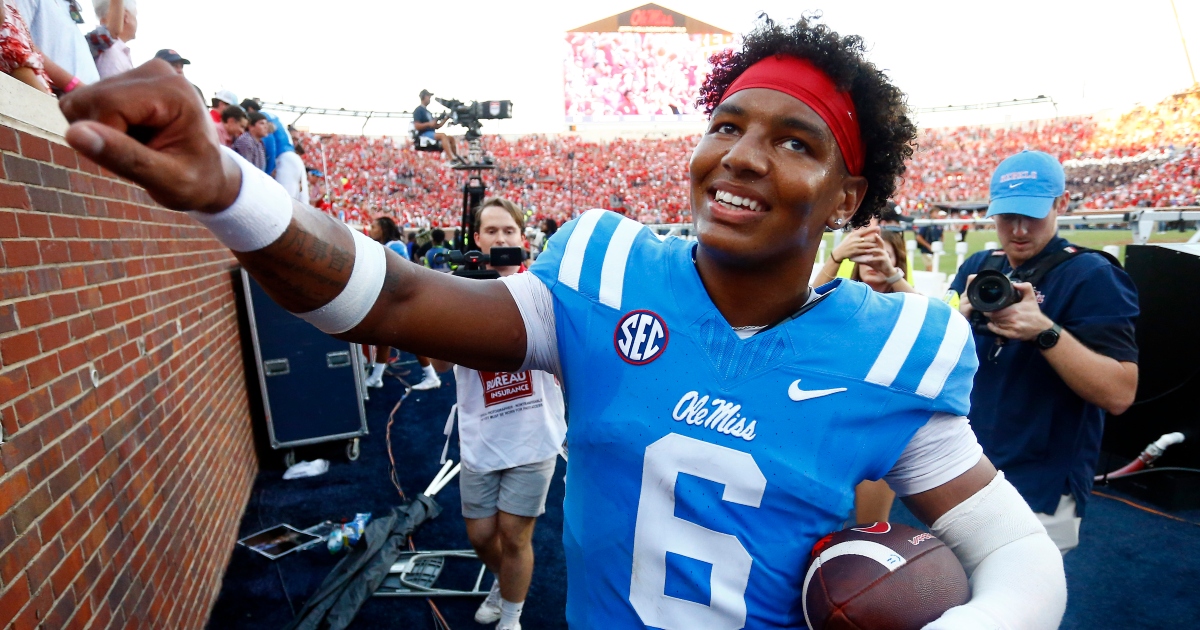
Amid a decorated season at Ole Miss after transferring from Division II Ferris State, Trinidad Chambliss is seeking another year of eligibility. He applied for a waiver, and ESPN’s Katie George shared the timeline for which the Rebels are expecting an answer.
Ole Miss expected about a month-long wait for a response from the NCAA, George said during Saturday’s College Football Playoff game against Tulane. Chambliss told the ESPN broadcast crew, which is calling the game on TNT, he applied for the waiver three weeks ago. As a result, the school is expecting a response to come down soon.
Chambliss spent three years at Ferris State before arriving at Ole Miss this season. However, he only played in two games as a freshman due to multiple health issues, which is why he’s seeking one more season at the FBS level.
“He said that they filed the waiver three weeks ago,” George reported during the first half. “Ole Miss expects it to take a month before they get an answer.
“Back in 2022 when he was at Ferris State, he did not play in a single game due to chronic tonsillitis, heart palpitations and trouble breathing, so he medically redshirted. After the season he had, proving he’s capable of playing at this level, he wants another year to build on his progress.”
After transferring to Ole Miss this year, Chambliss initially served as the backup quarterback behind Austin Simmons. However, after Simmons suffered an injury, Chambliss took the starting job and ran with it as he helped lead the Rebels to their first-ever College Football Playoff appearance.
Across his 12 appearances, Trinidad Chambliss completed 65.5% of his passes for 3,016 yards and 18 touchdowns, to three interceptions. He also added 470 rushing yards and six touchdowns on the ground. In the process, Chambliss also put himself in the Heisman Trophy conversation, finishing eighth in the voting for college football’s most prestigious award.
But as he waits for an answer on his waiver, Chambliss is keeping everything in perspective. During a press conference ahead of the CFP first round, he said he’s preparing for “every possibility” with his future still up in the air.
“I would have to consider, like, what the best situation is for me,” Chambliss said. “What I feel more comfortable with. Who I trust the most and I’m just going to feel for every possibility, really. There’s a lot that goes into that.”
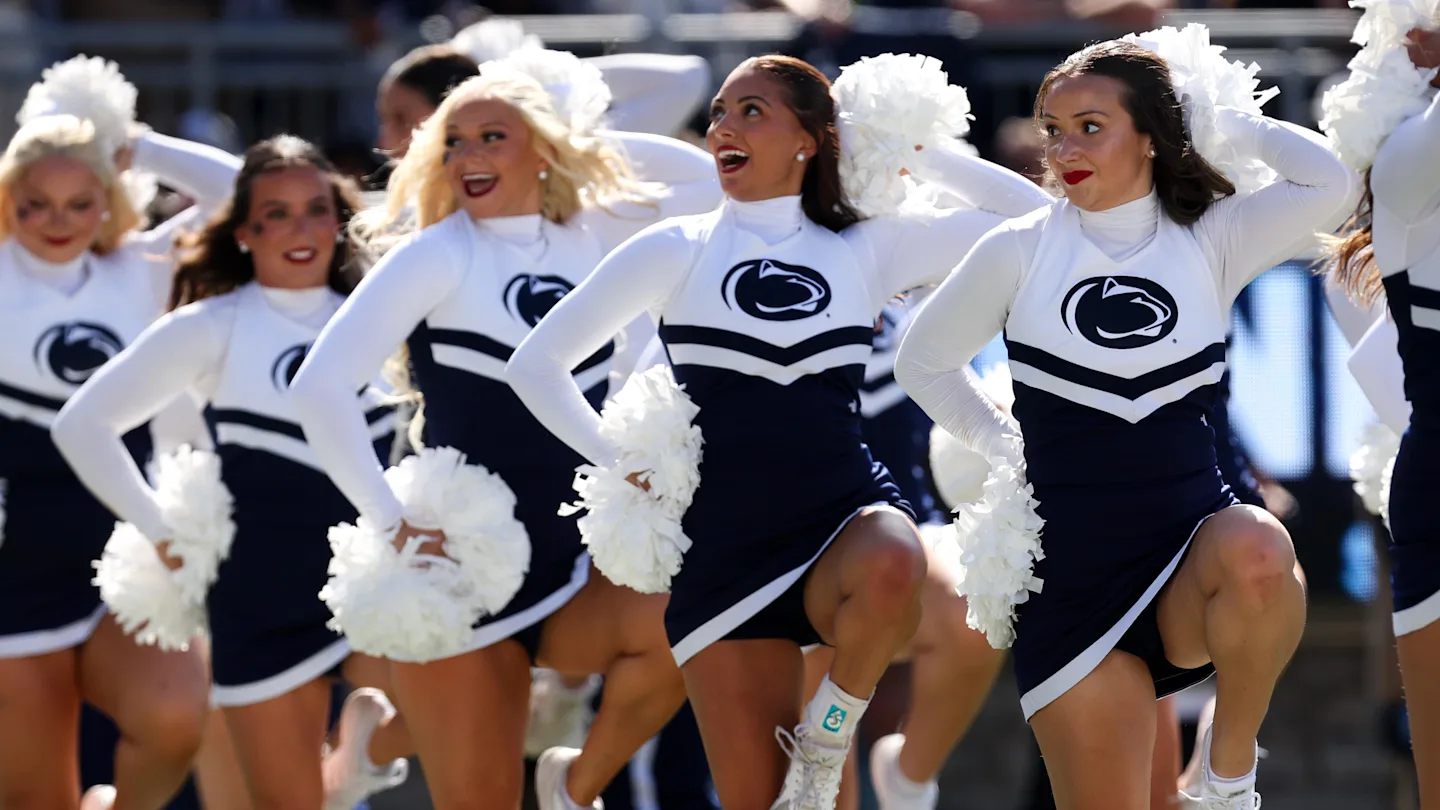
The newly top-ranked overall prospect in the 2025 college football transfer portal has now been linked to a major college football program and a rival of his former team.
Penn State defensive end Chaz Coleman is entering the NCAA transfer portal ahead of the 2026 football season, and reigning national champion Ohio State has emerged as an early school to watch for his forthcoming decision, according to On3 Sports.
Ohio State made a late push to earn the commitment of the in-state edge rusher back when he was a recruit, but he ultimately chose the Nittany Lions, where he got some early, and very promising, exposure.
Now, as that program embarks on the post-James Franklin future, it appears Coleman is looking for an exit, and their Big Ten rival is an early contender to pounce on him.
Early production
A former four-star prospect from Warren, Ohio, the edge rusher was given playing time at Penn State as a true freshman this past season, notching 8 stops with 3 tackles for loss, adding 1 sack, a forced fumble, a pair of fumble recoveries, and a pass defense in that time.
Coleman was considered the No. 25 ranked defensive and the No. 8 prospect from the state of Ohio as a high school player, according to a consensus of the national recruiting services.
Top-ranked transfer
Following news of his intention to transfer, Coleman quickly shot up to the No. 1 position nationally as the best player in the portal, according to the latest 247Sports Composite standings.
“Chaz Coleman has been one of the most dynamic true freshman pass rushers in college football this season,” Rivals scouting director Charles Power said in an assessment of the player.
That early production and continued promise is expected to cost a school considerable money, as Coleman is projected to command a seven-figure package wherever he lands as a transfer, according to the On3 report.
How the college football transfer portal works
College football’s transfer portal officially opens on Jan. 2, but that hasn’t stopped a flurry of players from entering their names for consideration at a new school right now.
The new 15-day transfer portal window from Jan. 2-16 and the elimination of the spring transfer period has condensed the timeline for players and programs to make their moves.
The NCAA Transfer Portal is a private database that includes the names of student-athletes in every sport at the Division I, II, and III levels. The full list of names is not available to the public.
A player can enter their name into the transfer portal through their school’s compliance office.
Once a player gives written notification of their intent to transfer, the office puts the player’s name into the database, and they officially become a transfer.
The compliance office has 48 hours to comply with the player’s request and NCAA rules forbid anyone from refusing that request.
The database includes the player’s name, contact information, info on whether the player was on scholarship, and if he is a graduate student.
Once a player’s name appears in the transfer portal database, other schools are free to contact the player, who can change his mind at any point in the process and withdraw from the transfer portal.
Notably, once a player enters the portal, his school no longer has to honor the athletic scholarship it gave him.
And if that player decides to leave the portal and return to his original school, the school doesn’t have to give him another scholarship.
More college football from SI: Top 25 Rankings | Schedule | Teams
Follow College Football HQ: Bookmark | Rankings | Picks
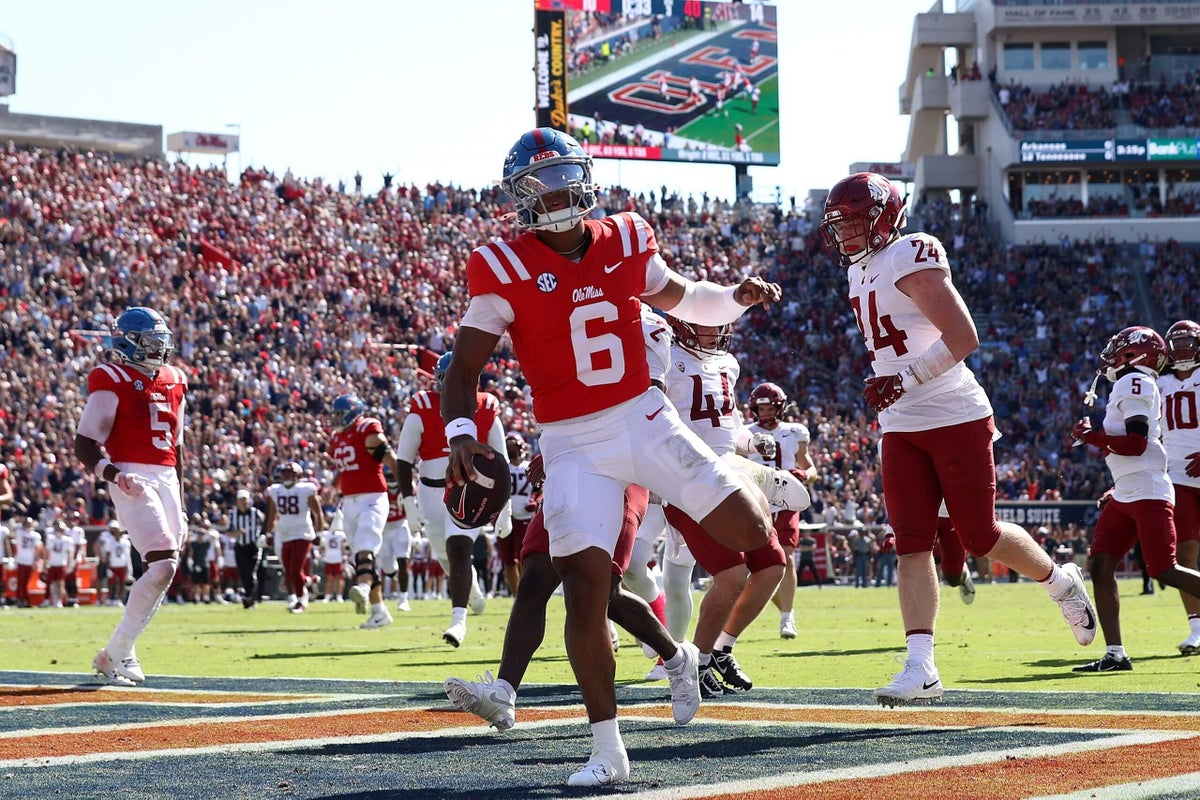
The Athletic has live coverage of Tulane vs. Ole Miss in the College Football Playoff first round.
Editor’s note: This story was originally published in October and has been updated ahead of Ole Miss’ College Football Playoff game against Tulane.
A few days after leading Ferris State to its third Division II national championship in four years, Tony Annese was on his way to Tampa to watch Michigan practice before the ReliaQuest Bowl against Alabama.
Annese’s phone rang. It was the family of Trinidad Chambliss, Ferris State’s star quarterback, calling to say Chambliss was receiving offers to enter the transfer portal.
“I was like, ‘Technically speaking, that’s tampering, but maybe you should test the waters,’” Annese said.
Chambliss was reluctant. He’d gone to Ferris State, a Division II power in Big Rapids, Mich., as a 170-pound quarterback recruit with no FBS offers. He waited his turn, backing up two other quarterbacks during the Bulldogs’ championship seasons in 2021 and 2022. The opportunity to play Division I football was a dream, but his heart was at Ferris State.
In late December, Chambliss made up his mind. He was staying.
“January, February passed,” Annese said. “Around March, people were starting to hound him. To me, there’s always a certain level of money that might be life-changing. I just said to him, ‘If people are going to give you a lot of money, maybe you need to see what they’re going to give you and get in the portal.’ And the rest is history.”
Chambliss ended up becoming one of college football’s surprise breakout stars of 2025. After stepping in for the injured Austin Simmons against Arkansas on Sept. 13, he led Ole Miss to an 11-1 record and No. 6 seed in the College Football Playoff, where the Rebels will host Tulane in the first round.
A second-team All-SEC pick who finished eighth in the Heisman Trophy vote, Chambliss passed for 3,016 yards, 18 touchdowns and three interceptions and rushed for 470 yards and six touchdowns in the regular season. Fans in Oxford have taken up the banner by waving flags of Trinidad and Tobago, a dual-island nation in the Caribbean.
Chambliss has become such a phenomenon that a reporter from Trinidad and Tobago joined an October conference call to ask about his connection to the Caribbean. He doesn’t have one — or he didn’t, until recently — but his breakout season has been good for international relations.
“I drive downtown near the square and see some of the flags from the houses and whatnot. It’s just cool,” Chambliss said. “I’m sure a lot of people from Trinidad are wondering why so many flags are being ordered to Oxford, Mississippi.”
🇹🇹🇹🇹🇹🇹@TrinidadChambl1 x #HottyToddy pic.twitter.com/Ei9npIf7Oo
— Ole Miss Football (@OleMissFB) October 11, 2025
Chambliss said his name was inspired by the Holy Trinity, not by any family connection to the country. Though that’s true, there is another part to the story. His parents, Trent and Cheryl, had an agreement: If their child were a girl, they would go with Cheryl’s preferred name, Trinity. If their child were a boy, Trent would get to choose. Trent liked the connection to the Trinity, and he also happened to be a fan of the boxer Félix Trinidad.
“I kind of took a liking to that name,” Trent Chambliss said. “It does have that spiritual connection, the Holy Trinity. It stood by itself, a pretty strong name. I just figured that was a good fit.”
The name captures a duality that makes Chambliss who he is. He’s grateful for the providential path that took him from playing road games in front of 500 fans to beating LSU in front of nearly 68,000 in Oxford, plus millions watching on TV. He’s also a fighter who can punch above his weight class.
“Fate kind of gave him an opportunity,” said Eddie Ostipow, who coached Chambliss at Forest Hills Northern High School in Grand Rapids. “We all know how talented he is. He’s gotten an opportunity and really ran with it.”
Chambliss was entering his junior season when Ostipow got the job at Forest Hills Northern. He’d shared time at quarterback the previous season but was known mostly for his exploits on the basketball court, where he was a star point guard.
The perception at the time was that Chambliss would play basketball in college. He grew up attending basketball camps and playing in tournaments around the country, which meant he didn’t get as much exposure as a football recruit. When he got the chance to be a full-time quarterback, he flourished. He had a natural throwing motion and easy mechanics, Ostipow said, but his best trait was the vision to anticipate plays that other quarterbacks couldn’t see.
“As a quarterback, you have to distribute the ball, find zones in the defense, find matchups and take your matchups with wide receivers throwing down the field,” Chambliss said. “In basketball, as a point guard, that’s basically the same thing.”
Ostipow saw Chambliss as a Division I prospect, but the nearby Mid-American Conference programs didn’t see him the same way. At 6 feet and 170 pounds, he didn’t have the size that bigger schools wanted in a point guard or a quarterback. But he was a perfect fit for Ferris State, a program known for developing athletic quarterbacks.
Annese, 64, has a 152-21 record in 13 seasons at Ferris State, including a 15-0 mark this year with a spot in the D-II national title game on Saturday. He’s made a Hall of Fame career out of developing overlooked recruits, including Miami Dolphins defensive tackle Zach Sieler, a seventh-round pick in 2018 who signed a $64 million contract extension in August.
It speaks to the depth at Ferris State that Chambliss, a player torching SEC defenses, didn’t become a full-time starter until his fourth year on a D-II campus. The Bulldogs had other quarterbacks in front of him, and he needed time to add about 30 pounds to fill out his point guard’s frame. When he got his chance to start in 2024, he exploded for 51 touchdowns, nearly 3,000 passing yards and more than 1,000 yards on the ground while leading Ferris State to a 14-1 season.
Chambliss also caught the eye of quarterback-hungry teams in the FBS. He wasn’t looking to leave Ferris State, but name, image and likeness offers were difficult to ignore.
“It’s every child’s dream to be able to play at the Division I level,” said Trent Chambliss, an assistant principal at Wyoming High School near Grand Rapids. “With NIL, you end up having that dangling carrot, a large sum of money. It kind of moves people. You’ve got to be strong enough to not move on the emotional charge that you may get.”
Chambliss initially decided not to enter the transfer portal and spent the spring at Ferris State. When programs started calling him again in March, he decided he owed it to himself and his family to listen. Annese gave his blessing and apprised him of the risks and benefits of transferring.

Trinidad Chambliss led Ferris State to the D-II national title last year. (Adam Vander Kooy / USA Today Network via Imagn Images)
Transferring to a bigger school could mean exposure and development for the NFL, along with the not-insignificant money available through NIL and revenue sharing. Though the amount Chambliss is being paid is undisclosed, CBS Sports reported that Chambliss’ deal with Ole Miss is believed to be more than $500,000, a number The Athletic confirmed with a person familiar with his transfer recruitment.
This risk of leaving was that Chambliss would be giving up a chance at the Harlon Hill Trophy, the Heisman of Division II, with no guarantees of seeing the field. When Chambliss visited Ole Miss, coaches made it clear that he’d be coming in behind Simmons, a four-star recruit who was the Rebels’ backup quarterback last season behind New York Giants rookie Jaxson Dart. Chambliss decided to bet on himself, knowing there was a chance he wouldn’t see the field.
“There’s a risk that you don’t get enough playing time to be seen by the NFL,” Annese said. “That was my concern for him. If Austin Simmons didn’t get hurt, how was it going to be?”
Ferris State lost eight starters from last year’s team who transferred to Division I programs. The list includes Bryce George and Lawrence Hattar, reserve offensive linemen at Iowa and Michigan, respectively, and running back Kannon Katzer, who has yet to record a carry at West Virginia.
Annese said he’s happy for the transfers who have carved out roles and sad for the ones who aren’t playing. Heading into the season, it wasn’t clear which category would apply to Chambliss. Even with Chambliss throwing for more than 300 yards in wins against Arkansas, Tulane and LSU, there was a question of what Ole Miss would do once Simmons got healthy.
That question took on more weight after the Rebels had a close call against Washington State in a 24-21 win. Chambliss threw for 209 yards but struggled to get the offense in gear, prompting a blunt pep talk from coach Lane Kiffin.
“Let’s not go back to that Division II stuff,” Kiffin told him, as he recounted to ESPN at halftime.
“Let’s not go back to that Division II stuff”
Lane Kiffin was very honest with Trinidad Chambliss after his first few drives of the game 😅 pic.twitter.com/9KmW7UvaMl
— SEC Network (@SECNetwork) October 11, 2025
But Chambliss held on to the job as he became a viral sensation. The legend will only grow if he takes Ole Miss on a Playoff run after Kiffin’s departure for LSU.
The decision to leave Ferris State wasn’t easy, but it’s earned Chambliss a fan following that stretches from West Michigan to Oxford, Miss. — and even as far as the Caribbean.
“I get so many texts and calls from back home from my friends, people I’ve grown up with, people that supported me before I even got to Ole Miss,” Chambliss said. “It’s just good to have a community behind you while you’re chasing one of your dreams.”
— The Athletic’s Sam Khan Jr. contributed to this report.
NIL
Miami quieted the College Football Playoff debate at Texas A&M, now will chase a 25-year-old ghost
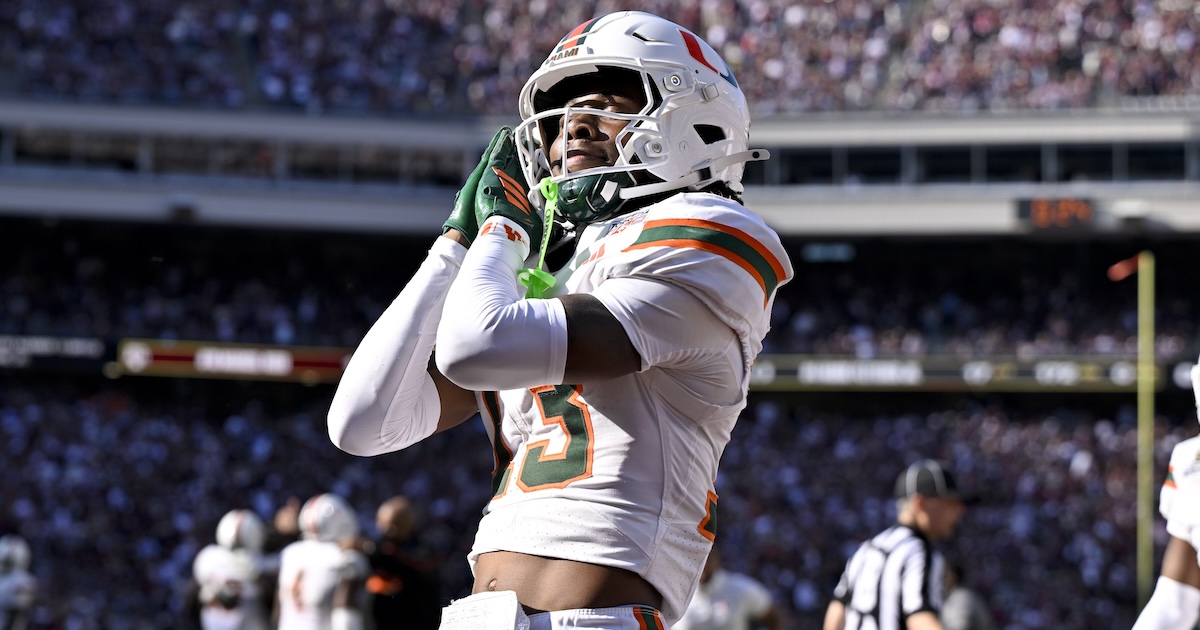
COLLEGE STATION, Texas — Mario Cristobal was in the middle of his postgame interview in the manic moments after Miami’s 10-3 win over Texas A&M at Kyle Field. Out of nowhere, Hurricanes legend Michael Irvin appeared in the shot, grabbed Cristobal’s arm, and planted a wet kiss on his cheek.
“It was disgusting,” Cristobal said later, laughing. “I couldn’t find enough wipes to clean myself.”
That kiss almost didn’t happen. This win almost didn’t happen. And it had nothing to do with the gritty nature of the game, which felt like the Aggies were going to win multiple times. For weeks, Miami was engaged in a resume debate with Notre Dame and Alabama about its worthiness for College Football Playoff inclusion. Even as the game played out — and offenses struggled — there were plenty of people mocking the CFP Committee for taking Miami.
But Miami, which “wasn’t even good enough” to make the ACC Championship Game, went on the road and knocked off Texas A&M, a team that started the season 11-0 and was ranked in the top three of those very CFP rankings at the end of November.
Miami now faces Ohio State in the Cotton Bowl on New Year’s Eve. It continues its chance to win the program’s first national title since 2001. But even as the journey continues, Miami has made clear that this program is going to be a problem nationally for years to come.
“I think it was important first to get into the Playoff,” Cristobal said. “Then to go and win at a place like this, right? It was 100,000-plus people on the road, a team that was arguably top two or three until their last game, and to get it done in this type of environment. We needed that. If you could draw it up the way we wanted it, we wanted to go there. We wanted to come here and do it against a great football team.
“What does it mean for us? Continued progress. The vision. We have never altered the course or been deterred despite all the challenges that come with it. That’s part of it. I am really proud of our players. It’s all about them and that staff, because, again, 40-plus days ago, we were lower than low. We found a way to bring a different level of energy every single day and lift each other and the program up. And here we are with a chance to keep playing. That’s all that matters now.”
For much of that game, things weren’t pretty. Miami missed a few field goals in the first half, and offensive coordinator Shannon Dawson didn’t call his best game, giving in to the temptation to run atypical plays to get the ball into the hands of his best player — true freshman Malachi Toney.
Toney fumbled the ball near midfield with seven minutes remaining in a 3-3 game, making it seem like the Aggies were going to steal this one at home. But Miami’s defense came up with a stop, got the ball back, and rode running back Mark Fletcher — who carried it 17 times for 172 yards — deep into Aggies territory. Then it was Toney, affectionately known as Baby Jesus, who took a shovel pass from quarterback Carson Back for 11 yards to the house, giving the Hurricanes a seven-point lead with 1:44 remaining.
There was a debate about whether Toney should have scored or fallen short of the goal line to milk the clock and set up the Hurricanes for a game-winning field goal as time expired. The debate grew more heated as Texas A&M drove down the field inside the Miami 10 with less than a minute remaining. But Aggies quarterback Marcel Reed threw an interception into the end zone to freshman Bryce Fitzgerald, ending the game.
Those who don’t think Miami should have been in the CFP to begin with will tell you it was two bad teams on the field Saturday. It raises the never-ending debate about whether Notre Dame would have made things look easier, which is ironic given that this game featured two teams that beat the Irish earlier in the season.
After the game, Cristobal was asked whether he felt this game validated the CFP Committee’s decision to include Miami. His answer knocked it out of the park.
“Regardless of what the result was today, they made the right decision,” Cristobal said. “Last year, we had to go to court, I felt. We had a case, other teams had a case, but it was fuzzy. It was muddy. This year, there was nothing fuzzy about it. We had common opponents with another football team — that I’m sure would be great in the Playoffs – but we did better against those common opponents and we won the head-to-head win.
“God forbid we should ever get away from the meaning of head-to-head. Look out there today. How many guys were helped off the field? How many guys had to be carried or had to limp off, had to get on crutches? How many guys are seeing the doctor right now? For competing head-to-head. Let us never ever devalue the importance of head-to-head competition please.”
Through all the CFP discourse, Miami was repeatedly torn down. We heard over and over about its losses to Louisville and SMU, about how it played in a weak conference, how it didn’t make it to Charlotte for the ACC Championship Game and how it wasn’t worthy of this stage.
During that discourse, we forgot how this Miami team is built. Sturdy on the lines of scrimmage, punishing on defense — as illustrated in College Station on Saturday. It has a young phenom receiver in Toney and a reliable back in Fletcher who can move the sticks in close games. It also has two veteran players who have been here through Cristobal’s entire build: edge rusher Rueben Bain and offensive tackle Francis Mauigoa. It is built to compete against these teams.
Now we’ll spend the next 10 days debating whether these Hurricanes are equipped to compete with Ohio State, the team that beat them in the national title game in Tempe, Ariz., more than 20 years ago. That game, some say, marked the end of Miami’s reign of dominance.
The Hurricanes get another shot, not just at Ohio State but also at college football relevance. What happened in College Station was a massive step, but the job for national acceptance is far from over.
And who knows? Maybe Miami will shock the world in Dallas the way the Buckeyes did in Arizona in 2002. Remember, that’s why they play the games. The results matter and hypotheticals are irrelevant during this time of year.
Miami is making the most of the ones it’s been afforded the opportunity to keep playing.

2025-26 College Football Playoff: What’s next for each eliminated playoff team?

A-K Valley athletes of the week: St. Joseph’s Bella Bartolovic, Springdale’s Robby Simmen

The staggering NIL figure that transfer portal QBs are expected to cost

Commanders young RBs – The Athletic

TWRA Youth Fish Art Contest Now Open

Obituary: George Harry Leaman Apt

Trinidad Chambliss waiver: ESPN reveals Ole Miss’ expected timeline for response from NCAA

No. 1 transfer portal player linked to major college football program

Where to watch Texas A&M volleyball vs. Kentucky: Time, TV channel

North Charleston basketball league inspires youth on and off the court

2025 O. Bruton Smith Awards: Speedway Motorsports Honors Promoter, Speedway of the Year, and Innovation

Crystal Community Ski Club honored by national ski organization

Last-minute madness: 79-yd TD pass sends UW-River Falls to DIII title game

Page Not Available – Woodlands Online

Who is Trinidad Chambliss? How a reluctant D-II transfer took the SEC by storm at Ole Miss

First Tee Winter Registration is open

Fargo girl, 13, dies after collapsing during school basketball game – Grand Forks Herald

CPG Brands Like Allegra Are Betting on F1 for the First Time

F1 Las Vegas: Verstappen win, Norris and Piastri DQ tighten 2025 title fight

Sycamores unveil 2026 track and field schedule

Two Pro Volleyball Leagues Serve Up Plans for Minnesota Teams

Utah State Announces 2025-26 Indoor Track & Field Schedule

SoundGear Named Entitlement Sponsor of Spears CARS Tour Southwest Opener

Redemption Means First Pro Stock World Championship for Dallas Glenn

Bowl Projections: ESPN predicts 12-team College Football Playoff bracket, full bowl slate after Week 14

Jo Shimoda Undergoes Back Surgery

Texas volleyball vs Kentucky game score: Live SEC tournament updates

Robert “Bobby” Lewis Hardin, 56

How this startup (and a KC sports icon) turned young players into card-carrying legends overnight

Indiana’s rapid ascent and its impact across college football




-
 Motorsports1 week ago
SoundGear Named Entitlement Sponsor of Spears CARS Tour Southwest Opener
-
 Motorsports2 weeks ago
Donny Schatz finds new home for 2026, inks full-time deal with CJB Motorsports – InForum
-

 Rec Sports2 weeks ago
How Donald Trump became FIFA’s ‘soccer president’ long before World Cup draw
-
 Sports3 weeks ago
Men’s and Women’s Track and Field Release 2026 Indoor Schedule with Opener Slated for December 6 at Home
-

 Rec Sports2 weeks ago
Black Bear Revises Recording Policies After Rulebook Language Surfaces via Lever
-
 Rec Sports2 weeks ago
David Blitzer, Harris Blitzer Sports & Entertainment
-
 Motorsports2 weeks ago
JR Motorsports Confirms Death Of NASCAR Veteran Michael Annett At Age 39
-
 Motorsports2 weeks ago
Rick Ware Racing switching to Chevrolet for 2026
-
Sports2 weeks ago
West Fargo volleyball coach Kelsey Titus resigns after four seasons – InForum
-
Sports2 weeks ago
Elliot and Thuotte Highlight Men’s Indoor Track and Field Season Opener