


Former NC State RB Hollywood Smothers’ commitment to Alabama did not last long. He’s flipped to Texas.
NIL
In College Sports’ Billion-Dollar Arms Race, Philly Schools Are Being Left Behind

Longform
Villanova, Temple, and others face a harsh new reality: Without deep pockets, even winning might not be enough.
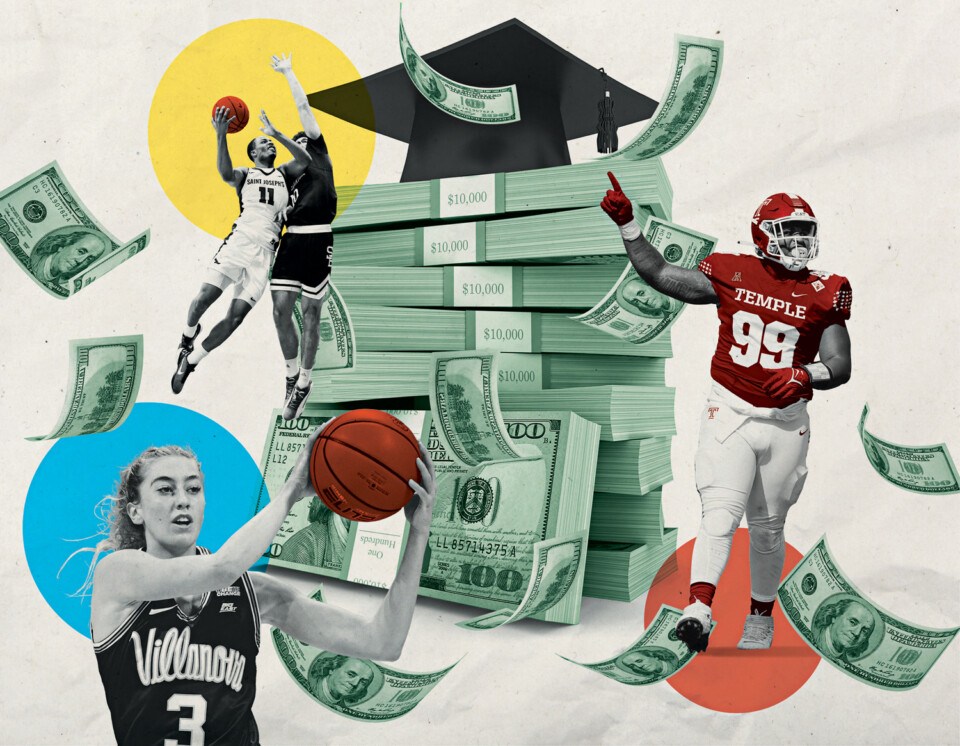
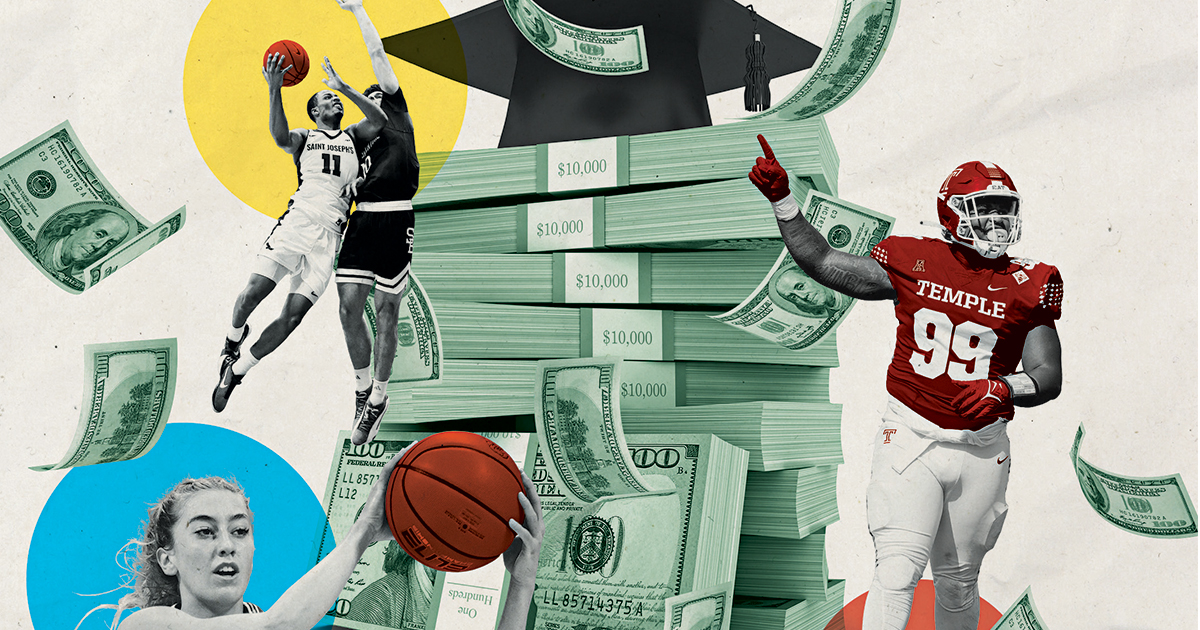
Big financial changes have come to college sports, and Philadelphia schools are being left in the dust. / Photo-illustration by Leticia R. Albano; photographs via Getty Images
Villanova athletic director Eric Roedl is not wearing a green tie this early May morning as an homage to his former employer, the University of Oregon. Even though he might not have intended it this way, it’s more of a symbol of the current money-driven college sports climate.
Roedl became AD in January. Two months later he fired men’s basketball coach Kyle Neptune, and two weeks after that replaced him with Maryland’s Kevin Willard. More important, however, than filling the most visible athletic role on Villanova’s campus is that he has worked to raise the money necessary to fund the payment of Nova’s basketball players, the result of a landmark revenue-sharing settlement forged after the NCAA, the governing body of college sports, lost a $2.8 billion lawsuit about allowing athletes to profit from their names, images, and likenesses.
It’s a wonder, then, that Roedl isn’t dressed entirely in green.
Roedl wants to make sure his men’s and women’s basketball programs are positioned to compete nationally, and that’s going to take a lot of cash. With some athletes receiving millions in guarantees from schools (Brigham Young reportedly will pay freshman hoops player AJ Dybantsa $7 million), Roedl might need a telethon to raise enough money to help the Wildcats. It’s going to be even more difficult for the rest of the City Six colleges — Drexel, La Salle, Penn, St. Joseph’s, and Temple — to reach that level.
As part of the revenue-sharing settlement, schools will be allowed to compensate their athletes up to $20.5 million annually across all sports. Colleges in the so-called Power Four conferences — Big Ten, Southeastern, Atlantic Coast, and Big 12 — have the resources to do that, thanks to media rights deals tied to their strong football programs. Just about everybody else is way behind them. And the Power Four conferences want even more money, which translates to on-field success and off-field power.
“As a summary to all of this, the color is green,” says former Temple and La Salle AD Bill Bradshaw, who now advises schools and coaches. “That’s the only thing that matters. When all is said and done, those who have the cash and the football TV money are the ones who will survive.”
•
Temple is the only City Six school that plays in the Football Bowl Subdivision (FBS), the highest level. But it is part of the American Athletic Conference, a non–Power Four confederation. Temple took in $9.7 million in revenue from the conference last year. By comparison, Big Ten members will receive up to $75 million in media rights each this year. Schools will also earn money from NCAA football and basketball tournaments, as well as conference championships. The Big East Conference, of which Villanova is one of 11 members, is slated to receive about $80 million in media rights this year, per sports business journalist John Ourand. La Salle and St. Joe’s of the Atlantic 10 receive less than that. Drexel’s and Penn’s conference payouts are negligible. Drexel’s entire conference, the Coastal Athletic Association, signed a four-year, $10 million deal in 2023. That’s loose change for Power Four schools.
According to the U.S. Department of Education, Temple’s 2024 athletic budget was $70 million; Villanova spent $61 million. Meanwhile, Ohio State shelled out $262 million, and Alabama’s budget was $243 million. It’s hardly a fair fight.
“The NIL settlement is the last nail in the coffin,” says Temple professor Michael Leeds, who studies the economics of sports. “We’re going to have haves and have-nots.”
The NCAA basketball tournament is a perfect example, one especially important to local schools. If the powerhouse conferences limit — or eliminate — access to it for mid-major and smaller schools, like most of the City Six, in the name of funneling the tourney’s payouts ($2 million for reaching the tournament, $2 million per win) to their members, local schools could leave Division I. Tournament access for all 365 Division I programs, says Drexel AD Maisha Kelly, is “the thing tethering schools together.”
The NCAA has always had problems, but it was functioning and had a good balance between winning and academics. It feels now that the conversation is exclusively about money. That upsets me. I’m sorry, but it does.” — Temple University president John Fry
The doomsday scenario involves the Power Four schools breaking away from the NCAA and forming a superconference of 70 to 80 teams. That would end Division I and drive almost all the top athletes to big schools. For now, local colleges are trying to raise enough money to appeal to good players so they can win and stay relevant. “I would say it’s 90 percent money and 10 percent the school,” Willard says of recruiting these days.
Local teams’ recent struggles don’t help. No City Six school has played in the NCAA men’s basketball tournament in three years, after a 46-year run during which at least one school participated. Even Villanova, which won national titles in 2016 and 2018 and reached the Final Four in 2022, has floundered recently. Temple’s football team hasn’t won more than three games in a season since 2019.
There has been success. The St. Joe’s field hockey team reached the NCAA championship game last fall. Penn’s women’s lacrosse team has been a perennial NCAA tournament participant over the past decade-plus, and Drexel’s men’s rowing team has been ranked in the top 20 for 10 years. Nova’s women’s hoops team reached the Sweet 16 in 2023, and the school’s track squads have excelled for more than 50 years.
In today’s college sports world, though, those achievements don’t bring money or power. Football and, to a lesser extent, men’s basketball do. The NCAA has piddling influence on FBS football and a dwindling impact on other sports, thanks to its losses in court. That has created a climate of urgency for Philadelphia-area colleges. If they can’t find the money to compete, or the big boys keep changing the rules to give themselves more power, local college sports could become little more than sweaty extracurricular activities.
“The NCAA has always had problems, but it was functioning and had a good balance between winning and academics,” says Temple president John Fry. “It feels now that the conversation is exclusively about money. That upsets me. I’m sorry, but it does.”
•
To see how we got here, we first have to look back.
For decades, schools could provide a scholarship — tuition, room, and board — to Division I college athletes, who received nothing to cover discretionary expenses. The term student-athlete was coined by the NCAA in the 1950s to prevent players from being considered employees so they couldn’t claim workmen’s compensation benefits if injured. They had no input and certainly no share of the revenue.
The NCAA controlled everything about college sports, including TV rights. In 1981, Oklahoma and Georgia sued the NCAA on behalf of the College Football Association, which included 61 big-time gridiron schools, about 30 of which had signed a TV deal with NBC — without NCAA approval. The schools won the right to negotiate their own contracts and pushed the NCAA out of the big-time business of college football.
“Since that suit, there has been a steady move by the big schools to amass more wealth and concentrate more wealth in a small group of schools,” says Leeds, the economics professor.
It took more than 30 years for athletes to get some freedom. In 2014, former UCLA men’s basketball player Ed O’Bannon successfully sued the NCAA, claiming it had conspired to prevent athletes from profiting from the use of their likenesses in video games and on TV broadcasts. The verdict allowed athletes to earn up to $5,000 per year in additional compensation through use of their names, images, and likenesses (NIL).
It’s very much a Moneyball situation. You have to look at your resources and decide what you’re willing to do to keep players.” — Temple’s head football coach K.C. Keeler
Five years later, California became the first state to allow athletes to earn as much as possible from NIL deals. Other state legislatures followed, and in 2021, the NCAA — against its will — permitted universal NIL deals. Last year, the NCAA settled a class action suit with plaintiffs Grant House, an Arizona State swimmer, and then–Oregon basketball player Sedona Prince on behalf of more than 10,000 athletes for compensation from 2016 forward because NCAA rules limiting athlete compensation constituted a restraint of trade. The House settlement includes provisions for revenue sharing of $20.5 million per school annually, but athletes are still not school employees. The number will go up each year, while the $2.8 billion paid to former athletes will come from smaller payouts for NCAA Tournament participants over the next 10 years.
In 2018, the NCAA instituted the transfer portal to formalize the process by which athletes switch schools, but transfers had to sit out a year. Three years later, the NCAA allowed one free transfer that didn’t include that penalty. Then, in 2024, the courts forced the NCAA to allow unlimited athlete transfers without sitting out. That created an annual marketplace for talent, with high-revenue football schools able to lure the best players in all sports.
“Schools in the big conferences more and more will decide what they’re doing on their own,” says Jeffrey Kessler, a partner at New York–based Winston & Strawn and the co-lead counsel for plaintiffs in the House lawsuit. “They want more and more autonomy, especially with the College Football Playoff.”
That’s not good news for Temple, which is trying to rebuild its gridiron fortunes.
•
When Temple hired Al Golden in 2006, it had posted 15 straight losing seasons and had lousy attendance. Golden established a foundation that would lead to six bowl appearances over the next nine seasons. In 2015, ESPN’s College GameDay program came to Philadelphia ahead of Temple’s game against Notre Dame at sold-out Lincoln Financial Field.
Just a few years later, the program bottomed out.
On December 1st, K.C. Keeler took over as Temple head coach, inheriting a program that has had five straight losing seasons and attendance woes. Since his hiring, Keeler has persuaded the university to increase monthly room-and-board stipends for players and to improve the training table fare. He’s also spruced up Temple’s football facility.
That’s helpful, but the Owls are lagging in the most important part of college athletics. Keeler must also afford recruits, develop them into contributors, and keep them from transferring for bigger paydays. “Almost every player we lost in recruiting, we got outbid,” Keeler says of this offseason. Every Tuesday, Keeler calls alumni and asks them to help Temple compensate its players. That means increased donations. “It’s very much a Moneyball situation,” he says. “You have to look at your resources and decide what you’re willing to do to keep players.”
Power Four schools are expected to devote up to 75 percent of their $20.5 million total to football. In contrast, Temple’s conference, the AAC, is mandating that members spend at least $10 million across all sports over the next three years — total. Keeler will offer all players some money — “We tell them, ‘You’re not going to get much at Temple, but we can make your life more comfortable,’” he says — and the chance to play.
Senior defensive tackle Demerick Morris transferred to Oklahoma State after Temple fired former head coach Stan Drayton in November. Morris went through winter workouts in Stillwater but didn’t “feel welcome” there, he says. He contacted Keeler and asked to return to Temple.
Morris admits Oklahoma State offered him more money than he’ll get at Temple. But he will likely play more for the Owls.
“When I went to Oklahoma State, the money was cool, but it wasn’t a good fit, especially position-wise,” Morris says. “I was third or fourth on the depth chart. I was getting money, but I didn’t want to waste my last year.”
Morris’s story is encouraging, but Temple still could become something of a developmental program for bigger schools.
“It’s likely we’ll bring people in who won’t be with us the whole four years,” Temple athletic director Arthur Johnson admits.
Former Temple assistant Gabe Infante thinks the Owls can be successful if the school’s administration shows “an investment in the program and that it’s an important part of the institution.” Fry insists it is. Although while president at Drexel he wrote a 2016 piece in the Wall Street Journal titled “We’re Glad We Say No to College Football,” he understands the sport’s value at Temple. “We are committed to the program, committed to K.C., and committed to the long term,” he says.
Fry has told the board and alumni groups that to be competitive in this changing landscape, they need to support athletics, particularly football, at higher levels: “I don’t think Temple has done enough asking,” he says.
Other City Six schools are certainly asking — and also getting creative.
•
In late April, the St. Joseph’s athletic department hosted a symposium titled “Navigating Our New Normal: Settlement Implementation and a Future Focus.” The symposium, which was created by SJU athletic director Jill Bodensteiner, brought together more than 40 mid-major schools from across the country that do not have big-time football (if they have it at all) to brainstorm.
Afterward, on a questionnaire provided to the 111 participants, the most popular comment was “Can we do this every year?”
“When we go to professional conferences, our voices get drowned out,” Bodensteiner says. “Big schools are discussing how to share $20 million with athletes. The discussion doesn’t include us.”
Mid-major schools don’t have the budgets to attract and retain top players, so they have limited sway in the administration of college athletics. And the influence they do have could dwindle. On May 7th, Ross Dellenger of Yahoo Sports reported that big schools presented a structure to the NCAA that would weight the 67 Power Four members’ votes to between 51 and 65 percent of the 365-school total.
“The bigger risk [than money] is if somehow the governance model changes, and the Power Four schools say, ‘We don’t want you in the club anymore,’” Bodensteiner says. “In that instance, access to championships goes away.”
In 2024-25, smaller schools won NCAA titles in men’s lacrosse (Cornell), men’s ice hockey (Western Michigan), and men’s soccer (Vermont). But those sports don’t bring influence. Football does. And basketball helps schools gain recognition: Champions of all Division I conferences gain automatic bids to the tourney, an important consideration for non–Power Four schools.
“Basketball and the NCAA Tournament in its current structure are what’s holding everything together,” La Salle athletic director Ashwin Puri says. And in order to stay relevant in that sport, teams need to raise money to build competitive rosters.
“When donors see me coming, they say, ‘Oh, shoot, he doesn’t want a $10 cup of coffee.’ It’s $20,000 or $200,000,” says new La Salle men’s basketball coach Darris Nichols.
Villanova’s Willard estimates that gathering donations is “80 percent of the job,” an unthinkable percentage even just 10 years ago. Sports that aren’t top priorities are often on their own. Nova football coach Mark Ferrante, whose team competes in the Football Championship Subdivision, one step below the FBS, doesn’t expect to get any revenue-sharing dollars from the school, which has just introduced the Villanova Athletics Strategic Excellence Fund (which allows alumni and fans to donate directly to the school’s revenue-sharing efforts) to support primarily men’s and women’s hoops. “I’m going to go out and try to fundraise,” Ferrante says.
Perhaps St. Joe’s could devote enhanced resources to its outstanding field hockey program to make it a perennial power and become known nationally for that, but for now that isn’t a consideration. Besides, it could take away resources from basketball. “Let’s see how the market plays out before we think about that,” Bodensteiner says.
The climate is fostering creativity. Bodensteiner says St. Joe’s might give out only 12 of the allotted 15 men’s and women’s basketball scholarships and convert the extra $80,000 per scholarship to revenue sharing. St. Joe’s will play in the Players Eras Festival men’s basketball tournament the next two years, which promises each school $1 million in NIL money.
I haven’t spoken to one person who can give me an idea about what things will look like in five years.” — John Fry
Increased cash flow could help smaller schools keep players from transferring to bigger ones for more money. But bigger schools are looking for experienced help. In February, St. John’s men’s basketball coach Rick Pitino said he wouldn’t recruit a five-star high school prospect because “I don’t think you can win, and win big, with high school kids.” La Salle has one player returning from last year’s 14-person men’s basketball roster, in part due to coach Fran Dunphy’s retirement. This offseason, Drexel’s top four men’s basketball scorers left for bigger paydays.
“We will not opt in to spend at high levels,” Drexel athletic director Kelly says. “We’ve stayed closely aware of how our peers in the [Coastal Athletic Association] are doing things and will be good stewards of the university’s resources.”
At Temple, last year’s second-leading men’s basketball scorer, Zion Stanford, moved on to Villanova. St. Joe’s top scorer, Xzayvier Brown, is now at Oklahoma. Players at every level are looking to improve their situations, and schools are struggling to maintain continuity. “Everybody is trying to figure it out,” Temple head men’s coach Adam Fisher says.
Ivy League schools don’t offer athletic scholarships, so Penn certainly won’t be sharing revenues with players. “We have to do the best we can with the resources we have,” says new men’s basketball coach Fran McCaffery. That makes the Quakers vulnerable to losing players. After the past three seasons, a trio of top players — Jordan Dingle (St. John’s), Tyler Perkins (Villanova), and Sam Brown (Davidson) — transferred to schools that could compensate them. Last December, standout Penn running back Malachi Hosley moved to Georgia Tech, where he will receive money.
“You have to constantly adjust as a football program, athletic department, and league,” Quakers coach Ray Priore says. “How do you change and put your best foot forward?”
McCaffery returned to his alma mater after 15 seasons at Iowa and aims to revive a program that has played in just one NCAA tourney since 2008. Part of that is finding some NIL opportunities (allowed by Ivy League rules). McCaffery says he’s “talked to more billionaires in my first few months at Penn than I did my entire time at Iowa,” in an attempt to find companies to connect with his players. That makes sense to Penn professor Karen Weaver, an authority on the role of sports in higher ed. “Every school thinks it’s one rich donor away from success,” she says. McCaffery understands the challenges he faces: “This is, without a doubt, the most dramatic change [of my career], and it could be the most frustrating and create the most opportunity for you to say, ‘It can’t be done.’ I’m going to work with my staff and the players and get them ready. I’m going to coach them up and compete. That’s why I do this.”
Some players have a different motivation.
•
When former Penn guard Sam Brown wanted to practice shooting after he announced he was transferring to Davidson, he would sneak into the Palestra late at night, hoping he wouldn’t get booted by security for his move. The son of former Sixers coach Brett Brown scored more points during Ivy League games last year than any other player and decided to consider transfer options after the Quakers fired head coach Steve Donahue, who had recruited Brown.
Brown seriously considered 15 suitors (including St. Joe’s), a group he narrowed to three — Davidson, Notre Dame, and returning to Penn. He will get paid to play at Davidson, but Brown insists he didn’t make the decision based on money. He wants to improve enough to play pro ball, in the U.S. or abroad. Davidson has had success turning players into pros, Brown says, a factor in his decision.
Athletes’ Ink agent Doug Young was an assistant at Lower Merion High while Brown was there and helped Brown through the portal process. He says Brown could have made more money if he’d wanted. Temple’s Morris says some players “are asking for millions,” and Keeler says there are agents guiding clients to the most money, regardless of fit.
“Some families prioritize the best dollar amount,” Young says. “I can say all day to them that it may not be the best fit.”
Just about every player has an agent, including many high school recruits. There is no denying that the players are profiting. “Some mid-major kids are going to make more during their college careers than they will playing professionally in Europe,” Young says. And there are still NIL opportunities available that allow players to represent companies, make personal appearances, and promote products, all while being compensated.
Cody Wilcoxson, an associate at law firm Blank Rome in Philadelphia, has worked over the past five years to connect schools and athletes with NIL deals.
“Athletes are becoming parts of advertising campaigns for universities and for some of their business partners and sponsors,” Wilcoxson says. “If a school is playing a big neutral-site basketball game, it may ask a football player to promote it on their social media.”
Opendorse, a Lincoln, Nebraska–based company, provides NIL guidance for schools and a marketplace for athletes to earn endorsements. Julian Valentin, Opendorse’s senior vice president of college services and marketing, says, “There are no better influencers for young people than athletes,” especially female athletes.
But Christy Hedgpeth, president of Playfly Sports Properties, a Berwyn-based firm that negotiates multimedia rights, sponsorships, and NIL opportunities for 30 colleges nationwide, including Villanova, says the NIL climate must be regulated and that college-affiliated collectives that put together NIL deals should be controlled.
If nothing’s done, I don’t think this is sustainable.” — Villanova men’s basketball coach Kevin Willard
“What a collective would do is have an athlete do a clinic for the Boys and Girls Club, a service-oriented activity, or go to a children’s hospital,” Hedgpeth says. “It’s noble, but the athletes were being paid at above fair market value. It was very clear [the NIL model] was being abused.”
As part of the settlement, athletes must report every NIL deal above $600, and they will be subject to audit by Deloitte. According to Yahoo’s Dellenger, a Deloitte official told ACC coaches and ADs in May that “70 percent of past deals from booster collectives would have been denied” under the new model. But schools will keep making NIL connections.
“Schools want to be known as destinations that create an environment that generates NIL interest,” Hedgpeth says. “Schools want to see as much NIL activity for student-athletes as possible. It’s a differentiator.”
And it’s something Villanova is counting on for its basketball team.
•
In March, when Willard was leading Maryland to the NCAA Tournament Sweet 16, he told the media he believed basketball wasn’t being funded properly. Villanova’s basketball-first mentality influenced his decision to change jobs.
“From the first day I stepped on campus, everybody was talking about how to make this a championship program,” Willard says. “At a football school, from the minute the spring game ends, everybody talks about how to sell tickets for football.”
Villanova has won three national titles and has high expectations. The school failed to reach the NCAA Tournament during Kyle Neptune’s three years, and Willard was hired to revive the program. To do that, he needs money to attract top players and NIL deals to augment those payments. As a school without an FBS football team, Villanova is able to devote the bulk of its revenue-sharing resources to men’s (primarily) and women’s hoops. Some of those resources will come from its new Strategic Excellence Fund. (St. Joseph’s has recently established a Basketball Excellence Fund to help finance its hoops aspirations as well.)
It helps that Nova is part of the Big East Conference, which boasts four of the last nine NCAA basketball champions. Only one member — Connecticut — plays FBS football. UConn won this year’s women’s title and has hung 11 other banners. Nova’s women reached the Sweet 16 in 2023. “The Big East as an entity will not be left behind by the Power Four,” predicts former St. Joseph’s men’s coach and current TV analyst Phil Martelli. True, but nothing is guaranteed.
“The biggest factor there is going to be continued investment,” Nova AD Roedl says. “The various universities in the Big East are highly committed to success in men’s and women’s basketball, and that’s going to continue.”
That commitment is a big reason Duke Brennan chose to transfer from Grand Canyon University to the Main Line for the 2025-’26 season. The six-foot-10 forward, part of a core eight-person transfer class, describes himself as a “hard hat, lunch pail guy.” “If you think of blue-blood programs, Villanova is a blue blood,” he says. “I consider them on a par with Duke, North Carolina, Kentucky, and Connecticut.”
Brennan likes Villanova’s blue blood — and green cash. He says his monetary deal wasn’t an “overarching” reason for choosing the school, but it was big.
“All of us players are thinking about our futures, and of course, financial stability is important,” he says. “I wouldn’t say it’s 90 percent of my focus, but I want to be able to put things away for my future.”
Villanova’s money won’t all go to the men’s hoops team. Roedl says the school must “figure out how to resource” its 24 athletic programs. That includes the women’s basketball squad, which is a Big East stalwart. After the 2023-’24 season, leading scorer Lucy Olsen transferred to Iowa for a larger NIL payment and a chance to play in the Big Ten Conference.
Playfly can help that commitment by connecting Nova players with brands and can create “premium” opportunities that generate funds. “We could do an event like a bourbon tasting at a coach’s house and charge a thousand dollars a person,” Hedgpeth says.
Fans may want to drink single-barrel whiskey at Willard’s home, but not all of them like the current climate of players being compensated and being able to transfer freely. Nova must guard against supporters losing interest because of yearly roster turnover and substantial payouts to athletes. The school needs to educate fans on what some of the new realities are, Roedl says.
Unfortunately, some of those lessons will be incomplete.
•
Good luck finding someone who knows what’s going to happen next.
“I haven’t spoken to one person who can give me an idea about what things will look like in five years,” Temple’s Fry says. He’s not talking to the wrong people. Everyone is confused.
One thing we know is that the Power Four schools will keep trying to get as much control of the revenue streams as possible. The College Sports Commission they created will continue to represent their interests. And that’s bad news for everybody else.
The expected expansion of the College Football Playoff from 12 to 16 teams? More money for the big schools. The predicted growth of the NCAA basketball tournament field? More spots for the power conferences. The revenue-sharing cap will increase every year, based on Power Four schools’ annual revenues. As media rights deals expire in the coming years, the Power Four will try to expand their ranks with desirable schools from everywhere else to get bigger contracts.
The City Six will move valiantly forward with creative revenue-generating strategies, but they could become glorified junior colleges, with players staying on campus a year or two before searching for better opportunities. The smaller schools are particularly vulnerable to the Power Four, which have largely emasculated the NCAA.
“If nothing’s done, I don’t think this is sustainable,” Willard says about NCAA — or perhaps federal — legislation.
Even Villanova, which is banking on the Big East’s continued relevance, might only have the best seat at the kids table, especially if Connecticut moves to the Big 12, which was discussed last year. Being a basketball-centric conference in a football world doesn’t provide complete security.
For now, fans should enjoy their favorite colleges’ opportunities to compete for championships and hope the big boys don’t decide to take everything for themselves. But change will continue. And it’s unlikely things will get better for local schools.
So get out those checkbooks and help the cause. Who knows how much longer you have?
“Schools had better understand this and adapt to it, or they’ll get run over,” Willard says.
Published as “Varsity Blues” in the August 2025 issue of Philadelphia magazine.
Continue Reading

Three elite college football programs are battling for one of the most productive quarterbacks in the transfer portal. A redshirt freshman signal-caller has emerged as a primary target for several major schools as the offseason quarterback carousel continues to spin.
The 6-foot, 186-pound dual-threat passer is coming off a breakout season at the FCS level and is now looking to make a jump to the Power Four, according to reporting from On3’s Pete Nakos and Steve Wiltfong.
One SEC head coach quickly pivoted to this rising talent after a previous target from Washington opted to remain in Seattle for the 2026 season. The program has been aggressive in its pursuit, hosting the quarterback for a visit that began on Wednesday and concludes this weekend.
The Radford, Virginia native also visited a Big Ten contender earlier in the week, creating a high-stakes recruiting battle between two heavy hitters.
The decision comes at a critical time for all schools involved as they look to solidify their rosters for the 2026 campaign. The prospect brings a dynamic skill set that has clearly intrigued coaches at the highest level. He accounted for nearly 3,000 yards of total offense last season, proving he can stress defenses with both his arm and his legs.
Landen Clark transfer news updates, visit schedule
Elon quarterback Landen Clark’s production suggests he is ready for a bigger stage. The redshirt freshman threw for 2,321 yards and 18 touchdowns while adding another 614 yards and 11 scores on the ground. His ability to create plays was on full display against Western Carolina, when he passed for 305 yards and two touchdowns.
Those traits appeal to offensive-minded coaches like LSU’s Lane Kiffin, who is looking to add explosive playmakers to his quarterback room.
It wouldn’t be the first time Kiffin plucked a big-time quarterback talent from a little-known school, just as he did ahead of this season when landing Trinidad Chambliss from Division II Ferris State.

Michigan is also making a strong push under new leadership. The Wolverines are looking to stabilize their offense following the departure of Sherrone Moore and the arrival of Kyle Whittingham.
Clark’s visit to Ann Arbor gave him a chance to see how he would fit into their revamped system. Meanwhile, James Madison remains in the mix as a program that can offer immediate playing time closer to home.
Named a Third Team Freshman All-American by Phil Steele, Clark is expected to announce his decision by Sunday evening.
Read more on College Football HQ

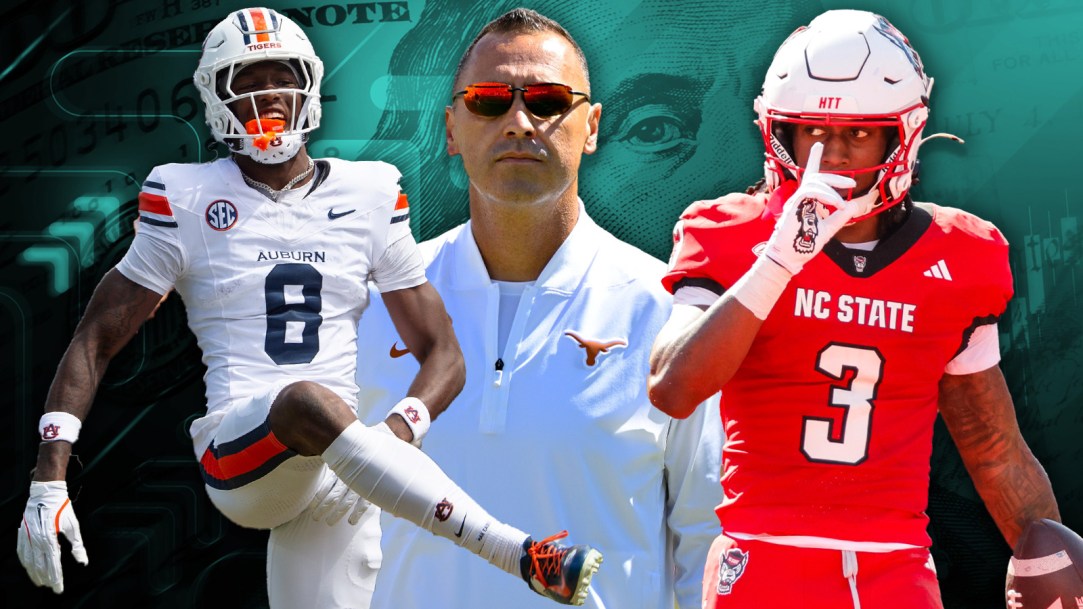
Texas has the financial resources to sign any college football player it wants. The Longhorns are making a statement by spending millions of dollars in NIL money to help build the roster around Arch Manning.
It also proves they are not broke.
Two of the biggest moves in the transfer portal directly contradict a recent narrative surrounding the college football program in Austin. There is plenty of cash!
Texas will not overpay for unproven contributors.
The University of Texas have seen 23 outgoing players enter the transfer portal this cycle. That is a little bit less than 25% of the 105-player roster.
NIL money is the driving force behind a large number of these departures.
Many Longhorns players are going to the financial administrators with requests for a pay raise, or threatening to enter the transfer portal based on their projected roles rather than proven on-field performance. Players and agents view the program as flush with cash so they want their piece of the pie. That initially created a lot of tension because Steve Sarkisian and his staff are unwilling to overpay for backups and/or unproven contributors. Their demands are unrealistic.
Some fans of college football, especially those who root for rival programs, learned of this targeted approach by Texas and used it as a reason to point and laugh. They thought the Longhorns didn’t have enough money to pay their players after flaunting their money for recruits with a fleet of Lamborghinis.
That is far from the truth, as we learned on Sunday.
Alabama didn’t offer enough NIL money for Cam Coleman or Hollywood Smothers.
This whole narrative about Texas being broke largely stemmed from Christian Clark. The rising sophomore running back initially announced his decision to enter the transfer portal after getting 55 carries for the Longhorns in 2025. He may or may not return to Austin.
Either way, Texas will now split the bulk of carries between Raleek Brown and Hollywood Smothers. Clark is an afterthought. If he decides to leave, good riddance.
Smothers was the top-ranked running back in the transfer portal. The former four-star recruit ran for 939 yards and six touchdowns on 160 carries at N.C. State last season.
Smothers initially committed to Alabama last week. He later flipped to Texas on Sunday.
The Longhorns shoved the Crimson Tide into a locker. They offered him more money.
Smothers’ decision was announced just a few minutes after Cam Coleman. Coleman was the second-ranked wide receiver in the recruiting Class of 2024 as a five-star prospect. He caught 93 passes for 1,306 yards and 13 touchdowns in two years at Auburn. He committed to Texas on Sunday.
Coleman initially chose Auburn over Alabama out of high school. The Crimson Tide felt good about its chances of getting him in the boat the second time around. And then the Longhorns shoved them into a locker. It was a huge get for Arch Manning.
All of this goes to say that, no, Texas is not broke. Steve Sarkisian is choosing to spend his money on proven talent instead of guys that have not yet seen the field.
It actually sounds like Alabama is the one that doesn’t want to spend big money…

Jan. 10, 2026, 2:40 p.m. PT
D’Anton Lynn and Ikaika Malloe added another familiar face to the Penn State defense by signing veteran defensive tackle Siale Taupaki on Thursday. It’s the second UCLA Bruin defender Penn State has added on their defensive line, along with Keanu Williams.
Taupaki has seen the college football game evolve, as he pre-dates the NIL era. Taupaki got to UCLA in 2019, starting as a defensive lineman, converting to the offensive line, and now has returned to the defensive side of the ball.
Lynn and Malloe have both coached the UCLA defense in recent years, now the two coaches are joining forces again at Penn State under head coach Matt Campbell. With adding the pair of experienced defenders in Taupaki and Williams, gives the Nittany Lions some built-in experience under Lynn’s defensive philosophy.
Over his seven seasons and 40 games (seven as an offensive lineman) as a UCLA Bruin, Taupaki recorded 38 tackles, two sacks and recovered one fumble. Nittany Lion Wire writer Christopher Sheppard has more on Taupaki and his fit with UCLA.
“Taupaki may have one of the craziest stories in all of college football, starting his career in 2019 as a redshirt. 2020 saw him play seven games, meaning an extra year of eligibility earned due to COVID. However, the next two years saw him only appear in two games, both in 2022. That earned him yet another redshirt season, although it is unclear when he received it,” Sheppard wrote. “Taupaki is now the 27th addition to a loaded Penn State transfer portal class and is now the sixth non-former Iowa State signee. He joins a group of D-line transfers that includes former teammate Keanu Williams, Oklahoma State transfer Armstrong Nnodim, Iowa State transfer Alijah Carnell, and just recently, Utah defensive tackle Dallas Vakalahi.”
If 2026 does end up being Taupaki’s final college season, it’ll take a postseason matchup for him to face UCLA as an opponent for the first time, with Penn State not on UCLA’s 2026 regular season schedule.
NIL
Transfer portal tracker: Former Auburn WR Cam Coleman commits to Texas; QB Dylan Raiola set to visit Oregon

The college football transfer portal has now entered its second week.
On Sunday, former Auburn wide receiver Cam Coleman — the top-ranked receiver in the portal — committed to transfer to Texas, choosing the Longhorns over Texas Tech and Texas A&M.
Advertisement
Many quarterbacks across the country have already expressed their intentions to enter the transfer portal or announced they will be looking for a new school.
That includes Nebraska QB Dylan Raiola, who is set to visit Oregon, according to On3. Raiola’s recruitment has played out slowly and quietly so far, but could ramp up with the Ducks out of the College Football Playoff.
Oregon QB Dante Moore hasn’t made his NFL Draft decision yet. It’s plausible that Raiola could even redshirt a seasons behind Moore if he decides to go to Oregon and Moore returns to to school. Raiola has two seasons of eligibility remaining.
If Moore goes to the NFL Draft, Raiola would presumably be Oregon’s starting QB in 2026.
Advertisement
Former Florida QB DJ Lagway, is reportedly still talking to other schools, according to ESPN’s Pete Thamel, even after verbally committing to Baylor on Thursday. Ole Miss is one of the schools with reported interest.
There’s more clarity with Washington QB Demond Williams, who announced he’s returning to the school two days after trying to enter the transfer portal. His return to UW ended a drama-filled couple of days.
Like Raiola, Arizona State QB Sam Leavitt is yet to make a decision. He’s visiting Miami over the weekend.
We’ll be keeping track of all the notable names who are changing schools in the space below as college football prepares for its biggest transfer frenzy yet. The transfer portal will close on Jan. 16.
-
Nick Bromberg
-
Yahoo Sports Staff
Former Auburn wide receiver Cam Coleman announced he has committed to transfer to the Texas Longhorns.
Coleman was the top player in On3’s transfer portal rankings and was courted by Texas Tech, Texas A&M and Alabama, in addition to the Longhorns. He caught 56 passes for 708 yards and five touchdowns with Auburn last season.
Coleman will give Texas quarterback Arch Manning another top weapon next season alongside receiver Ryan Wingo.
-
Nick Bromberg
Knight is a former five-star recruit and was the No. 25 player in the class of 2025.
-
Andy Backstrom
Former Nebraska quarterback Dylan Raiola is expected to visit Oregon, according to On3’s Pete Nakos.
Current Ducks quarterback Dante Moore told reporters after a Peach Bowl College Football Playoff semifinal loss Friday night that he’s still deciding between returning to Oregon and declaring for the NFL Draft.
Moore has been projected as a top-two quarterback in this year’s draft.
-
Yahoo Sports Staff
Offensive tackle Lance Heard is headed to Kentucky, which will be his third difference SEC team after he previously played for LSU and Tennessee.
Heard is the No. 2 tackle in On3’s transfer portal rankings and No. 20 player overall. He’s entering his senior season after starting 23 total games at left tackle for the Vols across the last two seasons.
-
Yahoo Sports Staff
Tennessee has reportedly landed former Penn State edge rusher Chaz Coleman, who is the No. 3 player on On3’s transfer portal rankings and No. 1 edge rusher.
It’s a big get for the Vols, who are getting Coleman coming off a strong freshman season in which he tallied eight tackles, three TFL, one sack, one forced fumble, and two fumble recoveries in nine games.
-
Nick Bromberg
-
Nick Bromberg
Johnson will play his seventh season of college football in 2026. He appeared in just five games across two seasons at North Carolina after suffering a severe leg injury in Week 1 of the 2024 season. He played in 18 games across two seasons at LSU before transferring to Texas A&M and playing in 12 games across two seasons with the Aggies.
-
Nick Bromberg
Tuggle is heading back to the SEC after just one year at Purdue. He transferred to the Boilermakers after his freshman season at Georgia and was a bright spot on an otherwise abysmal Purdue team. He had 34 catches for 500 yards and four scores as a sophomore in 2025.
Now he’ll team with LaNorris Sellers after the Gamecocks QB said that he would return in 2026.
-
Nick Bromberg
According to On3, Lane Kiffin flew to Knoxville on Friday night in an attempt to woo Sam Leavitt.
The former Arizona State quarterback was there on a visit to Tennessee. He left the state to visit Miami this weekend.
LSU is still looking for a transfer portal quarterback after Cincinnati’s Brendan Sorsby committed to Texas Tech and Washington’s Demond Williams Jr. said he was staying in Seattle.
-
Andy Backstrom
Now that Ole Miss quarterback Trinidad Chambliss has been denied a sixth year of eligibility by the NCAA, there could be an opening under center for the Rebels.
Former Florida quarterback DJ Lagway is taking a visit to Oxford this weekend, according to On3’s Pete Nakos and Hayes Fawcett.
Lagway was previously reported to be committed to Baylor, but he hasn’t signed a deal yet and is still weighing his options, per ESPN’s Pete Thamel, who also reported Lagway’s upcoming visit to Ole Miss.
-
Tarohn Finley
Alabama quarterback Austin Mack will return to the Crimson Tide next season the school’s NIL collective announced.
Mack has spent the last three seasons with head coach Kalen DeBoer and two with offensive coordinator Ryan Grubb, who was his offensive coordinator in 2023 at Washington and in 2025 at Alabama.
With Ty Simpson declaring for the draft, Mack is expected to compete with freshman quarterback Keelon Russell for the starting job next season. Russell’s return to the Tide was announced on Friday too.
Mack came in for an injured Simpson in the Rose Bowl and was 11-16 for 103 yards in Alabama’s blowout loss.
-
Yahoo Sports Staff
Former Florida QB DJ Lagway was reported to be committed to Baylor, but he hasn’t signed a deal yet and is planning to take more visits, per ESPN’s Pete Thamel.
Ole Miss is reported to be interested after Trinidad Chambliss was denied an extra year of eligibility with the Rebels.
-
Yahoo Sports Staff
The Buckeyes are reportedly hanging onto breakout star running back Bo Jackson, who was rumored to be mulling the transfer portal coming off a strong freshman season.
-
Yahoo Sports Staff
Cornerback DJ McKinney played two years for Colorado after spending the previous two seasons with Oklahoma State. He’s tallied 135 tackles, 18 pass breakups and 4 interception across his college career.
-
Tarohn Finley
Auburn transfer Cam Coleman might play for a different team in the Iron Bowl next season. Coleman is visiting Alabama on Friday, according to On3’s Pete Nakos.
Coleman had 56 catches for 708 yards and 5 touchdowns last season. Texas Tech, Texas, Texas A&M and Alabama are reportedly the strongest contenders for Coleman.
-
Tarohn Finley
Utah transfer defensive lineman Jonah Lea’ea will join head coach Kyle Whittingham and edge John Henry Daley at Michigan, according to On3’s Hayes Fawcett.
Last season, Lea’ea started all 12 regular-season games and finished with 38 tackles, 1 sack and 1 forced fumble.
-
Nick Bromberg
Auburn is now losing its top two receivers from 2025.
With Cam Coleman already looking for a new team, leading receiver Eric Singleton Jr. has now entered the transfer portal. Singleton had a team-high 58 catches for 534 yards and three touchdowns in 2025.
-
Yahoo Sports Staff
The Wolverines will reportedly be without one of their top running backs next season as Justice Haynes plans to enter the transfer portal.
The junior only spent one year in Ann Arbor, but averaged 7.1 yards per carry while running for 857 yards and 10 TDs in 2025. He had previously spent 2 seasons with Alabama.
-
Nick Bromberg
Vanderbilt’s Tre Richardson is heading north. He committed to Louisville, according to On3.
Louisville will be Richardson’s fourth school. He played a year of junior college football before spending a season in Division II before transferring to Vandy. He had 46 grabs for 806 yards and seven scores for the Commodores in 2025.

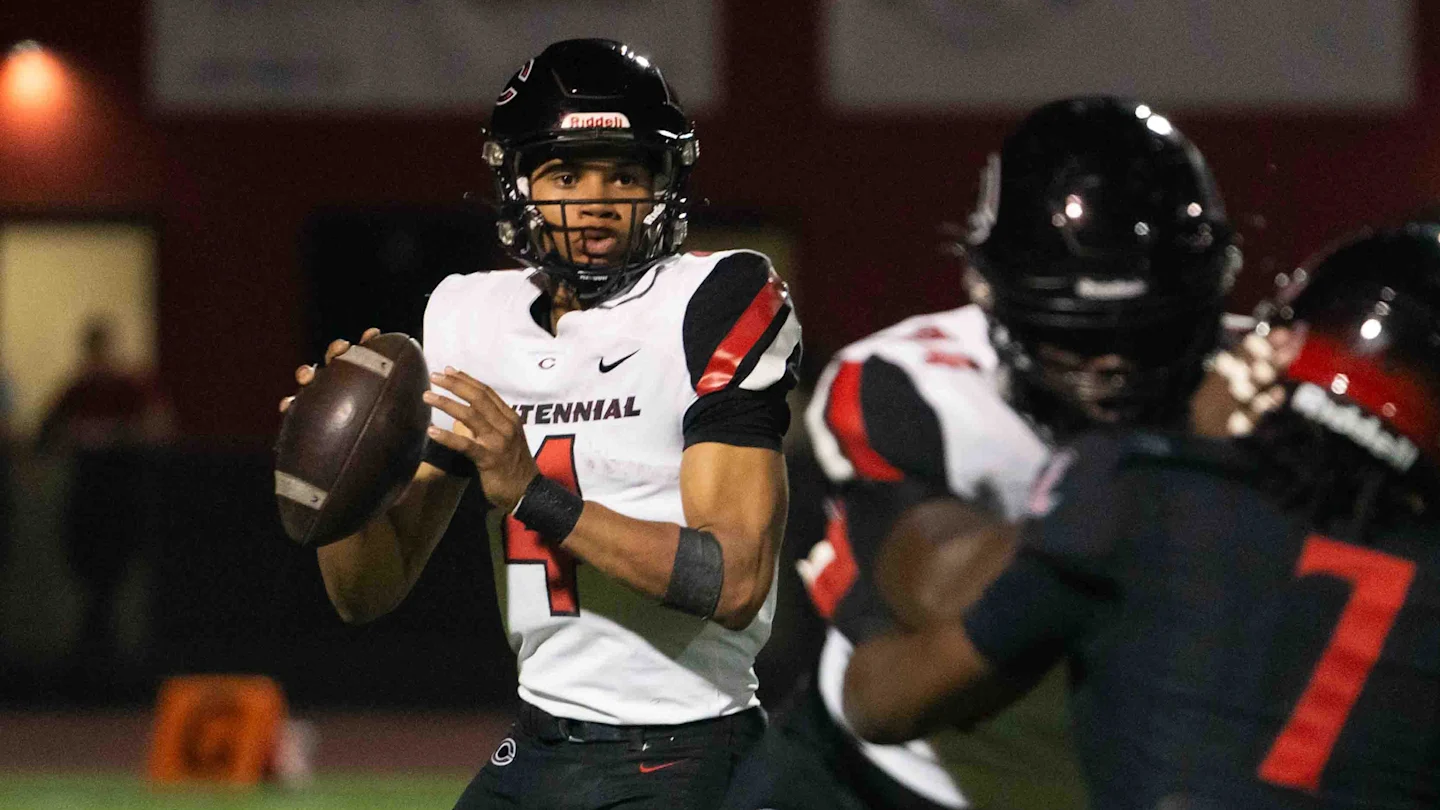
The college football offseason received a massive jolt of energy regarding a high-profile quarterback decision. A highly touted former five-star recruit officially placed his name into the transfer portal this week to spark an immediate recruiting battle. This move creates a significant shift in the landscape for several top-tier programs looking to upgrade their roster talent immediately.
He spent his freshman campaign serving as a backup for a prominent West Coast power before opting to explore other options. The decision comes after the incumbent starter announced plans to return for another season in Los Angeles. This talented passer possesses four years of eligibility and offers immediate upside for teams in need of a dynamic playmaker to lead their offense.
Elite programs are already lining up to secure his services for the upcoming campaign. Two major conference rivals have quickly emerged as the primary contenders for his commitment.
One suitor aims to get the prospect on campus immediately, while the other navigates its own complex quarterback room situation involving potential NFL departures.
Lane Kiffin and LSU battle Oregon for Husan Longstreet
Former USC quarterback Husan Longstreet is the player at the center of this developing saga. The Corona, California, native entered the portal Thursday after playing behind Jayden Maiava during his freshman season.
Maiava intends to return to the Trojans next year, which prompted the move. Longstreet finished his brief USC tenure with 103 passing yards and one touchdown across four appearances.
LSU appears to be the aggressor in this recruitment under new head coach Lane Kiffin. The Tigers are working to get Longstreet on campus before any other program. Kiffin has a clear need at center with Garrett Nussmeier ineligible and backup Michael Van Buren transferring to USF. The head coach also has a track record of developing transfers like Jaxson Dart and Trinidad Chambliss.

Longstreet has family roots in Louisiana, which could aid the Tigers. He was also intrigued by Kiffin during his high school recruitment when the coach was at Ole Miss. Kiffin has fully embraced a villain persona this offseason by attempting to flip Washington quarterback Demond Williams days after he signed a lucrative deal. That pursuit may have burned a bridge with fellow transfer target Sam Leavitt.
Oregon remains a major threat to land the talented passer despite the aggressive push from Baton Rouge. The Ducks join LSU as teams to watch closely, according to On3.

Head coach Dan Lanning is currently awaiting an NFL Draft decision from Dante Moore while also remaining in the mix for Dylan Raiola. Oregon has successfully used the portal to sign three consecutive starting quarterbacks, including Bo Nix and Dillon Gabriel.
The decision for Longstreet could hinge on immediate playing time and offensive fit. Oregon offensive coordinator Will Stein is departing to become the head coach at Kentucky which adds a variable to the Ducks’ pitch. USC will move forward with veteran Sam Huard as the primary backup to Maiava. Huard is playing for his fourth school in six years and recently threw a key pass on a fake punt against Northwestern.
Read more on College Football HQ

Just like any other college football season, this one has had a variety of stories both good and bad, but not all of them are created equal.
Yeah, we’ve heard about guys like Indiana (the favorite to win the natty) and Penn State (who took the biggest tumble from preseason hype), but what about those with telling performances that flew under the radar, the ones that haven’t been picked apart by the media? They deserve their own shares of the spotlight, and that’s precisely what they’ll be given today.
But the plan is not to simply sit here and list everyone that’s starting their offseason on a remotely good/bad note; rather, it’s to acknowledge the team that’s had the most encouraging run and the one that’s had the most discouraging…at least among those that virtually no one’s seeming to notice. With that said, the choice for our big winner in this equation should be rather agreeable.
Winner: Wake Forest
If you know anything about Wake Forest’s history in the football space, you know that the Demon Deacons usually have to take whatever they can get, but that wasn’t the case this season, as they finished with an objectively sound record of 9-4.
For a program so underhanded to do so well in these greedy times we live in is impressive on its own, but it involving both a road win over a ranked Virginia and a convincing bowl win over an SEC team (Mississippi State)—all while under the management of a first-year head coach in Jake Dickert—sounds borderline unbelievable.
That latter win made the 2025-26 campaign just the fourth to ever see the Deacs reach the nine-win threshold, and it also guaranteeing that the SEC wouldn’t amass a winning record against the ACC didn’t exactly kill any vibes either.
Loser: Nebraska
This selection may come off as weaker, as the Nebraska Cornhuskers are far removed from the days of their mediocrity being a surprise, but to me? This season was the first where they truly felt irredeemable.
Last season’s Huskers weren’t great, but by making and winning a bowl game against a Power 4 opponent to go positive, it appeared as if a page towards relevance was at least beginning to turn. When combining that with head coach Matt Rhule’s fame for his miracle-working usually paying off in his third year with a team (which was this season), some might have argued that 2025 should’ve been a breakthrough…yet here we are.
Despite starting its 2025 slate 7-3, Nebraska entered the Las Vegas Bowl 7-5 after suffering back-to-back blowouts against a struggling, interim-led Penn State, and rival Iowa. As for how things went in Vegas, the Cornhuskers got decimated again, this time against Utah, another team that had recently lost a legendary head coach. That left them with the same 7-6 tally they put up in ‘24, quantifying the lack of improvement.
Especially when other members of the Big Ten are successfully proving their conference to now be college football’s best, few endings are as disheartening as that one was for Nebraska—and just when you thought the gods of this great sport couldn’t test Huskers fans any harder.

Rec Sports24 minutes ago
Ogden School District launches free strength and conditioning program for junior high students | News, Sports, Jobs

NIL31 minutes ago
2,300-yard transfer QB strongly linked to three major college football programs

Rec Sports32 minutes ago
Education important for new snowmobile riders – Brainerd Dispatch

NIL1 hour ago
Texas Proves It Is NOT NIL Broke By Shoving Alabama In A Locker

Sports1 hour ago
Athletics News: Men’s Track & Field Excels at 2026 Season Opener

Sports2 hours ago
Hooten rewrites 60m hurdles program record at Rod McCravy Memorial

Sports2 hours ago
No. 1 UCLA men’s volleyball to face No. 15 McKendree, Concordia in season opener

Rec Sports2 hours ago
Colorado Springs area nonprofit community fundraising events starting Jan. 11

NIL2 hours ago
Longtime UCLA football lineman Siale Taupaki transfers to Penn State

Rec Sports2 hours ago
Statement issued after youth hockey brawl during intermission at Hershey Bears game

Rec Sports3 hours ago
Mite hockey brawl at AHL game facing multiple investigations

NIL3 hours ago
Transfer portal tracker: Former Auburn WR Cam Coleman commits to Texas; QB Dylan Raiola set to visit Oregon

Motorsports4 hours ago
NASCAR Hall of Fame Reveals 18 New Iconic Cars in “Glory Road: Owners” Exhibit

NIL4 hours ago
Former 5-star QB sparks transfer portal battle between two college football programs

Rec Sports5 hours ago
Whitefish Winter Carnival reveals Prime, Duchess

Rec Sports4 weeks ago
Stempien to seek opening for Branch County Circuit Court Judge | WTVB | 1590 AM · 95.5 FM

Sports4 weeks ago
#11 Volleyball Practices, Then Meets Media Prior to #2 Kentucky Match

Motorsports4 weeks ago
Ross Brawn to receive Autosport Gold Medal Award at 2026 Autosport Awards, Honouring a Lifetime Shaping Modern F1

Sports4 weeks ago
Maine wraps up Fall Semester with a win in Black Bear Invitational

Motorsports4 weeks ago
Nascar legal saga ends as 23XI, Front Row secure settlement

NIL4 weeks ago
Downtown Athletic Club of Hawaiʻi gives $300K to Boost the ’Bows NIL fund

Rec Sports3 weeks ago
Princeton Area Community Foundation awards more than $1.3 million to 40 local nonprofits ⋆ Princeton, NJ local news %

Motorsports4 weeks ago
Sunoco to sponsor No. 8 Ganassi Honda IndyCar in multi-year deal

Rec Sports4 weeks ago
WNBA’s Caitlin Clark, Angel Reese and Paige Bueckers in NC, making debut for national team at USA camp at Duke

Sports3 weeks ago
Badgers news: Wisconsin lands 2nd commitment from transfer portal

NIL4 weeks ago
Nike Signs 10 LSU Athletes to NIL deals

Sports4 weeks ago
Three Clarkson Volleyball Players Named to CSC Academic All-District List

Rec Sports1 week ago
Five Youth Sports Trends We’re Watching in 2026

Sports3 weeks ago
Beach Volleyball Unveils 2026 Spring Schedule – University of South Carolina Athletics

NIL4 weeks ago
Kentucky AD explains NIL, JMI partnership and cap rules





-
 Sports3 weeks ago
Badgers news: Wisconsin lands 2nd commitment from transfer portal
-
 Rec Sports1 week ago
Five Youth Sports Trends We’re Watching in 2026
-
 Sports2 weeks ago
Kentucky VB adds an All-American honorable mention, loses Brooke Bultema to portal
-

 Motorsports3 weeks ago
Dr. Patrick Staropoli Lands Full-Time O’Reilly Ride with Big Machine Racing
-

 Motorsports2 weeks ago
BangShift.com IHRA Acquires Historic Memphis Motorsports Park In Millington Tennessee. Big Race Weekend’s Planned For 2026!
-
NIL2 weeks ago
Fifty years after IU’s undefeated champs … a Rose Bowl
-
 Sports2 weeks ago
Colorado volleyball poised to repeat success
-
 Sports2 weeks ago
2025 Volleyball Player of the Year: Witherow makes big impact on Central program | Nvdaily
-
 Sports2 weeks ago
H.S. INDOOR TRACK & FIELD: GLOW region athletes face off at Nazareth University | Sports
-

 Sports3 weeks ago
Texas A&M volleyball’s sweep of Kentucky attracts record viewership