
Technology
Morocco Leverages Gaming to Boost Tourism and Drive Economic Growth


Published on
August 7, 2025 |
By: TTW News Desk

Morocco is undergoing a revolutionary change in its tourism industry by adopting gaming as a means of drawing international tourists. The nation’s visionary approach, which unites its rich cultural heritage with state-of-the-art digital entertainment, is already demonstrating impressive gains. During the first half of 2025, global tourists flocked to Morocco at a rate of 19% more than the same period in the previous year, fueling a massive boost in tourism revenues, which hit a staggering DH54bn ($5.6bn), representing a near 10% increase compared to last year.
This boom is due to Morocco’s 2025 tourism strategy, which is carefully crafted to blend traditional tourism with the rapidly changing globe of digital games. The emphasis on immersive gameplay based on Moroccan culture has not only contributed to the increased numbers of visitors but also added depth to the tourist experience, leading to longer visits, increased spending, and greater interaction with the local way of life.
Thematic Incubators: Driving Innovation in Leisure Gaming
Central to Morocco’s tourism evolution is the concept of thematic incubators—innovation hubs that focus on nurturing startups across various sectors, including digital services and leisure gaming. These incubators provide mentorship and support to entrepreneurs working on gaming projects that integrate Morocco’s rich cultural heritage with modern technology.
Some of the groundbreaking projects coming out of these incubators include virtual journeys through historic towns, offering tourists the opportunity to explore Morocco’s ancient cities from the comfort of their homes, and augmented reality games inspired by local legends and folklore. These gaming experiences allow tourists to interact with Morocco’s history in new, exciting ways, helping them connect with the country’s culture beyond traditional sightseeing.
By promoting these innovative projects, Morocco is creating a unique tourism offering that appeals to digital nomads, competitive gamers, and culture enthusiasts alike. The integration of digital gaming into tourism has created a fresh, immersive way for travelers to engage with the country, resulting in more extended stays and higher spending.
Minister Fatim-Zahra Ammor’s Vision for Morocco’s Tourism Future
According to Tourism Minister Fatim-Zahra Ammor, Morocco’s focus on leisure tourism is key to the nation’s vision of becoming a high-value tourist destination. The Minister highlighted that investments in leisure gaming are essential for boosting tourist spending, extending tourist stays, and encouraging repeat visits.
“This momentum reinforces our ambition to position Morocco as a high value-added tourist destination. We are therefore focusing on investments in leisure tourism, which is a key factor in boosting tourist spending, extending stays and encouraging repeat visits,” said Ammor. The emphasis on leisure tourism, coupled with digital entertainment, is rapidly changing the landscape of the country’s tourism industry, transforming Morocco into a global tourism hotspot for both traditional travelers and modern digital explorers.
Gaming Expo 2025: Showcasing Morocco’s Tourism-Technology Fusion
Morocco’s commitment to blending gaming with tourism came to life at the recent Morocco Gaming Expo 2025 held in Rabat. This high-profile event attracted global attention and showcased Morocco’s growing presence in the digital entertainment sector. The expo featured high-stakes esports tournaments, virtual reality zones, and panel discussions that connected international tech leaders with local talent.
The event demonstrated how gaming and tourism could work together to create a unique, multi-dimensional experience for visitors. Morocco is not only capitalizing on gaming culture but also offering a platform for global tech leaders to engage with local entrepreneurs, fostering a new ecosystem that bridges tourism and digital technology.
Appealing to a Diverse Range of Global Visitors
By integrating gaming into its tourism strategy, Morocco is successfully attracting a diverse audience of travelers. The combination of heritage tourism and cutting-edge technology appeals to a wide variety of people, including culture seekers, adventure travelers, digital nomads, and competitive gamers.
The country’s ability to offer a multi-faceted tourism experience sets it apart from other global destinations. Visitors can now enjoy cultural immersion through gaming experiences while also engaging in traditional activities such as visiting Morocco’s historic landmarks, exploring ancient medinas, and experiencing the vibrant souks of cities like Marrakech and Fez.
Tourism as an Economic Engine for Morocco
The integration of digital gaming into Morocco’s tourism sector is not only about attracting more tourists—it is also an economic strategy. The rise in tourism revenue, combined with the growing interest in gaming and tech innovation, is positioning Morocco as an economic hub within North Africa. The success of gaming expos and the creation of digital platforms are attracting investment from global tech companies, further contributing to the country’s economic development.
The growing tourism sector also creates job opportunities within the gaming industry, from software development to event management, allowing Morocco to tap into the booming digital economy. The country’s focus on sustainable tourism, coupled with gaming innovation, ensures that tourism growth will benefit both the local economy and the environment.
Looking Forward: Morocco’s Vision for the Future of Tourism
Morocco keeps on mixing culture with contemporary technology, it is fast emerging as one of the most dynamic and innovative tourist hotspots globally. Blending of tourism with games is also one of the larger initiatives to modernize and diversify the country’s tourism, attracting wider numbers of tourists and broadening Morocco’s appeal beyond the confines of traditional tourism.
Through the blending of immersive gaming experiences with Morocco’s rich heritage and natural landscapes, the nation is not only developing new tourism products but also paving the way for future expansion in both tourism and the digital economy.


Technology
Xpoint secures new growth funding to supercharge geolocation innovation for real money gaming

Our website uses cookies, as almost all websites do, to help provide you with the best experience we can.
Cookies are small text files that are placed on your computer or mobile phone when you browse websites.
Our cookies help us:
– Make our website work as you’d expect
– Remember your settings during and between visits
– Offer you free services/content (thanks to advertising)
– Improve the speed/security of the site
– Allow you to share pages with social networks like Facebook
– Continuously improve our website for you
– Make our marketing more efficient (ultimately helping us to offer the service we do at the price we do)
We do not use cookies to:
– Collect any personally identifiable information (without your express permission)
– Collect any sensitive information (without your express permission)
– Pass personally identifiable data to third parties
– Pay sales commissions
At CES 2026, visitors to the HDMI Licensing Administrator’s booth can witness prototypes of the Ultra96 HDMI Cable, which was “introduced in the recently released HDMI 2.2 Specification,” alongside the Ultra High Speed HDMI Cable and the Premium High Speed HDMI Cable. The organization will highlight the high-refresh performance rate of its products, as well as their compatibility with popular portable gaming consoles and retro-style gaming systems. Supportive features like variable refresh rate and auto low latency mode will be highlighted, as well.
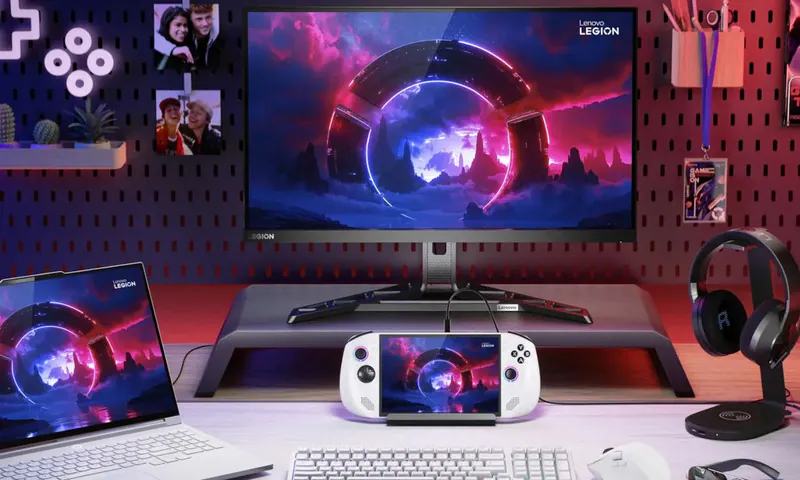
The Lenovo Legion Pro Rollable laptop will reportedly be based on the brand’s Legion Pro 7i platform with an Intel Core Ultra processor and NVIDIA GeForce RTX 5090 GPU. The additional tech specs for the laptop are yet to be announced.
Image Credit: Lenovo
Technology
Driving Digital Innovation: Sultan Almasoud on the Top Trends in Technology and Esports in Saudi Arabia | Morgan Lewis – Tech & Sourcing

Dr. Sultan Almasoud, managing partner of Morgan Lewis’s Riyadh office, has been closely involved in the Kingdom of Saudi Arabia’s rapid evolution into a global hub for innovation. His insights on the questions below shed light on the trends reshaping technology and esports—and the opportunities they unlock for investors and operators entering the market.
Q&A: SULTAN ALMASOUD
1. What are the most significant technology trends currently driving growth in Saudi Arabia?
Saudi Arabia is undergoing one of the most ambitious digital transformation journeys in the world. The most significant trend is the rapid adoption of AI across government, financial services, healthcare, and industrial sectors. Vision 2030 has accelerated investment in AI-ready infrastructure, digital identity, automation, and data platforms that support new digital services at scale.
We also are seeing strong momentum in cloud migration, driven by hyperscaler expansions, data localization policies, and new solutions that make it easier for public and private entities to adopt cloud-native technologies. In parallel, fintech innovation, digital payments, and open banking are creating a dynamic ecosystem of startups, investors, and regulators working together to modernize the financial landscape.
In addition, Saudi Arabia’s giga projects are acting as large-scale accelerators for advanced technologies, while strong regulatory frameworks around data, cloud, and cybersecurity are providing international investors with clarity and confidence. Combined with significant investment in digital talent and localization, this is enabling sustainable, long-term technology-driven growth across the Kingdom.
2. How is Saudi Arabia positioning itself as a global hub for esports?
Saudi Arabia has made esports a national priority, fundamentally reshaping the sector. The launch of the Saudi Esports Federation (SEF) and the Esports World Cup, supported by major public investment commitments, has placed the Kingdom at the center of global competitive gaming.
But the strategy extends beyond events. The country is developing training academies, production studios, esports arenas, and digital platforms that sustain year-round player and audience engagement. This ecosystem-driven approach is drawing global publishers, teams, and content creators who now view Saudi Arabia as a foundational market for long-term esports growth.
3. What opportunities do you see emerging for investors and companies entering the Saudi tech and esports market?
There is tremendous opportunity at the intersection of technology, entertainment, and digital infrastructure. For technology companies, opportunities are especially strong in AI solutions, cybersecurity, cloud services, digital identity, and smart city platforms.
In esports, the most compelling opportunities lie in content creation, talent development, gaming studios, tournament production, and technologies supporting broadcasting, analytics, and community engagement. Investors who understand the regulatory environment and align with the Kingdom’s long-term vision will find a market eager for strategic partnerships.
4. What challenges should companies keep in mind when operating in these fast-evolving sectors?
These sectors are evolving quickly, which makes regulatory navigation an important challenge. Companies need to stay aligned with requirements around licensing, content regulation, data protection, and foreign investment—areas that are developing alongside the industry itself.
Another key challenge is specialized talent. Whether it’s game design, AI engineering, or esports event management, building local capability is essential. Companies that invest early in training programs, knowledge transfer, and local partnerships will be best positioned for sustainable growth.
Ultimately, success requires a long-term commitment to the market, strong local relationships, and an understanding of national priorities as the Kingdom advances its digital transformation goals.
KEY TAKEAWAYS
Saudi Arabia is positioning itself at the forefront of global innovation, with technology and esports playing central roles in the nation’s economic transformation. As investment accelerates and new digital ecosystems emerge, companies that build strategic partnerships and engage deeply with local priorities will be poised to lead.

Mechanical keyboard 2026models integrate ultra-fast switches that achieve 0.1ms actuation with under 1mm travel, allowing competitive gamers to press keys 20% faster in FPS and MOBA titles. RGB keyboards now feature 16.8 million per-key zones, enabling dynamic lighting that reacts to game events, killstreaks, or ability cooldowns. Hall-effect magnetic switches dominate the premium segment, offering adjustable actuation points from 0.1mm to 4.0mm while lasting 100 million keypresses with no physical wear. Together, these innovations deliver both tactile precision and immersive customization, making mechanical keyboards a vital tool for high-level competitive play.
Mechanical keyboard 2026 designs also focus on durability, ergonomics, and modularity. Hot-swappable switches allow players to fine-tune the feel without soldering. Aluminum chassis and gasket-mounted plates reduce finger fatigue while maintaining solid stability for marathon gaming sessions. Modern firmware supports thousands of macros, rapid polling rates, and dual-PC setups, ensuring that esports players experience consistent input across multiple platforms.
Fast Switches and Key Feel
Fast switches like Gateron KS-20 reduce actuation force to 35g at just 0.2mm depth, while optical variants eliminate debounce delays, registering inputs at 8,000Hz natively. Mechanical keyboard 2026 boards include hot-swappable sockets, allowing players to swap magnetic, linear, or tactile stems without soldering. PBT double-shot keycaps resist shine after five years of heavy use, and gasket-mounted designs reduce bottom-out impact, lowering finger fatigue by up to 30% during marathon sessions. Combined, these features enhance responsiveness, durability, and ergonomic comfort for both competitive and casual gamers.
Other innovations include per-key actuation calibration via onboard OLED displays, letting players fine-tune each switch’s sensitivity individually. Fast switches allow remapping for advanced trigger modes, such as assigning jump or crouch to rapid keypresses, boosting movement efficiency in FPS titles. Firmware support like VIA and QMK provides up to 1,000 macro layers, ensuring fluid execution of complex combos. NKRO (N-Key Rollover) maintains accurate detection of 100 simultaneous inputs, preventing ghosting during intense gameplay.
RGB Keyboards and Lighting Customization
RGB Gaming keyboards in 2026 employ addressable LEDs beneath every key, responding instantly to in-game actions, music beats, or voice chat activity. Fast switches synchronize with lighting effects to create visual feedback for ability activation or kill confirmations. VIA and QMK support advanced lighting macros across 16.8 million colors, letting players design immersive themes and reactive effects. RGB keyboards also integrate USB passthrough hubs, enabling controller charging or peripheral connections without latency interruptions.
Premium gaming screens emphasize both aesthetic and functional benefits. Aluminum chassis with acoustic foam layers tune sound profiles from soft, creamy thocks to sharp, clicky clacks, complementing per-key lighting for sensory immersion. RGB keyboards combined with modular keycaps allow instant visual recognition of critical keys, enhancing reaction times in high-pressure matches. Firmware updates maintain compatibility with new software and games, ensuring that RGB functionality evolves alongside gaming trends.
Build Quality and Advanced Features
Mechanical keyboard 2026 models focus on robust materials and ergonomic design to support competitive play. Aluminum top plates weigh around 1.2kg, stabilizing 60% or full-size layouts, while foam and gasket mounting reduce vibration and noise. Fast switches with Hall-effect sensors allow precise calibration and onboard memory, storing personalized actuation and lighting settings.
Other features include multi-device support, 8,000Hz polling across dual-PC setups, and modular layouts for hybrid gaming and productivity. High-end models provide long-term durability, with switches rated for 100 million keypresses and chassis built to withstand sustained pressure. These designs ensure that both casual players and esports professionals can maintain peak performance over years of intense use.
Key Features:
- Aluminum top plates provide stability and long-lasting structural integrity.
- Foam and gasket-mounted designs reduce vibration, noise, and finger fatigue.
- Hall-effect fast switches allow precise per-key calibration and storage.
- Modular layouts and multi-device support enhance versatility for gaming and work.
- 8,000Hz polling ensures sub-ms latency across dual-PC or multi-system setups.
- Switches rated for 100 million keypresses guarantee long-term durability.
Conclusion
Mechanical keyboard 2026 models with fast switches and RGB keyboards redefine both competitive precision and immersive gameplay experiences. Adjustable actuation, ultra-fast response times, and reactive per-key lighting provide measurable advantages in esports, allowing players to execute rapid combos and maintain visual awareness under intense pressure. Durable materials, modular layouts, and advanced firmware ensure 10+ years of relevance, keeping performance consistent even as switch technology evolves. Combined, these innovations set a new benchmark for gaming keyboards, making them an indispensable tool for casual enthusiasts and professional gamers alike.
Frequently Asked Questions
1. What makes mechanical keyboard 2026 switches faster than older models?
Mechanical keyboard 2026 switches achieve 0.1ms actuation with minimal travel, reducing input delay. Optical switches eliminate debounce entirely. Hot-swappable designs allow users to optimize each switch type. Together, they improve reaction times in competitive gaming.
2. How do RGB keyboards enhance gaming performance?
RGB keyboards provide per-key lighting for instant visual cues on ability cooldowns, killstreaks, or critical keys. Reactive effects improve reaction speed in high-pressure scenarios. Custom macros allow lighting to indicate complex input sequences. This combination merges aesthetics with functional gameplay advantages.
3. Are fast switches durable enough for long-term use?
Yes, Hall-effect and magnetic switches are rated for 100 million keypresses. Gasket-mounted designs reduce mechanical wear and finger fatigue. PBT double-shot keycaps resist shine and degradation. Long-term durability ensures consistent performance for years.
4. Can mechanical keyboard 2026 models support multi-device setups?
Many models integrate USB passthrough hubs for peripherals and dual-PC support. 8,000Hz polling ensures sub-ms latency across connected devices. Firmware allows separate profiles per device. This setup guarantees smooth operation for both gaming and productivity tasks.

The world of esports has rapidly shifted from a niche form of entertainment to a central component of competitive gaming education. As 2026 approaches, academic institutions across the globe are embracing the opportunities that digital competition presents.
From high school classrooms to university campuses, structured gaming programs in schools are transforming how students learn, collaborate, and prepare for the digital economy.
The Explosive Rise of Esports in Education
Esports, once dismissed as mere gaming, now attracts millions of players and spectators around the world. Educational institutions have taken notice. The steady growth in digital engagement, streaming culture, and student interest has pushed schools to formally integrate esports into their extracurricular and academic offerings.
By 2026, experts project that school-based esports participation will surpass that of traditional high school sports in some regions. The digitization of competitive gaming aligns with broader trends in modern education, where technology, inclusivity, and creativity intersect to form new learning pathways.
What Is Esports and Why Is It So Popular Among Students?
Esports refers to organized, competitive video gaming, often involving professional players and teams. Unlike casual gaming, esports involves structured tournaments, ranked leagues, and strategy-based team play across popular titles such as League of Legends, Valorant, and Rocket League.
For students, esports blends entertainment with purpose. It enables individuals who may not participate in traditional athletics to compete, build communities, and express creativity. The widespread availability of gaming hardware, streaming tools, and online platforms has lowered the entry barrier, making esports more accessible than ever.
Moreover, the social component is powerful. Online tournaments and school leagues foster connection across diverse backgrounds, helping students develop coordination, leadership, and interpersonal skills, traits that are increasingly valuable in both academic and corporate environments.
How Are Schools Launching Esports Programs?
Many schools have already launched formal esports programs, driven by student demand and institutional recognition of esports’ educational potential. Universities in the United States, South Korea, and the Philippines are establishing dedicated esports departments that oversee teams, manage scholarships, and organize intercollegiate competitions.
High schools are following suit. Some districts are converting computer labs into esports arenas equipped with high-performance PCs, ergonomic setups, and broadcast equipment. Others collaborate with gaming companies to create mentorship and training initiatives, blending classroom theory with real-world competition.
These gaming programs in schools go beyond playing. They involve curriculum design, technical training, and content creation workshops that align esports with the broader educational framework. Students learn not only how to compete but also how to analyze performance data, manage teams, and produce digital media.
What Do Students Learn from Competitive Gaming Education?
The rise of competitive gaming education is reshaping the skillsets associated with modern learning. Students gain more than just gaming proficiency, they develop critical thinking, multitasking, and collaboration abilities. These programs emphasize transferrable skills such as problem-solving, adaptability, and emotional regulation under pressure.
Esports also complements existing curricular areas. Game strategy mirrors elements of mathematics and physics, while coding and hardware management connect directly to STEM learning. Instructors use esports to teach topics such as network infrastructure, software development, and game design.
Beyond academics, competitive gaming encourages inclusivity. Students of all genders, backgrounds, and physical abilities can participate on equal footing, fostering school pride and teamwork in digital spaces.
How Big Will Esports Be by 2026?
Industry analysts predict that esports in 2026 will be valued at over $2 billion globally, with an audience exceeding 800 million. This rapid growth is fueled by live-streaming platforms, increasing sponsorship deals, and more educational integration.
Esports’ reach continues to expand beyond traditional entertainment. Virtual reality and augmented reality are enhancing gameplay engagement, while blockchain-based tournament systems are adding transparency to competition and prize distribution.
The integration of AI analytics is also reshaping coaching methods. Educators and team managers are using data-driven insights to assess player performance, optimize team composition, and develop customized training regimens. As schools adopt these same analytical tools, competitive gaming education enters a new era, where digital literacy and innovation drive progress.
What Challenges Do Schools Face in Running Esports Programs?
Despite the enthusiasm surrounding esports, schools still face practical and ethical challenges. One major concern is balancing academics with gaming commitments. Without structured supervision, students may risk excessive screen time or burnout.
Institutions are addressing this by introducing strict schedules, physical activity requirements, and mental health counseling. Another challenge involves funding. Setting up professional-grade arenas and securing reliable hardware demand significant investment. Public schools in particular rely on sponsors or partnerships with tech firms to maintain program sustainability.
Finally, schools must train or hire qualified esports coaches who understand both the educational context and the competitive scene. This dual expertise ensures that gaming remains an avenue for learning, not just recreation.
Success Stories: Schools Leading the Way in Esports Education
Several schools around the world have already demonstrated how esports can enhance education. In the United States, the High School Esports League (HSEL) connects thousands of students nationwide, fostering academic engagement and teamwork. Schools such as Miami University and the University of Utah became early adopters of varsity esports teams, setting benchmarks for collegiate competition.
In Asia, South Korea remains a trailblazer. Its government has integrated esports into youth programs, emphasizing both technical training and player well-being. Meanwhile, in the Philippines, some universities have begun offering esports courses as part of information technology programs, mirroring global trends toward curriculum innovation.
These examples prove that when implemented responsibly, esports programs can increase student enrollment, improve school visibility, and create bridges between education and industry.
The Future of Competitive Gaming Education Beyond 2026
Beyond esports 2026, the intersection of competitive gaming and education will likely deepen. Analysts foresee a future where esports becomes as normalized as traditional athletics, with intramurals, leagues, and international tournaments structured at school and university levels.
The global shift toward online learning has also paved the way for hybrid esports education models, combining remote play with in-person coaching. Additionally, certifications in health and psychology related to esports are expected to emerge, helping educators manage player wellness and team dynamics effectively.
Cross-border collaborations may soon unite students from different regions in global esports competitions, promoting cultural exchange and digital diplomacy through gameplay.
Frequently Asked Questions
1. Can esports help improve students’ academic performance?
Yes. Organized esports can boost focus, strategic thinking, and time management. Students in competitive gaming education often show stronger problem-solving and teamwork skills that support academic success.
2. What are the career opportunities for students who study esports?
Students can pursue careers in event management, broadcasting, analytics, marketing, and game design. Many esports 2026 programs also prepare graduates for tech and media-related fields.
3. How do schools choose which games to include in their esports programs?
Schools select games that promote teamwork, critical thinking, and inclusivity. Titles like Rocket League and League of Legends are common in gaming programs in schools due to their balance of strategy and accessibility.
4. Do esports programs promote diversity and inclusion in education?
Yes. Esports welcomes students from all backgrounds, offering equal opportunities regardless of physical ability or gender. Many schools use competitive gaming education to foster inclusivity and community.

Colorado juvenile detention centers facing severe staff shortage

Oregon Loses Two More Players to Transfer Portal Amid College Football Playoff Run

Dominique Dawes’ Father-in-Law Found Dead

Beach Volleyball Releases Spring 2026 Schedule

Kyojo Cup auditions begin as Toyota announces 2026 Japanese Motorsports Programme

Chili’s signs deal to sponsor FloRacing coverage of Chili Bowl Nationals

Beef O’Brady’s expands beyond Florida with 8 new restaurants

Veteran Automotive Executive Andy Thomas Named Vice President of Manufacturer Relations At Ten Tenths Motor Club

Brian Hosfeld Named New Mexico Volleyball Head Coach – Mountain West Conference

Alex Bowman 2025 NASCAR Cup Series season in review: 48 team notched 16 top 10s and a playoff appearance

Florida wide receiver Naeshaun Montgomery plans to enter NCAA Transfer Portal

Volleyball Adds Transfer Štiglic – Northwestern Athletics

F1 Engine row erupts over ‘alleged’ 2026 compression loophole

As Forza Motorsport Winds Down, Gran Turismo Is Experiencing A ‘Phenomenon’ At PlayStation

Texas A&M wins NCAA volleyball title with sweep of Kentucky

First Tee Winter Registration is open

Fargo girl, 13, dies after collapsing during school basketball game – Grand Forks Herald

CPG Brands Like Allegra Are Betting on F1 for the First Time

F1 Las Vegas: Verstappen win, Norris and Piastri DQ tighten 2025 title fight

Sycamores unveil 2026 track and field schedule

Utah State Announces 2025-26 Indoor Track & Field Schedule

Two Pro Volleyball Leagues Serve Up Plans for Minnesota Teams

SoundGear Named Entitlement Sponsor of Spears CARS Tour Southwest Opener

Jo Shimoda Undergoes Back Surgery

Bowl Projections: ESPN predicts 12-team College Football Playoff bracket, full bowl slate after Week 14

Redemption Means First Pro Stock World Championship for Dallas Glenn

Texas volleyball vs Kentucky game score: Live SEC tournament updates

Robert “Bobby” Lewis Hardin, 56

How this startup (and a KC sports icon) turned young players into card-carrying legends overnight

Indiana’s rapid ascent and its impact across college football






-
 Motorsports2 weeks ago
SoundGear Named Entitlement Sponsor of Spears CARS Tour Southwest Opener
-

 Rec Sports3 weeks ago
Black Bear Revises Recording Policies After Rulebook Language Surfaces via Lever
-

 Motorsports2 weeks ago
Donny Schatz finds new home for 2026, inks full-time deal with CJB Motorsports – InForum
-

 Rec Sports2 weeks ago
How Donald Trump became FIFA’s ‘soccer president’ long before World Cup draw
-

 Rec Sports2 weeks ago
David Blitzer, Harris Blitzer Sports & Entertainment
-

 Motorsports2 weeks ago
JR Motorsports Confirms Death Of NASCAR Veteran Michael Annett At Age 39
-
Sports2 weeks ago
Elliot and Thuotte Highlight Men’s Indoor Track and Field Season Opener
-

 Motorsports2 weeks ago
Rick Ware Racing switching to Chevrolet for 2026
-
Sports2 weeks ago
West Fargo volleyball coach Kelsey Titus resigns after four seasons – InForum
-

 Sports1 week ago
#11 Volleyball Practices, Then Meets Media Prior to #2 Kentucky Match