Cincinnati transfer QB Brendan Sorsby to visit Texas Tech on Friday, report says
2026 NCAA football transfer portal: Tracking moves for Texas Tech, SMU, other area schools



When Barry Groomes entered the office for the Hooten’s Arkansas Football magazine on the morning of June 1, 2024, there was no way he could prepare for what was about to take place that day.
He and the rest of the Little Rock-based magazine’s staff were already on deadline to get that year’s edition completed when the phone suddenly began to ring. Then it happened again and again and again.
The phone calls came from various high school football coaches throughout the state, and the conversations that took place were almost the same. The coaches were informing the magazine that one or more players had left their respective schools to go elsewhere.
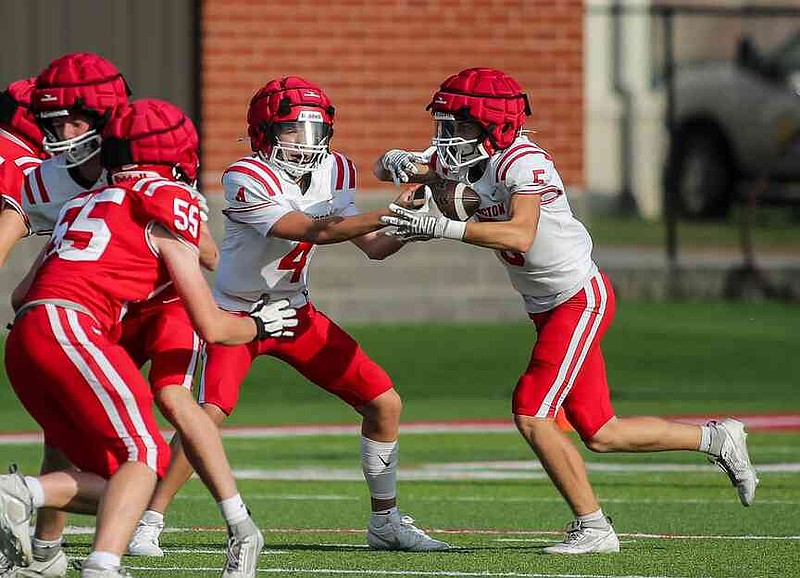
“On that day — the first Monday in June and the first day of summer workouts for a lot of schools — we had 30 coaches call our office with transfers,” Groomes said. “We figured out there were over 150 players that had transferred that day.
“And that was just coaches who let us know. There were about five times as many transfers that didn’t get noticed.”
Many wanted to place the blame on the LEARNS Act — a bill signed into law in March 2023 by Gov. Sarah Huckabee Sanders that allowed students to go to the school of their choice without penalty. But the transfers actually began to take place after the passing of Act 768 of 2023, which amended the previous transfer rule and allowed students to transfer from one school to another for athletic purposes without penalty as long as the transfer was done by May 1 of each year.
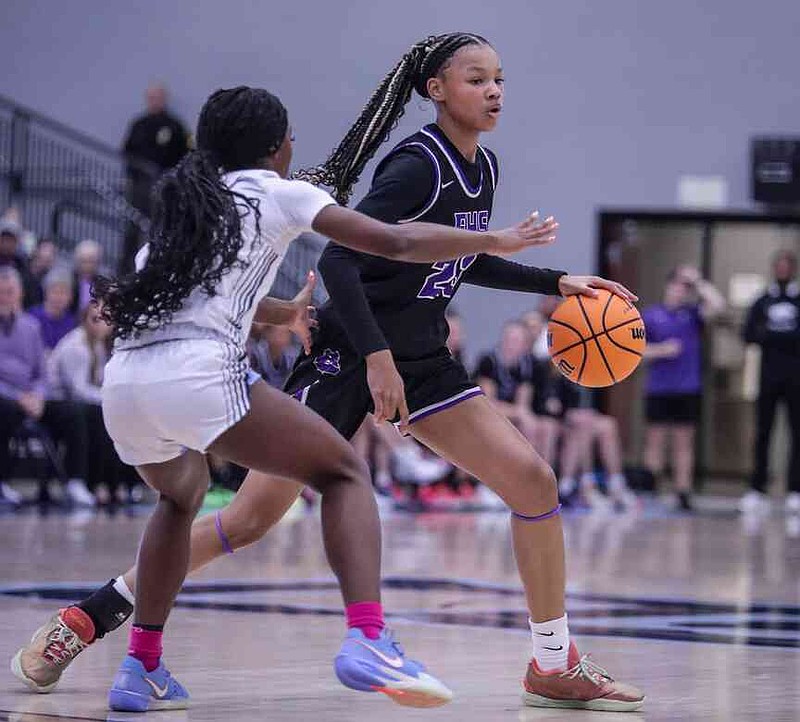
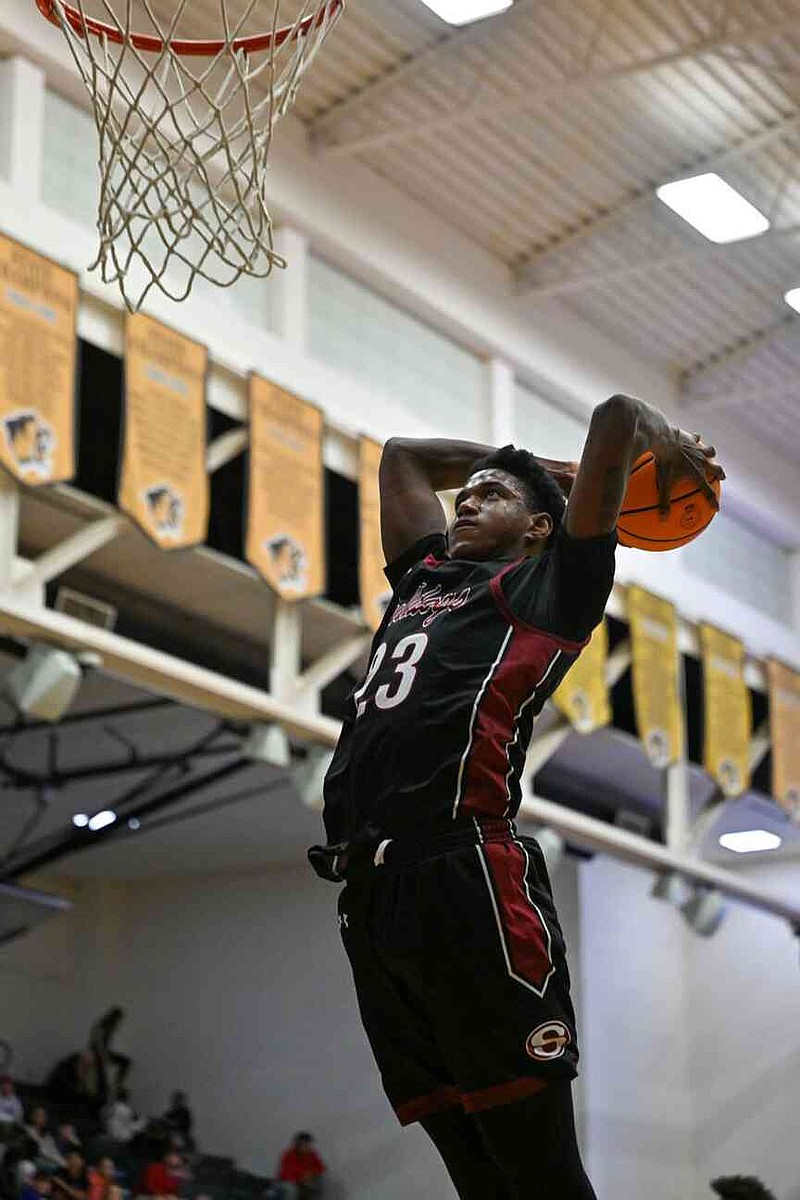
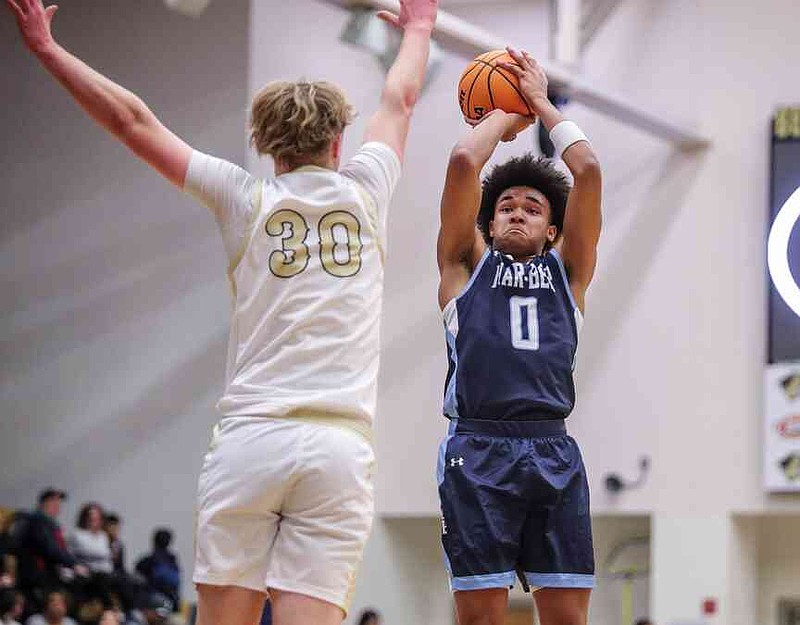
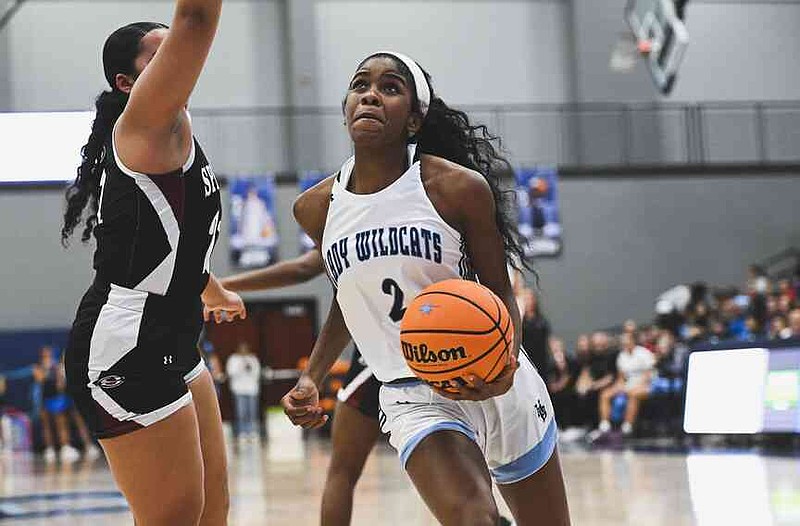
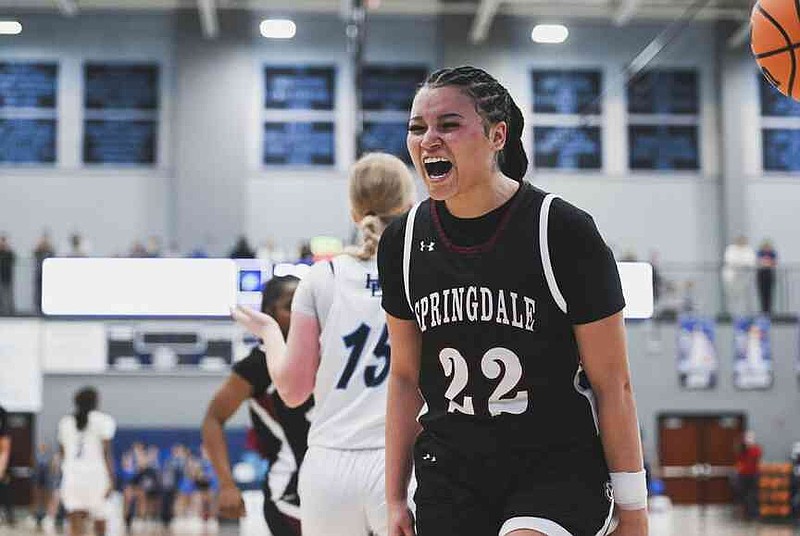
The plethora of football transfers received a majority of the attention, but the same thing was going on in other sports throughout the state’s high schools. In fact, it appeared to be a similar version of what currently takes place with college athletes and the transfer portal.
“The LEARNS Act didn’t have anything in it about athletics,” Arkansas Activities Association Executive Director Lance Taylor said. “That was all about academics, which we were fine with. It wasn’t even really an issue because that’s what we’re about. We’re about education first, and that’s what the LEARNS Act was about.
“When the laws were changed, then it started looking like college athletics. That worried me. If we were going to save it, something had to be done. If it was going to be about amateur sports and it was going to be education first, then that’s when we got involved in trying to figure out a way to make a level playing field for all the students in the state.”
The result was Act 475 of 2025, which was passed by the state Legislature earlier this year and placed restrictions on students transferring from one school to another. Under the act, students in grades 7 through 10 have until June 1 — beginning next year — before they begin that grade to transfer from one school to another without having to lose a year of athletic eligibility.
The transfer law applies to all the state schools, regardless of whether they are public, private, charter or a home-school situation. Under a previous school choice law that was in place, those transfers had to be done by May 1 this year.
“It didn’t just do that for the public schools,” Taylor said. “It did it for the private schools, the home-schooler and the charter schools. They all have the same transfer date now, which is something we really like. It treats every kid alike in the state of Arkansas, and I think that’s important.
“You can still transfer four out of the six years, and that’s a lot. I think that’s fair, and it gives them a chance to figure out where they belong. That’s still a lot of transferring, to tell you the truth. I was good with the date because it gets them out of school and gives them a chance to get somewhere else. That’s important before the summer starts because that’s when the schools start going (to) 7-on-7 (tournaments), team camps in volleyball and basketball and stuff like that.”
Athletes going into 11th and 12th grades who seek a transfer will have to sit out 365 days before they could participate in athletics, with two exceptions. One pertains to a student who has already transferred to one school but wishes to return to the school district where his family currently resides, as long as it’s done within the first 11 days of the semester.
The second exception would be if a student’s family makes what is considered a bona fide move from one school district to another. It means the family must completely leave its current residence behind and move into a new location in another school district instead of possibly leaving the first location so an older family member can live there.
Transfer fallout
While a high school athlete who transfers from one school to another does it for personal reasons, Taylor points out that the effects from such a move are actually three-fold.
“(Former AAA Executive Director) Jimmy Coats always told me when you deal with transfers, there are three things you have to look at,” Taylor said. “No. 1, you have to look at the school they’re leaving. Supposing they’re pretty good athletes, is it fair to those other kids at that school when you’re supposed to be a leader of that school district?
“Second, they are going to another school. There is some kid who has lived there all their life and their parents paid taxes for that district, and that person (who transfers) will knock out that kid (from a position), so you have to think of that. Is it fair to those kids? Then the third thing … is it fair to those teams who play in the same conference or classification? Is it fair to all those?”‘
Still, that didn’t keep student-athletes from testing the new waters and taking their talents to a new location.
Groomes estimated that on most of the Class 7A teams — particularly those in metro areas with 150 or more players on their rosters — that 15% to 2o% of the roster were new names. If that trend continued throughout the state, where about 6,500 students play high school football, Groomes said about 1,500 of them were transfers from another school.
With things like that happening in other sports, Taylor said he knew the time to stop it was now.
“High school athletics is now the last amateur sport there is,” Taylor said. “You know what’s happening with the (name, image and likeness) and the transfer portal in college. High school athletics is an amateur sport, and 98% of those students will never play another game after 12th grade. That’s (NCAA) Division I, II, III and juco.
“You don’t want students playing on an uneven playing field before they even start a game. That’s not what we are about. That’s not what we’re trying to teach kids. We’re trying to teach them all the tangibles they can use for life lessons for the rest of their life.”
A level playing field was what the Fort Smith Public Schools intended to keep between its two high schools when it began to use a rule that didn’t allow transfers inside the district and made students who did so ineligible. It was implemented by the late Jim Rowland when he served as the district’s athletic director, and that rule became the standard for several years.
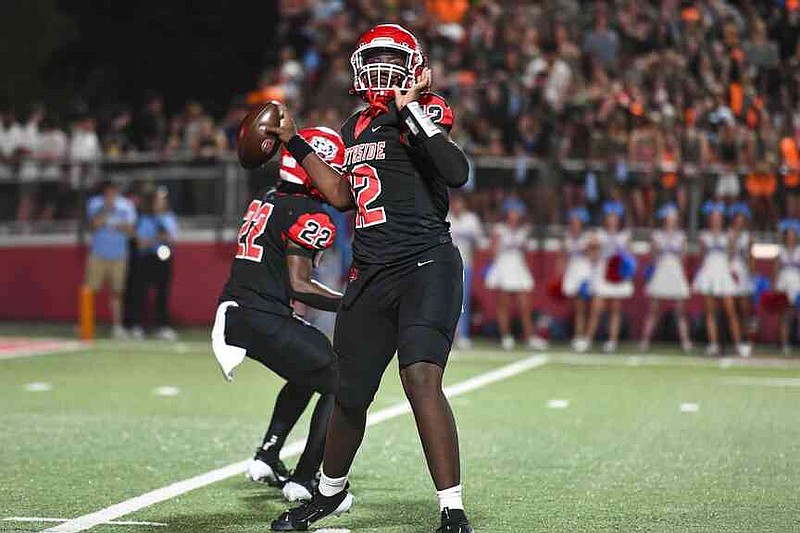
That longstanding rule, however, was recently challenged by a virtual student inside the school district who participated in extracurricular activities at Northside High School but wanted to switch to Southside. The student’s father took the school district to court and lost in Sebastian County Circuit Court, but won an appeal to the Arkansas Supreme Court by a 4-3 decision.
“We are a rival town, separated by Rogers Avenue,” Fort Smith Athletic Director Michael Beaumont said. “There were stipulations on how and when you could transfer from one school to another. At that time, I think Coach Rowland and the district had something in place that parents could follow where they could transfer inside the district.
“Going from Northside to Southside, you’re not changing school districts. You’re still in the same school district, so we ruled that being ‘inner-district’ and we had our set of rules. We didn’t see that as an issue. In fact, we were confident enough, as was the (circuit) court, because it ruled in our favor.”
There wasn’t much time to produce much fallout from the lawsuit, however. Beaumont said all of this had transpired while things were about to change with the state legislature passing Act 475. It didn’t give Fort Smith students time to follow the virtual student’s lead and petition for another transfer.
Meanwhile, Beaumont said he is content with the newness that act brings to the school district and transfer rules.
“That gives us more guidance to follow,” Beaumont said. “All we ever do is try to follow guidelines because we feel what is good for one is good enough for everyone, whether it’s a Rogers or a (Rogers) Heritage student or a Northside or a Southside student or even an Atkins student. We all try to follow the same rules.
“I really think a lot of parents were just waiting to see what was going to happen.”
Last-minute work
The numerous calls Groomes and his co-workers received that June day last year meant only one thing: More work, and there wasn’t much time to get it done.
The work was more than the changes made to several of the 200-plus team previews inside the magazine. It also meant changes to its preseason all-state teams, which consist of the top 22 players in each of the state’s six classifications, and any adjustments that needed to be made if those players switched to a team in a different classification.
Groomes said most of the transfers came from three locations in the state, including Northwest Arkansas. He said transfers that took place in the Little Rock-metro area “was beyond belief compared to the rest of the state,” while he was surprised by the number of transfers in Northeast Arkansas, which includes Jonesboro, Osceola, Blytheville and Rivercrest.
“It was very frustrating,” Groomes said. “I figured it up, and over 20% of our super team players had transferred. Last year, out of our top 50 recruits in the state, 20 of them changed schools. So you’re at 40% of the top players that transferred.
“It doesn’t shock me because of the day and age that we live in with college athletics. It’s trickled down to high school with players freely transferring at the drop of a hat. Basically, it’s come down to a free-agent market for college athletics, and it’s trickling down to the high school ranks.”
Groomes said last year’s magazine was still being edited as late as July 8, when a transfer of a football player led to a significant change.
That was not the case this year. Hooten’s Arkansas Football magazine was finished much earlier and began hitting store shelves across the state July 4, and the May 1 deadline for transfers to take place this year made the staff’s job a lot easier.
“If not, there was no way to get it accurate,” Groomes said. “We had already made a decision that if we’re going to publish a magazine that was going to be inaccurate, we might as well do it. If we held off to make it accurate with all the players moving around, it was going to be August before you found out where some of these players were going.”
Groomes also said that three players who the magazine considered among the state’s top 10 recruits had already made the move to another school before the May 1 deadline.
But he also warned that it’s was only a matter of time before the ruling would be challenged and another trip to the courtroom likely. He pointed out that such a lawsuit has been filed in Cleveland County, where a school superintendent refused to allow a student-athlete to transfer to another school while seven other students were able to do the same thing.
“I’m expecting lawsuits to come to forms of state government and local school districts,” Groomes said. “I think they’re going to cite coaching changes. The NCAA allows it — if there’s a coaching change, you can transfer with no questions asked. Anybody can transfer, and nobody can stop you.
“I think you’re going to see that in the high school ranks. We already have a few lawsuits out there that have been filed, and unfortunately the AAA has to be named in these lawsuits even though they have nothing to do with it.”


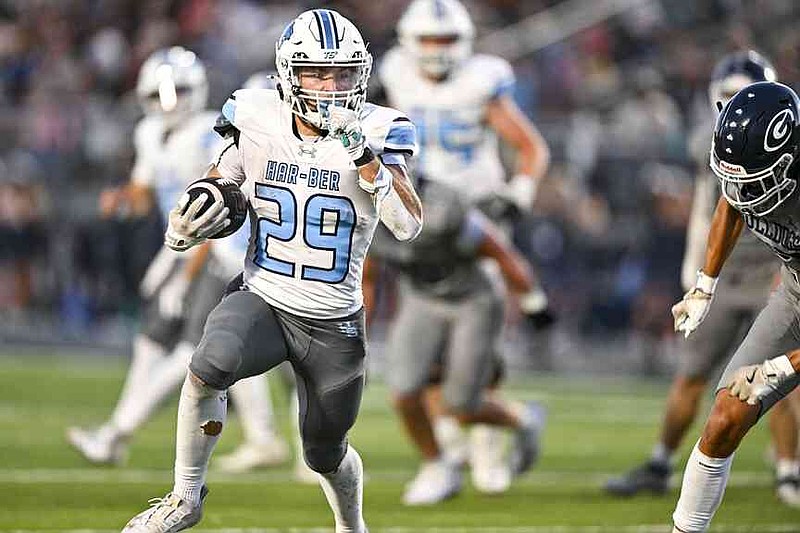
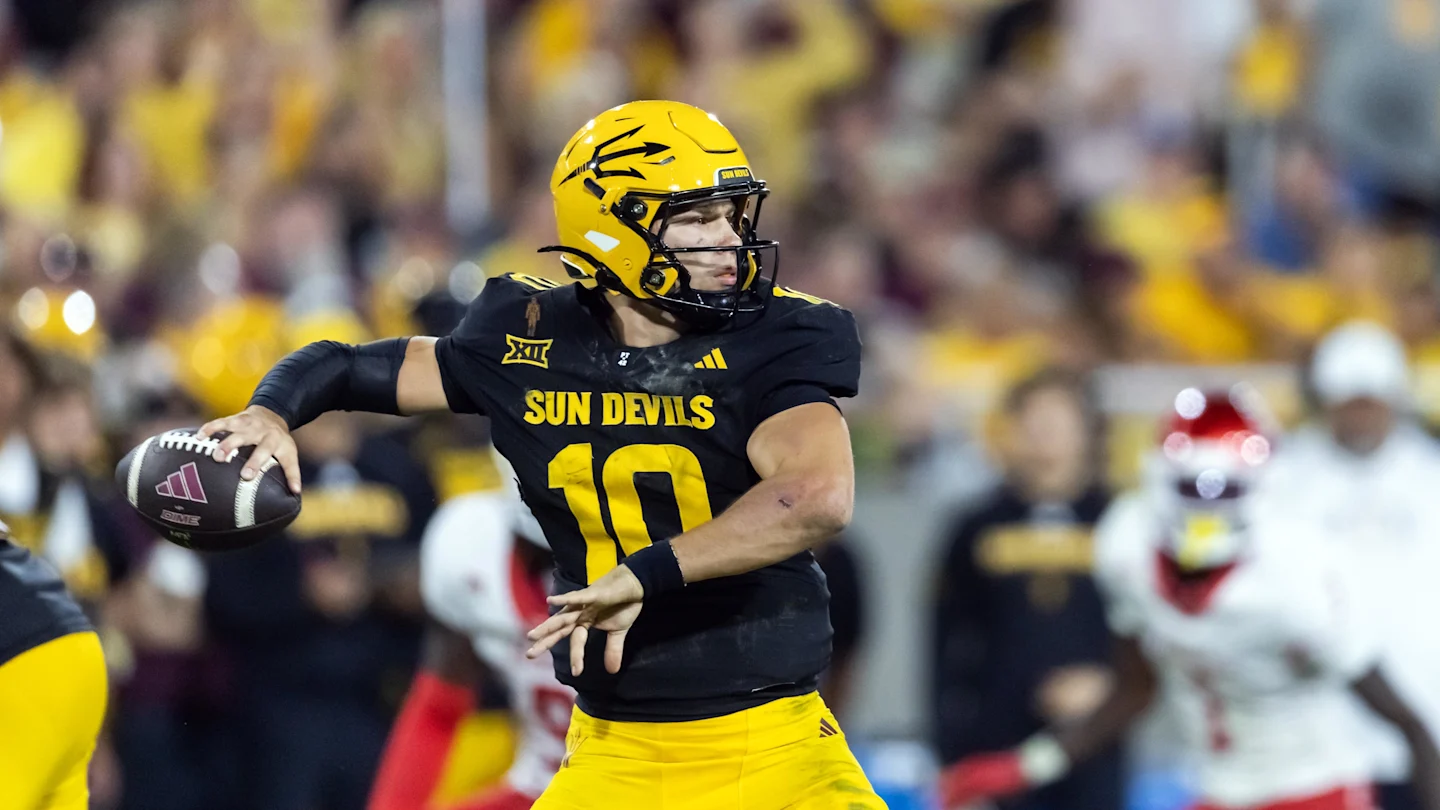
This year’s lone NCAA transfer portal window officially opened on Friday, as thousands of players across the country look for an opportunity to find a new place to call home.
The transfer portal as a whole is the wild west reincarnated and on steroids, as just about anything can happen. According to On3, last year’s portal cycles saw 4,184 players enter their name, with 68% of them committing to a new school while just 3.61% withdrew their names. Where things get complicated is the fact that a player can enter his name into the portal, but not find a landing spot for himself somewhere else. It also doesn’t mean that a player has to leave, but schools aren’t obligated to preserve their place on the team if they don’t want to.
However, the transfer portal experience varies for every player. While some athletes risk their careers by entering, others will have some of the biggest schools in the country throwing significant money at them.
The latter being one of the main reasons we see what is called a “do not contact” tag. Notable players such as Sam Leavitt (Arizona State), Isaac Brown (Louisville) and Luke Reynolds (Penn State) have entered their names into the portal with the tag, but what does that mean?
For the select few players who are good enough to take that risk it means one of two things: they either have an idea of where they are going, or they will be in contact with the schools that interest them.

While many will be outraged or naive about the matter, programs have been in touch with players months before the portal’s opening. Any inclination that the player might enter the portal throughout the year, whether it’s Leavitt getting hurt and his season ending prematurely or James Franklin being fired from Penn State, programs around the country find ways to stay in contact with the star players.
Again, this likely doesn’t apply to the backup quarterback leaving a Group of Five program, but not all situations are the same. For a player like Leavitt or Brown, they have a chance to essentially go to a school, see what it offers in terms of development, and also see how much it will offer. They then can go to another program and see if they will match or top the offer, and can control the bidding war over themselves.
The January portal window runs through Jan. 16 this year, and unlike in years past, there will be no spring window. So, once a player decides their next move, they have to live with it.
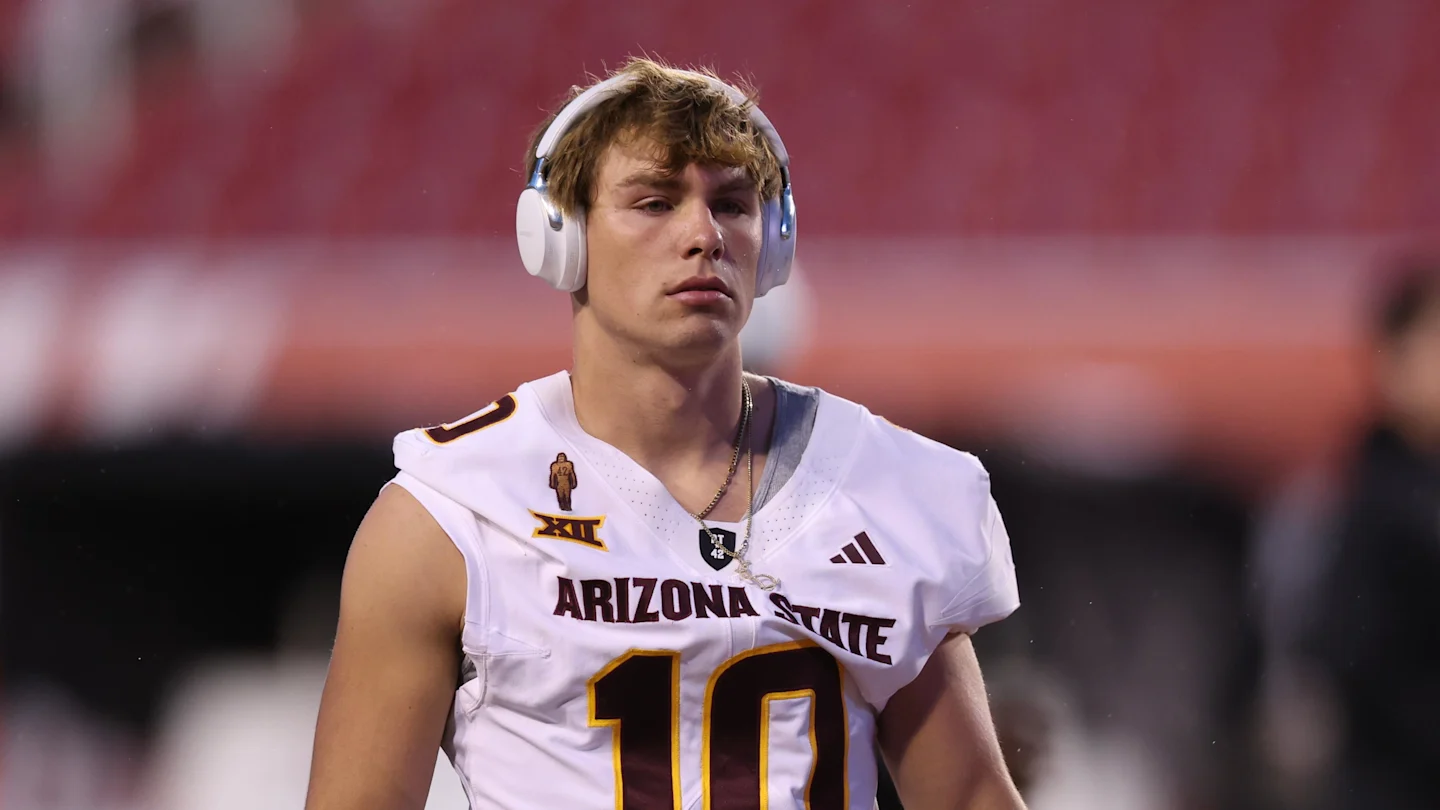
Former Michigan State transfer Sam Leavitt officially entered the NCAA transfer portal on Friday with a “do not contact” tag, meaning schools can’t reach out unless Leavitt or his camp makes the first move.
Leavitt burst onto the national scene in 2024 after transferring to Arizona State, establishing himself as the Sun Devils’ starter and finishing the season with 2,885 passing yards, 24 touchdowns and six interceptions, while adding 443 rushing yards and five scores as a true dual-threat.
He helped fuel ASU’s 11–3 finish and first-ever College Football Playoff appearance, earning Big 12 Offensive Freshman of the Year and second-team All-Big 12 honors.
Leavitt followed that up with solid production in 2025, throwing for 1,628 yards, 10 touchdowns and three interceptions while adding 300 rushing yards and five scores, though he was limited to just seven games after a lingering foot injury required season-ending surgery on October 31.
Before coming to college, Leavitt starred at West Linn High School in West Linn, Oregon, as a consensus four-star prospect and the No. 21 quarterback in the 2024 class per 247Sports, choosing Michigan State over offers from Washington State, Arizona, Florida State, and Washington.
With the transfer portal set to open at midnight Friday, On3’s Pete Nakos and Steve Wiltfong provided the latest intel on programs showing early interest, reporting that three schools have emerged as primary contenders for Leavitt — Miami, Oregon, and LSU — as the No. 1-ranked quarterback in the portal.

Oregon, Miami, and LSU each present a compelling scheme and situational fit for Leavitt.
Oregon offers a home-region landing spot with an offense built to maximize his mobility and timing with playmakers, while Miami provides a high-visibility ACC platform and a scheme well-suited for an accurate, aggressive quarterback as the Hurricanes continue to explore veteran portal options.
LSU also looms as a logical destination, with Lane Kiffin’s new staff actively working the portal and seeking an immediate upgrade at quarterback, where Leavitt’s experience and draftable traits would fit seamlessly.
It’s also worth noting that Oregon and Miami are both CFP semifinalists set to lose their starting quarterbacks, creating a rare opportunity for Leavitt to step into a title-contending environment right away.
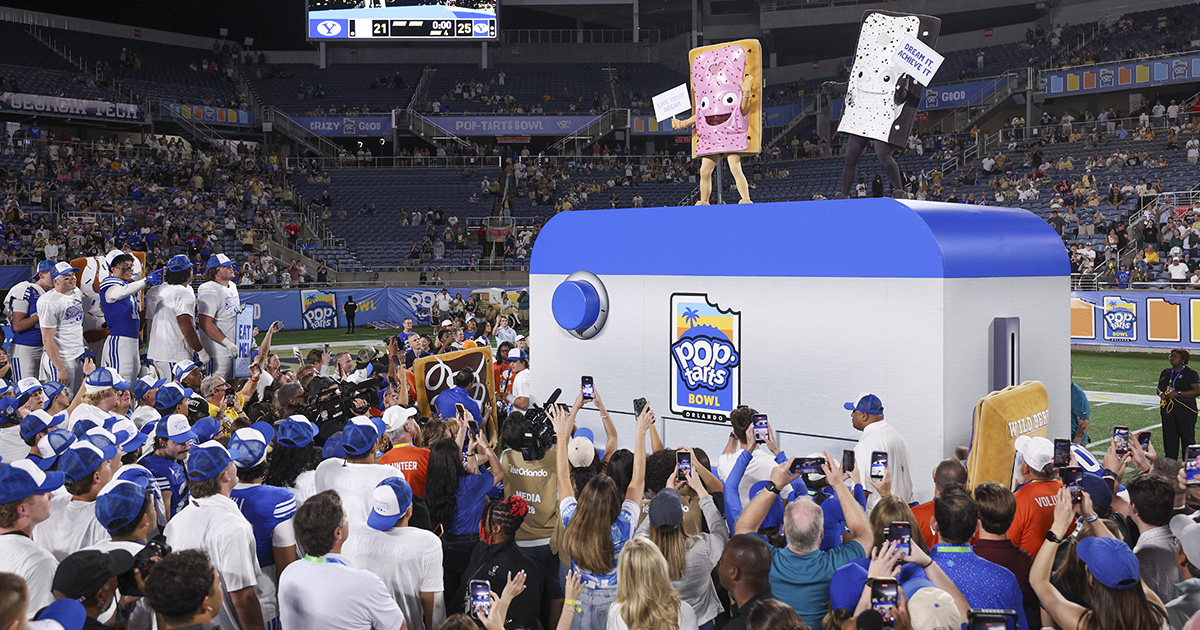
Through the first part of Bowl Season, ESPN has seen strong returns on its non-College Football Playoff games. The biggest one, of course, was the Pop-Tarts Bowl.
An average of 8.7 million people tuned in for the game, which saw BYU take down Georgia Tech on ABC, ESPN announced. It’s the best viewership for the game since 1991, when it was the Blockbuster Bowl, and became ESPN’s best non-CFP bowl game since the 2019-2020 Citrus Bowl.
SUBSCRIBE to the On3 NIL and Sports Business Newsletter
As a whole, ESPN’s bowl game viewership is up 13% for non-College Football Playoff games through Dec. 27, the network announced. On the whole, 2.7 million people on average have tuned in as multiple games drew strong numbers.
BYU’s victory over Georgia Tech came down to the final seconds as the Yellow Jackets fell short on the final possession. The Cougars then had the opportunity to partake in one of college football’s newest – and most popular – traditions. Head coach Kalani Sitake and the players got to eat one of the edible mascots after two of the three went into the toaster.
Protein Slammin’ Strawberry was the one who “escaped” beforehand, though. Officials for the Pop-Tarts Bowl game said it was the decision to “go pro,” which brought a new twist to the celebration.
The Pinstripe Bowl between Penn State and Clemson drew its best viewership on record as 7.6 million people tuned in for the Nittany Lions’ victory over the Tigers. Additionally, the Gator Bowl hit 6.0 million viewers on average – its best figure since 2009. Virginia took down Missouri in that game to secure a 10-win season for the Cavaliers.
At 4.4 million viewers, the Rate Bowl also drew its highest numbers since 2011 as Minnesota picked up yet another bowl game victory over P.J. Fleck, taking down New Mexico. The L.A. Bowl went out on a high note with a new record-high of 3.8 million viewers tuning in for Washington’s win against Boise State in the final installment of the game, as On3’s Brett McMurphy previously reported.
Three other bowl games drew record viewership, as well, according to ESPN. The First Responder Bowl between FIU and UTSA brought in 3.1 million viewers to set a new all-time high, while the Hawaii Bowl averaged 2.7 million viewers for Cal’s thrilling win over Hawaii on Christmas Eve. That made it the most-watched Hawaii Bowl since 2013. Finally, the Military Bowl averaged 2.5 million – its best since 2018 – as East Carolina took down Pitt.
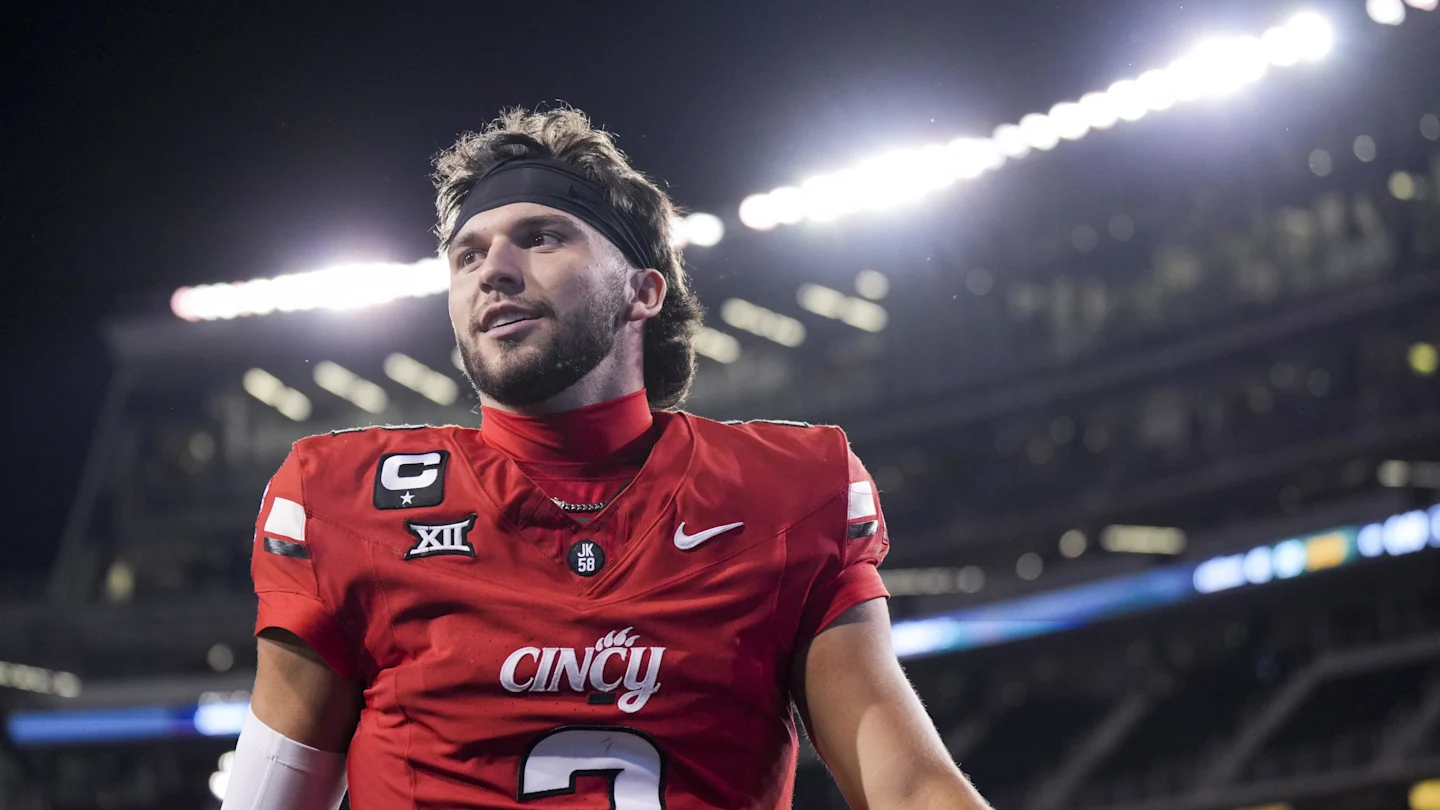
Quarterback Brendan Sorsby emerged as a productive, efficient starter for Cincinnati in 2025, throwing for 2,800 yards and 27 touchdowns against five interceptions, while adding 580 rushing yards and nine rushing scores on the ground, completing 61.6% of his passes across 12 games.
The Bearcats finished 7–5 overall (5–4 in Big 12 play) under third-year head coach Scott Satterfield, marking a two-win improvement from the previous season and the program’s best finish since the Luke Fickell era.
However, Sorsby informed Cincinnati of his intent to enter the transfer portal ahead of the window opening, which runs from January 2 to January 16.
A Denton, Texas, native from Lake Dallas High School, Sorsby was rated a three-star recruit and the No. 66 quarterback in the 247Sports Composite rankings for the 2022 cycle, initially committing to Indiana over offers from Army, Delaware, Navy, and East Texas A&M.
With the Hoosiers (2022–23), Sorsby redshirted in 2022 and appeared in just one game before playing in 10 contests in 2023, throwing for 1,587 yards, 15 touchdowns, and five interceptions while showcasing his dual-threat ability with 276 rushing yards and four rushing scores.
He transferred to Cincinnati ahead of the 2024 season and quickly established himself as the Bearcats’ starter, posting a career high 2,813 passing yards alongside 18 passing touchdowns, and seven interceptions, plus 447 rushing yards and nine rushing TDs, before another strong finish in 2025 that solidified him as one of the more proven quarterbacks in the transfer portal.
With the portal opening Friday at midnight, On3 reporters Pete Nakos and Steve Wiltfong flagged Texas Tech as an early frontrunner while identifying LSU as a competing suitor, describing the two programs as going “head-to-head” to land Sorsby.
Shortly after, ESPN’s Pete Thamel reported that Sorsby already has visits lined up with both programs, with the quarterback set to visit Texas Tech late Friday before heading to Baton Rouge.

Texas Tech offers an immediate schematic fit for Sorsby, operating a pass-heavy, vertical offense under Joey McGuire’s staff, while also providing geographic proximity to his Texas roots.
Furthermore, the Red Raiders are expected to have a clear opening at quarterback with senior starter Behren Morton set to move on, creating a direct path to early playing time.
LSU, meanwhile, presents a different but equally compelling case, offering SEC competition, greater national exposure, and a proven track record of developing transfer quarterbacks under head coach Lane Kiffin, notably Ole Miss’ Trinidad Chambliss and now New York Giants QB Jaxson Dart.
With the portal window opening at midnight, typical transfer timelines point to visits and official meetings taking place quickly, with a commitment potentially coming within days to a few weeks as NIL discussions and evaluations progress.
Sorsby’s current NIL valuation sits around $2.4 million, ranking him among the top-valued quarterbacks in college football, a figure that could rise if schools escalate offers, with some suitors reportedly prepared to push past $4 million.
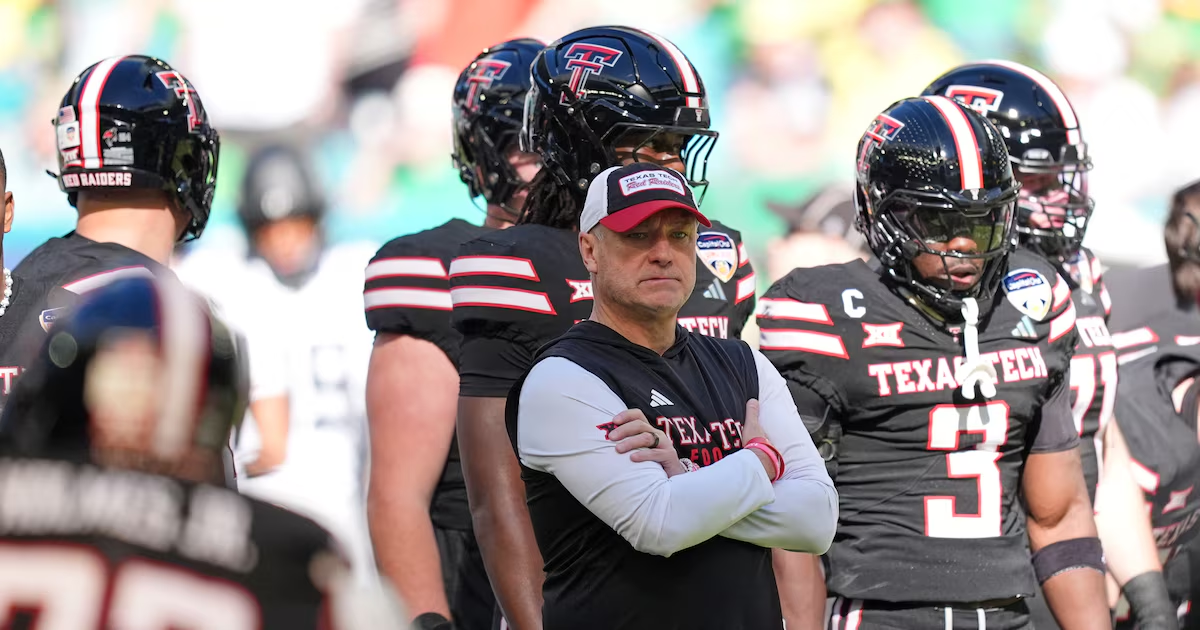
Here are five burning questions for Texas Tech football this offseason…
Texas Tech football outgrew the talent of its quarterback in one offseason. Behren Morton was a perfect fit for the Texas Tech program that existed in his four years prior, but head coach Joey McGuire’s unwavering loyalty to Morton may have cost this year’s team a shot at the national championship.
Morton will be graduating now, so the checkbooks are open for general manager James Blanchard to find a new QB1.
As of Friday, Blanchard and other Texas Tech athletes’ only public interest has been in Cincinnati quarterback Brendan Sorsby. Blanchard reposted Sorsby’s transfer portal announcement, and within an hour, 12 Texas Tech football players had commented on his post.
Sorsby is rated the No. 1 quarterback available in the portal by On3. He is regarded as a potential first-round pick if he enters the NFL draft, but the money college programs are expected to offer will surpass a rookie contract.
Other names to watch are Florida’s DJ Lagway and Arizona State’s Sam Leavitt.
Texas Tech will lose five premier starters on defense to exhausted eligibility: DT Lee Hunter, ILB Jacob Rodriguez, OLB David Bailey, OLB Romello Height and S Cole Wisniewski.
Those five made up 337 total tackles, 29 sacks and 15 forced fumbles in 2025.
Texas Tech will hit the portal to fill a handful of the upcoming defensive holes, but the Red Raiders will retain a handful of players who can step up. Rodriguez’s counterpart, linebacker Ben Roberts, is atop that list.
Between the Big 12 Championship and the Capital One Orange Bowl, Roberts had three interceptions. He also had a career-high 16 tackles in Thursday’s loss.
Roberts and budding linebacker/safety John Curry will man the interior linebacker spots in 2026 alongside at least one portal addition.
USC transfer running back Quinten Joyner tore his ACL on Aug. 18 before taking a regular season snap with Texas Tech. He had not been named the primary back, but his name was circulated in game strategy more frequently than Cameron Dickey and J’Koby Williams.
Dickey and Williams had strong freshman campaigns in their minimal snaps played, but McGuire didn’t know their full capabilities yet. So, before Joyner’s injury, he intended to run a three-headed system with no true starter.
McGuire remained content to run a 1A and 1B system with Dickey and Williams following the injury. It panned out perfectly. Dickey was a 1,000-yard rusher, and Williams thrived as a runner, receiver and kick returner.
Heading into 2025, they were all high-reward, experimental running backs, but one of the three may not be satisfied to play another season as a rotational player. None have entered the transfer portal as of Friday, but Dickey and Williams’ 2025 tape could warrant a payday and a guaranteed starter tag at multiple P4 programs.
The Micah Hudson saga has been nothing short of a rollercoaster. From becoming Texas Tech’s first five-star recruit to being used sparingly as a freshman to then transferring to Texas A&M and back to Lubbock a semester later, Hudson has yet to have his opportunity.
He reportedly struggled to grasp the playbook during his freshman season, which warranted his minimal usage. Then, when he returned to Texas Tech, the talent was too good for him to be anything more than a rotational piece.
Hudson has pledged his loyalty to McGuire and Texas Tech, so his name will be amongst the replacements for starters Caleb Douglas and Reggie Virgil. It’s reasonable to assume Texas Tech grabs one or two receivers from the portal, but Hudson is in a prime position to earn reps over the offseason.
His most recent snaps came against West Virginia in the season finale, when he had two touchdowns in the waning moments of a blowout win.
Texas Tech hung its hat on brotherhood this season. The talent was there at certain positions, but the culture McGuire built was a pillar of Texas Tech’s team-wide success.
However, Height noted in the locker room following Texas Tech’s 23-0 College Football Playoff loss that some players weren’t “locked in.”
No one was named, but there was evident frustration from defensive players with their offensive teammates. All of which is expected in the hour after a season-ending defeat, but if McGuire can’t reroute that energy into pushing for a title next season, it will hinder them.
Texas Tech is no longer the longshot team. There will be a huge shift in how team culture is established, going from the perennial middle-of-the-pack program to a place where the floor is now a playoff win.
Find more Texas Tech coverage from The Dallas Morning News here.



Ross Brawn to receive Autosport Gold Medal Award at 2026 Autosport Awards, Honouring a Lifetime Shaping Modern F1


Nike Signs 10 LSU Athletes to NIL deals


Stempien to seek opening for Branch County Circuit Court Judge | WTVB | 1590 AM · 95.5 FM


Princeton Area Community Foundation awards more than $1.3 million to 40 local nonprofits ⋆ Princeton, NJ local news %

Downtown Athletic Club of Hawaiʻi gives $300K to Boost the ’Bows NIL fund


Kentucky AD explains NIL, JMI partnership and cap rules


PRI Show revs through Indy, sets tone for 2026 racing season


Teesside youth discovers more than a sport


Young People Are Driving a Surge in Triathlon Sign-Ups

Three Clarkson Volleyball Players Named to CSC Academic All-District List