Connect with us
https://yoursportsnation.com/wp-content/uploads/2025/07/call-to-1.png

NIL

16 teams you should avoid in 2025 season

Published

on


play

  • Many struggling college football teams are losing players to richer programs due to NIL (Name, Image, and Likeness) deals.
  • Offensive struggles and weak defenses plague many of these teams, contributing to their predicted poor performance.

How much are parents willing to pay for their teenagers to be happy? At these 16 universities, it’s not enough. Despite the ever-rising costs of tuition, it takes a lot of money to field a competitive college football team these days.

For many years, athletic departments screamed “Fake news!” when they were accused of paying football players under the table. Now, thanks to NIL money, the tables have turned, and transfer players are changing schools faster than Chat GPT can write your college essay.

For these 16 worst teams in college football, climate change is real, because as good recruits leave for better, higher-paying gigs at other schools, head coaches’ seats are getting hotter. But that doesn’t mean we can’t crack open a cold one, enjoy a few out-of-whack point spreads and fill our DraftKings accounts with some early-blowout joy. So sit back, relax and read about 2025’s worst 16 college football teams to bet on.

No. 16 Arkansas: Revolving door in Fayetteville keeps spinning

A 7-6 season may have temporarily given well-liked coach Sam Pittman a reprieve, but the revolving door in Fayetteville keeps spinning faster. The Razorbacks are the kind of college football team that’s just good enough for better teams to raid for help. They don’t call the state of Arkansas “The Land of Opportunity” for nothing. To fill the empty lockers, Arkansas will have 58 new players: 19 high school players, 31 transfers and eight walk-ons. Senior quarterback Taylen Green is back, but he’ll have to deal with a whole new corps of receivers and backs and play behind a line that couldn’t protect him last year. Another seven-win season may be a tall task.  

No. 15 UCLA: Transfer QB Nico Iamaleava needs lot of help

It’s usually not a good sign when your coach (DeShaun Foster) and offensive coordinator (Eric Bieniemy) are former NFL running backs and your offense ranks 131st in the nation in rushing with 86.6 yards per game. Nevertheless, the Bruins showed some grit after starting the season 1-5 to win four of their last six and finish 5-7. This offseason, UCLA changed offensive coordinators and landed the top prize in the transfer portal, high-profile QB Nico Iamaleava from Tennessee, who may be the only star ever to go to Hollywood and take a pay cut. We’ll see if there was enough NIL money left over to replace every starter on last year’s defense.

No. 14 Wisconsin: Won’t be much better after missing bowl game in ’24

Wisconsin had a tougher 2024 than the Democrats, dropping to 5-7 and missing a bowl game for the first time in 22 seasons. Realizing the error of his ways, coach Luke Fickell replaced offensive coordinator Phil Longo with Jeff Grimes from Kansas to fix the 118th-ranked offense and get back to the Badgers’ wintry ground-and-pound style of football. The only problem is their freshman running back, Dilin Jones, has to move the ball in games on the road against the NFL farm system defenses of Alabama, Michigan, Oregon and Indiana, and at home against Washington, Iowa and Ohio State.

No. 13 Syracuse: Must replace QB Kyle McCord, leading tacklers

Coach Fran Brown did a stellar job in his first year, taking Syracuse from six to 10 wins and a victory in the Holiday Bowl. Ohio State transfer Kyle McCord led the nation in passing and set school records with 4,326 yards and 29 touchdowns, but he’ll likely be sitting on the Eagles bench as Syracuse lost 35 players to graduation and the transfer portal. In comes Rickie Collins with only four games of college quarterback experience to lead the new offense. Most of the top tacklers are gone for this team as well. Brown is an excellent recruiter, but he might need the ghost of Jim Brown to win on the road against SMU, Clemson, Miami and Notre Dame.

No. 12 Vanderbilt: QB Diego Pavia returns behind rebuilt OL

Vanderbilt likes to call itself the “Harvard of the South.” The Commodores certainly were smart enough to get their star quarterback Diego Pavia’s junior college seasons tossed to give him another year of eligibility. We’ll see how shrewd they were in spending their NIL money on a new offensive line to protect him. The Commodores caught some teams by surprise last year, including an upset over Alabama, and came a field goal short of upsetting Texas. But once teams got to see their offense a little more, they finished with three straight losses to South Carolina, LSU and Tennessee. Vanderbilt’s young men will go on to fine careers on Wall Street, where “Greed is Good,” but not in the NFL.

No. 11 Washington State: New coaching staff will emphasize running

With coach Jake Dickert off to Wake Forest, Washington State brings in South Dakota State chief Jimmy Rogers to run the program. And when we say run, we mean tossing the Air Raid offense out the window and carrying the ball between the tackles. Rogers brings with him his SDSU offensive coordinator Danny Freund, running backs Angel Johnson and Kirby Vorhees, and several other former Jackrabbits to help matriculate the ball down the field. If nothing else, you will see a real-time experiment in what happens when you move an FCS team up in class to play a full FBS schedule. It may be too tough a test to pass this year, but these Cougars also will get better with age.

No. 10 West Virginia: Rich Rodriguez is back, TikTok is gone

Rich Rodriguez has had plenty of success as coach of West Virginia. Unfortunately, that success was between 2001-2007. Rodriguez moves over from Jacksonville State to retake the reins of the program, and he looks to bring a hard edge back to the team, as evidenced by announcing he was banning all of his players from dancing on TikTok. Unfortunately for Rodriguez, there aren’t likely to be any other viral moments on the field for a program in transition. With the exception of two starters on offense and one on defense, it looks like an entirely new roster of players will be trying to change the fortunes of last year’s 6-7 squad.

No. 9 Arizona: Bad offense might be even worse

Even with No. 8 overall NFL pick Tetairoa McMillan at WR, Arizona had the second-worst offense in the Big 12. So how much better will the Wildcats be without him? Brent Brennan’s first season coaching the program was more mirage than oasis in the desert, as the team dropped from 10 to four wins, including a 2-7 record in conference play. In comes new offensive coordinator Seth Doege, and much like DOGE, they have hired plenty of inexperienced replacements to make the offense more “efficient.” Noah Fifita is back at QB, but without his star receiver, we’ll see if he has the tools to operate Doege’s up-tempo offense. On defense, the team finished 108th in the nation, giving up 31.8 points per game.

No. 8 Oklahoma State: Can Mike Gundy rebound after worst season?

When Willie Nelson sang, “Mama, don’t let your babies grow up to be Cowboys,” he may have been referring to last season’s Oklahoma State team. At 3-9 and winless in the Big 12, it was the worst year of Mike Gundy’s 20-year career at OSU. Gundy cleaned house faster than a mafia wife with the Feds knocking. In comes a new coaching staff. Maybe as many as 40 new incoming players. But will it yield new results? Hauss Hejny and Zane Flores will battle for the starting QB spot. But like most freshmen, neither has completed a single pass in college. The defense was 125th in the nation last year, giving up 35.6 points a game.

No. 7 Kentucky: Misuse of transfer portal leads to troubles

It’s a good thing Donald Trump hasn’t decided to place tariffs on incoming college football players (at least not as of press time), because Kentucky had to import almost an entire offense for the upcoming season. Head coach Mark Stoops is set to make $9 million per year until his contract ends in 2030, but the Wildcats may have been better suited to save some of that cash for better players. Kentucky ranked 119th in offense, scoring just 20.6 points per game. And the talent coming in through the portal seems a bit more sale price than big ticket. That misreading of the transfer portal seems to be the biggest reason why Stoops’ team dropped to 4-8 and 1-7 in the SEC last season.

No. 6 Maryland: Prospects not good for Terps coming off poor season

Coach Mike Locksley took the Terrapins to three straight bowl games before last year’s 4-8 mishap (1-8 in the Big Ten), which may cost him his job this year. And if things weren’t bad enough, Maryland will have more new players than the new season of “Squid Games.” Only three starters are back on offense and one from a defense that gave up over 30 points per game. If there’s a ray of light, it’s Locksley’s ability to recruit local talent, including promising quarterback Malik Washington. This bears watching: Locksley admitted to losing the locker room last season over players being disgruntled by NIL money.

No. 5 Wake Forest: New coach Jake Dickert brings power spread offense

Coach Dave Clawson made some great memories for Wake Forest football, including seven straight bowl appearances. But like good Robert DeNiro film performances, all things eventually come to an end. A pair of 4-8 seasons helped lead Clawson to retirement. In comes Jake Dickert and his power spread offense from Washington State. Dickert hopes some new talent will bring him greater luck. He imported Robby Ashford (South Carolina) and Deshawn Purdie (Charlotte) to compete for the quarterback spot. Demond Claiborne, who rushed for 1,000 yards, gets to run behind an all-new offensive line.

No. 4 Northwestern: Talent drain via transfer portal hurting Wildcats

Northwestern takes pride in preparing its students for good-paying jobs. Unfortunately, this is true for the football team as well, where the Wildcats’ best players are heading for the transfer portal faster than Jeff Bezos’ wife can spend his money. Even quarterback Mike Wright shipped off to East Carolina (perhaps the third most popular Carolina after North and South). Last season, the talent drain led to an offense that was tougher to watch than YouTube videos with ads. They ranked 128th out of 132 teams in scoring and couldn’t even average 100 yards rushing per game. The defense still shows some signs of life, especially the front line with ends Aidan Hubbard and Anto Saka.

No. 3 Mississippi State: QB Blake Shapen back, but defense missing

Before he got hurt last season, Blake Shapen was shapin’ up to be a solid passer. But a shoulder injury derailed Shapen’s last eight games, and with it, Jeff Lebby’s first season as coach ended with a 2-10 crash. No one doubts Lebby can coach, but as they say, even the finest chef can’t turn chicken manure into chicken salad. With Shapen back for one season, the Bulldogs may still take a step forward on offense. But their biggest obstacle will be not facing Mississippi State’s defense, which was the worst in the SEC by far, giving up over 216 yards rushing and 34 points per game. The transfer portal isn’t wide enough to fit the d-linemen they’ll need to import to improve the defense.

No. 2 Stanford: Andrew Luck, Frank Reich trying to turn around program

After consecutive 3-9 seasons, offensive guru Troy Taylor was relieved of his head coaching duties. To restore the program to glory, Stanford brought in former quarterback Andrew Luck to adapt to the changing times of NIL, college portals and shopping for talent. So what did he do to modernize the program? He brought in 63-year-old dinosaur Frank Reich, his former coach in Indianapolis and an NFL coach for the last two decades, to be the head coach. Right now, Luck and Reich are trying to get their current players to make the grade. Reich will be entrusted with getting the most out of former four-star QB Elijah Brown and an offense that averaged 191.3 yards passing last season.

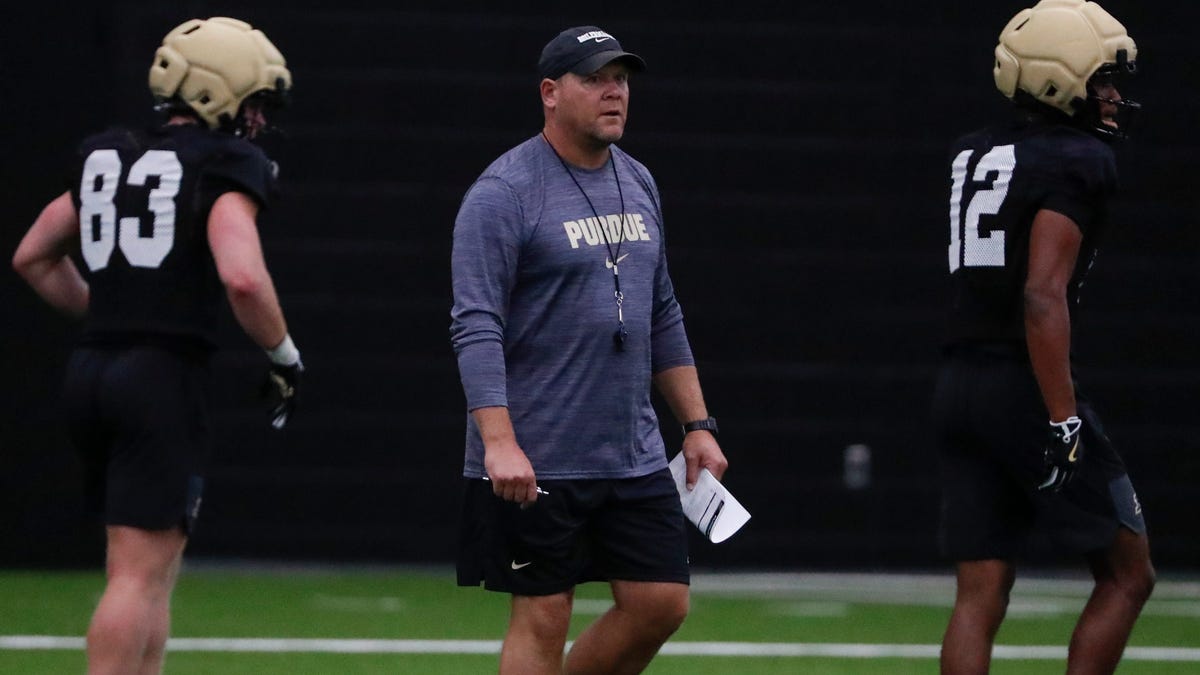
No. 1 Purdue: Holes on offense, defense, brutal schedule mean doom

Head coach Barry Odom took a 1-11 UNLV team to 19 wins in the last two seasons. But even Picasso needed paint, and Odom might need to make a few more trips to Sherman-Williams before you start to see the full picture. The program is so bare, Odom had to convince last year’s backup quarterback Ryan Browne to spurn Bill Belichick and his girlfriend at North Carolina in December to come back to Purdue. Browne will be playing behind an offensive line that puts the holy in Holy Moly! On defense, Purdue gave up 200 yards on the ground and 252.7 yards in the air per game. The schedule is brutal with games at Michigan and Notre Dame and home against Ohio State and Indiana.

Central Florida, Michigan State among the Dishonorable Mentions

Here are teams from the Power Four Conferences that will underachieve by winning four to seven games (listed alphabetically):

Boston College, Colorado, California, Michigan State, Pittsburgh, UCF and Virginia

Danny Sheridan is featured in newspapers and on national radio and TV during football season.



Link

Continue Reading
Click to comment

Leave a Reply

Your email address will not be published. Required fields are marked *

NIL

Missouri DE Damon Wilson II countersues Georgia, setting up a potentially major NIL legal battle

Published

on


A messy player-school NIL dispute just got messier.

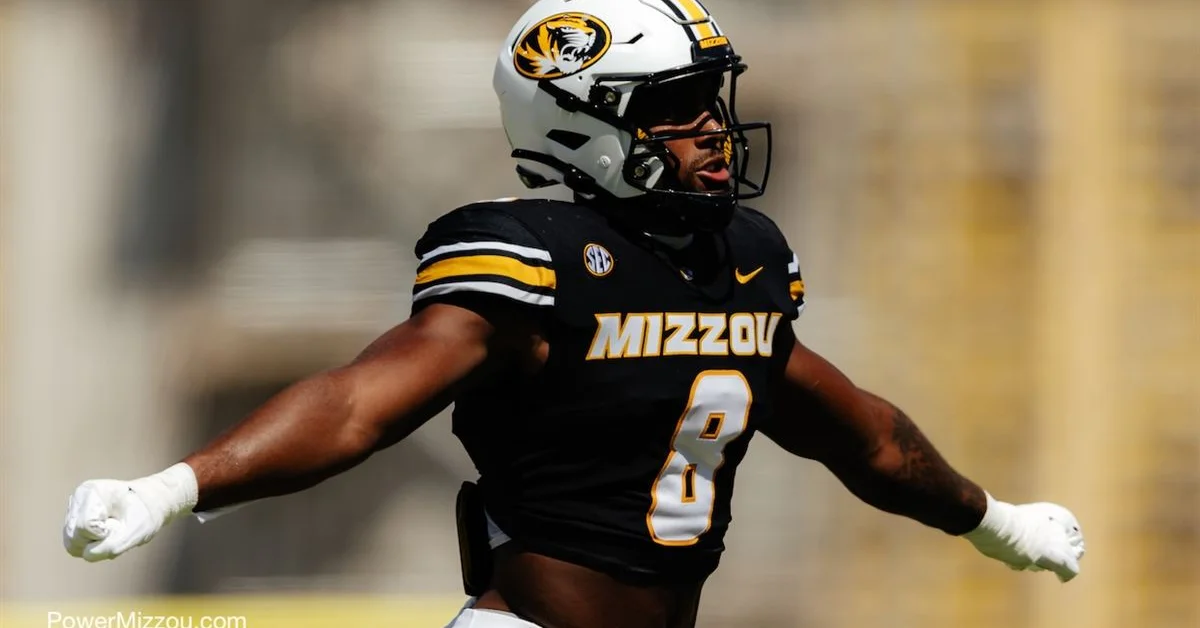
Less than a month after Georgia sued Damon Wilson II for transfer damages, Missouri’s star pass rusher filed a countersuit against Georgia, setting up a potentially precedent-setting NIL legal battle between an athlete and school.

“Recent court decisions have changed the landscape of college football and paved the way for NIL payments,” Bogdan Susan, one of Wilson’s attorneys, told PowerMizzou.com. “What has not changed is that college football players still have only four years of competition to realize their potential and try to achieve their dreams of playing in the NFL. A lot of trust is put into the colleges and coaching staffs. Coaches are not limited to four years of competition. The University of Georgia has been playing football for over 133 years. Damon has four years to play and he spent half of that time at Georgia. Decisions to transfer are not always about money. Stopping a young man from pursuing his dreams by forcing him to pay money that he has not received is just wrong.”

Wilson filed a 42-page complaint in Boone County, Mo. on Tuesday morning, an action first reported by The Athletic, alleging a civil conspiracy involving Georgia and its collective  for trying to “penalize Wilson for his decision to transfer.” The defendants named in the suit are the University of Georgia Athletic Association, the Classic City Collective and former Classic City CEO’s Matt Hibbs and Taylor Potts.

The suit alleges Georgia didn’t immediately put Wilson’s name in the transfer portal last January and also lied about his buyout, telling multiple unnamed Power 4 programs that they’d owe Georgia $1.2 million if Wilson transferred to their school. 

“UGAA’s actions signal that it is stuck in its old ways. The era of universities exerting total control over the career trajectories and rights of their student-athletes has been dead for nearly half a decade. Nonetheless, UGAA has demonstrated that, left to its own devices, it will attempt to exploit every loophole to deprive student-athletes like Wilson of the ability to reap the benefits of full and fair competition for their NIL rights. 23. No longer willing to endure UGAA’s harassment campaign and ready to hold UGAA and CCC accountable for their tortious interference with his business expectations when he entered the portal and chose to transfer, their breach of the Term Sheet’s Confidentiality Agreement, and UGAA’s efforts to tarnish his reputation as he pursues his lifelong dream of playing in the NFL, Wilson brings this action.”

Wilson’s claim hinges largely on the document signed by the player, the Classic City Collective and Hibbs and Potts. The involved parties signed a term sheet. Wilson’s suit claims the term sheet is not binding.

“The Term Sheet stated that it ‘preced[es]’ a ‘full License and Option Agreement,’ and specifically provided: ‘In the event the parties agree to this Term Sheet, then they shall work cooperatively to set forth these terms in a full legal contract including all the standard provisions of NIL licensing agreements.’ The Term Sheet further stated that Wilson ‘should seek legal counsel before finalizing the full License and Option Agreement.'”

The suit claims that Wilson, as part of a group of Georgia players, “without counsel present and with UGAA employees telling him that time was of the essence.” The suit alleges not only that Wilson signed the term sheet under pressure, but that the full binding contract was never presented, much less signed.

“The parties thus never executed a legally binding agreement containing any of the provisions in the Term Sheet,” the suit states.

The suit further claims that UGAA and the Classic City Collective violated the term sheet’s confidentiality agreement “by disclosing one or more of the Term Sheet’s provisions to sympathetic news outlets and affiliates to tarnish Wilson’s reputation.” 

This is believed to be the first time a school and an athlete have taken each other to court over an NIL issue. The resolution could depend on whether or not Wilson’s NIL agreement with Georgia’s collective was a binding contract.

The UGAA lawsuit against Wilson recently filed seeks liquidated damages of $390,000. Wilson’s countersuit claims those funds are not liquidated damages, but instead penalties for transferring from Georgia. 

“A penalty provision masquerading as a “liquidated damages” provision is unenforceable,” the filing reads. “It makes no effort to reasonably quantify damages that are difficult to ascertain, and it serves only to penalize Wilson for his decision to enter the transfer portal.”

Wilson’s suit also alleges defamation against UGAA, referencing a statement from Chief Marketing Officer Steven Drummond made to ESPN: “When the University of Georgia Athletic Association enters binding agreements with student-athletes, we honor our commitments and expect student-athletes to do the same.”

The suit clams “UGAA’s statement implies that Wilson is dishonest in his business dealings and his profession, impairing his ability to enter into future NIL agreements, and harms his reputation.”

Wilson was one of the top edge defenders in the SEC in 2025, recording 9 sacks, tied for third-most in the SEC, and 49 total pressures, second-most in the SEC. He is currently expected to play for Missouri in the Taxslayer Gator Bowl on Saturday. He has not declared his intent for next season. He has until January 14 to enter his name into the NFL Draft as an underclassman. 

This story will be updated as more information becomes available.

Cody Goodwin covers the Missouri Tigers for PowerMizzou and 247Sports. Follow him on Twitter/X at @codygoodwin.

PowerMizzou.com publisher Gabe DeArmond contributed to this report.


Link

Continue Reading

NIL

Georgia, Ex-Football Player Suing Each Other in NIL Dispute

Published

on


Georgia, Ex-Football Player Suing Each Other in NIL Dispute


Link

Continue Reading

NIL

Georgia football: Missouri LB Damon Wilson II sues Bulldogs

Published

on


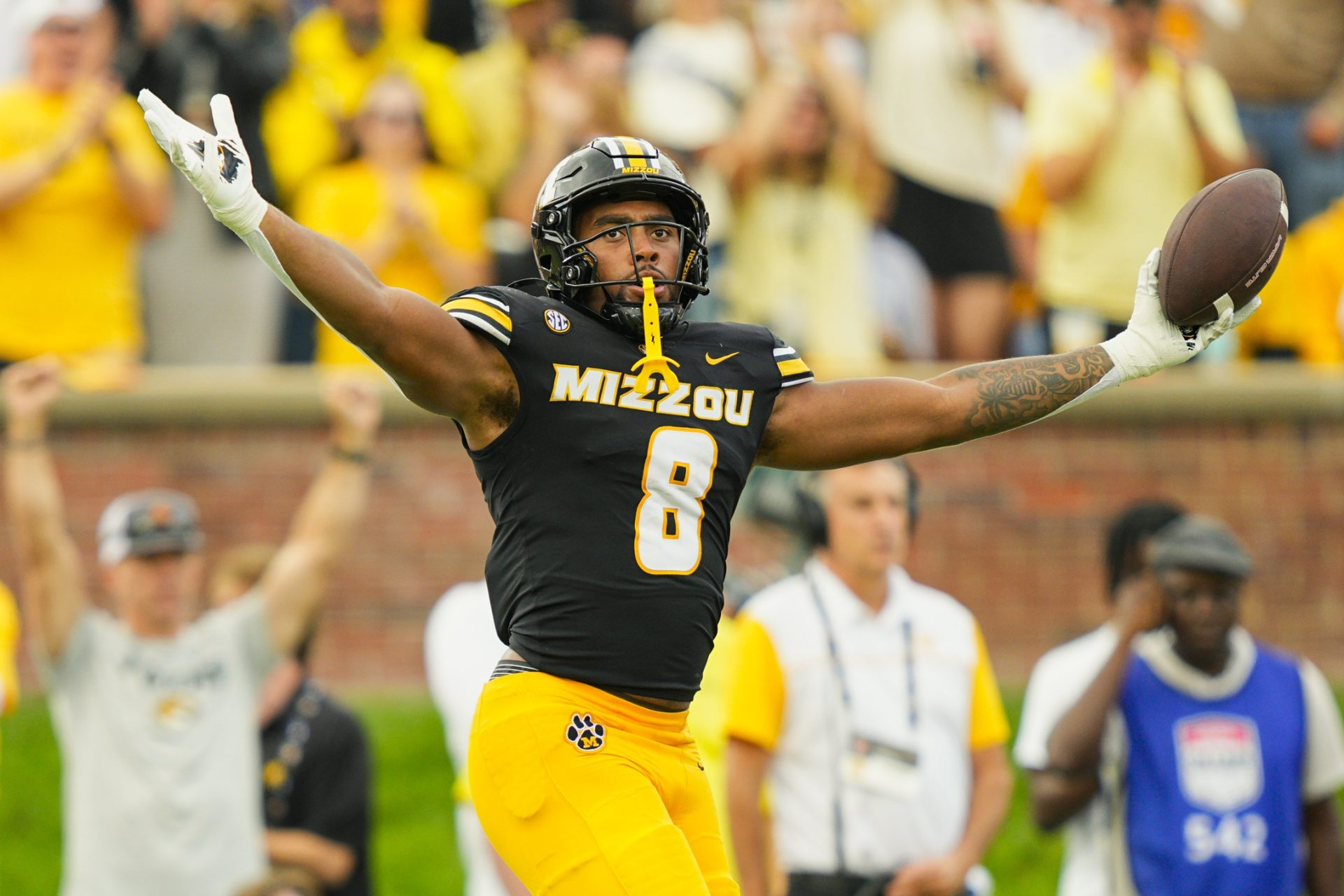
Missouri linebacker Damon Wilson II is suing the University of Georgia’s athletic association and its Classic City Collective, which he says is attempting to “punish” him through a “coordinated campaign” for his decision to transfer. Earlier this month, Georgia sought $390,000 in damages citing a clause in Wilson’s NIL contract after his departure to another SEC program.

The lawsuit initiated what appears to be a landmark case in college football, which now includes the plaintiff fighting back with his own legal documents. Highlighting a 42-page complaint filed Dec. 23 in Boone County, Missouri, Wilson’s attorneys claim Georgia tried to sabotage their client’s potential destinations after employees “falsely” told “at least three programs that — if Wilson left Georgia and joined their programs — Wilson would be subject to a $1.2 million buyout.”

The complaint claims Georgia “continued to assert similar demands in an effort to harass Wilson and impair his on-field performance for a conference rival” throughout the 2025 regular season.

Wilson signed a new deal with Georgia’s NIL collective in December 2024 during the College Football Playoff, but entered the transfer portal and moved to Missouri weeks later. While documents show Georgia paid Wilson $30,000 under the terms of the new deal before his departure, the athletic department states Wilson owed a $390,000 lump sum within 30 days of his exit.

The contract was a 14-month agreement worth $500,000, which was set to be paid in monthly $30,000 increments. Georgia would have also paid Wilson two $40,000 retention bonuses at the end of the NCAA transfer portal windows. The exit clause states that Wilson would owe a lump-sum payment worth the total he would have received if he remained with the program through the duration of the contract.

“The era of universities exerting total control over the career trajectories and rights of their student-athletes has been dead for nearly half a decade,” Wilson’s complaint said. “Nonetheless, UGAA has demonstrated that, left to its own devices, it will attempt to exploit every loophole to deprive student-athletes like Wilson of the ability to reap the benefits of full and fair competition for their NIL rights.”

The previous term sheet signed by Wilson, his representation argues, was not a “legally binding document” as Georgia states. 

“CCC failed even to present Wilson what it promised in the Term Sheet — a “full License and Option Agreement,” the lawsuit said. “The parties thus never executed a legally binding agreement containing any of the provisions in the Term Sheet.”

Wilson appeared in 26 games at Georgia from during the 2023 and 2024 seasons and projected to be an impact starter prior to his decision to leave the program.

Georgia’s NIL collective’s two now-former CEOs — Matt Hibbs and Tanner Potts — were named in the lawsuit. Wilson seeks a “fair and reasonable amount of damages” for “financial and reputational harm he has suffered” in the aftermath of playing at Missouri this season. 


Link

Continue Reading

NIL

University of Missouri football player countersues University of Georgia

Published

on


A University of Missouri athlete countersued his former university on Tuesday.

Mizzou Football’s defensive end, Damon Wilson II, is countersuing the University of Georgia for damages regarding Name, Image and Likeness (NIL) money.

The lawsuit comes after the University of Georgia Athletic Association (UGAA) sued Wilson for allegedly violating a Term Sheet that he had signed in December 2024 during the College Football Playoffs.

The paperwork was presented to him by the Classic City Collective, Inc. (CCC), a supporter-funded platform used by UGAA to license student-athletes’ NIL rights, according to court records.

Wilson’s legal counsel argued that the signed Term Sheet was never a legally binding contract, as the documentation included the line, “In the event the parties agree to this Term Sheet, then they shall work cooperatively to set forth these terms in a full legal contract, including all the standard provisions of NIL licensing agreements.”

His attorney further noted that the CCC never presented him with what was promised in the Term Sheet or used it as a base to create a full legal License and Option Agreement contract.

Court documents reported that four days after Wilson signed the Term Sheet, and no legally binding contract was created, finalized or signed, CCC sent him $30,000 on Christmas Day.

Approximately one week later, Georgia’s season ended in a loss and the defensive end entered the transfer portal, eventually deciding to transfer to the University of Missouri to expand his opportunities of getting exposed to the NFL.

Less than three weeks later, CCC issued a termination notice to Wilson following his transfer announcement, which included a claim that would have required him to pay “all remaining License Fees that would have otherwise been payable under” the Term Sheet, which was a total of $390,000.

The lawsuit accused UGAA of violating the confidentiality agreement by publicly disclosing the full, signed Term Sheet to news outlets, on the public docket and by contacting at least three major college football programs to falsely claim that if Wilson left Georgia, then he would be subject to a 1.2 million buyout.

“UGAA’s actions signal that it is stuck in its old ways. The era of universities exerting total control over the career trajectories and rights of their student-athletes has been dead for nearly half a decade,” read the lawsuit. “Nonetheless, UGAA has demonstrated that, left to its own devices, it will attempt to exploit every loophole to deprive student-athletes like Wilson of the ability to reap the benefits of full and fair competition for their NIL rights.”

The petition stated that Wilson will not endure harassment from the UGAA and hold them accountable for interfering with his “business expectations when he entered the portal and chose to transfer, their breach of the Term Sheet’s Confidentiality Agreement and UGAA’s efforts to tarnish his reputation as he pursues his lifelong dream of playing in the NFL.”


Link

Continue Reading

NIL

Report: Notre Dame agreement with College Football Playoff led to USC not continuing rivalry

Published

on


Turns out, the rivalry between Notre Dame and USC was close to being saved earlier this season. According to Ryan Kartje of The Los Angeles Times, the two programs almost announced a 2026 game had been scheduled. However, the agreement Notre Dame put together with the College Football Playoff changed things for the Trojans.

“USC and Notre Dame were close to announcing a continuation of their rivalry earlier this season, a source told @latimes,” Kartje said via X. “USC was ready to compromise and play the ’26 game in November But then USC learned of ND’s agreement w/ the CFP to have a guaranteed spot if in the top 12.

“In light of Notre Dame’s agreement re: CFP, which USC hadn’t been aware of, USC reversed course on its plan to compromise and insisted that the ND game be played in Week Zero in 2026. A source said they felt ND’s agreement was ‘a material advantage’ that could disadvantage USC.”

Notre Dame athletic director Pete Bevacqua revealed this agreement, also called an MOU, with the CFP after this past Selection Sunday. If the Irish are placed inside the top-12 moving forward, they are guaranteed a spot in the field. The same is true if the CFP expands to 14 teams, as Notre Dame would need to be ranked inside the top 13.

If the MOU were in effect this season, Notre Dame would have gotten into the field over Miami despite being ranked lower. Miami also held the head-to-head matchup, jumping Notre Dame at the last possible moment. This scenario playing out against USC was apparently a concern for administration in Los Angeles.

“Had Notre Dame had its new agreement with the CFP committee in place in 2025, the Irish would’ve gotten in over Miami, who beat them earlier in the season,” Kartje said via X. “That scenario was a concern to USC.”

Now, for just the second time since World War II, there will not be a game between Notre Dame and USC. It’s one of the more storied rivalries in college football despite the two never sharing a conference. We are not too far away from 100 games between them, sitting at 93 after the 2025 edition took place in South Bend.

Notre Dame already has a game on the ’26 and ’27 schedule to replace USC. A home-and-home series will take place with BYU, a team they could have played in the Pop-Tarts Bowl in a few days.


Link

Continue Reading

NIL

More than the game: How NIL is reshaping opportunity for Hawaiʻi athletes | Hawai’i Hustle

Published

on


HONOLULU (Island News) — When conversations turn to Name, Image and Likeness in college sports, the focus often lands on eye-popping numbers and national stars.

This year’s Heisman Trophy winner, Indiana quarterback Fernando Mendoza, reportedly earned more than two million dollars through NIL deals — a figure that has become shorthand for how dramatically the college athletics landscape has changed.

But far from the national spotlight, NIL is quietly reshaping opportunity in a very different way.

At the University of Hawaiʻi, athletes are discovering that NIL isn’t only about endorsements or social media reach. It’s about identity, adaptability, and learning how to navigate a world where athletic performance and personal story now intersect.

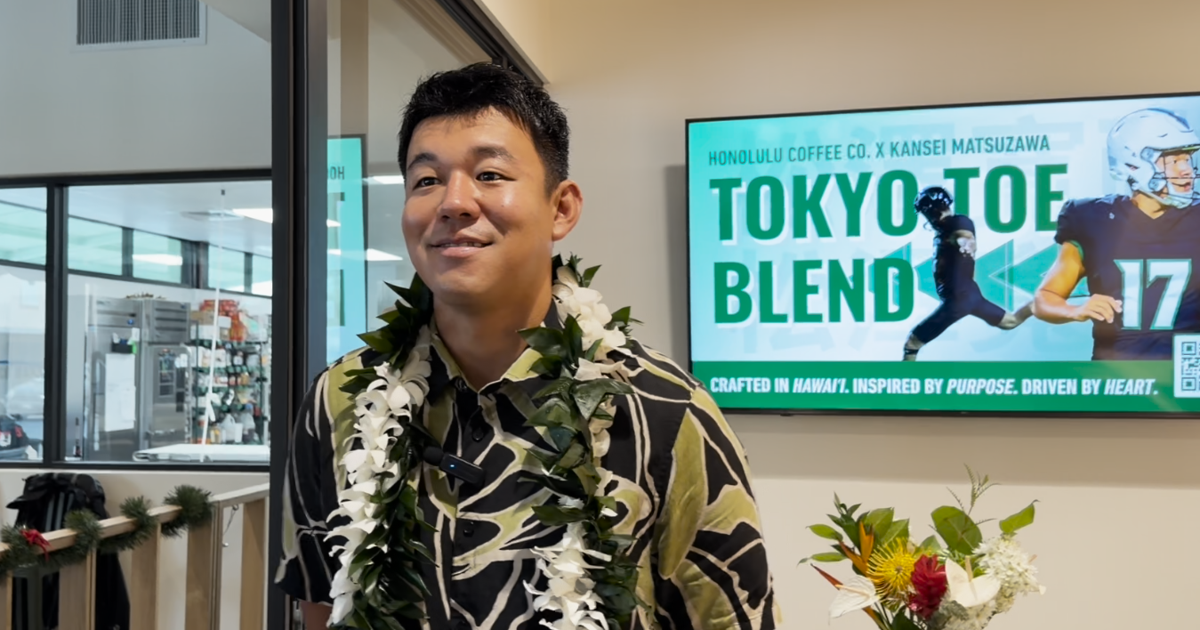
For kicker Kansei Matsuzawa, that intersection arrived unexpectedly.

Matsuzawa came to Hawaiʻi from Japan to play football, improve his English, and test himself at the highest level of college athletics. Branding and marketing were never part of the plan. Yet in today’s NIL era, those skills have become part of the education.

“As a business… I can apply to the business side,” Matsuzawa said, reflecting on what he’s learned through the process.

That lesson took shape through an NIL partnership with Honolulu Coffee Company, a collaboration rooted not in star power, but in storytelling. The result was the Tokyo Toe Blend, a coffee inspired by Matsuzawa’s journey from Japan to Hawaiʻi and the precision and discipline required of a kicker — details that mirror both his athletic and personal path.

For Honolulu Coffee, the partnership represented a shift in how businesses think about college athletes.

“As we really started to think about his story… and the University of Hawaiʻi athletics this year too,” said Erica Mounsey, the company’s chief operating officer. “We think this is just the beginning of many partnerships to come in the future.”

Rather than chasing national recognition, the company leaned into authenticity — choosing an athlete whose background aligned with its values and local customer base. In the evolving NIL marketplace, that approach is becoming increasingly important. Consumers respond not just to names, but to narratives that feel real and connected to place.

Those same changes are being felt inside athletic departments.

At UH, NIL has introduced a new layer of complexity to college sports — one that requires creativity, coordination, and a long-term view of athlete development beyond competition.

“We’re thinking about, okay, is there… we gotta be thinking about all at the same time,” said Matt Elliott, UH’s athletic director. “We’re putting together packages… a lot of creative problem solving.”

That problem solving reflects a broader reality: athletes are now brands, universities are strategic partners, and local businesses are part of the ecosystem. Success depends not on one viral moment, but on relationships built thoughtfully and sustainably.

For Mounsey, that mindset defines the future of NIL in Hawaiʻi.

“Anything’s possible… with a goal in mind,” she said.

As NIL continues to evolve nationwide, Hawaiʻi’s athletes are navigating it in a uniquely local way — balancing culture, community, and opportunity. For Matsuzawa, the experience has expanded his understanding of what it means to be a student-athlete.

The kicks still matter. So do the wins and losses. But increasingly, so does the knowledge gained off the field — lessons in storytelling, adaptability, and self-advocacy that will carry far beyond college football.

In Hawaiʻi, NIL isn’t just changing the game.

It’s changing what athletes take with them when the game ends.


Tradition drives Hawaiian Pie Company through its peak season


Link

Continue Reading

Most Viewed Posts

Trending