
NIL
Adidas Snags Sponsorship Deal for All 41 Miami

South Florida has long been considered one of the most important regions for high school football. On Monday, adidas grabbed a foothold in the peninsula with a landmark apparel deal.
Adidas announced a multi-year partnership with Miami-Dade County Public Schools, making the brand the official athletic apparel and equipment partner for all Greater Miami Athletic Conference schools’ sports programs.
Not only does adidas partner with the third-largest school district in the country, it reinforces its commitment to supporting high school athletics and investing in young athletes.

Adidas is no stranger to the region. This new deal builds on the successful partnerships with the University of Miami, Florida Atlantic University, University of South Florida, and Florida International University.
Adidas will outfit all athletic programs in Miami-Dade’s high schools with its iconic Three Stripes products, ensuring student-athletes have access to world-class gear.
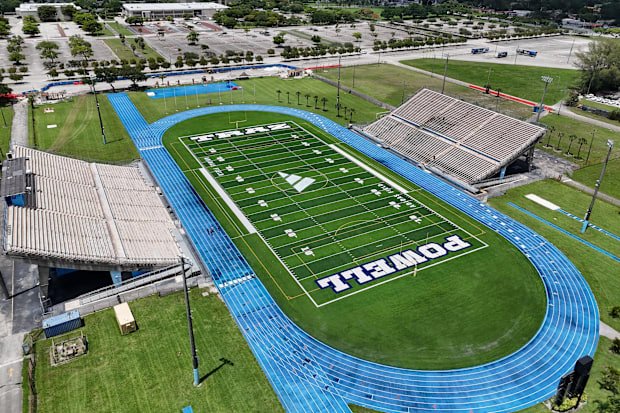
Additionally, the iconic Traz Powell Stadium, widely known as “The Mecca of High School Football,” has been designated as “adidas Field at Traz Powell Stadium.” The new field name was unveiled at an event featuring student-athletes from across the county and representatives from Miami-Dade County Public Schools and adidas.
The partnership takes effect immediately and will encompass 41 high schools across the county, including Varsity, Junior Varsity, and feeder programs. These schools include the renowned “Super 7,” which consistently produce some of the nation’s top-ranked collegiate and pro athletes.
New uniforms for all schools and sports were unveiled today and will be worn starting this academic year. Notably, new adiZero Electric football uniforms were unveiled for the “Super 7” schools, including:

Starting today, officially licensed adidas gear for Greater Miami Athletic Conference Schools can be purchased online, including the new “305” and “Made in Dade” collections, designed to celebrate Miami-Dade County.
“We are excited about the opportunity to combine the strength of our organization with Miami-Dade’s athletics to create something truly special,” said Chris McGuire, adidas Vice President of Sports Marketing.
“Our mission is to elevate South Florida high school sports and invest in our community. We’ll achieve this by providing young athletes with the most innovative performance products and actively supporting the development of the nation’s top talent.”

Through this partnership, adidas seeks to promote grassroots involvement, develop athletic potential, and equip students with the resources to thrive both on and off the field.
“We are honored to join forces with adidas to elevate every high school athletic program in our county,” said Miami-Dade County Public Schools Superintendent Dr. Jose L. Dotres. “This partnership will have a transformative impact on our high school athletes, inspiring and empowering the next generation of athletes across our schools.”
Stay locked into Sports Illustrated’s Kicks On SI for all your footwear and apparel news from the sports world and beyond.
Adidas unveils alternate uniforms for seven college football teams.
Garrett Wilson is helping make the adidas Climacool Laced the sneaker of the summer.
The Nike Kobe 3 Protro “Halo” drops this Saturday.
Curry Brand launches De’Aaron Fox’s second signature shoe.
Interview: Stephen Curry built a basketball “super shoe” and is taking it on a world tour.


On its official social-media pages, the Nevada football team has been posting graphics of returning players with the phrase “Let’s run it back.”
This is a new phenomenon in roster building. A couple of years ago, you could simply assume players with remaining eligibility would return to school unless they declared for the NFL draft.
Now, you have schools announcing they’ve reached a “deal” to retain a player, as Ole Miss did today with its star running back Kewan Lacy.
Roster building in college football is in unchartered territory with unlimited transfers, unlimited name, image and likeness compensation and legalized revenue sharing where athletic departments can directly pay athletes.
To compete at the top of the FBS, football programs need $20 million-plus budgets. Good quarterbacks make in excess of $3.5 million a year, which is in line with the salary of a late first-round draft pick. Exact compensation numbers remain an inexact science as most are not public record despite these schools largely being public institutions. But The Athletic surveyed industry experts to get a feel for how much players make on the transfer market, both in the Power 4 and Group of 6, with a vast difference between the two.
The Athletic writes: The rates for transfers who sign with Group of 5 schools are much lower because roster budgets are much smaller than at their Power 4 counterparts. While Power 4 programs’ football roster budgets can range from $13 million up to $30 million, G5 schools mostly ranged between $1 million and $10 million in 2025. The vast majority of Group of 5 schools have roster budgets below $5 million, with a few exceptions. The top spending schools in the American, like USF, Memphis and Tulane, are believed to be above that.
The Athletic said Group of 6 quarterbacks top out “around $500,000 or $600,000” with a range of $300,000 to $400,000 for schools with a $3 million budget, which is around 10 percent of that budget. Starting running backs and tight ends top out around $200,000 to $250,000 with star receivers around $300,000 and offensive tackles at $300,000 to $400,000. On defense, linemen max out around $250,000 to $300,000 with linebackers and defensive backs in the $150,000 to $200,000 range. Start adding those up and its gets real expensive real fast.
Those are the marks for the top players in the Group of 6 with the floor for most players at that level in the five figures, although some Group of 6 players have to “settle” for a full-ride scholarship. Oh, the humanity! The Athletic said a Group of 6 consensus is hard to find because budgets wildly with The American having the most robust NIL offerings. Next in line in 2026 would be the Pac-12 with the Mountain West and Sun Belt behind them.
One of the deciding factors when the Pac-12 poached the MW in September 2024 was football investment with the larger-budget schools getting invitations to the rebuilt Pac-12. Again, specific numbers are hard to pin down, but Washington State president Betsy Cantwell is asking donors for $5 million in NIL money for new coach Kirby Moore after saying the Cougars were last among Pac-12 programs (current and future) in NIL this season. So, lets say the Pac-12 average for a football roster is $5 million. And let’s say the new MW average is around $2 million, which might be an ambitious mark.
It’s been reported Wyoming, a remaining MW school, hovers around $1.4 million. Hawaii, another remaining MW school, is asking state lawmakers for $5 million annually in NIL money for all of its sports, and you’d have to think at least half of that money would go to football. Nevada football’s NIL and revenue sharing budget is unknown, but I imagine is was in the lower quarter of the MW this season with $1 million to $1.5 million a reasonable ballpark, which doesn’t really cut it these days.
As part of its “Let’s run it back” announcements, Nevada said it has retained offensive lineman Zach Cochnauer, who had Power 4 offers, and defensive lineman Dylan LaBarbera, a first-team All-MW pick in 2025 who would have had Power 4 offers if he entered the portal. Those were huge “keeps” that had to cost Nevada six figures each. I’m sure both could have gotten bigger offers — probably by double — from Power 4 schools.
Still, Nevada has lost 21 players to the transfer portal with three — defensive end Jonathan Maldonado (Ole Miss), punter Bailey Ettridge (Oregon) and kicker Keaton Emmett (Oregon) — already committing to power-conference opponents. That’s right, Nevada couldn’t even afford to keep its starting punter and backup kicker. A few more Wolf Pack transfers should eventually land at Power 4 schools. That’s part of doing business these days.
Of Nevada’s 24 primary starters last season — 11 on offense, 11 on defense, kicker, punter — the Wolf Pack has retained just four in LaBarbera, Cochnauer, offensive guard Snoop Leota-Amaama and quarterback Carter Jones, with the latter of those two starting six and seven games, respectively. The Wolf Pack has lost seven starters to transfer and had 12 graduate (the nickel position on defense didn’t have a full-time starter).
Candidly, retaining four starters while losing seven to transfer is a good result given what LaBarbera and Cochnauer could have made on the open market. This kind of attrition will continue until Nevada gets a more competitive NIL budget that can pay the going Group of 6 rate, which, if the numbers provided by The Athletic are accurate, is around $5 million for a starting 24. The price of doing business continues to increase.
Columnist Chris Murray provides insight on Northern Nevada sports. Contact him at crmurray@sbgtv.com or follow him on Twitter at @ByChrisMurray.

There is an ongoing debate around college football centered around how to fix the sport, as it pertains to the calendar which coaches and players have to abide by. The two main topics seem to be the transfer portal, along with the timing of the CFP.
As you have most certainly noticed over the past month, there have been numerous coaches who have taken other jobs while also participating in the playoff. None of these moves have garnered the attention of Lane Kiffin, who left Ole Miss for LSU right before the Rebels postseason run.
But, lost in the shuffle of daily news simmering out of Baton Rouge are other coaches like Florida’s Jon Sumrall, who coached two teams during a chaotic stretch which saw Tulane face Ole Miss in the first round of the college football playoff.
The same could be said for Oregon offensive coordinator Will Stein, who is the new head coach at Kentucky, while defensive coordinator Tosh Lupoi accepted the Cal Bears head coaching position.
Both of these assistants have stuck with Oregon during its CFP run and will be on the sideline Friday night when the Ducks face Indiana for a spot in the national championship.
So, while making sure both of their new jobs are taken care of when it comes to roster management and setting up for future success, they are still helping Dan Lanning prepare for a rematch against the Hoosiers.
College Football Calendar Can Be Fixed, Right?
But, as Gators head coach Jon Sumrall pointed out during an interview with OutKick’s Hot Mic crew of Jonathan Hutton and Chad Withrow, all it takes is a little common sense to fix the calendar.
This is obviously easier said than done, with the college football playoff still ongoing, and the transfer portal is only open for just over one more week. So, how do they fix it?
“In the NFL, they’ve got this thing figured out where they do this thing called football season,” Sumrall quipped. “At the end of football season, you can have coach movement and player movement, but nobody can leave until the season’s over, unless someone is traded. Then, after the season is over, coaches and players can move …
“How can we change that in our world? Move the season up, start the playoffs earlier. End the playoffs earlier, closer to January 1, like we used to do. I think there is a way we can get the national championship game back closer to January 1st, and then everybody right now would be focused on just player movement.”
And while most of that sounds easy, I don’t know how many leaders running college football think the same way.
For Sumrall, it might be a little bit too easy.
“I don’t think it’s that complicated. I do think it takes common sense, and I don’t know how many people got that.”
In a world in which players are paid six to seven figures to play football, there are still archaic rules around the sport, which make zero sense to a coach like Jon Sumrall. And, I imagine he’s not alone in his thinking.
“We give out Jordan Brand shoes here, because we’re a Jumpman school,” Sumrall noted. “So, that’s like a cool, hip thing. And I’ve got all those Jordan’s on my desk here, but we can’t give them to the players after their careers are over because the monetary value is too great. It’s called an extra-benefit.
“I’m like, the shoes are worth a couple-hundred bucks, I don’t know maybe a couple thousand bucks, I don’t know how much they’re worth. But, we’re already paying these dudes. Why can’t we give them these shoes?”
Yes, these are current dilemmas ongoing within college athletics. Don’t give them shoes!!
Sumrall Credits Ole Miss For Putting Together Strong NIL Presence
The former Tulane coach is now doing his best to adjust to life within the SEC, but he does have a perspective on CFP semifinalist Ole Miss, who will battle Miami on Thursday night in the Fiesta Bowl.
“They beat us 45-10 in Game 1, and 41-10 in Game2. They look a lot the same to me. They kicked our ass both times.”
But, it’s not only about what you see on the field with the Rebels. How Ole Miss has been able to retain players during this time period as the transfer portal runs wild is a testament to what Pete Golding has been able to do during chaotic times in Oxford.
Trinidad Chambliss’ Ole Miss Future Hinges On NCAA Waiver — New NIL Deal Raises Stakes With Potential Lawsuit
If the Rebels coach did not have such a solid foundation built by athletic director Keith Carter, along with Walker Jones of the Grove Collective, they would not be retaining players like Kewan Lacy, along with Trinidad Chambliss pending his NCAA waiver.
For that, Jon Sumrall is doing his best in Florida to replicate the structure built in Oxford, and build that same kind of foundation in Gainesville.
“We talked about alignment, structure and organization within the portal. I think Ole Miss has had great success. Not to take away anything from Lane, but Keith Carter, Walker Jones, not taking anything away from Pete (Golding) either. But Ole Miss, they’re doing this NIL, rev-share stuff, as good as anybody in America.
“They’re paying dudes, and they are writing bigger checks. And, kudos to them. They’ve got a great plan that we all need to learn from and emulate. So, they’re a really good football team. I didn’t see many weaknesses when we played them in Game 1 or 2.”
Continue following OutKick and Trey Wallace for the latest news around college football, as we get you prepared for the CFP semifinals later this week!

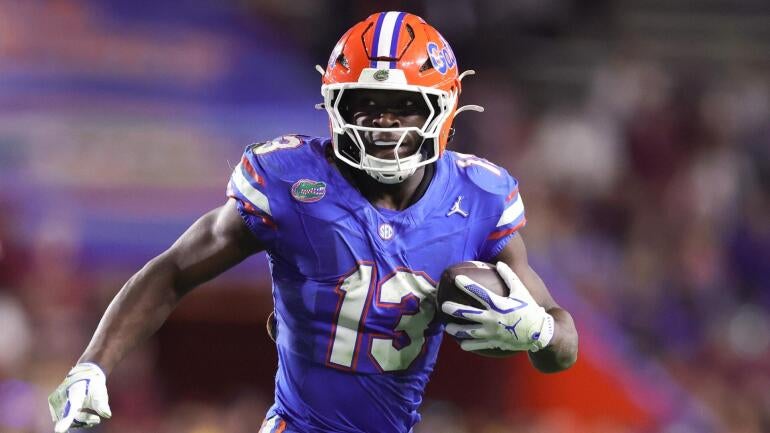
Jadan Baugh will return to the Florida Gators for the 2026 season. The star running back announced his decision to run it back in Gainesville on Instagram on Tuesday.
That came after ample speculation he could follow former Florida running backs coach Jabbar Juluke to Texas. The Longhorns have a need for a new starting running back after the departure of Tre Wisner (and others) from Austin. The Gators put up a strong push to retain Baugh, as keeping the SEC’s third-leading rusher from 2025 in Gainesville became a top priority for Jon Sumrall and the new Florida staff.
As reported by CBS Sports’ Richard Johnson, the expectation was that Baugh would command more than $1 million on the transfer portal market as part of the surge in price for star backs this season. The question was less whether Florida would be willing to spend on Baugh, but more if Baugh would view the Gators under Sumrall as the best opportunity for him. Texas figured to offer a starting spot, a familiar face in Juluke and the opportunity for ample attention in the backfield alongside quarterback Arch Manning.
However, Baugh opted to stick around in Florida as the Gators seem to have met his asking price and answered any questions he might’ve had about how the offense will operate in 2026.
With former Georgia Tech offensive coordinator Buster Faulkner making the move to Gainesville — and bringing quarterback Aaron Philo with him — the expectation is the Gators will lean on the ground game in 2026 similarly to the Yellow Jackets in 2025. Faulkner was surely part of the sales pitch to Baugh, and he bought in on that vision.
Baugh rushed for 1,170 yards and eight touchdowns on 220 carries this season, with his 266 yards against Florida State in the Gators’ season finale serving as an exclamation point on his year. Now he’ll be back for his junior campaign in Gainesville in a big victory for Sumrall in retaining a top talent, fending off the Longhorns and others hoping to poach the star back and further weaken the Gators’ roster.
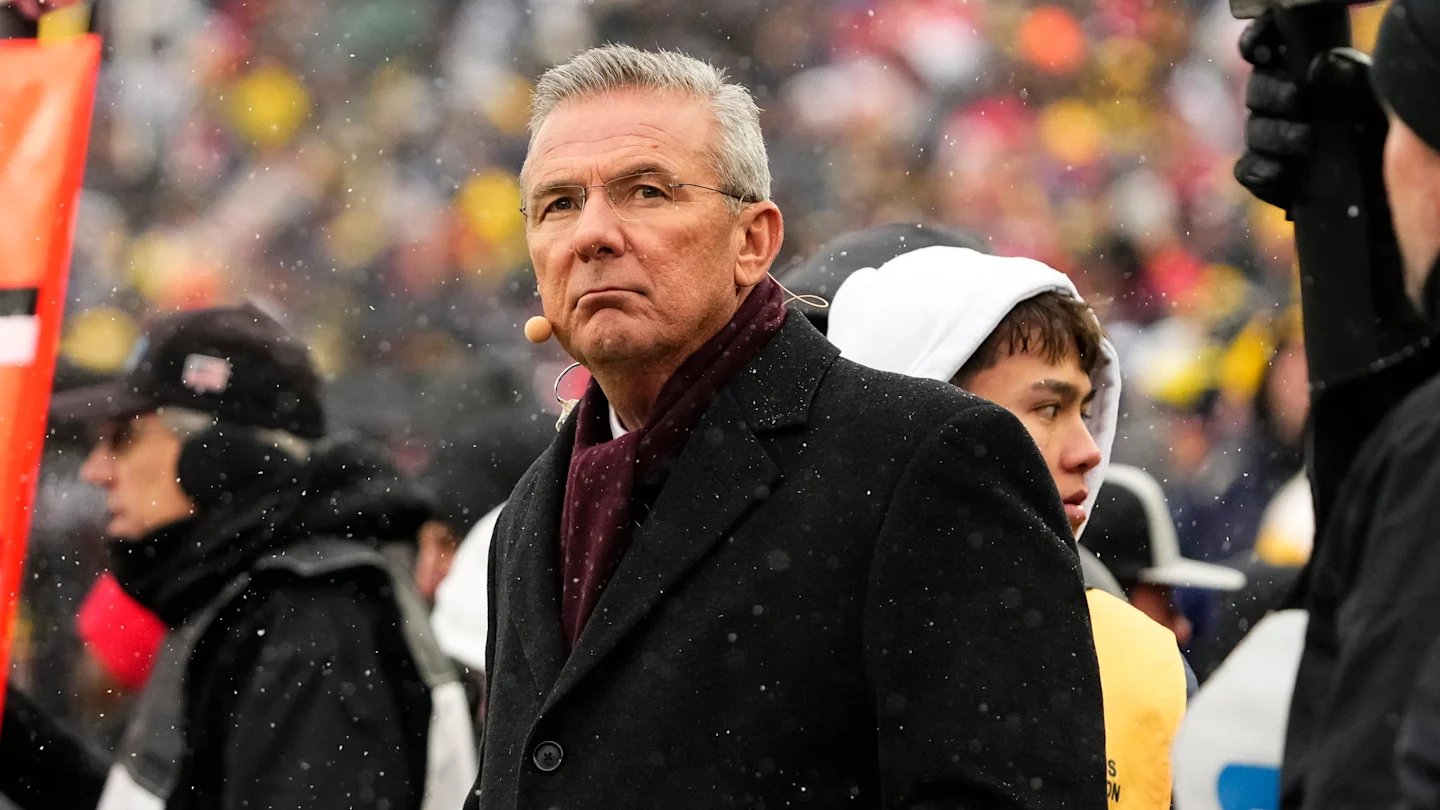
When the Colorado Buffaloes named Fernando Lovo as their next athletic director, the move resonated far beyond Boulder, drawing attention from some of the most prominent figures in college football.

Among those offering the loudest praise was three-time national champion coach Urban Meyer, who witnessed firsthand Lovo’s rise from a student assistant at Florida to an indispensable executive at Ohio State and then the NFL.
The Urban Meyer Connection and a Proven Pedigree

“He’s the best at what he does, regardless of the responsibility,” Meyer said of Lovo. “He will be a great athletic director. He’s the ultimate team player with extremely high character and high work ethic. He was always a guy I could trust. When he was an undergraduate at Florida, very early on… his reputation started to make its way to me as the head coach. He was a guy that I brought with me to Ohio State. He’s elite.”
It’s an endorsement that carries immense weight because it’s rooted in firsthand observation of a championship-caliber work ethic. For Lovo, moving from Florida to Ohio State alongside Meyer wasn’t just a career jump; it was a testament to his ability to manage the high-pressure, high-stakes ecosystem of elite college football.
Meyer’s success was built on surrounding himself with people who could handle the grind of a championship program, and Lovo was a primary pillar in that structure. At Florida, Lovo was part of the 2008 National Championship staff working as an equipment manager. He then followed Meyer to Ohio State, where he helped the Buckeyes win the first-ever College Football Playoff National Championship in 2014.

To be hand-picked by one of the most demanding and successful coaches in the history of the sport speaks volumes about Lovo’s operational brilliance and the high regard Meyer held for him, even early in his career.
But it isn’t just about Lovo’s resume; it’s about the “trust” Meyer mentioned. In the modern era of college athletics, an athletic director must be more than a figurehead; they must be a tactical partner who understands the nuances of football operations, NIL, and revenue generation. Meyer’s public backing confirms that Lovo possesses the rare combination of character and the relentless work ethic required to navigate Colorado through its current financial and competitive hurdles.
Alignment with the “Coach Prime” Vision

While Rick George was the architect of the Deion Sanders hire, the future of Colorado football now rests in the synergy between Lovo and “Coach Prime.” Though early indications suggest the two are already in lockstep. Sanders, who participated in the hiring process, was quick to express his enthusiasm for Lovo’s arrival, emphasizing the need for a leader who understands the “city and wonderful university.”
“He is a man of character and the type of leader this department, city and wonderful university deserves,” Sanders said. “He has a great knowledge of football and understands what it takes to win in today’s game. I’m motivated to show all of our incredible fans the tremendous heights we will take this program.”
For Colorado to reach those “heights,” the relationship must mirror the professional alignment George and Sanders shared. Lovo’s background as a “football guy” first ensures that he speaks the same language as Sanders, providing the administrative support that “Coach Prime” will need.
MORE: Zac Taylor Doesn’t Hold Back About Shedeur Sanders’ Impact at Colorado
MORE: Colorado’s Latest Transfer Portal Departure Adds To Buffaloes’ Growing Concerns
MORE: Best Transfer Portal Fits For Former Colorado Cornerback DJ McKinney
Why the Lovo Hire Is Pivotal for Colorado

Colorado’s decision to hire Fernando Lovo comes at a defining moment for the university. Rising costs, NIL, revenue sharing, facility demands, and increasing competitive pressure in the Big 12 have fundamentally reshaped the role of the athletic director. However, Lovo’s track record at New Mexico, where he helped lead the department to a record revenue year and a 17.6 percent budget increase in just twelve months, aligns perfectly with what CU’s Board of Regents set out to find.
He’s no longer just a rising name in athletic administration. He brings years of hands-on experience in revenue generation, operational restructuring, and facility management—areas that have become inseparable from competitive success at the Power Four level.
With his experience and the trust and support of influential voices like Urban Meyer and “Coach Prime,” Lovo steps into Boulder with momentum already behind him. Now, the task is turning that momentum into results.
Updated Jan. 6, 2026, 12:55 p.m. CT

The offseason decision for Damon Wilson II appeared to be two-fold: Return to Columbia, or head to the NFL as a junior.
There was a third option, which came in a surprise announcement on Tuesday afternoon.
Wilson, the star Missouri football defensive end, will enter the transfer portal, he posted to Instagram on Tuesday. The news was first reported by Hayes Fawcett and On3. The move does not necessarily mean Wilson won’t head to the NFL, where he had received some top-100 projections for the 2026 draft.
But it appears that if Wilson remains in college, it will not be at Mizzou.
The defensive end was one of the SEC’s leading pass rushers in 2026, recording 54 total pressures across 13 games. That included a team-high eight sacks.
Wilson only spent one season with Missouri after transferring to the Tigers from Georgia, where he spent two seasons.
The defensive end and his former school have become one of the stories of the college football offseason, as they have each filed litigation against one another over an NIL dispute.
UGA is attempting to take Wilson into arbitration and is seeking $390,000 in liquidated damages from the star edge rusher, who transferred to the Tigers in January 2025, over what the university views as an unfulfilled contract with the Bulldogs’ former NIL collective, Classic City Collective.
Wilson then countersued Georgia athletics, a move countering a Georgia lawsuit filed against Wilson earlier this year and escalating what was already a novel and likely first-of-its-kind case over an NIL contract dispute.

In response, escalating what was already an attempt at a potentially precedent-setting case, Wilson’s attorneys allege that his former team “falsely (told) at least three programs” unnamed Power Four teams that “Wilson would be subject to a $1.2 million buyout.”
Wilson’s suit also alleges that Georgia violated a confidentiality provision on his term sheet, which was provided as part of the UGA lawsuit in a public court filing.
Missouri is already expected to lose starting defensive end Zion Young to eligibility issues and backups Nate Johnson and Javion Hilson to the transfer portal, so defensive end is likely to be a priority target in the portal, which is open for entries through Jan. 16.
The Tigers can return rotation members Darris Smith and Langden Kitchen, as well as true freshman Daeden Hopkins. Mizzou signed top JUCO recruit Demarcus Johnson in its Class of 2026, too.

Texas quarterback Arch Manning reportedly made more than the large majority of college football head coaches last season.
Manning is estimated to have made $6.8 million through NIL deals during his first season as the Longhorns’ starter in 2025, according to The Athletic’s Will Leitch.
USA Today reports that 35 college football coaches made more than $6.8 million last season.
According to Leitch’s estimate, Manning made more in NIL than coaches like Auburn’s Hugh Freeze ($6.734 million) or Kansas’ Lance Leipold ($6.65 million) made in salary in 2025.
Leitch’s estimate is higher than the valuation provided by On3, which projects the value of Manning’s NIL portfolio at $5.3 million.
Evan that total would have ranked Manning 46th among coaches’ salaries last season, as reported by USA Today.
Texas fell short of a College Football Playoff run after finishing Manning’s first starting season with a 10-3 record.
Manning will hope to change that in 2026. He is set to return for his redshirt junior season with the Longhorns rather than declaring for the 2026 NFL draft.
Quarterback prices are rising around the NCAA. ESPN’s Pete Thamel reporedt in December that top transfer quarterbacks could receive $5 million just for the 2026 season.
Manning could potentially pull in even more NIL earnings than last season as he prepares to enter what could be his final college campaign next fall.

Spartan Digest – Winter Week 11

Rainbow Warrior volleyball sweeps Big West Weekly Awards

NASCAR Commissioner Steve Phelps resigns after inflammatory texts revealed in trial – Chicago Tribune

New Allen track coach makes debut

Here’s how much Group of 6 football players cost and where Nevada fits in

In Memoriam: Glen Charles Lietzke

Annual Bundle Up Fest & Sports Fair Returning To Pybus Market

Volleyball Ranked 16th in Final American Volleyball Coaches Association Poll

How Ultimate Motorsport Uses AutoRaptor AI to Sell 85-100 Cars a Month With Just Three Salespeople

CCIW Places Three Teams in AVCA Men’s Volleyball Preseason Rankings

How Ultimate Motorsport Uses AutoRaptor AI to Sell 85-100 Cars a Month With Just Three Salespeople

UCLA Announces 2026 Women’s Beach Volleyball Schedule

Jon Sumrall: ‘Common Sense’ Can Fix College Football, Credits Ole Miss In Portal

UMBC Baseball Releases 2026 Schedule

INDY NXT Poised for Another Banner Season of Growth in 2026

SoundGear Named Entitlement Sponsor of Spears CARS Tour Southwest Opener

Donny Schatz finds new home for 2026, inks full-time deal with CJB Motorsports – InForum

David Blitzer, Harris Blitzer Sports & Entertainment

DeSantis Talks College Football, Calls for Reforms to NIL and Transfer Portal · The Floridian

#11 Volleyball Practices, Then Meets Media Prior to #2 Kentucky Match

Rick Ware Racing switching to Chevrolet for 2026

Nascar legal saga ends as 23XI, Front Row secure settlement

Maine wraps up Fall Semester with a win in Black Bear Invitational

Ross Brawn to receive Autosport Gold Medal Award at 2026 Autosport Awards, Honouring a Lifetime Shaping Modern F1

Stempien to seek opening for Branch County Circuit Court Judge | WTVB | 1590 AM · 95.5 FM

Sunoco to sponsor No. 8 Ganassi Honda IndyCar in multi-year deal

Princeton Area Community Foundation awards more than $1.3 million to 40 local nonprofits ⋆ Princeton, NJ local news %

Downtown Athletic Club of Hawaiʻi gives $300K to Boost the ’Bows NIL fund

North Florida Motorsports Park led by Indy 500 Champion and motorsports legend Bobby Rahal Nassau County, FL

WNBA’s Caitlin Clark, Angel Reese and Paige Bueckers in NC, making debut for national team at USA camp at Duke





-
 Rec Sports3 weeks ago
Princeton Area Community Foundation awards more than $1.3 million to 40 local nonprofits ⋆ Princeton, NJ local news %
-

 Sports3 weeks ago
Beach Volleyball Unveils 2026 Spring Schedule – University of South Carolina Athletics
-

 Sports2 weeks ago
Badgers news: Wisconsin lands 2nd commitment from transfer portal
-
 Sports3 weeks ago
Badgers news: Final Four Game Thread vs. No. 1 Kentucky Wildcats
-

 Sports2 weeks ago
Is women’s volleyball the SEC’s next big sport? How Kentucky, Texas A&M broke through
-

 Rec Sports4 days ago
Five Youth Sports Trends We’re Watching in 2026
-
 Sports3 weeks ago
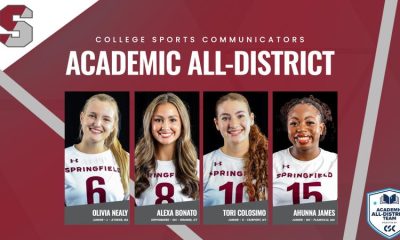
Four From Women’s Volleyball Named to College Sports Communicators Academic All-District Team
-
 Rec Sports3 weeks ago
Youth Sports Business in 2025: The Year the Industry Grew Up
-
 Rec Sports3 weeks ago
Refugee-Focused Youth Sport Initiatives : Moving for Change
-
Rec Sports3 weeks ago
Inside the NWSL’s first combine: Can the league create a more robust pathway for American talent development?