
Connect with us
https://yoursportsnation.com/wp-content/uploads/2025/07/call-to-1.png

NIL

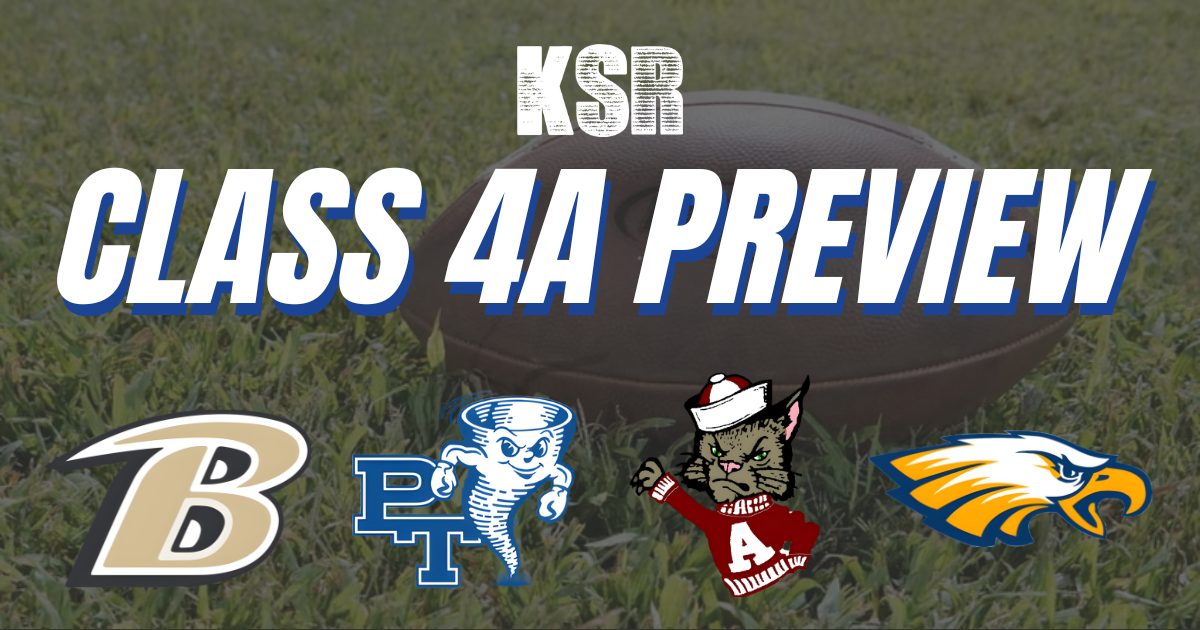
KSR’s 2025 Kentucky High School Football Preview: Class 4A

Published

on


It’s almost football time in the Bluegrass. With the 2025 Kentucky high school football season set to begin on August 22nd, KSR will preview all 48 districts and all six classes. We’ve already covered Class 1A, Class 2A and Class 3A. Up next is Class 4A, home to the Paducah Tilghman Blue Tornado, the defending 4A state champions and the No. 15 team in the state of Kentucky in the Massey Ratings.

The Massey Ratings, officially used during the BCS era, is a model that ranks teams by analyzing game outcomes, strength of schedule, and margin of victory.

Class 4A | District 1

Allen County-Scottsville (2024: 9-3), Calloway County (2024: 0-10), Logan County (2024: 4-7), #15 Paducah Tilghman (2024: 15-0), Warren East (2024: 6-5), Franklin-Simpson (2024: 6-6)

Last season, Paducah Tilghman won a state championship for the first time since 2009 when they were in Class 3A. Behind an absolutely loaded squad, the Blue Tornado went 15-0, taking down Franklin County at Kroger Field to win it all. Heading into 2025, however, a lot of that talent is gone. We know that Tilghman will be good again this year, but it’s a matter of how good.

Most likely, senior Stone Crowe will be starting behind center. In 2024, he appeared in 11 games, throwing for 435 yards and six touchdowns. However, senior running back Demarkus Wilson may end up being the reason for most of Tilghman’s success on offense. As a junior, Wilson ran for a team-high 828 yards and 11 touchdowns.

Allen County-Scottsville started the 2024 season with a very strong 8-1 record that saw its only loss in that span coming to the Blue Tornado. Coach Brad Hood has had some really good teams over his 19-year long tenure, but last year’s was his best in several years. Hopefully, they can continue to build upon that in 2025.

Class 4A | District 2

Breckinridge County (2024: 3-8), John Hardin (2024: 9-4), Nelson County (2024: 2-9), Elizabethtown (2024: 4-7), Marion County (2024: 5-6)

Admittedly, there isn’t a ton going on in District 2, but John Hardin should be really, really good this year.

Last season, the Bulldogs went 9-4 and made it to the second round of the playoffs, where they lost to Paducah Tilghman, the eventual state champions. They return possibly the most impressive back in the entire state, senior Cavalli Pittman.

In 2024, Pittman ran for 3,174 yards and 40 touchdowns. He alone averaged 20.5 points per game last season. That would be pretty good on the basketball court, but he’s doing all of that on the gridiron. Clearly, running the ball is John Hardin’s bread and butter, but they also bring back senior quarterback Austin Richardson, who recorded 645 yards and eight touchdowns a year ago. Consider the Bulldogs a sleeper in Class 4A.

Class 4A | District 3

Doss (2024: 7-4),Valley (2024: 3-7), Waggener (2024: 0-10), North Oldham (2024: 9-3)

It was a rough first year at the helm for Waggener head coach Corey Thompson. Waggener went 0-10 last year, but they at least bring back junior quarterback Arion Roach, who threw for 1,168 yards, ran for 844 and tallied 18 total touchdowns last year.

North Oldham should be the main talking point of District 3, however. In just his second season at North Oldham, head coach Brock Roberts led the Mustangs to an impressive 9-3 record after going 7-5 in his first year with the program in 2023.

The Mustangs lose a lot talent heading into 2025, but they do bring back senior receiver Lucas Tompkins, who caught 50 passes for 887 yards and 14 touchdowns last year, all good enough for second-best on the team. He also got 15 carries on the year, which resulted in 128 yards and four touchdowns on the ground.

Class 4A | District 4

#14 Franklin County (2024: 13-1), Shelby County (2024: 0-10), Spencer County (2024: 8-4), Western Hills (2024: 7-4)

The conversation in District 4 begins and ends with Franklin County. The Flyers made it to the state championship game in 2024, their first time doing so since the 2020 season. They were unbeaten all the way to the state championship game, but Paducah Tilghman came out on top in a 27-20 bout.

Franklin County has a very real shot at not only getting back to Kroger Field in 2025, but leaving victorious. For starters, they return sophomore quarterback Knox Barrett, who threw for 1,272 yards and 17 touchdowns in 11 games last year. Barrett gets his top receiver, senior Jacob Taylor, back as well. Taylor posted 380 yards and eight touchdowns in 2024.

On top that, head coach Eddie James gets four of his top five rushers back. Jack Oldham, Jayquan Crawford, Delano Collins and LeDarrius Simmons combined for 1,526 yards and 18 touchdowns on the ground last year.

Class 4A | District 5

#12 Covington Catholic (2024: 11-3), Grant County (2024: 6-5), Harrison County (2024: 2-9), Holmes (2024: 0-10), Mason County (2024: 8-4), #5 Highlands (2024: 11-3)

Perhaps the biggest change thanks to realignment happened to District 5. Highlands, who had been in Class 5A since 2015, moved down to Class 4A heading into this season.

The Bluebirds could certainly compete for a state championship considering they return senior quarterback Rio Litmer. Litmer threw for 2,791 yards and 33 touchdowns in 2024. On top of that, junior Tayden Lorenzen, the son of the late Jared Lorenzon, comes back after posting 553 yards from scrimmage and 12 total touchdowns last year.

However, Covington Catholic should be one of the top teams in Class 4A yet again this season. Last year, they upset Boyle County in the playoffs before their season came to an end against Franklin County. Maybe the Colonels can win it all for the first time since they went undefeated in 2019.

Class 4A | District 6

#25 Ashland Blazer (2024: 11-2), Boyd County (2024: 5-6), Greenup County (2024: 8-3), #22 Johnson Central (2024: 8-4), Rowan County (2024: 2-8)

Through the second round of the playoffs last season, Ashland Blazer had only lost one game — a Week 3 matchup with Harvest Prep (OH). They seemed like a real threat to contend for a state championship, but then, they ran into Corbin in the third round of the playoffs and lost by 35. After a nine-week streak of scoring 40+ points, the Tomcats could only muster seven against the Redhounds.

Senior Cameron Davis may have to do it all for Ashland Blazer if they want to replicate last year’s success. In 2024, he caught 35 passes for a team-high 615 yards and eight touchdowns. On top that, he was the team’s second-leading rusher, recording 502 yards and nine touchdowns on the ground.

Johnson Central has long been one of the top teams in Class 4A, and they’ll be looking to get back to the state championship game for the first time since the 2021 season. It helps that they bring back two of their top four rushers from a year ago, Logan Music and Logan Morrow. The two combined for 1,487 yards and 19 touchdowns in 2024.

Class 4A | District 7

#2 Boyle County (2024: 12-1), Lincoln County (2024: 4-6), Russell County (2024: 5-6), Taylor County (2024: 6-5), Wayne County (2024: 8-4)

Boyle County not winning the state championship last year was a shocker, to say the least. The Rebels cruised through the regular season like it was nothing, but the games are played for a reason, right? Head coach Justin Haddix has done a phenomenally job since taking over the program in 2020, winning as many state championships as total games lost. Yes, four state titles and only four losses.

Heading into 2025, Boyle County should be the favorite to win Class 4A. They lose a plethora of talent, per usual, but they also return a plethora of talent. Quarterback Baylor Murphy will be back for his senior season after throwing for 2,009 yards and 30 touchdowns in 2024.

Additionally, junior tight end Seneca Driver, potentially the best player in the state, is back for the Rebels in 2025. Driver recorded 353 receiving yards and seven touchdowns in 2024, and those numbers may double themselves this season.

Class 4A | District 8

#8 Corbin (2024: 12-2), Perry County Central (2024: 4-7), Whitley County (2024: 5-6), Harlan County (2024: 1-8)

The Corbin Redhounds went 12-2 under first-year head coach Joshua Salmons, with their only losses on the year coming to 6A powerhouse Frederick Douglass on the road and Paducah Tilghman in the fourth round of the playoffs.

Corbin could one of the top teams in Class 4A yet again this season behind senior seniors Cole Stevens and Cam Estep. Stevens, a running back, recorded 929 yards on the ground and got into the end zone 10 times last season. Estep primarily served as a wideout last season, but he played more of a utility, “plug-and-play” role at times last season. Estep had a team-best 1,027 receiving yards and had nine touchdowns as well. He also ran for 90 yards and two touchdowns on 23 carries.

First-year head coach Jacob Saylor won his first game coaching Harlan County last season, but the Black Bears would end up losing the rest of the eight games that they played in 2024. They haven’t won a playoff game since 2019, but hopefully, Saylor and Harlan County can get closer to changing that for the better in 2025.

KSR’s Preseason Honors

  • Class 4A Player of the Year – Seneca Driver (Boyle County)
  • Class 4A Coach of the Year – Justin Haddix (Boyle County)
  • Class 4A State Champion – Boyle County Rebels


Link

Continue Reading
Click to comment

Leave a Reply

Your email address will not be published. Required fields are marked *

NIL

The SEC is out of the College Football Playoff again. Now comes the adjustment

Published

on


The first step toward addressing a problem, as the saying goes, is admitting you have one. Good news for concerned SEC football fans: It does seem the conference admits it has a problem.

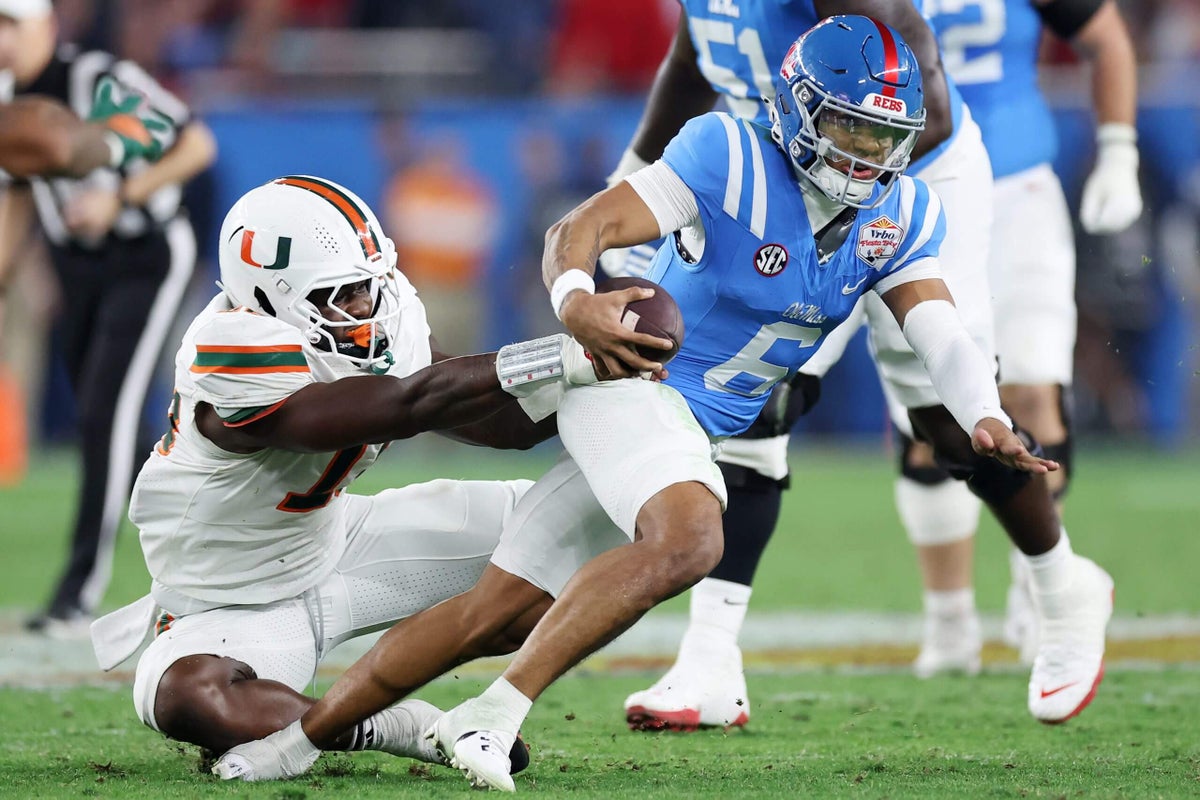
That was true even before Ole Miss lost to Miami on Thursday night, meaning the SEC was shut out of the national championship game for a third straight year. Ole Miss acquitted itself well, played a great game and almost got there. It deserves its flowers.

In fact, Ole Miss being the last SEC team standing was perfect symbolism. The rest of the conference should take heed.

As it is, the reality of the SEC’s situation set in this week among the conference’s defenders and within the league itself.

There was Paul Finebaum, voice of the SEC Network and basically the SEC, saying there was no defense for the conference’s 2-7 bowl record, including Alabama’s loss to Indiana in the College Football Playoff.

“There’s no way to defend the SEC. It’s been terrible,” Finebaum said on ESPN’s “First Take” on Tuesday.

There was Steve Spurrier, legendary former coach of Florida and South Carolina, not quite calling out his conference but also not downplaying things: “We got slapped in the face during the bowl season.”

And in my own conversations with people around the league, granted anonymity in order to be candid, there was none of the “everything is fine” meme.

“There’s no getting around the bowl results,” one conference source said, noting that SEC teams lost games they were favored to win. As elite teams faltered in the CFP, the SEC’s argument has been that it was still a deeper conference; Missouri losing to Virginia, Tennessee losing to Illinois, Vanderbilt losing to Iowa … not good.

Another SEC official maintained that the SEC is still the best league — as the NFL Draft has shown for years — but acknowledged that parity is here.

So will the SEC shrug and accept that? We all know the answer lies in a four-word slogan. The only question now is what the conference collectively will do about it.

To quote another saying: The answer to all your questions is money.

And a humbled SEC may become a desperate but smarter SEC. Because if the conference is going to get its mojo back, it will just need to mean more again. As in more money towards players.

Normally you could say the SEC was just due for a dip, this was cyclical, nothing to waste a column on. But the dip coincides with the other changes in the sport. The world is flat now, and too many SEC teams were slow to react.

Alabama and Georgia have been operating the past few years as if they got a discount because of their status. And that is the case for some recruits. But it isn’t for others, and that’s been enough to knock their talent down a notch.

Kirby Smart spent the early years of his tenure working donors for facility money, and it worked. When collectives became the focus, Smart did some lobbying, but perhaps with some restraint on the assumption they’d get that NFL Draft discount. Now that the difference appears to be third-party NIL deals, Smart may need to ratchet it up: There are big-money people working all around the Southeast who are Georgia fans and can probably arrange deals that will be approved by the authorities.

Or if not … well, anyway.

Georgia actually looks like it should be very good next year. Texas may be too. Alabama, on the other hand, has questions. Other teams are in transition, and then you have Ole Miss, the SEC program that most took advantage of the new rules. (Or lack of rules.) The other was Texas A&M a few years ago, but that was geared around traditional recruiting, not the portal. The programs that otherwise were the face of the era — programs desperate to win and willing to pay big to do it — tended to be outside the conference: Texas Tech, Miami and Ohio State.

That’s not to say SEC programs weren’t spending too; they were, which was part of the problem. SEC teams were picking off each other, whether it was top teams like Texas poaching Georgia and Alabama players or teams in the middle like Missouri. The SEC has been eating itself.

At the high school level, the SEC has still dominated recruiting:

• Last year, SEC teams signed 55 of the top 100 players, per the 247Sports Composite, including a remarkable 16 of the top 25.

• This year, it was only nine of the top 25, but still 53 of the top 100.

But while in the past it was the Georgias, Alabamas and LSUs signing most of those players, it’s now much more widely dispersed:

• Last year, 11 different SEC teams signed at least one top 100 player, and seven signed at least one top 25 player.

• This year, 13 different SEC teams signed at least one top 100 player, and five different teams signed at least one top 25 player. Vanderbilt, of all teams, swooped in and flipped the top-ranked recruit, quarterback Jared Curtis, from Georgia.

In the last year of the pre-NIL era, the 2021 recruiting cycle, teams that are now in the SEC signed a combined 18 of the top 35 players, but Alabama and Georgia signed 11 of them.

And of course, once you get players on campus, it’s harder to hoard the talent. Unlimited transfers provide a way for players to leave for immediate playing time rather than be stowed away on the bench, as Saban and Kirby Smart could do in the old days.

The world is flat. Parity is here. And throw in the CFP, which appears to be college sports joining the rest of the sports world with a postseason that’s a crapshoot. The best team doesn’t always win.

That is, if the SEC has the best team. Which it’s hard to say it has lately.

There can’t be any dismissing of the past: The SEC deserved the accolades it got for more than a decade leading up to 2023. The conference did win 13 national championships in 17 seasons, did have both teams in the national championship game three times in 12 years, did whip the Big Ten and other conferences in head-to-head matchups.

The SEC dominance was not a media creation.

But for the SEC industrial complex — media, administrators, whoever — to ignore the reality of the last three years would be foolish.

LSU is acting like a desperate program, committing the GDP of a small country not only to lure Lane Kiffin but to give him the resources to recruit. Texas, after a disappointing season, is also acting seriously about making amends. Even on the lower rung, Kentucky decided to pay coach Mark Stoops’ buyout, showing it wasn’t resigned to staying on that lower rung.

The signs are indeed there the SEC gets it. There’s a sense of urgency now. That doesn’t mean the old days will return: They’re probably gone, with super teams giving way to parity. That’s the new world.

The SEC isn’t doomed. It just has to adjust.


Link

Continue Reading

NIL

Top 5 Big 12 college football transfer portal additions

Published

on


The Big 12 did not have a team alive in the College Football Playoffs when the NCAA Transfer Portal opened on January 2, and that meant the conference was able to hit the ground running. The willingness of teams like Texas Tech to spend big in the portal has made the Big 12 one of the more popular destinations in the opening week.

The current transfer portal window, which will stay open until January 16, is the only opportunity this off-season for players not exempt because of specific circumstances to transfer to another program. Over 4,000 names were entered into the Transfer Portal in the first week that it was open. While most of those players remain available, several big names are already off the board. Here is a look at the biggest additions for Big 12 schools after the first week of the Portal being open.

1. QB Brendan Sorsby – Texas Tech

Brendan Sorsby has plenty to look forward to after signing a hefty NIL deal to join Texas Tech for the upcoming season.

Brendan Sorsby has plenty to look forward to after signing a hefty NIL deal to join Texas Tech for the upcoming season. | Aaron Doster-Imagn Images

Texas Tech is once again making big waves in the Portal, following a stellar 2025 campaign in which they finished 12-2, finally falling to Oregon in the College Football Playoff quarterfinals on New Year’s Day. Joey McGuire and his staff got to work immediately re-stocking the cupboard for a 2026 encore, and the guy they had to have right off the bat was Cincinnati quarterback transfer Brendan Sorsby.

This past season, Sorsby had a 27-5 touchdown-to-interception ratio for the Bearcats, both numbers ranking 16th best in all of college football despite Cincinnati going just 7-5 on the season. As soon as Sorsby announced he was going in, schools in need of a quarterback were moving him to the top of their boards, but with an NIL deal reported to be worth more than $5 million, Texas Tech earned his services for next season.

2. QB Drew Mestemaker – Oklahoma State

Quarterback Drew Mestemaker is following his head coach to Oklahoma State after leading North Texas to a 12-2 season.

Quarterback Drew Mestemaker is following his head coach to Oklahoma State after leading North Texas to a 12-2 season this past fall. | Danny Wild-Imagn Images

Oklahoma State is giving Texas Tech a run for its money, both figuratively and literally, in the Transfer Portal this cycle. After Texas Tech gave a massive payday to Sorsby, Oklahoma State reportedly bested that, at least from a total dollars standpoint, to land North Texas transfer quarterback Drew Mestemaker, who led all of the Football Bowl Subdivision with 4,379 passing yards this past season.

The issue isn’t that Mestemaker is not worth the investment. Oklahoma State, after all, may have been the worst Power 4 team in college football this past season, going 1-11 and firing head coach Mike Gundy. The Cowboys then went out and hired North Texas head coach Eric Morris to replace Gundy after the Mean Green’s impressive 12-2 season, and now Morris’ quarterback will be following him to Stillwater, attempting to recreate the magic of their 2025 campaign.

3. QB DJ Lagway – Baylor

Baylor won the race for former five-star quarterback DJ Lagway, who was the starter in each of his two seasons at Florida.

Baylor won the race for former five-star quarterback DJ Lagway, who was the starter in each of his two seasons at Florida. | Matt Pendleton-Imagn Images

Quarterback is a theme in the first week of the Portal for the Big 12 Conference. Sorsby, Mestemaker and former Florida quarterback DJ Lagway are three of the best quarterbacks to enter the Portal this session, and now all three will be playing in the Big 12. The NIL market is skyrocketing for players in this cycle, led by these Big 12 Conference programs who are paying big dollars to land their quarterbacks for next season.

Baylor landed the commitment of the 6-foot-3, 245-pound Lagway on Thursday, January 8. Lagway did not have the success of either of the aforementioned passers this past season, but the former five-star has a sky high ceiling and is looking for the right place to reach his potential. A starter in each of his first two seasons at Florida, Lagway has completed 62% of his passes for 4,179 yards and 28 touchdowns against 23 interceptions.

4. WR Omarion Miller – Arizona State

New Arizona State WR Omarion Miller caught 45 passes for 808 yards and eight touchdowns this past season at Colorado.

New Arizona State WR Omarion Miller caught 45 passes for 808 yards and eight touchdowns this past season at Colorado. | Ron Chenoy-Imagn Images

Wide receiver Omarion Miller went to Colorado as one of the Buffaloes’ top prospects in the 2023 recruiting class, ranking as a Top 100 prospect. In three seasons under Deion Sanders, Miller caught 66 passes for 1,258 yards and ten touchdowns, but the bulk of that production happened this past season when the 6-foot-2, 210-pound wideout also earned second team all-Big 12 accolades.

After a short stint in the transfer portal, Miller decided to stay in the Big 12, joining Kenny Dillingham’s Arizona State squad for the 2026 season. Although he has just one year of eligibility left, Miller will be a welcomed addition to an Arizona State offense that will be breaking in a new quarterback next season after Sam Leavitt’s decision to enter the Transfer Portal.

RB Caleb Hawkins – Oklahoma State

Caleb Hawkins ranked third in FBS nationally in total yards from scrimmage as a true freshman this past season.

Caleb Hawkins ranked third in FBS nationally in total yards from scrimmage as a true freshman this past season. | Danny Wild-Imagn Images

Oklahoma State has landed one of the best quarterbacks in the Transfer Portal, and is also bringing in one of the top running backs available in this portal session after running back Caleb Hawkins also decided to follow head coach Eric Morris from North Texas to Stillwater. This is more than a coach bringing over a player he knows fits his scheme; Hawkins was a bona fide breakout college football star in 2025.

A three-star prospect coming from North Rock Creek High School in Shawnee, Okla., Hawkins did not waste time making his impact felt on the collegiate level, emerging as the Mean Green’s starting tailback as a true freshman this past season. The 6-foot-2, 200-pound back rushed for 1,434 yards and 25 touchdowns while adding 32 receptions for another 370 yards and four more scores in his first collegiate season.


Link

Continue Reading

NIL

The transfer portal era and pursuit of NIL money are messy. Are there solutions? | Sports

Published

on


A quarterback reportedly reneging on a lucrative deal to hit the transfer portal, only to return to his original school. Another starting QB, this one in the College Football Playoff, awaiting approval from the NCAA to play next season, an expensive NIL deal apparently hanging in the balance. A defensive star, sued by his former school after transferring, filing a lawsuit of his own.

It is easy to see why many observers say things are a mess in college football even amid a highly compelling postseason.

“It gets crazier and crazier. It really, really does,” said Sam Ehrlich, a Boise State legal studies professor who tracks litigation against the NCAA. He said he might have to add a new section for litigation against the NCAA stemming just from transfer portal issues.

“I think a guy signing a contract and then immediately deciding he wants to go to another school, that’s a kind of a new thing,” he said. “Not new kind of historically when you think about all the contract jumping that was going on in the ’60s and ’70s with the NBA. But it’s a new thing for college sports, that’s for sure.”

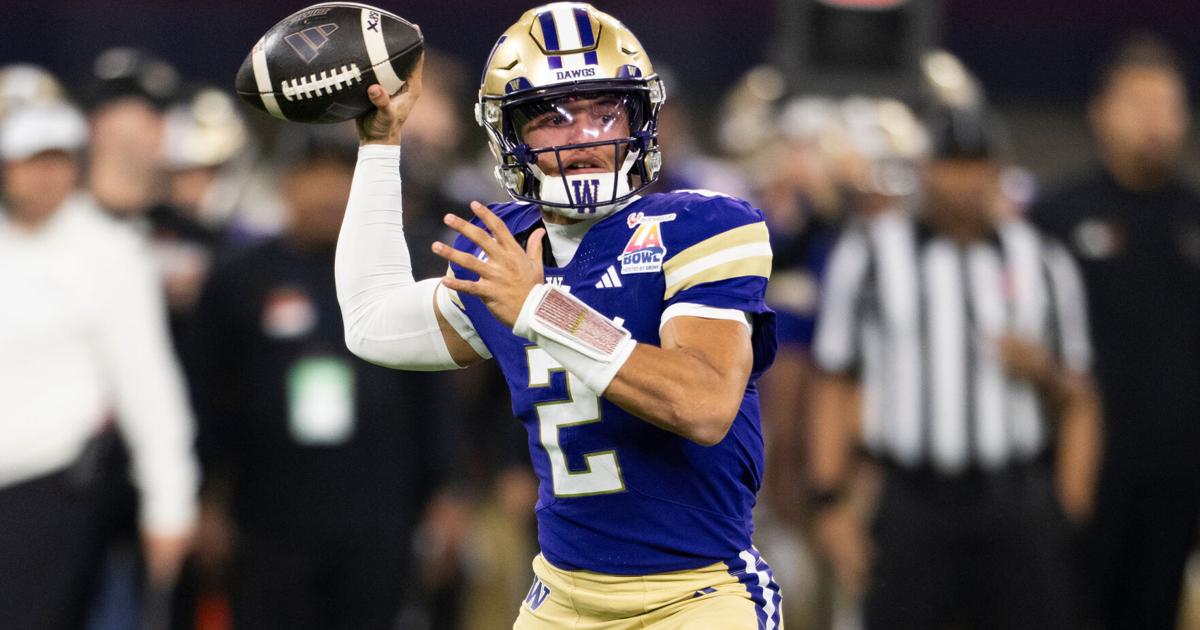
Washington quarterback Demond Williams Jr. said late Thursday he will return to school for the 2026 season rather than enter the transfer portal, avoiding a potentially messy dispute amid reports the Huskies were prepared to pursue legal options to enforce Williams’ name, image and likeness contract.

Edge rusher Damon Wilson is looking to transfer after one season at Missouri, having been sued for damages by Georgia over his decision to leave the Bulldogs. He has countersued.

Then there is Ole Miss quarterback Trinidad Chambliss, who reportedly had a new NIL deal waiting while he asked the NCAA for approval to play another season after leading the Rebels to Thursday night’s Collge Football Playoff semifinal against Miami. The NCAA a day after Miami’s win denied his request.

On that Miami roster? Defensive back Xavier Lucas, whose transfer from Wisconsin led to a lawsuit from the Badgers, claiming he was improperly lured to Miami by NIL money. Lucas has played all season for the Hurricanes and now gets a chance at a national championship. The case is pending.

What to do?

Court rulings have favored athletes of late, winning them not just millions in compensation but the ability to play immediately after transferring rather than have to sit out a year as once was the case. They can also discuss specific NIL compensation with schools and boosters before enrolling. Current court battles include players seeking to play longer, without lower-college seasons counting against their eligibility, and earning NIL money while doing it.

Ehrlich compared the situation to the labor upheaval professional leagues went through before finally settling on collective bargaining, which has been looked at as a potential solution by some in college sports over the past year. Athletes.org, a players association for college athletes, recently offered a 38-page proposal of what a labor deal could look like.

“I think NCAA is concerned, and rightfully so, that anything they try to do to tamp down this on their end is going to get shut down,” Ehrlich said. “Which is why really the only two solutions at this point are an act of Congress, which feels like an act of God at this point, or potentially collective bargaining, which has its own major, major challenges and roadblocks.”

The NCAA has been lobbying for years for limited antitrust protection to keep some kind of control over the new landscape — and to avoid more crippling lawsuits — but bills have gone nowhere in Congress.

Universities have long balked at the idea that their athletes are employees in some way. Schools would become responsible for paying wages, benefits, and workers’ compensation. And while private institutions fall under the National Labor Relations Board, public universities must follow labor laws that vary from state to state; virtually every state in the South has “right to work” laws that present challenges for unions.

Ehrlich noted the short careers for college athletes and wondered whether a union for collective bargaining is even possible.

A harder look at contracts

To sports attorney Mit Winter, employment contracts may be the simplest solution.

“This isn’t something that’s novel to college sports,” said Winter, a former college basketball player who is now a sports attorney with Kennyhertz Perry. “Employment contracts are a huge part of college sports, it’s just novel for the athletes.”

Employment contracts for players could be written like those for coaches, he suggested, which would offer buyouts and prevent players from using the portal as a revolving door.

“The contracts that schools are entering into with athletes now, they can be enforced, but they cannot keep an athlete out of school because they’re not signing employment contracts where the school is getting the right to have the athlete play football for their school or basketball or whatever sport it is,” Winter said. “They’re just acquiring the right to be able to use the athlete’s NIL rights in various ways. So, a NIL agreement is not going to stop an athlete from transferring or going to play whatever sport it is that he or she plays at another school.”

There are challenges here, too, of course: Should all college athletes be treated as employees or just those in revenue-producing sports? Can all injured athletes seek workers’ compensation and insurance protection? Could states start taxing athlete NIL earnings?

Winter noted a pending federal case against the NCAA could allow for athletes to be treated as employees more than they currently are.

“What’s going on in college athletics now is trying to create this new novel system where the athletes are basically treated like employees, look like employees, but we don’t want to call them employees,” Winter said. “We want to call them something else and say they’re not being paid for athletic services. They’re being paid for use of their NIL. So, then it creates new legal issues that have to be hashed out and addressed, which results in a bumpy and chaotic system when you’re trying to kind of create it from scratch.”

Employment contracts would not necessarily allow for uniform rules with an athlete able to go to transfer when terms have been met. Collective bargaining could include those guidelines.

“If the goal is to keep someone at a school for a certain defined period of time, it’s got to be employment contracts,” Winter said.


Get poll alerts and updates on the AP Top 25 throughout the season. Sign up here. AP college football: https://apnews.com/hub/ap-top-25-college-football-poll and https://apnews.com/hub/college-football


Link

Continue Reading

NIL

The legal strategy Ole Miss QB Trinidad Chambliss might employ to attempt to play college football in 2026

Published

on


If Ole Miss quarterback Trinidad Chambliss decides to take the NCAA to court over its decision to deny him a waiver to play one more season of college football, the strategy likely will differ from the one employed by most college athletes who have mounted legal challenges.

The key difference lies in one sentence in the statement released Friday by attorney Tom Mars, who is representing Chambliss. Here’s that statement:

I’m disappointed, but not surprised. The last time I checked, however, the only score that matters is the one at the end of the fourth quarter.

I understand that Ole Miss will file an appeal with the NCAA.  However, there’s now an opportunity to move this case to a level playing field where Trinidad’s rights will be determined by the Mississippi judiciary instead of some bureaucrats in Indianapolis who couldn’t care less about the law or doing the right thing. Whether to pursue that course of action is a decision only Trinidad and his parents can make. 

“Determined by a Mississippi judiciary” is the key phrase. 

If Chambliss challenges the ruling in court, it likely will be in a state court rather than a federal court, where most other athletes seeking more eligibility have gone. And the case wouldn’t necessarily directly challenge the NCAA’s eligibility rules. It could be argued that the NCAA interfered with a valid contract. The contract was agreed upon this past week between Chambliss and Ole Miss, and it promised him millions if he could play for the Rebels in 2026.

Why the different strategy? Probably because eligibility cases are the only ones the NCAA is successfully defending in federal court. 

In matters involving athletes getting paid — or how much they can get paid — the NCAA has gotten its clock cleaned in the federal courts. It started with a loss in O’Bannon v. NCAA in 2014, which was followed in 2021 by a 9-0 Supreme Court ruling in NCAA v. Alston in favor of the class of athletes suing the governing body. 

Since then, the NCAA’s ability to enforce any rules regarding athlete compensation has been defanged. When the organization tried in 2024 to investigate quarterback Nico Iamaleava’s deal with the collective attached to Tennessee, the state of Tennessee’s attorney general teamed with the AG in Virginia to sue the NCAA. The initial injunction in the case was all it took to effectively invalidate the NCAA’s NIL rules.

Conferences have since tried to make new rules based on the settlement terms of the House v. NCAA settlement, but those aren’t guaranteed to survive an antitrust challenge either.

The reason athletes win these cases is because in the past, the schools have acted as a cartel, unilaterally imposing rules that cap that particular labor market’s earning capacity. Courts determined that the NCAA violated the Sherman Antitrust Act in part because it could not prove there was a pro-competitive justification for the rules. In other words, the NCAA couldn’t argue that fans would stop watching and attending if athletes got paid. (Spoiler alert: Fans haven’t stopped.)

But in some of the eligibility cases, federal judges have proven sympathetic to the NCAA’s rules that limit athletes to having five years to play four. 

Now-former Vanderbilt QB Diego Pavia won an extra year of eligibility last season, but that was because the NCAA was treating players who spent 2020 in junior college differently than it treated players who spent 2020 at NCAA schools. The players at NCAA schools were not docked a year of eligibility for the COVID year, effectively giving them all a free year.

In cases more like the one involving Chambliss — who was in the air traveling back from the Fiesta Bowl with the Ole Miss team Friday afternoon when the ruling came down — the NCAA has had better luck. Chambliss redshirted as a freshman at Ferris State in 2021. He then was on the active roster at the Division II school in 2022, 2023 and 2024, though he didn’t appear in any games in 2022. He transferred ahead of his redshirt senior season. He spent that year starring at Ole Miss, which finished its season Thursday with a loss to Miami in the Fiesta Bowl in the semifinals of the College Football Playoff.

Chambliss doesn’t have the COVID year or the JUCO distinction to use as an argument. His case is more similar to that of former Tennessee basketball player Zakai Zeigler, who played four full seasons and then tried to sue for a fifth year of playing eligibility. In June, a federal judge denied Zeigler’s request for a preliminary injunction that would have allowed him to play this season.

Should Chambliss sue, the complaint likely would be filed in a Mississippi court and would argue that the NCAA intentionally interfered with a valid contract. 

It’s a fairly simple concept from a legal standpoint, but if you’re concerned about whether Chambliss gets to play in 2026, whether he ultimately prevails in the case is probably irrelevant. What will matter is whether a Mississippi judge is willing to grant an injunction that would keep the NCAA from enforcing its ruling while the case is being disputed. 

Get the injunction, and the glacial pace of the legal process would allow Chambliss to play this season. If he ultimately won the case later, that would be gravy.

Does the average fan want players to have indefinite eligibility? My guess is no. And if Chambliss does find a way to play in 2026, then everyone seeking an extra year will try this gambit.

But that’s an issue the schools will have to decide how to address if Chambliss sues and if Mars’ strategy works. Not to sound like a broken record, but a collective bargaining agreement with players would allow schools to create rules — eligibility, compensation and otherwise — that would be far more difficult to challenge legally.

Until then, billable hours will remain undefeated. And the attorneys who charge them will keep coming up with new ideas.


Link

Continue Reading

NIL

Indiana vs Oregon betting lines

Published

on


 No. 1 seed Indiana and No. 5 seed Oregon played earlier in the season and now meet in the Peach Bowl. The Hoosiers came out with a 30-20 victory Oct. 11 in Eugene, Ore. Since then, Indiana has reeled off eight straight wins, with six of those coming by 20 points or more. Quarterback Fernando Mendoza took home a Heisman then led his team to a CFP win over Alabama.

Oregon bounced back from that October loss by winning eight straight as well, seven by 12 or more points. Quarterback Dante Moore and the Ducks’ defense took down Texas Tech 23-0 after destroying James Madison in the first round.

The winner of the Peach Bowl will play Miami, which came back to dispatch Ole Miss, 31-27, at the Fiesta Bowl. Hurricanes quarterback Carson Beck ran for a touchdown with 18 seconds left and a last-play heave by Ole Miss’ Trinidad Chambliss to the end zone fell incomplete.

The national championship game will be at 6:30 p.m. Jan. 19 in Miami.  Here is who experts picked to win Friday’s Indiana-Oregon rematch:

Indiana vs Oregon betting odds

Lines via BetMGM as of Thursday.

Moneyline: Indiana -175, Oregon +145

Spread:Indiana by 3½ points

Oregon vs Indiana football: When is the Peach Bowl?

Place: Mercedes-Benz Stadium in Atlanta. 


Link

Continue Reading

NIL

College Sports Commission distributes reminder about third-party NIL deals amid transfer portal movement

Published

on


One week into the college football transfer portal window, the College Sports Commission issued a reminder about its rules regarding third-party NIL deals. Specifically, the guidance mentioned deals with MMR and apparel partners.

The CSC said it received word of schools offering deals that go against terms of the House settlement through the first week of the transfer window. The organization expressed “serious concerns” about some terms of the deals in question and reiterated third-party NIL deals are subject to the NIL Go clearinghouse if they’re worth more than $600.

Advertisement

SUBSCRIBE to the On3 NIL and Sports Business Newsletter

Additionally, the CSC said investigations are progressing with regard to unreported third-party NIL deals. Some schools “should expect to hear from the CSC next week”, the commission said.

Such deals must be reported within five days of execution. Enrolling high school athletes and incoming D-I transfers have up to 14 days in some cases.

“Without prejudging any particular deal, the CSC has serious concerns about some of the deal terms being contemplated and the consequences of those deals for the parties involved,” the guidance reads. “Making promises of third-party NIL money now and figuring out how to honor those promises later leaves student-athletes vulnerable to deals not being cleared, promises not being able to be kept, and eligibility being placed at risk.”

Advertisement

CSC says MMR deals must be reported

Friday’s guidance comes after Yahoo! Sports’ Ross Dellenger reported a $3.5 million offer that LSU made Cincinnati transfer quarterback Brendan Sorsby this week. Sorsby later committed to Texas Tech, where he’s set to receive a deal in the $5 million range, On3’s Pete Nakos reported.

The offer to Sorsby included a third-party marketing deal through LSU’s MMR partner, Playfly Sports Properties, Dellenger reported. LSU also planned to compensate Sorsby through rev-share, which would help make total compensation competitive to Texas Tech’s investment.

The College Sports Commission said deals in place with an MMR partner must be reported, even if the partner intends to find other sponsors to help activate the deal. In addition, deals with an MMR or other partner “must include direct activation of the student-athlete’s NIL rights,” the guidance read.

Advertisement

“The label on the contract (e.g., ‘agency agreement,’ ‘services agreement’) does not change the analysis; if an entity is agreeing to pay a student-athlete for their NIL, the agreement must be reported to NIL Go within the reporting deadline,” the guidance reads.

Third-party NIL deals are viewed as the next “arms race” in college sports in the post-House settlement landscape. Tennessee and Penn State are both set have NIL components in their upcoming apparel deals with adidas, On3 previously reported. LSU was also the first school featured in Nike’s new Blue Ribbon Elite program, and that announcement came at the same time the Tigers announced an extension with The Swoosh.


Link

Continue Reading

Most Viewed Posts

Trending